International Journal of Molecular Medicine is an international journal devoted to molecular mechanisms of human disease.
International Journal of Oncology is an international journal devoted to oncology research and cancer treatment.
Covers molecular medicine topics such as pharmacology, pathology, genetics, neuroscience, infectious diseases, molecular cardiology, and molecular surgery.
Oncology Reports is an international journal devoted to fundamental and applied research in Oncology.
Experimental and Therapeutic Medicine is an international journal devoted to laboratory and clinical medicine.
Oncology Letters is an international journal devoted to Experimental and Clinical Oncology.
Explores a wide range of biological and medical fields, including pharmacology, genetics, microbiology, neuroscience, and molecular cardiology.
International journal addressing all aspects of oncology research, from tumorigenesis and oncogenes to chemotherapy and metastasis.
Multidisciplinary open-access journal spanning biochemistry, genetics, neuroscience, environmental health, and synthetic biology.
Open-access journal combining biochemistry, pharmacology, immunology, and genetics to advance health through functional nutrition.
Publishes open-access research on using epigenetics to advance understanding and treatment of human disease.
An International Open Access Journal Devoted to General Medicine.
Oncol Rep 37: [Related article:] 3279–3286, 2017; DOI: 10.3892/or.2017.5598
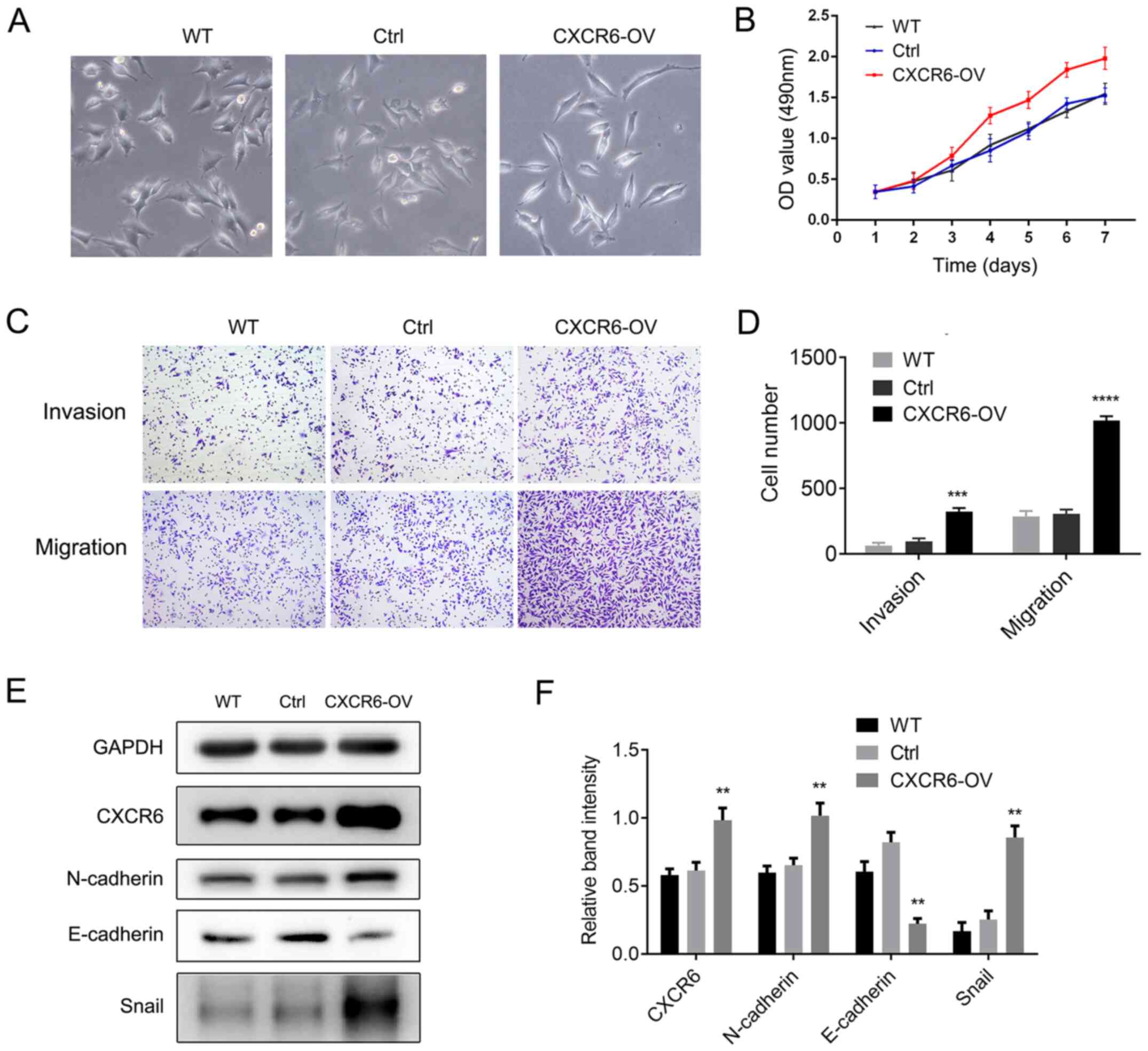
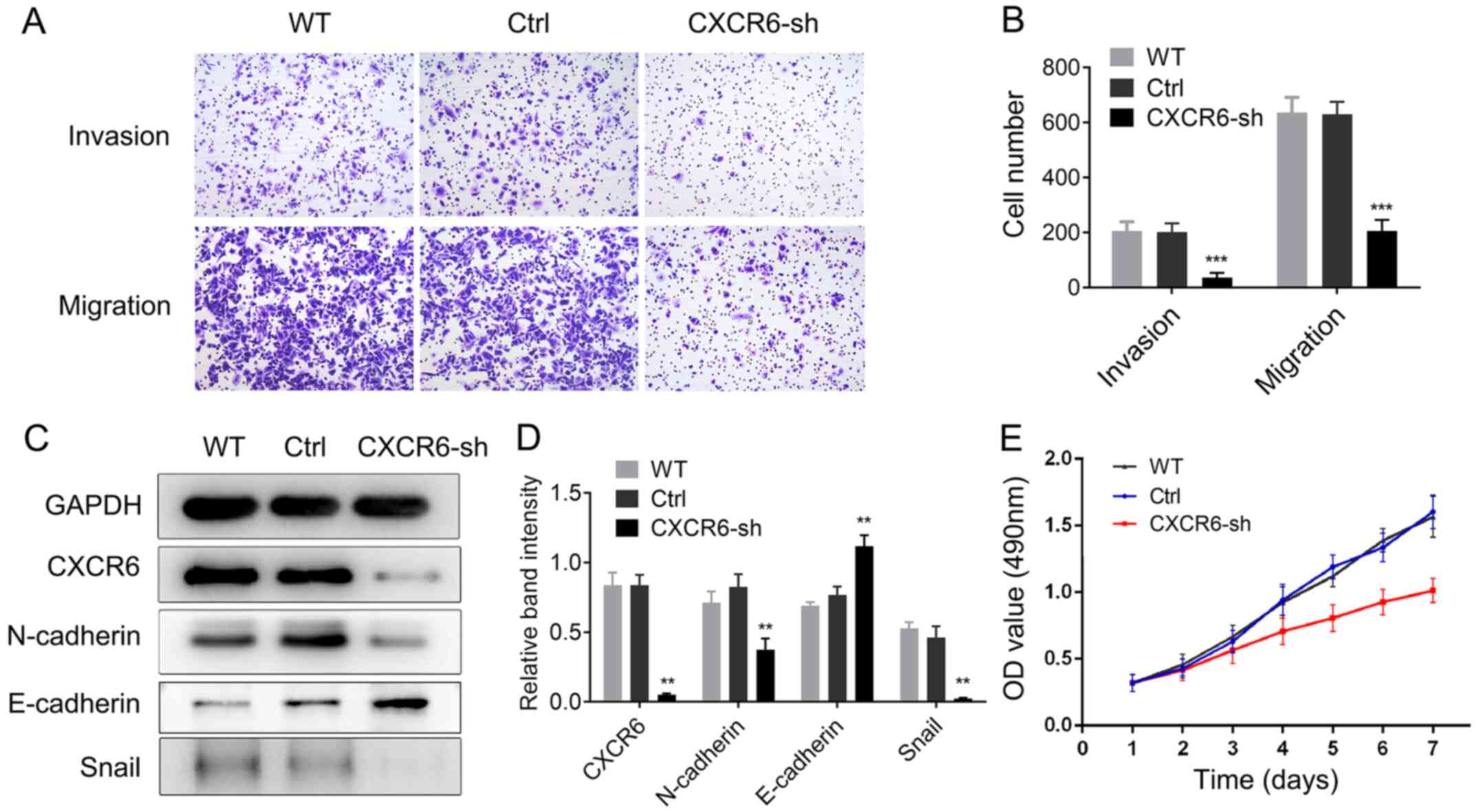
Subsequently to the publication of the above paper, an interested reader drew to the authors' attention that, concerning the cell migration and invasion assay experiments shown in Figs. 3 and 4, the ‘WT/Migration’ and ‘Ctrl/Invasion’ panels in Fig. 3C contained an overlapping section of data, and the ‘WT/Invasion’ and ‘CXCR-sh/Migration’ panels in Fig. 4A were duplicates, such that data which were intended to show the results from differently performed experiments had apparently been derived from the same original sources. Upon examining the data independently in the Editorial Office, it also came to light that the E-cadherin western blot in Fig. 3E was strikingly similar to the N-cadherin western blot shown in Fig. 4A.
However, the authors were able to consult their original data, and recognized that these data had inadvertently been included in these two figures incorrectly. Revised and corrected versions of Figs. 3 and 4, now showing the correct data for the E-cadherin blot in Fig. 3E and the ‘Ctrl/Invasion’ experiment in Fig. 3C, and the ‘CXCR-sh/Migration’ panel in Fig. 4A, are shown on the next page. The authors regret the errors that were made during the compilation of the original figures, and are grateful to the editor of Oncology Reports for allowing them the opportunity to publish this Corrigendum. Note that these errors did not have a significant impact on the conclusions reached in this study. All the authors agree with the publication of this corrigendum; furthermore, they apologize to the readership for any inconvenience caused.