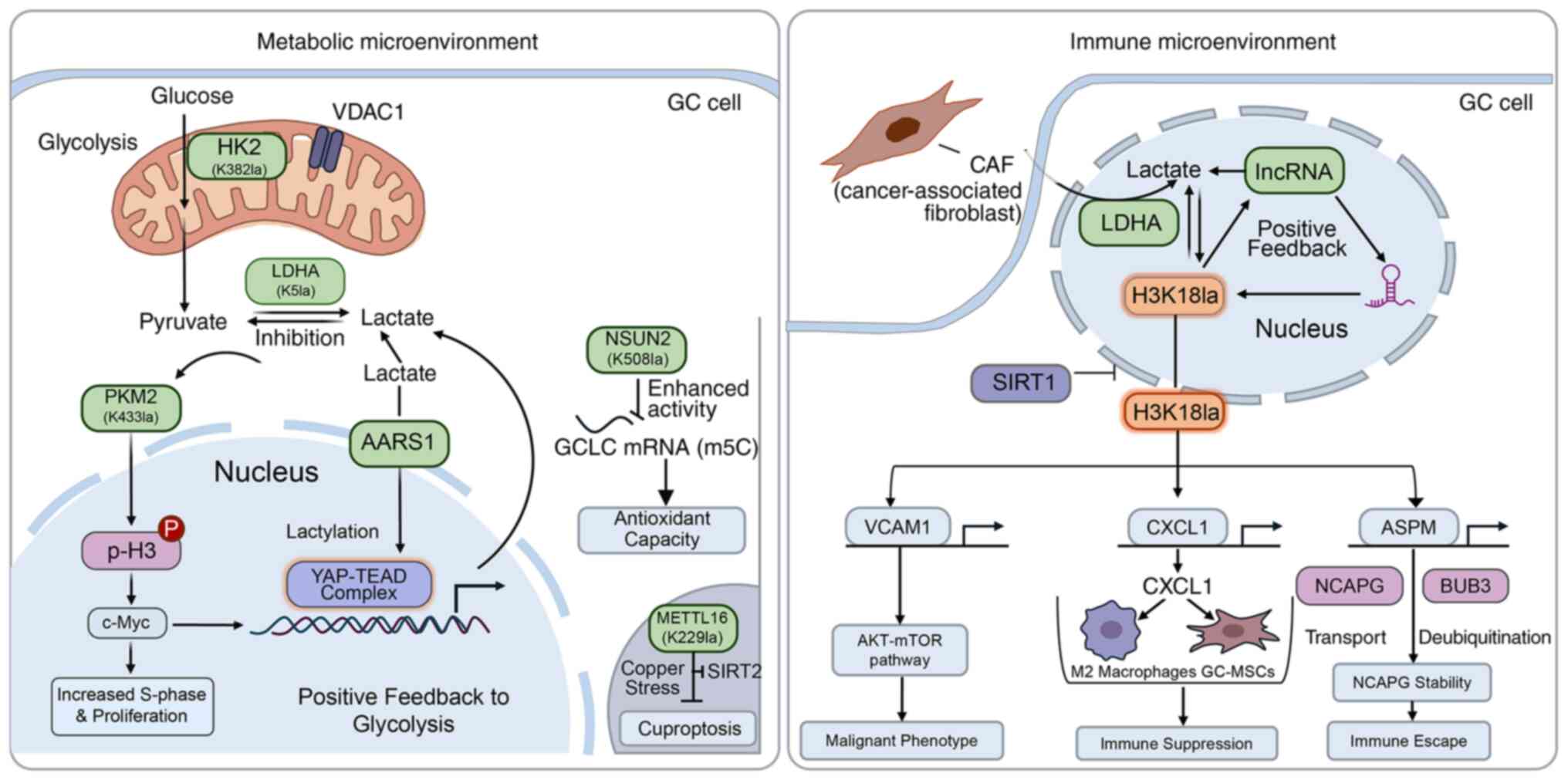
|
1
|
Smyth EC, Nilsson M, Grabsch HI, van
Grieken NC and Lordick F: Gastric cancer. Lancet. 396:635–648.
2020. View Article : Google Scholar : PubMed/NCBI
|
|
2
|
Yang WJ, Zhao HP, Yu Y, Wang JH, Guo L,
Liu JY, Pu J and Lv J: Updates on global epidemiology, risk and
prognostic factors of gastric cancer. World J Gastroenterol.
29:2452–2468. 2023. View Article : Google Scholar : PubMed/NCBI
|
|
3
|
Sung H, Ferlay J, Siegel RL, Laversanne M,
Soerjomataram I, Jemal A and Bray F: Global cancer statistics 2020:
GLOBOCAN estimates of incidence and mortality worldwide for 36
cancers in 185 countries. CA Cancer J Clin. 71:209–249.
2021.PubMed/NCBI
|
|
4
|
Mousavi SE, Ilaghi M, Elahi Vahed I and
Nejadghaderi SA: Epidemiology and socioeconomic correlates of
gastric cancer in Asia: Results from the GLOBOCAN 2020 data and
projections from 2020 to 2040. Sci Rep. 15:65292025. View Article : Google Scholar : PubMed/NCBI
|
|
5
|
Kang YK, Chen LT, Ryu MH, Oh DY, Oh SC,
Chung HC, Lee KW, Omori T, Shitara K, Sakuramoto S, et al:
Nivolumab plus chemotherapy versus placebo plus chemotherapy in
patients with HER2-negative, untreated, unresectable advanced or
recurrent gastric or gastro-oesophageal junction cancer
(ATTRACTION-4): A randomised, multicentre, double-blind,
placebo-controlled, phase 3 trial. Lancet Oncol. 23:234–247. 2022.
View Article : Google Scholar : PubMed/NCBI
|
|
6
|
Rivera F, Izquierdo Manuel M, García
Alfonso P, Martínez de Castro E, Gallego J, Limón ML, Alsina M,
López L, Galán M, Falcó E, et al: Perioperative trastuzumab,
capecitabine and oxaliplatin in patients with HER2-positive
resectable gastric or gastro-oesophageal junction adenocarcinoma:
NEOHX phase II trial. Eur J Cancer. 145:158–167. 2021. View Article : Google Scholar : PubMed/NCBI
|
|
7
|
Janjigian YY, Maron SB, Chatila WK,
Millang B, Chavan SS, Alterman C, Chou JF, Segal MF, Simmons MZ,
Momtaz P, et al: First-line pembrolizumab and trastuzumab in
HER2-positive oesophageal, gastric, or gastro-oesophageal junction
cancer: an open-label, single-arm, phase 2 trial. Lancet Oncol.
21:821–831. 2020. View Article : Google Scholar : PubMed/NCBI
|
|
8
|
Li S, Yu W, Xie F, Luo H, Liu Z, Lv W, Shi
D, Yu D, Gao P, Chen C, et al: Neoadjuvant therapy with immune
checkpoint blockade, antiangiogenesis, and chemotherapy for locally
advanced gastric cancer. Nat Commun. 14:82023. View Article : Google Scholar : PubMed/NCBI
|
|
9
|
Guan WL, He Y and Xu RH: Gastric cancer
treatment: Recent progress and future perspectives. J Hematol
Oncol. 16:572023. View Article : Google Scholar : PubMed/NCBI
|
|
10
|
Liberti MV and Locasale JW: The warburg
effect: How does it benefit cancer cells? Trends Biochem Sci.
41:211–218. 2016. View Article : Google Scholar : PubMed/NCBI
|
|
11
|
Zhang D, Tang Z, Huang H, Zhou G, Cui C,
Weng Y, Liu W, Kim S, Lee S, Perez-Neut M, et al: Metabolic
regulation of gene expression by histone lactylation. Nature.
574:575–580. 2019. View Article : Google Scholar : PubMed/NCBI
|
|
12
|
Zhu R, Ye X, Lu X, Xiao L, Yuan M, Zhao H,
Guo D, Meng Y, Han H, Luo S, et al: ACSS2 acts as a lactyl-CoA
synthetase and couples KAT2A to function as a lactyltransferase for
histone lactylation and tumor immune evasion. Cell Metab.
37:361–376.e7. 2025. View Article : Google Scholar : PubMed/NCBI
|
|
13
|
Yang D, Yin J, Shan L, Yi X, Zhang W and
Ding Y: Identification of lysine-lactylated substrates in gastric
cancer cells. iScience. 25:1046302022. View Article : Google Scholar : PubMed/NCBI
|
|
14
|
Quinn WJ III, Jiao J, TeSlaa T, Stadanlick
J, Wang Z, Wang L, Akimova T, Angelin A, Schäfer PM, Cully MD, et
al: Lactate limits T cell proliferation via the NAD(H) redox state.
Cell Rep. 33:1085002020. View Article : Google Scholar : PubMed/NCBI
|
|
15
|
Yu X, Yang J, Xu J, Pan H, Wang W, Yu X
and Shi S: Histone lactylation: From tumor lactate metabolism to
epigenetic regulation. Int J Biol Sci. 20:1833–1854. 2024.
View Article : Google Scholar : PubMed/NCBI
|
|
16
|
Shang Z, Ma Z, Wu E, Chen X, Tuo B, Li T
and Liu X: Effect of metabolic reprogramming on the immune
microenvironment in gastric cancer. Biomed Pharmacother.
170:1160302024. View Article : Google Scholar : PubMed/NCBI
|
|
17
|
Zhao X, Li K, Chen M and Liu L: Metabolic
codependencies in the tumor microenvironment and gastric cancer:
Difficulties and opportunities. Biomed Pharmacother.
162:1146012023. View Article : Google Scholar : PubMed/NCBI
|
|
18
|
Warburg O: On the origin of cancer cells.
Science. 123:309–314. 1956. View Article : Google Scholar : PubMed/NCBI
|
|
19
|
Faubert B, Solmonson A and DeBerardinis
RJ: Metabolic reprogramming and cancer progression. Science.
368:eaaw54732020. View Article : Google Scholar : PubMed/NCBI
|
|
20
|
Lu J, Tan M and Cai Q: The Warburg effect
in tumor progression: Mitochondrial oxidative metabolism as an
anti-metastasis mechanism. Cancer Lett. 356:156–164. 2015.
View Article : Google Scholar : PubMed/NCBI
|
|
21
|
Wang ZH, Peng WB, Zhang P, Yang XP and
Zhou Q: Lactate in the tumour microenvironment: From immune
modulation to therapy. EBioMedicine. 73:1036272021. View Article : Google Scholar : PubMed/NCBI
|
|
22
|
Joost HG, Bell GI, Best JD, Birnbaum MJ,
Charron MJ, Chen YT, Doege H, James DE, Lodish HF, Moley KH, et al:
Nomenclature of the GLUT/SLC2A family of sugar/polyol transport
facilitators. Am J Physiol Endocrinol Metab. 282:E974–E976. 2002.
View Article : Google Scholar : PubMed/NCBI
|
|
23
|
Cheikh IA, Hayar B, Ghanem N, Saleh LA,
El-Baba C, Al-Hadeethi S, El-Khoury R, Usta J and Darwiche N:
Therapeutic targeting of the pentose phosphate pathway in
colorectal cancer using 6-aminonicotinamide and 5-fluorouracil. Mol
Carcinog. 64:1222–1235. 2025. View Article : Google Scholar : PubMed/NCBI
|
|
24
|
Pérez-Tomás R and Pérez-Guillén I: Lactate
in the tumor microenvironment: An essential molecule in cancer
progression and treatment. Cancers (Basel). 12:32442020. View Article : Google Scholar : PubMed/NCBI
|
|
25
|
San-Millán I and Brooks GA: Reexamining
cancer metabolism: Lactate production for carcinogenesis could be
the purpose and explanation of the warburg effect. Carcinogenesis.
38:119–133. 2017.PubMed/NCBI
|
|
26
|
Wang Y, Qin L, Chen W, Chen Q, Sun J and
Wang G: Novel strategies to improve tumour therapy by targeting the
proteins MCT1, MCT4 and LAT1. Eur J Med Chem. 226:1138062021.
View Article : Google Scholar : PubMed/NCBI
|
|
27
|
Blaszczak W, Williams H and Swietach P:
Autoregulation of H+/lactate efflux prevents
monocarboxylate transport (MCT) inhibitors from reducing glycolytic
lactic acid production. Br J Cancer. 127:1365–1377. 2022.
View Article : Google Scholar : PubMed/NCBI
|
|
28
|
Singh M, Afonso J, Sharma D, Gupta R and
Kumar V, Rani R, Baltazar F and Kumar V: Targeting monocarboxylate
transporters (MCTs) in cancer: How close are we to the clinics?
Semin Cancer Biol. 90:1–14. 2023. View Article : Google Scholar : PubMed/NCBI
|
|
29
|
She X, Wu Q, Rao Z, Song D, Huang C, Feng
S, Liu A, Liu L, Wan K, Li X, et al: SETDB1 methylates MCT1
promoting tumor progression by enhancing the lactate shuttle. Adv
Sci (Weinh). 10:23018712023. View Article : Google Scholar : PubMed/NCBI
|
|
30
|
Kumagai S, Koyama S, Itahashi K,
Tanegashima T, Lin YT, Togashi Y, Kamada T, Irie T, Okumura G, Kono
H, et al: Lactic acid promotes PD-1 expression in regulatory T
cells in highly glycolytic tumor microenvironments. Cancer Cell.
40:201–218.e9. 2022. View Article : Google Scholar : PubMed/NCBI
|
|
31
|
Shen YA, Chen CL, Huang YH, Evans EE,
Cheng CC, Chuang YJ, Zhang C and Le A: Inhibition of glutaminolysis
in combination with other therapies to improve cancer treatment.
Curr Opin Chem Biol. 62:64–81. 2021. View Article : Google Scholar : PubMed/NCBI
|
|
32
|
Kitayama K, Yashiro M, Morisaki T, Miki Y,
Okuno T, Kinoshita H, Fukuoka T, Kasashima H, Masuda G, Hasegawa T,
et al: Pyruvate kinase isozyme M2 and glutaminase might be
promising molecular targets for the treatment of gastric cancer.
Cancer Sci. 108:2462–2469. 2017. View Article : Google Scholar : PubMed/NCBI
|
|
33
|
Jiang Z, Zhang C, Gan L, Jia Y, Xiong Y,
Chen Y, Wang Z, Wang L, Luo H, Li J, et al: iTRAQ-based
quantitative proteomics approach identifies novel diagnostic
biomarkers that were essential for glutamine metabolism and redox
homeostasis for gastric cancer. Proteomics Clin Appl.
13:e18000382019. View Article : Google Scholar : PubMed/NCBI
|
|
34
|
Chang J, Wang Q, Bhetuwal A and Liu W:
Metabolic pathways underlying GATA6 regulating trastuzumab
resistance in gastric cancer cells based on untargeted
metabolomics. Int J Med Sci. 17:3146–3164. 2020. View Article : Google Scholar : PubMed/NCBI
|
|
35
|
McCauley R, Kong SE and Hall J: Glutamine
and nucleotide metabolism within enterocytes. JPEN J Parenter
Enteral Nutr. 22:105–111. 1998. View Article : Google Scholar : PubMed/NCBI
|
|
36
|
Ren P, Yue M, Xiao D, Xiu R, Gan L, Liu H
and Qing G: ATF4 and N-Myc coordinate glutamine metabolism in
MYCN-amplified neuroblastoma cells through ASCT2 activation. J
Pathol. 235:90–100. 2015. View Article : Google Scholar : PubMed/NCBI
|
|
37
|
Li D, Cao D, Zhang Y, Yu X, Wu Y, Jia Z,
Jiang J and Cao X: Integrative pan-cancer analysis and experiment
validation identified GLS as a biomarker in tumor progression,
prognosis, immune microenvironment, and immunotherapy. Sci Rep.
15:5252025. View Article : Google Scholar : PubMed/NCBI
|
|
38
|
Sun Q, Yu X, Peng C, Liu N, Chen W, Xu H,
Wei H, Fang K, Dong Z, Fu C, et al: Activation of SREBP-1c alters
lipogenesis and promotes tumor growth and metastasis in gastric
cancer. Biomed Pharmacother. 128:1102742020. View Article : Google Scholar : PubMed/NCBI
|
|
39
|
Chen M, Li H, Zheng S, Shen J, Chen Y, Li
Y, Yuan M, Wu J and Sun Q: Nobiletin targets SREBP1/ACLY to induce
autophagy-dependent cell death of gastric cancer cells through
PI3K/Akt/mTOR signaling pathway. Phytomedicine. 128:1553602024.
View Article : Google Scholar : PubMed/NCBI
|
|
40
|
Xu H, Luo J, Ma G, Zhang X, Yao D, Li M
and Loor JJ: Acyl-CoA synthetase short-chain family member 2
(ACSS2) is regulated by SREBP-1 and plays a role in fatty acid
synthesis in caprine mammary epithelial cells. J Cell Physiol.
233:1005–1016. 2018. View Article : Google Scholar : PubMed/NCBI
|
|
41
|
Zhu KG, Yang J, Zhu Y, Zhu Q, Pan W, Deng
S, He Y, Zuo D, Wang P, Han Y and Zhang HY: The microprotein
encoded by exosomal lncAKR1C2 promotes gastric cancer lymph node
metastasis by regulating fatty acid metabolism. Cell Death Dis.
14:7082023. View Article : Google Scholar : PubMed/NCBI
|
|
42
|
Gaffney DO, Jennings EQ, Anderson CC,
Marentette JO, Shi T, Oxvig AMS, Streeter MD, Johannsen M, Spiegel
DA, Chapman E, et al: Non-enzymatic lysine lactoylation of
glycolytic enzymes. Cell Chem Biol. 27:206–213.e6. 2020. View Article : Google Scholar : PubMed/NCBI
|
|
43
|
Kochumon S, Jacob T, Koshy M, Al-Rashed F,
Sindhu S, Al-Ozairi E, Al-Mulla F, Rosen ED and Ahmad R: Palmitate
potentiates lipopolysaccharide-induced IL-6 production via
coordinated acetylation of H3K9/H3K18, p300, and RNA polymerase II.
J Immunol. 209:731–741. 2022. View Article : Google Scholar : PubMed/NCBI
|
|
44
|
Wang C, Wang S, Wang Z, Han J, Jiang N, Qu
L and Xu K: Andrographolide regulates H3 histone lactylation by
interfering with p300 to alleviate aortic valve calcification. Br J
Pharmacol. 181:1843–1856. 2024. View Article : Google Scholar : PubMed/NCBI
|
|
45
|
Kumar Y, Sengupta D, Friman ET,
Illingworth RS, Soleil M, Fan Z, Wang H, Helin K, Gérard M and
Bickmore WA: Acetylation of H3K115 is associated with fragile
nucleosomes at CpG island promoters and active regulatory sites.
Elife. 14:RP1088022026. View Article : Google Scholar : PubMed/NCBI
|
|
46
|
Kanno T, Kanno Y, LeRoy G, Campos E, Sun
HW, Brooks SR, Vahedi G, Heightman TD, Garcia BA, Reinberg D, et
al: BRD4 assists elongation of both coding and enhancer RNAs guided
by histone acetylation. Nat Struct Mol Biol. 21:1047–1057. 2014.
View Article : Google Scholar : PubMed/NCBI
|
|
47
|
Zhai G, Niu Z, Jiang Z, Zhao F, Wang S,
Chen C, Zheng W, Wang A, Zang Y, Han Y and Zhang K: DPF2 reads
histone lactylation to drive transcription and tumorigenesis. Proc
Natl Acad Sci USA. 121:e24214961212024. View Article : Google Scholar : PubMed/NCBI
|
|
48
|
Lan R and Wang Q: Deciphering structure,
function and mechanism of lysine acetyltransferase HBO1 in protein
acetylation, transcription regulation, DNA replication and its
oncogenic properties in cancer. Cell Mol Life Sci. 77:637–649.
2020. View Article : Google Scholar : PubMed/NCBI
|
|
49
|
Xiao Y, Li W, Yang H, Pan L, Zhang L, Lu
L, Chen J, Wei W, Ye J, Li J, et al: HBO1 is a versatile histone
acyltransferase critical for promoter histone acylations. Nucleic
Acids Res. 49:8037–8059. 2021. View Article : Google Scholar : PubMed/NCBI
|
|
50
|
Niu Z, Chen C, Wang S, Lu C, Wu Z, Wang A,
Mo J, Zhang J, Han Y, Yuan Y, et al: HBO1 catalyzes lysine
lactylation and mediates histone H3K9la to regulate gene
transcription. Nat Commun. 15:35612024. View Article : Google Scholar : PubMed/NCBI
|
|
51
|
Iizuka M, Takahashi Y, Mizzen CA, Cook RG,
Fujita M, Allis CD, Frierson HF Jr, Fukusato T and Smith MM:
Histone acetyltransferase Hbo1: Catalytic activity, cellular
abundance, and links to primary cancers. Gene. 436:108–114. 2009.
View Article : Google Scholar : PubMed/NCBI
|
|
52
|
Wang Y, Chen S, Tian W, Zhang Q, Jiang C,
Qian L and Liu Y: High-expression HBO1 predicts poor prognosis in
gastric cancer. Am J Clin Pathol. 152:517–526. 2019. View Article : Google Scholar : PubMed/NCBI
|
|
53
|
Zong Z, Xie F, Wang S, Wu X, Zhang Z, Yang
B and Zhou F: Alanyl-tRNA synthetase, AARS1, is a lactate sensor
and lactyltransferase that lactylates p53 and contributes to
tumorigenesis. Cell. 187:2375–2392.e33. 2024. View Article : Google Scholar : PubMed/NCBI
|
|
54
|
Sun S, Xu Z, He L, Shen Y, Yan Y, Lv X,
Zhu X, Li W, Tian WY, Zheng Y, et al: Metabolic regulation of
cytoskeleton functions by HDAC6-catalyzed α-tubulin lactylation.
Nat Commun. 15:83772024. View Article : Google Scholar : PubMed/NCBI
|
|
55
|
Moreno-Yruela C, Zhang D, Wei W, Bæk M,
Liu W, Gao J, Danková D, Nielsen AL, Bolding JE, Yang L, et al:
Class I histone deacetylases (HDAC1-3) are histone lysine
delactylases. Sci Adv. 8:eabi66962022. View Article : Google Scholar : PubMed/NCBI
|
|
56
|
Qin H, Shi Y, Liu R, Wang B, Guo L, Hao G,
Zhang G, Liu D, Zhao L and Huang M: Discovery of a covalent HDAC3
degrader with excellent anti-inflammatory activity and NLRP3
inflammasome suppression. J Med Chem. 69:6528–6545. 2026.
View Article : Google Scholar : PubMed/NCBI
|
|
57
|
Zeng R and Chen J: Advances in epigenetics
of gastric cancer. Oncol Rev. 20:16566212026. View Article : Google Scholar : PubMed/NCBI
|
|
58
|
Tsukihara S, Akiyama Y, Shimada S, Hatano
M, Igarashi Y, Taniai T, Tanji Y, Kodera K, Yasukawa K, Umeura K,
et al: Delactylase effects of SIRT1 on a positive feedback loop
involving the H19-glycolysis-histone lactylation in gastric cancer.
Oncogene. 44:724–738. 2025. View Article : Google Scholar : PubMed/NCBI
|
|
59
|
Li J, Miao C, Guo H, Lin M, Chen R, Peng
J, Wang J, Tang C and Chen Z: Lactylation in cancer: Molecular
mechanisms and advances in clinical study. Mol Cancer. 25:532026.
View Article : Google Scholar : PubMed/NCBI
|
|
60
|
Zhao Q, Wang Q, Yao Q, Yang Z, Li W, Cheng
X, Wen Y, Chen R, Xu J, Wang X, et al: Nonenzymatic lysine
D-lactylation induced by glyoxalase II substrate SLG dampens
inflammatory immune responses. Cell Res. 35:97–116. 2025.
View Article : Google Scholar : PubMed/NCBI
|
|
61
|
Rabbani N: Methylglyoxal and glyoxalase
1-a metabolic stress pathway-linking hyperglycemia to the unfolded
protein response and vascular complications of diabetes. Clin Sci
(Lond). 136:819–824. 2022. View Article : Google Scholar : PubMed/NCBI
|
|
62
|
Kawase M, Tada M, Akagi S and Ohmori S:
Changes in concentrations of methylglyoxal, D-lactate and
glyoxalase activities in liver and plasma of rats fed a
3′-methyl-4-dimethylaminoazobenzene-rich diet. Res Exp Med (Berl).
196:251–259. 1996. View Article : Google Scholar : PubMed/NCBI
|
|
63
|
Trujillo MN, Jennings EQ, Hoffman EA,
Zhang H, Phoebe AM, Mastin GE, Kitamura N, Reisz JA, Megill E,
Kantner D, et al: Lactoylglutathione promotes inflammatory
signaling in macrophages through histone lactoylation. Mol Metab.
81:1018882024. View Article : Google Scholar : PubMed/NCBI
|
|
64
|
Trujillo MN, Jennings EQ, Farrera DO,
Kitamura N, Anderson CC, Gehrke S, Reisz JA, Johannsen M, Roede JR,
D'Alessandro A and Galligan JJ: Glyoxalase 2 coordinates de novo
serine metabolism. Chembiochem. 26:e2024010862025. View Article : Google Scholar : PubMed/NCBI
|
|
65
|
Merkuri F, Rothstein M and Simoes-Costa M:
Histone lactylation couples cellular metabolism with developmental
gene regulatory networks. Nat Commun. 15:902024. View Article : Google Scholar : PubMed/NCBI
|
|
66
|
Chen ZH, Cao SH, Ren ZY, Jiang HM, Hu ZK
and Dong LH: LDHA maintains the growth and migration of vascular
smooth muscle cells and promotes neointima formation via crosstalk
between K5 crotonylation and K76 mono-ubiquitination. bioRxiv.
2023.
|
|
67
|
Zhang D, Yip YM and Li L: In silico
construction of HK2-VDAC1 complex and investigating the HK2
binding-induced molecular gating mechanism of VDAC1. Mitochondrion.
30:222–228. 2016. View Article : Google Scholar : PubMed/NCBI
|
|
68
|
He X, Du S, Lei T, Li X, Liu Y, Wang H,
Tong R and Wang Y: PKM2 in carcinogenesis and oncotherapy.
Oncotarget. 8:110656–110670. 2017. View Article : Google Scholar : PubMed/NCBI
|
|
69
|
Li X, Zhang C, Zhao T, Su Z, Li M, Hu J,
Wen J, Shen J, Wang C, Pan J, et al: Lysine-222 succinylation
reduces lysosomal degradation of lactate dehydrogenase a and is
increased in gastric cancer. J Exp Clin Cancer Res. 39:1722020.
View Article : Google Scholar : PubMed/NCBI
|
|
70
|
Chen H, Li Y, Li H, Chen X, Fu H, Mao D,
Chen W, Lan L, Wang C, Hu K, et al: NBS1 lactylation is required
for efficient DNA repair and chemotherapy resistance. Nature.
631:663–669. 2024. View Article : Google Scholar : PubMed/NCBI
|
|
71
|
Niu K, Chen Z, Li M, Ma G, Deng Y, Zhang
J, Wei D, Wang J and Zhao Y: NSUN2 lactylation drives cancer cell
resistance to ferroptosis through enhancing GCLC-dependent
glutathione synthesis. Redox Biol. 79:1034792025. View Article : Google Scholar : PubMed/NCBI
|
|
72
|
Sun L, Zhang Y, Yang B, Sun S, Zhang P,
Luo Z, Feng T, Cui Z, Zhu T, Li Y, et al: Lactylation of METTL16
promotes cuproptosis via m6A-modification on FDX1 mRNA
in gastric cancer. Nat Commun. 14:65232023. View Article : Google Scholar : PubMed/NCBI
|
|
73
|
Ju J, Zhang H, Lin M, Yan Z, An L, Cao Z,
Geng D, Yue J, Tang Y, Tian L, et al: The alanyl-tRNA synthetase
AARS1 moonlights as a lactyltransferase to promote YAP signaling in
gastric cancer. J Clin Invest. 134:e1745872024. View Article : Google Scholar : PubMed/NCBI
|
|
74
|
Zhao Y, Jiang J, Zhou P, Deng K, Liu Z,
Yang M, Yang X, Li J, Li R and Xia J: H3K18 lactylation-mediated
VCAM1 expression promotes gastric cancer progression and metastasis
via AKT-mTOR-CXCL1 axis. Biochem Pharmacol. 222:1161202024.
View Article : Google Scholar : PubMed/NCBI
|
|
75
|
Zhou S, Xiao L, Hu L, Zuo F, Wang Y, Fei
B, Dai J and Zhou X: CAFs promote immune evasion in gastric cancer
through histone lactylation-mediated suppression of NCAPG
ubiquitination. J Transl Med. 23:9892025. View Article : Google Scholar : PubMed/NCBI
|
|
76
|
Xiang Z, Zhang X, Liu X, Lv X, Hu Y, Zhang
C, Zou C, Wang A, Zhang B, Wang W, et al: CD8a
antibody-functionalized biomimetic red blood cell membrane
ectosomes delivering C646 reverse CD8+ T Cell exhaustion via
H3K18la histone delactylation in gastric cardia adenocarcinoma. J
Nanobiotechnology. 24:1562026. View Article : Google Scholar : PubMed/NCBI
|
|
77
|
Zhang X, Li Y and Chen Y: Development of a
comprehensive gene signature linking hypoxia, glycolysis,
lactylation, and metabolomic insights in gastric cancer through the
integration of bulk and single-cell RNA-Seq data. Biomedicines.
11:29482023. View Article : Google Scholar : PubMed/NCBI
|
|
78
|
Yin X, Xing W, Yi N, Zhou Y, Chen Y, Jiang
Z, Ma C and Xia C: Comprehensive analysis of lactylation-related
gene sets and mitochondrial functions in gastric adenocarcinoma:
Implications for prognosis and therapeutic strategies. Front
Immunol. 15:14517252024. View Article : Google Scholar : PubMed/NCBI
|
|
79
|
Yang H, Zou X, Yang S, Zhang A, Li N and
Ma Z: Identification of lactylation related model to predict
prognostic, tumor infiltrating immunocytes and response of
immunotherapy in gastric cancer. Front Immunol. 14:11499892023.
View Article : Google Scholar : PubMed/NCBI
|
|
80
|
Lin L, Que R, Wang J, Zhu Y, Liu X and Xu
R: Prognostic value of the ferroptosis-related gene SLC2A3 in
gastric cancer and related immune mechanisms. Front Genet.
13:9193132022. View Article : Google Scholar : PubMed/NCBI
|
|
81
|
Kiyozumi Y, Iwatsuki M, Kurashige J, Ogata
Y, Yamashita K, Koga Y, Toihata T, Hiyoshi Y, Ishimoto T, Baba Y,
et al: PLOD2 as a potential regulator of peritoneal dissemination
in gastric cancer. Int J Cancer. 143:1202–1211. 2018. View Article : Google Scholar : PubMed/NCBI
|
|
82
|
Li Z, Li X, Lu Y, Zhu X, Zheng W, Chen K,
Liu S, Wu J and Guan W: Improved photodynamic therapy based on
glutaminase blockage via tumor membrane coated CB-839/IR-780
nanoparticles. Small. 20:e23051742024. View Article : Google Scholar : PubMed/NCBI
|
|
83
|
Wang C, Wen Z, Xie J, Zhao Y, Zhao L,
Zhang S, Liu Y, Xue Y and Shi M: MACC1 mediates chemotherapy
sensitivity of 5-FU and cisplatin via regulating MCT1 expression in
gastric cancer. Biochem Biophys Res Commun. 485:665–671. 2017.
View Article : Google Scholar : PubMed/NCBI
|