Spandidos Publications Logo
  • About
    • About Spandidos
    • Aims and Scopes
    • Abstracting and Indexing
    • Editorial Policies
    • Reprints and Permissions
    • Job Opportunities
    • Terms and Conditions
    • Contact
  • Journals
    • All Journals
    • Oncology Letters
      • Oncology Letters
      • Information for Authors
      • Editorial Policies
      • Editorial Board
      • Aims and Scope
      • Abstracting and Indexing
      • Bibliographic Information
      • Archive
    • International Journal of Oncology
      • International Journal of Oncology
      • Information for Authors
      • Editorial Policies
      • Editorial Board
      • Aims and Scope
      • Abstracting and Indexing
      • Bibliographic Information
      • Archive
    • Molecular and Clinical Oncology
      • Molecular and Clinical Oncology
      • Information for Authors
      • Editorial Policies
      • Editorial Board
      • Aims and Scope
      • Abstracting and Indexing
      • Bibliographic Information
      • Archive
    • Experimental and Therapeutic Medicine
      • Experimental and Therapeutic Medicine
      • Information for Authors
      • Editorial Policies
      • Editorial Board
      • Aims and Scope
      • Abstracting and Indexing
      • Bibliographic Information
      • Archive
    • International Journal of Molecular Medicine
      • International Journal of Molecular Medicine
      • Information for Authors
      • Editorial Policies
      • Editorial Board
      • Aims and Scope
      • Abstracting and Indexing
      • Bibliographic Information
      • Archive
    • Biomedical Reports
      • Biomedical Reports
      • Information for Authors
      • Editorial Policies
      • Editorial Board
      • Aims and Scope
      • Abstracting and Indexing
      • Bibliographic Information
      • Archive
    • Oncology Reports
      • Oncology Reports
      • Information for Authors
      • Editorial Policies
      • Editorial Board
      • Aims and Scope
      • Abstracting and Indexing
      • Bibliographic Information
      • Archive
    • Molecular Medicine Reports
      • Molecular Medicine Reports
      • Information for Authors
      • Editorial Policies
      • Editorial Board
      • Aims and Scope
      • Abstracting and Indexing
      • Bibliographic Information
      • Archive
    • World Academy of Sciences Journal
      • World Academy of Sciences Journal
      • Information for Authors
      • Editorial Policies
      • Editorial Board
      • Aims and Scope
      • Abstracting and Indexing
      • Bibliographic Information
      • Archive
    • International Journal of Functional Nutrition
      • International Journal of Functional Nutrition
      • Information for Authors
      • Editorial Policies
      • Editorial Board
      • Aims and Scope
      • Abstracting and Indexing
      • Bibliographic Information
      • Archive
    • International Journal of Epigenetics
      • International Journal of Epigenetics
      • Information for Authors
      • Editorial Policies
      • Editorial Board
      • Aims and Scope
      • Abstracting and Indexing
      • Bibliographic Information
      • Archive
    • Medicine International
      • Medicine International
      • Information for Authors
      • Editorial Policies
      • Editorial Board
      • Aims and Scope
      • Abstracting and Indexing
      • Bibliographic Information
      • Archive
  • Articles
  • Information
    • Information for Authors
    • Information for Reviewers
    • Information for Librarians
    • Information for Advertisers
    • Conferences
  • Language Editing
Spandidos Publications Logo
  • About
    • About Spandidos
    • Aims and Scopes
    • Abstracting and Indexing
    • Editorial Policies
    • Reprints and Permissions
    • Job Opportunities
    • Terms and Conditions
    • Contact
  • Journals
    • All Journals
    • Biomedical Reports
      • Information for Authors
      • Editorial Policies
      • Editorial Board
      • Aims and Scope
      • Abstracting and Indexing
      • Bibliographic Information
      • Archive
    • Experimental and Therapeutic Medicine
      • Information for Authors
      • Editorial Policies
      • Editorial Board
      • Aims and Scope
      • Abstracting and Indexing
      • Bibliographic Information
      • Archive
    • International Journal of Epigenetics
      • Information for Authors
      • Editorial Policies
      • Editorial Board
      • Aims and Scope
      • Abstracting and Indexing
      • Bibliographic Information
      • Archive
    • International Journal of Functional Nutrition
      • Information for Authors
      • Editorial Policies
      • Editorial Board
      • Aims and Scope
      • Abstracting and Indexing
      • Bibliographic Information
      • Archive
    • International Journal of Molecular Medicine
      • Information for Authors
      • Editorial Policies
      • Editorial Board
      • Aims and Scope
      • Abstracting and Indexing
      • Bibliographic Information
      • Archive
    • International Journal of Oncology
      • Information for Authors
      • Editorial Policies
      • Editorial Board
      • Aims and Scope
      • Abstracting and Indexing
      • Bibliographic Information
      • Archive
    • Medicine International
      • Information for Authors
      • Editorial Policies
      • Editorial Board
      • Aims and Scope
      • Abstracting and Indexing
      • Bibliographic Information
      • Archive
    • Molecular and Clinical Oncology
      • Information for Authors
      • Editorial Policies
      • Editorial Board
      • Aims and Scope
      • Abstracting and Indexing
      • Bibliographic Information
      • Archive
    • Molecular Medicine Reports
      • Information for Authors
      • Editorial Policies
      • Editorial Board
      • Aims and Scope
      • Abstracting and Indexing
      • Bibliographic Information
      • Archive
    • Oncology Letters
      • Information for Authors
      • Editorial Policies
      • Editorial Board
      • Aims and Scope
      • Abstracting and Indexing
      • Bibliographic Information
      • Archive
    • Oncology Reports
      • Information for Authors
      • Editorial Policies
      • Editorial Board
      • Aims and Scope
      • Abstracting and Indexing
      • Bibliographic Information
      • Archive
    • World Academy of Sciences Journal
      • Information for Authors
      • Editorial Policies
      • Editorial Board
      • Aims and Scope
      • Abstracting and Indexing
      • Bibliographic Information
      • Archive
  • Articles
  • Information
    • For Authors
    • For Reviewers
    • For Librarians
    • For Advertisers
    • Conferences
  • Language Editing
Login Register Submit
  • This site uses cookies
  • You can change your cookie settings at any time by following the instructions in our Cookie Policy. To find out more, you may read our Privacy Policy.

    I agree
Search articles by DOI, keyword, author or affiliation
Search
Advanced Search
presentation
World Academy of Sciences Journal
Join Editorial Board Propose a Special Issue
Print ISSN: 2632-2900 Online ISSN: 2632-2919
Journal Cover
January-February 2019 Volume 1 Issue 1

Full Size Image

Sign up for eToc alerts
Recommend to Library

Journals

International Journal of Molecular Medicine

International Journal of Molecular Medicine

International Journal of Molecular Medicine is an international journal devoted to molecular mechanisms of human disease.

International Journal of Oncology

International Journal of Oncology

International Journal of Oncology is an international journal devoted to oncology research and cancer treatment.

Molecular Medicine Reports

Molecular Medicine Reports

Covers molecular medicine topics such as pharmacology, pathology, genetics, neuroscience, infectious diseases, molecular cardiology, and molecular surgery.

Oncology Reports

Oncology Reports

Oncology Reports is an international journal devoted to fundamental and applied research in Oncology.

Experimental and Therapeutic Medicine

Experimental and Therapeutic Medicine

Experimental and Therapeutic Medicine is an international journal devoted to laboratory and clinical medicine.

Oncology Letters

Oncology Letters

Oncology Letters is an international journal devoted to Experimental and Clinical Oncology.

Biomedical Reports

Biomedical Reports

Explores a wide range of biological and medical fields, including pharmacology, genetics, microbiology, neuroscience, and molecular cardiology.

Molecular and Clinical Oncology

Molecular and Clinical Oncology

International journal addressing all aspects of oncology research, from tumorigenesis and oncogenes to chemotherapy and metastasis.

World Academy of Sciences Journal

World Academy of Sciences Journal

Multidisciplinary open-access journal spanning biochemistry, genetics, neuroscience, environmental health, and synthetic biology.

International Journal of Functional Nutrition

International Journal of Functional Nutrition

Open-access journal combining biochemistry, pharmacology, immunology, and genetics to advance health through functional nutrition.

International Journal of Epigenetics

International Journal of Epigenetics

Publishes open-access research on using epigenetics to advance understanding and treatment of human disease.

Medicine International

Medicine International

An International Open Access Journal Devoted to General Medicine.

Journal Cover
January-February 2019 Volume 1 Issue 1

Full Size Image

Sign up for eToc alerts
Recommend to Library

  • Article
  • Citations
    • Cite This Article
    • Download Citation
    • Create Citation Alert
    • Remove Citation Alert
    • Cited By
  • Similar Articles
    • Related Articles (in Spandidos Publications)
    • Similar Articles (Google Scholar)
    • Similar Articles (PubMed)
  • Download PDF
  • Download XML
  • View XML
Article Open Access

Renal tubular epithelial cells of the native hibernator Syrian hamster recover more rapidly from endoplasmic reticulum stress compared to those of human or mouse following warm anoxia-reoxygenation, possibly due to increased proteasomal function

  • Authors:
    • Theodoros Eleftheriadis
    • Georgios Pissas
    • Georgia Antoniadi
    • Georgios Filippidis
    • Vassilios Liakopoulos
    • Ioannis Stefanidis
  • View Affiliations / Copyright

    Affiliations: Department of Nephrology, Faculty of Medicine, University of Thessaly, 41110 Larissa, Greece
    Copyright: © Eleftheriadis et al. This is an open access article distributed under the terms of Creative Commons Attribution License.
  • Pages: 39-46
    |
    Published online on: December 6, 2018
       https://doi.org/10.3892/wasj.2018.4
  • Expand metrics +
Metrics: Total Views: 0 (Spandidos Publications: | PMC Statistics: )
Metrics: Total PDF Downloads: 0 (Spandidos Publications: | PMC Statistics: )
Cited By (CrossRef): 0 citations Loading Articles...

This article is mentioned in:


Abstract

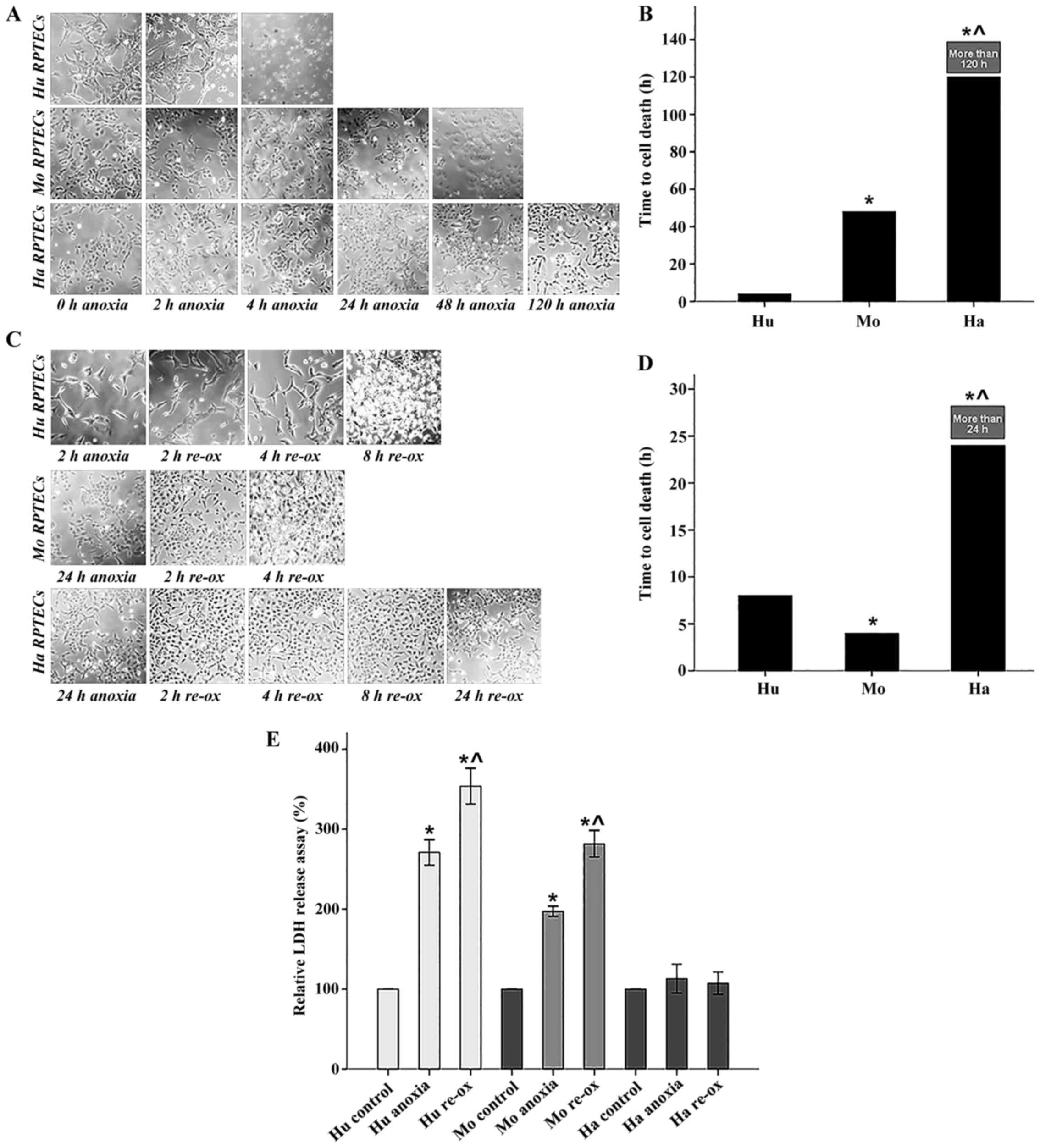
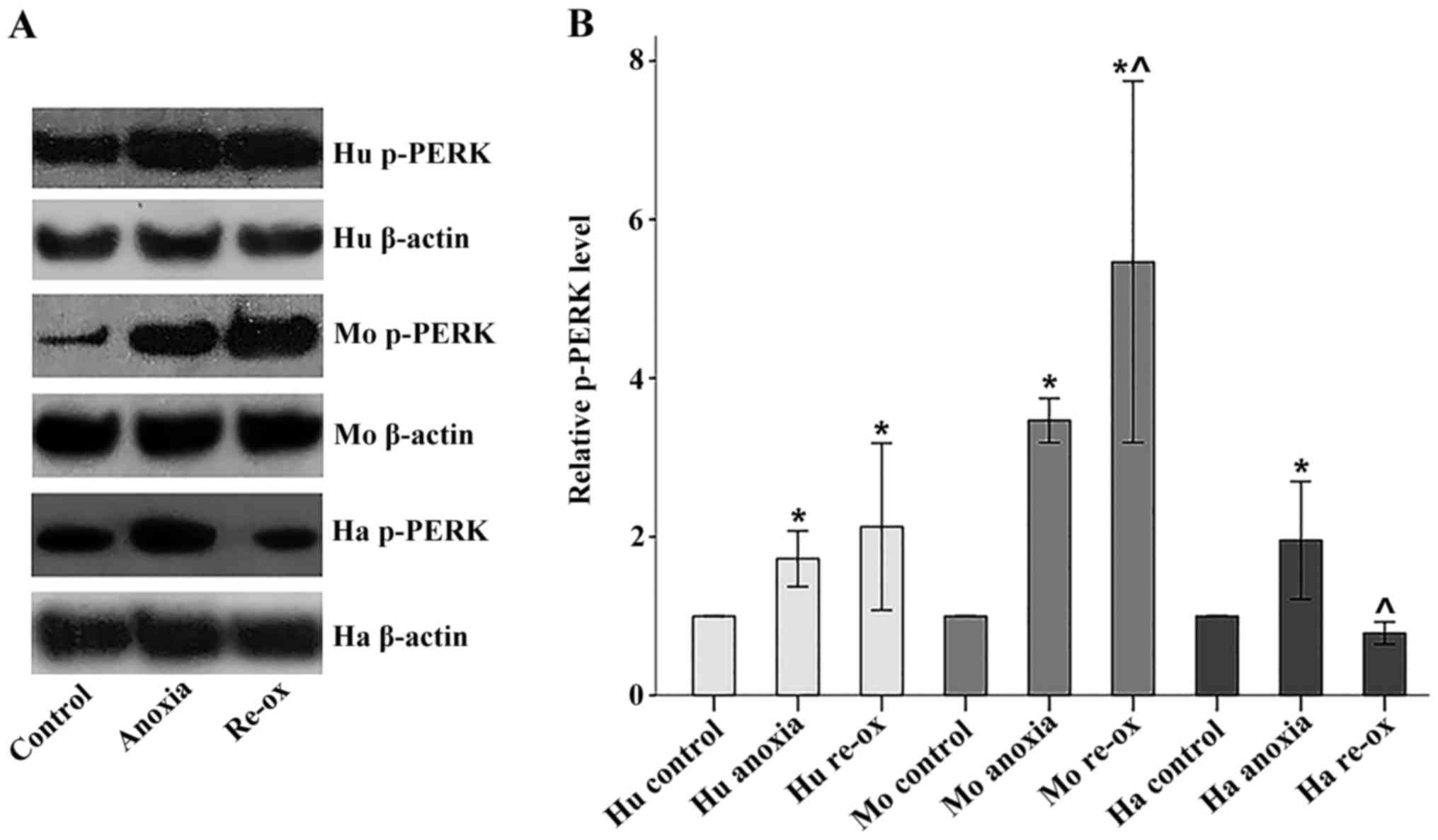
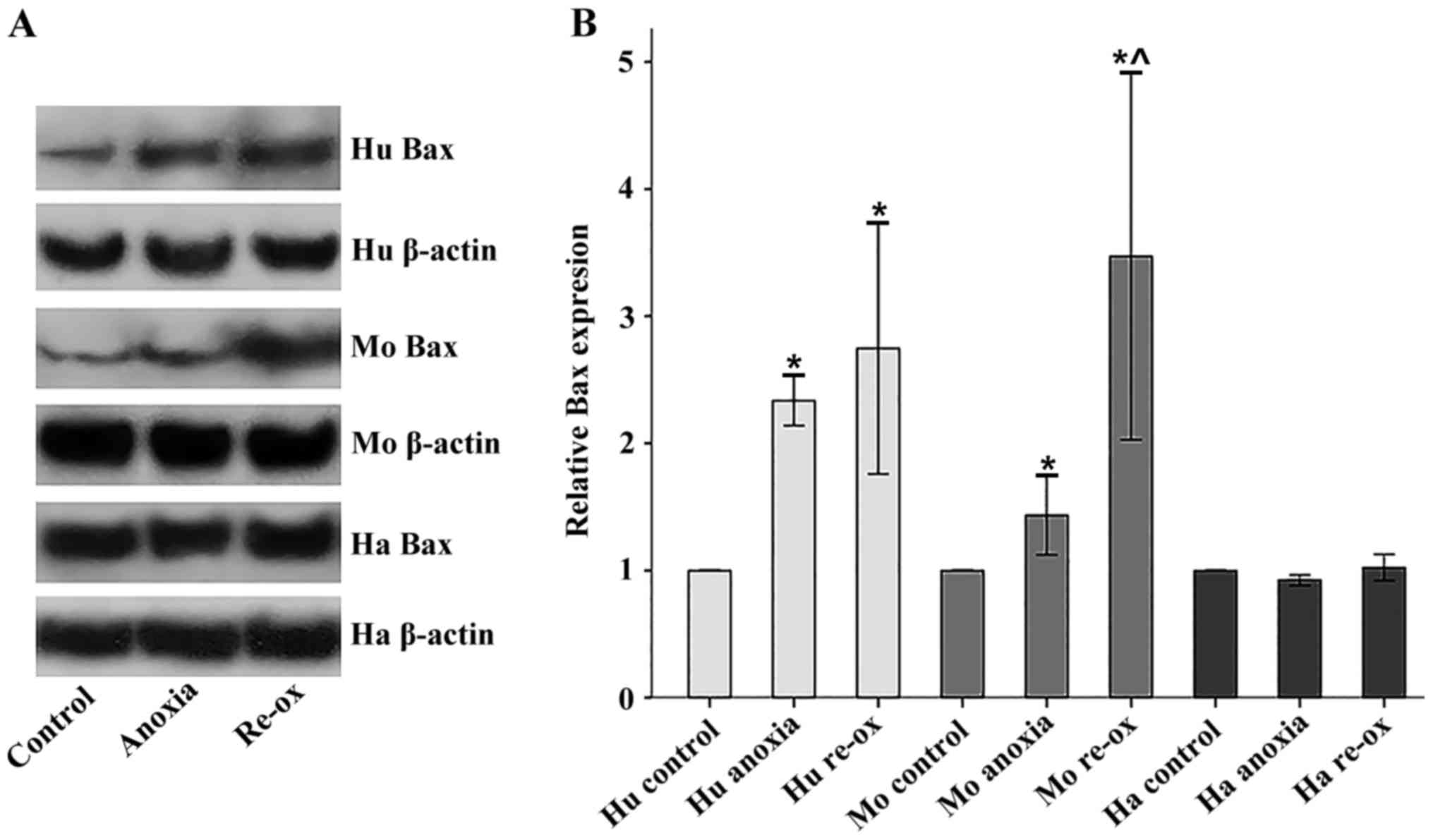
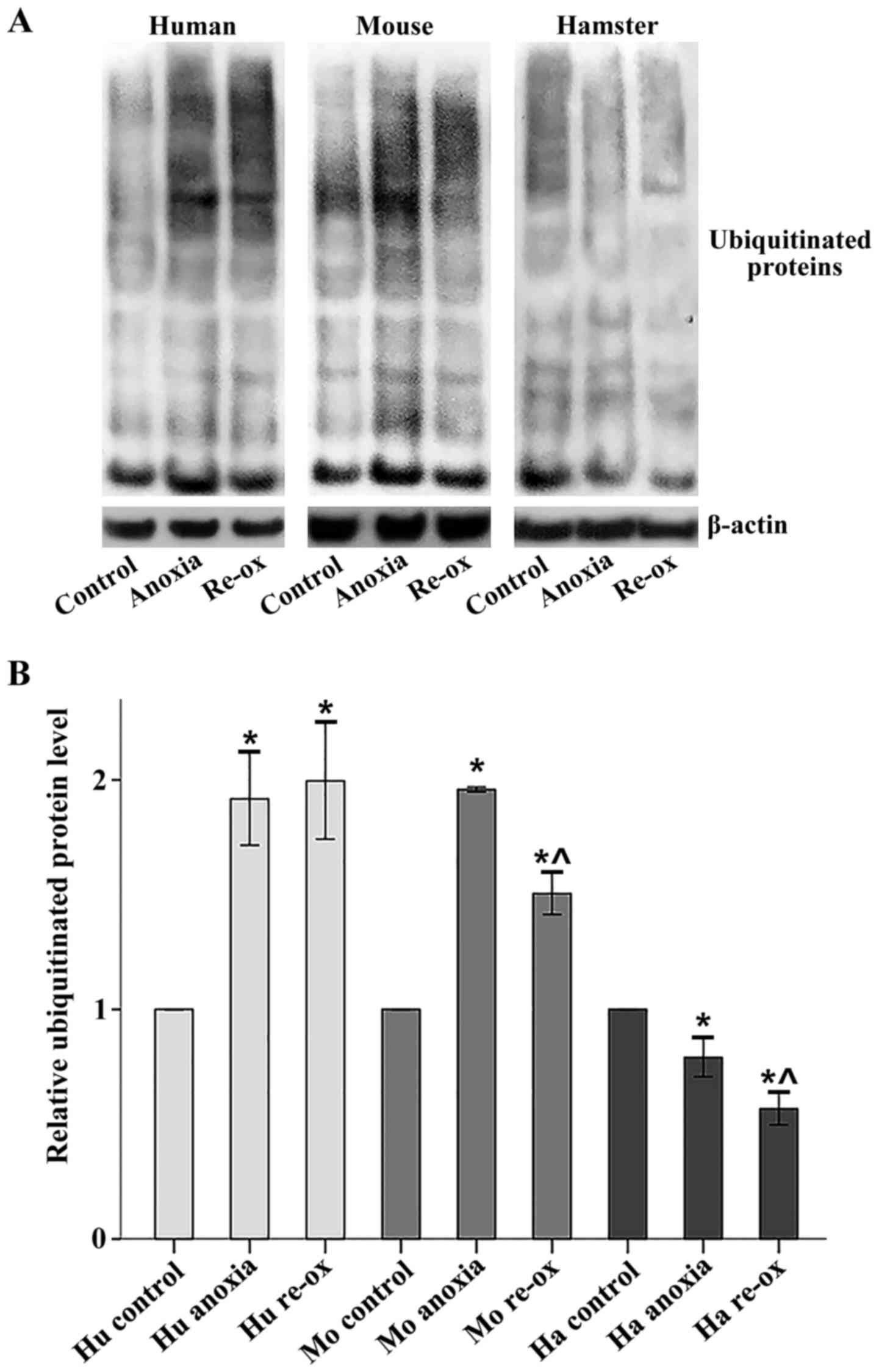
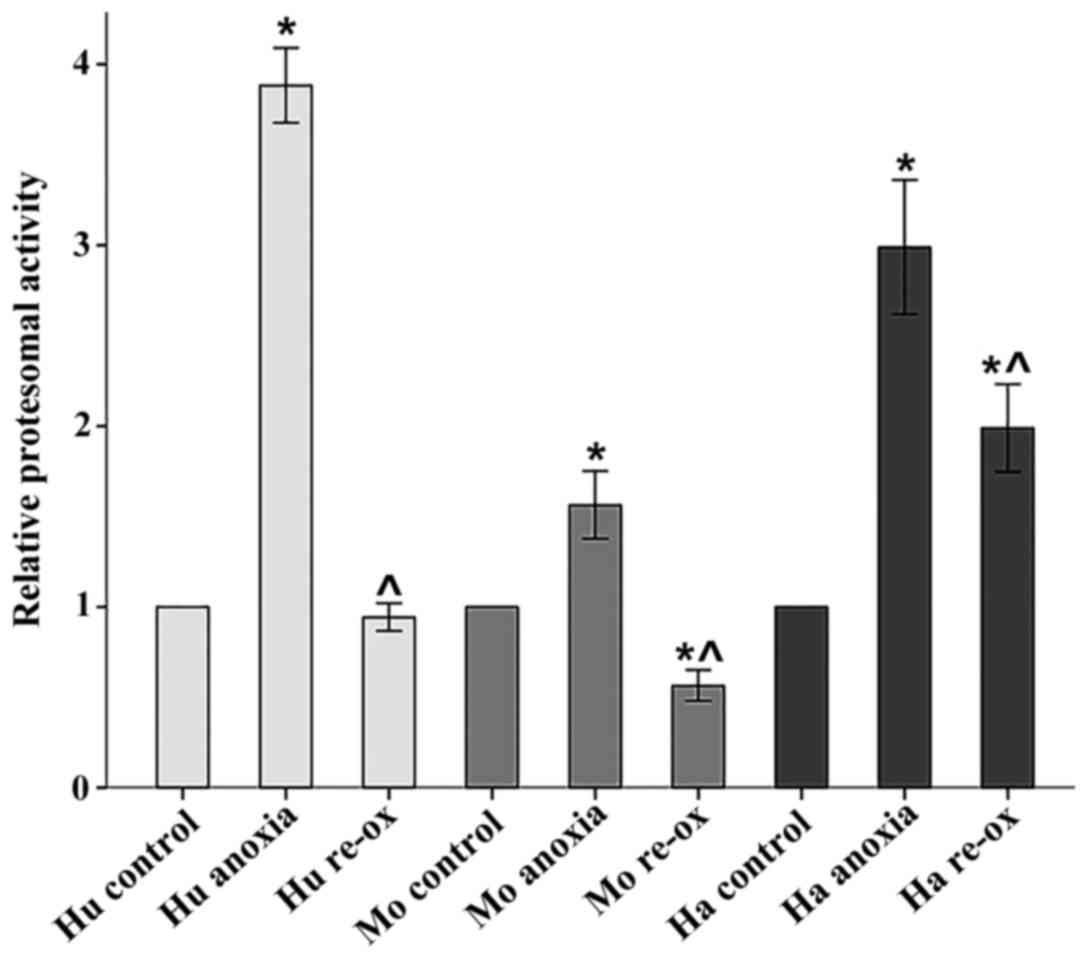
Comparative biology may reveal novel therapeutic strategies against human diseases. Ischemia‑reperfusion (IR) injury induces a number of diseases. It is known that hibernating mammals survive IR since during hibernation, prolonged periods of torpor with a marked decrease in blood flow and breathing rate are interrupted by short periods of arousal. In the present study, the differences in the characteristics of endoplasmic reticulum (ER) stress and the subsequent unfolded protein response, which are induced by IR and may cause cell death among humans, mice or the native hibernator Syrian hamster were examined in vitro using renal proximal tubular epithelial cells (RPTECs) derived from these three sources. RPTECs were subjected to anoxia or reoxygenation, both at 37˚C. Cell death was measured by LDH release assay. ER stress was assessed by determining the levels of phosphorylated protein kinase RNA‑like ER kinase, ubiquitinated proteins and Bcl‑2‑associated X protein (Bax) by western blot analysis. For proteasomal activity, a specific assay was used. The results revealed that anoxia induced ER stress in all the evaluated RPTECs, from which only the hamster‑derived RPTECs recovered during reoxygenation. Anoxia and reoxygenation increased protein ubiquitination in the human‑ and mouse‑derived RPTECs, whereas this was decreased in the hamster‑derived RPTECs. Anoxia enhanced proteasomal activity in all the evaluated RPTECs. In the human‑ and mouse‑derived RPTECs, reoxygenation reduced proteasomal activity, which remained high in the hamster‑derived RPTECs. Anoxia and reoxygenation increased Bax expression and induced cell death in the human‑ and mouse‑derived RPTECs, while neither Bax overexpression nor cell death occurred in the hamster‑derived RPTECs. Thus, on the whole, the findings of this study demonstrate that compared to human‑ or mouse‑derived RPTECs, those derived from the hamster recover more rapidly from ER stress following warm anoxia‑reoxygenation, possibly due to increased proteasomal function.
View Figures

Figure 1

Figure 2

Figure 3

Figure 4

Figure 5

View References

1 

Neri M, Riezzo I, Pascale N, Pomara C and Turillazzi E: Ischemia/reperfusion injury following acute myocardial infarction: A critical issue for clinicians and forensic pathologists. Mediators Inflamm. 2017(7018393)2017.PubMed/NCBI View Article : Google Scholar

2 

Bakthavachalam P and Shanmugam PST: Mitochondrial dysfunction - Silent killer in cerebral ischemia. J Neurol Sci. 375:417–423. 2017.PubMed/NCBI View Article : Google Scholar

3 

Tsukamoto T, Chanthaphavong RS and Pape HC: Current theories on the pathophysiology of multiple organ failure after trauma. Injury. 41:21–26. 2010.PubMed/NCBI View Article : Google Scholar

4 

Bonventre JV and Yang L: Cellular pathophysiology of ischemic acute kidney injury. J Clin Invest. 121:4210–4221. 2011.PubMed/NCBI View Article : Google Scholar

5 

Lieberthal W and Nigam SK: Acute renal failure. I. Relative importance of proximal vs. distal tubular injury. Am J Physiol. 275:F623–F631. 1998.PubMed/NCBI

6 

Carey HV, Andrews MT and Martin SL: Mammalian hibernation: Cellular and molecular responses to depressed metabolism and low temperature. Physiol Rev. 83:1153–1181. 2003.PubMed/NCBI View Article : Google Scholar

7 

Storey KB and Storey JM: Metabolic rate depression The biochemistry of mammalian hibernation. Adv Clin Chem. 52:77–108. 2010.PubMed/NCBI

8 

Dave KR, Prado R, Raval AP, Drew KL and Perez-Pinzon MA: The arctic ground squirrel brain is resistant to injury from cardiac arrest during euthermia. Stroke. 37:1261–1265. 2006.PubMed/NCBI View Article : Google Scholar

9 

Quinones QJ, Zhang Z, Ma Q, Smith MP, Soderblom E, Moseley MA, Bain J, Newgard CB, Muehlbauer MJ, Hirschey M, et al: Proteomic profiling reveals adaptive responses to surgical myocardial ischemia-reperfusion in hibernating arctic ground squirrels compared to rats. Anesthesiology. 124:1296–1310. 2016.PubMed/NCBI View Article : Google Scholar

10 

Dausmann KH, Glos J, Ganzhorn JU and Heldmaier G: Physiology: Hibernation in a tropical primate. Nature. 429:825–826. 2004.PubMed/NCBI View Article : Google Scholar

11 

Hetz C and Papa FR: The unfolded protein response and cell fate control. Mol Cell. 69:169–181. 2018.PubMed/NCBI View Article : Google Scholar

12 

Wu X and Rapoport TA: Mechanistic insights into ER-associated protein degradation. Curr Opin Cell Biol. 53:22–28. 2018.PubMed/NCBI View Article : Google Scholar

13 

Sano R and Reed JC: ER stress-induced cell death mechanisms. Biochim Biophys Acta. 1833:3460–3470. 2013.PubMed/NCBI View Article : Google Scholar

14 

Li Y, Guo Y, Tang J, Jiang J and Chen Z: New insights into the roles of CHOP-induced apoptosis in ER stress. Acta Biochim Biophys Sin (Shanghai). 46:629–640. 2014.PubMed/NCBI View Article : Google Scholar

15 

Oyadomari S and Mori M: Roles of CHOP/GADD153 in endoplasmic reticulum stress. Cell Death Differ. 11:381–389. 2004.PubMed/NCBI View Article : Google Scholar

16 

Maekawa H and Inagi R: Stress signal network between hypoxia and ER stress in chronic kidney disease. Front Physiol. 8(74)2017.PubMed/NCBI View Article : Google Scholar

17 

Xu Y, Guo M, Jiang W, Dong H, Han Y, An XF and Zhang J: Endoplasmic reticulum stress and its effects on renal tubular cells apoptosis in ischemic acute kidney injury. Ren Fail. 38:831–837. 2016.PubMed/NCBI View Article : Google Scholar

18 

Vekich JA, Belmont PJ, Thuerauf DJ and Glembotski CC: Protein disulfide isomerase-associated 6 is an ATF6-inducible ER stress response protein that protects cardiac myocytes from ischemia/reperfusion-mediated cell death. J Mol Cell Cardiol. 53:259–267. 2012.PubMed/NCBI View Article : Google Scholar

19 

Tang JY, Jin P, He Q, Lu LH, Ma JP, Gao WL, Bai HP and Yang J: Naringenin ameliorates hypoxia/reoxygenation-induced endoplasmic reticulum stress-mediated apoptosis in H9c2 myocardial cells: Involvement in ATF6, IRE1α and PERK signaling activation. Mol Cell Biochem. 424:111–122. 2017.PubMed/NCBI View Article : Google Scholar

20 

Zhao Y, Fang Y, Zhao H, Li J, Duan Y, Shi W, Huang Y, Gao L and Luo Y: Chrysophanol inhibits endoplasmic reticulum stress in cerebral ischemia and reperfusion mice. Eur J Pharmacol. 818:1–9. 2018.PubMed/NCBI View Article : Google Scholar

21 

Fougeray S, Bouvier N, Beaune P, Legendre C, Anglicheau D, Thervet E and Pallet N: Metabolic stress promotes renal tubular inflammation by triggering the unfolded protein response. Cell Death Dis. 2(e143)2011.PubMed/NCBI View Article : Google Scholar

22 

Yu W, Sheng M, Xu R, Yu J, Cui K, Tong J, Shi L, Ren H and Du H: Berberine protects human renal proximal tubular cells from hypoxia/reoxygenation injury via inhibiting endoplasmic reticulum and mitochondrial stress pathways. J Transl Med. 11(24)2013.PubMed/NCBI View Article : Google Scholar

23 

Whelan RS, Konstantinidis K, Wei AC, Chen Y, Reyna DE, Jha S, Yang Y, Calvert JW, Lindsten T, Thompson CB, et al: Bax regulates primary necrosis through mitochondrial dynamics. Proc Natl Acad Sci USA. 109:6566–6571. 2012.PubMed/NCBI View Article : Google Scholar

24 

Morin P Jr, Dubuc A and Storey KB: Differential expression of microRNA species in organs of hibernating ground squirrels: A role in translational suppression during torpor. Biochim Biophys Acta. 1779:628–633. 2008.PubMed/NCBI View Article : Google Scholar

25 

Biggar KK and Storey KB: Identification and expression of microRNA in the brain of hibernating bats, Myotis lucifugus. Gene. 544:67–74. 2014.PubMed/NCBI View Article : Google Scholar

26 

Liu Z and Lu Y, Xiao Y and Lu Y: Upregulation of miR-21 expression is a valuable predicator of advanced clinicopathological features and poor prognosis in patients with renal cell carcinoma through the p53/p21-cyclin E2-Bax/caspase-3 signaling pathway. Oncol Rep. 37:1437–1444. 2017.PubMed/NCBI View Article : Google Scholar

27 

Gui F, Hong Z, You Z, Wu H and Zhang Y: MiR-21 inhibitor suppressed the progression of retinoblastoma via the modulation of PTEN/PI3K/AKT pathway. Cell Biol Int. 40:1294–1302. 2016.PubMed/NCBI View Article : Google Scholar

28 

Logan SM and Storey KB: Avoiding apoptosis during mammalian hibernation. Temp Austin. 4:15–17. 2016.PubMed/NCBI View Article : Google Scholar

29 

Takaoka M, Itoh M, Hayashi S, Kuro T and Matsumura Y: Proteasome participates in the pathogenesis of ischemic acute renal failure in rats. Eur J Pharmacol. 384:43–46. 1999.PubMed/NCBI View Article : Google Scholar

30 

Huber JM, Tagwerker A, Heininger D, Mayer G, Rosenkranz AR and Eller K: The proteasome inhibitor bortezomib aggravates renal ischemia-reperfusion injury. Am J Physiol Renal Physiol. 297(F451-F460)2009.PubMed/NCBI View Article : Google Scholar

31 

Keller JN, Huang FF, Zhu H, Yu J, Ho YS and Kindy TS: Oxidative stress-associated impairment of proteasome activity during ischemia-reperfusion injury. J Cereb Blood Flow Metab. 20:1467–1473. 2000.PubMed/NCBI View Article : Google Scholar

32 

Tian Z, Zheng H, Li J, Li Y, Su H and Wang X: Genetically induced moderate inhibition of the proteasome in cardiomyocytes exacerbates myocardial ischemia-reperfusion injury in mice. Circ Res. 111:532–542. 2012.PubMed/NCBI View Article : Google Scholar

33 

Epperson LE, Dahl TA and Martin SL: Quantitative analysis of liver protein expression during hibernation in the golden-mantled ground squirrel. Mol Cell Proteomics. 3:920–933. 2004.PubMed/NCBI View Article : Google Scholar

Related Articles

  • Abstract
  • View
  • Download
Copy and paste a formatted citation
Spandidos Publications style
Eleftheriadis T, Pissas G, Antoniadi G, Filippidis G, Liakopoulos V and Stefanidis I: Renal tubular epithelial cells of the native hibernator Syrian hamster recover more rapidly from endoplasmic reticulum stress compared to those of human or mouse following warm anoxia-reoxygenation, possibly due to increased proteasomal function. World Acad Sci J 1: 39-46, 2019.
APA
Eleftheriadis, T., Pissas, G., Antoniadi, G., Filippidis, G., Liakopoulos, V., & Stefanidis, I. (2019). Renal tubular epithelial cells of the native hibernator Syrian hamster recover more rapidly from endoplasmic reticulum stress compared to those of human or mouse following warm anoxia-reoxygenation, possibly due to increased proteasomal function. World Academy of Sciences Journal, 1, 39-46. https://doi.org/10.3892/wasj.2018.4
MLA
Eleftheriadis, T., Pissas, G., Antoniadi, G., Filippidis, G., Liakopoulos, V., Stefanidis, I."Renal tubular epithelial cells of the native hibernator Syrian hamster recover more rapidly from endoplasmic reticulum stress compared to those of human or mouse following warm anoxia-reoxygenation, possibly due to increased proteasomal function". World Academy of Sciences Journal 1.1 (2019): 39-46.
Chicago
Eleftheriadis, T., Pissas, G., Antoniadi, G., Filippidis, G., Liakopoulos, V., Stefanidis, I."Renal tubular epithelial cells of the native hibernator Syrian hamster recover more rapidly from endoplasmic reticulum stress compared to those of human or mouse following warm anoxia-reoxygenation, possibly due to increased proteasomal function". World Academy of Sciences Journal 1, no. 1 (2019): 39-46. https://doi.org/10.3892/wasj.2018.4
Copy and paste a formatted citation
x
Spandidos Publications style
Eleftheriadis T, Pissas G, Antoniadi G, Filippidis G, Liakopoulos V and Stefanidis I: Renal tubular epithelial cells of the native hibernator Syrian hamster recover more rapidly from endoplasmic reticulum stress compared to those of human or mouse following warm anoxia-reoxygenation, possibly due to increased proteasomal function. World Acad Sci J 1: 39-46, 2019.
APA
Eleftheriadis, T., Pissas, G., Antoniadi, G., Filippidis, G., Liakopoulos, V., & Stefanidis, I. (2019). Renal tubular epithelial cells of the native hibernator Syrian hamster recover more rapidly from endoplasmic reticulum stress compared to those of human or mouse following warm anoxia-reoxygenation, possibly due to increased proteasomal function. World Academy of Sciences Journal, 1, 39-46. https://doi.org/10.3892/wasj.2018.4
MLA
Eleftheriadis, T., Pissas, G., Antoniadi, G., Filippidis, G., Liakopoulos, V., Stefanidis, I."Renal tubular epithelial cells of the native hibernator Syrian hamster recover more rapidly from endoplasmic reticulum stress compared to those of human or mouse following warm anoxia-reoxygenation, possibly due to increased proteasomal function". World Academy of Sciences Journal 1.1 (2019): 39-46.
Chicago
Eleftheriadis, T., Pissas, G., Antoniadi, G., Filippidis, G., Liakopoulos, V., Stefanidis, I."Renal tubular epithelial cells of the native hibernator Syrian hamster recover more rapidly from endoplasmic reticulum stress compared to those of human or mouse following warm anoxia-reoxygenation, possibly due to increased proteasomal function". World Academy of Sciences Journal 1, no. 1 (2019): 39-46. https://doi.org/10.3892/wasj.2018.4
Follow us
  • Twitter
  • LinkedIn
  • Facebook
About
  • Spandidos Publications
  • Careers
  • Cookie Policy
  • Privacy Policy
How can we help?
  • Help
  • Live Chat
  • Contact
  • Email to our Support Team