Spandidos Publications Logo
  • About
    • About Spandidos
    • Aims and Scopes
    • Abstracting and Indexing
    • Editorial Policies
    • Reprints and Permissions
    • Job Opportunities
    • Terms and Conditions
    • Contact
  • Journals
    • All Journals
    • Oncology Letters
      • Oncology Letters
      • Information for Authors
      • Editorial Policies
      • Editorial Board
      • Aims and Scope
      • Abstracting and Indexing
      • Bibliographic Information
      • Archive
    • International Journal of Oncology
      • International Journal of Oncology
      • Information for Authors
      • Editorial Policies
      • Editorial Board
      • Aims and Scope
      • Abstracting and Indexing
      • Bibliographic Information
      • Archive
    • Molecular and Clinical Oncology
      • Molecular and Clinical Oncology
      • Information for Authors
      • Editorial Policies
      • Editorial Board
      • Aims and Scope
      • Abstracting and Indexing
      • Bibliographic Information
      • Archive
    • Experimental and Therapeutic Medicine
      • Experimental and Therapeutic Medicine
      • Information for Authors
      • Editorial Policies
      • Editorial Board
      • Aims and Scope
      • Abstracting and Indexing
      • Bibliographic Information
      • Archive
    • International Journal of Molecular Medicine
      • International Journal of Molecular Medicine
      • Information for Authors
      • Editorial Policies
      • Editorial Board
      • Aims and Scope
      • Abstracting and Indexing
      • Bibliographic Information
      • Archive
    • Biomedical Reports
      • Biomedical Reports
      • Information for Authors
      • Editorial Policies
      • Editorial Board
      • Aims and Scope
      • Abstracting and Indexing
      • Bibliographic Information
      • Archive
    • Oncology Reports
      • Oncology Reports
      • Information for Authors
      • Editorial Policies
      • Editorial Board
      • Aims and Scope
      • Abstracting and Indexing
      • Bibliographic Information
      • Archive
    • Molecular Medicine Reports
      • Molecular Medicine Reports
      • Information for Authors
      • Editorial Policies
      • Editorial Board
      • Aims and Scope
      • Abstracting and Indexing
      • Bibliographic Information
      • Archive
    • World Academy of Sciences Journal
      • World Academy of Sciences Journal
      • Information for Authors
      • Editorial Policies
      • Editorial Board
      • Aims and Scope
      • Abstracting and Indexing
      • Bibliographic Information
      • Archive
    • International Journal of Functional Nutrition
      • International Journal of Functional Nutrition
      • Information for Authors
      • Editorial Policies
      • Editorial Board
      • Aims and Scope
      • Abstracting and Indexing
      • Bibliographic Information
      • Archive
    • International Journal of Epigenetics
      • International Journal of Epigenetics
      • Information for Authors
      • Editorial Policies
      • Editorial Board
      • Aims and Scope
      • Abstracting and Indexing
      • Bibliographic Information
      • Archive
    • Medicine International
      • Medicine International
      • Information for Authors
      • Editorial Policies
      • Editorial Board
      • Aims and Scope
      • Abstracting and Indexing
      • Bibliographic Information
      • Archive
  • Articles
  • Information
    • Information for Authors
    • Information for Reviewers
    • Information for Librarians
    • Information for Advertisers
    • Conferences
  • Language Editing
Spandidos Publications Logo
  • About
    • About Spandidos
    • Aims and Scopes
    • Abstracting and Indexing
    • Editorial Policies
    • Reprints and Permissions
    • Job Opportunities
    • Terms and Conditions
    • Contact
  • Journals
    • All Journals
    • Biomedical Reports
      • Information for Authors
      • Editorial Policies
      • Editorial Board
      • Aims and Scope
      • Abstracting and Indexing
      • Bibliographic Information
      • Archive
    • Experimental and Therapeutic Medicine
      • Information for Authors
      • Editorial Policies
      • Editorial Board
      • Aims and Scope
      • Abstracting and Indexing
      • Bibliographic Information
      • Archive
    • International Journal of Epigenetics
      • Information for Authors
      • Editorial Policies
      • Editorial Board
      • Aims and Scope
      • Abstracting and Indexing
      • Bibliographic Information
      • Archive
    • International Journal of Functional Nutrition
      • Information for Authors
      • Editorial Policies
      • Editorial Board
      • Aims and Scope
      • Abstracting and Indexing
      • Bibliographic Information
      • Archive
    • International Journal of Molecular Medicine
      • Information for Authors
      • Editorial Policies
      • Editorial Board
      • Aims and Scope
      • Abstracting and Indexing
      • Bibliographic Information
      • Archive
    • International Journal of Oncology
      • Information for Authors
      • Editorial Policies
      • Editorial Board
      • Aims and Scope
      • Abstracting and Indexing
      • Bibliographic Information
      • Archive
    • Medicine International
      • Information for Authors
      • Editorial Policies
      • Editorial Board
      • Aims and Scope
      • Abstracting and Indexing
      • Bibliographic Information
      • Archive
    • Molecular and Clinical Oncology
      • Information for Authors
      • Editorial Policies
      • Editorial Board
      • Aims and Scope
      • Abstracting and Indexing
      • Bibliographic Information
      • Archive
    • Molecular Medicine Reports
      • Information for Authors
      • Editorial Policies
      • Editorial Board
      • Aims and Scope
      • Abstracting and Indexing
      • Bibliographic Information
      • Archive
    • Oncology Letters
      • Information for Authors
      • Editorial Policies
      • Editorial Board
      • Aims and Scope
      • Abstracting and Indexing
      • Bibliographic Information
      • Archive
    • Oncology Reports
      • Information for Authors
      • Editorial Policies
      • Editorial Board
      • Aims and Scope
      • Abstracting and Indexing
      • Bibliographic Information
      • Archive
    • World Academy of Sciences Journal
      • Information for Authors
      • Editorial Policies
      • Editorial Board
      • Aims and Scope
      • Abstracting and Indexing
      • Bibliographic Information
      • Archive
  • Articles
  • Information
    • For Authors
    • For Reviewers
    • For Librarians
    • For Advertisers
    • Conferences
  • Language Editing
Login Register Submit
  • This site uses cookies
  • You can change your cookie settings at any time by following the instructions in our Cookie Policy. To find out more, you may read our Privacy Policy.

    I agree
Search articles by DOI, keyword, author or affiliation
Search
Advanced Search
presentation
World Academy of Sciences Journal
Join Editorial Board Propose a Special Issue
Print ISSN: 2632-2900 Online ISSN: 2632-2919
Journal Cover
September-October 2025 Volume 7 Issue 5

Full Size Image

Sign up for eToc alerts
Recommend to Library

Journals

International Journal of Molecular Medicine

International Journal of Molecular Medicine

International Journal of Molecular Medicine is an international journal devoted to molecular mechanisms of human disease.

International Journal of Oncology

International Journal of Oncology

International Journal of Oncology is an international journal devoted to oncology research and cancer treatment.

Molecular Medicine Reports

Molecular Medicine Reports

Covers molecular medicine topics such as pharmacology, pathology, genetics, neuroscience, infectious diseases, molecular cardiology, and molecular surgery.

Oncology Reports

Oncology Reports

Oncology Reports is an international journal devoted to fundamental and applied research in Oncology.

Experimental and Therapeutic Medicine

Experimental and Therapeutic Medicine

Experimental and Therapeutic Medicine is an international journal devoted to laboratory and clinical medicine.

Oncology Letters

Oncology Letters

Oncology Letters is an international journal devoted to Experimental and Clinical Oncology.

Biomedical Reports

Biomedical Reports

Explores a wide range of biological and medical fields, including pharmacology, genetics, microbiology, neuroscience, and molecular cardiology.

Molecular and Clinical Oncology

Molecular and Clinical Oncology

International journal addressing all aspects of oncology research, from tumorigenesis and oncogenes to chemotherapy and metastasis.

World Academy of Sciences Journal

World Academy of Sciences Journal

Multidisciplinary open-access journal spanning biochemistry, genetics, neuroscience, environmental health, and synthetic biology.

International Journal of Functional Nutrition

International Journal of Functional Nutrition

Open-access journal combining biochemistry, pharmacology, immunology, and genetics to advance health through functional nutrition.

International Journal of Epigenetics

International Journal of Epigenetics

Publishes open-access research on using epigenetics to advance understanding and treatment of human disease.

Medicine International

Medicine International

An International Open Access Journal Devoted to General Medicine.

Journal Cover
September-October 2025 Volume 7 Issue 5

Full Size Image

Sign up for eToc alerts
Recommend to Library

  • Article
  • Citations
    • Cite This Article
    • Download Citation
    • Create Citation Alert
    • Remove Citation Alert
    • Cited By
  • Similar Articles
    • Related Articles (in Spandidos Publications)
    • Similar Articles (Google Scholar)
    • Similar Articles (PubMed)
  • Download PDF
  • Download XML
  • View XML
Article Open Access

Sulfated galactan derivatives from Gracilaria fisheri suppress the proliferation of MCF‑7 breast cancer cells by inducing cell cycle arrest

  • Authors:
    • Jenjiralai Phanphak
    • Somsuda Somintara
    • Waraporn Sakaew
    • Thanyaporn Senarai
    • José Kovensky
    • Kanokpan Wongprasert
    • Tawut Rudtanatip
  • View Affiliations / Copyright

    Affiliations: Electron Microscopy Unit, Department of Anatomy, Faculty of Medicine, Khon Kaen University, Khon Kaen 40002, Thailand, Laboratory of Glycochemistry and Agroresources UR 7378, Picardie Institute of Chemistry FR 3085, University of Picardie Jules Verne, 80000 Amiens, France, Department of Anatomy, Faculty of Science, Mahidol University, Bangkok 10400, Thailand
    Copyright: © Phanphak et al. This is an open access article distributed under the terms of Creative Commons Attribution License [CC BY 4.0].
  • Article Number: 77
    |
    Published online on: June 17, 2025
       https://doi.org/10.3892/wasj.2025.365
  • Expand metrics +
Metrics: Total Views: 0 (Spandidos Publications: | PMC Statistics: )
Metrics: Total PDF Downloads: 0 (Spandidos Publications: | PMC Statistics: )
Cited By (CrossRef): 0 citations Loading Articles...

This article is mentioned in:


Abstract

Breast cancer is one of the most prevalent diseases affecting the female population, with its incidence increasing globally. Previous studies have identified cyclins, CDKs and upstream signaling molecules as key therapeutic targets, as their overexpression can drive the transformation of normal cells into cancerous ones. Sulfated galactan (SG), a polysaccharide derived from Gracilaria fisheri, has demonstrated potential in modulating cellular functions. Recent research suggests that low molecular weight SG (LSG), when supplemented with an octanoyl ester (LSGO), exhibits an enhanced biological activity. However, the anticancer effects of SG and its derivatives in breast cancer remain underexplored. The present study thus aimed to examine the effects of SG, LSG and LSGO on MCF‑7 breast cancer cells. Cytotoxicity was initially assessed in L929 normal fibroblast cells and MCF‑7 cells. While all three forms were non‑toxic to L929 cells, LSGO exhibited slight cytotoxicity and significantly induced cell cycle arrest at the G2/M phase. Mechanistically, LSGO suppressed the PI3K/AKT/mTOR and ERK pathways, downregulated cyclins and CDKs, and led to cell cycle arrest and reduced cell proliferation. These results suggest that the structural modification of SG enhances its anti‑proliferative capacity, highlighting LSGO as a promising candidate for the treatment of MCF‑7 cells. Overall, these findings provide insight into the molecular mechanisms by which SG derivatives affect breast cancer cell proliferation and underscore their potential as anti‑proliferative agents targeting cell cycle regulatory proteins.
View Figures

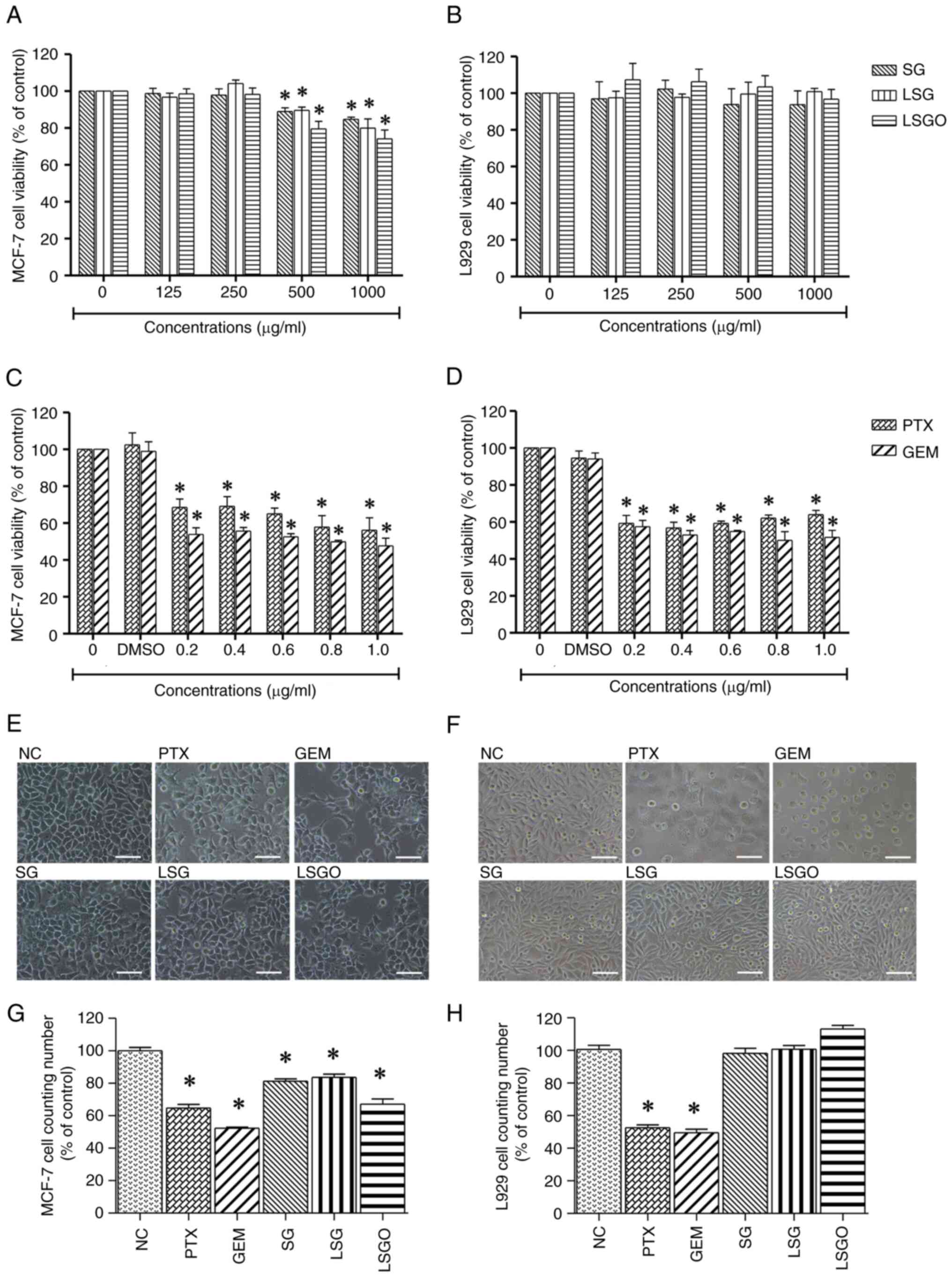
Figure 1

Effects of PTX and GEM (at
concentrations of 0.2, 0.4, 0.6, 0.8 and 1.0 µg/ml) and SG, LSG and
LSGO (at concentrations of 125, 250 500, and 1,000 µg/ml) on the
viability of MCF-7 breast cancer cells and L929 normal fibroblast
cells, as assessed using MTT assay. (A) Viability of MCF-7 cells
treated with SG, LSG and LSGO. (B) Viability of L929 cells treated
with SG, LSG and LSGO. (C) Viability of MCF-7 cells treated with
PTX and GEM. (D) Viability of L929 cells treated with PTX and GEM.
(E) Phase-contrast images illustrating morphological changes in
MCF-7 cells following treatment with PTX, GEM, SG, LSG and LSGO.
(F) Phase-contrast images illustrating morphological changes in
L929 cells following treatment with PTX, GEM, SG, LSG and LSGO.
Scale bars, 100 µm. (G) Quantitative cell counts of MCF-7 cells
treated with PTX, GEM, SG, LSG and LSGO. (H) Quantitative cell
counts of L929 cells treated with PTX, GEM, SG, LSG and LSGO. The
results are presented as the mean±SEM (n=3) from three independent
experiments. *P<0.05, statistically significant
difference compared to the normal control at a 95% confidence
level. PTX, paclitaxel; GEM, gemcitabine; SG, sulfated galactan;
LSG low molecular weight SG; and LSGO, octanoyl ester-supplemented
SG.

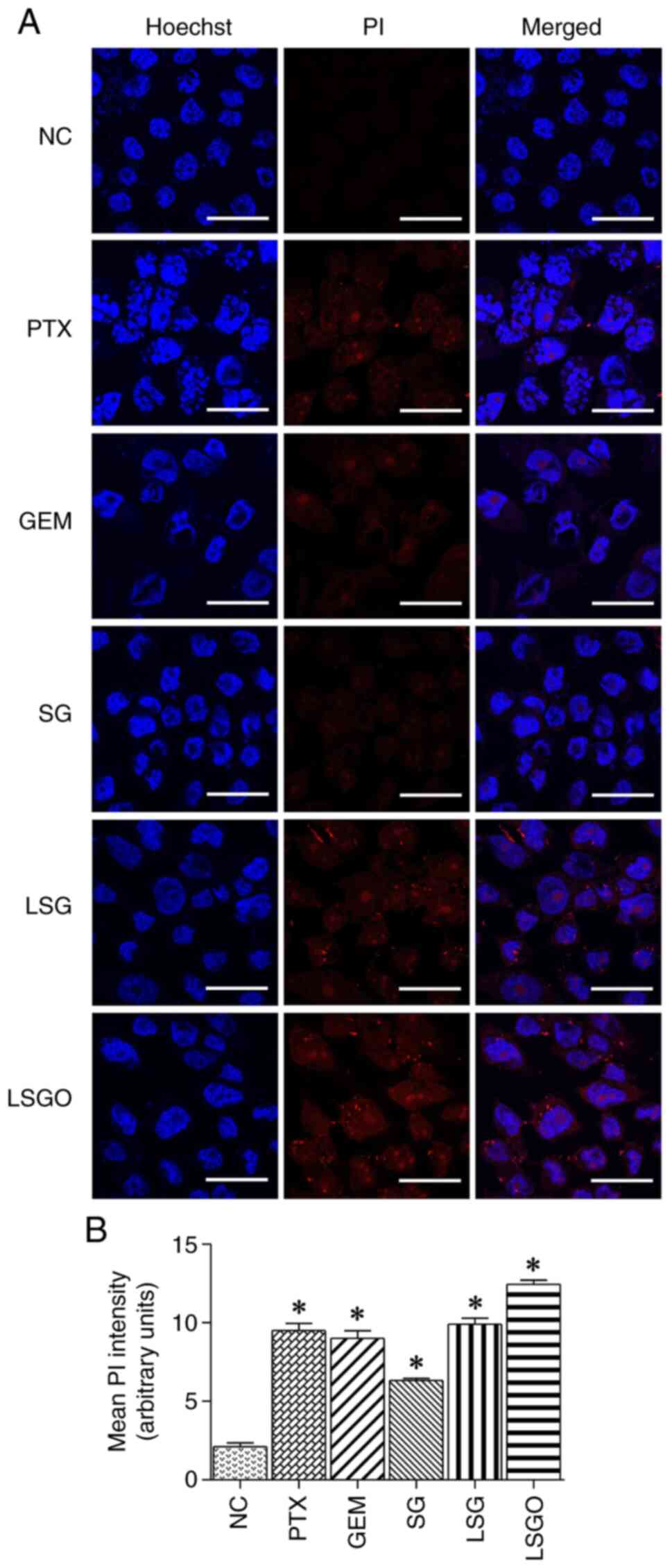
Figure 2

Hoechst/PI dual staining in MCF-7
cells following treatment with PTX, GEM, SG, LSG and LSGO. (A)
Immunofluorescence confocal micrographs illustrating the intensity
levels of Hoechst and PI dual staining in MCF-7 cells following
treatment. Scale bars, 20 µm. (B) Mean fluorescence PI intensity in
MCF-7 cells following treatment. The results are presented as the
mean ± SEM (n=3) from three independent experiments.
*P<0.05, statistically significant difference
compared to the normal control at a 95% confidence level. PTX,
paclitaxel; GEM, gemcitabine; SG, sulfated galactan; LSG low
molecular weight SG; and LSGO, octanoyl ester-supplemented SG.

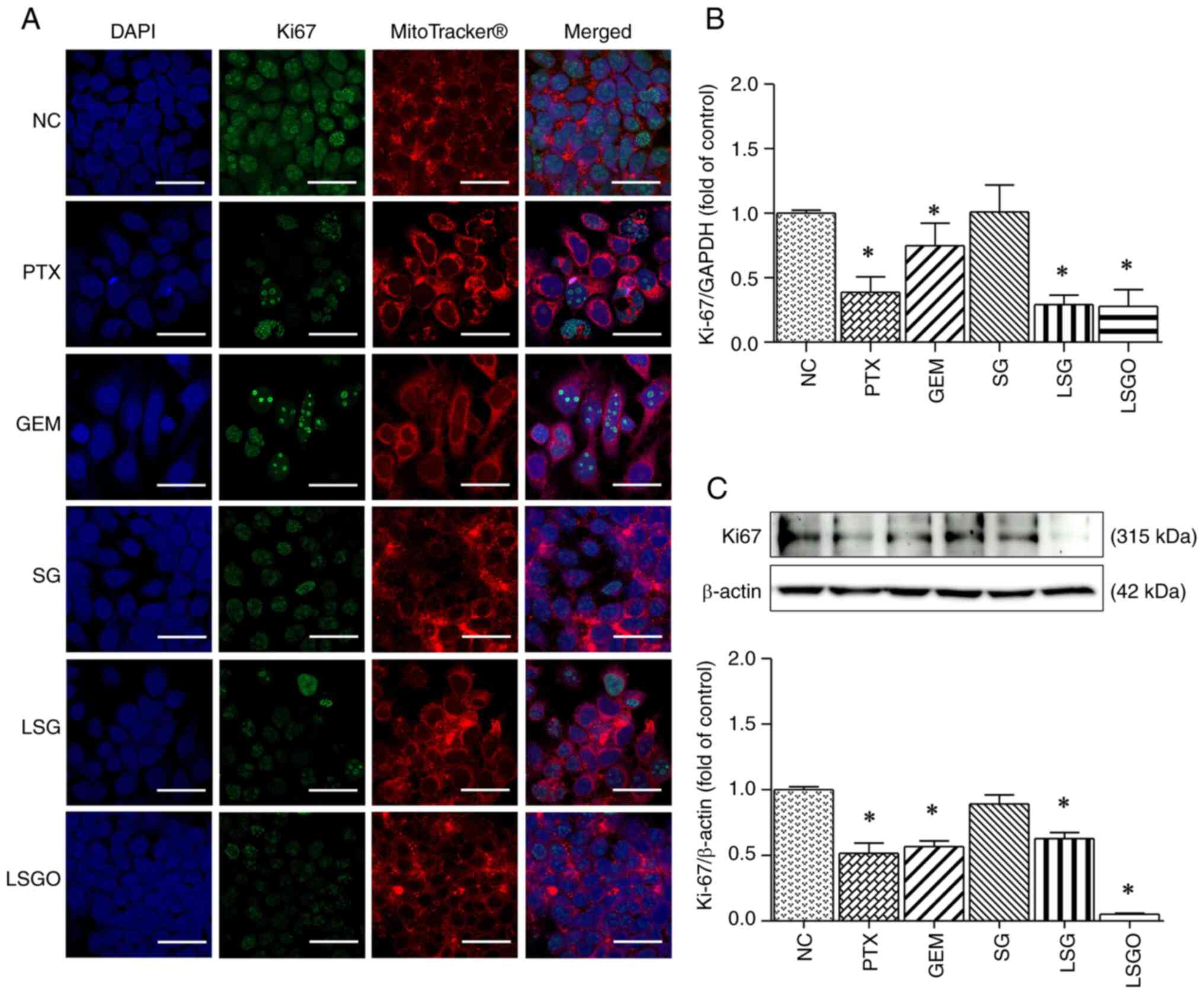
Figure 3

Expression levels of Ki-67 in MCF-7
cells following treatment with PTX, GEM, SG, LSG and LSGO. (A)
Immunofluorescence confocal micrographs illustrating Ki-67
expression in MCF-7 cells. Ki-67 protein is shown in green, nuclei
were stained with DAPI (blue), and the cell plasma membrane was
stained with MitoTracker® Deep Red (red). Scale bars, 20
µm. (B) mRNA expression levels of Ki-67 in MCF-7 cells, assessed
using reverse transcription-quantitative PCR. (C) Protein
expression levels of Ki-67 in MCF-7 cells, assessed using western
blot analysis. The results are presented as the mean ± SEM (n=3)
from three independent experiments. *P<0.05,
statistically significant difference compared to the normal control
at a 95% confidence level. PTX, paclitaxel; GEM, gemcitabine; SG,
sulfated galactan; LSG low molecular weight SG; and LSGO, octanoyl
ester-supplemented SG.

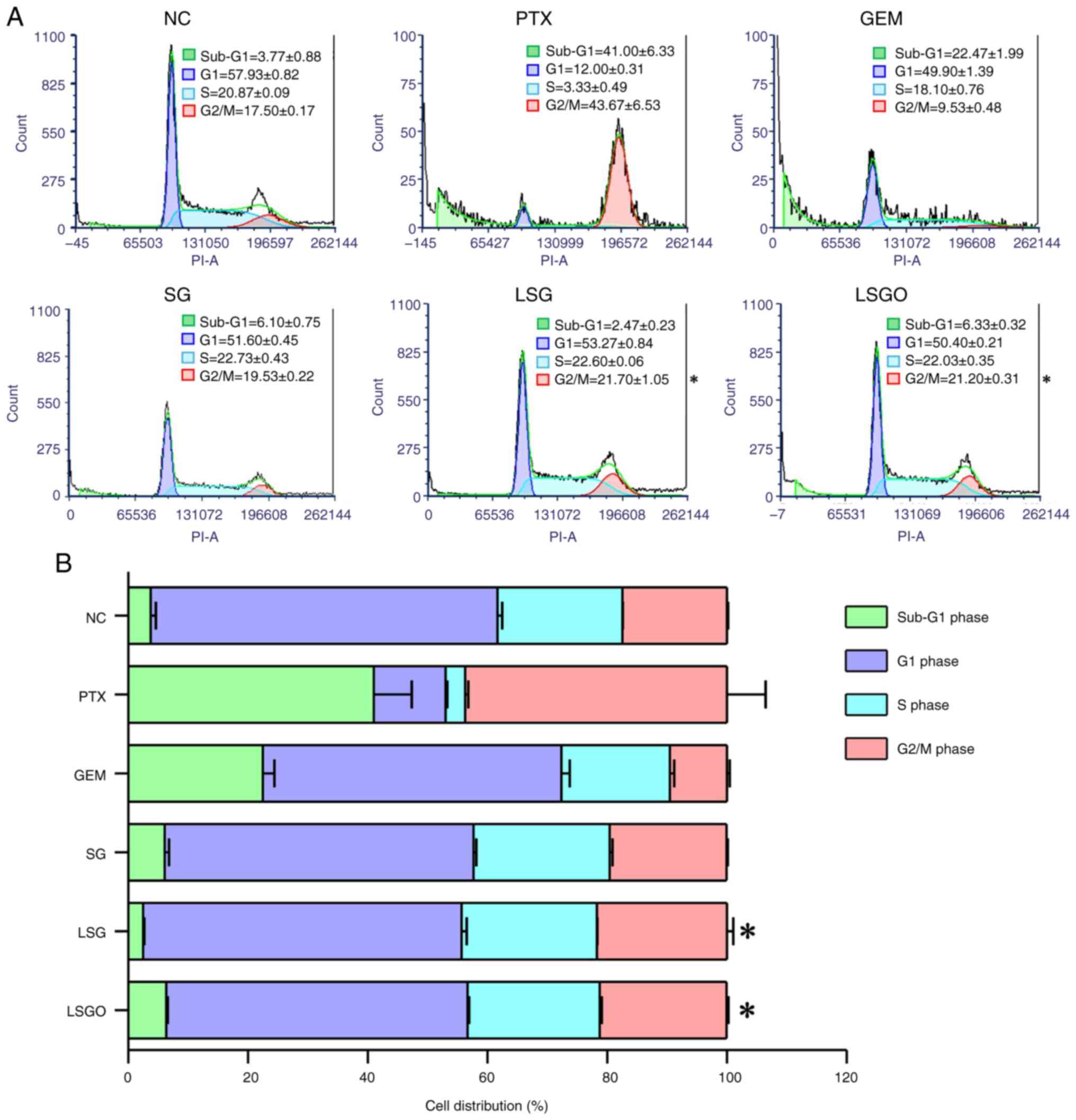
Figure 4

Effects of PTX, GEM, SG, LSG and LSGO
on the cell cycle distribution of MCF-7 cells, assessed using flow
cytometry. (A) Representative histograms depicting cell cycle
distribution in MCF-7 cells following treatment. (B) Quantitative
results demonstrating the percentage of cells in each cell cycle
phase for the normal control and treatment groups. The results are
presented as the mean±SEM (n=3) from three independent experiments.
*P<0.05, statistically significant difference
compared to the normal control at a 95% confidence level. PTX,
paclitaxel; GEM, gemcitabine; SG, sulfated galactan; LSG low
molecular weight SG; and LSGO, octanoyl ester-supplemented SG.

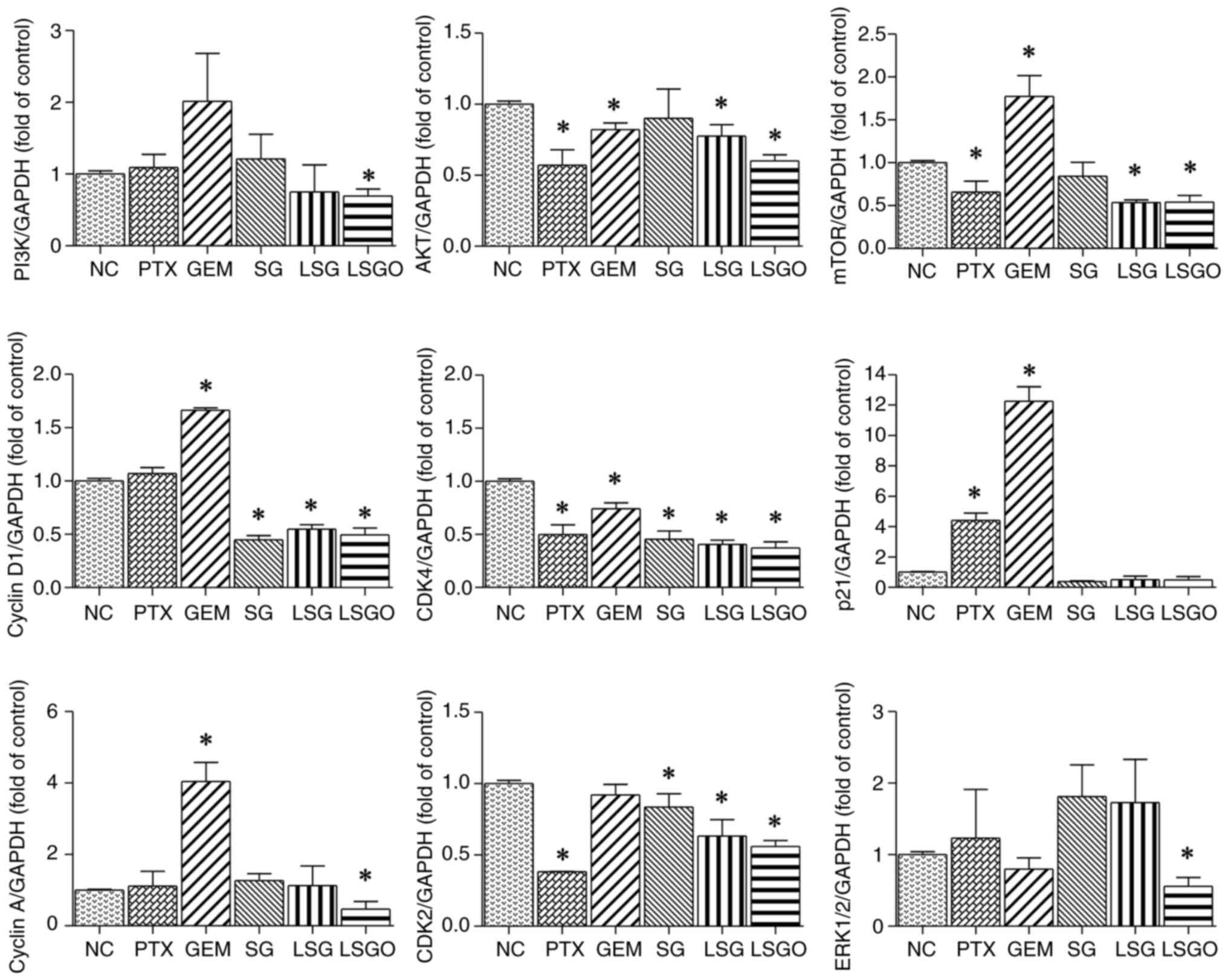
Figure 5

mRNA expression levels of PI3K, AKT,
mTOR, cyclin D1, CDK4, p21, cyclin A, CDK2 and ERK 1/2 in MCF-7
cells treated with PTX, GEM, SG, LSG and LSGO, assessed relative to
GAPDH using reverse transcription-quantitative PCR. The results are
presented as the mean±SEM (n=3) from three independent experiments.
*P<0.05, statistically significant difference
compared to the normal control at a 95% confidence level. PTX,
paclitaxel; GEM, gemcitabine; SG, sulfated galactan; LSG low
molecular weight SG; and LSGO, octanoyl ester-supplemented SG.

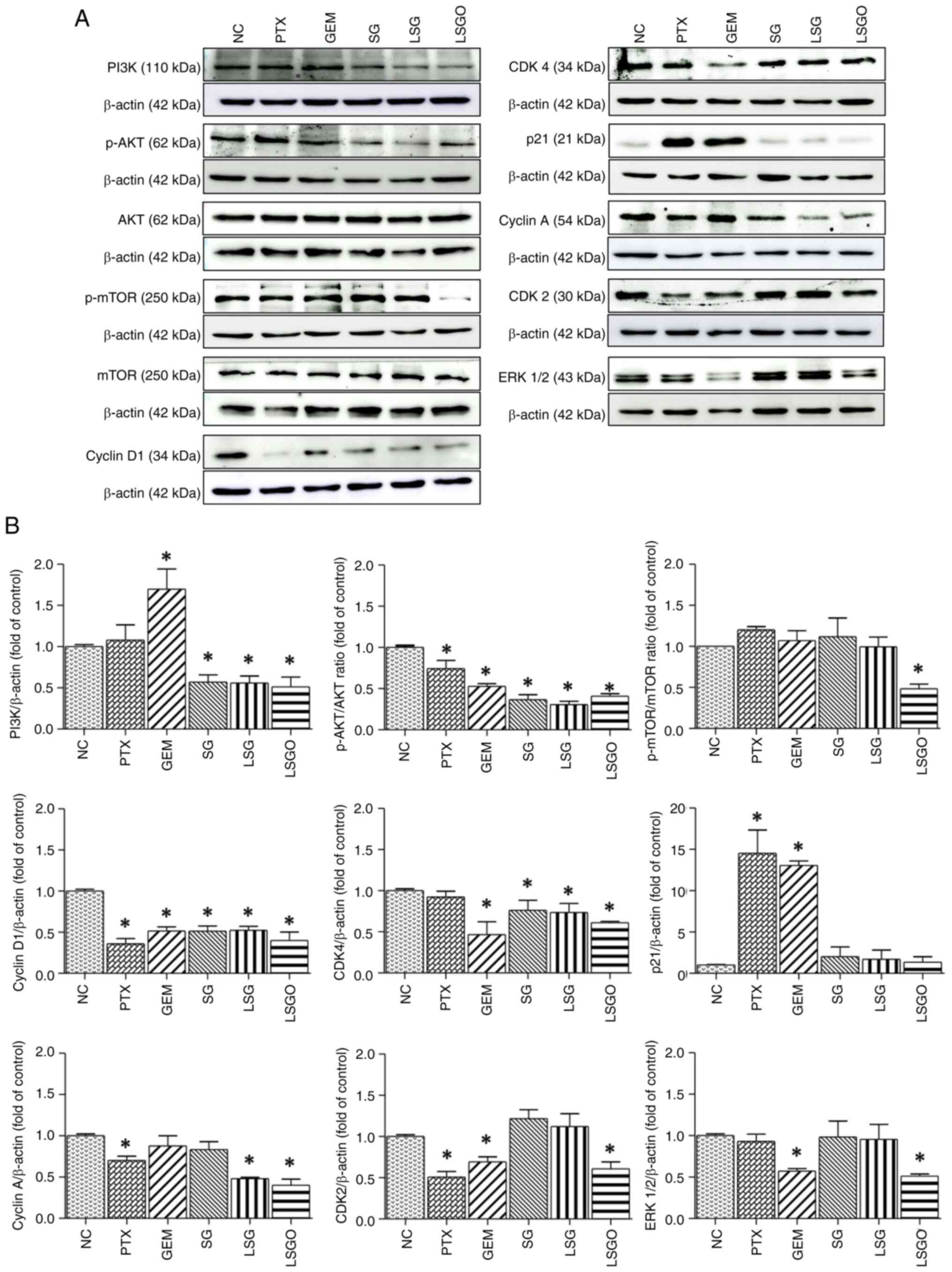
Figure 6

Effects of PTX, GEM, SG, LSG and LSGO
on protein expression levels in MCF-7 cells, assessed using western
blot analysis. (A) Protein expression levels of PI3K, p-AKT, AKT,
p-mTOR, mTOR, cyclin D1, CDK4, p21, cyclin A, CDK2 and ERK 1/2 in
MCF-7 cells treated with PTX, GEM, SG, LSG and LSGO, assessed using
western blot analysis. (B) Quantitative analysis of PI3K,
p-AKT/AKT, p-mTOR/mTOR, cyclin D1, CDK4, p21, cyclin A, CDK2 and
ERK 1/2 expression, normalized to β-actin. The results are
presented as the mean±SEM (n=3) from three independent experiments.
*P<0.05, statistically significant difference
compared to the normal control at a 95% confidence level. PTX,
paclitaxel; GEM, gemcitabine; SG, sulfated galactan; LSG low
molecular weight SG; and LSGO, octanoyl ester-supplemented SG.
View References

1 

Ilango S, Paital B, Jayachandran P, Padma PR and Nirmaladevi R: Epigenetic alterations in cancer. Front Biosci (Landmark Ed). 25:1058–1109. 2020.PubMed/NCBI View Article : Google Scholar

2 

Damiescu R, Efferth T and Dawood M: Dysregulation of different modes of programmed cell death by epigenetic modifications and their role in cancer. Cancer Lett. 584(216623)2024.PubMed/NCBI View Article : Google Scholar

3 

Feng Y, Spezia M, Huang S, Yuan C, Zeng Z, Zhang L, Ji X, Liu W, Huang B, Luo W, et al: Breast cancer development and progression: Risk factors, cancer stem cells, signaling pathways, genomics, and molecular pathogenesis. Genes Dis. 5:77–106. 2018.PubMed/NCBI View Article : Google Scholar

4 

Lee S, Rauch J and Kolch W: Targeting MAPK signaling in cancer: Mechanisms of drug resistance and sensitivity. Int J Mol Sci. 21(1102)2020.PubMed/NCBI View Article : Google Scholar

5 

Dong C, Wu J, Chen Y, Nie J and Chen C: Activation of PI3K/AKT/mTOR pathway causes drug resistance in breast cancer. Front Pharmacol. 12(628690)2021.PubMed/NCBI View Article : Google Scholar

6 

Mangé A, Coyaud E, Desmetz C, Laurent E, Béganton B, Coopman P, Raught B and Solassol J: FKBP4 connects mTORC2 and PI3K to activate the PDK1/Akt-dependent cell proliferation signaling in breast cancer. Theranostics. 9:7003–7015. 2019.PubMed/NCBI View Article : Google Scholar

7 

Palmer N and Kaldis P: Less-well known functions of cyclin/CDK complexes. Semin Cell Dev Biol. 107:54–62. 2020.PubMed/NCBI View Article : Google Scholar

8 

Ding L, Cao J, Lin W, Chen H, Xiong X, Ao H, Yu M, Lin J and Cui Q: The roles of cyclin-dependent kinases in cell-cycle progression and therapeutic strategies in human breast cancer. Int J Mol Sci. 21(1960)2020.PubMed/NCBI View Article : Google Scholar

9 

Al Bitar S and Gali-Muhtasib H: The role of the cyclin dependent kinase inhibitor p21cip1/waf1 in targeting cancer: Molecular mechanisms and novel therapeutics. Cancers (Basel). 11(1475)2019.PubMed/NCBI View Article : Google Scholar

10 

Menon SS, Guruvayoorappan C, Sakthivel KM and Rasmi RR: Ki-67 protein as a tumour proliferation marker. Clin Chim Acta. 491:39–45. 2019.PubMed/NCBI View Article : Google Scholar

11 

Burcombe R, Wilson GD, Dowsett M, Khan I, Richman PI, Daley F, Detre S and Makris A: Evaluation of Ki-67 proliferation and apoptotic index before, during and after neoadjuvant chemotherapy for primary breast cancer. Breast Cancer Res. 8(R31)2006.PubMed/NCBI View Article : Google Scholar

12 

Liyanage UE, Law MH, Han X, An J, Ong JS, Gharahkhani P, Gordon S, Neale RE and Olsen CM: 23andMe Research Team et al. Combined analysis of keratinocyte cancers identifies novel genome-wide loci. Hum Mol Genet. 28:3148–3160. 2019.PubMed/NCBI View Article : Google Scholar

13 

Sae-Lao T, Tohtong R, Bates DO and Wongprasert K: Sulfated galactans from red seaweed Gracilaria fisheri target EGFR and inhibit cholangiocarcinoma cell proliferation. Am J Chin Med. 45:615–633. 2017.PubMed/NCBI View Article : Google Scholar

14 

Sae-Lao T, Luplertlop N, Janvilisri T, Tohtong R, Bates DO and Wongprasert K: Sulfated galactans from the red seaweed Gracilaria fisheri exerts anti-migration effect on cholangiocarcinoma cells. Phytomedicine. 36:59–67. 2017.PubMed/NCBI View Article : Google Scholar

15 

Fan J, Zhu J, Zhu H, Zhang Y and Xu H: Potential therapeutic target for polysaccharide inhibition of colon cancer progression. Front Med (Lausanne). 10(1325491)2024.PubMed/NCBI View Article : Google Scholar

16 

Rudtanatip T, Somintara S, Sakaew W, El-Abid J, Cano ME, Jongsomchai K, Wongprasert K and Kovensky J: Sulfated galactans from Gracilaria fisheri with supplementation of octanoyl promote wound healing activity in vitro and in vivo. Macromol Biosci. 22(e2200172)2022.PubMed/NCBI View Article : Google Scholar

17 

Srimongkol P, Songserm P, Kuptawach K, Puthong S, Sangtanoo P, Thitiprasert S, Thongchul N, Phunpruch S and Karnchanatat A: Sulfated polysaccharides derived from marine microalgae, Synechococcus sp. VDW, inhibit the human colon cancer cell line Caco-2 by promoting cell apoptosis via the JNK and p38 MAPK signaling pathway. Algal Res. 69(102919)2023.

18 

Aslama A, Bergerb MR, Ullaha I, Hameeda A and Masoodc F: Preparation and evaluation of cytotoxic potential of paclitaxel containing poly-3-hydroxybutyrate-co-3-hydroxyvalarate (PTX/PHBV) nanoparticles. Braz J Biol. 83(e275688)2023.PubMed/NCBI View Article : Google Scholar

19 

Dehghani N, Tafvizi F and Jafari P: Cell cycle arrest and anti-cancer potential of probiotic Lactobacillus rhamnosus against HT-29 cancer cells. Bioimpacts. 11:245–252. 2021.PubMed/NCBI View Article : Google Scholar

20 

Intuyod K, Hahnvajanawong C, Pinlaor P and Pinlaor S: Anti-parasitic drug ivermectin exhibits potent anticancer activity against gemcitabine-resistant cholangiocarcinoma in vitro. Anticancer Res. 39:4837–4843. 2019.PubMed/NCBI View Article : Google Scholar

21 

Livak KJ and Schmittgen TD: Analysis of relative gene expression data using real-time quantitative PCR and the 2(-Delta Delta C(T)) method. Methods. 25:402–408. 2001.PubMed/NCBI View Article : Google Scholar

22 

Shendge AK, Basu T and Mandal N: Evaluation of anticancer activity of Clerodendrum viscosum leaves against breast carcinoma. Indian J Pharmacol. 53:377–383. 2021.PubMed/NCBI View Article : Google Scholar

23 

Bray F, Laversanne M, Sung H, Ferlay J, Siegel RL, Soerjomataram I and Jemal A: Global cancer statistics 2022: GLOBOCAN estimates of incidence and mortality worldwide for 36 cancers in 185 countries. CA Cancer J Clin. 74:229–263. 2024.PubMed/NCBI View Article : Google Scholar

24 

Marquette C and Nabell L: Chemotherapy-resistant metastatic breast cancer. Curr Treat Options Oncol. 13:263–275. 2012.PubMed/NCBI View Article : Google Scholar

25 

He X, Xue M, Jiang S, Li W, Yu J and Xiang S: Fucoidan promotes apoptosis and inhibits EMT of breast cancer cells. Biol Phram Bull. 42:442–447. 2019.PubMed/NCBI View Article : Google Scholar

26 

Chantree P, Na-Bangchang K and Martviset P: Anticancer activity of fucoidan via apoptosis and cell cycle arrest on cholangiocarcinoma cell. Asian Pac J Cancer Prev. 22:209–217. 2021.PubMed/NCBI View Article : Google Scholar

27 

Wongprasert K, Rudtanatip T and Praiboon J: Immunostimulatory activity of sulfated galactans isolated from the red seaweed Gracilaria fisheri and development of resistance against white spot syndrome virus (WSSV) in shrimp. Fish Shellfish Immunol. 36:52–60. 2014.PubMed/NCBI View Article : Google Scholar

28 

Li N, Wang C, Georgiev MI, Bajpai VK, Tundis R, Simal-Gandara J, Lu X, Xiao J, Tang X and Qiao X: Advances in dietary polysaccharides as anticancer agents: Structure-activity relationship. Trends Food Sci Technol. 111:360–377. 2021.

29 

Lu J, Shi KK, Chen S, Wang J, Hassouna A, White LN, Merien F, Xie M, Kong Q, Li J, et al: Fucoidan extracted from the New Zealand Undaria pinnatifida-physicochemical comparison against five other fucoidans: Unique low molecular weight fraction bioactivity in breast cancer cell lines. Mar Drugs. 16(461)2018.PubMed/NCBI View Article : Google Scholar

30 

Wang Y, Xing M, Cao Q, Ji A, Liang H and Song S: Biological activities of fucoidan and the factors mediating its therapeutic effects: A review of recent studies. Mar Drugs. 17(183)2019.PubMed/NCBI View Article : Google Scholar

31 

Sakaew W, Somintara S, Jongsomchai K, El Abid J, Wongprasert K, Kovensky J and Rudtanatip T: Octanoyl esterification of low molecular weight sulfated galactan enhances the cellular uptake and collagen expression in fibroblast cells. Biomed Rep. 19(99)2023.PubMed/NCBI View Article : Google Scholar

32 

Davey MG, Hynes SO, Kerin MJ, Miller N and Lowery AJ: Ki-67 as a prognostic biomarker in invasive breast cancer. Cancers (Basel). 13(4455)2021.PubMed/NCBI View Article : Google Scholar

33 

Yang C, Zhang J, Ding M, Xu K, Li L, Mao L and Zheng J: Ki67 targeted strategies for cancer therapy. Clin Transl Oncol. 20:570–575. 2018.PubMed/NCBI View Article : Google Scholar

34 

Li LT, Jiang G, Chen Q and Zheng JN: Ki67 is a promising molecular target in the diagnosis of cancer (review). Mol Med Rep. 11:1566–1572. 2015.PubMed/NCBI View Article : Google Scholar

35 

Ma L, Xu GB, Tang X, Zhang C, Zhao W, Wang J and Chen H: Anti-cancer potential of polysaccharide extracted from hawthorn (Crataegus.) on human colon cancer cell line HCT116 via cell cycle arrest and apoptosis. J Funct Foods. 64(103677)2020.

36 

Abdala-Díaz RT, Casas-Arrojo V, Castro-Varela P, Riquelme C, Carrillo P, Medina MA, Cárdenas C, Becerra J and Pérez Manríquez C: Immunomodulatory, antioxidant, and potential anticancer activity of the polysaccharides of the fungus Fomitiporia chilensis. Molecules. 29(3628)2024.PubMed/NCBI View Article : Google Scholar

37 

Akhtar MJ, Ahamed M, Alhadlaq HA, Alrokayan SA and Kumar S: Targeted anticancer therapy: Overexpressed receptors and nanotechnology. Clin Chim Acta. 436:78–92. 2014.PubMed/NCBI View Article : Google Scholar

38 

Cheng JJ, Chang CC, Chao CH and Lu MK: Characterization of fungal sulfated polysaccharides and their synergistic anticancer effects with doxorubicin. Carbohydr Polym. 90:134–139. 2012.PubMed/NCBI View Article : Google Scholar

39 

Asghar U, Witkiewicz AK, Turner NC and Knudsen ES: The history and future of targeting cyclin-dependent kinases in cancer therapy. Nat Rev Drug Discov. 14:130–146. 2015.PubMed/NCBI View Article : Google Scholar

40 

Finn RS, Aleshin A and Slamon DJ: Targeting the cyclin-dependent kinases (CDK) 4/6 in estrogen receptor-positive breast cancers. Breast Cancer Res. 18(17)2016.PubMed/NCBI View Article : Google Scholar

41 

Gopinathan L, Tan SL, Padmakumar VC, Coppola V, Tessarollo L and Kaldis P: Loss of Cdk2 and cyclin A2 impairs cell proliferation and tumorigenesis. Cancer Res. 74:3870–3879. 2014.PubMed/NCBI View Article : Google Scholar

42 

Jen CI, Lu MK, Lai MN and Ng LT: Sulfated polysaccharides of Laetiporus sulphureus fruiting bodies exhibit anti-breast cancer activity through cell cycle arrest, apoptosis induction, and inhibiting cell migration. J Ethnopharmacol. 321(117546)2024.PubMed/NCBI View Article : Google Scholar

43 

Chen PH, Chiang PC, Lo WC, Su CW, Wu CY, Chan CH, Wu YC, Cheng HC, Deng WP, Lin HK and Peng BY: A novel fucoidan complex-based functional beverage attenuates oral cancer through inducing apoptosis, G2/M cell cycle arrest and retarding cell migration/invasion. J Funct Foods. 85(104665)2021.

Related Articles

  • Abstract
  • View
  • Download
Copy and paste a formatted citation
Spandidos Publications style
Phanphak J, Somintara S, Sakaew W, Senarai T, Kovensky J, Wongprasert K and Rudtanatip T: Sulfated galactan derivatives from <em>Gracilaria fisheri</em> suppress the proliferation of MCF‑7 breast cancer cells by inducing cell cycle arrest. World Acad Sci J 7: 77, 2025.
APA
Phanphak, J., Somintara, S., Sakaew, W., Senarai, T., Kovensky, J., Wongprasert, K., & Rudtanatip, T. (2025). Sulfated galactan derivatives from <em>Gracilaria fisheri</em> suppress the proliferation of MCF‑7 breast cancer cells by inducing cell cycle arrest. World Academy of Sciences Journal, 7, 77. https://doi.org/10.3892/wasj.2025.365
MLA
Phanphak, J., Somintara, S., Sakaew, W., Senarai, T., Kovensky, J., Wongprasert, K., Rudtanatip, T."Sulfated galactan derivatives from <em>Gracilaria fisheri</em> suppress the proliferation of MCF‑7 breast cancer cells by inducing cell cycle arrest". World Academy of Sciences Journal 7.5 (2025): 77.
Chicago
Phanphak, J., Somintara, S., Sakaew, W., Senarai, T., Kovensky, J., Wongprasert, K., Rudtanatip, T."Sulfated galactan derivatives from <em>Gracilaria fisheri</em> suppress the proliferation of MCF‑7 breast cancer cells by inducing cell cycle arrest". World Academy of Sciences Journal 7, no. 5 (2025): 77. https://doi.org/10.3892/wasj.2025.365
Copy and paste a formatted citation
x
Spandidos Publications style
Phanphak J, Somintara S, Sakaew W, Senarai T, Kovensky J, Wongprasert K and Rudtanatip T: Sulfated galactan derivatives from <em>Gracilaria fisheri</em> suppress the proliferation of MCF‑7 breast cancer cells by inducing cell cycle arrest. World Acad Sci J 7: 77, 2025.
APA
Phanphak, J., Somintara, S., Sakaew, W., Senarai, T., Kovensky, J., Wongprasert, K., & Rudtanatip, T. (2025). Sulfated galactan derivatives from <em>Gracilaria fisheri</em> suppress the proliferation of MCF‑7 breast cancer cells by inducing cell cycle arrest. World Academy of Sciences Journal, 7, 77. https://doi.org/10.3892/wasj.2025.365
MLA
Phanphak, J., Somintara, S., Sakaew, W., Senarai, T., Kovensky, J., Wongprasert, K., Rudtanatip, T."Sulfated galactan derivatives from <em>Gracilaria fisheri</em> suppress the proliferation of MCF‑7 breast cancer cells by inducing cell cycle arrest". World Academy of Sciences Journal 7.5 (2025): 77.
Chicago
Phanphak, J., Somintara, S., Sakaew, W., Senarai, T., Kovensky, J., Wongprasert, K., Rudtanatip, T."Sulfated galactan derivatives from <em>Gracilaria fisheri</em> suppress the proliferation of MCF‑7 breast cancer cells by inducing cell cycle arrest". World Academy of Sciences Journal 7, no. 5 (2025): 77. https://doi.org/10.3892/wasj.2025.365
Follow us
  • Twitter
  • LinkedIn
  • Facebook
About
  • Spandidos Publications
  • Careers
  • Cookie Policy
  • Privacy Policy
How can we help?
  • Help
  • Live Chat
  • Contact
  • Email to our Support Team