1. Introduction
Breast cancer (BC) remains the second leading cause
of mortality among women globally, with 2.29 million cases reported
in 2022(1). Despite advances in
diagnosis and treatment, subtypes such as triple-negative BC (TNBC)
present significant therapeutic challenges due to the lack of
approved treatment methods and poor prognoses. While tumors that
are human epidermal growth factor receptor 2 (HER2)-amplified or
positive for hormone receptors respond well to targeted therapy,
TNBC lacks these targets and remains aggressive and difficult to
treat (2,3). The second edition of Hanahan and
Weinberg's ‘Hallmarks of Cancer’ added a new hallmark: Evading
immune response, which highlighted the crucial game of
‘hide-and-seek’ taking place between the immune system and cancer
(4). As a result, biologically
conversant therapies, such as immunotherapy, are viewed as a
promising approach; however, immune-related toxicities and variable
efficacy across BC subtypes are some of the drawbacks associated
with this therapy (2,5). Therefore, it is crucial to identify
an affordable alternative that can rapidly transition from the
laboratory to the patient with the least amount of added toxicity.
According to epidemiological research, a nutritious diet high in
fruits and vegetables is related to a lower prevalence of BC
(6,7). Polyphenols, widely abundant in fruits
and vegetables, in addition to having antioxidant, anti-viral, and
anti-bacterial properties, have exhibited potential as anticancer
agents through their immunomodulatory properties (8,9). The
present review discusses BC treatment options with a particular
emphasis on immunotherapy and the potential of polyphenols as
immunotherapeutic agents.
2. Cancer immunology, breast tumor
microenvironment and current immunotherapy landscape
The immune system consists of innate and acquired
immunity, working together for immunological surveillance (10,11).
Innate immunity constitutes the primary defense of an organism
through physical barriers, temperature, pH and cells such as
neutrophils and macrophages, with cytokines regulating these
processes. Acquired immunity provides immunity to foreign bodies by
producing B-cell antibodies and activating cytotoxic T-cells with
the aid of antigen-presenting cells (APCs). Although cancer cells
arise from self-tissue, they are characterized by distinct
biochemical composition, antigenic structure and physiological
function in comparison to the healthy cells that render them
detectable by immune cells. However, cancer cells are characterized
by a process known as immunoediting, by which tumor cells
subsequently develop strategies with which to elude destruction by
the immune system (12).
Immunoediting encompasses three dynamic phases: Immunosurveillance,
where cancer cells are eliminated by immune cells; equilibrium,
where tumor cells that were not eliminated coexist with the immune
system; and evasion, where resistant cells outmaneuver the immune
system through various evasion tactics (13,14).
These include tumor-induced immune suppression by overexpressing
immune checkpoint molecules, such as programmed death-1/ligand 1
(PD-1/L1) and cytotoxic T-lymphocyte (CTL) antigen-4 (CTLA-4), and
producing immunosuppressive substances, such as interleukin
(IL)-10, transforming growth factor (TGF), and alpha-fetoprotein,
which inhibit innate immune responses to cancer. Tumor-specific
CTLs may undergo genetic modification to become resistant to the
TGF-inhibitory action. Tumors may activate Fas ligand (FasL) and
cause tumor-infiltrating effector T-cells to undergo apoptosis
(15).
The BC immune tumor microenvironment is a dynamic
landscape consisting of both immune-promoting and immunosuppressive
factors (10). Although BCs were
considered typically less immunogenic than melanoma or lung cancer,
recent studies have demonstrated significant immune involvement in
subtypes such as TNBC (16). The
evasion of BC cells involves intricate mechanisms, such as the
recruitment and polarization of M2-phenotype tumor-associated
macrophages (TAMs), which promotes cell survival through the
secretion of TGF-β, IL-10 and CCL18(17). Myeloid-derived suppressor cells
(MDSCs) may also suppress natural killer (NK) cells and T-cells by
the induction of oxidative stress and the release of pro-angiogenic
factors, such as vascular endothelial growth factor, IL-10, matrix
metalloproteinases and TGF-β (18). Furthermore, regulatory T-cells
(Tregs) play a role in the ability of MDSCs to suppress the immune
system. Forkhead box P3 (Foxp3)-expressing Tregs are potent
inducers of peripheral immunological tolerance, suppressing a range
of immune cells, including CD4+ and CD8+
T-cells, NK-cells, NK T-cells, B-cells and APCs through IL-10,
TGF-β and checkpoint ligand CTLA-4 expression (19,20).
These interactions have been described in detail by Moura et
al (16). Moreover, the
suppression of NK cells and natural killer group 2 member D protein
(NKG2D) receptors via the upregulation of human leukocyte antigen-G
and PD-L1 on tumor cells and the secretion of TGF-β, respectively,
disarms these cells from tracking down tumor cells (16). Understanding these interactions,
will pave the way towards developing effective targeted therapies
that could reprogram the immune ecosystem and increase therapeutic
response.
Recent trends in BC immunotherapy have exhibited a
strategic shift from monotherapy towards multi-modal approaches
(Fig. 1). Immune checkpoint
inhibitors (ICIs) targeting PD-1/L1 that were once limited to TNBC,
are being investigated across BC subtypes, often in combination
with chemotherapy, and have demonstrated enhanced efficacy
(21,22). TNBCs and HER2+ subtypes
often benefit more from the early administration of ICIs (23), while clinical trials demonstrate
enhanced outcomes with combination therapies like nivolumab with
ipilimumab for TNBCs and durvalumab with tremelimumab for
metastatic HER2-negative BCs (24-26).
While monoclonal antibodies remain central to the management of
HER2+ cancers, emerging modalities, such as bispecific
antibodies and chimeric antigen receptor T-cell therarpy combat
cancer through tumor-specific targeting (27,28).
Cancer vaccines have also emerged as a promising strategy; however,
they still face inconsistencies in immune activation (29) Across all modalities, cytokine-based
and other immunomodulatory drugs play a crucial role in sustaining
T-cell and NK cell responses but may induce systemic toxicity
(30). The recurring pattern is
strong: Although immunotherapies are improving constantly, their
success is limited by toxicity and resistance. Even in BC, the
side-effects of conventional immunotherapy agents may manifest mild
symptoms, such as nausea and neutropenia to life-threatening
hepatitis, mucosal inflammation and septic shock (31). Hence, there is a growing need for
alternative strategies that can mitigate the adverse effects, while
retaining or enhancing their therapeutic efficacy in cancer.
Epidemiological studies have suggested that maintaining a
nutritious diet of fruits and vegetables rich in phytochemicals,
such as polyphenols are associated with a reduced prevalence of BC
(6,7).
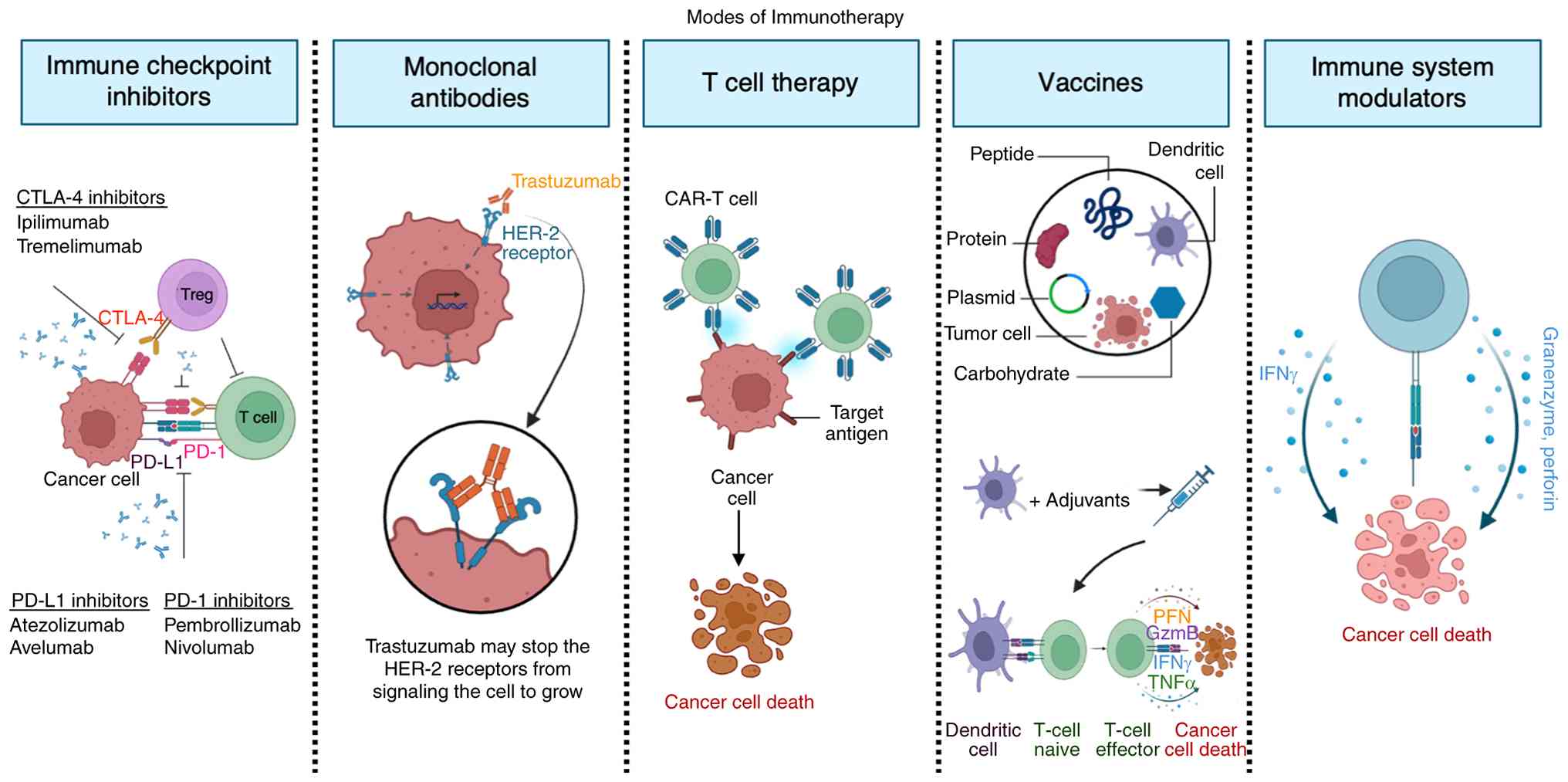 | Figure 1Illustration of the different types
of immunotherapies, namely immune checkpoint inhibitors, monoclonal
antibodies, T-cell therapy, vaccines and immune system modulators.
CTLA-4, cytotoxic T-lymphocyte antigen-4; PD-L1, programmed cell
death ligand protein 1; HER2, human epidermal growth factor
receptor 2; HER2, human epidermal growth factor receptor 2; CAR-T,
chimeric antigen receptor T-cell; IFN, interferon. |
3. Immunogenic cell death
An emerging concept in cancer immunology is
immunogenic cell death (ICD). It involves alterations in cell
surface chemistry and the release of ‘danger signals’, namely as
damage-associated molecular patterns, such as high mobility group
box 1, heat shock proteins and calreticulin, initiating dendritic
cell (DC) and T-cell responses (32,33).
A detailed discussion on ICD is provided in the study by Arimoto
et al (34). In their
study, they outline the mechanistic insights, particularly within
the context of cancer immunotherapy (34). In terms of immunogenicity, most
solid tumors are considered ‘cold tumors’ with impaired
immunological responses. ICD induction can be used to inflame the
tumor microenvironment to increase its immunogenicity (35). Contrary to the belief that
chemotherapy acts as an immunosuppressant, certain drugs, such as
anthracyclines (e.g., doxorubicin and mitoxantrone) and oxaliplatin
can trigger ICD (36,37). However, the use of chemotherapeutic
drugs is associated with toxicity; hence, it may be hypothesized
that non-toxic agents, such as polyphenols may be used to trigger
ICD and amplify immune responses. Understanding these mechanisms at
a molecular level is crucial for refining therapeutic strategies
and improving treatment outcomes. Polyphenols target various
pathways and molecules to modulate and regulate immune system to
target cancer cells, as illustrated in Fig. 2.
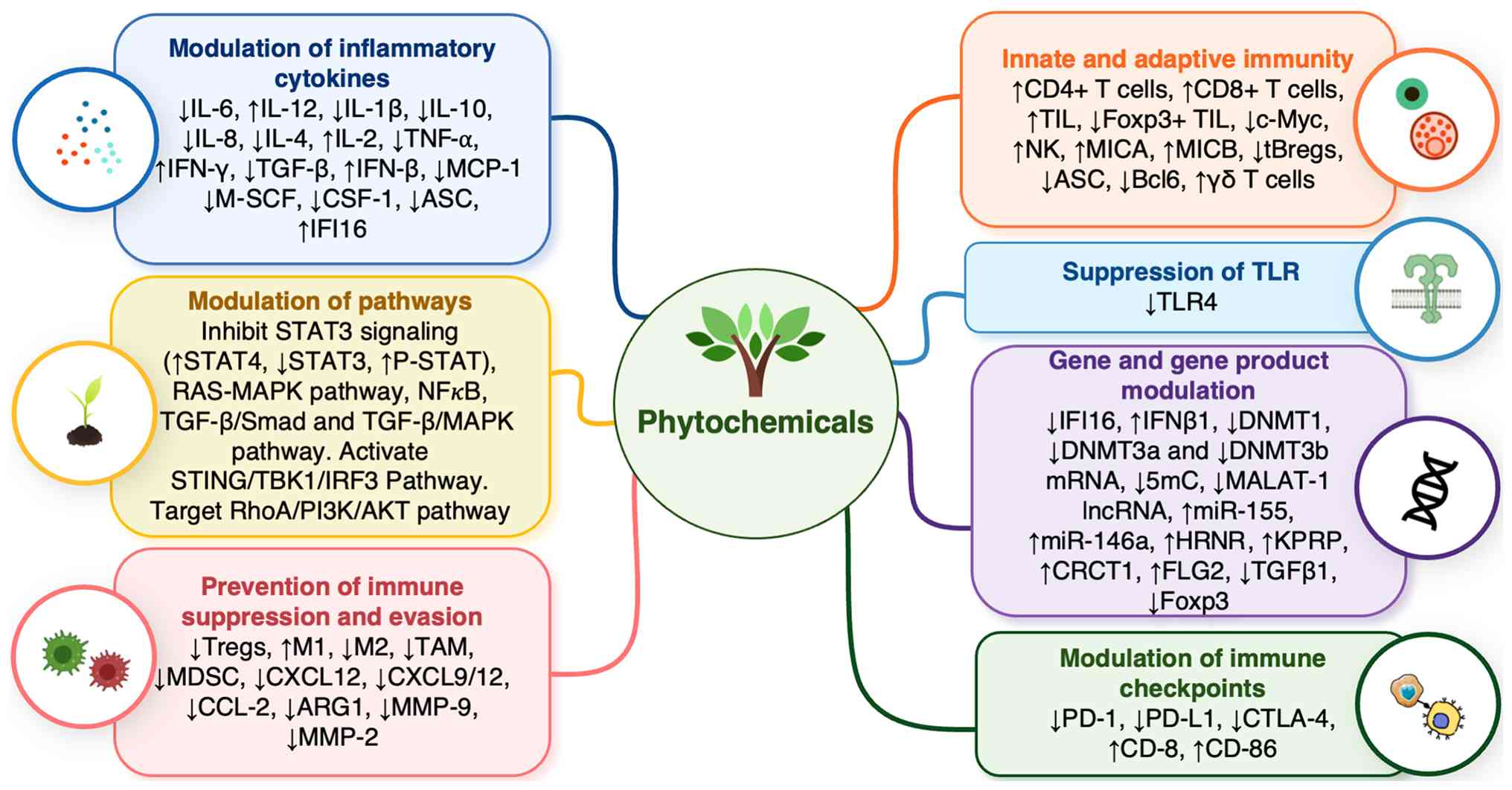 | Figure 2Illustration of the immunomodulation
of breast cancer using different pathways; immunomodulatory cells
such as T-cells, MDSCs, Tregs and macrophages; modulation of immune
checkpoints, such as PD1. PD-L1 and CTLA-4; modulation of
inflammatory cytokines and interferons; modulation of innate and
adaptive immunity; and modulation of pathways. MDSCs,
myeloid-derived suppressor cells; CTLA-4, cytotoxic T-lymphocyte
antigen-4; PD-L1, programmed cell death ligand protein 1; IL,
interleukin; IFN, interferon; MCP-1, monocyte chemoattractant
protein 1; M-CSF, macrophage colony-stimulating factor; ASC,
apoptosis-associated speck-like protein containing a CARD; IFI16,
interferon-induced protein 16; TAM, tumor-associated macrophage;
MMP, matrix metalloproteinase; Foxp3, forkhead box P3; TLR,
Toll-like receptor; NK, natural killer; DNMT, DNA
methyltransferase; HRNR. |
4. Immunomodulatory effects of polyphenols
in breast cancer
Polyphenols are known to exert positive benefits on
cardiovascular and inflammatory diseases, diabetes and aging.
Accumulating evidence also highlights their protective effects
against cancer by inducing anti-proliferative, anti-inflammatory,
antioxidant, cytotoxic and immunomodulatory effects (38,39).
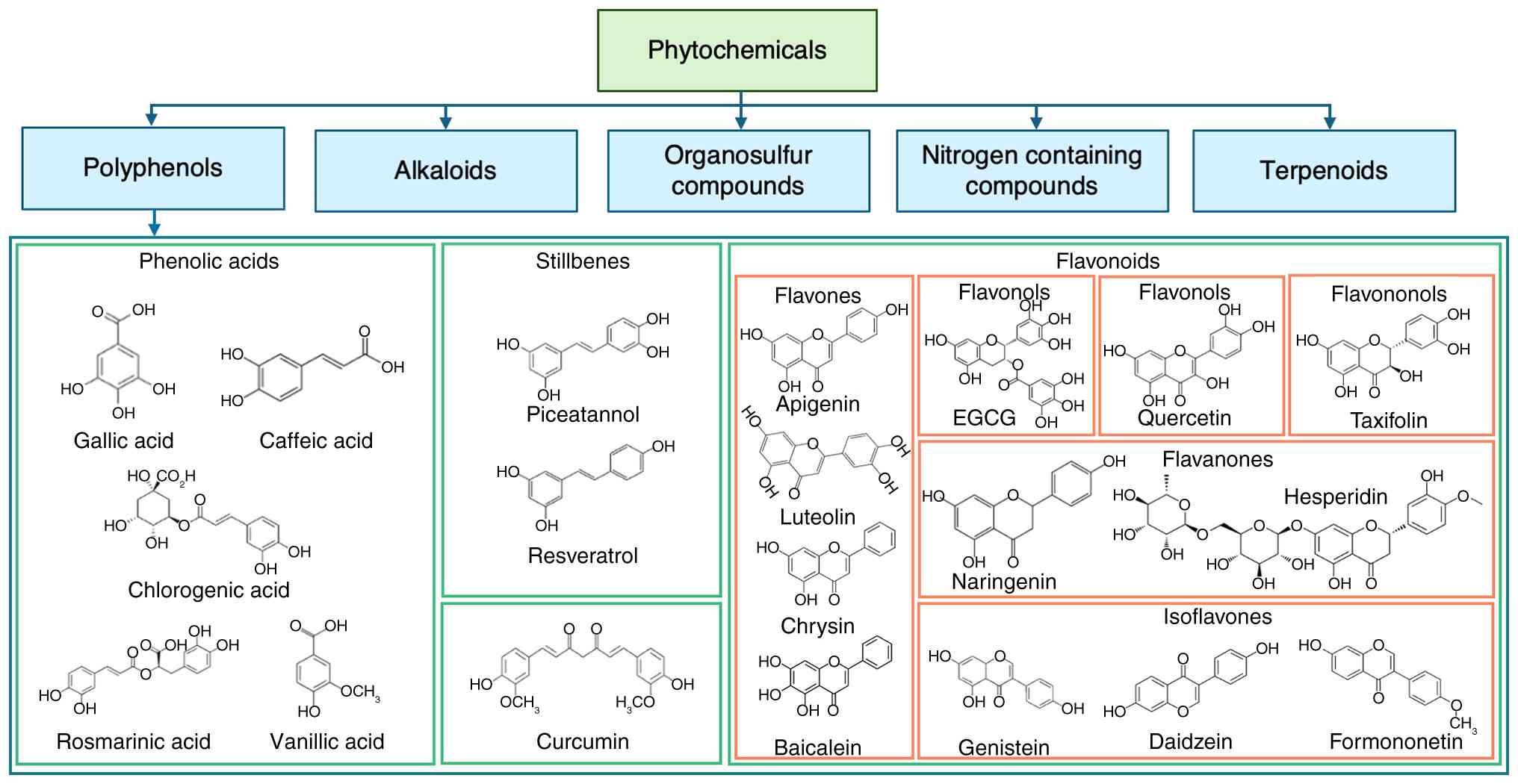
Multiple studies have demonstrated that phytochemicals (classified
as demonstrated in Fig. 3),
particularly polyphenols, such as resveratrol, quercetin, genistein
and curcumin, are involved in the modulation of the immune system
and regulation of the innate and adaptive immune system to provide
beneficial anticancer outcomes (9)
(Figs. 2 and 3). The in vitro and in vivo
mechanisms of polyphenols are summarized in Tables I and II, respectively.
 | Table IIn vitro studies on the role
of polyphenols exerting an immunomodulatory effect on breast cancer
cells. |
Table I
In vitro studies on the role
of polyphenols exerting an immunomodulatory effect on breast cancer
cells.
| Polyphenol | Phytochemical | Concentration | Experimental
models | Activity | Mechanism | Authors, year of
publication/(Refs.) |
|---|
| Phenolic acids | Vanillic acid | 0.4 mM | SKBR3 | ↑Type I IFN, ↑M1
macrophages, ↑IFNβ | Stimulation of
STING/TBK1/IRF3 pathway | Zhu et al,
2023(52) |
| | Chlorogenic
acid | 0.5 mM, 10 mM, 20
mM for 24 h | MDA-MB-231,
MDA-MB-453, MCF-10A, 4T1 | ↑CD4+
T-cells, ↑CD8+ T-cells, ↓NF-κB p65 | NF-κB pathway
modulation | Zeng et al,
2020(54) |
| | Caffeic acid
(caffeic acid phenethyl ester) | 25 mg/ml for 24 and
48 h | LPS-stimulated
MDA-MB-231 | ↓TLR4, ↓NF-κBp65,
↓LC3-II, ↓p62 | Inhibition of TLR4
signaling pathway, Autophagy induction | Chang et al,
2017(66) |
| Stilbenes | Resveratrol | 3.12-25 mM for 12
h | 4T1, 4T1.2 (subset
of 4T1) | ↓tBregs, ↓TGF-β,
↑CD8+ T-cells, ↑IFN-γ | Inhibition of tBreg
by inactivation of Stat3 phosphorylation and acetylation. | Lee-Chang et
al, 2013(62) |
| | Resveratrol | 6.25 mM, 25 mM for
48 h | BCap37, MDA-MB-231,
Hs 578T, MCF-7 | ↑MICA, ↑MICB,
↓c-Myc, ↓miR-17 | Promotion of NKG2D
recognition causing NK induced death | Pan et al,
2017(67) |
| | Resveratrol | 12.5 mM, 25 mM for
48 h | MDA-MB-231, Bcap37,
MCF7, MDA-MB-468 | ↑ULBP2,
↓MiR-17-5p | NK cell mediated
cytotoxicity by activation of MINK1/JNK/c-Jun cascade | Ding et al,
2025(68) |
| Flavonoids | Apigenin | 30 mM for 24 h | MDA-MB-231,
MDA-MB-468, SK-BR-3, 4T1 | ↓PD-L1, ↑IL-2,
↑T-cell proliferation | Inhibition of
interferon (IFN)-γ-induced PD-L1 upregulation, Inhibition of STAT1
activation | Coombs et
al, 2016(40) |
| | Hesperidin | 0-50 mM for 48
h | MCF-7 and
MDA-MB231 | ↓PD-L1, ↓p-Akt,
↓p-p65, ↓p-ERK | Suppression of
NF-κB and Akt pathway activation | Kongtawelert et
al, 2020(41) |
| | Baicalein | 10 mM, 20 mM, 40 mM
for 7 days | MDA-MB-231, BT459,
4T1+adipocyte co-culture | ↓p-STAT3, ↓PD-L1,
↓LEP | Possible
downregulation of SREBF1 pathway | Liu et al,
2023(44) |
| | Taxifolin | 5 mM, 10 mM, 50 mM,
100 mM | 4T-1 | ↓HRNR, ↓FLG2,
↓KPRP, ↑CD8+ T-cells | Modulation of
breast cancer genes | Lin et al,
2023(55) |
| | Quercetin | 5-120 mM for 24
h | MCF-10A, MCF-10AT,
MCF-7, MDA-MB-231 | ↑IFNγ-R, ↑p-JAK2,
↑p-STAT1, ↓PD-L1, ↑Vδ2 T-cell | Modulation of
JAK/STAT1 signaling pathway | Qiu et al,
2021(56) |
| | Formononetin
(bioinformatics analysis) | Bioinformatics
study | GSE103512/GSE139038
breast cancer microarray and immune-related gene data | IGF1, ESR1, and
CXCL12 have binding sites for formononetin | Inhibition of gene
products leading to increase in immune cell infiltration | Song et al,
2022(57) |
| | Methoxylated
quercetin glycoside | 1 mM-250 mM for
24-96 h | MDA-MB-231,
HR+ BC cells, MCF-7 | ↑MICA/B, ↑ULBP2,
↑CD155, ↑ICAM-1, ↓TNF-α, ↓IL-10, ↑TP53, ↓MALAT-1 lncRNA, ↑miR-155,
↑miR-146a | Modulation of
MALAT-1/miR-155/miR-146a circuit | Abdel-Latif et
al, 2022(71) |
| | EGCG | 50-350 mg/ml for 48
h | 4T1 | ↓MDSCs,
↑CD4+ T cells, ↑CD8+ T-cells, ↓pSTAT3, ↓NF-κB
p65 | Modulation of
Arg-1/iNOS/Nox2/NF-κB/STAT3 signaling pathway | Xu et al,
2020(76) |
| | Naringenin | 100 nM for 48
h | MCF10A, MCF7, T47D,
BT549, MDA231 | ↑CD11c+,
↑CD86+, ↑DC | Modulation of
FKBP4/NR3C1/NRF2 signaling pathway, pro-DC differentiation and
maturation | Xiong et al,
2022(79) |
| | | 40 mM for MCF-7, 20
mM for T47D for 48 h | MCF-7, T47D | ↑IFI16, ↑IFNβ1,
↑ISG15, ↓DNMT1, ↓DNMT3a, ↓DNMT3b, ↓5mC | Modulation of IFI16
expression | Khan et al,
2022(81) |
| Table IIIn vivo studies on the role of
polyphenols exerting an immunomodulatory effect on breast cancer
cells. |
Table II
In vivo studies on the role of
polyphenols exerting an immunomodulatory effect on breast cancer
cells.
| Polyphenol | Phytochemical | Dose range (per
day) | Experimental
models | Activity | Mechanism | Authors, year of
publication/(Refs.) |
|---|
| Phenolic acids | Gallic acid | 5 mg/kg for 12
days | 4T1 cells in
C57BL/6J mice | ↓Foxp3+,
↓Foxp3+ PD-L1+ intratumoral Tregs | PD-1 Immune
checkpoint modulation | Deng et al,
2022(45) |
| | Caffeic acid | 40 mg/kg, 80 mg/kg
for 10 days | Ehrlich ascites
tumor (hormone-positive breast cancer) (EAT) in male Swiss albino
mice | ↑IL-2, ↑IFN-γ,
↑IL-12, ↑M1 macrophages, ↓Arg-1 activity | Increase in M1
level and efficacy, blocking M2 activity | Oršolić et
al, 2016(48) |
| | Caffeic acid | 5 mg/kg, 15 mg/kg
for 10 days | 4T1 cells in female
BALB/c mice | ↑M1 | Not
investigated | Xie et al,
2024(49) |
| | Chlorogenic
acid | 20 mg/kg, 40 mg/kg
every 2 days for 14 days | 4T1 in female
BALB/c mice | ↑CD4+ T cells,
↑CD8+ T cells, ↓NF-κB p65 | NF-κB pathway
modulation | Zeng et al,
2020(54) |
| Stilbenes | Piceatannol | 10 mg/kg, 20 mg/kg
for 30 days | 4T1 in female
BALB/c mice | ↓STAT-3, ↓NFκB p65,
↓M-CSF, ↓MCP-1, ↓M2 macrophages | Inhibition of the
activation of NF-κB and STAT3, reduction of MCP-1 and M-CSF | Song et al,
2015(51) |
| | Resveratrol | 20 or 50 mg/mouse
every alternate day for 13 days | 4T1 and B16F10
bearing Female BALB/c, C57BL/6, and Pmel mice | ↓tBregs, ↓TGF-β,
↑CD8+ T cells, ↑IFN-γ | Inhibition of tBreg
by inactivation of Stat3 and expression TGFβ | Lee-Chang et
al, 2013(62) |
| | Resveratrol | 25 mg/kg, 100 mg/kg
for four weeks | BCap37 in female
BALB/c (nu/nu) mice, male C57BL/6 mice | ↑MICA, ↑MICB,
↓c-Myc, ↓miR-17 | Promotion of NKG2D
recognition causing NK induced death | Pan et al,
2017(67) |
| Curcumin | Tetrahydrocurcumin
(THC) | 80 mg/kg, 1 60
mg/kg for 2 weeks | 4T1 cells in Female
BALB/c nude mice, BALB/c mice | ↓NF-κB, ↓p-IκBa,
↑TNF-a, ↑IL-2. ↑Il-10, ↓PD-L1, ↑CD8+ T, ↓MDSCs, ↑M1 | Modulation of
CYP1A1/NF-κB/PD-L1 axis | Zeng et al,
2023(42) |
| | Curcumin | 40 mg/kg, 80 mg/kg
for 35 days | 4T1 cells in female
BALB/c mice | ↑STAT4, ↑IL-12,
↓STAT3, ↓IL-10, ↓Arg-1, ↑M1, ↓M2 | Modulation of M1/M2
balance | Shiri et al,
2015(83) |
| Flavonoids | Baicalein | 50 mg/kg every
other day for 2 weeks | 4T1 in female
Balb/c mice | ↑M1, ↑IRF1, ↑KYNU,
↑CD86, ↑IL-1β, ↑TNF-α, ↑CXCL9/CXCL10, ↓PI3Kγ | Modulation of
NF-κB/TNF-α signaling. pathway | He et al,
2021(50) |
| | Naringenin | 100 mg/kg for 24
days | 4T1 in female
BALB/c mice and C57BL/6 mice | ↑IFN-γ,↑ IL-2,
↑CD44highCD62L−T cells, ↓TGF-β1, ↓IL-10,
↓Treg | Inhibition of TGF-β
production | Qin et al,
2011(59) |
| | Apigenin | 25 mg/kg, 50 mg/kg,
100 mg/kg for 21 days | 4T1 cells in female
BALB/c mice | ↓Tregs | Modulation of
PI3K/AKT/NF-κB pathway | Zhang et al,
2024(63) |
| | EGCG | 250 mg/ml, 500
mg/ml, 1000 mg/ml, 2000 mg/ml pre-treatment for 1 month. | 4T1 in male BALB/c
mice | ↓MDSCs,
↑CD4+ T cells, ↑CD8+ T cells, ↓pSTAT3, ↓NF-κB
p65 | Modulation of
Arg-1/iNOS/Nox2/NF-κB/STAT3 signaling pathway | Xu et al,
2020(76) |
| | Quercetin +
doxorubicin | 2 mg/mice quercetin
daily, 5 mg/kg doxorubicin injections/week | 4T1 in female
BALB/c and athymic nude mice | ↑IFN-γ, ↑IL-2,
↓IL-4, ↓IL-10 | Regulation of
Th1/Th2 cytokines | Du et al,
2010(58) |
| | Taxifolin | 50 mg/kg twice/week
for 25 days | 4T-1 in BALB/CJ
mice | ↓HRNR, ↓FLG2,
↓KPRP, ↑CD8+ T | Modulation of
breast cancer genes | Lin et al,
2023(55) |
| | Genistein | 500 ppm
genistein-lifelong, pre-pubertal, adult, and post-diagnosis | Female
Sprague-Dawley rats, cancer induced by DMBA | ↓Foxp3, ↑Cd8a,
↓IL-6 | Inhibition of IL-6
expression | Zhang et al,
2017(46) |
| | Genistein +
tamoxifen | 340 ppm tamoxifen +
500 ppm genistein (diet), initiated at 11-13 mm tumors; combination
for 9 weeks, genistein alone extended 10 weeks post tamoxifen | Female
Sprague-Dawley rats, ER+ mammary tumor | ↑Cd8a, ↓Foxp3,
↓Tgfβ1, ↓Pd1, ↓Ctla-4, ↓IL-6 in tamoxifen sensitive tumors | PD-1/CTLA-4
checkpoint inhibition with suppression of the TGF-β/IL-6
immunosuppressive axis. | Andrade et
al, 2021(47) |
For ease of understanding, the immunomodulatory
effects of polyphenols have been classified into the following
sub-categories as adapted by de Carvalho et al (9): i) Role of polyphenols in modulating
immune checkpoints; ii) role of polyphenols in modulating TAMs and
M1/M2 polarization; iii) role of polyphenols in regulating
T-cell-mediated immunity; iv) role of polyphenols in modulating
Toll-like receptors (TLRs); v) role of polyphenols in upregulating
NK cell activity; vi) role of polyphenols in suppressing MDSCs;
vii) role of polyphenols in regulating DC activity; and viii) role
of polyphenols in mediating the activity of inflammasomes.
Polyphenols modulate immune checkpoints. An
increasing amount of evidence indicates that polyphenols are
involved in the modulation of immune checkpoint pathways, such as
PD-1/PD-L1 signaling (Fig. 4).
However, the magnitude and consistency of these effects are
variable and dependent on compound class, dosage and experimental
conditions. For example, flavonoids such as apigenin and hesperidin
demonstrate direct effects on tumor cells by suppressing PD-1/PD-L1
expression. It has been demonstrated that apigenin (at 30 µM)
consistently suppresses interferon (IFN)-γ-induced PD-L1 expression
across multiple BC cell lines via the inhibition of STAT1, while
also enhancing IL-2 production and T-cell proliferation, indicating
both checkpoint inhibition and immune activation (40) as shown in Table I. By comparison, hesperidin (at
10-50 µM) exhibits a broader, yet less functionally validated
mechanism by targeting the NF-κB, AKT and ERK signaling pathways to
reduce PD-L1 expression. In addition, its effect is restricted to
fewer cell models, limiting its translational relevance (41) Similarly, tetrahydrocurcumin (THC)
also exerts a comprehensive effect, reducing not only PD-L1, but
also simultaneously modulating MDSCs, macrophage polarization, and
CD8+ T-cell infiltration via the NF-κB axis. While these
effects occur at relatively high doses (80-160 mg/kg) in 4T1 cells
in mouse models, raising concerns about translational feasibility
(42), a reported safe intake
level of 2 mg/kg per day suggests a significant gap between
experimental and clinically acceptable dosing (43).
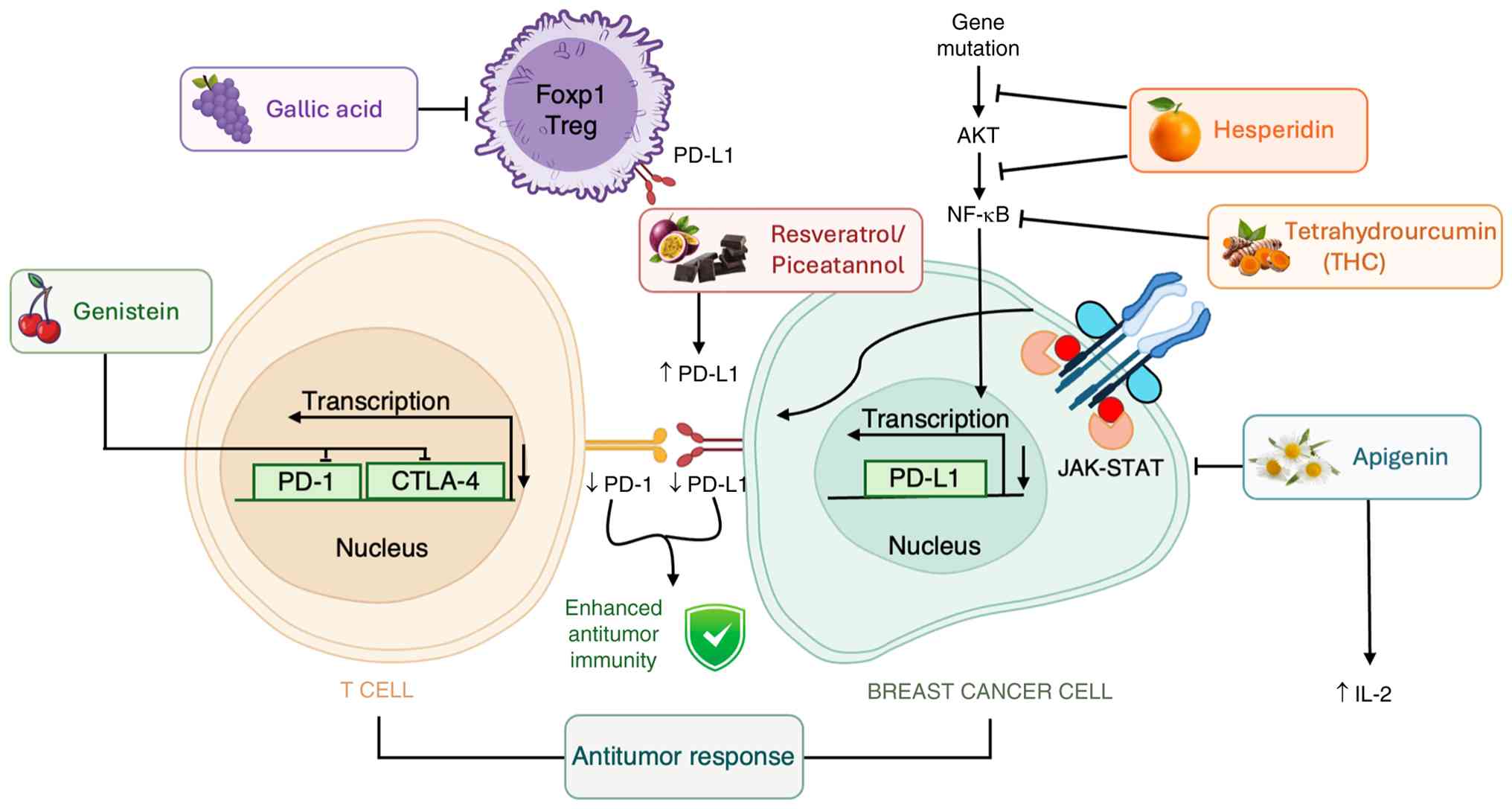 | Figure 4Illustration depicting the modulation
of immune checkpoints, such as PD-1, PD-L1 and CTL4 by polyphenols
such as genistein, caffeic acid, resveratrol, chrysin, etc. PD-1,
programmed cell death protein 1; PD-L1, programmed cell death
ligand protein 1; CTLA-4, cytotoxic T-lymphocyte antigen-4; IL,
interleukin. |
Baicalein has also been found to reduce PD-L1
expression in MDA-MB-231, BT549 and 4T1-adipocyte co-culture cell
models, accompanied by decreased levels of p-STAT3 and leptin.
Baicalein appears to interfere with adipocyte-associated tumor
microenvironment signaling, possibly via the downregulation of the
sterol regulatory element-binding transcription factor 1 pathway.
This suggests that baicalein may be particularly relevant in
obesity-associated BC, where adipocyte-derived leptin can enhance
immune escape (44) as shown in
Table I.
In a previous study, gallic acid (5 mg/kg, 12 days)
demonstrated a targeted in vivo effect in 4T1 tumor-bearing
mice, where it reduced both Foxp3+ and
PD-L1+Foxp3+ intra-tumoral Treg populations
(45), as shown in Table II. This suggests that gallic acid
may play a dual checkpoint-modulating and Treg-destabilizing role
by acting upstream at the level of immune suppression rather than
directly on tumor PD-L1 expression. However, compared to
flavonoids, its action appears narrower, with limited engagement of
broader signaling pathways (45).
The action of genistein is mostly context-dependent (46,47).
At 500 ppm, it reduces Foxp3 and IL-6, while increasing CD8a
levels, suggesting enhanced cytotoxic responses. Unlike apigenin
and hesperidin, genistein modulates upstream inflammatory cytokines
that indirectly influence immune checkpoint pathways. These effects
become more evident in its combination with tamoxifen, where
reductions in PD-1 and CTLA-4 are observed only in responsive
tumors in mouse models highlighting it's dependence on tumor
context. This context-dependent variability of genistein may reduce
its reliability as a standalone checkpoint modulator (46,47).
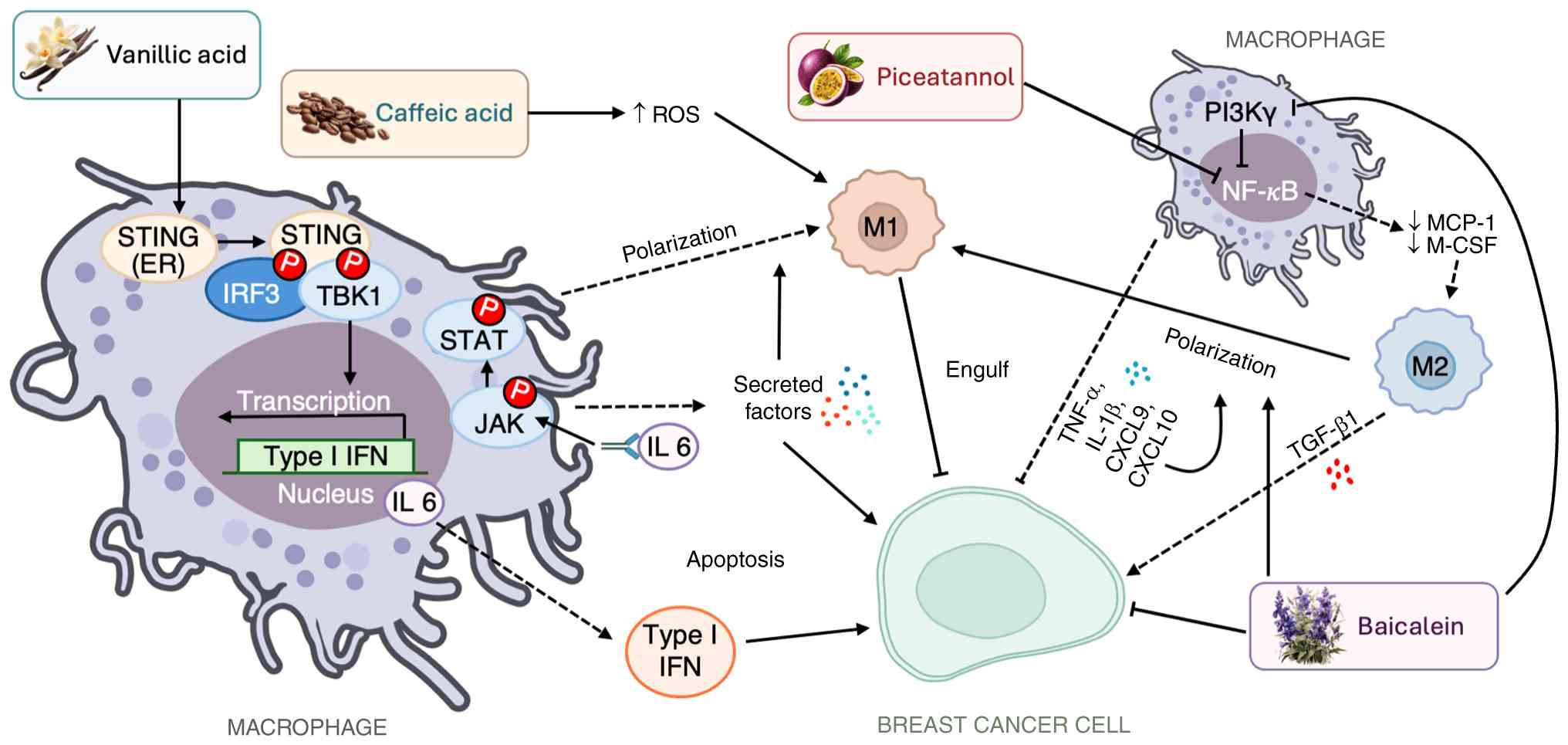
Polyphenols play a role in the modulation of M1/M2
polarization. Polyphenols have also demonstrated their potential in
regulating TAMs and shifting macrophage polarization towards the
anti-tumorigenic M1 phenotype, although the mechanisms and extent
of activity vary between compounds (Fig. 5). Caffeic acid exhibits broad
immunomodulatory activity at high concentrations (40-80 mg/kg) by
increasing the levels of IL-2, IFN-γ, IL-12 and M1 macrophages,
while reducing arginase-1 activity, indicating the suppression of
the M2 phenotype. Its reactive oxygen species (ROS)-inhibitory
properties may further contribute to reduced TAM formation and
angiogenesis (48). Notably,
another study on caffeic acid produced similar M1-promoting effects
at lower concentrations (5-15 mg/kg), in 4T1 cells in female BALB
mice as shown in Table II,
although its mechanism of action was not investigated (49). This may be due to differences in
tumor models used and the end points investigated in that
study.
Similarly, the in vivo administration of
baicalein also reprograms TAMs towards the M1 phenotype by
increasing the levels of M1-associated markers, such as TNF-α,
IL-1β, CXCL9 and CXCL10, while suppressing PI3Kγ signaling
(50) as shown in Table II. Piceatannol, however, acts more
indirectly on 4T1 cells in mice by reducing macrophage colony
stimulating factor and monocyte chemoattractant protein expression,
thereby lowering TAM infiltration and relatively favoring M1
macrophages without strongly inducing pro-inflammatory cytokines
(51) as depicted in Table II.
A previous study on the effect of vanillic acid on
macrophages in breast tumor microenvironment (TME) by Zhu et
al (52) revealed that
vanillic acid promotes M1 polarization by increasing the production
of type I IFN through the activation of the STING/TBK1/IRF3 pathway
in macrophages. Unlike other polyphenols that mainly suppress
tumor-promoting pathways, vanillic acid appears to stimulate innate
immune signaling directly. However, evidence remains limited to a
small number of experimental models (52).
Polyphenols promote the activation of
T-cell-mediated immunity. T-lymphocytes are necessary for the
cell-mediated immune response of the host to cancers; modern tumor
immunotherapy aims to stimulate or boost T-cell responsiveness to
antigens. It has been discovered that polyphenols alter the
activity of various T-cell subsets, including Tregs, T-Helper (TH)
cells and CTLs (53).
Polyphenols and CTLs. Several polyphenols, including
epigallocatechin gallate (EGCG), genistein and resveratrol, have
been shown to increase the CTL count and activity (9). Chlorogenic acid has been shown to
improve antitumor immunity by suppressing the NF-κB/EMT signaling
pathway and increasing CD4+ and CD8+ T-cell
populations of 4T1 in female BALB mice (54), as depicted in Table II. Similarly, taxifolin has also
been shown to promote CD8+ T-cell infiltration and to
suppress tumor progression, although its effects appear to be
mediated indirectly through the modulation of BC-associated genes,
such as Hornerin (HRNR), (Filaggrin-2) FLG2 and keratinocyte
proline-rich protein (KPRP) rather than through classical cytokine
signaling pathways (55) as shown
in Table I. In another study,
quercetin demonstrated a comparatively stronger and direct
immunomodulatory effect (56). The
administration of quercetin not only suppressed PD-L1 expression
through JAK/STAT1 signaling, but also directly promoted the
proliferation of immunomodulatory γδ T-cells, which helps in
eliminating tumor cells and regulating the immune system (56) as shown in Table I. Compared to chlorogenic acid and
taxifolin, quercetin therefore appears to exert both
checkpoint-regulatory and CTL-activating effects simultaneously. By
contrast, the findings on formononetin remain limited to
computational predictions without experimental validation,
although, it has been observed that formononetin is able to bind to
three different immune-related genes, such as insulin-like growth
factor (IGF1), estrogen receptor 1 (ESR1), and CXCL12 in a stable
manner, leading to an increase in the CD8+ T-cells and
CD4+ T-immune cells infiltration, as demonstrated by
TIMER2.0 database analysis (57).
Polyphenols modulate TH cells. Polyphenols also
regulate TH cell-associated cytokines, particularly by shifting
immunity toward a Th1 phenotype. A previous study demonstrated that
quercetin combined with doxorubicin increased IFN-γ and IL-2
levels, while reducing IL-4 and IL-10 in a mouse model (58), as shown in Table II. This thereby promoted a
Th1-dominant immune response and reversed doxorubicin resistance
associated with low CD8+ and CD4+ T-cell
infiltration (58). This shift
toward Th1 immunity likely contributed to improved CTL activation
and the reversal of chemoresistance. In another study, naringenin
indirectly produced similar Th-1 skewing effects in a mouse model,
by increasing IFN-γ and IL-2 levels, while reducing TGF-β1 and
IL-10(59), as shown in Table II. Compared to quercetin,
naringenin exhibited broader immunoregulatory effects by
simultaneously improving survival and reducing metastasis despite
showing limited direct anti-proliferative activity, suggesting that
immune modulation itself contributed significantly to therapeutic
benefit (59). However, these
immunomodulatory effects were observed with orally administered
narigenin at a higher dose (100 mg/kg), probably due to poor
bioavailability (60).
Nevertheless, clinical research has reported that oral doses of
150-900 mg naringenin are safe and tolerated in humans, suggesting
that suitable therapeutic outcomes may be achieved at clinically
feasible doses (61).
Role of polyphenols in modulating the levels of
Tregs. Several polyphenols have demonstrated the ability to
suppress Tregs, which are major contributors to immune evasion in
BC. The in vitro and in vivo study conducted by
Lee-Chang et al (62) on BC
cell lines revealed that resveratrol administered at sub-lethal
doses had an immunomodulatory effect where it favorably inhibited
tBregs and STAT3, which caused a subsequent decline of
Foxp3+ Tregs in a TGF-β-dependent manner, as shown in
Table II. While the activity of
resveratrol enhanced the immune function, by blocking tBregs, it
also prevented metastasis of BC cells to the lungs (62). Correspondingly, in another study,
apigenin reduced Treg populations through the modulation of the
PI3K/AKT/NF-κB pathway in a mouse model (63), as shown in Table II. Unlike resveratrol, which
primarily targeted Treg-inducing B-cells and STAT3 signaling,
apigenin appeared to directly interfere with inflammatory pathways
involved in Treg maintenance (63). Additionally, naringenin was also
reported to suppress TGF-β1-induced Treg production, suggesting
overlap between restoration of Th1 immunity and inhibition of
immunosuppressive Treg activity (59).
Role of polyphenols in modulating TLRs. Toll-like
receptors or TLRs play a vital role in mediating innate immune
response in the host (64). Of
special interest is TLR-4, which is expressed in the plasma
membrane of host immune cells and cancer cells and can recognize
lipopolysaccharide (LPS). TLR-4 is known to be overexpressed in a
plethora of cancers including BC; its activation is associated with
a poor prognosis attributed to extensive proliferation and invasion
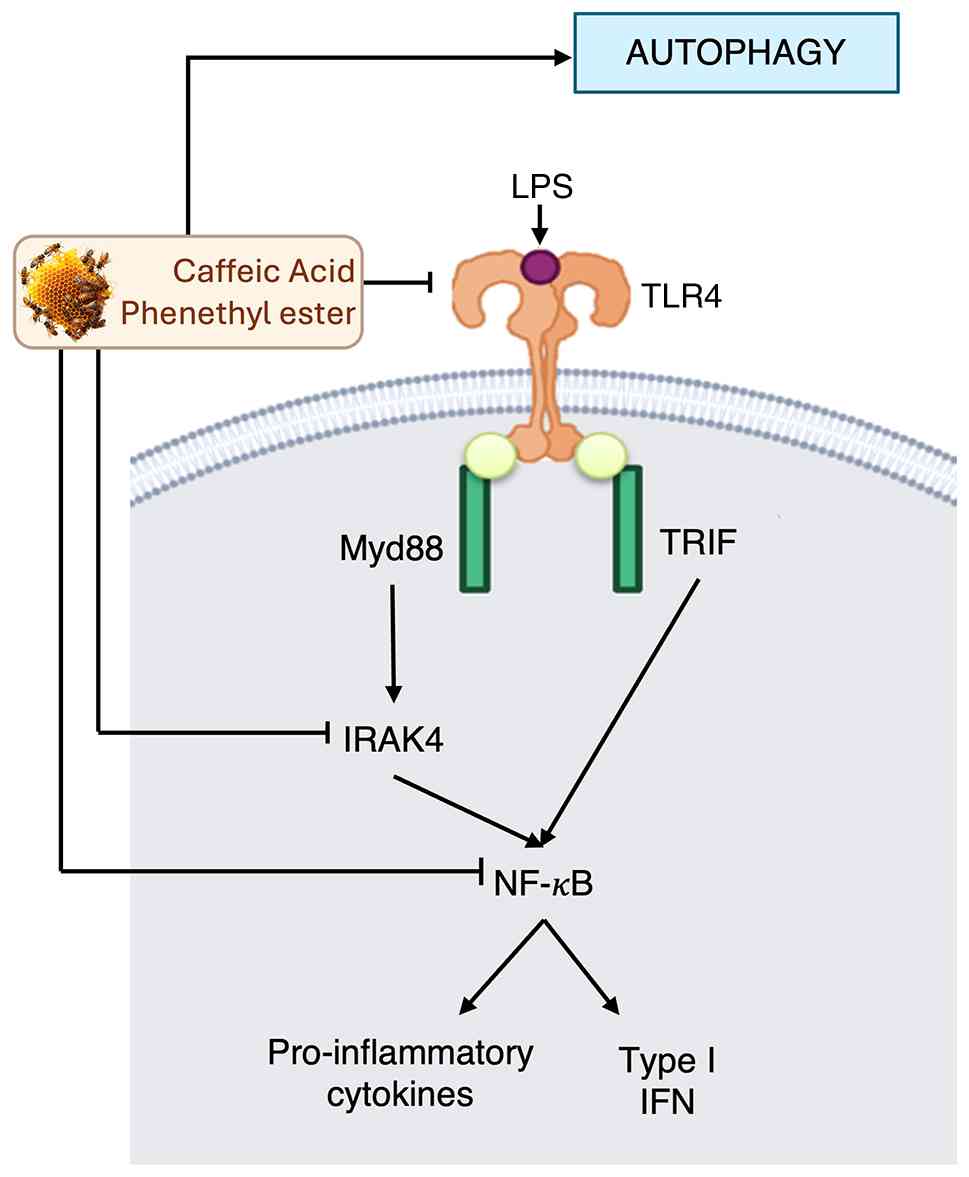
(65). A previous study
demonstrated that caffeic acid phenethyl ester (CAPE) in
LPS-stimulated MDA-MB-231 cells suppressed TLR-4 and NF-κB p65
signaling and modulated the autophagy markers, LC3-II and p62,
indicating that CAPE may regulate macrophage-associated
inflammatory signaling through both TLR-4 inhibition and autophagy
induction (66). Compared to other
polyphenols discussed above, CAPE appears to target an upstream
innate immune receptor rather than directly modulating immune
components. While this renders the mechanism distinct, it is
limited only to LPS stimulated models, reducing confidence in
broader applicability. Moreover, whether CAPE induced autophagy is
a consequence of TLR-4 inhibition or an independent parallel
mechanism remains unclear and needs to be further explored
(Fig. 6).
Role of polyphenols in upregulating NK cell
activity. As NK cells are the first line of defense against tumor
processes, investigating the mechanisms through which polyphenols
regulate NK cells may lead to the development of novel therapeutic
approaches. Among the compounds studied, resveratrol has
demonstrated one of the most extensively characterized effects. As
previously demonstrated, in BC cells, resveratrol upregulated the
expression of major histocompatibility complex class I-related
chain A/B (MICA/B), key activators of NK cells by modulating a
novel c-Myc/miR-17 pathway by suppressing the expression of the
miR-17 gene (67). Notably,
similar effects were reproduced in vivo at 25 and 100 mg/kg,
suggesting consistency across experimental systems (67) as shown in Table II. Another in vivo study on
MDA-MB-231 tumor-bearing mice demonstrated that resveratrol (at
25-100 mg/kg) increased UL16 binding protein 2 expression, while
downregulating miR-17-5p expression, thereby promoting NK
cell-mediated cytotoxicity through activation of the
MINK1/JNK/c-Jun cascade (68).
However, the effects of resveratrol are biphasic; low
concentrations (3.13 to 1.56 µM) have been shown to enhance NK cell
cytotoxicity, whereas higher concentrations (50 µM) promote NK cell
apoptosis (69). This is a key
consideration for clinical translation as the activity of
resveratrol contrasts with that of other polyphenols, where a
higher concentration usually corresponds to a more potent antitumor
effect.
Wang et al (70) demonstrated that exercise, along
with the administration of daidzein in tumor-bearing mice
synergistically led to a reduction in tumor size and proliferation,
as compared to the control mice. This may be due to the increased
production and mobilization of NK cells. This was supported by an
increase in the levels of IL-6 and epinephrine in the plasma. NK
cells are also known to initiate FasL-mediated cytotoxicity towards
cancer cells; this was evidenced by an increase in the levels of
Fas and Fas-associated death domain (FADD) proteins (70). The subsequent increase in Fas/FADD
mediated apoptosis led to an increase in tumor suppression,
instigating the effectiveness of daidzein combined with exercise.
Compared to resveratrol, the effects of daidzein were less
tumor-cell-specific and appeared to be dependent on systemic
physiological changes induced by exercise. This makes it difficult
to distinguish whether the antitumor effects arise primarily from
the polyphenol itself or from the exercise-induced immune response
(70).
Additionally, Abdel-Latef et al (71) reported that methoxylated quercetin
glycoside (MQG) significantly improved NK cell cytotoxicity in
multiple BC cell lines by increasing the expression of MICA/B and
CD155 via the MALAT-1/miR-155/miR-146a axis. The levels of
cytokines, such as IL-10, which inhibit NK cell responses, were
also significantly downregulated in the BC cell line (71). Compared to resveratrol, which
primarily targets NKG2D ligand induction, MQG appears to influence
a wider network of NK recognition molecules, suggesting potentially
stronger sensitization of tumor cells to NK-mediated killing.
However, the evidence remains limited to in vitro systems,
and no in vivo validation has yet been reported, at least to
the best of our knowledge.
Role of polyphenols in suppressing MDSCs. MDSCs are
a diverse group of cells characterized by their myeloid origin,
immature state and potency in suppressing T-cell responses. They
are found in unusually high levels in cancer, and their expression
is associated with a poor prognosis (72). Polyphenols have shown promise in
modulating MDSC activity and numbers (73). Forghani et al (74) discovered that silibinin reduced
MDSC levels in tumors, the spleen and peripheral blood in
tumor-bearing mice. This resulted in a reduction in tumor volume
(74). MDSCs are known to express
a high level of PD-L1, which can cause the diminution of T-cell
activity by interacting with PD-1 on T-cells (75). Among the reported compounds,
silibinin was one of the earliest polyphenols shown to suppress
MDSCs. In both in vivo and in vitro BC models, EGCG
administration has led to a significant reduction in the number of
MDSCs and increased CD4+ and CD8+ T-cell infiltration.
Xu et al (76) proposed and
confirmed that EGCG targets MDSCs through the
Arg-1/iNOS/Nox2/NF-κB/STAT3 signaling pathway. However, its
limitation lies in the concentration range (250-2,000 µg/ml) and
the lack of standardized body weight-adjusted dose used for EGCG. A
human clinical study observed that EGCG intake up to 338 mg/day as
a solid bolus and up to 704 mg/day in beverage form is generally
considered safe (77). The absence
of body weight-adjusted dosing in that study limits direct
translational comparison.
Role of polyphenols in regulating DC activity. DCs
are crucial APCs that bridge innate and adaptive immunity by
cross-presenting tumor-associated antigens to naive T-cells,
thereby initiating specific antitumor effector responses (78). Despite their importance in BC
immunology, evidence for the direct modulation of DCs by
polyphenols remains extremely limited, with naringenin being one of
the few compounds investigated in this context. Xiong et al
(79) demonstrated that naringenin
at a relatively low concentration (100 nM for 48 h) suppressed the
proliferation of BC cells by inhibiting NRF2-dependent
tumorigenesis via the FKBP4/NR3C1 axis. This pathway promoted DC
differentiation and maturation, potentiating T-cell-mediated
anti-tumor response (79). While
the effective concentration of 100 nM is notably lower than the
micromolar or mg/kg doses reported for many other polyphenols,
their study was limited to in vitro systems and functional
assays evaluating antigen presentation efficiency or downstream
T-cell priming were not extensively assessed (79).
Role of polyphenols in mediating the activity of
inflammasomes. Inflammasomes are intracellular multiprotein
complexes that regulate innate immune responses by sensing pathogen
and damage associated signals and triggering inflammatory cytokine
release. When activated within the TME, they are involved in the
modulation of cytokine secretion, immune cell recruitment and
T-cell differentiation (80).
Among the polyphenols investigated, Khan et al (81) examined the effects of EGCG on the
inflammasome component IFN-induced protein 16 (IFI16). In
vitro and molecular docking analyses revealed that EGCG
upregulated the expression of IFI16 and its downstream
transcription target IFNβ1 in the MCF-7 BC cell line (81). In silico molecular docking analyses
revealed that EGCG is a potent DNA methyltransferase inhibitor;
this was supported by in vitro analyses that demonstrated
that EGCG decreased the expression of various DNA
methyltransferases, which led to a consequent decrease in the 5mC
level, leading to IFI16 gene re-expression (81) as depicted in Table I. This indicates that EGCG may
regulate inflammasome-associated responses indirectly through
epigenetic reprogramming, rather than by directly targeting
classical inflammasome components such as NOD-like receptor family
pyrin domain containing 3 (NLRP3) or apoptosis-associated
speck-like protein containing a CARD (ASC).
5. Improving polyphenol bioavailability
through nanoparticle-based delivery systems
The therapeutic potential of polyphenols is
influenced by their metabolism and limited bioavailability. In the
intestinal mucosa and internal tissues, polyphenols are converted
to glucuronide, sulphate and methyl groups following absorption.
The amounts of non-conjugated polyphenols in plasma are minimal.
Recent developments in nanotechnology have provided promising
solutions to these issues. Polyphenols can be made more soluble,
stable and bio-distributable by encasing them in nanoparticles,
increasing the anticancer activity and immunomodulatory properties
(82).
In the context of the present review,
nanoformulations may preserve or even enhance the immunomodulatory
effects of the parent polyphenol. For example, in a previous study,
dendrosomal curcumin reduced tumor growth in 4T1 tumor-bearing mice
by shifting the macrophage polarization from M2 to M1(83). This was supported by an increase in
the levels of STAT4 and IL-12, suggesting an increase in the levels
of M1, and a decrease in the levels of STAT3, IL-10 and arginase I
gene expression, suggesting a decline in the M2 level (83). Similarly, in another study,
baicalein-loaded methoxy polyethylene glycol-poly
(lactic-co-glycolic acid nanoparticles modulated the M1/M2 balance
both in vitro and in vivo (84). Youssry et al (85) investigated the effects of curcumin
nano-emulsion on inflammasome-related pathways using peripheral
blood mononuclear cells from patients with BC. The treatment
increased the levels of the inflammasome adaptor protein, ASC, with
a subsequent decrease in the levels of IL-1B, IL-18 and Bcl6.
Although ASC is often upregulated in tumors, that study suggested
that curcumin nano-emulsion may inhibit ASC from binding to NLRP3,
thereby disrupting inflammasome components (85). Additionally, curcumin nano-emulsion
was also found to decrease the levels of the immune marker, CD163,
which may play a role in reducing M2 macrophages (85). These findings are critical, as they
extend nanoparticle benefits beyond enhanced cytotoxicity to direct
remodeling of the tumor immune microenvironment.
A number of other polyphenol-based nanoparticles,
including formulations of vanillic acid, veratric acid, caffeic
acid and piceatannol, have also been investigated in BC models and
have generally demonstrated improved solubility, sustained release
and enhanced anticancer efficacy compared to their free forms
(86-89).
However, most of these studies focus primarily on tumor suppression
and apoptosis, rather than specifically evaluating immunomodulatory
outcomes. Recent approaches, such as multifunctional nanoplatforms
and metal-phenolic networks (MPNs) also show promise. MPNs utilize
the synergy between metal ions and polyphenol ligands to enable
controlled drug delivery and enhance tumor immune modulation,
presenting a novel direction in cancer nanomedicine (73). The recent review by Zhang et
al (90) provides a detailed
overview of natural compound-based nanoparticle systems developed
between 2018 and 2025 and may serve as a useful reference for
future studies exploring newer polyphenol nanoformulations in
BC.
6. Future perspectives
Polyphenol combination therapies that target the
immune system. Recent studies have suggested that the future of
polyphenol-based immunotherapy in BC lies in combination modalities
that simultaneously improve delivery and reprogram the TME
(91). Multiple studies have
revealed a clear trend: Free polyphenols often exert modest
effects, whereas nanoformulations or combination treatments produce
stronger end-results (90). A
highly relevant study on salvianolic acid B-based FeSH nanosystem
integrated photothermal therapy with anti-PD-L1 blockade, that
effectively converted immunologically ‘cold’ TNBC tumors into ‘hot’
tumors by inducing immunogenic cell death, suppressing
TGF-β-mediated immunosuppression and upregulating PD-L1(92). This is more mechanistically
targeted than the resveratrol-curcumin-quercetin formulation, which
primarily shifted immune cell composition by increasing T-cell
infiltration, while suppressing M2 macrophages, Th2 cells and N2
neutrophils (93). While both
approaches reversed immunosuppression, the salvianolic acid B-FeSH
nanosysten directly integrated checkpoint immunotherapy, aligning
itself for future translation.
Another major treatment path is combining
polyphenols with external energy-based therapies, as for as
photothermal, sonodynamic or radiotherapy. The nano-encapsulated
polyphenols not only take advantage of the enhanced permeability
and retention effect (94), but
also absorbs external energy to actively exploit tumor-specific
stimuli for controlled release and immune activation. For example,
naringenin-loaded photothermal bovine serum albumin-biomineralized
manganese dioxide nanoparticles combined with photothermal
treatment enhanced antitumor immunity and reduced metastatic
potential in TNBC, while resveratrol-chitosan nanoparticles
improved radiosensitivity and restored immune markers such as IFN-γ
and STAT3 (95,96). More recently, ROS-responsive
resveratrol nano agents used in sonodynamic therapy introduced a
highly complex mechanism by inducing suprathreshold autophagy and
immunogenic cell death, which may overcome the transient immune
activation seen with simpler formulations (97). However, most of these systems
remain restricted to murine TNBC models; thus, it is difficult to
determine whether similar immune remodeling would occur in hormone
receptor-positive or HER2-positive BCs. Additionally, direct
comparisons with free polyphenol controls are often lacking in some
combination and nanoparticle studies, rendering it difficult to
separate treatment effects from improved pharmacokinetics (98). These studies would highly benefit
from standardized experimental frameworks, which would allow
head-to-head comparison between different treatment regimens.
Precision medicine. The highly heterogenous nature
of BC warrants specificity in treatment strategies, particularly
the highly immunogenic HER2-positive BC and TNBC subtypes. Such
treatments should not only rely on targeting the cancer cells, but
also the TME components. The anticancer effects of polyphenols are
often pleiotropic and non-specific (99). For example, the variable
immunological effects of genistein across tamoxifen-sensitive,
resistant, and recurrent tumors underscore the need for
precision-guided application of polyphenols, as their efficacy may
be highly dependent on tumor phenotype and therapeutic context
(47). The immunomodulatory
specificity of polyphenols can be improved according to the primary
treatment modality, as different compounds appear to preferentially
enhance the efficacy of immunotherapy, chemotherapy, radiotherapy,
or immunogenic stress-based therapies. Dose- and
formulation-dependent variability further complicates clinical
translation; standardized dose optimization remains essential to
distinguish true immunomodulatory effects from nonspecific
cytotoxicity (100).
Future studies are thus warranted to prioritize
precision-guided combination strategies, where polyphenols are
paired with immunotherapies based on tumor subtype, immune
phenotype, and polyphenol-conventional modality compatibility
rather than using generalized formulations. Next-generation
sequencing and artificial intelligence have become vital tools that
can identify new molecular targets, optimize and personalize
treatment strategies, and predict patient responses to
polyphenol-based immunotherapy (101).
7. Conclusions
The advent of immunotherapy has marked a new
milestone for the treatment of BC, with ICIs, cancer vaccines and
monoclonal antibodies expanding treatment options to previously
constrained alternatives. While immunotherapies are improving
constantly, their success is marred by toxicity and resistance. The
review by Golonko et al (102) poses a critical question: ‘to what
extent can boosting the immune system advance anticancer
therapy?’
However, the untapped realm of personalized
immunotherapies provides promising possibilities for the clinical
translation of polyphenol-based strategies; however, substantial
work is required to identify reliable biomarkers, optimize dosing,
and validate efficacy across distinct BC subtypes. While limited
clinical trials (clinicaltrials.gov database) (ID NCT05724329,
NCT07248020) have been registered to investigate into
polyphenol-based immunotherapies in different types of cancer, to
the best of our knowledge, there are still no clinical studies
available on the effects of polyphenols on the immune landscape of
BC. Even though translational limitations persist, the presence of
such clinical trials indicates a growing recognition of polyphenols
as therapeutically relevant in cancer immunotherapy. The path from
plant-derived metabolites to clinically relevant immunotherapeutic
adjuncts remains complex, yet each preclinical advancement
highlights the untapped capacity of natural compounds to shape the
future of personalized cancer care.
Acknowledgements
The authors are grateful to Dr Sudhindra Shamanna,
Academic President, Manipal Academy of Higher Education, Dubai,
UAE, for his constant support and encouragement.
Funding
Funding: No funding was received.
Availability of data and materials
Not applicable.
Authors' contributions
RR and AH were involved in the design of the study.
RR, LD and AS contributed towards the literature search for
relevant references. RR and LD wrote the manuscript. RB edited the
manuscript. All authors have read and approved the final
manuscript. Data authentication is not applicable.
Ethics approval and consent to
participate
Not applicable.
Patient consent for publication
Not applicable.
Competing interests
The authors declare that they have no competing
interests.
References
|
1
|
Bray F, Laversanne M, Sung H, Ferlay J,
Siegel RL, Soerjomataram I and Jemal A: Global cancer statistics
2022: GLOBOCAN estimates of incidence and mortality worldwide for
36 cancers in 185 countries. CA Cancer J Clin. 74:229–263.
2024.PubMed/NCBI View Article : Google Scholar
|
|
2
|
Xiong X, Zheng LW, Ding Y, Chen YF, Cai
YW, Wang LP, Huang L, Liu CC, Shao ZM and Yu KD: Breast cancer:
Pathogenesis and treatments. Signal Transduct Target Ther.
10(49)2025.PubMed/NCBI View Article : Google Scholar
|
|
3
|
Gradishar WJ: Cancer Treatment and
Research In: Optimizing Breast Cancer Management. Vol 173.
Springer, Cham, 2018.
|
|
4
|
Hanahan D: Hallmarks of cancer: New
dimensions. Cancer Discov. 12:31–46. 2022.PubMed/NCBI View Article : Google Scholar
|
|
5
|
Shahrokni A, Wu AJ, Carter J and Lichtman
SM: Long-term toxicity of cancer treatment in older patients. Clin
Geriatr Med. 32:63–80. 2016.PubMed/NCBI View Article : Google Scholar
|
|
6
|
Nattenmüller CJ, Kriegsmann M, Sookthai D,
Fortner RT, Steffen A, Walter B, Johnson T, Kneisel J, Katzke V,
Bergmann M, et al: Obesity as risk factor for subtypes of breast
cancer: Results from a prospective cohort study. BMC Cancer.
18(616)2018.PubMed/NCBI View Article : Google Scholar
|
|
7
|
Pontillo M, Trio R, Rocco N, Cinquerrui A,
Di Lorenzo M, Catanuto G, Magnoni F, Calenda F, Castiello CLJ,
Ingenito M, et al: Dietary interventions for breast cancer
prevention: Exploring the role of nutrition in primary and tertiary
prevention strategies. Healthcare (Basel). 13(407)2025.PubMed/NCBI View Article : Google Scholar
|
|
8
|
Rana A, Samtiya M, Dhewa T, Mishra V and
Aluko RE: Health benefits of polyphenols: A concise review. J Food
Biochem. 46(e14264)2022.PubMed/NCBI View Article : Google Scholar
|
|
9
|
de Carvalho JTG, Da Silva Baldivia D, de
Castro DTH, dos Santos HF, dos Santos CM, Oliveira AS, Alfredo TM,
Vilharva KN, de Picoli Souza K and Dos Santos EL: The
immunoregulatory function of polyphenols: Implications in cancer
immunity. J Nutr Biochem. 85(108428)2020.PubMed/NCBI View Article : Google Scholar
|
|
10
|
Erbas O: Cancer and Immunosuppression. J
Exp Bas Sci. 2:116–121. 2021.
|
|
11
|
Bayraktar S: Immunotherapy in Breast
Cancer. J Carcinog. 18(2)2019.PubMed/NCBI View Article : Google Scholar
|
|
12
|
Gasparri ML, Ruscito I, Taghavi K, Farooqi
AA, Papadia A, Focaccetti C, Barnaba V, Panici PB and Mueller MD:
The Immunobiology of cancer: From Tumor Escape to Cancer
Immunoediting Towards Immunotherapy in Gynecologic Oncology.
Molecular Oncology: Underlying Mechanisms and Translational
Advancements, pp193-202, 2017.
|
|
13
|
Chen DS and Mellman I: Oncology meets
immunology: The cancer-immunity cycle. Immunity. 39:1–10.
2013.PubMed/NCBI View Article : Google Scholar
|
|
14
|
Swann JB and Smyth MJ: Immune surveillance
of tumors. J Clin Invest. 117:1137–1146. 2007.PubMed/NCBI View Article : Google Scholar
|
|
15
|
Rezaei N: Cancer immunology: A
Translational Medicine Context, Second edition, Springer Nature,
pp1-802, 2020.
|
|
16
|
Moura T, Laranjeira P, Caramelo O, Gil AM
and Paiva A: Breast cancer and tumor microenvironment: The crucial
role of immune cells. Curr Oncol. 32(143)2025.PubMed/NCBI View Article : Google Scholar
|
|
17
|
Zhou J, Tang Z, Gao S, Li C, Feng Y and
Zhou X: Tumor-associated macrophages: Recent insights and
therapies. Front Oncol. 10(188)2020.PubMed/NCBI View Article : Google Scholar
|
|
18
|
Lu J, Luo Y, Rao D, Wang T, Lei Z, Chen X,
Zhang B, Li Y, Liu B, Xia L and Huang W: Myeloid-derived suppressor
cells in cancer: Therapeutic targets to overcome tumor immune
evasion. Exp Hematol Oncol. 13(39)2024.PubMed/NCBI View Article : Google Scholar
|
|
19
|
Martinez LM, Robila V, Clark NM, Du W,
Idowu MO, Rutkowski MR and Bos PD: Regulatory T cells control the
switch from in situ to invasive breast cancer. Front Immunol.
10(1942)2019.PubMed/NCBI View Article : Google Scholar
|
|
20
|
Huang P, Zhou X, Zheng M, Yu Y, Jin G and
Zhang S: Regulatory T cells are associated with the tumor immune
microenvironment and immunotherapy response in triple-negative
breast cancer. Front Immunol. 14(1263537)2023.PubMed/NCBI View Article : Google Scholar
|
|
21
|
Zhang F, Qi X, Wang X, Wei D, Wu J, Feng
L, Cai H, Wang Y, Zeng N, Xu T, et al: Structural basis of the
therapeutic anti-PD-L1 antibody atezolizumab. Oncotarget.
8:90215–90224. 2017.PubMed/NCBI View Article : Google Scholar
|
|
22
|
Schmid P, Adams S, Rugo HS, Schneeweiss A,
Barrios CH, Iwata H, Diéras V, Hegg R, Im SA, Shaw Wright G, et al:
Atezolizumab and Nab-paclitaxel in advanced triple-negative breast
cancer. N Engl J Med. 379:2108–2121. 2018.PubMed/NCBI View Article : Google Scholar
|
|
23
|
Keenan TE and Tolaney SM: Role of
immunotherapy in triple-negative breast cancer. J Natl Compr Canc
Netw. 18:479–489. 2020.PubMed/NCBI View Article : Google Scholar
|
|
24
|
Santa-Maria CA, Kato T, Park JH, Kiyotani
K, Rademaker A, Shah AN, Gross L, Blanco LZ, Jain S, Flaum L, et
al: A pilot study of durvalumab and tremelimumab and immunogenomic
dynamics in metastatic breast cancer. Oncotarget. 9:18985–18996.
2018.PubMed/NCBI View Article : Google Scholar
|
|
25
|
Lembo RR, Manna L, Froechlich G, Sasso E,
Passariello M and De Lorenzo C: New insights on the role of
Anti-PD-L1 and Anti-CTLA-4 mAbs on different lymphocytes
subpopulations in TNBC. Cancers (Basel). 14(5289)2022.PubMed/NCBI View Article : Google Scholar
|
|
26
|
Selby MJ, Engelhardt JJ, Johnston RJ, Lu
L-S, Han M, Thudium K, Yao D, Quigley M, Valle J, Wang C, et al:
Preclinical development of Ipilimumab and nivolumab combination
immunotherapy: Mouse tumor models, in vitro functional studies, and
cynomolgus macaque toxicology. PLoS One.
11(e0161779)2016.PubMed/NCBI View Article : Google Scholar
|
|
27
|
Yu S, Liu Q, Han X, Qin S, Zhao W, Li A
and Wu K: Development and clinical application of anti-HER2
monoclonal and bispecific antibodies for cancer treatment. Exp
Hematol Oncol. 6(31)2017.PubMed/NCBI View Article : Google Scholar
|
|
28
|
Yang YH, Liu JW, Lu C and Wei JF: CAR-T
cell therapy for breast cancer: From basic research to clinical
application. Int J Biol Sci. 18:2609–2626. 2022.PubMed/NCBI View Article : Google Scholar
|
|
29
|
Clifton GT, Gall V, Peoples GE and
Mittendorf EA: Clinical development of the E75 vaccine in breast
cancer. Breast Care. 11:116–121. 2016.PubMed/NCBI View Article : Google Scholar
|
|
30
|
Hoteit M, Oneissi Z, Reda R, Wakim F,
Zaidan A, Farran M, Abi-Khalil E and El-Sibai M: Cancer
immunotherapy: A comprehensive appraisal of its modes of
application. Oncol Lett. 22(655)2021.PubMed/NCBI View Article : Google Scholar
|
|
31
|
Mina LA, Lim S, Bahadur SW and Firoz AT:
Immunotherapy for the treatment of breast cancer: Emerging new
data. Breast Cancer (Dove Med Press). 11:321–328. 2019.PubMed/NCBI View Article : Google Scholar
|
|
32
|
de la Cruz-Merino L, Chiesa M, Caballero
R, Rojo F, Palazón N, Carrasco FH and Sánchez-Margalet V: Breast
cancer immunology and immunotherapy: Current status and future
perspectives. Int Rev Cell Mol Biol. 331:1–53. 2017.PubMed/NCBI View Article : Google Scholar
|
|
33
|
Sugie T: Immunotherapy for metastatic
breast cancer. Chin Clin Oncol. 7(28)2018.PubMed/NCBI View Article : Google Scholar
|
|
34
|
Arimoto K, Miyauchi S, Liu M and Zhang DE:
Emerging role of immunogenic cell death in cancer immunotherapy.
Front Immunol. 15(1390263)2024.PubMed/NCBI View Article : Google Scholar
|
|
35
|
Choi M, Shin J, Lee CE, Chung JY, Kim M,
Yan X, Yang WH and Cha JH: Immunogenic cell death in cancer
immunotherapy. BMB Rep. 56:275–286. 2023.PubMed/NCBI View Article : Google Scholar
|
|
36
|
Galluzzi L, Vitale I, Warren S, Adjemian
S, Agostinis P, Martinez AB, Chan TA, Coukos G, Demaria S, Deutsch
E, et al: Consensus guidelines for the definition, detection and
interpretation of immunogenic cell death. J Immunother Cancer.
8(e000337)2020.PubMed/NCBI View Article : Google Scholar
|
|
37
|
Fucikova J, Kepp O, Kasikova L, Petroni G,
Yamazaki T, Liu P, Zhao L, Spisek R, Kroemer G and Galluzzi L:
Detection of immunogenic cell death and its relevance for cancer
therapy. Cell Death Dis. 11(1013)2020.PubMed/NCBI View Article : Google Scholar
|
|
38
|
Di Lorenzo C, Colombo F, Biella S,
Stockley C and Restani P: Polyphenols and human health: The role of
bioavailability. Nutrients. 13:1–30. 2021.PubMed/NCBI View Article : Google Scholar
|
|
39
|
Cháirez-Ramírez MH, de la Cruz-López KG
and García-Carrancá A: Polyphenols as antitumor agents targeting
key players in cancer-driving signaling pathways. Front Pharmacol.
12(710304)2021.PubMed/NCBI View Article : Google Scholar
|
|
40
|
Coombs MRP, Harrison ME and Hoskin DW:
Apigenin inhibits the inducible expression of programmed death
ligand 1 by human and mouse mammary carcinoma cells. Cancer Lett.
380:424–433. 2016.PubMed/NCBI View Article : Google Scholar
|
|
41
|
Kongtawelert P, Wudtiwai B, Shwe TH,
Pothacharoen P and Phitak T: Inhibitory effect of hesperidin on the
expression of programmed death ligand (PD-L1) in breast cancer.
Molecules. 25(252)2020.PubMed/NCBI View Article : Google Scholar
|
|
42
|
Zeng A, Yu X, Chen B, Hao L, Chen P, Chen
X, Tian Y, Zeng J, Hua H, Dai Y and Zhao J: Tetrahydrocurcumin
regulates the tumor immune microenvironment to inhibit breast
cancer proliferation and metastasis via the CYP1A1/NF-κB signaling
pathway. Cancer Cell Int. 23(12)2023.PubMed/NCBI View Article : Google Scholar
|
|
43
|
EFSA Panel on Nutrition, Novel Foods and
Food Allergens (NDA). Turck D, Bohn T, Castenmiller J, De Henauw S,
Hirsch-Ernst KI, Maciuk A, Mangelsdorf I, McArdle HJ, et al: Safety
of tetrahydrocurcuminoids from turmeric (Curcuma longa L) as
a novel food pursuant to regulation (EU) 2015/2283. EFSA J.
19(e06936)2021.PubMed/NCBI View Article : Google Scholar
|
|
44
|
Liu M, Li C, Qu J, Sun S, Zhao Z, Wang W,
Lv W, Zhang Y, Cai Y, Zhao F, et al: Baicalein enhances immune
response in TNBC by inhibiting leptin expression of adipocytes.
Cancer Sci. 114:3834–3847. 2023.PubMed/NCBI View Article : Google Scholar
|
|
45
|
Deng B, Yang B, Chen J, Wang S, Zhang W,
Guo Y, Han Y, Li H, Dang Y, Yuan Y, et al: Gallic acid induces
T-helper-1-like Treg cells and strengthens immune
checkpoint blockade efficacy. J Immunother Cancer.
10(e004037)2022.PubMed/NCBI View Article : Google Scholar
|
|
46
|
Zhang X, Cook KL, Warri A, Cruz IM, Rosim
M, Riskin J, Helferich W, Doerge D, Clarke R and Hilakivi-Clarke L:
Lifetime Genistein intake increases the response of mammary tumors
to tamoxifen in rats. Clin Cancer Res. 23:814–824. 2017.PubMed/NCBI View Article : Google Scholar
|
|
47
|
Andrade F de O, Liu F, Zhang X, Rosim MP,
Dani C, Cruz I, Cruz I, Wang TTY, Helferich W, Li RW and
Hilakivi-Clarke L: Genistein reduces the risk of local mammary
cancer recurrence and ameliorates alterations in the gut microbiota
in the offspring of obese dams. Nutrients. 13(201)2021.PubMed/NCBI View Article : Google Scholar
|
|
48
|
Oršolić N, Kunštić M, Kukolj M, Gračan R
and Nemrava J: Oxidative stress, polarization of macrophages and
tumour angiogenesis: Efficacy of caffeic acid. Chem Biol Interact.
256:111–124. 2016.PubMed/NCBI View Article : Google Scholar
|
|
49
|
Xie C, Chan L, Pang Y, Shang Y, Cao W,
Tuohan M, Deng Q, Wang Y, Zhao L and Wang W: Caffeic acid inhibits
the tumorigenicity of triple-negative breast cancer cells through
the FOXO1/FIS pathway. Biomed Pharmacother.
178(117158)2024.PubMed/NCBI View Article : Google Scholar
|
|
50
|
He S, Wang S, Liu S, Li Z, Liu X and Wu J:
Baicalein potentiated M1 macrophage polarization in cancer through
targeting PI3Kγ/NF-κB signaling. Front Pharmacol.
12(743837)2021.PubMed/NCBI View Article : Google Scholar
|
|
51
|
Song H, Jung JI, Cho HJ, Her S, Kwon SH,
Yu R, Kang YH, Lee KW and Park JH: Inhibition of tumor progression
by oral piceatannol in mouse 4T1 mammary cancer is associated with
decreased angiogenesis and macrophage infiltration. J Nutr Biochem.
26:1368–1378. 2015.PubMed/NCBI View Article : Google Scholar
|
|
52
|
Zhu M, Tang X, Zhu Z, Gong Z, Tang W, Hu
Y, Hu Y, Cheng C, Wang H, Sarwar A, et al: STING activation in
macrophages by vanillic acid exhibits antineoplastic potential.
Biochem Pharmacol. 213(115618)2023.PubMed/NCBI View Article : Google Scholar
|
|
53
|
Wang Y and Minden A: Current molecular
combination therapies used for the treatment of breast cancer. Int
J Mol Sci. 23(11046)2022.PubMed/NCBI View Article : Google Scholar
|
|
54
|
Zeng A, Liang X, Zhu S, Liu C, Wang S,
Zhang Q, Zhao J and Song L: Chlorogenic acid induces apoptosis,
inhibits metastasis and improves antitumor immunity in breast
cancer via the NF-κB signaling pathway. Oncol Rep. 45:717–727.
2020.PubMed/NCBI View Article : Google Scholar
|
|
55
|
Lin X, Dong Y, Gu Y, Kapoor A, Peng J, Su
Y, Wei F, Wang Y, Yang C, Gill A, et al: Taxifolin inhibits breast
cancer growth by facilitating CD8+ T cell infiltration and inducing
a novel set of genes including potential tumor suppressor genes in
1q213. Cancers (Basel). 15(3203)2023.PubMed/NCBI View Article : Google Scholar
|
|
56
|
Qiu D, Yan X, Xiao X, Zhang G, Wang Y, Cao
J, Ma R, Hong S and Ma M: To explore immune synergistic function of
Quercetin in inhibiting breast cancer cells. Cancer Cell Int.
21(632)2021.PubMed/NCBI View Article : Google Scholar
|
|
57
|
Song X and Li J: Screening of
Immune-related genes and predicting the immunotherapeutic effects
of formononetin in breast cancer: A bioinformatics analysis. Evid
Based Complement Alternat Med. 2022(9942373)2022.PubMed/NCBI View Article : Google Scholar
|
|
58
|
Du G, Lin H, Yang Y, Zhang S, Wu X, Wang
M, Ji L, Lu L, Yu L and Han G: Dietary quercetin combining
intratumoral doxorubicin injection synergistically induces
rejection of established breast cancer in mice. Int
Immunopharmacol. 10:819–826. 2010.PubMed/NCBI View Article : Google Scholar
|
|
59
|
Qin L, Jin L, Lu L, Lu X, Zhang C, Zhang F
and Liang W: Naringenin reduces lung metastasis in a breast cancer
resection model. Protein Cell. 2:507–516. 2011.PubMed/NCBI View Article : Google Scholar
|
|
60
|
Huang X, Wu H, Wu X, Su W and Li P:
Naringenin/naringin therapeutic effects and the role of intestinal
microflora in them. Pharmacol Res. 219(107871)2025.PubMed/NCBI View Article : Google Scholar
|
|
61
|
Rebello CJ, Beyl RA, Lertora JJL, Greenway
FL, Ravussin E, Ribnicky DM, Poulev A, Kennedy BJ, Castro HF,
Campagna SR, et al: Safety and pharmacokinetics of naringenin: A
randomized, controlled, single-ascending-dose clinical trial.
Diabetes Obes Metab. 22:91–98. 2020.PubMed/NCBI View Article : Google Scholar
|
|
62
|
Lee-Chang C, Bodogai M, Martin-Montalvo A,
Wejksza K, Sanghvi M, Moaddel R, de Cabo R and Biragyn A:
Inhibition of breast cancer metastasis by resveratrol-mediated
inactivation of tumor-evoked regulatory B cells. J Immunol.
191:4141–4151. 2013.PubMed/NCBI View Article : Google Scholar
|
|
63
|
Zhang C, Liao Y, Li T, Zhong H, Shan L, Yu
P, Xia C and Xu L: Apigenin promotes apoptosis of 4T1 cells through
PI3K/AKT/Nrf2 pathway and improves tumor immune microenvironment in
vivo. Toxicol Res (Camb). 13(tfae011)2024.PubMed/NCBI View Article : Google Scholar
|
|
64
|
Nie L, Cai SY, Shao JZ and Chen J:
Toll-like receptors, associated biological roles, and signaling
networks in non-mammals. Front Immunol. 9(1523)2018.PubMed/NCBI View Article : Google Scholar
|
|
65
|
Zhou J, Zhang L, Liu S, DeRubeis D and
Zhang D: Toll-like receptors in breast cancer immunity and
immunotherapy. Front Immunol. 15(1418025)2024.PubMed/NCBI View Article : Google Scholar
|
|
66
|
Chang H, Wang Y, Yin X, Liu X and Xuan H:
Ethanol extract of propolis and its constituent caffeic acid
phenethyl ester inhibit breast cancer cells proliferation in
inflammatory microenvironment by inhibiting TLR4 signal pathway and
inducing apoptosis and autophagy. BMC Complement Altern Med.
17(471)2017.PubMed/NCBI View Article : Google Scholar
|
|
67
|
Pan J, Shen J, Si W, Du C, Chen D, Xu L,
Yao M, Fu P and Fan W: Resveratrol promotes MICA/B expression and
natural killer cell lysis of breast cancer cells by suppressing
c-Myc/miR-17 pathway. Oncotarget. 8:65743–65758. 2017.PubMed/NCBI View Article : Google Scholar
|
|
68
|
Ding B, Li J, Yan JL, Jiang CY, Qian LB
and Pan J: Resveratrol contributes to NK cell-mediated breast
cancer cytotoxicity by upregulating ULBP2 through miR-17-5p
downmodulation and activation of MINK1/JNK/c-Jun signaling. Front
Immunol. 16(1515605)2025.PubMed/NCBI View Article : Google Scholar
|
|
69
|
Li Q, Huyan T, Ye LJ, Li J, Shi JL and
Huang QS: Concentration-dependent biphasic effects of resveratrol
on human natural killer cells in vitro. J Agric Food Chem.
62:10928–10935. 2014.PubMed/NCBI View Article : Google Scholar
|
|
70
|
Wang B, Xu H, Hu X, Ma W, Zhang J, Li Y,
Yu M, Zhang Y, Li X and Ye X: Synergetic inhibition of daidzein and
regular exercise on breast cancer in bearing-4T1 mice by regulating
NK cells and apoptosis pathway. Life Sci.
245(117387)2020.PubMed/NCBI View Article : Google Scholar
|
|
71
|
Abdel-Latif M, Riad A, Soliman RA,
Elkhouly AM, Nafae H, Gad MZ, Motaal AA and Youness RA:
MALAT-1/p53/miR-155/miR-146a ceRNA circuit tuned by methoxylated
quercitin glycoside alters immunogenic and oncogenic profiles of
breast cancer. Mol Cell Biochem. 477:1281–1293. 2022.PubMed/NCBI View Article : Google Scholar
|
|
72
|
Liu H, Wang Z, Zhou Y and Yang Y: MDSCs in
breast cancer: An important enabler of tumor progression and an
emerging therapeutic target. Front Immunol.
14(1199273)2023.PubMed/NCBI View Article : Google Scholar
|
|
73
|
Wang Q, Yang B, Wang N and Gu J: Tumor
immunomodulatory effects of polyphenols. Front Immunol.
13(1041138)2022.PubMed/NCBI View Article : Google Scholar
|
|
74
|
Forghani P, Khorramizadeh MR and Waller
EK: Silibinin inhibits accumulation of myeloid-derived suppressor
cells and tumor growth of murine breast cancer. Cancer Med.
3:215–224. 2014.PubMed/NCBI View Article : Google Scholar
|
|
75
|
Weber R, Fleming V, Hu X, Nagibin V, Groth
C, Altevogt P, Utikal J and Umansky V: Myeloid-derived suppressor
cells hinder the anti-cancer activity of immune checkpoint
inhibitors. Front Immunol. 9(1310)2018.PubMed/NCBI View Article : Google Scholar
|
|
76
|
Xu P, Yan F, Zhao Y, Chen X, Sun S, Wang Y
and Ying L: Green Tea Polyphenol EGCG attenuates MDSCs-mediated
Immunosuppression through Canonical and Non-canonical pathways in a
4T1 murine breast cancer model. Nutrients. 12(1042)2020.PubMed/NCBI View Article : Google Scholar
|
|
77
|
Hu J, Webster D, Cao J and Shao A: The
safety of green tea and green tea extract consumption in
adults-Results of a systematic review. Regul Toxicol Pharmacol.
95:412–433. 2018.PubMed/NCBI View Article : Google Scholar
|
|
78
|
Del Prete A, Salvi V, Soriani A,
Laffranchi M, Sozio F, Bosisio D and Sozzani S: Dendritic cell
subsets in cancer immunity and tumor antigen sensing. Cell Mol
Immunol. 20:432–447. 2023.PubMed/NCBI View Article : Google Scholar
|
|
79
|
Xiong H, Chen Z, Lin B, Xie B, Liu X, Chen
C, Li Z, Jia Y, Wu Z, Yang M, et al: Naringenin regulates
FKBP4/NR3C1/NRF2 axis in autophagy and proliferation of breast
cancer and differentiation and maturation of dendritic cell. Front
Immunol. 12(745111)2022.PubMed/NCBI View Article : Google Scholar
|
|
80
|
Singh V, Ubaid S, Kashif M, Singh T, Singh
G, Pahwa R and Singh A: Role of inflammasomes in cancer immunity:
Mechanisms and therapeutic potential. J Exp Clin Cancer Res.
44(109)2025.PubMed/NCBI View Article : Google Scholar
|
|
81
|
Khan MI, Mohammad Nur S and Abdulaal WH: A
study on DNA methylation modifying natural compounds identified
EGCG for induction of IFI16 gene expression related to the innate
immune response in cancer cells. Oncol Lett. 24(218)2022.PubMed/NCBI View Article : Google Scholar
|
|
82
|
Tabrez S, Jabir NR, Adhami VM, Khan MI,
Moulay M, Kamal MA and Mukhtar H: Nanoencapsulated dietary
polyphenols for cancer prevention and treatment: Successes and
challenges. Nanomedicine. 15:1147–1162. 2020.PubMed/NCBI View Article : Google Scholar
|
|
83
|
Shiri S, Alizadeh AM, Baradaran B,
Farhanghi B, Shanehbandi D, Khodayari S, Khodayari H and Tavassoli
A: Dendrosomal curcumin suppresses metastatic breast cancer in mice
by changing M1/M2 macrophage balance in the tumor microenvironment.
Asian Pac J Cancer Prev. 16:3917–3922. 2015.PubMed/NCBI View Article : Google Scholar
|
|
84
|
Zheng F, Luo Y, Liu Y, Gao Y, Chen W and
Wei K: Nano-baicalein facilitates chemotherapy in breast cancer by
targeting tumor microenvironment. Int J Pharm.
635(122778)2023.PubMed/NCBI View Article : Google Scholar
|
|
85
|
Youssry SA, El-Sheredy HG and Shalaby TI:
In vitro evaluation of antitumor and immunomodulatory potential of
Curcumin Nano-emulsion on breast cancer. Bionanoscience.
12:841–850. 2022.
|
|
86
|
Barahuie F, Dorniani D, Saifullah B,
Arulselvan P, Hussein MZ, Jaganathan R, Amin El-Fagaih FM and
Pratiwi AR: Impacts of designed vanillic acid-polymer-magnetic iron
oxide nanocomposite on breast cancer cells. Heliyon.
10(e32863)2024.PubMed/NCBI View Article : Google Scholar
|
|
87
|
Harini G, Shree Ganesh S, Anushikaa R,
Bharathi R, Aravind S, Vatsala K, Shanmugavadivu A and Selvamurugan
N: Antiproliferative and apoptotic effects of pH-responsive
veratric acid-loaded polydopamine nanoparticles in human triple
negative breast cancer cells. Chem Biodivers.
20(e202201006)2023.PubMed/NCBI View Article : Google Scholar
|
|
88
|
Safwat S, Ishak RAH, Hathout RM and
Mortada ND: Bioinspired caffeic acid-laden milk protein-based
nanoparticles targeting folate receptors for breast cancer
treatment. Ther Deliv. 16:43–61. 2025.PubMed/NCBI View Article : Google Scholar
|
|
89
|
Sarnaik S, Ahmed H, Hussain N, Kundu S,
Sahu BD and Alexander A: Folic acid-chitosan conjugated mesoporous
silica nanoparticles for enhanced piceatannol uptake in MCF-7
breast cancer cells. ACS Omega. 10:45417–47437. 2025.PubMed/NCBI View Article : Google Scholar
|
|
90
|
Zhang X, Fei G, Xiujia S, Ganesan K and
Chen J: Natural compound-nanoparticle therapies for breast cancer:
A review from 2018-2025. Phytomedicine. 150(157652)2026.PubMed/NCBI View Article : Google Scholar
|
|
91
|
Zhu Q, Zhang R, Zhao Z, Xie T and Sui X:
Harnessing phytochemicals: Innovative strategies to enhance cancer
immunotherapy. Drug Resist Updat. 79(101206)2025.PubMed/NCBI View Article : Google Scholar
|
|
92
|
Meng M, Wu J, Feng Y, Lin L, Chen J, Pang
X, Li Y, Hao K, Tian H and Chen X: A comprehensive strategy based
on high clinical translational nanosystem for programmable
immunotherapy of triple negative breast cancer. Adv Mater.
36(e2314309)2024.PubMed/NCBI View Article : Google Scholar
|
|
93
|
Li C, Xu Y, Zhang J, Zhang Y, He W, Ju J,
Wu Y and Wang Y: The effect of resveratrol, curcumin and quercetin
combination on immuno-suppression of tumor microenvironment for
breast tumor-bearing mice. Sci Rep. 13(13278)2023.PubMed/NCBI View Article : Google Scholar
|
|
94
|
Zhu J, Lee H, Huang R, Zhou J, Zhang J,
Yang X, Zhou W, Jiang W and Chen S: Harnessing nanotechnology for
cancer treatment. Front Bioeng Biotechnol.
12(1514890)2025.PubMed/NCBI View Article : Google Scholar
|
|
95
|
Lei C, Yao Y, Xie Q, Li N, Zhu C, Lan H,
Yang S, Wang G, Peng X, Zheng D, et al: Synergistic
immunomodulatory effects of naringenin and photothermal therapy in
triple-negative breast cancer. iScience. 28(114124)2025.PubMed/NCBI View Article : Google Scholar
|
|
96
|
Hussein MA, Hamdy AM, Abdelrhman IG, Auf
M, Saifeldeen ER, Elashmony SM, Abuelkasem SS and Metwaly AM:
Grafting of resveratrol-chitosan nanoparticles as a promising
radiosensitizer and protector in DMBA-induced breast cancer in
mice. Curr Cancer Drug Targets: Sep 5, 2025 doi:
10.2174/0115680096364549250828062651 (Epub ahead of print).
|
|
97
|
Yang N, Fan Z, Zhu F, Li J, Wang Q, Xia G,
Yu S and Ding L: A resveratrol dimer nanoagent boosts
sonodynamic-immunotherapy via suprathreshold autophagy. J Control
Release. 394(114850)2026.PubMed/NCBI View Article : Google Scholar
|
|
98
|
Zhang X, Tian W, Cai X, Wang X, Dang W,
Tang H, Cao H, Wang L and Chen T: Hydrazinocurcumin Encapsuled
nanoparticles ‘Re-Educate’ tumor-associated macrophages and exhibit
anti-tumor effects on breast cancer following STAT3 suppression.
PLoS One. 8(e65896)2013.PubMed/NCBI View Article : Google Scholar
|
|
99
|
Salemme V, Centonze G, Cavallo F,
Defilippi P and Conti L: The crosstalk between tumor cells and the
immune microenvironment in breast cancer: Implications for
immunotherapy. Front Oncol. 11(610303)2021.PubMed/NCBI View Article : Google Scholar
|
|
100
|
Retecki K, Seweryn M, Graczyk-Jarzynka A
and Bajor M: The immune landscape of breast cancer: Strategies for
overcoming immunotherapy resistance. Cancers (Basel).
13(6012)2021.PubMed/NCBI View Article : Google Scholar
|
|
101
|
Rai A, Deshpande SG, Vaidya A and Shinde
RK: Advancements in immunotherapy for breast cancer: Mechanisms,
efficacy, and future directions. Cureus. 16(e68351)2024.PubMed/NCBI View Article : Google Scholar
|
|
102
|
Golonko A, Pienkowski T, Swislocka R,
Orzechowska S, Marszalek K, Szczerbinski L, Swiergiel AH and
Lewandowski W: Dietary factors and their influence on immunotherapy
strategies in oncology: A comprehensive review. Cell Death Dis.
15(254)2024.PubMed/NCBI View Article : Google Scholar
|