1. Introduction
Periodontitis is a chronic inflammatory disease
affecting the supporting structures of the teeth, resulting from
complex interactions between microbial biofilms and the host immune
response (1). It is characterized
by the progressive destruction of periodontal tissues, including
alveolar bone loss and may ultimately result in tooth loss
(2). Beyond its local effects,
periodontitis is increasingly recognized as a condition with
systemic implications rather than being confined to the oral
cavity. A growing body of evidence indicates that periodontal
inflammation is associated with several systemic disorders,
including cardiovascular diseases, diabetes mellitus, chronic
kidney disease and cerebrovascular events, such as stroke (3-5).
These conditions share common risk factors, such as age, smoking,
obesity and socioeconomic status, which may contribute to their
coexistence. Furthermore, periodontal infections can facilitate the
dissemination of pathogenic microorganisms and inflammatory
mediators into the systemic circulation, thereby promoting a
chronic inflammatory state that may contribute to systemic
inflammation and affect distant organs. This bidirectional
association highlights the importance of understanding
periodontitis within the broader context of overall systemic health
(3-5).
Klotho is a multifunctional protein that has gained
considerable attention due to its role in aging and systemic
regulation. Initially identified as an anti-aging gene, Klotho
exists in both membrane-bound and soluble forms and is
predominantly expressed in the kidneys (6). Its detailed molecular biology is
discussed in the following section. Briefly, Klotho exists in
membrane-bound and soluble forms that exert distinct biological
functions (7,8). Beyond its role in mineral metabolism,
Klotho exerts pleiotropic anti-inflammatory, antioxidant and
cytoprotective effects that are particularly relevant to chronic
inflammatory diseases (9,10).
Given the central role of inflammation, oxidative
stress and alveolar bone resorption in the pathogenesis of
periodontitis, molecules that regulate these processes have gained
increasing research interest. Klotho, with its well-established
anti-inflammatory, antioxidant and cytoprotective properties,
represents a promising candidate in this context. It has been shown
to modulate key inflammatory signaling pathways, including the
suppression of NF-κB activation, thereby reducing the production of
pro-inflammatory mediators (11).
In addition, Klotho enhances cellular resistance to oxidative
stress through the activation of antioxidant defense mechanisms,
thereby limiting tissue damage (12). Emerging evidence also suggests that
Klotho plays a role in maintaining periodontal tissue homeostasis
by reducing oxidative stress–induced apoptosis and supporting
regenerative capacity in periodontal ligament stem cells (13). Although emerging evidence suggests
that Klotho supports periodontal homeostasis, it remains unclear
whether these protective effects are mediated predominantly by
circulating soluble Klotho or by local Klotho activity within
resident periodontal tissues. While experimental studies have
demonstrated Klotho-associated protective effects in periodontal
ligament stem cells (PDLSCs), evidence for local expression and
function in other resident periodontal cells, including gingival
fibroblasts and osteoblasts, remains limited (9,10).
Addressing this distinction is essential for understanding the
translational potential of Klotho as a biomarker and therapeutic
target in periodontitis (9,10,14).
However, the role of Klotho in periodontitis remains underexplored,
particularly in relation to its mechanistic pathways and clinical
applications. Accordingly, the present mini review aimed to
summarize the current understanding of Klotho in periodontitis,
focusing on its biological functions, underlying mechanisms, and
its potential as a biomarker, therapeutic target and contributor to
personalized medicine approaches.
2. Biology of Klotho
Klotho is a transmembrane protein that exists in
multiple biologically active forms, including a full-length
membrane-bound form and a soluble form generated through
proteolytic cleavage. The membrane-bound form is predominantly
expressed in the kidneys, parathyroid glands and brain, where it
functions as a co-receptor for fibroblast growth factor (FGF)23
(FGF23), while the soluble form is released into circulation and
exerts systemic hormone-like effects (6,12).
Although membrane-bound Klotho is predominantly expressed in the
kidneys, parathyroid glands and brain, accumulating evidence
suggests that Klotho signaling contributes to periodontal tissue
homeostasis by both circulating soluble Klotho and local Klotho
activity within periodontal tissues. Experimental studies have
demonstrated Klotho-associated protective effects in PDLSCs
(10,13,15),
whereas evidence for local expression in other resident periodontal
cells, including gingival fibroblasts and osteoblasts, remains
limited (9,14) and requires further investigation.
Consequently, periodontal protection is likely mediated through
complementary actions of systemic soluble Klotho and local
tissue-associated Klotho, although their relative contributions
have yet to be fully elucidated (9,10,16).
A key function of Klotho is its role in FGF23-mediated signaling,
where it forms a complex with FGF receptors and enhances their
specificity for FGF23 (7,8). This interaction is critical for
maintaining phosphate homeostasis by promoting renal phosphate
excretion and regulating vitamin D metabolism. Beyond its role in
mineral metabolism, Klotho exhibits pleiotropic biological
functions, including anti-aging, anti-inflammatory, antioxidant and
cytoprotective effects that are increasingly recognized as being
relevant to chronic inflammatory diseases, including periodontitis
(9,14,17).
It enhances cellular resistance to oxidative stress through
activation of pathways, such as Forkhead box O (FoxO) and the
upregulation of antioxidant enzymes, thereby reducing reactive
oxygen species (ROS) generation and cellular damage (11). In addition, Klotho suppresses
inflammatory signaling pathways, including NF-κB, and reduces
apoptosis and cellular senescence, contributing to improved tissue
homeostasis and cellular protection. These biological activities
provide a mechanistic basis for the proposed role of Klotho in
periodontal disease, where excessive inflammation, oxidative
stress, dysregulated bone remodeling and impaired regenerative
capacity collectively drive periodontal tissue destruction
(9,10,15).
3. Pathophysiology of periodontitis
Periodontitis is a multifactorial inflammatory
disease initiated by microbial dysbiosis within the subgingival
biofilm and driven by a dysregulated host immune response. The
transition from periodontal health to disease is characterized by a
shift in the composition of the oral microbiota, favoring
pathogenic species that promote a pro-inflammatory environment
(18). Among these pathogens,
Porphyromonas gingivalis is considered a keystone pathogen
that disrupts host-microbial homeostasis by modulating immune
responses, promoting chronic inflammation, and enhancing the
production of pro-inflammatory cytokines and matrix-degrading
enzymes, thereby accelerating periodontal tissue destruction
(19,20). Rather than the direct effect of
bacteria alone, it is the host-mediated inflammatory response that
plays a central role in tissue destruction. This dysbiotic
interaction leads to the activation of both innate and adaptive
immune responses, resulting in the release of pro- inflammatory
mediators and the amplification of tissue damage.
Inflammation and oxidative stress are key
contributors to periodontal tissue breakdown. Activated immune
cells produce high levels of pro-inflammatory cytokines, including
interleukin (IL)-1β, tumor necrosis factor-α (TNF-α) and IL-6,
which contribute to connective tissue degradation and promote
osteoclastogenesis (21,22,23).
In parallel, the excessive production of ROS during the
inflammatory response leads to oxidative stress, causing damage to
cellular components such as lipids, proteins and DNA (22). The combined effects of inflammation
and oxidative stress further exacerbate periodontal tissue
destruction and impair the regenerative capacity of periodontal
cells.
At the molecular level, several signaling pathways
are involved in the progression of periodontitis. Among these, the
NF-κB pathway plays a central role in regulating inflammatory
responses by controlling the expression of cytokines, chemokines
and other mediators of tissue destruction (23). Additionally, the receptor activator
of nuclear factor-κB ligand (RANKL) pathway is critical in
mediating osteoclast differentiation and activation, leading to
alveolar bone resorption. This process is largely driven by an
increased RANKL/osteoprotegerin (OPG) ratio, in which elevated
RANKL expression together with reduced OPG levels promotes
osteoclastogenesis and progressive alveolar bone loss. As the
maintenance of the RANKL/OPG balance is essential for bone
homeostasis, the disruption of this axis represents a hallmark of
periodontal disease progression (24,25).
Together, these molecular pathways contribute to the chronic
inflammatory environment and progressive tissue and bone loss
characteristic of periodontitis. Collectively, persistent
inflammation, oxidative stress, dysregulated bone remodeling, and
impaired regenerative capacity establish a pathogenic
microenvironment that drives periodontal tissue destruction. These
interconnected mechanisms provide a strong biological rationale for
investigating Klotho as a potential regulator of periodontal
homeostasis through its anti-inflammatory, antioxidant and
osteoprotective properties (9,10).
4. Mechanistic role of klotho in periodontal
disease
Klotho plays a multifaceted role in modulating key
pathogenic processes involved in periodontitis, including
inflammation, oxidative stress, cell survival and bone metabolism.
Its regulatory effects on these pathways suggest a protective role
against periodontal tissue destruction (Fig. 1). Although both circulating soluble
Klotho and membrane-bound Klotho have been implicated in tissue
protection, their respective contributions to periodontal
homeostasis remain incompletely understood (9,26).
Current evidence suggests that soluble Klotho exerts systemic
anti-inflammatory and antioxidant effects, whereas local Klotho
activity within periodontal tissues, particularly in PDLSCs, may
contribute to tissue repair and regeneration (10,13,15).
However, further studies are warranted to clarify the relative
roles of systemic and local Klotho in periodontal disease (9,14,26).
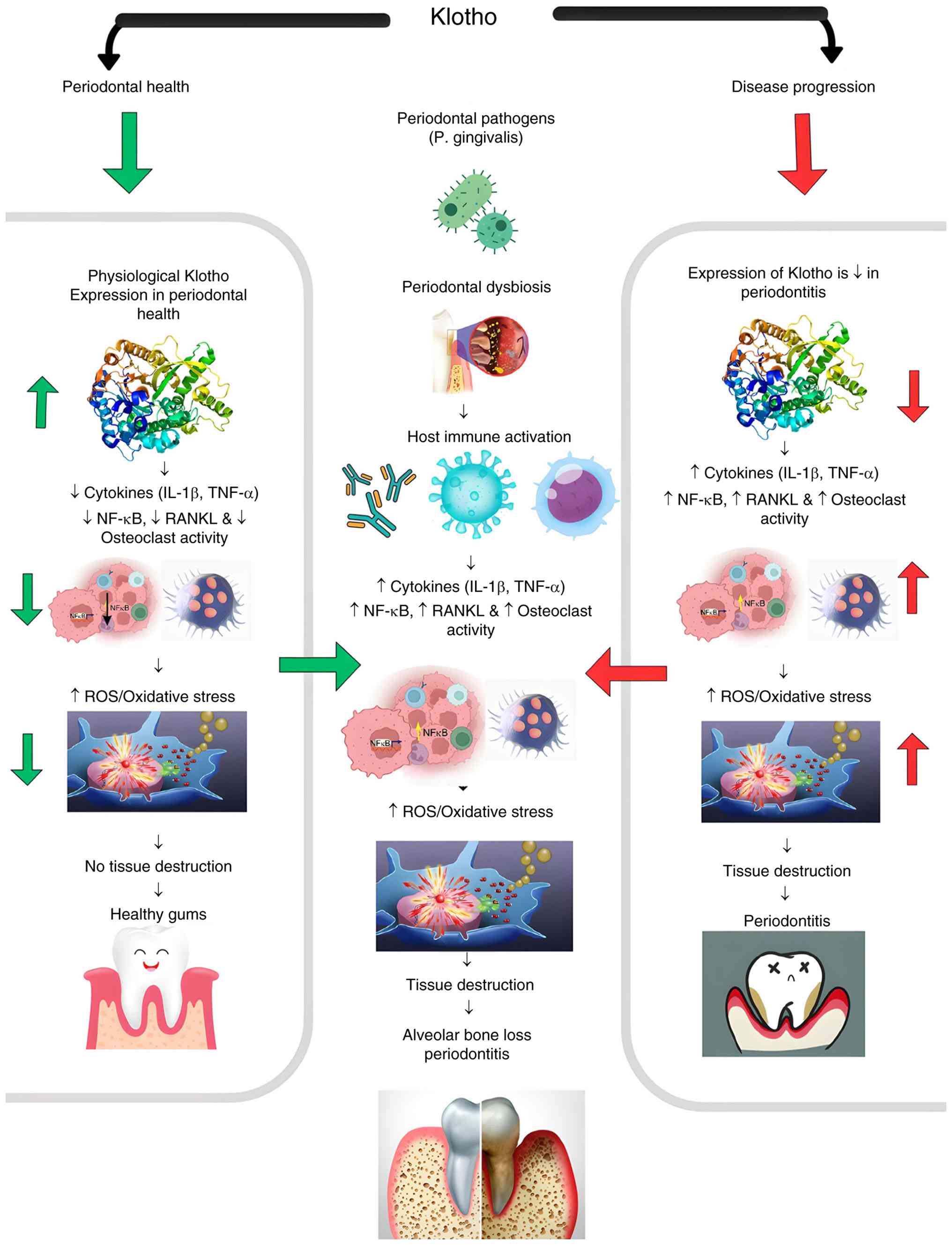 | Figure 1Klotho in periodontal health and
disease progression. Schematic representation of Klotho in
periodontal health and disease. In health, Klotho reduces
pro-inflammatory cytokines (IL-1β and TNF-α), inhibits NF-κB
signaling, decreases RANKL-mediated osteoclast activity and limits
oxidative stress, maintaining tissue homeostasis. In periodontitis,
reduced Klotho expression due to microbial dysbiosis (e.g.,
Porphyromonas gingivalis) and host immune activation leads
to increased inflammation, NF-κB activation, RANKL-driven
osteoclastogenesis, oxidative stress and periodontal tissue
destruction. IL, interleukin; TNF-α, tumor necrosis factor α;
RANKL, receptor activator of nuclear factor-κB ligand; ROS,
reactive oxygen species. |
Anti-inflammatory effects
Klotho exerts significant anti-inflammatory effects
primarily through inhibition of the NF-κB signaling pathway, a
central regulator of inflammatory responses. The suppression of
NF-κB activation leads to the reduced transcription of
pro-inflammatory cytokines, including TNF-α, IL-1β and IL-6,
thereby limiting periodontal inflammation and tissue damage
(11,27). By modulating cytokine production,
Klotho helps maintain immune homeostasis and prevents excessive
host-mediated destruction of periodontal tissues. Experimental
evidence further suggests that Klotho may attenuate inflammatory
responses induced by Porphyromonas gingivalis by suppressing
NF-κB activation and reducing the production of pro-inflammatory
cytokines (9,11,14,27).
Although these findings are promising, the majority of evidence has
been derived from experimental models, and additional studies are
required to confirm these mechanisms in human periodontal tissues
(9,14).
Antioxidant and cytoprotective
functions
Klotho also plays a critical role in protecting
cells against oxidative stress, which is a key contributor to the
progression of periodontal disease. It enhances antioxidant
defenses through the activation of FoxO transcription factors and
the nuclear factor erythroid 2-related factor 2 pathway, leading to
the upregulation of antioxidant enzymes and the reduction of ROS
levels (10,12,17,28).
This reduction in oxidative stress limits cellular damage,
preserves tissue integrity and supports the survival of periodontal
cells under inflammatory conditions. Beyond limiting oxidative
damage, Klotho preserves mitochondrial function, enhances cellular
resistance to oxidative injury and promotes the osteogenic
differentiation of PDLSCs, thereby supporting periodontal tissue
regeneration under inflammatory conditions (10,13,15,27).
Role in ferroptosis and cell
survival
Recent evidence suggests that Klotho may influence
ferroptosis, a form of regulated cell death driven by
iron-dependent lipid peroxidation (9,15,29).
The majority of evidence supporting Klotho-mediated regulation of
GPX4, SLC7A11 and ferroptosis has been obtained from experimental
models (15,29). Recent evidence in periodontal
ligament stem cells demonstrates that Klotho protects osteogenic
function by inhibiting NOX4-mediated ferroptosis; however,
additional studies are required to determine whether these
mechanisms operate broadly across periodontal cell populations
(9,10).
Bone metabolism and alveolar bone
loss
Klotho plays an essential role in bone metabolism
through its interaction with the FGF23 signaling axis, which
regulates phosphate balance and vitamin D metabolism (7). In addition, Klotho regulates alveolar
bone remodeling by influencing the RANKL/OPG signaling axis.
Experimental studies suggest that Klotho suppresses RANKL
expression while preserving or enhancing OPG expression, thereby
reducing osteoclast differentiation and activity and limiting
alveolar bone resorption (9,10,24).
Through these actions, together with its regulation of
FGF23-mediated phosphate metabolism, Klotho contributes to the
maintenance of bone homeostasis and periodontal structural
integrity (9,10,24),
which regulates phosphate homeostasis and vitamin D metabolism.
5. Evidence from experimental and clinical
studies
In vitro studies
In vitro studies suggest that Klotho plays a
protective role in periodontal cells, particularly PDLSCs. Klotho
has been shown to enhance antioxidant capacity, reduce oxidative
stress-induced damage and preserve osteogenic differentiation under
inflammatory conditions (28). The
reduced expression of Klotho has been observed in
periodontitis-affected tissues, while its restoration decreases
apoptosis and improves cellular function (13). Additionally, Klotho may inhibit
ferroptosis and support regenerative potential in PDLSCs,
highlighting its role in maintaining periodontal tissue
homeostasis. Recent studies have further demonstrated that Klotho
preserves the osteogenic potential of periodontal ligament stem
cells by attenuating oxidative stress, maintaining mitochondrial
function, and inhibiting NOX4-mediated ferroptosis (10,13,15,27).
These findings suggest that Klotho not only protects periodontal
cells from inflammatory injury but also promotes their regenerative
capacity under pathological conditions (10,17).
Animal studies
Animal models further support the role of Klotho in
periodontal and bone health. Klotho deficiency has been associated
with an altered periodontal structure, increased inflammation and
enhanced alveolar bone loss (29).
By contrast, Klotho supplementation or overexpression has
demonstrated regenerative effects, including improved cell
survival, reduced osteoclast activity and enhanced bone formation
in experimental models (30).
These findings indicate that Klotho contributes to maintaining
periodontal integrity and bone homeostasis by suppressing
inflammatory responses, limiting oxidative stress, reducing
osteoclastogenesis and promoting alveolar bone regeneration.
Although encouraging, the majority of the available evidence has
been generated in experimental animal models, highlighting the need
for validation in well-designed human clinical studies (14,30).
Human studies
Clinical and epidemiological evidence suggests a
potential association between Klotho and periodontitis, although
findings remain inconsistent. Previous studies have reported lower
serum levels of Klotho in individuals with periodontitis, with
progressively lower levels observed as the severity of the disease
increases (31,32). However, other research has
demonstrated that this association may not remain significant after
adjusting for confounding factors, such as age, smoking and
systemic conditions (33).
Overall, while the local expression of Klotho appears to play a
clearer role in periodontal pathology, the utility of serum Klotho
as a biomarker requires further investigation. The inconsistent
findings reported across clinical studies may reflect heterogeneity
in study design, sample size, periodontal disease classification
and inadequate adjustment for confounding factors, including age,
smoking, renal function, diabetes and other systemic conditions
that influence circulating Klotho concentrations (33,34).
Future prospective studies are required to evaluate both local
periodontal and systemic Klotho levels in well-characterized, age-
and renal function-matched cohorts. Furthermore, combining Klotho
with established periodontal biomarkers, such as IL-6 and matrix
metalloproteinase-8 (MMP-8), may improve diagnostic accuracy and
facilitate its translation into precision periodontal care
(34,35,36).
6. Klotho as a biomarker in
periodontitis
Klotho has gained attention as a potential biomarker
in periodontitis because of its association with inflammation,
oxidative stress and tissue homeostasis. Both systemic and local
measurements of Klotho have been explored, although their clinical
significance appears to differ. The levels of serum soluble
α-Klotho are easier to measure and have been evaluated in
population-based studies; however, the interpretation of its levels
is limited by the influence of age, kidney function and systemic
inflammatory status. As a result, serum Klotho may reflect overall
systemic health rather than periodontal status alone (31-33).
By contrast, local Klotho expression in gingival
tissues, gingival crevicular fluid and PDLSCs may better represent
the biological processes occurring within periodontal lesions.
Studies have reported the reduced expression of Klotho in gingival
tissues and periodontal cells affected by chronic periodontitis,
supporting the notion that local Klotho is more directly linked to
periodontal inflammation, oxidative damage and impaired
regeneration (13,27). These findings suggest that the
local assessment of Klotho may provide greater disease specificity
than systemic measurement. Compared with established periodontal
biomarkers, such as IL-6 and MMP-8, Klotho may provide
complementary rather than replacement diagnostic information.
Whereas IL-6 and MMP-8 primarily reflect active inflammation and
connective tissue degradation, Klotho additionally reflects
oxidative stress, cellular senescence, regenerative potential and
tissue homeostasis. Consequently, combining local Klotho assessment
with established inflammatory biomarkers may improve the diagnostic
and prognostic accuracy of periodontal disease compared with the
use of individual biomarkers alone (9,14,34-36).
Despite these promising findings however, several
limitations hinder the clinical application of Klotho as a
periodontal biomarker. The majority of available human studies are
cross-sectional, involve relatively small sample sizes, and report
inconsistent findings due to variations in periodontal case
definitions, disease severity, analytical methods and inadequate
adjustment for confounding factors, such as age, smoking, diabetes,
chronic kidney disease and renal function. Furthermore,
standardized methods for measuring the levels of Klotho in serum,
saliva, gingival crevicular fluid and gingival tissues have not yet
been established. Future longitudinal studies are thus required to
evaluate both local and systemic Klotho levels in
well-characterized, age- and renal function-matched cohorts, and
determine whether combining Klotho with established periodontal
biomarkers, such as IL-6 and MMP-8, improves diagnostic accuracy
and prognostic value. Therefore, although Klotho exhibits
considerable promise as a biomarker for periodontitis, particularly
at the local level, further multicenter prospective studies are
required before its routine clinical application can be recommended
(34-36).
7. Therapeutic potential of klotho
Klotho has emerged as a promising therapeutic target
in periodontitis due to its ability to modulate key pathogenic
mechanisms, including inflammation, oxidative stress and bone
metabolism. Recombinant Klotho therapy has demonstrated protective
effects in experimental studies by suppressing inflammatory
signaling pathways, particularly the NF-κB signaling pathway,
reducing oxidative stress, enhancing antioxidant defenses and
promoting cellular survival (11,12,14,27).
These properties suggest that exogenous Klotho supplementation may
help limit periodontal tissue destruction and promote healing under
inflammatory conditions (12,28).
In addition to recombinant Klotho protein, several therapeutic
strategies aimed at enhancing endogenous Klotho expression have
been explored in experimental studies. Pharmacological agents, gene
delivery approaches, and epigenetic modulators capable of
upregulating Klotho expression have demonstrated anti-inflammatory,
antioxidant, and tissue-protective effects in preclinical models.
However, these strategies remain at an early stage of development,
and their safety, optimal dosage, long-term efficacy and potential
off-target effects require comprehensive evaluation before clinical
translation (9,14,34).
Stem cell-based approaches further enhance the
therapeutic potential of Klotho in periodontal regeneration. The
pre-treatment of PDLSCs with recombinant Klotho has been shown to
improve viability, reduce oxidative damage and enhance osteogenic
differentiation. In addition, upregulation of Klotho expression in
PDLSCs has been associated with decreased apoptosis and improved
regenerative capacity, indicating its role in supporting
periodontal tissue repair (13,37).
Recent studies have further suggested that Klotho enhances the
regenerative potential of PDLSCs by preserving mitochondrial
function, inhibiting NOX4-mediated ferroptosis and maintaining
osteogenic differentiation under inflammatory conditions, thereby
supporting periodontal regeneration (10,13,15,27).
Advances in biomaterial-based delivery systems
provide additional opportunities for the localized application of
Klotho. The incorporation of Klotho into hydrogels, scaffolds, or
nanoparticle-based carriers may enable controlled and site-specific
delivery to periodontal tissues. However, successful local therapy
must overcome the continuous outward flow of gingival crevicular
fluid (GCF), which can rapidly remove therapeutic agents from
periodontal pockets. Therefore, an ideal delivery system should
possess strong mucoadhesive properties and sustained-release
characteristics to maintain effective local Klotho concentrations,
maximize therapeutic efficacy and minimize systemic exposure
(38-40).
Klotho also holds potential in personalized medicine
approaches for periodontitis. Given its involvement in
inflammation, oxidative stress and bone metabolism, variations in
Klotho expression may influence disease susceptibility,
progression, and treatment response. As a biomarker, Klotho may
help stratify patients based on molecular and inflammatory
profiles, enabling more individualized treatment strategies.
Although current evidence remains largely preclinical, integrating
Klotho into precision-based periodontal care may improve patient
stratification, diagnostic accuracy and individualized treatment
strategies (9,34). Nevertheless, well-designed clinical
trials are required to establish the efficacy, long-term safety,
optimal delivery methods, and cost-effectiveness of Klotho-based
therapies before their routine clinical application (Fig. 2) (9,34,41).
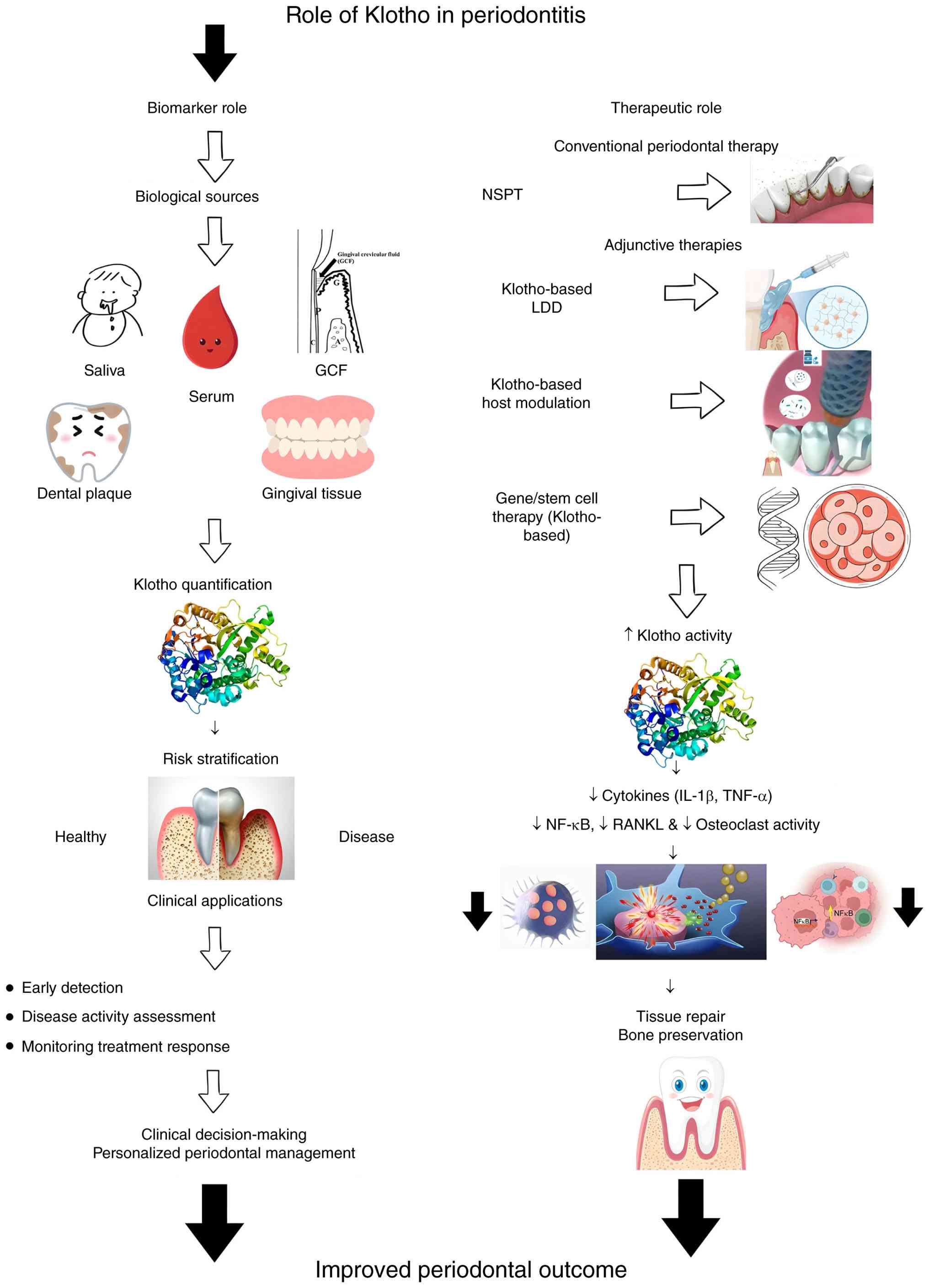 | Figure 2Klotho in periodontitis: Biomarker
and therapeutic roles. Overview of Klotho as a biomarker and
therapeutic target in periodontitis. Klotho can be detected in
saliva, serum, gingival crevicular fluid, dental plaque and
gingival tissue for risk stratification, early detection, disease
assessment, and treatment monitoring. Therapeutically, nonsurgical
periodontal therapy may be complemented by Klotho-based local drug
delivery, host modulation, and gene therapy-based or stem
cell-based approaches. Increased Klotho activity reduces
inflammatory cytokines, NF-κB signaling, RANKL expression, and
oxidative stress, promoting tissue repair, bone preservation, and
improved periodontal outcomes. IL, interleukin; TNF-α, tumor
necrosis factor α; RANKL, receptor activator of nuclear factor-κB
ligand; GCF, gingival crevicular fluid; NSPT, non-surgical
periodontal therapy; LDD, local drug delivery. |
8. Limitations and future directions
Despite increasing evidence supporting the role of
Klotho in periodontitis, several limitations need to be addressed.
The majority of available studies are cross-sectional or
experimental in nature, limiting the ability to establish causal
relationships between Klotho expression and periodontal disease
progression (9,34,37).
Therefore, well-designed longitudinal and interventional human
studies are required to clarify the temporal association between
Klotho levels and disease onset, progression and treatment outcomes
(13,41). In addition, the majority of
clinical studies involve relatively small sample sizes and
heterogeneous patient populations, limiting the generalizability
and reproducibility of the available evidence (9,34).
Another key limitation is the lack of standardized diagnostic
criteria and measurement protocols across studies. Variability in
periodontal case definitions, disease severity, sampling methods
and Klotho detection techniques in serum, saliva, GCF and gingival
tissues, contributes to inconsistent findings and limits direct
comparison between studies. The standardization of these parameters
is essential to improve reproducibility and clinical
applicability.
Furthermore, the relative contribution of local vs.
systemic Klotho in periodontal disease remains unclear. While local
expression appears to be more directly associated with periodontal
tissue changes, systemic Klotho levels are influenced by multiple
confounding factors, including age, renal function, and systemic
inflammation. Future studies are required to simultaneously
evaluate local and systemic Klotho concentrations in
well-characterized, age- and renal function-matched cohorts to
clarify their respective contributions to periodontal disease and
determine whether local-to-systemic Klotho ratios improve disease
specificity. Finally, although preclinical studies highlight the
therapeutic potential of Klotho, its clinical translation remains
in the early stages. Further research is warranted to evaluate the
long-term safety, efficacy, optimal dosage, delivery strategies and
cost-effectiveness of Klotho-based therapies in well-designed
multicenter clinical trials. Furthermore, integrating Klotho with
established periodontal biomarkers, including IL-6 and MMP-8, may
improve diagnostic and prognostic performance and facilitate its
translation into precision periodontal care (35,36).
Addressing these gaps will be critical for establishing Klotho as a
reliable biomarker and therapeutic target in periodontitis.
9. Conclusion
Klotho has emerged as a key regulatory protein with
significant relevance in the pathogenesis and potential management
of periodontitis. Its ability to modulate inflammation, oxidative
stress, cell survival and bone metabolism highlights its protective
role in maintaining periodontal tissue homeostasis. Experimental
and clinical evidence suggests that the reduced expression of
Klotho is associated with periodontal disease, while its
restoration may provide therapeutic benefits through
anti-inflammatory and cytoprotective mechanisms. Although current
findings are promising, the clinical translation of Klotho into
periodontal practice remains in its early stages. Further well-
designed longitudinal and interventional studies are required to
validate its role as a reliable biomarker and therapeutic target.
In addition, advances in biomaterials, regenerative therapies, and
precision-based approaches may facilitate the translation of Klotho
into clinical practice. Overall, Klotho represents a promising link
between systemic regulation and periodontal health, with potential
implications for early diagnosis, targeted therapy, and
personalized medicine in periodontitis.
Acknowledgements
Not applicable.
Funding
Funding: No funding was received.
Availability of data and materials
Not applicable.
Authors' contributions
All authors (GVP, JM and DP) contributed to the
conception and design of the study. GVP performed the literature
search and was responsible for the acquisition, analysis and
interpretation of the data from the literature. GVP drafted the
manuscript. JM and DP critically reviewed and edited the manuscript
for important intellectual content. All authors have read and
approved the final manuscript. Data authentication is not
applicable.
Ethics approval and consent to
participate
Not applicable.
Patient consent for publication
Not applicable.
Competing interests
The authors declare that they have no competing
interests.
Use of artificial intelligence tools
During the preparation of this work, AI tools
(Grammarly) were used to improve the readability and language of
the manuscript or to generate images, and subsequently, the authors
revised and edited the content produced by the AI tools as
necessary, taking full responsibility for the ultimate content of
the present manuscript.
References
|
1
|
Page RC and Schroeder HE: Pathogenesis of
inflammatory periodontal disease: A summary of current work. Lab
Invest. 34:235–249. 1976.PubMed/NCBI
|
|
2
|
Papapanou PN, Sanz M, Buduneli N, Dietrich
T, Feres M, Fine DH, Flemmig TF, Garcia R, Giannobile WV, Graziani
F, et al: Periodontitis: Consensus report of workgroup 2 of the
2017 world workshop on the classification of periodontal and
peri-implant diseases and conditions. J Periodontol. 89 (Suppl
1):S173–S182. 2018.PubMed/NCBI View Article : Google Scholar
|
|
3
|
Beck JD and Offenbacher S: Systemic
effects of periodontitis: Epidemiology of periodontal disease and
cardiovascular disease. J Periodontol. 76:2089–2100.
2005.PubMed/NCBI View Article : Google Scholar
|
|
4
|
Sanz M, Del Castillo A, Jepsen S,
Gonzalez-Juanatey JR, D'Aiuto F, Bouchard P, Chapple I, Dietrich T,
Gotsman I, Graziani F, et al: Periodontitis and cardiovascular
diseases: Consensus report. J Clin Periodontol. 47:268–288.
2020.PubMed/NCBI View
Article : Google Scholar
|
|
5
|
Leira Y, Seoane J, Blanco M,
Rodríguez-Yáñez M, Takkouche B, Blanco J and Castillo J:
Association between periodontitis and ischemic stroke: A systematic
review and meta-analysis. Eur J Epidemiol. 32:43–53.
2017.PubMed/NCBI View Article : Google Scholar
|
|
6
|
Kuro-o M, Matsumura Y, Aizawa H, Kawaguchi
H, Suga T, Utsugi T, Ohyama Y, Kurabayashi M, Kaname T, Kume K, et
al: Mutation of the mouse klotho gene leads to a syndrome
resembling ageing. Nature. 390:45–51. 1997.PubMed/NCBI View
Article : Google Scholar
|
|
7
|
Urakawa I, Yamazaki Y, Shimada T, Iijima
K, Hasegawa H, Okawa K, Fujita T, Fukumoto S and Yamashita T:
Klotho converts canonical FGF receptor into a specific receptor for
FGF23. Nature. 444:770–774. 2006.PubMed/NCBI View Article : Google Scholar
|
|
8
|
Kurosu H, Ogawa Y, Miyoshi M, Yamamoto M,
Nandi A, Rosenblatt KP, Baum MG, Schiavi S, Hu MC, Moe OW and
Kuro-o M: Regulation of fibroblast growth factor-23 signaling by
Klotho. J Biol Chem. 281:6120–6123. 2006.PubMed/NCBI View Article : Google Scholar
|
|
9
|
Lin S, Wang B and Li J: The role of Klotho
in oral and maxillofacial diseases: Mechanisms and research
progress. Biomolecules. 15(624)2025.PubMed/NCBI View Article : Google Scholar
|
|
10
|
Niu Q, Chen H, Ou Q, Yang S, Peng Y, Xie
Y, Yu L, Cheng Z, Cao Y and Wang Y: Klotho enhances bone
regenerative function of human periodontal ligament stem cells via
modulating immunoregulatory function and cell autophagy. J Orthop
Surg Res. 18(400)2023.PubMed/NCBI View Article : Google Scholar
|
|
11
|
Maekawa Y, Ishikawa K, Yasuda O, Oguro R,
Hanasaki H, Kida I, Takemura Y, Ohishi M, Katsuya T and Rakugi H:
Klotho suppresses TNF-α-induced expression of adhesion molecules in
the endothelium and attenuates NF-κB activation. Endocrine.
35:341–346. 2009.PubMed/NCBI View Article : Google Scholar
|
|
12
|
Yamamoto M, Clark JD, Pastor JV, Gurnani
P, Nandi A, Kurosu H, Miyoshi M, Ogawa Y, Castrillon DH, Rosenblatt
KP and Kuro-o M: Regulation of oxidative stress by the anti-aging
hormone Klotho. J Biol Chem. 280:38029–38034. 2005.PubMed/NCBI View Article : Google Scholar
|
|
13
|
Zhu L, Xie H, Liu Q, Ma F and Wu H: Klotho
inhibits H2O2-induced oxidative stress and
apoptosis in periodontal ligament stem cells. Clin Exp Pharmacol
Physiol. 48:1412–1420. 2021.PubMed/NCBI View Article : Google Scholar
|
|
14
|
Prud'homme GJ and Wang Q:
Anti-inflammatory role of the Klotho protein and relevance to
aging. Cells. 13(1413)2024.PubMed/NCBI View Article : Google Scholar
|
|
15
|
Lin C, Wei J, Zhao T, Chen L, Rong S, Zhan
J, Lai W, Wang Y, Xie Y and Chen H: Klotho protects the osteogenic
function of human periodontal ligament stem cells in periodontitis
by inhibiting NOX4-mediated ferroptosis. Stem Cell Res Ther.
17(81)2026.PubMed/NCBI View Article : Google Scholar
|
|
16
|
Wen S, Zheng X, Yin W, Liu Y, Wang R, Zhao
Y, Liu Z, Li C, Zeng J and Rong M: Dental stem cell dynamics in
periodontal ligament regeneration: From mechanism to application.
Stem Cell Res Ther. 15(389)2024.PubMed/NCBI View Article : Google Scholar
|
|
17
|
Hajare AD, Dagar N and Gaikwad AB: Klotho
antiaging protein: Molecular mechanisms and therapeutic potential
in diseases. Mol Biomed. 6(19)2025.PubMed/NCBI View Article : Google Scholar
|
|
18
|
Hajishengallis G: Immunomicrobial
pathogenesis of periodontitis: Keystones, pathobionts, and host
response. Trends Immunol. 35:3–11. 2014.PubMed/NCBI View Article : Google Scholar
|
|
19
|
Hajishengallis G, Darveau RP and Curtis
MA: The keystone-pathogen hypothesis. Nat Rev Microbiol.
10:717–725. 2012.PubMed/NCBI View Article : Google Scholar
|
|
20
|
Lamont RJ and Koo H: Porphyromonas
gingivalis: Molecular mechanisms of polymicrobial synergy in
periodontitis. Trends Microbiol. 30:472–486. 2022.
|
|
21
|
Chen CD, Podvin S, Gillespie E, Leeman SE
and Abraham CR: Insulin stimulates the cleavage and release of the
extracellular domain of Klotho by ADAM10 and ADAM17. Proc Natl Acad
Sci USA. 104:19796–19801. 2007.PubMed/NCBI View Article : Google Scholar
|
|
22
|
Meyle J and Chapple ILC: Molecular aspects
of the pathogenesis of periodontitis. Periodontol 2000. 90:31–49.
2022.
|
|
23
|
Graves DT and Cochran D: The contribution
of interleukin-1 and tumor necrosis factor to periodontal tissue
destruction. J Periodontol. 74:391–401. 2003.PubMed/NCBI View Article : Google Scholar
|
|
24
|
Boyle WJ, Simonet WS and Lacey DL:
Osteoclast differentiation and activation. Nature. 423:337–342.
2003.
|
|
25
|
Yewale M and Agnihotri R: The role of
bone-specific biomarkers in chronic periodontitis diagnosis and
treatment outcomes: A systematic review. Evid Based Dent. 23:40–41.
2022.PubMed/NCBI View Article : Google Scholar
|
|
26
|
Kuro-o M: The Klotho proteins in health
and disease. Nat Rev Nephrol. 15:27–44. 2019.PubMed/NCBI View Article : Google Scholar
|
|
27
|
Chen H, Huang X, Fu C, Wu X, Peng Y, Lin X
and Wang Y: Recombinant Klotho protects human periodontal ligament
stem cells by regulating mitochondrial function and the antioxidant
system during H2O2-induced oxidative stress.
Oxid Med Cell Longev. 2019(9261565)2019.PubMed/NCBI View Article : Google Scholar
|
|
28
|
Chen CD, Li Y, Chen AK, Rudy MA, Nasse JS,
Zeldich E, Polanco TJ and Abraham CR: Identification of the
cleavage sites leading to the shed forms of human and mouse
anti-aging and cognition-enhancing protein Klotho. PLoS One.
15(e0226382)2020.PubMed/NCBI View Article : Google Scholar
|
|
29
|
Zhou P, Zhao C, Chen Y, Liu X, Wu C and Hu
Z: Klotho activation of Nrf2 inhibits ferroptosis signaling
pathway. Transl Androl Urol. 12:1871–1884. 2023.PubMed/NCBI View Article : Google Scholar
|
|
30
|
Liu T, Zhang L, Joo D and Sun SC: NF-κB
signaling in inflammation. Signal Transduct Target Ther.
2(17023)2017.PubMed/NCBI View Article : Google Scholar
|
|
31
|
Hikone K, Hasegawa T, Tsuchiya E, Hongo H,
Sasaki M, Yamamoto T, Kudo A, Oda K, Haraguchi M, de Freitas PHL,
et al: Histochemical examination on periodontal tissues of
Klotho-deficient mice fed with phosphate-insufficient diet. J
Histochem Cytochem. 65:207–221. 2017.PubMed/NCBI View Article : Google Scholar
|
|
32
|
Tang Y, Lei M, Dong W, Liu Z, Jiang W, Hao
J and Hu Z: Association between serum α-Klotho levels and mortality
in US adults with osteoporosis. BMC Public Health.
25(1332)2025.PubMed/NCBI View Article : Google Scholar
|
|
33
|
Ni C, Bao D, Yan F and Chen B: Correlation
between serum α-Klotho levels and different stages of
periodontitis. BMC Oral Health. 23:1–8. 2023.PubMed/NCBI View Article : Google Scholar
|
|
34
|
Wan C, Yang Y, Wang B and Li J: Clinical
applications and mechanisms of Klotho in periodontitis diagnosis
and therapy. Oral Dis. 10:2807–2817. 2025.PubMed/NCBI View Article : Google Scholar
|
|
35
|
Domokos Z, Simon F, Uhrin E, Szabó B,
Váncsa S, Varga G, Hegyi P, Kerémi B and Németh O: Evaluating
salivary MMP-8 as a biomarker for periodontal diseases: A
systematic review and meta-analysis. Heliyon.
10(e40402)2024.PubMed/NCBI View Article : Google Scholar
|
|
36
|
Alarcón-Sánchez MA, Rodríguez-Montaño R,
Mosaddad SA and Heboyan A: Levels of IL-1β, MMP-8 and MMP-9 in the
saliva of subjects with periodontitis: A systematic review and
meta-analysis. J Clin Lab Anal. 39(e70040)2025.PubMed/NCBI View Article : Google Scholar
|
|
37
|
Sabri H, Baniameri S, Kataria P, Abulatifa
H, Hazrati P, Wang HL and Saleh MHA: Association between serum
α-Klotho levels and severity of periodontitis. J Periodontol.
4:1–11. 2026.PubMed/NCBI View Article : Google Scholar
|
|
38
|
Pan Q, Zong Z, Li H, Xie L, Zhu H, Wu D,
Liu R, He B and Pu Y: Hydrogel design and applications for
periodontitis therapy: A review. Int J Biol Macromol.
284(137893)2025.PubMed/NCBI View Article : Google Scholar
|
|
39
|
Li Q, Wang D, Xiao C, Wang H and Dong S:
Advances in hydrogels for periodontitis treatment. ACS Biomater Sci
Eng. 10:2742–2761. 2024.PubMed/NCBI View Article : Google Scholar
|
|
40
|
Amiri MA, Amiri D and Hamedani S:
Thermosensitive hydrogels for periodontal regeneration: A
systematic review of the evidence. Clin Exp Dent Res.
10(e70029)2024.PubMed/NCBI View Article : Google Scholar
|
|
41
|
Laforgia A, Inchingolo AD, Piras F,
Colonna V, Giorgio RV, Carone C, Rapone B, Malcangi G, Inchingolo
AM, Inchingolo F, et al: Therapeutic strategies and genetic
implications for periodontal disease management: A systematic
review. Int J Mol Sci. 25(7217)2024.PubMed/NCBI View Article : Google Scholar
|

















