1. Introduction
Glucagon-like peptide (GLP)-1 receptor agonists
(GLP-1RAs) represent among the most critical pharmacological
advances in the treatment of type 2 diabetes mellitus (T2DM) and
obesity in the past decade. Although these drugs were initially
designed as anti-hyperglycemic agents, they are increasingly being
prescribed due to their prominent effects on weight loss,
cardiovascular risk reduction and metabolic control (1,2). The
availability of long-acting agents, such as semaglutide and the
dual glucose-dependent insulinotropic polypeptide (GIP)/GLP-1
receptor agonist, tirzepatide, has led to unprecedented worldwide
demand, beyond endocrinology, in primary care, obesity medicine and
aesthetic practice (3,4).
As the use of GLP-1RAs is increasingly prescribed,
dental practitioners will come across a greater number of patients
on these medications. In the UK and numerous other countries,
prescriptions for semaglutide and tirzepatide have markedly
increased in recent years. This is a reflection of the escalating
prevalence of obesity, as well as wider therapeutic indications
(5). Thus, knowledge of GLP-1RA
treatment is currently applicable to all members of the dental
team. Crucially, a number of patients may not have received
information regarding weight loss medications unless specifically
requested, particularly if the treatment was obtained through
private clinics or online providers. Therefore, the complete
medical history of the patient should include direct questioning
about injectable or oral anti-obesity medications.
From a dental perspective, GLP-1RA therapy may have
both potentially beneficial and adverse implications. Improved
metabolic control may support periodontal health and tissue repair,
whereas treatment-related gastrointestinal and salivary changes may
adversely affect susceptible patients (6-9).
However, direct dental evidence remains limited, and the clinical
significance of these effects has not yet been fully established.
Perioperative considerations are particularly relevant when deep
sedation or general anaesthesia is planned as GLP-1RA-related
delayed gastric emptying may influence the risk of aspiration
(10,11).
The aim of the narrative present review was
therefore to provide a practical, evidence-based framework for
assessing and managing patients receiving GLP-1RAs in dental
practice. For the purpose of the present review, the
PubMed/MEDLINE, Scopus, Web of Science and Google Scholar databases
were searched for publications from January, 2015 through June,
2026 using combinations of Medical Subject Headings and free-text
terms related to ‘GLP-1 receptor agonists’, ‘semaglutide’,
‘tirzepatide’, ‘exenatide’, ‘liraglutide’, ‘dulaglutide’, ‘oral
health’, ‘xerostomia’, ‘hyposalivation’, ‘dysgeusia’, ‘dental
erosion’, ‘periodontitis’, ‘peri-implantitis’, ‘wound healing’,
‘sedation’, ‘gastric emptying’, and ‘perioperative management’.
Reference lists of relevant publications and clinical guidance
documents were additionally screened to identify pertinent studies.
Eligible evidence included clinical studies, observational studies,
systematic and narrative reviews, meta-analyses, clinical practice
guidelines, pharmacovigilance studies, experimental studies and
relevant case reports published in the English language.
2. Definition of GLP-1 receptor
agonists
GLP-1 is an endogenous incretin hormone produced
predominantly by enteroendocrine L-cells in the distal small
intestine and colon. Released post-prandially, it contributes to
glucose homeostasis by enhancing glucose-dependent insulin
secretion, suppressing glucagon release, delaying gastric emptying
and promoting satiety (12,13).
As native GLP-1 is rapidly degraded by dipeptidyl peptidase-4
(DPP-4), its short half-life limits therapeutic use (14). DPP-4-resistant GLP-1 receptor
agonists (GLP-1RAs) provide prolonged biological activity and
include exenatide, liraglutide, dulaglutide, lixisenatide and
semaglutide; tirzepatide is a dual GIP/GLP-1RA (2,15).
These agents are available in daily or weekly injectable
formulations, with oral semaglutide also available (16). Their principal effects include
glucose-dependent insulin secretion, the suppression of glucagon,
reduced hepatic glucose output, delayed gastric emptying and
appetite suppression, resulting in improved glycaemic control and
weight loss (13,17). Cardiovascular outcome trials have
additionally demonstrated reductions in major adverse
cardiovascular events in high-risk populations (18).
GLP-1-based therapies are approved primarily for
patients with T2DM and to those with obesity or who are overweight
with relevant comorbidities (3,19),
with expanding investigation across cardiovascular, renal, hepatic
and neurodegenerative conditions (20). Consequently, dental practitioners
are increasingly likely to encounter patients receiving these
therapies.
3. Oral and dental aspects in glucagon-like
peptide-1 receptor agonist therapy
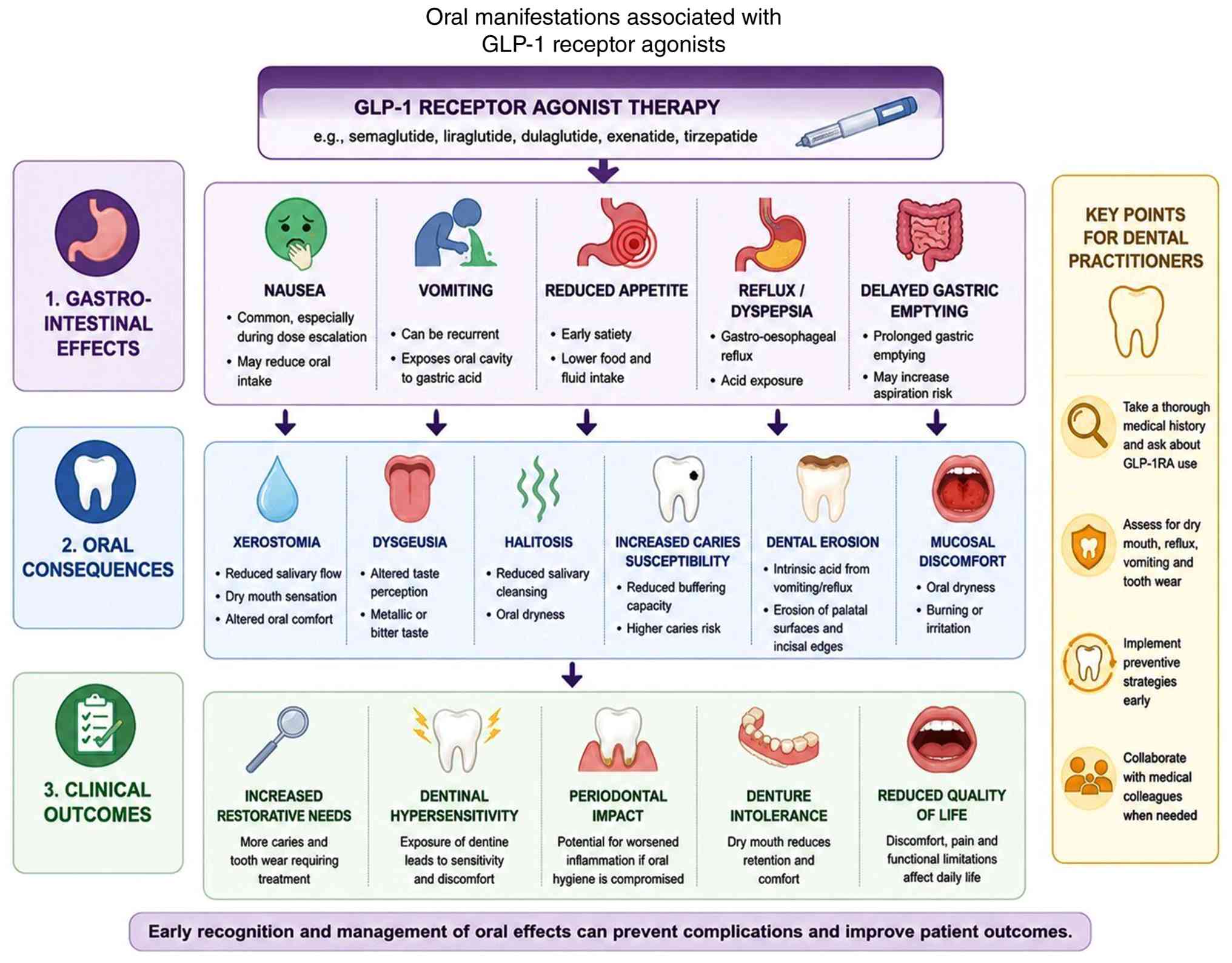
The use of GLP-1RAs is associated with a variety of
oral, dental and clinical aspects. A schematic representation of
these is presented in Fig. 1 and
these are also briefly described below:
Changes in saliva and dry mouth
Xerostomia is a commonly reported oral complaint in
patients receiving GLP-1RAs. Its mechanism is likely
multifactorial, involving reduced fluid intake associated with
appetite suppression, gastrointestinal fluid loss, altered
autonomic regulation and the concomitant use of xerogenic
medications (21). Reduced
salivary flow may increase the risk of developing dental caries,
mucosal discomfort, candidal infection, dysphagia and impaired
denture retention (22).
Clinicians should therefore enquire about oral dryness and related
functional symptoms during routine examinations. The mechanisms
underlying xerostomia in patients receiving GLP-1RAs remain
incompletely defined and are likely multifactorial. An indirect
mechanism is clinically plausible as GLP-1RAs commonly cause
nausea, vomiting, reduced appetite and gastrointestinal discomfort,
which may reduce fluid intake and contribute to dehydration and
diminished salivary flow. The concomitant use of other xerogenic
medications in patients with diabetes, obesity and cardiovascular
comorbidities may further contribute to subjective oral dryness. A
potential direct effect on salivary-gland function has also been
proposed. Experimental evidence has revealed GLP-1 receptor
expression in major salivary glands, providing biological
plausibility for receptor-mediated modulation of glandular
function. Salivary secretion is regulated by coordinated autonomic
signaling involving intracellular calcium and cyclic AMP pathways;
therefore, modulation of these pathways by sustained GLP-1 receptor
stimulation could theoretically influence secretory activity
(6,7) Recent mechanistic research has
proposed that prolonged GLP-1 receptor activation may involve
cAMP-dependent signaling, β-arrestin recruitment, receptor
internalization and altered cellular responsiveness (6). However, these mechanisms remain
hypothesis-generating, and direct human evidence demonstrating
GLP-1RA-induced salivary-gland dysfunction is currently lacking.
Clinically, this distinction is critical as xerostomia should not
automatically be attributed to a direct pharmacological effect of
the GLP-1RA. Hydration status, gastrointestinal symptoms,
concomitant medications and underlying systemic disease should also
be considered (7,8). A 2023 case series reported
hyposalivation in three patients receiving semaglutide, providing
important clinical information but not definitive evidence of
causality (7).
Management should include preventive strategies,
including the reinforcement of meticulous plaque control, frequent
hydration, the use of sugar-free chewing gum, the use of salivary
substitutes and the use of topical fluoride, where indicated
(9). Patients with persistent
symptoms may require more frequent recall and better caries
prevention.
Although GLP-1 receptor agonists share broadly
similar pharmacological effects, their gastrointestinal adverse
effects are not identical. A recent Bayesian network meta-analysis
of randomized trials demonstrated differences among individual
agents in nausea, vomiting, diarrhea and other gastrointestinal
adverse events, with some agents exhibiting greater
gastrointestinal intolerance than others (10). Real-world comparative data have
similarly suggested differences in gastrointestinal adverse event
patterns between individual GLP-1Ras (10,11).
However, these findings cannot be directly extrapolated to adverse
dental effects. Direct comparative evidence for xerostomia,
dysgeusia, dental erosion or other oral manifestations remains very
limited. Semaglutide-associated hyposalivation has been described
in a small case series (7);
however, causality and the underlying mechanism remain uncertain.
Therefore, clinicians should avoid assuming that one GLP-1RA has
consistently greater oral toxicity than another does. Dental
assessments should instead consider the specific agent, dose,
treatment duration, recent dose escalation, gastrointestinal
symptoms, hydration status and individual oral findings (7,10,12).
Gastrointestinal effects and their
oral consequences
Gastrointestinal adverse effects are the most common
toxicity associated with the use of GLP-1RAs, particularly nausea
and, in susceptible patients, vomiting during treatment initiation
or dose escalation (2,11,13,14).
Recurrent vomiting or gastroesophageal reflux may expose oral
tissues to gastric acid, increasing the risk of dental erosion,
dentin hypersensitivity and restorative deterioration (15). Erosive tooth wear typically affects
the palatal surfaces of the maxillary anterior teeth and occlusal
surfaces of posterior teeth and may progress insidiously;
therefore, patients with persistent nausea, retching, vomiting or
reflux should be assessed for erosive changes (15).
GLP-1RA-associated delayed gastric emptying may
contribute to reflux symptoms in susceptible individuals (16,17).
Reflux may also produce unpleasant taste, halitosis or oral
burning. Management should focus on preventive counselling, dietary
and reflux-related advice, monitoring for erosive tooth wear, and
medical referral when symptoms are severe or persistent. Following
vomiting, patients should avoid immediate toothbrushing as
acid-softened enamel is more vulnerable to abrasion; rinsing with
water, milk or a bicarbonate-containing rinse followed by delayed
brushing with fluoridated toothpaste is recommended. Topical
fluoride varnish and remineralizing agents may be considered for
early erosive lesions (15,18).
Dysgeusia (taste alteration) and
altered oral sensations
Some patients treated with GLP-1RAs report dysgeusia
or an altered taste perception; however, the prevalence estimates
are poorly defined (19).
Disturbances in taste can affect food preferences, oral hygiene
habits and nutritional intake. Although symptoms are usually
transient, if the disturbance persists, other causes should be
excluded, e.g., nutritional deficiencies, polypharmacy and systemic
disease. While the direct effects of GLP-1RAs on oral sensory
pathways are speculative, it is crucial that clinicians are aware
of these symptoms and provide appropriate reassurance and
supportive care. Overall, a number of the oral manifestations
associated with GLP-1RA therapy are relatively mild; however, their
cumulative effects may have a marked effect on oral health,
treatment outcomes and patient comfort. The critical roles of
GLP-1RAs in early detection and the application of preventive
strategies are incumbent upon those of dental practitioners.
4. GLP-1 receptor agonists and periodontal
health: Drawbacks and benefits
A compelling aspect of GLP-1RA therapy is the
potential beneficial effects of these drugs on periodontal tissues.
The link between periodontitis and diabetes mellitus is
well-established, is bidirectional in nature and is characterized
by chronic systemic inflammation, impaired immune function and
altered tissue repair (20). A
reduction in periodontal inflammation and improved treatment
outcomes have been associated with improved glycemic control
(21); thus, the optimization of
metabolic status may be an indirect periodontal benefit of
GLP-1RAs. Experimental research has demonstrated that GLP-1
receptors in several cell types are relevant for periodontal
health, such as osteoblasts, endothelial cells and immune cells
(22). The activation of these
receptors appears to modulate inflammatory pathways by
downregulating the expression of pro-inflammatory cytokines, such
as tumor necrosis factor-α (TNF-α), interleukin (IL)-1b and IL-6,
and upregulating anti-inflammatory responses (23). Animal studies have also
demonstrated that GLP-1 signaling can prevent alveolar bone loss
and inhibit osteoclastogenesis via the modulation of receptor
activator of nuclear factor κB ligand (RANKL)-mediated pathways
(24,25).
The potential periodontal benefits of GLP-1RA
therapy should, however, be interpreted with caution. This
biological rationale is supported by experimental evidence
indicating that GLP-1 signaling can influence inflammatory
pathways, oxidative stress, osteoclastogenesis and bone metabolism
(26). Nevertheless, experimental
effects cannot be assumed to translate directly into clinically
meaningful periodontal improvement. Human evidence remains limited
and is predominantly observational. Associations between GLP-1RA
use and improved periodontal parameters may reflect improved
glycemic control, weight reduction, changes in systemic
inflammation or differences in healthcare behavior, rather than a
direct pharmacological effect on periodontal tissues. Confounding
by indication is particularly relevant as patients receiving
GLP-1RAs may differ substantially from patients in other groups in
terms of diabetes severity, obesity, healthcare utilization and
concurrent medications. Therefore, GLP-1RAs should not currently be
considered a periodontal treatment or a substitute for plaque
control, professional periodontal therapy, smoking cessation or
supportive periodontal care. The available evidence is better
interpreted as hypothesis-generating and supportive of further
investigation. Well-designed prospective periodontal trials,
ideally incorporating glycemic status, inflammatory biomarkers,
microbiological outcomes and standardized periodontal endpoints are
required before a direct therapeutic role can be established
(27).
Implications for oral surgery and
wound healing
Patients receiving GLP-1RAs frequently undergo
routine dentoalveolar procedures, such as extractions, periodontal
surgery and implant placement. This raises questions about the
possible effects on wound healing and post-operative recovery.
Delayed wound healing, post-operative infection and impaired
periodontal regeneration are known to be associated with poor
glycemic control (20).
Theoretically, GLP-1RAs could improve glucose homeostasis, which
can improve tissue repair and decrease postoperative complications
(28). This concept is supported
by experimental data demonstrating increased angiogenesis, reduced
oxidative stress and the modulation of inflammatory responses in
several tissue models upon GLP-1 receptor stimulation (22).
Preclinical studies have demonstrated that GLP-1
signaling promotes fibroblast proliferation, enhances collagen
deposition and improves vascular function, all of which are
important for oral wound healing (23). These anti-inflammatory effects may
also benefit healing following periodontal or implant surgery.
However, there is limited evidence from studies on oral
surgery.
There is no current evidence available to support
the routine discontinuation of GLP-1RA therapy prior to minor
dental procedures under local anesthesia alone. Simple extractions,
scaling and root surface debridement, restorative treatment and
periodontal maintenance can usually be accomplished without any
alteration of medication regimens as long as the medical condition
f the patient is stable (29).
However, clinicians should be aware of the possibility of
gastrointestinal adverse effects that may affect post-operative
care. Patients with marked nausea or vomiting may have difficulty
tolerating post-operative analgesics, maintaining adequate
nutrition or following oral hygiene instructions. Post-operative
advice may also need to be reinforced.
The proposed effects of GLP-1RAs on wound healing
remain biologically plausible, yet clinically uncertain in
dentistry. Improved glycemic control could indirectly support
tissue repair in patients with diabetes, while experimental studies
suggest additional effects on inflammation, angiogenesis, oxidative
stress and tissue remodeling. However, these mechanisms should not
be interpreted as evidence that GLP-1RAs independently accelerate
oral or periodontal wound healing. Recent non-dental surgical
studies (30,31) have produced heterogeneous findings,
with some retrospective analyses reporting favorable or neutral
postoperative outcomes and others identifying possible
wound-healing concerns. These studies are difficult to extrapolate
to periodontal surgery or implant surgery due to differences in
procedure type, diabetes severity, nutritional status, obesity,
comorbidities and peri-operative management. Thus, there is
currently insufficient evidence to recommend GLP-1RA therapy
specifically to enhance oral wound healing (30).
Dental implant therapy
considerations
The association between GLP-1RA therapy and dental
implant outcomes remains inadequately characterized. Improved
glycemic control may theoretically reduce some of the biological
risks associated with diabetes, while experimental research
suggests that GLP-1 signaling may influence bone turnover,
inflammation and osseointegration (27). However, these mechanisms do not
establish a clinical benefit for implant therapy. The available
human evidence concerning peri-implant health is limited and
predominantly observational. Differences in diabetes control,
periodontal status, smoking status, obesity status, implant
characteristics and concurrent medications introduce substantial
potential confounding effects. Consequently, GLP-1RA therapy should
neither be considered an indication for implant treatment nor
viewed as an independent predictor of implant success or failure.
For current clinical practice, implant risk assessments should
continue to prioritize glycemic control, periodontal stability,
smoking status, oral hygiene, bone quality, systemic comorbidities
and adherence to maintenance therapy. The potential effects of
GLP-1RAs on osseointegration and peri-implant inflammation remain
key research questions rather than established clinical indications
(27). A summary of the strength
of current evidence for oral and dental effects of GLP-1RAs is
presented in Table I.
 | Table IStrength of current evidence for oral
and dental effects of GLP-1 receptor agonists. |
Table I
Strength of current evidence for oral
and dental effects of GLP-1 receptor agonists.
| Oral/dental
outcome | Current
evidence | Predominant
evidence type | Evidence
strength | Clinical
interpretation | (Refs.) |
|---|
|
Xerostomia/hyposalivation | Emerging
association, particularly with semaglutide; mechanism remains
uncertain | Case
reports/series, pharmacovigilance, mechanistic evidence | Low | Monitor for dry
mouth and salivary dysfunction; avoid assuming a direct class
effect | (6,7) |
| Reduced salivary
flow and dehydration-related oral effects | Biologically
plausible through reduced intake, nausea/vomiting and
dehydration | Indirect clinical
evidence + physiological/mechanistic evidence | Low | Hydration and
preventive salivary management are reasonable | (7,8,34) |
| Nausea and
vomiting | Well-established
systemic adverse effects of GLP-1RAs | RCTs and large
clinical trials | High | Clinically relevant
because recurrent vomiting may secondarily affect oral health | (10) |
| Gastro-esophageal
reflux/gastric exposure | GI effects and
delayed gastric emptying are established; direct dental
consequences are mainly inferred | RCTs/systematic
evidence for GI effects; indirect dental evidence | Moderate for GI
effects; Low for dental consequences | Monitor patients
with reflux/vomiting for erosive tooth wear | (11,16,17) |
| Dental erosion | Plausible secondary
consequence of recurrent vomiting/reflux; no evidence for direct
drug-tooth interaction | Mechanistic
inference, general dental evidence, clinical reports | Low | Preventive erosion
management is appropriate; do not describe as direct GLP-1RA
toxicity | (11,18) |
| Dysgeusia/altered
taste | Reported in
association with GLP-1RA treatment, but agent-specific oral
evidence is limited | Clinical
adverse-event data, pharmacovigilance, case-level evidence | Low | Consider medication
and systemic/GI causes when evaluating persistent taste
alteration | (40) |
| Halitosis | Possible secondary
association through xerostomia, reflux, vomiting and dietary
changes |
Mechanistic/indirect evidence | Low | Assess oral
hygiene, periodontal status, salivary function and reflux | (8,11,19) |
| Periodontal
inflammation | Potential
beneficial association has been reported, but causality is
uncertain | Observational human
studies + experimental evidence | Low | GLP-1RAs should not
be considered periodontal therapy | (24-27) |
| Periodontal
clinical parameters | Some studies
suggest improved periodontal indices in GLP-1RA users |
Retrospective/observational studies | Low | Findings are
hypothesis-generating and potentially confounded by improved
metabolic control | (24,26,27) |
| Periodontal
inflammatory pathways | Anti-inflammatory
and immunomodulatory effects are biologically plausible | In
vitro/animal/mechanistic studies | Low-moderate
mechanistic evidence | Supports biological
plausibility but not clinical efficacy | (24,25,27) |
| Oral wound
healing | Potential effects
on inflammation, angiogenesis and tissue repair; human dental
evidence scarce | Preclinical studies
+ indirect surgical evidence | Low | No basis for
prescribing GLP-1RAs to improve oral wound healing | (30,41) |
| Bone
healing/osteogenesis | Experimental
evidence suggests effects on bone metabolism | Animal/in
vitro studies | Low-moderate
preclinical evidence | Translational
relevance remains uncertain | (24,25,27) |
| Dental implant
osseointegration | Promising
preclinical findings; very limited human evidence | Animal studies +
limited observational clinical evidence | Low | GLP-1RA use should
not currently be regarded as an independent predictor of implant
success | (24,27) |
| Peri-implant
inflammation/marginal bone loss | Preliminary
evidence suggests possible benefit | Limited
observational evidence + preclinical studies | Very low-low | Requires
prospective clinical studies | (24,27) |
| Direct effects on
enamel/dentin/pulp | No convincing
evidence of direct pharmacological damage | Current
clinical/review evidence | Very
low/insufficient | Avoid attributing
dental hard-tissue damage directly to GLP-1RAs | (6,18,24) |
| Aspiration risk
during deep sedation/general anesthesia | Delayed gastric
emptying is established, but magnitude of aspiration risk is
uncertain and patient-dependent | Pharmacological
evidence, observational perioperative studies, consensus
guidance | Moderate for
delayed gastric emptying; low/uncertain for actual aspiration
risk | Individualized
perioperative risk assessment is needed; avoid blanket medication
withholding | (17,29,32) |
Sedation and perioperative issues: The
critical issue for dentists
Delayed gastric emptying is clinically relevant when
dental treatment involves deep sedation or general anesthesia as
residual gastric contents may increase the potential for
regurgitation and pulmonary aspiration. However, the magnitude of
this risk varies among patients, and perioperative recommendations
have evolved rapidly. Current multisociety guidance generally
favors individualized risk assessment rather than the routine
discontinuation of GLP-1RA therapy for each patient. Prior to
sedation or general anesthesia, the dental team should document the
GLP-1RA agent, indication, dose, frequency, timing of the most
recent dose, recent dose escalation and the presence of
gastrointestinal symptoms, such as nausea, vomiting, abdominal
pain, bloating or severe reflux. Patients in an active
dose-escalation phase or those with substantial gastrointestinal
symptoms may represent a higher-risk group and require additional
assessment or modification of the planned procedure. There is no
basis for applying a universal prolonged fasting period or
medication-withholding rule to every patient receiving a GLP-1RA.
Instead, the dental practitioner should follow the current
institutional, national and anesthesia-provider guidance applicable
to the planned level of sedation. For patients considered to have
an increased risk of aspiration, risk-mitigation measures may
include modification of the procedure, consideration of a
liquid-only diet for an appropriate period, adjustment of the
anesthetic technique, or postponement when clinically indicated
(17,29). Decisions concerning temporary
interruption of GLP-1RA therapy should be made collaboratively with
the prescribing clinician and anesthesia team, particularly in
patients receiving medication for diabetes, as interruption may
adversely affect glycemic control. For procedures performed under
local anesthesia without sedation, delayed gastric emptying is
generally not a major procedural concern. Nevertheless,
gastrointestinal symptoms, hydration and overall medical stability
should still be considered (29,32,33).
5. Chair-side assessment: Practical guide
for general dental practitioners
A focused medical and oral assessment should
identify treatment-related symptoms and factors relevant to dental
risk. The medical history should document the GLP-1RA agent,
indication, dose, frequency, duration and any recent dose
escalation. The oral assessment should record dry-mouth symptoms,
altered taste, reflux or vomiting, hydration status and relevant
dietary changes. Examinations should include the assessment of
salivary function when indicated, mucosal condition, caries
activity, erosive tooth wear, periodontal status and denture
tolerance. For patients scheduled for deep sedation or general
anaesthesia, the timing of the most recent dose, any recent dose
escalation and clinically significant gastrointestinal symptoms
should also be documented to support individualized perioperative
risk assessment. The chair-side checklist should therefore focus on
the following: i) Current GLP-1RA use and indications; ii) dose,
frequency and timing of the last dose; iii) recent dose escalation;
iv) nausea, vomiting, reflux or other critical gastrointestinal
symptoms; v) dry mouth or altered taste; vi) tooth sensitivity or
erosive wear; vii) planned sedation or general anesthesia. This
focused assessment allows preventive and perioperative management
to be tailored to the individual patient.
6. Preventive care and maintenance
Preventive dental care should be individualized
according to the oral and systemic risk profile of the patient.
Patients experiencing dry mouth should maintain adequate hydration,
limit acidic beverages, and use sugar-free gum or saliva
substitutes to support oral comfort and residual salivary function
(34,35). Daily use of fluoridated toothpaste
containing 1,350-1,500 ppm fluoride is recommended, with
prescription-strength fluoride preparations or professionally
applied fluoride varnish considered for patients at high caries
risk. For patients with recurrent vomiting or reflux, dietary
counselling and preventive measures are appropriate. Rinsing with
water or a bicarbonate-containing mouthwash after vomiting and
postponing tooth brushing for ~30 min may help minimize erosive
tooth wear (18). Early erosive
changes should be monitored, with minimally invasive restorative
management considered when indicated. In patients with diabetes and
periodontal disease, GLP-1RA therapy should complement rather than
replace established periodontal treatment and supportive
periodontal therapy. Recall intervals should be individualized
according to periodontal and caries risk (30,31).
A summary of practical chair-side assessment and the management of
patients receiving GLP-1RAs is provided in Table II.
| Table IIPractical chair-side assessment and
management of patients receiving GLP-1 receptor agonists. |
Table II
Practical chair-side assessment and
management of patients receiving GLP-1 receptor agonists.
| Clinical
situation | Chair-side
assessment | Practical
management | (Refs.) |
|---|
|
Xerostomia/hyposalivation | Symptoms, caries
activity, mucosal dryness, salivary flow when indicated | Frequent water
intake, sugar-free gum, saliva substitutes, fluoride toothpaste;
consider professional fluoride varnish for high caries risk | (7,34,35) |
|
Nausea/vomiting | Frequency, recent
dose escalation, hydration and dietary tolerance | Medical review if
persistent; rinse after vomiting; delay brushing; monitor erosive
tooth wear | (10,18) |
| Reflux | Reflux symptoms,
erosion pattern, medication history | Dietary counseling,
erosion monitoring and medical referral when persistent/severe | (11,18) |
| Dysgeusia | Onset, medication
timing, nutritional status, polypharmacy | Reassurance when
transient; investigate persistent symptoms | (6) |
| Routine dental
treatment under local anesthesia | GLP-1RA, indication
and systemic stability | Usually, proceed
without medication interruption | (29,32) |
| Sedation/deep
sedation/GA | Drug, dose, last
administration, dose escalation, GI symptoms and aspiration
risk | Individualized risk
assessment and coordination with anesthesia/sedation provider;
follow current institutional/national guidance | (17,29,32) |
| High
aspiration-risk patient | Active
nausea/vomiting, significant GI symptoms, dose-escalation phase or
other risk factors | Consider
postponement or additional risk-mitigation strategy in consultation
with anesthesia team | (17,29,32) |
Practical advice for situation in
everyday clinical practice
Routine dental procedures performed under local
anesthesia can be completed without altering GLP-1RA therapy when
the patient is medically stable and has no critical
gastrointestinal symptoms or other factors increasing the risk of
aspiration. Patients with severe or poorly controlled nausea,
vomiting, regurgitation, or reflux should undergo medical
assessment before elective dental treatment. Elective procedures
may be deferred until symptoms are adequately controlled,
particularly when sedation is being considered (11,12).
For procedures requiring deep sedation or general anesthesia, the
dental team should follow the individualized perioperative risk
assessment described above and coordinate with the sedation
provider and prescribing clinician when indicated. Dentists should
not independently discontinue GLP-1RA therapy; decisions regarding
withholding or modifying treatment should be made collaboratively
with the prescribing clinician and anesthesia team (11,12).
7. Key clinical message and limitations of
current evidence
Key clinical message
The key clinical message provided by the current
evidence is the following: i) GLP-1RA-related oral effects are
predominantly indirect, and direct evidence for specific oral
adverse effects remains limited. ii) Preventive dental care should
be individualized according to caries, erosion, periodontal and
salivary risk. iii) Proposed periodontal, wound-healing and implant
benefits remain preliminary and should not alter established
periodontal or implant treatment protocols. iv) For deep sedation
or general anesthesia, the risk of aspiration should be assessed
individually according to treatment phase, gastrointestinal
symptoms and current perioperative guidance.
Limitations of the current
evidence
Several limitations should be considered when
interpreting the available evidence on GLP-1RAs and oral health.
First, direct dental evidence remains relatively limited compared
with the extensive systemic literature on these medications. A
large amount of the available oral evidence consists of case
reports, small observational studies, pharmacovigilance analyses or
extrapolation from gastrointestinal and systemic research (7,24,36).
Second, patients receiving GLP-1RAs commonly have diabetes,
obesity, cardiovascular disease or multiple concomitant
medications, rendering it difficult to separate medication-specific
effects from underlying disease and treatment-related confounding
effects. Third, differences among individual GLP-1RAs, doses,
treatment duration and routes of administration limit direct
comparisons between studies. Fourth, experimental evidence
demonstrating anti-inflammatory, bone-modulating or tissue-repair
effects cannot be assumed to predict clinical periodontal, implant
or wound-healing outcomes. Finally, perioperative recommendations
have evolved rapidly as new evidence has emerged, and differences
between professional guidance documents mean that recommendations
should be interpreted in the context of local anesthesia, sedation
and surgical protocols. These limitations highlight the need for
prospective dental studies using standardized measures of salivary
function, dental erosion, periodontal inflammation, peri-implant
bone levels and postoperative healing. Future research is warrant
to also investigate whether specific GLP-1RAs differ in their oral
effects and whether any observed periodontal benefits persist after
adjustment for glycemic control, weight reduction and other
metabolic factors.
8. Conclusion and future perspectives
GLP-1RAs are being increasingly used in clinical
practice; however, evidence of their effects on the oral cavity
remains limited. The majority of the available data are from
observational studies or case reports or are extrapolated from the
medical literature. High-quality prospective studies are warranted
to investigate xerostomia, dental erosion, periodontal outcomes,
and implant survival among users of GLP-1RAs. The potential
anti-inflammatory and bone-modulating effects of GLP-1RAs open an
interesting field for future periodontal studies. Further
characterization of the direct effects of GLP-1 signaling on
periodontal tissues may reveal novel therapeutic applications
beyond glycemic control. Further research is also required to
establish optimal perioperative management strategies for patients
receiving GLP-1RAs undergoing dental procedures under sedation or
general anesthesia.
In conclusion, GLP-1RA therapy is increasingly
relevant to dental practice; however, the direct evidence linking
these agents to oral outcomes remains limited. Dental care should
therefore be guided by individualized assessment of oral risk,
metabolic status and treatment-related symptoms rather than by
assumptions about drug-specific toxicity. Emerging evidence for
periodontal, wound-healing and implant-related benefits is
biologically plausible, but remains preliminary and should not
replace established preventive, periodontal or implant protocols.
For procedures involving deep sedation or general anesthesia,
perioperative management should follow current guidance and
individualized aspiration-risk assessment, with interdisciplinary
communication when indicated.
Acknowledgements
Not applicable.
Funding
Funding: No funding was received.
Availability of data and materials
Not applicable.
Authors' contributions
DK, SUN and MS conceived and designed the study. DK
was involved in the collection and processing of data from the
literature. DK, SUN, BT and MS were involved in the analysis and
interpretation of data from the literature, and in the literature
search, as well as in the writing of the manuscript. All authors
have read and approved the final manuscript. Data authentication is
not applicable.
Ethics approval and consent to
participate
Not applicable.
Patient consent for publication
Not applicable.
Competing interests
The authors declare that they have no competing
interests.
References
|
1
|
Drucker DJ: Mechanisms of action and
therapeutic application of glucagon-like peptide-1. Cell Metab.
27:740–756. 2018.PubMed/NCBI View Article : Google Scholar
|
|
2
|
Nauck MA, Quast DR, Wefers J and Meier JJ:
GLP-1 receptor agonists in the treatment of type 2
diabetes-state-of-the-art. Mol Metab. 46(101102)2021.PubMed/NCBI View Article : Google Scholar
|
|
3
|
Wilding JPH, Batterham RL, Calanna S,
Davies M, Ven Gaal LF, Lingvay I, McGowan BM, Rosenstock J, Tran
MTD, Wadden TA, et al: Once-weekly semaglutide in adults with
overweight or obesity. N Engl J Med. 384:989–1002. 2021.PubMed/NCBI View Article : Google Scholar
|
|
4
|
Jastreboff AM, Aronne LJ, Ahmad NN,
Wharton S, Connery L, Alves B, Kiyosue A, Zhang S, Liu B, Bunck MC,
et al: Tirzepatide once weekly for the treatment of obesity. N Engl
J Med. 387:205–216. 2022.PubMed/NCBI View Article : Google Scholar
|
|
5
|
Wharton S, Lau DCW, Vallis M, Sharma AM,
Biertho L, Campbell-Scherer D, Adamo K, Alberga A, Bell R, Boulé N,
et al: Obesity in adults: A clinical practice guideline. CMAJ.
192:E875–E891. 2020.PubMed/NCBI View Article : Google Scholar
|
|
6
|
Barać M and Roganović J: GLP-1 receptor
signaling and oral dysfunction: A narrative review on the
mechanistic basis of semaglutide-related oral adverse effects.
Biology (Basel). 14(1650)2025.PubMed/NCBI View Article : Google Scholar
|
|
7
|
Mawardi HH, Almazrooa SA, Dakhil SA,
Aboalola AA, Al-Ghalib TA, Eshky RT, Niyazi AA and Mawardi MH:
Semaglutide-associated hyposalivation: A report of case series.
Medicine (Baltimore). 102(e36730)2023.PubMed/NCBI View Article : Google Scholar
|
|
8
|
Wolff A, Joshi RK, Ekström J, Aframian D,
Pedersen AM, Proctor G, Narayana N, Villa A, Sia YW, Aliko A, et
al: A guide to medications inducing salivary gland dysfunction,
xerostomia and subjective sialorrhea: A systematic review sponsored
by the world workshop on oral medicine VI. Drugs RD. 17:1–28.
2017.PubMed/NCBI View Article : Google Scholar
|
|
9
|
Bettge K, Kahle M, Abd El Aziz MS, Meier
JJ and Nauck MA: Occurrence of nausea, vomiting and diarrhoea
reported as adverse events in clinical trials studying
glucagon-like peptide-1 receptor agonists: A systematic analysis of
published clinical trials. Diabetes Obes Metab. 19:336–347.
2017.PubMed/NCBI View Article : Google Scholar
|
|
10
|
Xie X, Yang S, Deng S, Liu Y, Xu Z and He
B: Comparative gastrointestinal adverse effects of GLP-1 receptor
agonists and multi-target analogs in type 2 diabetes: A Bayesian
network meta-analysis. Front Pharmacol. 16(1613610)2025.PubMed/NCBI View Article : Google Scholar
|
|
11
|
Liu BD, Udemba SC, Liang K, Tarabichi Y,
Hill H, Fass R and Song G: Shorter-acting glucagon-like peptide-1
receptor agonists are associated with increased development of
gastro-oesophageal reflux disease and its complications in patients
with type 2 diabetes mellitus: A population-level retrospective
matched cohort study. Gut. 73:246–254. 2024.PubMed/NCBI View Article : Google Scholar
|
|
12
|
Aldhaleei WA, Abegaz TM and Bhagavathula
AS: Glucagon-like peptide-1 receptor agonists associated
gastrointestinal adverse events: A cross-sectional analysis of the
National institutes of health all of Us cohort. Pharmaceuticals
(Basel). 17(199)2024.PubMed/NCBI View Article : Google Scholar
|
|
13
|
Eusebi LH, Ratnakumaran R, Yuan Y,
Solaymani-Dodaran M, Bazzoli F and Ford AC: Global prevalence of,
and risk factors for, gastro-esophageal reflux symptoms: A
meta-analysis. Gut. 67:430–440. 2018.PubMed/NCBI View Article : Google Scholar
|
|
14
|
Chiang CH, Jaroenlapnopparat A, Colak SC,
Yu CC, Xanthavanij N, Wang TH, See XY, Lo SW, Ko A, Chang YC, et
al: Glucagon-like peptide-1 receptor agonists and gastrointestinal
adverse events. A systematic review and meta-analysis.
Gastroenterology. 169:1268–1281. 2025.PubMed/NCBI View Article : Google Scholar
|
|
15
|
Schlueter N and Luka B: Erosive tooth wear
- a review on global prevalence and on its prevalence in risk
groups. Br Dent J. 224:364–370. 2018.PubMed/NCBI View Article : Google Scholar
|
|
16
|
Hiramoto B, McCarty TR, Lodhia NA, Jenkins
A, Elnaiem A, Muftah M, Flanagan R and Chan WW: Quantified Metrics
of Gastric Emptying Delay by Glucagon-Like Peptide-1 Agonists: A
Systematic Review and Meta-Analysis With Insights for
Periprocedural Management. Am J Gastroenterol. 119:1126–1140.
2024.PubMed/NCBI View Article : Google Scholar
|
|
17
|
Baig MU, Piazza A, Lahooti A, Johnson KE,
Rangwani S, Gouda Z, Mahadev S, Newberry C, Hanscom M, Sampath K,
et al: Glucagon-like peptide-1 receptor agonist use and the risk of
residual gastric contents and aspiration in patients undergoing GI
endoscopy: A systematic review and meta-analysis. Gastrointest
Endosc. 101:762–771.e13. 2025.PubMed/NCBI View Article : Google Scholar
|
|
18
|
Carvalho TS, Colon P, Ganss C, Huysmans
MC, Lussi A, Schlueter N, Schmalz G, Shellis RP, Tveit AB and
Wiegand A: Consensus report of the European federation of
conservative dentistry: Erosive tooth wear-diagnosis and
management. Clin Oral Investig. 19:1557–1561. 2015.PubMed/NCBI View Article : Google Scholar
|
|
19
|
Dawes C, Pedersen AM, Villa A, Ekström J,
Proctor GB, Vissink A, Aframian D, McGowan R, Aliko A, Narayana N,
et al: The functions of human saliva: A review sponsored by the
World workshop on oral medicine VI. Arch Oral Biol. 60:863–874.
2015.PubMed/NCBI View Article : Google Scholar
|
|
20
|
Sanz M, Ceriello A, Buysschaert M, Chapple
I, Demmer RT, Graziani F, Herrera D, Jepsen S, Lione L, Madianos P,
et al: Scientific evidence on the links between periodontal
diseases and diabetes: Consensus report and guidelines of the joint
workshop on periodontal diseases and diabetes by the International
Diabetes Federation and the European Federation of Periodontology.
J Clin Periodontol. 45:138–149. 2018.PubMed/NCBI View Article : Google Scholar
|
|
21
|
Yusta B, Baggio LL, Koehler J, Holland D,
Cao X, Pinnell LJ, Johnson-Henry KC, Yeung W, Surette MG, Bang KW,
et al: GLP-1R Agonists Modulate Enteric Immune Responses Through
the Intestinal Intraepithelial Lymphocyte GLP-1R. Diabetes.
64:2537–2549. 2015.PubMed/NCBI View Article : Google Scholar
|
|
22
|
Lee YS and Jun HS: Anti-inflammatory
effects of GLP-1-based therapies beyond glucose control. Mediators
Inflamm. 2016(3094642)2016.PubMed/NCBI View Article : Google Scholar
|
|
23
|
Nuche-Berenguer B, Moreno P, Esbrit P,
Dapía S, Caeiro JR, Cancelas J, Haro-Mora JJ and
Villanueva-Peñacarrillo ML: Effect of GLP-1 treatment on bone
turnover in normal, type 2 diabetic, and insulin-resistant states.
Calcif Tissue Int. 84:453–461. 2009.PubMed/NCBI View Article : Google Scholar
|
|
24
|
Nijakowski K, Gruszczyński D, Łacinik S,
Zdrojewski J, Ottolenghi L and Mazur M: Relationship between
GLP-1-based therapies and periodontal health: A systematic review
of current evidence and future perspectives. Int J Mol Sci.
27(6447)2026.PubMed/NCBI View Article : Google Scholar
|
|
25
|
Sawada N, Adachi K, Nakamura N, Miyabe M,
Ito M, Kobayashi S, Miyajima SI, Suzuki Y, Kikuchi T, Mizutani M,
et al: Glucagon-like peptide-1 receptor agonist liraglutide
ameliorates the development of periodontitis. J Diabetes Res.
2020(8843310)2020.PubMed/NCBI View Article : Google Scholar
|
|
26
|
Zhang Y, Yuan X, Wu Y, Pei M, Yang M, Wu
X, Pang Y and Wang J: Liraglutide regulates bone destruction and
exhibits anti-inflammatory effects in periodontitis in vitro and in
vivo. J Dent. 94(103310)2020.PubMed/NCBI View Article : Google Scholar
|
|
27
|
Ahmad P, Estrin N, Farshidfar N, Zhang Y
and Miron RJ: Glucagon-like peptide 1 receptor agonists (GLP-1RAs)
improve periodontal and peri-implant health in type 2 diabetes
mellitus. J Periodontal Res. 60:450–465. 2025.PubMed/NCBI View Article : Google Scholar
|
|
28
|
Preshaw PM, Alba AL, Herrera D, Jepsen S,
Konstantinidis A, Makrilakis K and Taylor R: Periodontitis and
diabetes: A two-way relationship. Diabetologia. 55:21–31.
2012.PubMed/NCBI View Article : Google Scholar
|
|
29
|
Kindel TL, Wang AY, Wadhwa A, Schulman AR,
Sharaiha RZ, Kroh M, Ghanem OM, Levy S, Joshi GP, LaMasters TL, et
al: Multisociety clinical practice guidance for the safe use of
glucagon-like peptide-1 receptor agonists in the perioperative
period. Surg Obes Relat Dis. 20:1183–1186. 2024.PubMed/NCBI View Article : Google Scholar
|
|
30
|
Aschen SZ, Zhang A, O'Connell GM,
Salingaros S, Andy C, Rohde CH and Spector JA: Association of
perioperative glucagon-like peptide-1 receptor agonist use and
postoperative outcomes. Ann Surg. 281:600–607. 2025.PubMed/NCBI View Article : Google Scholar
|
|
31
|
Kamarajah SK, Gudiozzi N, Findlay JM, Lee
MJ, Pinkney T and Markar SR: Evaluation of safety of preoperative
GLP-1 receptor agonists in patients undergoing elective surgery: A
systematic review, meta-analysis and meta-regression.
EClinicalMedicine. 87(103408)2025.PubMed/NCBI View Article : Google Scholar
|
|
32
|
Hocking SL, Scott DA, Remedios ML,
Horowitz M, Story DA, Greenfield JR, Boussioutas A, Devereaux B,
Andrikopoulos S, Shaw JE and Olesnicky BL: 2025
ADS/ANZCA/GESA/NACOS clinical practice recommendations on the
peri-procedural use of GLP-1/GIP receptor agonists. Anaesth
Intensive Care. 53:300–306. 2025.PubMed/NCBI View Article : Google Scholar
|
|
33
|
Oprea AD, Ostapenko LJ, Sweitzer B, Selzer
A, Irizarry-Alvarado JM, Hurtado Andrade MD, Mendez CE, Kelley KD,
Stewart E, Fernandez Robles CR, et al: Perioperative management of
patients taking glucagon-like peptide 1 receptor agonists: Society
for Perioperative Assessment and Quality Improvement (SPAQI)
multidisciplinary consensus statement. Br J Anaesth. 135:48–78.
2025.PubMed/NCBI View Article : Google Scholar
|
|
34
|
Villa A, Wolff A, Narayana N, Dawes C,
Aframian DJ, Lynge Pedersen AM, Vissink A, Aliko A, Sia YW, Joshi
RK, et al: World workshop on oral medicine VI: A systematic review
of medication-induced salivary gland dysfunction. Oral Dis.
22:365–382. 2016.PubMed/NCBI View Article : Google Scholar
|
|
35
|
American Dental Association. Xerostomia
(Dry Mouth) [Internet]. Chicago (IL): American Dental Association.
Available from: https://www.ada.org/resources/ada-library/oral-health-topics/xerostomia.
Accessed August 18, 2026.
|
|
36
|
Polymeri A, Feres M, Giannobile WV and
Loos BG: GLP-1 receptor agonists: Bridging diabetes, obesity, and
periodontitis-A scoping review of emerging evidence. J Periodontol.
97:1243–1256. 2026.PubMed/NCBI View Article : Google Scholar
|
|
37
|
Deacon CF: Dipeptidyl peptidase 4
inhibitors in the treatment of type 2 diabetes mellitus. Nat Rev
Endocrinol. 16:642–653. 2020.PubMed/NCBI View Article : Google Scholar
|
|
38
|
Sattar N, Lee MMY, Kristensen SL, Branch
KRH, Del Prato S, Khurmi NS, Lam CSP, Lopes RD, McMurray JJV,
Pratley RE, et al: Cardiovascular, mortality, and kidney outcomes
with GLP-1 receptor agonists in patients with type 2 diabetes: A
systematic review and meta-analysis. Lancet Diabetes Endocrinol.
9:653–662. 2021.PubMed/NCBI View Article : Google Scholar
|
|
39
|
Chapple ILC and Genco R: Working group 2
of the joint EFP/AAP workshop. Diabetes and periodontal diseases:
Consensus report of the Joint EFP/AAP workshop on periodontitis and
systemic diseases. J Periodontol. 84 (Suppl 4):S106–S112.
2013.PubMed/NCBI View Article : Google Scholar
|
|
40
|
Chen H, Liu S, Gao S, Shi H, Yan Y, Xu Y,
Fang J, Wang W, Chen H and Liu Z: Pharmacovigilance analysis of
neurological adverse events associated with GLP-1 receptor agonists
based on the FDA adverse event reporting system. Sci Rep.
15(18063)2025.PubMed/NCBI View Article : Google Scholar
|
|
41
|
Lewis JE, Ghogomu M, Hickman SJ, Ashade A,
Hollis RJ, Lewis JE III and Lee WC: Semaglutide and postoperative
outcomes in nondiabetic patients following body contouring surgery.
Aesthet Surg J. 45:381–389. 2025.PubMed/NCBI View Article : Google Scholar
|