Spandidos Publications Logo
  • About
    • About Spandidos
    • Aims and Scopes
    • Abstracting and Indexing
    • Editorial Policies
    • Reprints and Permissions
    • Job Opportunities
    • Terms and Conditions
    • Contact
  • Journals
    • All Journals
    • Oncology Letters
      • Oncology Letters
      • Information for Authors
      • Editorial Policies
      • Editorial Board
      • Aims and Scope
      • Abstracting and Indexing
      • Bibliographic Information
      • Archive
    • International Journal of Oncology
      • International Journal of Oncology
      • Information for Authors
      • Editorial Policies
      • Editorial Board
      • Aims and Scope
      • Abstracting and Indexing
      • Bibliographic Information
      • Archive
    • Molecular and Clinical Oncology
      • Molecular and Clinical Oncology
      • Information for Authors
      • Editorial Policies
      • Editorial Board
      • Aims and Scope
      • Abstracting and Indexing
      • Bibliographic Information
      • Archive
    • Experimental and Therapeutic Medicine
      • Experimental and Therapeutic Medicine
      • Information for Authors
      • Editorial Policies
      • Editorial Board
      • Aims and Scope
      • Abstracting and Indexing
      • Bibliographic Information
      • Archive
    • International Journal of Molecular Medicine
      • International Journal of Molecular Medicine
      • Information for Authors
      • Editorial Policies
      • Editorial Board
      • Aims and Scope
      • Abstracting and Indexing
      • Bibliographic Information
      • Archive
    • Biomedical Reports
      • Biomedical Reports
      • Information for Authors
      • Editorial Policies
      • Editorial Board
      • Aims and Scope
      • Abstracting and Indexing
      • Bibliographic Information
      • Archive
    • Oncology Reports
      • Oncology Reports
      • Information for Authors
      • Editorial Policies
      • Editorial Board
      • Aims and Scope
      • Abstracting and Indexing
      • Bibliographic Information
      • Archive
    • Molecular Medicine Reports
      • Molecular Medicine Reports
      • Information for Authors
      • Editorial Policies
      • Editorial Board
      • Aims and Scope
      • Abstracting and Indexing
      • Bibliographic Information
      • Archive
    • World Academy of Sciences Journal
      • World Academy of Sciences Journal
      • Information for Authors
      • Editorial Policies
      • Editorial Board
      • Aims and Scope
      • Abstracting and Indexing
      • Bibliographic Information
      • Archive
    • International Journal of Functional Nutrition
      • International Journal of Functional Nutrition
      • Information for Authors
      • Editorial Policies
      • Editorial Board
      • Aims and Scope
      • Abstracting and Indexing
      • Bibliographic Information
      • Archive
    • International Journal of Epigenetics
      • International Journal of Epigenetics
      • Information for Authors
      • Editorial Policies
      • Editorial Board
      • Aims and Scope
      • Abstracting and Indexing
      • Bibliographic Information
      • Archive
    • Medicine International
      • Medicine International
      • Information for Authors
      • Editorial Policies
      • Editorial Board
      • Aims and Scope
      • Abstracting and Indexing
      • Bibliographic Information
      • Archive
  • Articles
  • Information
    • Information for Authors
    • Information for Reviewers
    • Information for Librarians
    • Information for Advertisers
    • Conferences
  • Language Editing
Spandidos Publications Logo
  • About
    • About Spandidos
    • Aims and Scopes
    • Abstracting and Indexing
    • Editorial Policies
    • Reprints and Permissions
    • Job Opportunities
    • Terms and Conditions
    • Contact
  • Journals
    • All Journals
    • Biomedical Reports
      • Information for Authors
      • Editorial Policies
      • Editorial Board
      • Aims and Scope
      • Abstracting and Indexing
      • Bibliographic Information
      • Archive
    • Experimental and Therapeutic Medicine
      • Information for Authors
      • Editorial Policies
      • Editorial Board
      • Aims and Scope
      • Abstracting and Indexing
      • Bibliographic Information
      • Archive
    • International Journal of Epigenetics
      • Information for Authors
      • Editorial Policies
      • Editorial Board
      • Aims and Scope
      • Abstracting and Indexing
      • Bibliographic Information
      • Archive
    • International Journal of Functional Nutrition
      • Information for Authors
      • Editorial Policies
      • Editorial Board
      • Aims and Scope
      • Abstracting and Indexing
      • Bibliographic Information
      • Archive
    • International Journal of Molecular Medicine
      • Information for Authors
      • Editorial Policies
      • Editorial Board
      • Aims and Scope
      • Abstracting and Indexing
      • Bibliographic Information
      • Archive
    • International Journal of Oncology
      • Information for Authors
      • Editorial Policies
      • Editorial Board
      • Aims and Scope
      • Abstracting and Indexing
      • Bibliographic Information
      • Archive
    • Medicine International
      • Information for Authors
      • Editorial Policies
      • Editorial Board
      • Aims and Scope
      • Abstracting and Indexing
      • Bibliographic Information
      • Archive
    • Molecular and Clinical Oncology
      • Information for Authors
      • Editorial Policies
      • Editorial Board
      • Aims and Scope
      • Abstracting and Indexing
      • Bibliographic Information
      • Archive
    • Molecular Medicine Reports
      • Information for Authors
      • Editorial Policies
      • Editorial Board
      • Aims and Scope
      • Abstracting and Indexing
      • Bibliographic Information
      • Archive
    • Oncology Letters
      • Information for Authors
      • Editorial Policies
      • Editorial Board
      • Aims and Scope
      • Abstracting and Indexing
      • Bibliographic Information
      • Archive
    • Oncology Reports
      • Information for Authors
      • Editorial Policies
      • Editorial Board
      • Aims and Scope
      • Abstracting and Indexing
      • Bibliographic Information
      • Archive
    • World Academy of Sciences Journal
      • Information for Authors
      • Editorial Policies
      • Editorial Board
      • Aims and Scope
      • Abstracting and Indexing
      • Bibliographic Information
      • Archive
  • Articles
  • Information
    • For Authors
    • For Reviewers
    • For Librarians
    • For Advertisers
    • Conferences
  • Language Editing
Login Register Submit
  • This site uses cookies
  • You can change your cookie settings at any time by following the instructions in our Cookie Policy. To find out more, you may read our Privacy Policy.

    I agree
Search articles by DOI, keyword, author or affiliation
Search
Advanced Search
presentation
Experimental and Therapeutic Medicine
Join Editorial Board Propose a Special Issue
Print ISSN: 1792-0981 Online ISSN: 1792-1015
Journal Cover
July-2017 Volume 14 Issue 1

Full Size Image

Sign up for eToc alerts
Recommend to Library

Journals

International Journal of Molecular Medicine

International Journal of Molecular Medicine

International Journal of Molecular Medicine is an international journal devoted to molecular mechanisms of human disease.

International Journal of Oncology

International Journal of Oncology

International Journal of Oncology is an international journal devoted to oncology research and cancer treatment.

Molecular Medicine Reports

Molecular Medicine Reports

Covers molecular medicine topics such as pharmacology, pathology, genetics, neuroscience, infectious diseases, molecular cardiology, and molecular surgery.

Oncology Reports

Oncology Reports

Oncology Reports is an international journal devoted to fundamental and applied research in Oncology.

Experimental and Therapeutic Medicine

Experimental and Therapeutic Medicine

Experimental and Therapeutic Medicine is an international journal devoted to laboratory and clinical medicine.

Oncology Letters

Oncology Letters

Oncology Letters is an international journal devoted to Experimental and Clinical Oncology.

Biomedical Reports

Biomedical Reports

Explores a wide range of biological and medical fields, including pharmacology, genetics, microbiology, neuroscience, and molecular cardiology.

Molecular and Clinical Oncology

Molecular and Clinical Oncology

International journal addressing all aspects of oncology research, from tumorigenesis and oncogenes to chemotherapy and metastasis.

World Academy of Sciences Journal

World Academy of Sciences Journal

Multidisciplinary open-access journal spanning biochemistry, genetics, neuroscience, environmental health, and synthetic biology.

International Journal of Functional Nutrition

International Journal of Functional Nutrition

Open-access journal combining biochemistry, pharmacology, immunology, and genetics to advance health through functional nutrition.

International Journal of Epigenetics

International Journal of Epigenetics

Publishes open-access research on using epigenetics to advance understanding and treatment of human disease.

Medicine International

Medicine International

An International Open Access Journal Devoted to General Medicine.

Journal Cover
July-2017 Volume 14 Issue 1

Full Size Image

Sign up for eToc alerts
Recommend to Library

  • Article
  • Citations
    • Cite This Article
    • Download Citation
    • Create Citation Alert
    • Remove Citation Alert
    • Cited By
  • Similar Articles
    • Related Articles (in Spandidos Publications)
    • Similar Articles (Google Scholar)
    • Similar Articles (PubMed)
  • Download PDF
  • Download XML
  • View XML
Article Open Access

Analysis of the effect of rutin on GSK-3β and TNF-α expression in lung cancer

  • Authors:
    • Fei Wu
    • Jun Chen
    • Li‑Mei Fan
    • Kai Liu
    • Ning Zhang
    • Shi‑Wen Li
    • He Zhu
    • Hai‑Cheng Gao
  • View Affiliations / Copyright

    Affiliations: Department of Gynaecology and Obstetrics, Second Hospital of Jilin University, Changchun, Jilin 130000, P.R. China, Department of Clinical Pharmacy, Jilin University School of Pharmaceutical Sciences, Changchun, Jilin 130021, P.R. China
    Copyright: © Wu et al. This is an open access article distributed under the terms of Creative Commons Attribution License.
  • Pages: 127-130
    |
    Published online on: May 22, 2017
       https://doi.org/10.3892/etm.2017.4494
  • Expand metrics +
Metrics: Total Views: 0 (Spandidos Publications: | PMC Statistics: )
Metrics: Total PDF Downloads: 0 (Spandidos Publications: | PMC Statistics: )
Cited By (CrossRef): 0 citations Loading Articles...

This article is mentioned in:


Abstract

The aim of the present study was to investigate the effect of rutin treatment on the expression of glycogen synthase kinase (GSK)-3β and tumor necrosis factor (TNF)‑α in A549 human lung carcinoma cells. The A549 cells were divided into control, cisplatin and rutin (low, middle and high) groups. ELISA and western blot analysis of TNF‑α expression, 4',6-diamino-2‑phenylindole (DAPI) staining and GSK‑3β immunofluorescence staining were used to investigate the effect of rutin in the human lung carcinoma cells, using cisplatin as a positive control. TNF‑α expression was significantly higher in the rutin and cisplatin groups compared with the control group. Additionally, DAPI staining revealed that the number of apoptotic cells was higher in the rutin and cisplatin groups compared with the control group, and immunofluorescence showed that the expression of GSK‑3β in the cisplatin and rutin groups was significantly higher compared with that in the control group. The results of the present study suggest that rutin promotes the TNF‑α‑induced apoptosis of A549 human lung carcinoma cells. Furthermore, rutin may be able to regulate the expression of GSK‑3β protein in these cells.

Introduction

Lung cancer is a disease with high morbidity and mortality rates (1). The prevalence of lung cancer is increasing in China, particularly in large cities (2). Data released by the World Health Organization in 2003 indicated that lung cancer is one of the most malignant cancers, and seriously affects the health and mortality of patients (3). Tumor necrosis factor (TNF)-α is indicated to be a key cytokine for use in the treatment of cancer (4). TNF-α has been found to have direct antitumor effects and strong biological activity (5). Furthermore, elevated levels of TNF-α have been found to be associated with the development and treatment of lung cancer (6). Glycogen synthase kinase (GSK)-3β has been suggested as a therapeutic target for numerous diseases, including cancer, because of its diverse cellular functions (7). GSK-3β phosphorylates a variety of proteins associated with cell cycle regulation, apoptosis and cell survival (8); therefore, the regulation of GSK-3β expression may have an important role in the prevention and treatment of lung cancer.

Rutin is a pharmacological agent that has been used clinically to regulate cardiovascular disease for many years and may be effective in the treatment of tumors (9,10). In the present study, the effect of rutin treatment on GSK-3β and TNF-α expression in lung cancer was investigated.

Materials and methods

Materials

4′,6-Diamino-2-phenylindole (DAPI) and antibodies against TNF-α (MK1169) and GSK-3β (27C10) were purchased from Wuhan Boster Biological Technology, Ltd. (Wuhan, China). Other reagents were obtained from Sigma-Aldrich (Merck KGaA, Darmstadt, Germany). The MCO-5AC CO2 thermostat incubator was obtained from Sanyo Electrical Biomedical Co., Ltd. (Osaka, Japan).

Cell culture

A549 lung carcinoma cells were provided by the School of Pharmaceutical Sciences of Jilin University (Changchun, China). The A549 cells were maintained in plastic dishes (150 mm) with RPMI-1640 (Gibco; Thermo Fisher Scientific, Inc., Waltham, MA, USA) supplemented with 10% fetal bovine serum (Shanghai BaiJin Chemical Group Co., Ltd., Shanghai, China), 100 U/ml penicillin and 100 µg/ml streptomycin at 37°C in a humidified atmosphere containing 5% CO2. The cells were divided into five groups: Control, cisplatin and rutin (low, medium and high) groups. Cells were seeded into 96-well plates (5×10⁻⁵ cells/well) in Dulbecco's modified Eagle's medium (Santa Cruz Biotechnology, Inc., Dallas, TX, USA) supplemented with 10% fetal bovine serum and incubated with 1×10⁻⁸ (low), 2×10⁻⁸ (medium) or 4×10⁻⁸ mol/l (high) rutin or 1×10⁻⁹ mol/l cisplatin (both from Sigma-Aldrich; Merck KGaA) for 24 h. Control cells were treated with PBS under the same culture conditions.

ELISA

Cells were lysed using tissue Total Protein Lysis Buffer (Yi Li Biotechnology Co., Ltd., Shanghai, China) and centrifuged at 10,000 to 14,000 × g for 15 sec at 4°C. Lysates were subsequently analyzed according to the instructions of a TNF-α ELISA kit (EH3TNFA; Nanjing Zhi Bai Cui Biology Technology Co. Ltd., Nanjing, China), with measurement of the absorbance value at 450 nm.

Western blot analysis

A549 cells were homogenized in radioimmunoprecipitation assay buffer (Sigma-Aldrich; Merck KGaA). Cell suspensions were centrifuged at 10,000 to 14,000 × g for 4°C at 15 sec. The total protein concentration of the homogenates was measured using a bicinchoninic acid assay reagent. Equal amounts of protein extract (20 µl) were separated by 10% SDS-PAGE and transferred onto polyvinylidene difluoride membranes via electroblotting. Separated proteins were transferred to polyvinylidene difluoride membranes (Sigma-Aldrich; Merck KGaA). After blocking with 5% non-fat milk (4°C, 2 h), the membranes were probed with primary antibodies against TNF-α (1:500; MK1169; Wuhan Boster Biological Technology, Ltd.) and GAPDH (1:500; SAB2100894; Sigma-Aldrich; Merck KGaA) at 20–27°C for 2 h, followed by incubation with anti-mouse immunoglobulin G secondary antibodies (1:400; AP130P; Sigma-Aldrich; Merck KGaA) at 37°C for 20 min. Immunocomplexes were visualized using an enhanced chemiluminescence detection system (EMD Millipore, Billerica, MA, USA). Immunoreactive bands were analyzed using Image Pro Plus 6.0 software (Media Cybernetics, Inc., Rockville, MD, USA).

Immunofluorescence and DAPI staining

Cells were fixed with 4% paraformaldehyde (Sigma-Aldrich; Merck KGaA) for 15 min at room temperature, then washed three times with PBS for a total of 10 min. Cells were incubated with GSK-3β antibody (1:200) at 4°C overnight. Following this, the cells were washed three times for 5 min and subsequently incubated with anti-mouse immunoglobulin G secondary antibodies (1:500; AP130P; Sigma-Aldrich; Merck KGaA) at 4°C for 2 h. DAPI was then used for nuclear staining. Cells were mounted and images were captured using a Nikon Eclipse 80i fluorescence microscope (Nikon Corporation, Tokyo, Japan). The protein expression of GSK-3β and the number of apoptotic cells (DAPI) were analyzed using Image Pro Plus 6.0 software.

Statistical analysis

All data were obtained from at least three separate experiments and are presented as the mean ± standard error of the mean. Statistical comparisons were made using the Student's t-test. Statistical analysis of the data was performed using SPSS version 11 (SPSS, Inc., Chicago, IL, USA). P<0.05 was considered to indicate a statistically significant difference.

Results

TNF-α content determined using ELISA

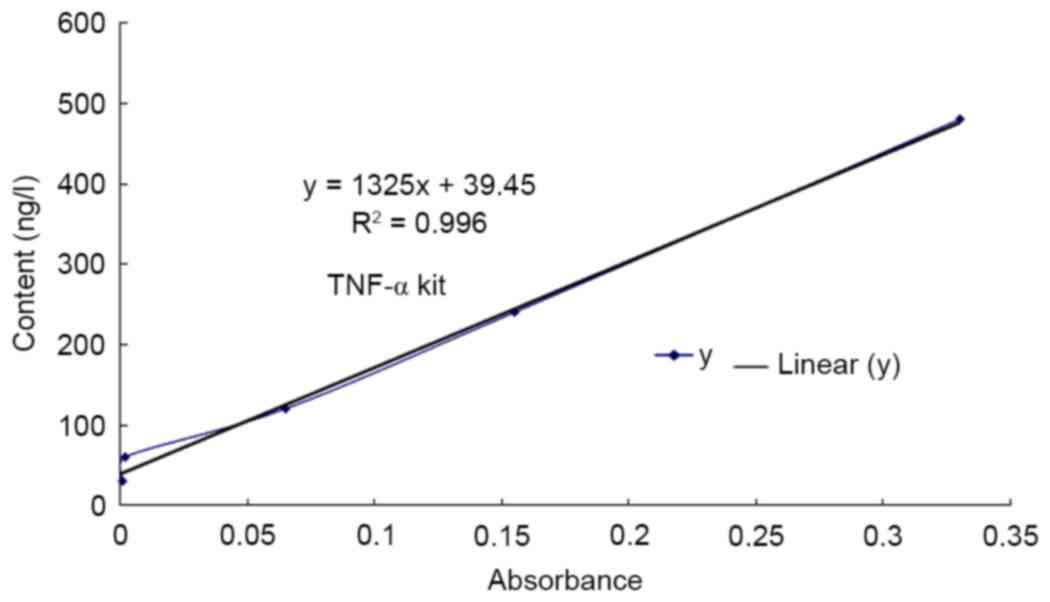
An ELISA kit was used to assess the expression of TNF-α in different groups. The results of the ELISA demonstrate that the expression of TNF-α protein in the cisplatin group was significantly increased compared with that in the control group (P<0.01; Fig. 1, Table I). Furthermore, the expression of TNF-α in the low, medium and high rutin groups was also increased significantly compared with that in the control group (P<0.01; Table I).

Figure 1.

TNF-α standard curve in lung carcinoma A549 cells. TNF, tumor necrosis factor.

Table I.

TNF-α content in the five groups.

Table I.

TNF-α content in the five groups.

GroupsTNF-α (ng/l)
Control50.49±2.02
Cisplatin 229.37±27.58a
Rutin (low) 114.09±9.40a
Rutin (medium) 160.03±18.55a
Rutin (high) 154.73±10.00a

a P<0.01 vs. control. TNF, tumor necrosis factor.

Western blot analysis

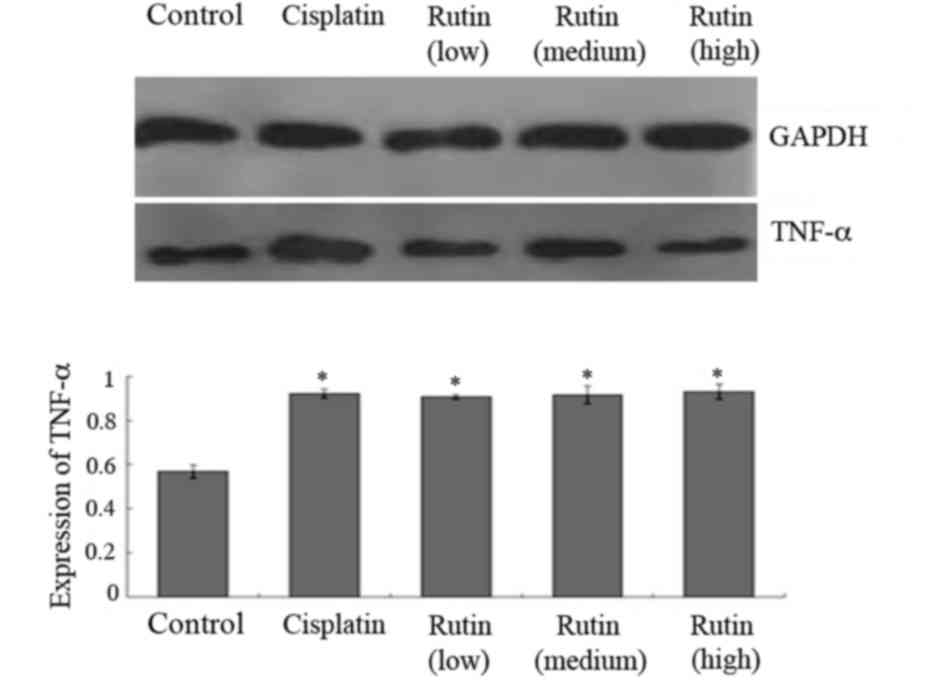
Western blotting was conducted to further investigate the expression of TNF-α. The results were analyzed semi-quantitatively according to the grayscale value. TNF-α levels were significantly increased in the cisplatin group compared with the control group (Fig. 2; P<0.05). Additionally, the expression of TNF-α in the low, medium and high rutin groups was also significantly higher compared with that in the control group (Fig. 2; P<0.05).

Figure 2.

Analysis of the expression of TNF-α relative to the GAPDH reference protein using western blotting. *P<0.05 vs. the control group. TNF, tumor necrosis factor.

DAPI staining

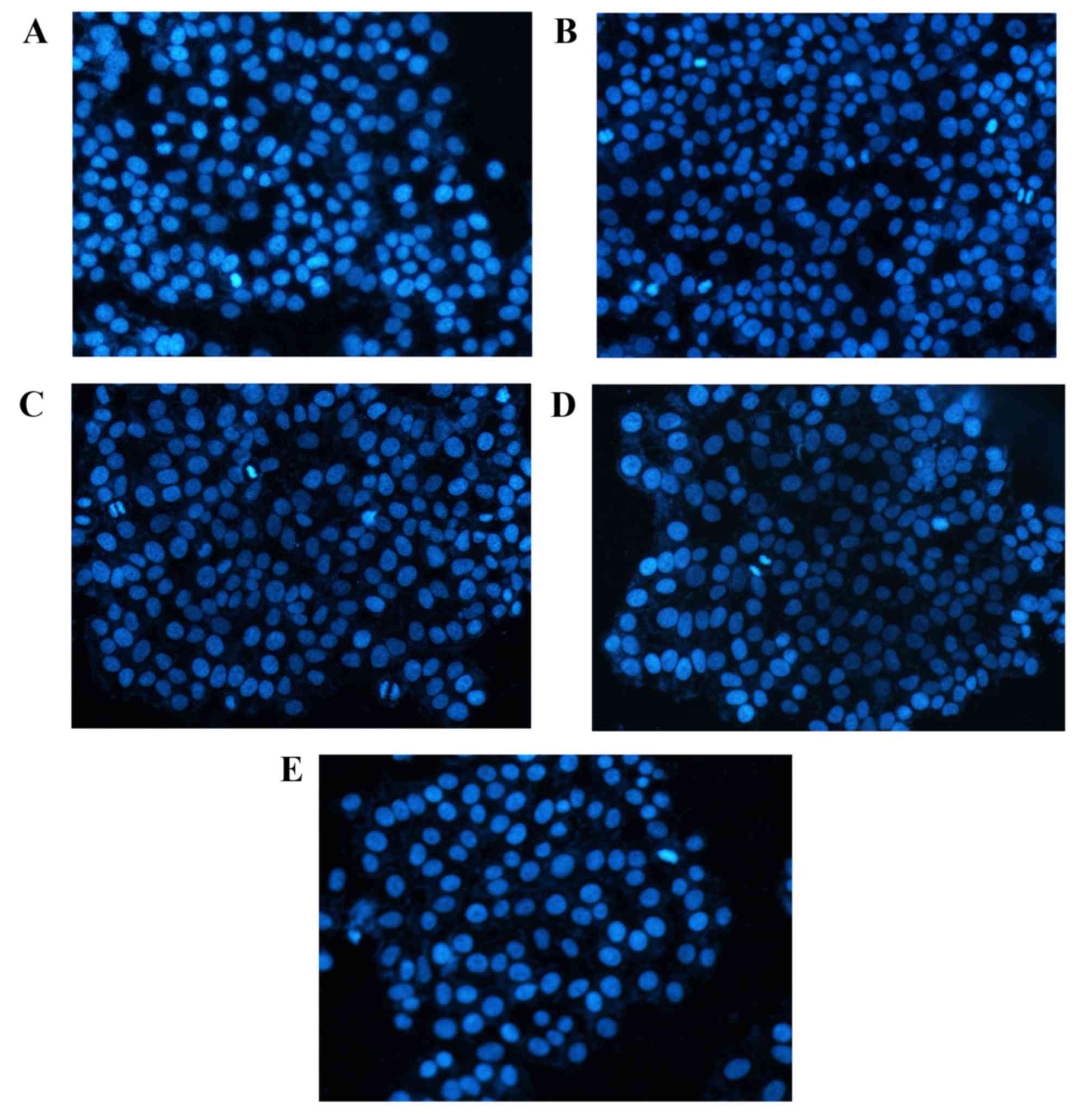
DAPI staining results (Fig. 3) demonstrated that cells in the control group had uniform chromatin, a large nucleus and integrity of the nuclear envelope. By contrast, apoptotic morphological changes of A549 cells after 48 h rutin or cisplatin treatment were observed. Relative to the control group, cells groups treated with rutin and cisplatin exhibited higher numbers of detached cells with round and shrunken morphologies and condensed nuclei.

Figure 3.

Immunofluorescence 4′,6-diamino-2-phenylindole staining. (A) Control group, (B) cisplatin group, (C) low rutin group, (D) medium rutin group and (E) high rutin group. Magnification, ×200.

Expression of GSK-3β protein

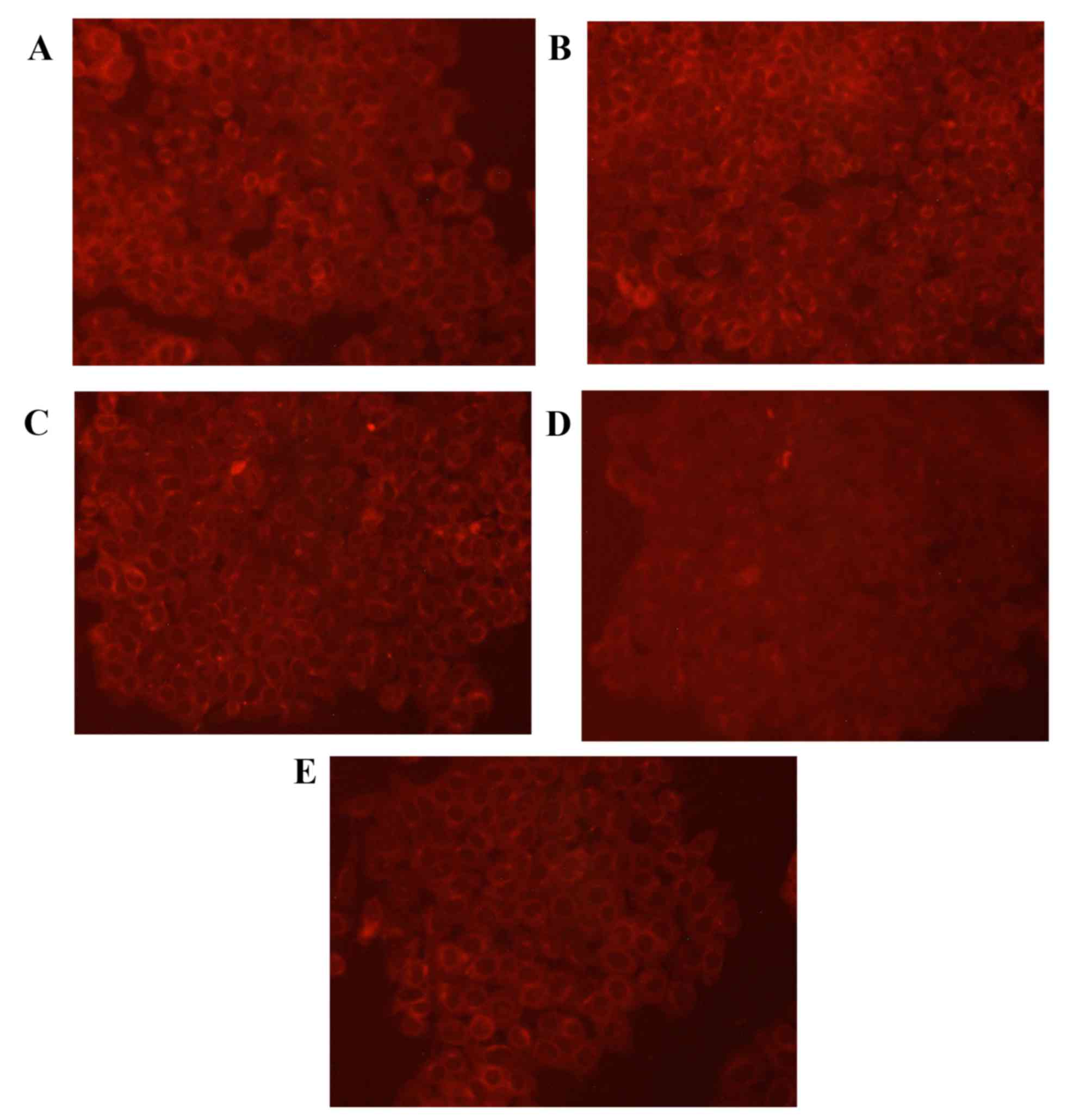
To validate the expression pattern of GSK-3β in lung cancer cells, GSK-3β specific fluorescent staining was performed on A549 cells (Fig. 4). The results of the staining assay revealed that the cells in the control group had uniform chromatin and a large nucleus. Relative to the control group, levels of GSK-3β protein were markedly increased in the cisplatin group. In addition, GSK-3β protein expression was increased in the low, medium and high rutin groups compared with the control group.

Figure 4.

Glycogen synthase kinase-3β expression detected by immunofluorescence staining (red). (A) Control group, (B) cisplatin group, (C) low rutin group, (D) medium rutin group and (E) high rutin group. Magnification, ×200.

Discussion

Human TNF-α is composed of 233 amino acids (molecular weight, 26 kDa) and contains a signal peptide composed of 76 amino acid residues (11). It has previously been suggested to be an important tumor-related factor (12). One of the aims of the present study was to determine whether rutin promotes TNF-α expression. The results of the present study demonstrated that TNF-α expression was significantly increased in the low, medium and high rutin groups compared with the control group. These results suggest that rutin may stimulate the expression of TNF-α in A549 human lung carcinoma cells, and serve a role in killing tumor cells.

GSK-3 is a serine/threonine kinase that is highly evolutionarily conserved and is present in many mammalian eukaryotic cells, functioning to remove active glycogen synthase, which regulates cell differentiation, proliferation, survival and apoptosis (12). GSK-3 was first isolated from rabbit skeletal muscle tissues and there are two subtypes; GSK-3α and GSK-3β (13). GSK-3β is a key enzyme associated with glycogen metabolism (14). This in turn affects mitochondrial permeability and the release of cytochrome c, which is associated with apoptosis regulation (13). In the present study, the expression of TNF-α was significantly increased in the rutin groups compared with the control group and the expression of GSK-3β was increased concurrently, which indicates that TNF-α may have promoted GSK-3β protein expression in the rutin group. These results suggest that rutin stimulated the expression of TNF-α.

In conclusion, the results of the present study suggest that rutin may serve as an effective antitumor treatment. Rutin treatment may increase the expression of TNF-α, and promote the expression of GSK-3β.

Acknowledgements

The present study was supported by the Science and Technology Department of Jilin Province (grant nos. 20140312002ZG and YYZX201259) and the National Natural Science Foundation of China (grant no. 81272875).

References

1 

Varona P, Herrera D, García RG, Bonet M, Romero T and Venero SJ: Smoking-attributable mortality in Cuba. Medicc Rev. 11:43–47. 2009.PubMed/NCBI

2 

Sun X, Liu W, Wu S, Han H, Lin Y and Dai X: The morbidity and mortality trend and prediction of lung cancer in residents of Nangang District of Harbin in China during the past 10 years. Zhongguo Fei Ai Za Zhi. 8:514–517. 2005.(In Chinese). PubMed/NCBI

3 

Rivera MP, Detterbeck F and Mehta AC: American College of Chest Physicians: Diagnosis of lung cancer: The guidelines. Chest. 123 1 Suppl:S129–S136. 2003. View Article : Google Scholar

4 

Wang X, Yang L, Huang F, Zhang Q, Liu S, Ma L and You Z: Inflammatory cytokines IL-17 and TNF-α up-regulate PD-L1 expression in human prostate and colon cancer cells. Immunol Lett. 184:7–14. 2017. View Article : Google Scholar : PubMed/NCBI

5 

Mohammadpour H, Pourfathollah AA, Zarif M Nikougoftar and Shahbazfar AA: Irradiation enhances susceptibility of tumor cells to the antitumor effects of TNF-α activated adipose derived mesenchymal stem cells in breast cancer model. Sci Rep. 6:284332016. View Article : Google Scholar : PubMed/NCBI

6 

Kouklakis G, Efremidou EI, Pitiakoudis M, Liratzopoulos N and Polychronidis ACh: Development of primary malignant melanoma during treatment with a TNF-α antagonist for severe Crohn's disease: A case report and review of the hypothetical association between TNF-α blockers and cancer. Drug Des Devel Ther. 7:195–199. 2013.PubMed/NCBI

7 

Park SA, Lee JW, Herbst RS and Koo JS: GSK-3α is a novel target of CREB and CREB-GSK-3α signaling participates in cell viability in lung cancer. PLoS One. 11:e01530752016. View Article : Google Scholar : PubMed/NCBI

8 

Phukan S, Babu VS, Kannoji A, Hariharan R and Balaji VN: GSK3beta: Role in therapeutic landscape and development of modulators. Br J Pharmacol. 160:1–19. 2010. View Article : Google Scholar : PubMed/NCBI

9 

Panchal SK, Poudyal H, Arumugam TV and Brown L: Rutin attenuates metabolic changes, nonalcoholic steatohepatitis, and cardiovascular remodeling in high- carbohydrate, high-fat diet-fed rats. J Nutr. 141:1062–1069. 2011. View Article : Google Scholar : PubMed/NCBI

10 

Heck CI and de Mejia EG: Yerba mate tea (Ilex paraguariensis): A comprehensive review on chemistry, health implications, and technological considerations. J Food Sci. 72:R138–R151. 2007. View Article : Google Scholar : PubMed/NCBI

11 

Tchorzewski H, Zeman K, Kantorski J, Paleolog E, Kahan M, Feldmann M, Kwinkowski M, Guga P, Szymanska B, Parniewski P, et al: The effect of tumour necrosis factor-alpha (TNF-alpha) muteins on human neutrophils in vitro. Mediators Inflamm. 2:41–48. 1993. View Article : Google Scholar : PubMed/NCBI

12 

Kaidanovich-Beilin O, Lipina TV, Takao K, van Eede M, Hattori S, Laliberté C, Khan M, Okamoto K, Chambers JW, Fletcher PJ, et al: Abnormalities in brain structure and behavior in GSK-3alpha mutant mice. Mol Brain. 2:352009. View Article : Google Scholar : PubMed/NCBI

13 

Sequea DA, Sharma N, Arias EB and Cartee GD: Greater filamin C, GSK3α, and GSK3β serine phosphorylation in insulin-stimulated isolated skeletal muscles of calorie restricted 24 month-old rats. Mech Ageing Dev. 134:60–63. 2013. View Article : Google Scholar : PubMed/NCBI

14 

Chow HM, Guo D, Zhou JC, Zhang GY, Li HF, Herrup K and Zhang J: CDK5 activator protein p25 preferentially binds and activates GSK3β. Proc Natl Acad Sci USA. 111:pp. E4887–E4895. 2014; View Article : Google Scholar : PubMed/NCBI

Related Articles

  • Abstract
  • View
  • Download
  • Twitter
Copy and paste a formatted citation
Spandidos Publications style
Wu F, Chen J, Fan LM, Liu K, Zhang N, Li SW, Zhu H and Gao HC: Analysis of the effect of rutin on GSK-3β and TNF-α expression in lung cancer. Exp Ther Med 14: 127-130, 2017.
APA
Wu, F., Chen, J., Fan, L., Liu, K., Zhang, N., Li, S. ... Gao, H. (2017). Analysis of the effect of rutin on GSK-3β and TNF-α expression in lung cancer. Experimental and Therapeutic Medicine, 14, 127-130. https://doi.org/10.3892/etm.2017.4494
MLA
Wu, F., Chen, J., Fan, L., Liu, K., Zhang, N., Li, S., Zhu, H., Gao, H."Analysis of the effect of rutin on GSK-3β and TNF-α expression in lung cancer". Experimental and Therapeutic Medicine 14.1 (2017): 127-130.
Chicago
Wu, F., Chen, J., Fan, L., Liu, K., Zhang, N., Li, S., Zhu, H., Gao, H."Analysis of the effect of rutin on GSK-3β and TNF-α expression in lung cancer". Experimental and Therapeutic Medicine 14, no. 1 (2017): 127-130. https://doi.org/10.3892/etm.2017.4494
Copy and paste a formatted citation
x
Spandidos Publications style
Wu F, Chen J, Fan LM, Liu K, Zhang N, Li SW, Zhu H and Gao HC: Analysis of the effect of rutin on GSK-3β and TNF-α expression in lung cancer. Exp Ther Med 14: 127-130, 2017.
APA
Wu, F., Chen, J., Fan, L., Liu, K., Zhang, N., Li, S. ... Gao, H. (2017). Analysis of the effect of rutin on GSK-3β and TNF-α expression in lung cancer. Experimental and Therapeutic Medicine, 14, 127-130. https://doi.org/10.3892/etm.2017.4494
MLA
Wu, F., Chen, J., Fan, L., Liu, K., Zhang, N., Li, S., Zhu, H., Gao, H."Analysis of the effect of rutin on GSK-3β and TNF-α expression in lung cancer". Experimental and Therapeutic Medicine 14.1 (2017): 127-130.
Chicago
Wu, F., Chen, J., Fan, L., Liu, K., Zhang, N., Li, S., Zhu, H., Gao, H."Analysis of the effect of rutin on GSK-3β and TNF-α expression in lung cancer". Experimental and Therapeutic Medicine 14, no. 1 (2017): 127-130. https://doi.org/10.3892/etm.2017.4494
Follow us
  • Twitter
  • LinkedIn
  • Facebook
About
  • Spandidos Publications
  • Careers
  • Cookie Policy
  • Privacy Policy
How can we help?
  • Help
  • Live Chat
  • Contact
  • Email to our Support Team