Introduction
Malignant melanoma (MM) is the most aggressive form
of skin cancer (1). Despite the fact
that significant progress has been made in the early diagnosis and
treatment of this disease, the prognosis of MM remains poor,
predominantly due to its recurrence and metastasis (2). Therefore, it is necessary to improve
understanding of the molecular mechanisms involved in the
development and progression of MM.
Glycolysis is the most common metabolic pathway of
cancer cells. In tumors, the metabolism of glucose is largely
fermentative with increased production of lactate, even when oxygen
levels are adequate (3). Glycolysis
provides tumor cells with energy and molecules, including ATP,
fatty acids and nucleotides, thus ensuring the survival, rapid
growth and proliferation of tumor cells under hypoxic and anoxic
conditions (4,5). Furthermore, low levels of oxygen may
induce the expression of hypoxia-inducible factor (HIF) during
tumor progression, enhancing the glycolytic metabolism in cancer
cells (6,7). It has been determined that inhibition
of HIF-1á-mediated signaling drives MM toward mitochondrial
oxidative metabolism, enhancing the therapeutic activity of
pro-oxidants (8). Therefore, it has
been suggested that glycolysis may be an effective target to treat
cancer, including MM (9,10).
Recently, it has been demonstrated that microRNA
(miR) may improve the diagnosis and treatment of cancer, such as MM
(11). These small non-coding RNA
directly bind to the 3′ untranslated region (UTR) of their target
mRNA and suppress gene expression by inducing mRNA degradation or
translation inhibition (12). miRs
may regulate various cancer-related genes, including oncogenes and
tumor suppressors (3). It has been
reported that the aberrant activation of miR-148, miR-155, miR-182,
miR-200c, miR-211, miR-214, miR-221 and miR-222 are associated with
MM-associated genes, such as microphthalmia-associated
transcription factor, receptor tyrosine kinase c-KIT and
transcription factor AP-2 (11).
Recently, it has been demonstrated that miR-33b suppresses the
epithelial-to-mesenchymal transition (EMT) and migratory potential
of MM cells by targeting high-mobility group AT-hook 2 (HMGA2)
(13). Cordycepin is able to
suppress HMGA2-, Twist1- and zinc finger E-box-binding homeobox
1-dependent MM invasion and metastasis by upregulating miR-33b
(14). However, the exact role of
miR-33b in the regulation of MM cell proliferation and glycolysis
remains unknown. The present study aimed to investigate the exact
role of miR-33b in the regulation of MM cell proliferation and
glycolysis, and its underlying mechanism of action.
Materials and methods
Cell culture and transfection
The human MM cell lines (WM35, WM451 and SK-MEL-1),
human melanocyte (HM) cells and HEK293 cells were obtained from the
Cell Bank of Central South University (Changsha, China). Cells were
cultured in Dulbecco's modified Eagle medium (DMEM; Thermo Fisher
Scientific, Inc., Waltham, MA, USA) supplemented with 10% fetal
bovine serum (Thermo Fisher Scientific, Inc.) at 37°C in a
humidified incubator containing 5% CO2. For cell
transfection, WM451 and SK-MEL-1 cells were transfected with
scramble miR (miR-NC), miR-33b mimics, negative control (NC)
inhibitor, miR-33b inhibitor, or co-transfected with miR-33b mimics
and HIF-1α open reading frame (ORF) plasmid (all generated by
Yearthbio, Changsha, China), using Lipofectamine 2000 (Thermo
Fisher Scientific, Inc.), according to the manufacturer's
instructions.
Reverse transcription-quantitative
polymerase chain reaction (RT-qPCR)
Total RNA was extracted from tissues and cells using
TRIzol reagent (Thermo Fisher Scientific, Inc.), in accordance with
the manufacturer's protocols. DNase (Thermo Fisher Scientific,
Inc.) was used to remove genomic DNA, in accordance with the
manufacturer's instructions. For the analysis of miR expression, a
TaqMan MicroRNA Reverse Transcription kit (Thermo Fisher
Scientific, Inc.) was used to convert RNA into cDNA, according to
the manufacturer's protocol. Following this, qPCR was performed by
using the miRNA Q-PCR detection kit (GeneCopoeia, Inc., Rockville,
MD, USA), according to the manufacturer's protocols, on an ABI 7500
thermocycler (Thermo Fisher Scientific, Inc.). Primer sequences
were purchased from Sangon Biotech Co., Ltd. (Shanghai, China). The
reaction conditions were: 95°C for 5 min, followed by 40 cycles of
denaturation at 95°C for 15 sec and annealing/elongation at 60°C
for 30 sec. U6 gene expression was used as an endogenous control.
The experiment was repeated three times. The relative mRNA
expression levels were analyzed by the 2−ΔΔCq method
(15).
Detection of glucose consumption
After 24 h culture, the medium supernatant was
collected and diluted to 1:4,000 in Dulbecco's phosphate buffered
saline (PBS; Thermo Fisher Scientific, Inc.). The amount of glucose
in the supernatant was then detected using a glucose uptake
colorimetric assay kit (Sigma-Aldrich; Merck Millipore, kGaA,
Germany), in accordance with the manufacturer's protocol.
Absorbance was detected at 412 nm with an ELx-800 type ELISA reader
(Omega Bio-Tek, Inc., Norcross, GA, USA).
Detection of lactic acid
production
Lactic acid immunoassay kits (Y4324; Yearthbio) were
used to determine the lactic acid levels in MM cells, according to
the manufacturer's instructions. Briefly, the lactic acid antibody
(1:100; included in the kit) was incubated with MM cells overnight
at 4°C. Following this, the MM cells were incubated with
horseradish peroxidase-labeled anti-rabbit antibody (1:5,000;
included in the kit) for 30 min at room temperature. Wells were
then developed with tetramethyl benzidine reagent (Sigma-Aldrich;
Merck KGaA) in the dark and the absorbance was measured at 450
nm.
MTT assay
For detection of cell viability, 10,000 MM
cells/well were plated in a 96-well plate, which was then incubated
at 37°C (5% CO2) for 0, 24, 48 or 72 h, respectively.
Following this, 10 µl MTT in PBS (5 mg/ml) was added to each well,
and incubated at 37°C (5% CO2) for 4 h. Subsequently,
the supernatant was removed, and 100 µl dimethylsulfoxide was
added. Absorbance was detected at 570 nm with a microplate reader
(680; Bio-Rad Laboratories, Inc., Hercules, CA, USA). Incubation
with DMSO was used as the control.
Western blot analysis
Protein was extracted from WM451 and SK-MEL-1 cells
using radioimmunoprecipitation assay lysis buffer (Thermo Fisher
Scientific, Inc.). Protein assay reagents (Thermo Fisher
Scientific, Inc.). were used to measure the protein concentration.
Total protein (50 µg/well) was then separated with 12% SDS-PAGE and
transferred to a polyvinylidene fluoride membrane. Following this,
the membrane was blocked with 5% nonfat dried milk in PBS at room
temperature for 2 h. Subsequently, the membrane was incubated with
rabbit anti-HIF-1α antibody (1:50; ab51608; Abcam, Cambridge, MA,
USA), rabbit anti-HK2 antibody (1:50; ab37593; Abcam),
rabbit-anti-LDH-A antibody (1:100; ab101562; Abcam), or rabbit
anti-GAPDH antibody (1:50; ab9485; Abcam) overnight at 4°C. After
washing with PBS for 10 min, the membrane was then incubated with
goat anti-rabbit secondary immunoglobulin G (1:10,000; ab7090;
Abcam) at room temperature for 1 h. After washing with PBS for 10
min, enhanced chemiluminescence reagent (Thermo Fisher Scientific,
Inc.) was used to detect the signal on the membrane. Data were
analyzed by densitometry using Image Pro Plus v.6.0 software (Media
Cybernetics, Inc., Rockville, MD, USA) and normalized to GAPDH
expression.
Bioinformatics analysis and luciferase
reporter assay
miRanda software 1.0 (microrna.org)
was used to analyze the putative target genes of miR-33b. HIF-1α
was revealed to be a putative target gene of miR-33b. Mutations of
miR-33b binding sites in the HIF-1α 3′-UTR were introduced using an
Easy Mutagenesis System kit (Promega Corporation, Madison, WI,
USA), according to the manufacturer's instructions. The wild type
(WT) or mutant type (MT) of HIF-1α 3′-UTR was cloned into the
downstream sequence of the firefly luciferase coding region of
pMIR-GLOTM luciferase vector (Promega Corporation). HEK293 cells
were co-transfected with WT-HIF-1α-3′-UTR or MT-HIF-1α-3′-UTR
plasmid, and miR-33b mimic or miR-normal control (NC),
respectively. Following transfection for 48 h, a dual-luciferase
reporter assay system (Promega Corporation) was used to detect
luciferase activity, according to the manufacturer's
instructions.
Statistical analysis
SPSS v.17.0 (SPSS, Inc., Chicago, IL, USA) was used
to perform statistical analysis. The results were expressed as the
mean ± standard deviation of three independent experiments.
Statistical analysis of differences was performed using one-way
analysis of variance followed by Tukey's post hoc test. P<0.05
was considered to indicate a statistically significant
difference.
Results
miR-33b is downregulated in MM
To investigate the exact role of miR-33b in MM,
RT-qPCR was conducted to determine miR-33b expression in three MM
cell lines, including WM35, WM451 and SK-MEL-1. HM cells were used
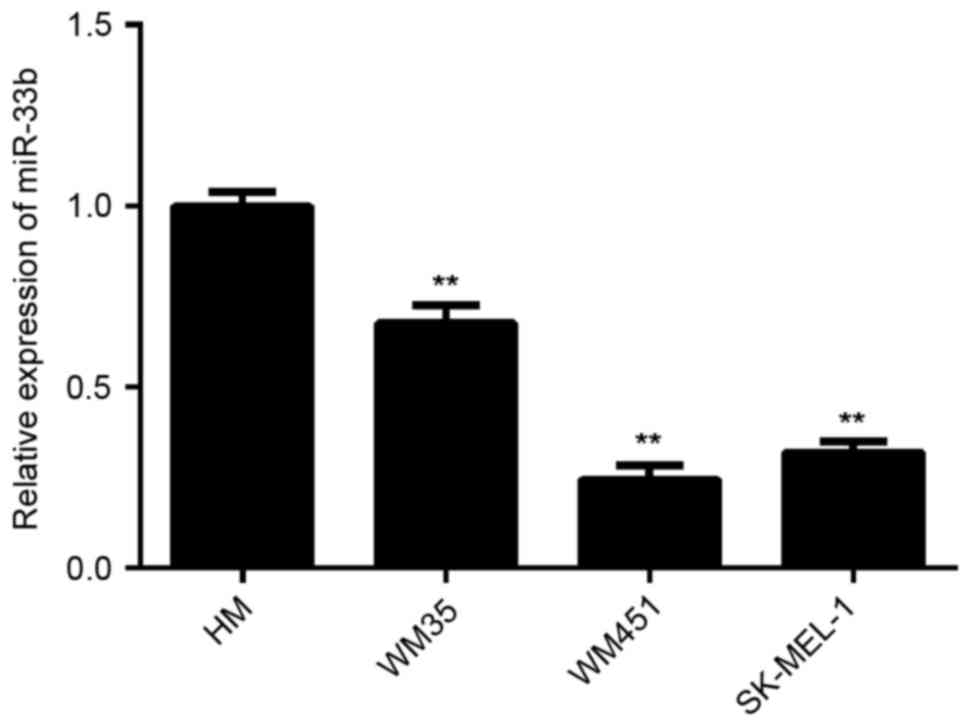
as controls. The results indicated that the expression of miR-33b
was significantly reduced in WM35, WM451 and SK-MEL-1 cells
compared with HM cells (all P<0.01; Fig. 1). As WM451 and SK-MEL-1 cells
exhibited the most significant decrease in the miR-33b level, these
two cell lines were used to investigate the effect of miR-33b on
cell viability and glycolysis in melanoma cells in
vitro.
miR-33b inhibits viability and
glycolysis in MM cells
In order to modulate miR-33b levels in MM cells,
WM451 and SK-MEL-1 cells were transfected with miR-33b mimic or
inhibitor. Following transfection, miR-33b expression was
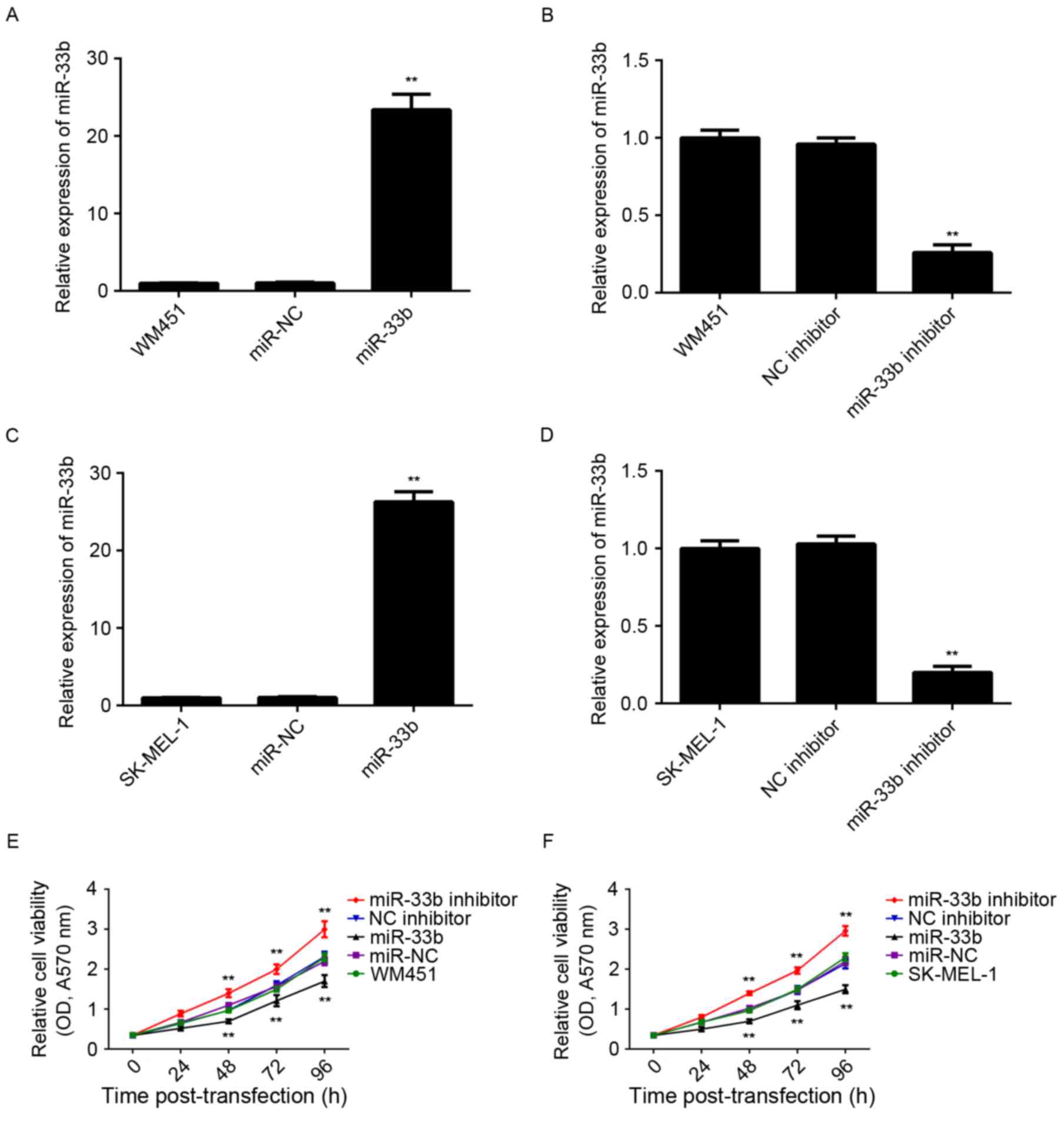
determined using RT-qPCR. miR-33b expression was significantly
higher in WM451 and SK-MEL-1 cells transfected with miR-33b mimic
(P<0.01) and significantly lower in cells transfected with
miR-33b inhibitor (P<0.01) than that of the control group
(Fig. 2A-D). However, transfection
with scramble miR mimic or negative control inhibitor did not
significantly affect miR-33b expression in WM451 and SK-MEL-1
cells. Following this, cell viability was determined using MTT
assay. In both WM451 and SK-MEL-1 cells, cell viability was
significantly decreased following overexpression of miR-33b
(P<0.01) and significantly increased following knockdown of
miR-33b (P<0.01) compared with the respective controls (Fig. 2E and F). Therefore, miR-33b
suppresses MM cell viability.
Glycolysis serves a critical role in tumor cell
proliferation (4,5). Therefore, the level of glycolysis in
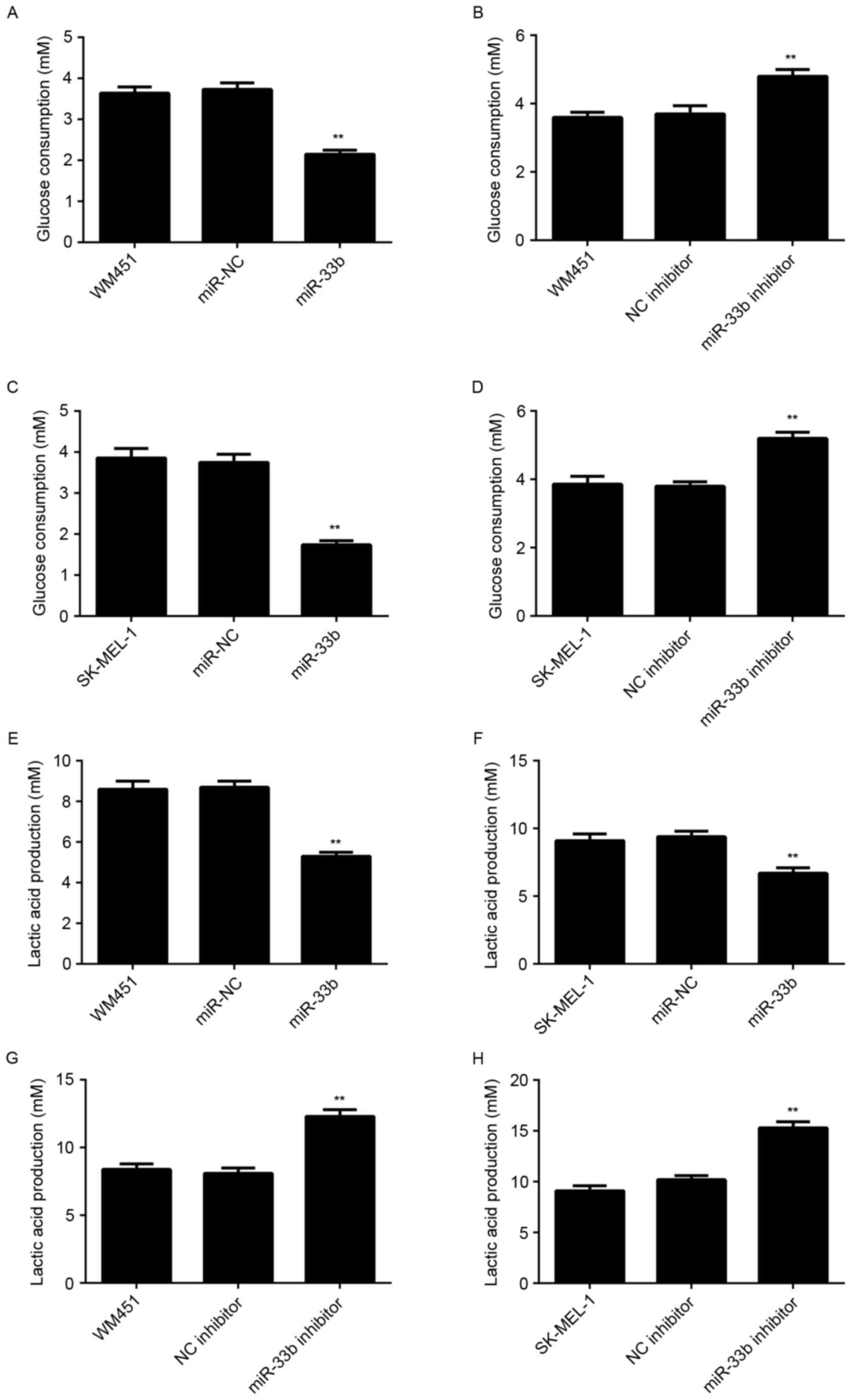
WM451 and SK-MEL-1 cells in each group was examined. The results
indicated that glucose consumption and lactic acid production were
significantly decreased in WM451 and SK-MEL-1 cells transfected
with the miR-33b mimic (P<0.01) and significantly increased in
cells transfected with the miR-33b inhibitor (P<0.01) compared
with respective controls (Fig. 3).
These results suggest that miR-33b has a suppressive role in
regulating glycolysis in MM.
HIF-1α is a direct target of miR-33b
in MM cells
The putative target genes of miR-33b were
investigated and bioinformatics analysis indicated that HIF-1α was
a potential target. It has been suggested that HIF-1α is involved
in glycolysis (6,7). To confirm this prediction, WT and MT
HIF-1α-3′-UTR reporter plasmids (Fig. 4A
and B) were created and luciferase reporter assays were
performed. Luciferase activity was significantly decreased in
HEK293 cells transfected with the miR-33b mimic and WT
HIF-1α-3′-UTR reporter plasmid (P<0.01) compared with the
control; however, this decrease was abolished in cells transfected
with the MT HIF-1α-3′-UTR reporter plasmid (Fig. 4C). These data indicate that miR-33b
is able to directly bind to the 3′-UTR of HIF-1α mRNA.
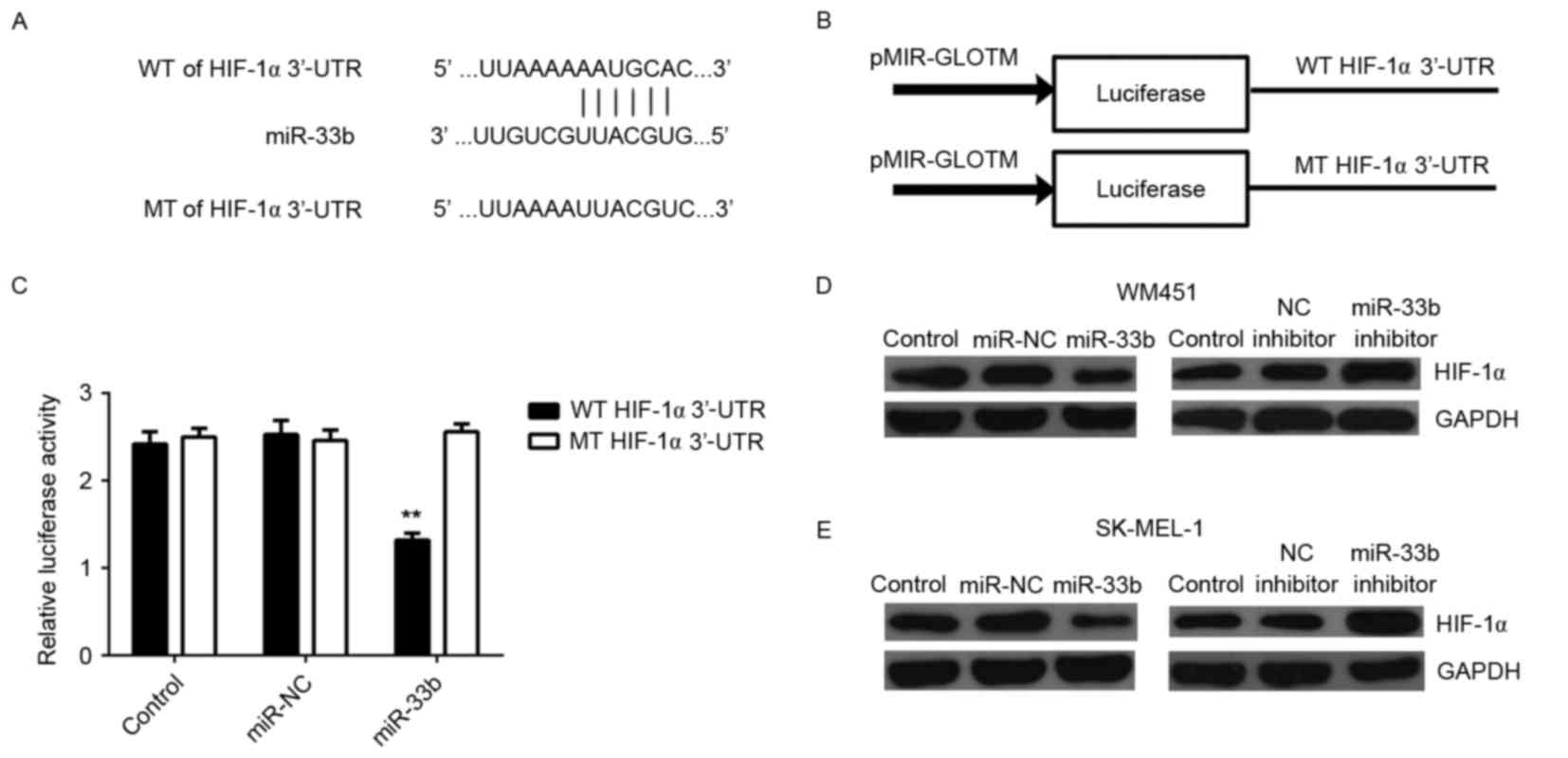 | Figure 4.(A) WT or MT of HIF-1α 3′UTR was (B)
cloned into a luciferase reporter vector to generate the WT or MT
HIF-1α-3′UTR reporter plasmid, respectively. (C) Relative
luciferase activity of HEK293 cells transfected with miR-NC or
miR-33b mimic, and WT or MT HIF-1α-3′UTR reporter plasmid. Western
blot analysis was performed to measure the expression of HIF-1α
protein in (D) WM451 and (E) SK-MEL-1 cells transfected with
miR-NC, miR-33b mimic, NC inhibitor or miR-33b inhibitor. GAPDH was
used as an internal control. Data are presented as the mean ±
standard deviation. **P<0.01 vs. the control. WT, wild type; MT,
mutant type; HIF-1α, hypoxia-inducible factor-1α; UTR, untranslated
region; miR, microRNA; miR-NC, scramble miR mimic; NC, negative
control. |
As miRs generally repress translation, the
expression of HIF-1α protein in MM cells in each group was
examined. It was determined that HIF-1α protein expression was
markedly decreased following miR-33b overexpression and markedly
increased following miR-33b inhibition compared with controls
(Fig. 4D and E) in both the MM cell
lines. This indicates that miR-33b negatively mediates expression
of HIF-1α at the post-transcriptional level in MM cells. Taken
together, these findings demonstrate that HIF-1α is a direct target
of miR-33b in MM cells.
Overexpression of HIF-1α reverses the
suppressive effect of miR-33b upregulation on viability and
glycolysis in MM cells
The present study investigated whether HIF-1α was
involved in miR-33b-mediated viability and glycolysis in MM cells.
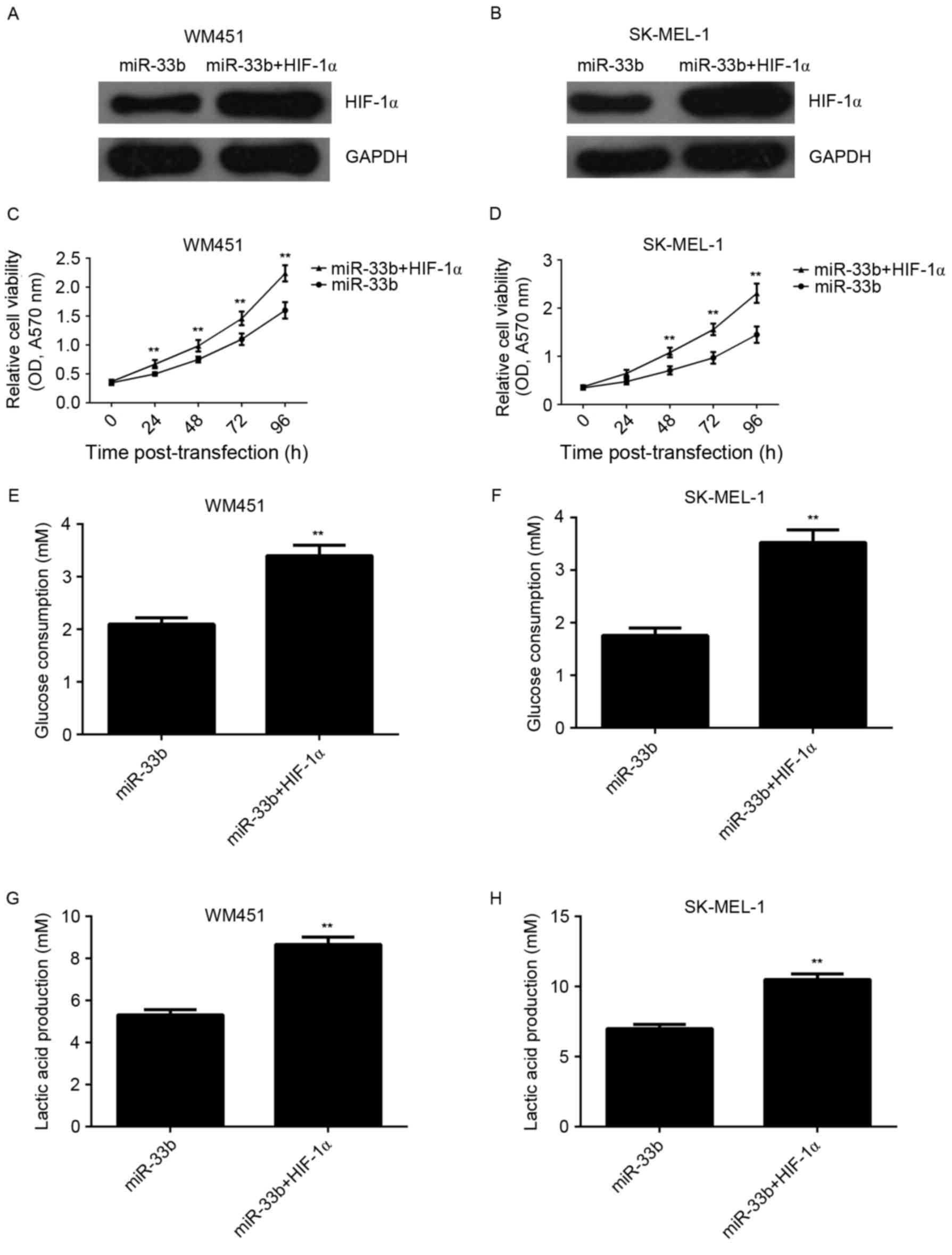
miR-33b-overexpressing cells were transfected with HIF-1α ORF
plasmid. Following co-transfection with the miR-33b mimic and
HIF-1α plasmid, expression of HIF-1α protein was markedly increased
compared with cells transfected with miR-33b alone (Fig. 5A and B). The viability and glycolysis
level in MM cells transfected with miR-33b mimic, or co-transfected
with miR-33b mimic and HIF-1α ORF plasmid were also examined and it
was demonstrated that cell viability was significantly increased in
the miR-33b + HIF-1α group compared with the miR-33b group
(P<0.01; Fig. 5C and D).
Similarly, glucose consumption and lactic acid production were
significantly increased in the miR-33b + HIF-1α group compared with
the miR-33b group (P<0.01; Fig.
5E-H). This demonstrated that overexpression of HIF-1α reverses
the suppressive effect of miR-33b upregulation on viability and
glycolysis in MM cells.
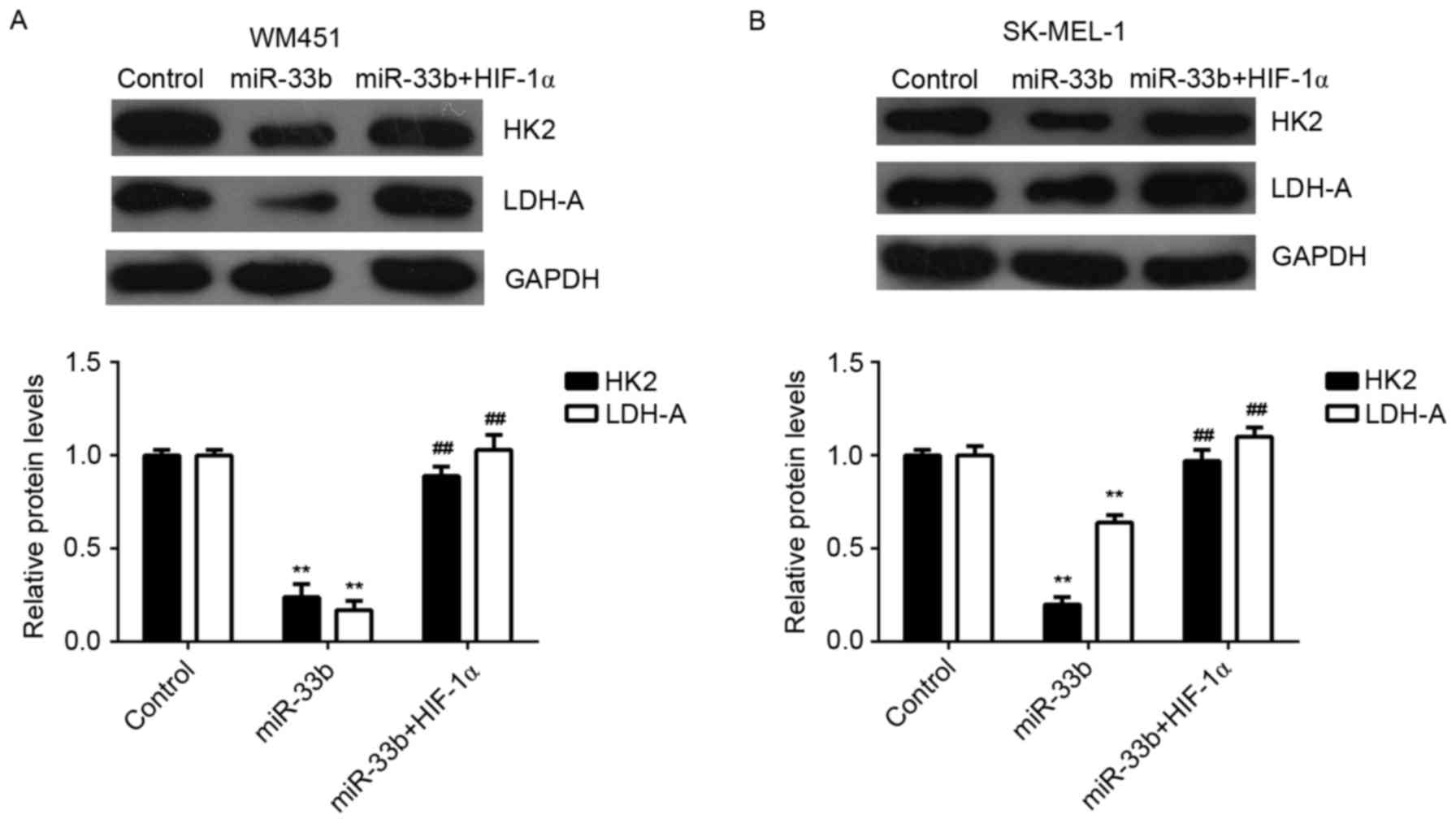
Hexokinase 2 (HK2) and lactate dehydrogenase A
(LDH-A) are two key factors of glycolysis (16). Thus, the expression of HK2 and LDH-A
proteins in MM cells transfected with miR-33b mimic, or
co-transfected with miR-33b mimic and HIF-1α ORF plasmid were
examined. Ectopic expression of miR-33b significantly decreased the
expression of HK2 and LDH-A proteins in MM cells (P<0.01);
however, this reduction was significantly reversed by HIF-1α
overexpression (P<0.01; Fig. 6).
Therefore, HK2 and LDH-A may be involved in miR-33b/HIF-1α-mediated
glycolysis in MM cells.
Discussion
miR are key regulators in the expression of various
genes associated with tumorigenesis and malignant progression
(17–19). However, the exact role of miR-33b in
MM remains largely unclear. The present study demonstrated that
miR-33b was significantly downregulated in MM cell lines. Further
investigation indicated that MM cell viability and glycolysis were
significantly decreased following miR-33b overexpression; however,
these levels were significantly upregulated following miR-33b
knockdown. HIF-1α, a key regulator of glycolysis, was identified as
a direct target gene of miR-33b, and the expression of HIF-1α was
negatively regulated by miR-33b in MM cells. Furthermore,
overexpression of HIF-1α reversed the inhibitory effect of miR-33b
on cell viability and glycolysis in MM cells. The results indicated
that HK2 and LDH-A may be involved in miR-33b/HIF-1α mediated
glycolysis in MM cells.
It has been well established that various miR are
involved in the development and malignant progression of MM
(20,21). For example, the miR let-7b, targets
important cell cycle molecules, including cyclins D1, D3 and A, and
cyclin-dependent kinase 4, in MM cells and interferes with
anchorage-independent growth (22).
Therefore, miR-221 and miR-222 may become potential molecular
candidates for MM treatment. Additionally, it has been reported
that miR-34a inhibit MM cell proliferation and migration by
targeting c-Met (23). Recently, it
was demonstrated that miR-33a is downregulated in MM and negatively
regulates the proliferation, invasion and metastasis of MM cells
(24). Overexpression of miR-33a
also decreased MM tumorigenesis in vivo (24). Furthermore, miR-33b was demonstrated
to suppress the migration, invasion and EMT of MM cells by
targeting HMGA2 (13,14). These findings suggest that the miR-33
family has a critical role in MM. However, it remains unknown
whether miR-33b influences MM cell proliferation and energy
metabolism. In the present study, it was demonstrated that miR-33b
was downregulated in MM cell lines, including WM35, WM451 and
SK-MEL-1, compared with melanocyte HM cells. These findings were
supported by those from a study by Zhou et al (24), which demonstrated that miR-33b
expression levels was lower in MM cell lines, including WM35,
WM451, A375 and SK-MEL-1, compared with HM cells. Additionally, in
the present study it was observed that overexpression of miR-33b
inhibited the viability of WM35 and WM451 cells, while knockdown of
miR-33b enhanced the viability of these cells. This indicates that
miR-33b, like miR-33a, may negatively regulate MM cell viability
and therefore may inhibit tumor growth in vivo (24). Further studies are required to
investigate the exact effect of miR-33b on MM growth and metastasis
in vivo.
Tumor energy metabolism is characterized by
preferential dependence on glycolysis, which is able to rapidly
provide cancer cells with energy and metabolic intermediates for
biosynthesis, despite being less efficient than oxidative
phosphorylation in the yield of ATP (25,26).
Therefore, in recent years, glycolysis has been suggested as a
therapeutic target for cancer treatment (25,26). In
the present study, overexpression of miR-33b was able to inhibit
glucose consumption and lactic acid production in MM cells,
suggesting that glycolysis was decreased. By contrast, inhibition
of miR-33b increased the level of glycolysis in MM cells.
Therefore, the suppressive effect of miR-33b on MM cell viability
may occur via the inhibition of glycolysis. To verify this
speculation, the putative target of miR-33b was investigated and
HIF-1α was identified as a direct target gene of miR-33b in MM
cells. It has previously been demonstrated that HIF-1α serves a key
role in glycolysis (27). It is
rapidly degraded by the proteasome under normal conditions and is
stabilized by hypoxia (7,27). In advanced melanoma, the expression
of HIF-1α is higher than that in the melanocytic nevi or thin
melanomas localized to the skin (6).
Furthermore, increased expression of HIF-1α is significantly
associated with poor prognosis of MM (6,28). In
the present study, it was determined that overexpression of HIF-1α
reversed the suppressive effect of miR-33b on MM cell viability and
glycolysis, suggesting that miR-33b inhibits MM cell viability by
targeting HIF-1α-mediated glycolysis.
HK2 and LDH are two key enzymes involved in
glycolysis (16). A previous study
demonstrated that high expression of LDH was significantly
associated with increasing tumor thickness and reduced disease-free
and overall survival in MM (29).
The serum level of LDH may be used to predict the prognosis and
treatment response in MM patients (30). The present study also investigated
whether HK2 and LDH-A were affected by miR-33b in MM cells. The
results indicated that overexpression of miR-33b decreased
expression of HIF-1α and LDH-A, while knockdown of miR-33b
increased the expression of HIF-1α and LDH-A in MM cells. Thus, HK2
and LDH-A may be involved in miR-33b/HIF-1α-mediated glycolysis in
MM cells.
In conclusion, the results of the present study
demonstrate that miR-33b serves an inhibitory role in the
regulation of MM cells, at least partially, by directly targeting
HIF-1α, thus suppressing glycolysis. Therefore, miR-33b may serve
as a potential candidate for MM treatment.
References
|
1
|
Singh AD, Turell ME and Topham AK: Uveal
melanoma: Trends in incidence, treatment, and survival.
Ophthalmology. 118:1881–1885. 2011. View Article : Google Scholar : PubMed/NCBI
|
|
2
|
Davey RJ, van der Westhuizen A and Bowden
NA: Metastatic melanoma treatment: Combining old and new therapies.
Crit Rev Oncol Hematol. 98:242–453. 2016. View Article : Google Scholar : PubMed/NCBI
|
|
3
|
Ho J, de Moura MB, Lin Y, Vincent G,
Thorne S, Duncan LM, Hui-Min L, Kirkwood JM, Becker D, Van Houten B
and Moschos SJ: Importance of glycolysis and oxidative
phosphorylation in advanced melanoma. Mol Cancer. 11:762012.
View Article : Google Scholar : PubMed/NCBI
|
|
4
|
Shestov AA, Mancuso A, Leeper DB and
Glickson JD: Metabolic network analysis of DB1 melanoma cells: How
much energy is derived from aerobic glycolysis? Adv Exp Med Biol.
765:265–271. 2013. View Article : Google Scholar : PubMed/NCBI
|
|
5
|
Schuster S, Boley D, Möller P, Stark H and
Kaleta C: Mathematical models for explaining the Warburg effect: A
review focussed on ATP and biomass production. Biochem Soc Trans.
43:1187–1194. 2015. View Article : Google Scholar : PubMed/NCBI
|
|
6
|
Slominski A, Kim TK, Brożyna AA,
Janjetovic Z, Brooks DL, Schwab LP, Skobowiat C, Jóźwicki W and
Seagroves TN: The role of melanogenesis in regulation of melanoma
behavior: Melanogenesis leads to stimulation of HIF-1α expression
and HIF-dependent attendant pathways. Arch Biochem Biophys.
563:79–93. 2014. View Article : Google Scholar : PubMed/NCBI
|
|
7
|
Marín-Hernández A, Gallardo-Pérez JC,
Ralph SJ, Rodríguez-Enríquez S and Moreno-Sánchez R: HIF-1alpha
modulates energy metabolism in cancer cells by inducing
over-expression of specific glycolytic isoforms. Mini Rev Med Chem.
9:1084–1101. 2009. View Article : Google Scholar : PubMed/NCBI
|
|
8
|
Kluza J, Corazao-Rozas P, Touil Y,
Jendoubi M, Maire C, Guerreschi P, Jonneaux A, Ballot C, Balayssac
S, Valable S, et al: Inactivation of the HIF-1α/PDK3 signaling axis
drives melanoma toward mitochondrial oxidative metabolism and
potentiates the therapeutic activity of pro-oxidants. Cancer Res.
72:5035–5047. 2012. View Article : Google Scholar : PubMed/NCBI
|
|
9
|
Su J, Chen X and Kanekura T: A
CD147-targeting siRNA inhibits the proliferation, invasiveness and
VEGF production of human malignant melanoma cells by
down-regulating glycolysis. Cancer Lett. 273:140–147. 2009.
View Article : Google Scholar : PubMed/NCBI
|
|
10
|
Tang YQ, Jaganath IB, Manikam R and
Sekaran SD: Inhibition of MAPKs, Myc/Max, NFκB, and hypoxia
pathways by Phyllanthus prevents proliferation, metastasis and
angiogenesis in human melanoma (MeWo) cancer cell line. Int J Med
Sci. 11:564–577. 2014. View Article : Google Scholar : PubMed/NCBI
|
|
11
|
Mirzaei H, Gholamin S, Shahidsales S,
Sahebkar A, Jaafari MR, Mirzaei HR, Hassanian SM and Avan A:
MicroRNAs as potential diagnostic and prognostic biomarkers in
melanoma. Eur J Cancer. 53:25–32. 2016. View Article : Google Scholar : PubMed/NCBI
|
|
12
|
Ambros V: The functions of animal
microRNAs. Nature. 431:350–355. 2004. View Article : Google Scholar : PubMed/NCBI
|
|
13
|
Zhang P, Bai H, Liu G, Wang H, Chen F,
Zhang B, Zeng P, Wu C, Peng C, Huang C, et al: MicroRNA-33b,
upregulated by EF24, a curcumin analog, suppresses the
epithelial-to-mesenchymal transition (EMT) and migratory potential
of melanoma cells by targeting HMGA2. Toxicol Lett. 234:151–161.
2015. View Article : Google Scholar : PubMed/NCBI
|
|
14
|
Zhang P, Huang C, Fu C, Tian Y, Hu Y, Wang
B, Strasner A, Song Y and Song E: Cordycepin (3′-deoxyadenosine)
suppressed HMGA2, Twist1 and ZEB1-dependent melanoma invasion and
metastasis by targeting miR-33b. Oncotarget. 6:9834–9853. 2015.
View Article : Google Scholar : PubMed/NCBI
|
|
15
|
Livak KJ and Schmittgen TD: Analysis of
relative gene expression data using real-time quantitative PCR and
the 2(−Delta Delta C(T)) method. Methods. 25:402–408. 2001.
View Article : Google Scholar : PubMed/NCBI
|
|
16
|
Yang X, Cheng Y, Li P, Tao J, Deng X,
Zhang X, Gu M, Lu Q and Yin C: A lentiviral sponge for miRNA-21
diminishes aerobic glycolysis in bladder cancer T24 cells via the
PTEN/PI3K/AKT/mTOR axis. Tumour Biol. 36:383–391. 2015. View Article : Google Scholar : PubMed/NCBI
|
|
17
|
Zheng K, Liu W, Liu Y, Jiang C and Qian Q:
MicroRNA-133a suppresses colorectal cancer cell invasion by
targeting Fascin1. Oncol Lett. 9:869–874. 2015.PubMed/NCBI
|
|
18
|
Liu G, Xu Z and Hao D: MicroRNA451
inhibits neuroblastoma proliferation, invasion and migration by
targeting macrophage migration inhibitory factor. Mol Med Rep.
13:2253–2260. 2016.PubMed/NCBI
|
|
19
|
Ma D, Tao X, Gao F, Fan C and Wu D:
miR-224 functions as an onco-miRNA in hepatocellular carcinoma
cells by activating AKT signaling. Oncol Lett. 4:483–488.
2012.PubMed/NCBI
|
|
20
|
Mazar J, Qi F, Lee B, Marchica J,
Govindarajan S, Shelley J, Li JL, Ray A and Perera RJ: MicroRNA 211
functions as a metabolic switch in human melanoma cells. Mol Cell
Biol. 36:1090–1108. 2016. View Article : Google Scholar : PubMed/NCBI
|
|
21
|
Jayawardana K, Schramm SJ, Tembe V,
Mueller S, Thompson JF, Scolyer RA, Mann GJ and Yang J:
Identification, review, and systematic cross-validation of microRNA
prognostic signatures in metastatic melanoma. J Invest Dermatol.
136:245–254. 2016. View Article : Google Scholar : PubMed/NCBI
|
|
22
|
Schultz J, Lorenz P, Gross G, Ibrahim S
and Kunz M: MicroRNA let-7b targets important cell cycle molecules
in malignant melanoma cells and interferes with
anchorage-independent growth. Cell Res. 18:549–557. 2008.
View Article : Google Scholar : PubMed/NCBI
|
|
23
|
Yan D, Zhou X, Chen X, Hu DN, Dong XD,
Wang J, Lu F, Tu L and Qu J: MicroRNA-34a inhibits uveal melanoma
cell proliferation and migration through downregulation of c-Met.
Invest Ophthalmol Vis Sci. 50:1559–1565. 2009. View Article : Google Scholar : PubMed/NCBI
|
|
24
|
Zhou J, Xu D, Xie H, Tang J, Liu R, Li J,
Wang S, Chen X, Su J, Zhou X, et al: miR-33a functions as a tumor
suppressor in melanoma by targeting HIF-1α. Cancer Biol Ther.
16:846–855. 2015. View Article : Google Scholar : PubMed/NCBI
|
|
25
|
Bost F, Decoux-Poullot AG, Tanti JF and
Clavel S: Energy disruptors: Rising stars in anticancer therapy?
Oncogenesis. 5:e1882016. View Article : Google Scholar : PubMed/NCBI
|
|
26
|
Pavlova NN and Thompson CB: The emerging
hallmarks of cancer metabolism. Cell Metab. 23:27–47. 2016.
View Article : Google Scholar : PubMed/NCBI
|
|
27
|
Schönenberger MJ and Kovacs WJ: Hypoxia
signaling pathways: Modulators of oxygen-related organelles. Front
Cell Dev Biol. 3:422015. View Article : Google Scholar : PubMed/NCBI
|
|
28
|
Valencak J, Kittler H, Schmid K, Schreiber
M, Raderer M, Gonzalez-Inchaurraga M, Birner P and Pehamberger H:
Prognostic relevance of hypoxia inducible factor-1alpha expression
in patients with melanoma. Clin Exp Dermatol. 34:e962–e964. 2009.
View Article : Google Scholar : PubMed/NCBI
|
|
29
|
Zhuang L, Scolyer RA, Murali R, McCarthy
SW, Zhang XD, Thompson JF and Hersey P: Lactate dehydrogenase 5
expression in melanoma increases with disease progression and is
associated with expression of Bcl-XL and Mcl-1, but not Bcl-2
proteins. Mod Pathol. 23:45–53. 2010. View Article : Google Scholar : PubMed/NCBI
|
|
30
|
Weide B, Richter S, Büttner P, Leiter U,
Forschner A, Bauer J, Held L, Eigentler TK, Meier F and Garbe C:
Serum S100B, lactate dehydrogenase and brain metastasis are
prognostic factors in patients with distant melanoma metastasis and
systemic therapy. PLoS One. 8:e816242013. View Article : Google Scholar : PubMed/NCBI
|