Spandidos Publications Logo
  • About
    • About Spandidos
    • Aims and Scopes
    • Abstracting and Indexing
    • Editorial Policies
    • Reprints and Permissions
    • Job Opportunities
    • Terms and Conditions
    • Contact
  • Journals
    • All Journals
    • Oncology Letters
      • Oncology Letters
      • Information for Authors
      • Editorial Policies
      • Editorial Board
      • Aims and Scope
      • Abstracting and Indexing
      • Bibliographic Information
      • Archive
    • International Journal of Oncology
      • International Journal of Oncology
      • Information for Authors
      • Editorial Policies
      • Editorial Board
      • Aims and Scope
      • Abstracting and Indexing
      • Bibliographic Information
      • Archive
    • Molecular and Clinical Oncology
      • Molecular and Clinical Oncology
      • Information for Authors
      • Editorial Policies
      • Editorial Board
      • Aims and Scope
      • Abstracting and Indexing
      • Bibliographic Information
      • Archive
    • Experimental and Therapeutic Medicine
      • Experimental and Therapeutic Medicine
      • Information for Authors
      • Editorial Policies
      • Editorial Board
      • Aims and Scope
      • Abstracting and Indexing
      • Bibliographic Information
      • Archive
    • International Journal of Molecular Medicine
      • International Journal of Molecular Medicine
      • Information for Authors
      • Editorial Policies
      • Editorial Board
      • Aims and Scope
      • Abstracting and Indexing
      • Bibliographic Information
      • Archive
    • Biomedical Reports
      • Biomedical Reports
      • Information for Authors
      • Editorial Policies
      • Editorial Board
      • Aims and Scope
      • Abstracting and Indexing
      • Bibliographic Information
      • Archive
    • Oncology Reports
      • Oncology Reports
      • Information for Authors
      • Editorial Policies
      • Editorial Board
      • Aims and Scope
      • Abstracting and Indexing
      • Bibliographic Information
      • Archive
    • Molecular Medicine Reports
      • Molecular Medicine Reports
      • Information for Authors
      • Editorial Policies
      • Editorial Board
      • Aims and Scope
      • Abstracting and Indexing
      • Bibliographic Information
      • Archive
    • World Academy of Sciences Journal
      • World Academy of Sciences Journal
      • Information for Authors
      • Editorial Policies
      • Editorial Board
      • Aims and Scope
      • Abstracting and Indexing
      • Bibliographic Information
      • Archive
    • International Journal of Functional Nutrition
      • International Journal of Functional Nutrition
      • Information for Authors
      • Editorial Policies
      • Editorial Board
      • Aims and Scope
      • Abstracting and Indexing
      • Bibliographic Information
      • Archive
    • International Journal of Epigenetics
      • International Journal of Epigenetics
      • Information for Authors
      • Editorial Policies
      • Editorial Board
      • Aims and Scope
      • Abstracting and Indexing
      • Bibliographic Information
      • Archive
    • Medicine International
      • Medicine International
      • Information for Authors
      • Editorial Policies
      • Editorial Board
      • Aims and Scope
      • Abstracting and Indexing
      • Bibliographic Information
      • Archive
  • Articles
  • Information
    • Information for Authors
    • Information for Reviewers
    • Information for Librarians
    • Information for Advertisers
    • Conferences
  • Language Editing
Spandidos Publications Logo
  • About
    • About Spandidos
    • Aims and Scopes
    • Abstracting and Indexing
    • Editorial Policies
    • Reprints and Permissions
    • Job Opportunities
    • Terms and Conditions
    • Contact
  • Journals
    • All Journals
    • Biomedical Reports
      • Information for Authors
      • Editorial Policies
      • Editorial Board
      • Aims and Scope
      • Abstracting and Indexing
      • Bibliographic Information
      • Archive
    • Experimental and Therapeutic Medicine
      • Information for Authors
      • Editorial Policies
      • Editorial Board
      • Aims and Scope
      • Abstracting and Indexing
      • Bibliographic Information
      • Archive
    • International Journal of Epigenetics
      • Information for Authors
      • Editorial Policies
      • Editorial Board
      • Aims and Scope
      • Abstracting and Indexing
      • Bibliographic Information
      • Archive
    • International Journal of Functional Nutrition
      • Information for Authors
      • Editorial Policies
      • Editorial Board
      • Aims and Scope
      • Abstracting and Indexing
      • Bibliographic Information
      • Archive
    • International Journal of Molecular Medicine
      • Information for Authors
      • Editorial Policies
      • Editorial Board
      • Aims and Scope
      • Abstracting and Indexing
      • Bibliographic Information
      • Archive
    • International Journal of Oncology
      • Information for Authors
      • Editorial Policies
      • Editorial Board
      • Aims and Scope
      • Abstracting and Indexing
      • Bibliographic Information
      • Archive
    • Medicine International
      • Information for Authors
      • Editorial Policies
      • Editorial Board
      • Aims and Scope
      • Abstracting and Indexing
      • Bibliographic Information
      • Archive
    • Molecular and Clinical Oncology
      • Information for Authors
      • Editorial Policies
      • Editorial Board
      • Aims and Scope
      • Abstracting and Indexing
      • Bibliographic Information
      • Archive
    • Molecular Medicine Reports
      • Information for Authors
      • Editorial Policies
      • Editorial Board
      • Aims and Scope
      • Abstracting and Indexing
      • Bibliographic Information
      • Archive
    • Oncology Letters
      • Information for Authors
      • Editorial Policies
      • Editorial Board
      • Aims and Scope
      • Abstracting and Indexing
      • Bibliographic Information
      • Archive
    • Oncology Reports
      • Information for Authors
      • Editorial Policies
      • Editorial Board
      • Aims and Scope
      • Abstracting and Indexing
      • Bibliographic Information
      • Archive
    • World Academy of Sciences Journal
      • Information for Authors
      • Editorial Policies
      • Editorial Board
      • Aims and Scope
      • Abstracting and Indexing
      • Bibliographic Information
      • Archive
  • Articles
  • Information
    • For Authors
    • For Reviewers
    • For Librarians
    • For Advertisers
    • Conferences
  • Language Editing
Login Register Submit
  • This site uses cookies
  • You can change your cookie settings at any time by following the instructions in our Cookie Policy. To find out more, you may read our Privacy Policy.

    I agree
Search articles by DOI, keyword, author or affiliation
Search
Advanced Search
presentation
Experimental and Therapeutic Medicine
Join Editorial Board Propose a Special Issue
Print ISSN: 1792-0981 Online ISSN: 1792-1015
Journal Cover
May-June 2011 Volume 2 Issue 3

Full Size Image

Sign up for eToc alerts
Recommend to Library

Journals

International Journal of Molecular Medicine

International Journal of Molecular Medicine

International Journal of Molecular Medicine is an international journal devoted to molecular mechanisms of human disease.

International Journal of Oncology

International Journal of Oncology

International Journal of Oncology is an international journal devoted to oncology research and cancer treatment.

Molecular Medicine Reports

Molecular Medicine Reports

Covers molecular medicine topics such as pharmacology, pathology, genetics, neuroscience, infectious diseases, molecular cardiology, and molecular surgery.

Oncology Reports

Oncology Reports

Oncology Reports is an international journal devoted to fundamental and applied research in Oncology.

Experimental and Therapeutic Medicine

Experimental and Therapeutic Medicine

Experimental and Therapeutic Medicine is an international journal devoted to laboratory and clinical medicine.

Oncology Letters

Oncology Letters

Oncology Letters is an international journal devoted to Experimental and Clinical Oncology.

Biomedical Reports

Biomedical Reports

Explores a wide range of biological and medical fields, including pharmacology, genetics, microbiology, neuroscience, and molecular cardiology.

Molecular and Clinical Oncology

Molecular and Clinical Oncology

International journal addressing all aspects of oncology research, from tumorigenesis and oncogenes to chemotherapy and metastasis.

World Academy of Sciences Journal

World Academy of Sciences Journal

Multidisciplinary open-access journal spanning biochemistry, genetics, neuroscience, environmental health, and synthetic biology.

International Journal of Functional Nutrition

International Journal of Functional Nutrition

Open-access journal combining biochemistry, pharmacology, immunology, and genetics to advance health through functional nutrition.

International Journal of Epigenetics

International Journal of Epigenetics

Publishes open-access research on using epigenetics to advance understanding and treatment of human disease.

Medicine International

Medicine International

An International Open Access Journal Devoted to General Medicine.

Journal Cover
May-June 2011 Volume 2 Issue 3

Full Size Image

Sign up for eToc alerts
Recommend to Library

  • Article
  • Citations
    • Cite This Article
    • Download Citation
    • Create Citation Alert
    • Remove Citation Alert
    • Cited By
  • Similar Articles
    • Related Articles (in Spandidos Publications)
    • Similar Articles (Google Scholar)
    • Similar Articles (PubMed)
  • Download PDF
  • Download XML
  • View XML
Article

Antitumor effects of imatinib mesylate and synergistic cytotoxicity with an arsenic compound in neuroblastoma cell lines

  • Authors:
    • Kyung-Jin Kim
    • Jung-Moon Jung
    • Jung-Youn Cho
    • So-Youn Woo
    • Kyung-Ah Cho
    • Kyung-Ha Ryu
    • Eun-Sun Yoo
  • View Affiliations / Copyright

    Affiliations: Department of Microbiology, School of Medicine, Ewha Womans University, Seoul, Republic of Korea, Department of Pediatrics, School of Medicine, Ewha Womans University, Seoul, Republic of Korea
  • Pages: 557-561
    |
    Published online on: February 28, 2011
       https://doi.org/10.3892/etm.2011.220
  • Expand metrics +
Metrics: Total Views: 0 (Spandidos Publications: | PMC Statistics: )
Metrics: Total PDF Downloads: 0 (Spandidos Publications: | PMC Statistics: )
Cited By (CrossRef): 0 citations Loading Articles...

This article is mentioned in:


Abstract

Neuroblastoma is a common tumor in childhood and exhibits heterogeneity and malignant progression. MYCN expression and amplification profiles are frequently correlated with the efficacy of therapy. Arsenic trioxide and imatinib mesylate (STI-571) have been suggested as promising therapeutic agents for neuroblastoma, which has been shown to be resistant to conventional therapy. In order to ascertain whether the combination of arsenic trioxide and STI-571 exerts a synergistic cytotoxic effect on neuroblastoma cells in relation to MYCN status, we evaluated cellular proliferation after 72 h of exposure to arsenic trioxide and STI-571 with or without siRNA against MYCN in SH-SY5Y, SK-N-SH and SK-N‑BE(2) neuroblastoma cells. Arsenic trioxide and STI-571 demonstrated a synergistic inhibitory effect on cellular proliferation, while MYCN knockdown had an antagonistic effect on this combined treatment. These results indicate that STI-571 treatment may prove effective for MYCN-expressing or MYCN-amplified neuroblastoma. Furthermore, siRNA therapy targeted to MYCN should be avoided in combination with STI-571 treatment in cases of neuroblastoma.

Introduction

Neuroblastoma is the most common extracranial solid tumor in childhood and has been associated with marked clinical, histological and genetic heterogeneity. Most often, the progression of the clinical course results in a poor response to conventional treatment. The prognosis of neuroblastoma depends on the genetic alterations of the cancer cells, which may include non-random deletions, rearrangements or amplification within the chromosome. Among these alterations, the most influential appears to be an MYCN amplification. Since more than 60% of patients die from aggressive disease progression, it is critical to develop effective therapeutic agents for the treatment of neuroblastoma, regardless of the heterogeneous nature and genetic alterations involved.

Arsenic trioxide (As2O3) has been shown to exert a cytotoxic effect on a variety of tumors, including acute promyelocytic leukemia, multiple myeloma, esophageal carcinoma and neuroblastoma, regardless of whether MYCN is amplified (1). Arsenic trioxide induces apoptosis via the generation of reactive oxygen species, the disruption of mitochondrial transmembrane potential (ΔΨm), the down-regulation of Bcl-2 and the activation of caspases. Arsenic trioxide-treated cells were shown to manifest DNA damage and cell cycle arrest at the G0 or G2/M phases.

Imatinib mesylate (Gleevec®, STI-571) is a selective inhibitor of Bcr-Abl tyrosine kinase, as well as other tyrosine kinases, such as the PDGF receptor (PDGFR) and c-Kit (2). STI-571 is now employed for the treatment of chronic myeloid leukemia and gastrointestinal stromal tumors, and its potential use in the treatment of other c-Kit-positive malignancies, including seminoma and acute myeloid leukemia, is currently being investigated (3). Many neuroblastoma cell lines and neuroblastoma tissue samples have been found to express PDGFR and c-Kit. Furthermore, STI-571 has been reported to inhibit the growth of neuroblastoma cells both in vitro and in vivo, via the suppression of PDGFR and c-Kit phosphorylation (4).

Since arsenic trioxide and STI-571 have been identified as good candidates for the treatment of neuroblastoma, we aimed to determine the effects of STI-571 with arsenic treatment on the growth of neuroblastoma cells in vitro, in relation to the state of MYCN amplification and expression, using SH-SY5Y, SK-N-SH and SK-N-BE(2) cells.

Materials and methods

Cell culture and chemicals

Imatinib mesylate (Gleevec, STI-571), which was generously provided by Novartis (Basel, Switzerland), was prepared as a 10-mM stock solution in a sterile solution in DMSO. Neuroblastoma cell lines, SH-SY5Y (CRL-2266), SK-N-SH (HTB-11) and SK-N-BE(2) (CRL-2271) (all from ATCC, Manassas, VA, USA), as well as K562 cells, were cultured in RPMI-1640 media supplemented with heat-inactivated 10% FBS and antibiotics.

Proliferation and apoptosis assays

The cells (5×10⁵ cells/ well) were treated for 72 h with arsenic trioxide, then detached with trypsin, washed twice in cold PBS, and resuspended in 1X Binding Buffer (10 mM HEPES, pH 7.4, 140 mM NaCl, 2.5 mM CaCl2) at a concentration of 1×10⁶ cells/ml. The cells were then stained with Annexin V and propidium iodide (PI). After incubation for 15 min at room termperature in the dark, the cells were analyzed using the FACSCalibur system (BD, San Jose, CA, USA) with CellQuest software (BD).

For the 3-(4,5-dimethylthizol-2-yl)2,5-diphenyl tetrazolium bromide (MTT, M5655; Sigma) assay, the cells were plated into 96-well microtiter plates at a density of 5x10³/150 μl in fresh medium and treated with arsenic trioxide and/or STI-571. After 72 h, 20 μl of MTT (5 mg/ml in PBS) was added to each well, and the plates were returned to the incubator for an additional 4 h. At the end of the incubation period, the supernatants were discarded by suction and 200 μl of DMSO was added to all wells in order to dissolve the dark blue formazan crystals. The plates were then covered with aluminum foil and gently agitated, then the absorbance was read at a wavelength of 570 nm.

Immunoblots

The cells were lysed in a lysis buffer containing 150 mM NaCl, 1% NP-40, 0.5% DOC, 0.1% SDS, 50 mM Tris-Cl (pH 7.5), 2 mM sodium orthovanadate, 20 μg/ ml phenylmethylsulfonyl fluoride (PMSF) and 2 μg/ml of aprotinin. The lysates were sonicated with an ultrasonic homogenizer (Cole-Parmer, Vernon Hills, IL, USA) and then centrifuged for 10 min at 11,000 rpm at 4˚C. The clear lysates were collected, and the protein concentrations of the lysates were determined using BCA kits (Pierce Chemical Co., Rockford, IL, USA). The protein was then loaded at 5 μg per lane on a 10% SDS-PAGE gel. The antibodies used were anti-MYCN Ab (#9405; Cell Signaling Technology) and β-actin Ab (Sigma). Secondary antibodies were purchased from BioRad (Hercules, CA, USA).

Small interfering RNA (siRNA) transfection

siRNA against MYCN (siMYCN; siGENOME SMARTpool M-003913-01-0005) was purchased from Dharmacon, Inc. (Lafayette, CO, USA) (5), and the non-targeting control was obtained from Bioneer (Daejon, Korea). Transfection was conducted with Lipofectamine 2000 (Invitrogen, Carlsbad, CA, USA) in accordance with the manufacturer’s recommendations. The cells were seeded on 96-well plates for the MTT assay and on 6-well plates for RNA preparation.

RT-PCR

Total RNA was extracted from siRNA-transfected cells using TRIzol reagent (Invitrogen), and RT-PCR was conducted for the confirmation of gene expression in the cell lines. The primer sequences were as follows: MYCN forward, 5′-ACC ACA AGG CCC TCA GTA CC-3′ and reverse, 5′-GTG CAT CCT CAC TCT CCA CG-3′; GAPDH forward 5′-GTC TTC TCC ACC ATG GAG AA-3′ and reverse 5′-CAT GCC AGT GAG CTT CCC GTT CA-3′. The PCR conditions were as follows: denaturation for 5 min at 94˚C, amplification for 30 cycles with 1 min at 94˚C, 1 min at 55˚C and a final extension for 1 min at 72˚C.

Results

Cellular apoptosis induced in neuroblastoma cells upon STI-571 treatment

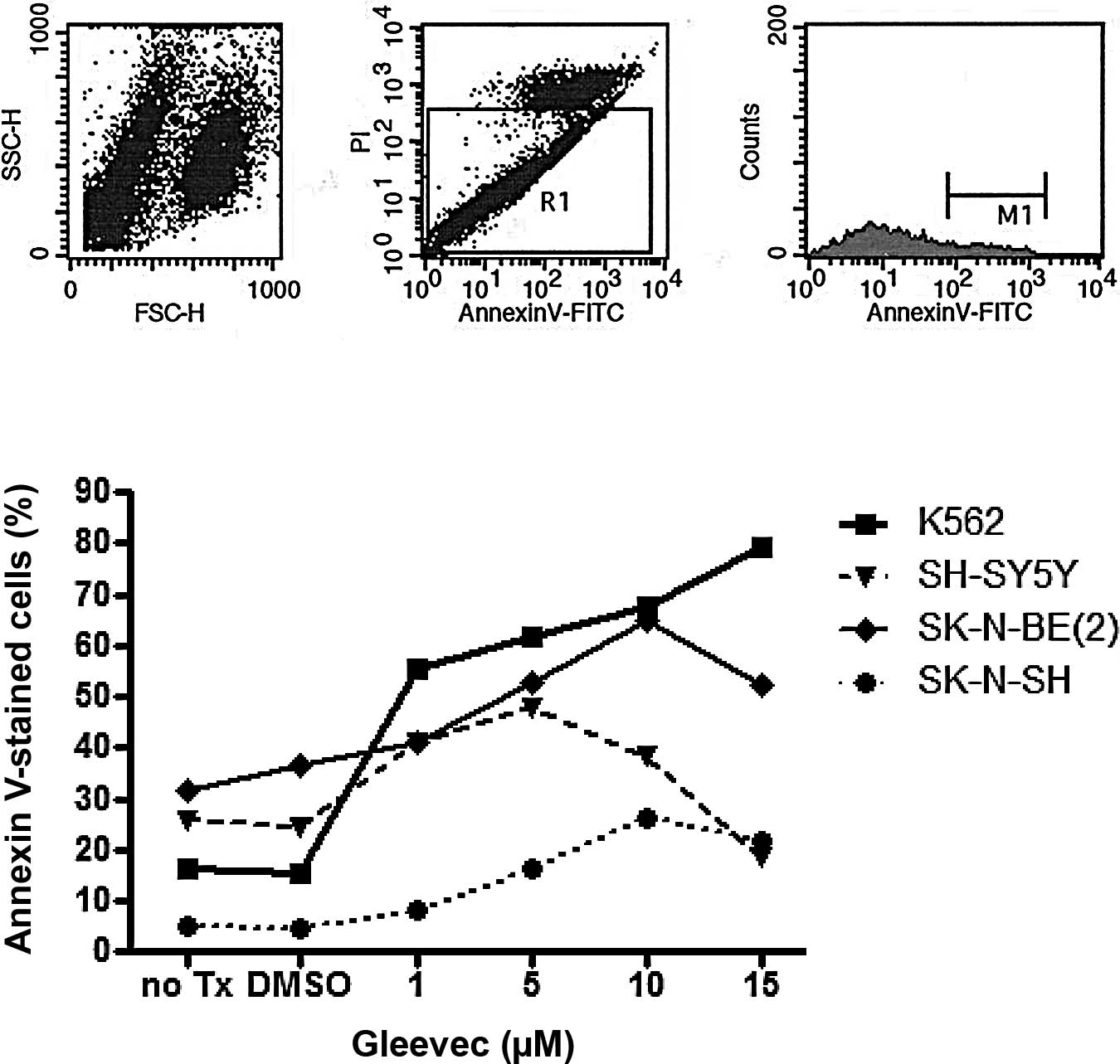
Initially, we assessed the effects of STI-571 on three neuroblastoma cell lines: SK-N-BE(2), which has an MYCN amplication and expresses the N-Myc protein; SH-SY5Y, which expresses the N-Myc protein, but does not have an MYCN amplification; and SK-N-SH, which does not express N-Myc protein or have an MYCN amplification (6,7). K562 cells, which have a bcr-abl translocation, were used as a positive control. The percentage of Annexin V-positive neuroblastoma cells was increased in the cell lines treated with concentrations >1 μM STI-571 (Fig. 1). Notably, the percentage of Annexin V-positive cells was increased to a greater extent in the SK-N-SH cells than in the SH-SY5Y or SK-N-BE(2) cells. Additionally, the percentage of Annexin V-positive cells decreased at STI-571 concentrations of 10 and 15 μM in the neuroblastoma cell lines. This was attributed to the removal of the dead cell fraction occurring during the washing procedure.

Figure 1.

Annexin V staining for the detection of apoptotic cells. Cells were exposed to the indicated concentrations of STI-571 (Gleevec) for 72 h. (A) The proportion of propidium iodide (PI)-negative cells (R1-gated), excluding the dead cells, is shown. (B) The percentage of Annexin V-positive (M1-gated) cells was calculated, and the percentage of apoptotic cells was compared to that in the untreated cell samples.

Cytotoxic effects induced in neuroblastoma cells after arsenic trioxide and STI-571 treatment

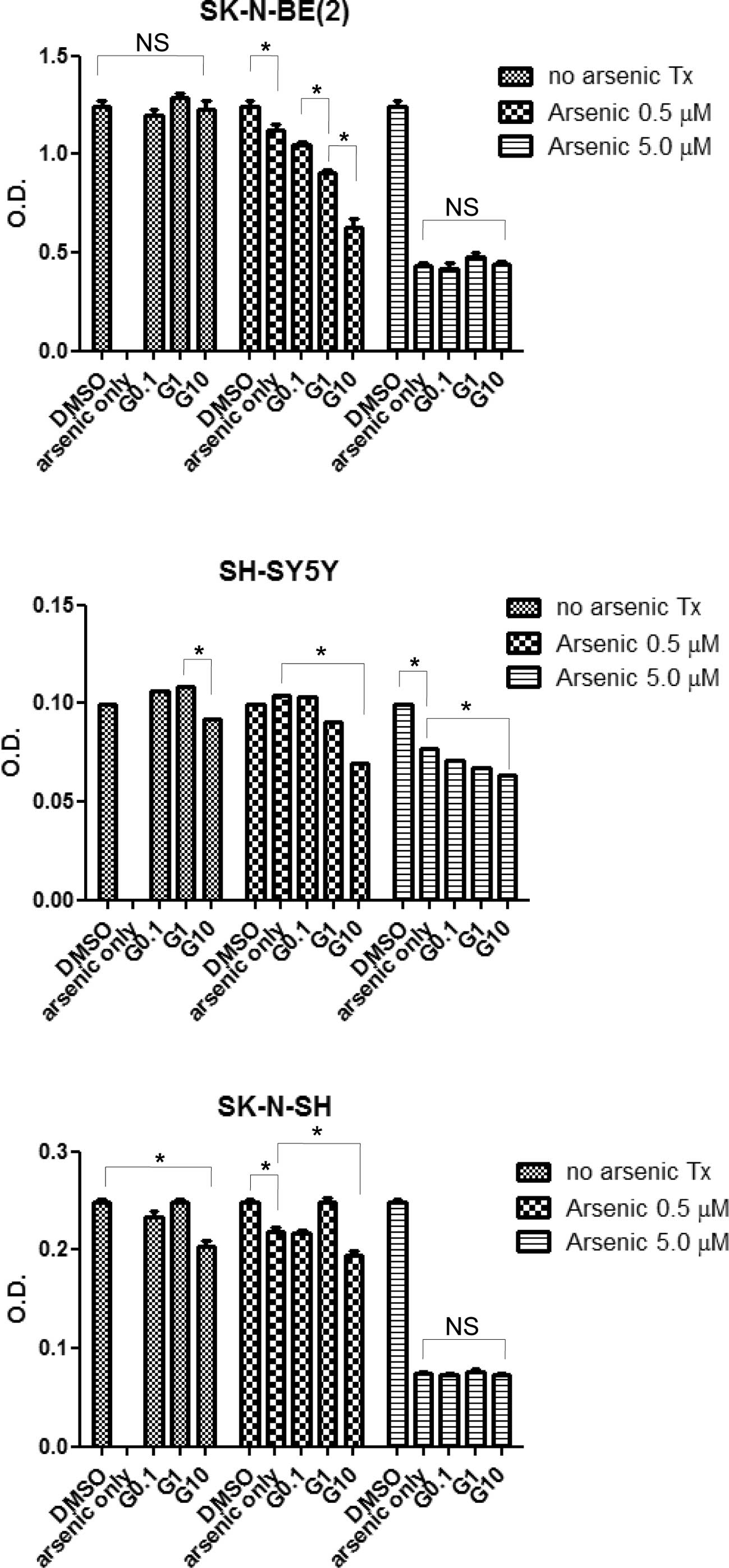
An MTT assay was conducted to measure the effects of arsenic trioxide and/or STI-571 treatment on cell proliferation in the neuroblastoma cell lines. As shown in Fig. 2, in the SK-N-SH and SH-SY5Y cell lines, treatment with 10 μM of STI-571 suppressed proliferation, while this effect was not noted in the SK-N-BE(2) cells. Arsenic trioxide also induced a reduction in cell proliferation at 0.5 and 5 μM. In addition, treatment with STI-571 and arsenic trioxide exerted an additive or synergistic effect on the inhibition of cell proliferation. Upon arsenic treatment at a concentration of 5 μM, proliferation was inhibited independent of the STI-571 concentration in the SK-N-BE(2) and SH-SY5Y cell lines. In the SH-SY5Y cells, in the presence of arsenic trioxide (0.5 and 5 μM), STI-571 exerted marked effects on cellular proliferation in a dose-dependent manner.

Figure 2.

STI-571 and arsenic trioxide treatment inhibited the proliferation of neuroblastoma cells. (A) SK-N-BE(2), (B) SH-SY5Y and (C) SK-N-SH cells were plated at a density of 5×10³/150 μl in fresh medium and treated with arsenic trioxide and/or STI-571 (G) as indicated. After 72 h, 20 μl of MTT (5 mg/ml in PBS) was added to each of the wells. After 4 h, dark blue formazan crystals were dissolved, and the absorbance of the plates was read at a wavelength of 570 nm. Data are expressed in terms of optical density (O.D.) and expressed as the means ± SE (n=4). *p<0.05; NS, not statistically significant.

Expression of N-myc knocked down by siRNA

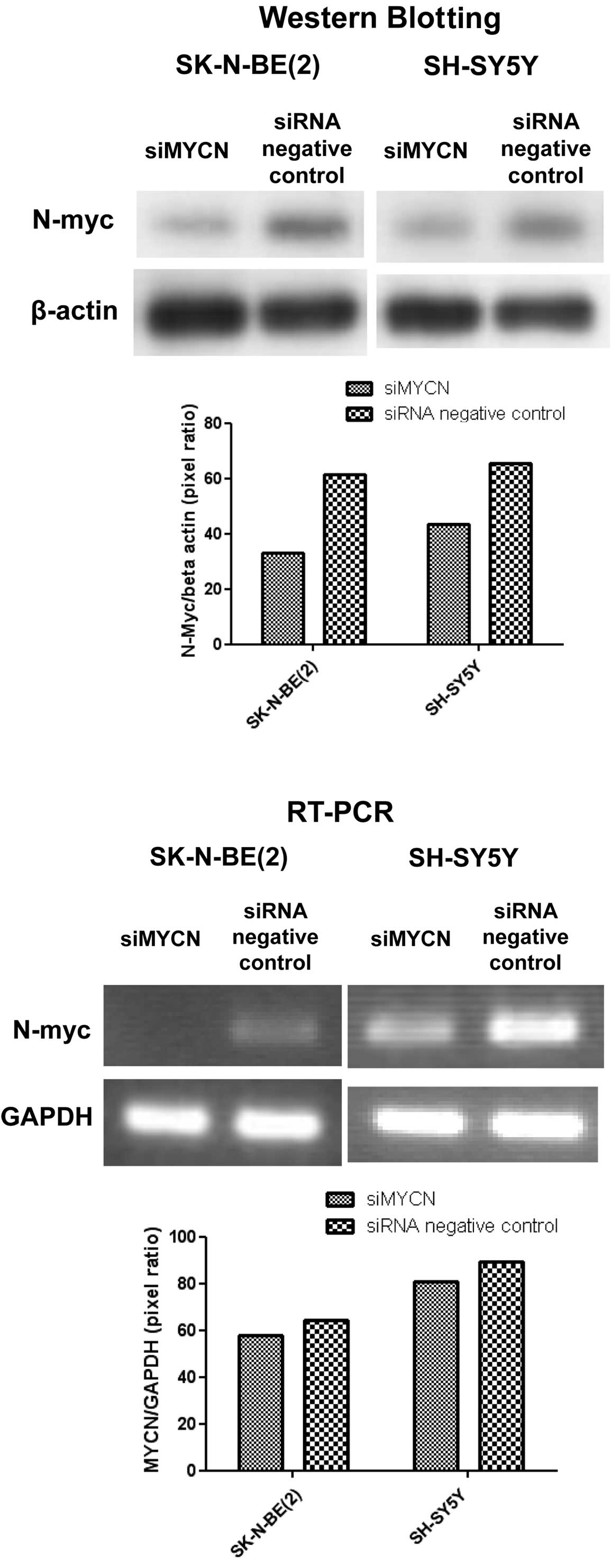
Since the SK-NBE(2) and SH-SY5Y cell lines have been reported to express N-myc, the differences noted in sensitivity (Fig. 1) to STI-571 may be related to N-myc expression in neuroblastoma cells. Thus, we aimed to characterize the effects of N-myc knockdown on STI-571 and/or arsenic trioxide treatment. As shown in Fig. 2, STI-571 treatment applied to the SK-N-BE(2) cell line manifesting an MYCN amplification had minimal influence on the suppressive effect. However, in SH-SY5Y cells, a dose-dependent reduction in cell proliferation was observed, even at a concentration of 5 μM of arsenic trioxide. Using siRNA against MYCN (siMYCN) as well as the control (negative), mRNA and protein expression was inhibited after siRNA treatment (Fig. 3).

Figure 3.

Knockdown of N-myc expression using siRNA in MYCN-amplified/expressing SK-N-BE(2) and MYCN-expressing SH-SY5Y neuroblastoma cell lines. (A) Western blot analysis of N-myc protein expression in neuroblastoma cells after 72 h of transfection. β-actin was used for the equal protein loading of the cell lysates. (B) Semi-quantitative RT-PCR analysis of MYCN mRNA expression in neuroblastoma cells after 72 h of transfection. GAPDH was used as a loading control. Data are expressed as a ratio of arbitary pixel density units.

Cytotoxic effects reversed in neuroblastoma cells after siMYCN treatment

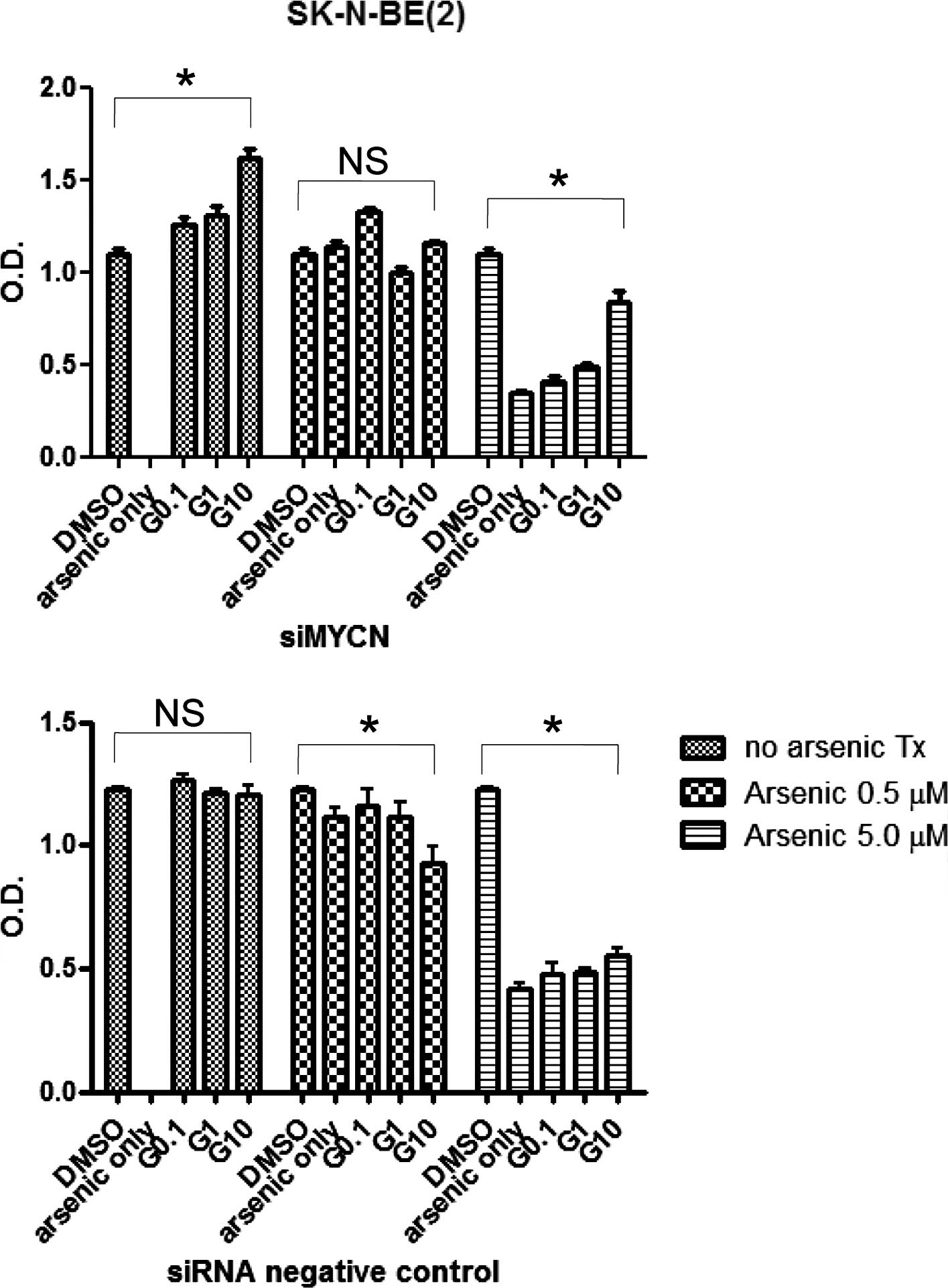
In order to observe the effects of N-myc knockdown on arsenic trioxide and STI-571 treatments, the cells were transfected with siMYNC or siRNA negative controls and analyzed using an MTT assay. The siRNA negative control-transfected cells exhibited a higher sensitivity to STI-571 treatment than the siMYCN-transfected cells (Fig. 4). This suggests that N-myc knockdown does not render neuroblastoma cells more vulnerable to STI-571 treatment.

Figure 4.

MYCN knockdown by RNAi abrogates the effects of STI-571 in neuroblastoma cell lines. (A) SK-N-BE(2) and (B) SH-SY5Y cells were plated at a density of 5×10³/150 μl in fresh medium and transfected with siMYCN or the negative siRNA duplex followed by exposure to arsenic trioxide and/or STI-571 (G) as indicated. After 72 h, 20 μl of MTT (5 mg/ml in PBS) was added to each well. After 4 h, dark blue formazan crystals were dissolved, and the absorbance of the plates was read at a wavelength of 570 nm. Data are shown in terms of optical density (O.D.) and expressed as the means ± SE (n=4). *p<0.05; NS, not statistically significant.

Discussion

In the present study, we found that treatment with STI-571 and arsenic trioxide exerted synergistic cytotoxic effects on three neuroblastoma cell lines: SH-SY5Y, SK-N-SH and SK-N-BE(2). In the MYCN-expressing/amplified cell lines, gene knockdown of MYCN via the siRNA method inhibited the therapeutic effects of STI-571 exposure.

MYCN amplification occurs in approximately 25% of neuroblastoma cases and has been profoundly correlated with cancer progression and treatment failure. Myc protein is a member of the family of basic-helix-loop-helix-leucine zipper transcription factors, and the increased expression of this protein results in the entry of cells into the cell cycle. The amplification and overexpression of MYCN in neuroblastoma have been correlated with treatment failure and a poor prognosis. As MYCN-expressing cancer cells often exhibit defects in the apoptotic pathway, the inhibition of MYCN expression may prove to be a useful target for the treatment of neuroblastoma. In pursuit of such targets, RNA interference may be employed for the knockdown of specific proteins in target cells. Therefore, the siRNA technique targeting MYCN was recently highlighted as a potential new therapeutic modality for the treatment of aggressive neuroblastoma (5).

However, it has also been reported that MYCN expression may increase the antitumor effect of various drug therapies, as MYCN expression was found to induce the transition from the G1-S to G2/M phase of the cell cycle (8). In addition, in K562 cells, c-Myc levels were not correlated with cell proliferation and c-Myc down-regulation was correlated with STI-571 activity, but not with STI-571-induced apoptosis (9). Therefore, in the present study we evaluated the effects of N-myc knockdown by siRNA in combination with STI-571 and arsenic trioxide treatment, as both have been suggested as promising new therapeutic agents for the treatment of aggressive neuroblastomas.

STI-571 treatment applied to neuroblastoma cells was found to target c-Kit and PDGFR-α and -β (10). In particular, c-Kit and its ligand stem cell factor were reported to be expressed in neuroblastoma cells, as well as in primary tumors (3). Moreover, c-Kit has been reported to be preferentially expressed in MYCN-amplified neuroblastoma and was shown to inhibit STI-571-mediated proliferation (11).

In conclusion, STI-571 is a potential therapeutic drug for the treatment of neuroblastoma, particularly in MYCN-amplified/expressing cancers. However, for the development of new therapeutic targets in cancer therapy, synergistic or possible antagonistic effects should be considered when using a combined therapeutic regimen.

Acknowledgements

This study was supported by the Korea Research Foundation Grant funded by the Korean Government (MOEHRD, Basic Research Promotion Fund) (KRF-2005-003-E00134).

References

1. 

Woo SY, Lee MY, Jung YJ, Yoo ES, Seoh JY, Shin HY, Ahn HS and Ryu KH: Arsenic trioxide inhibits cell growth in SH-SY5Y and SK-N-AS neuroblastoma cell lines by a different mechanism. Pediatr Hematol Oncol. 23:231–243. 2006. View Article : Google Scholar : PubMed/NCBI

2. 

Krause DS and van Etten RA: Tyrosine kinases as targets for cancer therapy. N Engl J Med. 353:172–187. 2005. View Article : Google Scholar : PubMed/NCBI

3. 

Mauro MJ, O’Dwyer M, Heinrich MC and Druker BJ: STI571: a paradigm of new agents for cancer therapeutics. J Clin Oncol. 20:325–334. 2002. View Article : Google Scholar : PubMed/NCBI

4. 

Beppu K, Jaboine J, Merchant MS, Mackall CL and Thiele CJ: Effect of imatinib mesylate on neuroblastoma tumorigenesis and vascular endothelial growth factor expression. J Natl Cancer Inst. 96:46–55. 2004. View Article : Google Scholar : PubMed/NCBI

5. 

Kang JH, Rychahou PG, Ishola TA, Qiao J, Evers BM and Chung DH: MYCN silencing induces differentiation and apoptosis in human neuroblastoma cells. Biochem Biophys Res Commun. 351:192–197. 2006. View Article : Google Scholar : PubMed/NCBI

6. 

Brodeur GM, Green AA, Hayes FA, Williams KJ, Williams DL and Tsiatis AA: Cytogenetic features of human neuroblastomas and cell lines. Cancer Res. 41:4678–4686. 1981.PubMed/NCBI

7. 

Gilbert F, Feder M, Balaban G, Brangman D, Lurie DK, Podolsky R, Rinaldt V, Vinikoor N and Weisband J: Human neuroblastomas and abnormalities of chromosomes 1 and 17. Cancer Res. 44:5444–5449. 1984.PubMed/NCBI

8. 

Paffhausen T, Schwab M and Westermann F: Targeted MYCN expression affects cytotoxic potential of chemotherapeutic drugs in neuroblastoma cells. Cancer Lett. 250:17–24. 2007. View Article : Google Scholar : PubMed/NCBI

9. 

Gomez-Casares MT, Vaque JP, Lemes A, Molero T, Delgado MD and Leon J: C-myc expression in cell lines derived from chronic myeloid leukemia. Haematologica. 89:241–243. 2004.PubMed/NCBI

10. 

Buchdunger E, Cioffi CL, Law N, Stover D, Ohno-Jones S, Druker BJ and Lydon NB: Abl protein-tyrosine kinase inhibitor STI571 inhibits in vitro signal transduction mediated by c-kit and platelet-derived growth factor receptors. J Pharmacol Exp Ther. 295:139–145. 2000.

11. 

Vitali R, Cesi V, Nicotra MR, McDowell HP, Donfrancesco A, Mannarino O, Natali PG, Raschella G and Dominici C: c-Kit is preferentially expressed in MYCN-amplified neuroblastoma and its effect on cell proliferation is inhibited in vitro by STI-571. Int J Cancer. 106:147–152. 2003. View Article : Google Scholar : PubMed/NCBI

Related Articles

  • Abstract
  • View
  • Download
  • Twitter
Copy and paste a formatted citation
Spandidos Publications style
Kim K, Jung J, Cho J, Woo S, Cho K, Ryu K and Yoo E: Antitumor effects of imatinib mesylate and synergistic cytotoxicity with an arsenic compound in neuroblastoma cell lines. Exp Ther Med 2: 557-561, 2011.
APA
Kim, K., Jung, J., Cho, J., Woo, S., Cho, K., Ryu, K., & Yoo, E. (2011). Antitumor effects of imatinib mesylate and synergistic cytotoxicity with an arsenic compound in neuroblastoma cell lines. Experimental and Therapeutic Medicine, 2, 557-561. https://doi.org/10.3892/etm.2011.220
MLA
Kim, K., Jung, J., Cho, J., Woo, S., Cho, K., Ryu, K., Yoo, E."Antitumor effects of imatinib mesylate and synergistic cytotoxicity with an arsenic compound in neuroblastoma cell lines". Experimental and Therapeutic Medicine 2.3 (2011): 557-561.
Chicago
Kim, K., Jung, J., Cho, J., Woo, S., Cho, K., Ryu, K., Yoo, E."Antitumor effects of imatinib mesylate and synergistic cytotoxicity with an arsenic compound in neuroblastoma cell lines". Experimental and Therapeutic Medicine 2, no. 3 (2011): 557-561. https://doi.org/10.3892/etm.2011.220
Copy and paste a formatted citation
x
Spandidos Publications style
Kim K, Jung J, Cho J, Woo S, Cho K, Ryu K and Yoo E: Antitumor effects of imatinib mesylate and synergistic cytotoxicity with an arsenic compound in neuroblastoma cell lines. Exp Ther Med 2: 557-561, 2011.
APA
Kim, K., Jung, J., Cho, J., Woo, S., Cho, K., Ryu, K., & Yoo, E. (2011). Antitumor effects of imatinib mesylate and synergistic cytotoxicity with an arsenic compound in neuroblastoma cell lines. Experimental and Therapeutic Medicine, 2, 557-561. https://doi.org/10.3892/etm.2011.220
MLA
Kim, K., Jung, J., Cho, J., Woo, S., Cho, K., Ryu, K., Yoo, E."Antitumor effects of imatinib mesylate and synergistic cytotoxicity with an arsenic compound in neuroblastoma cell lines". Experimental and Therapeutic Medicine 2.3 (2011): 557-561.
Chicago
Kim, K., Jung, J., Cho, J., Woo, S., Cho, K., Ryu, K., Yoo, E."Antitumor effects of imatinib mesylate and synergistic cytotoxicity with an arsenic compound in neuroblastoma cell lines". Experimental and Therapeutic Medicine 2, no. 3 (2011): 557-561. https://doi.org/10.3892/etm.2011.220
Follow us
  • Twitter
  • LinkedIn
  • Facebook
About
  • Spandidos Publications
  • Careers
  • Cookie Policy
  • Privacy Policy
How can we help?
  • Help
  • Live Chat
  • Contact
  • Email to our Support Team