Spandidos Publications Logo
  • About
    • About Spandidos
    • Aims and Scopes
    • Abstracting and Indexing
    • Editorial Policies
    • Reprints and Permissions
    • Job Opportunities
    • Terms and Conditions
    • Contact
  • Journals
    • All Journals
    • Oncology Letters
      • Oncology Letters
      • Information for Authors
      • Editorial Policies
      • Editorial Board
      • Aims and Scope
      • Abstracting and Indexing
      • Bibliographic Information
      • Archive
    • International Journal of Oncology
      • International Journal of Oncology
      • Information for Authors
      • Editorial Policies
      • Editorial Board
      • Aims and Scope
      • Abstracting and Indexing
      • Bibliographic Information
      • Archive
    • Molecular and Clinical Oncology
      • Molecular and Clinical Oncology
      • Information for Authors
      • Editorial Policies
      • Editorial Board
      • Aims and Scope
      • Abstracting and Indexing
      • Bibliographic Information
      • Archive
    • Experimental and Therapeutic Medicine
      • Experimental and Therapeutic Medicine
      • Information for Authors
      • Editorial Policies
      • Editorial Board
      • Aims and Scope
      • Abstracting and Indexing
      • Bibliographic Information
      • Archive
    • International Journal of Molecular Medicine
      • International Journal of Molecular Medicine
      • Information for Authors
      • Editorial Policies
      • Editorial Board
      • Aims and Scope
      • Abstracting and Indexing
      • Bibliographic Information
      • Archive
    • Biomedical Reports
      • Biomedical Reports
      • Information for Authors
      • Editorial Policies
      • Editorial Board
      • Aims and Scope
      • Abstracting and Indexing
      • Bibliographic Information
      • Archive
    • Oncology Reports
      • Oncology Reports
      • Information for Authors
      • Editorial Policies
      • Editorial Board
      • Aims and Scope
      • Abstracting and Indexing
      • Bibliographic Information
      • Archive
    • Molecular Medicine Reports
      • Molecular Medicine Reports
      • Information for Authors
      • Editorial Policies
      • Editorial Board
      • Aims and Scope
      • Abstracting and Indexing
      • Bibliographic Information
      • Archive
    • World Academy of Sciences Journal
      • World Academy of Sciences Journal
      • Information for Authors
      • Editorial Policies
      • Editorial Board
      • Aims and Scope
      • Abstracting and Indexing
      • Bibliographic Information
      • Archive
    • International Journal of Functional Nutrition
      • International Journal of Functional Nutrition
      • Information for Authors
      • Editorial Policies
      • Editorial Board
      • Aims and Scope
      • Abstracting and Indexing
      • Bibliographic Information
      • Archive
    • International Journal of Epigenetics
      • International Journal of Epigenetics
      • Information for Authors
      • Editorial Policies
      • Editorial Board
      • Aims and Scope
      • Abstracting and Indexing
      • Bibliographic Information
      • Archive
    • Medicine International
      • Medicine International
      • Information for Authors
      • Editorial Policies
      • Editorial Board
      • Aims and Scope
      • Abstracting and Indexing
      • Bibliographic Information
      • Archive
  • Articles
  • Information
    • Information for Authors
    • Information for Reviewers
    • Information for Librarians
    • Information for Advertisers
    • Conferences
  • Language Editing
Spandidos Publications Logo
  • About
    • About Spandidos
    • Aims and Scopes
    • Abstracting and Indexing
    • Editorial Policies
    • Reprints and Permissions
    • Job Opportunities
    • Terms and Conditions
    • Contact
  • Journals
    • All Journals
    • Biomedical Reports
      • Information for Authors
      • Editorial Policies
      • Editorial Board
      • Aims and Scope
      • Abstracting and Indexing
      • Bibliographic Information
      • Archive
    • Experimental and Therapeutic Medicine
      • Information for Authors
      • Editorial Policies
      • Editorial Board
      • Aims and Scope
      • Abstracting and Indexing
      • Bibliographic Information
      • Archive
    • International Journal of Epigenetics
      • Information for Authors
      • Editorial Policies
      • Editorial Board
      • Aims and Scope
      • Abstracting and Indexing
      • Bibliographic Information
      • Archive
    • International Journal of Functional Nutrition
      • Information for Authors
      • Editorial Policies
      • Editorial Board
      • Aims and Scope
      • Abstracting and Indexing
      • Bibliographic Information
      • Archive
    • International Journal of Molecular Medicine
      • Information for Authors
      • Editorial Policies
      • Editorial Board
      • Aims and Scope
      • Abstracting and Indexing
      • Bibliographic Information
      • Archive
    • International Journal of Oncology
      • Information for Authors
      • Editorial Policies
      • Editorial Board
      • Aims and Scope
      • Abstracting and Indexing
      • Bibliographic Information
      • Archive
    • Medicine International
      • Information for Authors
      • Editorial Policies
      • Editorial Board
      • Aims and Scope
      • Abstracting and Indexing
      • Bibliographic Information
      • Archive
    • Molecular and Clinical Oncology
      • Information for Authors
      • Editorial Policies
      • Editorial Board
      • Aims and Scope
      • Abstracting and Indexing
      • Bibliographic Information
      • Archive
    • Molecular Medicine Reports
      • Information for Authors
      • Editorial Policies
      • Editorial Board
      • Aims and Scope
      • Abstracting and Indexing
      • Bibliographic Information
      • Archive
    • Oncology Letters
      • Information for Authors
      • Editorial Policies
      • Editorial Board
      • Aims and Scope
      • Abstracting and Indexing
      • Bibliographic Information
      • Archive
    • Oncology Reports
      • Information for Authors
      • Editorial Policies
      • Editorial Board
      • Aims and Scope
      • Abstracting and Indexing
      • Bibliographic Information
      • Archive
    • World Academy of Sciences Journal
      • Information for Authors
      • Editorial Policies
      • Editorial Board
      • Aims and Scope
      • Abstracting and Indexing
      • Bibliographic Information
      • Archive
  • Articles
  • Information
    • For Authors
    • For Reviewers
    • For Librarians
    • For Advertisers
    • Conferences
  • Language Editing
Login Register Submit
  • This site uses cookies
  • You can change your cookie settings at any time by following the instructions in our Cookie Policy. To find out more, you may read our Privacy Policy.

    I agree
Search articles by DOI, keyword, author or affiliation
Search
Advanced Search
presentation
International Journal of Oncology
Join Editorial Board Propose a Special Issue
Print ISSN: 1019-6439 Online ISSN: 1791-2423
Journal Cover
November 2012 Volume 41 Issue 5

Full Size Image

Cover Legend PDF

Sign up for eToc alerts
Recommend to Library

Journals

International Journal of Molecular Medicine

International Journal of Molecular Medicine

International Journal of Molecular Medicine is an international journal devoted to molecular mechanisms of human disease.

International Journal of Oncology

International Journal of Oncology

International Journal of Oncology is an international journal devoted to oncology research and cancer treatment.

Molecular Medicine Reports

Molecular Medicine Reports

Covers molecular medicine topics such as pharmacology, pathology, genetics, neuroscience, infectious diseases, molecular cardiology, and molecular surgery.

Oncology Reports

Oncology Reports

Oncology Reports is an international journal devoted to fundamental and applied research in Oncology.

Experimental and Therapeutic Medicine

Experimental and Therapeutic Medicine

Experimental and Therapeutic Medicine is an international journal devoted to laboratory and clinical medicine.

Oncology Letters

Oncology Letters

Oncology Letters is an international journal devoted to Experimental and Clinical Oncology.

Biomedical Reports

Biomedical Reports

Explores a wide range of biological and medical fields, including pharmacology, genetics, microbiology, neuroscience, and molecular cardiology.

Molecular and Clinical Oncology

Molecular and Clinical Oncology

International journal addressing all aspects of oncology research, from tumorigenesis and oncogenes to chemotherapy and metastasis.

World Academy of Sciences Journal

World Academy of Sciences Journal

Multidisciplinary open-access journal spanning biochemistry, genetics, neuroscience, environmental health, and synthetic biology.

International Journal of Functional Nutrition

International Journal of Functional Nutrition

Open-access journal combining biochemistry, pharmacology, immunology, and genetics to advance health through functional nutrition.

International Journal of Epigenetics

International Journal of Epigenetics

Publishes open-access research on using epigenetics to advance understanding and treatment of human disease.

Medicine International

Medicine International

An International Open Access Journal Devoted to General Medicine.

Journal Cover
November 2012 Volume 41 Issue 5

Full Size Image

Cover Legend PDF

Sign up for eToc alerts
Recommend to Library

  • Article
  • Citations
    • Cite This Article
    • Download Citation
    • Create Citation Alert
    • Remove Citation Alert
    • Cited By
  • Similar Articles
    • Related Articles (in Spandidos Publications)
    • Similar Articles (Google Scholar)
    • Similar Articles (PubMed)
  • Download PDF
  • Download XML
  • View XML
Article

Inhibition of the AKT/mTOR and erbB pathways by gefitinib, perifosine and analogs of gonadotropin-releasing hormone I and II to overcome tamoxifen resistance in breast cancer cells

  • Authors:
    • Martin Block
    • Carsten Gründker
    • Stefanie Fister
    • Julia Kubin
    • Ludwig Wilkens
    • Michael D. Mueller
    • Bernhard Hemmerlein
    • Günter Emons
    • Andreas R. Günthert
  • View Affiliations / Copyright

    Affiliations: Departement of Gynecology and Obstetrics, Georg-August-University, Göttingen, Germany, Institute of Pathology, University of Bern, Bern, Switzerland, Department of Gynecology and Obstetrics, Inselspital, Bern University Hospital and University of Bern, Bern, Switzerland, Institute of Pathology, Georg-August-University, Göttingen, Germany
  • Pages: 1845-1854
    |
    Published online on: August 21, 2012
       https://doi.org/10.3892/ijo.2012.1591
  • Expand metrics +
Metrics: Total Views: 0 (Spandidos Publications: | PMC Statistics: )
Metrics: Total PDF Downloads: 0 (Spandidos Publications: | PMC Statistics: )
Cited By (CrossRef): 0 citations Loading Articles...

This article is mentioned in:


Abstract

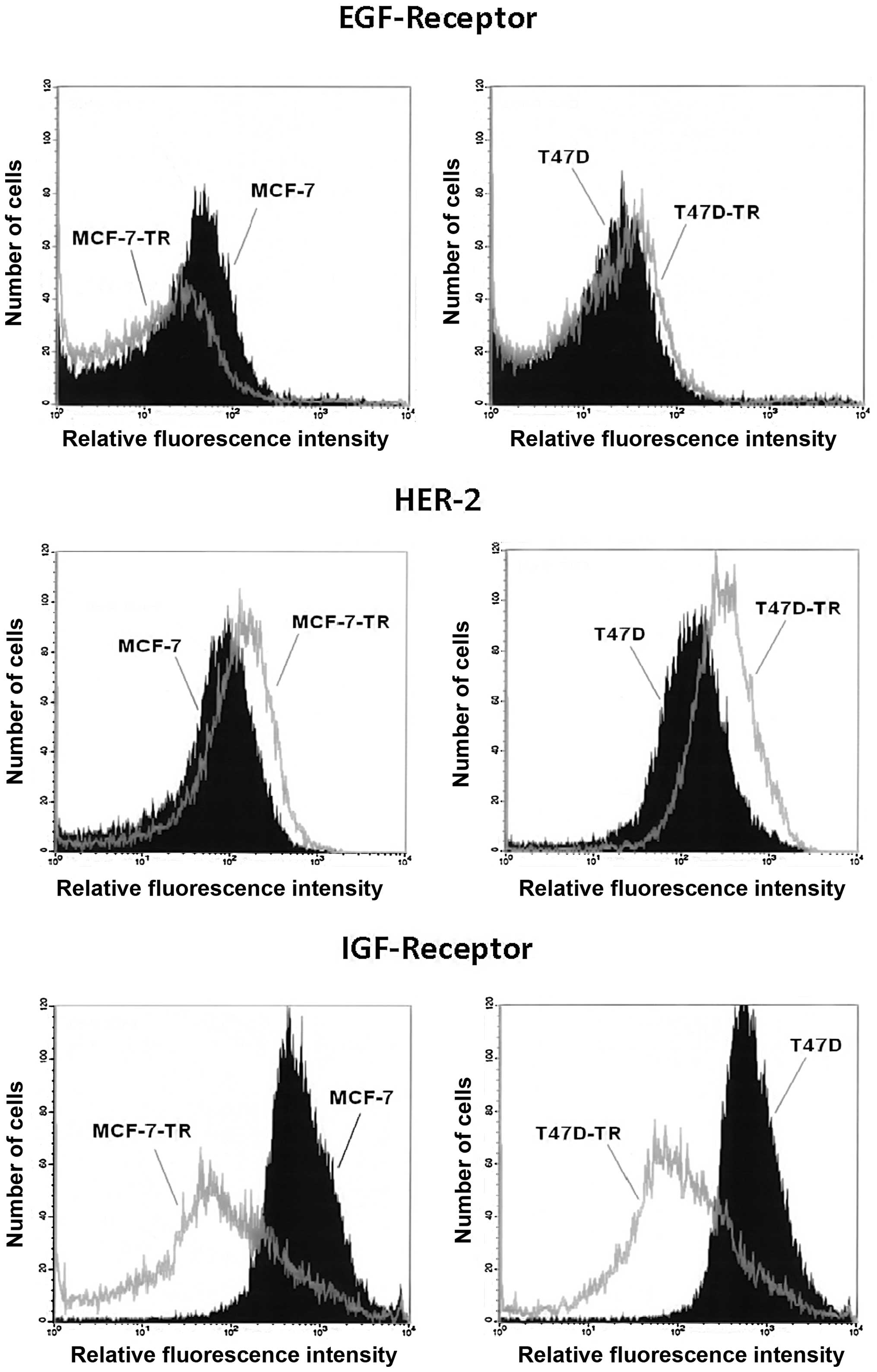
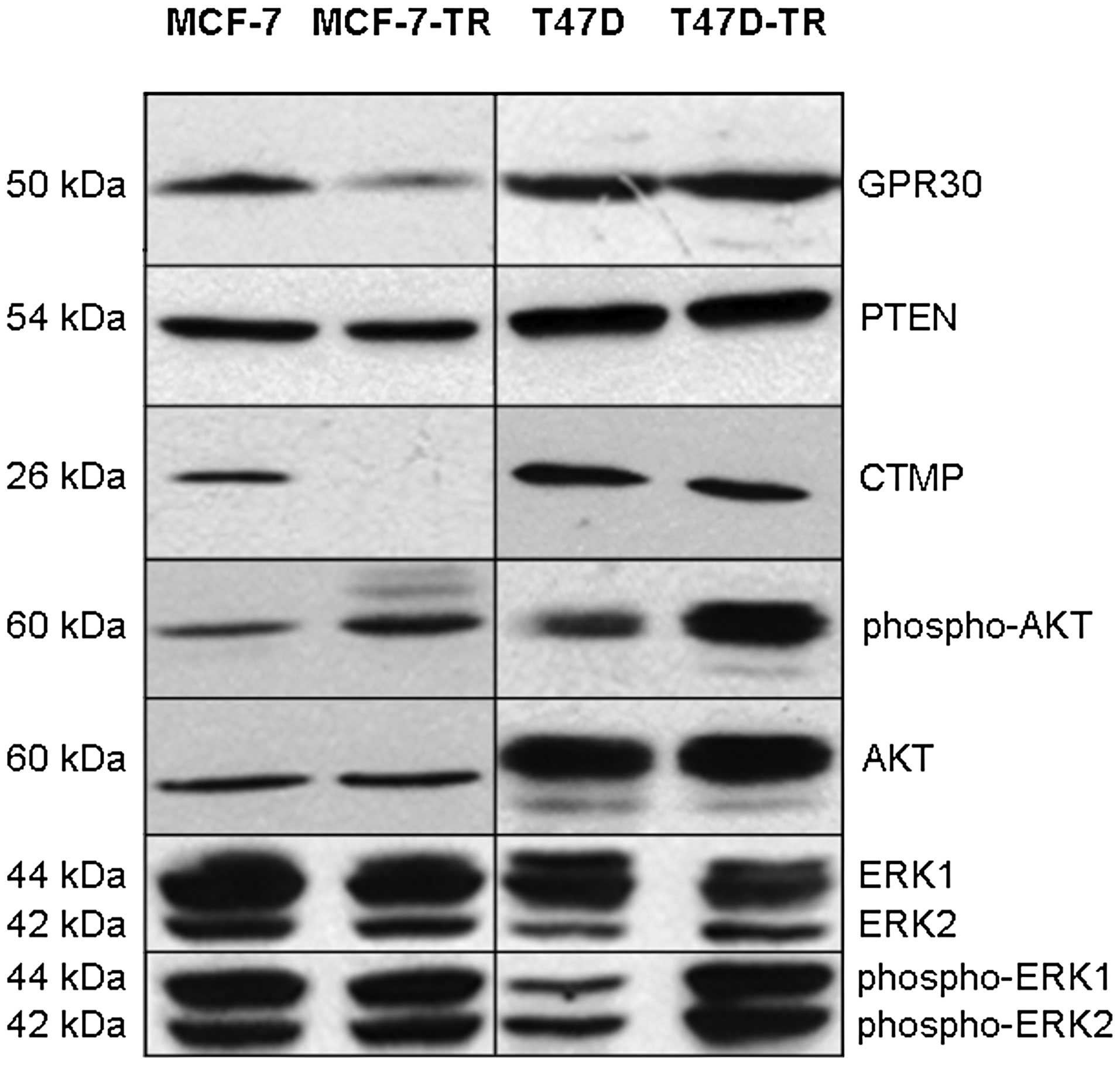
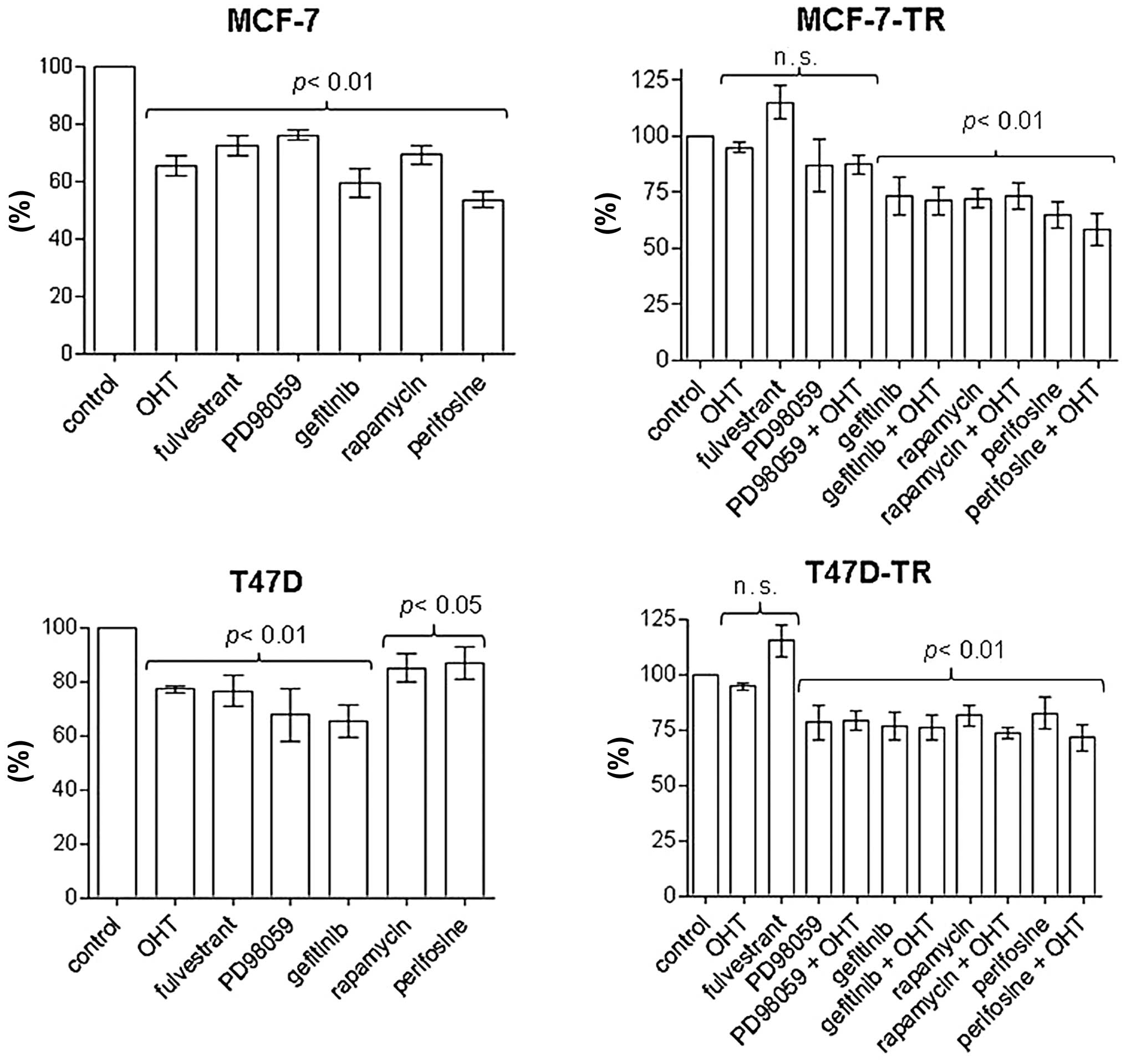
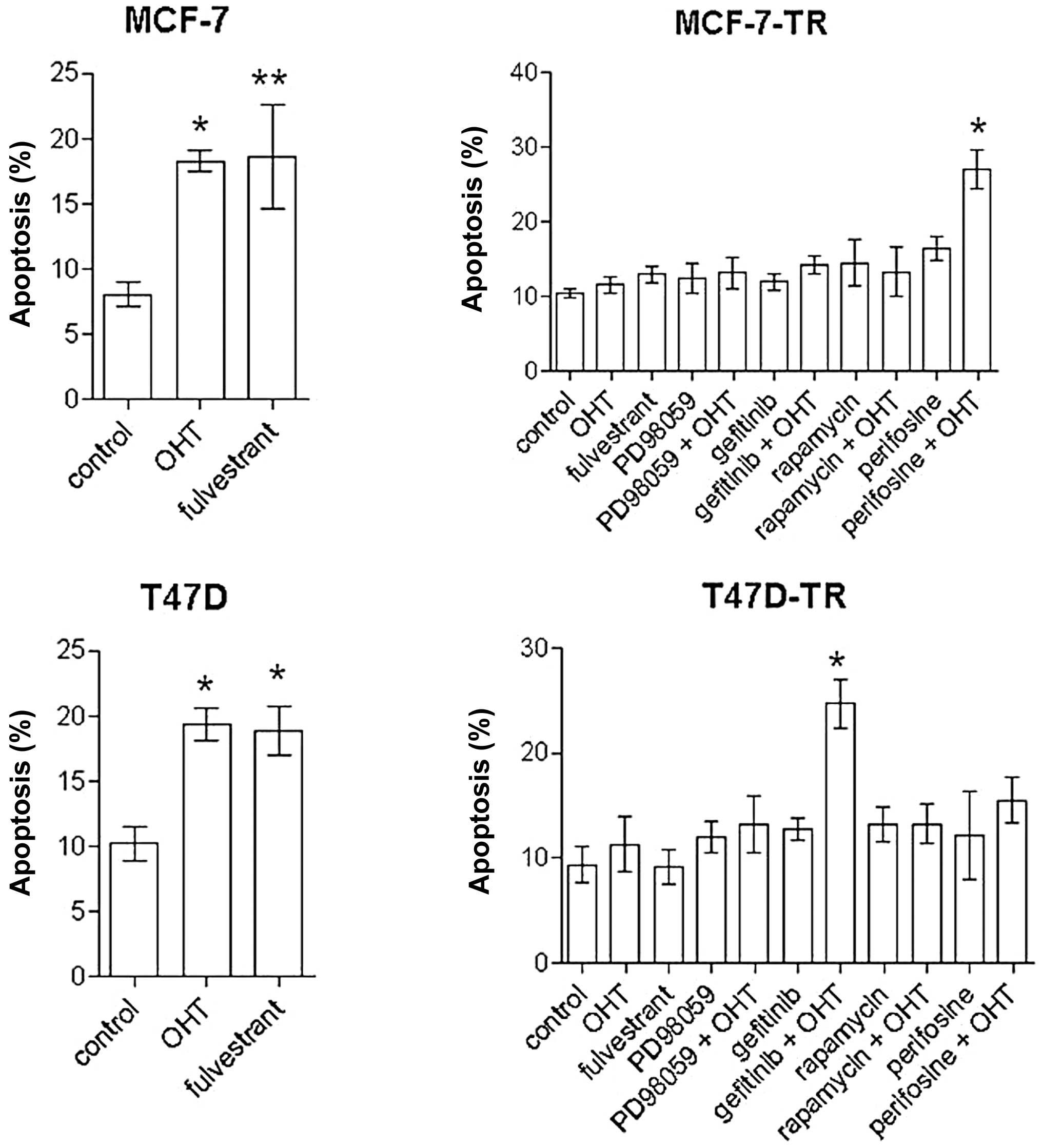
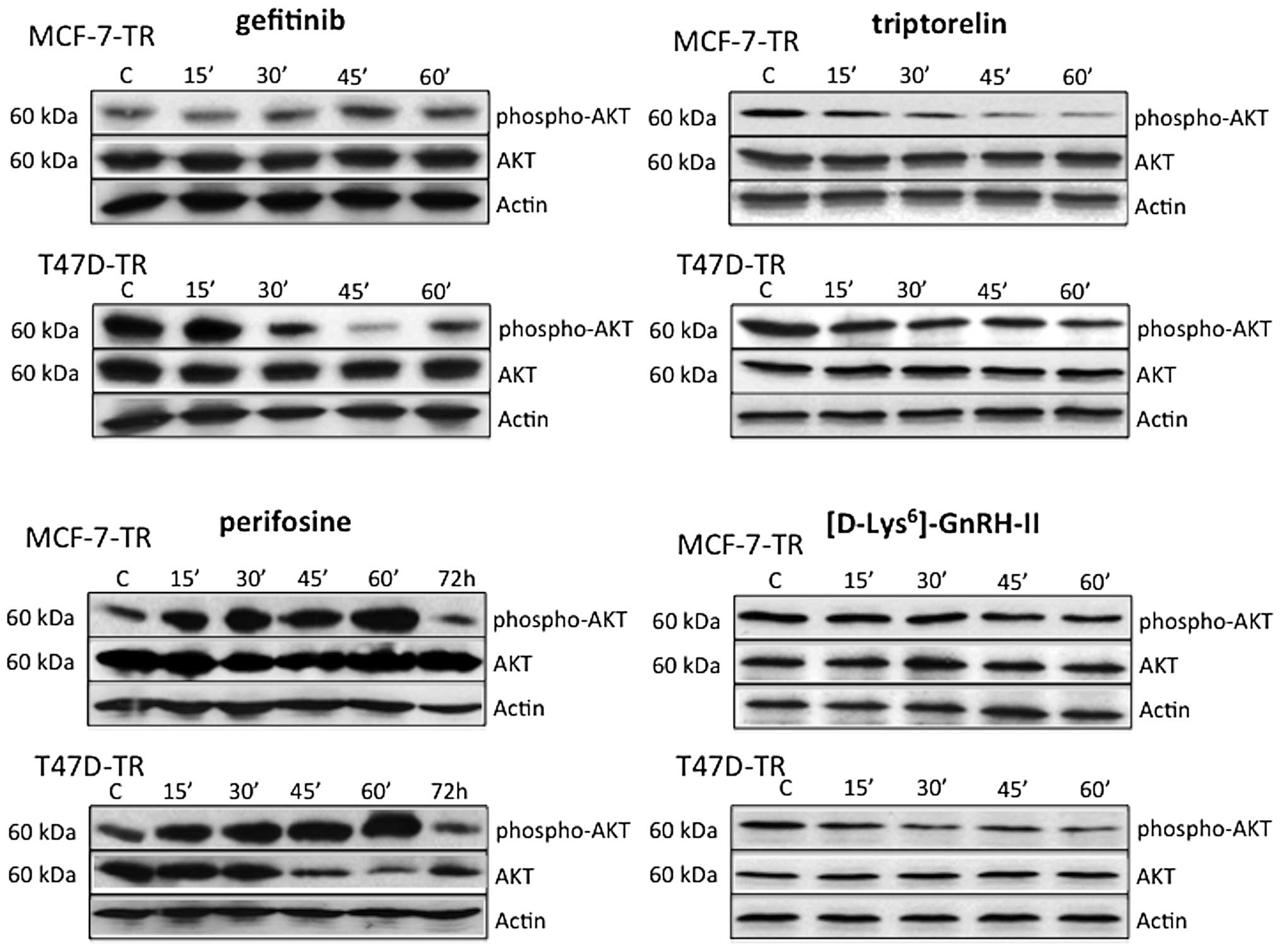
Endocrine resistance in breast cancer remains a major clinical problem and is caused by crosstalk mechanisms of growth factor receptor cascades, such as the erbB and PI3K/AKT pathways. The possibilities a single breast cancer cell has to achieve resistance are manifold. We developed a model of 4-hydroxy-tamoxifen (OHT)‑resistant human breast cancer cell lines and compared their different expression patterns, activation of growth factor receptor pathways and compared cells by genomic hybridization (CGH). We also tested a panel of selective inhibitors of the erbB and AKT/mTOR pathways to overcome OHT resistance. OHT‑resistant MCF-7-TR and T47D-TR cells showed increased expression of HER2 and activation of AKT. T47D-TR cells showed EGFR expression and activated MAPK (ERK-1/2), whereas in resistant MCF-7-TR cells activated AKT was due to loss of CTMP expression. CGH analyses revealed remarkable aberrations in resistant sublines, which were predominantly depletions. Gefitinib inhibited erbB signalling and restored OHT sensitivity in T47D-TR cells. The AKT inhibitor perifosine restored OHT sensitivity in MCF-7-TR cells. All cell lines showed expression of receptors for gonadotropin-releasing hormone (GnRH) I and II, and analogs of GnRH-I/II restored OHT sensitivity in both resistant cell lines by inhibition of erbB and AKT signalling. In conclusion, mechanisms to escape endocrine treatment in breast cancer share similarities in expression profiling but are based on substantially different genetic aberrations. Evaluation of activated mediators of growth factor receptor cascades is helpful to predict response to specific inhibitors. Expression of GnRH-I/II receptors provides multi-targeting treatment strategies.
View Figures

Figure 1

Figure 2

Figure 3

Figure 4

Figure 5

View References

1. 

Prat A and Perou CM: Mammary development meets cancer genomics. Nat Med. 15:842–844. 2009. View Article : Google Scholar : PubMed/NCBI

2. 

Cheang MC, Chia SK, Voduc D, Gao D, Leung S, Snider J, Watson M, Davies S, Bernard PS, Parker JS, Perou CM, Ellis MJ and Nielsen TO: Ki67 index, HER2 status, and prognosis of patients with luminal B breast cancer. J Natl Cancer Inst. 101:736–750. 2009. View Article : Google Scholar

3. 

Early Breast Cancer Trialists' Collaborative Group (EBCTCG): Effects of chemotherapy and hormonal therapy for early breast cancer on recurrence and 15-year survival: an overview of the randomised trials. Lancet. 365:1687–1717. 2005.PubMed/NCBI

4. 

Aitken SJ, Thomas JS, Langdon SP, Harrison DJ and Faratian D: Quantitative analysis of changes in ER, PR and HER2 expression in primary breast cancer and paired nodal metastases. Ann Oncol. 21:1254–1261. 2009. View Article : Google Scholar : PubMed/NCBI

5. 

Osborne CK, Bardou V, Hopp TA, Chamness GC, Hilsenbeck SG, Fuqua SA, Wong J, Allred DC, Clark GM and Schiff R: Role of the estrogen receptor coactivator AIB1 (SRC-3) and HER-2/neu in tamoxifen resistance in breast cancer. J Natl Cancer Inst. 95:353–361. 2003. View Article : Google Scholar : PubMed/NCBI

6. 

Dowsett M, Houghton J, Iden C, Salter J, Farndon J, A'Hern R, Sainsbury R and Baum M: Benefit from adjuvant tamoxifen therapy in primary breast cancer patients according oestrogen receptor, progesterone receptor, EGF receptor and HER2 status. Ann Oncol. 17:818–826. 2006. View Article : Google Scholar

7. 

Dihge L, Bendahl PO, Grabau D, Isola J, Lövgren K, Rydén L and Fernö M: Epidermal growth factor receptor (EGFR) and the estrogen receptor modulator amplified in breast cancer (AIB1) for predicting clinical outcome after adjuvant tamoxifen in breast cancer. Breast Cancer Res Treat. 109:255–262. 2008. View Article : Google Scholar

8. 

Hurtado A, Holmes KA, Geistlinger TR, Hutcheson IR, Nicholson RI, Brown M, Jiang J, Howat WJ, Ali S and Carroll JS: Regulation of ERBB2 by oestrogen receptor-PAX2 determines response to tamoxifen. Nature. 456:663–666. 2008. View Article : Google Scholar : PubMed/NCBI

9. 

Ball LJ, Levy N, Zhao X, Griffin C, Tagliaferri M, Cohen I, Ricke WA, Speed TP, Firestone GL and Leitman DC: Cell type-and estrogen receptor-subtype specific regulation of selective estrogen receptor modulator regulatory elements. Mol Cell Endocrinol. 299:204–211. 2009. View Article : Google Scholar : PubMed/NCBI

10. 

Kirkegaard T, McGlynn LM, Campbell FM, Müller S, Tovey SM, Dunne B, Nielsen KV, Cooke TG and Bartlett JM: Amplified in breast cancer 1 in human epidermal growth factor receptor - positive tumors of tamoxifen-treated breast cancer patients. Clin Cancer Res. 13:1405–1411. 2007. View Article : Google Scholar

11. 

Pérez-Tenorio G and Stål O: Activation of AKT/PKB in breast cancer predicts a worse outcome among endocrine treated patients. Br J Cancer. 86:540–545. 2002.

12. 

Leary AF, Drury S, Detre S, Pancholi S, Lykkesfeldt AE, Martin LA, Dowsett M and Johnston SR: Lapatinib restores hormone sensitivity with differential effects on estrogen receptor signaling in cell models of human epidermal growth factor receptor 2-negative breast cancer with acquired endocrine resistance. Clin Cancer Res. 16:1486–1497. 2010. View Article : Google Scholar

13. 

Shou J, Massarweh S, Osborne CK, Wakeling AE, Ali S, Weiss H and Schiff R: Mechanisms of tamoxifen resistance: increased estrogen receptor-HER2/neu cross-talk in ER/HER2-positive breast cancer. J Natl Cancer Inst. 96:926–935. 2004. View Article : Google Scholar : PubMed/NCBI

14. 

Konecny GE, Pegram MD, Venkatesan N, Finn R, Yang G, Rahmeh M, Untch M, Rusnak DW, Spehar G, Mullin RJ, Keith BR, Gilmer TM, Berger M, Podratz KC and Slamon DJ: Activity of the dual kinase inhibitor lapatinib (GW572016) against HER-2-overexpressing and trastuzumab-treated breast cancer cells. Cancer Res. 66:1630–1639. 2006. View Article : Google Scholar : PubMed/NCBI

15. 

Frogne T, Benjaminsen RV, Sonne-Hansen K, Sorensen BS, Nexo E, Laenkholm AV, Rasmussen LM, Riese DJ II, de Cremoux P, Stenvang J and Lykkesfeldt AE: Activation of ErbB3, EGFR and Erk is essential for growth of human breast cancer cell lines with acquired resistance to fulvestrant. Breast Cancer Res Treat. 114:263–275. 2009. View Article : Google Scholar : PubMed/NCBI

16. 

Günthert AR, Gründker C, Olota A, Läsche J, Eicke N and Emons G: Analogs of GnRH-I and GnRH-II inhibit epidermal growth factor-induced signal transduction and resensitize resistant human breast cancer cells to 4OH-tamoxifen. Eur J Endocrinol. 153:613–625. 2005.

17. 

Emons G, Müller V, Ortmann O and Schulz KD: Effects of LHRH-analogues on mitogenic signal transduction in cancer cells. J Steroid Biochem Mol Biol. 65:199–206. 1998. View Article : Google Scholar : PubMed/NCBI

18. 

Gründker C, Völker P, Schulz KD and Emons G: Luteinizing hormone-releasing hormone agonist triptorelin and antagonist cetrorelix inhibit EGF-induced c-fos expression in human gynecological cancers. Gynecol Oncol. 78:194–202. 2000.PubMed/NCBI

19. 

Gründker C, Völker P and Emons G: Antiproliferative signaling of luteinizing hormone-releasing hormone in human endometrial and ovarian cancer cells through G protein alpha(I)-mediated activation of phosphotyrosine phosphatase. Endocrinology. 142:2369–2380. 2001.

20. 

Kraus S, Levy G, Hanoch T, Naor Z and Seger R: Gonadotropin-releasing hormone induces apoptosis of prostate cancer cells: role of c-Jun NH2-terminal kinase, protein kinase B, and extracellular signal-regulated kinase pathways. Cancer Res. 64:5736–5744. 2004. View Article : Google Scholar

21. 

Ghayad SE, Vendrell JA, Larbi SB, Dumontet C, Bieche I and Cohen PA: Endocrine resistance associated with activated ErbB system in breast cancer cells is reversed by inhibiting MAPK or PI3K/Akt signaling pathways. Int J Cancer. 126:545–562. 2010. View Article : Google Scholar : PubMed/NCBI

22. 

deGraffenried LA, Friedrichs WE, Russell DH, Donzis EJ, Middleton AK, Silva JM, Roth RA and Hidalgo M: Inhibition of mTOR activity restores tamoxifen response in breast cancer cells with aberrant Akt Activity. Clin Cancer Res. 10:8059–8067. 2004. View Article : Google Scholar : PubMed/NCBI

23. 

Chow LM and Baker SJ: PTEN function in normal and neoplastic growth. Cancer Lett. 241:184–196. 2006. View Article : Google Scholar : PubMed/NCBI

24. 

Maira SM, Galetic I, Brazil DP, Kaech S, Ingley E, Thelen M and Hemmings BA: Carboxyl-terminal modulator protein (CTMP), a negative regulator of PKB/Akt and v-Akt at the plasma membrane. Science. 294:374–380. 2001. View Article : Google Scholar : PubMed/NCBI

25. 

Revankar CM, Mitchell HD, Field AS, Burai R, Corona C, Ramesh C, Sklar LA, Arterburn JB and Prossnitz ER: Synthetic estrogen derivatives demonstrate the functionality of intracellular GPR30. ACS Chem Biol. 2:536–544. 2007. View Article : Google Scholar : PubMed/NCBI

26. 

Bertelsen BI, Steine SJ, Sandvei R, Molven A and Laerum OD: Molecular analysis of the PI3K-AKT pathway in uterine cervical neoplasia: frequent PIK3CA amplification and AKT phosphorylation. Int J Cancer. 118:1877–1883. 2006. View Article : Google Scholar : PubMed/NCBI

27. 

Curtin JA, Stark MS, Pinkel D, Hayward NK and Bastian BC: PI3-kinase subunits are infrequent somatic targets in melanoma. J Invest Dermatol. 126:1660–1663. 2006. View Article : Google Scholar : PubMed/NCBI

28. 

Wilkens L, Tchinda J, Burkhardt D, Nolte M, Werner M and Georgii A: Analysis of hematologic diseases using conventional karyotyping, fluorescence in situ hybridization (FISH), and comparative genomic hybridization (CGH). Hum Pathol. 29:833–839. 1998. View Article : Google Scholar : PubMed/NCBI

29. 

Eicke N, Günthert AR, Viereck V, Siebold D, Béhé M, Becker T, Emons G and Gründker C: GnRH-II receptor-like antigenicity in human placenta and in cancers of the human reproductive organs. Eur J Endocrinol. 153:605–612. 2005. View Article : Google Scholar : PubMed/NCBI

30. 

Cheskis BJ, Greger J, Cooch N, McNally C, Mclarney S, Lam HS, Rutledge S, Mekonnen B, Hauze D, Nagpal S and Freedman LP: MNAR plays an important role in ERα activation of Src/MAPK and PI3K/Akt signaling pathways. Steroids. 73:901–905. 2008.

31. 

Gururaj AE, Holm C, Landberg G and Kumar R: Breast cancer-amplified sequence 3, a target of metastasis-associated protein 1, contributes to tamoxifen resistance in premenopausal patients with breast cancer. Cell Cycle. 5:1407–1410. 2006. View Article : Google Scholar : PubMed/NCBI

32. 

Kumar R, Zhang H, Holm C, Vadlamudi RK, Landberg G and Rayala SK: Extranuclear coactivator signaling confers insensitivity to tamoxifen. Clin Cancer Res. 15:4123–4130. 2009. View Article : Google Scholar : PubMed/NCBI

33. 

Lo TL, Yusoff P, Fong CW, Guo K, McCaw BJ, Phillips WA, Yang H, Wong ES, Leong HF, Zeng Q, Putti TC and Guy GR: The ras/mitogen-activated protein kinase pathway inhibitor and likely tumor suppressor proteins, sprouty 1 and sprouty 2 are deregulated in breast cancer. Cancer Res. 64:6127–6136. 2004. View Article : Google Scholar : PubMed/NCBI

34. 

Kurokawa H, Lenferink AE, Simpson JF, Pisacane PI, Sliwkowski MX, Forbes JT and Arteaga CL: Inhibition of HER2/neu (erbB-2) and mitogen-activated protein kinases enhances tamoxifen action against HER2-overexpressing, tamoxifen-resistant breast cancer cells. Cancer Res. 60:5887–5894. 2000.

35. 

Massarweh S, Osborne CK, Jiang S, Wakeling AE, Rimawi M, Mohsin SK, Hilsenbeck S and Schiff R: Mechanisms of tumor regression and resistance to estrogen deprivation and fulvestrant in a model of estrogen receptor-positive, HER-2/neu-positive breast cancer. Cancer Res. 66:8266–8273. 2006. View Article : Google Scholar : PubMed/NCBI

36. 

Creighton CJ, Massarweh S, Huang S, Tsimelzon A, Hilsenbeck SG, Osborne CK, Shou J, Malorni L and Schiff R: Development of resistance to targeted therapies transforms the clinically associated molecular profile subtype of breast tumor xenografts. Cancer Res. 68:7493–7501. 2008. View Article : Google Scholar : PubMed/NCBI

37. 

Hutcheson IR, Knowlden JM, Madden TA, Barrow D, Gee JM, Wakeling AE and Nicholson RI: Oestrogen receptor-mediated modulation of the EGFR/MAPK pathway in tamoxifen-resistant MCF-7 cells. Breast Cancer Res Treat. 81:81–93. 2003. View Article : Google Scholar : PubMed/NCBI

38. 

Arpino G, Gutierrez C, Weiss H, Rimawi M, Massarweh S, Bharwani L, De Placido S, Osborne CK and Schiff R: Treatment of human epidermal growth factor receptor 2-overexpressing breast cancer xenografts with multiagent HER-targeted therapy. J Natl Cancer Inst. 99:694–705. 2007. View Article : Google Scholar : PubMed/NCBI

39. 

Kondapaka SB, Singh SS, Dasmahapatra GP, Sausville EA and Roy KK: Perifosine, a novel alkylphospholipid, inhibits protein kinase B activation. Mol Cancer Ther. 2:1093–1103. 2003.PubMed/NCBI

40. 

Knowlden JM, Jones HE, Barrow D, Gee JM, Nicholson RI and Hutcheson IR: Insulin receptor substrate-1 involvement in epidermal growth factor receptor and insulin-like growth factor receptor signalling: implication for Gefitinib (‘Iressa’) response and resistance. Breast Cancer Res Treat. 111:79–91. 2008.PubMed/NCBI

41. 

Fekete M, Wittliff JL and Schally AV: Characteristics and distribution of receptors for [D-TRP6]-luteinizing hormone-releasing hormone, somatostatin, epidermal growth factor, and sex steroids in 500 biopsy samples of human breast cancer. J Clin Lab Anal. 3:137–147. 1989.

42. 

Baumann KH, Kiesel L, Kaufmann M, Bastert G and Runnebaum B: Characterization of binding sites for a GnRH-agonist (buserelin) in human breast cancer biopsies and their distribution in relation to tumor parameters. Breast Cancer Res Treat. 25:37–46. 1993. View Article : Google Scholar : PubMed/NCBI

43. 

Miller WR, Scott WN, Morris R, Fraser HM and Sharpe RM: Growth of human breast cancer cells inhibited by a luteinizing hormone-releasing hormone agonist. Nature. 313:231–233. 1985. View Article : Google Scholar : PubMed/NCBI

44. 

Foekens JA, Henkelman MS, Fukkink JF, Blankenstein MA and Klijn JG: Combined effects of buserelin, estradiol and tamoxifen on the growth of MCF-7 human breast cancer cells in vitro. Biochem Biophys Res Commun. 140:550–556. 1986. View Article : Google Scholar : PubMed/NCBI

45. 

Emons G, Ortmann O, Becker M, Irmer G, Springer B, Laun R, Hölzel F, Schulz KD and Schally AV: High affinity binding and direct antiproliferative effects of LHRH analogues in human ovarian cancer cell lines. Cancer Res. 53:5439–5446. 1993.PubMed/NCBI

46. 

Gründker C, Schlotawa L, Viereck V, Eicke N, Horst A, Kairies B and Emons G: Antiproliferative effects of the GnRH antagonist cetrorelix and of GnRH-II on human endometrial and ovarian cancer cells are not mediated through the GnRH type I receptor. Eur J Endocrinol. 151:141–149. 2004.PubMed/NCBI

47. 

Gründker C, Günthert AR, Millar RP and Emons G: Expression of gonadotropin-releasing hormone II (GnRH-II) receptor in human endometrial and ovarian cancer cells and effects of GnRH-II on tumor cell proliferation. J Clin Endocrinol Metab. 87:1427–1430. 2002.PubMed/NCBI

48. 

Buchholz S, Seitz S, Schally AV, Engel JB, Rick FG, Szalontay L, Hohla F, Krishan A, Papadia A, Gaiser T, Brockhoff G, Ortmann O, Diedrich K and Köster F: Triple-negative breast cancers express receptors for luteinizing hormone-releasing hormone (LHRH) and respond to LHRH antagonist cetrorelix with growth inhibition. Int J Oncol. 35:789–796. 2009.

49. 

Gründker C, Fost C, Fister S, Nolte N, Günthert AR and Emons G: Gonadotropin-releasing hormone type II antagonist induces apoptosis in MCF-7 and triple-negative MDA-MB-231 human breast cancer cells in vitro and in vivo. Breast Cancer Res. 12:R492010.PubMed/NCBI

50. 

Fister S, Günthert AR, Aicher B, Paulini KW, Emons G and Gründker C: GnRH-II antagonists induce apoptosis in human endometrial, ovarian, and breast cancer cells via activation of stress-induced MAPKs p38 and JNK and proapoptotic protein Bax. Cancer Res. 69:6473–6481. 2009. View Article : Google Scholar

Related Articles

  • Abstract
  • View
  • Download
  • Twitter
Copy and paste a formatted citation
Spandidos Publications style
Block M, Gründker C, Fister S, Kubin J, Wilkens L, Mueller MD, Hemmerlein B, Emons G and Günthert AR: Inhibition of the AKT/mTOR and erbB pathways by gefitinib, perifosine and analogs of gonadotropin-releasing hormone I and II to overcome tamoxifen resistance in breast cancer cells. Int J Oncol 41: 1845-1854, 2012.
APA
Block, M., Gründker, C., Fister, S., Kubin, J., Wilkens, L., Mueller, M.D. ... Günthert, A.R. (2012). Inhibition of the AKT/mTOR and erbB pathways by gefitinib, perifosine and analogs of gonadotropin-releasing hormone I and II to overcome tamoxifen resistance in breast cancer cells. International Journal of Oncology, 41, 1845-1854. https://doi.org/10.3892/ijo.2012.1591
MLA
Block, M., Gründker, C., Fister, S., Kubin, J., Wilkens, L., Mueller, M. D., Hemmerlein, B., Emons, G., Günthert, A. R."Inhibition of the AKT/mTOR and erbB pathways by gefitinib, perifosine and analogs of gonadotropin-releasing hormone I and II to overcome tamoxifen resistance in breast cancer cells". International Journal of Oncology 41.5 (2012): 1845-1854.
Chicago
Block, M., Gründker, C., Fister, S., Kubin, J., Wilkens, L., Mueller, M. D., Hemmerlein, B., Emons, G., Günthert, A. R."Inhibition of the AKT/mTOR and erbB pathways by gefitinib, perifosine and analogs of gonadotropin-releasing hormone I and II to overcome tamoxifen resistance in breast cancer cells". International Journal of Oncology 41, no. 5 (2012): 1845-1854. https://doi.org/10.3892/ijo.2012.1591
Copy and paste a formatted citation
x
Spandidos Publications style
Block M, Gründker C, Fister S, Kubin J, Wilkens L, Mueller MD, Hemmerlein B, Emons G and Günthert AR: Inhibition of the AKT/mTOR and erbB pathways by gefitinib, perifosine and analogs of gonadotropin-releasing hormone I and II to overcome tamoxifen resistance in breast cancer cells. Int J Oncol 41: 1845-1854, 2012.
APA
Block, M., Gründker, C., Fister, S., Kubin, J., Wilkens, L., Mueller, M.D. ... Günthert, A.R. (2012). Inhibition of the AKT/mTOR and erbB pathways by gefitinib, perifosine and analogs of gonadotropin-releasing hormone I and II to overcome tamoxifen resistance in breast cancer cells. International Journal of Oncology, 41, 1845-1854. https://doi.org/10.3892/ijo.2012.1591
MLA
Block, M., Gründker, C., Fister, S., Kubin, J., Wilkens, L., Mueller, M. D., Hemmerlein, B., Emons, G., Günthert, A. R."Inhibition of the AKT/mTOR and erbB pathways by gefitinib, perifosine and analogs of gonadotropin-releasing hormone I and II to overcome tamoxifen resistance in breast cancer cells". International Journal of Oncology 41.5 (2012): 1845-1854.
Chicago
Block, M., Gründker, C., Fister, S., Kubin, J., Wilkens, L., Mueller, M. D., Hemmerlein, B., Emons, G., Günthert, A. R."Inhibition of the AKT/mTOR and erbB pathways by gefitinib, perifosine and analogs of gonadotropin-releasing hormone I and II to overcome tamoxifen resistance in breast cancer cells". International Journal of Oncology 41, no. 5 (2012): 1845-1854. https://doi.org/10.3892/ijo.2012.1591
Follow us
  • Twitter
  • LinkedIn
  • Facebook
About
  • Spandidos Publications
  • Careers
  • Cookie Policy
  • Privacy Policy
How can we help?
  • Help
  • Live Chat
  • Contact
  • Email to our Support Team