Spandidos Publications Logo
  • About
    • About Spandidos
    • Aims and Scopes
    • Abstracting and Indexing
    • Editorial Policies
    • Reprints and Permissions
    • Job Opportunities
    • Terms and Conditions
    • Contact
  • Journals
    • All Journals
    • Oncology Letters
      • Oncology Letters
      • Information for Authors
      • Editorial Policies
      • Editorial Board
      • Aims and Scope
      • Abstracting and Indexing
      • Bibliographic Information
      • Archive
    • International Journal of Oncology
      • International Journal of Oncology
      • Information for Authors
      • Editorial Policies
      • Editorial Board
      • Aims and Scope
      • Abstracting and Indexing
      • Bibliographic Information
      • Archive
    • Molecular and Clinical Oncology
      • Molecular and Clinical Oncology
      • Information for Authors
      • Editorial Policies
      • Editorial Board
      • Aims and Scope
      • Abstracting and Indexing
      • Bibliographic Information
      • Archive
    • Experimental and Therapeutic Medicine
      • Experimental and Therapeutic Medicine
      • Information for Authors
      • Editorial Policies
      • Editorial Board
      • Aims and Scope
      • Abstracting and Indexing
      • Bibliographic Information
      • Archive
    • International Journal of Molecular Medicine
      • International Journal of Molecular Medicine
      • Information for Authors
      • Editorial Policies
      • Editorial Board
      • Aims and Scope
      • Abstracting and Indexing
      • Bibliographic Information
      • Archive
    • Biomedical Reports
      • Biomedical Reports
      • Information for Authors
      • Editorial Policies
      • Editorial Board
      • Aims and Scope
      • Abstracting and Indexing
      • Bibliographic Information
      • Archive
    • Oncology Reports
      • Oncology Reports
      • Information for Authors
      • Editorial Policies
      • Editorial Board
      • Aims and Scope
      • Abstracting and Indexing
      • Bibliographic Information
      • Archive
    • Molecular Medicine Reports
      • Molecular Medicine Reports
      • Information for Authors
      • Editorial Policies
      • Editorial Board
      • Aims and Scope
      • Abstracting and Indexing
      • Bibliographic Information
      • Archive
    • World Academy of Sciences Journal
      • World Academy of Sciences Journal
      • Information for Authors
      • Editorial Policies
      • Editorial Board
      • Aims and Scope
      • Abstracting and Indexing
      • Bibliographic Information
      • Archive
    • International Journal of Functional Nutrition
      • International Journal of Functional Nutrition
      • Information for Authors
      • Editorial Policies
      • Editorial Board
      • Aims and Scope
      • Abstracting and Indexing
      • Bibliographic Information
      • Archive
    • International Journal of Epigenetics
      • International Journal of Epigenetics
      • Information for Authors
      • Editorial Policies
      • Editorial Board
      • Aims and Scope
      • Abstracting and Indexing
      • Bibliographic Information
      • Archive
    • Medicine International
      • Medicine International
      • Information for Authors
      • Editorial Policies
      • Editorial Board
      • Aims and Scope
      • Abstracting and Indexing
      • Bibliographic Information
      • Archive
  • Articles
  • Information
    • Information for Authors
    • Information for Reviewers
    • Information for Librarians
    • Information for Advertisers
    • Conferences
  • Language Editing
Spandidos Publications Logo
  • About
    • About Spandidos
    • Aims and Scopes
    • Abstracting and Indexing
    • Editorial Policies
    • Reprints and Permissions
    • Job Opportunities
    • Terms and Conditions
    • Contact
  • Journals
    • All Journals
    • Biomedical Reports
      • Information for Authors
      • Editorial Policies
      • Editorial Board
      • Aims and Scope
      • Abstracting and Indexing
      • Bibliographic Information
      • Archive
    • Experimental and Therapeutic Medicine
      • Information for Authors
      • Editorial Policies
      • Editorial Board
      • Aims and Scope
      • Abstracting and Indexing
      • Bibliographic Information
      • Archive
    • International Journal of Epigenetics
      • Information for Authors
      • Editorial Policies
      • Editorial Board
      • Aims and Scope
      • Abstracting and Indexing
      • Bibliographic Information
      • Archive
    • International Journal of Functional Nutrition
      • Information for Authors
      • Editorial Policies
      • Editorial Board
      • Aims and Scope
      • Abstracting and Indexing
      • Bibliographic Information
      • Archive
    • International Journal of Molecular Medicine
      • Information for Authors
      • Editorial Policies
      • Editorial Board
      • Aims and Scope
      • Abstracting and Indexing
      • Bibliographic Information
      • Archive
    • International Journal of Oncology
      • Information for Authors
      • Editorial Policies
      • Editorial Board
      • Aims and Scope
      • Abstracting and Indexing
      • Bibliographic Information
      • Archive
    • Medicine International
      • Information for Authors
      • Editorial Policies
      • Editorial Board
      • Aims and Scope
      • Abstracting and Indexing
      • Bibliographic Information
      • Archive
    • Molecular and Clinical Oncology
      • Information for Authors
      • Editorial Policies
      • Editorial Board
      • Aims and Scope
      • Abstracting and Indexing
      • Bibliographic Information
      • Archive
    • Molecular Medicine Reports
      • Information for Authors
      • Editorial Policies
      • Editorial Board
      • Aims and Scope
      • Abstracting and Indexing
      • Bibliographic Information
      • Archive
    • Oncology Letters
      • Information for Authors
      • Editorial Policies
      • Editorial Board
      • Aims and Scope
      • Abstracting and Indexing
      • Bibliographic Information
      • Archive
    • Oncology Reports
      • Information for Authors
      • Editorial Policies
      • Editorial Board
      • Aims and Scope
      • Abstracting and Indexing
      • Bibliographic Information
      • Archive
    • World Academy of Sciences Journal
      • Information for Authors
      • Editorial Policies
      • Editorial Board
      • Aims and Scope
      • Abstracting and Indexing
      • Bibliographic Information
      • Archive
  • Articles
  • Information
    • For Authors
    • For Reviewers
    • For Librarians
    • For Advertisers
    • Conferences
  • Language Editing
Login Register Submit
  • This site uses cookies
  • You can change your cookie settings at any time by following the instructions in our Cookie Policy. To find out more, you may read our Privacy Policy.

    I agree
Search articles by DOI, keyword, author or affiliation
Search
Advanced Search
presentation
Oncology Letters
Join Editorial Board Propose a Special Issue
Print ISSN: 1792-1074 Online ISSN: 1792-1082
Journal Cover
September-2015 Volume 10 Issue 3

Full Size Image

Sign up for eToc alerts
Recommend to Library

Journals

International Journal of Molecular Medicine

International Journal of Molecular Medicine

International Journal of Molecular Medicine is an international journal devoted to molecular mechanisms of human disease.

International Journal of Oncology

International Journal of Oncology

International Journal of Oncology is an international journal devoted to oncology research and cancer treatment.

Molecular Medicine Reports

Molecular Medicine Reports

Covers molecular medicine topics such as pharmacology, pathology, genetics, neuroscience, infectious diseases, molecular cardiology, and molecular surgery.

Oncology Reports

Oncology Reports

Oncology Reports is an international journal devoted to fundamental and applied research in Oncology.

Experimental and Therapeutic Medicine

Experimental and Therapeutic Medicine

Experimental and Therapeutic Medicine is an international journal devoted to laboratory and clinical medicine.

Oncology Letters

Oncology Letters

Oncology Letters is an international journal devoted to Experimental and Clinical Oncology.

Biomedical Reports

Biomedical Reports

Explores a wide range of biological and medical fields, including pharmacology, genetics, microbiology, neuroscience, and molecular cardiology.

Molecular and Clinical Oncology

Molecular and Clinical Oncology

International journal addressing all aspects of oncology research, from tumorigenesis and oncogenes to chemotherapy and metastasis.

World Academy of Sciences Journal

World Academy of Sciences Journal

Multidisciplinary open-access journal spanning biochemistry, genetics, neuroscience, environmental health, and synthetic biology.

International Journal of Functional Nutrition

International Journal of Functional Nutrition

Open-access journal combining biochemistry, pharmacology, immunology, and genetics to advance health through functional nutrition.

International Journal of Epigenetics

International Journal of Epigenetics

Publishes open-access research on using epigenetics to advance understanding and treatment of human disease.

Medicine International

Medicine International

An International Open Access Journal Devoted to General Medicine.

Journal Cover
September-2015 Volume 10 Issue 3

Full Size Image

Sign up for eToc alerts
Recommend to Library

  • Article
  • Citations
    • Cite This Article
    • Download Citation
    • Create Citation Alert
    • Remove Citation Alert
    • Cited By
  • Similar Articles
    • Related Articles (in Spandidos Publications)
    • Similar Articles (Google Scholar)
    • Similar Articles (PubMed)
  • Download PDF
  • Download XML
  • View XML
Case Report Open Access

Lambert‑Eaton myasthenic syndrome in a patient with small‑cell lung cancer: A case report

  • Authors:
    • Ran‑Ran Zhang
    • Tao Han
    • Fang Guo
    • Zhao‑Zhe Liu
    • Ya‑Ling Han
    • Wei‑Chi Chen
    • Yong‑Ye Liu
    • Xiao‑Dong Xie
  • View Affiliations / Copyright

    Affiliations: Department of Oncology, Cancer Center, People's Liberation Army General Hospital of Shenyang Military Region, Shenyang, Liaoning 110016, P.R. China, Department of Cardiology, Institute of Cardiovascular Research, People's Liberation Army General Hospital of Shenyang Military Region, Shenyang, Liaoning 110016, P.R. China
    Copyright: © Zhang et al. This is an open access article distributed under the terms of Creative Commons Attribution License.
  • Pages: 1339-1342
    |
    Published online on: July 8, 2015
       https://doi.org/10.3892/ol.2015.3473
  • Expand metrics +
Metrics: Total Views: 0 (Spandidos Publications: | PMC Statistics: )
Metrics: Total PDF Downloads: 0 (Spandidos Publications: | PMC Statistics: )
Cited By (CrossRef): 0 citations Loading Articles...

This article is mentioned in:


Abstract

Lambert‑Eaton myasthenic syndrome (LEMS) is a neuromuscular junction disorder characterized by fluctuating proximal limb muscle weakness, decreased deep tendon reflexes and various autonomic symptoms. LEMS is reportedly the most common neurological paraneoplastic syndrome. This is the case report of a patient with small‑cell lung cancer (SCLC) who developed LEMS. A 68‑year‑old male patient presented with a 6‑month history of progressive weakness of the proximal limbs and a 2‑month history of xerostomia. The patient was admitted to the Department of Neurology of the People's Liberation Army General Hospital of Shenyang Military Region (Shenyang, China). the symptoms of the patient were not relieved with supportive therapy. Further laboratory tests, electrodiagnostic studies, chest computed tomography and immunohistochemical staining confirmed the diagnosis of LEMS in the presence of SCLC. Following administration of two cycles of rescue chemotherapy with a combination of etoposide and cisplatin, the symptoms of the patient were gradually relieved and, after six cycles of therapy, the primary malignancy completely regressed. In conclusion, a diagnosis of LEMS may lead to the timely detection of SCLC, significantly improving patient prognosis and survival.

Introduction

Paraneoplastic neurological syndromes are usually attributed to autoimmune processes directed against onconeural antigens (1), which are common to cancer cells and the nervous system. Lambert-Eaton myasthenic syndrome (LEMS) is the most common neurological paraneoplastic syndrome (2). LEMS is a neuromuscular junction disorder characterized by fluctuating proximal limb muscle weakness, decreased deep tendon reflexes and various autonomic symptoms. The etiology of LEMS is reduced exocytosis of acetylcholine from nerve endings caused by antibodies directed against voltage-gated calcium channels (VGCCs), increases in the titers of which are observed in >90% of patients with LEMS (3).

LEMS is most frequently associated with small-cell lung cancer (SCLC) (4). The estimated annual incidence of LEMS is ~10 times lower compared with that of myasthenia gravis (MG), and its frequency in patients with SCLC is ~3% (2). In cases of patients with SCLC and LEMS, a primary diagnosis of LEMS may lead to the identification of early-stage SCLC and a better prognosis compared with that of patients with SCLC alone. However, there is currently no clinical manifestation specific to LEMS or a conclusive test for its diagnosis. The most commonly reported symptom by patients with LEMS is proximal muscle weakness, which is a non-specific symptom that may associated with a number of other diseases (5).

The present case emphasizes that clinicians must remain alert for recognising LEMS, particularly in patients presenting with muscle weakness. This study was approved by the Ethics Committee of the People's Liberation Army General Hospital of Shenyang Military Region (Shenyang, China). The patient signed a written informed consent regarding publication of his medical information.

Case report

A 68-year-old male patient was admitted to the Department of Neurology of the People's Liberation Army General Hospital of Shenyang Military Region with xerostomia and progressive limb muscle weakness. The weakness was initially noticed in the proximal lower limb musculature, followed by the upper limbs. The patient stated that his proximal limbs were so weak that he could not stand unaided, and that he had lost the ability to live independently. The patient did not report any diurnal variation of weakness and had never experienced persistent cough or hemoptysis. The patient had smoked one pack of cigarettes a day for 50 years. The family history was unremarkable.

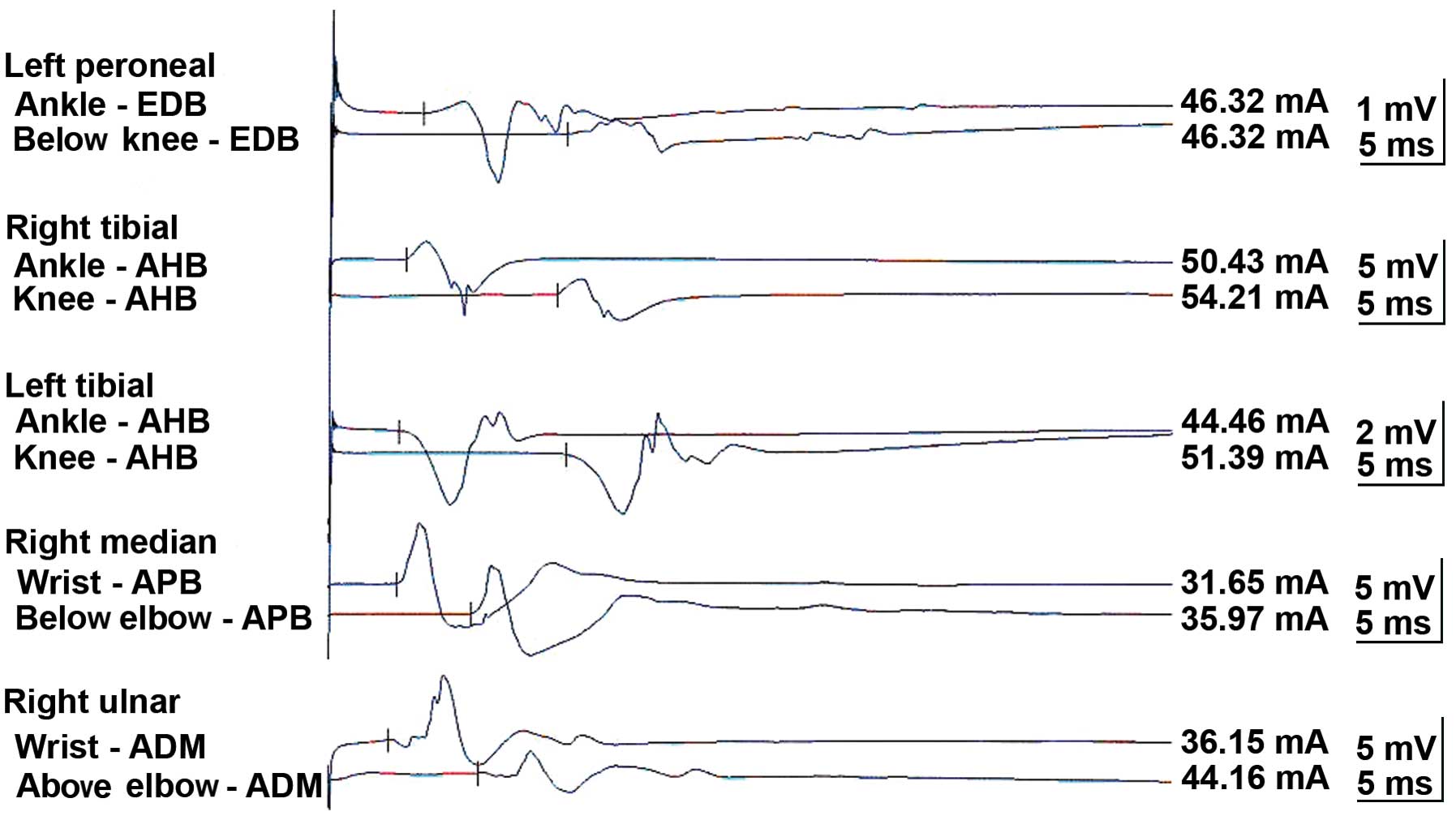
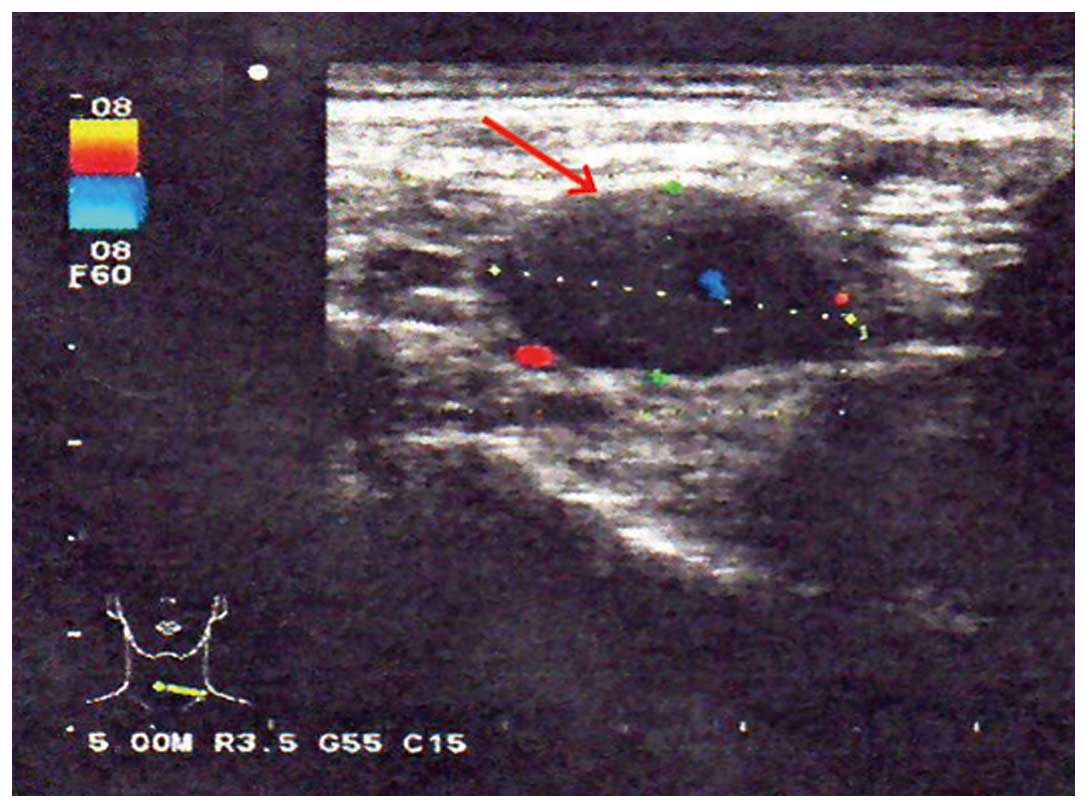
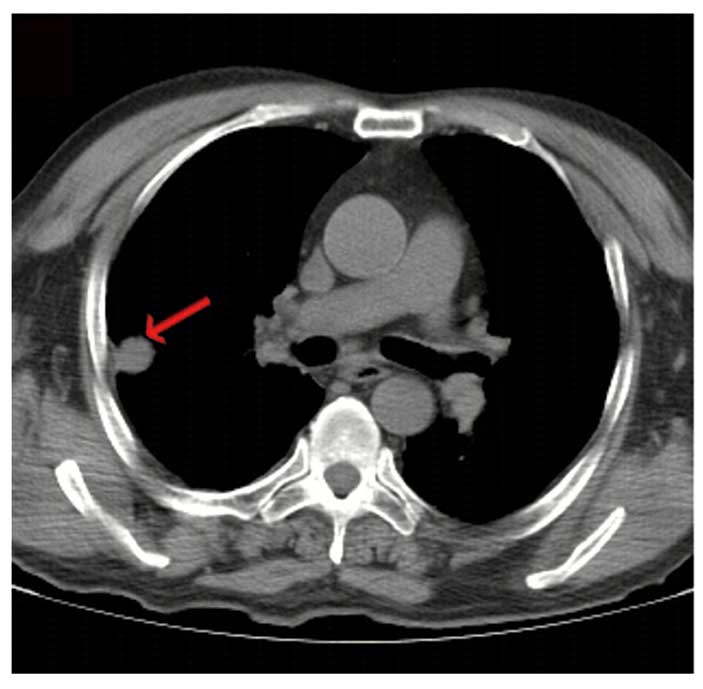
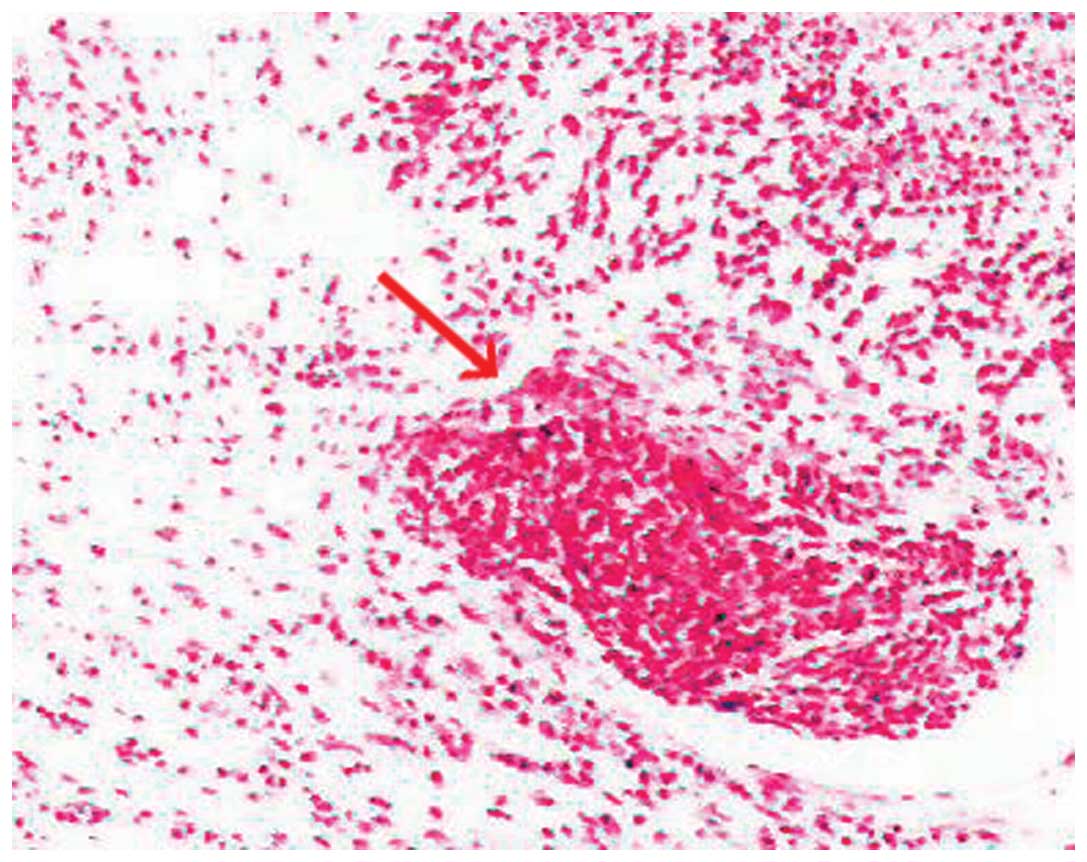
A neurological examination revealed proximal muscle weakness and absence of deep tendon reflexes. The cranial nerve, cerebellar and sensory functions were all normal. The laboratory tests revealed hyponatremia and hypochloremia. The electromyogram suggested neurogenic damage (Bilateral abductor muscle and peroneus longus, potential loss of the median nerve, the common peroneal nerve, and mild slowing of the motor conduction velocity of the tibial nerve). A repetitive nerve stimulation test performed on the right median nerve revealed a decremental response to the electrical stimulation. An experiment with neostigmine supported the presence of postsynaptic membrane lesions. Repeated nerve stimulation of 7 Hz lead to an increased response, whereas repeated nerve stimulation of 15 Hz was associated with decreased response (Fig. 1). The findings of magnetic resonance imaging scans of the brain and lumbar vertebra were normal. The preliminary diagnosis of the patient's condition was MG. However, treatment with hypertonic saline and fluid restriction, as well as low-dose corticosteroid therapy for MG, did not improve the symptoms. After referring to several studies in the literature (6–8), LEMS was taken into consideration. The levels of tumor markers, including carcinoembryonic antigen and neuron-specific enolase, were found to be abnormal. An ultrasound of the superficial lymph nodes identified an enlarged lymph node in the right cervical region, sized 1.5×0.9 cm (Fig. 2). Chest computed tomography (CT) images revealed a 1.6-cm mass in the superior lobe of the right lung, associated with a small amount of pleural effusion (Fig. 3). A right cervical lymph node biopsy was conducted; on pathological immunohistochemical examination, the lesion was found to be positive for epithelial membrane antigen (+), CD56 (+), thyroid transcription factor-1 (+), creatine phosphokinase (+) and Ki67 (+++) and negative for synaptophysin and leukocyte common antigen. Combined with the findings of the histopathological analysis (hematoxylin and eosin staining; Fig. 4), the diagnosis was eventually confirmed as SCLC combined with LEMS.

Figure 1.

Repetitive nerve stimulation test. EDB, extensor digitorum brevis; AHB, abductor hallucis brevis; APB, abductor pollicis brevis; ADM, abductor digiti minimi.

Figure 2.

Ultrasound of the right cervical lymph nodes (arrow).

Figure 3.

Computed tomography (CT) images. The initial chest CT revealed a mass of ~1.6 cm located in the right lung (arrow).

Figure 4.

Histopathological examination of the cervical lymph node biopsy specimen, confirming the diagnosis of small-cell lung cancer (arrow) (hematoxylin and eosin staining, magnification x100).

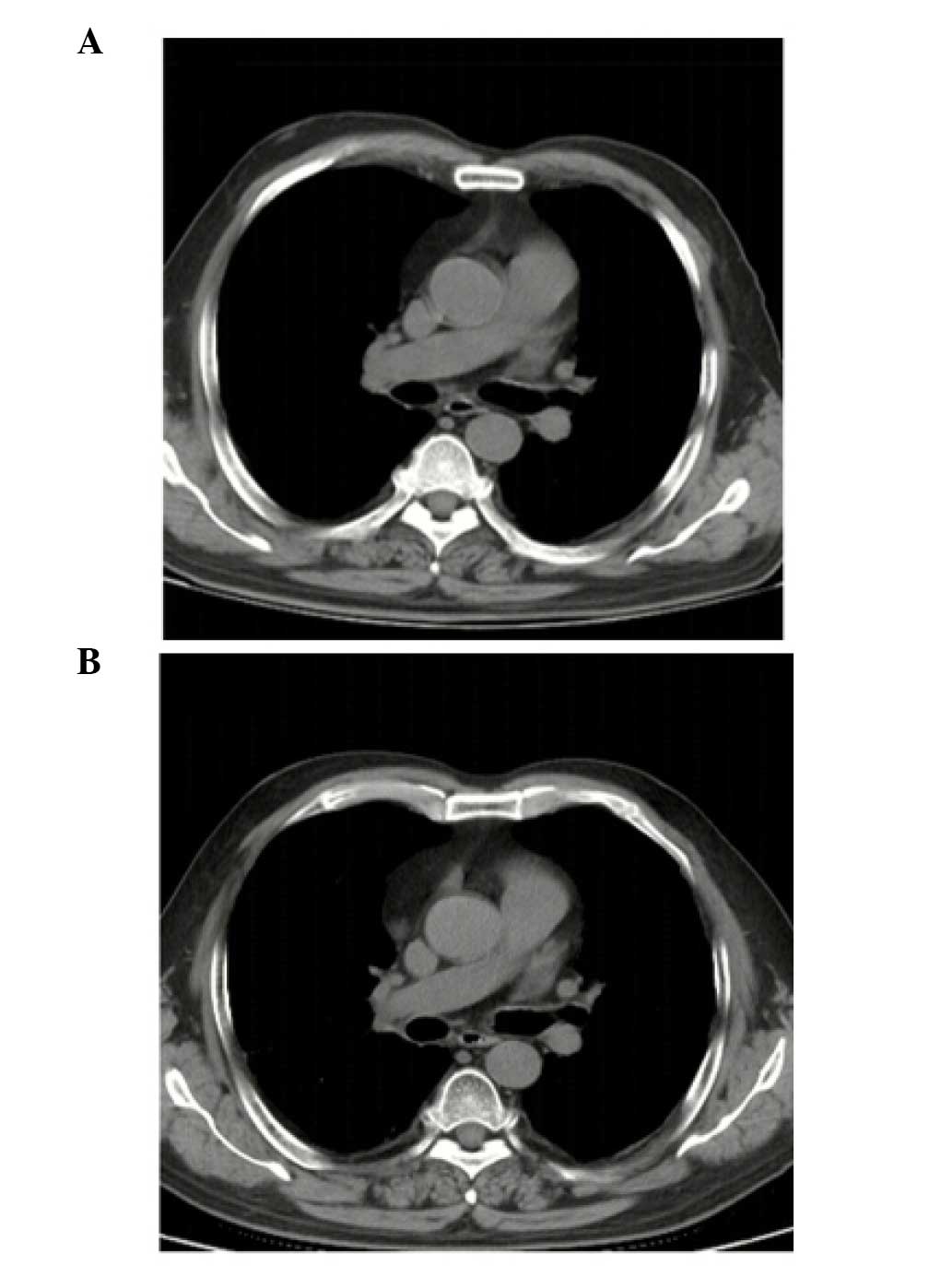
In accordance with the National Comprehensive Cancer Network guidelines, the patient was administered etoposide and cisplatin (EP) chemotherapy. After two cycles of EP, the patient exhibited a noticeable improvement in muscular strength (Fig. 5A), was able to walk without assistance, and his ability to live independently was restored. After six cycles of chemotherapy, the primary malignancy disappeared (Fig. 5B) and the sodium and chloride levels returned to normal. The response was evaluated as complete, according to the Response Evaluation Criteria in Solid Tumors 1.0. The patient is currently followed up and remains recurrence- and metastasis-free.

Figure 5.

Computed tomography (CT) images. Chest CT images following (A) two and (B) six cycles of rescue chemotherapy.

Discussion

In the present case, the main symptom of the patient was the progressive weakness of the limbs, particularly of the proximal muscles. No evident aggravating factors were associated with the onset of the weakness. Thus, when muscle weakness is present, LEMS should be taken into consideration.

Whether the syndrome of inappropriate antidiuretic hormone secretion (SIADH) existed in the present case remains unknown. Since SCLC also causes SIADH (9) and the laboratory tests revealed the presence of hyponatremia and hypochloremia, the muscle weakness may have also been associated with SIADH, as well as LEMS. However, laboratory evidence is required to determine whether the symptoms should be attributed to SIADH rather than LEMS.

The median survival of SCLC patients is 7–8 months. Although the efficiency of first-line chemotherapy is 60%, nearly all the patients recur within 1 year (10). Our patient remains alive for 3 years, without evidence of recurrence or metastasis. Thus, in patients with LEMS, the presence of a paraneoplastic syndrome should be considered. LEMS may be a favorable factor for the prognosis of SCLC (11,12). VGCCs are usually blocked in patients with LEMS. Antibodies against P/Q type VGCCs inhibit acetylcholine release from the motor nerve terminals, resulting in muscle weakness (13). Anti-VGCC antibodies may play a role in controlling tumor growth, or alternatively, SCLC may cause LEMS to develop slowly (11). However, these possible explanations require further confirmation by a large clinical sample.

In conclusion, a diagnosis of LEMS may lead to the early detection of SCLC, as the clinical symptoms of LEMS usually precede cancer detection (14). Although SCLC is a highly malignant disease with poor prognosis (15), early detection and treatment through diagnosing a paraneoplastic syndrome may significantly improve patient survival.

Acknowledgements

This study was funded by a grant from the National Research Key Project of the Twelfth Five-Year Plan of P.R. China (no. 2012ZX09303016-002).

References

1 

Kida E, Barcikowska M, Michalska T, et al: Peripheral nervous system alterations in small cell lung cancer. Clinico-pathological study. Neuropatol Pol. 30:43–56. 1992.PubMed/NCBI

2 

Sanders DB and Juel VC: The Lambert-Eaton myasthenic syndrome. Handb Clin Neurol. 91:273–283. 2008. View Article : Google Scholar : PubMed/NCBI

3 

Lee JH, Shin HY, Kim SM and Sunwoo IN: A case of Lambert-Eaton myasthenic syndrome with small-cell lung cancer and transient increase in anti-acetylcholine-receptor-binding antibody titer. J Clin Neurol. 8:305–307. 2012. View Article : Google Scholar : PubMed/NCBI

4 

Struthers CS: Lambert-Eaton myasthenic syndrome in small cell lung cancer: nursing implications. Oncol Nurs Forum. 21:677–683; quiz 684–685. 1994.PubMed/NCBI

5 

Vincent A, Clover L, Buckley C, et al: Evidence of underdiagnosis of myasthenia gravis in older people. J Neurol Neurosurg Psychiatry. 74:1105–1108. 2003. View Article : Google Scholar : PubMed/NCBI

6 

Sabater L, Höftberger R, Boronat A, Saiz A, Dalmau J and Graus F: Antibody repertoire in paraneoplastic cerebellar degeneration and small cell lung cancer. PLoS One. 8:e604382013. View Article : Google Scholar : PubMed/NCBI

7 

Portaro S, Parisi MD, Polizzi A, Ruggieri M, Andreetta F, Bernasconi P, Toscano A and Rodolico C: Long-term follow-up in infantile-onset lambert-eaton myasthenic syndrome. J Child Neurol. 29:58–61. 2014. View Article : Google Scholar : PubMed/NCBI

8 

Arai H, Inui K, Hashimoto K, et al: Lung adenocarcinoma with Lambert-Eaton myasthenic syndrome indicated by voltage-gated calcium channel: A case report. J Med Case Rep. 6:2812012. View Article : Google Scholar : PubMed/NCBI

9 

Fernandez-Torron R, Arcocha J, López-Picazo JM, et al: Isolated dysphagia due to paraneoplastic myasthenic syndrome with anti-P/Q-type voltage-gated calcium-channel and anti-acetylcholine receptor antibodies. Neuromuscul Disord. 21:126–128. 2011. View Article : Google Scholar : PubMed/NCBI

10 

Kuo YH, Lin ZZ, Yang YY, et al: Survival of patients with small cell lung carcinoma in Taiwan. Oncology. 82:19–24. 2012. View Article : Google Scholar : PubMed/NCBI

11 

Ray S, Sonthalia N, Kundu S, et al: Lambert-Eaton myasthenic syndrome and solitary cerebellar metastasis in a patient with occult small-cell lung cancer: a rare experience. BMJ Case Rep 2012:2012.

12 

Titulaer MJ, Wirtz PW, Willems LN, et al: Screening for small-cell lung cancer: a follow-up study of patients with Lambert-Eaton myasthenic syndrome. J Clin Oncol. 26:4276–4281. 2008. View Article : Google Scholar : PubMed/NCBI

13 

Kim YI and Neher E: IgG from patients with Lambert-Eaton syndrome blocks voltage-dependent calcium channels. Science. 239:405–408. 1988. View Article : Google Scholar : PubMed/NCBI

14 

Nixdorf DR, Peters E and Lung KE: Clinical presentation and differential diagnosis of nasolabial cyst. J Can Dent Assoc. 69:146–149. 2003.PubMed/NCBI

15 

Siegel R, Ward E, Brawley O and Jemal A: Cancer statistics, 2011: the impact of eliminating socioeconomic and racial disparities on premature cancer deaths. CA Cancer J Clin. 61:212–236. 2011. View Article : Google Scholar : PubMed/NCBI

Related Articles

  • Abstract
  • View
  • Download
  • Twitter
Copy and paste a formatted citation
Spandidos Publications style
Zhang RR, Han T, Guo F, Liu ZZ, Han YL, Chen WC, Liu YY and Xie XD: Lambert‑Eaton myasthenic syndrome in a patient with small‑cell lung cancer: A case report. Oncol Lett 10: 1339-1342, 2015.
APA
Zhang, R., Han, T., Guo, F., Liu, Z., Han, Y., Chen, W. ... Xie, X. (2015). Lambert‑Eaton myasthenic syndrome in a patient with small‑cell lung cancer: A case report. Oncology Letters, 10, 1339-1342. https://doi.org/10.3892/ol.2015.3473
MLA
Zhang, R., Han, T., Guo, F., Liu, Z., Han, Y., Chen, W., Liu, Y., Xie, X."Lambert‑Eaton myasthenic syndrome in a patient with small‑cell lung cancer: A case report". Oncology Letters 10.3 (2015): 1339-1342.
Chicago
Zhang, R., Han, T., Guo, F., Liu, Z., Han, Y., Chen, W., Liu, Y., Xie, X."Lambert‑Eaton myasthenic syndrome in a patient with small‑cell lung cancer: A case report". Oncology Letters 10, no. 3 (2015): 1339-1342. https://doi.org/10.3892/ol.2015.3473
Copy and paste a formatted citation
x
Spandidos Publications style
Zhang RR, Han T, Guo F, Liu ZZ, Han YL, Chen WC, Liu YY and Xie XD: Lambert‑Eaton myasthenic syndrome in a patient with small‑cell lung cancer: A case report. Oncol Lett 10: 1339-1342, 2015.
APA
Zhang, R., Han, T., Guo, F., Liu, Z., Han, Y., Chen, W. ... Xie, X. (2015). Lambert‑Eaton myasthenic syndrome in a patient with small‑cell lung cancer: A case report. Oncology Letters, 10, 1339-1342. https://doi.org/10.3892/ol.2015.3473
MLA
Zhang, R., Han, T., Guo, F., Liu, Z., Han, Y., Chen, W., Liu, Y., Xie, X."Lambert‑Eaton myasthenic syndrome in a patient with small‑cell lung cancer: A case report". Oncology Letters 10.3 (2015): 1339-1342.
Chicago
Zhang, R., Han, T., Guo, F., Liu, Z., Han, Y., Chen, W., Liu, Y., Xie, X."Lambert‑Eaton myasthenic syndrome in a patient with small‑cell lung cancer: A case report". Oncology Letters 10, no. 3 (2015): 1339-1342. https://doi.org/10.3892/ol.2015.3473
Follow us
  • Twitter
  • LinkedIn
  • Facebook
About
  • Spandidos Publications
  • Careers
  • Cookie Policy
  • Privacy Policy
How can we help?
  • Help
  • Live Chat
  • Contact
  • Email to our Support Team