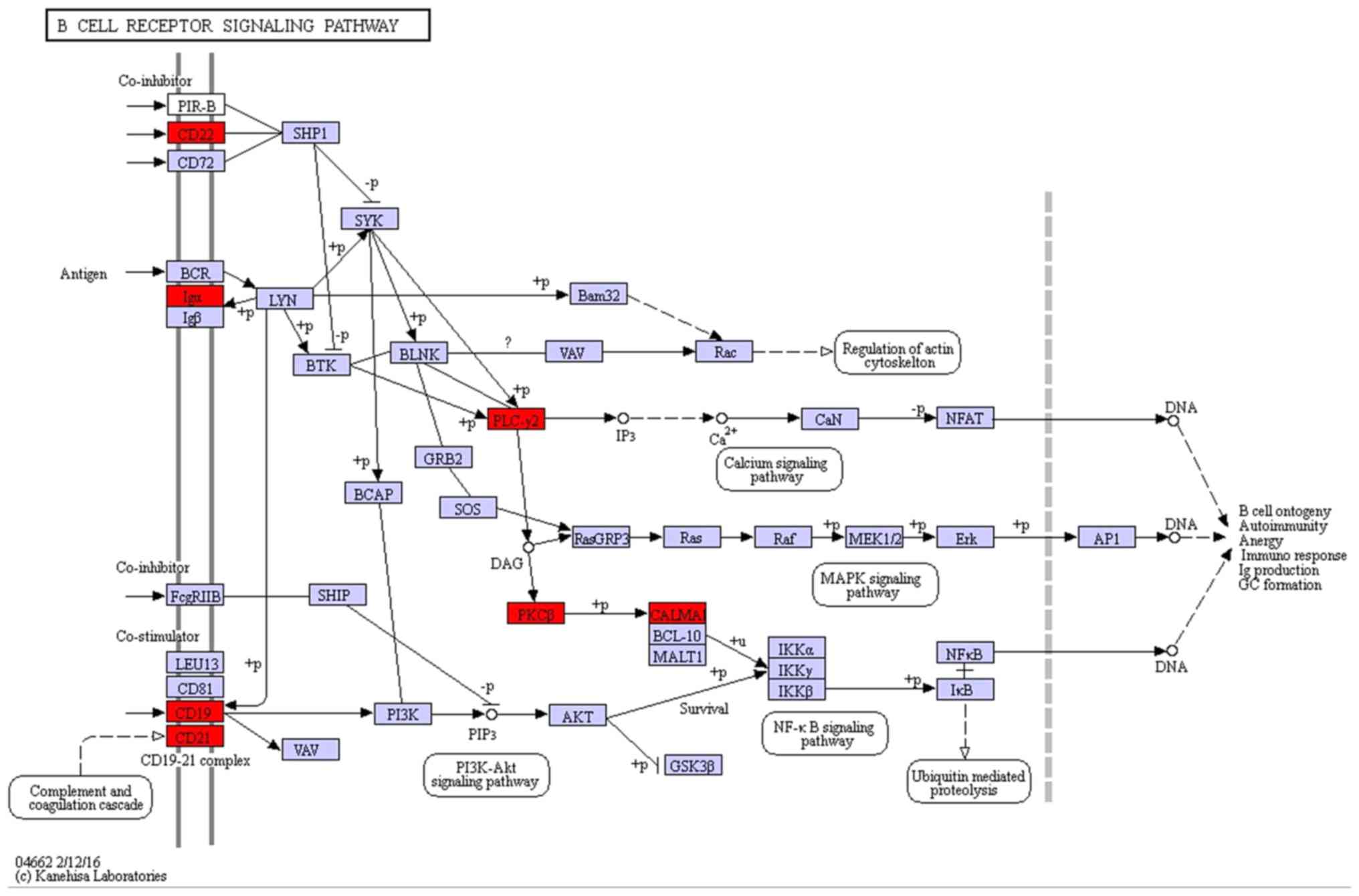
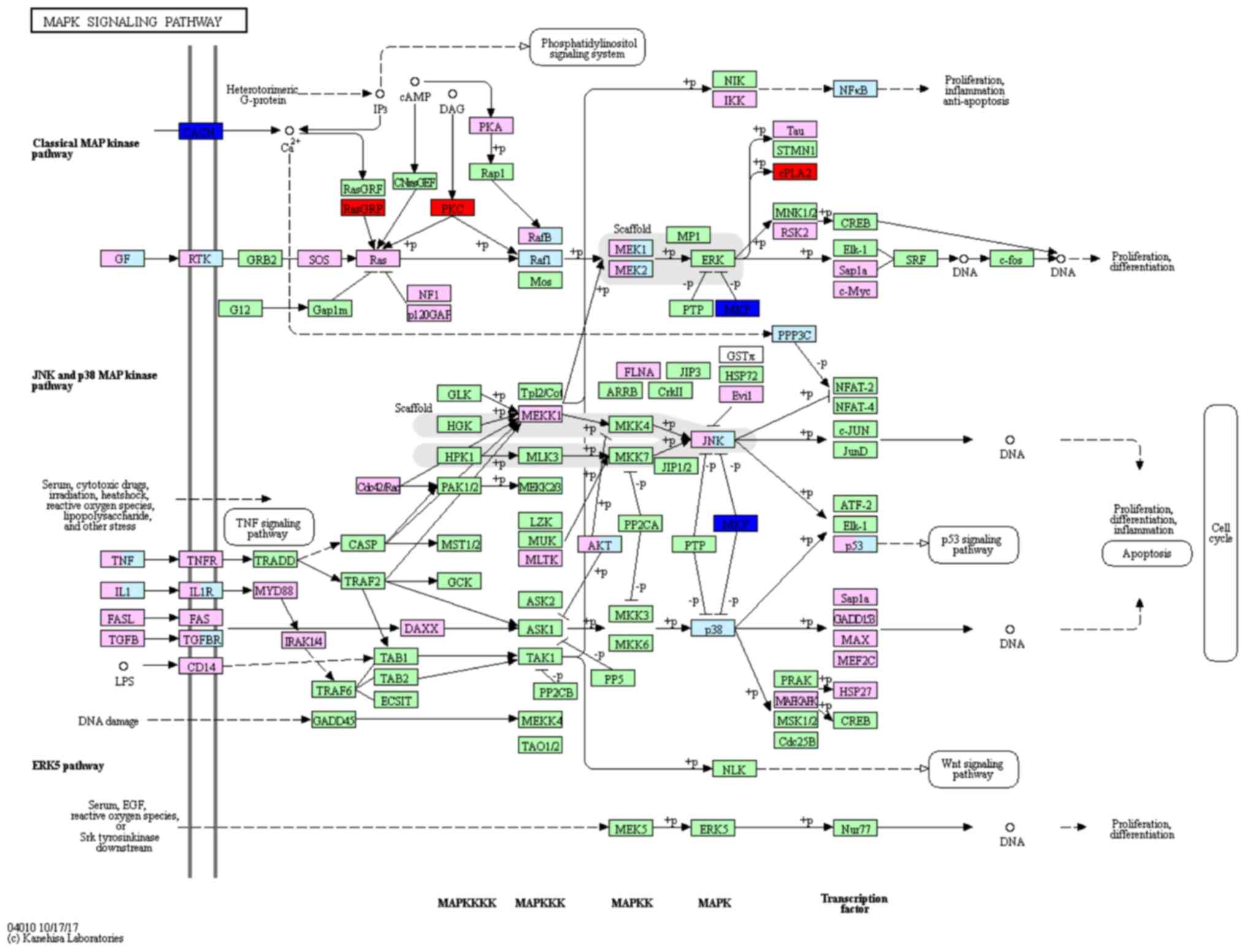
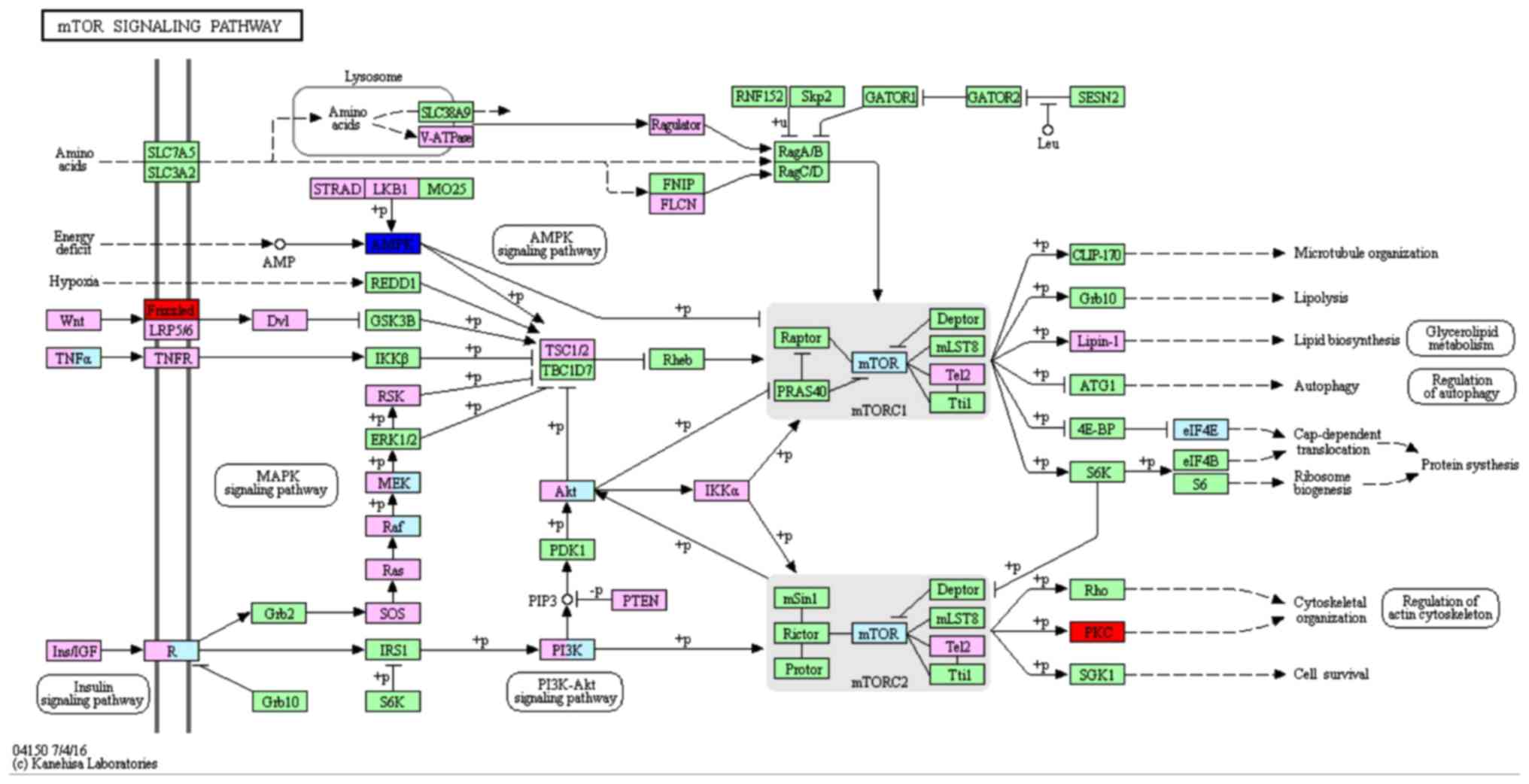
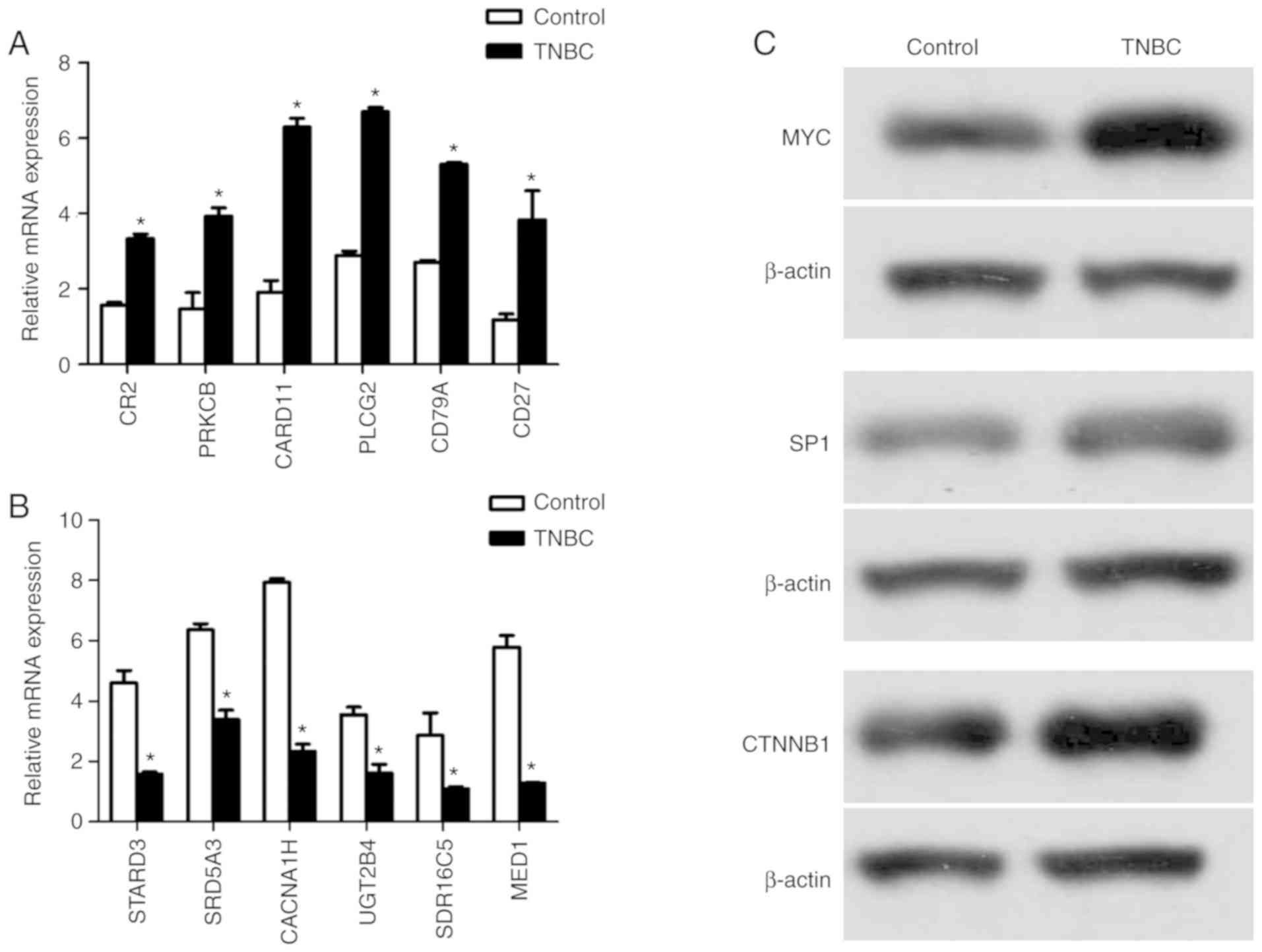
|
1
|
Chu J, Bae H, Seo Y, Cho SY, Kim SH and
Cho EY: The prognostic impact of synchronous ipsilateral multiple
breast cancer: Survival Outcomes according to the Eighth American
Joint Committee on cancer staging and molecular subtype. J Pathol
Transl Med. 52:396–403. 2018. View Article : Google Scholar : PubMed/NCBI
|
|
2
|
Perou CM, Sørlie T, Eisen MB, van de Rijn
M, Jeffrey SS, Rees CA, Pollack JR, Ross DT, Johnsen H, Akslen LA,
et al: Molecular portraits of human breast tumours. Nature.
406:747–752. 2000. View
Article : Google Scholar : PubMed/NCBI
|
|
3
|
Zubeda S, Kaipa PR, Shaik NA, Mohiuddin
MK, Vaidya S, Pavani B, Srinivasulu M, Latha MM and Hasan Q:
Her-2/neu status: A neglected marker of prognostication and
management of patients with breast cancer in India. Asian Pac J
Cancer Prev. 14:2231–2235. 2013. View Article : Google Scholar : PubMed/NCBI
|
|
4
|
Bauer KR, Brown M, Cress RD, Parise CA and
Caggiano V: Descriptive analysis of estrogen receptor
(ER)-negative, progesterone receptor (PR)-negative, and
HER2-negative invasive breast cancer, the so-called triple-negative
phenotype: A population-based study from the California cancer
Registry. Cancer. 109:1721–1728. 2010. View Article : Google Scholar
|
|
5
|
Haque R, Ahmed SA, Inzhakova G, Shi J,
Avila C, Polikoff J, Bernstein L, Enger SM and Press MF: Impact of
breast cancer subtypes and treatment on survival: An analysis
spanning two decades. Cancer Epidemiol Biomarkers Prev.
21:1848–1855. 2012. View Article : Google Scholar : PubMed/NCBI
|
|
6
|
Carey LA, Perou CM, Livasy CA, Dressler
LG, Cowan D, Conway K, Karaca G, Troester MA, Tse CK, Edmiston S,
et al: Race, breast cancer subtypes, and survival in the Carolina
Breast Cancer Study. JAMA. 295:2492–2502. 2006. View Article : Google Scholar : PubMed/NCBI
|
|
7
|
Bosch A, Eroles P, Zaragoza R, Viña JR and
Lluch A: Triple-negative breast cancer: Molecular features,
pathogenesis, treatment and current lines of research. Cancer Treat
Rev. 36:206–215. 2010. View Article : Google Scholar : PubMed/NCBI
|
|
8
|
Stratton MR, Campbell PJ and Futreal PA:
The cancer genome. Nature. 458:719–724. 2009. View Article : Google Scholar : PubMed/NCBI
|
|
9
|
Lanza G, Ferracin M, Gafà R, Veronese A,
Spizzo R, Pichiorri F, Liu CG, Calin GA, Croce CM and Negrini M:
mRNA/microRNA gene expression profile in microsatellite unstable
colorectal cancer. Mol Cancer. 6:542007. View Article : Google Scholar : PubMed/NCBI
|
|
10
|
Jones S, Zhang X, Parsons DW, Lin JC,
Leary RJ, Angenendt P, Mankoo P, Carter H, Kamiyama H, Jimeno A, et
al: Core signaling pathways in human pancreatic cancers revealed by
global genomic analyses. Science. 321:1801–1806. 2008. View Article : Google Scholar : PubMed/NCBI
|
|
11
|
Lustig B and Behrens J: The Wnt signaling
pathway and its role in tumor development. J Cancer Res Clin Oncol.
129:199–221. 2003.PubMed/NCBI
|
|
12
|
Cancer Genome Atlas Network: Comprehensive
molecular portraits of human breast tumours. Nature. 490:61–70.
2012. View Article : Google Scholar : PubMed/NCBI
|
|
13
|
Wang X and Sommer RJ: Antagonism of
LIN-17/Frizzled and LIN-18/Ryk in nematode vulva induction reveals
evolutionary alterations in core developmental pathways. PLoS Biol.
9:e10011102011. View Article : Google Scholar : PubMed/NCBI
|
|
14
|
Williams CB, Soloff AC, Ethier S and Yeh
ES: Perspectives on epidermal growth factor receptor regulation in
triple-negative breast cancer: Ligand-mediated mechanisms of
receptor regulation and potential for clinical targetin. Adv Cancer
Res. 127:253–281. 2015. View Article : Google Scholar : PubMed/NCBI
|
|
15
|
Tao JJ, Castel P, Radosevic-Robin N,
Elkabets M, Auricchio N, Aceto N, Weitsman G, Barber P, Vojnovic B,
Ellis H, et al: Antagonism of EGFR and HER3 enhances the response
to inhibitors of the PI3K-Akt pathway in triple-negative breast
cancer. Sci Signal. 7:ra292014. View Article : Google Scholar : PubMed/NCBI
|
|
16
|
Duncan JS, Whittle MC, Nakamura K, Abell
AN, Midland AA, Zawistowski JS, Johnson NL, Granger DA, Jordan NV,
Darr DB, et al: Dynamic reprogramming of the kinome in response to
targeted MEK inhibition in triple-negative breast cancer. Cell.
149:307–321. 2012. View Article : Google Scholar : PubMed/NCBI
|
|
17
|
Lee J, Galloway R, Grandjean G, Jacob J,
Humphries J, Bartholomeusz C, Goodstal S, Lim B, Bartholomeusz G,
Ueno NT and Rao A: Comprehensive two- and three-dimensional RNAi
screening identifies PI3K inhibition as a complement to MEK
inhibitor AS703026 for combination treatment of triple-negative
breast cancer. J Cancer. 6:1306–1319. 2015. View Article : Google Scholar : PubMed/NCBI
|
|
18
|
Kim S, Lee J, Jeon M, Lee JE and Nam SJ:
MEK-dependent IL-8 induction regulates the invasiveness of
triple-negative breast cancer cells. Tumour Biol. 37:4991–4999.
2016. View Article : Google Scholar : PubMed/NCBI
|
|
19
|
Aksamitiene E, Kiyatkin A and Kholodenko
BN: Cross-talk between mitogenicRas/MAPK and survival PI3K/Akt
pathways: A fine balance. Biochem Soc Trans. 40:139–146. 2012.
View Article : Google Scholar : PubMed/NCBI
|
|
20
|
Fruman DA and Rommel C: PI3K and cancer:
Lessons, challenges and opportunities. Nat Rev Drug Discov.
13:140–156. 2014. View
Article : Google Scholar : PubMed/NCBI
|
|
21
|
Ganesan P, Moulder S, Lee JJ, Janku F,
Valero V, Zinner RG, Naing A, Fu S, Tsimberidou AM, Hong D, et al:
Triple-negative patients with breast cancer treated at MD Anderson
cancer center in phase I trials: Improved outcomes with combination
chemotherapy and targeted agents. Mol Cancer Ther. 13:3175–3184.
2014. View Article : Google Scholar : PubMed/NCBI
|
|
22
|
Juvekar A, Burga LN, Hu H, Lunsford EP,
Ibrahim YH, Balmañà J, Rajendran A, Papa A, Spencer K, Lyssiotis
CA, et al: Combining a PI3K inhibitor with a PARP inhibitor
provides an effective therapy for BRCA1-related breast cancer.
Cancer Discov. 2:1048–1063. 2012. View Article : Google Scholar : PubMed/NCBI
|
|
23
|
Murai J, Huang SN, Das BB, Renaud A, Zhang
Y, Doroshow JH, Ji J, Takeda S and Pommier Y: Trapping of PARP1 and
PARP2 by clinical PARP inhibitors. Cancer Res. 72:5588–5599. 2012.
View Article : Google Scholar : PubMed/NCBI
|
|
24
|
Paul A and Paul S: The breast cancer
susceptibility genes (BRCA) in breast and ovarian cancers. Front
Biosci (Landmark Ed). 19:605–618. 2014. View Article : Google Scholar : PubMed/NCBI
|
|
25
|
Tischkowitz MD and Foulkes WD: The basal
phenotype of BRCA1-related breast cancer: Past, present and future.
Cell Cycle. 5:963–967. 2006. View Article : Google Scholar : PubMed/NCBI
|
|
26
|
He BS, Pan YQ, Lin K, Ying HQ, Wang F,
Deng QW, Sun HL, Gao TY and Wang SK: Evaluation the susceptibility
of five polymorphisms in microRNA-binding sites to female breast
cancer risk in Chinese population. Gene. 573:160–165. 2015.
View Article : Google Scholar : PubMed/NCBI
|
|
27
|
Zhang L, Fang C, Xu X, Li A, Cai Q and
Long X: Androgen receptor, EGFR, and BRCA1 as biomarkers in
triple-negative breast cancer: A meta-analysis. Biomed Res Int.
2015:3574852015.PubMed/NCBI
|
|
28
|
Sankpal UT, Goodison S, Abdelrahim M and
Basha R: Targeting Sp1 transcription factors in prostate cancer
therapy. Med Chem. 7:518–525. 2011. View Article : Google Scholar : PubMed/NCBI
|
|
29
|
Tomlins SA, Rhodes DR, Perner S,
Dhanasekaran SM, Mehra R, Sun XW, Varambally S, Cao X, Tchinda J,
Kuefer R, et al: Recurrent fusion of TMPRSS2 and ETS transcription
factor genes in prostate cancer. Science. 310:644–648. 2005.
View Article : Google Scholar : PubMed/NCBI
|
|
30
|
Yang Y, Goldstein BG, Chao HH and Katz JP:
KLF4 and KLF5 regulate proliferation, Apoptosis and invasion in
esophageal cancer cells. Cancer Biol Ther. 4:1216–1221. 2005.
View Article : Google Scholar : PubMed/NCBI
|
|
31
|
Yang L, Wu X, Wang Y, Zhang K, Wu J, Yuan
YC, Deng X, Chen L, Kim CC, Lau S, et al: FZD7 has a critical role
in cell proliferation in triple negative breast cancer. Oncogene.
30:4437–4446. 2011. View Article : Google Scholar : PubMed/NCBI
|
|
32
|
Tusher VG, Tibshirani R and Chu G:
Significance analysis of microarrays applied to the ionizing
radiation response. Proc Natl Acad Sci USA. 98:5116–5121. 2001.
View Article : Google Scholar : PubMed/NCBI
|
|
33
|
Huang da W, Sherman BT and Lempicki RA:
Systematic and integrative analysis of large gene lists using DAVID
bioinformatics resources. Nat Protoc. 4:44–57. 2008. View Article : Google Scholar
|
|
34
|
Essaghir A, Toffalini F, Knoops L, Kallin
A, van Helden J and Demoulin JB: Transcription factor regulation
can be accurately predicted from the presence of target gene
signatures in microarray gene expression data. Nucleic Acids Res.
38:e1202010. View Article : Google Scholar : PubMed/NCBI
|
|
35
|
von Mering C, Huynen M, Jaeggi D, Schmidt
S, Bork P and Snel B: STRING: A database of predicted functional
associations between proteins. Nucleic Acids Res. 31:258–261. 2003.
View Article : Google Scholar : PubMed/NCBI
|
|
36
|
Siegel RL, Miller KD and Jemal A: Cancer
statistics, 2016. CA Cancer J Clin. 66:7–30. 2016. View Article : Google Scholar : PubMed/NCBI
|
|
37
|
Fan L, Strasser-Weippl K, Li JJ, St Louis
J, Finkelstein DM, Yu KD, Chen WQ, Shao ZM and Goss PE: Breast
cancer in China. Lancet Oncol. 15:e279–e289. 2014. View Article : Google Scholar : PubMed/NCBI
|
|
38
|
Fearon DT and Carter RH: The
CD19/CR2/TAPA-1 complex of B lymphocytes: Linking natural to
acquired immunity. Annu Rev Immunol. 13:127–149. 1995. View Article : Google Scholar : PubMed/NCBI
|
|
39
|
Donius LR and Weis JH: Quantification of
complement receptor 2 calcium signaling enhancement using flow
cytometry. Methods Mol Biol. 1100:311–317. 2014. View Article : Google Scholar : PubMed/NCBI
|
|
40
|
Kataoka K, Iwanaga M, Yasunaga JI, Nagata
Y, Kitanaka A, Kameda T, Yoshimitsu M, Shiraishi Y, Sato-Otsubo A,
Sanada M, et al: Prognostic relevance of integrated genetic
profiling in adult T-cell leukemia/lymphoma. Blood. 131:215–225.
2018. View Article : Google Scholar : PubMed/NCBI
|
|
41
|
Singh S, Arcaroli J, Thompson DC,
Messersmith W and Vasiliou V: Acetaldehyde and
retinaldehyde-metabolizing enzymes in colon and pancreatic cancers.
Adv Exp Med Biol. 815:281–294. 2015. View Article : Google Scholar : PubMed/NCBI
|
|
42
|
Uemura M, Tamura K, Chung S, Honma S,
Okuyama A, Nakamura Y and Nakagawa H: Novel 5 alpha-steroid
reductase (SRD5A3, type-3) is overexpressed in
hormone-refractoryprostate cancer. Cancer Sci. 99:81–86.
2008.PubMed/NCBI
|
|
43
|
Vogelstein B and Kinzler KW: Cancer genes
and the pathways they control. Nat Med. 10:789–799. 2004.
View Article : Google Scholar : PubMed/NCBI
|
|
44
|
Chung HJ, Chi HS, Cho YU, Lee EH, Jang S,
Park CJ and Seo EJ: Prognostic effect of cytoplasmic CD79a
expression in acute myeloid leukemia with t(8;21). Korean J Lab
Med. 27:388–393. 2007.(In Korean). View Article : Google Scholar : PubMed/NCBI
|
|
45
|
Berahovich R, Xu S, Zhou H, Harto H, Xu Q,
Garcia A, Liu F, Golubovskaya VM and Wu L: FLAG-tagged
CD19-specific CAR-T cells eliminate CD19-bearing solid tumor cells
in vitro and in vivo. Front Biosci (Landmark Ed). 22:1644–1654.
2017. View Article : Google Scholar : PubMed/NCBI
|
|
46
|
Bednar KJ, Shanina E, Ballet R, Connors
EP, Duan S, Juan J, Arlian BM, Kulis MD, Butcher EC, Fung-Leung WP,
et al: Human CD22 inhibits murine B cell receptor activation in a
human CD22 transgenic mouse model. J Immunol. 199:3116–3128. 2017.
View Article : Google Scholar : PubMed/NCBI
|
|
47
|
Yang Y, Gao M, Lin Z, Chen L, Jin Y, Zhu
G, Wang Y and Jin T: DEK promoted EMT and angiogenesis through
regulating PI3K/AKT/mTOR pathway in triple-negative breast cancer.
Oncotarget. 8:98708–98722. 2017.PubMed/NCBI
|
|
48
|
Szewczyk B, Pochwat B, Rafało A,
Palucha-Poniewiera A, Domin H and Nowak G: Activation of mTOR
dependent signaling pathway is a necessary mechanism of
antidepressant-like activity of zinc. Neuropharmacology.
99:517–526. 2015. View Article : Google Scholar : PubMed/NCBI
|
|
49
|
Wong VKW, Zeng W, Chen J, Yao XJ, Leung
ELH, Wang QQ, Chiu P, Ko BCB and Law BYK: Tetrandrine, an activator
of autophagy, induces autophagic cell death via PKC-α inhibition
and mTOR-dependent mechanisms. Front Pharmacol. 8:3512017.
View Article : Google Scholar : PubMed/NCBI
|
|
50
|
Darnell JE Jr: Transcription factors as
targets for cancer therapy. Nat Rev Cancer. 2:740–749. 2002.
View Article : Google Scholar : PubMed/NCBI
|
|
51
|
O'neill LA and Kaltschmidt C: NF-κB: A
crucial transcription factor for glial and neuronal cell function.
Trends Neurosci. 20:252–258. 1997. View Article : Google Scholar : PubMed/NCBI
|
|
52
|
Barnes PJ: Nuclear factor-kappa B. Int J
Biochem Cell Biol. 29:867–870. 1997. View Article : Google Scholar : PubMed/NCBI
|
|
53
|
Zhu X, Mao Z, Na Y, Guo Y, Wang X and Xin
D: Significance of pituitary tumor transforming gene 1 (PTTG1) in
prostate cancer. Anticancer Res. 26:1253–1259. 2006.PubMed/NCBI
|
|
54
|
Gorynia S, Bandeiras TM, Pinho FG, McVey
CE, Vonrhein C, Round A, Svergun DI, Donner P, Matias PM and
Carrondo MA: Structural and functional insights into a dodecameric
molecular machine-the RuvBL1/RuvBL2 complex. J Struct Biol.
176:279–291. 2011. View Article : Google Scholar : PubMed/NCBI
|
|
55
|
Bièche I, Laurendeau I, Tozlu S, Olivi M,
Vidaud D, Lidereau R and Vidaud M: Quantitation of MYC gene
expression in sporadic breast tumors with a real-time reverse
transcription-PCR assay. Cancer Res. 59:2759–2765. 1999.PubMed/NCBI
|
|
56
|
Le Floch N, Rivat C, De Wever O, Bruyneel
E, Mareel M, Dale T and Gespach C: The proinvasive activity of
Wnt-2 is mediated through a noncanonical Wnt pathway coupled to
GSK-3beta and c-Jun/AP-1 signaling. FASEB J. 19:144–146. 2005.
View Article : Google Scholar : PubMed/NCBI
|
|
57
|
Chang KY, Huang CT, Hsu TI, Hsu CC, Liu
JJ, Chuang CK, Hung JJ, Chang WC, Tsai KK and Chuang JY: Stress
stimuli induce cancer-stemness gene expression via Sp1 activation
leading to therapeutic resistance in glioblastoma. Biochem Biophys
Res Commun. 493:14–19. 2017. View Article : Google Scholar : PubMed/NCBI
|
|
58
|
Shibata T and Aburatani H: Exploration of
liver cancer genomes. Nat Rev Gastroenterol Hepatol. 11:340–349.
2014. View Article : Google Scholar : PubMed/NCBI
|
|
59
|
Lim E, Vaillant F, Wu D, Forrest NC, Pal
B, Hart AH, Asselin-Labat ML, Gyorki DE, Ward T, Partanen A, et al:
Aberrant luminal progenitors as the candidate target population for
basal tumor development in BRCA1 mutation carriers. Nat Med.
15:907–913. 2009. View Article : Google Scholar : PubMed/NCBI
|
|
60
|
Azariadis K, Kiagiadaki F, Pelekanou V,
Bempi V, Alexakis K, Kampa M, Tsapis A, Castanas E and Notas G:
Androgen triggers the pro-migratory CXCL12/CXCR4 axis in
AR-positive breast cancer cell lines: Underlying mechanism and
possible implications for the use of aromatase inhibitors in breast
cancer. Cell Physiol Biochem. 44:66–84. 2017. View Article : Google Scholar : PubMed/NCBI
|