Spandidos Publications Logo
  • About
    • About Spandidos
    • Aims and Scopes
    • Abstracting and Indexing
    • Editorial Policies
    • Reprints and Permissions
    • Job Opportunities
    • Terms and Conditions
    • Contact
  • Journals
    • All Journals
    • Oncology Letters
      • Oncology Letters
      • Information for Authors
      • Editorial Policies
      • Editorial Board
      • Aims and Scope
      • Abstracting and Indexing
      • Bibliographic Information
      • Archive
    • International Journal of Oncology
      • International Journal of Oncology
      • Information for Authors
      • Editorial Policies
      • Editorial Board
      • Aims and Scope
      • Abstracting and Indexing
      • Bibliographic Information
      • Archive
    • Molecular and Clinical Oncology
      • Molecular and Clinical Oncology
      • Information for Authors
      • Editorial Policies
      • Editorial Board
      • Aims and Scope
      • Abstracting and Indexing
      • Bibliographic Information
      • Archive
    • Experimental and Therapeutic Medicine
      • Experimental and Therapeutic Medicine
      • Information for Authors
      • Editorial Policies
      • Editorial Board
      • Aims and Scope
      • Abstracting and Indexing
      • Bibliographic Information
      • Archive
    • International Journal of Molecular Medicine
      • International Journal of Molecular Medicine
      • Information for Authors
      • Editorial Policies
      • Editorial Board
      • Aims and Scope
      • Abstracting and Indexing
      • Bibliographic Information
      • Archive
    • Biomedical Reports
      • Biomedical Reports
      • Information for Authors
      • Editorial Policies
      • Editorial Board
      • Aims and Scope
      • Abstracting and Indexing
      • Bibliographic Information
      • Archive
    • Oncology Reports
      • Oncology Reports
      • Information for Authors
      • Editorial Policies
      • Editorial Board
      • Aims and Scope
      • Abstracting and Indexing
      • Bibliographic Information
      • Archive
    • Molecular Medicine Reports
      • Molecular Medicine Reports
      • Information for Authors
      • Editorial Policies
      • Editorial Board
      • Aims and Scope
      • Abstracting and Indexing
      • Bibliographic Information
      • Archive
    • World Academy of Sciences Journal
      • World Academy of Sciences Journal
      • Information for Authors
      • Editorial Policies
      • Editorial Board
      • Aims and Scope
      • Abstracting and Indexing
      • Bibliographic Information
      • Archive
    • International Journal of Functional Nutrition
      • International Journal of Functional Nutrition
      • Information for Authors
      • Editorial Policies
      • Editorial Board
      • Aims and Scope
      • Abstracting and Indexing
      • Bibliographic Information
      • Archive
    • International Journal of Epigenetics
      • International Journal of Epigenetics
      • Information for Authors
      • Editorial Policies
      • Editorial Board
      • Aims and Scope
      • Abstracting and Indexing
      • Bibliographic Information
      • Archive
    • Medicine International
      • Medicine International
      • Information for Authors
      • Editorial Policies
      • Editorial Board
      • Aims and Scope
      • Abstracting and Indexing
      • Bibliographic Information
      • Archive
  • Articles
  • Information
    • Information for Authors
    • Information for Reviewers
    • Information for Librarians
    • Information for Advertisers
    • Conferences
  • Language Editing
Spandidos Publications Logo
  • About
    • About Spandidos
    • Aims and Scopes
    • Abstracting and Indexing
    • Editorial Policies
    • Reprints and Permissions
    • Job Opportunities
    • Terms and Conditions
    • Contact
  • Journals
    • All Journals
    • Biomedical Reports
      • Information for Authors
      • Editorial Policies
      • Editorial Board
      • Aims and Scope
      • Abstracting and Indexing
      • Bibliographic Information
      • Archive
    • Experimental and Therapeutic Medicine
      • Information for Authors
      • Editorial Policies
      • Editorial Board
      • Aims and Scope
      • Abstracting and Indexing
      • Bibliographic Information
      • Archive
    • International Journal of Epigenetics
      • Information for Authors
      • Editorial Policies
      • Editorial Board
      • Aims and Scope
      • Abstracting and Indexing
      • Bibliographic Information
      • Archive
    • International Journal of Functional Nutrition
      • Information for Authors
      • Editorial Policies
      • Editorial Board
      • Aims and Scope
      • Abstracting and Indexing
      • Bibliographic Information
      • Archive
    • International Journal of Molecular Medicine
      • Information for Authors
      • Editorial Policies
      • Editorial Board
      • Aims and Scope
      • Abstracting and Indexing
      • Bibliographic Information
      • Archive
    • International Journal of Oncology
      • Information for Authors
      • Editorial Policies
      • Editorial Board
      • Aims and Scope
      • Abstracting and Indexing
      • Bibliographic Information
      • Archive
    • Medicine International
      • Information for Authors
      • Editorial Policies
      • Editorial Board
      • Aims and Scope
      • Abstracting and Indexing
      • Bibliographic Information
      • Archive
    • Molecular and Clinical Oncology
      • Information for Authors
      • Editorial Policies
      • Editorial Board
      • Aims and Scope
      • Abstracting and Indexing
      • Bibliographic Information
      • Archive
    • Molecular Medicine Reports
      • Information for Authors
      • Editorial Policies
      • Editorial Board
      • Aims and Scope
      • Abstracting and Indexing
      • Bibliographic Information
      • Archive
    • Oncology Letters
      • Information for Authors
      • Editorial Policies
      • Editorial Board
      • Aims and Scope
      • Abstracting and Indexing
      • Bibliographic Information
      • Archive
    • Oncology Reports
      • Information for Authors
      • Editorial Policies
      • Editorial Board
      • Aims and Scope
      • Abstracting and Indexing
      • Bibliographic Information
      • Archive
    • World Academy of Sciences Journal
      • Information for Authors
      • Editorial Policies
      • Editorial Board
      • Aims and Scope
      • Abstracting and Indexing
      • Bibliographic Information
      • Archive
  • Articles
  • Information
    • For Authors
    • For Reviewers
    • For Librarians
    • For Advertisers
    • Conferences
  • Language Editing
Login Register Submit
  • This site uses cookies
  • You can change your cookie settings at any time by following the instructions in our Cookie Policy. To find out more, you may read our Privacy Policy.

    I agree
Search articles by DOI, keyword, author or affiliation
Search
Advanced Search
presentation
Oncology Letters
Join Editorial Board Propose a Special Issue
Print ISSN: 1792-1074 Online ISSN: 1792-1082
Journal Cover
June 2012 Volume 3 Issue 6

Full Size Image

Sign up for eToc alerts
Recommend to Library

Journals

International Journal of Molecular Medicine

International Journal of Molecular Medicine

International Journal of Molecular Medicine is an international journal devoted to molecular mechanisms of human disease.

International Journal of Oncology

International Journal of Oncology

International Journal of Oncology is an international journal devoted to oncology research and cancer treatment.

Molecular Medicine Reports

Molecular Medicine Reports

Covers molecular medicine topics such as pharmacology, pathology, genetics, neuroscience, infectious diseases, molecular cardiology, and molecular surgery.

Oncology Reports

Oncology Reports

Oncology Reports is an international journal devoted to fundamental and applied research in Oncology.

Experimental and Therapeutic Medicine

Experimental and Therapeutic Medicine

Experimental and Therapeutic Medicine is an international journal devoted to laboratory and clinical medicine.

Oncology Letters

Oncology Letters

Oncology Letters is an international journal devoted to Experimental and Clinical Oncology.

Biomedical Reports

Biomedical Reports

Explores a wide range of biological and medical fields, including pharmacology, genetics, microbiology, neuroscience, and molecular cardiology.

Molecular and Clinical Oncology

Molecular and Clinical Oncology

International journal addressing all aspects of oncology research, from tumorigenesis and oncogenes to chemotherapy and metastasis.

World Academy of Sciences Journal

World Academy of Sciences Journal

Multidisciplinary open-access journal spanning biochemistry, genetics, neuroscience, environmental health, and synthetic biology.

International Journal of Functional Nutrition

International Journal of Functional Nutrition

Open-access journal combining biochemistry, pharmacology, immunology, and genetics to advance health through functional nutrition.

International Journal of Epigenetics

International Journal of Epigenetics

Publishes open-access research on using epigenetics to advance understanding and treatment of human disease.

Medicine International

Medicine International

An International Open Access Journal Devoted to General Medicine.

Journal Cover
June 2012 Volume 3 Issue 6

Full Size Image

Sign up for eToc alerts
Recommend to Library

  • Article
  • Citations
    • Cite This Article
    • Download Citation
    • Create Citation Alert
    • Remove Citation Alert
    • Cited By
  • Similar Articles
    • Related Articles (in Spandidos Publications)
    • Similar Articles (Google Scholar)
    • Similar Articles (PubMed)
  • Download PDF
  • Download XML
  • View XML
Case Report

Successful rechallenge with reduced dose of erlotinib in a patient with lung adenocarcinoma who developed erlotinib‑associated leukocytoclastic vasculitis: A case report

  • Authors:
    • Bo-An Su
    • Wan-Lin Shen
    • Sheng-Tsung Chang
    • Li-Yia Feng
    • Chia-Jung Wu
    • Yin-Hsun Feng
  • View Affiliations / Copyright

    Affiliations: Division of Infection, Department of Internal Medicine, Chi-Mei Medical Center, Tainan 71004, Taiwan, R.O.C., Department of Pathology, Chi-Mei Medical Center, Liouying, Tainan 73657, Taiwan, R.O.C., Department of Pathology, Chi-Mei Medical Center, Yong Kang, Tainan 71004, Taiwan, R.O.C., National Kaohsiung University of Hospitality and Tourism, Xiaogang, Kaohsiung 81271, Taiwan, R.O.C., Department of Nursing, Chi-Mei Medical Center, Liouying, Tainan 73657, Taiwan, R.O.C., Division of Hematology and Oncology, Department of Internal Medicine, Chi-Mei Medical Center, Tainan 71004, Taiwan, R.O.C.
  • Pages: 1280-1282
    |
    Published online on: March 16, 2012
       https://doi.org/10.3892/ol.2012.647
  • Expand metrics +
Metrics: Total Views: 0 (Spandidos Publications: | PMC Statistics: )
Metrics: Total PDF Downloads: 0 (Spandidos Publications: | PMC Statistics: )
Cited By (CrossRef): 0 citations Loading Articles...

This article is mentioned in:


Abstract

The oral tyrosine kinase inhibitors of epidermal growth factor, erlotinib and gefitinib, are active in the treatment of non-small cell lung cancer (NSCLC). However, a number of skin manifestations have been found in patients receiving erlotinib therapy. Leukocytoclastic vasculitis is a rare side-effect of erlotinib therapy. However, whether or not erlotinib treatment should be continued when disseminated ulceration of leukocytoclastic vasculitis is encountered remains to be determined. In this study, we report a patient with NSCLC who remains responsive to erlotinib treatment following successful rechallenge with a reduced dose of erlonitib after presenting with severe degree of leukoclastic vasculitis.

Introduction

Lung cancer is the leading cause of cancer-related mortality in males and females. Advances in the knowledge of tumor biology and the mechanisms of oncogenesis have led to the selection of several molecular targets for lung cancer treatment. The epidermal growth factor receptor (EGFR) has received particular attention for lung cancer treatment. EGFR is a transmembrane receptor found on cells of epithelial origin, which is commonly expressed at a high level in a variety of solid tumors. It is involved in the control of cell proliferation, metastasis and angiogenesis (1). The therapeutic inhibition of EGFR with monoclonal antibodies to antagonize ligand-receptor binding or small-molecules to inhibit tyrosine kinase domain activation, is the main pharmacological strategy in clinical development for therapeutics. Erlotinib, an orally available inhibitor of EGFR tyrosine kinase, has been shown to improve survival in non-small cell lung cancer (NSCLC) patients following first- or second-line chemotherapy. However, various skin manifestations have been reported in patients with NSCLC who received erlotinib therapy. Skin reactions are the most common adverse events associated with erlotinib, and generally develop within 7–10 days of treatment initiation. Clinical manifestations include papulopustular rash, xerosis, paronychia and hair changes (2). Skin rash may spontaneously resolve and reappear, and is reversible following drug discontinuation. However, when it develops, the chronic side-effect is extremely distressing for patients. We report a patient with metastatic lung cancer, who was diagnosed with histologically confirmed cutaneous leukocytoclastic vasculitis during erlotinib treatment. After a short period of erlotinib withdrawal, leukocytoclastic vasculitis was not reproduced following successful restoration of a reduced dose of erlotinib.

Approval for the study was obtained from the Institutional Review Board of the Chi-Mei Medical Center, Tainan, Taiwan. Patient consent was obtained.

Case report

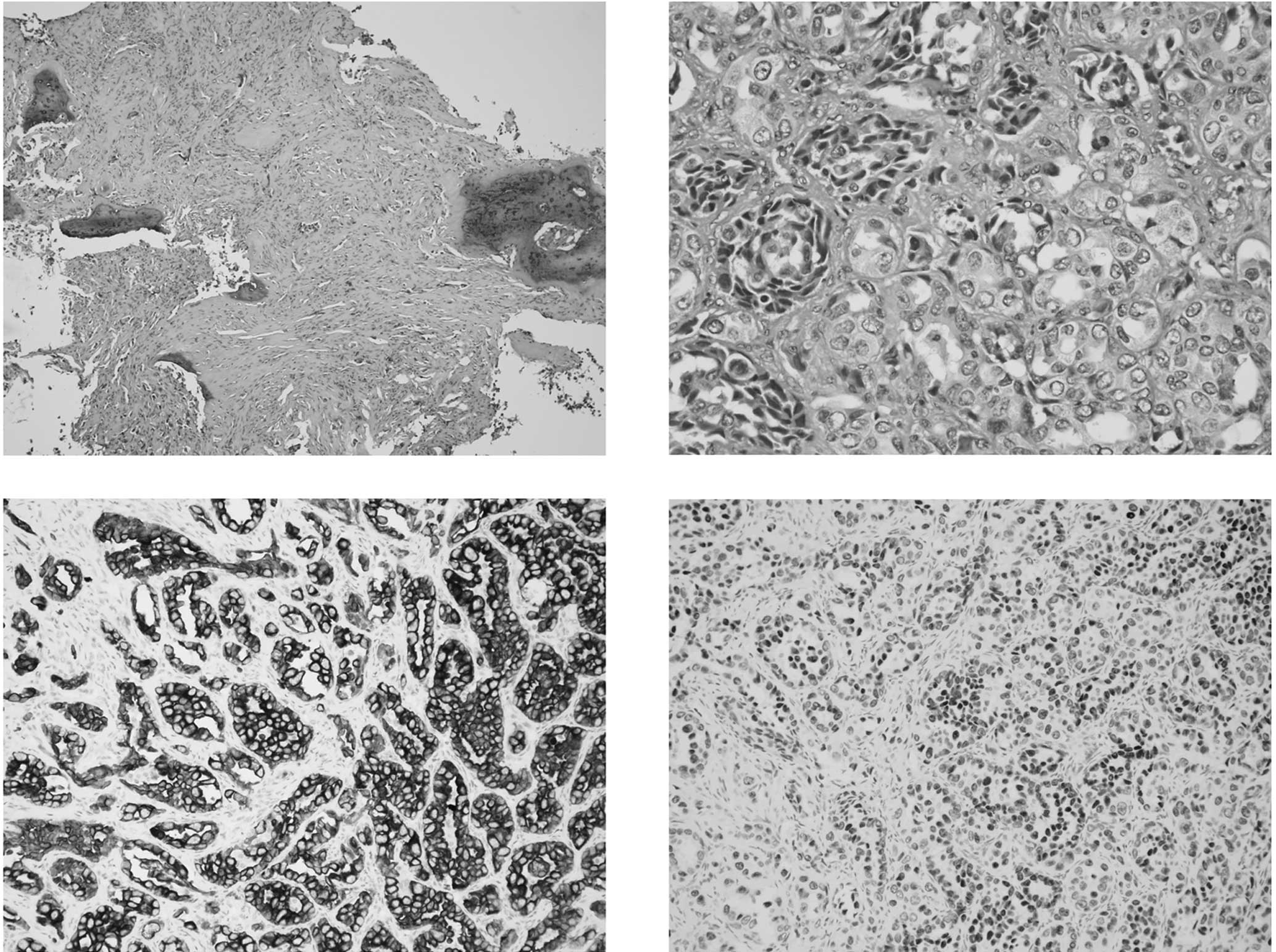
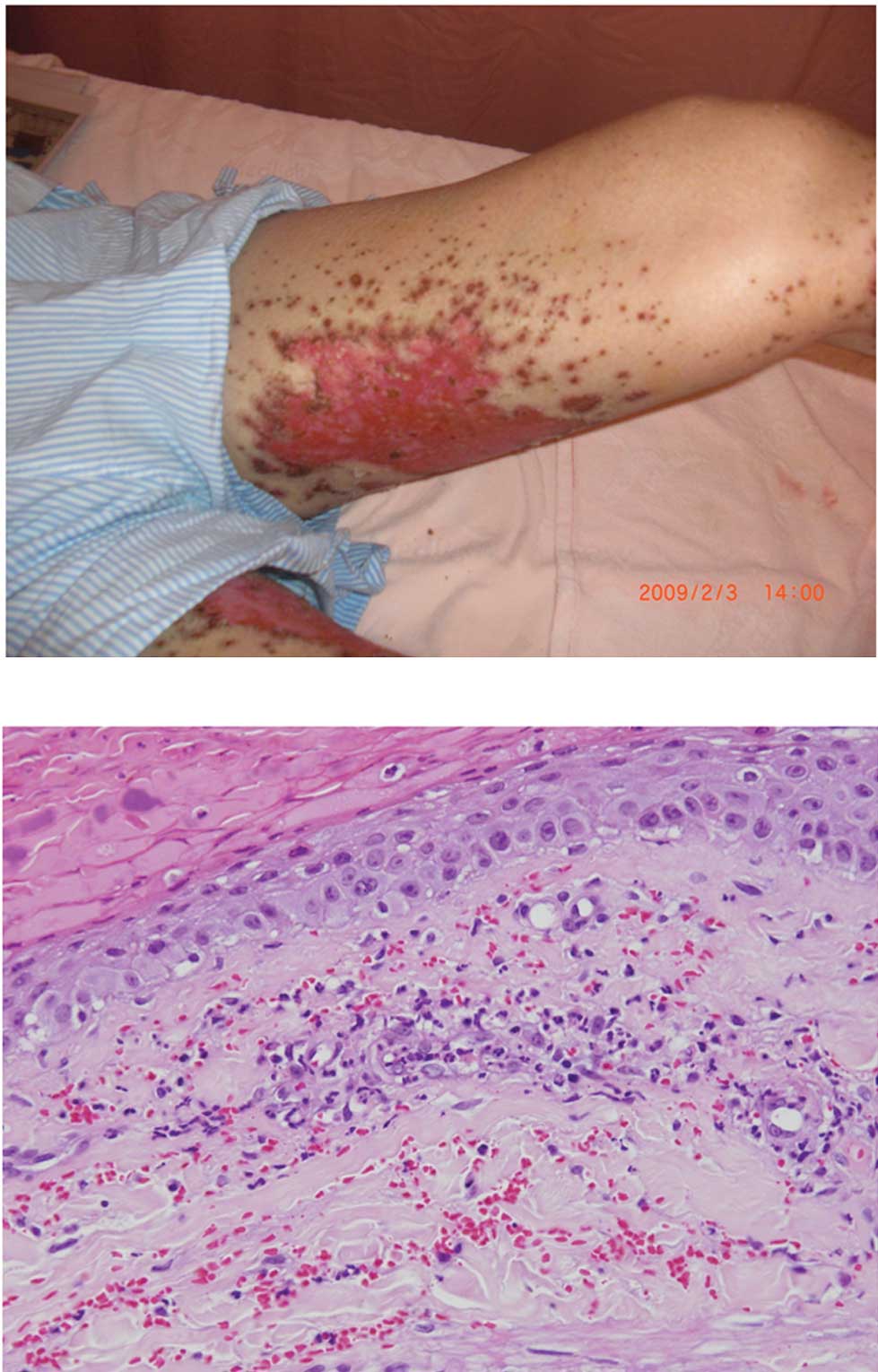
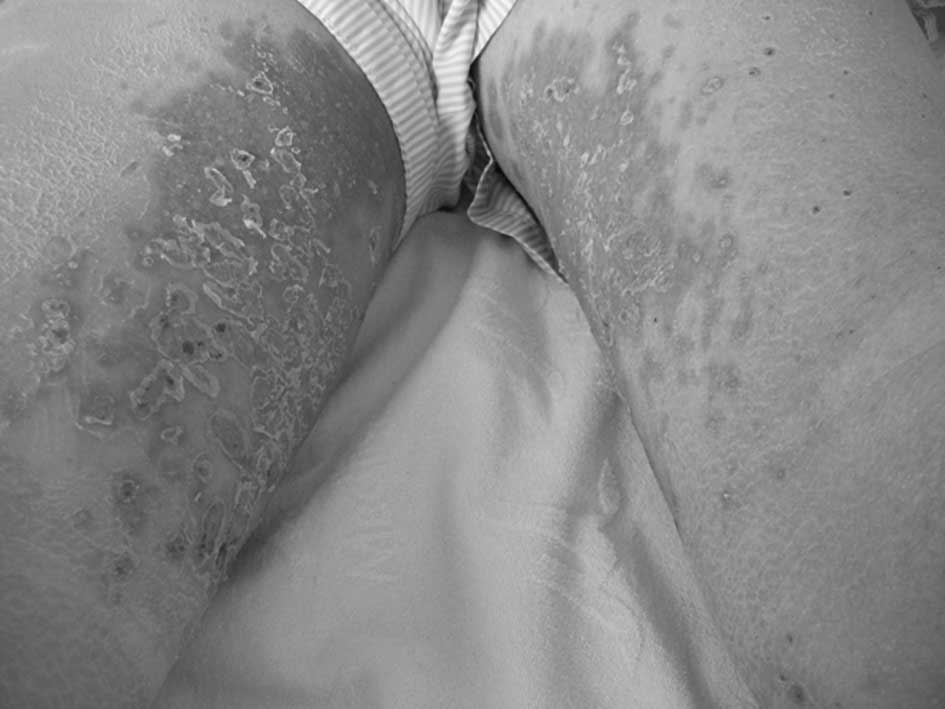
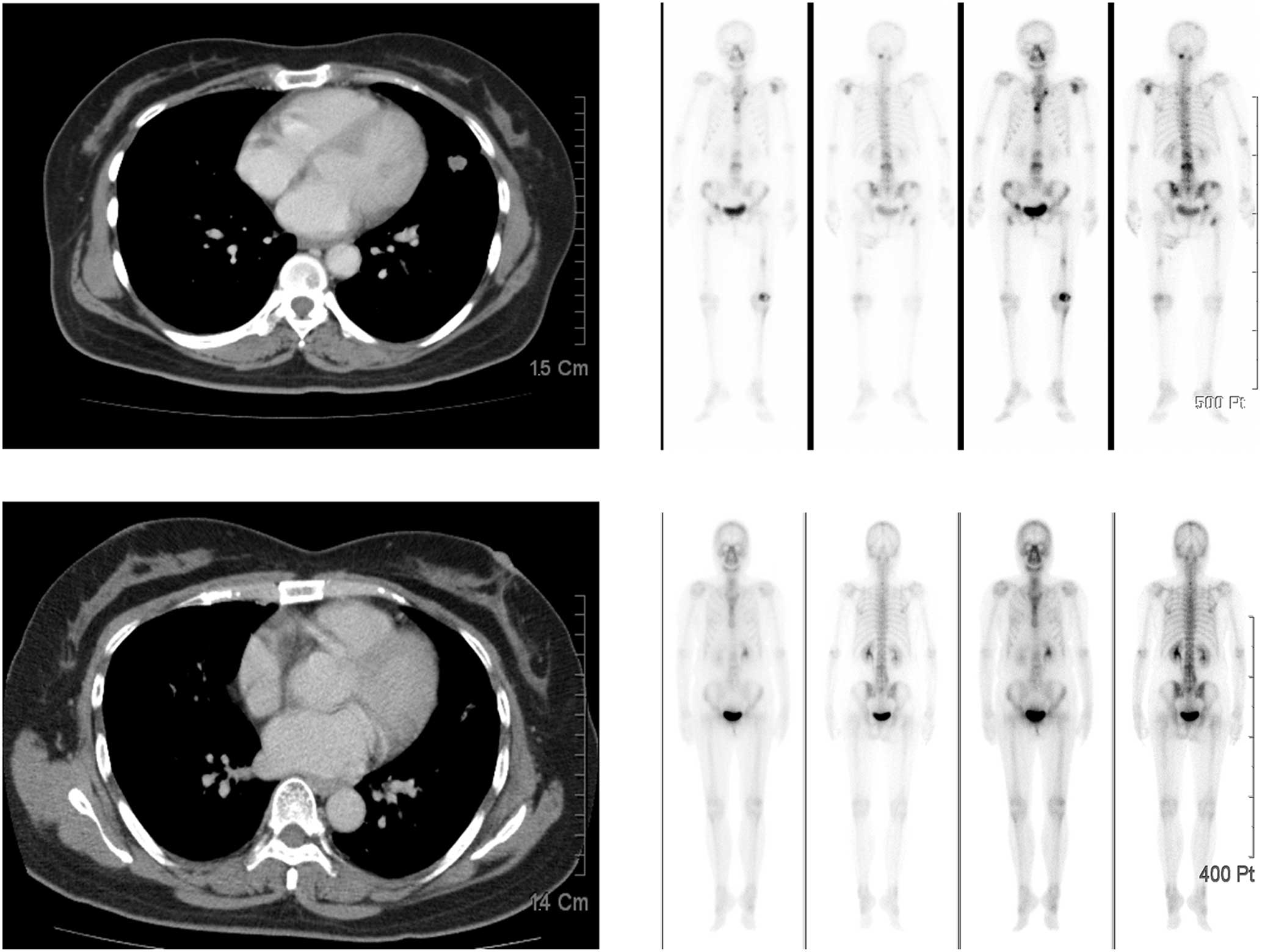
The patient was a 50-year-old female with metastatic lung adenocarcinoma, who had initial symptoms of multiple bone pain and a cough. The diagnosis of lung cancer was determined from the biopsied pathology from bone metastasis (Fig. 1), and a computed tomography of the chest. The patient initiated first-line treatment with erlotinib (150 mg daily) and bevacizumab (15 mg/kg every 3 weeks) in September 2008. Following eight days of treatment with erlotinib and bevacizumab, the patient presented with papulopustules over the scalp, face, trunk and extremities. Topical steroids and antibiotics were administered to alleviate her discomfort. Five weeks later, purpuric lesions surrounding the red areas of necrosis were located mostly at the extremities. The patient’s skin reactions progressed to extensive ulcerations (Fig. 2A). A skin biopsy was performed on the patient’s leg four months after the initiation of erlotinib, which revealed an infiltration of neutrophils and red blood cells surrounding the vessels in the upper dermis (Fig. 2B). A histological diagnosis of leukocytoclastic vasculitis was determined based on these findings. Erlotinib was discontinued one week after the skin biopsy without interruption of bevacizumab. The skin ulceration healed 10 days after the discontinuation of erlotinib (Fig. 3), and resolved completely seven weeks later. Erlotinib at a dose of 100 mg daily was challenged in this patient after almost complete resolution of the skin reaction. The patient’s lung malignancy remains responsive to the reduced dose of erlotinib and bevacizumab more than 2 years later, without recurrence of skin ulcerations (Fig. 4).

Figure 1

Lung cancer pathology. Excisional biopsy of the left femur at diagnosis revealed moderately differentiated adenocarcinoma at (A) low-power field (H&E; original magnification, ×100) and (B) high-power field (H&E; original magnification, ×400). The tumor cells expressed (C) immunochemically-positive cytokeratin-7 staining (original magnification, ×200) and (D) positive thyroid transcription factor-1 staining (original magnification, ×200).

Figure 2

(A) Purpuric lesions surrounded extensive ulceration in a patient treated with erlotinib. (B) The upper dermal small vessels revealed neutrophil-rich infiltration associated with extravasation of erythrocytes in the adjacent tissue. (H&E; original magnification, ×400).

Figure 3

A total of 10 days after discontinuation of erlotinib, the lesions healed without ulceration in the patient.

Figure 4

Image shows tumors before treatment of erlotinib and bevacizumab. (A) A lung nodule 1.5 cm in size located at the left upper lobe of the lung as detected by computed tomography of the chest. (B) The bone scan revealed uptake of radionuclide at the sternum, lumbar spine and left shoulder. Two years after treatment (C) regression of the lung nodule was detected by computed tomography of the chest and (D) decreasing radionuclide uptake of bone metastasis revealed by the bone scan.

Discussion

Among skin manifestations associated with erlotinib therapy, acneiform eruption usually consisting of follicular papules and pustules without comedones or propionibacterium acne is observed in more than 90% of patients (3). Vasculitis is a histological diagnosis defined as inflammation targeting the blood vessel walls, which compromises their function, leading to hemorrhagic or ischemic events. Etiologically, vasculitis can be separated into primary or secondary vasculitis following the determination of offending factors, including connective tissue disease, infection, adverse drug reaction or a paraneoplastic phenomenon.

Inflammation of the small blood vessels, most commonly postcapillary venules, is the cardinal histological feature of leukocytoclastic vasculitis. Other characteristic features include fibrinoid necrosis of the vessel walls, leukocytoclastosis and hemorrhage. The inflammatory infiltrate is typically neutrophilic; other studies have demonstrated a predominance of mononuclear cells and eosinophils distributed in all vessel layers (4). The skin is the most commonly involved organ in leukocytoclastic vasculitis, predominantly in the lower extremities. Up to one-third of patients have trunk and upper extremity involvement, typically sparing the palmar, plantar and mucosal surfaces. Leukocytoclastic vasculitis is rarely observed in patients treated with erlotinib. Boeck et al have reported two patients treated with erlotinib who developed hemorrhagic-necrotic type leukocytoclastic vasculitis (5). None of these reported patients were challenged with erlotinib again. However, Asian patients with lung adenocarcinoma have been reported to benefit from erlotinib therapy (6). Concerning the incidence of erlotinib-related skin rash, data from a phase III randomized clinical trial of erlotinib versus a placebo in pretreated NSCLC patients revealed that rash developed in 75% of patients who received erlotinib, but only 1% definitively discontinued erlotinib therapy (BR.21 trial, conducted by NCIC CTG (National Cancer Institute of Canada Clinical Trials Group).

It is very difficult to determine the permanent withdrawal of erlotinib, particularly when patients benefit from erlotinib. Skin rash may spontaneously resolve and reappear during erlotinib discontinuation. The chronic side effect of skin rash is extremely distressing for patients. However, whether or not to continue erlotinib therapy when facing this clinical challenge has yet to be determined. This is the first report to assess whether to rechallenge with erlotinib when encountering a severe degree of leukocytoclastic vasculitis. To ensure the safety of a lower dose of erlotinib in erlotinib-associated leukocytoclastic vasculitis, we therefore strongly suggest that preclinical and clinical investigations of this syndrome associated with erlotinib are significant in making clinical decisions.

References

1 

Ciardiello F, De Vita F, Orditura M, De Placido S and Tortora G: Epidermal growth factor receptor tyrosine kinase inhibitors in late stage clinical trials. Expert Opin Emerg Drugs. 8:501–514. 2003. View Article : Google Scholar : PubMed/NCBI

2 

Segaert S and Van Cutsem E: Clinical signs, pathophysiology and management of skin toxicity during therapy with epidermal growth factor receptor inhibitors. Ann Oncol. 16:1425–1433. 2005. View Article : Google Scholar : PubMed/NCBI

3 

Segaert S, Tabernero J, Chosidow O, et al: The management of skin reactions in cancer patients receiving epidermal growth factor receptor targeted therapies. J Dtsch Dermatol Ges. 3:599–606. 2005. View Article : Google Scholar : PubMed/NCBI

4 

Carlson JA: The histological assessment of cutaneous vasculitis. Histopathology. 56:3–23. 2010. View Article : Google Scholar : PubMed/NCBI

5 

Boeck S, Wollenberg A and Heinemann V: Leukocytoclastic vasculitis during treatment with the oral EGFR tyrosine kinase inhibitor erlotinib. Ann Oncol. 18:1582–1583. 2007. View Article : Google Scholar : PubMed/NCBI

6 

Kubota K, Nishiwaki Y, Tamura T, et al: Efficacy and safety of erlotinib monotherapy for Japanese patients with advanced non-small cell lung cancer: a phase II study. J Thorac Oncol. 3:1439–1445. 2008. View Article : Google Scholar : PubMed/NCBI

Related Articles

  • Abstract
  • View
  • Download
  • Twitter
Copy and paste a formatted citation
Spandidos Publications style
Su B, Shen W, Chang S, Feng L, Wu C and Feng Y: Successful rechallenge with reduced dose of erlotinib in a patient with lung adenocarcinoma who developed erlotinib‑associated leukocytoclastic vasculitis: A case report. Oncol Lett 3: 1280-1282, 2012.
APA
Su, B., Shen, W., Chang, S., Feng, L., Wu, C., & Feng, Y. (2012). Successful rechallenge with reduced dose of erlotinib in a patient with lung adenocarcinoma who developed erlotinib‑associated leukocytoclastic vasculitis: A case report. Oncology Letters, 3, 1280-1282. https://doi.org/10.3892/ol.2012.647
MLA
Su, B., Shen, W., Chang, S., Feng, L., Wu, C., Feng, Y."Successful rechallenge with reduced dose of erlotinib in a patient with lung adenocarcinoma who developed erlotinib‑associated leukocytoclastic vasculitis: A case report". Oncology Letters 3.6 (2012): 1280-1282.
Chicago
Su, B., Shen, W., Chang, S., Feng, L., Wu, C., Feng, Y."Successful rechallenge with reduced dose of erlotinib in a patient with lung adenocarcinoma who developed erlotinib‑associated leukocytoclastic vasculitis: A case report". Oncology Letters 3, no. 6 (2012): 1280-1282. https://doi.org/10.3892/ol.2012.647
Copy and paste a formatted citation
x
Spandidos Publications style
Su B, Shen W, Chang S, Feng L, Wu C and Feng Y: Successful rechallenge with reduced dose of erlotinib in a patient with lung adenocarcinoma who developed erlotinib‑associated leukocytoclastic vasculitis: A case report. Oncol Lett 3: 1280-1282, 2012.
APA
Su, B., Shen, W., Chang, S., Feng, L., Wu, C., & Feng, Y. (2012). Successful rechallenge with reduced dose of erlotinib in a patient with lung adenocarcinoma who developed erlotinib‑associated leukocytoclastic vasculitis: A case report. Oncology Letters, 3, 1280-1282. https://doi.org/10.3892/ol.2012.647
MLA
Su, B., Shen, W., Chang, S., Feng, L., Wu, C., Feng, Y."Successful rechallenge with reduced dose of erlotinib in a patient with lung adenocarcinoma who developed erlotinib‑associated leukocytoclastic vasculitis: A case report". Oncology Letters 3.6 (2012): 1280-1282.
Chicago
Su, B., Shen, W., Chang, S., Feng, L., Wu, C., Feng, Y."Successful rechallenge with reduced dose of erlotinib in a patient with lung adenocarcinoma who developed erlotinib‑associated leukocytoclastic vasculitis: A case report". Oncology Letters 3, no. 6 (2012): 1280-1282. https://doi.org/10.3892/ol.2012.647
Follow us
  • Twitter
  • LinkedIn
  • Facebook
About
  • Spandidos Publications
  • Careers
  • Cookie Policy
  • Privacy Policy
How can we help?
  • Help
  • Live Chat
  • Contact
  • Email to our Support Team