Spandidos Publications Logo
  • About
    • About Spandidos
    • Aims and Scopes
    • Abstracting and Indexing
    • Editorial Policies
    • Reprints and Permissions
    • Job Opportunities
    • Terms and Conditions
    • Contact
  • Journals
    • All Journals
    • Oncology Letters
      • Oncology Letters
      • Information for Authors
      • Editorial Policies
      • Editorial Board
      • Aims and Scope
      • Abstracting and Indexing
      • Bibliographic Information
      • Archive
    • International Journal of Oncology
      • International Journal of Oncology
      • Information for Authors
      • Editorial Policies
      • Editorial Board
      • Aims and Scope
      • Abstracting and Indexing
      • Bibliographic Information
      • Archive
    • Molecular and Clinical Oncology
      • Molecular and Clinical Oncology
      • Information for Authors
      • Editorial Policies
      • Editorial Board
      • Aims and Scope
      • Abstracting and Indexing
      • Bibliographic Information
      • Archive
    • Experimental and Therapeutic Medicine
      • Experimental and Therapeutic Medicine
      • Information for Authors
      • Editorial Policies
      • Editorial Board
      • Aims and Scope
      • Abstracting and Indexing
      • Bibliographic Information
      • Archive
    • International Journal of Molecular Medicine
      • International Journal of Molecular Medicine
      • Information for Authors
      • Editorial Policies
      • Editorial Board
      • Aims and Scope
      • Abstracting and Indexing
      • Bibliographic Information
      • Archive
    • Biomedical Reports
      • Biomedical Reports
      • Information for Authors
      • Editorial Policies
      • Editorial Board
      • Aims and Scope
      • Abstracting and Indexing
      • Bibliographic Information
      • Archive
    • Oncology Reports
      • Oncology Reports
      • Information for Authors
      • Editorial Policies
      • Editorial Board
      • Aims and Scope
      • Abstracting and Indexing
      • Bibliographic Information
      • Archive
    • Molecular Medicine Reports
      • Molecular Medicine Reports
      • Information for Authors
      • Editorial Policies
      • Editorial Board
      • Aims and Scope
      • Abstracting and Indexing
      • Bibliographic Information
      • Archive
    • World Academy of Sciences Journal
      • World Academy of Sciences Journal
      • Information for Authors
      • Editorial Policies
      • Editorial Board
      • Aims and Scope
      • Abstracting and Indexing
      • Bibliographic Information
      • Archive
    • International Journal of Functional Nutrition
      • International Journal of Functional Nutrition
      • Information for Authors
      • Editorial Policies
      • Editorial Board
      • Aims and Scope
      • Abstracting and Indexing
      • Bibliographic Information
      • Archive
    • International Journal of Epigenetics
      • International Journal of Epigenetics
      • Information for Authors
      • Editorial Policies
      • Editorial Board
      • Aims and Scope
      • Abstracting and Indexing
      • Bibliographic Information
      • Archive
    • Medicine International
      • Medicine International
      • Information for Authors
      • Editorial Policies
      • Editorial Board
      • Aims and Scope
      • Abstracting and Indexing
      • Bibliographic Information
      • Archive
  • Articles
  • Information
    • Information for Authors
    • Information for Reviewers
    • Information for Librarians
    • Information for Advertisers
    • Conferences
  • Language Editing
Spandidos Publications Logo
  • About
    • About Spandidos
    • Aims and Scopes
    • Abstracting and Indexing
    • Editorial Policies
    • Reprints and Permissions
    • Job Opportunities
    • Terms and Conditions
    • Contact
  • Journals
    • All Journals
    • Biomedical Reports
      • Information for Authors
      • Editorial Policies
      • Editorial Board
      • Aims and Scope
      • Abstracting and Indexing
      • Bibliographic Information
      • Archive
    • Experimental and Therapeutic Medicine
      • Information for Authors
      • Editorial Policies
      • Editorial Board
      • Aims and Scope
      • Abstracting and Indexing
      • Bibliographic Information
      • Archive
    • International Journal of Epigenetics
      • Information for Authors
      • Editorial Policies
      • Editorial Board
      • Aims and Scope
      • Abstracting and Indexing
      • Bibliographic Information
      • Archive
    • International Journal of Functional Nutrition
      • Information for Authors
      • Editorial Policies
      • Editorial Board
      • Aims and Scope
      • Abstracting and Indexing
      • Bibliographic Information
      • Archive
    • International Journal of Molecular Medicine
      • Information for Authors
      • Editorial Policies
      • Editorial Board
      • Aims and Scope
      • Abstracting and Indexing
      • Bibliographic Information
      • Archive
    • International Journal of Oncology
      • Information for Authors
      • Editorial Policies
      • Editorial Board
      • Aims and Scope
      • Abstracting and Indexing
      • Bibliographic Information
      • Archive
    • Medicine International
      • Information for Authors
      • Editorial Policies
      • Editorial Board
      • Aims and Scope
      • Abstracting and Indexing
      • Bibliographic Information
      • Archive
    • Molecular and Clinical Oncology
      • Information for Authors
      • Editorial Policies
      • Editorial Board
      • Aims and Scope
      • Abstracting and Indexing
      • Bibliographic Information
      • Archive
    • Molecular Medicine Reports
      • Information for Authors
      • Editorial Policies
      • Editorial Board
      • Aims and Scope
      • Abstracting and Indexing
      • Bibliographic Information
      • Archive
    • Oncology Letters
      • Information for Authors
      • Editorial Policies
      • Editorial Board
      • Aims and Scope
      • Abstracting and Indexing
      • Bibliographic Information
      • Archive
    • Oncology Reports
      • Information for Authors
      • Editorial Policies
      • Editorial Board
      • Aims and Scope
      • Abstracting and Indexing
      • Bibliographic Information
      • Archive
    • World Academy of Sciences Journal
      • Information for Authors
      • Editorial Policies
      • Editorial Board
      • Aims and Scope
      • Abstracting and Indexing
      • Bibliographic Information
      • Archive
  • Articles
  • Information
    • For Authors
    • For Reviewers
    • For Librarians
    • For Advertisers
    • Conferences
  • Language Editing
Login Register Submit
  • This site uses cookies
  • You can change your cookie settings at any time by following the instructions in our Cookie Policy. To find out more, you may read our Privacy Policy.

    I agree
Search articles by DOI, keyword, author or affiliation
Search
Advanced Search
presentation
Oncology Letters
Join Editorial Board Propose a Special Issue
Print ISSN: 1792-1074 Online ISSN: 1792-1082
Journal Cover
November 2012 Volume 4 Issue 5

Full Size Image

Sign up for eToc alerts
Recommend to Library

Journals

International Journal of Molecular Medicine

International Journal of Molecular Medicine

International Journal of Molecular Medicine is an international journal devoted to molecular mechanisms of human disease.

International Journal of Oncology

International Journal of Oncology

International Journal of Oncology is an international journal devoted to oncology research and cancer treatment.

Molecular Medicine Reports

Molecular Medicine Reports

Covers molecular medicine topics such as pharmacology, pathology, genetics, neuroscience, infectious diseases, molecular cardiology, and molecular surgery.

Oncology Reports

Oncology Reports

Oncology Reports is an international journal devoted to fundamental and applied research in Oncology.

Experimental and Therapeutic Medicine

Experimental and Therapeutic Medicine

Experimental and Therapeutic Medicine is an international journal devoted to laboratory and clinical medicine.

Oncology Letters

Oncology Letters

Oncology Letters is an international journal devoted to Experimental and Clinical Oncology.

Biomedical Reports

Biomedical Reports

Explores a wide range of biological and medical fields, including pharmacology, genetics, microbiology, neuroscience, and molecular cardiology.

Molecular and Clinical Oncology

Molecular and Clinical Oncology

International journal addressing all aspects of oncology research, from tumorigenesis and oncogenes to chemotherapy and metastasis.

World Academy of Sciences Journal

World Academy of Sciences Journal

Multidisciplinary open-access journal spanning biochemistry, genetics, neuroscience, environmental health, and synthetic biology.

International Journal of Functional Nutrition

International Journal of Functional Nutrition

Open-access journal combining biochemistry, pharmacology, immunology, and genetics to advance health through functional nutrition.

International Journal of Epigenetics

International Journal of Epigenetics

Publishes open-access research on using epigenetics to advance understanding and treatment of human disease.

Medicine International

Medicine International

An International Open Access Journal Devoted to General Medicine.

Journal Cover
November 2012 Volume 4 Issue 5

Full Size Image

Sign up for eToc alerts
Recommend to Library

  • Article
  • Citations
    • Cite This Article
    • Download Citation
    • Create Citation Alert
    • Remove Citation Alert
    • Cited By
  • Similar Articles
    • Related Articles (in Spandidos Publications)
    • Similar Articles (Google Scholar)
    • Similar Articles (PubMed)
  • Download PDF
  • Download XML
  • View XML
Article

Small molecules in combination with conventional chemotherapeutic drugs: Light at the end of the tunnel?

  • Authors:
    • Martin Leinung
    • Clemens Cuny
    • Marc Diensthuber
    • Timo Stöver
    • Jens Wagenblast
  • View Affiliations / Copyright

    Affiliations: ENT Department, Medical School, Goethe University, Frankfurt am Main, Hessen D-60590, Germany
  • Pages: 1043-1046
    |
    Published online on: August 28, 2012
       https://doi.org/10.3892/ol.2012.883
  • Expand metrics +
Metrics: Total Views: 0 (Spandidos Publications: | PMC Statistics: )
Metrics: Total PDF Downloads: 0 (Spandidos Publications: | PMC Statistics: )
Cited By (CrossRef): 0 citations Loading Articles...

This article is mentioned in:


Abstract

Recent studies have shown BI2536 and bortezomib to be effective in squamous cell carcinoma of the head and neck (SCCHN) cell lines. In this systemic in vitro study, we examined the antitumor effect of the small molecules BI2536 and bortezomib in combination with cisplatin or docetaxel in nine squamous cell carcinoma cell lines, most of head and neck origin. Dose escalation studies were performed with these cell lines using bortezomib, BI2536, cisplatin and docetaxel in cell line-specific concentrations. Growth inhibitory and proapoptotic effects were measured quantitatively using cytohistology and the Human Apoptosis Array kit. The combination of bortezomib and BI2536 with cisplatin or docetaxel showed a significantly higher antiproliferative and apoptotic activity in all SCCHN cell lines investigated compared with single agent cisplatin or docetaxel alone (P≤0.021). Combination of conventional chemotherapeutic drugs, such as cisplatin and docetaxel, with small molecules in the clinical setting may enhance the antitumor activity of these agents and may lead to less toxic side-effects and a more effective cancer therapy.

Introduction

Squamous cell carcinoma of the head and neck (SCCHN) is among the 10 most common types of cancer worldwide and arises from the surface epithelium of the upper-aerodigestive tract, including the oral cavity (1). As well as extensive tobacco and alcohol abuse, various epidemiological studies have revealed HPV-infection to be an independent risk factor in the development of SCCHN (2–4). The advent of chemotherapeutical drug regimes to treat head and neck cancer in the early 1980s changed a number of therapeutical paradigms. Previously, most patients with head and neck cancer of a higher tumor stage were treated either by surgery and postoperative radiotherapy or by definitive radiotherapy. In more recent years, induction chemotherapy became a matter of interest as a treatment option in modern oncology (5). Although remission rates were often associated with severe side-effects, including nephrotoxicity and cardiovascular complications, cisplatin and docetaxel remain the most commonly used cytotoxic agents in the treatment of patients with SCCHN (6–8). However, these serious side-effects often require a reduction in dose or even discontinuation of chemotherapy. Although therapeutic treatment options have become more refined in recent decades, the prognosis of SCCHN remains poor. Therefore, one of the great challenges currently is to identify new, well-tolerated drug regimes which do not compromise the antitumor effect. Previously, several studies demonstrated that the proteasome inhibitor bortezomib was a prime candidate for drug development, not only in hematological malignancies, but also in solid cancers, including SCCHN (9–11). Other studies have shown further that bortezomib may be utilized to overcome cisplatin resistance in squamous cell carcinoma (12). In a previous systemic in vitro investigation, we showed that the polo-like-kinase-1 (PLK1) inhibitor BI2536 had a marked antitumor effect in a large number of SCCHN cell lines (Wagenblast et al, unpublished data).

In order to address the need of developing new cancer treatment regimes, the aim of the present study was to evaluate the antitumor effects of a combination of the small molecules bortezomib and BI2536 with the conventional chemotherapeutic drugs cisplatin and docetaxel in nine tumor cell lines of squamous carcinoma origin.

Materials and methods

Nine squamous carcinoma cell lines, most of head and neck origin, were tested in the present study. A-431 cells were obtained from ATCC (American Type Culture Collection, Manassas, VA, USA). The PE/CA-PJ 15, PE/CA-PJ 41, PE/CA-PJ 49 and PE/CA-PJ 34 cell lines were obtained from ECACC (European Collection of Cell Cultures, Salisbury, UK) and Cal-27 and Kyse-140 cells from DSMZ GmbH (Braunschweig, Germany). CLS-354 and UM-SCC-14 C cells were obtained from Cell Lines Service (CLS; Eppelheim, Germany). A fibroblast cell line (human praeputium), used as a control cell line, was a gift from the Department of Dermatology, University Hospital (Frankfurt am Main, Germany). Bortezomib (Velcade®) was supplied by Millenium Pharmaceuticals Inc. (Cambridge, MA, USA) and Johnson & Johnson Pharmaceuticals (Raritan, NJ, USA). BI2536 was provided by Boehringer Ingelheim GmbH (Vienna, Austria). Squamous carcinoma cell lines were cultivated according to the supplier’s instructions with antibiotics at 37°C in the cell type-specific Quantum 263 medium with L-glutamine (PAA Laboratories GmbH, Pasching, Austria). Cells were seeded in 96-multiwell plates (1x10⁵ cells/well) and, following incubation for 24 h, the cells were treated with cisplatin or docetaxel alone or in combination with bortezomib and BI2536 for 24, 48 and 76 h, respectively. In the experiments, bortezomib, BI2536, cisplatin and docetaxel were used in each cell line at a fixed, cell line-specific concentration that had produced maximum growth inhibition in previous systematic investigations in our laboratory. The concentration for bortezomib ranged from 1.25 to 5 μM. The concentration for all cell lines investigated was 2.5 nmol/l for BI2536, showing maximal growth inhibition in our previous dose escalation studies. Dosage of cisplatin ranged from 0.19 to 3.125 μM and docetaxel from 2.5 to 15 nM (Table I). The number of cells was determined by counting cells in a Rosenthal chamber at 24, 48 and 72 h after treatment. Apoptosis was detected by microscopic cytohistology as well as using the Human Apoptosis Array kit (R&D Systems, Abingdon, UK) as described previously (13,14).

Table I

Cell line-specific drug concentrations of bortezomib, BI2536, cisplatin and docetaxel.

Table I

Cell line-specific drug concentrations of bortezomib, BI2536, cisplatin and docetaxel.

Tumor cell lineConcentration
Cisplatin (μM)Docetaxel (nM)Bortezomib (μM)BI2536 (nM)
PE/CA-PJ 151.562.52.502.50
PE/CA-PJ 341.562.55.002.50
PE/CA-PJ 410.195.02.502.50
PE/CA-PJ 491.5615.01.252.50
CLS 3541.5610.01.252.50
UM-SCC-14 C1.5610.02.502.50
Cal-270.3915.02.502.50
Kyse-1403.1255.02.502.50
A-4310.7815.02.502.50

Each experiment was performed in triplicate. For statistical analysis, a Wilcoxon test for matched pairs (dependent samples) was performed using SPSS 19.0 software for Windows. P<0.05 was considered to indicate a statistically significant result.

Results

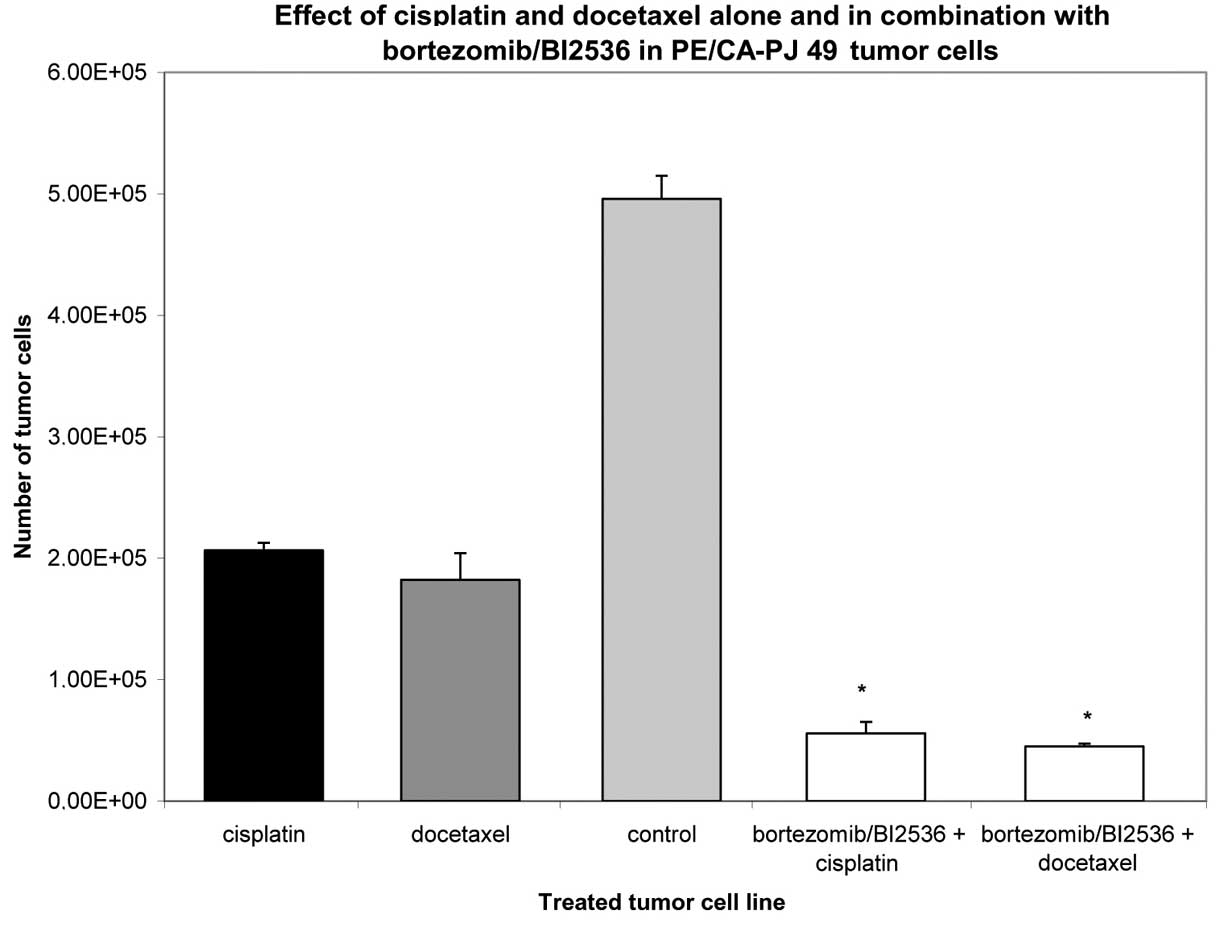
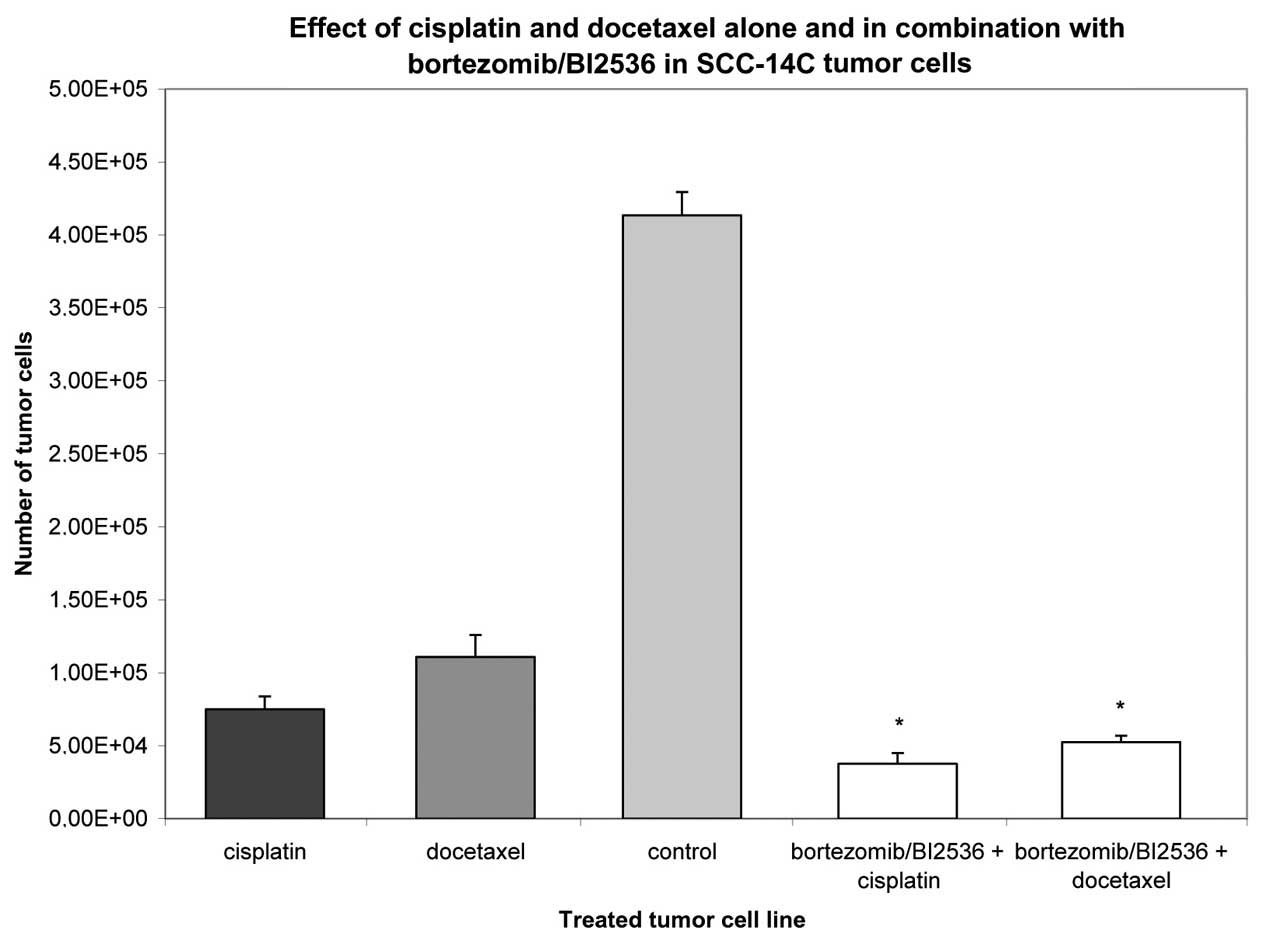
Nine squamous carcinoma cell lines, most of head and neck origin, were tested in this study. Following incubation for 24 h, the cells were treated with cisplatin and docetaxel alone or with a combination of bortezomib and BI2536 for 24, 48 and 76 h. Compared with the untreated control groups, the proteasome inhibitor bortezomib, the PLK-1-inhibitor BI2536, cisplatin and docetaxel had a significant antiproliferative and apoptotic effect when used as single agent treatments in all nine tumor cell lines (P=0.008). The combination of bortezomib/BI2536 and cisplatin showed a significantly higher antiproliferative activity compared with cisplatin alone (P=0.008). The same phenomenon was observed in the combination of bortezomib/BI2536 with docetaxel compared with docetaxel monotherapy (P=0.021; Figs. 1 and 2). Apoptosis was detected by microscopic cytohistology as well as using the Human Apoptosis Array kit (R&D Systems), detecting pro caspase 3 as a typical molecular apoptosis marker.

Figure 1

Growth inhibitory effect of cisplatin or docetaxel alone and in combination with bortezomib/BI2536 at a fixed cell line-specific concentration as shown in Table I after 72 h treatment in the PE/CA-PJ 49 tumor cell line. The untreated tumor cells (light grey column) served as a control and were incubated according to the supplier’s instructions with antibiotics at 37°C in the cell type-specific Quantum 263 medium with L-glutamine. The absolute tumor cell numbers in the treated and control cell lines were determined in a Rosenthal chamber at 72 h after treatment or incubation with Quantum 263, respectively. Mean values of three independent experiments with standard deviation are shown. Significant differences between single agent and combination treatment and untreated controls are indicated by asterisks. Combination treatment of bortezomib/BI2536+cisplatin or +doectaxel significantly inhibited cell proliferation compared with mono drug therapy with cisplatin or docetaxel alone (P≤0.021).

Figure 2

Growth inhibitory effect of cisplatin or docetaxel alone and in combination with bortezomib/BI2536 at a fixed cell line-specific concentration as shown in Table I after 72 h treatment in the SCC-14C tumor cell line. The untreated tumor cells (light grey column) served as a control and were incubated according to the supplier’s instructions with antibiotics at 37°C in the cell type-specific Quantum 263 medium with L-glutamine. The absolute tumor cell numbers in the treated and control cell lines were determined in a Rosenthal chamber at 72 h after treatment or incubation with Quantum 263, respectively. Mean values of three independent experiments with standard deviation are shown. Significant differences between single agent and combination treatment and untreated controls are indicated by asterisks. Combination treatment of bortezomib/BI2536+cisplatin or +doectaxel significantly inhibited cell proliferation compared with mono drug therapy with cisplatin or docetaxel alone (P≤0.021).

The combination of the conventional chemotherapeutic drugs cisplatin and docetaxel with small molecules in this in vitro examination significantly enhanced the antitumor activity of these agents.

Discussion

Various molecularly targeted approaches have been investigated in SCCHN patients in the search of improved selectivity and toxicity. Targets that are worth considering include growth factor receptors, signal transduction proteins, kinases, such as PLK1, and proteins involved in the degradation of kinases, such as the proteasome (15,16). Previous studies have demonstrated the marked growth inhibitory and apoptotic effects of bortezomib, a small molecular weight reversible inhibitor of the intracellular 26S proteasome, in SCCHN (10,17). Bortezomib acts primarily by inhibition of the NFκB signaling pathway, although the complete molecular mechanism leading to the antitumor action of this proteasome inhibitor remains unidentified (18,19). BI2536 is a further selective and potent small molecule that inhibits PLK1, which is a key player in processes such as cell division and checkpoint regulation in mitosis (20). Approximately 80% of human tumors express high levels of PLK-1 transcripts, which are correlated with poor prognosis (20–23). PLK inhibitors, such as BI2536 and BI6727, interfere with several stages of mitosis, including spindle formation and chromosome separation, thus inducing a mitotic chaos leading to a disruption of cell cycle progression. In the present study, we showed the enhanced antitumor effect of a combination of two small molecules which affect different signaling pathways. The drug combination of bortezomib/BI2536 with cisplatin showed a significantly higher antiproliferative activity compared with cisplatin alone (P<0.008). The same phenomenon was observed in the combination of bortezomib/BI2536 with docetaxel compared with docetaxel monotherapy (P=0.021). In summary, the results of our systemic in vitro experiments have demonstrated the growth inhibitory and proapoptotic effect of a combination regime consisting of the two small molecules bortezomib/BI2536 in combination with conventional chemotherapeutic drugs, cisplatin and docetaxel, in SCCHN cell lines for the first time.

With regard to the combination of two small molecules, bortezomib/BI2536, enhancing the antiproliferative effect of both cytotoxic agents, cisplatin and docetaxel, it appears to be possible to reduce the doses of the conventional drugs and thus to reduce the severe side-effects of these regimes in the future.

Acknowledgements

The authors thank Boehringer Ingelheim GmbH for providing BI2536. The authors thank Erika Weith for excellent technical support.

References

1. 

H MehannaV PaleriCM WestC NuttingHead and neck cancer - Part 1: Epidemiology, presentation, and preventionBMJ341c4684201010.1136/bmj.c468420855405

2. 

G D’SouzaAR KreimerR ViscidiM PawlitaC FakhryWM KochCase-control study of human papillomavirus and oropharyngeal cancerN Engl J Med35619441956200717494927

3. 

M PantelO Guntinas-LichiusLaryngeal carcinoma: epidemiology, risk factors and survivalHNO6032402012(In German)

4. 

C WittekindtS WagnerJP KlussmannHPV-associated head and neck cancer. The basics of molecular and translational researchHNO598858922011(In German)

5. 

JL LefebvreG AndryD ChevalierB LuboinskiL ColletteL Traissacfor the EORTC Head and Neck Cancer GroupLaryngeal preservation with induction chemotherapy for hypopharyngeal squamous cell carcinoma: 10-year results of EORTC trial 24891Ann OncolApr62012(Epub ahead of print)

6. 

AA ForastiereT LeongE RowinskyBA MurphyDR VlockRC DeContiGL AdamsPhase III comparison of high-dose paclitaxel + cisplatin + granulocyte colony-stimulating factor versus low-dose paclitaxel + cisplatin in advanced head and neck cancer: Eastern Cooperative Oncology Group Study E1393J Clin Oncol19108810952001

7. 

G RameshWB ReevesTNF-alpha mediates chemokine and cytokine expression and renal injury in cisplatin nephrotoxicityJ Clin Invest110835842200210.1172/JCI20021560612235115

8. 

N PablaZ DongCisplatin nephrotoxicity: mechanisms and renoprotective strategiesKidney Int739941007200810.1038/sj.ki.500278618272962

9. 

A FribleyQ ZengCY WangProteasome inhibitor PS-341 induces apoptosis through induction of endoplasmic reticulum stress-reactive oxygen species in head and neck squamous cell carcinoma cellsMol Cell Biol2496959704200410.1128/MCB.24.22.9695-9704.2004

10. 

J WagenblastM HambekM BaghiW GstöttnerK StrebhardtH AckermannR KnechtAntiproliferative activity of bortezomib alone and in combination with cisplatin or docetaxel in head and neck squamous cell carcinoma cell linesJ Cancer Res Clin Oncol134323330200810.1007/s00432-007-0287-917701215

11. 

JB SunwooZ ChenG DongN YehC Crowl BancroftE SausvilleNovel proteasome inhibitor PS-341 inhibits activation of nuclear factor-kappa B, cell survival, tumor growth, and angiogenesis in squamous cell carcinomaClin Cancer Res714191428200111350913

12. 

AM FribleyB EvenchikQ ZengBK ParkJY GuanH ZhangProteasome inhibitor PS-341 induces apoptosis in cisplatin-resistant squamous cell carcinoma cells by induction of NoxaJ Biol Chem2813144031447200610.1074/jbc.M60435620016928686

13. 

D DattaP BanerjeeM GasserAM Waaga-GasserS PalCXCR3-B can mediate growth-inhibitory signals in human renal cancer cells by down-regulating the expression of heme oxygenase-1J Biol Chem2853684236848201010.1074/jbc.M110.17032420855888

14. 

RB RayA RaychoudhuriR SteeleP NerurkarBitter melon (Momordica charantia) extract inhibits breast cancer cell proliferation by modulating cell cycle regulatory genes and promotes apoptosisCancer Res7019251931201020179194

15. 

J WagenblastM BaghiC ArnoldnerS BisdasW GstöttnerH AckermannEffect of bortezomib and cetuximab in EGF-stimulated HNSCCAnticancer Res2822392243200818751401

16. 

CW ReuterMA MorganA EckardtTargeting EGF-receptor-signalling in squamous cell carcinomas of the head and neckBr J Cancer96408416200710.1038/sj.bjc.660356617224925

17. 

J WagenblastM BaghiC ArnoldnerS BisdasW GstöttnerH AckermannCetuximab enhances the efficacy of bortezomib in squamous cell carcinoma cell linesJ Cancer Res Clin Oncol135387393200910.1007/s00432-008-0477-018830627

18. 

A MilanoRV IaffaioliF CaponigroThe proteasome: a worthwhile target for the treatment of solid tumours?Eur J Cancer4311251133200710.1016/j.ejca.2007.01.03817379504

19. 

J AdamsThe development of proteasome inhibitors as anti-cancer drugsCancer Cell5417421200410.1016/S1535-6108(04)00120-5

20. 

P SchoffskiJY BlayJ De GreveE BrainJP MachielsJC SoriaMulticentric parallel phase II trial of the polo-like kinase 1 inhibitor BI 2536 in patients with advanced head and neck cancer, breast cancer, ovarian cancer, soft tissue sarcoma and melanoma. The first protocol of the European Organization for Research and Treatment of Cancer (EORTC) Network Of Core Institutes (NOCI)Eur J Cancer46220622152010

21. 

TL SchmitN AhmadRegulation of mitosis via mitotic kinases: new opportunities for cancer managementMol Cancer Ther619201931200710.1158/1535-7163.MCT-06-078117620424

22. 

K StrebhardtA UllrichTargeting polo-like kinase 1 for cancer therapyNat Rev Cancer6321330200610.1038/nrc184116557283

23. 

R KnechtR ElezM OechlerC SolbachC von IlbergK StrebhardtPrognostic significance of polo-like kinase (PLK) expression in squamous cell carcinomas of the head and neckCancer Res5927942797199910383133

Related Articles

  • Abstract
  • View
  • Download
  • Twitter
Copy and paste a formatted citation
Spandidos Publications style
Leinung M, Cuny C, Diensthuber M, Stöver T and Wagenblast J: Small molecules in combination with conventional chemotherapeutic drugs: Light at the end of the tunnel?. Oncol Lett 4: 1043-1046, 2012.
APA
Leinung, M., Cuny, C., Diensthuber, M., Stöver, T., & Wagenblast, J. (2012). Small molecules in combination with conventional chemotherapeutic drugs: Light at the end of the tunnel?. Oncology Letters, 4, 1043-1046. https://doi.org/10.3892/ol.2012.883
MLA
Leinung, M., Cuny, C., Diensthuber, M., Stöver, T., Wagenblast, J."Small molecules in combination with conventional chemotherapeutic drugs: Light at the end of the tunnel?". Oncology Letters 4.5 (2012): 1043-1046.
Chicago
Leinung, M., Cuny, C., Diensthuber, M., Stöver, T., Wagenblast, J."Small molecules in combination with conventional chemotherapeutic drugs: Light at the end of the tunnel?". Oncology Letters 4, no. 5 (2012): 1043-1046. https://doi.org/10.3892/ol.2012.883
Copy and paste a formatted citation
x
Spandidos Publications style
Leinung M, Cuny C, Diensthuber M, Stöver T and Wagenblast J: Small molecules in combination with conventional chemotherapeutic drugs: Light at the end of the tunnel?. Oncol Lett 4: 1043-1046, 2012.
APA
Leinung, M., Cuny, C., Diensthuber, M., Stöver, T., & Wagenblast, J. (2012). Small molecules in combination with conventional chemotherapeutic drugs: Light at the end of the tunnel?. Oncology Letters, 4, 1043-1046. https://doi.org/10.3892/ol.2012.883
MLA
Leinung, M., Cuny, C., Diensthuber, M., Stöver, T., Wagenblast, J."Small molecules in combination with conventional chemotherapeutic drugs: Light at the end of the tunnel?". Oncology Letters 4.5 (2012): 1043-1046.
Chicago
Leinung, M., Cuny, C., Diensthuber, M., Stöver, T., Wagenblast, J."Small molecules in combination with conventional chemotherapeutic drugs: Light at the end of the tunnel?". Oncology Letters 4, no. 5 (2012): 1043-1046. https://doi.org/10.3892/ol.2012.883
Follow us
  • Twitter
  • LinkedIn
  • Facebook
About
  • Spandidos Publications
  • Careers
  • Cookie Policy
  • Privacy Policy
How can we help?
  • Help
  • Live Chat
  • Contact
  • Email to our Support Team