Introduction
According to data of the Global Cancer Statistics,
hepatocellular carcinoma (HCC) is the fifth most common malignancy
and the second leading cause of cancer-related death worldwide
(1). Unfortunately, even though
surgery, radiofrequency ablation and chemoembolization are widely
applied, HCC with invasive and metastatic characteristics is a
lethal disease (2), which
highlights the urgent need for new biomarkers for the clinical
diagnosis and therapy of HCC.
MicroRNAs (miRNAs) regulate gene expression via the
degradation of mRNAs or inhibition of translation. The miR-196
family consists of miR-196a and miR-196b with shared regulatory
capacity (3). Studies have shown
that miR-196a and miR-196b exert various functions in cancer
carcinogenesis and development (4–7).
miR-196a-2 polymorphism is associated with susceptibility to HCC
and recurrence after liver transplantation (4,8). A
recent study found that upregulation of miR-196b is indicative of
liver metastasis in patients with colorectal cancer (9). miR-196a and miR-196b overexpression
were found to promote migration and invasion without affecting the
growth of oral cancer cells (10).
Shen et al previously reported that miR-196b was notably
upregulated in HCC compared with adjacent non-cancerous tissues
(11). Furthermore, upregulation of
miR-196b was found to be associated with HCV infection, suggesting
a promoting role in HCC development (12). Yet, the clinical significance of
miR-196b and its role as well as the underlying mechanisms remain
largely unknown in HCC.
In the present study, we found that miR-196b
overexpression was associated with poor prognostic features and
reduced survival of HCC patients. We present evidence that miR-196b
functions as an oncomiR and promotes the migration and invasion of
HCC cells by targeting forkhead box P2 (FOXP2). Our results
revealed a novel molecular mechanism; the miR-196b/FOXP2 axis may
be valuable clinical marker and therapeutical target for HCC
patients.
Materials and methods
Clinical samples
Patients (84 HCC tissues and pair-matched adjacent
normal liver tissues) who had not undergone radiofrequency ablation
or chemoembolization in the present study were enrolled at The
First Affiliated Hospital of Xi'an Medical University. Samples were
pathologically confirmed and rapidly put into liquid nitrogen after
surgical operation. Informed consent was signed by each patient
before the clinical specimens were collected and used. Details of
the clinicopathological data are shown in Table I. The protocols involved in the use
of the clinical specimens in the present study were according to
the Research Ethics Committee of Xi'an Medical University.
 | Table I.Correlation between the
clinicopathological features and miR-196b expression in the
hepatocellular carcinoma cases (n=84). |
Table I.
Correlation between the
clinicopathological features and miR-196b expression in the
hepatocellular carcinoma cases (n=84).
|
|
| miR-196b
expression |
|
|---|
|
|
|
|
|
|---|
| Characteristics | Total no. of
patients | High level
(n=42) | Low level (n=42) | P-value |
|---|
| Age (years) |
|
|
|
|
|
<50 | 33 | 19 | 14 | 0.264 |
| ≥50 | 51 | 23 | 28 |
|
| Sex |
|
|
|
|
| Male | 66 | 30 | 36 | 0.111 |
|
Female | 18 | 12 | 6 |
|
| HBV |
|
|
|
|
|
Absent | 24 | 9 | 15 | 0.147 |
|
Present | 60 | 33 | 27 |
|
| Serum AFP level
(ng/ml) |
|
|
|
|
|
<400 | 30 | 12 | 18 | 0.172 |
| ≥400 | 54 | 30 | 24 |
|
| Tumor size (cm) |
|
|
|
|
|
<5 | 31 | 14 | 17 | 0.498 |
| ≥5 | 53 | 28 | 25 |
|
| No. of tumor
nodules |
|
|
|
|
| 1 | 70 | 32 | 38 | 0.079 |
| ≥2 | 14 | 10 | 4 |
|
| Cirrhosis |
|
|
|
|
|
Absent | 34 | 14 | 20 | 0.182 |
|
Present | 50 | 28 | 22 |
|
| Venous
infiltration |
|
|
|
|
|
Absent | 63 | 27 | 36 | 0.023a |
|
Present | 21 | 15 | 6 |
|
| Edmondson-Steiner
grading |
|
|
|
|
|
I+II | 59 | 27 | 32 | 0.233 |
|
III+IV | 25 | 15 | 10 |
|
| TNM tumor
stage |
|
|
|
|
|
I+II | 61 | 24 | 37 | 0.001a |
|
III+IV | 23 | 18 | 5 |
|
Cell culture and transfection
Human HCC cell lines including Hep3B, Huh7, MHCC97H
and HCCLM3, and the human immortalized normal hepatocyte cell line
(LO2) (Shanghai Institute of Biochemistry and Cell Biology, Chinese
Academy of Sciences, Shanghai, China) were cultured under standard
conditions. hsa-miR-196b mimics (HmiR0103-MR04), inhibitors
(HmiR-AN0286-AM04) and their control fragments (NC, CmiR0001-MR04
and CmiR-AN0001-AM04) were produced by GeneCopoeia (Guangzhou,
China). FOXP2 siRNA and FOXP2 expression plasmid (pcDNA3.1-FOXP2)
were designed and synthesized by GenePharma (Shanghai, China). All
vectors were then transfected into HCC cells with Lipofectamine
2000 (Invitrogen, Carlsbad, CA, USA) according to the manufacturers
protocol.
Immunohistochemistry (IHC)
Paraffin sections from HCC tissues underwent
deparaffination and then rehydration. Antigen retrieval,
suppression of endogenous peroxidase activity and 10% skim milk
blocking were performed before primary antibody incubation. FOXP2
primary antibody (; ab16046; Abcam, Cambridge, MA, USA) was used
for incubation overnight at 4°C. The slides were subsequently
incubated with peroxidase conjugated secondary antibody (ZSGB BIO,
Beijing, China) for 90 min, and a peroxidase-labeled polymer, DAB
solution was used for signal development for 5 min. The sections
were counterstained with hematoxylin followed by dehydrating and
mounting. Staining intensity was scored as no staining, 0; weak
staining, 1; moderate staining, 2; and strong staining, 3. Staining
quantity was graded as <25%, 1; 25–75%, 2; and >75%, 3. IHC
score was manually confirmed by two independent experienced
pathologists using the formula: IHC score = staining intensity ×
staining quantity.
Quantitative real-time polymerase
chain reaction (qRT-PCR)
RNA was extracted and prepared for qRT-PCR as
previously described (13). Total
RNA was reverse-transcribed to cDNA with PrimeScript Reverse
Transcriptase kit (Takara, Dalian, China) according to the
manufacturer's protocol. By using SYBR Green chemistry, qRT-PCR was
implemented with the ABI 7900HT sequence detection machine
(Bio-Rad, Hercules, CA, USA). The target and reference genes (U6
and GAPDH) were amplified in separate wells in triplicate. Gene
expression was calculated with the comparative threshold cycle
(2−ΔΔCt) approach. The primers used for miR-196b, U6,
FOXP2 and GAPDH were synthesized and purchased from Sangon Biotech
(Shanghai, China).
Migration and invasion assays
Transwell chambers (Corning Costar, Cambridge, MA,
USA) were employed to evaluate the migratory and invasive abilities
of HCC cells. HCC cells were resuspended in serum-free DMEM and
subsequently seeded in the upper chambers. To induce the migration
and invasion of HCC cells, the lower chambers were filled with 600
µl DMEM supplemented with 20% FBS. Forty-eight hours after cell
seeding, HCC cells that migrated or invaded through the membranes
(the membranes were covered with 70 µl Matrigel) were stained with
crystal violet for cell counting under a microscope.
Western blotting
Total cell lysates were prepared in a 1X sodium
dodecyl sulfate buffer and quantified with a BCA protein assay kit
(Pierce, Bonn, Germany). Identical quantities of proteins were
separated by sodium dodecyl sulfate-polyacrylamide gel
electrophoresis and transferred onto PVDF membranes (Bio-Rad, USA).
After incubation with the antibody specific for FOXP2 (ab16046,
Abcam) overnight, the blots were incubated with secondary
antibodies (#7074 and #7076; Cell Signaling Technology, Beverly,
MA, USA) and detected using a chemiluminescent detection system
(Bio-Rad). GAPDH (sc-47724; Santa Cruz Biotechnology, Santa Cruz,
CA, USA) was used as a loading control for western blots. The
immunoreactive bands were quantified by the densitometry with
ImageJ software (NIH, USA).
Experimental mouse model
BALB/c nude mice aged 4 weeks were subjected to a
pulmonary metastasis model. HCCLM3 cells that were transfected with
the miR-196b inhibitor or NC inhibitor were injected through the
tail vein of nude mice and cultivated for 9 weeks. After
euthanasia, the lungs were harvested and fixed, paraffin-embedded,
sectioned and stained for hematoxylin and eosin (H&E) (14), and the metastatic nodules were
counted. All animal experiments were approved by the Ethics
Committee of Xi'an Medical University.
Dual-Luciferase reporter assay
The sequences of FOXP2-3′UTR were cloned into the
pmiR-RB-Report™ vector (RiboBio, Guangzhou, China), and its
corresponding mutant (mt) 3′UTR sequences were subsequently
generated using overlap extension PCR and cloned into the
pmiR-RB-Report™ vector. Pmir-RB-FOXP2 or pmir-RB-FOXP2-mt was
transfected into Hep3B cells with miR-196b mimic or NC mimic by
Lipofectamine-mediated gene transfer. The relative luciferase
activity was normalized to Renilla luciferase activity 48 h
after transfection.
Statistical analysis
Data are presented as mean ± SD and analyzed by
GraphPad Prism 5 software (GraphPad Software, Inc., San Diego, CA,
USA). Chi-squared test, Student's t-test, ANOVA, Spearman
correlation analysis, Kaplan-Meier method and log-rank test were
performed for statistical analysis. A P-value <0.05 was
considered statistically significant. *P<0.05.
Results
miR-196b expression is upregulated in
HCC
A previous study reported that miR-196b expression
was upregulated in HCC tissues compared to non-tumor tissues
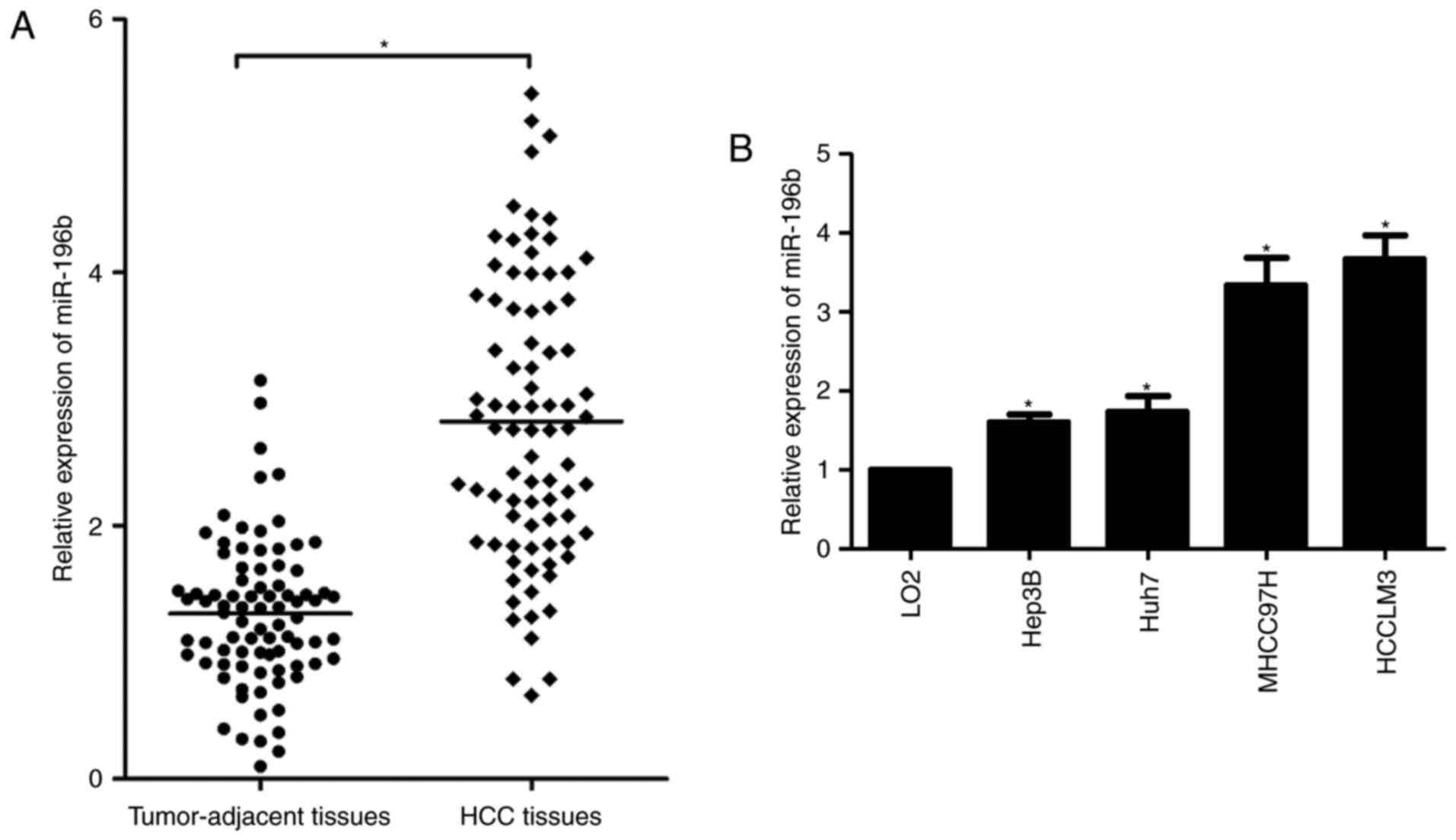
(11). Consistently, the qRT-PCR
analysis revealed that miR-196b expression was markedly increased
in HCC tissues compared with that noted in the adjacent
non-cancerous tissues from 84 patients in the present study
(P<0.05, Fig. 1A). In
accordance, we found that miR-196b was also significantly
upregulated in 4 HCC cell lines compared with that noted in the
normal hepatic cell line LO2 (P<0.05, Fig. 1B). These findings provide valid
evidence that miR-196b could be implicated in the pathogenesis and
development of HCC.
miR-196b expression correlates with
the prognosis of HCC patients
Different subgroups (miR-196b low/high expression)
were plotted according to the cut-off values of miR-196b, which
were defined as the median of the cohort. Relationship between the
clinical characteristics of the HCC patients and miR-196b
expression are listed in Table I.
High miR-196b expression was associated with venous infiltration
(P=0.023) and advanced TNM tumor stage (P=0.001). Furthermore,
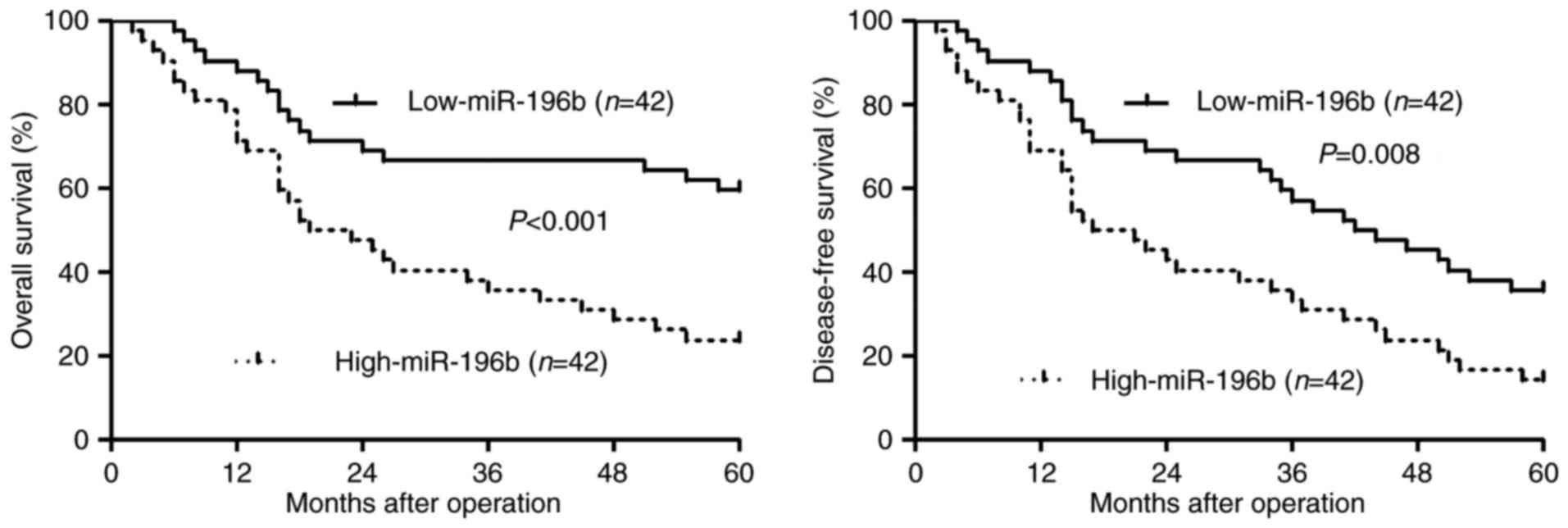
survival analyses indicated that miR-196b high expressing HCC
patients showed a significant reduced 5-year overall survival and
disease-free survival (P<0.05, respectively, Fig. 2). Thus, we suggest that miR-196b is
a possible prognostic biomarker for HCC patients.
miR-196b enhances the migration and
invasion of HCC cells
To detect the effects of miR-196b on migration and
invasion of HCC cells, Transwell assays were conducted when
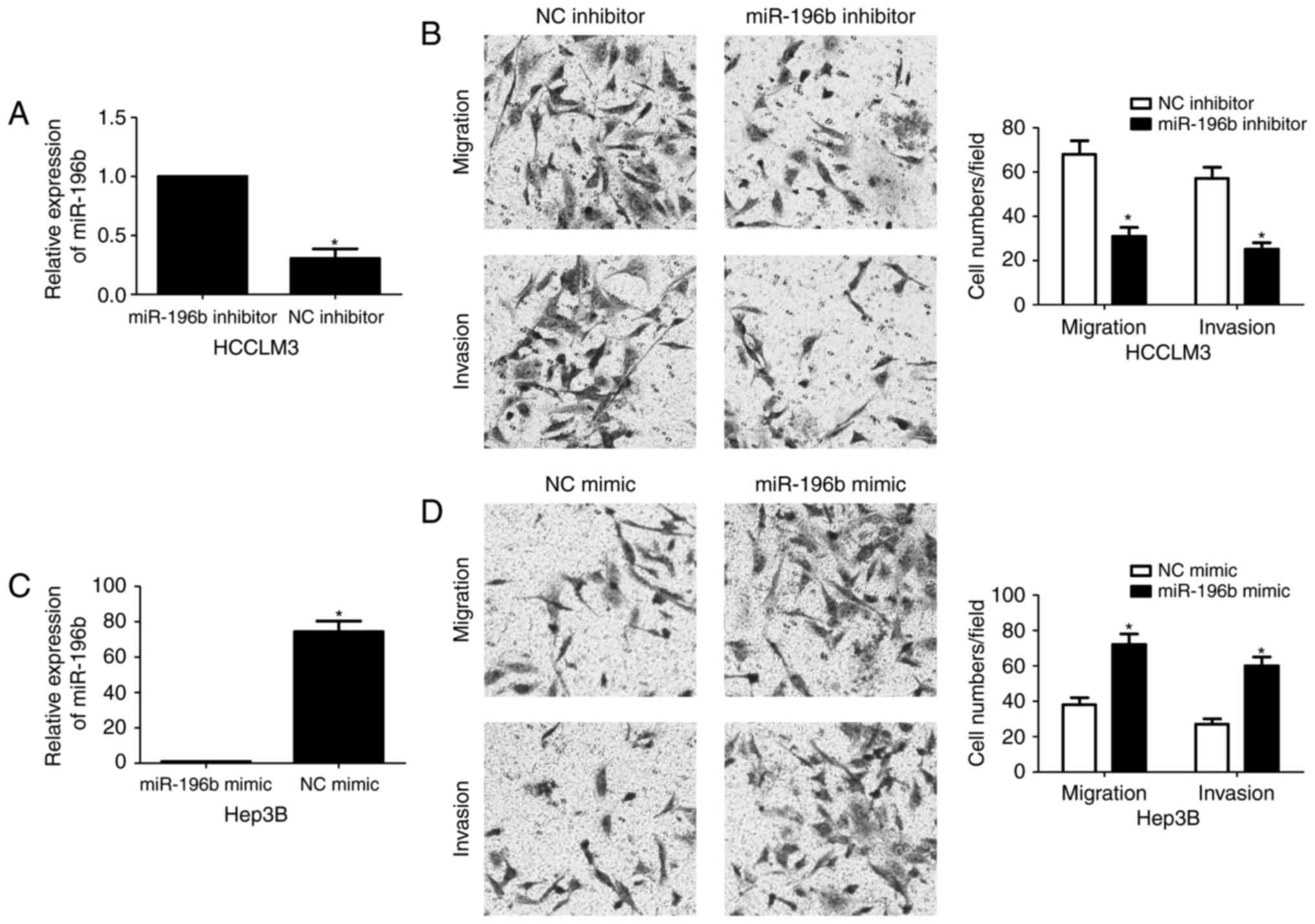
miR-196b expression was downregulated or upregulated. HCCLM3 cells
showed the highest level of miR-196b, while Hep3B cells showed the
lowest level of miR-196b. Thus, HCCLM3 and Hep3B were used for
loss- and gain-of-function experiments, respectively. miR-196b was
obviously knocked down by miR-196b inhibitor in HCCLM3 cells
(P<0.05, Fig. 3A). Transwell
assays revealed that miR-196b knockdown significantly weakened the
migratory and invasive abilities of HCCLM3 cells (P<0.05,
respectively, Fig. 3B). In turn,
overexpression of miR-196b was confirmed by qRT-PCR after miR-196b
mimic transfection in Hep3B cells (P<0.05, Fig. 3C). Our data showed that upregulation
of miR-196b significantly facilitated migration and invasion of
Hep3B cells compared with the NC group (P<0.05, respectively,
Fig. 3D). Based on the findings
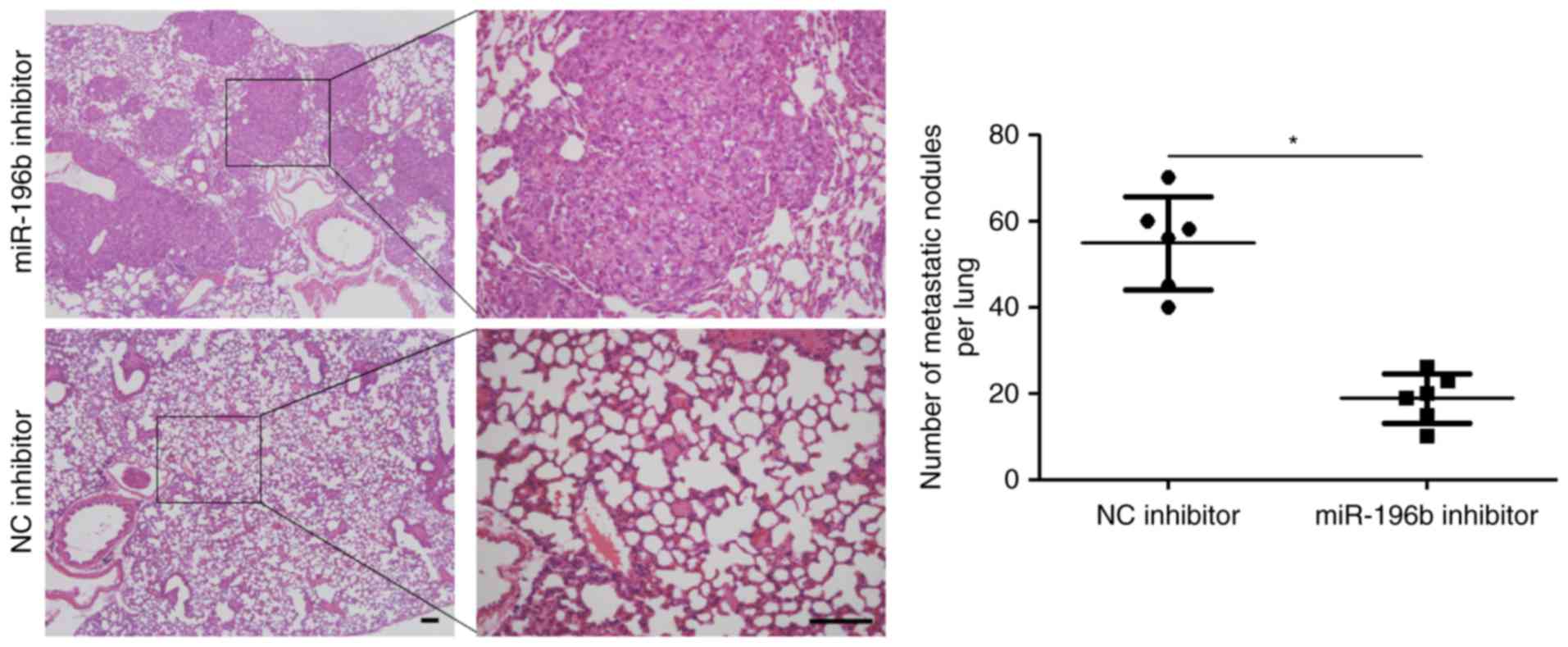
in vitro, we further probed the role of miR-196b during HCC
progression with xenograft models. A notable decrease in metastatic
nodes in the lung was noted in the miR-196b inhibitor group when
compared with the NC inhibitor groups (P<0.05, Fig. 4). Thus, miR-196b exerts a
pro-metastatic role in HCC.
miR-196b directly targets FOXP2 in
HCC
In order to explore the molecular mechanisms
underlying miR-196b, first, bioinformatic prediction (TargetScan:
http://www.targetscan.org and miRanda: http://www.microrna.org/microrna/hpme.do) showed that
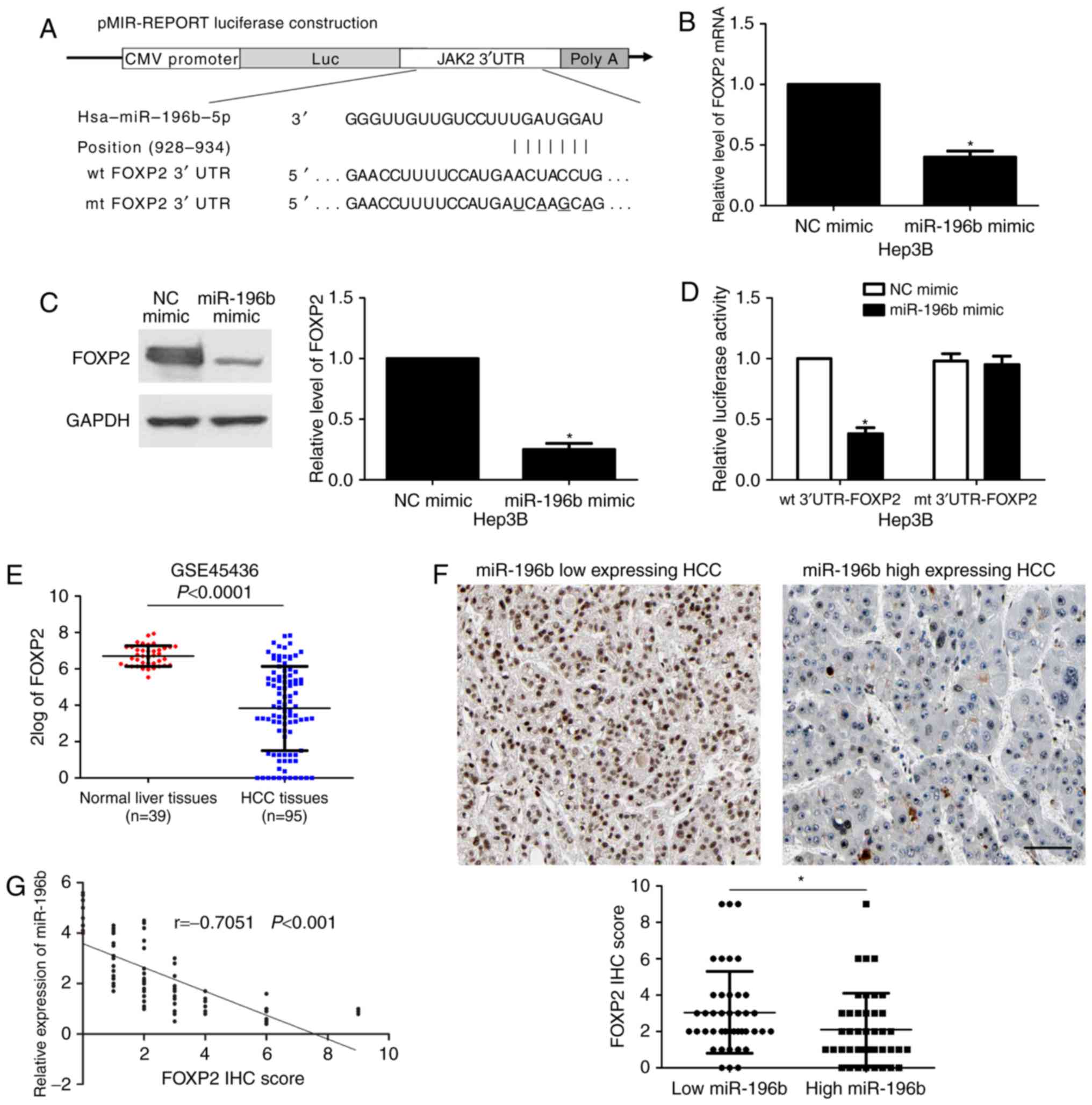
miR-196b could bind to the 3′UTR of FOXP2 mRNA (Fig. 5A). qRT-PCR and immunoblotting
results indicated that miR-196b overexpression reduced the levels
of FOXP2 mRNA and protein in Hep3B cells (P<0.05, respectively,
Fig. 5B and C). Then, to further
confirm the binding of miR-196b and 3′UTR of FOXP2, a
dual-luciferase reporter assay was implemented. Co-transfection of
Hep3B cells with Pmir-RB-FOXP2 vector and miR-196b mimic
significantly reduced luciferase reporter activity compared with
the negative control (P<0.05, Fig.
5D). This repressive effect was abolished by directed
mutagenesis of the miR-196b-binding seed region in 3′UTR of FOXP2
(Fig. 5D), which initially
suggested that the miR-196b and 3′UTR of FOXP2 may combine with
each other. A recent study found that FOXP2 was prominently reduced
in HCC tissues and inhibited migration and invasion of cancer cells
(15). Data from the GEO database
(GSE45436) demonstrated that the expression of FOXP2 in HCC tissues
was notably downregulated compared to that noted in normal liver
tissues (P<0.0001, Fig. 5E).
Moreover, IHC data revealed that the expression of FOXP2 in
miR-196b low-expressing HCCs was significantly higher than that in
high-expressing cases (P<0.05, Fig.
5F). Subsequently, a significant negative correlation between
miR-196b and FOXP2 expression was observed in HCC tissues
(r=−0.7051, P<0.001, Fig. 5G).
Together, these data demonstrated that FOXP2 is a direct target of
miR-196b in HCC.
FOXP2 functions in miR-196b-induced
migration and invasion of HCC cells
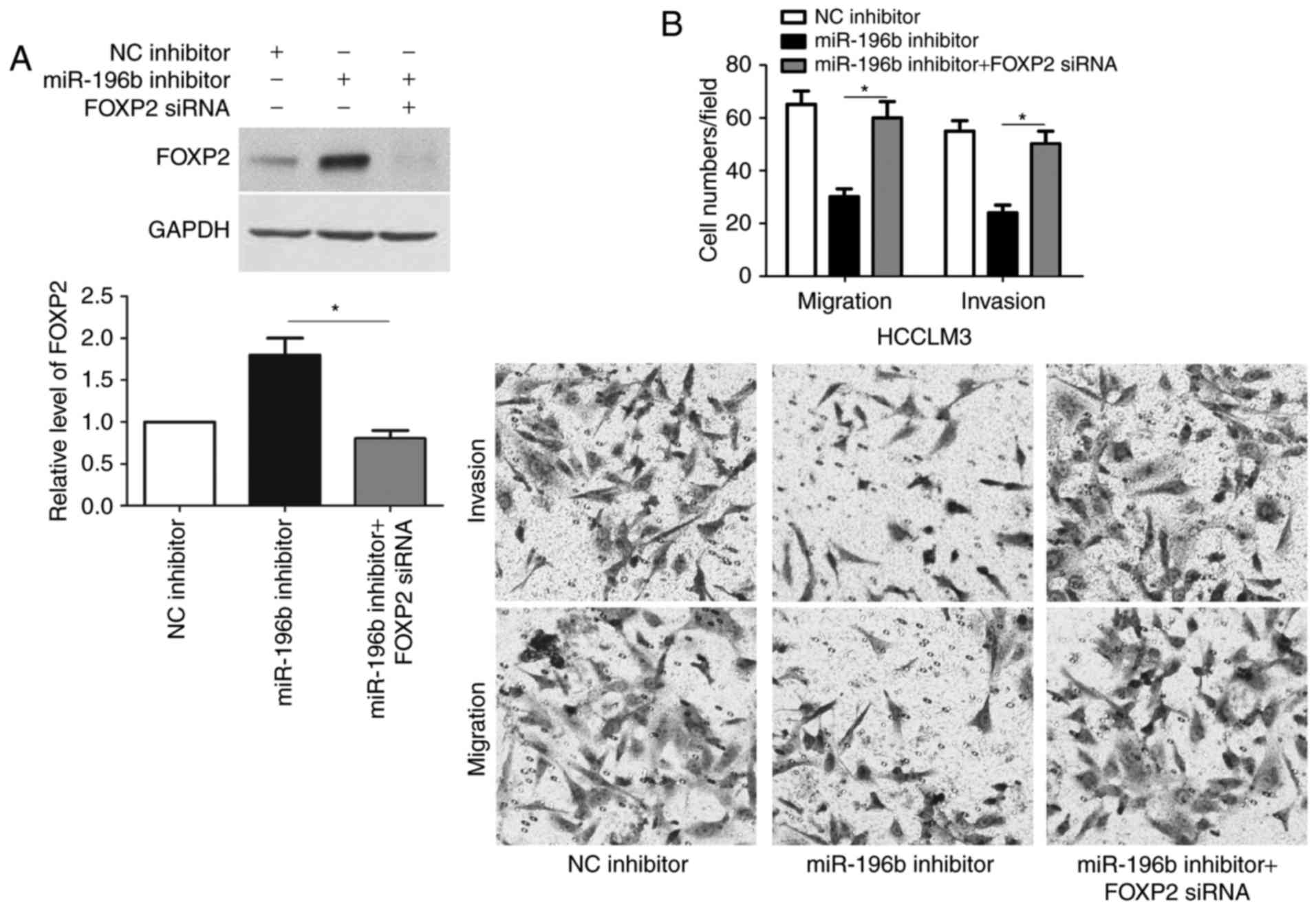
Next, we tested whether FOXP2 was able to mediate
the function of miR-196b in HCC cells. Co-transfection of miR-196b
inhibitor + FOXP2 siRNA was able to abrogate the miR-196b
silencing-induced upregulated expression of FOXP2 (P<0.05,
Fig. 6A). Furthermore, FOXP2
knockdown enhanced the migration and invasion of HCCLM3 cells with
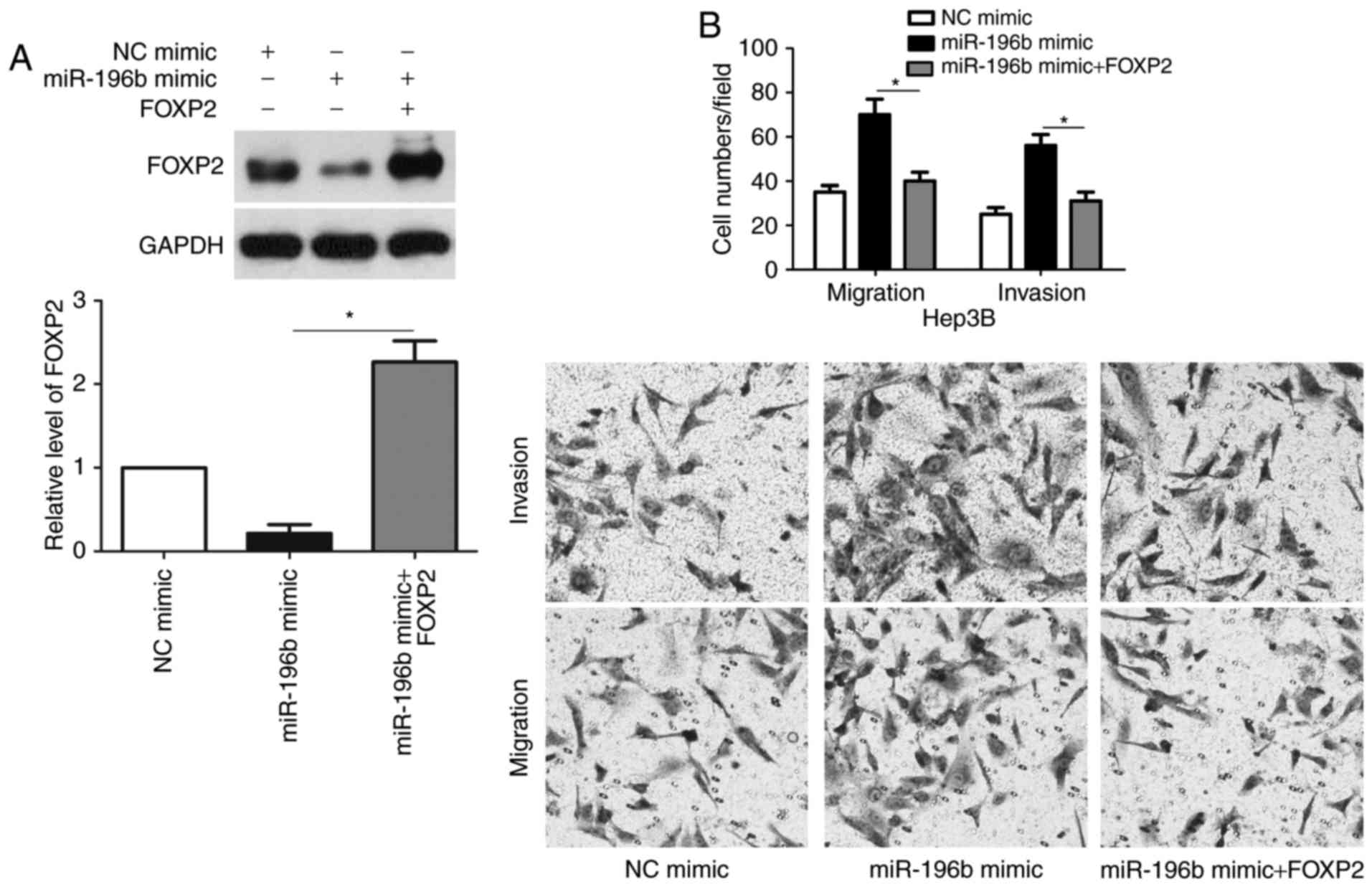
miR-196b silencing (P<0.05, respectively, Fig. 6B). In accordance, co-transfection of
miR-196b + FOXP2 abrogated the miR-196b-induced downregulation of
FOXP2 expression and metastasis of Hep3B cells (P<0.05,
respectively, Fig. 7). Therefore,
these results indicate that FOXP2 may function in miR-196b-induced
HCC metastasis.
Discussion
Recently, increasing evidence has shown that miRNAs
play a crucial role in the tumorigenesis and development of tumors
(16–18). Searching a miRNA signature may be of
clinical value for the diagnosis, therapy and prognosis of HCC
(18). Upregulation of miR-196b has
been reported in glioblastoma and may be a biomarker for indicating
poor prognosis (19,20). The prognostic significance of
miR-196b was also confirmed in pancreatic cancer (21), gastric cancer (5) and osteosarcomas (22). Currently, the clinical significance
of miR-196b has been disclosed in HCC. We found that high
expression of miR-196b was associated with venous infiltration and
advanced TNM tumor stage. More importantly, a high miR-196b level
was correlated with a reduced 5-year overall survival and
disease-free survival. Therefore, miR-196b potentially serves as a
promising biomarker for the prognosis of patients.
Tumor metastasis and recurrence are the root of poor
clinical outcome for HCC patients (23). Meanwhile, tumor metastasis and
recurrence are inseparable from enhanced cancer cell mobility
(24). Thus, investigating the
molecular mechanisms involved in the migration and invasion of HCC
cells are beneficial to explore anti-metastatic therapy. The
expression of miR-196b was found to be increased in liver
metastatic tumors compared to that in primary colorectal cancer
(9). Increased circulating
miR-196a/b levels were markedly associated with the metastatic
potential of gastric cancer (5,25). In
oral cancer, miR-196 plays a pro-metastatic role by targeting the
NME4/JNK/TIMP1/MMP signaling pathway (10). However, miR-196b overexpression
abolished the migration and invasion of breast cancer cells, and
restrained tumor metastasis in vivo via suppression of HOXC8
(26). Recently, miR-196b
underexpression was found in colorectal cancer and resulted in
enhanced invasion and metastasis of cancer cells (27). The above studies suggest that the
expression status and role of miR-196b is inconsistent in different
cancers. Thus, it is worth disclosing the role of miR-196b in HCC.
Subsequently, our data showed that miR-196b promoted the migration
and invasion of HCC cells, and miR-196b silencing reduced lung
metastasis in nude mice. Accordingly, we suggest that miR-196b
promotes tumor progression via exerting a pro-metastatic role in
HCC. FOXP2 has been recognized as a tumor suppressor and suppresses
the metastasis of HCC and breast cancer (15,28).
Data from the GEO database further confirmed the underexpression of
FOXP2 in HCC. miR-196b inversely regulated FOXP2 abundance in HCC
cells. Finally, luciferase reporter assay revealed that miR-196b
directly targets FOXP2 in HCC. Rescue experiments indicated that
FOXP2 is not only a downstream target but also a functional
mediator of miR-196b in HCC.
In summary, we demonstrated that upregulation of
miR-196b was correlated with the invasion and metastasis of HCC,
indicating the pathological importance of miR-196b in tumor
progression according to qRT-PCR and clinical data. A high miR-196b
level was indicative of a poor prognosis of HCC patients.
Subsequently, the novel molecular mechanism underlying the role of
miR-196b in invasion and metastasis was explored. Upregulation of
miR-196b functionally exerted an endogenous suppressive effect on
the target gene FOXP2. Moreover, we found that the miR-196b/FOXP2
axis stimulated the migration and invasion of HCC cells.
Acknowledgements
The present study was supported by the Scientific
Research Project of Shaanxi Provincial Department of Education
(2013JK0791).
References
|
1
|
Njei B, Rotman Y, Ditah I and Lim JK:
Emerging trends in hepatocellular carcinoma incidence and
mortality. Hepatology. 61:191–199. 2015. View Article : Google Scholar : PubMed/NCBI
|
|
2
|
Ulahannan SV, Duffy AG, McNeel TS, Kish
JK, Dickie LA, Rahma OE, McGlynn KA, Greten TF and Altekruse SF:
Earlier presentation and application of curative treatments in
hepatocellular carcinoma. Hepatology. 60:1637–1644. 2014.
View Article : Google Scholar : PubMed/NCBI
|
|
3
|
Coskun E, von der Heide EK, Schlee C,
Kühnl A, Gökbuget N, Hoelzer D, Hofmann WK, Thiel E and Baldus CD:
The role of microRNA-196a and microRNA-196b as ERG regulators in
acute myeloid leukemia and acute T-lymphoblastic leukemia. Leuk
Res. 35:208–213. 2011. View Article : Google Scholar : PubMed/NCBI
|
|
4
|
Xu X, Ling Q, Wang J, Xie H, Wei X, Lu D,
Hu Q, Zhang X, Wu L, Zhou L and Zheng S: Donor miR-196a-2
polymorphism is associated with hepatocellular carcinoma recurrence
after liver transplantation in a Han Chinese population. Int J
Cancer. 138:620–629. 2016. View Article : Google Scholar : PubMed/NCBI
|
|
5
|
Tsai MM, Wang CS, Tsai CY, Huang CG, Lee
KF, Huang HW, Lin YH, Chi HC, Kuo LM, Lu PH and Lin KH: Circulating
microRNA-196a/b are novel biomarkers associated with metastatic
gastric cancer. Eur J Cancer. 64:137–148. 2016. View Article : Google Scholar : PubMed/NCBI
|
|
6
|
Luthra R, Singh RR, Luthra MG, Li YX,
Hannah C, Romans AM, Barkoh BA, Chen SS, Ensor J, Maru DM, et al:
MicroRNA-196a targets annexin A1: A microRNA-mediated mechanism of
annexin A1 downregulation in cancers. Oncogene. 27:6667–6678. 2008.
View Article : Google Scholar : PubMed/NCBI
|
|
7
|
Li Z, Huang H, Chen P, He M, Li Y,
Arnovitz S, Jiang X, He C, Hyjek E, Zhang J, et al: miR-196b
directly targets both HOXA9/MEIS1 oncogenes and FAS tumour
suppressor in MLL-rearranged leukaemia. Nat Commun. 3:6882012.
View Article : Google Scholar : PubMed/NCBI
|
|
8
|
Li XD, Li ZG, Song XX and Liu CF: A
variant in microRNA-196a2 is associated with susceptibility to
hepatocellular carcinoma in Chinese patients with cirrhosis.
Pathology. 42:669–673. 2010. View Article : Google Scholar : PubMed/NCBI
|
|
9
|
Li W, Chang J, Tong D, Peng J, Huang D,
Guo W, Zhang W and Li J: Differential microRNA expression profiling
in primary tumors and matched liver metastasis of patients with
colorectal cancer. Oncotarget. 8:35783–35791. 2017.PubMed/NCBI
|
|
10
|
Lu YC, Chang JT, Liao CT, Kang CJ, Huang
SF, Chen IH, Huang CC, Huang YC, Chen WH, Tsai CY, et al:
OncomiR-196 promotes an invasive phenotype in oral cancer through
the NME4-JNK-TIMP1-MMP signaling pathway. Mol Cancer. 13:2182014.
View Article : Google Scholar : PubMed/NCBI
|
|
11
|
Shen J, Wang S, Zhang YJ, Kappil MA, Chen
Wu H, Kibriya MG, Wang Q, Jasmine F, Ahsan H, Lee PH, et al:
Genome-wide aberrant DNA methylation of microRNA host genes in
hepatocellular carcinoma. Epigenetics. 7:1230–1237. 2012.
View Article : Google Scholar : PubMed/NCBI
|
|
12
|
El-Guendy NM, Helwa R, El-Halawany MS,
Abdel Rahman Ali S, Tantawy Aly M, Hasan Alieldin N, Fouad SA,
Saeid H and Abdel-Wahab AH: The liver MicroRNA expression profiles
associated with chronic hepatitis C virus (HCV) genotype-4
infection: A preliminary study. Hepat Mon. 16:e338812016.PubMed/NCBI
|
|
13
|
Chang W, Zhang L, Xian Y and Yu Z:
MicroRNA-33a promotes cell proliferation and inhibits apoptosis by
targeting PPARα in human hepatocellular carcinoma. Exp Ther Med.
13:2507–2514. 2017. View Article : Google Scholar : PubMed/NCBI
|
|
14
|
Mendonsa AM, VanSaun MN, Ustione A, Piston
DW, Fingleton BM and Gorden DL: Host and tumor derived MMP13
regulate extravasation and establishment of colorectal metastases
in the liver. Mol Cancer. 14:492015. View Article : Google Scholar : PubMed/NCBI
|
|
15
|
Yan X, Zhou H and Zhang T, Xu P, Zhang S,
Huang W, Yang L, Gu X, Ni R and Zhang T: Downregulation of FOXP2
promoter human hepatocellular carcinoma cell invasion. Tumour Biol.
36:9611–9619. 2015. View Article : Google Scholar : PubMed/NCBI
|
|
16
|
Su Z, Yang Z, Xu Y, Chen Y and Yu Q:
MicroRNAs in apoptosis, autophagy and necroptosis. Oncotarget.
6:8474–8490. 2015. View Article : Google Scholar : PubMed/NCBI
|
|
17
|
Lin S and Gregory RI: MicroRNA biogenesis
pathways in cancer. Nat Rev Cancer. 15:321–333. 2015. View Article : Google Scholar : PubMed/NCBI
|
|
18
|
Anwar SL and Lehmann U: MicroRNAs:
Emerging novel clinical biomarkers for hepatocellular carcinomas. J
Clin Med. 4:1631–1650. 2015. View Article : Google Scholar : PubMed/NCBI
|
|
19
|
Guan Y, Mizoguchi M, Yoshimoto K, Hata N,
Shono T, Suzuki SO, Araki Y, Kuga D, Nakamizo A, Amano T, et al:
MiRNA-196 is upregulated in glioblastoma but not in anaplastic
astrocytoma and has prognostic significance. Clin Cancer Res.
16:4289–4297. 2010. View Article : Google Scholar : PubMed/NCBI
|
|
20
|
Ma R, Yan W, Zhang G, Lv H, Liu Z, Fang F,
Zhang W, Zhang J, Tao T, You Y, et al: Upregulation of miR-196b
confers a poor prognosis in glioblastoma patients via inducing a
proliferative phenotype. PLoS One. 7:e380962012. View Article : Google Scholar : PubMed/NCBI
|
|
21
|
Kanno S, Nosho K, Ishigami K, Yamamoto I,
Koide H, Kurihara H, Mitsuhashi K, Shitani M, Motoya M, Sasaki S,
et al: MicroRNA-196b is an independent prognostic biomarker in
patients with pancreatic cancer. Carcinogenesis. 38:425–431. 2017.
View Article : Google Scholar : PubMed/NCBI
|
|
22
|
Zhang C, Yao C, Li H, Wang G and He X:
Combined elevation of microRNA-196a and microRNA-196b in sera
predicts unfavorable prognosis in patients with osteosarcomas. Int
J Mol Sci. 15:6544–6555. 2014. View Article : Google Scholar : PubMed/NCBI
|
|
23
|
Wong CC, Kai AK and Ng IO: The impact of
hypoxia in hepatocellular carcinoma metastasis. Front Med. 8:33–41.
2014. View Article : Google Scholar : PubMed/NCBI
|
|
24
|
Tu K, Dou C, Zheng X, Li C, Yang W, Yao Y
and Liu Q: Fibulin-5 inhibits hepatocellular carcinoma cell
migration and invasion by down-regulating matrix
metalloproteinase-7 expression. BMC Cancer. 14:9382014. View Article : Google Scholar : PubMed/NCBI
|
|
25
|
Li CY, Liang GY, Yao WZ, Sui J, Shen X,
Zhang YQ, Peng H, Hong WW, Ye YC, Zhang ZY, et al: Identification
and functional characterization of microRNAs reveal a potential
role in gastric cancer progression. Clin Transl Oncol. 19:162–172.
2017. View Article : Google Scholar : PubMed/NCBI
|
|
26
|
Li Y, Zhang M, Chen H, Dong Z, Ganapathy
V, Thangaraju M and Huang S: Ratio of miR-196s to HOXC8 messenger
RNA correlates with breast cancer cell migration and metastasis.
Cancer Res. 70:7894–7904. 2010. View Article : Google Scholar : PubMed/NCBI
|
|
27
|
Stiegelbauer V, Vychytilova-Faltejskova P,
Karbiener M, Pehserl AM, Reicher A, Resel M, Heitzer E, Ivan C,
Bullock M, Ling H, et al: MicroRNA-196b-5p regulates colorectal
cancer cell migration and metastases through interaction of HOXB7
and GALNT5. Clin Cancer Res. 23:5255–5266. 2017. View Article : Google Scholar : PubMed/NCBI
|
|
28
|
Cuiffo BG, Campagne A, Bell GW, Lembo A,
Orso F, Lien EC, Bhasin MK, Raimo M, Hanson SE, Marusyk A, et al:
MSC-regulated microRNAs converge on the transcription factor FOXP2
and promote breast cancer metastasis. Cell Stem Cell. 15:762–774.
2014. View Article : Google Scholar : PubMed/NCBI
|