Spandidos Publications Logo
  • About
    • About Spandidos
    • Aims and Scopes
    • Abstracting and Indexing
    • Editorial Policies
    • Reprints and Permissions
    • Job Opportunities
    • Terms and Conditions
    • Contact
  • Journals
    • All Journals
    • Oncology Letters
      • Oncology Letters
      • Information for Authors
      • Editorial Policies
      • Editorial Board
      • Aims and Scope
      • Abstracting and Indexing
      • Bibliographic Information
      • Archive
    • International Journal of Oncology
      • International Journal of Oncology
      • Information for Authors
      • Editorial Policies
      • Editorial Board
      • Aims and Scope
      • Abstracting and Indexing
      • Bibliographic Information
      • Archive
    • Molecular and Clinical Oncology
      • Molecular and Clinical Oncology
      • Information for Authors
      • Editorial Policies
      • Editorial Board
      • Aims and Scope
      • Abstracting and Indexing
      • Bibliographic Information
      • Archive
    • Experimental and Therapeutic Medicine
      • Experimental and Therapeutic Medicine
      • Information for Authors
      • Editorial Policies
      • Editorial Board
      • Aims and Scope
      • Abstracting and Indexing
      • Bibliographic Information
      • Archive
    • International Journal of Molecular Medicine
      • International Journal of Molecular Medicine
      • Information for Authors
      • Editorial Policies
      • Editorial Board
      • Aims and Scope
      • Abstracting and Indexing
      • Bibliographic Information
      • Archive
    • Biomedical Reports
      • Biomedical Reports
      • Information for Authors
      • Editorial Policies
      • Editorial Board
      • Aims and Scope
      • Abstracting and Indexing
      • Bibliographic Information
      • Archive
    • Oncology Reports
      • Oncology Reports
      • Information for Authors
      • Editorial Policies
      • Editorial Board
      • Aims and Scope
      • Abstracting and Indexing
      • Bibliographic Information
      • Archive
    • Molecular Medicine Reports
      • Molecular Medicine Reports
      • Information for Authors
      • Editorial Policies
      • Editorial Board
      • Aims and Scope
      • Abstracting and Indexing
      • Bibliographic Information
      • Archive
    • World Academy of Sciences Journal
      • World Academy of Sciences Journal
      • Information for Authors
      • Editorial Policies
      • Editorial Board
      • Aims and Scope
      • Abstracting and Indexing
      • Bibliographic Information
      • Archive
    • International Journal of Functional Nutrition
      • International Journal of Functional Nutrition
      • Information for Authors
      • Editorial Policies
      • Editorial Board
      • Aims and Scope
      • Abstracting and Indexing
      • Bibliographic Information
      • Archive
    • International Journal of Epigenetics
      • International Journal of Epigenetics
      • Information for Authors
      • Editorial Policies
      • Editorial Board
      • Aims and Scope
      • Abstracting and Indexing
      • Bibliographic Information
      • Archive
    • Medicine International
      • Medicine International
      • Information for Authors
      • Editorial Policies
      • Editorial Board
      • Aims and Scope
      • Abstracting and Indexing
      • Bibliographic Information
      • Archive
  • Articles
  • Information
    • Information for Authors
    • Information for Reviewers
    • Information for Librarians
    • Information for Advertisers
    • Conferences
  • Language Editing
Spandidos Publications Logo
  • About
    • About Spandidos
    • Aims and Scopes
    • Abstracting and Indexing
    • Editorial Policies
    • Reprints and Permissions
    • Job Opportunities
    • Terms and Conditions
    • Contact
  • Journals
    • All Journals
    • Biomedical Reports
      • Information for Authors
      • Editorial Policies
      • Editorial Board
      • Aims and Scope
      • Abstracting and Indexing
      • Bibliographic Information
      • Archive
    • Experimental and Therapeutic Medicine
      • Information for Authors
      • Editorial Policies
      • Editorial Board
      • Aims and Scope
      • Abstracting and Indexing
      • Bibliographic Information
      • Archive
    • International Journal of Epigenetics
      • Information for Authors
      • Editorial Policies
      • Editorial Board
      • Aims and Scope
      • Abstracting and Indexing
      • Bibliographic Information
      • Archive
    • International Journal of Functional Nutrition
      • Information for Authors
      • Editorial Policies
      • Editorial Board
      • Aims and Scope
      • Abstracting and Indexing
      • Bibliographic Information
      • Archive
    • International Journal of Molecular Medicine
      • Information for Authors
      • Editorial Policies
      • Editorial Board
      • Aims and Scope
      • Abstracting and Indexing
      • Bibliographic Information
      • Archive
    • International Journal of Oncology
      • Information for Authors
      • Editorial Policies
      • Editorial Board
      • Aims and Scope
      • Abstracting and Indexing
      • Bibliographic Information
      • Archive
    • Medicine International
      • Information for Authors
      • Editorial Policies
      • Editorial Board
      • Aims and Scope
      • Abstracting and Indexing
      • Bibliographic Information
      • Archive
    • Molecular and Clinical Oncology
      • Information for Authors
      • Editorial Policies
      • Editorial Board
      • Aims and Scope
      • Abstracting and Indexing
      • Bibliographic Information
      • Archive
    • Molecular Medicine Reports
      • Information for Authors
      • Editorial Policies
      • Editorial Board
      • Aims and Scope
      • Abstracting and Indexing
      • Bibliographic Information
      • Archive
    • Oncology Letters
      • Information for Authors
      • Editorial Policies
      • Editorial Board
      • Aims and Scope
      • Abstracting and Indexing
      • Bibliographic Information
      • Archive
    • Oncology Reports
      • Information for Authors
      • Editorial Policies
      • Editorial Board
      • Aims and Scope
      • Abstracting and Indexing
      • Bibliographic Information
      • Archive
    • World Academy of Sciences Journal
      • Information for Authors
      • Editorial Policies
      • Editorial Board
      • Aims and Scope
      • Abstracting and Indexing
      • Bibliographic Information
      • Archive
  • Articles
  • Information
    • For Authors
    • For Reviewers
    • For Librarians
    • For Advertisers
    • Conferences
  • Language Editing
Login Register Submit
  • This site uses cookies
  • You can change your cookie settings at any time by following the instructions in our Cookie Policy. To find out more, you may read our Privacy Policy.

    I agree
Search articles by DOI, keyword, author or affiliation
Search
Advanced Search
presentation
Biomedical Reports
Join Editorial Board Propose a Special Issue
Print ISSN: 2049-9434 Online ISSN: 2049-9442
Journal Cover
January-February 2013 Volume 1 Issue 1

Full Size Image

Sign up for eToc alerts
Recommend to Library

Journals

International Journal of Molecular Medicine

International Journal of Molecular Medicine

International Journal of Molecular Medicine is an international journal devoted to molecular mechanisms of human disease.

International Journal of Oncology

International Journal of Oncology

International Journal of Oncology is an international journal devoted to oncology research and cancer treatment.

Molecular Medicine Reports

Molecular Medicine Reports

Covers molecular medicine topics such as pharmacology, pathology, genetics, neuroscience, infectious diseases, molecular cardiology, and molecular surgery.

Oncology Reports

Oncology Reports

Oncology Reports is an international journal devoted to fundamental and applied research in Oncology.

Experimental and Therapeutic Medicine

Experimental and Therapeutic Medicine

Experimental and Therapeutic Medicine is an international journal devoted to laboratory and clinical medicine.

Oncology Letters

Oncology Letters

Oncology Letters is an international journal devoted to Experimental and Clinical Oncology.

Biomedical Reports

Biomedical Reports

Explores a wide range of biological and medical fields, including pharmacology, genetics, microbiology, neuroscience, and molecular cardiology.

Molecular and Clinical Oncology

Molecular and Clinical Oncology

International journal addressing all aspects of oncology research, from tumorigenesis and oncogenes to chemotherapy and metastasis.

World Academy of Sciences Journal

World Academy of Sciences Journal

Multidisciplinary open-access journal spanning biochemistry, genetics, neuroscience, environmental health, and synthetic biology.

International Journal of Functional Nutrition

International Journal of Functional Nutrition

Open-access journal combining biochemistry, pharmacology, immunology, and genetics to advance health through functional nutrition.

International Journal of Epigenetics

International Journal of Epigenetics

Publishes open-access research on using epigenetics to advance understanding and treatment of human disease.

Medicine International

Medicine International

An International Open Access Journal Devoted to General Medicine.

Journal Cover
January-February 2013 Volume 1 Issue 1

Full Size Image

Sign up for eToc alerts
Recommend to Library

  • Article
  • Citations
    • Cite This Article
    • Download Citation
    • Create Citation Alert
    • Remove Citation Alert
    • Cited By
  • Similar Articles
    • Related Articles (in Spandidos Publications)
    • Similar Articles (Google Scholar)
    • Similar Articles (PubMed)
  • Download PDF
  • Download XML
  • View XML
Article

Tofuyo (fermented soybean food) extract prolongs the survival of mice infected with influenza virus

  • Authors:
    • Akikazu Sakudo
    • Masayasu Sesoko
  • View Affiliations / Copyright

    Affiliations: Laboratory of Biometabolic Chemistry, School of Health Sciences, Faculty of Medicine, University of the Ryukyus, Nishihara, Okinawa 903-0215, Japan, RyuKyu-Cement Co., Ltd., Urasoe, Okinawa 901-2123, Japan
  • Pages: 80-84
    |
    Published online on: October 25, 2012
       https://doi.org/10.3892/br.2012.29
  • Expand metrics +
Metrics: Total Views: 0 (Spandidos Publications: | PMC Statistics: )
Metrics: Total PDF Downloads: 0 (Spandidos Publications: | PMC Statistics: )
Cited By (CrossRef): 0 citations Loading Articles...

This article is mentioned in:


Abstract

Fermented soybean, known as tofuyo, is a traditional food in Okinawa (Japan). Tofuyo extract is obtained from the supernatant of fermented soybean after homogenization, filtration and centrifugation. In this study, we analyzed the in vitro effect of tofuyo extract on influenza virus using immunochromatography of the influenza virus nucleoprotein (NP). The results showed that tofuyo extract does not have a strong inhibitory effect on NP. This finding was confirmed by an assay for virus activity using embryonated eggs. To investigate the potential anti-influenza virus activity of tofuyo in vivo, 5 nude mice (BALB/cSlc-nu/nu) were administered drinking water supplemented with tofuyo extract the day prior to intranasal inoculation with influenza virus, while the control group (5 mice) was administered tofuyo extract‑free water. Control group mice (40%) were dead within 14 days, while the mice that were administered water containing tofuyo extract survived. Nutrient component analysis showed that tofuyo extract contains proteins, carbohydrates, vitamins and minerals that provide nutritional value, which may help to maintain good health.

Introduction

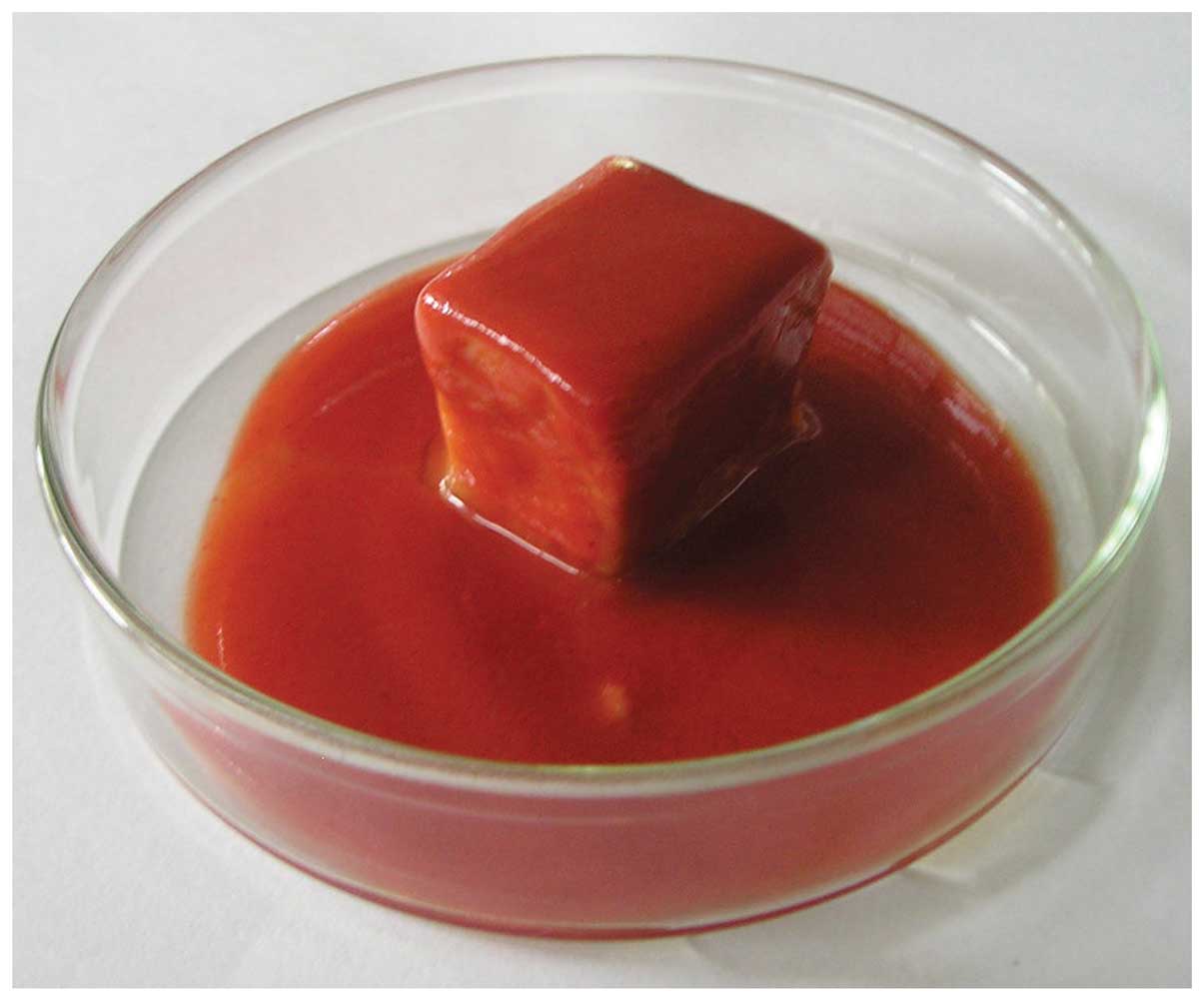
Tofuyo (fermented soybean food) is a traditional local specialty product of Okinawa, Japan (Fig. 1), and it is believed that the nobles of Okinawa during the Ryukyu Dynasty period identified tofuyo as a nutritious food good for recovery from illness. Tofuyo is prepared by fermenting tofu in a mixture of alcoholic, sake-like beverage (known as awamori) along with rice malt and red yeast, which gives tofuyo its distinctive red color. It has been demonstrated that tofuyo contains a variety of functional components and that it has numerous properties as a healthy food, including protection of the stomach wall and mucous membranes, as well as inhibition of cholesterol synthesis (1,2).

Figure 1.

Tofuyo prepared from red and yellow kojis.

Influenza occurs every winter and the virus is transmitted through the mucous membrane of the nose and the respiratory tract. Therefore, the aim of this study was to investigate whether or not tofuyo ingestion has an effect on influenza infection. As a result, an animal experiment was conducted to determine the effects of tofuyo extract on the influenza virus and influenza infection in vitro and in vivo; tofuyo extract nutrient components were also analyzed.

Materials and methods

Preparation of tofuyo extract

Tofuyo prepared from red and yellow kojis (2) was supplied by Benihama Co., Ltd. (Okinawa, Japan). Tofuyo was suspended in 3 volumes of distilled water, homogenized, and then mixed at room temperature for 1 h. The mixture was centrifuged at 12,000 × g for 15 min, and the resulting precipitate was removed. The supernatant was filtered, and the filtered solution was used as the tofuyo extract.

Influenza virus

Influenza virus strain PR8 [A/Puerto Rico/8/34 (H1N1)] was used in this study (3).

In vitro analysis

The culture supernatant (3.16×10¹⁴ TCID50/ml) of Madin-Darby canine kidney (MDCK) cells infected with influenza virus strain PR8 was mixed with tofuyo extract and incubated. Changes in the amount of nucleoprotein (NP) of influenza virus were measured using immunochromatography (ESPLINE® Influenza A&B-N, Fujirebio, Inc., Tokyo, Japan). Similarly, changes in the sensitivity of embryonated chicken eggs to influenza virus were analyzed by injecting the above mixture into 12-day-old embryonated chicken eggs.

In vivo analysis

Influenza virus strain PR8 was inoculated into embryonated chicken eggs. Influenza virus-infected allantoic fluid was collected 48 h following incubation [a unit for hemagglutinin (HA) value of 109], and a 105-fold diluted solution of allantoic fluid was nasally inoculated into nude mice (BALB/cSlc-nu/nu) by inhalation through the nose under anesthesia. For the tofuyo extract-administered group, tofuyo extract solution, which was prepared by adding 1 ml of extract to 200 ml of water, was administered as drinking water from the day prior to inoculation. Tofuyo extract-free water was administered to the control group. Following inoculation, mice were observed for changes in weight against time. Lungs were then collected from the mice that died and those that survived until 14 days following inoculation. Each collected lung was homogenized to prepare a 0.5% homogenate, and the amount of NP of the influenza virus was measured by immunochromatography (ESPLINE® Influenza A&B-N). The animals were treated in accordance with the procedures approved by the Animal Experiment Committee of the University of Ryukyus (Nishihara, Japan). This experiment was permitted by the Guidelines for the Care and Use of Laboratory Animals, approved by the Animal Experiment Committee of the University of Ryukyus (permit no. 5465).

Nutrient component analysis

According to the Analytical Manual for Standard Tables of Food Composition in Japan (4) and the Tables of Food Composition (5), the content of energy, water, protein, lipid, carbohydrate, ash, sodium, potassium, calcium, magnesium, phosphorus, iron, zinc, copper, manganese, vitamins B1, B2 and B6, soluble, insoluble and total dietary fibers, sodium chloride equivalent and alcohol was measured in the tofuyo extract. In addition, the content of arginine, lysine, histidine, phenylalanine, tyrosine, leucine, isoleucine, methionine, valine, alanine, glycine, proline, glutamic acid, serine, threonine, aspartic acid, tryptophan as well as cysteine and cystine was measured using amino acid autoanalysis and high-performance liquid chromatography.

Results

In vitro effect of tofuyo extract on nucleoprotein and influenza virus infection

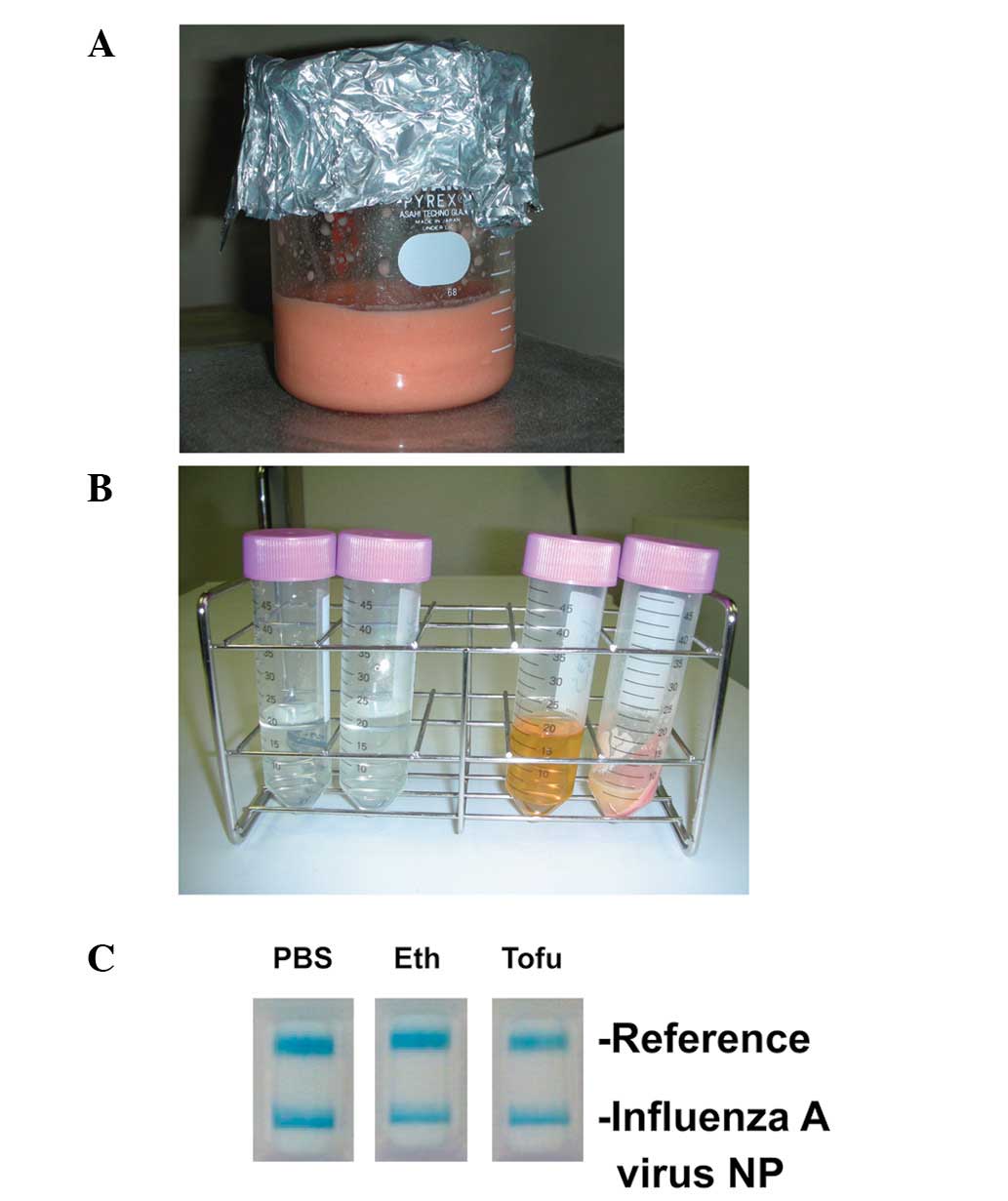
The culture supernatant of MDCK cells infected with influenza virus strain PR8 was mixed with tofuyo extract, phosphate-buffered saline (PBS) or 8.5% ethanol at a dilution of 1:9, and incubated at 37°C for 30 min. The amount of NP in the influenza virus was then compared by immunochromato graphy. As a result, incubation with 8.5% ethanol and tofuyo extract showed no major differences in the amount of NP compared to PBS (Fig. 2).

Figure 2.

In vitro effect of tofuyo extract on nucleoprotein (NP) of influenza virus is shown. (A) Tofuyo diluted with distilled water and homogenized. (B) Left to right: phosphate-buffered saline (PBS), 8.5% ethanol, supernatant of tofuyo filtered and centrifuged, pellet of tofuyo filtered and centrifuged. (C) Cell culture medium of cells infected with influenza virus strain PR8 was mixed with the indicated samples. NP of influenza virus was detected by immunochromatography (PBS, PBS + influenza virus, 37°C for 30 min; Eth, 8.5% ethanol + influenza virus, 37°C for 30 min; Tofu, tofuyo extract + influenza virus, 37°C for 30 min). The reference line verified the success of the assay. The intensity of the influenza A virus NP line indicated the quantity of influenza A virus NP. Modified from Figs. 1 and 2 in Sakudo and Sesoko (6) with the permission of the Fuji Foundation for Protein Research.

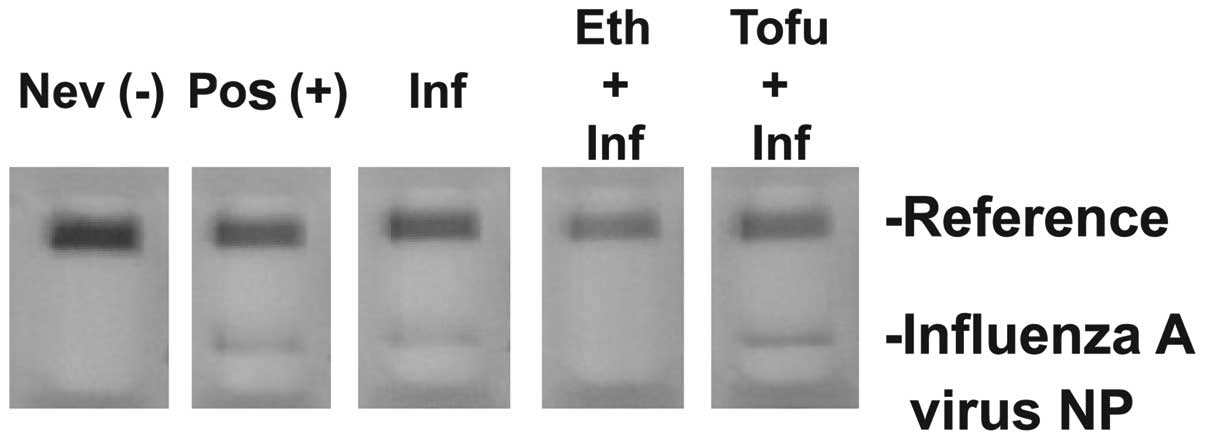
Following incubation the above samples were inoculated into the allantoic cavity of embryonated chicken eggs, and allantoic fluid was collected 48 h later. Sensitivity to the virus after each treatment was compared by measuring the amount of NP of the influenza virus in the allantoic fluid using immunochromatography. As a result, it was demonstrated that treatment with 8.5% ethanol reduced the activity of the influenza virus, while the tofuyo extract did not reduce the infectivity of the virus (Fig. 3). Thus, this indicated that low ethanol in the tofuyo extract did not reduce the activity of the influenza virus.

Figure 3.

In vitro effect of tofuyo extract on influenza virus infection is shown. Cell culture medium of cells infected with influenza virus strain PR8 and treated by the indicated procedures was injected into embryonated eggs and incubated for 48 h. Allantoic fluid was collected and subjected to immunochromatography. The reference line verified the success of the assay. The intensity of influenza A virus NP line indicated the quantity of influenza A virus NP. Left to right: Nev (−), no influenza virus; Pos (+), no treated influenza virus; Inf, influenza virus incubated at 37°C for 30 min; Eth + Inf, 8.5% ethanol + influenza virus incubated at 37°C for 30 min; Tofu + Inf, tofuyo extract + influenza virus incubated at 37°C for 30 min. Modified from Fig. 3 in Sakudo and Sesoko (6) with the permission of the Fuji Foundation for Protein Research.

Tofuyo extract prolongs survival of mice and delays decrease in body weight of mice caused by influenza virus infection

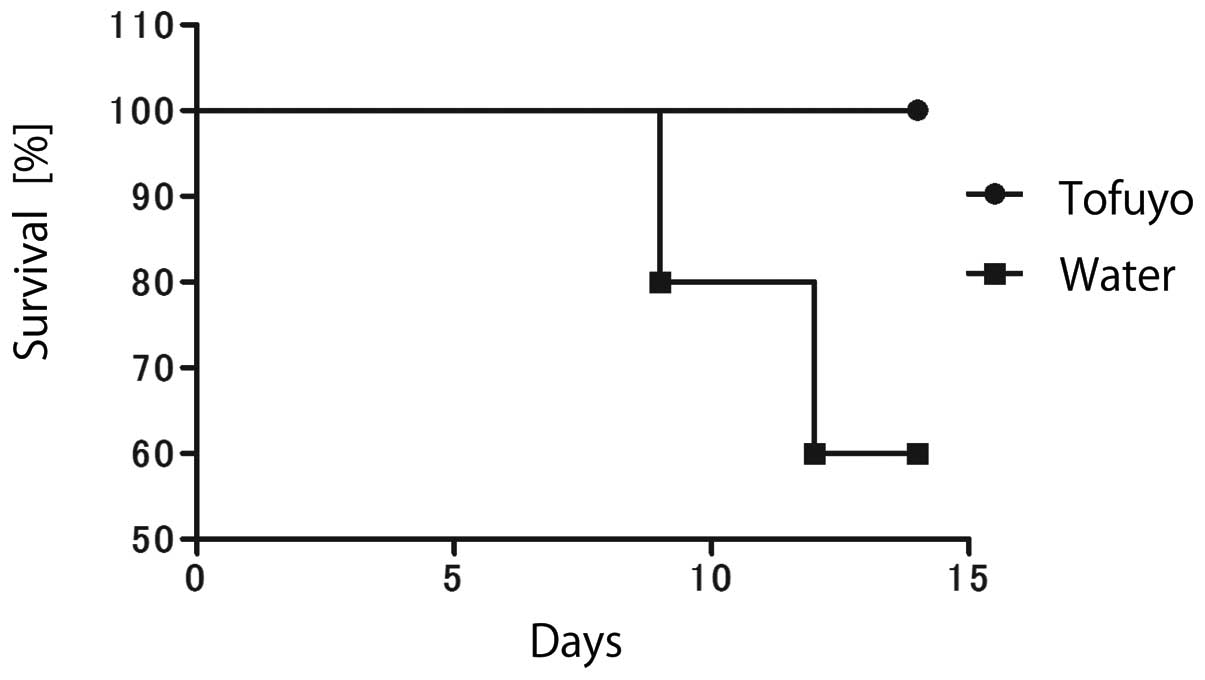
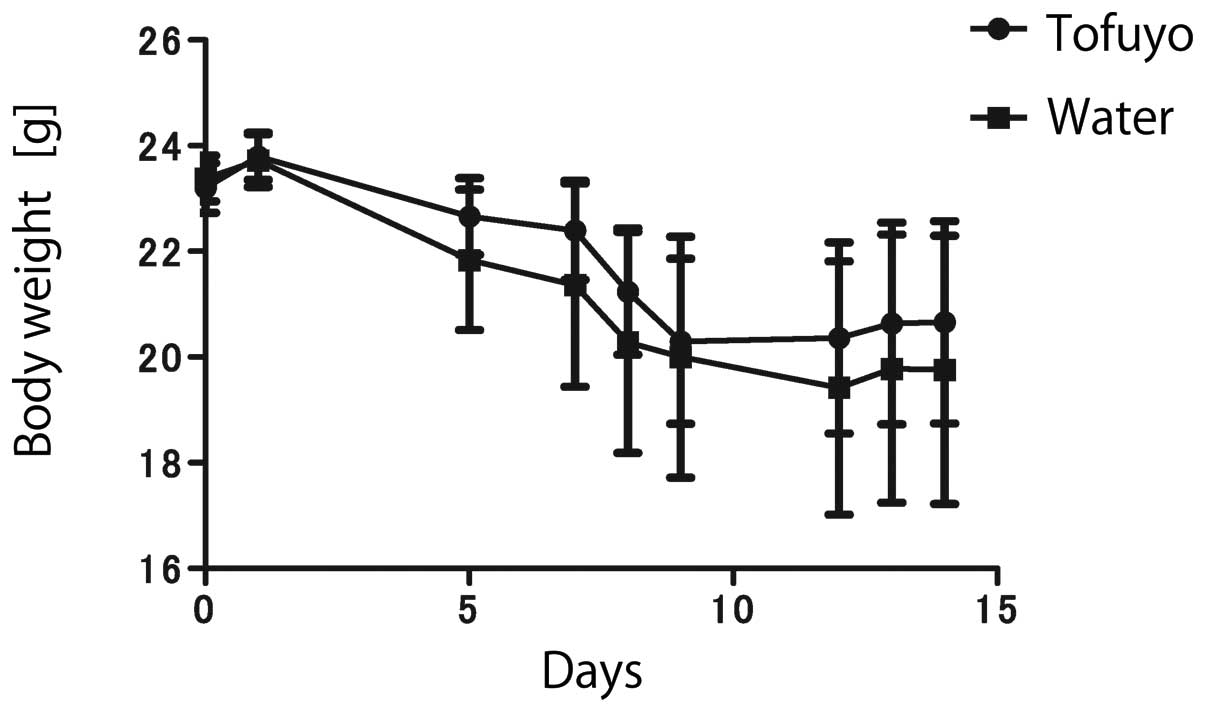
A 105-diluted solution of allantoic fluid infected with influenza virus strain PR8 was nasally inoculated into nude mice. The mice were then reared for 14 days and changes in their weight were measured. In the group administered the water-containing tofuyo extract from the day prior to inoculation, the mice (5/5) survived, while in the control group where mice were administered tofuyo extract-free water, 2 mice died on days 9 and 12 following inoculation, and 3/5 mice survived (Fig. 4). In addition, comparing weight changes, weight loss was significantly smaller in the tofuyo extract-treated group compared to the control group (P<0.05, paired Student’s t-test) (Fig. 5).

Figure 4.

Tofuyo extract prolongs the survival of mice infected with influenza virus. Graph shows the survival percentage of two groups of nude mice (BALB/cSlc-nu/nu) after intranasal infection with influenza virus [A/Puerto Rico/8/34 (H1N1)]. The control group was administered tofuyo extract-free water, whereas the study group was administered water-containing tofuyo extract.

Figure 5.

Tofuyo extract significantly delays the decrease in body weight caused by infection with influenza virus [A/Puerto Rico/8/34 (H1N1)] in mice (P<0.05, paired Student’s t-test). Tofuyo, nude mice (BALB/cSlc-nu/nu) administered tofuyo extract-containing water; Water, nude mice administered tofuyo extract-free water.

Tofuyo extract does not inhibit proliferation of the influenza virus in lung, but exhibits indirect protective effects against influenza virus infection

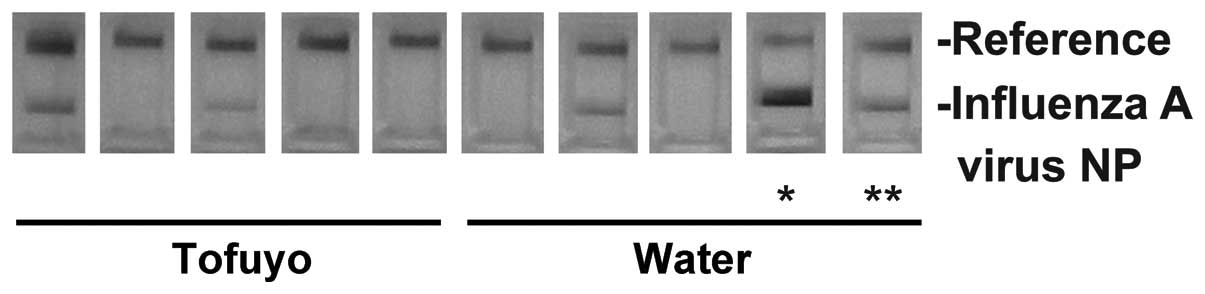
Immunochromatography of the influenza virus NP in the lungs from dead mice showed that NP of the influenza virus was expressed in the dead mice (Fig. 6), suggesting that the mice died of influenza virus infection. In addition, NP was detected in 2/5 mice of the tofuyo extract-treated group and 3/5 mice of the control group in mice sacrificed 14 days following inoculation. Therefore, tofuyo extract did not have any direct effects on the influenza virus or its production, while it had indirect protective effects against influenza virus infection.

Figure 6.

Tofuyo extract does not inhibit proliferation of influenza virus in lung. Lungs of nude mice (BALB/cSlc-nu/nu) infected with influenza virus [A/Puerto Rico/8/34 (H1N1)] were collected and subjected to immunochromatography. Tofuyo, mice administered tofuyo extract-containing water; Water, mice administered tofuyo extract-free water. Mice died on *day 9 and **12. The remaining mice were sacrificed on day 14.

Nutrient component and amino acid analyses exhibits health-promoting effects

Nutrient component analysis was conducted to investigate the mechanisms underlying the anti-influenza virus effect of the tofuyo extract. The analysis indicated that 100 g of tofuyo extract contains 47 kcal of energy, 88.8 g of water, 1.0 g of protein, 0 g of lipid, 6.9 g of carbohydrate, 1.2 g of ash, 420 mg of sodium, 28 mg of potassium, 6 mg of calcium, 13 mg of magnesium, 0 mg of phosphorus, 0.1 mg of iron, 0 mg of zinc, 0.01 mg of copper, 0.01 mg of manganese, 0 mg of vitamin B1, 0.02 mg of vitamin B2, 0.02 mg of vitamin B6, 0 g of soluble fiber, 0 g of insoluble fiber, 0 g of total dietary fiber, 1.1 g of sodium chloride equivalent and 2.1 g of alcohol (Table I).

Table I.

Nutrient component analysis of tofuyo extract.

Table I.

Nutrient component analysis of tofuyo extract.

NutrientValue/100 g of tofuyo extractaMethod
Energy47 kcalModified Atwater methodb
Water88.8 gReduced pressure and drying by heating methodc
Protein1.0 gModified Kjeldahl method (protein conversion factor 5.71)
Lipid0 gSoxhlet extraction method
Carbohydrate6.9 gSubtraction methodd
Ash content1.2 gDirect ashing method
Sodium420 mgAtomic absorption method
Potassium28 mgAtomic absorption method
Calcium6 mgAtomic absorption method
Magnesium13 mgAtomic absorption method
Phosphorus0 mgVanadic and molybdic acid absorption photometry
Iron0.1 mgAtomic absorption method
Zinc0 mgAtomic absorption method
Copper0.01 mgAtomic absorption method
Manganese0.01 mgAtomic absorption method
Vitamin B10 mgHigh-performance liquid chromatographic method
Vitamin B20.02 mgHigh-performance liquid chromatographic method
Vitamin B60.02 mgMicrobial quantification method
Provide soluble fiber0 gModified Prosky method
Insoluble dietary fiber0 gModified Prosky method
Total amount of food fiber0 gModified Prosky method
Corresponding value of salt1.1 gCorresponding value from sodium
Alcohol2.1 gGas chromatography

a Zero means either <0.1 of the minimum quantity in food composition reported previously (5) or undetectable;

b energy conversion factor was 4 (protein), 9 (lipid), 4 (carbohydrate), 2 (food fiber) and 7.1 kcal/g (alcohol);

c water quantity was calculated by the dry weight method with subtraction of the alcohol quantity;

d carbohydrate was calculated by subtraction of alcohol.

In addition, the amino acid analysis indicated that 100 g of tofuyo extract contain 21 mg of arginine, 56 mg of lysine, 22 mg of histidine, 48 mg of phenylalanine, 38 mg of tyrosine, 70 mg of leucine, 45 mg of isoleucine, 11 mg of methionine, 48 mg of valine, 52 mg of alanine, 43 mg of glycine, 58 mg of proline, 213 mg of glutamic acid, 43 mg of serine, 35 mg of threonine, 101 mg of aspartic acid, 6 mg of tryptophan and 10 mg of cysteine and cystine (Table II).

Table II.

Amino acid analysis of tofuyo extract.

Table II.

Amino acid analysis of tofuyo extract.

Amino acidValue (mg/100 g tofuyo extract)Method
Arginine21Automatic analysis method for amino acids
Lysine56Automatic analysis method for amino acids
Histidine22Automatic analysis method for amino acids
Phenylalanine48Automatic analysis method for amino acids
Tyrosine38Automatic analysis method for amino acids
Leucine70Automatic analysis method for amino acids
Isoleucine45Automatic analysis method for amino acids
Methionine11Automatic analysis method for amino acids
Valine48Automatic analysis method for amino acids
Alanine52Automatic analysis method for amino acids
Glycine43Automatic analysis method for amino acids
Proline58Automatic analysis method for amino acids
Glutamic acid213Automatic analysis method for amino acids
Serine43Automatic analysis method for amino acids
Threonine35Automatic analysis method for amino acids
Aspartic acid101Automatic analysis method for amino acids
Tryptophan6High-performance liquid chromatographic method
Cysteine and cystine10Automatic analysis method for amino acids (performic acid oxidation + hydrochloric acid hydrolysis)

Discussion

In the in vitro analysis, tofuyo did not show any direct inhibitory or disruptive effects against influenza virus (6). However, alleviation of influenza symptoms, including an increase in the survival rate and suppression of weight loss, was observed in the animal experiment performed in this study, suggesting that indirect protective effects of tofuyo occur in mice. Due to the fact that there was no significant difference between the tofuyo extract-treated and control groups, tofuyo extract was considered to have no inhibitory effect on influenza virus infection, while it contributes to the maintenance of health following infection. This hypothesis is supported by the results of this study, indicating that tofuyo contains proteins, carbohydrates, vitamins and minerals. Consequently, tofuyo has health-promoting effects. In addition, amino acid analysis demonstrated that tofuyo is rich in glutamic and aspartic acid; therefore, umami components evidently remained in the extract.

In a previous study, tofuyo extract was found to contain di- and tri-peptides (1). In addition, short peptides from soybean extract were shown to be absorbed via the intestine and reach a higher concentration in the blood (7,8). Therefore, such short peptides in tofuyo extract may act in the blood and show anti-influenza virus effects. Furthermore, the anti-oxidative properties of tofuyo (9) may contribute to the defense against influenza virus infection-induced oxidative stress. The induction of immune functions in tofuyo extract-treated animals is an additional potential anti-influenza virus mechanism. However, to fully elucidate the anti-influenza effect of the tofuyo extract additional studies are required.

Acknowledgements

This study was supported by a Grant-in-Aid from the Fuji Foundation for Protein Research (http://www.fujioil.co.jp/daizu/). Part of this study was presented at various conferences organized by the Fuji Foundation for Protein Research in 2010 and 2011. The Fuji Foundation for Protein Research kindly granted permission to publish this study. Data included in this study have partly been reported in conference proceedings (6).

References

1. 

Kuba M, Tanaka K, Tawata S, Takeda Y and Yasuda M: Angiotensin I-converting enzyme inhibitory peptides isolated from tofuyo fermented soybean food. Biosci Biotechnol Biochem. 67:1278–1283. 2003. View Article : Google Scholar : PubMed/NCBI

2. 

Yasuda M, Matsumoto T, Sakaguchi M and Kinjo S: Production of tofuyo using combination of red and yellow kojis. Nippon Shokuhin Kagaku Kogaku Kaishi. 42:38–43. 1995.(In Japanese).

3. 

Sakudo A, Baba K, Tsukamoto M, Sugimoto A, Okada T, Kobayashi T, Kawashita N, Takagi T and Ikuta K: Anionic polymer, poly(methyl vinyl ether-maleic anhydride)-coated beads-based capture of human influenza A and B virus. Bioorg Med Chem. 17:752–757. 2009. View Article : Google Scholar : PubMed/NCBI

4. 

Dobashi N, Yasui A and Wataanbe T: Basics of food analysis. Nutrition and Food Science Dictionary (The Japanese Society of Nutrition and Food Science). Yasumoto K, Takeuchi M, Yasui A and Watanabe T: Kenpakusha; Tokyo: pp. 1–58. 2006

5. 

Kagawa Y: Explanation for standard tables of food composition. Standard Tables of Food Composition in Japan (Fifth Revised and Enlarged Edition). Kagawa Education Institute of Nutrition; Tokyo: pp. 2–3. 2010

6. 

Sakudo A and Sesoko M: Effects of tofuyo (fermented soybean food) extract on influenza virus. Soy Protein Res (Japan). 14:146–149. 2011.

7. 

Claft IL, Geddes D, Hyde CW, Wise IJ and Matthews DM: Absorption and malabsorption of glycine and glycine peptides in man. Gut. 9:425–437. 1968. View Article : Google Scholar : PubMed/NCBI

8. 

Chun H, Sasaki M, Fujiyama Y and Bamba T: Effect of peptide chain length on absorption and intact transport of hydrolyzed soybean peptide in rat intestinal everted sac. J Clin Biochem Nutr. 21:131–140. 1996. View Article : Google Scholar

9. 

Yasuda M and Morita M: Food-chemical research on tofu curd. Decomposition and antioxidative property of protein in maturation process. J Jpn Soc Nutr Food Sci. 52:3032010.

Related Articles

  • Abstract
  • View
  • Download
  • Twitter
Copy and paste a formatted citation
Spandidos Publications style
Sakudo A and Sesoko M: Tofuyo (fermented soybean food) extract prolongs the survival of mice infected with influenza virus. Biomed Rep 1: 80-84, 2013.
APA
Sakudo, A., & Sesoko, M. (2013). Tofuyo (fermented soybean food) extract prolongs the survival of mice infected with influenza virus. Biomedical Reports, 1, 80-84. https://doi.org/10.3892/br.2012.29
MLA
Sakudo, A., Sesoko, M."Tofuyo (fermented soybean food) extract prolongs the survival of mice infected with influenza virus". Biomedical Reports 1.1 (2013): 80-84.
Chicago
Sakudo, A., Sesoko, M."Tofuyo (fermented soybean food) extract prolongs the survival of mice infected with influenza virus". Biomedical Reports 1, no. 1 (2013): 80-84. https://doi.org/10.3892/br.2012.29
Copy and paste a formatted citation
x
Spandidos Publications style
Sakudo A and Sesoko M: Tofuyo (fermented soybean food) extract prolongs the survival of mice infected with influenza virus. Biomed Rep 1: 80-84, 2013.
APA
Sakudo, A., & Sesoko, M. (2013). Tofuyo (fermented soybean food) extract prolongs the survival of mice infected with influenza virus. Biomedical Reports, 1, 80-84. https://doi.org/10.3892/br.2012.29
MLA
Sakudo, A., Sesoko, M."Tofuyo (fermented soybean food) extract prolongs the survival of mice infected with influenza virus". Biomedical Reports 1.1 (2013): 80-84.
Chicago
Sakudo, A., Sesoko, M."Tofuyo (fermented soybean food) extract prolongs the survival of mice infected with influenza virus". Biomedical Reports 1, no. 1 (2013): 80-84. https://doi.org/10.3892/br.2012.29
Follow us
  • Twitter
  • LinkedIn
  • Facebook
About
  • Spandidos Publications
  • Careers
  • Cookie Policy
  • Privacy Policy
How can we help?
  • Help
  • Live Chat
  • Contact
  • Email to our Support Team