An intake of nutrients is essential for maintaining
life, as they provide energy to the body, and also trigger other
important body functions. The interaction between ingested
foodstuffs and the gastrointestinal endocrine cells is a new
emerging concept (1,2). Understanding this interaction is not only
important for understanding the normal physiology and the role of
ingested nutrients in gastrointestinal disorders and diseases, but
also for managing certain gastrointestinal disorders (3–6).
New data on the interaction between ingested
nutrients and the gastrointestinal endocrine cells obtained from
basic science and clinical research have accumulated in the last
few years. The present review aimed to interpret the newly gained
knowledge so as to understand the role of this interaction.
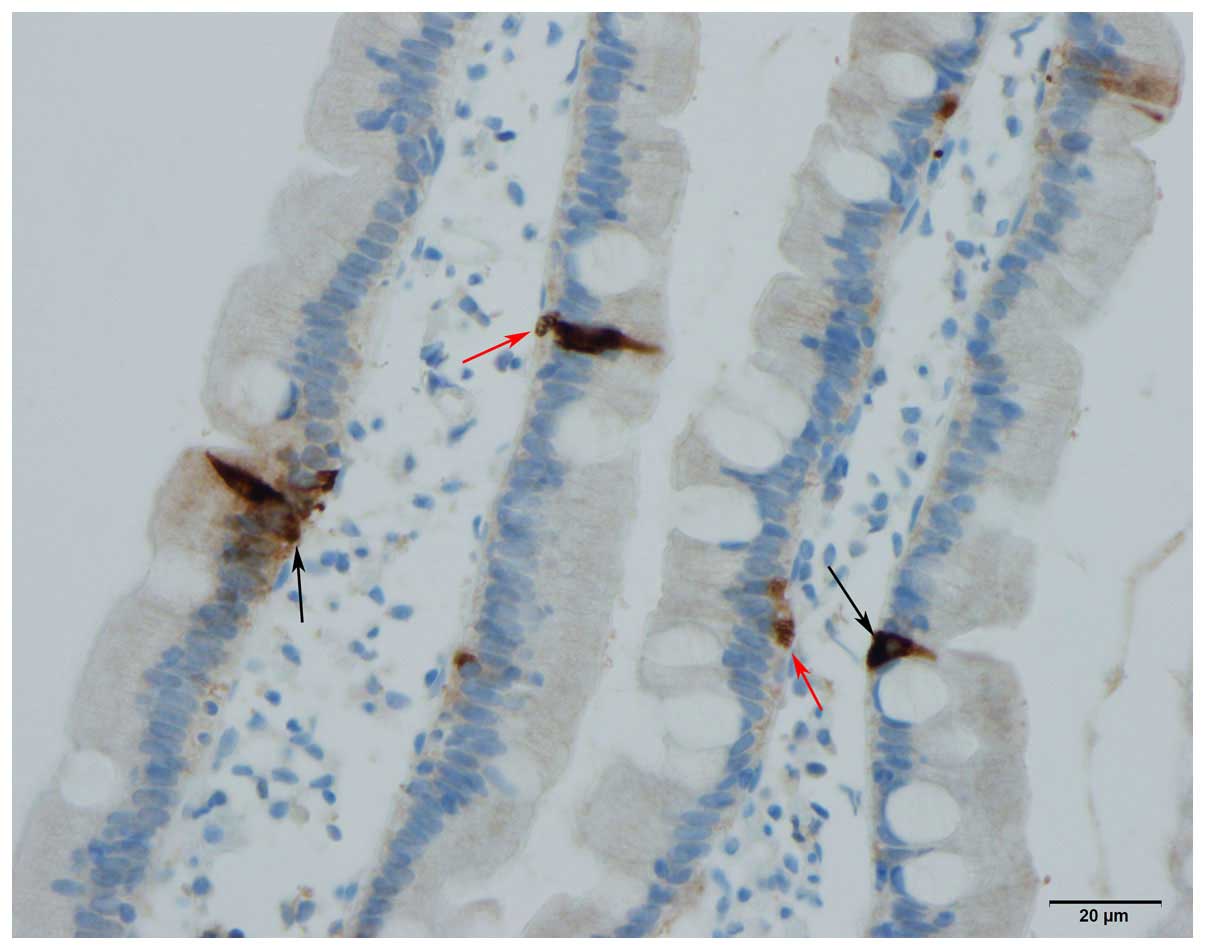
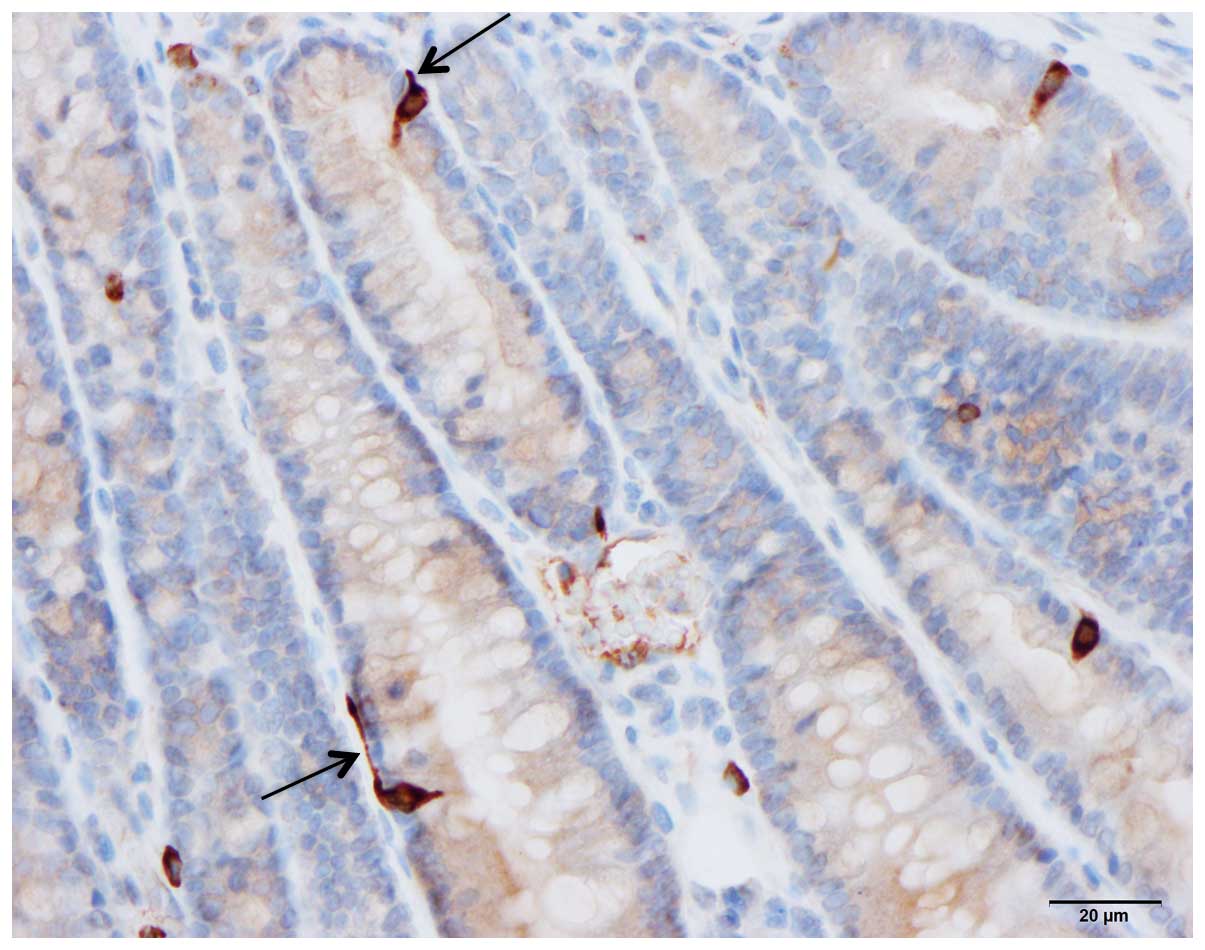
The gastrointestinal endocrine cells are scattered
between the mucosal epithelial cells facing the intestinal lumen
(Fig. 1) (7,8). There are
≥10 types of endocrine cell, and they are found in the stomach and
the small and large intestines (8).
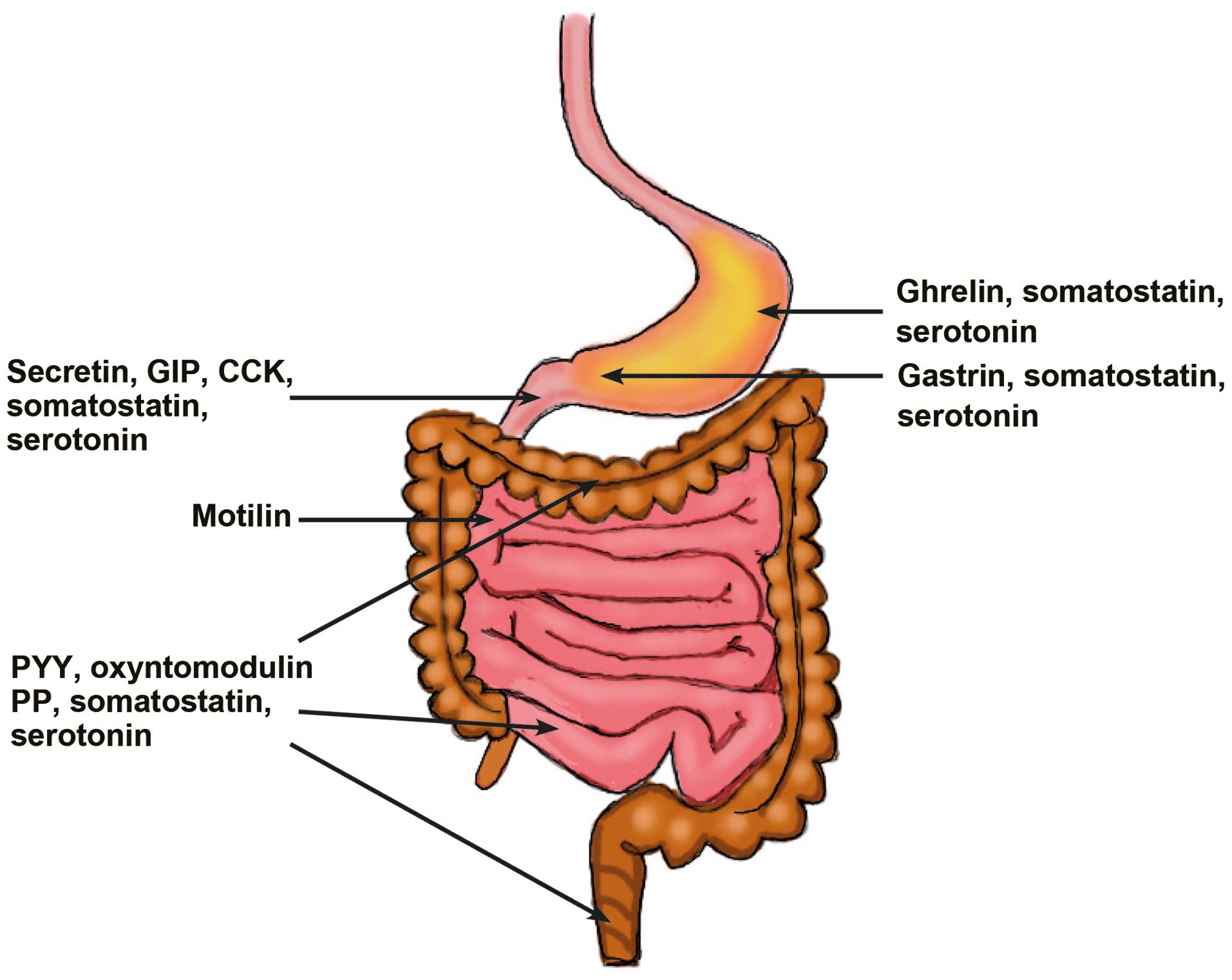
Different segments of the gastrointestinal tract contain several
different populations of gut endocrine cells (Fig. 2). Certain types of endocrine cells are
located only in specific areas of the gastrointestinal tract. For
example, serotonin- and somatostatin-secreting cells occur in the
stomach and small and large intestines, while those producing
ghrelin and gastrin are found only in the stomach, those producing
secretin, cholecystokinin, gastric inhibitory peptide (GIP) and
motilin are found only in the upper small intestine, and those
producing polypeptide YY (PYY), pancreatic polypeptide and
oxyntomodulin are located only in the lower small intestine and
large intestine (7,9–11). The
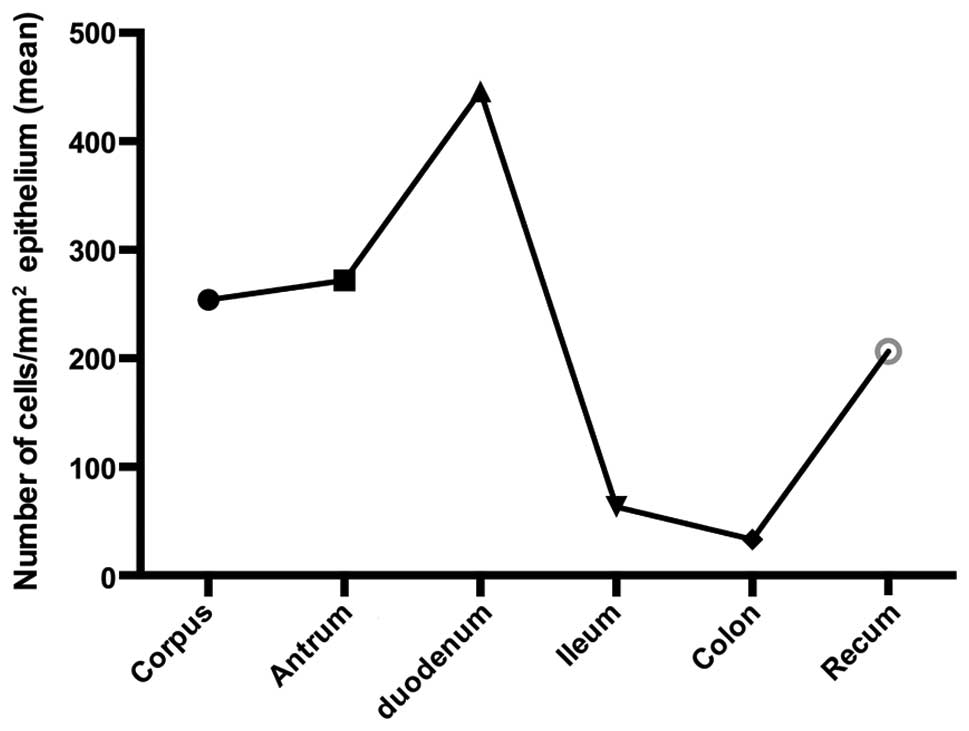
densities of these cells vary in different sections of the
gastrointestinal tract, with the density being highest in the
duodenum (12–16) (Fig. 3).
The gastrointestinal endocrine cells regulate gastrointestinal
motility, secretion, absorption, visceral sensitivity, local immune
defence, cell proliferation and appetite (7,17–31). These endocrine cells interact with each
other and also with the enteric nervous system, and the afferent
and efferent nerve fibers of the autonomic nervous system and the
central nervous system (CNS) (7,18,22,32).
Depletion of gastrointestinal endocrine cells as in congenital
malabsorptive diarrhea caused by mutant neurogenin-3 (33), or complete loss of these cells in
mutant mice with ablation of the transcript factor neurogenin-3
(34) show that the gastrointestinal
endocrine cells are essential for life.
Immunohistochemical studies have shown that two
hormones can be colocalized in the same endocrine cell type, such
as glucagon-like peptide-1 and GIP in the small intestine as well
as PYY and oxyntomodulin in the large intestine (34–38). Recent
studies have further found that mature intestinal endocrine cells
are capable of expressing several hormones (39,40).
The gastrointestinal endocrine cells have
specialized microvilli that project into the lumen and function as
sensors of the gut contents (mostly nutrients and/or bacteria
byproducts), and respond to luminal stimuli by releasing their
hormones into the lamina propria (41–63). The gut
intraluminal contents of carbohydrates, proteins and fats trigger
the release of different signaling substances (such as hormones)
from the gut endocrine cells (Table I)
(41–53).
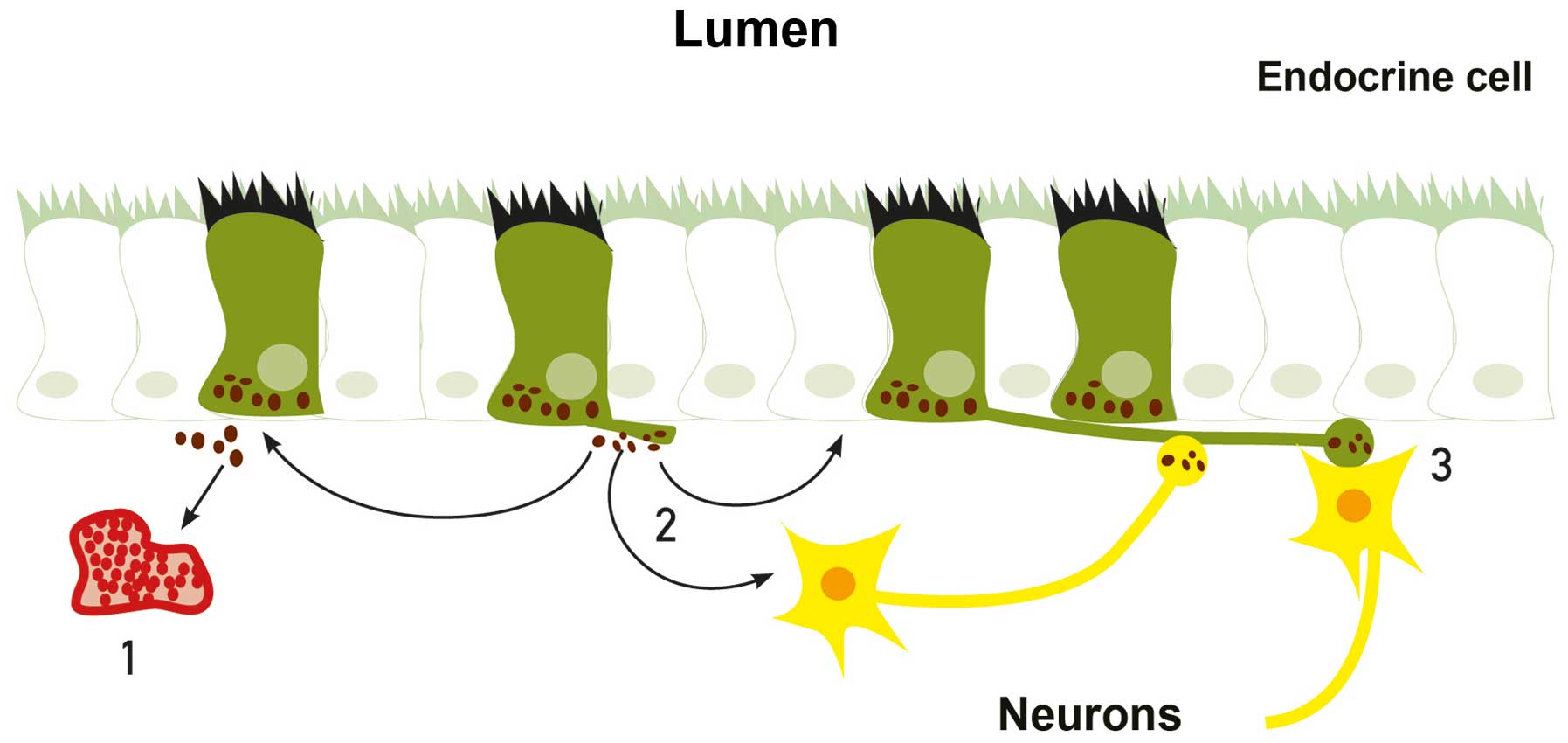
The signaling substances (hormones) released from
the gastrointestinal endocrine cells may exert their actions
locally on nearby cells or neurons (paracrine mode) or by entering
the circulating blood and reaching distant targets (endocrine mode)
(64–67).
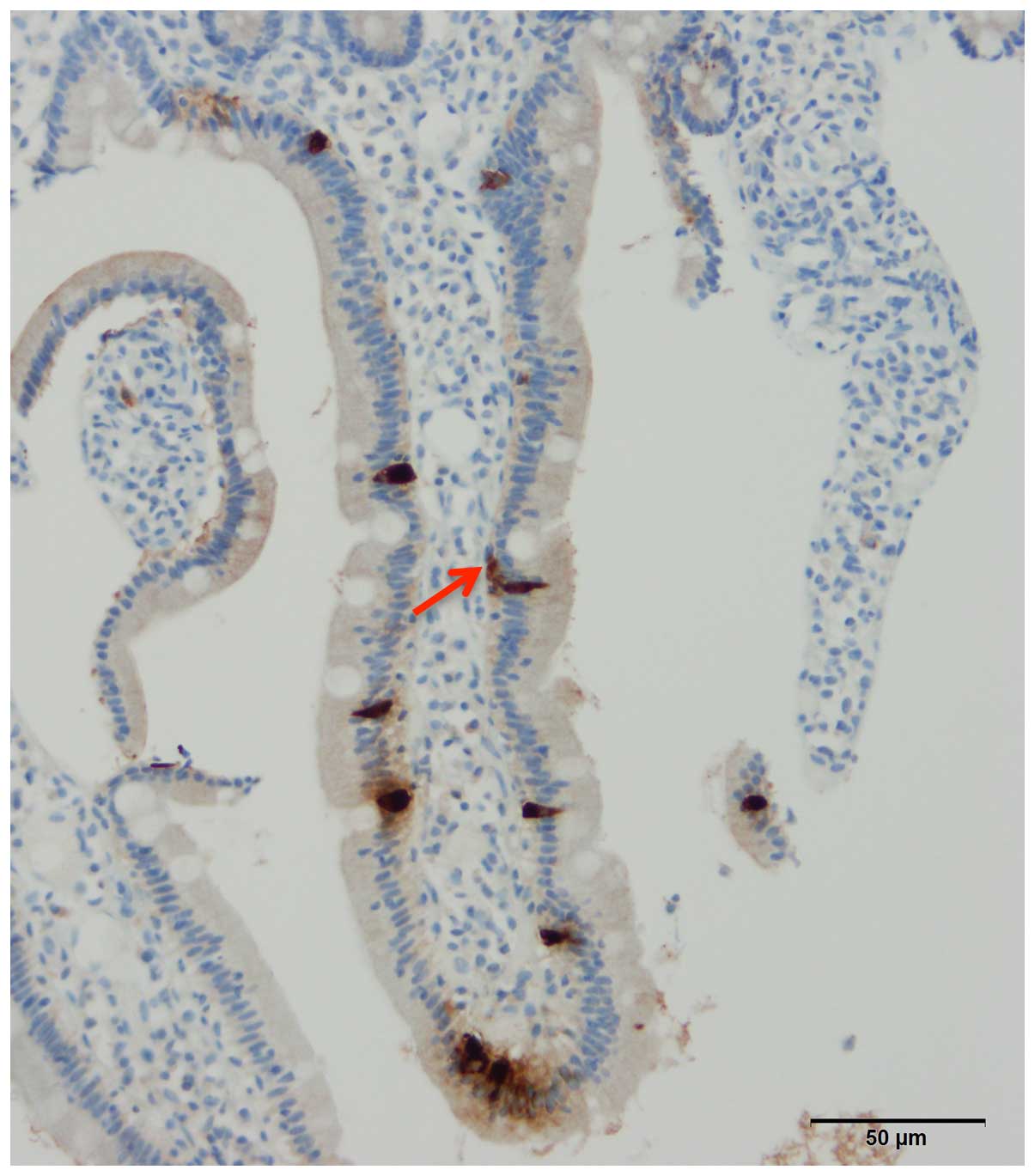
The gastrointestinal endocrine cells possess a basal
cytoplasmic process, which is believed to facilitate the paracrine
mode of action (Figs. 4 and 5) (68–72). This cytoplasmic process extends ≤70 µm,
compared with the base of the endocrine cells being only 10 µm in
diameter (70). This process has
certain similarities to neuronal axons, and has been named a
neuropod (70, 73–75). The neuropod has other axon-like
characteristics, such as containing neurofilaments, being escorted
by enteric glia cells, and expressing receptors for neurotrophins
(74). Furthermore, gut endocrine
cells have small clear synaptic vesicles, express several genes
encoding for presynaptic proteins (synapsin 1, piccolo, bassoon,
MUNC13B, regulating synaptic membrane exocytosis 2, latrophilin and
transsynaptic neurexin), and also express postsynaptic genes
(transsynaptic neuroligins 2 and 3, homer 3 and postsynaptic
density 95) (75). Based on these
data, it was concluded that the gut endocrine cells have the
necessary elements for afferent and efferent synaptic transmission
(75). Therefore, it appears that the
gastrointestinal endocrine cells exert their effects via three
modes of action: Endocrine, paracrine and synaptic (Fig. 6).
The recent findings of gastrointestinal endocrine
cells exhibiting endocrine and neuron-like characteristics support
and revive the old hypothesis on the evolution of the
neuroendocrine system of the gut (76). The observation that the mammalian
gastrointestinal hormonal peptides occur in the CNS, but not in the
gut of invertebrates (77–79), led to the hypothesis that the
gastrointestinal endocrine cells of vertebrates originated in the
nervous system of a common ancestor, and migrated during a later
stage of evolution into the gut as scattered endocrine cells
(76).
As aforementioned, the composition of the diet with
different proportions of carbohydrates, proteins and fats is a
trigger for the release of different gut hormones into the lamina
propria. Furthermore, the ingested foodstuffs act as prebiotics for
the intestinal microbiota, and the byproducts of the bacteria
trigger also the release of hormones from the gut endocrine
cells.
It has been shown recently that a change in diet is
accompanied by a change in the density of gastrointestinal cells
(3–6).
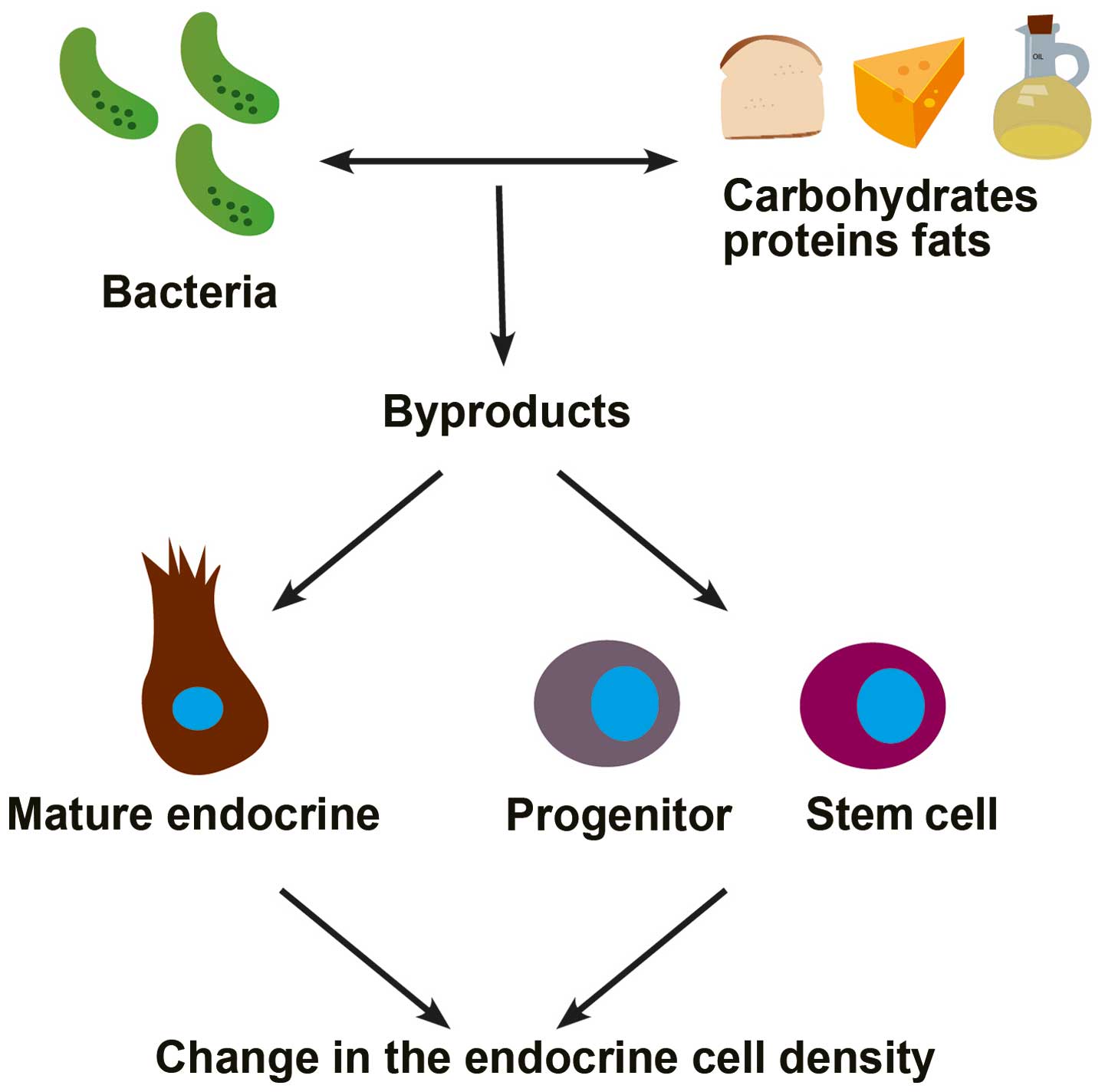
This could be due to an ingested foodstuff acting as a prebiotic
for the intestinal bacteria with the associated bacterial
byproducts. These bacterial byproducts may act on the stem cells
and/or differentiation progenitors, resulting in changes in the
stem cell clonogenic activity and/or differentiation progeny.
Alternatively, these bacterial byproducts could act on mature
gastrointestinal cells to favor the expression of specific hormones
(Fig. 7). Thus, the change in the
density of a certain endocrine cell type could be caused by
switching to the expression of a different hormone.
The diet is important for regulating the functions
of gastrointestinal endocrine cells. It not only regulates the
release of hormones from these cells, but also affects their
densities. The interaction between nutrients and gastrointestinal
endocrine cells could be useful for the clinical management of
several diseases, such as irritable bowel syndrome, obesity and
diabetes (17,80–85).
|
1
|
El-Salhy M, Gilja OH, Gundersen D,
Hatlebakk JG and Hausken T: Interaction between ingested nutrients
and gut endocrine cells in patients with irritable bowel syndrome
(Review). Int J Mol Med. 34:363–371. 2014.PubMed/NCBI
|
|
2
|
Mittermaier C, Dejaco C, Waldhoer T,
Oefferlbauer-Ernst A, Miehsler W, Beier M, Tillinger W, Gangl A and
Moser G: Impact of depressive mood on relapse in patients with
inflammatory bowel disease: A prospective 18-month follow-up study.
Psychosom Med. 66:79–84. 2004. View Article : Google Scholar : PubMed/NCBI
|
|
3
|
Mazzawi T, Gundersen D, Hausken T and
El-Salhy M: Increased gastric chromogranin A cell density following
changes to diets of patients with irritable bowel syndrome. Mol Med
Rep. 10:2322–2326. 2014.PubMed/NCBI
|
|
4
|
Mazzawi T, Gundersen D, Hausken T and
El-Salhy M: Increased chromogranin A cell density in the large
intestine of patients with irritable bowel syndrome after receiving
dietary guidance. Gastroenterol Res Pract. 2015:8238972015.
View Article : Google Scholar : PubMed/NCBI
|
|
5
|
Mazzawi T, Hausken T, Gundersen D and
El-Salhy M: Effect of dietary management on the gastric endocrine
cells in patients with irritable bowel syndrome. Eur J Clin Nutr.
69:519–524. 2014. View Article : Google Scholar : PubMed/NCBI
|
|
6
|
Mazzawi T, Hausken T, Gundersen D and
El-Salhy M: Normalization of large intestinal endocrine cells
following dietary management in patients with irritable bowel
syndrome. Eur J Clin Nutr. 70:175–178. 2016. View Article : Google Scholar : PubMed/NCBI
|
|
7
|
El-Salhy M, Seim I, Chopin L, Gundersen D,
Hatlebakk JG and Hausken T: Irritable bowel syndrome: The role of
gut neuroendocrine peptides. Front Biosci (Elite Ed). 4:2783–2800.
2012. View Article : Google Scholar : PubMed/NCBI
|
|
8
|
El-Salhy M, Gundersen D, Hatlebakk JG and
Hausken T: Irritable bowel syndrome: diagnosis, pathogenesis and
treatment options. Nova Science Publishers, Inc. New York, NY:
2012.
|
|
9
|
May CL and Kaestner KH: Gut endocrine cell
development. Mol Cell Endocrinol. 323:70–75. 2010. View Article : Google Scholar : PubMed/NCBI
|
|
10
|
Gunawardene AR, Corfe BM and Staton CA:
Classification and functions of enteroendocrine cells of the lower
gastrointestinal tract. Int J Exp Pathol. 92:219–231. 2011.
View Article : Google Scholar : PubMed/NCBI
|
|
11
|
El-Salhy M, Grimelius L, Wilander E,
Ryberg B, Terenius L, Lundberg JM and Tatemoto K:
Immunocytochemical identification of polypeptide YY (PYY) cells in
the human gastrointestinal tract. Histochemistry. 77:15–23. 1983.
View Article : Google Scholar : PubMed/NCBI
|
|
12
|
El-Salhy M, Gilja OH, Gundersen D,
Hatlebakk JG and Hausken T: Duodenal chromogranin a cell density as
a biomarker for the diagnosis of irritable bowel syndrome.
Gastroenterol Res Pract. 2014:4628562014. View Article : Google Scholar : PubMed/NCBI
|
|
13
|
El-Salhy M, Gilja OH and Hausken T:
Chromogranin A cells in the stomachs of patients with sporadic
irritable bowel syndrome. Mol Med Rep. 10:1753–1757.
2014.PubMed/NCBI
|
|
14
|
El-Salhy M, Mazzawi T, Gundersen D and
Hausken T: Chromogranin A cell density in the rectum of patients
with irritable bowel syndrome. Mol Med Rep. 6:1223–1225.
2012.PubMed/NCBI
|
|
15
|
El-Salhy M, Lomholt-Beck B and Hausken T:
Chromogranin A as a possible tool in the diagnosis of irritable
bowel syndrome. Scand J Gastroenterol. 45:1435–1439. 2010.
View Article : Google Scholar : PubMed/NCBI
|
|
16
|
El-Salhy M, Wendelbo IH and Gundersen D:
Reduced chromogranin A cell density in the ileum of patients with
irritable bowel syndrome. Mol Med Rep. 7:1241–1244. 2013.PubMed/NCBI
|
|
17
|
El-Salhy M, Ostgaard H, Gundersen D,
Hatlebakk JG and Hausken T: The role of diet in the pathogenesis
and management of irritable bowel syndrome (Review). Int J Mol Med.
29:723–731. 2012.PubMed/NCBI
|
|
18
|
El-Salhy M: Irritable bowel syndrome:
Diagnosis and pathogenesis. World J Gastroenterol. 18:5151–5163.
2012.PubMed/NCBI
|
|
19
|
Mawe GM, Coates MD and Moses PL: Review
article: Intestinal serotonin signalling in irritable bowel
syndrome. Aliment Pharmacol Ther. 23:1067–1076. 2006. View Article : Google Scholar : PubMed/NCBI
|
|
20
|
Wade PR, Chen J, Jaffe B, Kassem IS,
Blakely RD and Gershon MD: Localization and function of a 5-HT
transporter in crypt epithelia of the gastrointestinal tract. J
Neurosci. 16:2352–2364. 1996.PubMed/NCBI
|
|
21
|
Gershon MD and Tack J: The serotonin
signaling system: From basic understanding to drug development for
functional GI disorders. Gastroenterology. 132:397–414. 2007.
View Article : Google Scholar : PubMed/NCBI
|
|
22
|
Gershon MD: 5-Hydroxytryptamine
(serotonin) in the gastrointestinal tract. Curr Opin Endocrinol
Diabetes Obes. 20:14–21. 2013. View Article : Google Scholar : PubMed/NCBI
|
|
23
|
Gershon MD: Serotonin is a sword and a
shield of the bowel: Serotonin plays offense and defense. Trans Am
Clin Climatol Assoc. 123:268–280; discussion 280. 2012.PubMed/NCBI
|
|
24
|
El-Salhy M, Mazzawi T, Gundersen D,
Hatlebakk JG and Hausken T: The role of peptide YY in
gastrointestinal diseases and disorders (Review). Int J Mol Med.
31:275–282. 2013.PubMed/NCBI
|
|
25
|
Dubrasquet M, Bataille D and Gespach C:
Oxyntomodulin (glucagon-37 or bioactive enteroglucagon): A potent
inhibitor of pentagastrin-stimulated acid secretion in rats. Biosci
Rep. 2:391–395. 1982. View Article : Google Scholar : PubMed/NCBI
|
|
26
|
Schjoldager BT, Baldissera FG, Mortensen
PE, Holst JJ and Christiansen J: Oxyntomodulin: A potential hormone
from the distal gut. Pharmacokinetics and effects on gastric acid
and insulin secretion in man. Eur J Clin Invest. 18:499–503. 1988.
View Article : Google Scholar : PubMed/NCBI
|
|
27
|
Schjoldager B, Mortensen PE, Myhre J,
Christiansen J and Holst JJ: Oxyntomodulin from distal gut. Role in
regulation of gastric and pancreatic functions. Dig Dis Sci.
34:1411–1419. 1989. View Article : Google Scholar : PubMed/NCBI
|
|
28
|
Dakin CL, Small CJ, Batterham RL, Neary
NM, Cohen MA, Patterson M, Ghatei MA and Bloom SR: Peripheral
oxyntomodulin reduces food intake and body weight gain in rats.
Endocrinology. 145:2687–2695. 2004. View Article : Google Scholar : PubMed/NCBI
|
|
29
|
Wynne K, Park AJ, Small CJ, Patterson M,
Ellis SM, Murphy KG, Wren AM, Frost GS, Meeran K, Ghatei MA, et al:
Subcutaneous oxyntomodulin reduces body weight in overweight and
obese subjects: A double-blind, randomized, controlled trial.
Diabetes. 54:2390–2395. 2005. View Article : Google Scholar : PubMed/NCBI
|
|
30
|
Camilleri M: Peripheral mechanisms in
irritable bowel syndrome. N Engl J Med. 367:1626–1635. 2012.
View Article : Google Scholar : PubMed/NCBI
|
|
31
|
Jianu CS, Fossmark R, Syversen U, Hauso Ø
and Waldum HL: A meal test improves the specificity of chromogranin
A as a marker of neuroendocrine neoplasia. Tumour Biol. 31:373–380.
2010. View Article : Google Scholar : PubMed/NCBI
|
|
32
|
Seim I, El-Salhy M, Hausken T, Gundersen D
and Chopin L: Ghrelin and the brain-gut axis as a pharmacological
target for appetite control. Curr Pharm Des. 18:768–775. 2012.
View Article : Google Scholar : PubMed/NCBI
|
|
33
|
Wang J, Cortina G, Wu SV, Tran R, Cho JH,
Tsai MJ, Bailey TJ, Jamrich M, Ament ME, Treem WR, et al: Mutant
neurogenin-3 in congenital malabsorptive diarrhea. N Engl J Med.
355:270–280. 2006. View Article : Google Scholar : PubMed/NCBI
|
|
34
|
Ghia JE, Blennerhassett P, Deng Y, Verdu
EF, Khan WI and Collins SM: Reactivation of inflammatory bowel
disease in a mouse model of depression. Gastroenterology.
136:2280–2288, e1–4. 2009. View Article : Google Scholar : PubMed/NCBI
|
|
35
|
Spångéus A, Forsgren S and el-Salhy M:
Does diabetic state affect co-localization of peptide YY and
enteroglucagon in colonic endocrine cells? Histol Histopathol.
15:37–41. 2000.PubMed/NCBI
|
|
36
|
Pyarokhil AH, Ishihara M, Sasaki M and
Kitamura N: The developmental plasticity of colocalization pattern
of peptide YY and glucagon-like peptide-1 in the endocrine cells of
bovine rectum. Biomed Res. 33:35–38. 2012. View Article : Google Scholar : PubMed/NCBI
|
|
37
|
Haroon E, Raison CL and Miller AH:
Psychoneuroimmunology meets neuropsychopharmacology: Translational
implications of the impact of inflammation on behavior.
Neuropsychopharmacology. 37:137–162. 2012. View Article : Google Scholar : PubMed/NCBI
|
|
38
|
El-Salhy M, Wilander E and Grimelius L:
Immunocytochemical localization of gastric inhibitory peptide (GIP)
in the human foetal pancreas. Ups J Med Sci. 87:81–85. 1982.
View Article : Google Scholar : PubMed/NCBI
|
|
39
|
Ghia JE, Li N, Wang H, Collins M, Deng Y,
El-Sharkawy RT, Côté F, Mallet J and Khan WI: Serotonin has a key
role in pathogenesis of experimental colitis. Gastroenterology.
137:1649–1660. 2009. View Article : Google Scholar : PubMed/NCBI
|
|
40
|
Dryden S, Wang Q, Frankish HM, Pickavance
L and Williams G: The serotonin (5-HT) antagonist methysergide
increases neuropeptide Y (NPY) synthesis and secretion in the
hypothalamus of the rat. Brain Res. 699:12–18. 1995. View Article : Google Scholar : PubMed/NCBI
|
|
41
|
Sandström O and El-Salhy M: Ageing and
endocrine cells of human duodenum. Mech Ageing Dev. 108:39–48.
1999. View Article : Google Scholar : PubMed/NCBI
|
|
42
|
El-Salhy M: Ghrelin in gastrointestinal
diseases and disorders: A possible role in the pathophysiology and
clinical implications (Review). Int J Mol Med. 24:727–732. 2009.
View Article : Google Scholar : PubMed/NCBI
|
|
43
|
Tolhurst G, Reimann F and Gribble FM:
Intestinal sensing of nutrients. Handb Exp Pharmacol. 209:309–335.
2012. View Article : Google Scholar : PubMed/NCBI
|
|
44
|
Lee J, Cummings BP, Martin E, Sharp JW,
Graham JL, Stanhope KL, Havel PJ and Raybould HE: Glucose sensing
by gut endocrine cells and activation of the vagal afferent pathway
is impaired in a rodent model of type 2 diabetes mellitus. Am J
Physiol Regul Integr Comp Physiol. 302:R657–R666. 2012. View Article : Google Scholar : PubMed/NCBI
|
|
45
|
Parker HE, Reimann F and Gribble FM:
Molecular mechanisms underlying nutrient-stimulated incretin
secretion. Expert Rev Mol Med. 12:e12010. View Article : Google Scholar : PubMed/NCBI
|
|
46
|
Raybould HE: Nutrient sensing in the
gastrointestinal tract: Possible role for nutrient transporters. J
Physiol Biochem. 64:349–356. 2008. View Article : Google Scholar : PubMed/NCBI
|
|
47
|
San Gabriel A, Nakamura E, Uneyama H and
Torii K: Taste, visceral information and exocrine reflexes with
glutamate through umami receptors. J Med Invest. 56:209–217. 2009.
View Article : Google Scholar : PubMed/NCBI
|
|
48
|
Rudholm T, Wallin B, Theodorsson E,
Näslund E and Hellström PM: Release of regulatory gut peptides
somatostatin, neurotensin and vasoactive intestinal peptide by acid
and hyperosmolal solutions in the intestine in conscious rats.
Regul Pept. 152:8–12. 2009. View Article : Google Scholar : PubMed/NCBI
|
|
49
|
Sternini C, Anselmi L and Rozengurt E:
Enteroendocrine cells: A site of ‘taste’ in gastrointestinal
chemosensing. Curr Opin Endocrinol Diabetes Obes. 15:73–78. 2008.
View Article : Google Scholar : PubMed/NCBI
|
|
50
|
Sternini C: Taste receptors in the
gastrointestinal tract. IV. Functional implications of bitter taste
receptors in gastrointestinal chemosensing. Am J Physiol
Gastrointest Liver Physiol. 292:G457–G461. 2007. View Article : Google Scholar : PubMed/NCBI
|
|
51
|
Buchan AM: Nutrient Tasting and signaling
mechanisms in the gut III. Endocrine cell recognition of luminal
nutrients. Am J Physiol. 277:G1103–G1107. 1999.PubMed/NCBI
|
|
52
|
Montero-Hadjadje M, Elias S, Chevalier L,
Benard M, Tanguy Y, Turquier V, Galas L, Yon L, Malagon MM,
Driouich A, et al: Chromogranin A promotes peptide hormone sorting
to mobile granules in constitutively and regulated secreting cells:
Role of conserved N- and C-terminal peptides. J Biol Chem.
284:12420–12431. 2009. View Article : Google Scholar : PubMed/NCBI
|
|
53
|
Shooshtarizadeh P, Zhang D, Chich JF,
Gasnier C, Schneider F, Haïkel Y, Aunis D and Metz-Boutigue MH: The
antimicrobial peptides derived from chromogranin/secretogranin
family, new actors of innate immunity. Regul Pept. 165:102–110.
2010. View Article : Google Scholar : PubMed/NCBI
|
|
54
|
Reber SO, Obermeier F, Straub RH, Falk W
and Neumann ID: Chronic intermittent psychosocial stress (social
defeat/overcrowding) in mice increases the severity of an acute
DSS-induced colitis and impairs regeneration. Endocrinology.
147:4968–4976. 2006. View Article : Google Scholar : PubMed/NCBI
|
|
55
|
Milde AM and Murison R: A study of the
effects of restraint stress on colitis induced by dextran sulphate
sodium in singly housed rats. Integr Physiol Behav Sci. 37:140–150.
2002. View Article : Google Scholar : PubMed/NCBI
|
|
56
|
Furness JB, Kunze WA and Clerc N: Nutrient
tasting and signaling mechanisms in the gut. II. The intestine as a
sensory organ: Neural, endocrine, and immune responses. Am J
Physiol. 277:G922–G928. 1999.PubMed/NCBI
|
|
57
|
Hassani H, Lucas G, Rozell B and Ernfors
P: Attenuation of acute experimental colitis by preventing NPY Y1
receptor signaling. Am J Physiol Gastrointest Liver Physiol.
288:G550–G556. 2005. View Article : Google Scholar : PubMed/NCBI
|
|
58
|
Cani PD, Everard A and Duparc T: Gut
microbiota, enteroendocrine functions and metabolism. Curr Opin
Pharmacol. 13:935–940. 2013. View Article : Google Scholar : PubMed/NCBI
|
|
59
|
Cani PD, Hoste S, Guiot Y and Delzenne NM:
Dietary non-digestible carbohydrates promote L-cell differentiation
in the proximal colon of rats. Br J Nutr. 98:32–37. 2007.
View Article : Google Scholar : PubMed/NCBI
|
|
60
|
Petitto JM, Huang Z and McCarthy DB:
Molecular cloning of NPY-Y1 receptor cDNA from rat splenic
lymphocytes: Evidence of low levels of mRNA expression and
[125I]NPY binding sites. J Neuroimmunol. 54:81–86. 1994. View Article : Google Scholar : PubMed/NCBI
|
|
61
|
De la Fuente M, Bernaez I, Del Rio M and
Hernanz A: Stimulation of murine peritoneal macrophage functions by
neuropeptide Y and peptide YY. Involvement of protein kinase C.
Immunology. 80:259–265. 1993.PubMed/NCBI
|
|
62
|
Shibata M, Hisajima T, Nakano M, Goris RC
and Funakoshi K: Morphological relationships between peptidergic
nerve fibers and immunoglobulin A-producing lymphocytes in the
mouse intestine. Brain Behav Immun. 22:158–166. 2008. View Article : Google Scholar : PubMed/NCBI
|
|
63
|
Painsipp E, Herzog H, Sperk G and Holzer
P: Sex-dependent control of murine emotional-affective behaviour in
health and colitis by peptide YY and neuropeptide Y. Br J
Pharmacol. 163:1302–1314. 2011. View Article : Google Scholar : PubMed/NCBI
|
|
64
|
Rindi G, Inzani F and Solcia E: Pathology
of gastrointestinal disorders. Endocrinol Metab Clin North Am.
39:713–727. 2010. View Article : Google Scholar : PubMed/NCBI
|
|
65
|
Cummings DE and Overduin J:
Gastrointestinal regulation of food intake. J Clin Invest.
117:13–23. 2007. View Article : Google Scholar : PubMed/NCBI
|
|
66
|
Bertrand PP: The cornucopia of intestinal
chemosensory transduction. Front Neurosci. 3:482009.PubMed/NCBI
|
|
67
|
Bertrand PP and Bertrand RL: Serotonin
release and uptake in the gastrointestinal tract. Auton Neurosci.
153:47–57. 2010. View Article : Google Scholar : PubMed/NCBI
|
|
68
|
El-Salhy M, Grimelius L, Wilander E,
Abu-Sinna G and Lundqvist G: Histological and immunohistochemical
studies of the endocrine cells of the gastrointestinal mucosa of
the toad (Bufo regularis). Histochemistry. 71:53–65. 1981.
View Article : Google Scholar : PubMed/NCBI
|
|
69
|
Sandstrom O: Age-related changes in the
neuroendocrine system of the gut. Umea Univ Med Diss. 617:1–46.
1999.
|
|
70
|
Bohórquez DV, Chandra R, Samsa LA, Vigna
SR and Liddle RA: Characterization of basal pseudopod-like
processes in ileal and colonic PYY cells. J Mol Histol. 42:3–13.
2011. View Article : Google Scholar : PubMed/NCBI
|
|
71
|
Gustafsson BI, Bakke I, Hauso Ø, Kidd M,
Modlin IM, Fossmark R, Brenna E and Waldum HL: Parietal cell
activation by arborization of ECL cell cytoplasmic projections is
likely the mechanism for histamine induced secretion of
hydrochloric acid. Scand J Gastroenterol. 46:531–537. 2011.
View Article : Google Scholar : PubMed/NCBI
|
|
72
|
Gustafsson BI, Bakke I, Tømmerås K and
Waldum HL: A new method for visualization of gut mucosal cells,
describing the enterochromaffin cell in the rat gastrointestinal
tract. Scand J Gastroenterol. 41:390–395. 2006. View Article : Google Scholar : PubMed/NCBI
|
|
73
|
Pang XH, Li TK, Xie Q, He FQ, Cui J, Chen
YQ, Huang XL and Gan HT: Amelioration of dextran sulfate
sodium-induced colitis by neuropeptide Y antisense
oligodeoxynucleotide. Int J Colorectal Dis. 25:1047–1053. 2010.
View Article : Google Scholar : PubMed/NCBI
|
|
74
|
Bohórquez DV, Samsa LA, Roholt A,
Medicetty S, Chandra R and Liddle RA: An enteroendocrine
cell-enteric glia connection revealed by 3D electron microscopy.
PLoS One. 9:e898812014. View Article : Google Scholar : PubMed/NCBI
|
|
75
|
Bohórquez DV, Shahid RA, Erdmann A, Kreger
AM, Wang Y, Calakos N, Wang F and Liddle RA: Neuroepithelial
circuit formed by innervation of sensory enteroendocrine cells. J
Clin Invest. 125:782–786. 2015. View Article : Google Scholar : PubMed/NCBI
|
|
76
|
El-Salhy M: On the phylogeny of the
gastro-entero-pancreatic (GEP) neuroendocrine system. Acta Uni
Uppsal. 385:1–39. 1981.
|
|
77
|
El-Salhy M, Abou-el-Ela R, Falkmer S,
Grimelius L and Wilander E: Immunohistochemical evidence of
gastro-entero-pancreatic neurohormonal peptides of vertebrate type
in the nervous system of the larva of a dipteran insect, the
hoverfly, Eristalis aeneus. Regul Pept. 1:187–204. 1980. View Article : Google Scholar : PubMed/NCBI
|
|
78
|
El-Salhy M, Falkmer S, Kramer KJ and
Speirs RD: Immunohistochemical investigations of neuropeptides in
the brain, corpora cardiaca, and corpora allata of an adult
lepidopteran insect, Manduca sexta (L). Cell Tissue Res.
232:295–317. 1983. View Article : Google Scholar : PubMed/NCBI
|
|
79
|
El-Salhy M, Falkmer S, Kramer KJ and
Speirs RD: Immunocytochemical evidence for the occurrence of
insulin in the frontal ganglion of a Lepidopteran insect, the
tobacco hornworm moth, Manduca sexta L. Gen Comp Endocrinol.
54:85–88. 1984. View Article : Google Scholar : PubMed/NCBI
|
|
80
|
Mazzawi T, Hausken T, Gundersen D and
El-Salhy M: Effects of dietary guidance on the symptoms, quality of
life and habitual dietary intake of patients with irritable bowel
syndrome. Mol Med Rep. 8:845–852. 2013.PubMed/NCBI
|
|
81
|
Ostgaard H, Hausken T, Gundersen D and
El-Salhy M: Diet and effects of diet management on quality of life
and symptoms in patients with irritable bowel syndrome. Mol Med
Rep. 5:1382–1390. 2012.PubMed/NCBI
|
|
82
|
García-Martínez JM, Chocarro-Calvo A, De
la Vieja A and García-Jiménez C: Insulin drives glucose-dependent
insulinotropic peptide expression via glucose-dependent regulation
of FoxO1 and LEF1/β-catenin. Biochim Biophys Acta. 1839:1141–1150.
2014. View Article : Google Scholar : PubMed/NCBI
|
|
83
|
García-Martínez JM, Chocarro-Calvo A, Moya
CM and García-Jiménez C: WNT/beta-catenin increases the production
of incretins by entero-endocrine cells. Diabetologia. 52:1913–1924.
2009. View Article : Google Scholar : PubMed/NCBI
|
|
84
|
Freeland KR, Wilson C and Wolever TM:
Adaptation of colonic fermentation and glucagon-like peptide-1
secretion with increased wheat fibre intake for 1 year in
hyperinsulinaemic human subjects. Br J Nutr. 103:82–90. 2010.
View Article : Google Scholar : PubMed/NCBI
|
|
85
|
Korner J, Bessler M, Inabnet W, Taveras C
and Holst JJ: Exaggerated glucagon-like peptide-1 and blunted
glucose-dependent insulinotropic peptide secretion are associated
with Roux-en-Y gastric bypass but not adjustable gastric banding.
Surg Obes Relat Dis. 3:597–601. 2007. View Article : Google Scholar : PubMed/NCBI
|