Spandidos Publications Logo
  • About
    • About Spandidos
    • Aims and Scopes
    • Abstracting and Indexing
    • Editorial Policies
    • Reprints and Permissions
    • Job Opportunities
    • Terms and Conditions
    • Contact
  • Journals
    • All Journals
    • Oncology Letters
      • Oncology Letters
      • Information for Authors
      • Editorial Policies
      • Editorial Board
      • Aims and Scope
      • Abstracting and Indexing
      • Bibliographic Information
      • Archive
    • International Journal of Oncology
      • International Journal of Oncology
      • Information for Authors
      • Editorial Policies
      • Editorial Board
      • Aims and Scope
      • Abstracting and Indexing
      • Bibliographic Information
      • Archive
    • Molecular and Clinical Oncology
      • Molecular and Clinical Oncology
      • Information for Authors
      • Editorial Policies
      • Editorial Board
      • Aims and Scope
      • Abstracting and Indexing
      • Bibliographic Information
      • Archive
    • Experimental and Therapeutic Medicine
      • Experimental and Therapeutic Medicine
      • Information for Authors
      • Editorial Policies
      • Editorial Board
      • Aims and Scope
      • Abstracting and Indexing
      • Bibliographic Information
      • Archive
    • International Journal of Molecular Medicine
      • International Journal of Molecular Medicine
      • Information for Authors
      • Editorial Policies
      • Editorial Board
      • Aims and Scope
      • Abstracting and Indexing
      • Bibliographic Information
      • Archive
    • Biomedical Reports
      • Biomedical Reports
      • Information for Authors
      • Editorial Policies
      • Editorial Board
      • Aims and Scope
      • Abstracting and Indexing
      • Bibliographic Information
      • Archive
    • Oncology Reports
      • Oncology Reports
      • Information for Authors
      • Editorial Policies
      • Editorial Board
      • Aims and Scope
      • Abstracting and Indexing
      • Bibliographic Information
      • Archive
    • Molecular Medicine Reports
      • Molecular Medicine Reports
      • Information for Authors
      • Editorial Policies
      • Editorial Board
      • Aims and Scope
      • Abstracting and Indexing
      • Bibliographic Information
      • Archive
    • World Academy of Sciences Journal
      • World Academy of Sciences Journal
      • Information for Authors
      • Editorial Policies
      • Editorial Board
      • Aims and Scope
      • Abstracting and Indexing
      • Bibliographic Information
      • Archive
    • International Journal of Functional Nutrition
      • International Journal of Functional Nutrition
      • Information for Authors
      • Editorial Policies
      • Editorial Board
      • Aims and Scope
      • Abstracting and Indexing
      • Bibliographic Information
      • Archive
    • International Journal of Epigenetics
      • International Journal of Epigenetics
      • Information for Authors
      • Editorial Policies
      • Editorial Board
      • Aims and Scope
      • Abstracting and Indexing
      • Bibliographic Information
      • Archive
    • Medicine International
      • Medicine International
      • Information for Authors
      • Editorial Policies
      • Editorial Board
      • Aims and Scope
      • Abstracting and Indexing
      • Bibliographic Information
      • Archive
  • Articles
  • Information
    • Information for Authors
    • Information for Reviewers
    • Information for Librarians
    • Information for Advertisers
    • Conferences
  • Language Editing
Spandidos Publications Logo
  • About
    • About Spandidos
    • Aims and Scopes
    • Abstracting and Indexing
    • Editorial Policies
    • Reprints and Permissions
    • Job Opportunities
    • Terms and Conditions
    • Contact
  • Journals
    • All Journals
    • Biomedical Reports
      • Information for Authors
      • Editorial Policies
      • Editorial Board
      • Aims and Scope
      • Abstracting and Indexing
      • Bibliographic Information
      • Archive
    • Experimental and Therapeutic Medicine
      • Information for Authors
      • Editorial Policies
      • Editorial Board
      • Aims and Scope
      • Abstracting and Indexing
      • Bibliographic Information
      • Archive
    • International Journal of Epigenetics
      • Information for Authors
      • Editorial Policies
      • Editorial Board
      • Aims and Scope
      • Abstracting and Indexing
      • Bibliographic Information
      • Archive
    • International Journal of Functional Nutrition
      • Information for Authors
      • Editorial Policies
      • Editorial Board
      • Aims and Scope
      • Abstracting and Indexing
      • Bibliographic Information
      • Archive
    • International Journal of Molecular Medicine
      • Information for Authors
      • Editorial Policies
      • Editorial Board
      • Aims and Scope
      • Abstracting and Indexing
      • Bibliographic Information
      • Archive
    • International Journal of Oncology
      • Information for Authors
      • Editorial Policies
      • Editorial Board
      • Aims and Scope
      • Abstracting and Indexing
      • Bibliographic Information
      • Archive
    • Medicine International
      • Information for Authors
      • Editorial Policies
      • Editorial Board
      • Aims and Scope
      • Abstracting and Indexing
      • Bibliographic Information
      • Archive
    • Molecular and Clinical Oncology
      • Information for Authors
      • Editorial Policies
      • Editorial Board
      • Aims and Scope
      • Abstracting and Indexing
      • Bibliographic Information
      • Archive
    • Molecular Medicine Reports
      • Information for Authors
      • Editorial Policies
      • Editorial Board
      • Aims and Scope
      • Abstracting and Indexing
      • Bibliographic Information
      • Archive
    • Oncology Letters
      • Information for Authors
      • Editorial Policies
      • Editorial Board
      • Aims and Scope
      • Abstracting and Indexing
      • Bibliographic Information
      • Archive
    • Oncology Reports
      • Information for Authors
      • Editorial Policies
      • Editorial Board
      • Aims and Scope
      • Abstracting and Indexing
      • Bibliographic Information
      • Archive
    • World Academy of Sciences Journal
      • Information for Authors
      • Editorial Policies
      • Editorial Board
      • Aims and Scope
      • Abstracting and Indexing
      • Bibliographic Information
      • Archive
  • Articles
  • Information
    • For Authors
    • For Reviewers
    • For Librarians
    • For Advertisers
    • Conferences
  • Language Editing
Login Register Submit
  • This site uses cookies
  • You can change your cookie settings at any time by following the instructions in our Cookie Policy. To find out more, you may read our Privacy Policy.

    I agree
Search articles by DOI, keyword, author or affiliation
Search
Advanced Search
presentation
Biomedical Reports
Join Editorial Board Propose a Special Issue
Print ISSN: 2049-9434 Online ISSN: 2049-9442
Journal Cover
April-2022 Volume 16 Issue 4

Full Size Image

Sign up for eToc alerts
Recommend to Library

Journals

International Journal of Molecular Medicine

International Journal of Molecular Medicine

International Journal of Molecular Medicine is an international journal devoted to molecular mechanisms of human disease.

International Journal of Oncology

International Journal of Oncology

International Journal of Oncology is an international journal devoted to oncology research and cancer treatment.

Molecular Medicine Reports

Molecular Medicine Reports

Covers molecular medicine topics such as pharmacology, pathology, genetics, neuroscience, infectious diseases, molecular cardiology, and molecular surgery.

Oncology Reports

Oncology Reports

Oncology Reports is an international journal devoted to fundamental and applied research in Oncology.

Experimental and Therapeutic Medicine

Experimental and Therapeutic Medicine

Experimental and Therapeutic Medicine is an international journal devoted to laboratory and clinical medicine.

Oncology Letters

Oncology Letters

Oncology Letters is an international journal devoted to Experimental and Clinical Oncology.

Biomedical Reports

Biomedical Reports

Explores a wide range of biological and medical fields, including pharmacology, genetics, microbiology, neuroscience, and molecular cardiology.

Molecular and Clinical Oncology

Molecular and Clinical Oncology

International journal addressing all aspects of oncology research, from tumorigenesis and oncogenes to chemotherapy and metastasis.

World Academy of Sciences Journal

World Academy of Sciences Journal

Multidisciplinary open-access journal spanning biochemistry, genetics, neuroscience, environmental health, and synthetic biology.

International Journal of Functional Nutrition

International Journal of Functional Nutrition

Open-access journal combining biochemistry, pharmacology, immunology, and genetics to advance health through functional nutrition.

International Journal of Epigenetics

International Journal of Epigenetics

Publishes open-access research on using epigenetics to advance understanding and treatment of human disease.

Medicine International

Medicine International

An International Open Access Journal Devoted to General Medicine.

Journal Cover
April-2022 Volume 16 Issue 4

Full Size Image

Sign up for eToc alerts
Recommend to Library

  • Article
  • Citations
    • Cite This Article
    • Download Citation
    • Create Citation Alert
    • Remove Citation Alert
    • Cited By
  • Similar Articles
    • Related Articles (in Spandidos Publications)
    • Similar Articles (Google Scholar)
    • Similar Articles (PubMed)
  • Download PDF
  • Download XML
  • View XML
Article Open Access

Green tea consumption and the management of adrenal stress hormones in adolescents who stutter

  • Authors:
    • Abdulaziz Almudhi
    • Sami A. Gabr
  • View Affiliations / Copyright

    Affiliations: Department of Medical Rehabilitation Sciences, College of Applied Medical Sciences, King Khalid University, Abha 61481, Saudi Arabia, Department of Anatomy and Embryology, Faculty of Medicine, Mansoura University, Mansoura 35516, Egypt
    Copyright: © Almudhi et al. This is an open access article distributed under the terms of Creative Commons Attribution License.
  • Article Number: 32
    |
    Published online on: February 24, 2022
       https://doi.org/10.3892/br.2022.1515
  • Expand metrics +
Metrics: Total Views: 0 (Spandidos Publications: | PMC Statistics: )
Metrics: Total PDF Downloads: 0 (Spandidos Publications: | PMC Statistics: )
Cited By (CrossRef): 0 citations Loading Articles...

This article is mentioned in:


Abstract

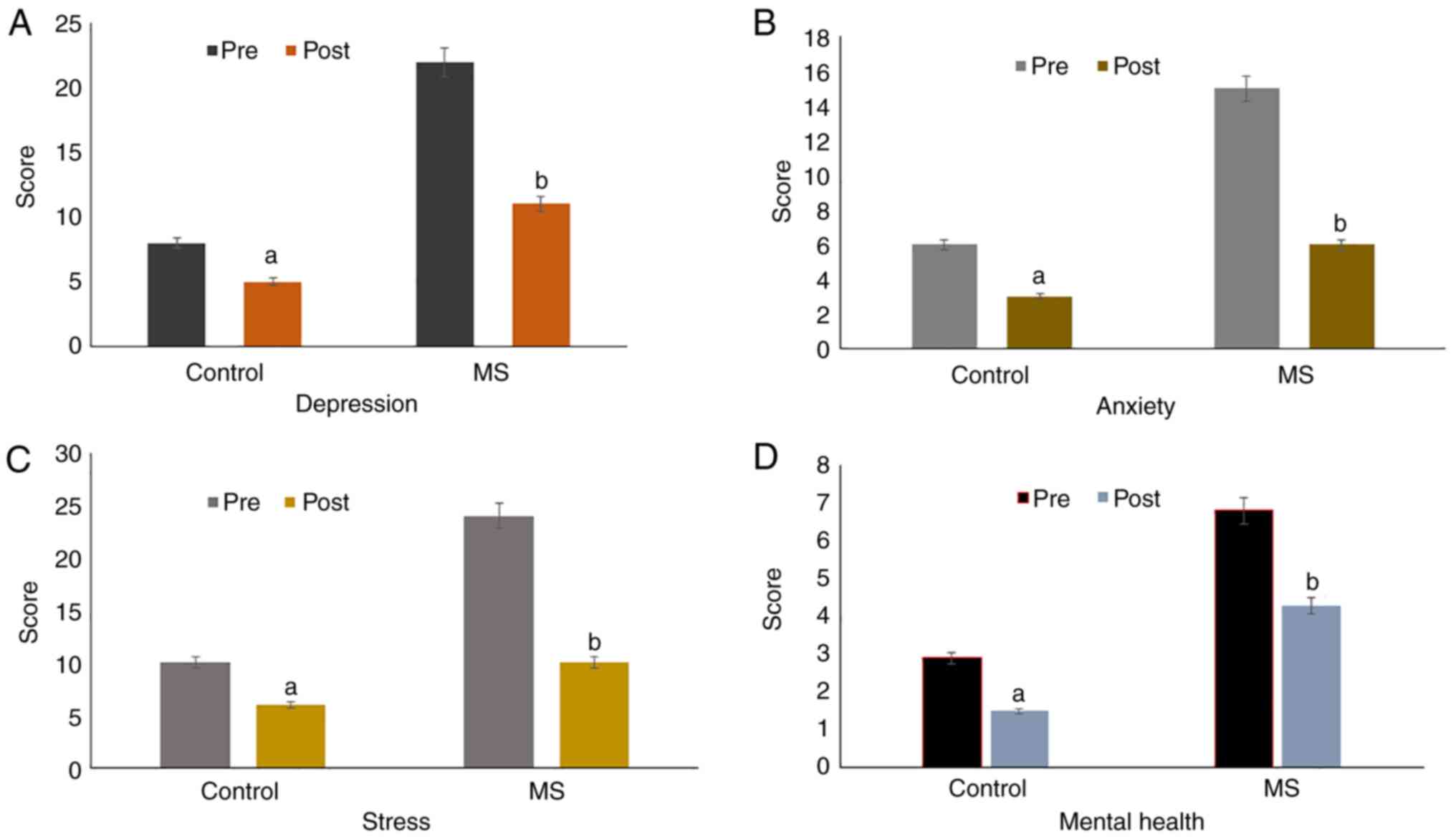
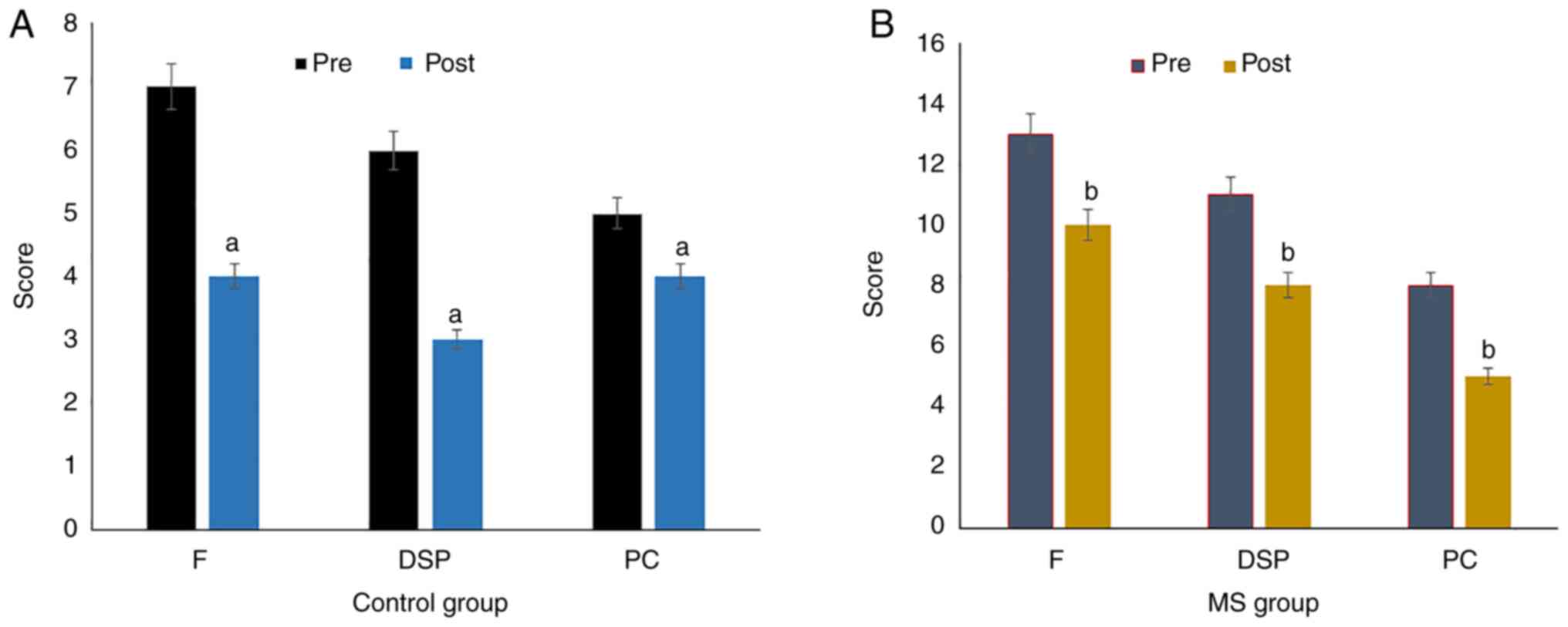
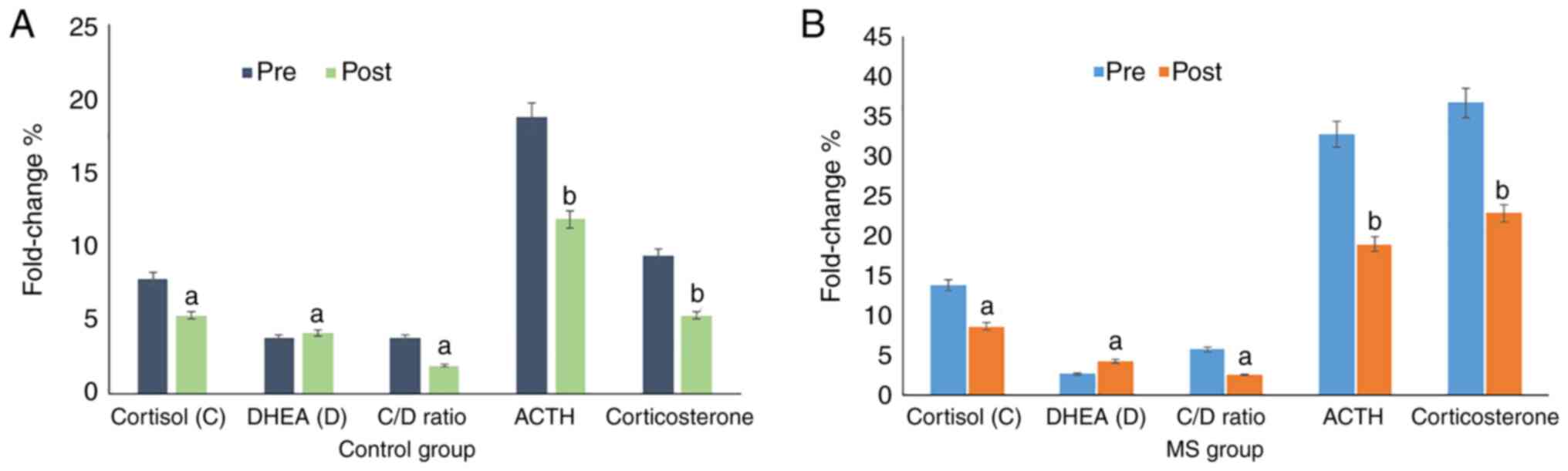
Green tea and its polyphenolic compounds have been shown to exert positive effects in individuals with psychological disorders. The protective role of green tea against stuttering or its related consequences, depression, anxiety and stress, were evaluated in adolescents with moderate stuttering (MS). A total of 60 adolescents aged (12‑18) years old were enrolled in this study. Patients were classified according to standardized test material Stuttering Severity Instrument, 4th Edition was used to estimate the severity of stuttering; participants were classified into two groups: a normal healthy group (n=30) and a MS group (n=30). The Depression Anxiety Stress Scale and General Health Questionnaire were used to estimate the degree of depression, anxiety and stress as well as general mental health. The physiological profile of stress hormones, as a measure of the response to green tea response, was also measured amongst participants. Adrenal stress hormones cortisol, dehydroepiandrosterone (DHEA), acetylcholine (ACTH), corticosterone and the cortisol:DHEA ratio were assayed. In addition, the constituent green tea polyphenols and their quantities were determined using liquid chromatography analysis. Decaffeinated green tea was administered six cups/day for 6 weeks, and this significantly improved the depression, anxiety, stress and mental health consequences associated with stuttering in adolescents. In addition, increased consumption of green tea significantly reduced elevated levels of adrenal stress hormones; cortisol, DHEA, ACTH and corticosterone, and increased the cortisol:DHEA ratio in the control and adolescents who stuttered. The data showed that drinking six cups of decaffeinated green tea, which is enriched in catechins (1,580 mg) and other related polyphenols, was sufficient to improve the consequences of mental health associated with stuttering in younger aged individuals.
View Figures

Figure 1

Figure 2

Figure 3

View References

1 

Bloodstein O and Ratner NB: A Handbook on Stuttering. 6th edition. Thomson Delmar, Clifton Park, NY, 2008.

2 

Craig A, Hancock K and Cobbin D: Managing adolescents who relapse following treatment for stuttering. Asia Pac J Speech Lang Hear. 7:79–91. 2002.

3 

Yaruss JS and Quesal RW: Stuttering and the international classification of functioning, disability, and health: An update. J Commun Disord. 37:35–52. 2004.PubMed/NCBI View Article : Google Scholar

4 

Guitar B: Stuttering: An Intergrated Approach to Its Nature and Management. Lippincott Williams & Wilkins, Baltimore, MD, 2006.

5 

Howell P: Signs of developmental stuttering up to age eight and at 12 plus. Clin Psychol Rev. 27:287–306. 2007.PubMed/NCBI View Article : Google Scholar

6 

Peters TJ and Guitar B: Stuttering: An Integrated Approach to Its Nature and Treatment. Williams and Wilkins, Maryland, MD, 1991.

7 

Yairi E, Ambrose N and Cox N: Genetics of stuttering: A critical review. J Speech Hear Res. 39:771–784. 1996.PubMed/NCBI View Article : Google Scholar

8 

Månsson H: Childhood stuttering: Incidence and development. J Fluency Disord. 25:47–57. 2000.

9 

Guitar B: Stuttering: An integrated approach to its nature and treatmen. Lippincott Williams & Wilkins, 2013.

10 

Weston CG and Riolo SA: Childhood and adolescent precursors to adult personality disorders. Psychiatr Ann. 37:114–120. 2007.

11 

Chang SE, Horwitz B, Ostuni J, Reynolds R and Ludlow CL: Evidence of left inferior frontal-premotor structural and functional connectivity deficits in adults who stutter. Cereb Cortex. 21:2507–2518. 2011.PubMed/NCBI View Article : Google Scholar

12 

Callan D, Callan A, Gamez M, Sato MA and Kawato M: Premotor cortex mediates perceptual performance. NeuroImage. 51:844–858. 2010.PubMed/NCBI View Article : Google Scholar

13 

Bowers A, Saltuklaroglu T, Jenson D, Harkrider A and Thornton D: Power and phase coherence in sensorimotor mu and temporal lobe alpha components during covert and overt syllable production. Exp Brain Res. 237:705–721. 2019.PubMed/NCBI View Article : Google Scholar

14 

Bowers A, Saltuklaroglu T, Harkrider A and Cuellar M: Suppression of the µ rhythm during speech and non-speech discrimination revealed by independent component analysis: Implications for sensorimotor integration in speech processing. PLoS One. 8(e72024)2013.PubMed/NCBI View Article : Google Scholar

15 

Szenkovits G, Peelle JE, Norris D and Davis MH: Individual differences in premotor and motor recruitment during speech perception. Neuropsychologia. 50:1380–1392. 2012.PubMed/NCBI View Article : Google Scholar

16 

Jenson D, Thornton D, Harkrider AW and Saltuklaroglu T: Influences of cognitive load on sensorimotor contributions to working memory: An EEG investigation of mu rhythm activity during speech discrimination. Neurobiol Learn Mem. 166(107098)2019.PubMed/NCBI View Article : Google Scholar

17 

Jenson D, Bowers AL, Hudock D and Saltuklaroglu T: The application of EEG Mu rhythm measures to neurophysiological research in stuttering. Front Hum Neurosci. 13(458)2020.PubMed/NCBI View Article : Google Scholar

18 

Chang SE, Garnett EO, Etchell A and Chow HM: Functional and neuroanatomical bases of developmental stuttering: Current insights. Neuroscientist. 25:566–582. 2019.PubMed/NCBI View Article : Google Scholar

19 

Chang SE: Research updates in neuroimaging studies of children who stutter. Semin Speech Lang. 35:67–79. 2014.PubMed/NCBI View Article : Google Scholar

20 

Lu C, Chen C, Ning N, Ding G, Guo T, Peng D, Yang Y, Li K and Lin C: The neural substrates for atypical planning and execution of word production in stuttering. Exp Neurol. 221:146–156. 2010.PubMed/NCBI View Article : Google Scholar

21 

Alm PA: Stuttering and the basal ganglia circuits: A critical review of possible relations. J Commun Disord. 37:325–369. 2004.PubMed/NCBI View Article : Google Scholar

22 

Smith A: Effects of caffeine on human behavior. Food Chem Toxicol. 40:1243–1255. 2002.PubMed/NCBI View Article : Google Scholar

23 

Ham RE: Therapy of Stuttering: Preschool Through Adolescence. Prentice-Hall, Englewood Cliffs, NJ, 1990.

24 

Yairi E, Ambrose NG, Paden EP and Throneburg RN: Predictive factors of persistence and recovery: Pathways of childhood stuttering. J Commun Disord. 29:51–77. 1996.PubMed/NCBI View Article : Google Scholar

25 

Spear LP: The adolescent brain and age-related behavioral manifestations. Neurosci Biobehav Rev. 24:417–463. 2000.PubMed/NCBI View Article : Google Scholar

26 

Kelly KB: Promoting adolescent health. Acta Paediatr. 96:1389–1391. 2007.PubMed/NCBI View Article : Google Scholar

27 

Lincoln M, Packman A and Onslow M: Altered auditory feedback and the treatment of stuttering: A review. J Fluency Disord. 31:71–89. 2006.PubMed/NCBI View Article : Google Scholar

28 

Lowe R, Guastella AJ, Chen NT, Menzies RG, Packman A, O'Brian S and Onslow M: Avoidance of eye gaze by adults who stutter. J Fluency Disord. 37:263–274. 2012.PubMed/NCBI View Article : Google Scholar

29 

Bricker-Katz G, Lincoln M and McCabe P: A life-time of stuttering: How emotional reactions to stuttering impact activities and participation in older people. Disabil Rehabil. 31:1742–1752. 2009.PubMed/NCBI View Article : Google Scholar

30 

Skosnik PD, Chatterton RT Jr, Swisher T and Park S: Modulation of attentional inhibition by norepinephrine and cortisol after psychological stress. Int J Psychophysiol. 36:59–68. 2000.PubMed/NCBI View Article : Google Scholar

31 

Nejtek VA: High and low emotion events influence emotional stress perceptions and are associated with salivary cortisol response changes in a consecutive stress paradigm. Psychoneuroendocrinology. 27:337–352. 2002.PubMed/NCBI View Article : Google Scholar

32 

Agha-Hosseini F, Mirzaii-Dizgah I, Mansourian A and Zabihi-Akhtechi G: Serum and stimulated whole saliva parathyroid hormone in menopausal women with oral dry feeling. Oral Surg Oral Med Oral Pathol Oral Radiol Endod. 107:806–810. 2009.PubMed/NCBI View Article : Google Scholar

33 

Prins D and Ingham RJ: Evidence-based treatment and stuttering-historical perspective. J Speech Lang Hear Res. 52:254–263. 2009.PubMed/NCBI View Article : Google Scholar

34 

Prado-Velasco M and Fernández-Peruchena C: An advanced concept of altered auditory feedback as a prosthesis-therapy for stuttering founded on a non-speech etiologic paradigm. In: Handbook of research on personal autonomy technologies and disability informatics. IGI Global: pp76-118, 2011.

35 

Blomgren M: Behavioral treatments for children and adults who stutter: A review. Psychol Res Behav Manag. 6:9–19. 2013.PubMed/NCBI View Article : Google Scholar

36 

Kumar A and Balan S: Fluoxetine for persistent developmental stuttering. Clin Neuropharmacol. 30:58–59. 2007.PubMed/NCBI View Article : Google Scholar

37 

Shaygannejad V, Khatoonabadi SA, Shafiei B, Ghasemi M, Fatehi F, Meamar R and Dehghani L: Olanzapine versus haloperidol: Which can control stuttering better? Int J Prev Med. 4 (Suppl 2):S270–S273. 2013.PubMed/NCBI

38 

Kobayashi K, Nagato Y, Aoi N, Juneja LR, Kim M, Yamamoto T and Sugimoto S: Effects of L-theanine on the release of α-brain waves in human volunteers. Nippon Nogeikagaku Kaishi. 72:153–157. 1998.(In Japanese).

39 

Maron DJ, Lu GP, Cai NS, Wu ZG, Li YH, Chen H, Zhu JQ, Jin XJ, Wouters BC and Zhao J: Cholesterol-lowering effect of a theaflavin-enriched green tea extract: A randomized controlled trial. Arch Intern Med. 163:1448–1453. 2003.PubMed/NCBI View Article : Google Scholar

40 

Jian L, Xie LP, Lee AH and Binns CW: Protective effect of green tea against prostate cancer: A case-control study in southeast China. Int J Cancer. 108:130–155. 2004.PubMed/NCBI View Article : Google Scholar

41 

Juneja LR, Chu DC, Okubo T, Nagato Y and Yokogoshi H: L-theanine-a unique amino acid of green tea and its relaxation effect in humans. Trends Food Sci Technol. 10:199–204. 1999.

42 

Caspi A, Sugden K, Moffitt TE, Taylor A, Craig IW, Harrington H, McClay J, Mill J, Martin J, Braithwaite A and Poulton R: Influence of life stress on depression: Moderation by a polymorphism in the 5-HTT gene. Science. 301:386–389. 2003.PubMed/NCBI View Article : Google Scholar

43 

Yagyu T, Wackermann J, Kinoshita T, Hirota T, Kochi K, Kondakor I, Koenig T and Lehmann D: Chewing-gum flavor affects measures of global complexity of multichannel EEG. Neuropsychobiology. 35:46–50. 1997.PubMed/NCBI View Article : Google Scholar

44 

Ullmann U, Haller J, Decourt JP, Girault N, Girault J, Richard-Caudron AS, Pineau B and Weber P: A single ascending dose study of epigallocatechin gallate in healthy volunteers. J Int Med Res. 31:88–101. 2003.PubMed/NCBI View Article : Google Scholar

45 

EFSA Panel on Food Additives and Nutrient Sources added to Food (ANS). Younes M, Aggett P, Aguilar F, Crebelli R, Dusemund B, Filipič M, Frutos MJ, Galtier P, Gott D, et al: Scientific opinion on the safety of green tea catechins. EFSA J. 16(e05239)2018.PubMed/NCBI View Article : Google Scholar

46 

Quinlan PT, Lane J, Moore KL, Aspen J, Rycroft JA and O'Brien DC: The acute physiological and mood effects of tea and coffee: The role of caffeine level. Pharmacol Biochem Behav. 66:19–28. 2000.PubMed/NCBI View Article : Google Scholar

47 

Loke WH: Effects of caffeine on mood and memory. Physiol Behav. 44:367–372. 1988.PubMed/NCBI View Article : Google Scholar

48 

Kaplan GB, Greenblatt DJ, Ehrenberg BL, Goddard JE, Cotreau MM, Harmatz JS and Shader RI: Dose-dependent pharmacokinetics and psychomotor effects of caffeine in humans. J Clin Pharmacol. 37:693–703. 1997.PubMed/NCBI View Article : Google Scholar

49 

O'Brian S, Jones M, Packman A, Menzies R and Onslow M: Stuttering severity and educational attainment. J Fluency Disord. 36:86–92. 2011.PubMed/NCBI View Article : Google Scholar

50 

Riley GD and Bakker K: SSI-4: Stuttering severity instrument. Pro-Ed, 2009.

51 

Declaration of Helsinki History Website. Ethical Principles For Medical Research. The JAMA Network. Retrieved 26 July 2015.

52 

Vanderpool HY: The Ethics of Research Involving Human Subjects: Facing the 21st century. University Publishing Group, Inc., Frederick ML, pp85, 1996.

53 

Waksmundzka M, Oniszczuk A, Szewczyk K and Wianowska D: Effect of sample-preparation methods on the HPLC quantitation of some phenolic acids in plant materials. Acta Chromatogr. 19:227–237. 2007.

54 

Gabr SA, Alghadir AH, Ghoniem GA, Zhang XW, Choe YH, Park YJ and Kim BS: Regulation of cartilage and inflammatory biomarkers in rheumatoid arthritis patients treated with green tea therapy. Afr J Pharmacy Pharmacol. 8:263–273. 2014.

55 

Pang J, Zhang Z, Zheng TZ, Bassig BA, Mao C, Liu X, Zhu Y, Shi K, Ge J, Yang YJ, et al: Green tea consumption and risk of cardiovascular and ischemic related diseases: A meta-analysis. Int J Cardiol. 202:967–974. 2016.PubMed/NCBI View Article : Google Scholar

56 

Kuriyama S, Shimazu T, Ohmori K, Kikuchi N, Nakaya N, Nishino Y, Tsubono Y and Tsuji I: Green tea consumption and mortality due to cardiovascular disease, cancer, and all causes in Japan: The Ohsaki study. JAMA. 296:1255–1265. 2006.PubMed/NCBI View Article : Google Scholar

57 

Wolfram S: Effects of green tea and EGCG on cardiovascular and metabolic health. J Am Coll Nutr. 26:373S–388S. 2007.PubMed/NCBI View Article : Google Scholar

58 

Lovibond PF and Lovibond SH: The structure of negative emotional states: Comparison of the depression anxiety stress scales (DASS) with the beck depression and anxiety inventories. Behav Res Ther. 33:335–343. 1995.PubMed/NCBI View Article : Google Scholar

59 

McDowell I and Newell C: Measuring health: A guide to rating scales and questionnaires. 2nd edition. University Press, New York, Oxford, pp225-237, 1996.

60 

Goldberg DP: The detection of psychiatric illness by questionnaire. London: Oxford University Press, 1972.

61 

Niu K, Hozawa A, Kuriyama S, Ebihara S, Guo H, Nakaya N, Ohmori-Matsuda K, Takahashi H, Masamune Y, Asada M, et al: Green tea consumption is associated with depressive symptoms in the elderly. Am J Clin Nutr. 90:1615–1622. 2009.PubMed/NCBI View Article : Google Scholar

62 

Zhu WL, Shi HS, Wei YM, Wang SJ, Sun CY, Ding ZB and Lu L: Green tea polyphenols produce antidepressant-like effects in adult mice. Pharmacol Res. 65:74–80. 2012.PubMed/NCBI View Article : Google Scholar

63 

Mazzio EA, Harris N and Soliman KF: Food constituents attenuate monoamine oxidase activity and peroxide levels in C6 astrocyte cells. Planta Med. 64:603–606. 1998.PubMed/NCBI View Article : Google Scholar

64 

Haenisch B and Bönisch H: Depression and antidepressants: Insights from knockout of dopamine, serotonin or noradrenaline re-uptake transporters. Pharmacol Ther. 129:352–368. 2011.PubMed/NCBI View Article : Google Scholar

65 

Garrone G and Dick P: Monoamine oxidase inhibitors in the treatment of depressive states. Psychiatr Neurol (Basel). 140:107–114. 1960.PubMed/NCBI(In French).

66 

Sagen J, Sortwell CE and Pappas GD: Monoaminergic neural transplants prevent learned helplessness in a rat depression model. Biol Psychiatry. 28:1037–1048. 1990.PubMed/NCBI View Article : Google Scholar

Related Articles

  • Abstract
  • View
  • Download
  • Twitter
Copy and paste a formatted citation
Spandidos Publications style
Almudhi A and Gabr SA: Green tea consumption and the management of adrenal stress hormones in adolescents who stutter. Biomed Rep 16: 32, 2022.
APA
Almudhi, A., & Gabr, S.A. (2022). Green tea consumption and the management of adrenal stress hormones in adolescents who stutter. Biomedical Reports, 16, 32. https://doi.org/10.3892/br.2022.1515
MLA
Almudhi, A., Gabr, S. A."Green tea consumption and the management of adrenal stress hormones in adolescents who stutter". Biomedical Reports 16.4 (2022): 32.
Chicago
Almudhi, A., Gabr, S. A."Green tea consumption and the management of adrenal stress hormones in adolescents who stutter". Biomedical Reports 16, no. 4 (2022): 32. https://doi.org/10.3892/br.2022.1515
Copy and paste a formatted citation
x
Spandidos Publications style
Almudhi A and Gabr SA: Green tea consumption and the management of adrenal stress hormones in adolescents who stutter. Biomed Rep 16: 32, 2022.
APA
Almudhi, A., & Gabr, S.A. (2022). Green tea consumption and the management of adrenal stress hormones in adolescents who stutter. Biomedical Reports, 16, 32. https://doi.org/10.3892/br.2022.1515
MLA
Almudhi, A., Gabr, S. A."Green tea consumption and the management of adrenal stress hormones in adolescents who stutter". Biomedical Reports 16.4 (2022): 32.
Chicago
Almudhi, A., Gabr, S. A."Green tea consumption and the management of adrenal stress hormones in adolescents who stutter". Biomedical Reports 16, no. 4 (2022): 32. https://doi.org/10.3892/br.2022.1515
Follow us
  • Twitter
  • LinkedIn
  • Facebook
About
  • Spandidos Publications
  • Careers
  • Cookie Policy
  • Privacy Policy
How can we help?
  • Help
  • Live Chat
  • Contact
  • Email to our Support Team