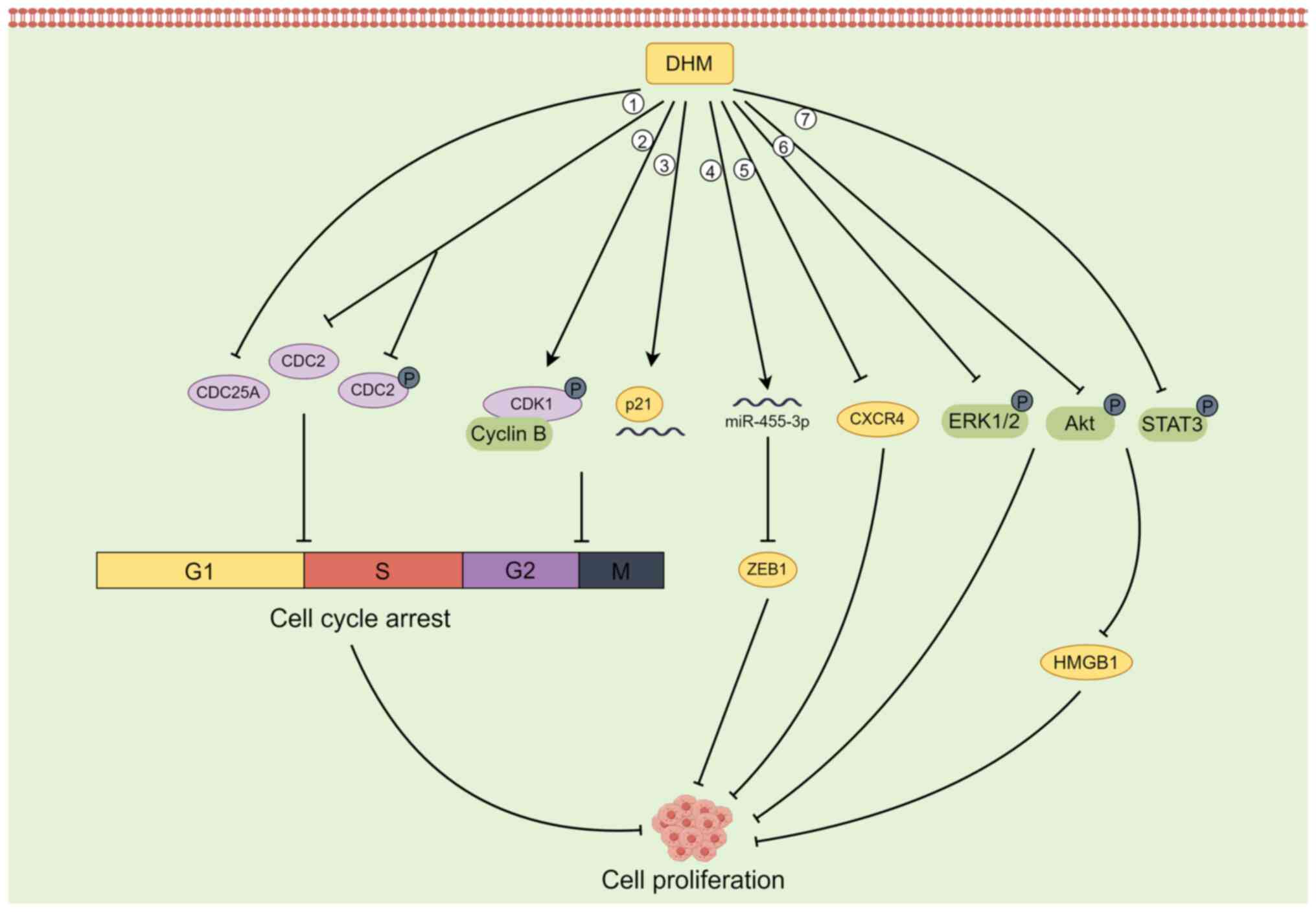
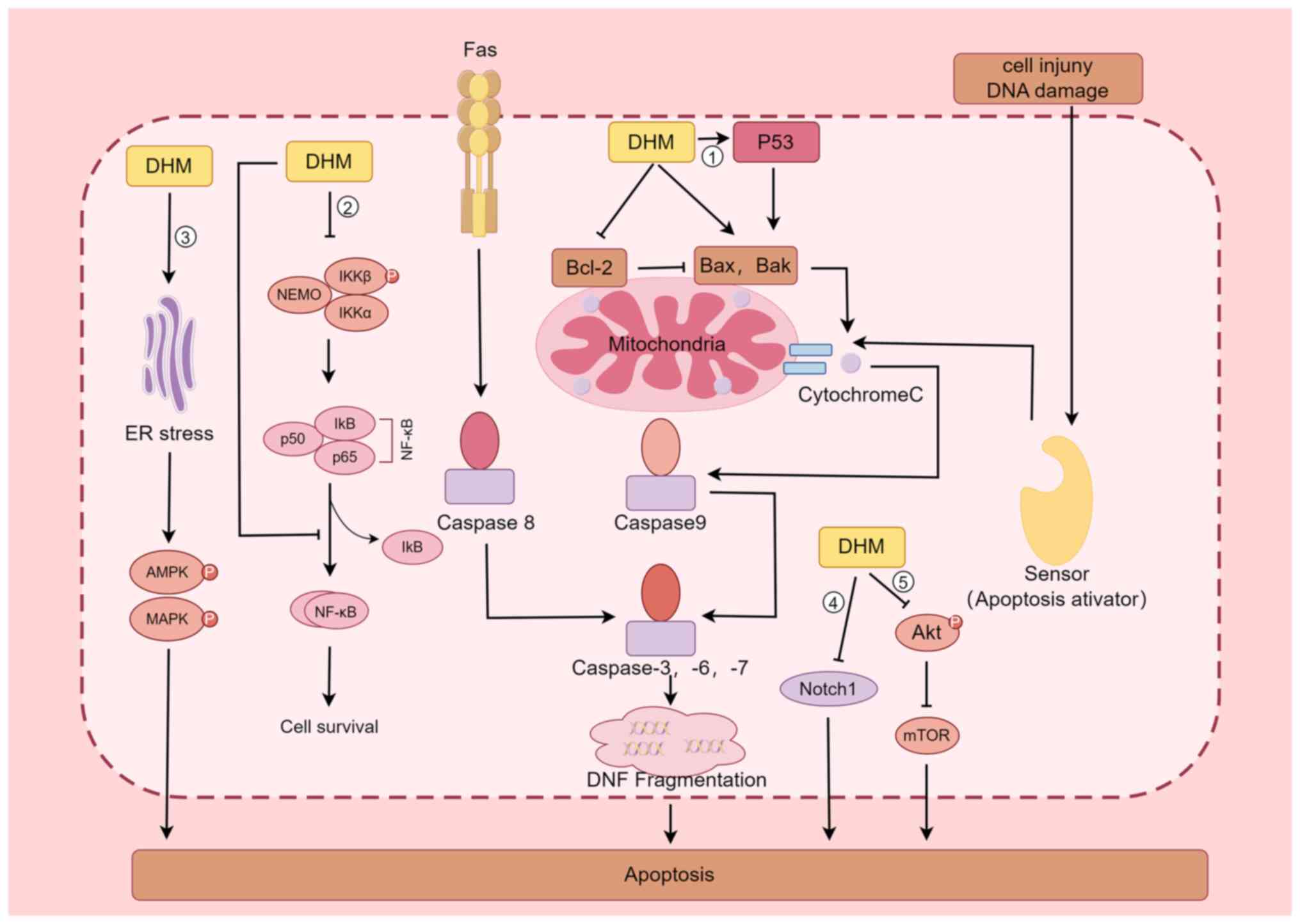
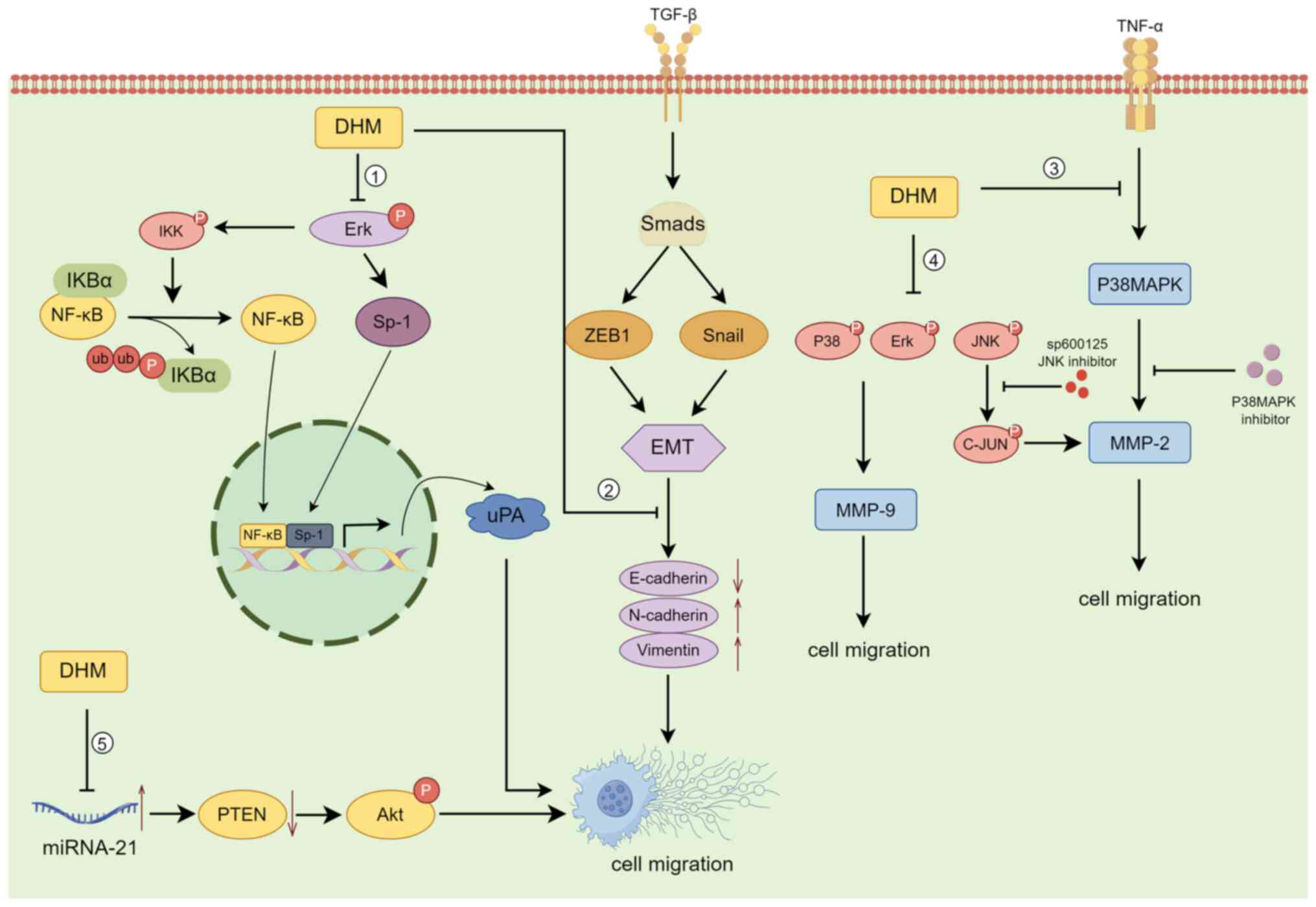
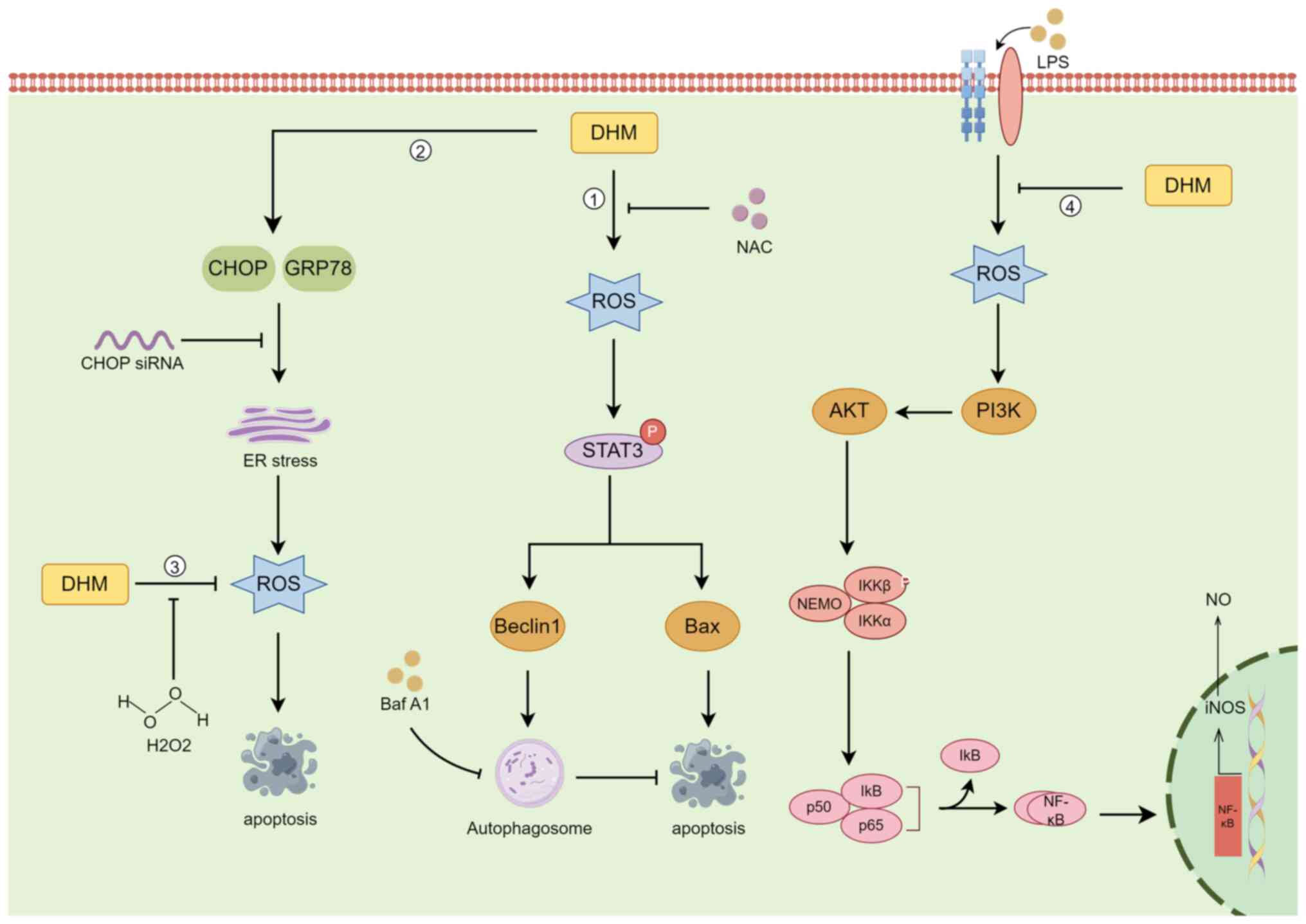
|
1
|
Mullard A: Addressing cancer's grand
challenges. Nat Rev Drug Discov. 19:825–826. 2020.PubMed/NCBI View Article : Google Scholar
|
|
2
|
Kashyap D, Tuli HS, Yerer MB, Sharma A,
Sak K, Srivastava S, Pandey A, Garg VK, Sethi G and Bishayee A:
Natural product-based nanoformulations for cancer therapy:
Opportunities and challenges. Semin Cancer Biol. 69:5–23.
2021.PubMed/NCBI View Article : Google Scholar
|
|
3
|
Chang L, Ruiz P, Ito T and Sellers WR:
Targeting pan-essential genes in cancer: Challenges and
opportunities. Cancer Cell. 39:466–479. 2021.PubMed/NCBI View Article : Google Scholar
|
|
4
|
Shafabakhsh R and Asemi Z: Quercetin: A
natural compound for ovarian cancer treatment. J Ovarian Res.
12(55)2019.PubMed/NCBI View Article : Google Scholar
|
|
5
|
Kim C and Kim B: Anti-Cancer natural
products and their bioactive compounds inducing ER stress-mediated
apoptosis: A review. Nutrients. 10(1021)2018.PubMed/NCBI View Article : Google Scholar
|
|
6
|
Demain AL and Vaishnav P: Natural products
for cancer chemotherapy. Microb Biotechnol. 4:687–699.
2011.PubMed/NCBI View Article : Google Scholar
|
|
7
|
Zuo W and Kwok HF: Development of
marine-derived compounds for cancer therapy. Mar Drugs.
19(342)2021.PubMed/NCBI View Article : Google Scholar
|
|
8
|
Sun CC, Li Y, Yin ZP and Zhang QF:
Physicochemical properties of dihydromyricetin and the effects of
ascorbic acid on its stability and bioavailability. J Sci Food
Agric. 101:3862–3869. 2021.PubMed/NCBI View Article : Google Scholar
|
|
9
|
Wu J, Xiao Z, Li H, Zhu N, Gu J, Wang W,
Liu C, Wang W and Qin L: Present status, challenges, and prospects
of dihydromyricetin in the battle against cancer. Cancers (Basel).
14(3487)2022.PubMed/NCBI View Article : Google Scholar
|
|
10
|
Sun Y, Liu S, Yang S, Chen C, Yang Y, Lin
M, Liu C, Wang W, Zhou X, Ai Q, et al: Mechanism of
dihydromyricetin on inflammatory diseases. Front Pharmacol.
12(794563)2022.PubMed/NCBI View Article : Google Scholar
|
|
11
|
Cheng P, Gui C, Huang J, Xia Y, Fang Y, Da
G and Zhang X: Molecular mechanisms of ampelopsin from Ampelopsis
megalophylla induces apoptosis in HeLa cells. Oncol Lett.
14:2691–2698. 2017.PubMed/NCBI View Article : Google Scholar
|
|
12
|
Chen L, Shi M, Lv C, Song Y, Wu Y, Liu S,
Zheng Z, Lu X and Qin S: Dihydromyricetin acts as a potential redox
balance mediator in cancer chemoprevention. Mediators Inflamm.
2021(6692579)2021.PubMed/NCBI View Article : Google Scholar
|
|
13
|
Sun J, Wang Y, Tang W and Gong J:
Enantioselectivity of chiral dihydromyricetin in multicomponent
solid solutions regulated by subtle structural mutation. IUCrJ.
10(Pt 2):164–176. 2023.PubMed/NCBI View Article : Google Scholar
|
|
14
|
Geng S, Yuan Y, Jiang X, Zhang R, Ma H,
Liang G and Liu B: An investigation on pickering nano-emulsions
stabilized by dihydromyricetin/high-amylose corn starch composite
particles: Preparation conditions and carrier properties. Curr Res
Food Sci. 6(100458)2023.PubMed/NCBI View Article : Google Scholar
|
|
15
|
Lyu Q, Chen L, Lin S, Cao H and Teng H: A
designed self-microemulsion delivery system for dihydromyricetin
and its dietary intervention effect on high-fat-diet fed mice. Food
Chem. 390(132954)2022.PubMed/NCBI View Article : Google Scholar
|
|
16
|
Ye J, Bao S, Zhao S, Zhu Y, Ren Q, Li R,
Xu X and Zhang Q: Self-Assembled micelles improve the oral
bioavailability of dihydromyricetin and anti-acute alcoholism
activity. AAPS PharmSciTech. 22(111)2021.PubMed/NCBI View Article : Google Scholar
|
|
17
|
Liu L, Li Y, Zhang M, Zhang Y and Lou B: A
Drug-Drug cocrystal of dihydromyricetin and pentoxifylline. J Pharm
Sci. 111:82–87. 2022.PubMed/NCBI View Article : Google Scholar
|
|
18
|
Sun Z, Lu W, Lin N, Lin H, Zhang J, Ni T,
Meng L, Zhang C and Guo H: Dihydromyricetin alleviates
doxorubicin-induced cardiotoxicity by inhibiting NLRP3 inflammasome
through activation of SIRT1. Biochem Pharmacol.
175(113888)2020.PubMed/NCBI View Article : Google Scholar
|
|
19
|
Wei C, Chen X, Chen D, Yu B, Zheng P, He
J, Chen H, Yan H, Luo Y and Huang Z: Dihydromyricetin enhances
intestinal antioxidant capacity of growing-finishing pigs by
activating ERK/Nrf2/HO-1 signaling pathway. Antioxidants (Basel).
11(704)2022.PubMed/NCBI View Article : Google Scholar
|
|
20
|
Zhou J, Hou P, Yao Y, Yue J, Zhang Q, Yi L
and Mi M: Dihydromyricetin improves high-fat diet-induced
hyperglycemia through ILC3 Activation via a SIRT3-Dependent
Mechanism. Mol Nutr Food Res. 66(e2101093)2022.PubMed/NCBI View Article : Google Scholar
|
|
21
|
Zhang ZY, Liu C, Wang PX, Han YW, Zhang
YW, Hao ML, Song ZX and Zhang XY: Dihydromyricetin Alleviates H9C2
cell apoptosis and autophagy by regulating CircHIPK3 Expression and
PI3K/AKT/mTOR pathway. Chin J Integr Med. 29:434–440.
2023.PubMed/NCBI View Article : Google Scholar
|
|
22
|
Li CH, Ding H, Shi JL, Huang B, Ding H,
Lin HG, Zeng JC, Zhao Y and Luo GQ: Dihydromyricetin promotes
apoptosis, suppresses proliferation and tumor necrosis
factor-α-mediated nuclear factor kappa-B activation in
nasopharyngeal carcinoma CNE-2 cell. J Tradit Chin Med. 41:367–375.
2021.PubMed/NCBI View Article : Google Scholar
|
|
23
|
Guo L, Zhang H and Yan X: Protective
effect of dihydromyricetin revents fatty liver through nuclear
factor-κB/p53/B-cell lymphoma 2-associated X protein signaling
pathways in a rat model. Mol Med Rep. 19:1638–1644. 2019.PubMed/NCBI View Article : Google Scholar
|
|
24
|
Jing N and Li X: Retraction on
‘Dihydromyricetin attenuates inflammation through TLR4/NF-kappa B
pathway’. Open Med (Wars). 16(1082)2021.PubMed/NCBI View Article : Google Scholar
|
|
25
|
Liu M, Guo H, Li Z, Zhang C, Zhang X, Cui
Q and Tian J: Molecular level insight into the benefit of myricetin
and dihydromyricetin uptake in patients with Alzheimer's diseases.
Front Aging Neurosci. 12(601603)2020.PubMed/NCBI View Article : Google Scholar
|
|
26
|
Zhu H, Luo P, Fu Y, Wang J, Dai J, Shao J,
Yang X, Chang L, Weng Q, Yang B and He Q: Dihydromyricetin prevents
cardiotoxicity and enhances anticancer activity induced by
adriamycin. Oncotarget. 6:3254–3267. 2015.PubMed/NCBI View Article : Google Scholar
|
|
27
|
Wang Y, Wang J, Xiang H, Ding P, Wu T and
Ji G: Recent update on application of dihydromyricetin in metabolic
related diseases. Biomed Pharmacother. 148(112771)2022.PubMed/NCBI View Article : Google Scholar
|
|
28
|
Zhang J, Chen Y, Luo H, Sun L, Xu M, Yu J,
Zhou Q, Meng G and Yang S: Recent update on the pharmacological
effects and mechanisms of dihydromyricetin. Front Pharmacol.
9(1204)2018.PubMed/NCBI View Article : Google Scholar
|
|
29
|
Huang H, Hu M, Zhao R, Li P and Li M:
Dihydromyricetin suppresses the proliferation of hepatocellular
carcinoma cells by inducing G2/M arrest through the
Chk1/Chk2/Cdc25C pathway. Oncol Rep. 30:2467–2475. 2013.PubMed/NCBI View Article : Google Scholar
|
|
30
|
Liu C, Zhao P, Yang Y, Xu X, Wang L and Li
B: Ampelopsin suppresses TNF-α-induced migration and invasion of
U2OS osteosarcoma cells. Mol Med Rep. 13:4729–4736. 2016.PubMed/NCBI View Article : Google Scholar
|
|
31
|
Fan TF, Wu TF, Bu LL, Ma SR, Li YC, Mao L,
Sun ZJ and Zhang WF: Dihydromyricetin promotes autophagy and
apoptosis through ROS-STAT3 signaling in head and neck squamous
cell carcinoma. Oncotarget. 7:59691–59703. 2016.PubMed/NCBI View Article : Google Scholar
|
|
32
|
Martínez-Alonso D and Malumbres M:
Mammalian cell cycle cyclins. Semin Cell Dev Biol. 107:28–35.
2020.PubMed/NCBI View Article : Google Scholar
|
|
33
|
Tokunaga Y, Otsuyama KI and Hayashida N:
Cell cycle regulation by heat shock transcription factors. Cells.
11(203)2022.PubMed/NCBI View Article : Google Scholar
|
|
34
|
Gonzales AJ, Goldsworthy TL and Fox TR:
Chemical transformation of mouse liver cells results in altered
cyclin D-CDK protein complexes. Carcinogenesis. 19:1093–1102.
1998.PubMed/NCBI View Article : Google Scholar
|
|
35
|
Zhang M, Zhang L, Hei R, Li X, Cai H, Wu
X, Zheng Q and Cai C: CDK inhibitors in cancer therapy, an overview
of recent development. Am J Cancer Res. 11:1913–1935.
2021.PubMed/NCBI
|
|
36
|
Wood DJ and Endicott JA: Structural
insights into the functional diversity of the CDK-cyclin family.
Open Biol. 8(180112)2018.PubMed/NCBI View Article : Google Scholar
|
|
37
|
Riba A, Oravecz A, Durik M, Jiménez S,
Alunni V, Cerciat M, Jung M, Keime C, Keyes WM and Molina N: Cell
cycle gene regulation dynamics revealed by RNA velocity and
deep-learning. Nat Commun. 13(2865)2022.PubMed/NCBI View Article : Google Scholar
|
|
38
|
Lee JH and Berger JM: Cell Cycle-Dependent
control and roles of DNA Topoisomerase II. Genes (Basel).
10(859)2019.PubMed/NCBI View Article : Google Scholar
|
|
39
|
Zeng G, Liu J, Chen H, Liu B, Zhang Q, Li
M and Zhu R: Dihydromyricetin induces cell cycle arrest and
apoptosis in melanoma SK-MEL-28 cells. Oncol Rep. 31:2713–2719.
2014.PubMed/NCBI View Article : Google Scholar
|
|
40
|
Zhao Z, Yin JQ, Wu MS, Song G, Xie XB, Zou
C, Tang Q, Wu Y, Lu J, Wang Y, et al: Dihydromyricetin activates
AMP-activated protein kinase and P38(MAPK) exerting antitumor
potential in osteosarcoma. Cancer Prev Res (Phila). 7:927–938.
2014.PubMed/NCBI View Article : Google Scholar
|
|
41
|
Fan KJ, Yang B, Liu Y, Tian XD and Wang B:
Inhibition of human lung cancer proliferation through targeting
stromal fibroblasts by dihydromyricetin. Mol Med Rep. 16:9758–9762.
2017.PubMed/NCBI View Article : Google Scholar
|
|
42
|
Liu J, Shu Y, Zhang Q, Liu B, Xia J, Qiu
M, Miao H, Li M and Zhu R: Dihydromyricetin induces apoptosis and
inhibits proliferation in hepatocellular carcinoma cells. Oncol
Lett. 8:1645–1651. 2014.PubMed/NCBI View Article : Google Scholar
|
|
43
|
Ni F, Gong Y, Li L, Abdolmaleky HM and
Zhou JR: Flavonoid ampelopsin inhibits the growth and metastasis of
prostate cancer in vitro and in mice. PLoS One.
7(e38802)2012.PubMed/NCBI View Article : Google Scholar
|
|
44
|
Wang S, Ge F, Cai T, Qi S and Qi Z:
Dihydromyricetin inhibits proliferation and migration of gastric
cancer cells through regulating Akt/STAT3 signaling pathways and
HMGB1 expression. Nan Fang Yi Ke Da Xue Xue Bao. 41:87–92.
2021.PubMed/NCBI View Article : Google Scholar : (In Chinese).
|
|
45
|
Li X, Yang ZS, Cai WW, Deng Y, Chen L and
Tan SL: Dihydromyricetin inhibits tumor growth and
epithelial-mesenchymal transition through regulating miR-455-3p in
Cholangiocarcinoma. J Cancer. 12:6058–6070. 2021.PubMed/NCBI View Article : Google Scholar
|
|
46
|
Lobe C, Vallette M, Arbelaiz A,
Gonzalez-Sanchez E, Izquierdo L, Pellat A, Guedj N, Louis C,
Paradis V, Banales JM, et al: Zinc Finger E-Box Binding Homeobox 1
promotes cholangiocarcinoma progression through tumor
dedifferentiation and tumor-stroma paracrine signaling. Hepatology.
74:3194–3212. 2021.PubMed/NCBI View Article : Google Scholar
|
|
47
|
Xu X, Lai Y and Hua ZC: Apoptosis and
apoptotic body: Disease message and therapeutic target potentials.
Biosci Rep. 39(BSR20180992)2019.PubMed/NCBI View Article : Google Scholar
|
|
48
|
Morana O, Wood W and Gregory CD: The
apoptosis paradox in cancer. Int J Mol Sci. 23(1328)2022.PubMed/NCBI View Article : Google Scholar
|
|
49
|
Cheng X and Ferrell JE Jr: Apoptosis
propagates through the cytoplasm as trigger waves. Science.
361:607–612. 2018.PubMed/NCBI View Article : Google Scholar
|
|
50
|
Rahmani M, Nkwocha J, Hawkins E, Pei X,
Parker RE, Kmieciak M, Leverson JD, Sampath D, Ferreira-Gonzalez A
and Grant S: Cotargeting BCL-2 and PI3K Induces BAX-Dependent
mitochondrial apoptosis in AML cells. Cancer Res. 78:3075–3086.
2018.PubMed/NCBI View Article : Google Scholar
|
|
51
|
Zuo Y, Xu Q, Lu Y, Sun D, Wang K, Lei Y,
Liang X and Li Y: Dihydromyricetin induces apoptosis in a human
choriocarcinoma cell line. Oncol Lett. 16:4229–4234.
2018.PubMed/NCBI View Article : Google Scholar
|
|
52
|
Chipuk JE, McStay GP, Bharti A, Kuwana T,
Clarke CJ, Siskind LJ, Obeid LM and Green DR: Sphingolipid
metabolism cooperates with BAK and BAX to promote the mitochondrial
pathway of apoptosis. Cell. 148:988–1000. 2012.PubMed/NCBI View Article : Google Scholar
|
|
53
|
Ji FJ, Tian XF, Liu XW, Fu LB, Wu YY, Fang
XD and Jin HY: Dihydromyricetin induces cell apoptosis via a
p53-related pathway in AGS human gastric cancer cells. Genet Mol
Res. 14:15564–15571. 2015.PubMed/NCBI View Article : Google Scholar
|
|
54
|
Han JM, Kim HL and Jung HJ: Ampelopsin
inhibits cell proliferation and induces apoptosis in HL60 and K562
leukemia cells by downregulating AKT and NF-κB signaling pathways.
Int J Mol Sci. 22(4265)2021.PubMed/NCBI View Article : Google Scholar
|
|
55
|
Chang H, Peng X, Bai Q, Zhou Y, Yu X,
Zhang Q, Zhu J and Mi M: Ampelopsin suppresses breast
carcinogenesis by inhibiting the mTOR signalling pathway.
Carcinogenesis. 35:1847–1854. 2014.PubMed/NCBI View Article : Google Scholar
|
|
56
|
Lu CJ, He YF, Yuan WZ, Xiang LJ, Zhang J,
Liang YR, Duan J, He YH and Li MY: Dihydromyricetin-mediated
inhibition of the Notch1 pathway induces apoptosis in QGY7701 and
HepG2 hepatoma cells. World J Gastroenterol. 23:6242–6251.
2017.PubMed/NCBI View Article : Google Scholar
|
|
57
|
Ye L, Yin G, Jiang M, Tu B, Li Z and Wang
Y: Dihydromyricetin exhibits antitumor activity in nasopharyngeal
cancer cell through antagonizing Wnt/β-catenin signaling. Integr
Cancer Ther. 20(1534735421991217)2021.PubMed/NCBI View Article : Google Scholar
|
|
58
|
Zhang Q, Wang J, Zhang H and Zeng T:
Dihydromyricetin inhibits oxidative stress and apoptosis in oxygen
and glucose deprivation/reoxygenation-induced HT22 cells by
activating the Nrf2/HO-1 pathway. Mol Med Rep.
23(397)2021.PubMed/NCBI View Article : Google Scholar
|
|
59
|
Park GB, Jeong JY and Kim D:
Ampelopsin-induced reactive oxygen species enhance the apoptosis of
colon cancer cells by activating endoplasmic reticulum
stress-mediated AMPK/MAPK/XAF1 signaling. Oncol Lett. 14:7947–7956.
2017.PubMed/NCBI View Article : Google Scholar
|
|
60
|
Trepat X, Chen Z and Jacobson K: Cell
migration. Compr Physiol. 2:2369–2392. 2012.PubMed/NCBI View Article : Google Scholar
|
|
61
|
Zanotelli MR, Zhang J and Reinhart-King
CA: Mechanoresponsive metabolism in cancer cell migration and
metastasis. Cell Metab. 33:1307–1321. 2021.PubMed/NCBI View Article : Google Scholar
|
|
62
|
Chen C, Xie L, Ren T, Huang Y, Xu J and
Guo W: Immunotherapy for osteosarcoma: Fundamental mechanism,
rationale, and recent breakthroughs. Cancer Lett. 500:1–10.
2021.PubMed/NCBI View Article : Google Scholar
|
|
63
|
Chou CH, Lu KH, Yang JS, Hsieh YH, Lin CW
and Yang SF: Dihydromyricetin suppresses cell metastasis in human
osteosarcoma through SP-1- and NF-κB-modulated urokinase
plasminogen activator inhibition. Phytomedicine.
90(153642)2021.PubMed/NCBI View Article : Google Scholar
|
|
64
|
Wang K, Yang SF, Hsieh YH, Chang YY, Yu
NY, Lin HW and Lin HY: Effects of dihydromyricetin on ARPE-19 cell
migration through regulating matrix metalloproteinase-2 expression.
Environ Toxicol. 33:1298–1303. 2018.PubMed/NCBI View Article : Google Scholar
|
|
65
|
Zhang QY, Li R, Zeng GF, Liu B, Liu J, Shu
Y, Liu ZK, Qiu ZD, Wang DJ, Miao HL, et al: Dihydromyricetin
inhibits migration and invasion of hepatoma cells through
regulation of MMP-9 expression. World J Gastroenterol.
20:10082–10093. 2014.PubMed/NCBI View Article : Google Scholar
|
|
66
|
Liu T, Liu P, Ding F, Yu N, Li S, Wang S,
Zhang X, Sun X, Chen Y, Wang F, et al: Ampelopsin reduces the
migration and invasion of ovarian cancer cells via inhibition of
epithelial-to-mesenchymal transition. Oncol Rep. 33:861–867.
2015.PubMed/NCBI View Article : Google Scholar
|
|
67
|
Wang FJ, Zong XY, DU JL, Wang WS, Yuan DP
and Chen XB: [Effects of dihydromyricetin on the migration and
invasion of human gastric cancer MKN45 cells and its mechanism].
Zhongguo Ying Yong Sheng Li Xue Za Zhi. 35:428–432. 2019.PubMed/NCBI View Article : Google Scholar : (In Chinese).
|
|
68
|
Zheng HQ and Liu DY: Anti-invasive and
anti-metastatic effect of ampelopsin on melanoma. Ai Zheng.
22:363–367. 2003.PubMed/NCBIIn Chinese.
|
|
69
|
Huang CC, Su CW, Wang PH, Lu YT, Ho YT,
Yang SF, Hsin CH and Lin CW: Dihydromyricetin inhibits cancer cell
migration and matrix metalloproteinases-2 expression in human
nasopharyngeal carcinoma through extracellular signal-regulated
kinase signaling pathway. Environ Toxicol. 37:1244–1253.
2022.PubMed/NCBI View Article : Google Scholar
|
|
70
|
Chen L, Yang ZS, Zhou YZ, Deng Y, Jiang P
and Tan SL: Dihydromyricetin inhibits cell proliferation,
migration, invasion and promotes apoptosis via regulating miR-21 in
human cholangiocarcinoma cells. J Cancer. 11:5689–5699.
2020.PubMed/NCBI View Article : Google Scholar
|
|
71
|
Sahoo BM, Banik BK, Borah P and Jain A:
Reactive oxygen species (ROS): Key components in cancer therapies.
Anticancer Agents Med Chem. 22:215–222. 2022.PubMed/NCBI View Article : Google Scholar
|
|
72
|
Villalpando-Rodriguez GE and Gibson SB:
Reactive oxygen species (ROS) Regulates different types of cell
death by acting as a rheostat. Oxid Med Cell Longev.
2021(9912436)2021.PubMed/NCBI View Article : Google Scholar
|
|
73
|
Kocaturk NM, Akkoc Y, Kig C, Bayraktar O,
Gozuacik D and Kutlu O: Autophagy as a molecular target for cancer
treatment. Eur J Pharm Sci. 134:116–137. 2019.PubMed/NCBI View Article : Google Scholar
|
|
74
|
Feng Y, He D, Yao Z and Klionsky DJ: The
machinery of macroautophagy. Cell Res. 24:24–41. 2014.PubMed/NCBI View Article : Google Scholar
|
|
75
|
Onorati AV, Dyczynski M, Ojha R and
Amaravadi RK: Targeting autophagy in cancer. Cancer. 124:3307–3318.
2018.PubMed/NCBI View Article : Google Scholar
|
|
76
|
Zhou Y, Shu F, Liang X, Chang H, Shi L,
Peng X, Zhu J and Mi M: Ampelopsin induces cell growth inhibition
and apoptosis in breast cancer cells through ROS generation and
endoplasmic reticulum stress pathway. PLoS One.
9(e89021)2014.PubMed/NCBI View Article : Google Scholar
|
|
77
|
Zhou DZ, Sun HY, Yue JQ, Peng Y, Chen YM
and Zhong ZJ: Dihydromyricetin induces apoptosis and cytoprotective
autophagy through ROS-NF-κB signalling in human melanoma cells.
Free Radic Res. 51:517–528. 2017.PubMed/NCBI View Article : Google Scholar
|
|
78
|
Liu B, Tan X, Liang J, Wu S, Liu J, Zhang
Q and Zhu R: A reduction in reactive oxygen species contributes to
dihydromyricetin-induced apoptosis in human hepatocellular
carcinoma cells. Sci Rep. 4(7041)2014.PubMed/NCBI View Article : Google Scholar
|
|
79
|
Qi S, Xin Y, Guo Y, Diao Y, Kou X, Luo L
and Yin Z: Ampelopsin reduces endotoxic inflammation via repressing
ROS-mediated activation of PI3K/Akt/NF-κB signaling pathways. Int
Immunopharmacol. 12:278–287. 2012.PubMed/NCBI View Article : Google Scholar
|
|
80
|
Tan M, Jiang B, Wang H, Ouyang W, Chen X,
Wang T, Dong D, Yi S, Yi J, Huang Y, et al: Dihydromyricetin
induced lncRNA MALAT1-TFEB-dependent autophagic cell death in
cutaneous squamous cell carcinoma. J Cancer. 10:4245–4255.
2019.PubMed/NCBI View Article : Google Scholar
|
|
81
|
Tuli HS, Mistry H, Kaur G, Aggarwal D,
Garg VK, Mittal S, Yerer MB, Sak K and Khan MA: Gallic Acid: A
dietary polyphenol that exhibits anti-neoplastic activities by
modulating multiple oncogenic targets. Anticancer Agents Med Chem.
22:499–514. 2022.PubMed/NCBI View Article : Google Scholar
|
|
82
|
Tuli HS, Kashyap D, Sharma AK and Sandhu
SS: Molecular aspects of melatonin (MLT)-mediated therapeutic
effects. Life Sci. 135:147–157. 2015.PubMed/NCBI View Article : Google Scholar
|
|
83
|
Manu KA, Shanmugam MK, Ramachandran L, Li
F, Siveen KS, Chinnathambi A, Zayed ME, Alharbi SA, Arfuso F, Kumar
AP, et al: Isorhamnetin augments the anti-tumor effect of
capecitabine through the negative regulation of NF-κB signaling
cascade in gastric cancer. Cancer Lett. 363:28–36. 2015.PubMed/NCBI View Article : Google Scholar
|
|
84
|
Manu KA, Shanmugam MK, Li F, Chen L,
Siveen KS, Ahn KS, Kumar AP and Sethi G: Simvastatin sensitizes
human gastric cancer xenograft in nude mice to capecitabine by
suppressing nuclear factor-kappa B-regulated gene products. J Mol
Med (Berl). 92:267–276. 2014.PubMed/NCBI View Article : Google Scholar
|
|
85
|
Jiang L, Zhang Q, Ren H, Ma S, Lu C, Liu
B, Liu J, Liang J, Li M and Zhu R: Dihydromyricetin enhances the
chemo-sensitivity of nedaplatin via regulation of the p53/Bcl-2
pathway in hepatocellular carcinoma cells. PLoS One.
10(e0124994)2015.PubMed/NCBI View Article : Google Scholar
|
|
86
|
He MH, Zhang Q, Shu G, Lin JC, Zhao L,
Liang XX, Yin L, Shi F, Fu HL and Yuan ZX: Dihydromyricetin
sensitizes human acute myeloid leukemia cells to retinoic
acid-induced myeloid differentiation by activating STAT1. Biochem
Biophys Res Commun. 495:1702–1707. 2018.PubMed/NCBI View Article : Google Scholar
|
|
87
|
Wang Z, Sun X, Feng Y, Liu X, Zhou L, Sui
H, Ji Q, E Q, Chen J, Wu L and Li Q: Dihydromyricetin reverses
MRP2-mediated MDR and enhances anticancer activity induced by
oxaliplatin in colorectal cancer cells. Anticancer Drugs.
28:281–288. 2017.PubMed/NCBI View Article : Google Scholar
|
|
88
|
Wang Z, Sun X, Feng Y, Wang Y, Zhang L,
Wang Y, Fang Z, Azami NLB, Sun M and Li Q: Dihydromyricetin
reverses MRP2-induced multidrug resistance by preventing NF-κB-Nrf2
signaling in colorectal cancer cell. Phytomedicine.
82(153414)2021.PubMed/NCBI View Article : Google Scholar
|
|
89
|
Zhu XH, Lang HD, Wang XL, Hui SC, Zhou M,
Kang C, Yi L, Mi MT and Zhang Y: Synergy between dihydromyricetin
intervention and irinotecan chemotherapy delays the progression of
colon cancer in mouse models. Food Funct. 10:2040–2049.
2019.PubMed/NCBI View Article : Google Scholar
|
|
90
|
Xu Y, Wang S, Chan HF, Lu H, Lin Z, He C
and Chen M: Dihydromyricetin induces apoptosis and reverses drug
resistance in ovarian cancer cells by p53-mediated Downregulation
of Survivin. Sci Rep. 7(46060)2017.PubMed/NCBI View Article : Google Scholar
|
|
91
|
Wu M, Jiang M, Dong T, Xu L, Lv J, Xue M
and Huang M: Reversal effect of dihydromyricetin on multiple drug
resistance in SGC7901/5-FU cells. Asian Pac J Cancer Prev.
21:1269–1274. 2020.PubMed/NCBI View Article : Google Scholar
|
|
92
|
Dong S, Ji J, Hu L and Wang H:
Dihydromyricetin alleviates acetaminophen-induced liver injury via
the regulation of transformation, lipid homeostasis, cell death and
regeneration. Life Sci. 227:20–29. 2019.PubMed/NCBI View Article : Google Scholar
|
|
93
|
Xiang D, Wang CG, Wang WQ, Shi CY, Xiong
W, Wang MD and Fang JG: Gastrointestinal stability of
dihydromyricetin, myricetin, and myricitrin: An in vitro
investigation. Int J Food Sci Nutr. 68:704–711. 2017.PubMed/NCBI View Article : Google Scholar
|
|
94
|
Tong Q, Hou X, Fang J, Wang W, Xiong W,
Liu X, Xie X and Shi C: Determination of dihydromyricetin in rat
plasma by LC-MS/MS and its application to a pharmacokinetic study.
J Pharm Biomed Anal. 114:455–461. 2015.PubMed/NCBI View Article : Google Scholar
|
|
95
|
Zhang R, Zhang H, Shi H, Zhang D, Zhang Z
and Liu H: Strategic developments in the drug delivery of natural
product dihydromyricetin: Applications, prospects, and challenges.
Drug Deliv. 29:3052–3070. 2022.PubMed/NCBI View Article : Google Scholar
|
|
96
|
Chen S, Zhao X, Wan J, Ran L, Qin Y, Wang
X, Gao Y, Shu F, Zhang Y, Liu P, et al: Dihydromyricetin improves
glucose and lipid metabolism and exerts anti-inflammatory effects
in nonalcoholic fatty liver disease: A randomized controlled trial.
Pharmacol Res. 99:74–81. 2015.PubMed/NCBI View Article : Google Scholar
|
|
97
|
Ran L, Wang X, Lang H, Xu J, Wang J, Liu
H, Mi M and Qin Y: Ampelopsis grossedentata supplementation
effectively ameliorates the glycemic control in patients with type
2 diabetes mellitus. Eur J Clin Nutr. 73:776–782. 2019.PubMed/NCBI View Article : Google Scholar
|