Spandidos Publications Logo
  • About
    • About Spandidos
    • Aims and Scopes
    • Abstracting and Indexing
    • Editorial Policies
    • Reprints and Permissions
    • Job Opportunities
    • Terms and Conditions
    • Contact
  • Journals
    • All Journals
    • Oncology Letters
      • Oncology Letters
      • Information for Authors
      • Editorial Policies
      • Editorial Board
      • Aims and Scope
      • Abstracting and Indexing
      • Bibliographic Information
      • Archive
    • International Journal of Oncology
      • International Journal of Oncology
      • Information for Authors
      • Editorial Policies
      • Editorial Board
      • Aims and Scope
      • Abstracting and Indexing
      • Bibliographic Information
      • Archive
    • Molecular and Clinical Oncology
      • Molecular and Clinical Oncology
      • Information for Authors
      • Editorial Policies
      • Editorial Board
      • Aims and Scope
      • Abstracting and Indexing
      • Bibliographic Information
      • Archive
    • Experimental and Therapeutic Medicine
      • Experimental and Therapeutic Medicine
      • Information for Authors
      • Editorial Policies
      • Editorial Board
      • Aims and Scope
      • Abstracting and Indexing
      • Bibliographic Information
      • Archive
    • International Journal of Molecular Medicine
      • International Journal of Molecular Medicine
      • Information for Authors
      • Editorial Policies
      • Editorial Board
      • Aims and Scope
      • Abstracting and Indexing
      • Bibliographic Information
      • Archive
    • Biomedical Reports
      • Biomedical Reports
      • Information for Authors
      • Editorial Policies
      • Editorial Board
      • Aims and Scope
      • Abstracting and Indexing
      • Bibliographic Information
      • Archive
    • Oncology Reports
      • Oncology Reports
      • Information for Authors
      • Editorial Policies
      • Editorial Board
      • Aims and Scope
      • Abstracting and Indexing
      • Bibliographic Information
      • Archive
    • Molecular Medicine Reports
      • Molecular Medicine Reports
      • Information for Authors
      • Editorial Policies
      • Editorial Board
      • Aims and Scope
      • Abstracting and Indexing
      • Bibliographic Information
      • Archive
    • World Academy of Sciences Journal
      • World Academy of Sciences Journal
      • Information for Authors
      • Editorial Policies
      • Editorial Board
      • Aims and Scope
      • Abstracting and Indexing
      • Bibliographic Information
      • Archive
    • International Journal of Functional Nutrition
      • International Journal of Functional Nutrition
      • Information for Authors
      • Editorial Policies
      • Editorial Board
      • Aims and Scope
      • Abstracting and Indexing
      • Bibliographic Information
      • Archive
    • International Journal of Epigenetics
      • International Journal of Epigenetics
      • Information for Authors
      • Editorial Policies
      • Editorial Board
      • Aims and Scope
      • Abstracting and Indexing
      • Bibliographic Information
      • Archive
    • Medicine International
      • Medicine International
      • Information for Authors
      • Editorial Policies
      • Editorial Board
      • Aims and Scope
      • Abstracting and Indexing
      • Bibliographic Information
      • Archive
  • Articles
  • Information
    • Information for Authors
    • Information for Reviewers
    • Information for Librarians
    • Information for Advertisers
    • Conferences
  • Language Editing
Spandidos Publications Logo
  • About
    • About Spandidos
    • Aims and Scopes
    • Abstracting and Indexing
    • Editorial Policies
    • Reprints and Permissions
    • Job Opportunities
    • Terms and Conditions
    • Contact
  • Journals
    • All Journals
    • Biomedical Reports
      • Information for Authors
      • Editorial Policies
      • Editorial Board
      • Aims and Scope
      • Abstracting and Indexing
      • Bibliographic Information
      • Archive
    • Experimental and Therapeutic Medicine
      • Information for Authors
      • Editorial Policies
      • Editorial Board
      • Aims and Scope
      • Abstracting and Indexing
      • Bibliographic Information
      • Archive
    • International Journal of Epigenetics
      • Information for Authors
      • Editorial Policies
      • Editorial Board
      • Aims and Scope
      • Abstracting and Indexing
      • Bibliographic Information
      • Archive
    • International Journal of Functional Nutrition
      • Information for Authors
      • Editorial Policies
      • Editorial Board
      • Aims and Scope
      • Abstracting and Indexing
      • Bibliographic Information
      • Archive
    • International Journal of Molecular Medicine
      • Information for Authors
      • Editorial Policies
      • Editorial Board
      • Aims and Scope
      • Abstracting and Indexing
      • Bibliographic Information
      • Archive
    • International Journal of Oncology
      • Information for Authors
      • Editorial Policies
      • Editorial Board
      • Aims and Scope
      • Abstracting and Indexing
      • Bibliographic Information
      • Archive
    • Medicine International
      • Information for Authors
      • Editorial Policies
      • Editorial Board
      • Aims and Scope
      • Abstracting and Indexing
      • Bibliographic Information
      • Archive
    • Molecular and Clinical Oncology
      • Information for Authors
      • Editorial Policies
      • Editorial Board
      • Aims and Scope
      • Abstracting and Indexing
      • Bibliographic Information
      • Archive
    • Molecular Medicine Reports
      • Information for Authors
      • Editorial Policies
      • Editorial Board
      • Aims and Scope
      • Abstracting and Indexing
      • Bibliographic Information
      • Archive
    • Oncology Letters
      • Information for Authors
      • Editorial Policies
      • Editorial Board
      • Aims and Scope
      • Abstracting and Indexing
      • Bibliographic Information
      • Archive
    • Oncology Reports
      • Information for Authors
      • Editorial Policies
      • Editorial Board
      • Aims and Scope
      • Abstracting and Indexing
      • Bibliographic Information
      • Archive
    • World Academy of Sciences Journal
      • Information for Authors
      • Editorial Policies
      • Editorial Board
      • Aims and Scope
      • Abstracting and Indexing
      • Bibliographic Information
      • Archive
  • Articles
  • Information
    • For Authors
    • For Reviewers
    • For Librarians
    • For Advertisers
    • Conferences
  • Language Editing
Login Register Submit
  • This site uses cookies
  • You can change your cookie settings at any time by following the instructions in our Cookie Policy. To find out more, you may read our Privacy Policy.

    I agree
Search articles by DOI, keyword, author or affiliation
Search
Advanced Search
presentation
Biomedical Reports
Join Editorial Board Propose a Special Issue
Print ISSN: 2049-9434 Online ISSN: 2049-9442
Journal Cover
February-2026 Volume 24 Issue 2

Full Size Image

Sign up for eToc alerts
Recommend to Library

Journals

International Journal of Molecular Medicine

International Journal of Molecular Medicine

International Journal of Molecular Medicine is an international journal devoted to molecular mechanisms of human disease.

International Journal of Oncology

International Journal of Oncology

International Journal of Oncology is an international journal devoted to oncology research and cancer treatment.

Molecular Medicine Reports

Molecular Medicine Reports

Covers molecular medicine topics such as pharmacology, pathology, genetics, neuroscience, infectious diseases, molecular cardiology, and molecular surgery.

Oncology Reports

Oncology Reports

Oncology Reports is an international journal devoted to fundamental and applied research in Oncology.

Experimental and Therapeutic Medicine

Experimental and Therapeutic Medicine

Experimental and Therapeutic Medicine is an international journal devoted to laboratory and clinical medicine.

Oncology Letters

Oncology Letters

Oncology Letters is an international journal devoted to Experimental and Clinical Oncology.

Biomedical Reports

Biomedical Reports

Explores a wide range of biological and medical fields, including pharmacology, genetics, microbiology, neuroscience, and molecular cardiology.

Molecular and Clinical Oncology

Molecular and Clinical Oncology

International journal addressing all aspects of oncology research, from tumorigenesis and oncogenes to chemotherapy and metastasis.

World Academy of Sciences Journal

World Academy of Sciences Journal

Multidisciplinary open-access journal spanning biochemistry, genetics, neuroscience, environmental health, and synthetic biology.

International Journal of Functional Nutrition

International Journal of Functional Nutrition

Open-access journal combining biochemistry, pharmacology, immunology, and genetics to advance health through functional nutrition.

International Journal of Epigenetics

International Journal of Epigenetics

Publishes open-access research on using epigenetics to advance understanding and treatment of human disease.

Medicine International

Medicine International

An International Open Access Journal Devoted to General Medicine.

Journal Cover
February-2026 Volume 24 Issue 2

Full Size Image

Sign up for eToc alerts
Recommend to Library

  • Article
  • Citations
    • Cite This Article
    • Download Citation
    • Create Citation Alert
    • Remove Citation Alert
    • Cited By
  • Similar Articles
    • Related Articles (in Spandidos Publications)
    • Similar Articles (Google Scholar)
    • Similar Articles (PubMed)
  • Download PDF
  • Download XML
  • View XML
Article Open Access

Knockdown of ALOX15 alleviates acute coronary syndrome via the FGFR2/PI3K/AKT signaling pathway

  • Authors:
    • Hao Chen
    • Ning Zhu
    • Shiwei Huang
    • Fanlu Guan
    • Sisi Han
    • Fanhao Ye
    • Liyi You
  • View Affiliations / Copyright

    Affiliations: Department of Cardiovascular Medicine, The Third Affiliated Hospital of Shanghai University (Wenzhou People's Hospital), Wenzhou Medical University, Wenzhou, Zhejiang 325000, P.R. China, Department of Cardiovascular Medicine, The Third Affiliated Hospital of Shanghai University (Wenzhou People's Hospital), Wenzhou Medical University, Wenzhou, Zhejiang 325000, P.R. China, Department of Ultrasonography, The Third Affiliated Hospital of Shanghai University (Wenzhou People's Hospital), Wenzhou Medical University, Wenzhou, Zhejiang 325000, P.R. China
    Copyright: © Chen et al. This is an open access article distributed under the terms of Creative Commons Attribution License.
  • Article Number: 19
    |
    Published online on: November 25, 2025
       https://doi.org/10.3892/br.2025.2092
  • Expand metrics +
Metrics: Total Views: 0 (Spandidos Publications: | PMC Statistics: )
Metrics: Total PDF Downloads: 0 (Spandidos Publications: | PMC Statistics: )
Cited By (CrossRef): 0 citations Loading Articles...

This article is mentioned in:


Abstract

Acute coronary syndrome (ACS) is a serious cardiovascular condition and a leading cause of mortality worldwide. Notably, 12/15‑lipoxygenase (ALOX15) can be regulated by the long non‑coding RNA ENST00000538705.1, thereby facilitating the progression of ACS. However, the downstream regulatory mechanisms involving ALOX15 remain unclear. The viability and migration of human primary coronary artery endothelial cells (HCAECs) were assessed using the Cell Counting Kit‑8 and scratch assays, respectively. Reverse transcription‑quantitative PCR was performed to assess the mRNA expression levels of ALOX15 and fibroblast growth factor receptor 2 (FGFR2). Protein‑protein interactions between ALOX15 and FGFR2 were verified by co‑immunoprecipitation (CO‑IP). An ACS rat model was established to examine the effects of ALOX15 on blood lipid levels. Hematoxylin and eosin staining was executed to assess the histological changes. The levels of the FGFR2/PI3K/AKT signaling pathway‑related proteins were assessed by western blotting. The results revealed elevated expression levels of ALOX15 and FGFR2 in patients with ACS. In HCAECs, transfection of overexpressed ALOX15 markedly enhanced cell viability and migration, while small interfering RNA‑ALOX15 transfection produced the opposite effects. CO‑IP assays confirmed the interaction between ALOX15 and FGFR2 in HCAECs. Additionally, knockdown of ALOX15 reduced blood lipid levels and alleviated myocardial injury in rats with ACS. ALOX15 silencing inhibited the expression of proteins associated with the FGFR2/PI3K/AKT signaling pathway in both HCAECs and rats with ACS. Both the overexpression of FGFR2 and the supplementation with insulin like growth factor 1 (a specific agonist of the PI3K/AKT pathway) significantly mitigated the inhibitory effects of ALOX15 knockdown on the migratory and proliferative capacities of HCAECs. The findings of the present study indicated that silencing of ALOX15 alleviates ACS progression via inhibiting the FGFR2/PI3K/AKT signaling pathway, providing a theoretical basis for ACS therapy in clinic.
View Figures

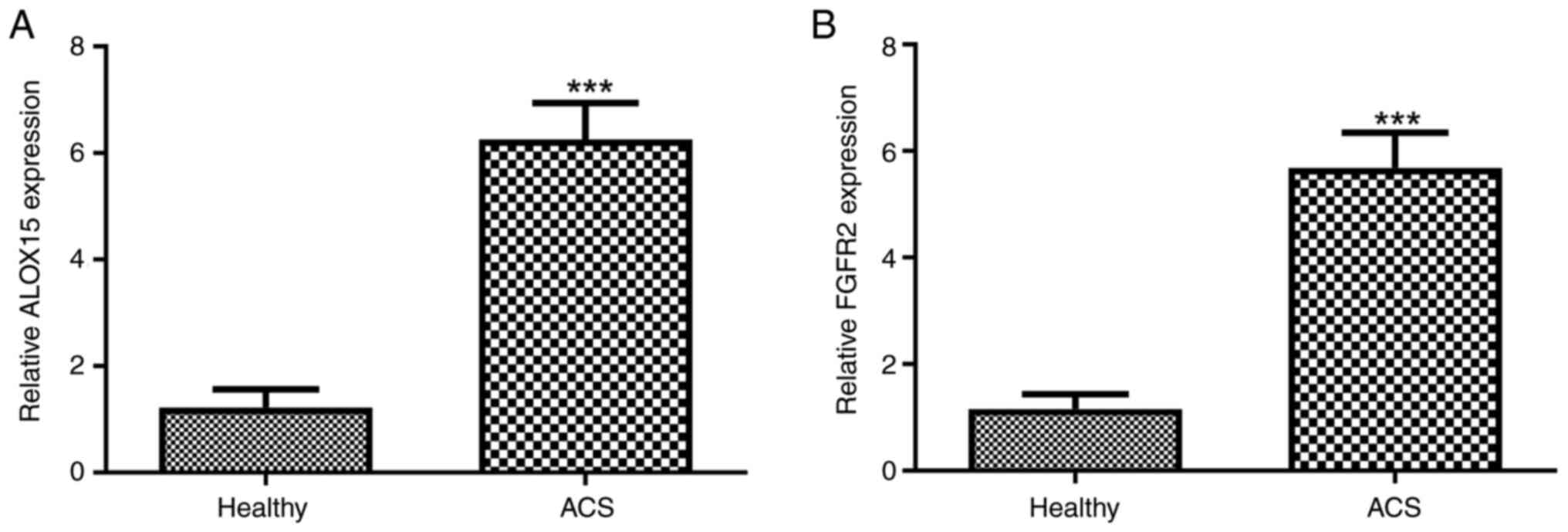
Figure 1

High expression of ALOX15 and FGFR2
is observed in the serum of patients with ACS. The expression of
(A) ALOX15 and (B) FGFR2 in patients with ACS and healthy
individuals was detected by reverse transcription-quantitative PCR.
***P<0.001 vs. Healthy. ALOX15, 12/15-lipoxygenase;
FGFR2, fibroblast growth factor receptor 2; ACS, acute coronary
syndrome.

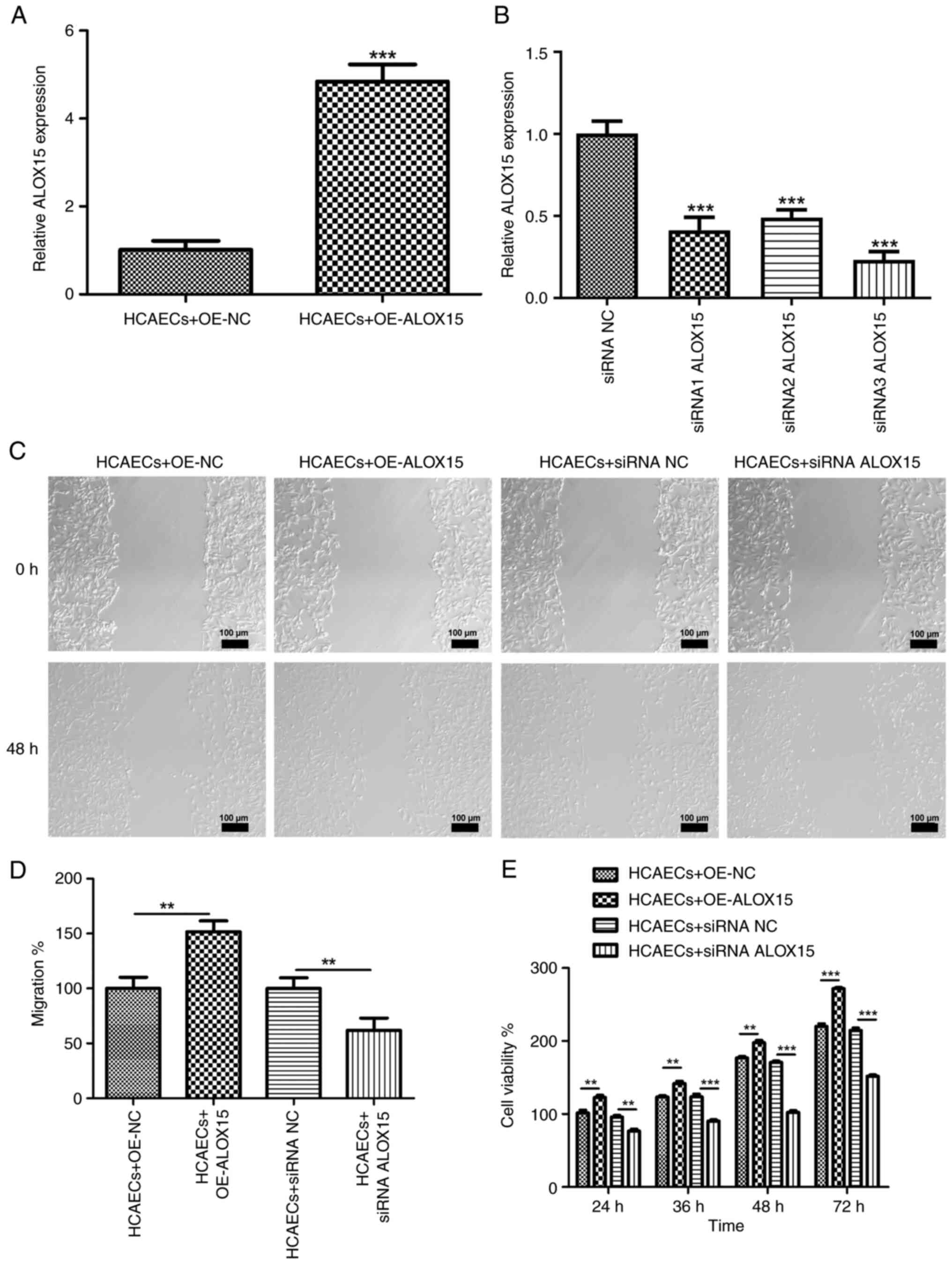
Figure 2

Effects of ALOX15 on acute coronary
syndrome progression in vitro. (A) The expression of ALOX15
in HCAECs after transfection with OE-ALOX15 or OE-NC was detected
by RT-qPCR. ***P<0.001 vs. HCAECs + OE-NC. (B) The
expression of ALOX15 in HCAECs after transfection with siRNA1
ALOX15, siRNA2 ALOX15, siRNA3 ALOX15 or siRNA NC was detected by
RT-qPCR. ***P<0.001 vs. siRNA NC. (C and D) The
migration of HCAECs transfected with OE-ALOX15/OE-NC or siRNA
ALOX15/siRNA NC was measured by scratch wound healing assays.
**P<0.01. Scale bar, 100 µm. (E) The viability of
HCAECs transfected with OE-ALOX15/OE-NC or siRNA ALOX15/siRNA NC
was measured by Cell Counting Kit-8 assays. **P<0.01
and ***P<0.001. ALOX15, 12/15-lipoxygenase; FGFR2,
fibroblast growth factor receptor 2; HCAECs, human primary coronary
artery endothelial cells; OE, overexpression; NC, negative control;
RT-qPCR, reverse transcription-quantitative PCR; siRNA, small
interfering RNA.

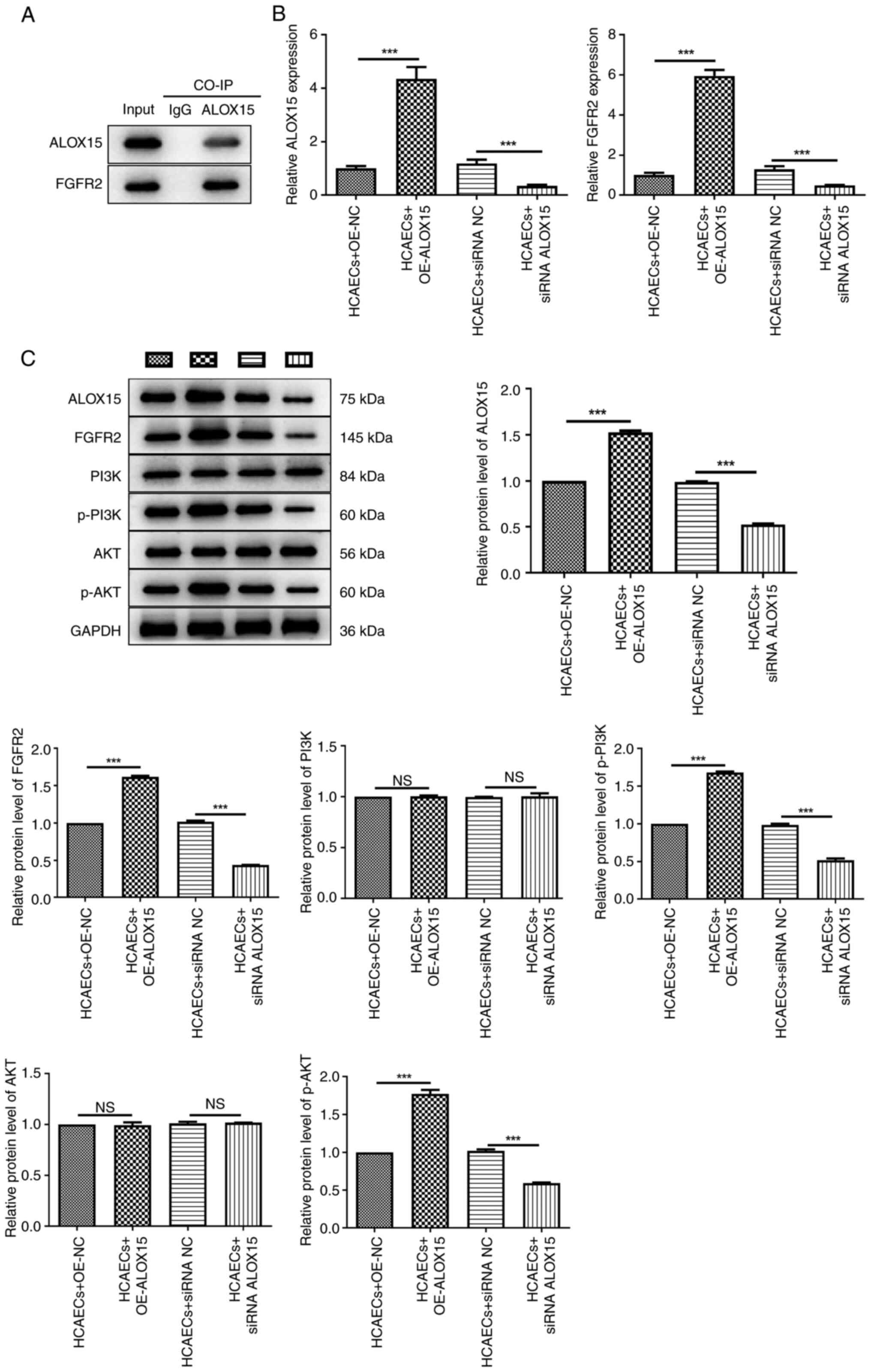
Figure 3

Effects of ALOX15 on the
FGFR2/PI3K/AKT signaling pathway in HCAECs. (A)
Co-immunoprecipitation assays of ALOX15 and FGFR2 in HCAECs. (B)
The mRNA expression of ALOX15 and FGFR2 in HCAECs after
transfection with OE-ALOX15/OE-NC or siRNA ALOX15/siRNA NC was
detected by reverse transcription-quantitative PCR.
***P<0.001. (C) The protein levels of ALOX15, FGFR2,
PI3K, p-PI3K, AKT and p-AKT in HCAECs after transfection with
OE-ALOX15/OE-NC or siRNA ALOX15/siRNA NC were determined by western
blotting. ***P<0.001. ALOX15, 12/15-lipoxygenase;
FGFR2, fibroblast growth factor receptor 2; HCAECs, human primary
coronary artery endothelial cells; OE, overexpression; NC, negative
control; siRNA, small interfering RNA; p-, phosphorylated; NS, not
significant.

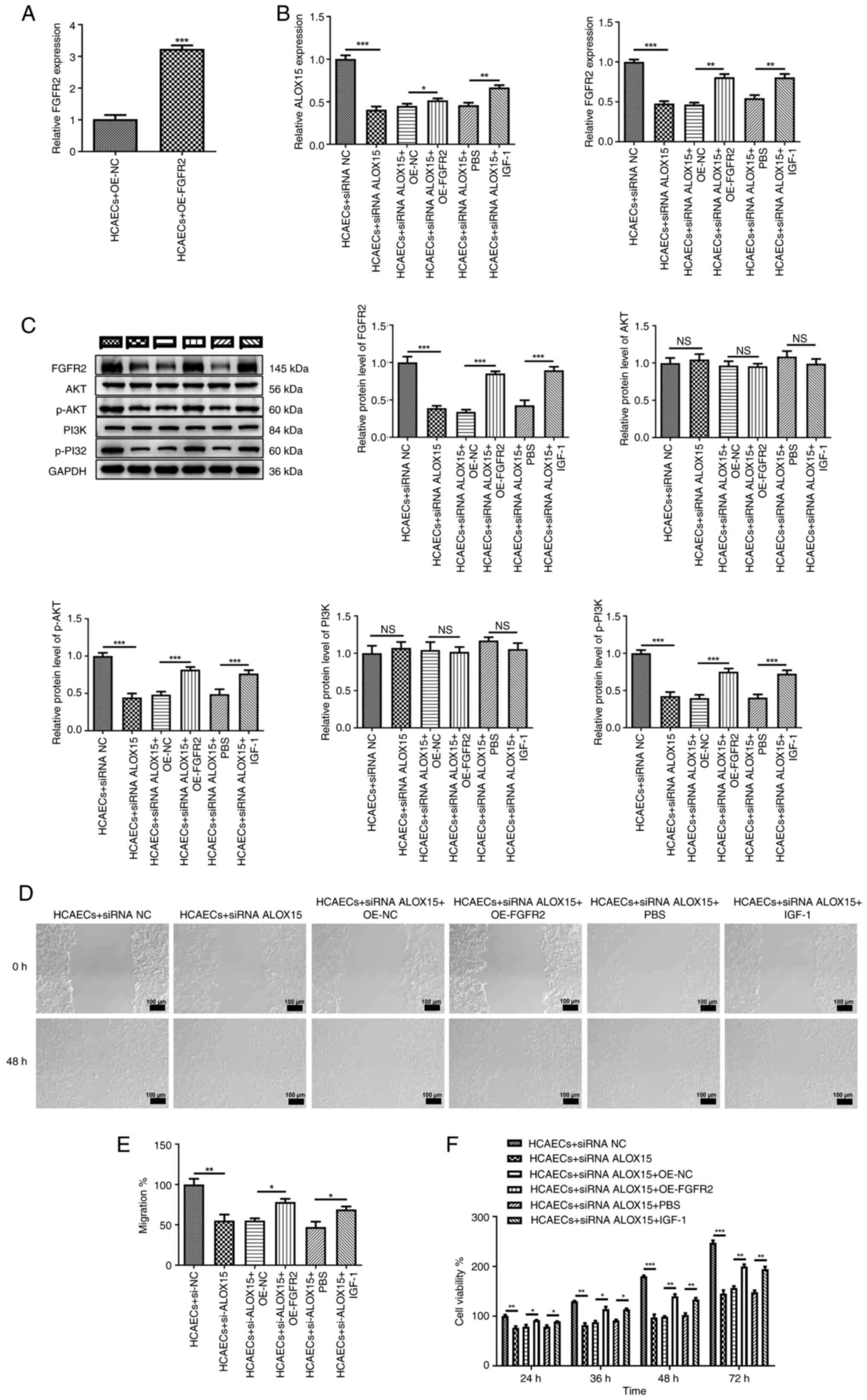
Figure 4

Silencing of ALOX15 mitigates acute
coronary syndrome progression in vitro through the
FGFR2/PI3K/AKT signaling pathway. (A) The expression of FGFR2 in
HCAECs after transfection with OE-FGFR2 or OE-NC was detected by
RT-qPCR. (B) The mRNA expression of ALOX15 and FGFR2 in HCAECs
following different treatments was detected by RT-qPCR. (C) The
protein levels of FGFR2, PI3K, p-PI3K, AKT and p-AKT in HCAECs
following various treatments were determined by western blotting.
(D, E) The migration of HCAECs following different treatments was
assessed by scratch wound healing assays. Scale bar, 100 µm. (F)
The viability of HCAECs following various treatments was measured
by Cell Counting Kit-8 assays. *P<0.05,
**P<0.01 and ***P<0.001. ALOX15,
12/15-lipoxygenase; FGFR2, fibroblast growth factor receptor 2;
HCAECs, human primary coronary artery endothelial cells; OE,
overexpression; NC, negative control; RT-qPCR, reverse
transcription-quantitative PCR; siRNA, small interfering RNA; p-,
phosphorylated; NS, not significant.

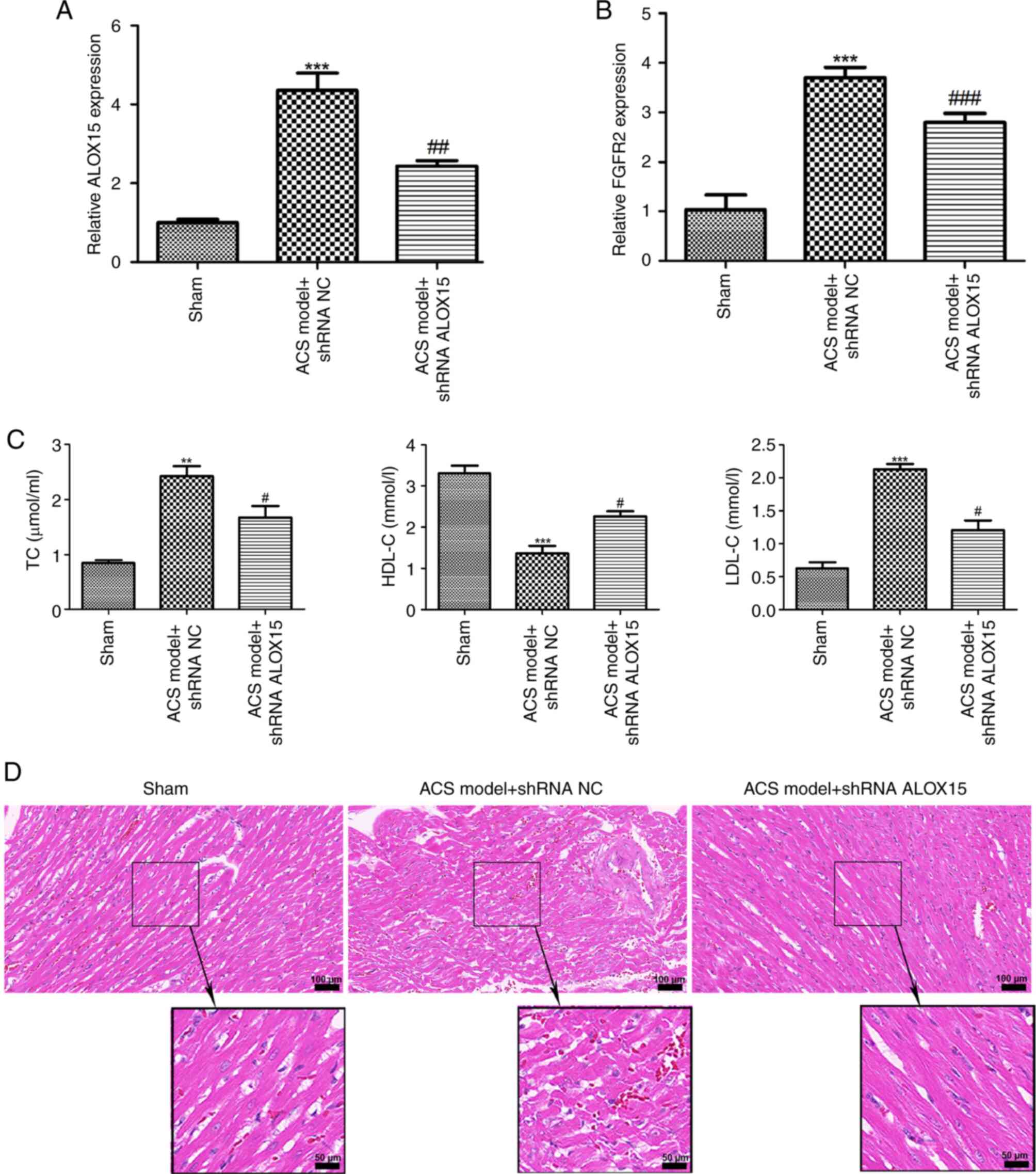
Figure 5

Knockdown of ALOX15 reduces serum
lipid levels and improves myocardial injury in an ACS rat model.
The expression of (A) ALOX15 and (B) FGFR2 in rats with ACS after
injection of shRNA ALOX15 or shRNA NC was detected by reverse
transcription-quantitative PCR. ***P<0.001 vs. sham;
##P<0.01 and ###P<0.001 vs. ACS model +
shRNA NC. (C) The levels of TC, HDL-C and LDL-C in rats with ACS
after injection of shRNA ALOX15 or shRNA NC were determined using
biochemical tests. **P<0.01 and
***P<0.001 vs. sham; #P<0.05 vs. ACS
model + shRNA NC. (D) Hematoxylin and eosin staining for observing
the pathological condition of myocardial tissues in different
groups. Scale bars, 100 and 50 µm. ALOX15, 12/15-lipoxygenase; ACS,
acute coronary syndrome; FGFR2, fibroblast growth factor receptor
2; shRNA, short hairpin RNA; NC, negative control; TC, total
cholesterol; HDL-C, high-density lipoprotein-cholesterol; LDL-C,
low-density lipoprotein-cholesterol.

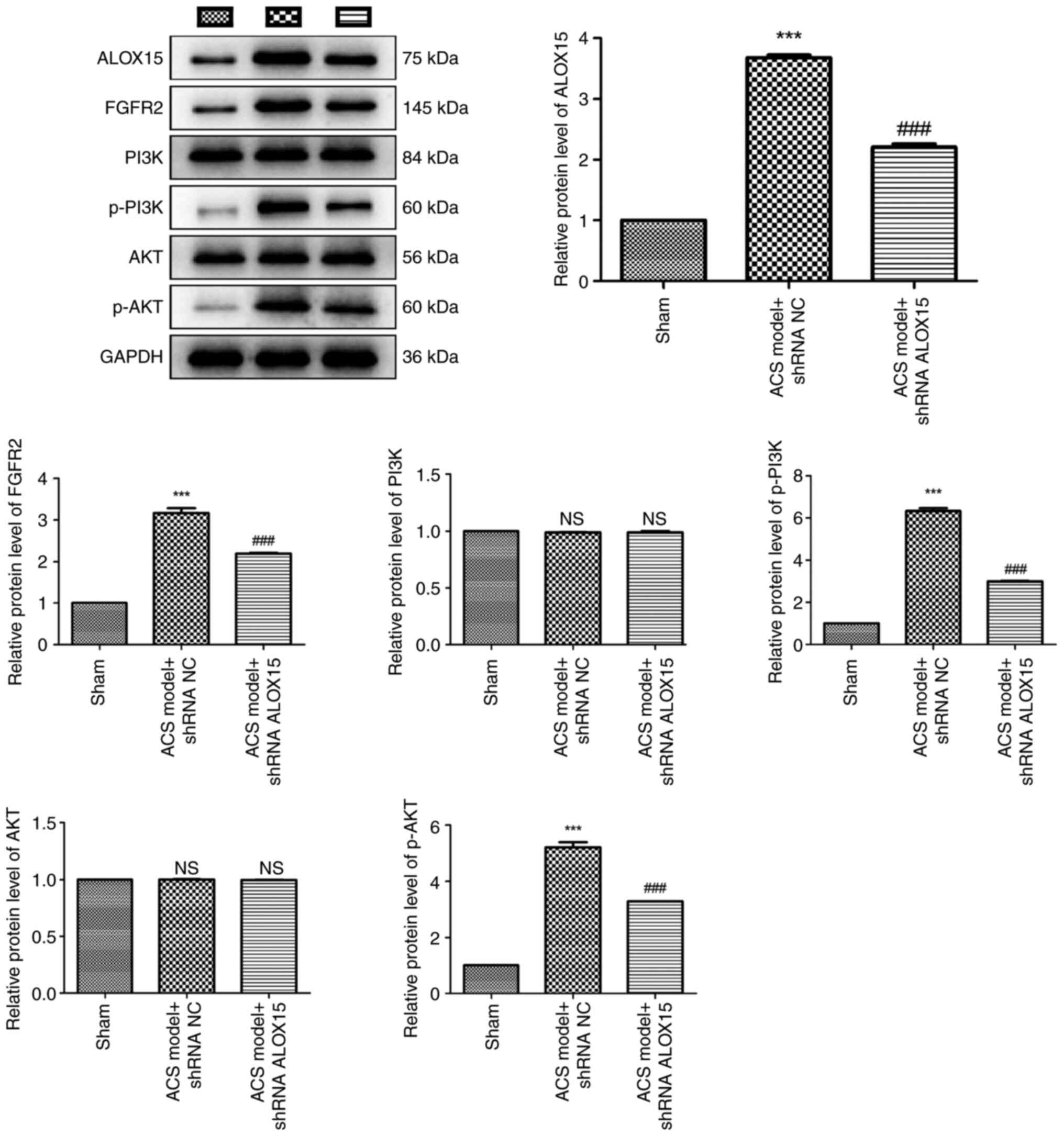
Figure 6

ALOX15 silencing suppresses the
activation of the FGFR2/PI3K/AKT signaling pathway. The protein
levels of ALOX15, FGFR2, PI3K, p-PI3K, AKT and p-AKT in rats with
ACS after injection of shRNA ALOX15 or shRNA NC were determined by
western blotting. ***P<0.001 vs. sham;
###P<0.001 vs. ACS model + shRNA NC. ALOX15,
12/15-lipoxygenase; FGFR2, fibroblast growth factor receptor 2; p-,
phosphorylated; ACS, acute coronary syndrome; shRNA, short hairpin
RNA; NC, negative control; NS, no significance.
View References

1 

Dong CH, Wang ZM and Chen SY: Neutrophil to lymphocyte ratio predict mortality and major adverse cardiac events in acute coronary syndrome: A systematic review and meta-analysis. Clin Biochem. 52:131–136. 2018.PubMed/NCBI View Article : Google Scholar

2 

Bob-Manuel T, Ifedili I, Reed G, Ibebuogu UN and Khouzam RN: Non-ST elevation acute coronary syndromes: A comprehensive review. Curr Probl Cardiol. 42:266–305. 2017.PubMed/NCBI View Article : Google Scholar

3 

Collet JP, Thiele H, Barbato E, Barthélémy O, Bauersachs J, Bhatt DL, Dendale P, Dorobantu M, Edvardsen T, Folliguet T, et al: 2020 ESC Guidelines for the management of acute coronary syndromes in patients presenting without persistent ST-segment elevation. Eur Heart J. 42:1289–1367. 2021.PubMed/NCBI View Article : Google Scholar

4 

Libby P and Pasterkamp G: Requiem for the ‘vulnerable plaque’. Eur Heart J. 36:2984–2987. 2015.PubMed/NCBI View Article : Google Scholar

5 

Makki N, Brennan TM and Girotra S: Acute coronary syndrome. J Intensive Care Med. 30:186–200. 2015.PubMed/NCBI View Article : Google Scholar

6 

Kaul P, Ezekowitz JA, Armstrong PW, Leung BK, Savu A, Welsh RC, Quan H, Knudtson ML and McAlister FA: Incidence of heart failure and mortality after acute coronary syndromes. Am Heart J. 165:379–385 e2. 2013.PubMed/NCBI View Article : Google Scholar

7 

O'Gara PT, Kushner FG, Ascheim DD, Casey DE Jr, Chung MK, de Lemos JA, Ettinger SM, Fang JC, Fesmire FM, Franklin BA, et al: 2013 ACCF/AHA guideline for the management of ST-elevation myocardial infarction: Executive summary: A report of the American college of cardiology foundation/American heart association task force on practice guidelines: Developed in collaboration with the American college of emergency physicians and society for cardiovascular angiography and interventions. Catheter Cardiovasc Interv. 82:E1–E27. 2013.PubMed/NCBI View Article : Google Scholar

8 

Oliw EH: Diversity of the manganese lipoxygenase gene family-A mini-review. Fungal Genet Biol. 163(103746)2022.PubMed/NCBI View Article : Google Scholar

9 

Hiltunen T, Luoma J, Nikkari T and Yla-Herttuala S: Induction of 15-lipoxygenase mRNA and protein in early atherosclerotic lesions. Circulation. 92:3297–3303. 1995.PubMed/NCBI View Article : Google Scholar

10 

Kuhn H, Heydeck D, Hugou I and Gniwotta C: In vivo action of 15-lipoxygenase in early stages of human atherogenesis. J Clin Invest. 99:888–893. 1997.PubMed/NCBI View Article : Google Scholar

11 

Zhang K, Wang YY, Liu QJ, Wang H, Liu FF, Ma ZY, Gong YQ and Li L: Two single nucleotide polymorphisms in ALOX15 are associated with risk of coronary artery disease in a Chinese Han population. Heart Vessels. 25:368–373. 2010.PubMed/NCBI View Article : Google Scholar

12 

Ma XH, Liu JH, Liu CY, Sun WY, Duan WJ, Wang G, Kurihara H, He RR, Li YF, Chen Y and Shang H: ALOX15-launched PUFA-phospholipids peroxidation increases the susceptibility of ferroptosis in ischemia-induced myocardial damage. Signal Transduct Target Ther. 7(288)2022.PubMed/NCBI View Article : Google Scholar

13 

Cai W, Liu L, Shi X, Liu Y, Wang J, Fang X, Chen Z, Ai D, Zhu Y and Zhang X: Alox15/15-HpETE aggravates myocardial ischemia-reperfusion injury by promoting cardiomyocyte ferroptosis. Circulation. 147:1444–1460. 2023.PubMed/NCBI View Article : Google Scholar

14 

Kayama Y, Minamino T, Toko H, Sakamoto M, Shimizu I, Takahashi H, Okada S, Tateno K, Moriya J, Yokoyama M, et al: Cardiac 12/15 lipoxygenase-induced inflammation is involved in heart failure. J Exp Med. 206:1565–1574. 2009.PubMed/NCBI View Article : Google Scholar

15 

Silbiger VN, Luchessi AD, Hirata RD, Lima-Neto LG, Cavichioli D, Carracedo A, Brión M, Dopazo J, García-García F, dos Santos ES, et al: Novel genes detected by transcriptional profiling from whole-blood cells in patients with early onset of acute coronary syndrome. Clin Chim Acta. 421:184–190. 2013.PubMed/NCBI View Article : Google Scholar

16 

Chen H, Huang S, Guan F, Han S, Ye F, Li X and You L: Targeting circulating lncRNA ENST00000538705.1 relieves acute coronary syndrome via modulating ALOX15. Dis Markers. 2022(8208471)2022.PubMed/NCBI View Article : Google Scholar

17 

Feng J, Yang F, Wu H, Xing C, Xue H, Zhang L, Zhang C, Hu G and Cao H: Selenium protects against cadmium-induced cardiac injury by attenuating programmed cell death via PI3K/AKT/PTEN signaling. Environ Toxicol. 37:1185–1197. 2022.PubMed/NCBI View Article : Google Scholar

18 

Yu D, Xiong J, Gao Y, Li J, Zhu D, Shen X, Sun L and Wang X: Resveratrol activates PI3K/AKT to reduce myocardial cell apoptosis and mitochondrial oxidative damage caused by myocardial ischemia/reperfusion injury. Acta Histochem. 123(151739)2021.PubMed/NCBI View Article : Google Scholar

19 

Cheng Y, Shen A, Wu X, Shen Z, Chen X, Li J, Liu L, Lin X, Wu M, Chen Y, et al: Qingda granule attenuates angiotensin II-induced cardiac hypertrophy and apoptosis and modulates the PI3K/AKT pathway. Biomed Pharmacother. 133(111022)2021.PubMed/NCBI View Article : Google Scholar

20 

Han X, Zhang G, Chen G, Wu Y, Xu T, Xu H, Liu B and Zhou Y: Buyang Huanwu Decoction promotes angiogenesis in myocardial infarction through suppression of PTEN and activation of the PI3K/Akt signalling pathway. J Ethnopharmacol. 287(114929)2022.PubMed/NCBI View Article : Google Scholar

21 

Chang H, Li C, Wang Q, Lu L, Zhang Q, Zhang Y, Zhang N, Wang Y and Wang W: QSKL protects against myocardial apoptosis on heart failure via PI3K/Akt-p53 signaling pathway. Sci Rep. 7(16986)2017.PubMed/NCBI View Article : Google Scholar

22 

Ruan R, Li L, Li X, Huang C, Zhang Z, Zhong H, Zeng S, Shi Q, Xia Y, Zeng Q, et al: Unleashing the potential of combining FGFR inhibitor and immune checkpoint blockade for FGF/FGFR signaling in tumor microenvironment. Mol Cancer. 22(60)2023.PubMed/NCBI View Article : Google Scholar

23 

Takahashi M, Umehara Y, Yue H, Trujillo-Paez JV, Peng G, Nguyen HLT, Ikutama R, Okumura K, Ogawa H, Ikeda S and Niyonsaba F: The antimicrobial peptide human β-defensin-3 accelerates wound healing by promoting angiogenesis, cell migration, and proliferation through the FGFR/JAK2/STAT3 signaling pathway. Front Immunol. 12(712781)2021.PubMed/NCBI View Article : Google Scholar

24 

Weaver A and Bossaer JB: Fibroblast growth factor receptor (FGFR) inhibitors: A review of a novel therapeutic class. J Oncol Pharm Pract. 27:702–710. 2021.PubMed/NCBI View Article : Google Scholar

25 

Farooq M, Khan AW, Kim MS and Choi S: The role of fibroblast growth factor (FGF) signaling in tissue repair and regeneration. Cells. 10(3242)2021.PubMed/NCBI View Article : Google Scholar

26 

Mieczkowski K, Popeda M, Lesniak D, Sadej R and Kitowska K: FGFR2 Controls growth, adhesion and migration of nontumorigenic human mammary epithelial cells by regulation of integrin β 1 degradation. J Mammary Gland Biol Neoplasia. 28(9)2023.PubMed/NCBI View Article : Google Scholar

27 

Yoshii T, Matsuzawa Y, Kato S, Sato R, Hanajima Y, Kikuchi S, Nakahashi H, Konishi M, Akiyama E, Minamimoto Y, et al: Endothelial dysfunction predicts bleeding and cardiovascular death in acute coronary syndrome. Int J Cardiol. 376:11–17. 2023.PubMed/NCBI View Article : Google Scholar

28 

Jiao K, Su P and Li Y: FGFR2 modulates the Akt/Nrf2/ARE signaling pathway to improve angiotensin II-induced hypertension-related endothelial dysfunction. Clin Exp Hypertens. 45(2208777)2023.PubMed/NCBI View Article : Google Scholar

29 

Huang C, Wang R, Lu J, He Y, Wu Y, Ma W, Xu J, Wu Z, Feng Z and Wu M: MicroRNA-338-3p as a therapeutic target in cardiac fibrosis through FGFR2 suppression. J Clin Lab Anal. 36(e24584)2022.PubMed/NCBI View Article : Google Scholar

30 

Riccetti MR, Green J, Taylor TJ and Perl AT: Prenatal FGFR2 signaling via PI3K/AKT specifies the PDGFRA+ myofibroblast. Am J Respir Cell Mol Biol. 70:63–77. 2024.PubMed/NCBI View Article : Google Scholar

31 

Yang J, Xin C, Yin G and Li J: Taraxasterol suppresses the proliferation and tumor growth of androgen-independent prostate cancer cells through the FGFR2-PI3K/AKT signaling pathway. Sci Rep. 13(13072)2023.PubMed/NCBI View Article : Google Scholar

32 

Livak KJ and Schmittgen TD: Analysis of relative gene expression data using real-time quantitative PCR and the 2(-Delta Delta C(T)) Method. Methods. 25:402–408. 2001.PubMed/NCBI View Article : Google Scholar

33 

Wu S, Sun H and Sun B: MicroRNA-145 is involved in endothelial cell dysfunction and acts as a promising biomarker of acute coronary syndrome. Eur J Med Res. 25(2)2020.PubMed/NCBI View Article : Google Scholar

34 

Li J, Gong L, Zhang R, Li S, Yu H, Liu Y, Xue Y, Huang D, Xu N, Wang Y, et al: Fibroblast growth factor 21 inhibited inflammation and fibrosis after myocardial infarction via EGR1. Eur J Pharmacol. 910(174470)2021.PubMed/NCBI View Article : Google Scholar

35 

Roth GA, Huffman MD, Moran AE, Feigin V, Mensah GA, Naghavi M and Murray CJ: Global and regional patterns in cardiovascular mortality from 1990 to 2013. Circulation. 132:1667–1678. 2015.PubMed/NCBI View Article : Google Scholar

36 

Gupta A, Wang Y, Spertus JA, Geda M, Lorenze N, Nkonde-Price C, D'Onofrio G, Lichtman JH and Krumholz HM: Trends in acute myocardial infarction in young patients and differences by sex and race, 2001 to 2010. J Am Coll Cardiol. 64:337–345. 2014.PubMed/NCBI View Article : Google Scholar

37 

Rosamond W, Flegal K, Furie K, Go A, Greenlund K, Haase N, Hailpern SM, Ho M, Howard V, Kissela B, et al: Heart disease and stroke statistics-2008 update: A report from the American heart association statistics committee and stroke statistics subcommittee. Circulation. 117:e25–e146. 2008.PubMed/NCBI View Article : Google Scholar

38 

Nichols M, Townsend N, Scarborough P and Rayner M: Cardiovascular disease in Europe 2014: Epidemiological update. Eur Heart J. 35(2929)2014.PubMed/NCBI View Article : Google Scholar

39 

Ferreira-Gonzalez I: The epidemiology of coronary heart disease. Rev Esp Cardiol (Engl Ed). 67:139–144. 2014.PubMed/NCBI View Article : Google Scholar

40 

Menzin J, Wygant G, Hauch O, Jackel J and Friedman M: One-year costs of ischemic heart disease among patients with acute coronary syndromes: Findings from a multi-employer claims database. Curr Med Res Opin. 24:461–468. 2008.PubMed/NCBI View Article : Google Scholar

41 

Go AS, Mozaffarian D, Roger VL, Benjamin EJ, Berry JD, Borden WB, Bravata DM, Dai S, Ford ES, Fox CS, et al: Executive summary: Heart disease and stroke statistics-2013 update: A report from the American heart association. Circulation. 127:143–152. 2013.PubMed/NCBI View Article : Google Scholar

42 

Bonetti PO, Lerman LO and Lerman A: Endothelial dysfunction: A marker of atherosclerotic risk. Arterioscler Thromb Vasc Biol. 23:168–175. 2003.PubMed/NCBI View Article : Google Scholar

43 

Kinlay S and Ganz P: Role of endothelial dysfunction in coronary artery disease and implications for therapy. Am J Cardiol. 80:11I–16I. 1997.PubMed/NCBI View Article : Google Scholar

44 

Zhu F, Wang Q, Guo C, Wang X, Cao X, Shi Y, Gao F, Ma C and Zhang L: IL-17 induces apoptosis of vascular endothelial cells: A potential mechanism for human acute coronary syndrome. Clin Immunol. 141:152–160. 2011.PubMed/NCBI View Article : Google Scholar

45 

Stein RA: Endothelial dysfunction, erectile dysfunction, and coronary heart disease: The pathophysiologic and clinical linkage. Rev Urol. 5 (Suppl 7):S21–S27. 2003.PubMed/NCBI

46 

Ling L, Zhao SP, Gao M, Zhou QC, Li YL and Xia B: Vitamin C preserves endothelial function in patients with coronary heart disease after a high-fat meal. Clin Cardiol. 25:219–224. 2002.PubMed/NCBI View Article : Google Scholar

47 

Singh NK and Rao GN: Emerging role of 12/15-Lipoxygenase (ALOX15) in human pathologies. Prog Lipid Res. 73:28–45. 2019.PubMed/NCBI View Article : Google Scholar

48 

Eisenreich A and Rauch U: PI3K inhibitors in cardiovascular disease. Cardiovasc Ther. 29:29–36. 2011.PubMed/NCBI View Article : Google Scholar

49 

Ozkaynak B, Sahin I, Ozenc E, Subaşı C, Oran DS, Totoz T, Tetikkurt ÜS, Mert B, Polat A, Okuyan E and Karaöz E: Mesenchymal stem cells derived from epicardial adipose tissue reverse cardiac remodeling in a rabbit model of myocardial infarction. Eur Rev Med Pharmacol Sci. 25:4372–4384. 2021.PubMed/NCBI View Article : Google Scholar

50 

Chen L, Li S, Zhu J, You A, Huang X, Yi X and Xue M: Mangiferin prevents myocardial infarction-induced apoptosis and heart failure in mice by activating the Sirt1/FoxO3a pathway. J Cell Mol Med. 25:2944–2955. 2021.PubMed/NCBI View Article : Google Scholar

51 

Nagy RN, Makkos A, Baranyai T, Giricz Z, Szabó M, Kravcsenko-Kiss B, Bereczki Z, Ágg B, Puskás LG, Faragó N, et al: Cardioprotective microRNAs (protectomiRs) in a pig model of acute myocardial infarction and cardioprotection by ischaemic conditioning: MiR-450a. Br J Pharmacol. 182:396–416. 2025.PubMed/NCBI View Article : Google Scholar

Related Articles

  • Abstract
  • View
  • Download
  • Twitter
Copy and paste a formatted citation
Spandidos Publications style
Chen H, Zhu N, Huang S, Guan F, Han S, Ye F and You L: Knockdown of ALOX15 alleviates acute coronary syndrome via the FGFR2/PI3K/AKT signaling pathway. Biomed Rep 24: 19, 2026.
APA
Chen, H., Zhu, N., Huang, S., Guan, F., Han, S., Ye, F., & You, L. (2026). Knockdown of ALOX15 alleviates acute coronary syndrome via the FGFR2/PI3K/AKT signaling pathway. Biomedical Reports, 24, 19. https://doi.org/10.3892/br.2025.2092
MLA
Chen, H., Zhu, N., Huang, S., Guan, F., Han, S., Ye, F., You, L."Knockdown of ALOX15 alleviates acute coronary syndrome via the FGFR2/PI3K/AKT signaling pathway". Biomedical Reports 24.2 (2026): 19.
Chicago
Chen, H., Zhu, N., Huang, S., Guan, F., Han, S., Ye, F., You, L."Knockdown of ALOX15 alleviates acute coronary syndrome via the FGFR2/PI3K/AKT signaling pathway". Biomedical Reports 24, no. 2 (2026): 19. https://doi.org/10.3892/br.2025.2092
Copy and paste a formatted citation
x
Spandidos Publications style
Chen H, Zhu N, Huang S, Guan F, Han S, Ye F and You L: Knockdown of ALOX15 alleviates acute coronary syndrome via the FGFR2/PI3K/AKT signaling pathway. Biomed Rep 24: 19, 2026.
APA
Chen, H., Zhu, N., Huang, S., Guan, F., Han, S., Ye, F., & You, L. (2026). Knockdown of ALOX15 alleviates acute coronary syndrome via the FGFR2/PI3K/AKT signaling pathway. Biomedical Reports, 24, 19. https://doi.org/10.3892/br.2025.2092
MLA
Chen, H., Zhu, N., Huang, S., Guan, F., Han, S., Ye, F., You, L."Knockdown of ALOX15 alleviates acute coronary syndrome via the FGFR2/PI3K/AKT signaling pathway". Biomedical Reports 24.2 (2026): 19.
Chicago
Chen, H., Zhu, N., Huang, S., Guan, F., Han, S., Ye, F., You, L."Knockdown of ALOX15 alleviates acute coronary syndrome via the FGFR2/PI3K/AKT signaling pathway". Biomedical Reports 24, no. 2 (2026): 19. https://doi.org/10.3892/br.2025.2092
Follow us
  • Twitter
  • LinkedIn
  • Facebook
About
  • Spandidos Publications
  • Careers
  • Cookie Policy
  • Privacy Policy
How can we help?
  • Help
  • Live Chat
  • Contact
  • Email to our Support Team