Spandidos Publications Logo
  • About
    • About Spandidos
    • Aims and Scopes
    • Abstracting and Indexing
    • Editorial Policies
    • Reprints and Permissions
    • Job Opportunities
    • Terms and Conditions
    • Contact
  • Journals
    • All Journals
    • Oncology Letters
      • Oncology Letters
      • Information for Authors
      • Editorial Policies
      • Editorial Board
      • Aims and Scope
      • Abstracting and Indexing
      • Bibliographic Information
      • Archive
    • International Journal of Oncology
      • International Journal of Oncology
      • Information for Authors
      • Editorial Policies
      • Editorial Board
      • Aims and Scope
      • Abstracting and Indexing
      • Bibliographic Information
      • Archive
    • Molecular and Clinical Oncology
      • Molecular and Clinical Oncology
      • Information for Authors
      • Editorial Policies
      • Editorial Board
      • Aims and Scope
      • Abstracting and Indexing
      • Bibliographic Information
      • Archive
    • Experimental and Therapeutic Medicine
      • Experimental and Therapeutic Medicine
      • Information for Authors
      • Editorial Policies
      • Editorial Board
      • Aims and Scope
      • Abstracting and Indexing
      • Bibliographic Information
      • Archive
    • International Journal of Molecular Medicine
      • International Journal of Molecular Medicine
      • Information for Authors
      • Editorial Policies
      • Editorial Board
      • Aims and Scope
      • Abstracting and Indexing
      • Bibliographic Information
      • Archive
    • Biomedical Reports
      • Biomedical Reports
      • Information for Authors
      • Editorial Policies
      • Editorial Board
      • Aims and Scope
      • Abstracting and Indexing
      • Bibliographic Information
      • Archive
    • Oncology Reports
      • Oncology Reports
      • Information for Authors
      • Editorial Policies
      • Editorial Board
      • Aims and Scope
      • Abstracting and Indexing
      • Bibliographic Information
      • Archive
    • Molecular Medicine Reports
      • Molecular Medicine Reports
      • Information for Authors
      • Editorial Policies
      • Editorial Board
      • Aims and Scope
      • Abstracting and Indexing
      • Bibliographic Information
      • Archive
    • World Academy of Sciences Journal
      • World Academy of Sciences Journal
      • Information for Authors
      • Editorial Policies
      • Editorial Board
      • Aims and Scope
      • Abstracting and Indexing
      • Bibliographic Information
      • Archive
    • International Journal of Functional Nutrition
      • International Journal of Functional Nutrition
      • Information for Authors
      • Editorial Policies
      • Editorial Board
      • Aims and Scope
      • Abstracting and Indexing
      • Bibliographic Information
      • Archive
    • International Journal of Epigenetics
      • International Journal of Epigenetics
      • Information for Authors
      • Editorial Policies
      • Editorial Board
      • Aims and Scope
      • Abstracting and Indexing
      • Bibliographic Information
      • Archive
    • Medicine International
      • Medicine International
      • Information for Authors
      • Editorial Policies
      • Editorial Board
      • Aims and Scope
      • Abstracting and Indexing
      • Bibliographic Information
      • Archive
  • Articles
  • Information
    • Information for Authors
    • Information for Reviewers
    • Information for Librarians
    • Information for Advertisers
    • Conferences
  • Language Editing
Spandidos Publications Logo
  • About
    • About Spandidos
    • Aims and Scopes
    • Abstracting and Indexing
    • Editorial Policies
    • Reprints and Permissions
    • Job Opportunities
    • Terms and Conditions
    • Contact
  • Journals
    • All Journals
    • Biomedical Reports
      • Information for Authors
      • Editorial Policies
      • Editorial Board
      • Aims and Scope
      • Abstracting and Indexing
      • Bibliographic Information
      • Archive
    • Experimental and Therapeutic Medicine
      • Information for Authors
      • Editorial Policies
      • Editorial Board
      • Aims and Scope
      • Abstracting and Indexing
      • Bibliographic Information
      • Archive
    • International Journal of Epigenetics
      • Information for Authors
      • Editorial Policies
      • Editorial Board
      • Aims and Scope
      • Abstracting and Indexing
      • Bibliographic Information
      • Archive
    • International Journal of Functional Nutrition
      • Information for Authors
      • Editorial Policies
      • Editorial Board
      • Aims and Scope
      • Abstracting and Indexing
      • Bibliographic Information
      • Archive
    • International Journal of Molecular Medicine
      • Information for Authors
      • Editorial Policies
      • Editorial Board
      • Aims and Scope
      • Abstracting and Indexing
      • Bibliographic Information
      • Archive
    • International Journal of Oncology
      • Information for Authors
      • Editorial Policies
      • Editorial Board
      • Aims and Scope
      • Abstracting and Indexing
      • Bibliographic Information
      • Archive
    • Medicine International
      • Information for Authors
      • Editorial Policies
      • Editorial Board
      • Aims and Scope
      • Abstracting and Indexing
      • Bibliographic Information
      • Archive
    • Molecular and Clinical Oncology
      • Information for Authors
      • Editorial Policies
      • Editorial Board
      • Aims and Scope
      • Abstracting and Indexing
      • Bibliographic Information
      • Archive
    • Molecular Medicine Reports
      • Information for Authors
      • Editorial Policies
      • Editorial Board
      • Aims and Scope
      • Abstracting and Indexing
      • Bibliographic Information
      • Archive
    • Oncology Letters
      • Information for Authors
      • Editorial Policies
      • Editorial Board
      • Aims and Scope
      • Abstracting and Indexing
      • Bibliographic Information
      • Archive
    • Oncology Reports
      • Information for Authors
      • Editorial Policies
      • Editorial Board
      • Aims and Scope
      • Abstracting and Indexing
      • Bibliographic Information
      • Archive
    • World Academy of Sciences Journal
      • Information for Authors
      • Editorial Policies
      • Editorial Board
      • Aims and Scope
      • Abstracting and Indexing
      • Bibliographic Information
      • Archive
  • Articles
  • Information
    • For Authors
    • For Reviewers
    • For Librarians
    • For Advertisers
    • Conferences
  • Language Editing
Login Register Submit
  • This site uses cookies
  • You can change your cookie settings at any time by following the instructions in our Cookie Policy. To find out more, you may read our Privacy Policy.

    I agree
Search articles by DOI, keyword, author or affiliation
Search
Advanced Search
presentation
Biomedical Reports
Join Editorial Board Propose a Special Issue
Print ISSN: 2049-9434 Online ISSN: 2049-9442
Journal Cover
February-2026 Volume 24 Issue 2

Full Size Image

Sign up for eToc alerts
Recommend to Library

Journals

International Journal of Molecular Medicine

International Journal of Molecular Medicine

International Journal of Molecular Medicine is an international journal devoted to molecular mechanisms of human disease.

International Journal of Oncology

International Journal of Oncology

International Journal of Oncology is an international journal devoted to oncology research and cancer treatment.

Molecular Medicine Reports

Molecular Medicine Reports

Covers molecular medicine topics such as pharmacology, pathology, genetics, neuroscience, infectious diseases, molecular cardiology, and molecular surgery.

Oncology Reports

Oncology Reports

Oncology Reports is an international journal devoted to fundamental and applied research in Oncology.

Experimental and Therapeutic Medicine

Experimental and Therapeutic Medicine

Experimental and Therapeutic Medicine is an international journal devoted to laboratory and clinical medicine.

Oncology Letters

Oncology Letters

Oncology Letters is an international journal devoted to Experimental and Clinical Oncology.

Biomedical Reports

Biomedical Reports

Explores a wide range of biological and medical fields, including pharmacology, genetics, microbiology, neuroscience, and molecular cardiology.

Molecular and Clinical Oncology

Molecular and Clinical Oncology

International journal addressing all aspects of oncology research, from tumorigenesis and oncogenes to chemotherapy and metastasis.

World Academy of Sciences Journal

World Academy of Sciences Journal

Multidisciplinary open-access journal spanning biochemistry, genetics, neuroscience, environmental health, and synthetic biology.

International Journal of Functional Nutrition

International Journal of Functional Nutrition

Open-access journal combining biochemistry, pharmacology, immunology, and genetics to advance health through functional nutrition.

International Journal of Epigenetics

International Journal of Epigenetics

Publishes open-access research on using epigenetics to advance understanding and treatment of human disease.

Medicine International

Medicine International

An International Open Access Journal Devoted to General Medicine.

Journal Cover
February-2026 Volume 24 Issue 2

Full Size Image

Sign up for eToc alerts
Recommend to Library

  • Article
  • Citations
    • Cite This Article
    • Download Citation
    • Create Citation Alert
    • Remove Citation Alert
    • Cited By
  • Similar Articles
    • Related Articles (in Spandidos Publications)
    • Similar Articles (Google Scholar)
    • Similar Articles (PubMed)
  • Download PDF
  • Download XML
  • View XML
Article Open Access

Silencing of lncRNA TFAP2A‑AS1 attenuates the development of acute coronary syndrome by inhibiting TFAP2A expression

  • Authors:
    • Shiwei Huang
    • Fanlu Guan
    • Fanhao Ye
    • Bozhi Ye
    • Sisi Han
    • Hao Chen
  • View Affiliations / Copyright

    Affiliations: Department of Cardiovascular Medicine, Wenzhou People's Hospital, Wenzhou, Zhejiang 325000, P.R. China, Department of Cardiovascular Medicine, The First Affiliated Hospital of Wenzhou Medical University, Wenzhou, Zhejiang 325000, P.R. China
    Copyright: © Huang et al. This is an open access article distributed under the terms of Creative Commons Attribution License.
  • Article Number: 20
    |
    Published online on: November 26, 2025
       https://doi.org/10.3892/br.2025.2093
  • Expand metrics +
Metrics: Total Views: 0 (Spandidos Publications: | PMC Statistics: )
Metrics: Total PDF Downloads: 0 (Spandidos Publications: | PMC Statistics: )
Cited By (CrossRef): 0 citations Loading Articles...

This article is mentioned in:


Abstract

Acute coronary syndrome (ACS), the acute manifestation of ischemic heart disease, remains a major cause of morbidity and mortality worldwide. The present study aimed to elucidate the preliminarily biological role and underlying mechanism of the long non‑coding RNA (lncRNA) transcription factor AP‑2α (TFAP2A)‑AS1 in ACS. The viability, apoptosis, invasion, and migration of human coronary artery endothelial cells (HCAECs) were assessed using Cell Counting Kit‑8, flow cytometric, Transwell, and wound healing assays. In addition, reverse transcription‑quantitative PCR was performed to examine the expression levels of TFAP2A‑AS1 and TFAP2A. Western blotting was performed to determine the protein level of TFAP2A. Furthermore, a mouse model of ACS was established to investigate the effects of TFAP2A‑AS1 and TFAP2A on blood lipid levels. Histological changes were evaluated through hematoxylin and eosin staining. The results revealed high levels of TFAP2A‑AS1 and TFAP2A expression in patients with ACS and in mouse models. In HCAECs, knockdown of TFAP2A‑AS1 resulted in decreased TFAP2A expression, whereas silencing of TFAP2A did not affect the expression of TFAP2A‑AS1. Interference with either TFAP2A‑AS1 or TFAP2A in HCAECs led to suppressed cell viability, invasion, and migration, as well as an increased apoptosis rate. Furthermore, it was demonstrated that the absence of both TFAP2A‑AS1 and TFAP2A reduced blood lipid levels and improved myocardial injury in a mouse model of ACS. In conclusion, groundbreaking findings revealed that the suppression of TFAP2A‑AS1 could effectively mitigate the progression of ACS by reducing the expression of TFAP2A. This finding not only offers crucial insight into the pathogenesis of ACS but also provides a solid theoretical foundation for the development of novel therapeutic interventions in clinical settings.
View Figures

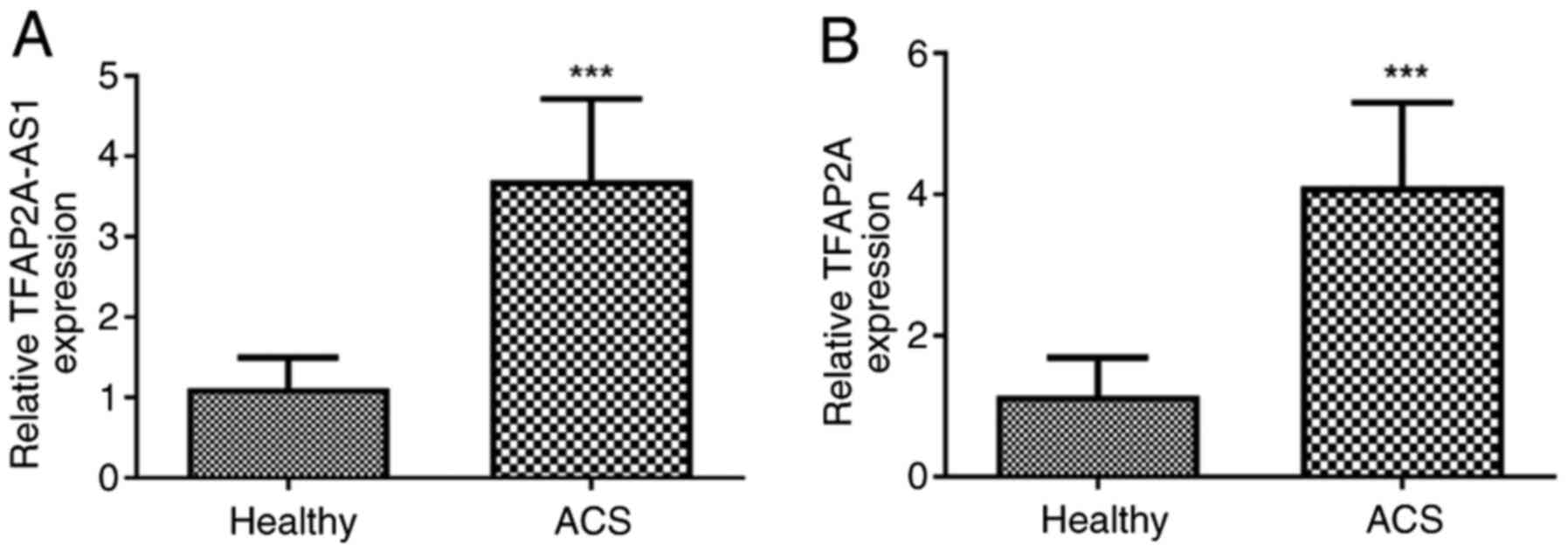
Figure 1

Serum from patients with ACS exhibits
elevated expression levels of TFAP2A-AS1 and TFAP2A. The expression
of (A) TFAP2A-AS1 and (B) TFAP2A in patients with ACS and healthy
individuals was detected by reverse transcription-quantitative PCR.
***P<0.001 vs. Healthy. ACS, acute coronary syndrome;
TFAP2A, transcription factor AP-2α.

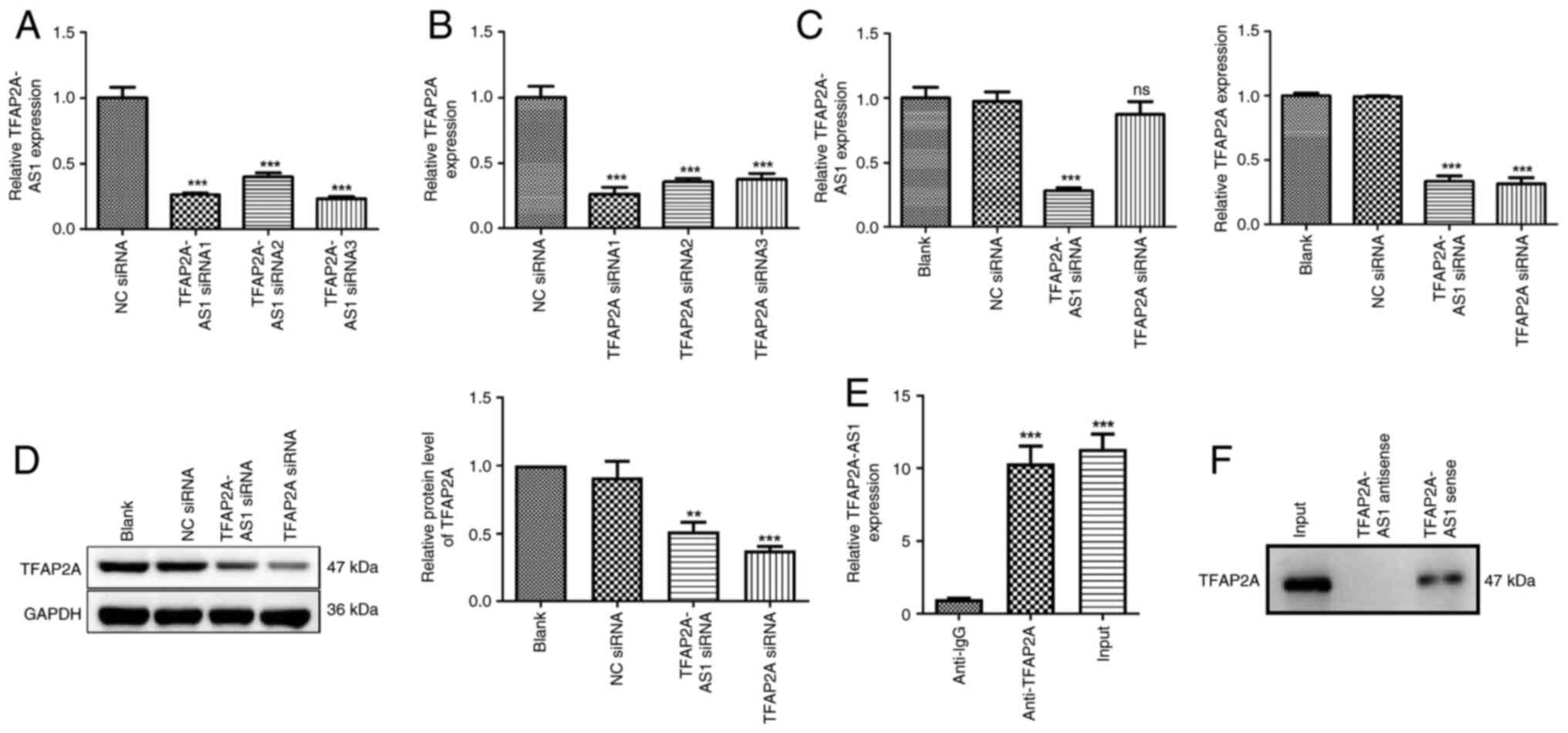
Figure 2

Silencing of TFAP2A-AS1 suppresses
TFAP2A expression. (A) The expression of TFAP2A-AS1 in HCAECs after
transfection with TFAP2A-AS1 siRNA1/2/3 or NC siRNA was detected by
RT-qPCR. ***P<0.001 vs. NC siRNA. (B) The expression
of TFAP2A in HCAECs after transfection with TFAP2A siRNA1/2/3 or NC
siRNA was detected by RT-qPCR. ***P<0.001 vs. NC
siRNA. (C) The expression of TFAP2A-AS1 and TFAP2A in HCAECs after
transfection with TFAP2A-AS1 siRNA, TFAP2A siRNA or NC siRNA was
detected by RT-qPCR. ***P<0.001 vs. NC siRNA. (D) The
protein levels of TFAP2A in HCAECs after transfection with
TFAP2A-AS1 siRNA, TFAP2A siRNA or NC siRNA were determined using
western blotting. **P<0.01 and
***P<0.001 vs. NC siRNA. (E) RIP assay demonstrated
an enrichment of TFAP2A-AS1. ***P<0.001 vs. anti-IgG.
(F) RNA pull-down assay showed that TFAP2A interacting with
biotin-labeled TFAP2A-AS1 was higher than that with the antisense
of TFAP2A-AS1 group. TFAP2A, transcription factor AP-2α; HCAECs,
human coronary artery endothelial cells; siRNA, small interfering
RNA; NC, negative control; RT-qPCR, reverse
transcription-quantitative PCR; RIP, RNA immunoprecipitation; ns,
no significance.

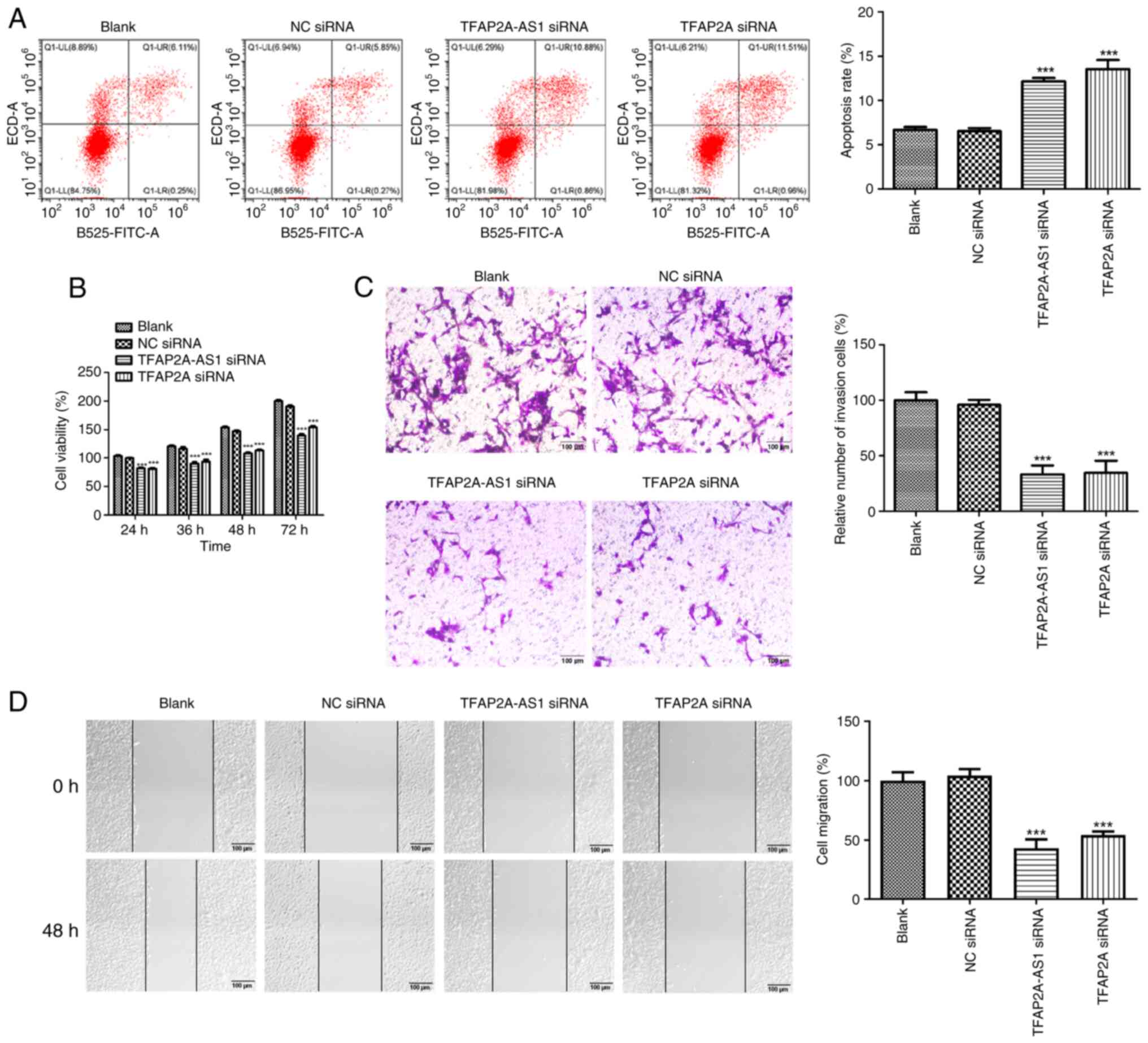
Figure 3

Silencing of TFAP2A-AS1 and TFAP2A
suppresses the proliferative, migratory, and invasive capacities
while enhancing the apoptotic rate of HCAECs. (A) The apoptosis
rate, (B) viability, (C) invasion and (D) migration of HCAECs
transfected TFAP2A-AS1 siRNA, TFAP2A siRNA or NC siRNA was assessed
by flow cytometric analysis, Counting Kit-8 assay, Transwell
invasion assay and wound healing assay, respectively. Scale bar,
100 µm. ***P<0.001 vs. NC siRNA. TFAP2A,
transcription factor AP-2α; HCAECs, human coronary artery
endothelial cells; siRNA, small interfering RNA; NC, negative
control.

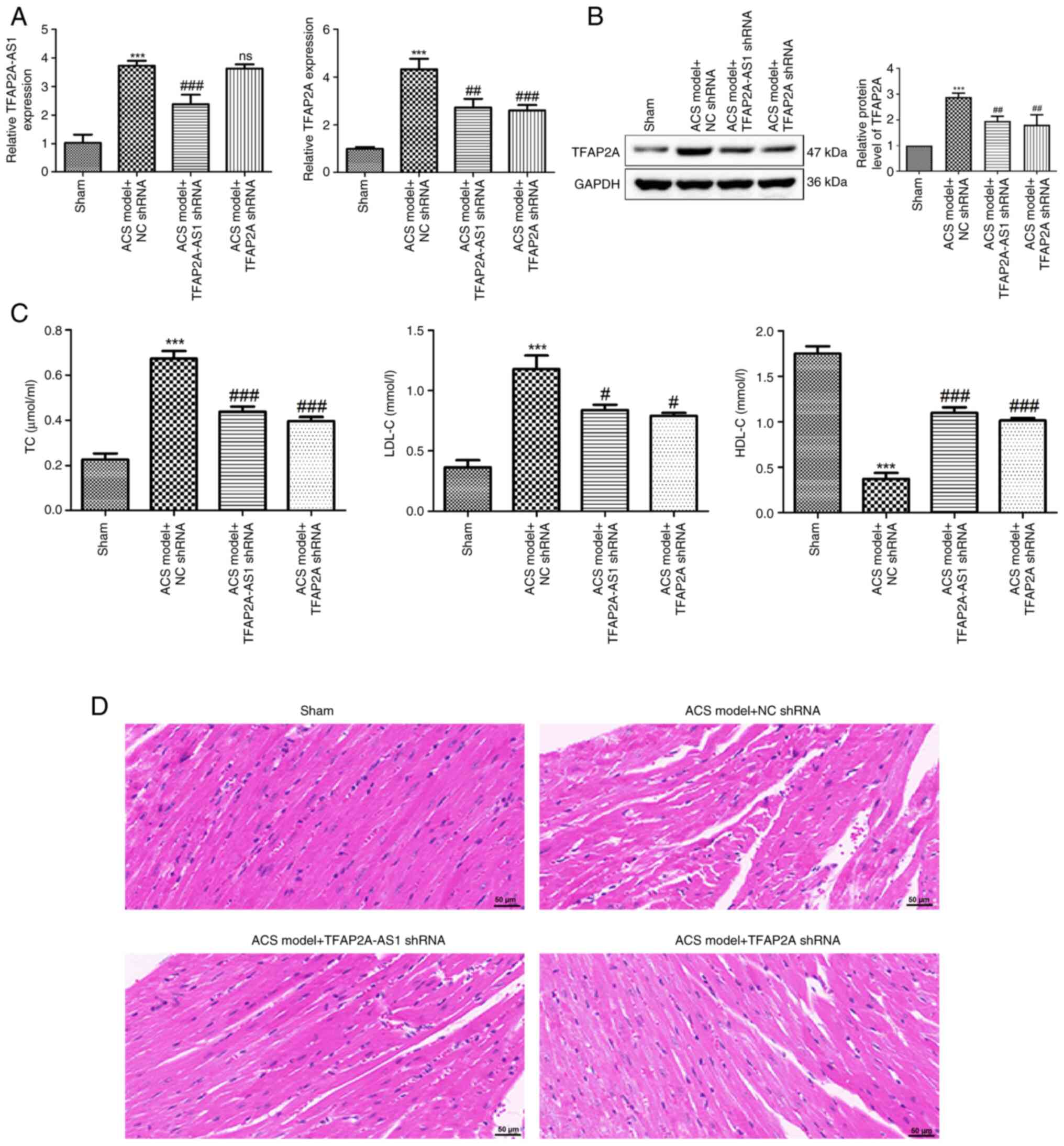
Figure 4

Knockdown of TFAP2A-AS1 and TFAP2A
leads to a reduction in serum lipid levels and an improvement in
myocardial injury in an ACS mouse model. (A) The expression of
TFAP2A-AS1 and TFAP2A in ACS mice after injection of TFAP2A-AS1
shRNA, TFAP2A shRNA or NC shRNA was detected by reverse
transcription-quantitative PCR. (B) The protein levels of TFAP2A in
ACS mice after injection of TFAP2A-AS1 shRNA, TFAP2A shRNA or NC
shRNA were determined using western blotting. (C) The levels of TC,
LDL-C and HDL-C in ACS mice after injection of TFAP2A-AS1 shRNA,
TFAP2A shRNA or NC shRNA were determined using biochemical tests.
(D) Hematoxylin and eosin staining was performed to observe the
pathological condition of myocardial tissues in different groups.
Scale bar, 50 µm. ***P<0.001 vs. sham;
#P<0.05, ##P<0.01, and
###P<0.001 vs. the ACS model + NC shRNA. TFAP2A,
transcription factor AP-2α; ACS, acute coronary syndrome; shRNA,
short hairpin RNA; ns, no significance.
View References

1 

WHO CVD Risk Chart Working Group. World Health Organization cardiovascular disease risk charts: Revised models to estimate risk in 21 global regions. Lancet Glob Health. 7:e1332–e1345. 2019.PubMed/NCBI View Article : Google Scholar

2 

Knuuti J, Wijns W, Saraste A, Capodanno D, Barbato E, Funck-Brentano C, Prescott E, Storey RF, Deaton C, Cuisset T, et al: 2019 ESC guidelines for the diagnosis and management of chronic coronary syndromes. Eur Heart J. 41:407–477. 2020.PubMed/NCBI View Article : Google Scholar

3 

Collet JP, Thiele H, Barbato E, Barthélémy O, Bauersachs J, Bhatt DL, Dendale P, Dorobantu M, Edvardsen T, Folliguet T, et al: 2020 ESC guidelines for the management of acute coronary syndromes in patients presenting without persistent ST-segment elevation. Eur Heart J. 42:1289–1367. 2021.PubMed/NCBI View Article : Google Scholar

4 

Kaul P, Ezekowitz JA, Armstrong PW, Leung BK, Savu A, Welsh RC, Quan H, Knudtson ML and McAlister FA: Incidence of heart failure and mortality after acute coronary syndromes. Am Heart J. 165:379–385.e2. 2013.PubMed/NCBI View Article : Google Scholar

5 

McKnight AH, Katzenberger DR and Britnell SR: Colchicine in acute coronary syndrome: A systematic review. Ann Pharmacother. 55:187–197. 2021.PubMed/NCBI View Article : Google Scholar

6 

Smith JN, Negrelli JM, Manek MB, Hawes EM and Viera AJ: Diagnosis and management of acute coronary syndrome: An evidence-based update. J Am Board Fam Med. 28:283–293. 2015.PubMed/NCBI View Article : Google Scholar

7 

Wang L and Jin Y: Noncoding RNAs as biomarkers for acute coronary syndrome. Biomed Res Int. 2020(3298696)2020.PubMed/NCBI View Article : Google Scholar

8 

Chen H, Huang S, Guan F, Han S, Ye F, Li X and You L: Targeting circulating lncRNA ENST00000538705.1 relieves acute coronary syndrome via modulating ALOX15. Dis Markers. 2022(8208471)2022.PubMed/NCBI View Article : Google Scholar

9 

Barbalata T, Niculescu LS, Stancu CS, Pinet F and Sima AV: Elevated levels of circulating lncRNAs LIPCAR and MALAT1 predict an unfavorable outcome in acute coronary syndrome patients. Int J Mol Sci. 24(12076)2023.PubMed/NCBI View Article : Google Scholar

10 

Chen L and Huang Y: High expression of lncRNA PELATON serves as a risk factor for the incidence and prognosis of acute coronary syndrome. Sci Rep. 12(8030)2022.PubMed/NCBI View Article : Google Scholar

11 

Zhao X, Chen L, Wu J, You J, Hong Q and Ye F: Transcription factor KLF15 inhibits the proliferation and migration of gastric cancer cells via regulating the TFAP2A-AS1/NISCH axis. Biol Direct. 16(21)2021.PubMed/NCBI View Article : Google Scholar

12 

Zhou B, Guo H and Tang J: Long non-coding RNA TFAP2A-AS1 inhibits cell proliferation and invasion in breast cancer via miR-933/SMAD2. Med Sci Monit. 25:1242–1253. 2019.PubMed/NCBI View Article : Google Scholar

13 

Zhang Y, Ma L, Zhang T, Li P, Xu J and Wang Z: Long noncoding RNA TFAP2A-AS1 exerts promotive effects in non-small cell lung cancer progression via controlling the microRNA-548a-3p/CDK4 axis as a competitive endogenous RNA. Oncol Res. 29:129–139. 2022.PubMed/NCBI View Article : Google Scholar

14 

Jie G, Peng S, Cui Z, He C, Feng X and Yang K: Long non-coding RNA TFAP2A-AS1 plays an important role in oral squamous cell carcinoma: Research includes bioinformatics analysis and experiments. BMC Oral Health. 22(160)2022.PubMed/NCBI View Article : Google Scholar

15 

Luo XY, Zhu XQ, Li Y, Wang XB, Yin W, Ge YS and Ji WM: MicroRNA-150 restores endothelial cell function and attenuates vascular remodeling by targeting PTX3 through the NF-κB signaling pathway in mice with acute coronary syndrome. Cell Biol Int. 42:1170–1181. 2018.PubMed/NCBI View Article : Google Scholar

16 

Livak KJ and Schmittgen TD: Analysis of relative gene expression data using real-time quantitative PCR and the 2(-Delta Delta C(T)) method. Methods. 25:402–408. 2001.PubMed/NCBI View Article : Google Scholar

17 

Vedanthan R, Seligman B and Fuster V: Global perspective on acute coronary syndrome: A burden on the young and poor. Circ Res. 114:1959–1975. 2014.PubMed/NCBI View Article : Google Scholar

18 

Moran AE, Oliver JT, Mirzaie M, Forouzanfar MH, Chilov M, Anderson L, Morrison JL, Khan A, Zhang N, Haynes N, et al: Assessing the global burden of ischemic heart disease: Part 1: Methods for a systematic review of the global epidemiology of ischemic heart disease in 1990 and 2010. Glob Heart. 7:315–329. 2012.PubMed/NCBI View Article : Google Scholar

19 

Forouzanfar MH, Moran AE, Flaxman AD, Roth G, Mensah GA, Ezzati M, Naghavi M and Murray CJ: Assessing the global burden of ischemic heart disease, part 2: Analytic methods and estimates of the global epidemiology of ischemic heart disease in 2010. Glob Heart. 7:331–342. 2012.PubMed/NCBI View Article : Google Scholar

20 

Rogers WJ, Canto JG, Lambrew CT, Tiefenbrunn AJ, Kinkaid B, Shoultz DA, Frederick PD and Every N: Temporal trends in the treatment of over 1.5 million patients with myocardial infarction in the US from 1990 through 1999: The national registry of myocardial infarction 1, 2 and 3. J Am Coll Cardiol. 36:2056–2063. 2000.PubMed/NCBI View Article : Google Scholar

21 

Thom T, Haase N, Rosamond W, Howard VJ, Rumsfeld J, Manolio T, Zheng ZJ, Flegal K, O'Donnell C, Kittner S, et al: Heart disease and stroke statistics-2006 update: A report from the American heart association statistics committee and stroke statistics subcommittee. Circulation. 113:e85–e151. 2006.PubMed/NCBI View Article : Google Scholar

22 

Menzin J, Wygant G, Hauch O, Jackel J and Friedman M: One-year costs of ischemic heart disease among patients with acute coronary syndromes: Findings from a multi-employer claims database. Curr Med Res Opin. 24:461–468. 2008.PubMed/NCBI View Article : Google Scholar

23 

Libby P and Pasterkamp G: Requiem for the ‘vulnerable plaque’. Eur Heart J. 36:2984–2987. 2015.PubMed/NCBI View Article : Google Scholar

24 

Bonetti PO, Lerman LO and Lerman A: Endothelial dysfunction: A marker of atherosclerotic risk. Arterioscler Thromb Vasc Biol. 23:168–175. 2003.PubMed/NCBI View Article : Google Scholar

25 

Zhu F, Wang Q, Guo C, Wang X, Cao X, Shi Y, Gao F, Ma C and Zhang L: IL-17 induces apoptosis of vascular endothelial cells: A potential mechanism for human acute coronary syndrome. Clin Immunol. 141:152–160. 2011.PubMed/NCBI View Article : Google Scholar

26 

Stein RA: Endothelial dysfunction, erectile dysfunction, and coronary heart disease: The pathophysiologic and clinical linkage. Rev Urol. 5 (Suppl 7):S21–S27. 2003.PubMed/NCBI

27 

Ling L, Zhao SP, Gao M, Zhou QC, Li YL and Xia B: Vitamin C preserves endothelial function in patients with coronary heart disease after a high-fat meal. Clin Cardiol. 25:219–224. 2002.PubMed/NCBI View Article : Google Scholar

28 

Yang YL and Zhao LY: AP-2 family of transcription factors: Critical regulators of human development and cancer. J Cancer Treat Diagn. 5:1–4. 2021.

29 

Gestri G, Osborne RJ, Wyatt AW, Gerrelli D, Gribble S, Stewart H, Fryer A, Bunyan DJ, Prescott K, Collin JR, et al: Reduced TFAP2A function causes variable optic fissure closure and retinal defects and sensitizes eye development to mutations in other morphogenetic regulators. Hum Genet. 126:791–803. 2009.PubMed/NCBI View Article : Google Scholar

30 

Zhang P, Hou Q and Yue Q: MiR-204-5p/TFAP2A feedback loop positively regulates the proliferation, migration, invasion and EMT process in cervical cancer. Cancer Biomark. 28:381–390. 2020.PubMed/NCBI View Article : Google Scholar

31 

Huang HX, Yang G, Yang Y, Yan J, Tang XY and Pan Q: TFAP2A is a novel regulator that modulates ferroptosis in gallbladder carcinoma cells via the Nrf2 signalling axis. Eur Rev Med Pharmacol Sci. 24:4745–4755. 2020.PubMed/NCBI View Article : Google Scholar

32 

Xu H, Wang L and Jiang X: Silencing of lncRNA DLEU1 inhibits tumorigenesis of ovarian cancer via regulating miR-429/TFAP2A axis. Mol Cell Biochem. 476:1051–1061. 2021.PubMed/NCBI View Article : Google Scholar

33 

Hutson MR and Kirby ML: Model systems for the study of heart development and disease. Cardiac neural crest and conotruncal malformations. Semin Cell Dev Biol. 18:101–110. 2007.PubMed/NCBI View Article : Google Scholar

34 

Hammer S, Toenjes M, Lange M, Fischer JJ, Dunkel I, Mebus S, Grimm CH, Hetzer R, Berger F and Sperling S: Characterization of TBX20 in human hearts and its regulation by TFAP2. J Cell Biochem. 104:1022–1033. 2008.PubMed/NCBI View Article : Google Scholar

35 

Yang K, Niu Y, Cui Z, Jin L, Peng S and Dong Z: Long noncoding RNA TFAP2A-AS1 promotes oral squamous cell carcinoma cell growth and movement via competitively binding miR-1297 and regulating TFAP2A expression. Mol Carcinog. 61:865–875. 2022.PubMed/NCBI View Article : Google Scholar

Related Articles

  • Abstract
  • View
  • Download
  • Twitter
Copy and paste a formatted citation
Spandidos Publications style
Huang S, Guan F, Ye F, Ye B, Han S and Chen H: Silencing of lncRNA TFAP2A‑AS1 attenuates the development of acute coronary syndrome by inhibiting TFAP2A expression. Biomed Rep 24: 20, 2026.
APA
Huang, S., Guan, F., Ye, F., Ye, B., Han, S., & Chen, H. (2026). Silencing of lncRNA TFAP2A‑AS1 attenuates the development of acute coronary syndrome by inhibiting TFAP2A expression. Biomedical Reports, 24, 20. https://doi.org/10.3892/br.2025.2093
MLA
Huang, S., Guan, F., Ye, F., Ye, B., Han, S., Chen, H."Silencing of lncRNA TFAP2A‑AS1 attenuates the development of acute coronary syndrome by inhibiting TFAP2A expression". Biomedical Reports 24.2 (2026): 20.
Chicago
Huang, S., Guan, F., Ye, F., Ye, B., Han, S., Chen, H."Silencing of lncRNA TFAP2A‑AS1 attenuates the development of acute coronary syndrome by inhibiting TFAP2A expression". Biomedical Reports 24, no. 2 (2026): 20. https://doi.org/10.3892/br.2025.2093
Copy and paste a formatted citation
x
Spandidos Publications style
Huang S, Guan F, Ye F, Ye B, Han S and Chen H: Silencing of lncRNA TFAP2A‑AS1 attenuates the development of acute coronary syndrome by inhibiting TFAP2A expression. Biomed Rep 24: 20, 2026.
APA
Huang, S., Guan, F., Ye, F., Ye, B., Han, S., & Chen, H. (2026). Silencing of lncRNA TFAP2A‑AS1 attenuates the development of acute coronary syndrome by inhibiting TFAP2A expression. Biomedical Reports, 24, 20. https://doi.org/10.3892/br.2025.2093
MLA
Huang, S., Guan, F., Ye, F., Ye, B., Han, S., Chen, H."Silencing of lncRNA TFAP2A‑AS1 attenuates the development of acute coronary syndrome by inhibiting TFAP2A expression". Biomedical Reports 24.2 (2026): 20.
Chicago
Huang, S., Guan, F., Ye, F., Ye, B., Han, S., Chen, H."Silencing of lncRNA TFAP2A‑AS1 attenuates the development of acute coronary syndrome by inhibiting TFAP2A expression". Biomedical Reports 24, no. 2 (2026): 20. https://doi.org/10.3892/br.2025.2093
Follow us
  • Twitter
  • LinkedIn
  • Facebook
About
  • Spandidos Publications
  • Careers
  • Cookie Policy
  • Privacy Policy
How can we help?
  • Help
  • Live Chat
  • Contact
  • Email to our Support Team