Spandidos Publications Logo
  • About
    • About Spandidos
    • Aims and Scopes
    • Abstracting and Indexing
    • Editorial Policies
    • Reprints and Permissions
    • Job Opportunities
    • Terms and Conditions
    • Contact
  • Journals
    • All Journals
    • Oncology Letters
      • Oncology Letters
      • Information for Authors
      • Editorial Policies
      • Editorial Board
      • Aims and Scope
      • Abstracting and Indexing
      • Bibliographic Information
      • Archive
    • International Journal of Oncology
      • International Journal of Oncology
      • Information for Authors
      • Editorial Policies
      • Editorial Board
      • Aims and Scope
      • Abstracting and Indexing
      • Bibliographic Information
      • Archive
    • Molecular and Clinical Oncology
      • Molecular and Clinical Oncology
      • Information for Authors
      • Editorial Policies
      • Editorial Board
      • Aims and Scope
      • Abstracting and Indexing
      • Bibliographic Information
      • Archive
    • Experimental and Therapeutic Medicine
      • Experimental and Therapeutic Medicine
      • Information for Authors
      • Editorial Policies
      • Editorial Board
      • Aims and Scope
      • Abstracting and Indexing
      • Bibliographic Information
      • Archive
    • International Journal of Molecular Medicine
      • International Journal of Molecular Medicine
      • Information for Authors
      • Editorial Policies
      • Editorial Board
      • Aims and Scope
      • Abstracting and Indexing
      • Bibliographic Information
      • Archive
    • Biomedical Reports
      • Biomedical Reports
      • Information for Authors
      • Editorial Policies
      • Editorial Board
      • Aims and Scope
      • Abstracting and Indexing
      • Bibliographic Information
      • Archive
    • Oncology Reports
      • Oncology Reports
      • Information for Authors
      • Editorial Policies
      • Editorial Board
      • Aims and Scope
      • Abstracting and Indexing
      • Bibliographic Information
      • Archive
    • Molecular Medicine Reports
      • Molecular Medicine Reports
      • Information for Authors
      • Editorial Policies
      • Editorial Board
      • Aims and Scope
      • Abstracting and Indexing
      • Bibliographic Information
      • Archive
    • World Academy of Sciences Journal
      • World Academy of Sciences Journal
      • Information for Authors
      • Editorial Policies
      • Editorial Board
      • Aims and Scope
      • Abstracting and Indexing
      • Bibliographic Information
      • Archive
    • International Journal of Functional Nutrition
      • International Journal of Functional Nutrition
      • Information for Authors
      • Editorial Policies
      • Editorial Board
      • Aims and Scope
      • Abstracting and Indexing
      • Bibliographic Information
      • Archive
    • International Journal of Epigenetics
      • International Journal of Epigenetics
      • Information for Authors
      • Editorial Policies
      • Editorial Board
      • Aims and Scope
      • Abstracting and Indexing
      • Bibliographic Information
      • Archive
    • Medicine International
      • Medicine International
      • Information for Authors
      • Editorial Policies
      • Editorial Board
      • Aims and Scope
      • Abstracting and Indexing
      • Bibliographic Information
      • Archive
  • Articles
  • Information
    • Information for Authors
    • Information for Reviewers
    • Information for Librarians
    • Information for Advertisers
    • Conferences
  • Language Editing
Spandidos Publications Logo
  • About
    • About Spandidos
    • Aims and Scopes
    • Abstracting and Indexing
    • Editorial Policies
    • Reprints and Permissions
    • Job Opportunities
    • Terms and Conditions
    • Contact
  • Journals
    • All Journals
    • Biomedical Reports
      • Information for Authors
      • Editorial Policies
      • Editorial Board
      • Aims and Scope
      • Abstracting and Indexing
      • Bibliographic Information
      • Archive
    • Experimental and Therapeutic Medicine
      • Information for Authors
      • Editorial Policies
      • Editorial Board
      • Aims and Scope
      • Abstracting and Indexing
      • Bibliographic Information
      • Archive
    • International Journal of Epigenetics
      • Information for Authors
      • Editorial Policies
      • Editorial Board
      • Aims and Scope
      • Abstracting and Indexing
      • Bibliographic Information
      • Archive
    • International Journal of Functional Nutrition
      • Information for Authors
      • Editorial Policies
      • Editorial Board
      • Aims and Scope
      • Abstracting and Indexing
      • Bibliographic Information
      • Archive
    • International Journal of Molecular Medicine
      • Information for Authors
      • Editorial Policies
      • Editorial Board
      • Aims and Scope
      • Abstracting and Indexing
      • Bibliographic Information
      • Archive
    • International Journal of Oncology
      • Information for Authors
      • Editorial Policies
      • Editorial Board
      • Aims and Scope
      • Abstracting and Indexing
      • Bibliographic Information
      • Archive
    • Medicine International
      • Information for Authors
      • Editorial Policies
      • Editorial Board
      • Aims and Scope
      • Abstracting and Indexing
      • Bibliographic Information
      • Archive
    • Molecular and Clinical Oncology
      • Information for Authors
      • Editorial Policies
      • Editorial Board
      • Aims and Scope
      • Abstracting and Indexing
      • Bibliographic Information
      • Archive
    • Molecular Medicine Reports
      • Information for Authors
      • Editorial Policies
      • Editorial Board
      • Aims and Scope
      • Abstracting and Indexing
      • Bibliographic Information
      • Archive
    • Oncology Letters
      • Information for Authors
      • Editorial Policies
      • Editorial Board
      • Aims and Scope
      • Abstracting and Indexing
      • Bibliographic Information
      • Archive
    • Oncology Reports
      • Information for Authors
      • Editorial Policies
      • Editorial Board
      • Aims and Scope
      • Abstracting and Indexing
      • Bibliographic Information
      • Archive
    • World Academy of Sciences Journal
      • Information for Authors
      • Editorial Policies
      • Editorial Board
      • Aims and Scope
      • Abstracting and Indexing
      • Bibliographic Information
      • Archive
  • Articles
  • Information
    • For Authors
    • For Reviewers
    • For Librarians
    • For Advertisers
    • Conferences
  • Language Editing
Login Register Submit
  • This site uses cookies
  • You can change your cookie settings at any time by following the instructions in our Cookie Policy. To find out more, you may read our Privacy Policy.

    I agree
Search articles by DOI, keyword, author or affiliation
Search
Advanced Search
presentation
Biomedical Reports
Join Editorial Board Propose a Special Issue
Print ISSN: 2049-9434 Online ISSN: 2049-9442
Journal Cover
February-2026 Volume 24 Issue 2

Full Size Image

Sign up for eToc alerts
Recommend to Library

Journals

International Journal of Molecular Medicine

International Journal of Molecular Medicine

International Journal of Molecular Medicine is an international journal devoted to molecular mechanisms of human disease.

International Journal of Oncology

International Journal of Oncology

International Journal of Oncology is an international journal devoted to oncology research and cancer treatment.

Molecular Medicine Reports

Molecular Medicine Reports

Covers molecular medicine topics such as pharmacology, pathology, genetics, neuroscience, infectious diseases, molecular cardiology, and molecular surgery.

Oncology Reports

Oncology Reports

Oncology Reports is an international journal devoted to fundamental and applied research in Oncology.

Experimental and Therapeutic Medicine

Experimental and Therapeutic Medicine

Experimental and Therapeutic Medicine is an international journal devoted to laboratory and clinical medicine.

Oncology Letters

Oncology Letters

Oncology Letters is an international journal devoted to Experimental and Clinical Oncology.

Biomedical Reports

Biomedical Reports

Explores a wide range of biological and medical fields, including pharmacology, genetics, microbiology, neuroscience, and molecular cardiology.

Molecular and Clinical Oncology

Molecular and Clinical Oncology

International journal addressing all aspects of oncology research, from tumorigenesis and oncogenes to chemotherapy and metastasis.

World Academy of Sciences Journal

World Academy of Sciences Journal

Multidisciplinary open-access journal spanning biochemistry, genetics, neuroscience, environmental health, and synthetic biology.

International Journal of Functional Nutrition

International Journal of Functional Nutrition

Open-access journal combining biochemistry, pharmacology, immunology, and genetics to advance health through functional nutrition.

International Journal of Epigenetics

International Journal of Epigenetics

Publishes open-access research on using epigenetics to advance understanding and treatment of human disease.

Medicine International

Medicine International

An International Open Access Journal Devoted to General Medicine.

Journal Cover
February-2026 Volume 24 Issue 2

Full Size Image

Sign up for eToc alerts
Recommend to Library

  • Article
  • Citations
    • Cite This Article
    • Download Citation
    • Create Citation Alert
    • Remove Citation Alert
    • Cited By
  • Similar Articles
    • Related Articles (in Spandidos Publications)
    • Similar Articles (Google Scholar)
    • Similar Articles (PubMed)
  • Download PDF
  • Download XML
  • View XML
Article Open Access

Mitochondrial oxidative stress under hypoxia promotes gastric mucosal injury in portal hypertensive gastropathy

  • Authors:
    • Jiajie Luo
    • Kaiduan Xie
    • Xingtong Ou
    • Siwei Tan
  • View Affiliations / Copyright

    Affiliations: Department of Gastroenterology, The Third Affiliated Hospital of Sun Yat‑sen University, Guangzhou, Guangdong 510630, P.R. China
    Copyright: © Luo et al. This is an open access article distributed under the terms of Creative Commons Attribution License.
  • Article Number: 29
    |
    Published online on: January 7, 2026
       https://doi.org/10.3892/br.2026.2102
  • Expand metrics +
Metrics: Total Views: 0 (Spandidos Publications: | PMC Statistics: )
Metrics: Total PDF Downloads: 0 (Spandidos Publications: | PMC Statistics: )
Cited By (CrossRef): 0 citations Loading Articles...

This article is mentioned in:


Abstract

Hypoxia, which represents a key pathological feature of gastric mucosal disorders, exacerbates mitochondrial oxidative stress through dysregulated cellular responses. However, the underlying mechanism of mitochondrial oxidative stress under hypoxia during gastric mucosal epithelial injury in portal hypertensive gastropathy (PHG) is not fully understood. To assess the impact of mitochondrial oxidative stress under hypoxic conditions during gastric mucosal epithelial injury in the PHG, mucosal tissues from patients with PHG and healthy individuals were collected. Furthermore, portal hypertension (PHT)‑induced mouse PHG models and hypoxia‑induced cell models were established. The roles of hypoxia‑induced mitochondrial oxidative stress and glycolytic reprogramming in gastric mucosal epithelial injury were analysed. The findings demonstrated that mitochondrial oxidative stress is significantly elevated under hypoxic conditions, leading to an increase in reactive oxygen species (ROS) generation. This process contributes to gastric mucosal epithelial damage in both patients with PHG and mice with PHT. Notably, treatment with the ROS scavenger Mito‑TEMPO reduced hypoxia‑induced gastric mucosal injury in mice with PHT and mitigated cellular damage caused by hypoxia in a normal human gastric mucosal epithelial cell line (GES‑1). Mitochondrial oxidative stress was shown to be associated with lactate dehydrogenase A upregulation, impaired ATP production and increased lactic acid release in gastric epithelial cells, all of which contribute to epithelial injury in the PHG. Therefore, hypoxia‑induced mitochondrial oxidative stress has emerged as a promising therapeutic target for PHG.
View Figures

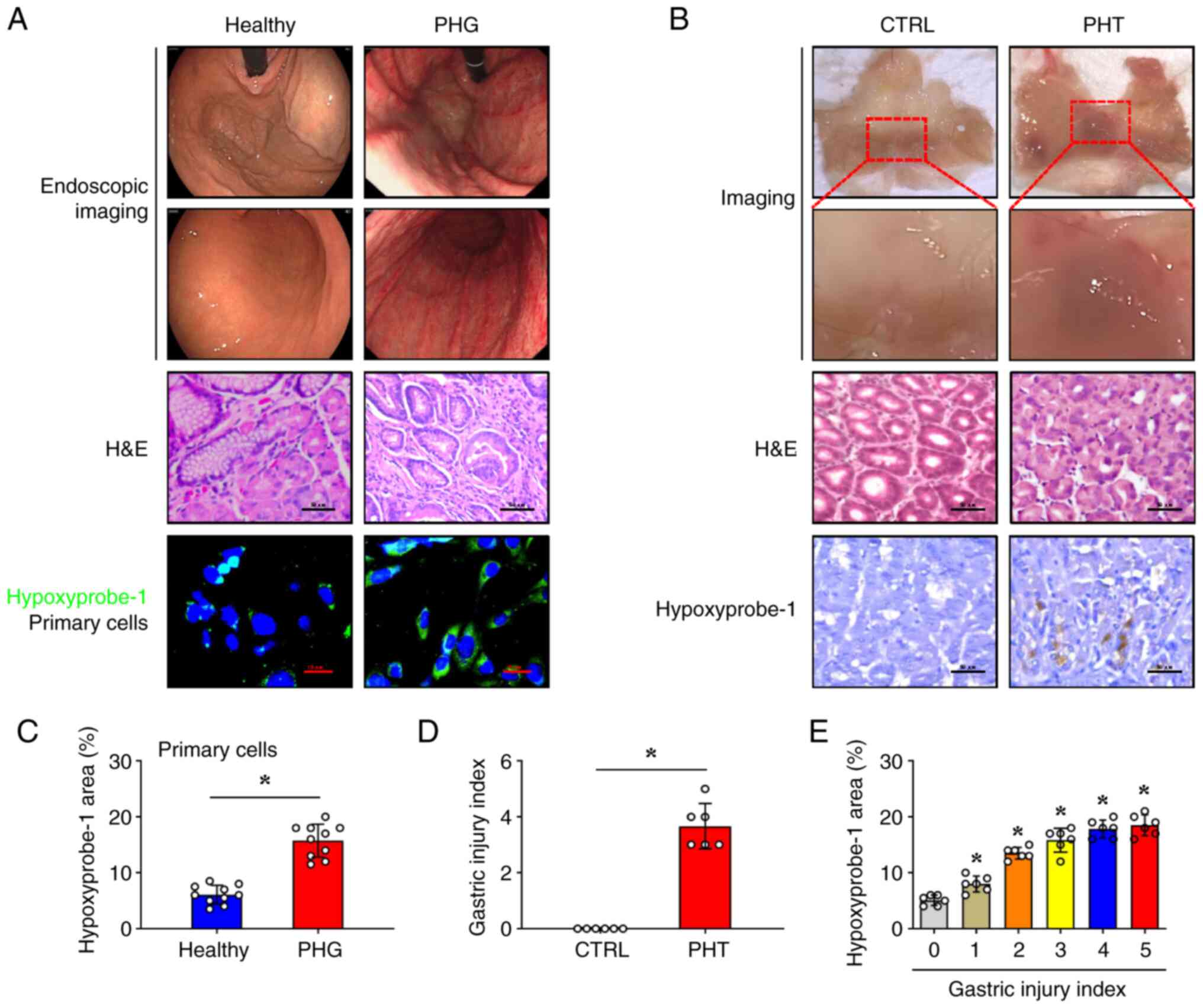
Figure 1

Hypoxia participates in gastric
mucosal injury of PHG in both humans and mice. (A) Representative
gastric endoscopic images and H&E-stained sections of gastric
mucosa from patients with PHG were compared with those from healthy
individuals (as Healthy). Scale bar, 50 µm for H&E images.
Hypoxyprobe-1 staining (green) was performed on primary gastric
mucosal epithelial cells isolated from both PHG patients and
healthy controls. Nuclei (blue) were counterstained with DAPI.
Scale bar, 10 µm. (B) Gross image, H&E staining, and
Hypoxyprobe-1 immunohistochemical staining (brown) of the gastric
mucosa in the mice with PHT compared with that in the control mice.
Scale bar, 50 µm for H&E and IHC images. (C) Quantitative
analysis of Hypoxyprobe-1 fluorescence intensity from (A), n=10 per
group; *P<0.05. (D) Mucosal injury index analysis in
the murine models is presented, n=6 per group;
*P<0.05. (E) The percentage of the
Hypoxyprobe-1-positive area corresponding to the gastric injury
index of PHT mouse models was analyzed. n=6 per group;
*P<0.05 vs. the group with a gastric injury index of
0. PHG, portal hypertensive gastropathy; H&E, hematoxylin and
eosin; DAPI, 4',6-diamidino-2-phenylindole dihydrochloride; PHT,
portal hypertension; CTRL, control.

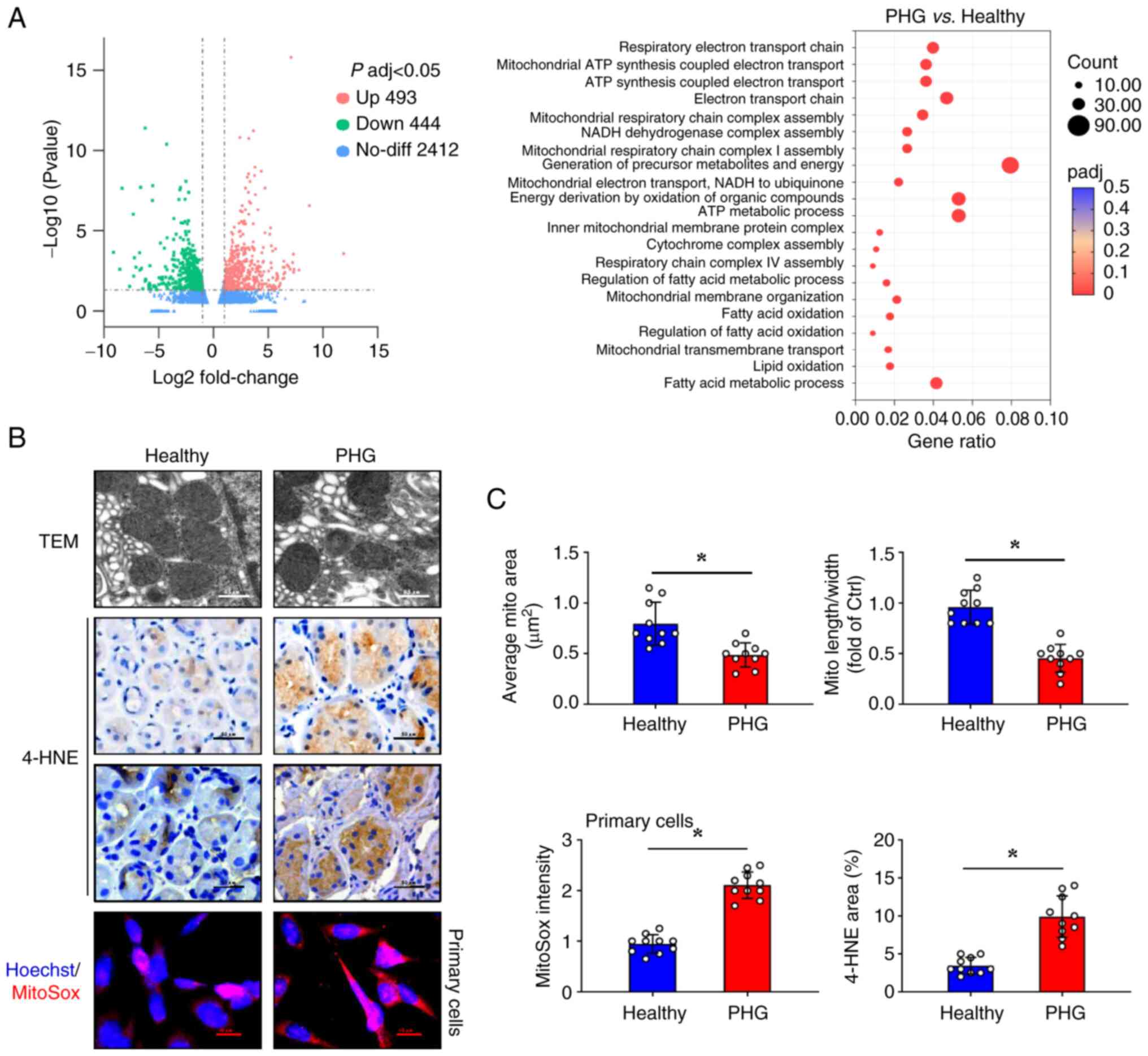
Figure 2

Enhanced mitochondrial oxidative
stress is identified in the gastric mucosa epithelia of patients
with PHG. (A) Volcano plot of differentially expressed genes in the
PHG group compared with those in the healthy individual group. GO
pathway enrichment of signalling pathways according to the
microarray analysis, n=3 in each group. (B) TEM analysis of
mitochondrial morphological changes (Scale bar, 0.5 µm), 4-HNE
immunohistochemical staining (Scale bar=50 µm), and MitoSox
fluorescent staining of primary gastric mucosal epithelial cells
were performed in the gastric mucosal tissues from both healthy
individuals (as Healthy) and patients with PHG (as PHG). Nuclei
(blue) were counterstained with Hoechst 33258 in fluorescence
staining. Scale bar, 10 µm. (C) The quantitative values of
mitochondrial average area and mitochondrial length-to-width ratio
obtained from TEM were presented. The MitoSox fluorescence
intensity and 4-HNE staining quantification from (B) were also
determined, n=10 per group; *P<0.05. PHG, portal
hypertensive gastropathy; GO, Gene Ontology; TEM, transmission
electron microscopy.

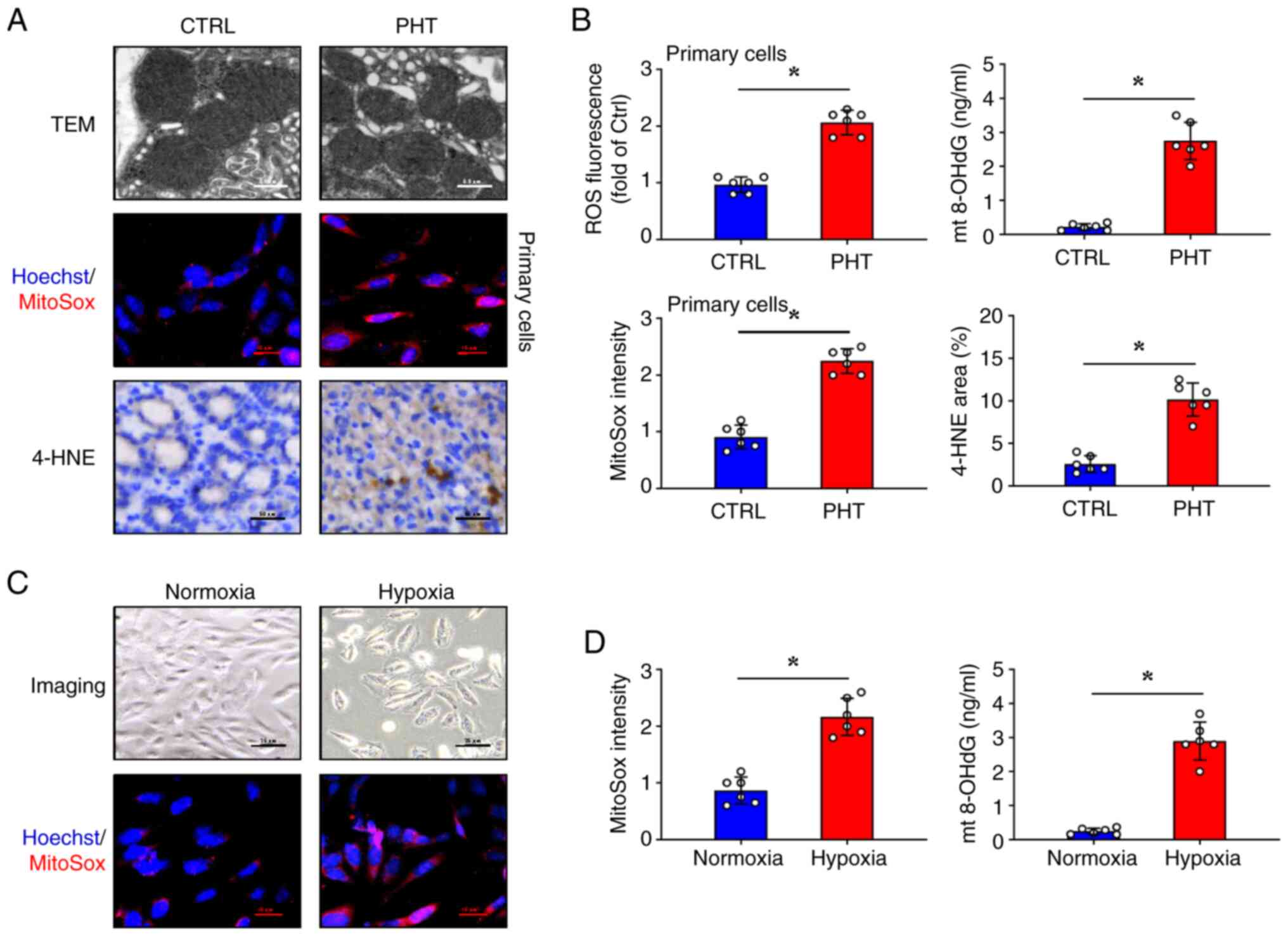
Figure 3

Mitochondrial oxidative stress is
enhanced in the in vivo and in vitro models. (A) TEM
analysis of mitochondrial morphological changes (Scale bar, 0.5
µm), MitoSox staining of primary gastric mucosal epithelial cells
(Scale bar, 10 µm), and immunohistochemical staining for 4-HNE were
performed in the gastric mucosal tissues from both control and PHT
group mice (Scale bar, 50 µm). Nuclei (blue) were counterstained
with Hoechst 33258 in MitoSox staining.(B) The quantitative
analysis of ROS fluorescence in primary gastric mucosal epithelial
cells and mt 8-OHdG concentration were determined. The MitoSox
fluorescence intensity and the quantitative analysis of 4-HNE
staining from (A) were also analyzed. n=6 per group;
*P<0.05. (C) Morphology and MitoSox fluorescence
staining of GES-1 cells under normoxic and hypoxic conditions.
Nuclei (blue) were counterstained with Hoechst 33258 in MitoSox
staining. Scale bars, 25 µm (upper panels) and 10 µm (lower
panels). (D) The mt 8-OHdG concentration and the quantitative
analysis of MitoSox fluorescence intensity in GES-1 cells under
normoxic and hypoxic conditions are shown. n=6 per group;
*P<0.05. TEM, transmission electron microscopy; PHT,
portal hypertension; mt 8-OhdG, mitochondrial 8-OhdG; CTRL,
control.

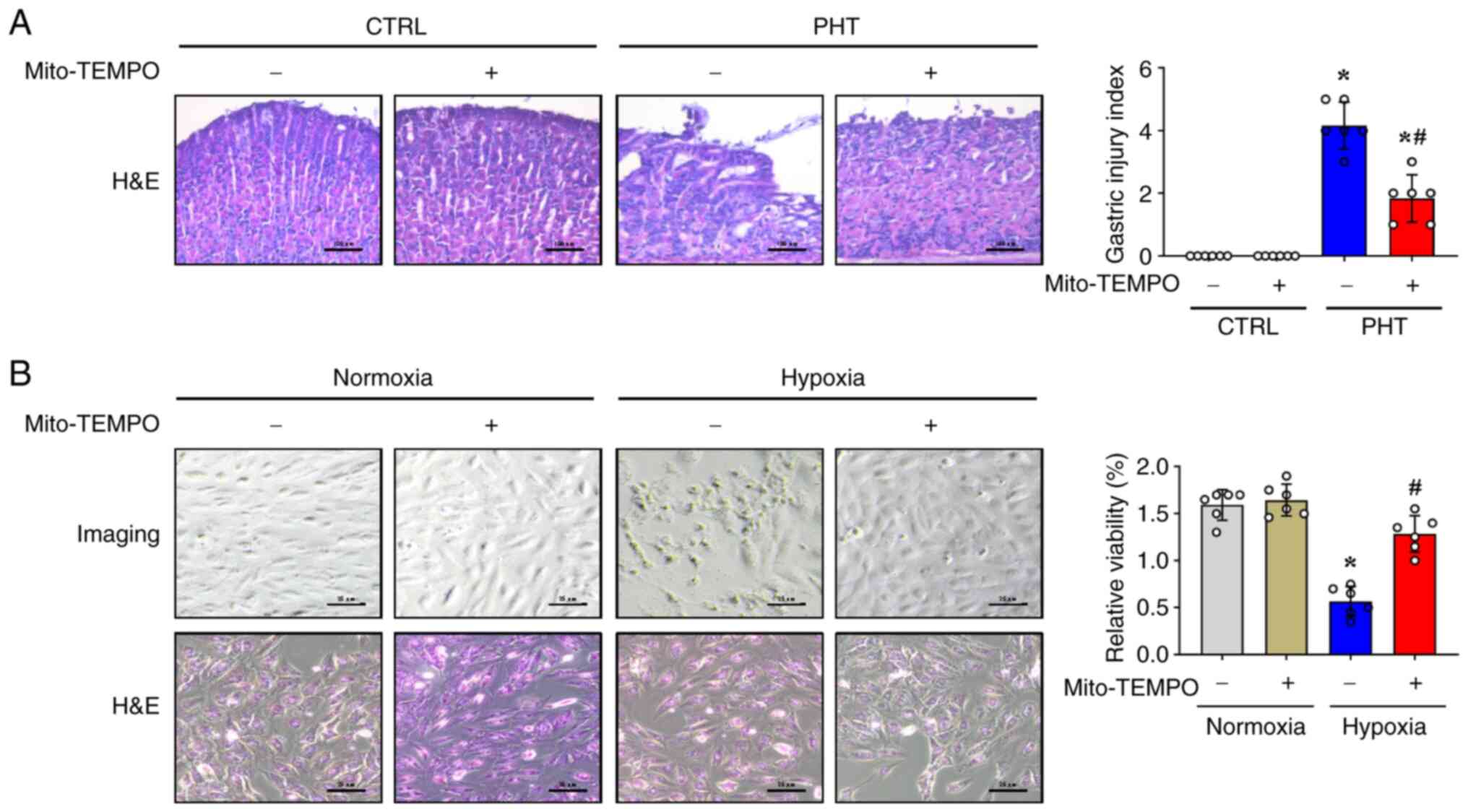
Figure 4

ROS scavenger Mito-TEMPO attenuates
gastric mucosal epithelial injury from in vivo and in
vitro models. (A) H&E staining of gastric mucosal tissues
and analysis of gastric mucosal injury index in the mouse model
treated with Mito-TEMPO or not. Scale bar, 100 µm. n=6 per group.
*P<0.05 vs. the control group; #P<0.05
vs. the PHT group without Mito-TEMPO. (B) The morphology and
H&E staining of GES-1 cell under normoxic and hypoxic
conditions treated with Mito-TEMPO (or not) are shown. The relative
cell viability analyzed by Cell Counting Kit-8 were also
determined. Scale bar, 25 µm. n=6 per group. *P<0.05
vs. the normoxia group; #P<0.05 vs. the hypoxia group
without Mito-TEMPO. ROS, reactive oxygen species; H&E,
hematoxylin and eosin; PHT, portal hypertension; CTRL, control.

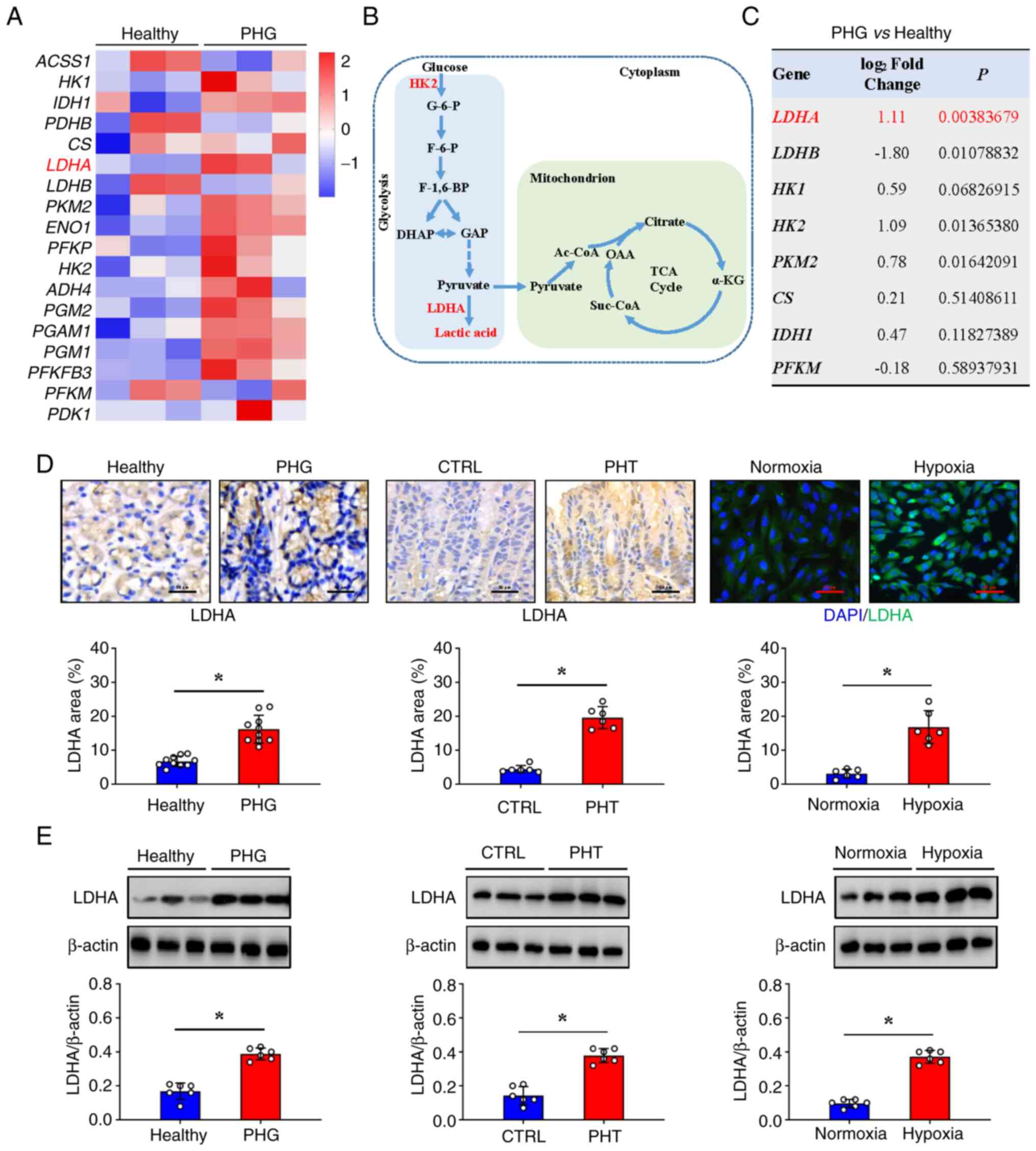
Figure 5

Mitochondrial dysfunction is
associated with the glycolytic LDHA upregulation in PHG. (A) The
heatmap analysis of differentially expressed genes between normal
gastric mucosa (healthy individuals-indicated as Healthy) and
gastric mucosa from patients with PHG (indicated as PHG) revealed
increased expression of LDHA and other genes involved in the
glycolytic metabolic pathway. (B) The glycolytic metabolic pathway
is presented. (C) The fold changes and P-values of the indicated
mRNAs in PHG tissues relative to those in normal (healthy
individuals-indicated as Healthy) tissues from the microarray
experiment are presented. (D) Immunohistochemical (brown) or
immunofluorescence (green) staining and quantitative analysis of
LDHA in the clinical tissue samples (n=10 per group), mouse models
(n=6 per group), and cellular hypoxia models (n=6 per group).
Nuclei (blue) were counterstained with DAPI in immunofluorescence
staining. Scale bars, 50 µm (IHC images) and 25 µm (IF images).
*P<0.05. (E) Western blotting detection of LDHA
protein expression levels in clinical tissue samples, mouse models,
and cellular hypoxia models. Ratios of densitometric units of
normalized LDHA/β-actin were determined from western blotting. n=6
per group. *P<0.05. PHG, portal hypertensive
gastropathy; LDHA, lactate dehydrogenase A; DAPI,
4',6-diamidino-2-phenylindole dihydrochloride; CTRL, control; PHT,
portal hypertension.

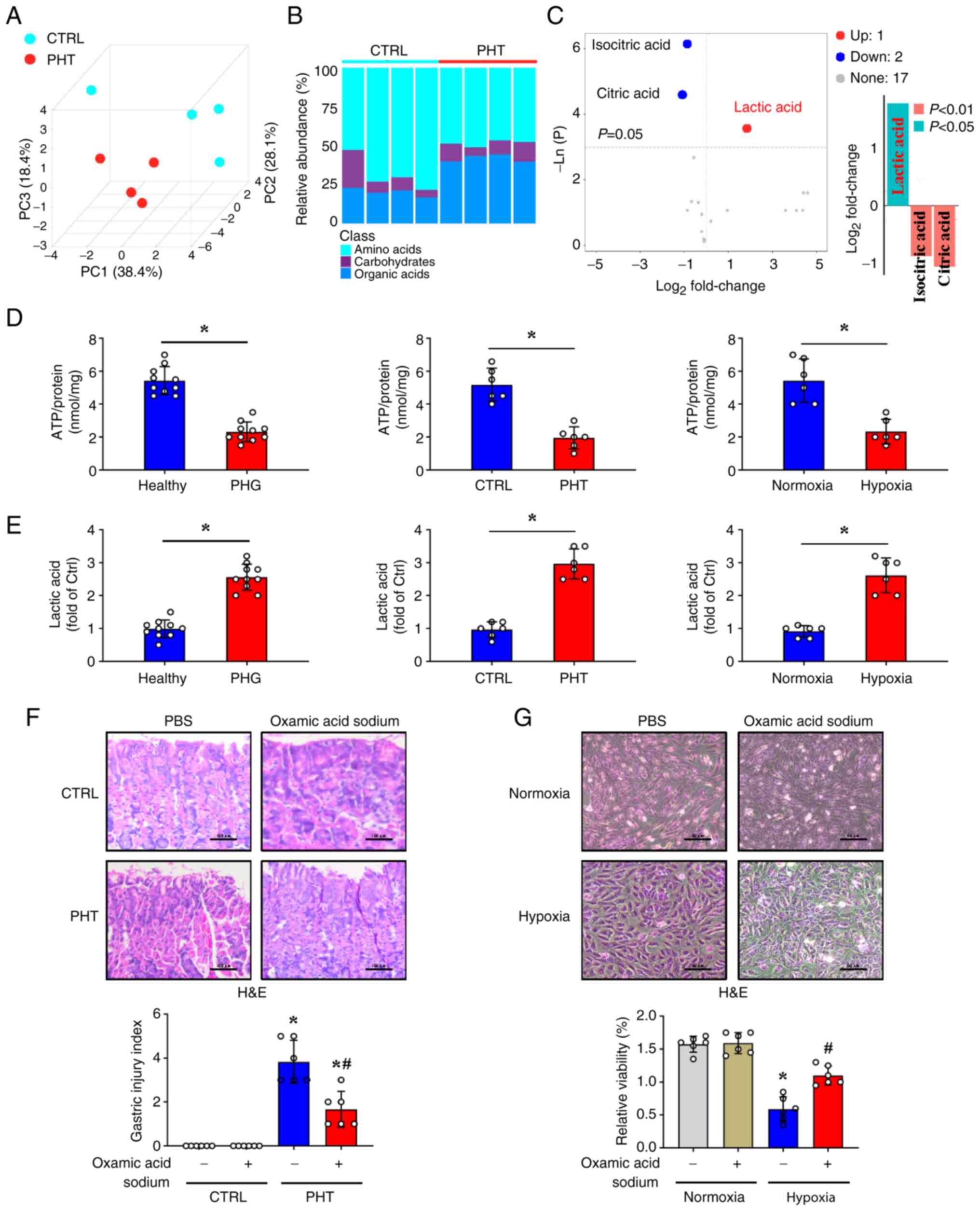
Figure 6

Mitochondrial oxidative stress in PHG
is accompanied by ATP production and promotes lactic acid
production. (A) Principal component analysis of metabolic
components in gastric mucosal tissues from the control group and
mice with PHT. n=4 per group. (B) Stacked bar plots comparing the
relative abundance of amino acid metabolism, carbohydrate
metabolism, and organic acid metabolism in the gastric mucosal
tissues between the control group and PHT mice. (C) Volcano plot
and bar chart analyses of carbohydrate metabolism biomarkers in the
indicated gastric mucosal tissues. (D) The ATP concentrations in
the clinical tissue samples (n=10 per group), murine models (n=6
per group), and cellular hypoxia models (n=6 per group) were
analyzed. *P<0.05. (E) The lactic acid concentrations
in clinical tissue samples (n=10 per group), mouse models (n=6 per
group), and cellular hypoxia models (n=6 per group) were assessed.
*P<0.05. (F) H&E staining and gastric mucosal
injury index scores in the indicated mouse models (treated with
lactate dehydrogenase A inhibitor oxamic acid sodium or not) were
determined. Scale bar, 100 µm. n=6 per group. *P<0.05
vs. the control group; #P<0.05 vs. the PHT group
without oxamic acid sodium. (G) H&E staining of the GES-1 cell
models under normoxia and hypoxia following oxamic acid sodium
administration. Cell viability from the indicated groups was also
analyzed by Cell Counting Kit-8 assay. Scale bar, 50 µm. n=6 per
group. *P<0.05 vs. the normoxia group;
#P<0.05 vs. the hypoxia group without oxamic acid
sodium. PHG, portal hypertensive gastropathy; PHT, portal
hypertension; H&E, hematoxylin and eosin; CTRL, control; PBS,
phosphate-buffered saline.

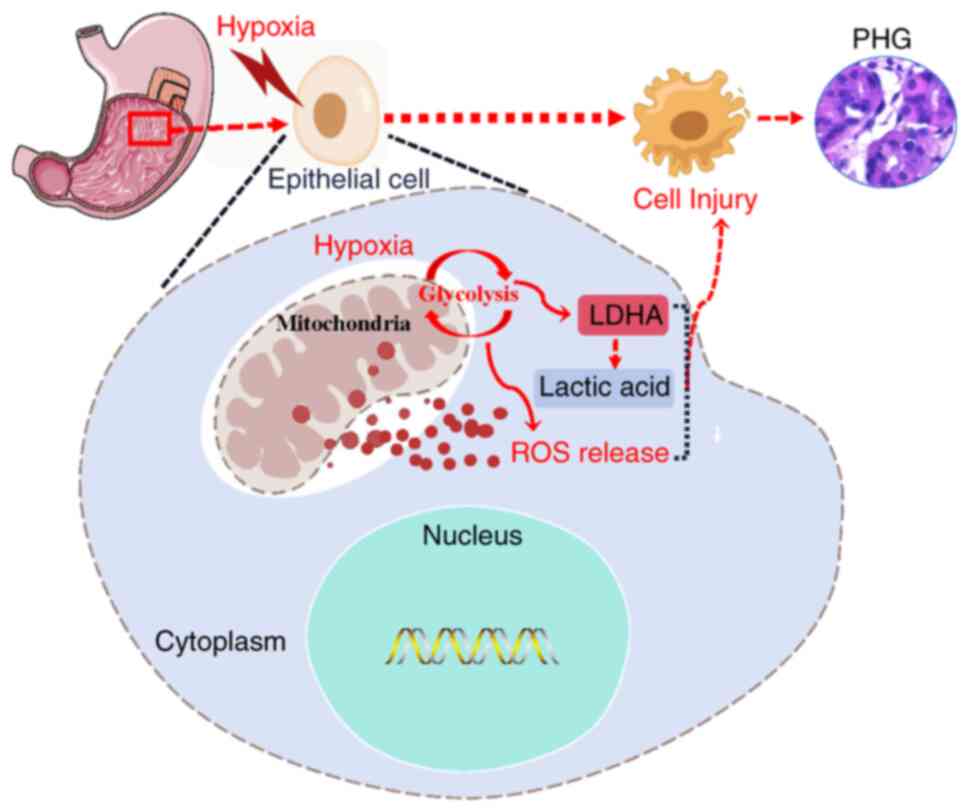
Figure 7

Schematic diagram of mitochondrial
oxidative stress following hypoxia in the gastric mucosal
epithelial injury of PHG. The graphical abstract is shown. PHG,
portal hypertensive gastropathy; LDHA, lactate dehydrogenase A;
ROS, reactive oxygen species.
View References

1 

Cubillas R and Rockey DC: Portal hypertensive gastropathy: A review. Liver Int. 30:1094–1102. 2010.PubMed/NCBI View Article : Google Scholar

2 

McCormack TT, Sims J, Eyre-Brook I, Kennedy H, Goepel J, Johnson AG and Triger DR: Gastric lesions in portal hypertension: Inflammatory gastritis or congestive gastropathy? Gut. 26:1226–1232. 1985.PubMed/NCBI View Article : Google Scholar

3 

Guixé-Muntet S, Quesada-Vázquez S and Gracia-Sancho J: Pathophysiology and therapeutic options for cirrhotic portal hypertension. Lancet Gastroenterol Hepatol. 9:646–663. 2024.PubMed/NCBI View Article : Google Scholar

4 

Urrunaga NH and Rockey DC: Portal hypertensive gastropathy and colopathy. Clin Liver Dis. 18:389–406. 2014.PubMed/NCBI View Article : Google Scholar

5 

Tan SW: Molecular mechanism of portal hypertensive gastropathy: An update. Clin Res Hepatol Gastroenterol. 48(102423)2024.PubMed/NCBI View Article : Google Scholar

6 

Luo Z, Tian M, Yang G, Tan QR, Chen YB, Li G, Zhang QW, Li YK, Wan P and Wu JG: Hypoxia signaling in human health and diseases: Implications and prospects for therapeutics. Signal Transduct Target Ther. 7(218)2022.PubMed/NCBI View Article : Google Scholar

7 

Yuan XY, Ruan W, Bobrow B, Carmeliet P and Eltzschig HK: Targeting hypoxia-inducible factors: Therapeutic opportunities and challenges. Nat Rev Drug Discov. 23:175–200. 2024.PubMed/NCBI View Article : Google Scholar

8 

Lee P, Chandel NS and Simon MC: Cellular adaptation to hypoxia through hypoxia inducible factors and beyond. Nat Rev Mol Cell Biol. 21:268–283. 2020.PubMed/NCBI View Article : Google Scholar

9 

Brooks GA: Lactate as a fulcrum of metabolism. Redox Biol. 35(101454)2020.PubMed/NCBI View Article : Google Scholar

10 

Sies H: Oxidative stress: A concept in redox biology and medicine. Redox Biol. 4:180–183. 2015.PubMed/NCBI View Article : Google Scholar

11 

Kierans SJ and Taylor CT: Glycolysis: A multifaceted metabolic pathway and signaling hub. J Biol Chem. 300(107906)2024.PubMed/NCBI View Article : Google Scholar

12 

Xiao YL, Zhang YW, Xie KD, Huang XL, Liu XZ, Luo JJ and Tan SW: Mitochondrial dysfunction by FADDosome promotes gastric mucosal injury in portal hypertensive gastropathy. Int J Biol Sci. 20:2658–2685. 2024.PubMed/NCBI View Article : Google Scholar

13 

Tan S, Chen X, Xu M, Huang X, Liu H, Jiang J, Lu Y, Peng X and Wu B: PGE2/EP4 receptor attenuated mucosal injury via β-arrestin1/Src/EGFR-mediated proliferation in portal hypertensive gastropathy. Br J Pharmacol. 174:848–866. 2017.PubMed/NCBI View Article : Google Scholar

14 

Xiao YL, Liu XZ, Xie KD, Luo JJ, Zhang YW, Huang XL, Luo JN and Tan SW: Mitochondrial dysfunction induced by HIF-1α under hypoxia contributes to the development of gastric mucosal lesions. Clin Transl Med. 14(e1653)2024.PubMed/NCBI View Article : Google Scholar

15 

Tan S, Li L, Chen T, Chen X, Tao L, Lin X, Tao J, Huang X, Jiang J, Liu H and Wu B: β-Arrestin-1 protects against endoplasmic reticulum stress/p53-upregulated modulator of apoptosis-mediated apoptosis via repressing p-p65/inducible nitric oxide synthase in portal hypertensive gastropathy. Free Radic Biol Med. 87:69–83. 2015.PubMed/NCBI View Article : Google Scholar

16 

Gana JC, Cifuentes LI, Gattini D, Villarroel Del Pino LA, Peña A and Torres-Robles R: Band ligation versus beta-blockers for primary prophylaxis of oesophageal variceal bleeding in children with chronic liver disease or portal vein thrombosis. Cochrane Database Syst Rev. 9(CD010546)2019.PubMed/NCBI View Article : Google Scholar

17 

Noto JM, Piazuelo MB, Romero-Gallo J, Delgado AG, Suarez G, Akritidou K, Girod Hoffman M, Roa JC, Taylor CT and Peek RM Jr: Targeting hypoxia-inducible factor-1 alpha suppresses Helicobacter pylori-induced gastric injury via attenuation of both cag-mediated microbial virulence and proinflammatory host responses. Gut Microbes. 15(2263936)2023.PubMed/NCBI View Article : Google Scholar

18 

Lin ZH, Song JL, Gao YK, Huang SH, Dou RZ, Zhong PY, Huang GQ, Han L, Zheng JS, Zhang XY, et al: Hypoxia-induced HIF-1α/lncRNA-PMAN inhibits ferroptosis by promoting the cytoplasmic translocation of ELAVL1 in peritoneal dissemination from gastric cancer. Redox Biol. 52(102312)2022.PubMed/NCBI View Article : Google Scholar

19 

He C, Wang LB, Zhang JT and Xu H: Hypoxia-inducible microRNA-224 promotes the cell growth, migration and invasion by directly targeting RASSF8 in gastric cancer. Mol Cancer. 16(35)2017.PubMed/NCBI View Article : Google Scholar

20 

Zhang YF, Lu HW, Ji H and Li YM: p53 upregulated by HIF-1α promotes gastric mucosal epithelial cells apoptosis in portal hypertensive gastropathy. Dig Liver Dis. 55:81–92. 2023.PubMed/NCBI View Article : Google Scholar

21 

Winter JM, Yadav T and Rutter J: Stressed to death: Mitochondrial stress responses connect respiration and apoptosis in cancer. Mol Cell. 82:3321–3332. 2022.PubMed/NCBI View Article : Google Scholar

22 

Fuhrmann DC and Brüne B: Mitochondrial composition and function under the control of hypoxia. Redox Biol. 12:208–215. 2017.PubMed/NCBI View Article : Google Scholar

23 

Zhang BY, Pan CY, Feng C, Yan CQ, Yu YJ, Chen ZL, Guo CJ and Wang XX: Role of mitochondrial reactive oxygen species in homeostasis regulation. Redox Rep. 27:45–52. 2022.PubMed/NCBI View Article : Google Scholar

24 

Yang SG, Bae JW, Park HJ and Koo DB: Mito-TEMPO protects preimplantation porcine embryos against mitochondrial fission-driven apoptosis through DRP1/PINK1-mediated mitophagy. Life Sci. 315(121333)2023.PubMed/NCBI View Article : Google Scholar

25 

Shetty S, Kumar R and Bharati S: Mito-TEMPO, a mitochondria-targeted antioxidant, prevents N-nitrosodiethylamine-induced hepatocarcinogenesis in mice. Free Radic Biol Med. 136:76–86. 2019.PubMed/NCBI View Article : Google Scholar

26 

Liu X, Wang X, Zhang J, Lam EK, Shin VY, Cheng AS, Yu J, Chan FK, Sung JJ and Jin HC: Warburg effect revisited: An epigenetic link between glycolysis and gastric carcinogenesis. Oncogene. 29:442–450. 2010.PubMed/NCBI View Article : Google Scholar

27 

Cheng CT, Kuo CY, Ouyang C, Li CF, Chung Y, Chan DC, Kung HJ and Ann DK: Metabolic Stress-induced phosphorylation of KAP1 Ser473 blocks mitochondrial fusion in breast cancer cells. Cancer Res. 76:5006–5018. 2016.PubMed/NCBI View Article : Google Scholar

28 

Yi Y, Wu MY, Chen KT, Chen AH, Li LQ, Xiong Q, Wang XR, Lei WB, Xiong GX and Fang SB: LDHA-mediated glycolysis in stria vascularis endothelial cells regulates macrophages function through CX3CL1-CX3CR1 pathway in noise-induced oxidative stress. Cell Death Dis. 16(65)2025.PubMed/NCBI View Article : Google Scholar

29 

Kooshan Z, Cárdenas-Piedra L, Clements J and Batra J: Glycolysis, the sweet appetite of the tumor microenvironment. Cancer Lett. 600(217156)2024.PubMed/NCBI View Article : Google Scholar

30 

Zhang YJ, Chang LF, Xin X, Qiao YX, Qiao WN, Ping JH, Xia J and Su J: Influenza A virus-induced glycolysis facilitates virus replication by activating ROS/HIF-1α pathway. Free Radic Biol Med. 250:910–924. 2024.PubMed/NCBI View Article : Google Scholar

31 

Qin Q, Li MY, Fan LL, Zeng X, Zheng DY, Wang H, Jiang YT, Ma XR, Xing L, Wu LJ, et al: RVG engineered extracellular vesicles-transmitted miR-137 improves autism by modulating glucose metabolism and neuroinflammation. Mol Psychiatry. 30:4072–4084. 2025.PubMed/NCBI View Article : Google Scholar

32 

Yin H, Liu Y, Dong Q, Wang HY, Yan YJ, Wang XQ, Wan XQ, Yuan GQ and Pan YW: The mechanism of extracellular Cyp B promotes glioblastoma adaptation to glutamine deprivation microenvironment. Cancer Lett. 597(216862)2024.PubMed/NCBI View Article : Google Scholar

33 

Rong J, Han CX, Huang Y, Wang YQ, Qiu Q, Wang M, Wang SS, Wang R, Yang JQ, Li X, et al: Inhibition of xanthine oxidase alleviated pancreatic necrosis via HIF-1 α-regulated LDHA and NLRP3 signaling pathway in acute pancreatitis. Acta Pharm Sin B. 14:3591–3604. 2024.PubMed/NCBI View Article : Google Scholar

34 

Chelakkot C, Chelakkot VS, Shin Y and Song K: Modulating glycolysis to improve cancer therapy. Int J Mol Sci. 24(2606)2023.PubMed/NCBI View Article : Google Scholar

35 

An S, Yao Y, Hu HB, Wu JJ, Li JX, Li LL, Wu J, Sun MM, Deng ZY, Zhang YY, et al: PDHA1 hyperacetylation-mediated lactate overproduction promotes sepsis-induced acute kidney injury via Fis1 lactylation. Cell Death Dis. 14(457)2023.PubMed/NCBI View Article : Google Scholar

36 

Rabinowitz JD and Enerbäck S: Lactate: The ugly duckling of energy metabolism. Nat Metab. 2:566–571. 2020.PubMed/NCBI View Article : Google Scholar

37 

Liu J, Zhang C, Zhang TL, Chang CY, Wang JM, Bazile L, Zhang LJ, Haffty BG, Hu WW and Feng ZH: Metabolic enzyme LDHA activates Rac1 GTPase as a noncanonical mechanism to promote cancer. Nat Metab. 4:1830–1846. 2022.PubMed/NCBI View Article : Google Scholar

38 

Rabbani N, Xue M and Thornalley PJ: Hexokinase-2-linked glycolytic overload and unscheduled Glycolysis-driver of insulin resistance and development of vascular complications of diabetes. Int J Mol Sci. 23(2165)2022.PubMed/NCBI View Article : Google Scholar

39 

Qi W, Keenan HA, Li Q, Ishikado A, Kannt A, Sadowski T, Yorek MA, Wu I, Lockhart S, Coppey LJ, et al: Pyruvate kinase M2 activation may protect against the progression of diabetic glomerular pathology and mitochondrial dysfunction. Nat Med. 23:753–762. 2017.PubMed/NCBI View Article : Google Scholar

Related Articles

  • Abstract
  • View
  • Download
  • Twitter
Copy and paste a formatted citation
Spandidos Publications style
Luo J, Xie K, Ou X and Tan S: Mitochondrial oxidative stress under hypoxia promotes gastric mucosal injury in portal hypertensive gastropathy. Biomed Rep 24: 29, 2026.
APA
Luo, J., Xie, K., Ou, X., & Tan, S. (2026). Mitochondrial oxidative stress under hypoxia promotes gastric mucosal injury in portal hypertensive gastropathy. Biomedical Reports, 24, 29. https://doi.org/10.3892/br.2026.2102
MLA
Luo, J., Xie, K., Ou, X., Tan, S."Mitochondrial oxidative stress under hypoxia promotes gastric mucosal injury in portal hypertensive gastropathy". Biomedical Reports 24.2 (2026): 29.
Chicago
Luo, J., Xie, K., Ou, X., Tan, S."Mitochondrial oxidative stress under hypoxia promotes gastric mucosal injury in portal hypertensive gastropathy". Biomedical Reports 24, no. 2 (2026): 29. https://doi.org/10.3892/br.2026.2102
Copy and paste a formatted citation
x
Spandidos Publications style
Luo J, Xie K, Ou X and Tan S: Mitochondrial oxidative stress under hypoxia promotes gastric mucosal injury in portal hypertensive gastropathy. Biomed Rep 24: 29, 2026.
APA
Luo, J., Xie, K., Ou, X., & Tan, S. (2026). Mitochondrial oxidative stress under hypoxia promotes gastric mucosal injury in portal hypertensive gastropathy. Biomedical Reports, 24, 29. https://doi.org/10.3892/br.2026.2102
MLA
Luo, J., Xie, K., Ou, X., Tan, S."Mitochondrial oxidative stress under hypoxia promotes gastric mucosal injury in portal hypertensive gastropathy". Biomedical Reports 24.2 (2026): 29.
Chicago
Luo, J., Xie, K., Ou, X., Tan, S."Mitochondrial oxidative stress under hypoxia promotes gastric mucosal injury in portal hypertensive gastropathy". Biomedical Reports 24, no. 2 (2026): 29. https://doi.org/10.3892/br.2026.2102
Follow us
  • Twitter
  • LinkedIn
  • Facebook
About
  • Spandidos Publications
  • Careers
  • Cookie Policy
  • Privacy Policy
How can we help?
  • Help
  • Live Chat
  • Contact
  • Email to our Support Team