Spandidos Publications Logo
  • About
    • About Spandidos
    • Aims and Scopes
    • Abstracting and Indexing
    • Editorial Policies
    • Reprints and Permissions
    • Job Opportunities
    • Terms and Conditions
    • Contact
  • Journals
    • All Journals
    • Oncology Letters
      • Oncology Letters
      • Information for Authors
      • Editorial Policies
      • Editorial Board
      • Aims and Scope
      • Abstracting and Indexing
      • Bibliographic Information
      • Archive
    • International Journal of Oncology
      • International Journal of Oncology
      • Information for Authors
      • Editorial Policies
      • Editorial Board
      • Aims and Scope
      • Abstracting and Indexing
      • Bibliographic Information
      • Archive
    • Molecular and Clinical Oncology
      • Molecular and Clinical Oncology
      • Information for Authors
      • Editorial Policies
      • Editorial Board
      • Aims and Scope
      • Abstracting and Indexing
      • Bibliographic Information
      • Archive
    • Experimental and Therapeutic Medicine
      • Experimental and Therapeutic Medicine
      • Information for Authors
      • Editorial Policies
      • Editorial Board
      • Aims and Scope
      • Abstracting and Indexing
      • Bibliographic Information
      • Archive
    • International Journal of Molecular Medicine
      • International Journal of Molecular Medicine
      • Information for Authors
      • Editorial Policies
      • Editorial Board
      • Aims and Scope
      • Abstracting and Indexing
      • Bibliographic Information
      • Archive
    • Biomedical Reports
      • Biomedical Reports
      • Information for Authors
      • Editorial Policies
      • Editorial Board
      • Aims and Scope
      • Abstracting and Indexing
      • Bibliographic Information
      • Archive
    • Oncology Reports
      • Oncology Reports
      • Information for Authors
      • Editorial Policies
      • Editorial Board
      • Aims and Scope
      • Abstracting and Indexing
      • Bibliographic Information
      • Archive
    • Molecular Medicine Reports
      • Molecular Medicine Reports
      • Information for Authors
      • Editorial Policies
      • Editorial Board
      • Aims and Scope
      • Abstracting and Indexing
      • Bibliographic Information
      • Archive
    • World Academy of Sciences Journal
      • World Academy of Sciences Journal
      • Information for Authors
      • Editorial Policies
      • Editorial Board
      • Aims and Scope
      • Abstracting and Indexing
      • Bibliographic Information
      • Archive
    • International Journal of Functional Nutrition
      • International Journal of Functional Nutrition
      • Information for Authors
      • Editorial Policies
      • Editorial Board
      • Aims and Scope
      • Abstracting and Indexing
      • Bibliographic Information
      • Archive
    • International Journal of Epigenetics
      • International Journal of Epigenetics
      • Information for Authors
      • Editorial Policies
      • Editorial Board
      • Aims and Scope
      • Abstracting and Indexing
      • Bibliographic Information
      • Archive
    • Medicine International
      • Medicine International
      • Information for Authors
      • Editorial Policies
      • Editorial Board
      • Aims and Scope
      • Abstracting and Indexing
      • Bibliographic Information
      • Archive
  • Articles
  • Information
    • Information for Authors
    • Information for Reviewers
    • Information for Librarians
    • Information for Advertisers
    • Conferences
  • Language Editing
Spandidos Publications Logo
  • About
    • About Spandidos
    • Aims and Scopes
    • Abstracting and Indexing
    • Editorial Policies
    • Reprints and Permissions
    • Job Opportunities
    • Terms and Conditions
    • Contact
  • Journals
    • All Journals
    • Biomedical Reports
      • Information for Authors
      • Editorial Policies
      • Editorial Board
      • Aims and Scope
      • Abstracting and Indexing
      • Bibliographic Information
      • Archive
    • Experimental and Therapeutic Medicine
      • Information for Authors
      • Editorial Policies
      • Editorial Board
      • Aims and Scope
      • Abstracting and Indexing
      • Bibliographic Information
      • Archive
    • International Journal of Epigenetics
      • Information for Authors
      • Editorial Policies
      • Editorial Board
      • Aims and Scope
      • Abstracting and Indexing
      • Bibliographic Information
      • Archive
    • International Journal of Functional Nutrition
      • Information for Authors
      • Editorial Policies
      • Editorial Board
      • Aims and Scope
      • Abstracting and Indexing
      • Bibliographic Information
      • Archive
    • International Journal of Molecular Medicine
      • Information for Authors
      • Editorial Policies
      • Editorial Board
      • Aims and Scope
      • Abstracting and Indexing
      • Bibliographic Information
      • Archive
    • International Journal of Oncology
      • Information for Authors
      • Editorial Policies
      • Editorial Board
      • Aims and Scope
      • Abstracting and Indexing
      • Bibliographic Information
      • Archive
    • Medicine International
      • Information for Authors
      • Editorial Policies
      • Editorial Board
      • Aims and Scope
      • Abstracting and Indexing
      • Bibliographic Information
      • Archive
    • Molecular and Clinical Oncology
      • Information for Authors
      • Editorial Policies
      • Editorial Board
      • Aims and Scope
      • Abstracting and Indexing
      • Bibliographic Information
      • Archive
    • Molecular Medicine Reports
      • Information for Authors
      • Editorial Policies
      • Editorial Board
      • Aims and Scope
      • Abstracting and Indexing
      • Bibliographic Information
      • Archive
    • Oncology Letters
      • Information for Authors
      • Editorial Policies
      • Editorial Board
      • Aims and Scope
      • Abstracting and Indexing
      • Bibliographic Information
      • Archive
    • Oncology Reports
      • Information for Authors
      • Editorial Policies
      • Editorial Board
      • Aims and Scope
      • Abstracting and Indexing
      • Bibliographic Information
      • Archive
    • World Academy of Sciences Journal
      • Information for Authors
      • Editorial Policies
      • Editorial Board
      • Aims and Scope
      • Abstracting and Indexing
      • Bibliographic Information
      • Archive
  • Articles
  • Information
    • For Authors
    • For Reviewers
    • For Librarians
    • For Advertisers
    • Conferences
  • Language Editing
Login Register Submit
  • This site uses cookies
  • You can change your cookie settings at any time by following the instructions in our Cookie Policy. To find out more, you may read our Privacy Policy.

    I agree
Search articles by DOI, keyword, author or affiliation
Search
Advanced Search
presentation
Experimental and Therapeutic Medicine
Join Editorial Board Propose a Special Issue
Print ISSN: 1792-0981 Online ISSN: 1792-1015
Journal Cover
October 2012 Volume 4 Issue 4

Full Size Image

Sign up for eToc alerts
Recommend to Library

Journals

International Journal of Molecular Medicine

International Journal of Molecular Medicine

International Journal of Molecular Medicine is an international journal devoted to molecular mechanisms of human disease.

International Journal of Oncology

International Journal of Oncology

International Journal of Oncology is an international journal devoted to oncology research and cancer treatment.

Molecular Medicine Reports

Molecular Medicine Reports

Covers molecular medicine topics such as pharmacology, pathology, genetics, neuroscience, infectious diseases, molecular cardiology, and molecular surgery.

Oncology Reports

Oncology Reports

Oncology Reports is an international journal devoted to fundamental and applied research in Oncology.

Experimental and Therapeutic Medicine

Experimental and Therapeutic Medicine

Experimental and Therapeutic Medicine is an international journal devoted to laboratory and clinical medicine.

Oncology Letters

Oncology Letters

Oncology Letters is an international journal devoted to Experimental and Clinical Oncology.

Biomedical Reports

Biomedical Reports

Explores a wide range of biological and medical fields, including pharmacology, genetics, microbiology, neuroscience, and molecular cardiology.

Molecular and Clinical Oncology

Molecular and Clinical Oncology

International journal addressing all aspects of oncology research, from tumorigenesis and oncogenes to chemotherapy and metastasis.

World Academy of Sciences Journal

World Academy of Sciences Journal

Multidisciplinary open-access journal spanning biochemistry, genetics, neuroscience, environmental health, and synthetic biology.

International Journal of Functional Nutrition

International Journal of Functional Nutrition

Open-access journal combining biochemistry, pharmacology, immunology, and genetics to advance health through functional nutrition.

International Journal of Epigenetics

International Journal of Epigenetics

Publishes open-access research on using epigenetics to advance understanding and treatment of human disease.

Medicine International

Medicine International

An International Open Access Journal Devoted to General Medicine.

Journal Cover
October 2012 Volume 4 Issue 4

Full Size Image

Sign up for eToc alerts
Recommend to Library

  • Article
  • Citations
    • Cite This Article
    • Download Citation
    • Create Citation Alert
    • Remove Citation Alert
    • Cited By
  • Similar Articles
    • Related Articles (in Spandidos Publications)
    • Similar Articles (Google Scholar)
    • Similar Articles (PubMed)
  • Download PDF
  • Download XML
  • View XML
Article

Evaluation of the effect of a chicken comb extract-containing supplement on cartilage and bone metabolism in athletes

  • Authors:
    • Masafumi Yoshimura
    • Yukihiro Aoba
    • Taiji Watari
    • Rei Momomura
    • Keita Watanabe
    • Akihito Tomonaga
    • Michitaka Matsunaga
    • Yoshimasa Suda
    • Woo Young Lee
    • Katsuhito Asai
    • Kaori Yoshimura
    • Takashi Nakagawa
    • Tetsuro Yamamoto
    • Hideyo Yamaguchi
    • Isao Nagaoka
  • View Affiliations / Copyright

    Affiliations: Graduate School of Health and Sports Science, Juntendo University, Chiba, Japan, Department of Medicine for Motor Organ, Graduate School of Medicine, Juntendo University, Tokyo, Japan, Kitashinyokohama Orthopedic Surgery,Kanagawa, Japan, Tana Orthopedic Surgery, Kanagawa, Japan, Kanagawa University, Kanagawa, Japan, Institute of Physical Education, Keio University, Kanagawa, Japan, Everlife Co., Ltd., Fukuoka, Japan, Total Technological Consultant Co., Ltd., Tokyo, Japan, Department of Host Defense and Biochemical Research, Graduate School of Medicine, Juntendo University, Tokyo, Japan
  • Pages: 577-580
    |
    Published online on: July 24, 2012
       https://doi.org/10.3892/etm.2012.646
  • Expand metrics +
Metrics: Total Views: 0 (Spandidos Publications: | PMC Statistics: )
Metrics: Total PDF Downloads: 0 (Spandidos Publications: | PMC Statistics: )
Cited By (CrossRef): 0 citations Loading Articles...

This article is mentioned in:


Abstract

In a previous study, we revealed that a commercially available product of dietary supplement containing a chicken comb extract (CCE), which is rich in hyaluronan, not only relieves joint pain and other symptoms, but also potentially improves the balance of type II collagen degradation/synthesis in patients with knee osteoarthritis. Since soccer is one of the sports most likely to cause knee osteoarthritis (OA), we evaluated the effect of a CCE-containing supplement on cartilage and bone metabolism in athletes. Fourteen and 15 subjects (all midfielders) were randomly assigned to receive the test product (test group) and the dummy placebo containing only vehicle (placebo group), respectively, for 12 weeks. The daily oral intake of the CCE-containing test product clearly decreased the urinary levels of both C-terminal crosslinked telopeptides of cartilage-specific type II collagen (CTX-II) as a type II collagen degradation marker and the N-terminal telopeptides of bone-specific type I collagen (NTx) as a marker of bone resorption at 12 weeks after the initiation of the intervention. By contrast, no significant reduction was detected in the placebo group at any timepoint during the intervention. These observations indicate that the test product is effective in inhibi­ting, not only cartilage degradation, but also bone remodeling. Thus, the CCE-containing supplement may be useful for the management of joint health in athletes.

Introduction

The failure of any component of joints participating in load transmission, particularly bone and articular cartilage, may lead to sport-induced joint injuries. The skeletal challenges appear to vary considerably among different sports. In soccer, the incidence of knee- and ankle-joint injuries is conceivably higher than in any other sports, possibly since soccer athletes expose the lower extremity joints to excessive and repetitive axial loading. Such skeletal injuries are predicted, not only to prevent players from participating in practice and competition, but also to increase the risk of osteoarthritis (OA). Results of various clinical studies have indicated that soccer is one of the sports most likely to cause knee OA (1–4). Gelber et al (5) reported that young adults with knee injuries have a considerably increased risk of developing OA.

It is possible that soccer- and certain other sports-related skeletal injuries, as well as acute or chronic physical loadings, are expected to affect the turnover rate of the afflicted parts of the skeleton, particularly the joint tissues, and are detected using systemic biomarker assays. Various molecular markers have been reported as indicators of bone turnover and cartilage metabolism in patients with bone and joint disorders (6,7). Among the biomarkers that have been extensively used are the C-terminal crosslinked telopeptides of type II collagen (CTX-II) and C-terminal propeptides of type II collagen (CPII) as the cartilage-specific type II collagen (CII) degradation and synthesis markers, respectively. N-terminal telopeptides of bone-specific type I collagen (NTx) have been used as the marker of bone resorption (8). Previously, we revealed that CTX-II, CPII and NTx are significantly or substantially elevated in the urine or sera of young athletes compared with non-athlete controls (9).

A commercially available product of dietary supplement containing a chicken comb extract (CCE), which is rich in hyaluronan, (Kojun®) has been shown relieve joint pain and other symptoms, as well as to potentially improve the balance of CII degradation/synthesis in patients with knee OA (10,11). Based on these observations, we hypothesized that the CCE-containing supplement product (test product) has an effect on the three biomarkers in athletes. Therefore, in this study, we evaluated the effect of a CCE-containing supplement on cartilage and bone metabolism in athletes.

Materials and methods

Subjects

The study was approved by the Human Experimentation Ethics Committee of Juntendo University (Japan) and informed consent was obtained from the participants. A total of 66 collegiate athletes belonging to three different intercollegiate soccer teams were recruited to participate in the study. It was expected that the rate of skeletal injuries and the levels of soccer-related activities or physical loadings are influenced by the position of players within the team and/or on the pitch. These levels were predicted to be higher in the midfielder position compared to any other player positions, including the forward, defender and goal keeper, since midfielders cover a longer distance than the players of other positions (12). For this reason, only midfielders were selectively analyzed in this study.

Intervention and subject group assignment

The test product was a 300-mg capsule preparation consisting of 157.5 mg of CCE, of which approximately 4.5 mg was hyaluronan, 20 mg calcium lactate, 10 mg propolis extract, 4.9 mg chitosan oligosaccharide, 5.0 mg each of vitamins B1 and B6, 2.5 mg vitamin E, 2.0 mg ferric pyrophosphate, 0.1 mg vitamin B12 and 192.5 mg of vehicle (a mixture of crystalline cellulose, dextrin and fatty acid sugar esters) (11). Fourteen and 15 subjects were randomly assigned to receive 16 capsules/day of the test product (test group) and those of dummy placebo containing only vehicle (placebo group), respectively. The subjects in the two groups were instructed to take allocated capsules at a dose of 8 capsules twice daily for 12 weeks. The study was executed in accordance with the principles of the amended Declaration of Helsinki and the Ethical Guidelines for Epidemiological Research (established by the Japanese Government in 2004) during the 2010 summer-fall soccer competition season.

Procedures

The urine and blood/serum samples were collected at baseline (before the intervention) and at 4, 8 and 12 weeks after the intervention, and stored at less than −40°C before assay. Urinal CTX-II and NTx were measured using CartiLaps EIA® (Immunodiagnostic Systems, Inc., Tyne & Wear, UK) and Osteomark® (Inverness Medical Japan Co., Ltd., Tokyo, Japan), respectively, and the values were normalized with creatinine (Cr). Serum CPII was measured using Procollagen II C Propeptide ELISA® (Ibex Pharmaceuticals, Inc., Mont-Royal, QC, Canada).

Statistical analysis

Unpaired and paired Student’s t-tests were used for the between-group comparison and within-group comparison, respectively. Values were presented as the means ± SD. P<0.05 was considered to indicate a statistically significant result.

Results

Data from 29 subjects (14 and 15 in the test and placebo groups, respectively) who completed the study were evaluated. Demographic characteristics [age, height, weight, body mass index (BMI), blood pressures and pulse rate] as well as biomarker profiles (CTX-II, CPII, CTX-II/CPII ratio and NTx) were not significantly different between the test and placebo groups (Table I).

Table I

Baseline data of subjects in the test and placebo groups who completed the study.

Table I

Baseline data of subjects in the test and placebo groups who completed the study.

VariablesTest group (n=14) (mean ± SD)Placebo group (n=15) (mean ± SD)P-value
Age (years)20.0±1.020.0±1.21.000
Height (cm)170.2±4.3172.6±4.90.159
Weight (kg)63.0±4.464.7±5.20.359
Body mass index (kg/m2)21.8±1.221.7±0.60.808
Systolic blood pressure (mmHg)116.3±11.0116.1±8.70.953
Diastolic blood pressure (mmHg)63.6±6.463.0±7.00.821
Pulse rate (beats/min)60.4±8.756.5±8.80.251
Urinary CTX-II (ng/mmol Cr)1,710±8831,265±1,0960.242
Serum CPII (ng/ml)1,544±4581,498±4380.784
Urinary CTX-II/serum CPII ratio1.25±0.810.88±0.690.195
Urinary NTx (nmol BCE/mmol Cr)66.8±19.460.0±30.10.479

[i] BCE, bone collagen equivalent; CTX-II, C-terminal crosslinked telopeptides of cartilage-specific type II collagen; CPII, cartilage-specific type II collagen; NTx, N-terminal telopeptides of bone-specific type I collagen; Cr, creatinine.

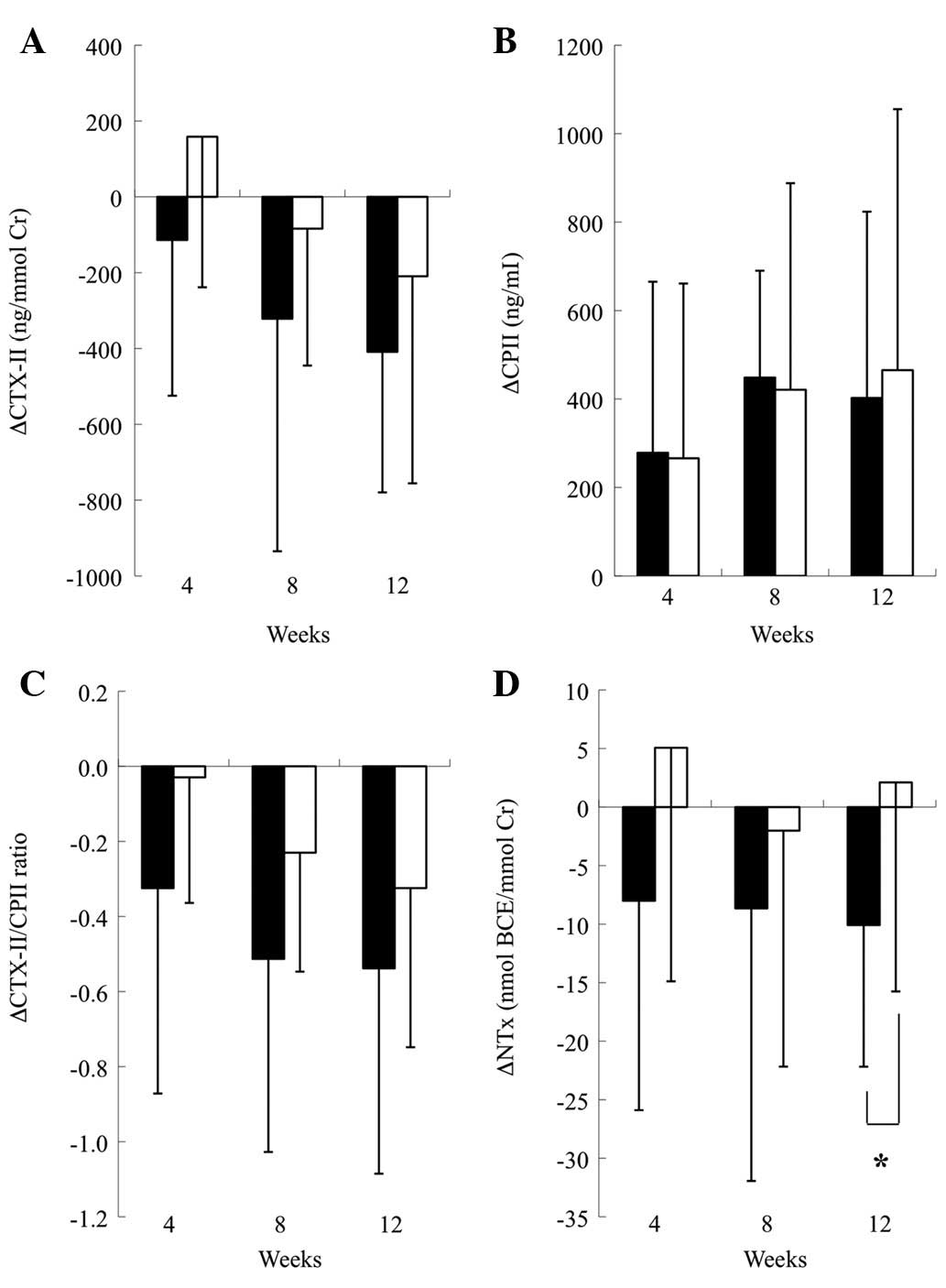
Table II shows the changes in the biomarker profiles during the intervention. CTX-II levels were clearly reduced from the baseline in the test group with a statistical significance at week 12 (P<0.01), while no significant reduction was observed in the placebo group at any timepoint during the intervention. Unlike CTX-II, CPII levels were elevated significantly from the baseline at all timepoints (weeks 4, 8 and 12; P<0.01 or <0.05). As a result, the ratios of CTX-II to CPII were decreased to a significant level (P<0.01 or <0.05) at weeks 4, 8 and 12 in the test group and at weeks 8 and 12 in the placebo group. Notably, NTx levels were reduced only in the test group, reaching a significant level at week 12 (P<0.01).

Table II

Changes in the levels of urinary CTX-II, serum CPII, the CTX-II/CPII ratio and urinary NTx during the 12-week intervention period in the test (n=14) and placebo groups (n=15).

Table II

Changes in the levels of urinary CTX-II, serum CPII, the CTX-II/CPII ratio and urinary NTx during the 12-week intervention period in the test (n=14) and placebo groups (n=15).

GroupsBaselineaWeek 4aWeek 8aWeek 12a
CTX-II (ng/mmol Cr)Test1,710±8831,596±852 (−7)1,388±719 (−19)1,301±706 (−24)c
Placebo1,265±1,0961,424±1,239 (13)1,182±884 (−7)1,056±693 (−17)
CPII (ng/ml)Test1,544±4581,823±393 (18)b1,993±396 (29)c1,947±544 (26)c
Placebo1,498±4381,764±399 (18)b1,919±384 (28)c1,964±515 (31)c
CTX-II/CPII ratioTest1.25±0.8110.93±0.54 (−26)b0.74±0.45 (−41)c0.71±0.38 (−43)c
Placebo0.88±0.690.85±0.75 (−3)0.65±0.47 (−26)b0.56±0.33 (−36)b
NTx (nmol BCE/mmol Cr)Test66.8±19.458.8±18.5 (−12)58.1±21.0 (−13)56.7±17.0 (−15)c
Placebo60.0±30.165.0±32.4 (8)58.0±18.9 (−3)62.1±23.0 (4)

a Values are expressed as the mean ± SD and the percentage changes from the baseline are indicated in parentheses. Values are compared between the baseline and the timepoints after the intervention.

b P<0.01;

c P<0.05. BCE, bone collagen equivalent; CTX-II, C-terminal crosslinked telopeptides of cartilage-specific type II collagen; CPII, cartilage-specific type II collagen; NTx, N-terminal telopeptides of bone-specific type I collagen; Cr, creatinine.

Fig. 1 shows the changed values from the baseline in all biomarkers used in this study during the intervention. The changes in the CPII levels were not different between the two groups at any timepoints. By contrast, the changes from the baseline levels of CTX-II, the CTX-II/CPII ratio and NTx were greater in the test group than in the placebo group, and the between-group difference in the NTx was statistically significant at week 12 (P<0.05).

Figure 1

Changes in the levels of (A) urinary CTX-II, (B) serum CPII, (C) CTX-II/CPII ratio and (D) urinary NTx from the baseline in the test group (n=14; black bar) and the placebo group (n=15; whites bar) during the 12-week intervention. Changes in the levels from the baseline are expressed as delta, and are compared between the test and placebo groups. *P<0.05.

Discussion

Joint injury and OA are similarly characterized by the remodeling and degradation of cartilage, bone and other joint tissues. Lohmander et al (13) reported the release of CTX-II into synovial fluid in human OA and joint injury, which provides the evidence that the integrity of the CII network of cartilage is compromised shortly after joint injury and in arthritis. With regard to OA, accumulating evidence indicates that serum or urinary levels of CTX-II and/or certain other CII degradation markers, including C1, 2C and C2C, increase with the progression of OA (10,11). The presence of NTx in the urine has been evaluated by Bettica et al (8) as a risk marker in progressive knee OA and was found to be elevated in patients with the radiographic progression of knee OA. This finding suggests that the progression of OA reflects the changes of both cartilage metabolism and bone turnover, and that the subchondral bone alterations play a role in the pathogenesis of OA. Based on these findings with regard to OA and the similarity of the change in the skeletal marker profiles between OA and joint injury, we have hypothesized that, similar to OA, joint injury is also characterized by cartilage degradation and subchondral bone abnormalities in athletes.

In the present study, we have shown that the daily oral intake of the CCE-containing test product clearly decreases the urinary levels of both CTX-II and NTx at 12 weeks after the initiation of the intervention. The results suggest that the test product is effective in inhibiting cartilage degradation and bone remodeling. In this context, hyaluronan, a putative active component of the CCE-containing supplement, has been reported to stimulate bovine chondrocytes, being effective in maintaining the cell phenotype with increased matrix deposition of glycosaminoglycan and CII (14,15). Although the actual mechanism of this beneficial action on joint injury remains unclear, the CCE-containing supplement may be useful for the management of joint health in athletes.

In conclusion, the oral administration of the CCE-containing supplement decreases the levels of CTX-II and NTx in the urine of young athletes, suggesting a potential use for relieving the joint injury-associated cartilage degradation and bone remodeling.

References

1 

Roos H, Lindberg H, Gärdsell P, Lohmander LS and Wingstrand H: The prevalence of gonarthrosis and its relation to meniscectomy in former soccer players. Am J Sports Med. 22:219–222. 1994. View Article : Google Scholar : PubMed/NCBI

2 

Kujala UM, Kettunen J, Paananen H, Aalto T, Battié MC, Impivaara O, Videman T and Sarna S: Knee osteoarthritis in former runners, soccer players, weight lifters, and shooters. Arthritis Rheum. 38:539–546. 1995. View Article : Google Scholar : PubMed/NCBI

3 

Rannou F, Poiraudeau S and Revel M: Cartilage: from biomechanics to physical therapy. Ann Readapt Med Phys. 44:259–267. 2001.(In French).

4 

Lequesne MG, Dang N and Lane NE: Sport practice and osteoarthritis of the limbs. Osteoarthritis Cartilage. 5:75–86. 1997. View Article : Google Scholar : PubMed/NCBI

5 

Gelber AC, Hochberg MC, Mead LA, Wang NY, Wigley FM and Klag MJ: Joint injury in young adults and risk for subsequent knee and hip osteoarthritis. Ann Intern Med. 133:321–328. 2000. View Article : Google Scholar : PubMed/NCBI

6 

Poole AR, Ionescu M, Fitzcharles MA and Billinghurst RC: The assessment of cartilage degradation in vivo: development of an immunoassay for the measurement in body fluids of type II collagen cleaved by collagenases. J Immunol Methods. 294:145–153. 2004. View Article : Google Scholar

7 

Rousseau JC and Delmas PD: Biological markers in osteoarthritis. Nat Clin Pract Rheumatol. 3:346–356. 2007. View Article : Google Scholar

8 

Bettica P, Cline G, Hart DJ, Meyer J and Spector TD: Evidence for increased bone resorption in patients with progressive knee osteoarthritis: longitudinal results from the Chingford study. Arthritis Rheum. 46:3178–3184. 2002. View Article : Google Scholar : PubMed/NCBI

9 

Yoshimura M, Sakamoto K, Tsuruta A, Yamamoto T, Ishida K, Yamaguchi H and Nagaoka I: Evaluation of the effect of glucosamine administration on biomarkers for cartilage and bone metabolism in soccer players. Int J Mol Med. 24:487–494. 2009.PubMed/NCBI

10 

Hatayama T, Nagano M, Yamaguchi N, Kumagai S and Ohnuki K: The effect of a supplement on knee pain and discomfort evaluated by visual analog scale (VAS): a randomized, double-blind, placebo-controlled study. Kenko-shien. 10:13–17. 2008.(In Japanese).

11 

Nagaoka I, Nabeshima K, Murakami S, Yamamoto T, Watanabe K, Tomonaga A and Yamaguchi H: Evaluation of the effects of a supplementary diet containing chicken comb extract on symptoms and cartilage metabolism in patients with knee osteoarthritis. Exp Ther Med. 1:817–827. 2010.PubMed/NCBI

12 

Bangsbo J, Nørregaard L and Thorsø F: Activity profile of competition soccer. Can J Sport Sci. 16:110–116. 1991.PubMed/NCBI

13 

Lohmander LS, Atley LM, Pietka TA and Eyre DR: The release of crosslinked peptides from type II collagen into human synovial fluid is increased soon after joint injury and in osteoarthritis. Arthritis Rheum. 48:3130–3139. 2003. View Article : Google Scholar : PubMed/NCBI

14 

Patti AM, Gabriele A, Vulcano A, Ramieri MT and Della Rocca C: Effect of hyaluronic acid on human chondrocytes cell lines from articular cartilage. Tissue Cell. 33:294–300. 2001. View Article : Google Scholar : PubMed/NCBI

15 

Akmal M, Singh A, Anand A, Kesani A, Aslam N, Goodship A and Bentley G: The effects of hyaluronic acid on articular chondrocytes. J Bone Joint Surg Br. 87:1143–1149. 2005. View Article : Google Scholar : PubMed/NCBI

Related Articles

  • Abstract
  • View
  • Download
  • Twitter
Copy and paste a formatted citation
Spandidos Publications style
Yoshimura M, Aoba Y, Watari T, Momomura R, Watanabe K, Tomonaga A, Matsunaga M, Suda Y, Lee WY, Asai K, Asai K, et al: Evaluation of the effect of a chicken comb extract-containing supplement on cartilage and bone metabolism in athletes. Exp Ther Med 4: 577-580, 2012.
APA
Yoshimura, M., Aoba, Y., Watari, T., Momomura, R., Watanabe, K., Tomonaga, A. ... Nagaoka, I. (2012). Evaluation of the effect of a chicken comb extract-containing supplement on cartilage and bone metabolism in athletes. Experimental and Therapeutic Medicine, 4, 577-580. https://doi.org/10.3892/etm.2012.646
MLA
Yoshimura, M., Aoba, Y., Watari, T., Momomura, R., Watanabe, K., Tomonaga, A., Matsunaga, M., Suda, Y., Lee, W. Y., Asai, K., Yoshimura, K., Nakagawa, T., Yamamoto, T., Yamaguchi, H., Nagaoka, I."Evaluation of the effect of a chicken comb extract-containing supplement on cartilage and bone metabolism in athletes". Experimental and Therapeutic Medicine 4.4 (2012): 577-580.
Chicago
Yoshimura, M., Aoba, Y., Watari, T., Momomura, R., Watanabe, K., Tomonaga, A., Matsunaga, M., Suda, Y., Lee, W. Y., Asai, K., Yoshimura, K., Nakagawa, T., Yamamoto, T., Yamaguchi, H., Nagaoka, I."Evaluation of the effect of a chicken comb extract-containing supplement on cartilage and bone metabolism in athletes". Experimental and Therapeutic Medicine 4, no. 4 (2012): 577-580. https://doi.org/10.3892/etm.2012.646
Copy and paste a formatted citation
x
Spandidos Publications style
Yoshimura M, Aoba Y, Watari T, Momomura R, Watanabe K, Tomonaga A, Matsunaga M, Suda Y, Lee WY, Asai K, Asai K, et al: Evaluation of the effect of a chicken comb extract-containing supplement on cartilage and bone metabolism in athletes. Exp Ther Med 4: 577-580, 2012.
APA
Yoshimura, M., Aoba, Y., Watari, T., Momomura, R., Watanabe, K., Tomonaga, A. ... Nagaoka, I. (2012). Evaluation of the effect of a chicken comb extract-containing supplement on cartilage and bone metabolism in athletes. Experimental and Therapeutic Medicine, 4, 577-580. https://doi.org/10.3892/etm.2012.646
MLA
Yoshimura, M., Aoba, Y., Watari, T., Momomura, R., Watanabe, K., Tomonaga, A., Matsunaga, M., Suda, Y., Lee, W. Y., Asai, K., Yoshimura, K., Nakagawa, T., Yamamoto, T., Yamaguchi, H., Nagaoka, I."Evaluation of the effect of a chicken comb extract-containing supplement on cartilage and bone metabolism in athletes". Experimental and Therapeutic Medicine 4.4 (2012): 577-580.
Chicago
Yoshimura, M., Aoba, Y., Watari, T., Momomura, R., Watanabe, K., Tomonaga, A., Matsunaga, M., Suda, Y., Lee, W. Y., Asai, K., Yoshimura, K., Nakagawa, T., Yamamoto, T., Yamaguchi, H., Nagaoka, I."Evaluation of the effect of a chicken comb extract-containing supplement on cartilage and bone metabolism in athletes". Experimental and Therapeutic Medicine 4, no. 4 (2012): 577-580. https://doi.org/10.3892/etm.2012.646
Follow us
  • Twitter
  • LinkedIn
  • Facebook
About
  • Spandidos Publications
  • Careers
  • Cookie Policy
  • Privacy Policy
How can we help?
  • Help
  • Live Chat
  • Contact
  • Email to our Support Team