Spandidos Publications Logo
  • About
    • About Spandidos
    • Aims and Scopes
    • Abstracting and Indexing
    • Editorial Policies
    • Reprints and Permissions
    • Job Opportunities
    • Terms and Conditions
    • Contact
  • Journals
    • All Journals
    • Oncology Letters
      • Oncology Letters
      • Information for Authors
      • Editorial Policies
      • Editorial Board
      • Aims and Scope
      • Abstracting and Indexing
      • Bibliographic Information
      • Archive
    • International Journal of Oncology
      • International Journal of Oncology
      • Information for Authors
      • Editorial Policies
      • Editorial Board
      • Aims and Scope
      • Abstracting and Indexing
      • Bibliographic Information
      • Archive
    • Molecular and Clinical Oncology
      • Molecular and Clinical Oncology
      • Information for Authors
      • Editorial Policies
      • Editorial Board
      • Aims and Scope
      • Abstracting and Indexing
      • Bibliographic Information
      • Archive
    • Experimental and Therapeutic Medicine
      • Experimental and Therapeutic Medicine
      • Information for Authors
      • Editorial Policies
      • Editorial Board
      • Aims and Scope
      • Abstracting and Indexing
      • Bibliographic Information
      • Archive
    • International Journal of Molecular Medicine
      • International Journal of Molecular Medicine
      • Information for Authors
      • Editorial Policies
      • Editorial Board
      • Aims and Scope
      • Abstracting and Indexing
      • Bibliographic Information
      • Archive
    • Biomedical Reports
      • Biomedical Reports
      • Information for Authors
      • Editorial Policies
      • Editorial Board
      • Aims and Scope
      • Abstracting and Indexing
      • Bibliographic Information
      • Archive
    • Oncology Reports
      • Oncology Reports
      • Information for Authors
      • Editorial Policies
      • Editorial Board
      • Aims and Scope
      • Abstracting and Indexing
      • Bibliographic Information
      • Archive
    • Molecular Medicine Reports
      • Molecular Medicine Reports
      • Information for Authors
      • Editorial Policies
      • Editorial Board
      • Aims and Scope
      • Abstracting and Indexing
      • Bibliographic Information
      • Archive
    • World Academy of Sciences Journal
      • World Academy of Sciences Journal
      • Information for Authors
      • Editorial Policies
      • Editorial Board
      • Aims and Scope
      • Abstracting and Indexing
      • Bibliographic Information
      • Archive
    • International Journal of Functional Nutrition
      • International Journal of Functional Nutrition
      • Information for Authors
      • Editorial Policies
      • Editorial Board
      • Aims and Scope
      • Abstracting and Indexing
      • Bibliographic Information
      • Archive
    • International Journal of Epigenetics
      • International Journal of Epigenetics
      • Information for Authors
      • Editorial Policies
      • Editorial Board
      • Aims and Scope
      • Abstracting and Indexing
      • Bibliographic Information
      • Archive
    • Medicine International
      • Medicine International
      • Information for Authors
      • Editorial Policies
      • Editorial Board
      • Aims and Scope
      • Abstracting and Indexing
      • Bibliographic Information
      • Archive
  • Articles
  • Information
    • Information for Authors
    • Information for Reviewers
    • Information for Librarians
    • Information for Advertisers
    • Conferences
  • Language Editing
Spandidos Publications Logo
  • About
    • About Spandidos
    • Aims and Scopes
    • Abstracting and Indexing
    • Editorial Policies
    • Reprints and Permissions
    • Job Opportunities
    • Terms and Conditions
    • Contact
  • Journals
    • All Journals
    • Biomedical Reports
      • Information for Authors
      • Editorial Policies
      • Editorial Board
      • Aims and Scope
      • Abstracting and Indexing
      • Bibliographic Information
      • Archive
    • Experimental and Therapeutic Medicine
      • Information for Authors
      • Editorial Policies
      • Editorial Board
      • Aims and Scope
      • Abstracting and Indexing
      • Bibliographic Information
      • Archive
    • International Journal of Epigenetics
      • Information for Authors
      • Editorial Policies
      • Editorial Board
      • Aims and Scope
      • Abstracting and Indexing
      • Bibliographic Information
      • Archive
    • International Journal of Functional Nutrition
      • Information for Authors
      • Editorial Policies
      • Editorial Board
      • Aims and Scope
      • Abstracting and Indexing
      • Bibliographic Information
      • Archive
    • International Journal of Molecular Medicine
      • Information for Authors
      • Editorial Policies
      • Editorial Board
      • Aims and Scope
      • Abstracting and Indexing
      • Bibliographic Information
      • Archive
    • International Journal of Oncology
      • Information for Authors
      • Editorial Policies
      • Editorial Board
      • Aims and Scope
      • Abstracting and Indexing
      • Bibliographic Information
      • Archive
    • Medicine International
      • Information for Authors
      • Editorial Policies
      • Editorial Board
      • Aims and Scope
      • Abstracting and Indexing
      • Bibliographic Information
      • Archive
    • Molecular and Clinical Oncology
      • Information for Authors
      • Editorial Policies
      • Editorial Board
      • Aims and Scope
      • Abstracting and Indexing
      • Bibliographic Information
      • Archive
    • Molecular Medicine Reports
      • Information for Authors
      • Editorial Policies
      • Editorial Board
      • Aims and Scope
      • Abstracting and Indexing
      • Bibliographic Information
      • Archive
    • Oncology Letters
      • Information for Authors
      • Editorial Policies
      • Editorial Board
      • Aims and Scope
      • Abstracting and Indexing
      • Bibliographic Information
      • Archive
    • Oncology Reports
      • Information for Authors
      • Editorial Policies
      • Editorial Board
      • Aims and Scope
      • Abstracting and Indexing
      • Bibliographic Information
      • Archive
    • World Academy of Sciences Journal
      • Information for Authors
      • Editorial Policies
      • Editorial Board
      • Aims and Scope
      • Abstracting and Indexing
      • Bibliographic Information
      • Archive
  • Articles
  • Information
    • For Authors
    • For Reviewers
    • For Librarians
    • For Advertisers
    • Conferences
  • Language Editing
Login Register Submit
  • This site uses cookies
  • You can change your cookie settings at any time by following the instructions in our Cookie Policy. To find out more, you may read our Privacy Policy.

    I agree
Search articles by DOI, keyword, author or affiliation
Search
Advanced Search
presentation
Experimental and Therapeutic Medicine
Join Editorial Board Propose a Special Issue
Print ISSN: 1792-0981 Online ISSN: 1792-1015
Journal Cover
June-2014 Volume 7 Issue 6

Full Size Image

Sign up for eToc alerts
Recommend to Library

Journals

International Journal of Molecular Medicine

International Journal of Molecular Medicine

International Journal of Molecular Medicine is an international journal devoted to molecular mechanisms of human disease.

International Journal of Oncology

International Journal of Oncology

International Journal of Oncology is an international journal devoted to oncology research and cancer treatment.

Molecular Medicine Reports

Molecular Medicine Reports

Covers molecular medicine topics such as pharmacology, pathology, genetics, neuroscience, infectious diseases, molecular cardiology, and molecular surgery.

Oncology Reports

Oncology Reports

Oncology Reports is an international journal devoted to fundamental and applied research in Oncology.

Experimental and Therapeutic Medicine

Experimental and Therapeutic Medicine

Experimental and Therapeutic Medicine is an international journal devoted to laboratory and clinical medicine.

Oncology Letters

Oncology Letters

Oncology Letters is an international journal devoted to Experimental and Clinical Oncology.

Biomedical Reports

Biomedical Reports

Explores a wide range of biological and medical fields, including pharmacology, genetics, microbiology, neuroscience, and molecular cardiology.

Molecular and Clinical Oncology

Molecular and Clinical Oncology

International journal addressing all aspects of oncology research, from tumorigenesis and oncogenes to chemotherapy and metastasis.

World Academy of Sciences Journal

World Academy of Sciences Journal

Multidisciplinary open-access journal spanning biochemistry, genetics, neuroscience, environmental health, and synthetic biology.

International Journal of Functional Nutrition

International Journal of Functional Nutrition

Open-access journal combining biochemistry, pharmacology, immunology, and genetics to advance health through functional nutrition.

International Journal of Epigenetics

International Journal of Epigenetics

Publishes open-access research on using epigenetics to advance understanding and treatment of human disease.

Medicine International

Medicine International

An International Open Access Journal Devoted to General Medicine.

Journal Cover
June-2014 Volume 7 Issue 6

Full Size Image

Sign up for eToc alerts
Recommend to Library

  • Article
  • Citations
    • Cite This Article
    • Download Citation
    • Create Citation Alert
    • Remove Citation Alert
    • Cited By
  • Similar Articles
    • Related Articles (in Spandidos Publications)
    • Similar Articles (Google Scholar)
    • Similar Articles (PubMed)
  • Download PDF
  • Download XML
  • View XML
Case Report

Septic shock due to community‑acquired Pseudomonas aeruginosa necrotizing fasciitis: A case report and literature review

  • Authors:
    • Guang‑Ju Zhao
    • Guang‑Liang Hong
    • Jie‑Quan Liu
    • Yang Lu
    • Zhong‑Qiu Lu
  • View Affiliations / Copyright

    Affiliations: Emergency Department, The First Affiliated Hospital of Wenzhou Medical University, Wenzhou, Zhejiang 325000, P.R. China
  • Pages: 1545-1548
    |
    Published online on: March 21, 2014
       https://doi.org/10.3892/etm.2014.1628
  • Expand metrics +
Metrics: Total Views: 0 (Spandidos Publications: | PMC Statistics: )
Metrics: Total PDF Downloads: 0 (Spandidos Publications: | PMC Statistics: )
Cited By (CrossRef): 0 citations Loading Articles...

This article is mentioned in:


Abstract

Necrotizing fasciitis is a rare but fatal infection, characterized by the rapid progression of necrosis of the fascia, skin, soft tissue and muscle. The most common bacteria associated with necrotizing fasciitis is group A streptococcus, although other pathogens have also been implicated. In the present study, a case of community‑acquired necrotizing fasciitis, complicated with septic shock and multiple organ dysfunction syndromes due to Pseudomonas aeruginosa, is presented. Despite intensive medical treatment, the condition of the patient deteriorated rapidly and the patient subsequently succumbed to multiple organ failure. In view of the rapid progression and high mortality rate of this disease, early surgery, as well as novel therapeutic approaches for septic shock are required to improve the outcome for patients.

Introduction

Necrotizing fasciitis is a rare but fatal infection, characterized by the rapid progression of necrosis of the fascia, skin, soft tissue and muscle. The most common bacteria associated with necrotizing fasciitis is group A streptococcus, however, other pathogens, including Clostridium, Vibrio vulnificus and Bacteroides fragilis have been implicated (1). Pseudomonas is a rare pathogen that causes necrotizing fasciitis (2). In the present study, a case of community-acquired necrotizing fasciitis with septic shock due to Pseudomonas aeruginosa is presented, as well as a review of the literature on the current therapeutic strategies for this condition.

Case report

A 65-year-old male was admitted to the Emergency department of The First Affiliated Hospital of Wenzhou Medical University (Wenzhou, Zhejiang, China) due to a one-day history of fever and pain in his left leg. The patient had a history of myeloma approximately one year prior to admission, which was treated with four cycles of chemotherapy. This was followed by oral medication therapy (melphalan, dexamethasone and thalidomide). In addition, the patient had a history of type 2 diabetes mellitus for two years and hypertension for three years. The patient had no history of leg ulcers or direct trauma to the lower limbs prior to admission.

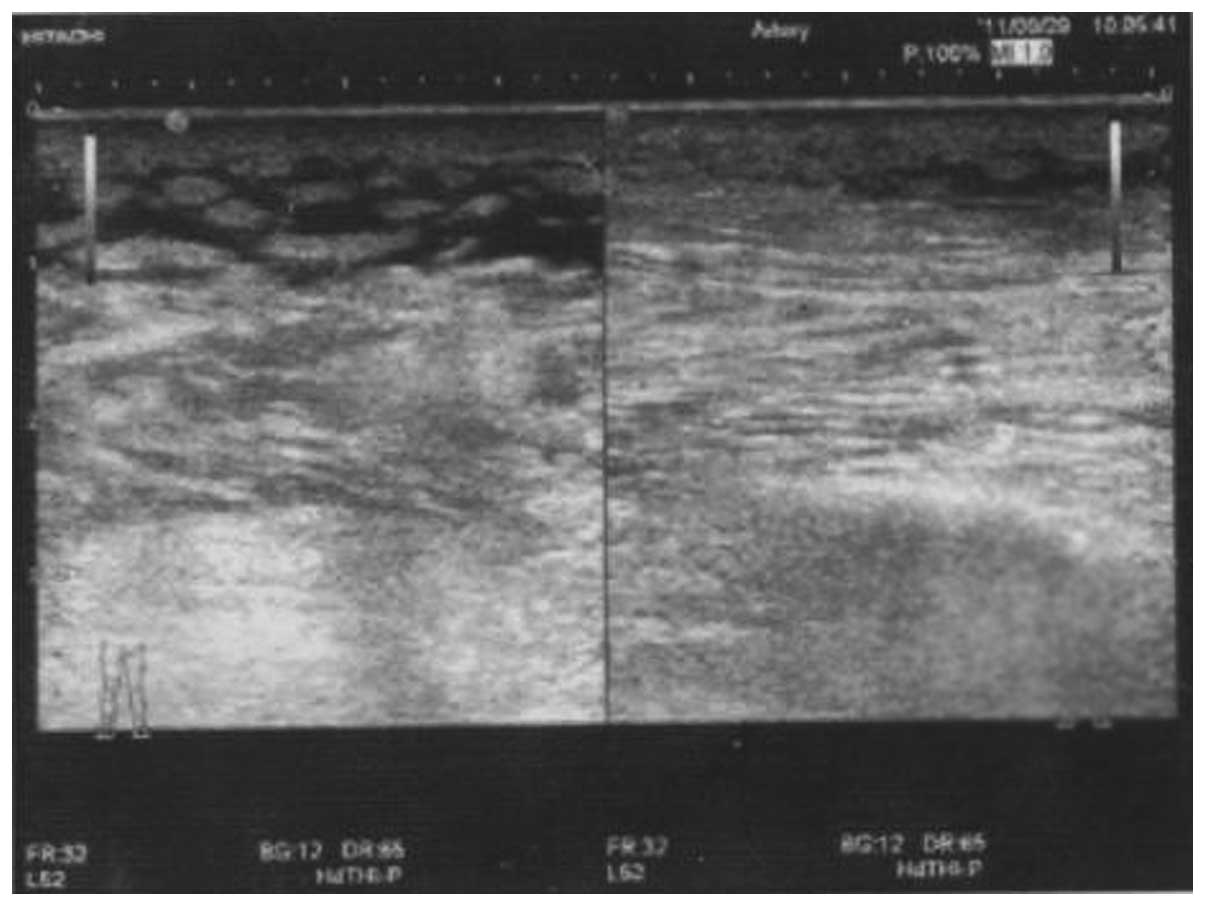
On the day of admission, at 6:00 am, the patient was febrile with a temperature of 39.4°C and presented with hypertension (70–80/40–50 mmHg). Physical examination revealed swelling and pyrexia of the left lower limb. Initial blood investigations revealed a decrease in white cell count of 1.18×10⁹/l and elevated levels of C-reactive protein (76.70 mg/l). The arterial blood gas values were as follows: pH 7.24; PaO2, 108.2 mmHg; PaCO2, 18.9 mmHg; HCO3, −19.6 mmol/l; and base excess (BE), −12.3 mmol/l. The level of creatine kinase (CK) was markedly increased (1208 U/l), while the CK-MB level was only slightly increased (26 U/l) and the level of troponin T was normal (<0.01 μg/l), suggesting the presence of rhabdomyolysis. Ultrasonography revealed subcutaneous edema of the lower limbs, which was more marked in the left limb (Fig. 1). No gas formation was observed in either leg and deep vein thrombosis was also not observed. The clinical characteristics of the patient indicated lower limb necrotizing fasciitis (stage 3) and bacterial septic shock. Early fluid resuscitation was initiated and norepinephrine was administered intravenously according to the central venous pressure and mean arterial pressure. Blood and bullous fluid samples from the affected skin were obtained, and empiric antimicrobial therapy (piperacillin sodium/tazobactam sodium and linezolid) was initiated. Due to the marked neutropenia, a complete workup for immunodeficiency was performed in association with the empirical use of human immunoglobulin and recombinant human granulocyte colony-stimulating factor (rhG-CSF).

Figure 1

Ultrasonography revealed subcutaneous edema of the lower limbs, which was more marked in the left limb. No gas formation was observed in either leg and deep vein thrombosis was also not observed.

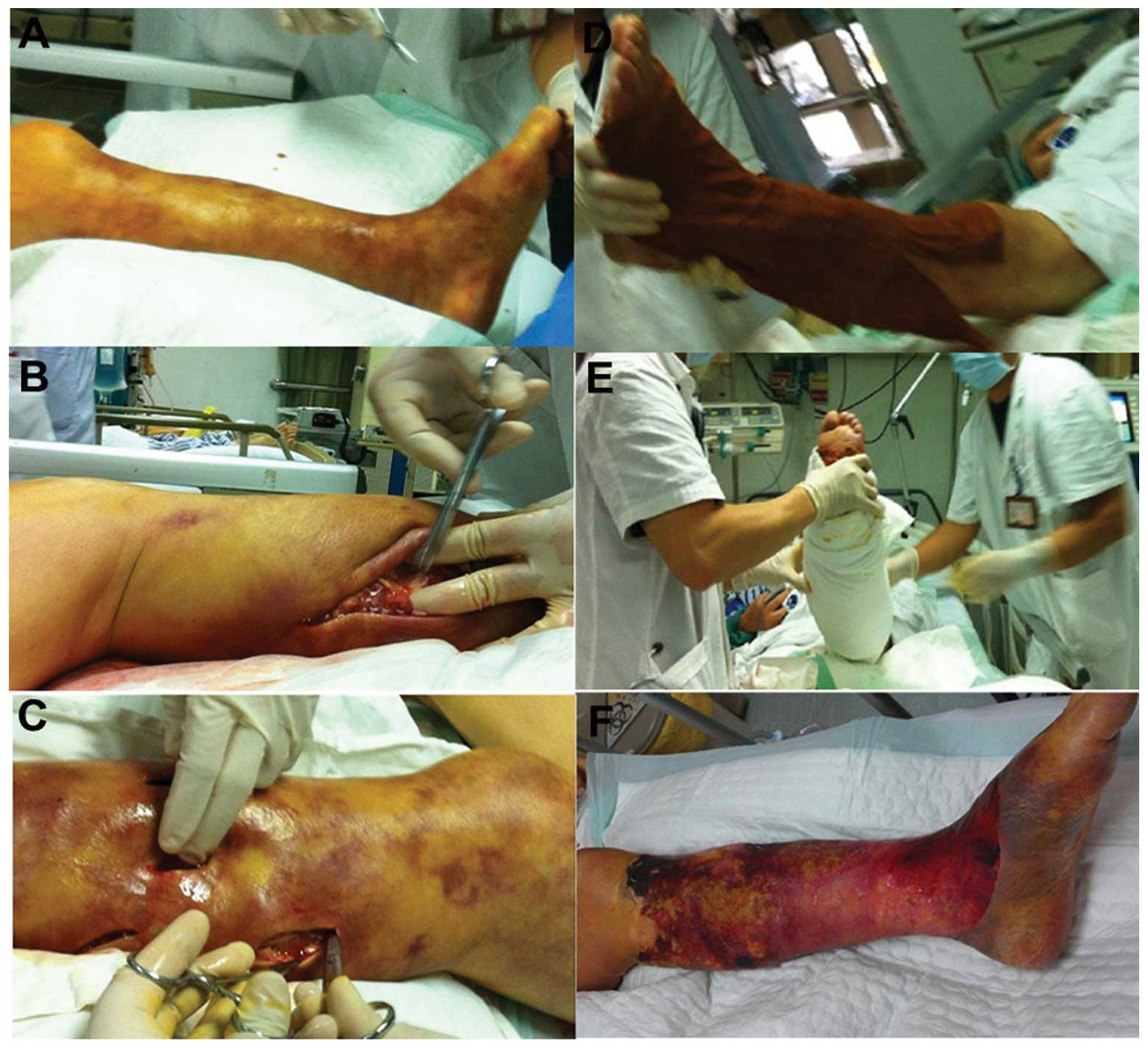
The patient was admitted to the emergency intensive care unit (EICU) at 15:00 and was administered norepinephrine intravenously. However, the patient was not able to maintain hemodynamic stability. The respiratory rate of the patient was 40–60 breaths/min and his heart rate ranged between 130 and 150 beats/min. The arterial blood gas values were as follows: pH 7.040; PaO2, 48.5 mmHg; PaCO2, 72.5 mmHg; HCO3, −19.6 mmol/l; and BE, −12.3 mmol/l. Endotracheal intubation was performed and mechanical ventilation was established. An emergency bedside echocardiology was obtained to exclude heart disease. Emergency incision and drainage was then performed on the patient. Subcutaneous vein thrombosis, subcutaneous tissue necrosis as well as muscle and full-thickness necrosis were observed during the surgery. Necrotizing fasciitis was confirmed by exploration and pathological examination, and fluid aspirate was sent for immediate culture. Continuous renal replacement therapy was then initiated. When the hemodynamics of the patient returned to normal, an additional debridement was performed. All infected and necrotic skin as well as subcutaneous tissue were radically excised up to the bleeding healthy edges (Fig. 2).

Figure 2

Emergency incision and drainage of the lower left limb of a patient with necrotizing fasciitis. (A) Left lower limb infection with Pseudomonas aeruginosa; (B) single large incision; (C) multiple small incisions; (D) wet compress with 2.5% iodophor, during the emergency incision and drainage; (E) simple bandaging post emergency incision and drainage; (F) additional debridement once the hemodynamics returned to normal.

However, despite the treatments mentioned above, the clinical condition of the patient did not improve. The platelet count of the patient continued to decline and coagulation disorders were not able to be modified. At this time, linezolid was replaced with teicoplanin. P. aeruginosa was isolated from the blood culture and bullous fluid of the affected tissue four days after admission, however, no anaerobe was isolated. Based on the susceptibility test results, treatment with teicoplanin was discontinued and piperacillin/tazobactam sodium treatment was continued as definitive therapy. Following 10 days in EICU, the patient suddenly lost consciousness. Cyanosis was observed, as well as mydriasis and the papillary light reflex was lost. The heart rate of the patient decreased to 30–40 beats/min and cardiopulmonary resuscitation was immediately initiated. However, the patient deteriorated rapidly and succumbed to multiple organ failure. Written informed consent was obtained from the patient for publication of this case report and any accompanying images.

Discussion

Necrotizing fasciitis and sepsis caused by P. aeruginosa is a rare but life-threatening disease, which occurs more frequently in patients suffering from alcoholism, diabetes or immunocompromised conditions (3). In the present case study, the patient presented with neutropenia, which was possibly secondary to the immunosuppressive medication and septic shock. In addition, the patient had diabetes mellitus, which may also lead to immune system dysfunction. Stopping the administration of immunosuppressive drugs and administering rhG-CSF in neutropenic patients may improve clinical outcomes (4). In the present case, the neutrophil count returned to normal after treatment with G-CSF for 4 days. However, no marked clinical improvement was observed, which may be due to the rapid progression of the disease complicated with septic shock and multiple organ dysfunction syndromes (MODS).

The serious complications of necrotizing fasciitis, including septic shock and MODS, require fluid resuscitation, antimicrobial therapy and early aggressive surgical debridement (3). The initial hemodynamic resuscitation of the patient was performed according to early goal-directed therapy (EGDT), which has been demonstrated to decrease mortality in patients with severe sepsis and septic shock (5,6). In addition, previous studies have demonstrated that the administration of appropriate antibiotics is one of the various early resuscitation interventions that need to be performed within 1 h of qualification of EGDT in patients with critical infections (5,6). Therefore, the patient received initial combination therapy of piperacillin/tazobactam sodium and linezolid immediately following collection of a blood sample and bullous fluid from the affected skin. When thrombocytopenia was detected, teicoplanin was administered instead of linezolid. Following completion of the antimicrobial susceptibility test, teicoplanin treatment was discontinued and piperacillin/tazobactam sodium was continued as the definitive therapy. Cefoperazone/sulbactam sodium was not selected due to the potential to cause coagulation disorders.

Continuous renal replacement therapy (CRRT) was performed when the patient reached state 2 AKI according to Acute Kidney Injury Network (AKIN) criteria. Several experimental and clinical studies have previously reported that blood purification therapies are effective in restoring immune function by clearing inflammatory mediators from the plasma, as well as improving physiological parameters, including hemodynamics and oxygenation (7). CRRT is the preferred mode of renal replacement in sepsis-induced acute kidney injury (AKI). The data from the acute tubular necrosis and renal studies indicated that vasopressor-dependent ICU patients on CRRT evolve to chronic dialysis less frequently compared with patients who receive intermittent therapies (8). Furthermore, CRRT is recommended during the acute phase of AKI, particularly in patients with severe hemodynamic instability or when extensive fluid removal may allow more effective drug therapy (8). However, it must be taken into account that numerous antibiotics are largely removed by continuous renal replacement therapies (9). In the present case study, the pharmacokinetic characteristics of piperacillin/tazobactam were not measured. However, the adequacy of piperacillin/tazobactam 4.0/0.5 every 8 h was reported in a study of nine patients on CRRT who maintained concentrations >125 μg/ml for the whole time interval (10).

Previous studies have demonstrated that prompt and radical surgical debridement is an effective treatment for necrotizing fasciitis. Delaying surgery by 24 h increased the mortality rate associated with necrotizing soft tissue infections from 35 to 53%, with 100% mortality if surgery is not performed within three days (11). The ultimate outcome of the patient also depends on the completeness of surgical debridement (12); the excision margin should be healthy bleeding tissue with a normal appearance (11,12). However, our previous study demonstrated that, compared with radical surgical debridement, incision and drainage was also effective and safe, particularly in patients with septic shock complicated with MODS and severe coagulation disorders (13). Additionally, this type of surgical approach is simple, quick and results in little blood loss (13). Therefore, in the present case study, incisions and drainage of the involved extremities were performed. Selective debridement was then performed once the hemodynamics of the patient had stabilized. However, the patient succumbed to sepsis-induced MODS.

In conclusion, in the present study, a case of community-acquired P. aeruginosa necrotizing fasciitis complicated with septic shock and MODS was reported. Due to the rapid progression and high mortality rate of the disease, early surgery, as well as novel therapeutic approaches for septic shock, are required to improve the outcome of patients.

Acknowledgements

This study was supported, in part, by a grant from the key construction academic subject (medical innovation) of Zhejiang Province (11-CX26).

References

1 

Sarani B, Strong M, Pascual J and Schwab CW: Necrotizing fasciitis: current concepts and review of the literature. J Am Coll Surg. 208:279–288. 2009. View Article : Google Scholar : PubMed/NCBI

2 

Akamine M, Miyagi K, Uchihara T, et al: Necrotizing fasciitis caused by Pseudomonas aeruginosa. Intern Med. 47:553–556. 2008. View Article : Google Scholar

3 

Anaya DA and Dellinger EP: Necrotizing soft-tissue infection: diagnosis and management. Clin Infect Dis. 44:705–710. 2007. View Article : Google Scholar : PubMed/NCBI

4 

Crawford J, Ozer H, Stoller R, et al: Reduction by granulocyte-colony stimulating factor of fever and neutropenia induced by chemotherapy in patients with small-cell lung cancer. N Engl J Med. 325:164–170. 1991. View Article : Google Scholar : PubMed/NCBI

5 

Dellinger RP, Levy MM, Rhodes A, et al: Surviving Sepsis Campaign Guidelines Committee including the Pediatric Subgroup: Surviving sepsis campaign: international guidelines for management of severe sepsis and septic shock: 2012. Crit Care Med. 41:580–637. 2013.

6 

Gaieski DF, Mikkelsen ME, Band RA, et al: Impact of time to antibiotics on survival in patients with severe sepsis or septic shock in whom early goal-directed therapy was initiated in the emergency department. Crit Care Med. 38:1045–1053. 2010. View Article : Google Scholar

7 

Rimmelé T and Kellum JA: Clinical review: blood purification for sepsis. Crit Care. 15:2052011.PubMed/NCBI

8 

Honore PM, Jacobs R, Joannes-Boyau O, et al: Septic AKI in ICU patients. diagnosis, pathophysiology, and treatment type, dosing, and timing: a comprehensive review of recent and future developments. Ann Intensive Care. 1:322011. View Article : Google Scholar : PubMed/NCBI

9 

Roberts DM, Roberts JA, Roberts MS, et al: Variability of antibiotic concentrations in critically ill patients receiving continuous renal replacement therapy: a multicentre pharmacokinetic study. Crit Care Med. 40:1523–1528. 2012. View Article : Google Scholar

10 

Mueller SC, Majcher-Peszynska J, Hickstein H, et al: Pharmacokinetics of piperacillin-tazobactam in anuric intensive care patients during continuous venovenous hemodialysis. Antimicrob Agents Chemother. 46:1557–1560. 2002. View Article : Google Scholar : PubMed/NCBI

11 

Kobayashi L, Konstantinidis A, Shackelford S, et al: Necrotizing soft tissue infections: delayed surgical treatment is associated with increased number of surgical debridements and morbidity. J Trauma. 71:1400–1405. 2011. View Article : Google Scholar : PubMed/NCBI

12 

Phan HH and Cocanour CS: Necrotizing soft tissue infections in the intensive care unit. Crit Care Med. 38:S460–S468. 2010. View Article : Google Scholar : PubMed/NCBI

13 

Hong GL, Lu CJ, Lu ZQ, et al: Surgical treatment of 19 cases with vibrio necrotising fasciitis. Burns. 38:290–295. 2012. View Article : Google Scholar : PubMed/NCBI

Related Articles

  • Abstract
  • View
  • Download
  • Twitter
Copy and paste a formatted citation
Spandidos Publications style
Zhao GJ, Hong GL, Liu JQ, Lu Y and Lu ZQ: Septic shock due to community‑acquired Pseudomonas aeruginosa necrotizing fasciitis: A case report and literature review. Exp Ther Med 7: 1545-1548, 2014.
APA
Zhao, G., Hong, G., Liu, J., Lu, Y., & Lu, Z. (2014). Septic shock due to community‑acquired Pseudomonas aeruginosa necrotizing fasciitis: A case report and literature review. Experimental and Therapeutic Medicine, 7, 1545-1548. https://doi.org/10.3892/etm.2014.1628
MLA
Zhao, G., Hong, G., Liu, J., Lu, Y., Lu, Z."Septic shock due to community‑acquired Pseudomonas aeruginosa necrotizing fasciitis: A case report and literature review". Experimental and Therapeutic Medicine 7.6 (2014): 1545-1548.
Chicago
Zhao, G., Hong, G., Liu, J., Lu, Y., Lu, Z."Septic shock due to community‑acquired Pseudomonas aeruginosa necrotizing fasciitis: A case report and literature review". Experimental and Therapeutic Medicine 7, no. 6 (2014): 1545-1548. https://doi.org/10.3892/etm.2014.1628
Copy and paste a formatted citation
x
Spandidos Publications style
Zhao GJ, Hong GL, Liu JQ, Lu Y and Lu ZQ: Septic shock due to community‑acquired Pseudomonas aeruginosa necrotizing fasciitis: A case report and literature review. Exp Ther Med 7: 1545-1548, 2014.
APA
Zhao, G., Hong, G., Liu, J., Lu, Y., & Lu, Z. (2014). Septic shock due to community‑acquired Pseudomonas aeruginosa necrotizing fasciitis: A case report and literature review. Experimental and Therapeutic Medicine, 7, 1545-1548. https://doi.org/10.3892/etm.2014.1628
MLA
Zhao, G., Hong, G., Liu, J., Lu, Y., Lu, Z."Septic shock due to community‑acquired Pseudomonas aeruginosa necrotizing fasciitis: A case report and literature review". Experimental and Therapeutic Medicine 7.6 (2014): 1545-1548.
Chicago
Zhao, G., Hong, G., Liu, J., Lu, Y., Lu, Z."Septic shock due to community‑acquired Pseudomonas aeruginosa necrotizing fasciitis: A case report and literature review". Experimental and Therapeutic Medicine 7, no. 6 (2014): 1545-1548. https://doi.org/10.3892/etm.2014.1628
Follow us
  • Twitter
  • LinkedIn
  • Facebook
About
  • Spandidos Publications
  • Careers
  • Cookie Policy
  • Privacy Policy
How can we help?
  • Help
  • Live Chat
  • Contact
  • Email to our Support Team