Spandidos Publications Logo
  • About
    • About Spandidos
    • Aims and Scopes
    • Abstracting and Indexing
    • Editorial Policies
    • Reprints and Permissions
    • Job Opportunities
    • Terms and Conditions
    • Contact
  • Journals
    • All Journals
    • Oncology Letters
      • Oncology Letters
      • Information for Authors
      • Editorial Policies
      • Editorial Board
      • Aims and Scope
      • Abstracting and Indexing
      • Bibliographic Information
      • Archive
    • International Journal of Oncology
      • International Journal of Oncology
      • Information for Authors
      • Editorial Policies
      • Editorial Board
      • Aims and Scope
      • Abstracting and Indexing
      • Bibliographic Information
      • Archive
    • Molecular and Clinical Oncology
      • Molecular and Clinical Oncology
      • Information for Authors
      • Editorial Policies
      • Editorial Board
      • Aims and Scope
      • Abstracting and Indexing
      • Bibliographic Information
      • Archive
    • Experimental and Therapeutic Medicine
      • Experimental and Therapeutic Medicine
      • Information for Authors
      • Editorial Policies
      • Editorial Board
      • Aims and Scope
      • Abstracting and Indexing
      • Bibliographic Information
      • Archive
    • International Journal of Molecular Medicine
      • International Journal of Molecular Medicine
      • Information for Authors
      • Editorial Policies
      • Editorial Board
      • Aims and Scope
      • Abstracting and Indexing
      • Bibliographic Information
      • Archive
    • Biomedical Reports
      • Biomedical Reports
      • Information for Authors
      • Editorial Policies
      • Editorial Board
      • Aims and Scope
      • Abstracting and Indexing
      • Bibliographic Information
      • Archive
    • Oncology Reports
      • Oncology Reports
      • Information for Authors
      • Editorial Policies
      • Editorial Board
      • Aims and Scope
      • Abstracting and Indexing
      • Bibliographic Information
      • Archive
    • Molecular Medicine Reports
      • Molecular Medicine Reports
      • Information for Authors
      • Editorial Policies
      • Editorial Board
      • Aims and Scope
      • Abstracting and Indexing
      • Bibliographic Information
      • Archive
    • World Academy of Sciences Journal
      • World Academy of Sciences Journal
      • Information for Authors
      • Editorial Policies
      • Editorial Board
      • Aims and Scope
      • Abstracting and Indexing
      • Bibliographic Information
      • Archive
    • International Journal of Functional Nutrition
      • International Journal of Functional Nutrition
      • Information for Authors
      • Editorial Policies
      • Editorial Board
      • Aims and Scope
      • Abstracting and Indexing
      • Bibliographic Information
      • Archive
    • International Journal of Epigenetics
      • International Journal of Epigenetics
      • Information for Authors
      • Editorial Policies
      • Editorial Board
      • Aims and Scope
      • Abstracting and Indexing
      • Bibliographic Information
      • Archive
    • Medicine International
      • Medicine International
      • Information for Authors
      • Editorial Policies
      • Editorial Board
      • Aims and Scope
      • Abstracting and Indexing
      • Bibliographic Information
      • Archive
  • Articles
  • Information
    • Information for Authors
    • Information for Reviewers
    • Information for Librarians
    • Information for Advertisers
    • Conferences
  • Language Editing
Spandidos Publications Logo
  • About
    • About Spandidos
    • Aims and Scopes
    • Abstracting and Indexing
    • Editorial Policies
    • Reprints and Permissions
    • Job Opportunities
    • Terms and Conditions
    • Contact
  • Journals
    • All Journals
    • Biomedical Reports
      • Information for Authors
      • Editorial Policies
      • Editorial Board
      • Aims and Scope
      • Abstracting and Indexing
      • Bibliographic Information
      • Archive
    • Experimental and Therapeutic Medicine
      • Information for Authors
      • Editorial Policies
      • Editorial Board
      • Aims and Scope
      • Abstracting and Indexing
      • Bibliographic Information
      • Archive
    • International Journal of Epigenetics
      • Information for Authors
      • Editorial Policies
      • Editorial Board
      • Aims and Scope
      • Abstracting and Indexing
      • Bibliographic Information
      • Archive
    • International Journal of Functional Nutrition
      • Information for Authors
      • Editorial Policies
      • Editorial Board
      • Aims and Scope
      • Abstracting and Indexing
      • Bibliographic Information
      • Archive
    • International Journal of Molecular Medicine
      • Information for Authors
      • Editorial Policies
      • Editorial Board
      • Aims and Scope
      • Abstracting and Indexing
      • Bibliographic Information
      • Archive
    • International Journal of Oncology
      • Information for Authors
      • Editorial Policies
      • Editorial Board
      • Aims and Scope
      • Abstracting and Indexing
      • Bibliographic Information
      • Archive
    • Medicine International
      • Information for Authors
      • Editorial Policies
      • Editorial Board
      • Aims and Scope
      • Abstracting and Indexing
      • Bibliographic Information
      • Archive
    • Molecular and Clinical Oncology
      • Information for Authors
      • Editorial Policies
      • Editorial Board
      • Aims and Scope
      • Abstracting and Indexing
      • Bibliographic Information
      • Archive
    • Molecular Medicine Reports
      • Information for Authors
      • Editorial Policies
      • Editorial Board
      • Aims and Scope
      • Abstracting and Indexing
      • Bibliographic Information
      • Archive
    • Oncology Letters
      • Information for Authors
      • Editorial Policies
      • Editorial Board
      • Aims and Scope
      • Abstracting and Indexing
      • Bibliographic Information
      • Archive
    • Oncology Reports
      • Information for Authors
      • Editorial Policies
      • Editorial Board
      • Aims and Scope
      • Abstracting and Indexing
      • Bibliographic Information
      • Archive
    • World Academy of Sciences Journal
      • Information for Authors
      • Editorial Policies
      • Editorial Board
      • Aims and Scope
      • Abstracting and Indexing
      • Bibliographic Information
      • Archive
  • Articles
  • Information
    • For Authors
    • For Reviewers
    • For Librarians
    • For Advertisers
    • Conferences
  • Language Editing
Login Register Submit
  • This site uses cookies
  • You can change your cookie settings at any time by following the instructions in our Cookie Policy. To find out more, you may read our Privacy Policy.

    I agree
Search articles by DOI, keyword, author or affiliation
Search
Advanced Search
presentation
Experimental and Therapeutic Medicine
Join Editorial Board Propose a Special Issue
Print ISSN: 1792-0981 Online ISSN: 1792-1015
Journal Cover
November-2014 Volume 8 Issue 5

Full Size Image

Sign up for eToc alerts
Recommend to Library

Journals

International Journal of Molecular Medicine

International Journal of Molecular Medicine

International Journal of Molecular Medicine is an international journal devoted to molecular mechanisms of human disease.

International Journal of Oncology

International Journal of Oncology

International Journal of Oncology is an international journal devoted to oncology research and cancer treatment.

Molecular Medicine Reports

Molecular Medicine Reports

Covers molecular medicine topics such as pharmacology, pathology, genetics, neuroscience, infectious diseases, molecular cardiology, and molecular surgery.

Oncology Reports

Oncology Reports

Oncology Reports is an international journal devoted to fundamental and applied research in Oncology.

Experimental and Therapeutic Medicine

Experimental and Therapeutic Medicine

Experimental and Therapeutic Medicine is an international journal devoted to laboratory and clinical medicine.

Oncology Letters

Oncology Letters

Oncology Letters is an international journal devoted to Experimental and Clinical Oncology.

Biomedical Reports

Biomedical Reports

Explores a wide range of biological and medical fields, including pharmacology, genetics, microbiology, neuroscience, and molecular cardiology.

Molecular and Clinical Oncology

Molecular and Clinical Oncology

International journal addressing all aspects of oncology research, from tumorigenesis and oncogenes to chemotherapy and metastasis.

World Academy of Sciences Journal

World Academy of Sciences Journal

Multidisciplinary open-access journal spanning biochemistry, genetics, neuroscience, environmental health, and synthetic biology.

International Journal of Functional Nutrition

International Journal of Functional Nutrition

Open-access journal combining biochemistry, pharmacology, immunology, and genetics to advance health through functional nutrition.

International Journal of Epigenetics

International Journal of Epigenetics

Publishes open-access research on using epigenetics to advance understanding and treatment of human disease.

Medicine International

Medicine International

An International Open Access Journal Devoted to General Medicine.

Journal Cover
November-2014 Volume 8 Issue 5

Full Size Image

Sign up for eToc alerts
Recommend to Library

  • Article
  • Citations
    • Cite This Article
    • Download Citation
    • Create Citation Alert
    • Remove Citation Alert
    • Cited By
  • Similar Articles
    • Related Articles (in Spandidos Publications)
    • Similar Articles (Google Scholar)
    • Similar Articles (PubMed)
  • Download PDF
  • Download XML
  • View XML
Case Report

Pure sensory Guillain‑Barré syndrome: A case report and review of the literature

  • Authors:
    • Jingjing Yang
    • Mingming Huan
    • Huajun Jiang
    • Chunli Song
    • Lin Zhong
    • Zhanhua Liang
  • View Affiliations / Copyright

    Affiliations: Department of Neurology, First Affiliated Hospital of Dalian Medical University, Dalian, Liaoning 116011, P.R. China, Department of Orthopedics, First Affiliated Hospital of Dalian Medical University, Dalian, Liaoning 116011, P.R. China, Department of Pathology, First Affiliated Hospital of Dalian Medical University, Dalian, Liaoning 116011, P.R. China
  • Pages: 1397-1401
    |
    Published online on: September 11, 2014
       https://doi.org/10.3892/etm.2014.1955
  • Expand metrics +
Metrics: Total Views: 0 (Spandidos Publications: | PMC Statistics: )
Metrics: Total PDF Downloads: 0 (Spandidos Publications: | PMC Statistics: )
Cited By (CrossRef): 0 citations Loading Articles...

This article is mentioned in:


Abstract

Sensory Guillain‑Barré syndrome (GBS) is an acute demyelinating neuropathy that presents clinically with involvement of the sensory peripheral nerve only. To date, <10 cases of pure sensory GBS have been reported; thus, the clinical and pathological features of sensory variant GBS are yet to be well characterized. The current study reports the case of a 43‑year‑old female that presented with acute, symmetric and monophasic sensory neuropathy, without motor weakness. Patient history, clinical examination, routine nerve conduction studies and sural nerve biopsy were reviewed. All the observations were consistent with a diagnosis of pure sensory GBS. In particular, the pathological features of the sural nerve biopsy revealed that the form of regenerated nerve fibers have complete structure of myelinated nerve fascicles, and these myelinated nerve fibers are thicker than other parts of the biopsy. The patient received small‑dose (20 mg/day) prednisone initially, but without any benefit. Satisfactory improvements were observed with one course of intravenous immunoglobulin.

Introduction

Sensory Guillain-Barré syndrome (GBS) is an acute demyelinating neuropathy that presents clinically with involvement of the sensory peripheral nerve only. However, the existence of a purely sensory form of GBS remains subject to controversy, since these cases always demonstrate a degree of motor weakness or abnormalities in motor nerve conduction studies (NCSs) and are difficult to distinguish from acute sensory neuronopathy (1). To date, only a few cases of pure sensory GBS have been reported (2–4), with the majority of cases being anecdotal and few studies describing a peripheral nerve pathology. Thus, the clinical and pathological features of sensory variant GBS have not been well characterized, and reduced awareness of these features has resulted in delays in the diagnosis and treatment.

The current study reports the case of a 43-year-old female who presented with symptoms consistent with a diagnosis of pure sensory GBS. The patient exhibited satisfactory improvements following one course of intravenous immunoglobulin. Diagnosing sensory GBS is important since immunotherapy may positively influence the prognosis, in contrast to the slow but steady progression associated with idiopathic sensory neuropathy or paraneoplastic sensory neuronopathy. Therefore, understanding the pathological and clinical features may aid in the diagnosis of complicated clinical cases and prevent unnecessary procedures.

Case report

A 43-year-old female developed numbness of the distal lower limbs that extended to all the limbs over four days, and was admitted to the First Affiliated Hospital of Dalian Medical University (Dalian, China) on April 26, 2011. The patient experienced nonspecific flu-like symptoms and suffered from a mild sore throat during the two weeks prior to admission. After a few days, the patient developed numbness on the soles of both feet, which progressed over two days to the knees; thus, the patient had difficulty with walking due to poor balance. Subsequently, the patient had a markedly unsteady gait and tingling sensations in the distal lower limbs, which increased in intensity and extended more widely. Clumsiness in the upper limbs and pseudoathetosis was observed occasionally. The time when the symptoms of the disease of the patient had reached their peak was achieved within three weeks.

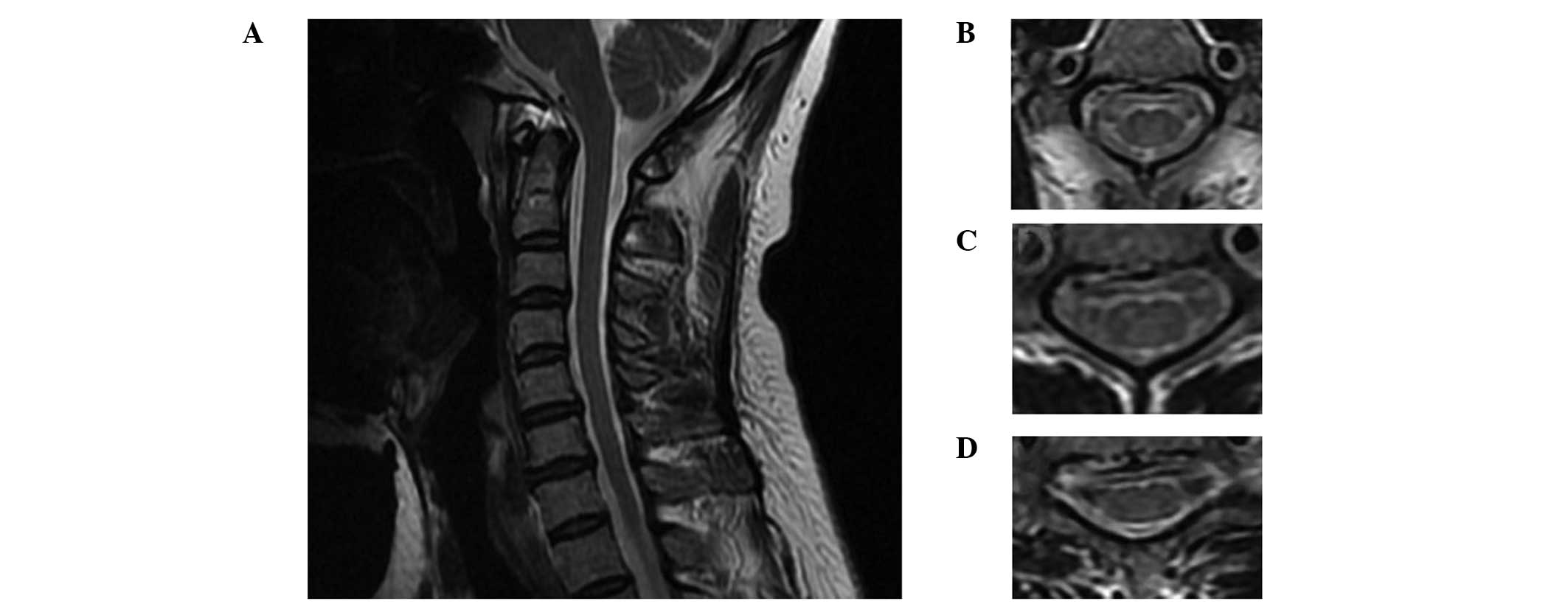
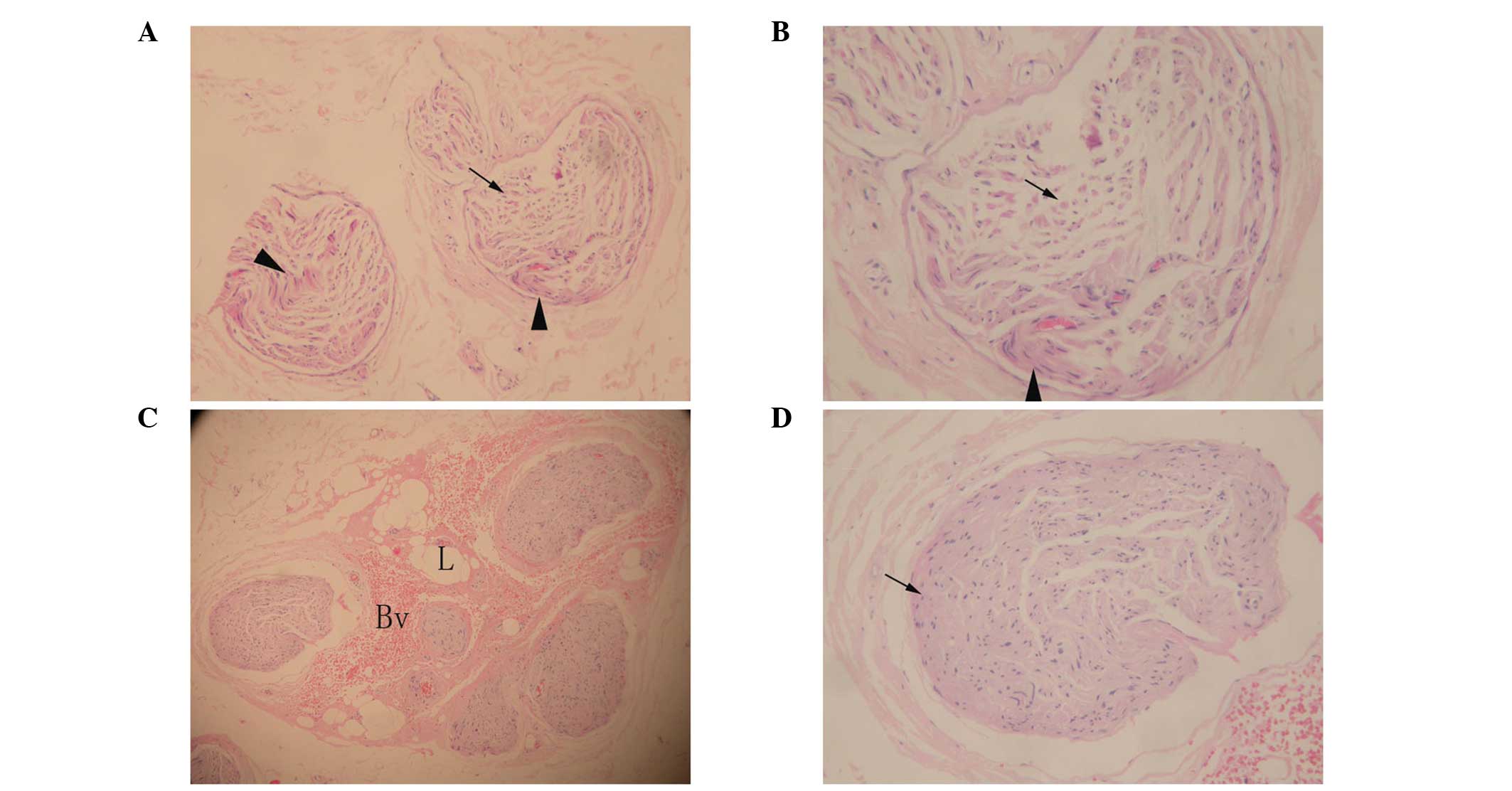
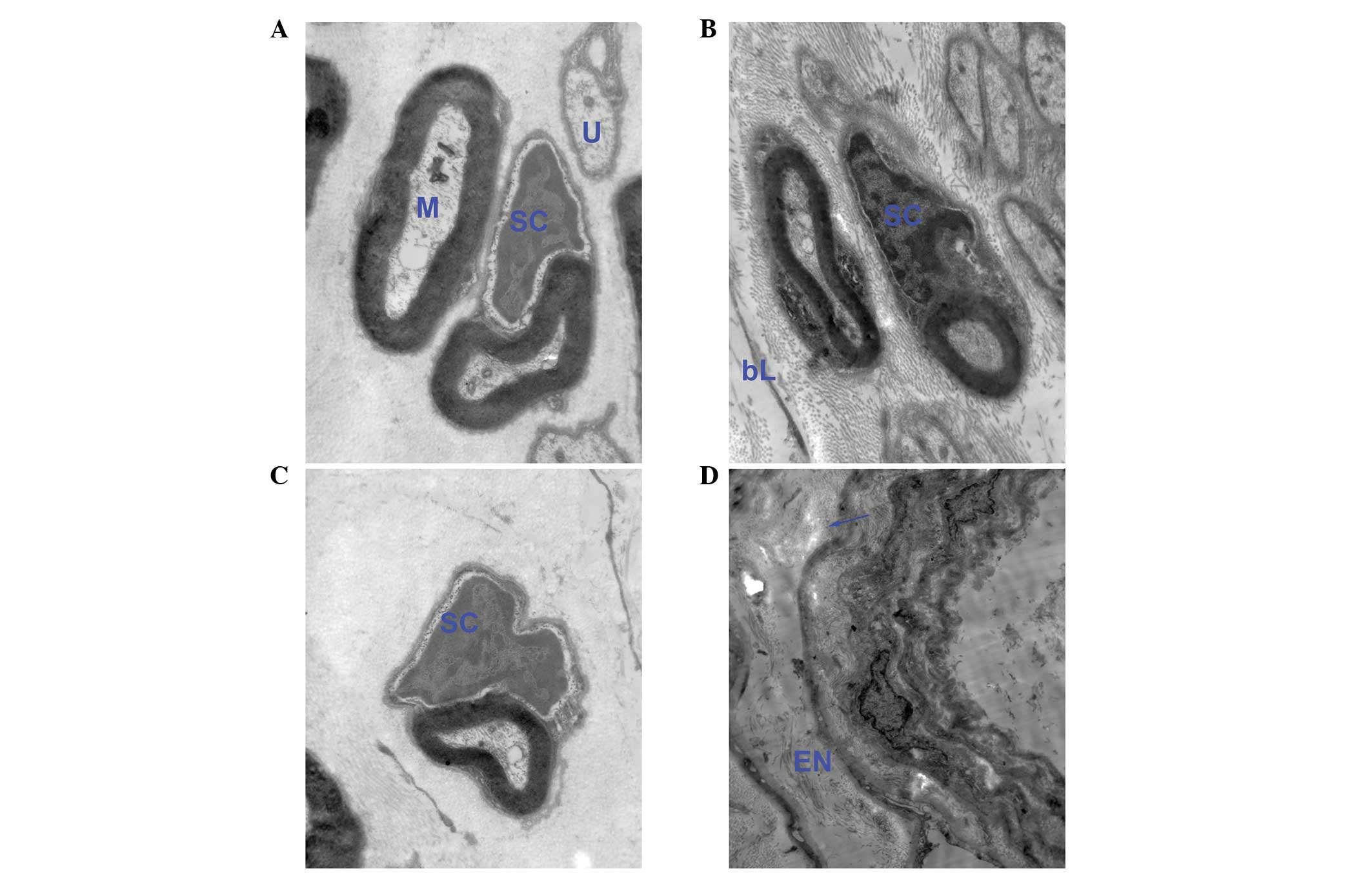
Routine laboratory tests were conducted on the second day following admission. Cerebrospinal fluid (CSF) routing revealed 1,194 mg/l of protein and a cell count of 2×10⁶/l, while other issues were normal. Routine NCSs revealed absent sensory potentials, while the motor NCS was normal (Fig. 1). Sagittal T2-weighted magnetic resonance imaging (MRI) scans (Fig. 2) of the cervical spine revealed a normal appearance of the posterior column, despite a number of disc osteophyte complexes with mild central canal stenosis at the cervical level. Pathological observations of the sural nerve biopsy were conducted. Light microscopy (Fig. 3) showed moderate subperineurial edema, mild loss of myelinated fibers and a few thinly myelinated fibers without inflammatory changes. In particular, the form of regenerated nerve fibers have complete structure of myelinated nerve fascicles, and these myelinated nerve fibers are thicker than other parts of the biopsy. Electron microscopy (Fig. 4) revealed normal myelinated and unmyelinated axons, however, the Schwann cell nucleui were broken down and the cytoplasm of the Schwann cells were pale watery moderately.
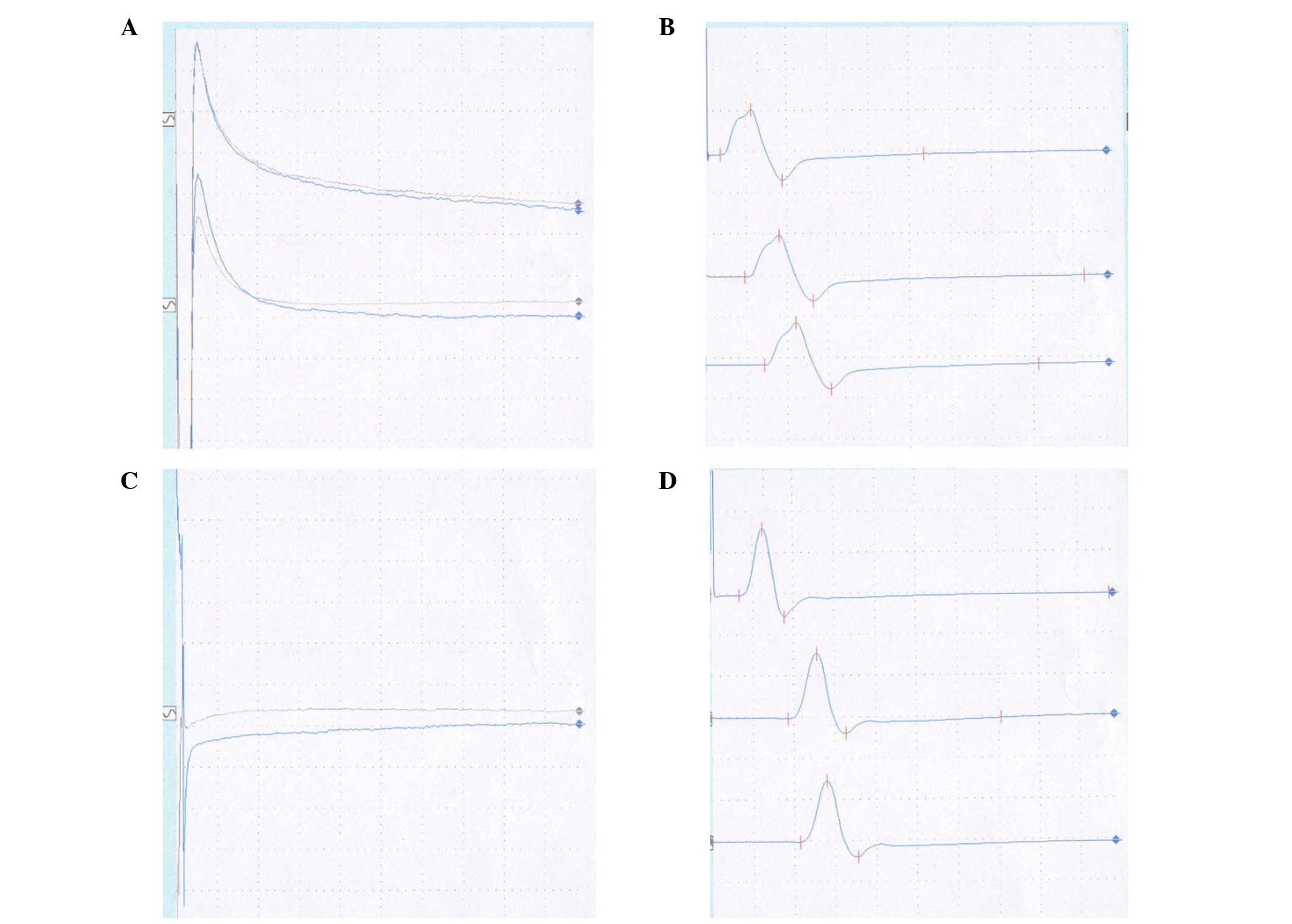
Figure 1

Results from the NCSs showing (A) sensory, left ulnar, absent sensory potentials, (B) motor, left ulnar, normal motor potentials, (C) sensory, right sural, absent sensory potentials and (D) motor, right peroneal, normal motor potentials. NCSs, nerve conduction studies.

Figure 2

MRI scans of the spinal cord. (A) Sagittal T2-weighted MRI scan showing the normal appearance of the posterior column, despite a number of disc osteophyte complexes with mild central canal stenosis. Axial T2-weighted MRI scans at the (B) C2, (C) C4 and (D) C6 levels. MRI, magnetic resonance imaging.

Figure 3

Hematoxylin and eosin stained images of the sural nerve. (A and B) Mild loss of myelinated fibers and a few thinly myelinated fibers (arrow) were observed, as well as regenerated nerve fibers (arrow head). (C and D) Normal controls (arrow head). A and C magnification, ×200; B and D magnification, ×400.

Figure 4

Electron microscopy of the sural nerve (magnification, ×5,000). (A–C) Transverse sections showing normal myelinated (M) and unmyelinated (U) axons, with Schwann cell (SC) nucleus breakdown. (D) Axon clusters surrounded by more than one endoneurial (EN) lamina (arrow).

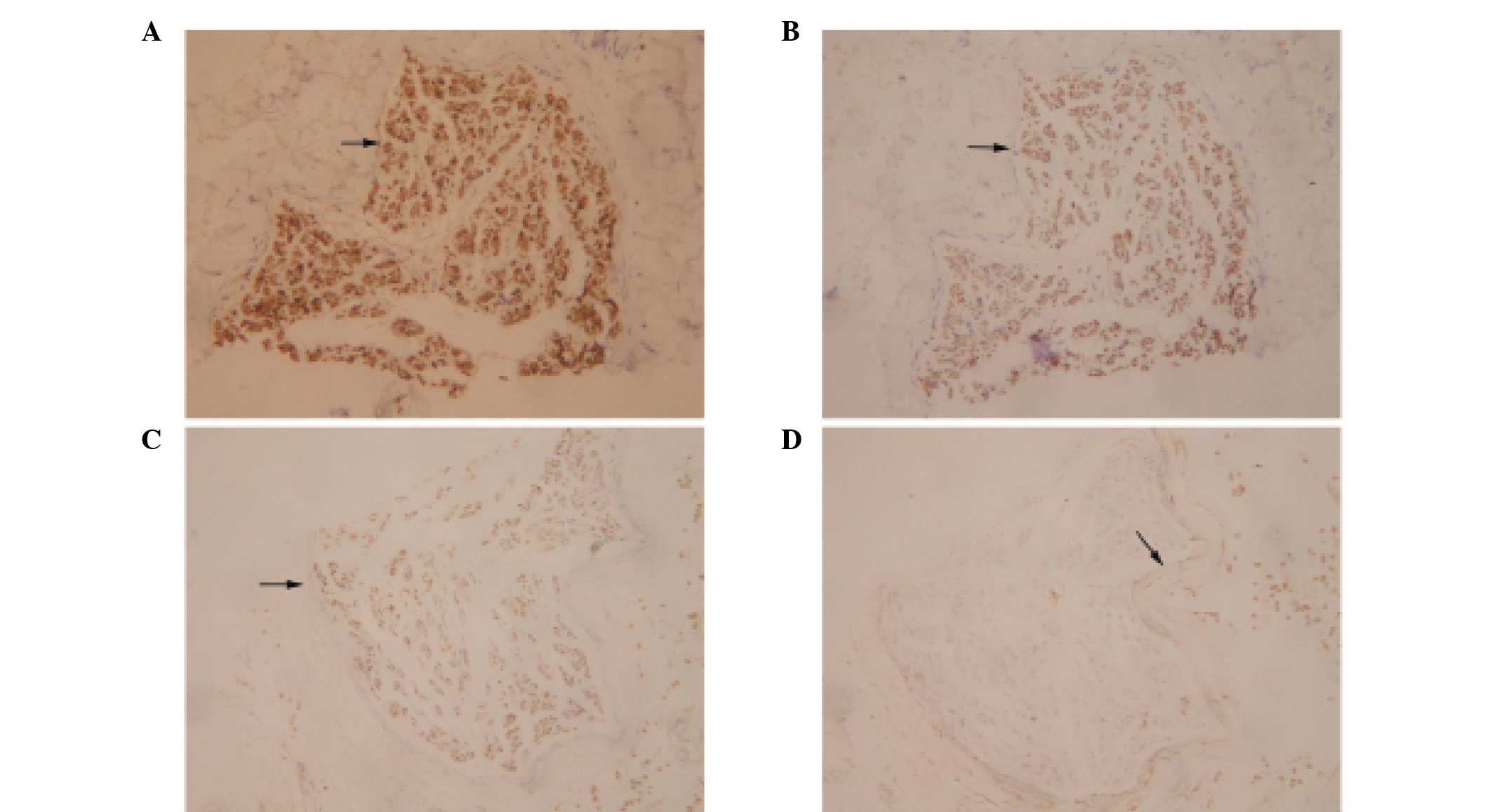
Immunohistochemical analysis (Fig. 5) demonstrated that the majority of the cells within the nerve fascicles were strongly positive for S-100, moderately positive for neuron-specific enolase (NSE) and mildly positive for neurofilament (NF), while the perineurium was mildly positive for epithelial membrane antigen (EMA). No anatomical abnormalities were observed and the density of the fibers moderately decreased.

Figure 5

Immunohistochemical analyses of the sural nerve revealed (A) S-100 strongly positive immunoreactivity (arrow), (B) NSE moderately positive immunoreactivity (arrow; abundant in the cell bodies), (C) NF mildly positive immunoreactivity (arrow) and (D) EMA mildly positive immunoreactivity. NSE, neuron-specific enolase; NF, neurofilament; EMA, epithelial membrane antigen.

Following intravenous immunoglobulin refusion treatment, the patient was administered one course of small-dose (20 mg/day) prednisone, but without any benefit. Next, the patient received a five-day course of intravenous immunoglobulin (400 mg/kg/day). The clinical symptoms, including numbness and ataxia, began to improve two weeks after admission. Follow-up examinations for 30 months revealed only generalized areflexia without ataxia.

Discussion

Wartenberg (3) discussed the concept of a sensory equivalent to the ascending paralysis of GBS in 1958, while the study by Asbury (5) provided diagnostic criteria for a sensory loss and areflexia variant in 1981. However, whether their clinical and electrodiagnostic features are pathognomonic of acute sensory neuronopathy or sensory GBS remains controversial. To date, reported clinical cases meeting these criteria have been scarce, for which there are two main reasons. Firstly, these cases always demonstrate a degree of motor weakness or abnormalities in motor NCSs, which suggests that the cases are predominantly sensory GBS, rather than purely sensory GBS. Secondly, acute sensory neuropathy represents two clinical syndromes: Acute sensory neuronopathy involving the dorsal root ganglia and sensory GBS, an acute demyelinating neuropathy that presents clinically with involvement of the sensory peripheral nerve only. The total protein in the CSF is not useful for distinguishing sensory GBS from sensory neuronopathy since the protein level may be elevated in the two disorders.

Demonstrating electrophysiological evidence of sensory demyelination in GBS may be difficult, with the exception of usual presentation, where there is evidence of demyelination on motor NCSs (4). Sensory neuronopathy can be differentiated by the absent sensory nerve action potentials in the presence of normal motor conduction (6). In the present case, the regenerated nerve fibers were observed via light microscopy of the sural nerve specimen and the sagittal T2-weighted MRI scan of the cervical spine, which demonstrated a normal appearance of the posterior column.

Furthermore, immunohistochemical analysis of the sural nerve specimen may be useful in distinguishing sensory GBS from sensory neuronopathy (7). NF, NSE and S-100b proteins are nervous system-specific proteins (8), and EMA is a perineurial-specific protein. An increase in NF and NSE levels reflect axonal damages in radices, while that of S-100b indicates Schwann cell damage associated with demyelination. A number of studies have indicated that the majority of patients with normal NSE and S-100b levels demonstrate a good recovery, while markedly high levels of NSE are associated with long-term recovery and residual disability (9,10,11,12,13). An additional study demonstrated that high NF levels in the CSF, indicating proximal axonal damage, at disease onset are a robust predictor of poor motor recovery (14).

In the present study, immunohistochemical analysis revealed that the majority of cells within the nerve fascicles were strongly positive for S-100, moderately positive for NSE and mildly positive for NF, while the perineurium was mildly positive for EMA. Moderate positivity for NSE and mild positivity for NF indicated that the axonal damages were not in radices, while the strong positivity for S-100 indicated Schwann cell damage associated with demyelination. In addition, electron microscopy revealed normal myelinated and unmyelinated axons with Schwann cell nucleus breakdown, which confirmed the outcome of the immunohistochemical analyses. Furthermore, the perineurial cell proliferated and retained its EMA immunoreactivity within the dermal nerve sheath myxomas, Morton’s metatarsalgia and traumatic neuromas. It should be possible to immunohistochemically ‘dissect’ the structure of the peripheral nerve and its lesions by EMA and S-100, since EMA is used to indicate perineurial cells and S-100 to identify Schwann cells (15). In the present study, the perineurium revealed strong S-100 protein expression but mild EMA immunoreactivity, which may reflect normal perineurial structures or a mild lesion.

In conclusion, the aforementioned observations indicated that the present case was most likely pure sensory GBS, not sensory neuronopathy; thus, had a good prognosis. However, mild numbness and generalized areflexia symptoms remained with the patient. This is characteristic of GBS, which residual sensory deficit is present in a considerable number of patients and frequently has a disruptive effect, even several years following the onset of GBS (16).

Acknowledgements

The authors are grateful to all the individuals participating in the present study. The study would not have been possible without the cooperation of the patient and her families. The authors would like to thank all the doctors from the Departments of Neurology of the First Affiliated Hospital of Dalian Medical University (Dalian, Liaoning, China) for the help and suggestions provided in the diagnosis and treatment of the patient.

References

1 

Lee SS and Lee SH: Does sensory Guillain-Barré syndrome exist without any abnormalities in motor nerve conduction? Neurology. 66:947–948. 2006.

2 

Miralles F, Montero J, Reñe R and Martinez Matos JA: Pure sensory Guillain-Barré syndrome. J Neurol Neurosurg Psychiatry. 55:411–412. 1992.

3 

Wartenberg R: Sensory polyneuritis. Neuritis, Sensory Neuritis, Neuralgia. Oxford University Press; New York, NY: pp. 160–162. 1958

4 

Oh SJ, LaGanke C and Claussen GC: Sensory Guillain-Barré syndrome. Neurology. 56:82–86. 2001.

5 

Asbury AK: Diagnostic considerations in Guillain-Barré syndrome. Ann Neurol. (9 Suppl): 1–5. 1981.

6 

Kuntzer T, Antoine JC and Steck AJ: Clinical features and pathophysiological basis of sensory neuronopathies (ganglionopathies). Muscle Nerve. 30:255–268. 2004. View Article : Google Scholar : PubMed/NCBI

7 

Maxwell GD, Whitehead MC, Connolly SM and Marangos PJ: Development of neuron-specific enolase immunoreactivity in avian nervous tissue in vivo and in vitro. Brain Res. 255:401–418. 1982. View Article : Google Scholar : PubMed/NCBI

8 

Stefansson K, Wollmann RL and Moore BW: Distribution of S-100 protein outside the central nervous system. Brain Res. 234:309–317. 1982. View Article : Google Scholar : PubMed/NCBI

9 

Mokuno K, Kiyosawa K, Sugimura K, Yasuda T, Riku S, Murayama T, Yanagi T, Takahashi A and Kato K: Prognostic value of cerebrospinal fluid neuron-specific enolase and S-100b protein in Guillain-Barré syndrome. Acta Neural Scand. 89:27–30. 1994.PubMed/NCBI

10 

Parry GJ and Sumner AJ: Diseases of the peripheral nervous system. Evans RW, et al: Prognosis of neurological disorders New York: Oxford University Press; pp. 375–380. 1992

11 

Gibbels E and Giebisch U: Natural course of acute and chronic monophasic inflammatory demyelinating polyneuropathies (IDP). A retrospective analysis of 266 cases. Acta Neurol Scand. 85:282–291. 1992. View Article : Google Scholar

12 

de Jager AE and Minderhoud JM: Residual signs in severe Guillain-Barré syndrome: analysis of 57 patients. J Neurol Sci. 104:151–156. 1991.PubMed/NCBI

13 

Winer JB, Hughes RA, Greenwood RJ, Perkin GD and Healy MJ: Prognosis in Guillain-Barré syndrome. Lancet. 1:1202–1203. 1985.

14 

Petzold A, Brettschneider J, Jin K, Keir G, Murray NM, Hirsch NP, Itoyama Y, Reilly MM, Takeda A and Tumani H: CSF protein biomarkers for proximal axonal damage improve prognostic accuracy in the acute phase of Guillain-Barré syndrome. Muscle Nerve. 40:42–49. 2009.PubMed/NCBI

15 

Theaker JM and Fletcher CD: Epithelial membrane antigen expression by the perineurial cell: further studies of peripheral nerve lesions. Histopathology. 14:581–592. 1989. View Article : Google Scholar : PubMed/NCBI

16 

Bernsen RA, Jager AE, Schmitz PI and van der Meché FG: Long-term sensory deficit after Guillain-Barré syndrome. J Neurol. 248:483–486. 2001.PubMed/NCBI

Related Articles

  • Abstract
  • View
  • Download
  • Twitter
Copy and paste a formatted citation
Spandidos Publications style
Yang J, Huan M, Jiang H, Song C, Zhong L and Liang Z: Pure sensory Guillain‑Barré syndrome: A case report and review of the literature. Exp Ther Med 8: 1397-1401, 2014.
APA
Yang, J., Huan, M., Jiang, H., Song, C., Zhong, L., & Liang, Z. (2014). Pure sensory Guillain‑Barré syndrome: A case report and review of the literature. Experimental and Therapeutic Medicine, 8, 1397-1401. https://doi.org/10.3892/etm.2014.1955
MLA
Yang, J., Huan, M., Jiang, H., Song, C., Zhong, L., Liang, Z."Pure sensory Guillain‑Barré syndrome: A case report and review of the literature". Experimental and Therapeutic Medicine 8.5 (2014): 1397-1401.
Chicago
Yang, J., Huan, M., Jiang, H., Song, C., Zhong, L., Liang, Z."Pure sensory Guillain‑Barré syndrome: A case report and review of the literature". Experimental and Therapeutic Medicine 8, no. 5 (2014): 1397-1401. https://doi.org/10.3892/etm.2014.1955
Copy and paste a formatted citation
x
Spandidos Publications style
Yang J, Huan M, Jiang H, Song C, Zhong L and Liang Z: Pure sensory Guillain‑Barré syndrome: A case report and review of the literature. Exp Ther Med 8: 1397-1401, 2014.
APA
Yang, J., Huan, M., Jiang, H., Song, C., Zhong, L., & Liang, Z. (2014). Pure sensory Guillain‑Barré syndrome: A case report and review of the literature. Experimental and Therapeutic Medicine, 8, 1397-1401. https://doi.org/10.3892/etm.2014.1955
MLA
Yang, J., Huan, M., Jiang, H., Song, C., Zhong, L., Liang, Z."Pure sensory Guillain‑Barré syndrome: A case report and review of the literature". Experimental and Therapeutic Medicine 8.5 (2014): 1397-1401.
Chicago
Yang, J., Huan, M., Jiang, H., Song, C., Zhong, L., Liang, Z."Pure sensory Guillain‑Barré syndrome: A case report and review of the literature". Experimental and Therapeutic Medicine 8, no. 5 (2014): 1397-1401. https://doi.org/10.3892/etm.2014.1955
Follow us
  • Twitter
  • LinkedIn
  • Facebook
About
  • Spandidos Publications
  • Careers
  • Cookie Policy
  • Privacy Policy
How can we help?
  • Help
  • Live Chat
  • Contact
  • Email to our Support Team