Spandidos Publications Logo
  • About
    • About Spandidos
    • Aims and Scopes
    • Abstracting and Indexing
    • Editorial Policies
    • Reprints and Permissions
    • Job Opportunities
    • Terms and Conditions
    • Contact
  • Journals
    • All Journals
    • Oncology Letters
      • Oncology Letters
      • Information for Authors
      • Editorial Policies
      • Editorial Board
      • Aims and Scope
      • Abstracting and Indexing
      • Bibliographic Information
      • Archive
    • International Journal of Oncology
      • International Journal of Oncology
      • Information for Authors
      • Editorial Policies
      • Editorial Board
      • Aims and Scope
      • Abstracting and Indexing
      • Bibliographic Information
      • Archive
    • Molecular and Clinical Oncology
      • Molecular and Clinical Oncology
      • Information for Authors
      • Editorial Policies
      • Editorial Board
      • Aims and Scope
      • Abstracting and Indexing
      • Bibliographic Information
      • Archive
    • Experimental and Therapeutic Medicine
      • Experimental and Therapeutic Medicine
      • Information for Authors
      • Editorial Policies
      • Editorial Board
      • Aims and Scope
      • Abstracting and Indexing
      • Bibliographic Information
      • Archive
    • International Journal of Molecular Medicine
      • International Journal of Molecular Medicine
      • Information for Authors
      • Editorial Policies
      • Editorial Board
      • Aims and Scope
      • Abstracting and Indexing
      • Bibliographic Information
      • Archive
    • Biomedical Reports
      • Biomedical Reports
      • Information for Authors
      • Editorial Policies
      • Editorial Board
      • Aims and Scope
      • Abstracting and Indexing
      • Bibliographic Information
      • Archive
    • Oncology Reports
      • Oncology Reports
      • Information for Authors
      • Editorial Policies
      • Editorial Board
      • Aims and Scope
      • Abstracting and Indexing
      • Bibliographic Information
      • Archive
    • Molecular Medicine Reports
      • Molecular Medicine Reports
      • Information for Authors
      • Editorial Policies
      • Editorial Board
      • Aims and Scope
      • Abstracting and Indexing
      • Bibliographic Information
      • Archive
    • World Academy of Sciences Journal
      • World Academy of Sciences Journal
      • Information for Authors
      • Editorial Policies
      • Editorial Board
      • Aims and Scope
      • Abstracting and Indexing
      • Bibliographic Information
      • Archive
    • International Journal of Functional Nutrition
      • International Journal of Functional Nutrition
      • Information for Authors
      • Editorial Policies
      • Editorial Board
      • Aims and Scope
      • Abstracting and Indexing
      • Bibliographic Information
      • Archive
    • International Journal of Epigenetics
      • International Journal of Epigenetics
      • Information for Authors
      • Editorial Policies
      • Editorial Board
      • Aims and Scope
      • Abstracting and Indexing
      • Bibliographic Information
      • Archive
    • Medicine International
      • Medicine International
      • Information for Authors
      • Editorial Policies
      • Editorial Board
      • Aims and Scope
      • Abstracting and Indexing
      • Bibliographic Information
      • Archive
  • Articles
  • Information
    • Information for Authors
    • Information for Reviewers
    • Information for Librarians
    • Information for Advertisers
    • Conferences
  • Language Editing
Spandidos Publications Logo
  • About
    • About Spandidos
    • Aims and Scopes
    • Abstracting and Indexing
    • Editorial Policies
    • Reprints and Permissions
    • Job Opportunities
    • Terms and Conditions
    • Contact
  • Journals
    • All Journals
    • Biomedical Reports
      • Information for Authors
      • Editorial Policies
      • Editorial Board
      • Aims and Scope
      • Abstracting and Indexing
      • Bibliographic Information
      • Archive
    • Experimental and Therapeutic Medicine
      • Information for Authors
      • Editorial Policies
      • Editorial Board
      • Aims and Scope
      • Abstracting and Indexing
      • Bibliographic Information
      • Archive
    • International Journal of Epigenetics
      • Information for Authors
      • Editorial Policies
      • Editorial Board
      • Aims and Scope
      • Abstracting and Indexing
      • Bibliographic Information
      • Archive
    • International Journal of Functional Nutrition
      • Information for Authors
      • Editorial Policies
      • Editorial Board
      • Aims and Scope
      • Abstracting and Indexing
      • Bibliographic Information
      • Archive
    • International Journal of Molecular Medicine
      • Information for Authors
      • Editorial Policies
      • Editorial Board
      • Aims and Scope
      • Abstracting and Indexing
      • Bibliographic Information
      • Archive
    • International Journal of Oncology
      • Information for Authors
      • Editorial Policies
      • Editorial Board
      • Aims and Scope
      • Abstracting and Indexing
      • Bibliographic Information
      • Archive
    • Medicine International
      • Information for Authors
      • Editorial Policies
      • Editorial Board
      • Aims and Scope
      • Abstracting and Indexing
      • Bibliographic Information
      • Archive
    • Molecular and Clinical Oncology
      • Information for Authors
      • Editorial Policies
      • Editorial Board
      • Aims and Scope
      • Abstracting and Indexing
      • Bibliographic Information
      • Archive
    • Molecular Medicine Reports
      • Information for Authors
      • Editorial Policies
      • Editorial Board
      • Aims and Scope
      • Abstracting and Indexing
      • Bibliographic Information
      • Archive
    • Oncology Letters
      • Information for Authors
      • Editorial Policies
      • Editorial Board
      • Aims and Scope
      • Abstracting and Indexing
      • Bibliographic Information
      • Archive
    • Oncology Reports
      • Information for Authors
      • Editorial Policies
      • Editorial Board
      • Aims and Scope
      • Abstracting and Indexing
      • Bibliographic Information
      • Archive
    • World Academy of Sciences Journal
      • Information for Authors
      • Editorial Policies
      • Editorial Board
      • Aims and Scope
      • Abstracting and Indexing
      • Bibliographic Information
      • Archive
  • Articles
  • Information
    • For Authors
    • For Reviewers
    • For Librarians
    • For Advertisers
    • Conferences
  • Language Editing
Login Register Submit
  • This site uses cookies
  • You can change your cookie settings at any time by following the instructions in our Cookie Policy. To find out more, you may read our Privacy Policy.

    I agree
Search articles by DOI, keyword, author or affiliation
Search
Advanced Search
presentation
Experimental and Therapeutic Medicine
Join Editorial Board Propose a Special Issue
Print ISSN: 1792-0981 Online ISSN: 1792-1015
Journal Cover
November-2015 Volume 10 Issue 5

Full Size Image

Sign up for eToc alerts
Recommend to Library

Journals

International Journal of Molecular Medicine

International Journal of Molecular Medicine

International Journal of Molecular Medicine is an international journal devoted to molecular mechanisms of human disease.

International Journal of Oncology

International Journal of Oncology

International Journal of Oncology is an international journal devoted to oncology research and cancer treatment.

Molecular Medicine Reports

Molecular Medicine Reports

Covers molecular medicine topics such as pharmacology, pathology, genetics, neuroscience, infectious diseases, molecular cardiology, and molecular surgery.

Oncology Reports

Oncology Reports

Oncology Reports is an international journal devoted to fundamental and applied research in Oncology.

Experimental and Therapeutic Medicine

Experimental and Therapeutic Medicine

Experimental and Therapeutic Medicine is an international journal devoted to laboratory and clinical medicine.

Oncology Letters

Oncology Letters

Oncology Letters is an international journal devoted to Experimental and Clinical Oncology.

Biomedical Reports

Biomedical Reports

Explores a wide range of biological and medical fields, including pharmacology, genetics, microbiology, neuroscience, and molecular cardiology.

Molecular and Clinical Oncology

Molecular and Clinical Oncology

International journal addressing all aspects of oncology research, from tumorigenesis and oncogenes to chemotherapy and metastasis.

World Academy of Sciences Journal

World Academy of Sciences Journal

Multidisciplinary open-access journal spanning biochemistry, genetics, neuroscience, environmental health, and synthetic biology.

International Journal of Functional Nutrition

International Journal of Functional Nutrition

Open-access journal combining biochemistry, pharmacology, immunology, and genetics to advance health through functional nutrition.

International Journal of Epigenetics

International Journal of Epigenetics

Publishes open-access research on using epigenetics to advance understanding and treatment of human disease.

Medicine International

Medicine International

An International Open Access Journal Devoted to General Medicine.

Journal Cover
November-2015 Volume 10 Issue 5

Full Size Image

Sign up for eToc alerts
Recommend to Library

  • Article
  • Citations
    • Cite This Article
    • Download Citation
    • Create Citation Alert
    • Remove Citation Alert
    • Cited By
  • Similar Articles
    • Related Articles (in Spandidos Publications)
    • Similar Articles (Google Scholar)
    • Similar Articles (PubMed)
  • Download PDF
  • Download XML
  • View XML
Case Report

A voluminous mass as an initial clinical symptom of multiple myeloma: A case report

  • Authors:
    • Nicola Sgherza
    • Angela Iacobazzi
    • Angelantonio Cramarossa
    • Giacoma De Tullio
    • Attilio Guarini
  • View Affiliations / Copyright

    Affiliations: Hematology Unit, National Cancer Research Center, Istituto Tumori ‘Giovanni Paolo II’, Bari 70124, Italy, Radiology Unit, National Cancer Research Center, Istituto Tumori ‘Giovanni Paolo II’, Bari 70124, Italy
  • Pages: 1689-1691
    |
    Published online on: September 1, 2015
       https://doi.org/10.3892/etm.2015.2720
  • Expand metrics +
Metrics: Total Views: 0 (Spandidos Publications: | PMC Statistics: )
Metrics: Total PDF Downloads: 0 (Spandidos Publications: | PMC Statistics: )
Cited By (CrossRef): 0 citations Loading Articles...

This article is mentioned in:


Abstract

Extramedullary multiple myeloma (EMM) is a type of multiple myeloma (MM) that is defined by the presence of extraskeletal (soft tissue or visceral) clonal plasma cell infiltrates, which may be present at the time of initial diagnosis or at the time of relapse. Although extramedullary lesions may be present with other clinical features at the time of diagnosis, the onset of a solid formation as a first clinical symptom of MM is unusual. The present study reports the case of a 77‑year‑old male who was admitted to the Hematology Unit of the National Cancer Research Center, Istituto Tumori ‘Giovanni Paolo II’ (Bari, Italy) with a mass protruding from the right side of his lower back. Serum immunofixation revealed positivity for monoclonal protein (M‑protein) and Bence Jones proteinuria was positive. In addition, a computed tomography scan of the abdomen, which was confirmed by magnetic resonance imaging, revealed a voluminous solid formation resembling a sarcoma. M‑protein is known to be present in numerous diseases encountered in clinical practice, including hematological or other diseases; thus, a Tru‑Cut biopsy of the lesion was performed, which revealed an infiltration of plasma cells. In addition, a bone marrow biopsy revealed the presence of 70% plasma cells, and a diagnosis of primary EMM was established. In conclusion, EMM should be included in the differential diagnosis of a mass, particularly in patients where M‑protein is detected in the blood and/or urine.

Introduction

Multiple myeloma (MM) is a malignancy that is characterized by the proliferation of clonal plasma cells and the overproduction of structurally homogeneous immunoglobulins. The disease comprises ~1% of all malignant diseases and 10% of hematological malignancies (1). MM is most commonly observed in elderly individuals, with a median age at diagnosis of 65 years (2). Furthermore, the increase in the median age at diagnosis in western countries has resulted in an increase in the incidence of this disease. However, the etiology of MM remains unclear (3). MM is most frequently restricted to the bone marrow; however, there is a subset of patients with extramedullary disease in whom pathogenic plasma cells are located at distant anatomical sites, including the liver, kidney, pleura, breast, testes, skin and meninges. Synthetically, extramedullary multiple myeloma (EMM) is a type of MM that is defined by the presence of extraskeletal (soft tissue or visceral) clonal plasma cell infiltrates (4). EMM may be present at the point of the initial diagnosis (primary EMM) or at the time of relapse (secondary EMM) (5), and is typically associated with an unfavorable prognosis relative to MM with marrow-only disease. Although plain radiographs of the skeleton, positron emission tomography (PET), computed tomography (CT) and magnetic resonance imaging (MRI) are used currently in patients with MM and EMM for the detection of disease extension, none of the radiological features of the various imaging techniques are specific for EMM. Thus, a needle biopsy is mandatory to achieve a confirmed diagnosis. Although extramedullary lesions may present with other clinical factors at the time of diagnosis, the onset of a solid formation as a first clinical feature of MM is unusual.

Case report

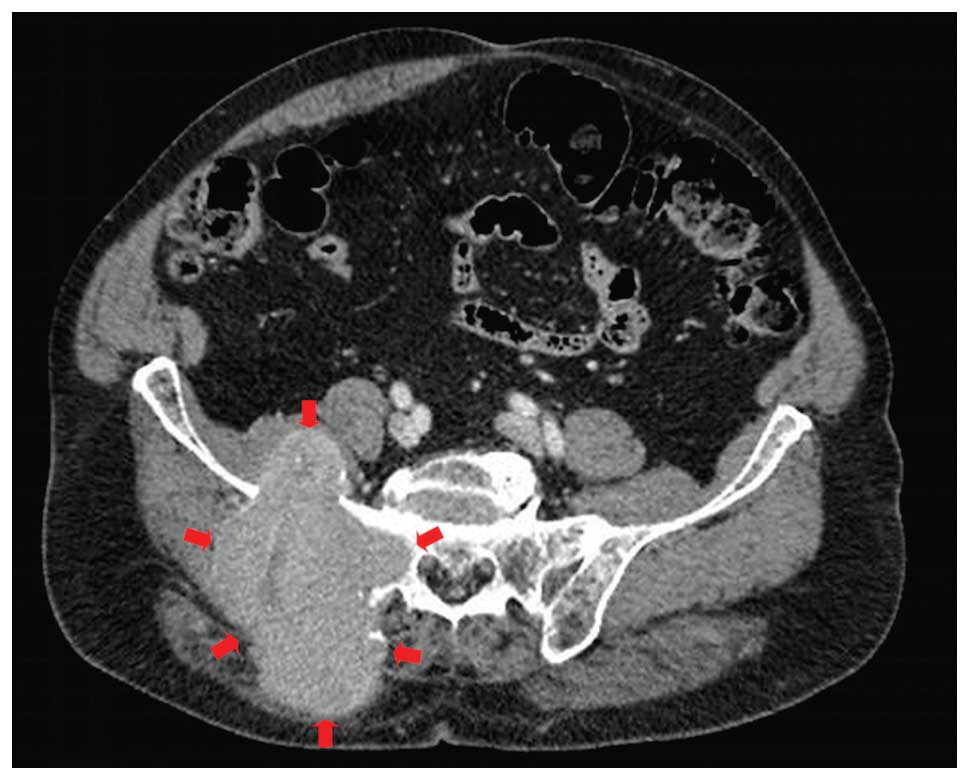
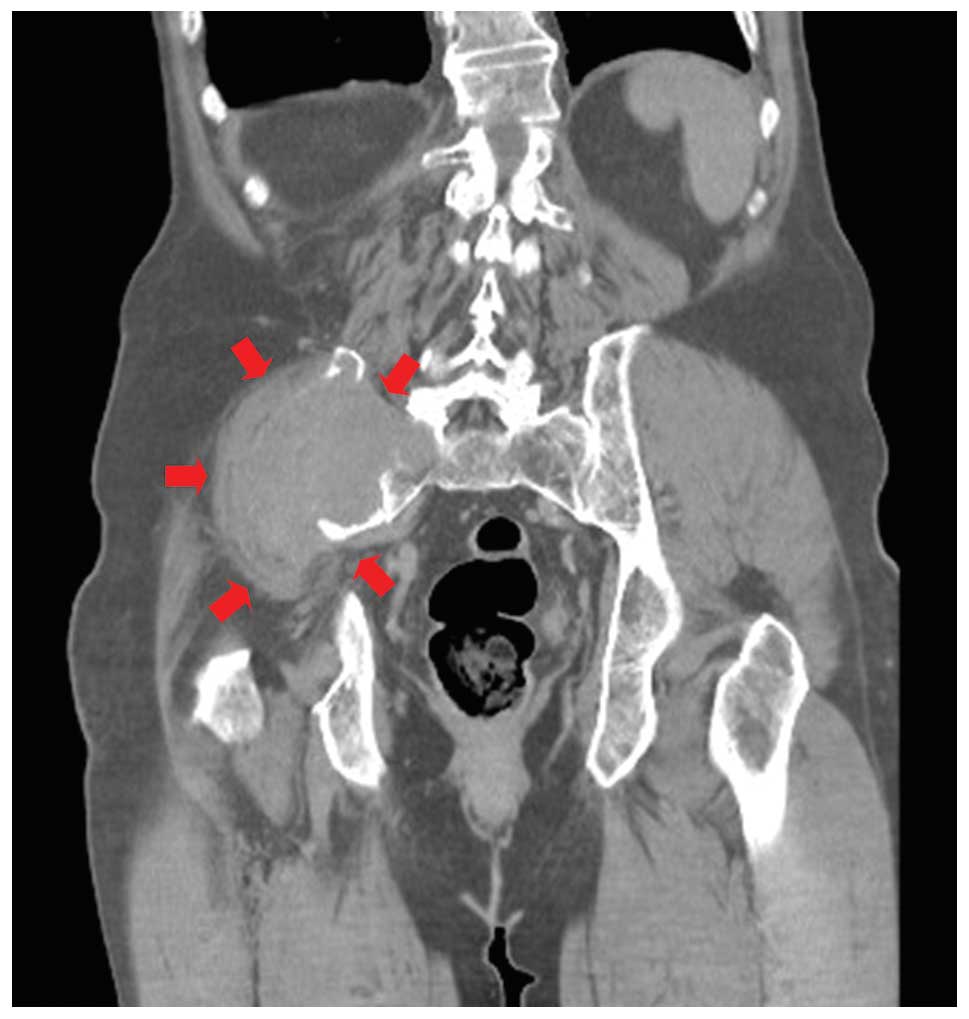
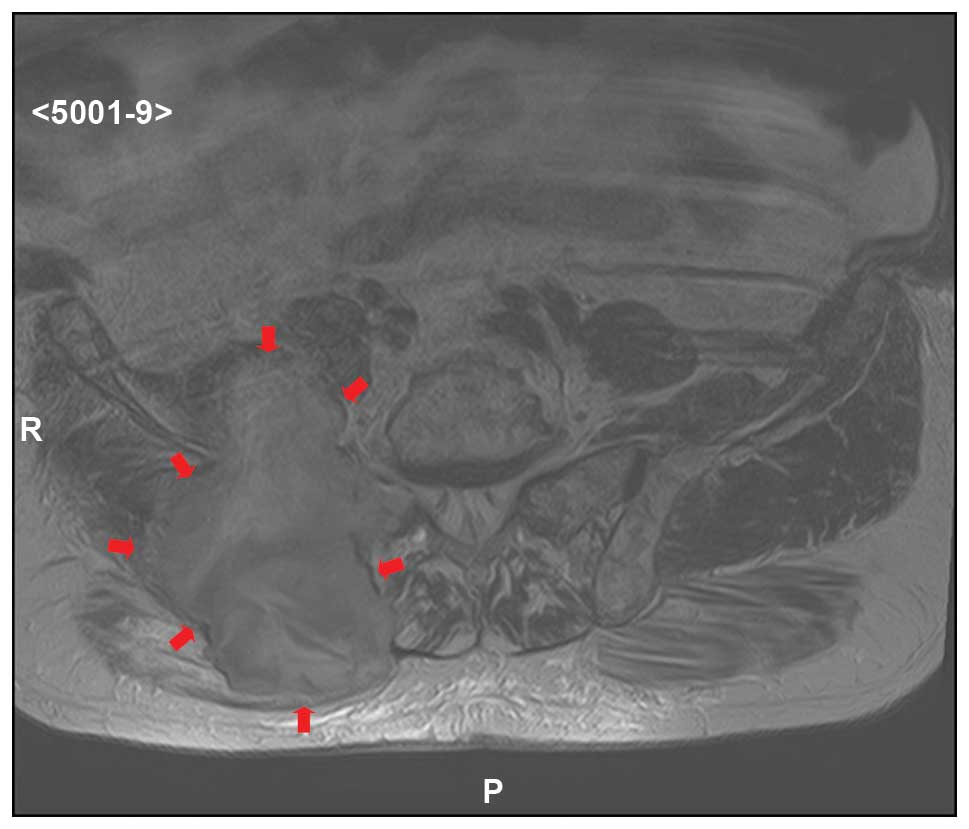
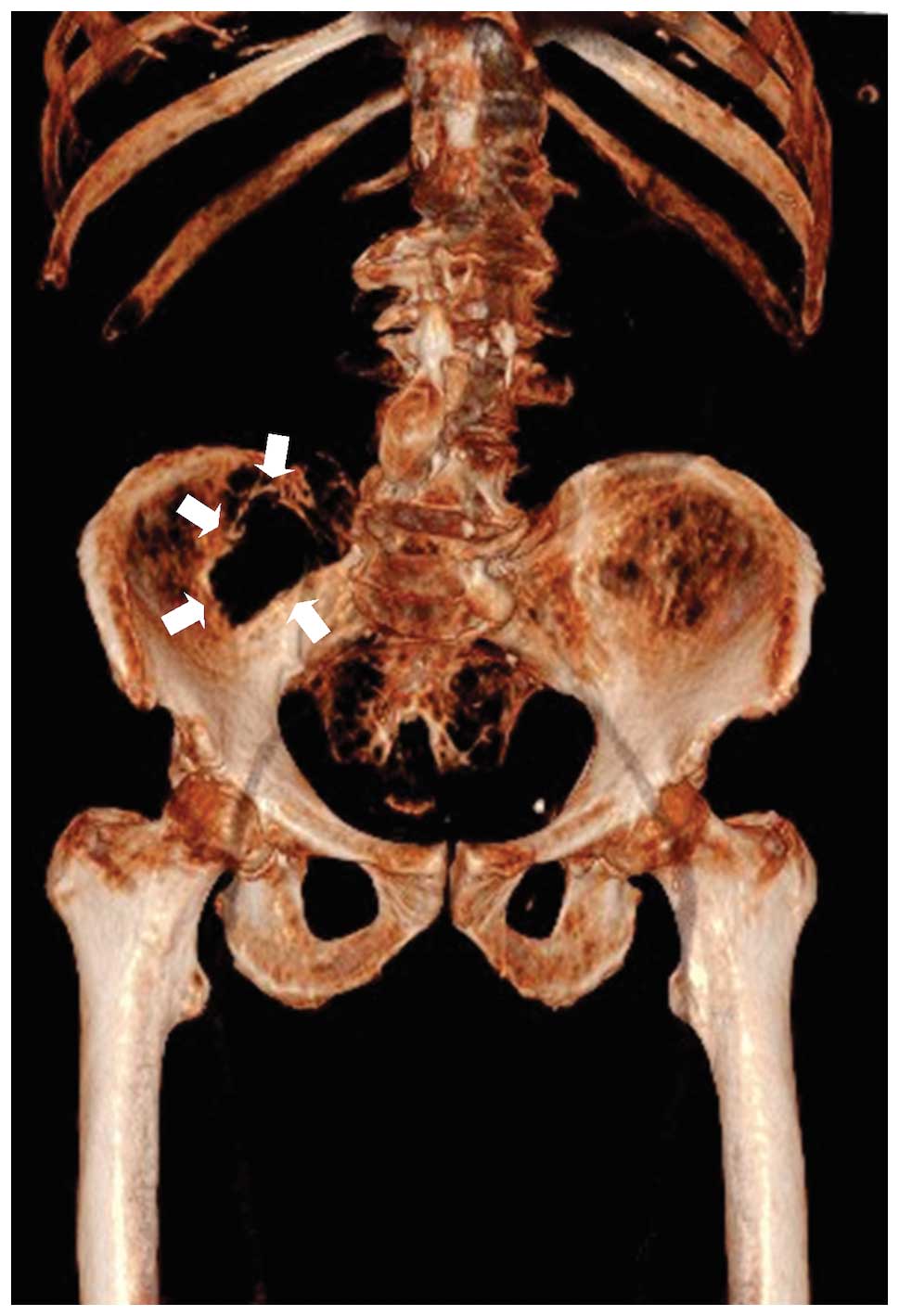
A 77-year-old Caucasian male with no history of trauma was admitted to the Hematology Unit of the National Cancer Research Center of the Istituto Tumori ‘Giovanni Paolo II’ hospital (Bari, Italy) in June 2013 with a painful mass protruding from the right side of his lower back. The patient reported that the mass had been growing incrementally. Physical examination revealed a solid, non-tender mass that was localized in the upper region of the pelvis. The mass was fixed and not reducible with manual compression. The renal function of the patient, in addition to the levels of electrolytes (sodium, potassium and calcium) and the hemoglobin level, were all normal. However, serum electrophoresis revealed an increase in β-globulin, and serum immunofixation analysis indicated positivity for IgA-κ (1.19 g/dl); Bence Jones proteinuria was positive for monoclonal light κ chains. M-protein is known to be present in numerous diseases (hematological or other) encountered in clinical practice. CT examinations of the abdomen (Figs. 1 and 2, arrows), which were confirmed by MRI (Fig. 3, arrows), revealed a voluminous solid formation with a maximum dimension of 9.3×12 cm in the area of the right large and medium gluteal muscles, which extended partially into the small gluteal muscle. Contrast medium highlighted limited areas of colliquative necrosis. In addition, erosion of the right iliac wing, as a result of the solid formation, was clearly evident in a three-dimensional CT reconstruction of the bone (Fig. 4, arrows), and the iliac muscle was also shown to be involved. Furthermore, the solid formation was observed to result in the erosion of the sacrum and spinal muscles on the same side. These imaging features led to a hypothesis of a sarcoma. With the exception of the sacrum and right iliac wing, no other bone lesion was evident during the skeletal survey. A Tru-Cut biopsy of the lesions was performed, which revealed an infiltration of plasma cells (CD38+, CD138+ and κ chains+). In addition, a bone marrow biopsy revealed the presence of 70% plasma cells (CD38+, CD138+ and κ chains+). Fluorescence in situ hybridization analysis was performed on the marrow cells, and revealed monosomy of chromosome 13. Therefore, a diagnosis of primary EMM was established and the patient underwent nine 6-week cycles of treatment with melphalan (9 mg per square meter of body-surface area) and prednisone (60 mg per square meter) on days 1–4. In addition, the patient received bortezomib (1.3 mg per square meter) on days 1, 8, 22 and 29 during cycles 1–9. After nine cycles of therapy a reduction of M-protein of 80% and of solid formation of 40% was observed. Written informed patient consent was obtained.

Figure 1.

Computed tomography image of the abdomen (axial section) showing a voluminous solid formation in the area of the right large and medium gluteal muscles, extending partially into the small gluteal muscle (arrows) and eroding the right iliac wing.

Figure 2.

Computed tomography multiplanar reconstruction of the neoplasm (arrows).

Figure 3.

Magnetic resonance image showing formation of the neoplasm (arrows).

Figure 4.

Three-dimensional computed tomography reconstruction of the bone showing erosion of the right iliac wing (arrows).

Discussion

MM is a plasma cell neoplasm that is associated with the presence of M-protein in the serum and/or urine, which can be detected by electrophoresis. The diagnosis of MM requires the presence of ≥10% bone marrow clonal plasma cells of nucleated cells in the marrow or the plasmacytoma (6). Distinguishing between asymptomatic (smoldering) MM and symptomatic MM is possible, since the latter is defined by the presence of end-organ damage (hypercalcemia, renal insufficiency, anemia and bone lesions). In order of frequency, the clinical features of MM are lytic bone lesions (>80%), anemia (75–80%), bone pain (65–75%), fatigue (35–45%), an increase in the serum creatinine level (25–30%) and hypercalcemia (15–20%). Therefore, a conclusive evaluation is based on a combination of pathological, radiological and clinical features.

Extraskeletal clonal plasma cell infiltrates may be present at the time of the initial diagnosis (primary EMM); however, the onset of a solid formation as a first clinical feature of MM is unusual.

Clinically, three types of EMM can be described: i) Tumor mass adjacent to the bone and extending into the soft tissues; ii) soft tissue or visceral tumor that is not connected to the bone; or iii) diffuse infiltration of organs by plasma cells without any evident focal lesion (7). However, the majority of studies do not discriminate among these three types of EMM lesions (7). Primary EMM is identified in 4–16% of MM patients at the time of diagnosis, while secondary EMM is found in 6–20% of patients during the further disease course of MM (8). However, the precise pathogenic mechanisms that contribute to the extramedullary spread of clonal plasma cells remain poorly understood. In addition, the prognosis of EMM patients is generally poor, and an effective treatment strategy is yet to be established (9).

Various imaging techniques are used currently in patients with MM and EMM for the detection of disease extension. A traditional skeletal survey forms part of the standard of care for the staging and follow-up of bone lesions in patients with MM (10), and enables the identification of osteolytic lesions. In addition, CT examinations are commonly used to visualize the areas that are unable to be observed well on conventional radiographs, and may also be used to characterize soft tissue involvement (11). However, CT observations for MM are non-specific; thus, CT examinations may be used to guide a needle biopsy for histological diagnosis.

MRI has been demonstrated to have a high sensitivity and specificity for the detection of diffuse and focal forms of MM in the spine and extra-axial skeleton (12). In T1-weighted imaging, bone myeloma lesions appear hypointense, while the lesions are visualized as hyperintense on T2-weighted imaging. Furthermore, bone myeloma lesions appear hyperintense in short T1 inversion recovery imaging and enhanced on post-contrast T1 sequences (11). PET is a non-invasive functional imaging technique that enables whole-body screening in a single procedure. PET imaging is sensitive for the detection of early bone marrow involvement, prior to any identifiable bone changes (13).

In conclusion, all the imaging techniques discussed are useful for the detection of an extension of MM; however, none of the radiological features of the various imaging techniques are specific for EMM. Thus, a needle biopsy is mandatory to achieve a confirmed diagnosis. The occurrence of a mass as an initial symptom in MM is uncommon, and may result in a delayed diagnosis. In addition, considering that M-protein is present in numerous conditions encountered in clinical practice, there are no specific radiological features of EMM, and EMM can resemble other neoplasms, including sarcoma, EMM should be included in the differential diagnosis of a mass, particularly in patients where M-protein is detected in the blood and/or urine.

Acknowledgements

The authors thank Ms. Caroline Oakley for revision of the language in the manuscript and Luca Leone for cooperation in the selection of the images.

Glossary

Abbreviations

Abbreviations:

MM

multiple myeloma

EMM

extramedullary multiple myeloma

CT

computed tomography

MRI

magnetic resonance imaging

PET

positron emission tomography

References

1 

Jemal A, Siegel R, Xu J and Ward E: Cancer statistics. 2010.CA Cancer J Clin. 60:277–300. 2010. View Article : Google Scholar : PubMed/NCBI

2 

Vincent Rajkumar S: Treatment of multiple myeloma. Nat Rev Clin Oncol. 8:479–491. 2011. View Article : Google Scholar : PubMed/NCBI

3 

Harousseau JL, Shaughnessy J Jr and Richardson P: Multiple myeloma. Hematology Am Soc Hematol Educ Program. 237–256. 2004. View Article : Google Scholar : PubMed/NCBI

4 

Weber DM: Solitary bone and extramedullary plasmacytoma. Hematology Am Soc Hematol Educ Program. 373–376. 2005. View Article : Google Scholar : PubMed/NCBI

5 

Usmani SZ, Heuck C, Mitchell A, Szymonifka J, Nair B, Hoering A, Alsayed Y, Waheed S, Haider S, Restrepo A, et al: Extramedullary disease portends poor prognosis in multiple myeloma and is over-represented in high-risk disease even in the era of novel agents. Haematologica. 97:1761–1767. 2012. View Article : Google Scholar : PubMed/NCBI

6 

Vincent Rajkumar S: Multiple myeloma: 2014 Update on diagnosis, risk-stratification, and management. Am J Hematol. 89:999–1009. 2014.PubMed/NCBI

7 

Pour L, Sevcikova S, Greslikova H, Kupska R, Majkova P, Zahradova L, Sandecka V, Adam Z, Krejci M, Kuglik P, et al: Soft-tissue extramedullary multiple myeloma prognosis is significantly worse in comparison to bone-related extramedullary relapse. Haematologica. 99:360–364. 2014. View Article : Google Scholar : PubMed/NCBI

8 

Oriol A: Multiple myeloma with extramedullary disease. Adv Ther. 28(Suppl 7): 1–6. 2011. View Article : Google Scholar : PubMed/NCBI

9 

Varettoni M, Corso A, Pica G, Mangiacavalli S, Pascutto C and Lazzarino M: Incidence, presenting features and outcome of extramedullary disease in multiple myeloma: A longitudinal study on 1003 consecutive patients. Ann Oncol. 21:325–330. 2010. View Article : Google Scholar : PubMed/NCBI

10 

International Myeloma Working Group: Criteria for the classification of monoclonal gammopathies, multiple myeloma and related disorders: A report of the International Myeloma Working Group. Br J Haematol. 121:749–757. 2003. View Article : Google Scholar : PubMed/NCBI

11 

Mena E, Choyke P, Tan E, Landgren O and Kurdziel K: Molecular imaging in myeloma precursor disease. Semin Hematol. 48:22–31. 2011. View Article : Google Scholar : PubMed/NCBI

12 

Ghanem N, Lohrmann C, Engelhard M, Pache G, Uhl M, Saueressig U, Kotter E and Langer M: Whole-body MRI in the detection of bone marrow infiltration in patients with plasma cell neoplasms in comparison to the radiological skeletal survey. Eur Radiol. 16:1005–1014. 2006. View Article : Google Scholar : PubMed/NCBI

13 

Durie BG, Waxman AD, DAgolo A and Williams CM: Whole-body (18)F-FDG PET identifies high-risk myeloma. J Nucl Med. 43:1457–1463. 2002.PubMed/NCBI

Related Articles

  • Abstract
  • View
  • Download
  • Twitter
Copy and paste a formatted citation
Spandidos Publications style
Sgherza N, Iacobazzi A, Cramarossa A, De Tullio G and Guarini A: A voluminous mass as an initial clinical symptom of multiple myeloma: A case report. Exp Ther Med 10: 1689-1691, 2015.
APA
Sgherza, N., Iacobazzi, A., Cramarossa, A., De Tullio, G., & Guarini, A. (2015). A voluminous mass as an initial clinical symptom of multiple myeloma: A case report. Experimental and Therapeutic Medicine, 10, 1689-1691. https://doi.org/10.3892/etm.2015.2720
MLA
Sgherza, N., Iacobazzi, A., Cramarossa, A., De Tullio, G., Guarini, A."A voluminous mass as an initial clinical symptom of multiple myeloma: A case report". Experimental and Therapeutic Medicine 10.5 (2015): 1689-1691.
Chicago
Sgherza, N., Iacobazzi, A., Cramarossa, A., De Tullio, G., Guarini, A."A voluminous mass as an initial clinical symptom of multiple myeloma: A case report". Experimental and Therapeutic Medicine 10, no. 5 (2015): 1689-1691. https://doi.org/10.3892/etm.2015.2720
Copy and paste a formatted citation
x
Spandidos Publications style
Sgherza N, Iacobazzi A, Cramarossa A, De Tullio G and Guarini A: A voluminous mass as an initial clinical symptom of multiple myeloma: A case report. Exp Ther Med 10: 1689-1691, 2015.
APA
Sgherza, N., Iacobazzi, A., Cramarossa, A., De Tullio, G., & Guarini, A. (2015). A voluminous mass as an initial clinical symptom of multiple myeloma: A case report. Experimental and Therapeutic Medicine, 10, 1689-1691. https://doi.org/10.3892/etm.2015.2720
MLA
Sgherza, N., Iacobazzi, A., Cramarossa, A., De Tullio, G., Guarini, A."A voluminous mass as an initial clinical symptom of multiple myeloma: A case report". Experimental and Therapeutic Medicine 10.5 (2015): 1689-1691.
Chicago
Sgherza, N., Iacobazzi, A., Cramarossa, A., De Tullio, G., Guarini, A."A voluminous mass as an initial clinical symptom of multiple myeloma: A case report". Experimental and Therapeutic Medicine 10, no. 5 (2015): 1689-1691. https://doi.org/10.3892/etm.2015.2720
Follow us
  • Twitter
  • LinkedIn
  • Facebook
About
  • Spandidos Publications
  • Careers
  • Cookie Policy
  • Privacy Policy
How can we help?
  • Help
  • Live Chat
  • Contact
  • Email to our Support Team