Spandidos Publications Logo
  • About
    • About Spandidos
    • Aims and Scopes
    • Abstracting and Indexing
    • Editorial Policies
    • Reprints and Permissions
    • Job Opportunities
    • Terms and Conditions
    • Contact
  • Journals
    • All Journals
    • Oncology Letters
      • Oncology Letters
      • Information for Authors
      • Editorial Policies
      • Editorial Board
      • Aims and Scope
      • Abstracting and Indexing
      • Bibliographic Information
      • Archive
    • International Journal of Oncology
      • International Journal of Oncology
      • Information for Authors
      • Editorial Policies
      • Editorial Board
      • Aims and Scope
      • Abstracting and Indexing
      • Bibliographic Information
      • Archive
    • Molecular and Clinical Oncology
      • Molecular and Clinical Oncology
      • Information for Authors
      • Editorial Policies
      • Editorial Board
      • Aims and Scope
      • Abstracting and Indexing
      • Bibliographic Information
      • Archive
    • Experimental and Therapeutic Medicine
      • Experimental and Therapeutic Medicine
      • Information for Authors
      • Editorial Policies
      • Editorial Board
      • Aims and Scope
      • Abstracting and Indexing
      • Bibliographic Information
      • Archive
    • International Journal of Molecular Medicine
      • International Journal of Molecular Medicine
      • Information for Authors
      • Editorial Policies
      • Editorial Board
      • Aims and Scope
      • Abstracting and Indexing
      • Bibliographic Information
      • Archive
    • Biomedical Reports
      • Biomedical Reports
      • Information for Authors
      • Editorial Policies
      • Editorial Board
      • Aims and Scope
      • Abstracting and Indexing
      • Bibliographic Information
      • Archive
    • Oncology Reports
      • Oncology Reports
      • Information for Authors
      • Editorial Policies
      • Editorial Board
      • Aims and Scope
      • Abstracting and Indexing
      • Bibliographic Information
      • Archive
    • Molecular Medicine Reports
      • Molecular Medicine Reports
      • Information for Authors
      • Editorial Policies
      • Editorial Board
      • Aims and Scope
      • Abstracting and Indexing
      • Bibliographic Information
      • Archive
    • World Academy of Sciences Journal
      • World Academy of Sciences Journal
      • Information for Authors
      • Editorial Policies
      • Editorial Board
      • Aims and Scope
      • Abstracting and Indexing
      • Bibliographic Information
      • Archive
    • International Journal of Functional Nutrition
      • International Journal of Functional Nutrition
      • Information for Authors
      • Editorial Policies
      • Editorial Board
      • Aims and Scope
      • Abstracting and Indexing
      • Bibliographic Information
      • Archive
    • International Journal of Epigenetics
      • International Journal of Epigenetics
      • Information for Authors
      • Editorial Policies
      • Editorial Board
      • Aims and Scope
      • Abstracting and Indexing
      • Bibliographic Information
      • Archive
    • Medicine International
      • Medicine International
      • Information for Authors
      • Editorial Policies
      • Editorial Board
      • Aims and Scope
      • Abstracting and Indexing
      • Bibliographic Information
      • Archive
  • Articles
  • Information
    • Information for Authors
    • Information for Reviewers
    • Information for Librarians
    • Information for Advertisers
    • Conferences
  • Language Editing
Spandidos Publications Logo
  • About
    • About Spandidos
    • Aims and Scopes
    • Abstracting and Indexing
    • Editorial Policies
    • Reprints and Permissions
    • Job Opportunities
    • Terms and Conditions
    • Contact
  • Journals
    • All Journals
    • Biomedical Reports
      • Information for Authors
      • Editorial Policies
      • Editorial Board
      • Aims and Scope
      • Abstracting and Indexing
      • Bibliographic Information
      • Archive
    • Experimental and Therapeutic Medicine
      • Information for Authors
      • Editorial Policies
      • Editorial Board
      • Aims and Scope
      • Abstracting and Indexing
      • Bibliographic Information
      • Archive
    • International Journal of Epigenetics
      • Information for Authors
      • Editorial Policies
      • Editorial Board
      • Aims and Scope
      • Abstracting and Indexing
      • Bibliographic Information
      • Archive
    • International Journal of Functional Nutrition
      • Information for Authors
      • Editorial Policies
      • Editorial Board
      • Aims and Scope
      • Abstracting and Indexing
      • Bibliographic Information
      • Archive
    • International Journal of Molecular Medicine
      • Information for Authors
      • Editorial Policies
      • Editorial Board
      • Aims and Scope
      • Abstracting and Indexing
      • Bibliographic Information
      • Archive
    • International Journal of Oncology
      • Information for Authors
      • Editorial Policies
      • Editorial Board
      • Aims and Scope
      • Abstracting and Indexing
      • Bibliographic Information
      • Archive
    • Medicine International
      • Information for Authors
      • Editorial Policies
      • Editorial Board
      • Aims and Scope
      • Abstracting and Indexing
      • Bibliographic Information
      • Archive
    • Molecular and Clinical Oncology
      • Information for Authors
      • Editorial Policies
      • Editorial Board
      • Aims and Scope
      • Abstracting and Indexing
      • Bibliographic Information
      • Archive
    • Molecular Medicine Reports
      • Information for Authors
      • Editorial Policies
      • Editorial Board
      • Aims and Scope
      • Abstracting and Indexing
      • Bibliographic Information
      • Archive
    • Oncology Letters
      • Information for Authors
      • Editorial Policies
      • Editorial Board
      • Aims and Scope
      • Abstracting and Indexing
      • Bibliographic Information
      • Archive
    • Oncology Reports
      • Information for Authors
      • Editorial Policies
      • Editorial Board
      • Aims and Scope
      • Abstracting and Indexing
      • Bibliographic Information
      • Archive
    • World Academy of Sciences Journal
      • Information for Authors
      • Editorial Policies
      • Editorial Board
      • Aims and Scope
      • Abstracting and Indexing
      • Bibliographic Information
      • Archive
  • Articles
  • Information
    • For Authors
    • For Reviewers
    • For Librarians
    • For Advertisers
    • Conferences
  • Language Editing
Login Register Submit
  • This site uses cookies
  • You can change your cookie settings at any time by following the instructions in our Cookie Policy. To find out more, you may read our Privacy Policy.

    I agree
Search articles by DOI, keyword, author or affiliation
Search
Advanced Search
presentation
Experimental and Therapeutic Medicine
Join Editorial Board Propose a Special Issue
Print ISSN: 1792-0981 Online ISSN: 1792-1015
Journal Cover
December-2015 Volume 10 Issue 6

Full Size Image

Sign up for eToc alerts
Recommend to Library

Journals

International Journal of Molecular Medicine

International Journal of Molecular Medicine

International Journal of Molecular Medicine is an international journal devoted to molecular mechanisms of human disease.

International Journal of Oncology

International Journal of Oncology

International Journal of Oncology is an international journal devoted to oncology research and cancer treatment.

Molecular Medicine Reports

Molecular Medicine Reports

Covers molecular medicine topics such as pharmacology, pathology, genetics, neuroscience, infectious diseases, molecular cardiology, and molecular surgery.

Oncology Reports

Oncology Reports

Oncology Reports is an international journal devoted to fundamental and applied research in Oncology.

Experimental and Therapeutic Medicine

Experimental and Therapeutic Medicine

Experimental and Therapeutic Medicine is an international journal devoted to laboratory and clinical medicine.

Oncology Letters

Oncology Letters

Oncology Letters is an international journal devoted to Experimental and Clinical Oncology.

Biomedical Reports

Biomedical Reports

Explores a wide range of biological and medical fields, including pharmacology, genetics, microbiology, neuroscience, and molecular cardiology.

Molecular and Clinical Oncology

Molecular and Clinical Oncology

International journal addressing all aspects of oncology research, from tumorigenesis and oncogenes to chemotherapy and metastasis.

World Academy of Sciences Journal

World Academy of Sciences Journal

Multidisciplinary open-access journal spanning biochemistry, genetics, neuroscience, environmental health, and synthetic biology.

International Journal of Functional Nutrition

International Journal of Functional Nutrition

Open-access journal combining biochemistry, pharmacology, immunology, and genetics to advance health through functional nutrition.

International Journal of Epigenetics

International Journal of Epigenetics

Publishes open-access research on using epigenetics to advance understanding and treatment of human disease.

Medicine International

Medicine International

An International Open Access Journal Devoted to General Medicine.

Journal Cover
December-2015 Volume 10 Issue 6

Full Size Image

Sign up for eToc alerts
Recommend to Library

  • Article
  • Citations
    • Cite This Article
    • Download Citation
    • Create Citation Alert
    • Remove Citation Alert
    • Cited By
  • Similar Articles
    • Related Articles (in Spandidos Publications)
    • Similar Articles (Google Scholar)
    • Similar Articles (PubMed)
  • Download PDF
  • Download XML
  • View XML
Article

Epigallocatechin‑3‑gallate‑induced inhibition of interleukin‑6 release and adjustment of the regulatory T/T helper 17 cell balance in the treatment of colitis in mice

  • Authors:
    • Zhenglei Xu
    • Cheng Wei
    • Ru Zhang
    • Jun Yao
    • Dinguo Zhang
    • Lisheng Wang
  • View Affiliations / Copyright

    Affiliations: Department of Gastroenterology, Second Clinical Medical College of Jinan University, Shenzhen People's Hospital, Shenzhen, Guangdong 518000, P.R. China
  • Pages: 2231-2238
    |
    Published online on: October 23, 2015
       https://doi.org/10.3892/etm.2015.2824
  • Expand metrics +
Metrics: Total Views: 0 (Spandidos Publications: | PMC Statistics: )
Metrics: Total PDF Downloads: 0 (Spandidos Publications: | PMC Statistics: )
Cited By (CrossRef): 0 citations Loading Articles...

This article is mentioned in:


Abstract

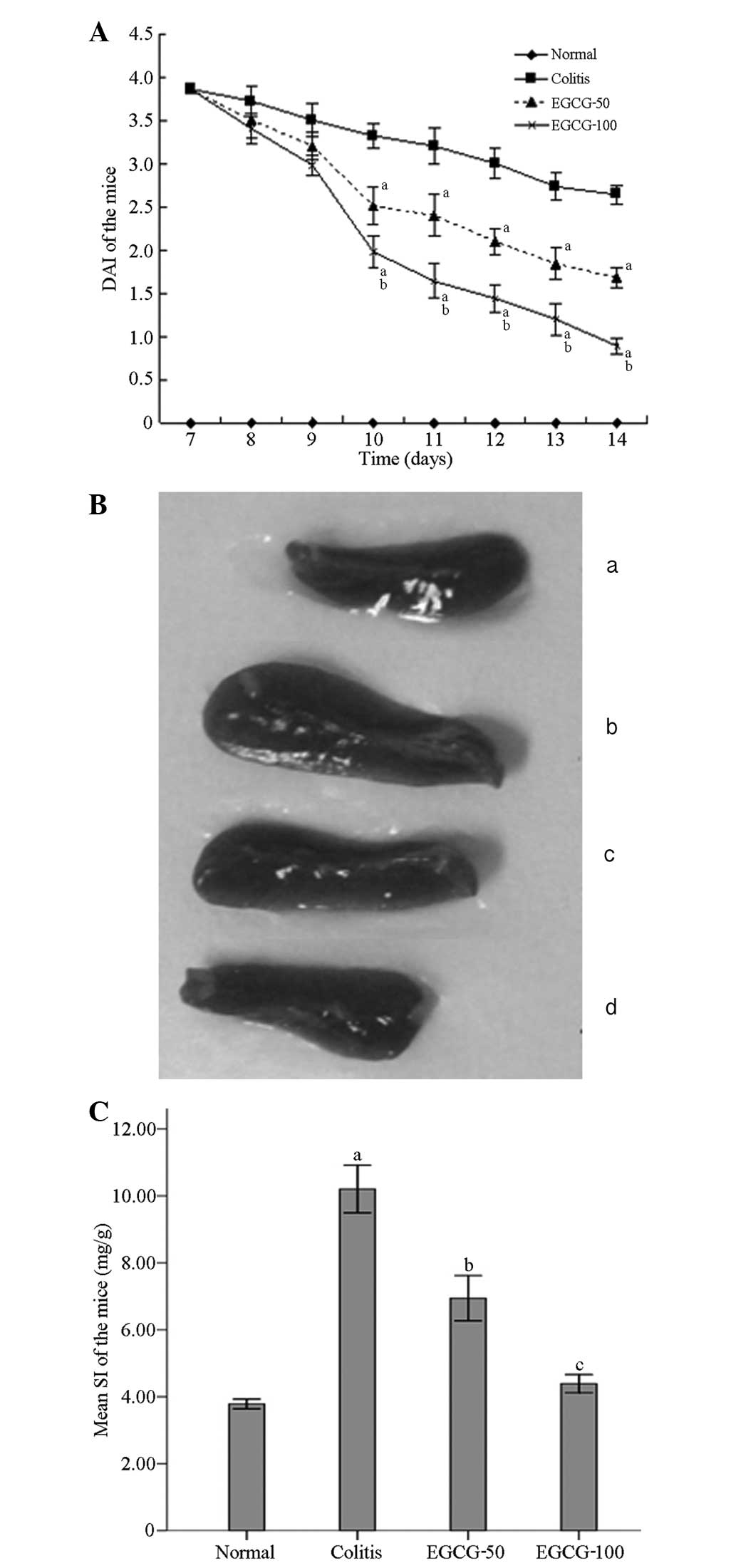
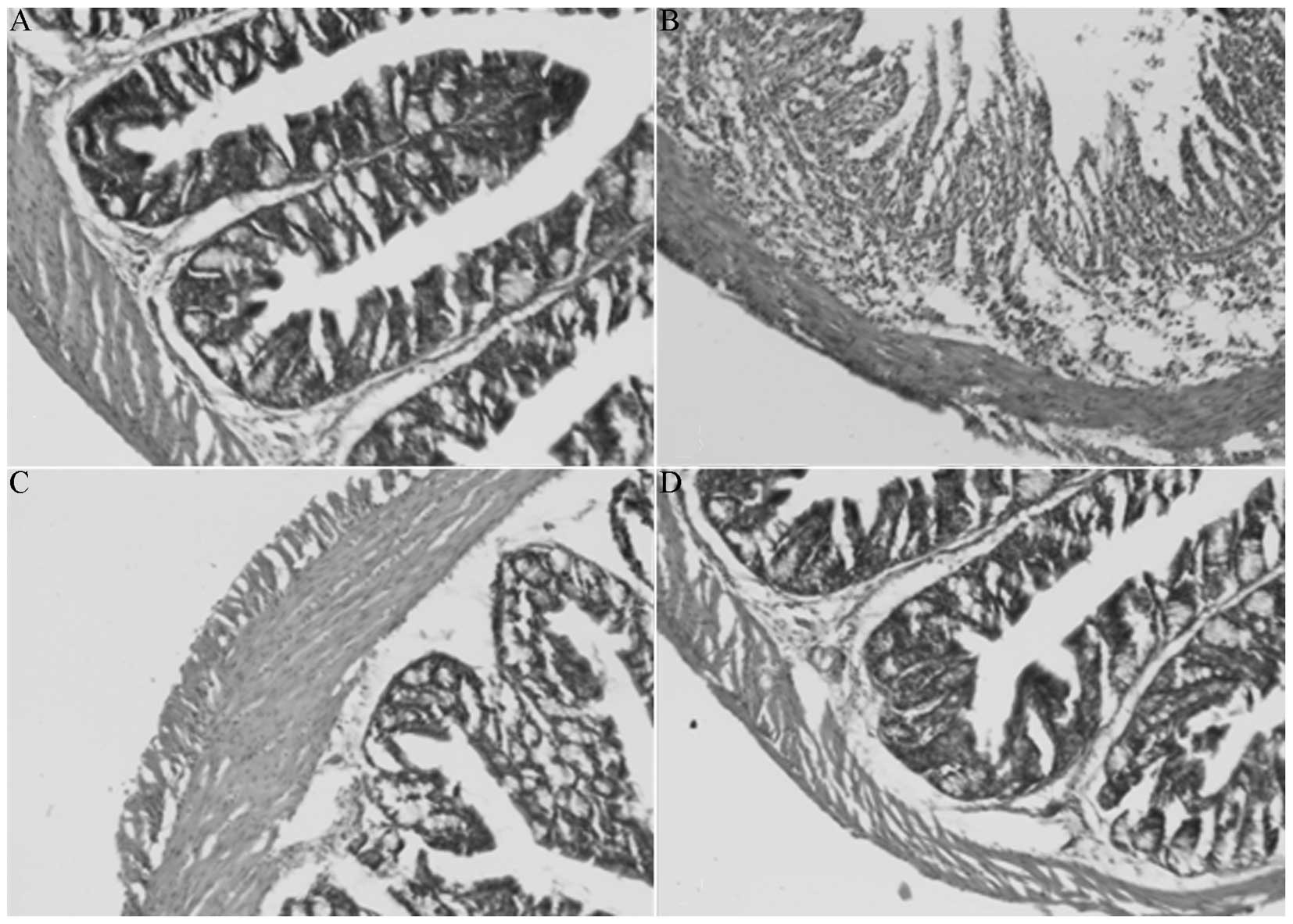
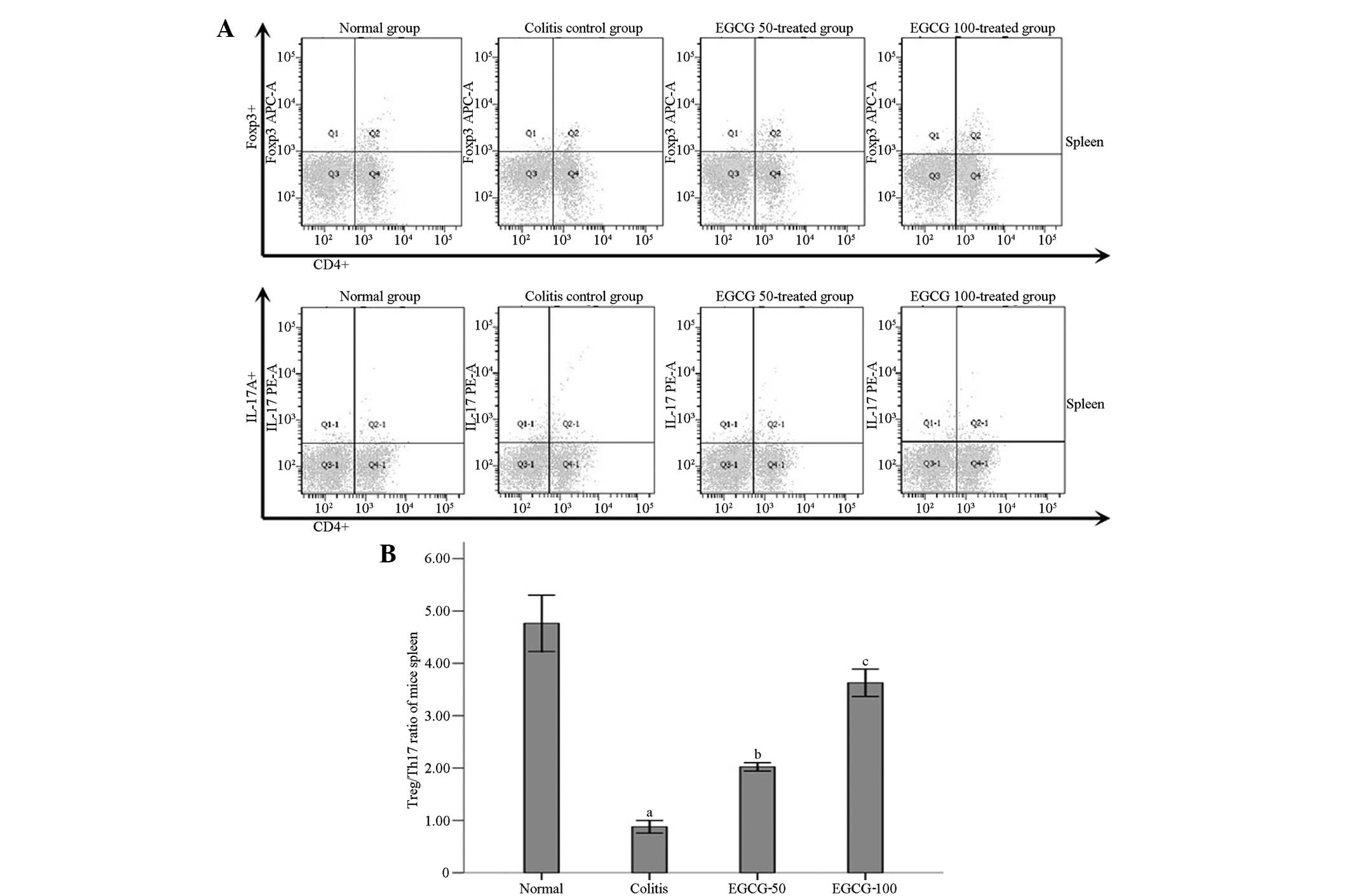
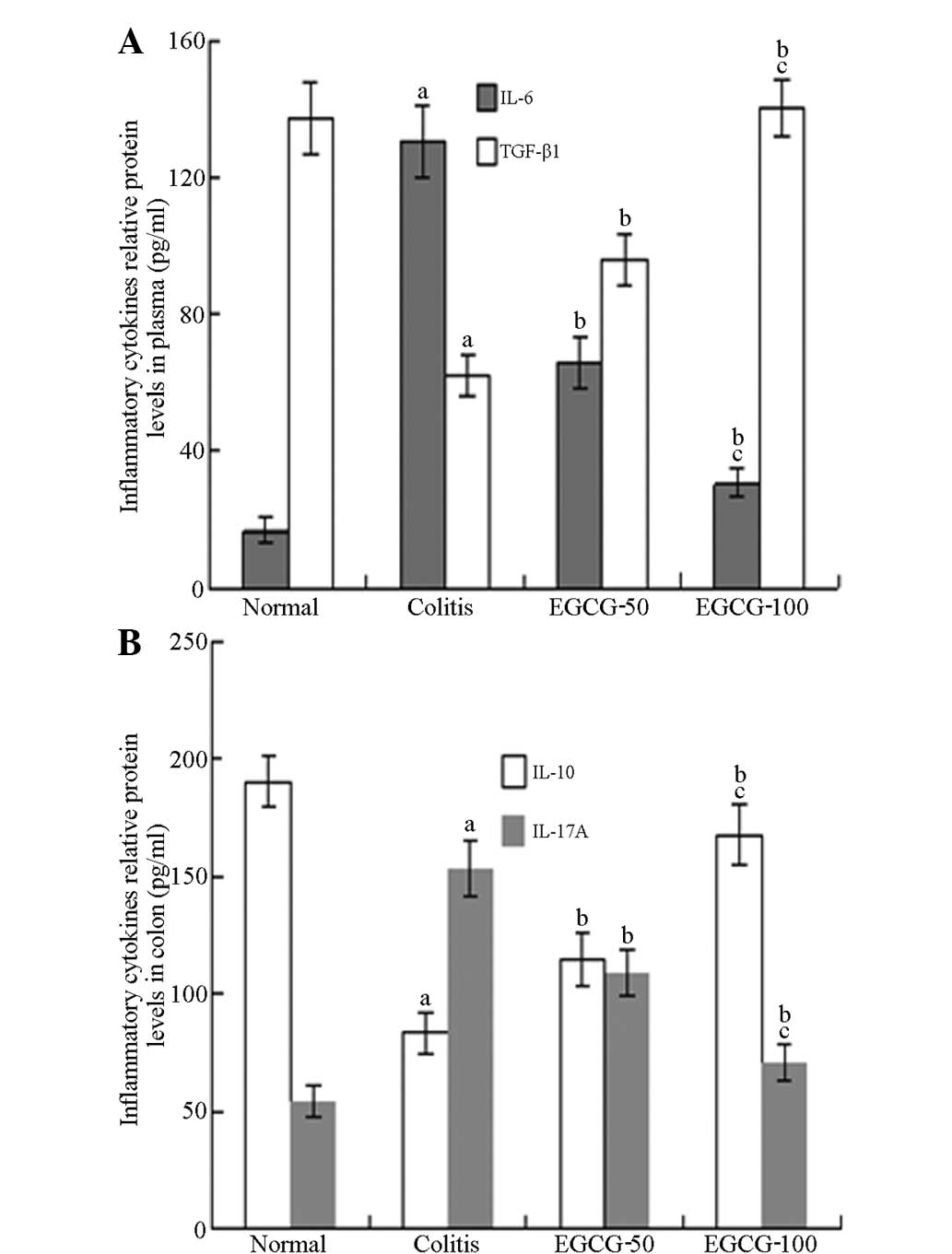
Epigallocatechin‑3‑gallate (EGCG) has a promising therapeutic effect for ulcerative colitis (UC), but the treatment mechanism has yet to be fully elucidated. The aim of the present study was to investigate the mechanism of EGCG in the treatment of UC. Experimental colitis mouse models were prepared. The mice were randomly divided into four groups: Normal control, model (MD), 50 mg/kg/day EGCG treatment and 100 mg/kg/day EGCG treatment. The daily disease activity index (DAI) of the mice was recorded, changes in the organizational structure of the colon were observed and the spleen index (SI) was measured. In addition, levels of interleukin (IL)‑6, IL‑10, IL‑17 and transforming growth factor (TGF)‑β1 in the plasma and hypoxia‑inducible factor (HIF)‑1α and signal transducer and activator of transcription (STAT) 3 protein expression in colon tissues were evaluated. Compared with the MD group, the mice in the two EGCG treatment groups exhibited decreased DAIs and SIs and an attenuation in the colonic tissue erosion. EGCG could reduce the release of IL‑6 and IL‑17 and regulate the mouse splenic regulatory T‑cell (Treg)/T helper 17 cell (Th17) ratio, while increasing the plasma levels of IL‑10 and TGF‑β1 and decreasing the HIF‑1α and STAT3 protein expression in the colon. The experiments confirmed that EGCG treated mice with experimental colitis by inhibiting the release of IL‑6 and regulating the body Treg/Th17 balance.
View Figures

Figure 1

Figure 2

Figure 3

Figure 4

Figure 5

Figure 6

View References

1 

Sartor RB: Therapeutic manipulation of the enteric microflora in inflammatory bowel diseases: antibiotics, probiotics, and prebiotics. Gastroenterology. 126:1620–1633. 2004. View Article : Google Scholar : PubMed/NCBI

2 

Lei X, Liu M, Yang Z, et al: Thymoquinone prevents and ameliorates dextran sulfate sodium-induced colitis in mice. Dig Dis Sci. 57:2296–2303. 2012. View Article : Google Scholar : PubMed/NCBI

3 

Lichtenstein GR and Rutgeerts P: Importance of mucosal healing in ulcerative colitis. Inflamm Bowel Dis. 16:338–346. 2010. View Article : Google Scholar : PubMed/NCBI

4 

Yao J, Wang JY, Lai MG, et al: Treatment of mice with dextran sulfate sodium-induced colitis with human interleukin 10 secreted by transformed Bifidobacterium longum. Mol Pharm. 8:488–497. 2011. View Article : Google Scholar : PubMed/NCBI

5 

Zaveri NT: Green tea and its polyphenolic catechins: Medicinal uses in cancer and noncancer applications. Life Sci. 78:2073–2080. 2006. View Article : Google Scholar : PubMed/NCBI

6 

Higdon JV and Frei B: Tea catechins and polyphenols: Health effects, metabolism, and antioxidant functions. Crit Rev Food Sci Nutr. 43:89–143. 2003. View Article : Google Scholar : PubMed/NCBI

7 

Yang CS, Maliakal P and Meng X: Inhibition of carcinogenesis by tea. Annu Rev Pharmacol Toxicol. 42:25–54. 2002. View Article : Google Scholar : PubMed/NCBI

8 

Caderni G, De Filippo C, Luceri C, Salvadori M, Giannini A, Biggeri A, Remy S, Cheynier V and Dolara P: Effects of black tea, green tea and wine extracts on intestinal carcinogenesis induced by azoxymethane in F344 rats. Carcinogenesis. 21:1965–1969. 2000. View Article : Google Scholar : PubMed/NCBI

9 

Brückner M, Westphal S, Domschke W, Kucharzik T and Lügering A: Green tea polyphenol epigallocatechin-3-gallate shows therapeutic antioxidative effects in a murine model of colitis. J Crohns Colitis. 6:226–235. 2012. View Article : Google Scholar : PubMed/NCBI

10 

Navarro-Perán E, Cabezas-Herrera J, Sánchez-Del-Campo L, García-Cánovas F and Rodríguez-López JN: The anti-inflammatory and anti-cancer properties of epigallocatechin-3-gallate are mediated by folate cycle disruption, adenosine release and NF-kappaB suppression. Inflamm Res. 57:472–478. 2008. View Article : Google Scholar : PubMed/NCBI

11 

Miura Y, Chiba T, Tomita I, et al: Tea catechins prevent the development of atherosclerosis in apoprotein E-deficient mice. J Nutr. 131:27–32. 2001.PubMed/NCBI

12 

Ran ZH, Chen C and Xiao SD: Epigallocatechin-3-gallate ameliorates rats colitis induced by acetic acid. Biomed Pharmacother. 62:189–196. 2008. View Article : Google Scholar : PubMed/NCBI

13 

Eastaff-Leung N, Mabarrack N, Barbour A, Cummins A and Barry S: Foxp3+ regulatory T Cells, Th17 effector cells, and cytokine environment in inflammatory bowel disease. J Clin Immunol. 30:80–89. 2010. View Article : Google Scholar : PubMed/NCBI

14 

Cooper HS, Murthy SN, Shah RS and Sedergran DJ: Clinicopathologic study of dextran sulfate sodium experimental murine colitis. Lab Invest. 69:238–249. 1993.PubMed/NCBI

15 

Shen W and Durum SK: Synergy of IL-23 and Th17 cytokines: New light on inflammatory bowel disease. Neurochem Res. 35:940–946. 2010. View Article : Google Scholar : PubMed/NCBI

16 

Hardenberg G, Steiner TS and Levings MK: Environmental influences on T regulatory cells in inflammatory bowel disease. Semin Immunol. 23:130–138. 2011. View Article : Google Scholar : PubMed/NCBI

17 

Fuss IJ, Heller F, Boirivant M, Leon F, Yoshida M, Fichtner-Feigl S, Yang Z, Exley M, Kitani A, Blumberg RS, et al: Nonclassical CD1d-restricted NK T cells that produce IL-13 characterize an atypical Th2 response in ulcerative colitis. J Clin Invest. 113:1490–1497. 2004. View Article : Google Scholar : PubMed/NCBI

18 

Heller F, Florian P, Bojarski C, Richter J, Christ M, Hillenbrand B, Mankertz J, Gitter AH, Bürgel N, Fromm M, et al: Interleukin-13 is the key effector Th2 cytokine in ulcerative colitis that affects epithelial tight junctions, apoptosis, and cell restitution. Gastroenterology. 129:550–564. 2005. View Article : Google Scholar : PubMed/NCBI

19 

Hunter MM, Wang A and McKay DM: Helminth infection enhances disease in a murine TH2 model of colitis. Gastroenterology. 132:1320–1330. 2007. View Article : Google Scholar : PubMed/NCBI

20 

Fuss IJ and Strober W: The role of IL-13 and NK T cells in experimental and human ulcerative colitis. Mucosal Immunol. 1(Suppl 1): S31–S33. 2008. View Article : Google Scholar : PubMed/NCBI

21 

Matsumura K, Nakase H, Yamamoto S, Yoshino T, Takeda Y, Kasahara K, Ueno S, Uza N and Chiba T: Modulation of the Th1/Th2 balance by infliximab improves hyperthyroidism associated with a flare-up of ulcerative colitis. Inflamm Bowel Dis. 15:967–968. 2009. View Article : Google Scholar : PubMed/NCBI

22 

Dohi T, Fujihashi K, Kiyono H, Elson CO and McGhee JR: Mice deficient in Th1- and Th2-type cytokines develop distinct forms of hapten-induced colitis. Gastroenterology. 119:724–733. 2000. View Article : Google Scholar : PubMed/NCBI

23 

Sawa Y, Oshitani N, Adachi K, Higuchi K, Matsumoto T and Arakawa T: Comprehensive analysis of intestinal cytokine messenger RNA profile by real-time quantitative polymerase chain reaction in patients with inflammatory bowel disease. Int J Mol Med. 11:175–179. 2003.PubMed/NCBI

24 

Olsen T, Goll R, Cui G, Husebekk A, Vonen B, Birketvedt GS and Florholmen J: Tissue levels of tumor necrosis factor-alpha correlates with grade of inflammation in untreated ulcerative colitis. Scand J Gastroenterol. 42:1312–1320. 2007. View Article : Google Scholar : PubMed/NCBI

25 

Alex P, Zachos NC, Nguyen T, Gonzales L, Chen TE, Conklin LS, Centola M and Li X: Distinct cytokine patterns identified from multiplex profiles of murine DSS and TNBS-induced colitis. Inflamm Bowel Dis. 15:341–352. 2009. View Article : Google Scholar : PubMed/NCBI

26 

Fuss IJ: Is the Th1/Th2 paradigm of immune regulation applicable to IBD? Inflamm Bowel Dis. 14:S110–S112. 2008. View Article : Google Scholar : PubMed/NCBI

27 

Bogaert S, Laukens D, Peeters H, et al: Differential mucosal expression of Th17-related genes between the inflamed colon and ileum of patients with inflammatory bowel disease. BMC Immunol. 11:612010. View Article : Google Scholar : PubMed/NCBI

28 

Liu ZJ, Yadav PK, Su JL, Wang JS and Fei K: Potential role of Th17 cells in the pathogenesis of inflammatory bowel disease. World J Gastroenterol. 15:5784–5788. 2009. View Article : Google Scholar : PubMed/NCBI

29 

Heo YJ, Joo YB, Oh HJ, et al: IL-10 suppresses Th17 cells and promotes regulatory T cells in the CD4+ T cell population of rheumatoid arthritis patients. Immunol Lett. 127:150–156. 2010. View Article : Google Scholar : PubMed/NCBI

30 

Kleczynska W, Jakiela B, Plutecka H, et al: Imbalance between Th17 and regulatory T-cells in systemic lupus erythematosus. Folia Histochem Cytobiol. 49:646–653. 2011. View Article : Google Scholar : PubMed/NCBI

31 

Horiuchi A, Hayashi T, Kikuchi N, et al: Hypoxia upregulates ovarian cancer invasiveness via the binding of HIF-1α to a hypoxia-induced, methylation-free hypoxia response element of S100A4 gene. Int J Cancer. 131:1755–1767. 2012. View Article : Google Scholar : PubMed/NCBI

32 

Chu W, Wan L, Zhao D, et al: Mild hypoxia-induced cardiomyocyte hypertrophy via up-regulation of HIF-1α-mediated TRPC signalling. J Cell Mol Med. 16:2022–2034. 2012. View Article : Google Scholar : PubMed/NCBI

33 

OGarra A and Vieira P: Regulatory T cells and mechanisms of immune system control. Nat Med. 10:801–805. 2004. View Article : Google Scholar : PubMed/NCBI

34 

Veltkamp C, Ruhwald R, Giesem T, Autschbach F, Kaden I, Veltkamp R, Sartor RB and Stremmel W: CD4+CD25+ cell depletion from the normal CD4+ T cell pool prevents tolerance toward the intestinal flora and leads to chronic colitis in immunodeficient mice. Inflamm Bowel Dis. 12:437–446. 2006. View Article : Google Scholar : PubMed/NCBI

35 

Oconnor W Jr, Kamanaka M, Booth CJ, Town T, Nakae S, Iwakura Y, Kolls JK and Flavell RA: A protective function for interleukin 17A in T cell-mediated intestinal inflammation. Nat Immunol. 10:603–609. 2009. View Article : Google Scholar : PubMed/NCBI

36 

Fiocchi C: Inflammatory bowel disease: evolutionary concepts in biology, epidemiology, mechanisms and therapy. Curr Opin Gastroenterol. 29:347–349. 2013. View Article : Google Scholar : PubMed/NCBI

37 

Gupta S: Immune homeostasis: regulatory T cells (Treg) and molecules. J Clin Immunol. 28:617–618. 2008. View Article : Google Scholar : PubMed/NCBI

38 

Unutmaz D and Pulendran B: The gut feeling of Treg cells: IL-10 is the silver lining during colitis. Nat Immunol. 10:1141–1143. 2009. View Article : Google Scholar : PubMed/NCBI

39 

Bettelli E, Carrier Y, Cao W, et al: Reciprocal developmental pathways for the generation of pathogenic effector TH17 and regulatory T cells. Nature. 441:235–238. 2006. View Article : Google Scholar : PubMed/NCBI

40 

Lina C, Conghua W, Nan L and Ping Z: Combined treatment of etanercept and MTX reverses Th1/Th2, Th17/Treg imbalance in patients with rheumatoid arthritis. J Clin Immunol. 31:596–605. 2011. View Article : Google Scholar : PubMed/NCBI

41 

Ben Aissa-Fennira F, Sassi A, Bouguerra A and Benammar-Elgaaied A: Immunoregulatory role for a public IgM idiotype in the induction of autoimmune diseases in Mycoplasma pneumoniae infection. Immunol Lett. 136:130–137. 2011. View Article : Google Scholar : PubMed/NCBI

42 

Zhou L, Lopes JE, Chong MM, et al: TGF-beta-induced Foxp3 inhibits T(H)17 cell differentiation by antagonizing RORgammat function. Nature. 453:236–240. 2008. View Article : Google Scholar : PubMed/NCBI

43 

Li MO and Flavell RA: TGF-beta: A master of all T cell trades. Cell. 134:392–404. 2008. View Article : Google Scholar : PubMed/NCBI

44 

Ghoreschi K, Laurence A, Yang XP, et al: Generation of pathogenic T(H)17 cells in the absence of TGF-β signalling. Nature. 467:967–971. 2010. View Article : Google Scholar : PubMed/NCBI

45 

Wang J, Pae M, Meydani SN and Wu D: Green tea epigallocatechin-3-gallate modulates differentiation of naïve CD4+ T cells into specific lineage effector cells. J Mol Med (Berl). 91:485–495. 2013. View Article : Google Scholar : PubMed/NCBI

46 

Nutsch K and Hsieh C: When T cells run out of breath: the HIF-1α story. Cell. 146:673–674. 2011. View Article : Google Scholar : PubMed/NCBI

47 

Jung JE, Kim HS, Lee CS, et al: STAT 3 inhibits the degradation of HIF-1alpha by pVHL-mediated ubiquitination. Exp Mol Med. 40:479–485. 2008. View Article : Google Scholar : PubMed/NCBI

48 

Sun H, Zhang Y, Gao P, et al: Adiponectin reduces C-reactive protein expression and downregulates STAT3 phosphorylation induced by IL-6 in HepG2 cells. Mol Cell Biochem. 347:183–189. 2011. View Article : Google Scholar : PubMed/NCBI

49 

Li Y, Yu C, Zhu WM, et al: Triptolide ameliorates IL-10-deficient mice colitis by mechanisms involving suppression of IL-6/STAT3 signaling pathway and down-regulation of IL-17. Mol Immunol. 47:2467–2474. 2010. View Article : Google Scholar : PubMed/NCBI

50 

Veldhoen M, Hocking RJ, Atkins CJ, Locksley RM and Stockinger B: TGFbeta in the context of an inflammatory cytokine milieu supports de novo differentiation of IL-17-producing T cells. Immunity. 24:179–189. 2006. View Article : Google Scholar : PubMed/NCBI

51 

Mangan PR, Harrington LE, OQuinn DB, Helms WS, Bullard DC, Elson CO, Hatton RD, Wahl SM, Schoeb TR and Weaver CT: Transforming growth factor-beta induces development of the T(H)17 lineage. Nature. 441:231–234. 2006. View Article : Google Scholar : PubMed/NCBI

52 

Volpe E, Servant N, Zollinger R, Bogiatzi SI, Hupé P, Barillot E and Soumelis V: A critical function for transforming growth factor-beta, interleukin 23 and proinflammatory cytokines in driving and modulating human T(H)-17 responses. Nat Immunol. 9:650–657. 2008. View Article : Google Scholar : PubMed/NCBI

53 

Harrington LE, Hatton RD, Mangan PR, Turner H, Murphy TL, Murphy KM and Weaver CT: Interleukin 17-producing CD4+ effector T cells develop via a lineage distinct from the T helper type 1 and 2 lineages. Nat Immunol. 6:1123–1132. 2005. View Article : Google Scholar : PubMed/NCBI

54 

Annunziato F, Cosmi L, Santarlasci V, Maggi L, Liotta F, Mazzinghi B, Parente E, Filì L, Ferri S, Frosali F, et al: Phenotypic and functional features of human Th17 cells. J Exp Med. 204:1849–1861. 2007. View Article : Google Scholar : PubMed/NCBI

55 

Lubberts E: Th17 cytokines and arthritis. Semin Immunopathol. 32:43–53. 2010. View Article : Google Scholar : PubMed/NCBI

56 

Komiyama Y, Nakae S, Matsuki T, Nambu A, Ishigame H, Kakuta S, Sudo K and Iwakura Y: IL-17 plays an important role in the development of experimental autoimmune encephalomyelitis. J Immunol. 177:566–573. 2006. View Article : Google Scholar : PubMed/NCBI

57 

Yang XO, Panopoulos AD, Nurieva R, Chang SH, Wang D, Watowich SS and Dong C: STAT3 regulates cytokine-mediated generation of inflammatory helper T cells. J Biol Chem. 282:9358–9363. 2007. View Article : Google Scholar : PubMed/NCBI

58 

Dryden GW, Fernandez-Botran GR and Qazzaz HMH: EGCG reduces proinflammatory cytokine production and induces apoptosis in activated CD14+ macrophages, CD4+CD45+RO T cells, and mixed macrophage/T cell populations, but not CD4+CD45+RA T cells from IBD patients and controls. Gastroenterology. 140:S–838. 2011.

59 

Dryden GW, Lam A, Beatty K, Qazzaz HH and McClain CJ: A pilot study to evaluate the safety and efficacy of an oral dose of (−)-epigallocatechin-3-gallate-rich polyphenon E in patients with mild to moderate ulcerative colitis. Inflamm Bowel Dis. 19:1904–1912. 2013.PubMed/NCBI

Related Articles

  • Abstract
  • View
  • Download
  • Twitter
Copy and paste a formatted citation
Spandidos Publications style
Xu Z, Wei C, Zhang R, Yao J, Zhang D and Wang L: Epigallocatechin‑3‑gallate‑induced inhibition of interleukin‑6 release and adjustment of the regulatory T/T helper 17 cell balance in the treatment of colitis in mice. Exp Ther Med 10: 2231-2238, 2015.
APA
Xu, Z., Wei, C., Zhang, R., Yao, J., Zhang, D., & Wang, L. (2015). Epigallocatechin‑3‑gallate‑induced inhibition of interleukin‑6 release and adjustment of the regulatory T/T helper 17 cell balance in the treatment of colitis in mice. Experimental and Therapeutic Medicine, 10, 2231-2238. https://doi.org/10.3892/etm.2015.2824
MLA
Xu, Z., Wei, C., Zhang, R., Yao, J., Zhang, D., Wang, L."Epigallocatechin‑3‑gallate‑induced inhibition of interleukin‑6 release and adjustment of the regulatory T/T helper 17 cell balance in the treatment of colitis in mice". Experimental and Therapeutic Medicine 10.6 (2015): 2231-2238.
Chicago
Xu, Z., Wei, C., Zhang, R., Yao, J., Zhang, D., Wang, L."Epigallocatechin‑3‑gallate‑induced inhibition of interleukin‑6 release and adjustment of the regulatory T/T helper 17 cell balance in the treatment of colitis in mice". Experimental and Therapeutic Medicine 10, no. 6 (2015): 2231-2238. https://doi.org/10.3892/etm.2015.2824
Copy and paste a formatted citation
x
Spandidos Publications style
Xu Z, Wei C, Zhang R, Yao J, Zhang D and Wang L: Epigallocatechin‑3‑gallate‑induced inhibition of interleukin‑6 release and adjustment of the regulatory T/T helper 17 cell balance in the treatment of colitis in mice. Exp Ther Med 10: 2231-2238, 2015.
APA
Xu, Z., Wei, C., Zhang, R., Yao, J., Zhang, D., & Wang, L. (2015). Epigallocatechin‑3‑gallate‑induced inhibition of interleukin‑6 release and adjustment of the regulatory T/T helper 17 cell balance in the treatment of colitis in mice. Experimental and Therapeutic Medicine, 10, 2231-2238. https://doi.org/10.3892/etm.2015.2824
MLA
Xu, Z., Wei, C., Zhang, R., Yao, J., Zhang, D., Wang, L."Epigallocatechin‑3‑gallate‑induced inhibition of interleukin‑6 release and adjustment of the regulatory T/T helper 17 cell balance in the treatment of colitis in mice". Experimental and Therapeutic Medicine 10.6 (2015): 2231-2238.
Chicago
Xu, Z., Wei, C., Zhang, R., Yao, J., Zhang, D., Wang, L."Epigallocatechin‑3‑gallate‑induced inhibition of interleukin‑6 release and adjustment of the regulatory T/T helper 17 cell balance in the treatment of colitis in mice". Experimental and Therapeutic Medicine 10, no. 6 (2015): 2231-2238. https://doi.org/10.3892/etm.2015.2824
Follow us
  • Twitter
  • LinkedIn
  • Facebook
About
  • Spandidos Publications
  • Careers
  • Cookie Policy
  • Privacy Policy
How can we help?
  • Help
  • Live Chat
  • Contact
  • Email to our Support Team