Spandidos Publications Logo
  • About
    • About Spandidos
    • Aims and Scopes
    • Abstracting and Indexing
    • Editorial Policies
    • Reprints and Permissions
    • Job Opportunities
    • Terms and Conditions
    • Contact
  • Journals
    • All Journals
    • Oncology Letters
      • Oncology Letters
      • Information for Authors
      • Editorial Policies
      • Editorial Board
      • Aims and Scope
      • Abstracting and Indexing
      • Bibliographic Information
      • Archive
    • International Journal of Oncology
      • International Journal of Oncology
      • Information for Authors
      • Editorial Policies
      • Editorial Board
      • Aims and Scope
      • Abstracting and Indexing
      • Bibliographic Information
      • Archive
    • Molecular and Clinical Oncology
      • Molecular and Clinical Oncology
      • Information for Authors
      • Editorial Policies
      • Editorial Board
      • Aims and Scope
      • Abstracting and Indexing
      • Bibliographic Information
      • Archive
    • Experimental and Therapeutic Medicine
      • Experimental and Therapeutic Medicine
      • Information for Authors
      • Editorial Policies
      • Editorial Board
      • Aims and Scope
      • Abstracting and Indexing
      • Bibliographic Information
      • Archive
    • International Journal of Molecular Medicine
      • International Journal of Molecular Medicine
      • Information for Authors
      • Editorial Policies
      • Editorial Board
      • Aims and Scope
      • Abstracting and Indexing
      • Bibliographic Information
      • Archive
    • Biomedical Reports
      • Biomedical Reports
      • Information for Authors
      • Editorial Policies
      • Editorial Board
      • Aims and Scope
      • Abstracting and Indexing
      • Bibliographic Information
      • Archive
    • Oncology Reports
      • Oncology Reports
      • Information for Authors
      • Editorial Policies
      • Editorial Board
      • Aims and Scope
      • Abstracting and Indexing
      • Bibliographic Information
      • Archive
    • Molecular Medicine Reports
      • Molecular Medicine Reports
      • Information for Authors
      • Editorial Policies
      • Editorial Board
      • Aims and Scope
      • Abstracting and Indexing
      • Bibliographic Information
      • Archive
    • World Academy of Sciences Journal
      • World Academy of Sciences Journal
      • Information for Authors
      • Editorial Policies
      • Editorial Board
      • Aims and Scope
      • Abstracting and Indexing
      • Bibliographic Information
      • Archive
    • International Journal of Functional Nutrition
      • International Journal of Functional Nutrition
      • Information for Authors
      • Editorial Policies
      • Editorial Board
      • Aims and Scope
      • Abstracting and Indexing
      • Bibliographic Information
      • Archive
    • International Journal of Epigenetics
      • International Journal of Epigenetics
      • Information for Authors
      • Editorial Policies
      • Editorial Board
      • Aims and Scope
      • Abstracting and Indexing
      • Bibliographic Information
      • Archive
    • Medicine International
      • Medicine International
      • Information for Authors
      • Editorial Policies
      • Editorial Board
      • Aims and Scope
      • Abstracting and Indexing
      • Bibliographic Information
      • Archive
  • Articles
  • Information
    • Information for Authors
    • Information for Reviewers
    • Information for Librarians
    • Information for Advertisers
    • Conferences
  • Language Editing
Spandidos Publications Logo
  • About
    • About Spandidos
    • Aims and Scopes
    • Abstracting and Indexing
    • Editorial Policies
    • Reprints and Permissions
    • Job Opportunities
    • Terms and Conditions
    • Contact
  • Journals
    • All Journals
    • Biomedical Reports
      • Information for Authors
      • Editorial Policies
      • Editorial Board
      • Aims and Scope
      • Abstracting and Indexing
      • Bibliographic Information
      • Archive
    • Experimental and Therapeutic Medicine
      • Information for Authors
      • Editorial Policies
      • Editorial Board
      • Aims and Scope
      • Abstracting and Indexing
      • Bibliographic Information
      • Archive
    • International Journal of Epigenetics
      • Information for Authors
      • Editorial Policies
      • Editorial Board
      • Aims and Scope
      • Abstracting and Indexing
      • Bibliographic Information
      • Archive
    • International Journal of Functional Nutrition
      • Information for Authors
      • Editorial Policies
      • Editorial Board
      • Aims and Scope
      • Abstracting and Indexing
      • Bibliographic Information
      • Archive
    • International Journal of Molecular Medicine
      • Information for Authors
      • Editorial Policies
      • Editorial Board
      • Aims and Scope
      • Abstracting and Indexing
      • Bibliographic Information
      • Archive
    • International Journal of Oncology
      • Information for Authors
      • Editorial Policies
      • Editorial Board
      • Aims and Scope
      • Abstracting and Indexing
      • Bibliographic Information
      • Archive
    • Medicine International
      • Information for Authors
      • Editorial Policies
      • Editorial Board
      • Aims and Scope
      • Abstracting and Indexing
      • Bibliographic Information
      • Archive
    • Molecular and Clinical Oncology
      • Information for Authors
      • Editorial Policies
      • Editorial Board
      • Aims and Scope
      • Abstracting and Indexing
      • Bibliographic Information
      • Archive
    • Molecular Medicine Reports
      • Information for Authors
      • Editorial Policies
      • Editorial Board
      • Aims and Scope
      • Abstracting and Indexing
      • Bibliographic Information
      • Archive
    • Oncology Letters
      • Information for Authors
      • Editorial Policies
      • Editorial Board
      • Aims and Scope
      • Abstracting and Indexing
      • Bibliographic Information
      • Archive
    • Oncology Reports
      • Information for Authors
      • Editorial Policies
      • Editorial Board
      • Aims and Scope
      • Abstracting and Indexing
      • Bibliographic Information
      • Archive
    • World Academy of Sciences Journal
      • Information for Authors
      • Editorial Policies
      • Editorial Board
      • Aims and Scope
      • Abstracting and Indexing
      • Bibliographic Information
      • Archive
  • Articles
  • Information
    • For Authors
    • For Reviewers
    • For Librarians
    • For Advertisers
    • Conferences
  • Language Editing
Login Register Submit
  • This site uses cookies
  • You can change your cookie settings at any time by following the instructions in our Cookie Policy. To find out more, you may read our Privacy Policy.

    I agree
Search articles by DOI, keyword, author or affiliation
Search
Advanced Search
presentation
Experimental and Therapeutic Medicine
Join Editorial Board Propose a Special Issue
Print ISSN: 1792-0981 Online ISSN: 1792-1015
Journal Cover
May-2016 Volume 11 Issue 5

Full Size Image

Sign up for eToc alerts
Recommend to Library

Journals

International Journal of Molecular Medicine

International Journal of Molecular Medicine

International Journal of Molecular Medicine is an international journal devoted to molecular mechanisms of human disease.

International Journal of Oncology

International Journal of Oncology

International Journal of Oncology is an international journal devoted to oncology research and cancer treatment.

Molecular Medicine Reports

Molecular Medicine Reports

Covers molecular medicine topics such as pharmacology, pathology, genetics, neuroscience, infectious diseases, molecular cardiology, and molecular surgery.

Oncology Reports

Oncology Reports

Oncology Reports is an international journal devoted to fundamental and applied research in Oncology.

Experimental and Therapeutic Medicine

Experimental and Therapeutic Medicine

Experimental and Therapeutic Medicine is an international journal devoted to laboratory and clinical medicine.

Oncology Letters

Oncology Letters

Oncology Letters is an international journal devoted to Experimental and Clinical Oncology.

Biomedical Reports

Biomedical Reports

Explores a wide range of biological and medical fields, including pharmacology, genetics, microbiology, neuroscience, and molecular cardiology.

Molecular and Clinical Oncology

Molecular and Clinical Oncology

International journal addressing all aspects of oncology research, from tumorigenesis and oncogenes to chemotherapy and metastasis.

World Academy of Sciences Journal

World Academy of Sciences Journal

Multidisciplinary open-access journal spanning biochemistry, genetics, neuroscience, environmental health, and synthetic biology.

International Journal of Functional Nutrition

International Journal of Functional Nutrition

Open-access journal combining biochemistry, pharmacology, immunology, and genetics to advance health through functional nutrition.

International Journal of Epigenetics

International Journal of Epigenetics

Publishes open-access research on using epigenetics to advance understanding and treatment of human disease.

Medicine International

Medicine International

An International Open Access Journal Devoted to General Medicine.

Journal Cover
May-2016 Volume 11 Issue 5

Full Size Image

Sign up for eToc alerts
Recommend to Library

  • Article
  • Citations
    • Cite This Article
    • Download Citation
    • Create Citation Alert
    • Remove Citation Alert
    • Cited By
  • Similar Articles
    • Related Articles (in Spandidos Publications)
    • Similar Articles (Google Scholar)
    • Similar Articles (PubMed)
  • Download PDF
  • Download XML
  • View XML
Case Report

Treatment of internal carotid artery dissection with Willis covered stent: A case report of recurrent limb weakness and no response to medical therapy

  • Authors:
    • Xueli Cai
    • Jianhong Guan
    • Shaojun Ren
    • Yixin Wei
    • Xiao Peng
    • Weiwen Qiu
    • Jun Chen
  • View Affiliations / Copyright

    Affiliations: Department of Neurology, Lishui Central Hospital, Lishui, Zhejiang 323000, P.R. China, Department of Neurology, Yanbian University Hospital, Yanbian, Jilin 133000, P.R. China, Department of Tumor Radiotherapy and Chemotherapy, Ningbo Yinzhou People's Hospital, Ningbo, Zhejiang 315040, P.R. China
  • Pages: 1983-1986
    |
    Published online on: February 26, 2016
       https://doi.org/10.3892/etm.2016.3112
  • Expand metrics +
Metrics: Total Views: 0 (Spandidos Publications: | PMC Statistics: )
Metrics: Total PDF Downloads: 0 (Spandidos Publications: | PMC Statistics: )
Cited By (CrossRef): 0 citations Loading Articles...

This article is mentioned in:


Abstract

Internal carotid artery dissection (ICAD) is a major cause of ischemic stroke in young and middle‑aged patients. Patients may be asymptomatic or present with symptoms ranging from headache and neck pain to severe cerebral ischemic events. Conventional treatment is medical anticlotting therapy or involves the use of interventional tools, such as endovascular treatment. Anticoagulation or antiplatelet therapy are the primary treatment modalities used to prevent thromboembolic complications from arterial dissections, however, they are unsuitable in certain cases of dissecting aneurysms. In the current study reports the case of a 52‑year‑old male patient presenting with the primary complaint of left limb weakness. Computed tomography angiography revealed a right ICAD located in the oropharyngeal segment. Subsequently, digital subtraction angiography was performed to assess the oropharyngeal segment. Antithrombotic therapy resulted in no improvement; therefore, endovascular treatment with the insertion of a Willis covered stent was performed, resulting in an improved outcome.

Introduction

Internal carotid artery dissection (ICAD) is a significant cause of ischemic stroke, and accounts for ≤25% of ischemic strokes in young and middle-aged patients (1). The majority (70%) of patients are reported to be <50 years old, with a slight predominance of male patients (2,3). Common symptoms of carotid artery dissection include pain, partial Horner syndrome, cranial nerve palsies and cerebral ischemia (4). Obtaining a clinical diagnosis can be challenging; however, with an increased awareness and the use of modern instruments of investigation, such as magnetic resonance imaging and computed tomography angiography, the diagnosis of carotid dissection has become increasingly sophisticated (5). The prognosis of patients is variable; the disease may be asymptomatic, but may cause profound neurological deficits or even mortality (6). Medical treatment with anticoagulation or antiplatelet therapy, such as warfarin, heparin, rivaroxaban and aspirin, is the predominant treatment modality employed to prevent thromboembolic complications from arterial dissections (1); however, they may be unsuitable in certain cases of dissecting aneurysms (7,8). The placement of a covered stent has emerged as a promising therapeutic strategy for the treatment of aneurysms (9). In particular, minimally invasive endovascular treatment with a Willis covered stent has been proposed as a safe, durable and curative therapy for selected intracranial aneurysms (10,11). However, to the best of our knowledge, the use of a stent graft specifically designed for intracranial vasculature, such as the Willis expanded polytetrafluoroethylene-covered stent, has yet to be explored in the treatment of patients with ICAD. The present study reports a case of ICAD with the major complaint of recurrent left limb weakness. As antithrombotic therapy resulted in no improvement, Willis covered stent treatment was applied and resulted in an improved outcome.

Case report

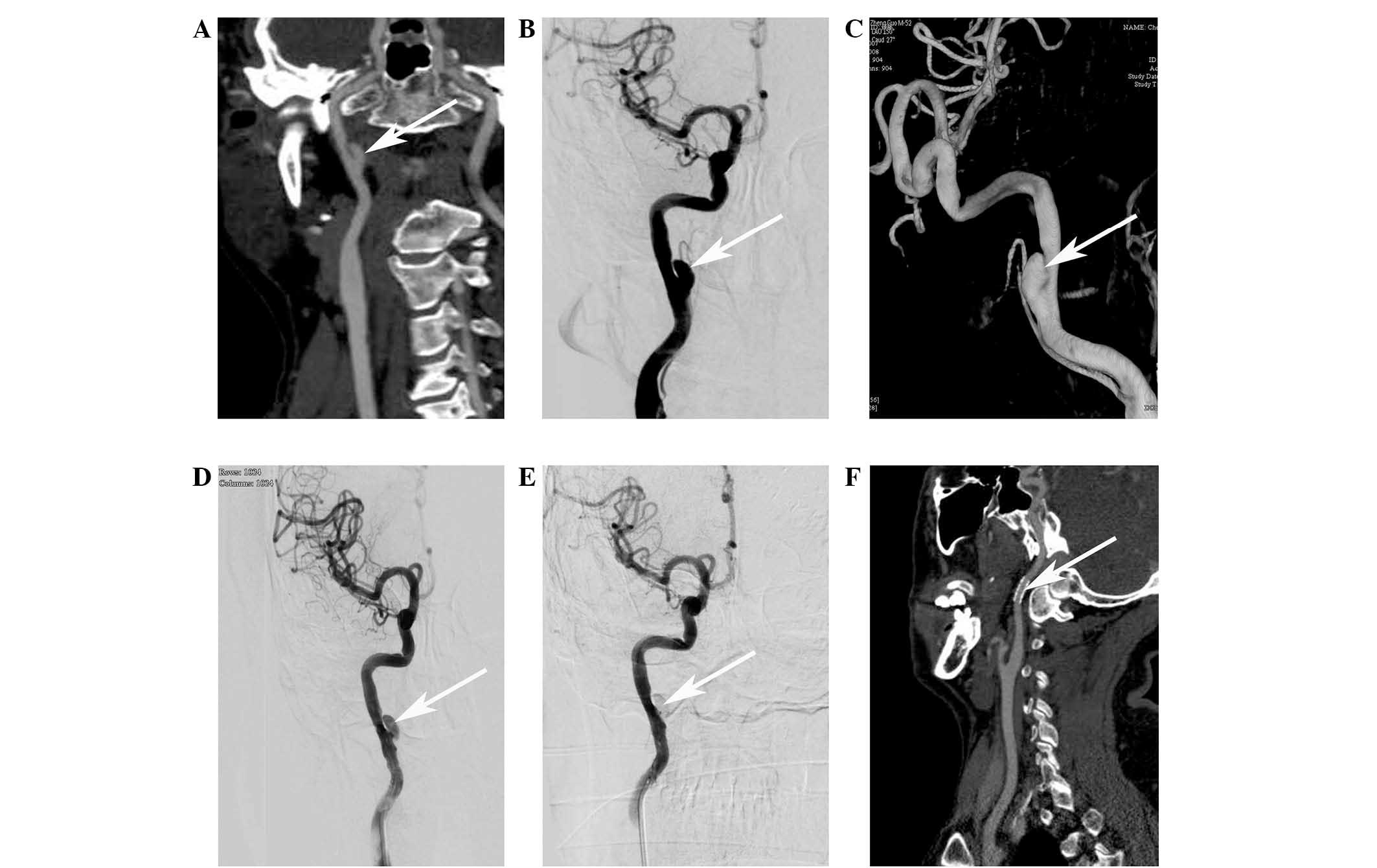
The present study was approved by the ethics committee of Lishui Central Hospital (Lishui, China). A 52-year-old male patient presented to our hospital on October 2, 2014, with the primary complaint of recurrent left limb weakness for 2 months. The patient had a history of hypertension for 5 years and was diagnosed with transient cerebral ischemia in Qingtian People's Hospital (Lishui, China) in September 2014. The patient was administered an oral intensive therapy for 12 days in Qingtian People's Hospital, including aspirin [100 mg once daily (qd); Bayer, Leverkusen, Germany], clopidogrel (75 mg qd; Plavix; Sanofi S.A. Paris, France) and atorvastatin (40 mg every night; Pfizer, Inc., Shanghai, China), the patient's recurrent left limb weakness persisted. Upon presentation to our hospital, blood pressure was recorded as 186/101 mmHg. This was treated with amlodipine (5 mg/day; China Resources Saike Pharmaceutical Co., Ltd., Beijing, China) and benazepril (10 mg/day; Shenzen Xinlitai Pharmaceutical Industry, Ltd., Shenzen, China). The patient had not experienced any recent injury or infections and revealed no other symptoms, such as pain or dysphasia. Physical examination revealed no abnormalities of the nervous system. Furthermore, laboratory tests and head magnetic resonance imaging revealed no further abnormalities. The limb muscle strength at the time of presentation was grade I–II (12). Computed tomography angiography (CTA) revealed a right ICAD located in the oropharyngeal segment (Fig. 1A). Digital subtraction angiography (DSA) was performed to further assess the oropharyngeal segment of the right ICAD (Fig. 1B and C). The aneurysm measured 10 mm in length and 5 mm in diameter, and was accompanied by a narrowed internal carotid artery (ICA) lumen. Due to the risk of rupture and bleeding with dissecting aneurysms or cerebral infarction by arterial occlusion, in addition to the poor efficacy of chemotherapy (13,14), endovascular interventional therapy was performed using a Willis covered stent (MicroPort Medical Co., Ltd., Shanghai, China).

Figure 1.

Angiograms of a 52-year-old man presenting with internal carotid artery dissection (ICAD) prior to and after endovascular reconstruction with a Willis covered stent (white arrow). (A) Computed tomography angiography (CTA) revealed a right ICAD located in the oropharyngeal segment. (B and C) Digital subtraction angiography (DSA) further assessed the oropharyngeal segment of the right ICAD. (D) DSA immediately after Willis covered stent placement revealed minimal endoleak into the aneurysm. (E) Repeated DSA following re-inflation of the Willis covered stent indicated the absence of the residual cavity of the aneurysm. (F) Follow-up CTA 3 months after the procedure revealed complete exclusion of the aneurysm and good patency of the parent artery.

An endovascular procedure was performed under regional anesthesia and full heparinization (6,000 units; intravenous injection 5 min prior to surgery) of the patient. A 6-French Envoy guiding catheter (Codman & Shurtleff, Inc., Raynham, MA, USA) was placed in the proximal cervical segment of the right ICA and a loach guidewire (Stryker Neurovascular, West Valley City, UT, USA) was navigated into a distal branch of the ICA. Using roadmap guidance, the Willis covered stent (4×16 mm; MicroPort Medical Co., Ltd.) was navigated over the micro guidewire and bridged the aneurysm orifice. DSA was performed to confirm the positioning. The stent was then deployed with 10 atm pressure. DSA was performed immediately after deflation of the balloon to confirm the correct placement of the stent and minimal endoleakage was observed (Fig. 1D). The graft was re-inflated with 12 atm pressure to cover the orifice of the dissecting aneurysm and to completely eliminate the endoleakage. Repeated DSAs were performed immediately after the procedure to confirm the disappearance of the residual cavity of the aneurysm (Fig. 1E). During and after surgery, the patient did not complain of discomfort and no neurological deficits or complications were observed. Low molecular weight heparin (4,000 units; Jiangsu Wanbang Biochemical Pharmaceuticals Co., Ltd., Xuzhou, China) was subcutaneously injected 4 h after the surgery and every 12 h thereafter for 3 days, and the patient was then prescribed with oral clopidogrel (75 mg/day) and aspirin (100 mg/day) for 6 months. Follow-up CTA obtained 3 months after the procedure revealed complete exclusion of the aneurysm and patency of the parental artery (Fig. 1F).

Discussion

ICAD is most frequently observed in young to middle-aged patients, and is an important cause of ischemic stroke. It may occur spontaneously or have a traumatic etiology. The reported incidence of symptomatic spontaneous dissection is ~3/100,000 per year (15). Systemic vascular disorders or vasculitides, infections, smoking, diabetes mellitus and hypertension have been reported as intrinsic etiological factors (16). As aforementioned, there is a male predominance regarding ICAD incidence rates (17). Furthermore, the clinical presentation of ICAD is variable: Patients may be asymptomatic or present with various symptoms, including pain, tinnitus, Horner's syndrome, contralateral limb weakness, and retinal or cerebral ischemic symptoms (16). The diagnosis of ICAD is generally made by CTA or magnetic resonance angiography, in combination with confirmation by DSA (18). The current study reported the case of 52-year-old male patient who presented with the primary symptom of left limb weakness and no typical clinical signs, such as pain, carotid territory ischemia or Horner syndrome. However, the patient had a history of hypertension. The ICAD was restricted to the oropharyngeal segment of the right ICA, as demonstrated by CTA and DSA.

Current therapeutic strategies for ICAD include medical anticlotting therapy, endovascular treatment or surgery; however, the selection of an appropriate therapy remains controversial (4). Anticoagulant therapy in the acute stage is justified based on the presumed embolic mechanism, and antiplatelet agents, including aspirin or clopidogrel, have also been used for residual luminal irregularity or in cases of ICAD without ischemic symptoms (2). Endovascular treatments, including angioplasty or stenting, may be considered if the patient has persistent high grade stenosis despite adequate anticoagulation and a persisting or newly developed aneurysm of the dissected internal carotid, or is contraindicated for anticoagulation therapy (3). Willis covered stent is an expandable balloon-covered stent specifically developed for intracranial vessels (19). It has been previously used for treatment of patients with intracranial aneurysms, internal carotid artery aneurysms and pseudoaneurysms, and has been suggested to be a safe, durable and efficacious option (20,21). However, endoleakage is a frequent problem following initial implantation (10), and in the case of a tortuous parent artery or potential side branch coverage, using a Willis covered stent is not recommended (22). In the present case, medical therapy with aspirin, clopidogrel and atorvastatin resulted in no obvious improvement of the recurrent contralateral limb weakness, therefore, endovascular reconstruction of the right ICAD was performed using a Willis covered stent; expandable balloon-covered stent specifically developed for intracranial vessels (14). The stent was successfully deployed and anchored at the targeted vessel segment and the performance of the patient was markedly improved thereafter. Antiplatelet therapy was reported to be important following the use of the device (23). Thus, the patient received an antiplatelet protocol and no significant in-stent stenosis was identified on the follow-up DSA. However, endoleakage following placement of the covered stent is a risk that needs to be carefully monitored.

In conclusion, present study revealed the significant role of interventional procedures using the Willis covered stent in the treatment of unilateral ICAD when medical therapy has proven ineffectual.

References

1 

Vicenzini E, Ricciardi MC, Sirimarco G, Di Piero V and Lenzi GL: Bilateral spontaneous internal carotid artery dissection with both early and very late recanalization: A case report. J Clin Ultrasound. 39:48–53. 2011. View Article : Google Scholar : PubMed/NCBI

2 

Soong B, Chan H and Ng F: A case of young man with stroke caused by internal carotid artery dissection. Hong Kong J Emerg Med. 19:492012.

3 

Kim Y-K and Schulman S: Cervical artery dissection: Pathology, epidemiology and management. Thromb Res. 123:810–821. 2009. View Article : Google Scholar : PubMed/NCBI

4 

Patel RR, Adam R, Maldjian C, Lincoln CM, Yuen A and Arneja A: Cervical carotid artery dissection: Current review of diagnosis and treatment. Cardiol Rev. 20:145–152. 2012. View Article : Google Scholar : PubMed/NCBI

5 

Mohan IV: Current optimal assessment and management of carotid and vertebral spontaneous and traumatic dissection. Angiology. 65:274–283. 2014. View Article : Google Scholar : PubMed/NCBI

6 

Bayır A, Aydoğdu Kıreşi D, Söylemez A and Demirci O: Cerebral infarction caused by traumatic carotid artery dissection. Ulus Travma Acil Cerrahi Derg. 18:347–350. 2012. View Article : Google Scholar : PubMed/NCBI

7 

Nakiri GS, Al-Khawaldeh M, Parente B, Kessler I, Gory B, Riva R and Mounayer C: Treatment of ruptured intra-cranial internal carotid artery dissection using a flow-diverter stent. J Neuroradiol. 39:271–275. 2012. View Article : Google Scholar : PubMed/NCBI

8 

Feugier P, Vulliez A, Bina N, Floccard B and Allaouchiche B: Urgent endovascular covered-stent treatment of internal carotid artery injury caused by a gunshot. Eur J Vasc Endovasc Surg. 34:663–665. 2007. View Article : Google Scholar : PubMed/NCBI

9 

Zhu YQ, Li MH, Lin F, Song DL, Tan HQ, Gu BX, Zhang HQ, Leng B and Zhang PL: Frequency and predictors of endoleaks and long-term patency after covered stent placement for the treatment of intracranial aneurysms: A prospective, non-randomised multicentre experience. Eur Radiol. 23:287–297. 2013. View Article : Google Scholar : PubMed/NCBI

10 

Tan HQ, Li MH, Li YD, Fang C, Wang JB, Wang W, Wang J, Zhang PL and Zhu YQ: Endovascular reconstruction with the Willis covered stent for the treatment of large or giant intracranial aneurysms. Cerebrovasc Dis. 31:154–162. 2011. View Article : Google Scholar : PubMed/NCBI

11 

Zhu YQ, Gu BX, Li MH, Wang W, Cheng YS, Tan HQ, Wang JB, Zhang PL and Ma LT: Safety, feasibility, and mid-term follow-up of Willis stent graft placement in the treatment of symptomatic complicated intra-or extra-cranial aneurysms: A multicenter experience. Minim Invasive Ther Allied Technol. 19:320–328. 2010. View Article : Google Scholar : PubMed/NCBI

12 

Ping JJ, Di CS and Ying CL: Neurology (7th). People's Medical Publishing House. Shelton, CT: 2013.

13 

Bogousslavsky J and Pierre P: Ischemic stroke in patients under age 45. Neurol Clin. 10:113–124. 1992.PubMed/NCBI

14 

Touzé E, Gauvrit JY, Moulin T, Meder JF, Bracard S and Mas JL: Multicenter Survey on Natural History of Cervical Artery Dissection: Risk of stroke and recurrent dissection after a cervical artery dissection: A multicenter study. Neurology. 61:1347–1351. 2003. View Article : Google Scholar : PubMed/NCBI

15 

Debette S and Leys D: Cervical-artery dissections: Predisposing factors, diagnosis, and outcome. Lancet Neurol. 8:668–678. 2009. View Article : Google Scholar : PubMed/NCBI

16 

Salvati B, Tesori MC, Lombardo F, Donello C, Lange KJ and Capoano R: Surgical treatment of spontaneous common carotid dissection: A case report. Ann Ital Chir. 85(ePub): 852014.PubMed/NCBI

17 

Metso AJ, Metso TM, Debette S, Dallongeville J, Lyrer PA, Pezzini A, Lichy C, Kloss M, Brandt T, Touzé E, et al: CADISP Group: Gender and cervical artery dissection. Eur J Neurol. 19:594–602. 2012. View Article : Google Scholar : PubMed/NCBI

18 

Hassan AE, Zacharatos H, Rodriguez GJ, Suri MF, Tariq N, Vazquez G, Tummala RP and Qureshi AI: Long-term clinical and angiographic outcomes in patients with spontaneous cervico-cranial arterial dissections treated with stent placement. J Neuroimaging. 22:384–393. 2012. View Article : Google Scholar : PubMed/NCBI

19 

Tan HQ, Li MH, Zhang PL, Li YD, Wang JB, Zhu YQ and Wang W: Reconstructive endovascular treatment of intracranial aneurysms with the Willis covered stent: Medium-term clinical and angiographic follow-up. J Neurosurg. 114:1014–1020. 2011. View Article : Google Scholar : PubMed/NCBI

20 

Wang W, Li MH, Li YD, Gu BX, Wang J, Zhang PL and Li M: Treatment of traumatic internal carotid artery pseudoaneurysms with the Willis covered stent: A prospective study. J Trauma. 70:816–822. 2011. View Article : Google Scholar : PubMed/NCBI

21 

Zhu YQ, Li MH, Fang C, et al: Application of the Willis covered stent in the treatment of aneurysm in the cisternal segment of the internal carotid artery: a pilot comparative study with midterm follow-up. J. Endovasc Ther. 17:55–65. 2010. View Article : Google Scholar : PubMed/NCBI

22 

Li M-H, Gao B-L, Wang Y-L, Fang C and Li Y-D: Management of pseudoaneurysms in the intracranial segment of the internal carotid artery with covered stents specially designed for use in the intracranial vasculature: Technical notes. Neuroradiology. 48:841–846. 2006. View Article : Google Scholar : PubMed/NCBI

23 

Wang JB, Li MH, Fang C, Wang W, Cheng YS, Zhang PL, Du ZY and Wang J: Endovascular treatment of giant intracranial aneurysms with willis covered stents: Technical case report. Neurosurgery. 62:E1176–E1177. 2008. View Article : Google Scholar : PubMed/NCBI

Related Articles

  • Abstract
  • View
  • Download
  • Twitter
Copy and paste a formatted citation
Spandidos Publications style
Cai X, Guan J, Ren S, Wei Y, Peng X, Qiu W and Chen J: Treatment of internal carotid artery dissection with Willis covered stent: A case report of recurrent limb weakness and no response to medical therapy. Exp Ther Med 11: 1983-1986, 2016.
APA
Cai, X., Guan, J., Ren, S., Wei, Y., Peng, X., Qiu, W., & Chen, J. (2016). Treatment of internal carotid artery dissection with Willis covered stent: A case report of recurrent limb weakness and no response to medical therapy. Experimental and Therapeutic Medicine, 11, 1983-1986. https://doi.org/10.3892/etm.2016.3112
MLA
Cai, X., Guan, J., Ren, S., Wei, Y., Peng, X., Qiu, W., Chen, J."Treatment of internal carotid artery dissection with Willis covered stent: A case report of recurrent limb weakness and no response to medical therapy". Experimental and Therapeutic Medicine 11.5 (2016): 1983-1986.
Chicago
Cai, X., Guan, J., Ren, S., Wei, Y., Peng, X., Qiu, W., Chen, J."Treatment of internal carotid artery dissection with Willis covered stent: A case report of recurrent limb weakness and no response to medical therapy". Experimental and Therapeutic Medicine 11, no. 5 (2016): 1983-1986. https://doi.org/10.3892/etm.2016.3112
Copy and paste a formatted citation
x
Spandidos Publications style
Cai X, Guan J, Ren S, Wei Y, Peng X, Qiu W and Chen J: Treatment of internal carotid artery dissection with Willis covered stent: A case report of recurrent limb weakness and no response to medical therapy. Exp Ther Med 11: 1983-1986, 2016.
APA
Cai, X., Guan, J., Ren, S., Wei, Y., Peng, X., Qiu, W., & Chen, J. (2016). Treatment of internal carotid artery dissection with Willis covered stent: A case report of recurrent limb weakness and no response to medical therapy. Experimental and Therapeutic Medicine, 11, 1983-1986. https://doi.org/10.3892/etm.2016.3112
MLA
Cai, X., Guan, J., Ren, S., Wei, Y., Peng, X., Qiu, W., Chen, J."Treatment of internal carotid artery dissection with Willis covered stent: A case report of recurrent limb weakness and no response to medical therapy". Experimental and Therapeutic Medicine 11.5 (2016): 1983-1986.
Chicago
Cai, X., Guan, J., Ren, S., Wei, Y., Peng, X., Qiu, W., Chen, J."Treatment of internal carotid artery dissection with Willis covered stent: A case report of recurrent limb weakness and no response to medical therapy". Experimental and Therapeutic Medicine 11, no. 5 (2016): 1983-1986. https://doi.org/10.3892/etm.2016.3112
Follow us
  • Twitter
  • LinkedIn
  • Facebook
About
  • Spandidos Publications
  • Careers
  • Cookie Policy
  • Privacy Policy
How can we help?
  • Help
  • Live Chat
  • Contact
  • Email to our Support Team