Spandidos Publications Logo
  • About
    • About Spandidos
    • Aims and Scopes
    • Abstracting and Indexing
    • Editorial Policies
    • Reprints and Permissions
    • Job Opportunities
    • Terms and Conditions
    • Contact
  • Journals
    • All Journals
    • Oncology Letters
      • Oncology Letters
      • Information for Authors
      • Editorial Policies
      • Editorial Board
      • Aims and Scope
      • Abstracting and Indexing
      • Bibliographic Information
      • Archive
    • International Journal of Oncology
      • International Journal of Oncology
      • Information for Authors
      • Editorial Policies
      • Editorial Board
      • Aims and Scope
      • Abstracting and Indexing
      • Bibliographic Information
      • Archive
    • Molecular and Clinical Oncology
      • Molecular and Clinical Oncology
      • Information for Authors
      • Editorial Policies
      • Editorial Board
      • Aims and Scope
      • Abstracting and Indexing
      • Bibliographic Information
      • Archive
    • Experimental and Therapeutic Medicine
      • Experimental and Therapeutic Medicine
      • Information for Authors
      • Editorial Policies
      • Editorial Board
      • Aims and Scope
      • Abstracting and Indexing
      • Bibliographic Information
      • Archive
    • International Journal of Molecular Medicine
      • International Journal of Molecular Medicine
      • Information for Authors
      • Editorial Policies
      • Editorial Board
      • Aims and Scope
      • Abstracting and Indexing
      • Bibliographic Information
      • Archive
    • Biomedical Reports
      • Biomedical Reports
      • Information for Authors
      • Editorial Policies
      • Editorial Board
      • Aims and Scope
      • Abstracting and Indexing
      • Bibliographic Information
      • Archive
    • Oncology Reports
      • Oncology Reports
      • Information for Authors
      • Editorial Policies
      • Editorial Board
      • Aims and Scope
      • Abstracting and Indexing
      • Bibliographic Information
      • Archive
    • Molecular Medicine Reports
      • Molecular Medicine Reports
      • Information for Authors
      • Editorial Policies
      • Editorial Board
      • Aims and Scope
      • Abstracting and Indexing
      • Bibliographic Information
      • Archive
    • World Academy of Sciences Journal
      • World Academy of Sciences Journal
      • Information for Authors
      • Editorial Policies
      • Editorial Board
      • Aims and Scope
      • Abstracting and Indexing
      • Bibliographic Information
      • Archive
    • International Journal of Functional Nutrition
      • International Journal of Functional Nutrition
      • Information for Authors
      • Editorial Policies
      • Editorial Board
      • Aims and Scope
      • Abstracting and Indexing
      • Bibliographic Information
      • Archive
    • International Journal of Epigenetics
      • International Journal of Epigenetics
      • Information for Authors
      • Editorial Policies
      • Editorial Board
      • Aims and Scope
      • Abstracting and Indexing
      • Bibliographic Information
      • Archive
    • Medicine International
      • Medicine International
      • Information for Authors
      • Editorial Policies
      • Editorial Board
      • Aims and Scope
      • Abstracting and Indexing
      • Bibliographic Information
      • Archive
  • Articles
  • Information
    • Information for Authors
    • Information for Reviewers
    • Information for Librarians
    • Information for Advertisers
    • Conferences
  • Language Editing
Spandidos Publications Logo
  • About
    • About Spandidos
    • Aims and Scopes
    • Abstracting and Indexing
    • Editorial Policies
    • Reprints and Permissions
    • Job Opportunities
    • Terms and Conditions
    • Contact
  • Journals
    • All Journals
    • Biomedical Reports
      • Information for Authors
      • Editorial Policies
      • Editorial Board
      • Aims and Scope
      • Abstracting and Indexing
      • Bibliographic Information
      • Archive
    • Experimental and Therapeutic Medicine
      • Information for Authors
      • Editorial Policies
      • Editorial Board
      • Aims and Scope
      • Abstracting and Indexing
      • Bibliographic Information
      • Archive
    • International Journal of Epigenetics
      • Information for Authors
      • Editorial Policies
      • Editorial Board
      • Aims and Scope
      • Abstracting and Indexing
      • Bibliographic Information
      • Archive
    • International Journal of Functional Nutrition
      • Information for Authors
      • Editorial Policies
      • Editorial Board
      • Aims and Scope
      • Abstracting and Indexing
      • Bibliographic Information
      • Archive
    • International Journal of Molecular Medicine
      • Information for Authors
      • Editorial Policies
      • Editorial Board
      • Aims and Scope
      • Abstracting and Indexing
      • Bibliographic Information
      • Archive
    • International Journal of Oncology
      • Information for Authors
      • Editorial Policies
      • Editorial Board
      • Aims and Scope
      • Abstracting and Indexing
      • Bibliographic Information
      • Archive
    • Medicine International
      • Information for Authors
      • Editorial Policies
      • Editorial Board
      • Aims and Scope
      • Abstracting and Indexing
      • Bibliographic Information
      • Archive
    • Molecular and Clinical Oncology
      • Information for Authors
      • Editorial Policies
      • Editorial Board
      • Aims and Scope
      • Abstracting and Indexing
      • Bibliographic Information
      • Archive
    • Molecular Medicine Reports
      • Information for Authors
      • Editorial Policies
      • Editorial Board
      • Aims and Scope
      • Abstracting and Indexing
      • Bibliographic Information
      • Archive
    • Oncology Letters
      • Information for Authors
      • Editorial Policies
      • Editorial Board
      • Aims and Scope
      • Abstracting and Indexing
      • Bibliographic Information
      • Archive
    • Oncology Reports
      • Information for Authors
      • Editorial Policies
      • Editorial Board
      • Aims and Scope
      • Abstracting and Indexing
      • Bibliographic Information
      • Archive
    • World Academy of Sciences Journal
      • Information for Authors
      • Editorial Policies
      • Editorial Board
      • Aims and Scope
      • Abstracting and Indexing
      • Bibliographic Information
      • Archive
  • Articles
  • Information
    • For Authors
    • For Reviewers
    • For Librarians
    • For Advertisers
    • Conferences
  • Language Editing
Login Register Submit
  • This site uses cookies
  • You can change your cookie settings at any time by following the instructions in our Cookie Policy. To find out more, you may read our Privacy Policy.

    I agree
Search articles by DOI, keyword, author or affiliation
Search
Advanced Search
presentation
Experimental and Therapeutic Medicine
Join Editorial Board Propose a Special Issue
Print ISSN: 1792-0981 Online ISSN: 1792-1015
Journal Cover
June-2016 Volume 11 Issue 6

Full Size Image

Sign up for eToc alerts
Recommend to Library

Journals

International Journal of Molecular Medicine

International Journal of Molecular Medicine

International Journal of Molecular Medicine is an international journal devoted to molecular mechanisms of human disease.

International Journal of Oncology

International Journal of Oncology

International Journal of Oncology is an international journal devoted to oncology research and cancer treatment.

Molecular Medicine Reports

Molecular Medicine Reports

Covers molecular medicine topics such as pharmacology, pathology, genetics, neuroscience, infectious diseases, molecular cardiology, and molecular surgery.

Oncology Reports

Oncology Reports

Oncology Reports is an international journal devoted to fundamental and applied research in Oncology.

Experimental and Therapeutic Medicine

Experimental and Therapeutic Medicine

Experimental and Therapeutic Medicine is an international journal devoted to laboratory and clinical medicine.

Oncology Letters

Oncology Letters

Oncology Letters is an international journal devoted to Experimental and Clinical Oncology.

Biomedical Reports

Biomedical Reports

Explores a wide range of biological and medical fields, including pharmacology, genetics, microbiology, neuroscience, and molecular cardiology.

Molecular and Clinical Oncology

Molecular and Clinical Oncology

International journal addressing all aspects of oncology research, from tumorigenesis and oncogenes to chemotherapy and metastasis.

World Academy of Sciences Journal

World Academy of Sciences Journal

Multidisciplinary open-access journal spanning biochemistry, genetics, neuroscience, environmental health, and synthetic biology.

International Journal of Functional Nutrition

International Journal of Functional Nutrition

Open-access journal combining biochemistry, pharmacology, immunology, and genetics to advance health through functional nutrition.

International Journal of Epigenetics

International Journal of Epigenetics

Publishes open-access research on using epigenetics to advance understanding and treatment of human disease.

Medicine International

Medicine International

An International Open Access Journal Devoted to General Medicine.

Journal Cover
June-2016 Volume 11 Issue 6

Full Size Image

Sign up for eToc alerts
Recommend to Library

  • Article
  • Citations
    • Cite This Article
    • Download Citation
    • Create Citation Alert
    • Remove Citation Alert
    • Cited By
  • Similar Articles
    • Related Articles (in Spandidos Publications)
    • Similar Articles (Google Scholar)
    • Similar Articles (PubMed)
  • Download PDF
  • Download XML
  • View XML
Article Open Access

Hypoxia induces autophagy in cardiomyocytes via a hypoxia‑inducible factor 1‑dependent mechanism

  • Authors:
    • Lan Gui
    • Batu Liu
    • Guang Lv
  • View Affiliations / Copyright

    Affiliations: Department of Basic Theory, Sports Institute of Inner Mongolia University for the Nationalities, Tongliao, Inner Mongolia 028041, P.R. China, Sports Department, Sports Institute of Inner Mongolia University for the Nationalities, Tongliao, Inner Mongolia 028041, P.R. China, Institute of Pathogenic Microbiology and Immunology, Inner Mongolia University for the Nationalities, Tongliao, Inner Mongolia 028041, P.R. China
    Copyright: © Gui et al. This is an open access article distributed under the terms of Creative Commons Attribution License.
  • Pages: 2233-2239
    |
    Published online on: March 24, 2016
       https://doi.org/10.3892/etm.2016.3190
  • Expand metrics +
Metrics: Total Views: 0 (Spandidos Publications: | PMC Statistics: )
Metrics: Total PDF Downloads: 0 (Spandidos Publications: | PMC Statistics: )
Cited By (CrossRef): 0 citations Loading Articles...

This article is mentioned in:


Abstract

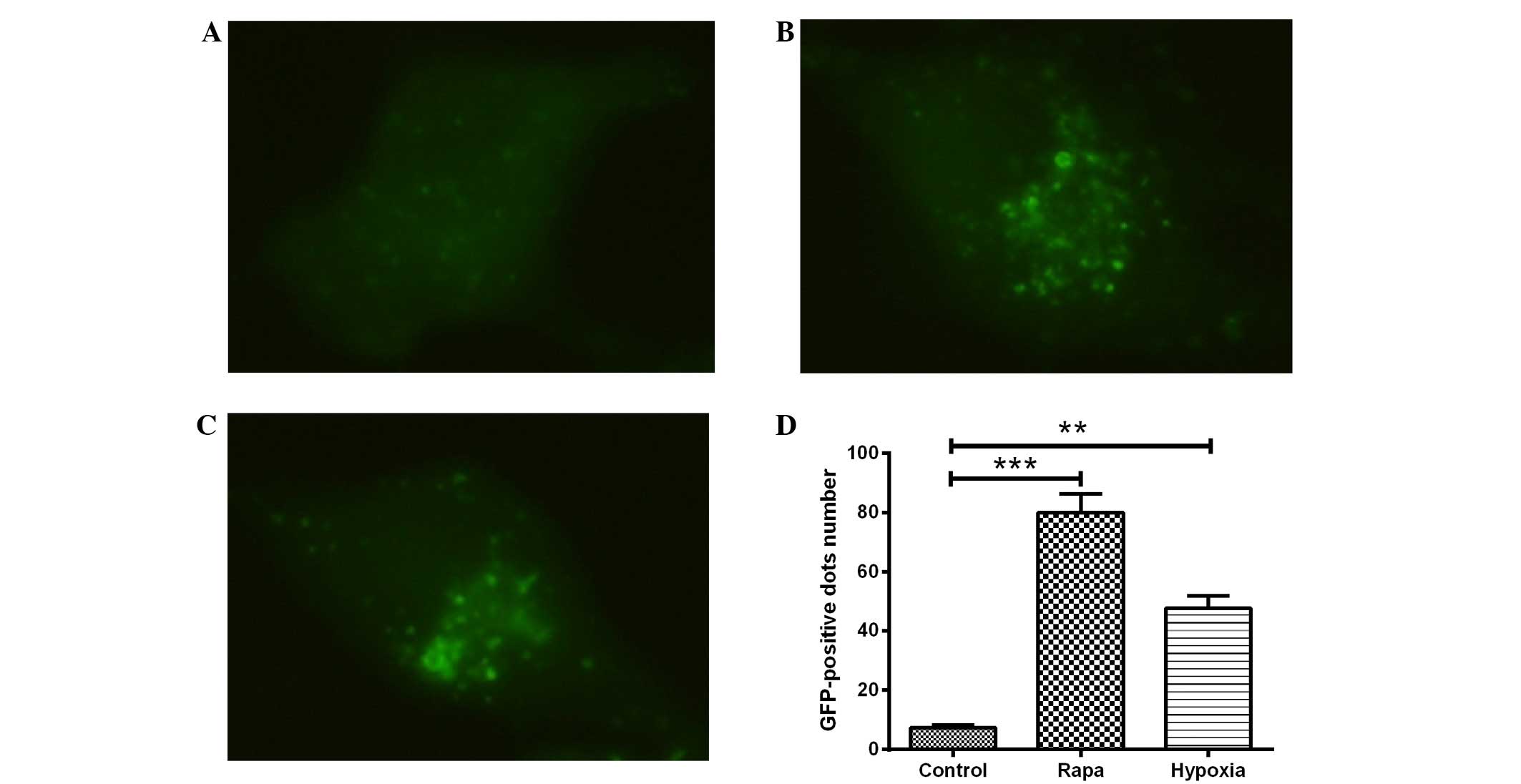
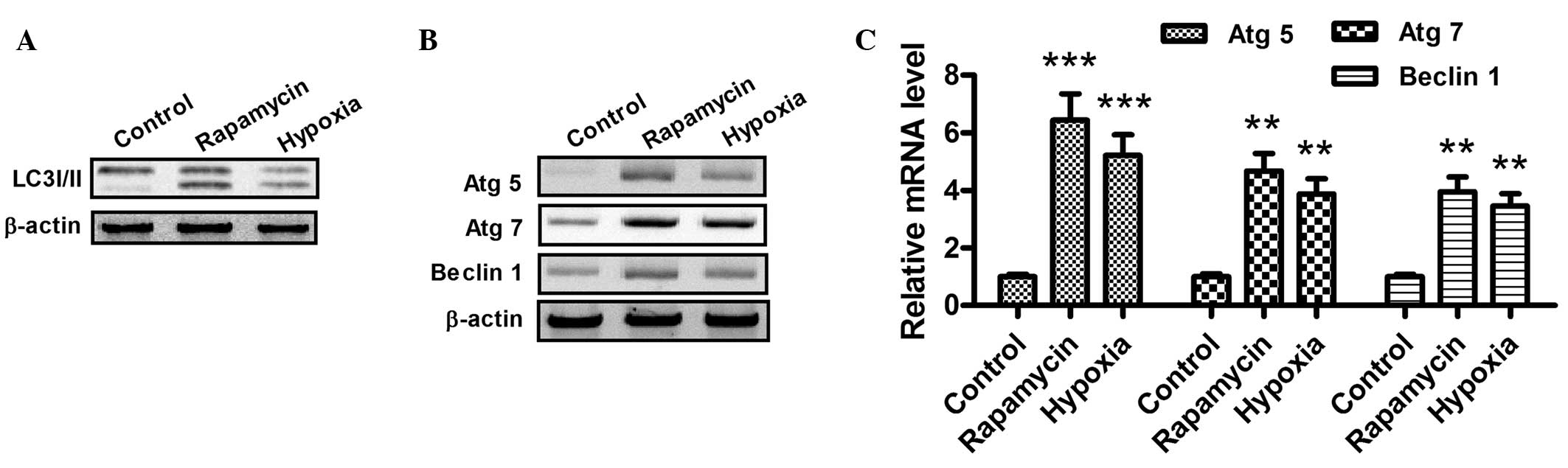
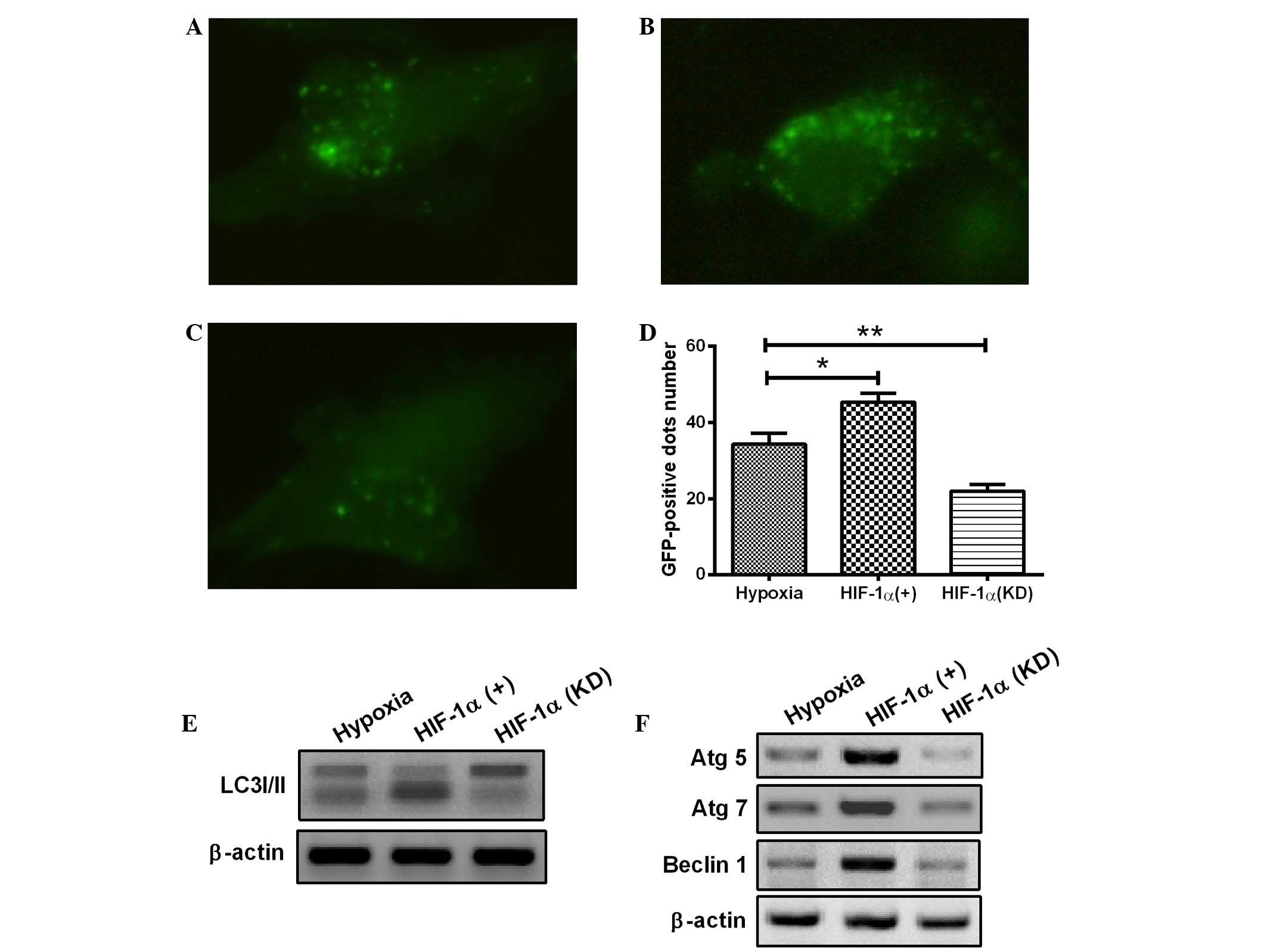
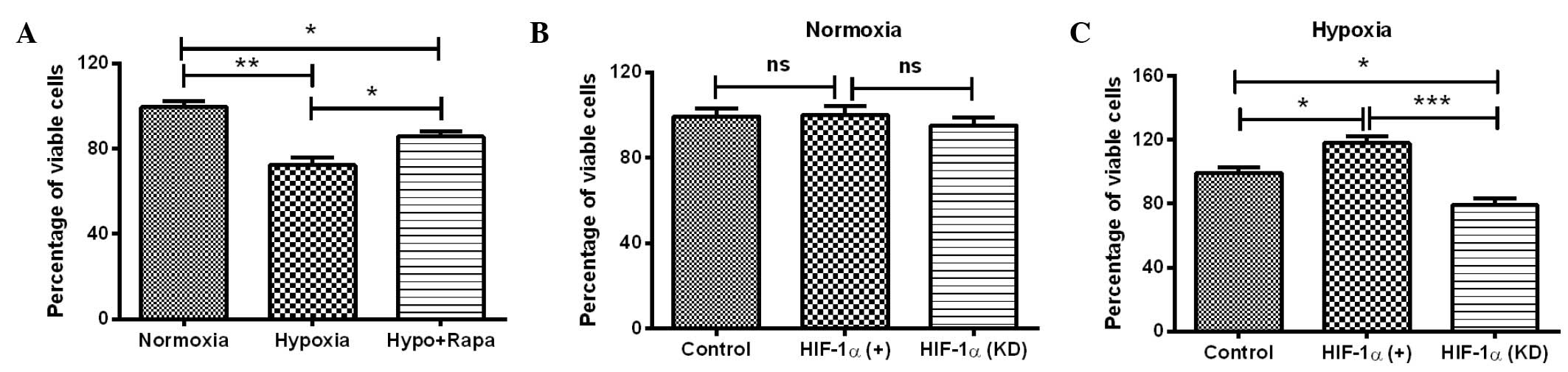
Hypoxia frequently accompanies such vascular disorders as atherosclerosis, thrombosis and ischemia/reperfusion injury. Myocardial ischemia/reperfusion, in particular, is a major contributor to cardiomyocyte impairment. Autophagy is a dynamic, self‑catabolic process that has been implicated in a wide range of physiological processes and the pathogenesis of diverse diseases. The aim of the present study was to investigate the promotion of autophagy by hypoxia in a rat H9c2 heart cell line and determine the regulatory role of hypoxia‑inducible factor 1 (HIF‑1) in the hypoxia‑induced autophagy in H9c2 cells, using quantitative green fluorescent protein‑microtubule‑associated protein 1 light chain 3 analysis and electron microscopy of autophagic vesicles. In addition, western blot and quantitative polymerase chain reaction analysis of autophagy‑associated markers was conducted. In addition, the role of HIF‑1‑mediated autophagy in the hypoxia‑induced impairment of H9c2 cells was examined, as a measure of cellular viability, using an MTT assay. The results demonstrated that autophagy was induced in H9c2 cells under hypoxia, and the autophagy induction triggered by hypoxia could be enhanced by HIF‑1α overexpression and inhibited by HIF‑1α knockdown. Furthermore, the HIF‑1‑mediated autophagy ameliorated the reduction in the H9c2 cell viability induced by hypoxia. These findings provide a novel insight into the hypoxic‑ischemic injury to cardiomyocytes and give evidence for the occurrence of HIF‑1‑mediated autophagy in myocardial ischemia.
View Figures

Figure 1

Figure 2

Figure 3

Figure 4

View References

1 

Gautier-Veyret E, Arnaud C, Bäck M, Pépin JL, Petri MH, Baguet JP, Tamisier R, Lévy P and Stanke-Labesque F: Intermittent hypoxia-activated cyclooxygenase pathway: Role in atherosclerosis. Eur Respir J. 42:404–413. 2013. View Article : Google Scholar : PubMed/NCBI

2 

Bovill EG and van der Vliet A: Venous valvular stasis-associated hypoxia and thrombosis: What is the link? Annu Rev Physiol. 73:527–545. 2011. View Article : Google Scholar : PubMed/NCBI

3 

Matsushima S, Kuroda J, Ago T, Zhai P, Ikeda Y, Oka S, Fong GH, Tian R and Sadoshima J: Broad suppression of NADPH oxidase activity exacerbates ischemia/reperfusion injury through inadvertent downregulation of hypoxia-inducible factor-1α and upregulation of peroxisome proliferator-activated receptor-α. Circ Res. 112:1135–1149. 2013. View Article : Google Scholar : PubMed/NCBI

4 

Talukder MA, Elnakish MT, Yang F, Nishijima Y, Alhaj MA, Velayutham M, Hassanain HH and Zweier JL: Cardiomyocyte-specific overexpression of an active form of Rac predisposes the heart to increased myocardial stunning and ischemia-reperfusion injury. Am J Physiol Heart Circ Physiol. 304:H294–H302. 2013. View Article : Google Scholar : PubMed/NCBI

5 

Goldhaber JI and Weiss JN: Oxygen free radicals and cardiac reperfusion abnormalities. Hypertension. 20:118–127. 1992. View Article : Google Scholar : PubMed/NCBI

6 

Cheng TO: Coronary heart disease in China. Hosp Med. 60:4561999.PubMed/NCBI

7 

Barth J, Schneider S and von Känel R: Lack of social support in the etiology and the prognosis of coronary heart disease: A systematic review and meta-analysis. Psychosom Med. 72:229–238. 2010. View Article : Google Scholar : PubMed/NCBI

8 

Ostádal B: Myocardial ischemic injury and protection. Exp Clin Cardiol. 9:213–217. 2004.PubMed/NCBI

9 

Ost'ádal B, Ost'ádalova I, Skárka L, Kolár F and Kopecký J: Ischemic injury of the developing heart. Exp Clin Cardiol. 7:93–98. 2002.PubMed/NCBI

10 

Tong W, Xiong F, Li Y and Zhang L: Hypoxia inhibits cardiomyocyte proliferation in fetal rat hearts via upregulating TIMP-4. Am J Physiol Regul Integr Comp Physiol. 304:R613–R620. 2013. View Article : Google Scholar : PubMed/NCBI

11 

Botting KJ, McMillen IC, Forbes H, Nyengaard JR and Morrison JL: Chronic hypoxemia in late gestation decreases cardiomyocyte number but does not change expression of hypoxia-responsive genes. J Am Heart Assoc. 3:2014. View Article : Google Scholar : PubMed/NCBI

12 

Ramjiawan A, Bagchi RA, Blant A, Albak L, Cavasin MA, Horn TR, McKinsey TA and Czubryt MP: Roles of histone deacetylation and AMP kinase in regulation of cardiomyocyte PGC-1α gene expression in hypoxia. Am J Physiol Cell Physiol. 304:C1064–C1072. 2013. View Article : Google Scholar : PubMed/NCBI

13 

Muraguchi T, Kawawa A and Kubota S: Prohibitin protects against hypoxia-induced H9c2 cardiomyocyte cell death. Biomed Res. 31:113–122. 2010. View Article : Google Scholar : PubMed/NCBI

14 

Wang W, Peng Y, Wang Y, Zhao X and Yuan Z: Anti-apoptotic effect of heat shock protein 90 on hypoxia-mediated cardiomyocyte damage is mediated via the phosphatidylinositol 3-kinase/AKT pathway. Clin Exp Pharmacol Physiol. 36:899–903. 2009. View Article : Google Scholar : PubMed/NCBI

15 

Shohet RV and Garcia JA: Keeping the engine primed: HIF factors as key regulators of cardiac metabolism and angiogenesis during ischemia. J Mol Med (Berl). 85:1309–1315. 2007. View Article : Google Scholar : PubMed/NCBI

16 

Taylor CT: Mitochondria and cellular oxygen sensing in the HIF pathway. Biochem J. 409:19–26. 2008. View Article : Google Scholar : PubMed/NCBI

17 

Semenza GL: Hypoxia-inducible factor 1: Regulator of mitochondrial metabolism and mediator of ischemic preconditioning. Biochim Biophys Acta. 1813:1263–1268. 2011. View Article : Google Scholar : PubMed/NCBI

18 

Wang GL, Jiang BH, Rue EA and Semenza GL: Hypoxia-inducible factor 1 is a basic-helix-loop-helix-PAS heterodimer regulated by cellular O2 tension. Proc Natl Acad Sci USA. 92:5510–5514. 1995. View Article : Google Scholar : PubMed/NCBI

19 

Salceda S and Caro J: Hypoxia-inducible factor 1alpha (HIF-1alpha) protein is rapidly degraded by the ubiquitin-proteasome system under normoxic conditions. Its stabilization by hypoxia depends on redox-induced changes. J Biol Chem. 272:22642–22647. 1997. View Article : Google Scholar : PubMed/NCBI

20 

Cai Z, Manalo DJ, Wei G, Rodriguez ER, Fox-Talbot K, Lu H, Zweier JL and Semenza GL: Hearts from rodents exposed to intermittent hypoxia or erythropoietin are protected against ischemia-reperfusion injury. Circulation. 108:79–85. 2003. View Article : Google Scholar : PubMed/NCBI

21 

Yuan G, Nanduri J, Bhasker CR, Semenza GL and Prabhakar NR: Ca2+/calmodulin kinase-dependent activation of hypoxia inducible factor 1 transcriptional activity in cells subjected to intermittent hypoxia. J Biol Chem. 280:4321–4328. 2005. View Article : Google Scholar : PubMed/NCBI

22 

Yuan G, Nanduri J, Khan S, Semenza GL and Prabhakar NR: Induction of HIF-1alpha expression by intermittent hypoxia: Involvement of NADPH oxidase, Ca2+ signaling, prolyl hydroxylases and mTOR. J Cell Physiol. 217:674–685. 2008. View Article : Google Scholar : PubMed/NCBI

23 

Lee SH, Wolf PL, Escudero R, Deutsch R, Jamieson SW and Thistlethwaite PA: Early expression of angiogenesis factors in acute myocardial ischemia and infarction. N Engl J Med. 342:626–633. 2000. View Article : Google Scholar : PubMed/NCBI

24 

Hlatky MA, Quertermous T, Boothroyd DB, Priest JR, Glassford AJ, Myers RM, Fortmann SP, Iribarren C, Tabor HK, Assimes TL, et al: Polymorphisms in hypoxia inducible factor 1 and the initial clinical presentation of coronary disease. Am Heart J. 154:1035–1042. 2007. View Article : Google Scholar : PubMed/NCBI

25 

Resar JR, Roguin A, Voner J, Nasir K, Hennebry TA, Miller JM, Ingersoll R, Kasch LM and Semenza GL: Hypoxia-inducible factor 1alpha polymorphism and coronary collaterals in patients with ischemic heart disease. Chest. 128:787–791. 2005. View Article : Google Scholar : PubMed/NCBI

26 

Shintani T and Klionsky DJ: Autophagy in health and disease: A double-edged sword. Science. 306:990–995. 2004. View Article : Google Scholar : PubMed/NCBI

27 

Todde V, Veenhuis M and van der Klei IJ: Autophagy: Principles and significance in health and disease. Biochim Biophys Acta. 1792:3–13. 2009. View Article : Google Scholar : PubMed/NCBI

28 

Kundu M, Lindsten T, Yang CY, Wu J, Zhao F, Zhang J, Selak MA, Ney PA and Thompson CB: Ulk1 plays a critical role in the autophagic clearance of mitochondria and ribosomes during reticulocyte maturation. Blood. 112:1493–1502. 2008. View Article : Google Scholar : PubMed/NCBI

29 

Pua HH, Guo J, Komatsu M and He YW: Autophagy is essential for mitochondrial clearance in mature T lymphocytes. J Immunol. 182:4046–4055. 2009. View Article : Google Scholar : PubMed/NCBI

30 

Srinivas V, Bohensky J and Shapiro IM: Autophagy: A new phase in the maturation of growth plate chondrocytes is regulated by HIF, mTOR and AMP kinase. Cells Tissues Organs. 189:88–92. 2009. View Article : Google Scholar : PubMed/NCBI

31 

Wild P, McEwan DG and Dikic I: The LC3 interactome at a glance. J Cell Sci. 127:3–9. 2014. View Article : Google Scholar : PubMed/NCBI

32 

Sun Y and Peng ZL: Programmed cell death and cancer. Postgrad Med J. 85:134–140. 2009. View Article : Google Scholar : PubMed/NCBI

33 

Rayner BS, Duong TT, Myers SJ and Witting PK: Protective effect of a synthetic anti-oxidant on neuronal cell apoptosis resulting from experimental hypoxia re-oxygenation injury. J Neurochem. 97:211–221. 2006. View Article : Google Scholar : PubMed/NCBI

34 

Hartel FV, Holl M, Arshad M, Aslam M, Gündüz D, Weyand M, Micoogullari M, Abdallah Y, Piper HM and Noll T: Transient hypoxia induces ERK-dependent anti-apoptotic cell survival in endothelial cells. Am J Physiol Cell Physiol. 298:C1501–C1509. 2010. View Article : Google Scholar : PubMed/NCBI

35 

Bhogal RH, Weston CJ, Curbishley SM, Bhatt AN, Adams DH and Afford SC: Variable responses of small and large human hepatocytes to hypoxia and hypoxia/reoxygenation (H-R). Febs Lett. 585:935–941. 2011. View Article : Google Scholar : PubMed/NCBI

36 

Hess ML, Barnhart GR, Crute S, Komwatana P, Krause S and Greenfield LJ: Mechanical and biochemical effects of transient myocardial ischemia. J Surg Res. 26:175–184. 1979. View Article : Google Scholar : PubMed/NCBI

37 

Jeroudi MO, Hartley CJ and Bolli R: Myocardial reperfusion injury: Role of oxygen radicals and potential therapy with antioxidants. Am J Cardiol. 73:2B–7B. 1994. View Article : Google Scholar : PubMed/NCBI

38 

Bolli R and Marbán E: Molecular and cellular mechanisms of myocardial stunning. Physiol Rev. 79:609–634. 1999.PubMed/NCBI

39 

Bartolome A, Guillen C and Benito M: Autophagy plays a protective role in endoplasmic reticulum stress-mediated pancreatic β cell death. Autophagy. 8:1757–1768. 2012. View Article : Google Scholar : PubMed/NCBI

40 

Zhang T, Qi Y, Liao M, Xu M, Bower KA, Frank JA, Shen HM, Luo J, Shi X and Chen G: Autophagy is a cell self-protective mechanism against arsenic-induced cell transformation. Toxicol Sci. 130:298–308. 2012. View Article : Google Scholar : PubMed/NCBI

41 

Chen G, Ke Z, Xu M, Liao M, Wang X, Qi Y, Zhang T, Frank JA, Bower KA, Shi X and Luo J: Autophagy is a protective response to ethanol neurotoxicity. Autophagy. 8:1577–1589. 2012. View Article : Google Scholar : PubMed/NCBI

42 

Marino ML, Pellegrini P, Di Lernia G, Djavaheri-Mergny M, Brnjic S, Zhang X, Hägg M, Linder S, Fais S, Codogno P and De Milito A: Autophagy is a protective mechanism for human melanoma cells under acidic stress. J Biol Chem. 287:30664–30676. 2012. View Article : Google Scholar : PubMed/NCBI

43 

Wang D, Ma Y, Li Z, Kang K, Sun X, Pan S, Wang J, Pan H, Liu L, Liang D and Jiang H: The role of AKT1 and autophagy in the protective effect of hydrogen sulphide against hepatic ischemia/reperfusion injury in mice. Autophagy. 8:954–962. 2012. View Article : Google Scholar : PubMed/NCBI

44 

Bhogal RH, Weston CJ, Curbishley SM, Adams DH and Afford SC: Autophagy: A cyto-protective mechanism which prevents primary human hepatocyte apoptosis during oxidative stress. Autophagy. 8:545–558. 2012. View Article : Google Scholar : PubMed/NCBI

45 

Liao X, Sluimer JC, Wang Y, Subramanian M, Brown K, Pattison JS, Robbins J, Martinez J and Tabas I: Macrophage autophagy plays a protective role in advanced atherosclerosis. Cell Metab. 15:545–553. 2012. View Article : Google Scholar : PubMed/NCBI

46 

Semenza GL: HIF-1 and mechanisms of hypoxia sensing. Curr Opin Cell Biol. 13:167–171. 2001. View Article : Google Scholar : PubMed/NCBI

47 

Iyer NV, Kotch LE, Agani F, Leung SW, Laughner E, Wenger RH, Gassmann M, Gearhart JD, Lawler AM, Yu AY and Semenza GL: Cellular and developmental control of O2 homeostasis by hypoxia-inducible factor 1 alpha. Genes Dev. 12:149–162. 1998. View Article : Google Scholar : PubMed/NCBI

48 

Yu AY, Shimoda LA, Iyer NV, Huso DL, Sun X, McWilliams R, Beaty T, Sham JS, Wiener CM, Sylvester JT and Semenza GL: Impaired physiological responses to chronic hypoxia in mice partially deficient for hypoxia-inducible factor 1alpha. J Clin Invest. 103:691–696. 1999. View Article : Google Scholar : PubMed/NCBI

49 

Semenza GL: Regulation of oxygen homeostasis by hypoxia-inducible factor 1. Physiology (Bethesda). 24:97–106. 2009. View Article : Google Scholar : PubMed/NCBI

Related Articles

  • Abstract
  • View
  • Download
  • Twitter
Copy and paste a formatted citation
Spandidos Publications style
Gui L, Liu B and Lv G: Hypoxia induces autophagy in cardiomyocytes via a hypoxia‑inducible factor 1‑dependent mechanism. Exp Ther Med 11: 2233-2239, 2016.
APA
Gui, L., Liu, B., & Lv, G. (2016). Hypoxia induces autophagy in cardiomyocytes via a hypoxia‑inducible factor 1‑dependent mechanism. Experimental and Therapeutic Medicine, 11, 2233-2239. https://doi.org/10.3892/etm.2016.3190
MLA
Gui, L., Liu, B., Lv, G."Hypoxia induces autophagy in cardiomyocytes via a hypoxia‑inducible factor 1‑dependent mechanism". Experimental and Therapeutic Medicine 11.6 (2016): 2233-2239.
Chicago
Gui, L., Liu, B., Lv, G."Hypoxia induces autophagy in cardiomyocytes via a hypoxia‑inducible factor 1‑dependent mechanism". Experimental and Therapeutic Medicine 11, no. 6 (2016): 2233-2239. https://doi.org/10.3892/etm.2016.3190
Copy and paste a formatted citation
x
Spandidos Publications style
Gui L, Liu B and Lv G: Hypoxia induces autophagy in cardiomyocytes via a hypoxia‑inducible factor 1‑dependent mechanism. Exp Ther Med 11: 2233-2239, 2016.
APA
Gui, L., Liu, B., & Lv, G. (2016). Hypoxia induces autophagy in cardiomyocytes via a hypoxia‑inducible factor 1‑dependent mechanism. Experimental and Therapeutic Medicine, 11, 2233-2239. https://doi.org/10.3892/etm.2016.3190
MLA
Gui, L., Liu, B., Lv, G."Hypoxia induces autophagy in cardiomyocytes via a hypoxia‑inducible factor 1‑dependent mechanism". Experimental and Therapeutic Medicine 11.6 (2016): 2233-2239.
Chicago
Gui, L., Liu, B., Lv, G."Hypoxia induces autophagy in cardiomyocytes via a hypoxia‑inducible factor 1‑dependent mechanism". Experimental and Therapeutic Medicine 11, no. 6 (2016): 2233-2239. https://doi.org/10.3892/etm.2016.3190
Follow us
  • Twitter
  • LinkedIn
  • Facebook
About
  • Spandidos Publications
  • Careers
  • Cookie Policy
  • Privacy Policy
How can we help?
  • Help
  • Live Chat
  • Contact
  • Email to our Support Team