Introduction
Colon cancer, one of the most significant
malignancies worldwide, is the second most common cause of
cancer-associated mortality in the USA (1–3). While
it has been known for hundreds of years, surgical resection and
chemotherapy still dominate current regimens and have provided only
limited improvement of the 5-year survival rate (4–6). The
current knowledge on the molecular mechanisms of the genesis and
progression of colon cancer is limited and its expansion may
provide approaches for developing targeted regimens. Identification
of novel molecular pathways may overcome this current impasse
(7).
The sonic hedgehog (Shh) signaling pathway has
become a focus of cancer research in recent years. Shh signaling is
a highly evolutionarily conserved pathway (8,9). It is
initiated by the binding of the exo-secretion ligand Shh to its
trans-membrane receptor Patched (Ptch), thereby decreasing its
inhibitory effect on the downstream receptor Smoothened (Smo). Smo
then travels into the primary cilium of the cell and triggers an
intracellular signaling cascade. This cascade leads to activation
and nuclear translocation of Gli2, a Gli family transcription
factor. In parallel with Gli2 translocation to the nucleus, the
expression of downstream factors of Shh, such as Gli1, is
upregulated. Gli1 is a Shh transcriptional factor and has a vital
role in cell proliferation, regulation of survival and
determination of cell fate by turning on specific gene expression.
Blocking of any component in the pathway, particularly the
inhibition of Smo and Gli1, may lead to cell death and embryonic
lethality, revealing their major function in development (9–11).
The Shh signaling pathway is responsible for
embryogenesis and the association between embryogenesis and
tumorigenesis has inspired investigations on whether Shh is
involved in tumor development. Numerous lines of evidence have
shown aberrant activation of the Shh signaling pathway in cancer
patients and drug intervention to block the transduction has
resulted in tumor shrinking and cancer cell apoptosis in numerous
types of solid tumor (12–14). In vivo and in vitro,
pancreatic cancer cells have a lower proliferative and a higher
apoptotic rate after intervention with an Shh antagonist (15,16).
Following suppression by a specific inhibitor, malignant hepatic
neoplasms also display a reduction in the degree of malignancy,
such as slower proliferation and higher vulnerability to
chemotherapy (17,18). Based on the discovery of the
association of Shh with cancer, several studies have shown that Shh
signaling has an important role in colon cancer. Yoshikawa et
al (19) assessed the expression
of the Shh signaling proteins Shh, Ptch and Smo by
immunohistochemistry and compared the expression rate in seventeen
hyperplastic polyps, 24 adenomas of the colon, 69 adenocarcinomas
(31 well-differentiated and 38 moderately-differentiated) and 30
normal colon samples, revealing that almost all adenomas (22 out of
23; 96%), expressed Shh. Furthermore, 4 of 17 hyperplastic polyps
(24%), 7 of 31 well-differentiated adenocarcinomas (23%), 13 of 38
moderately-differentiated adenocarcinomas (34%) and none of the 30
normal samples expressed Shh. The expression rate of Ptch and Smo
gradually increased in accordance with the degree of tumor
progression (19). Mazumdar et
al (20) showed the importance
of targeting the Gli genes downstream of Smo for terminating
Hh-dependent survival, suggesting that Gli may constitute a
molecular switch that determines the balance between cell survival
and cell death in human colon carcinoma (20). Therefore, the present study further
assessed the association between Shh and colon cancer with the aim
of identifying whether blockage of the Shh signaling pathway may
represent a feasible approach for treating colon cancer. With this
regard, Shh signaling inhibitors may benefit colon cancer patients
and improve their prognosis.
Among all of the Shh-associated targeting agents,
GDC-0449 (Vismodegib), a newly synthesized Smo antagonist, has
shown excellent clinical efficacy in treating basal cell skin
cancer and has been approved for clinical usage by the Food and
Drug Administration of the USA (FDA) (21,22). To
the best of our knowledge, there is little experimental and
clinical evidence on whether it is effective in colon cancer,
suggesting its potential use as a colon cancer therapeutic.
Therefore, the present study focused the association between Shh
and colon cancer, and on the possible clinical prospect of
GDC-0449.
Materials and methods
Antibodies and reagents
Antibodies against Gli1 (ab134906) and B-cell
lymphoma 2 (Bcl-2; ab32124) were purchased from Abcam (Shanghai,
China). Total proteins were extracted with cell lysis buffer
(P0013; Beyotime Institute of Biotechnology, Haimen, China).
Protein concentration was determined using an enhanced BCA protein
assay kit (Applygen Technologies, Inc., Beijing, China). The
corresponding secondary antibody is Anti-Rabbit IgG H&L (Alexa
Fluor 488; ab150077; Abcam). All proteins were detected using
chemiluminescence (Thermo Fisher Scientific Inc. Waltham, MA, USA).
GDC-0449 was purchased from Pfizer Inc. (New York, NY, USA).
Cell culture
The Caco-2 and Ht-29 colon cancer cell lines were
obtained from the American Type Culture Collection (Manassas, VA,
USA) and cultured in Dulbecco's modified Eagle's medium (high
glucose) supplemented with 10% fetal bovine serum (FBS) and 1%
antibiotic-antimycotic at 37°C in a humidified atmosphere of 95%
air and 5% CO2. Passaging was performed when cultured
cells were in a stable state and at 70–80% confluence. Routine
replacement of medium and cell cryopreservation were performed in a
standard and sterile environment.
Cell counting kit (CCK)-8 assay
Cells in complete medium (10% FBS) were seeded into
a 96-well plate (density of 105 cells/ml; 100 µl per
well) with 2 wells used per group. After pre-culture for 24 h,
untreated cells, 250 µl dimethylsulfoxide (DMSO) or GDC-0449 at a
final concentration of 5–50 µM was added to each well, followed by
incubation for 24 or 48 h. CCK-8 reagent was then added to each
well, followed by incubation for 4 h. The optical density at 450 nm
of each well was then measured and used for calculating the
proliferation rate. The test was performed in duplicate and
repeated at least 3 times.
Apoptosis assay
Cells were incubated with complete medium (10% FBS)
at a density of 105 cells/ml. After pre-culture for 24
h, untreated cells, 250 µl DMSO or GDC-0449 at a final
concentration of 5–50 µM was added to each well, followed by
incubation for 24 or 48 h. Cells were trypsinized and collected by
centrifugation at 300 × g for 5 min at 4°C. Subsequently, cells
were incubated with annexinV-FITC/propidium iodide (PI) for 15 min
at room temperature after washing with 1X PBS. The percentage of
cells in quadrant 4 (Q4; annexin V-FITC-positive and PI-negative)
was assessed by flow cytometry (FACS Calibur; BD Biosciences, San
Jose, CA, USA). The assay was repeated 3 times.
Western blot analysis
A standard western blot protocol was used. Protein
extraction and bicinchoninic acid examination of the protein
concentration were performed with domestic reagents. SDS-PAGE and
subsequent immunologic reaction were routinely performed with
appropriate reagents. All experiments were performed in triplicate
(23).
Reverse-transcription quantitative
polymerase chain reaction (RT-qPCR) assay
Total RNA was extracted from colon cancer cells
using TRIzol reagent and reverse transcription was performed using
PrimeScript RT Master Mix (Takara, Dalian, China) according to the
manufacturer's protocol. Complementary DNA was amplified with SYBR
Premix Ex Taq (Takara). Primers specific for each gene were
designed using Primer-BLAST (https://www.ncbi.nlm.nih.gov/tools/primer-blast/)
and used to generate the PCR products. For the quantification of
amplified genes, real-time qPCR was performed using an Applied
Biosystems StepOne Plus Real-Time PCR System. The following
gene-specific primers were used: Gli1 forward,
5′-TTCCTACCAGAGTCCCAAGT-3′ and reverse, 5′-CCCTATGTGAAGCCCTATTT-3′;
CD44 forward, 5′-GTAGTACAACGGAAGAAACA-3′ and reverse,
5′-TGTGAGATTGGGTTGAAGAA-3′; Bcl-2 forward,
5′-GACTTCGCCGAGATGTCCAG-3′ and reverse, 5′-GGTGCCGGTTCAGGTACTCA-3′;
aldehyde dehydrogenase (ALDH) forward, 5′-TCCTCGGCTACATCAACACG-3′
and reverse, 5′-CATGCCATCCTGCACATCTC-3′; and β-actin forward,
5′-TGGAATCCTGTGGCATCCATGAAAC-3′ and reverse,
5′-TAAAACGCAGCTCAGTAACAGTCCG-3′. Target sequences were amplified
using the following thermocycling protocol: 95°C for 10 min,
followed by 40 cycles of 95°C for 15 sec and 60°C for 1 min.
β-actin was used as an endogenous normalization control. All assays
were performed in triplicate and relative expression levels were
calculated on the basis of the 2−ΔΔCq method (24).
Statistical analysis
Values are expressed as the mean ± standard
deviation for each group. Differences between groups were analyzed
by one or two-way analysis of variance using GraphPad Prism
statistical analysis software (GraphPad Software Inc., La Jolla,
CA, USA). P<0.05 was considered to indicate a statistically
significant difference.
Results
GDC-0449 suppresses Shh signaling in
Caco-2 and Ht-29 cells through smo
GDC-0449 is a Smo antagonist approved by the FDA for
treating basal cell skin carcinoma. Although it strongly inhibits
Shh signaling in various types of cancer cell, its effect on colon
cancer cells has remained to be fully clarified. In the present
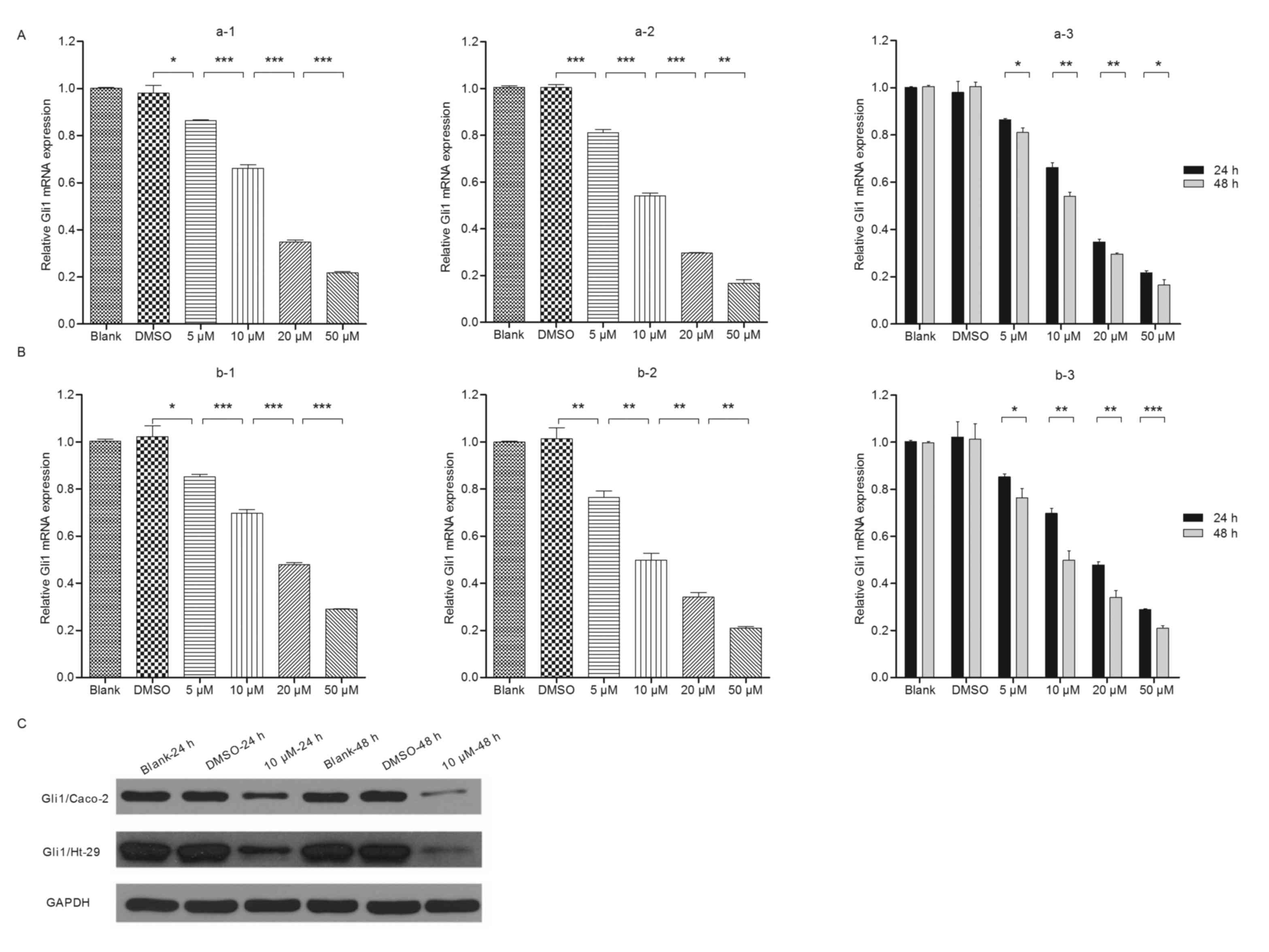
study, RT-qPCR analysis showed the expected effects of GDC-0449 in
the colon cancer cell lines Caco-2 (Fig.
1A) and Ht-29 (Fig. 1B), as Gli1
expression was significantly decreased in a dose dependent manner
(5–50 µM). The strongest inhibition of Gli1 expression was at least
70% at 50 µM and a significant difference was found between 24- and
48-h treatments for each dose (P<0.05). In line with these
results, western blot analysis revealed that 10 µM GDC-0449 was
more efficient at 48 h than at 24 h (Fig. 1C).
GDC-0449 reduces the proliferation in
human colon cancer cells
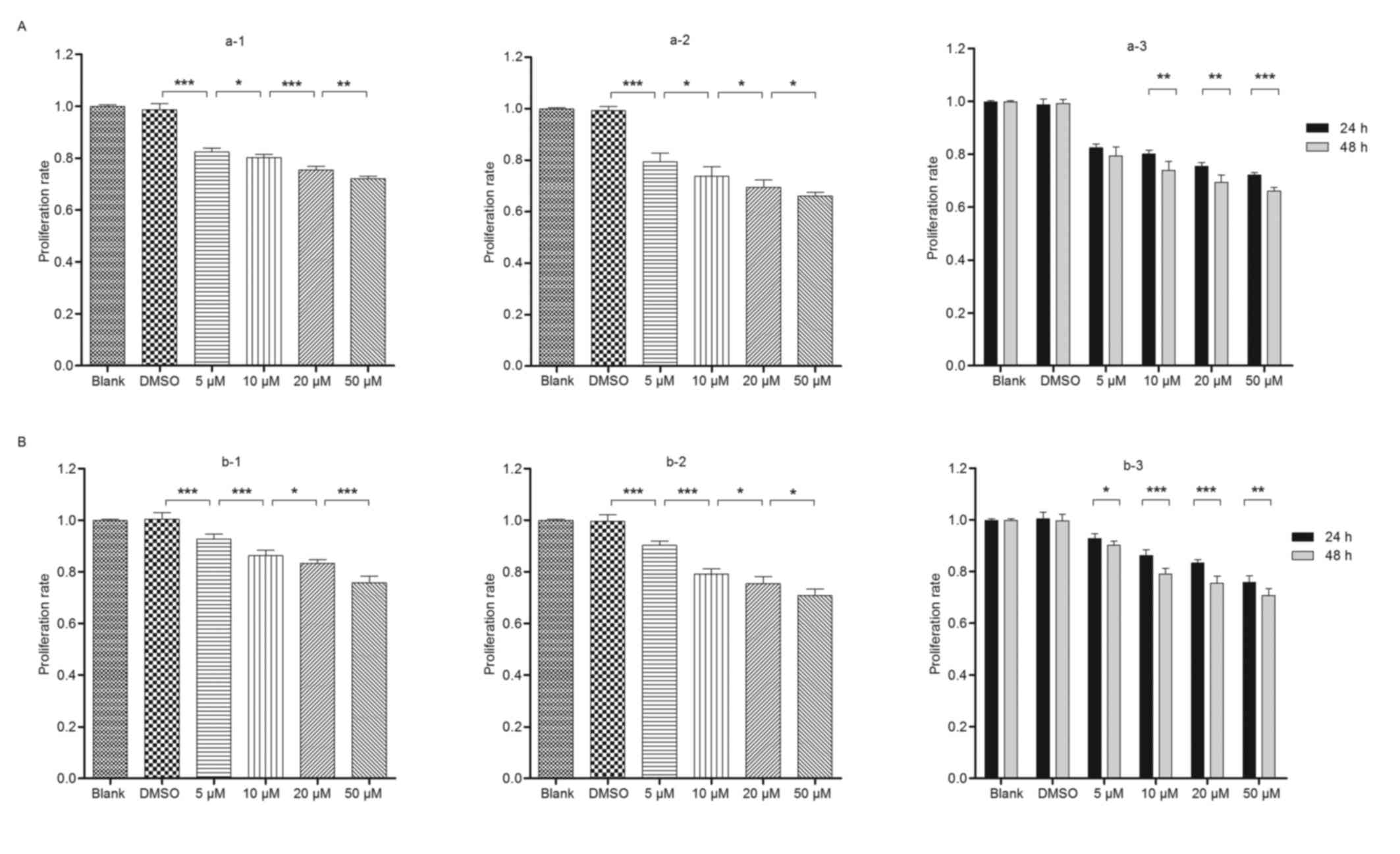
The effects of GDC-0499 on the proliferation of
human colon cancer cell lines Caco-2 and Ht-29 was then assessed
using a CCK-8 assay (Fig. 2). For
each cell line, a significant decrease in the cell proliferation
rate was revealed for the 24- and 48-h drug treatments, which was
dose-dependent. Further data analysis showed a significantly higher
inhibition at 48 h compared with 24 h. The proliferation was
decreased by 35% of that in the control group.
GDC-0449 induces apoptosis in human
colon cancer cells
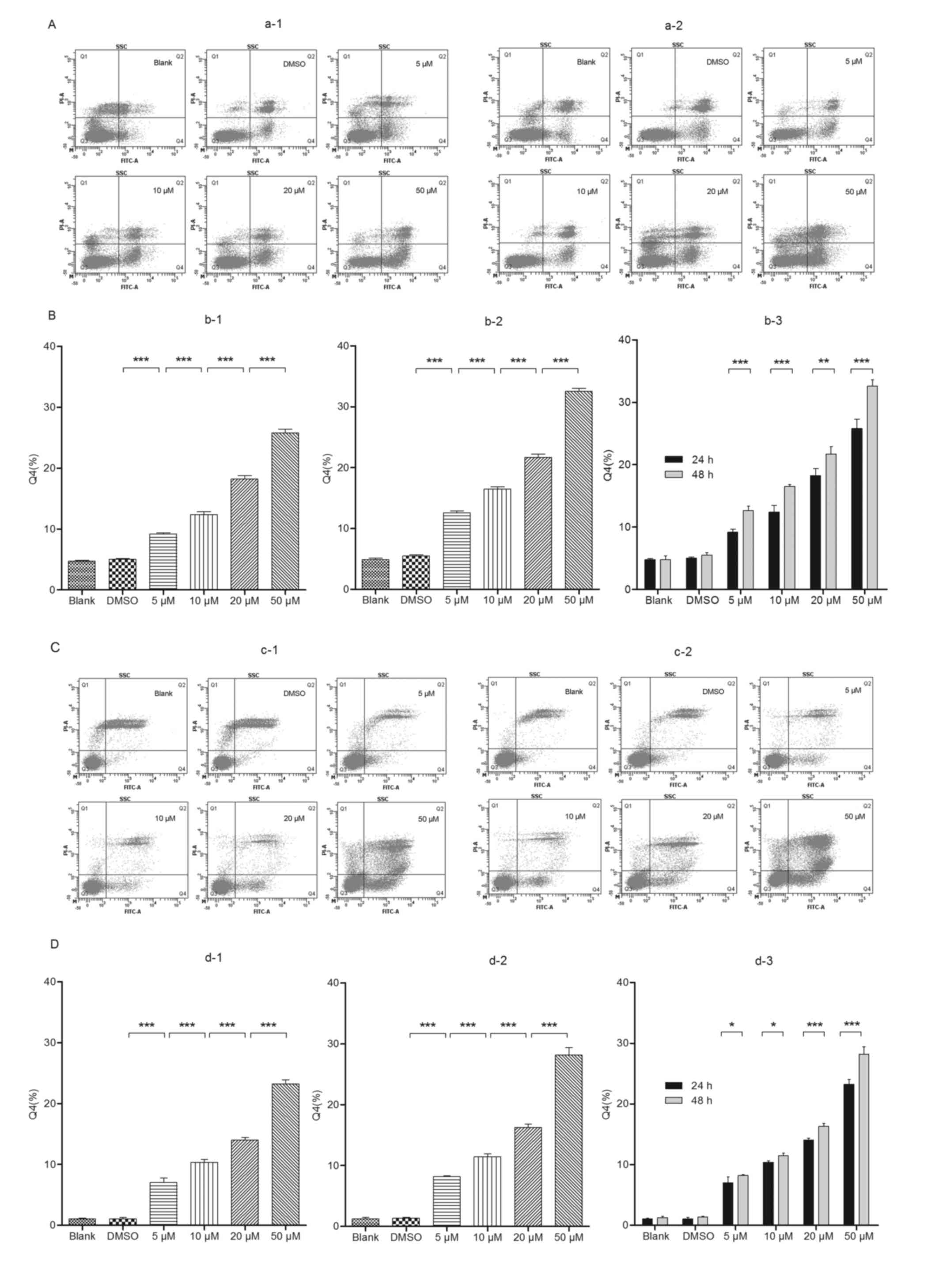
Fluorescence-assisted cell sorting is widely used
for cell apoptosis assays and the cell population in Q4 resembles
the early apoptotic rate of cells. The present study examined
whether GDC-0449 reduced the growth of colon cancer cells via
inducing apoptosis. The expected increase in apoptosis after
GDC-0449 treatment was found to be dose- and time-dependent
(Fig. 3). The results may indicate
that the inhibitory effect of GDC-0449 on human colon cancer cells
is associated with its ability to induce apoptosis.
GDC-0449 induces apoptosis via
decreasing Bcl-2
The anti-apoptotic gene Bcl-2 is well known for its
critical role in regulating cell cycle and death (25). However, to date, no substantial
evidence has proven that GDC-0449 exerts its pro-apoptotic effect
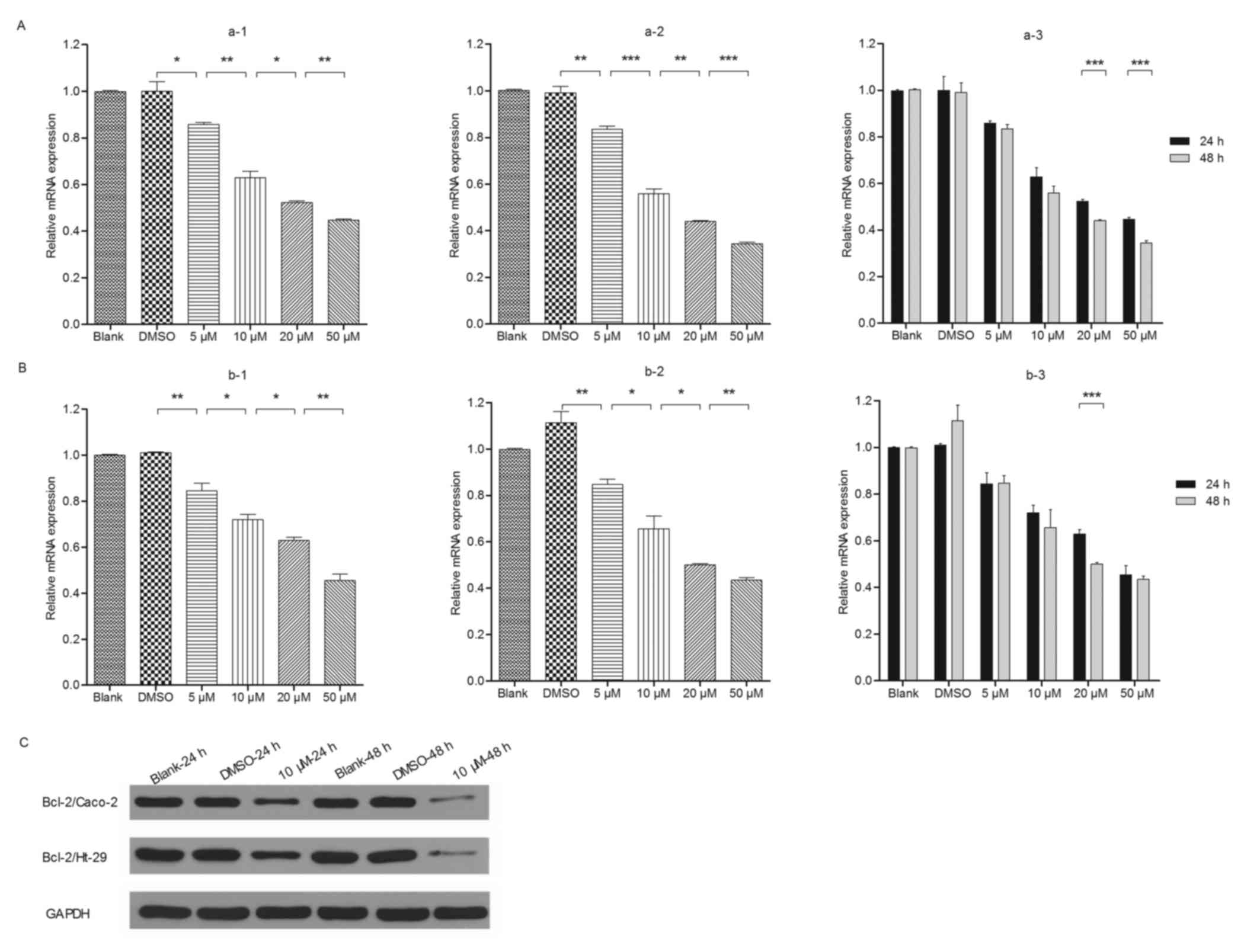
through the Bcl-2 pathway. The RT-qPCR results revealed a dose- and
time-dependent decrease in Bcl-2 mRNA levels by GDC-0449 treatment
in the two cell lines (Fig. 4A and
B). The highest dose suppressed Bcl-2 expression by up to 60%
of that in the control group. Western blot analysis verified that
also the protein expression of Bcl-2 was decreased by GDC-0449 in a
time-dependent manner for each cell line (Fig. 4C).
GDC-0449 decreases the expression of
cancer stem cell (CSC) surface markers in colon cancer cells
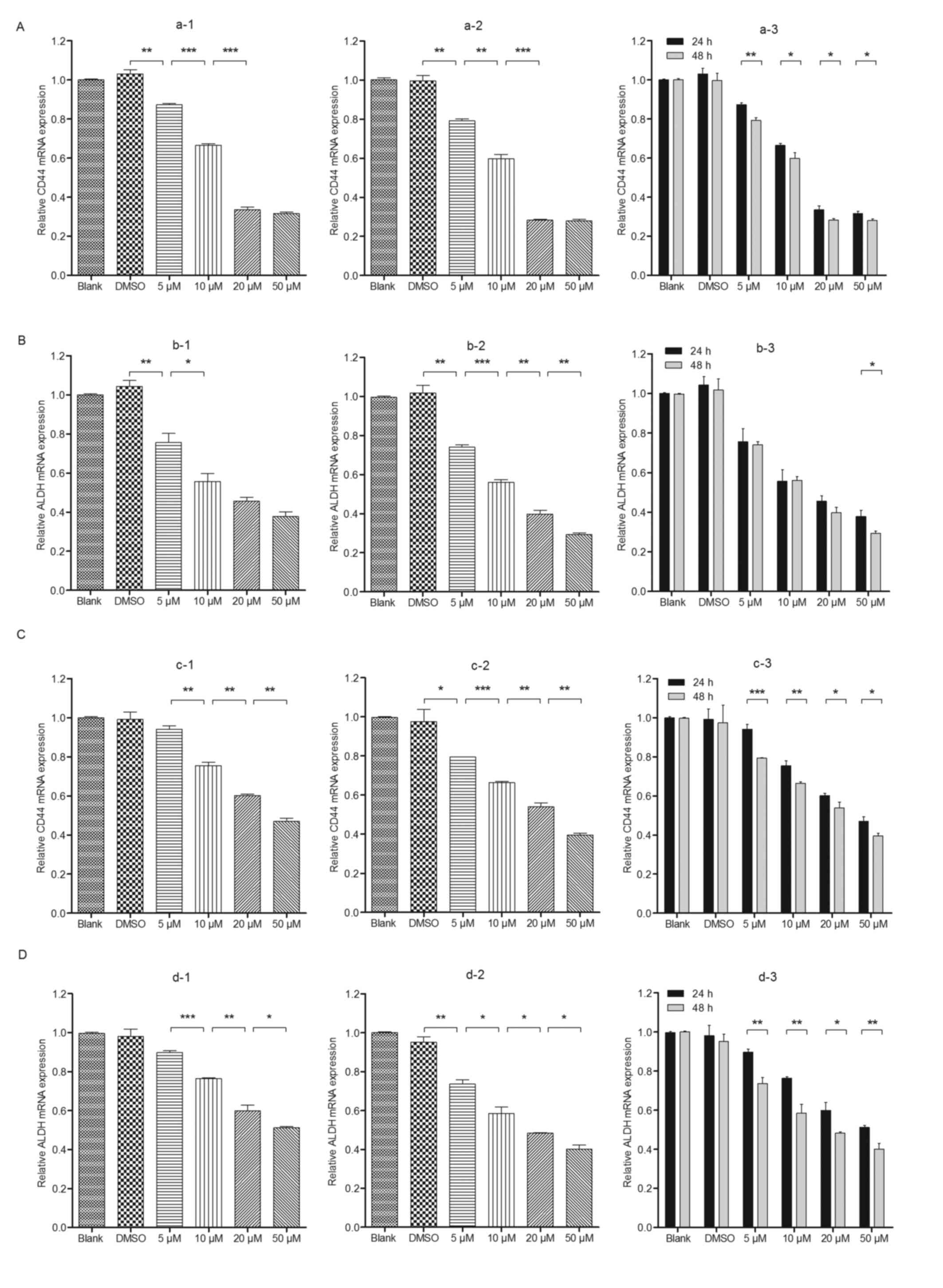
CD44 and ALDH are recognized markers for colon CSCs
(26). Caco-2 and Ht-29 show
different expression patterns of these markers (Fig. 5). RT-qPCR analysis demonstrated that
CD44 and ALDH expression was similarly decreased by GDC-0449 in a
dose- and time-dependent manner, comparable to other indicators
mentioned above. The expression of the markers was decreased by
>70%, suggesting GDC-0449 has a great anti-stem cell
potential.
Discussion
The Shh signaling pathway is a hotspot of research
on tumorigenesis and cancer metastasis (10). Initially, the involvement of Shh
signaling in embryonic development of mammal species was
discovered. Deprivation of certain molecules of this pathway was
found to cause cerebellum atrophy and limb defects in rats
(27–30). Since neoplasms and embryonic
development share similar molecular signaling processes, numerous
studies have examined and demonstrated the core role of Shh
signaling in maintaining tumor growth and cancer cell survival
(12). Vigorous proliferation was
observed when the Shh pathway was upregulated in cancer cells,
while inhibition of Shh had a suppressing effect (15). All of these phenomena highlight the
clinical value of Shh-targeted therapy and the findings of the
present study substantiated the theoretical basis for its future
application in patients.
GDC-0449 (Vismodegib), a novel Smo inhibitor, has
already been approved as a clinical prescription for basal cell
skin carcinoma by the FDA, and it additionally displays a great
inhibitory effect on numerous other types of solid tumor, including
pancreatic cancer and malignancies of the central nervous system
(31,32). However, its effects on colon cancer
have remained elusive. To the best of our knowledge, the present
study was the first to prove that GDC-0449 exerts an effect on
colon cancer cells, revealing a marked decrease in cell growth.
Furthermore, different from the existing consensus that GDC-0449
mainly kills tumors by suppressing proliferation, the present study
revealed that the pro-apoptotic effect of GDC-0449 had a leading
role in its activity against the colon cancer cell lines. With the
intervention by GDC-0449, the anti-apoptotic gene Bcl-2 was
downregulated at the mRNA and protein level, which was in parallel
with an increase in cell apoptosis observed by flow cytometry
(33). Therefore, signaling via the
‘Shh-Smo-Gli1-Bcl-2’ cascade may represent the molecular pathway
underlying the pharmacological effect of GDC-0449 on cancer cells.
The present study may pave the road for the use of Shh-targeted
regimens in colon cancer patients, providing additional options for
physicians to improve their prognosis and possibly curing cancer in
the future.
While the in vitro results of the present
study are promising, the efficacy of GDC-0449 in colon cancer
remains to be verified in vivo. Future in vivo and
clinical studies may further support the use of GDC-0449 in colon
cancer to enhance current treatments.
Previous studies suggested additional effects of Shh
signaling on metastasis and CSCs besides its function in promoting
cancer cell proliferation (34–36).
Upregulated Shh signaling was found to facilitate metastasis and to
be associated with poor prognosis in various types of cancer,
possibly due to its role in regulating stemness of CSCs, which
remains to be fully elucidated (37). Moreover, the present study found that
GDC-0449 markedly decreased the expression of the stem cell surface
markers CD44 and ALDH in colon cancer cell lines, suggesting the
possible effect of Shh signaling on regulating the stemness of stem
cells. Subsequent studies by our group will focus on in vivo
proof and the role of Shh in CSCs.
In conclusion, the present study reported that
GDC-0449, a Smo antagonist approved for treating basal cell skin
carcinomas, is also potent in colon cancer cell lines. After drug
treatment for 24 and 48 h, Shh signaling was markedly inhibited
with an obvious downregulation of Gli1. GDC-0449 was able to
successfully trigger colon cancer cell apoptosis and thereby
inhibit cell replication in a dose- and time-dependent manner.
Bcl-2, an anti-apoptotic gene, was further verified to be involved
in the downstream molecular mechanism. The CSC surface markers CD44
and ALDH also displayed an evident decrease after GDC-0449
treatment, revealing its potential effects on CSCs. In conclusion,
GDC-0449 showed marked anti-tumor efficacy in colon cancer cells
in vitro by triggering cell apoptosis and inhibiting cell
replication.
Acknowledgements
This work was supported by the Young Teacher
Foundation of Independent Innovation Fund of Huazhong University of
Science and Technology (grant no. 2015QN197 to Chuanqing Wu) and
the National Natural Science Foundation of China (grant nos.
81600401 to Chuanqing Wu and 81172294 to KaiXiong Tao).
References
|
1
|
Zhu C, Bassig BA, Zaridze D, Boyle P, Dai
M, Li Q and Zheng T: A birth cohort analysis of the incidence of
ascending and descending colon cancer in the United States,
1973-2008. Cancer Causes Control. 24:1147–1156. 2013. View Article : Google Scholar : PubMed/NCBI
|
|
2
|
Printz C: New findings in colon cancer
incidence, screening. Cancer. 120:2224–2225. 2014. View Article : Google Scholar : PubMed/NCBI
|
|
3
|
Wang X, Yan D, Teng M, Fan J, Zhou C, Li
D, Qiu G, Sun X, Li T, Xing T, et al: Reduced expression of PER3 is
associated with incidence and development of colon cancer. Ann Surg
Oncol. 19:3081–3088. 2012. View Article : Google Scholar : PubMed/NCBI
|
|
4
|
Uzgare RP, Sheets TP and Johnston DS:
Evaluation of melphalan, oxaliplatin, and paclitaxel in colon,
liver, and gastric cancer cell lines in a short-term exposure model
of chemosaturation therapy by percutaneous hepatic perfusion.
Anticancer Res. 33:1989–2000. 2013.PubMed/NCBI
|
|
5
|
Leone F, Artale S, Marino D, Cagnazzo C,
Cascinu S, Pinto C, Fornarini G, Tampellini M, Di Fabio F,
Sartore-Bianchi A, et al: Panitumumab in combination with
infusional oxaliplatin and oral capecitabine for conversion therapy
in patients with colon cancer and advanced liver metastases. The
MetaPan study. Cancer. 119:3429–3435. 2013. View Article : Google Scholar : PubMed/NCBI
|
|
6
|
Mettu NB, Hurwitz H and Hsu DS: Use of
molecular biomarkers to inform adjuvant therapy for colon cancer.
Oncology (Williston Park). 27:746–754. 2013.PubMed/NCBI
|
|
7
|
Kannen V, Garcia SB, Stopper H and
Waaga-Gasser AM: Glucagon-like peptide 2 in colon carcinogenesis:
Possible target for anti-cancer therapy? Pharmacol Ther. 139:87–94.
2013. View Article : Google Scholar : PubMed/NCBI
|
|
8
|
Anderson E, Devenney PS, Hill RE and
Lettice LA: Mapping the Shh long-range regulatory domain.
Development. 141:3934–3943. 2014. View Article : Google Scholar : PubMed/NCBI
|
|
9
|
Kwong L, Bijlsma MF and Roelink H:
Shh-mediated degradation of Hhip allows cell autonomous and
non-cell autonomous Shh signalling. Nat Commun. 5:48492014.
View Article : Google Scholar : PubMed/NCBI
|
|
10
|
Filbin MG, Dabral SK, Pazyra-Murphy MF,
Ramkissoon S, Kung AL, Pak E, Chung J, Theisen MA, Sun Y,
Franchetti Y, et al: Coordinate activation of Shh and PI3K
signaling in PTEN-deficient glioblastoma: New therapeutic
opportunities. Nat Med. 19:1518–1523. 2013. View Article : Google Scholar : PubMed/NCBI
|
|
11
|
Song L and Liu Y, Yu Y, Duan X, Qi S and
Liu Y: Shh signaling guides spatial pathfinding of raphespinal
tract axons by multidirectional repulsion. Cell Res. 22:697–716.
2012. View Article : Google Scholar : PubMed/NCBI
|
|
12
|
Morton JP and Lewis BC: Shh signaling and
pancreatic cancer: Implications for therapy? Cell Cycle.
6:1553–1557. 2007. View Article : Google Scholar : PubMed/NCBI
|
|
13
|
Vorechovský I, Benediktsson KP and
Toftgård R: The patched/hedgehog/smoothened signalling pathway in
human breast cancer: No evidence for H133 Y SHH PTCH and SMO
mutations. Eur J Cancer. 35:711–713. 1999. View Article : Google Scholar : PubMed/NCBI
|
|
14
|
Du P, Ye L, Li H, Yang Y and Jiang WG: The
tumour suppressive role of metastasis suppressor-1, MTSS1, in human
kidney cancer, a possible connection with the SHH pathway. J Exp
Ther Oncol. 10:91–99. 2012.PubMed/NCBI
|
|
15
|
Li X, Wang Z, Ma Q, Xu Q, Liu H, Duan W,
Lei J, Ma J, Wang X, Lv S, et al: Sonic hedgehog paracrine
signaling activates stromal cells to promote perineural invasion in
pancreatic cancer. Clin Cancer Res. 20:4326–4338. 2014. View Article : Google Scholar : PubMed/NCBI
|
|
16
|
Xu X, Su B, Xie C, Wei S, Zhou Y, Liu H,
Dai W, Cheng P, Wang F, Xu X and Guo C: Sonic hedgehog-Gli1
signaling pathway regulates the epithelial mesenchymal transition
(EMT) by mediating a new target gene, S100A4, in pancreatic cancer
cells. PLoS One. 9:e964412014. View Article : Google Scholar : PubMed/NCBI
|
|
17
|
Chen JS, Huang XH, Wang Q, Huang JQ, Zhang
LJ, Chen XL, Lei J and Cheng ZX: Sonic hedgehog signaling pathway
induces cell migration and invasion through focal adhesion
kinase/AKT signaling-mediated activation of matrix
metalloproteinase (MMP)-2 and MMP-9 in liver cancer.
Carcinogenesis. 34:10–19. 2013. View Article : Google Scholar : PubMed/NCBI
|
|
18
|
Omenetti A and Diehl AM: The adventures of
sonic hedgehog in development and repair. II. Sonic hedgehog and
liver development, inflammation and cancer. Am J Physiol
Gastrointest Liver Physiol. 294:G595–G598. 2008. View Article : Google Scholar : PubMed/NCBI
|
|
19
|
Yoshikawa K, Shimada M, Miyamoto H,
Higashijima J, Miyatani T, Nishioka M, Kurita N, Iwata T and Uehara
H: Sonic hedgehog relates to colorectal carcinogenesis. J
Gastroenterol. 44:1113–1117. 2009. View Article : Google Scholar : PubMed/NCBI
|
|
20
|
Mazumdar T, DeVecchio J, Agyeman A, Shi T
and Houghton JA: The GLI genes as the molecular switch in
disrupting Hedgehog signaling in colon cancer. Oncotarget.
2:638–645. 2011. View Article : Google Scholar : PubMed/NCBI
|
|
21
|
Pricl S, Cortelazzi B, Dal Col V, Marson
D, Laurini E, Fermeglia M, Licitra L, Pilotti S, Bossi P and
Perrone F: Smoothened (SMO) receptor mutations dictate resistance
to vismodegib in basal cell carcinoma. Mol Oncol. 9:389–397. 2015.
View Article : Google Scholar : PubMed/NCBI
|
|
22
|
O'Kane GM, Lyons T, McDonald I, Mulligan
N, Moloney FJ, Murray D and Kelly CM: Vismodegib in the treatment
of advanced BCC. Ir Med J. 107:215–216. 2014.PubMed/NCBI
|
|
23
|
Petry FR, Nicholls SB, Hébert SS and
Planel E: A simple method to avoid nonspecific signal when using
monoclonal anti-tau antibodies in western blotting of mouse brain
proteins. Methods Mol Biol. 1523:263–272. 2017. View Article : Google Scholar : PubMed/NCBI
|
|
24
|
Livak KJ and Schmittgen TD: Analysis of
relative gene expression data using real-time quantitative PCR and
the 2(−Delta Delta C(T)) Method. Methods. 25:402–408. 2001.
View Article : Google Scholar : PubMed/NCBI
|
|
25
|
Hockenbery DM, Zutter M, Hickey W, Nahm M
and Korsmeyer SJ: BCL2 protein is topographically restricted in
tissues characterized by apoptotic cell death. Proc Natl Acad Sci
USA. 88:6961–6965. 1991. View Article : Google Scholar : PubMed/NCBI
|
|
26
|
Huang EH, Hynes MJ, Zhang T, Ginestier C,
Dontu G, Appelman H, Fields JZ, Wicha MS and Boman BM: Aldehyde
dehydrogenase 1 is a marker for normal and malignant human colonic
stem cells (SC) and tracks SC overpopulation during colon
tumorigenesis. Cancer Res. 69:3382–3389. 2009. View Article : Google Scholar : PubMed/NCBI
|
|
27
|
Lee EY, Ji H, Ouyang Z, Zhou B, Ma W,
Vokes SA, McMahon AP, Wong WH and Scott MP: Hedgehog
pathway-regulated gene networks in cerebellum development and
tumorigenesis. Proc Natl Acad Sci USA. 107:9736–9741. 2010.
View Article : Google Scholar : PubMed/NCBI
|
|
28
|
Chinnaiya K, Tickle C and Towers M: Sonic
hedgehog-expressing cells in the developing limb measure time by an
intrinsic cell cycle clock. Nat Commun. 5:42302014. View Article : Google Scholar : PubMed/NCBI
|
|
29
|
Tickle C and Barker H: The sonic hedgehog
gradient in the developing limb. Wiley Interdiscip Rev Dev Biol.
2:275–290. 2013. View
Article : Google Scholar : PubMed/NCBI
|
|
30
|
Wang B, Harrison W, Overbeek PA and Zheng
H: Transposon mutagenesis with coat color genotyping identifies an
essential role for Skor2 in sonic hedgehog signaling and cerebellum
development. Development. 138:4487–4497. 2011. View Article : Google Scholar : PubMed/NCBI
|
|
31
|
Dessinioti C, Plaka M and Stratigos AJ:
Vismodegib for the treatment of basal cell carcinoma: Results and
implications of the ERIVANCE BCC trial. Future Oncol. 10:927–936.
2014. View Article : Google Scholar : PubMed/NCBI
|
|
32
|
Berrada N, Lkhoyali S, Mrabti H and
Errihani H: Vismodegib: The proof of concept in Basal cell
carcinoma. Clin Med Insights Oncol. 8:77–80. 2014. View Article : Google Scholar : PubMed/NCBI
|
|
33
|
Lyons TG, O'Kane GM and Kelly CM: Efficacy
and safety of vismodegib: A new therapeutic agent in the treatment
of basal cell carcinoma. Expert Opin Drug Saf. 13:1125–1132. 2014.
View Article : Google Scholar : PubMed/NCBI
|
|
34
|
Yoo YA, Kang MH, Lee HJ, Kim BH, Park JK,
Kim HK, Kim JS and Oh SC: Sonic hedgehog pathway promotes
metastasis and lymphangiogenesis via activation of Akt, EMT, and
MMP-9 pathway in gastric cancer. Cancer Res. 71:7061–7070. 2011.
View Article : Google Scholar : PubMed/NCBI
|
|
35
|
Fan HX, Wang S, Zhao H, Liu N, Chen D, Sun
M and Zheng JH: Sonic hedgehog signaling may promote invasion and
metastasis of oral squamous cell carcinoma by activating MMP-9 and
E-cadherin expression. Med Oncol. 31:412014. View Article : Google Scholar : PubMed/NCBI
|
|
36
|
Das S, Samant RS and Shevde LA: The
hedgehog pathway conditions the bone microenvironment for
osteolytic metastasis of breast cancer. Int J Breast Cancer.
2012:2986232012. View Article : Google Scholar : PubMed/NCBI
|
|
37
|
Varnat F, Duquet A, Malerba M, Zbinden M,
Mas C, Gervaz P and i Altaba A Ruiz: Human colon cancer epithelial
cells harbour active HEDGEHOG-GLI signalling that is essential for
tumour growth, recurrence, metastasis and stem cell survival and
expansion. EMBO Mol Med. 1:338–351. 2009. View Article : Google Scholar : PubMed/NCBI
|