Spandidos Publications Logo
  • About
    • About Spandidos
    • Aims and Scopes
    • Abstracting and Indexing
    • Editorial Policies
    • Reprints and Permissions
    • Job Opportunities
    • Terms and Conditions
    • Contact
  • Journals
    • All Journals
    • Oncology Letters
      • Oncology Letters
      • Information for Authors
      • Editorial Policies
      • Editorial Board
      • Aims and Scope
      • Abstracting and Indexing
      • Bibliographic Information
      • Archive
    • International Journal of Oncology
      • International Journal of Oncology
      • Information for Authors
      • Editorial Policies
      • Editorial Board
      • Aims and Scope
      • Abstracting and Indexing
      • Bibliographic Information
      • Archive
    • Molecular and Clinical Oncology
      • Molecular and Clinical Oncology
      • Information for Authors
      • Editorial Policies
      • Editorial Board
      • Aims and Scope
      • Abstracting and Indexing
      • Bibliographic Information
      • Archive
    • Experimental and Therapeutic Medicine
      • Experimental and Therapeutic Medicine
      • Information for Authors
      • Editorial Policies
      • Editorial Board
      • Aims and Scope
      • Abstracting and Indexing
      • Bibliographic Information
      • Archive
    • International Journal of Molecular Medicine
      • International Journal of Molecular Medicine
      • Information for Authors
      • Editorial Policies
      • Editorial Board
      • Aims and Scope
      • Abstracting and Indexing
      • Bibliographic Information
      • Archive
    • Biomedical Reports
      • Biomedical Reports
      • Information for Authors
      • Editorial Policies
      • Editorial Board
      • Aims and Scope
      • Abstracting and Indexing
      • Bibliographic Information
      • Archive
    • Oncology Reports
      • Oncology Reports
      • Information for Authors
      • Editorial Policies
      • Editorial Board
      • Aims and Scope
      • Abstracting and Indexing
      • Bibliographic Information
      • Archive
    • Molecular Medicine Reports
      • Molecular Medicine Reports
      • Information for Authors
      • Editorial Policies
      • Editorial Board
      • Aims and Scope
      • Abstracting and Indexing
      • Bibliographic Information
      • Archive
    • World Academy of Sciences Journal
      • World Academy of Sciences Journal
      • Information for Authors
      • Editorial Policies
      • Editorial Board
      • Aims and Scope
      • Abstracting and Indexing
      • Bibliographic Information
      • Archive
    • International Journal of Functional Nutrition
      • International Journal of Functional Nutrition
      • Information for Authors
      • Editorial Policies
      • Editorial Board
      • Aims and Scope
      • Abstracting and Indexing
      • Bibliographic Information
      • Archive
    • International Journal of Epigenetics
      • International Journal of Epigenetics
      • Information for Authors
      • Editorial Policies
      • Editorial Board
      • Aims and Scope
      • Abstracting and Indexing
      • Bibliographic Information
      • Archive
    • Medicine International
      • Medicine International
      • Information for Authors
      • Editorial Policies
      • Editorial Board
      • Aims and Scope
      • Abstracting and Indexing
      • Bibliographic Information
      • Archive
  • Articles
  • Information
    • Information for Authors
    • Information for Reviewers
    • Information for Librarians
    • Information for Advertisers
    • Conferences
  • Language Editing
Spandidos Publications Logo
  • About
    • About Spandidos
    • Aims and Scopes
    • Abstracting and Indexing
    • Editorial Policies
    • Reprints and Permissions
    • Job Opportunities
    • Terms and Conditions
    • Contact
  • Journals
    • All Journals
    • Biomedical Reports
      • Information for Authors
      • Editorial Policies
      • Editorial Board
      • Aims and Scope
      • Abstracting and Indexing
      • Bibliographic Information
      • Archive
    • Experimental and Therapeutic Medicine
      • Information for Authors
      • Editorial Policies
      • Editorial Board
      • Aims and Scope
      • Abstracting and Indexing
      • Bibliographic Information
      • Archive
    • International Journal of Epigenetics
      • Information for Authors
      • Editorial Policies
      • Editorial Board
      • Aims and Scope
      • Abstracting and Indexing
      • Bibliographic Information
      • Archive
    • International Journal of Functional Nutrition
      • Information for Authors
      • Editorial Policies
      • Editorial Board
      • Aims and Scope
      • Abstracting and Indexing
      • Bibliographic Information
      • Archive
    • International Journal of Molecular Medicine
      • Information for Authors
      • Editorial Policies
      • Editorial Board
      • Aims and Scope
      • Abstracting and Indexing
      • Bibliographic Information
      • Archive
    • International Journal of Oncology
      • Information for Authors
      • Editorial Policies
      • Editorial Board
      • Aims and Scope
      • Abstracting and Indexing
      • Bibliographic Information
      • Archive
    • Medicine International
      • Information for Authors
      • Editorial Policies
      • Editorial Board
      • Aims and Scope
      • Abstracting and Indexing
      • Bibliographic Information
      • Archive
    • Molecular and Clinical Oncology
      • Information for Authors
      • Editorial Policies
      • Editorial Board
      • Aims and Scope
      • Abstracting and Indexing
      • Bibliographic Information
      • Archive
    • Molecular Medicine Reports
      • Information for Authors
      • Editorial Policies
      • Editorial Board
      • Aims and Scope
      • Abstracting and Indexing
      • Bibliographic Information
      • Archive
    • Oncology Letters
      • Information for Authors
      • Editorial Policies
      • Editorial Board
      • Aims and Scope
      • Abstracting and Indexing
      • Bibliographic Information
      • Archive
    • Oncology Reports
      • Information for Authors
      • Editorial Policies
      • Editorial Board
      • Aims and Scope
      • Abstracting and Indexing
      • Bibliographic Information
      • Archive
    • World Academy of Sciences Journal
      • Information for Authors
      • Editorial Policies
      • Editorial Board
      • Aims and Scope
      • Abstracting and Indexing
      • Bibliographic Information
      • Archive
  • Articles
  • Information
    • For Authors
    • For Reviewers
    • For Librarians
    • For Advertisers
    • Conferences
  • Language Editing
Login Register Submit
  • This site uses cookies
  • You can change your cookie settings at any time by following the instructions in our Cookie Policy. To find out more, you may read our Privacy Policy.

    I agree
Search articles by DOI, keyword, author or affiliation
Search
Advanced Search
presentation
Experimental and Therapeutic Medicine
Join Editorial Board Propose a Special Issue
Print ISSN: 1792-0981 Online ISSN: 1792-1015
Journal Cover
August-2017 Volume 14 Issue 2

Full Size Image

Sign up for eToc alerts
Recommend to Library

Journals

International Journal of Molecular Medicine

International Journal of Molecular Medicine

International Journal of Molecular Medicine is an international journal devoted to molecular mechanisms of human disease.

International Journal of Oncology

International Journal of Oncology

International Journal of Oncology is an international journal devoted to oncology research and cancer treatment.

Molecular Medicine Reports

Molecular Medicine Reports

Covers molecular medicine topics such as pharmacology, pathology, genetics, neuroscience, infectious diseases, molecular cardiology, and molecular surgery.

Oncology Reports

Oncology Reports

Oncology Reports is an international journal devoted to fundamental and applied research in Oncology.

Experimental and Therapeutic Medicine

Experimental and Therapeutic Medicine

Experimental and Therapeutic Medicine is an international journal devoted to laboratory and clinical medicine.

Oncology Letters

Oncology Letters

Oncology Letters is an international journal devoted to Experimental and Clinical Oncology.

Biomedical Reports

Biomedical Reports

Explores a wide range of biological and medical fields, including pharmacology, genetics, microbiology, neuroscience, and molecular cardiology.

Molecular and Clinical Oncology

Molecular and Clinical Oncology

International journal addressing all aspects of oncology research, from tumorigenesis and oncogenes to chemotherapy and metastasis.

World Academy of Sciences Journal

World Academy of Sciences Journal

Multidisciplinary open-access journal spanning biochemistry, genetics, neuroscience, environmental health, and synthetic biology.

International Journal of Functional Nutrition

International Journal of Functional Nutrition

Open-access journal combining biochemistry, pharmacology, immunology, and genetics to advance health through functional nutrition.

International Journal of Epigenetics

International Journal of Epigenetics

Publishes open-access research on using epigenetics to advance understanding and treatment of human disease.

Medicine International

Medicine International

An International Open Access Journal Devoted to General Medicine.

Journal Cover
August-2017 Volume 14 Issue 2

Full Size Image

Sign up for eToc alerts
Recommend to Library

  • Article
  • Citations
    • Cite This Article
    • Download Citation
    • Create Citation Alert
    • Remove Citation Alert
    • Cited By
  • Similar Articles
    • Related Articles (in Spandidos Publications)
    • Similar Articles (Google Scholar)
    • Similar Articles (PubMed)
  • Download PDF
  • Download XML
  • View XML
Article

Tissue kallikrein protects against ischemic stroke by suppressing TLR4/NF-κB and activating Nrf2 signaling pathway in rats

  • Authors:
    • Jiawei Yang
    • Jianhua Su
    • Fen Wan
    • Nan Yang
    • Haibo Jiang
    • Mingming Fang
    • Hang Xiao
    • Jun Wang
    • Jinrong Tang
  • View Affiliations / Copyright

    Affiliations: Department of Neurology, The First Affiliated Hospital of Nanjing Medical University, Nanjing, Jiangsu 210029, P.R. China, Department of Neurology, The Affiliated Jintan Hospital of Medical College of Jiangsu University, Jintan, Jiangsu 213200, P.R. China, Department of Neurology, Jiangsu Hospital of Chinese Traditional and Western Medicine, Nanjing, Jiangsu 210028, P.R. China, Department of Neurotoxicology, Nanjing Medical University, Nanjing, Jiangsu 211199, P.R. China
  • Pages: 1163-1170
    |
    Published online on: June 15, 2017
       https://doi.org/10.3892/etm.2017.4614
  • Expand metrics +
Metrics: Total Views: 0 (Spandidos Publications: | PMC Statistics: )
Metrics: Total PDF Downloads: 0 (Spandidos Publications: | PMC Statistics: )
Cited By (CrossRef): 0 citations Loading Articles...

This article is mentioned in:


Abstract

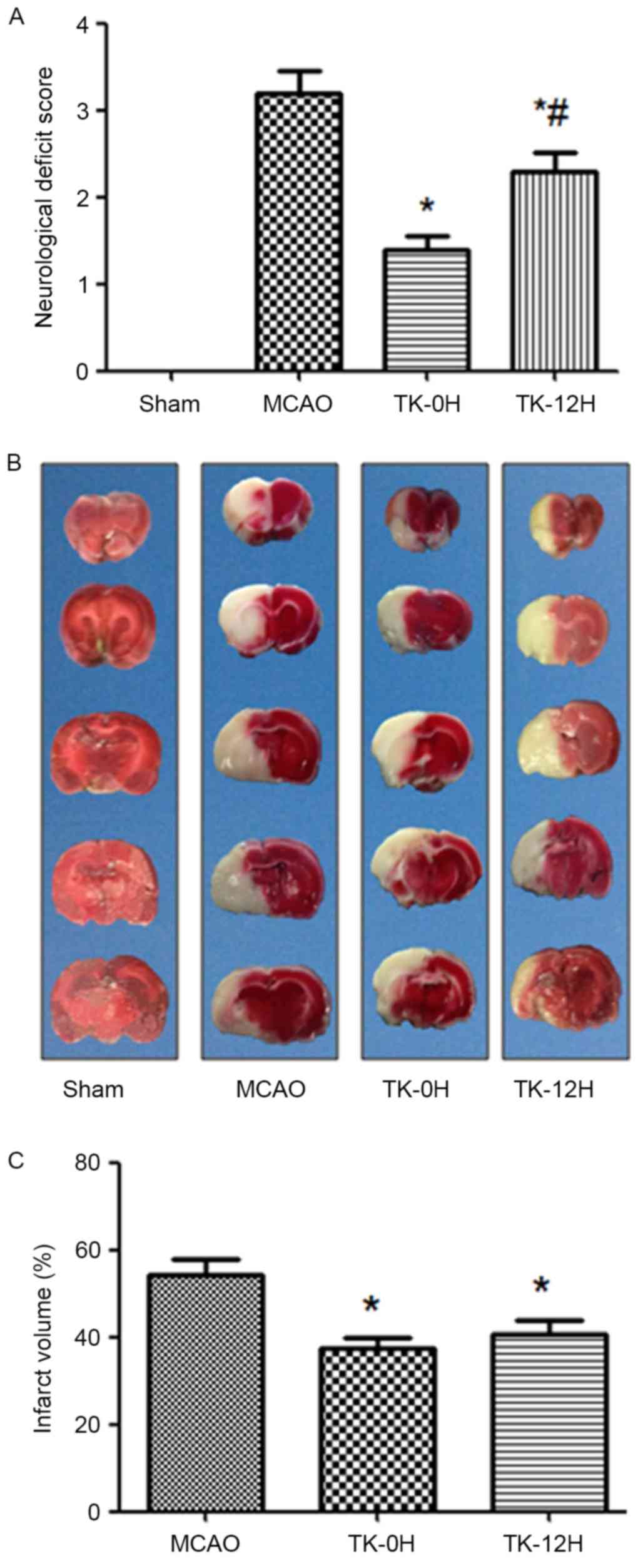
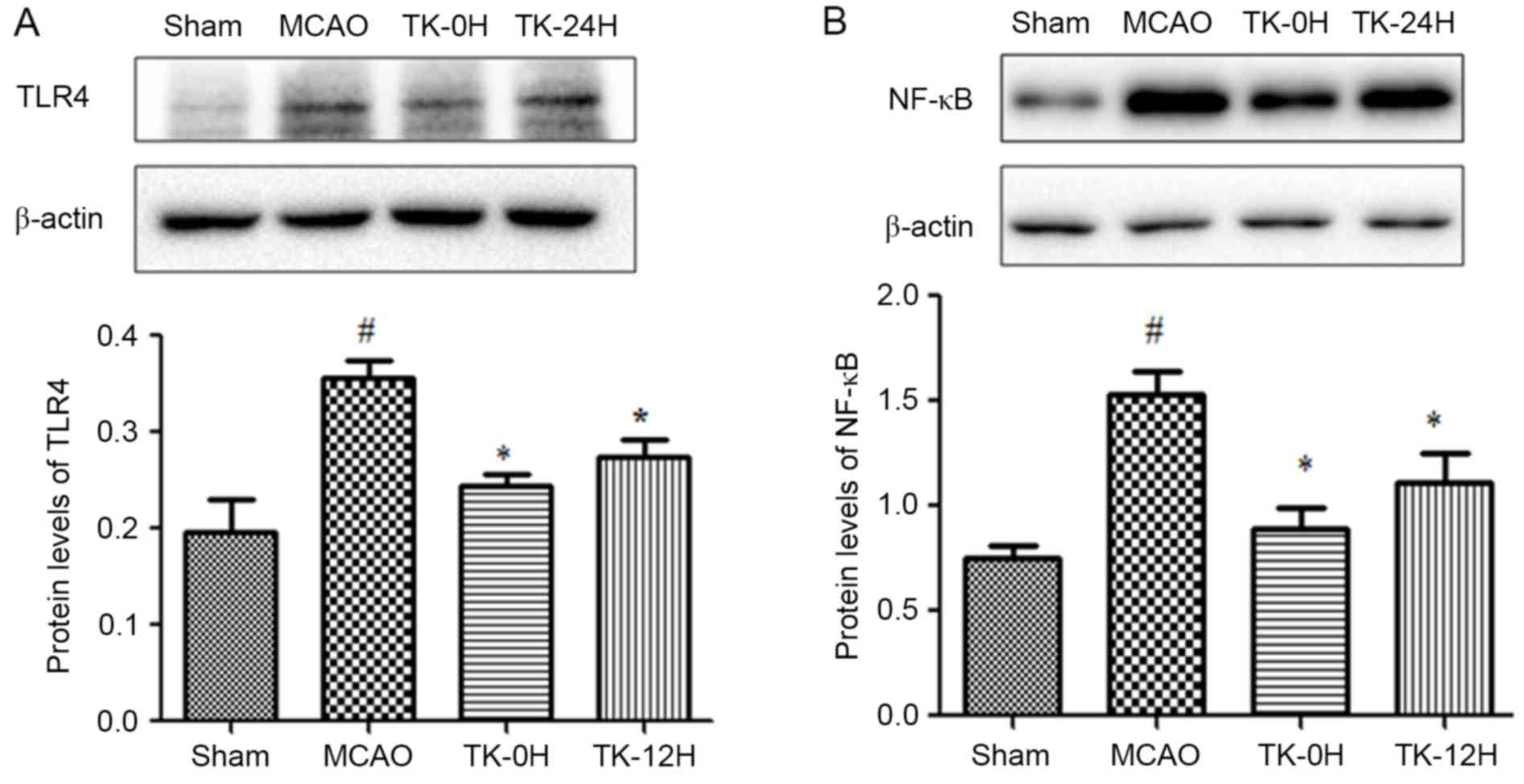
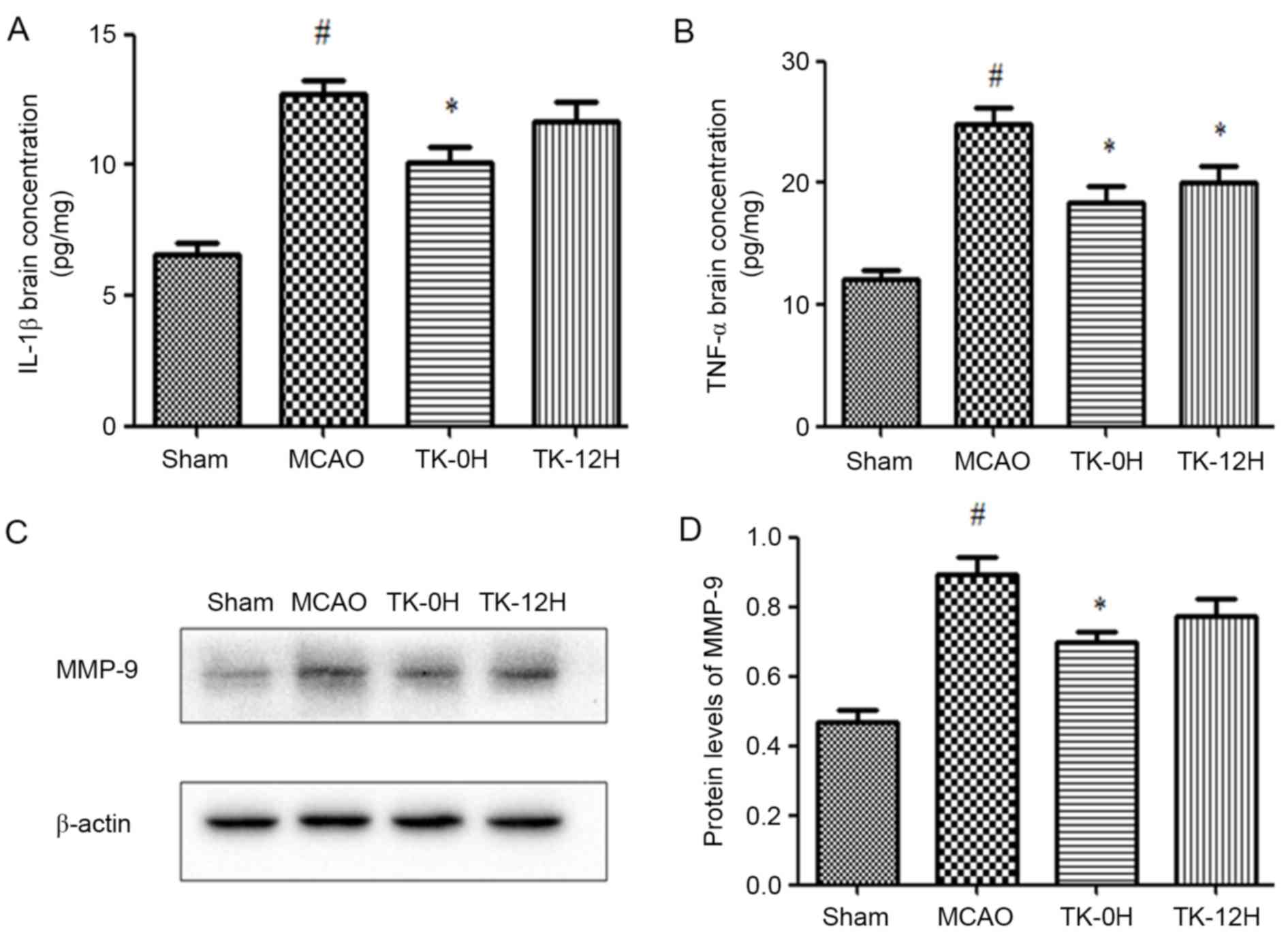
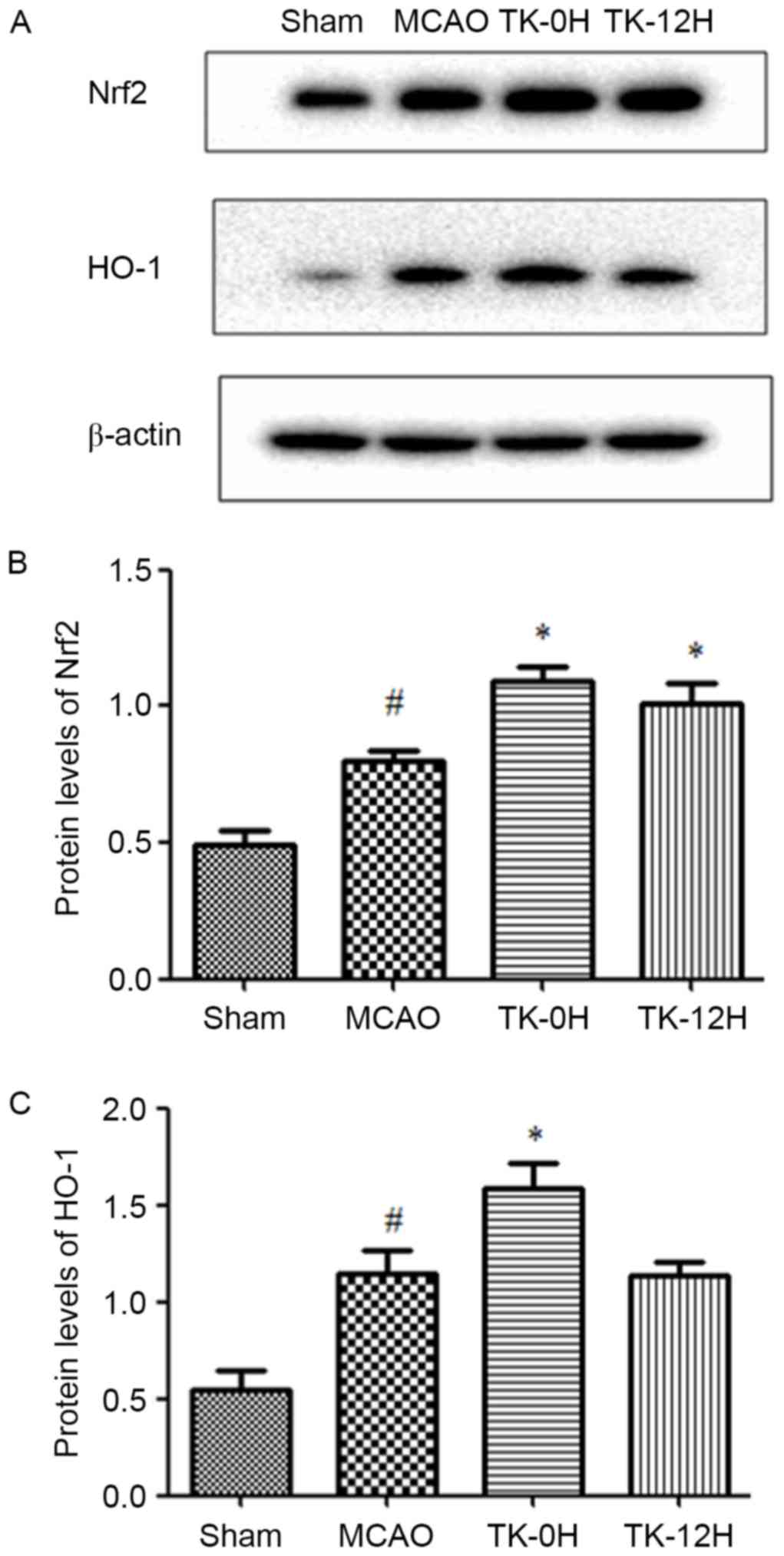
Brain damage following cerebral ischemia-reperfusion (I/R) is a complicated pathophysiological course, in which inflammation and oxidative stress have been suggested to serve an important role. Toll‑like receptor 4 (TLR4) has been suggested to be involved in secondary inflammatory process in cerebral ischemia. Nuclear factor erythroid 2-related factor 2 (Nrf2), an important regulator of the antioxidant host defense, maintains the cellular redox homeostasis. Tissue kallikrein (TK) has been proven to elicit a variety of biological effects in ischemic stroke through its anti‑inflammatory and anti‑oxidant properties. However, the mechanisms underlying its beneficial effects remain poorly defined. The present study examined the hypothesis that TK attenuates ischemic cerebral injury via the TLR4/nuclear factor‑κB (NF‑κB) and Nrf2 signaling pathways. Using a transient rat middle cerebral artery occlusion (MCAO) model, the effects of immediate and delayed TK treatment subsequent to reperfusion were investigated. The neurological deficits, infarct size, and the expression of TLR4/NF‑κB and Nrf2 pathway in ischemic brain tissues were measured at 24 following MCAO. The results indicated that TK immediate treatment significantly improved neurological deficits and reduced the infarct size, accompanied by the inhibition of TLR4 and NF‑κB levels, and the activation of Nrf2 pathway. Furthermore, TK delayed treatment also exerted neuroprotection against I/R injury. However, the neuroprotective effect of TK immediate treatment was better compared with that of TK delayed treatment. In conclusion, the results indicated that TK protected the brain against ischemic injury in rats after MCAO through its anti‑oxidative and anti‑inflammatory effects. Suppression of TLR4/NF‑κB and activation of the Nrf2 pathway contributed to the neuroprotective effects induced by TK in cerebral ischemia. Therefore, TK may provide an effective intervention with a wider therapeutic window for ischemic stroke.
View Figures

Figure 1

Figure 2

Figure 3

Figure 4

View References

1 

Liu L, Wang D, Wong KS and Wang Y: Stroke and stroke care in China: Huge burden, significant workload, and a national priority. Stroke. 42:3651–3654. 2011. View Article : Google Scholar : PubMed/NCBI

2 

Song D and Cho AH: Previous and recent evidence of endovascular therapy in acute ischemic stroke. Neurointervention. 10:51–59. 2015. View Article : Google Scholar : PubMed/NCBI

3 

Amar AP, Griffin JH and Zlokovic BV: Combined neurothrombectomy or thrombolysis with adjunctive delivery of 3K3A-activated protein C in acute ischemic stroke. Front Cell Neurosci. 9:3442015. View Article : Google Scholar : PubMed/NCBI

4 

Reuter B, Grudzenski S, Chatzikonstantinou E, Meairs S, Ebert A, Heiler P, Schad LR, Staufenbiel M, Hennerici MG and Fatar M: Thrombolysis in experimental cerebral amyloid angiopathy and the risk of secondary intracerebral hemorrhage. Stroke. 45:2411–2416. 2014. View Article : Google Scholar : PubMed/NCBI

5 

Chechneva OV, Mayrhofer F, Daugherty DJ, Krishnamurty RG, Bannerman P, Pleasure DE and Deng W: A Smoothened receptor agonist is neuroprotective and promotes regeneration after ischemic brain injury. Cell Death Dis. 5:e14812014. View Article : Google Scholar : PubMed/NCBI

6 

Chen X, Zhang X, Wang Y, Lei H, Su H, Zeng J, Pei Z and Huang R: Inhibition of immunoproteasome reduces infarction volume and attenuates inflammatory reaction in a rat model of ischemic stroke. Cell Death Dis. 6:e16262015. View Article : Google Scholar : PubMed/NCBI

7 

Ahmad M and Graham SH: Inflammation after stroke: Mechanisms and therapeutic approaches. Transl Stroke Res. 1:74–84. 2010. View Article : Google Scholar : PubMed/NCBI

8 

Nakajima H, Kubo T, Ihara H, Hikida T, Danjo T, Nakatsuji M, Shahani N, Itakura M, Ono Y, Azuma YT, et al: Nuclear-translocated Glyceraldehyde-3-phosphate dehydrogenase promotes poly (ADP-ribose) polymerase-1 activation during oxidative/nitrosative stress in stroke. J Biol Chem. 290:14493–14503. 2015. View Article : Google Scholar : PubMed/NCBI

9 

Yainoy S, Houbloyfa P, Eiamphungporn W, Isarankura-Na-Ayudhya C and Prachayasittikul V: Engineering of chimeric catalase-Angiopep-2 for intracellular protection of brain endothelial cells against oxidative stress. Int J Biol Macromol. 68:60–66. 2014. View Article : Google Scholar : PubMed/NCBI

10 

Wang L, Li Z, Zhang X, Wang S, Zhu C, Miao J, Chen L, Cui L and Qiao H: Protective effect of shikonin in experimental ischemic stroke: Attenuated TLR4, p-p38MAPK, NF-κB, TNF-α and MMP-9 expression, up-regulated claudin-5 expression, ameliorated BBB permeability. Neurochem Res. 39:97–106. 2014. View Article : Google Scholar : PubMed/NCBI

11 

Candelario-Jalil E, Yang Y and Rosenberg GA: Diverse roles of matrix metalloproteinases and tissue inhibitors of metalloproteinases in neuroinflammation and cerebral ischemia. Neuroscience. 158:983–994. 2009. View Article : Google Scholar : PubMed/NCBI

12 

Vahedi K, Hofmeijer J, Juettler E, Vicaut E, George B, Algra A, Amelink GJ, Schmiedeck P, Schwab S, Rothwell PM, et al: Early decompressive surgery in malignant infarction of the middle cerebral artery: A pooled analysis of three randomised controlled trials. Lancet Neurol. 6:215–222. 2007. View Article : Google Scholar : PubMed/NCBI

13 

Medzhitov R and Preston-Hurlburt P and Janeway CA Jr: A human homologue of the Drosophila Toll protein signals activation of adaptive immunity. Nature. 388:394–397. 1997. View Article : Google Scholar : PubMed/NCBI

14 

Jack CS, Arbour N, Manusow J, Montgrain V, Blain M, McCrea E, Shapiro A and Antel JP: TLR signaling tailors innate immune responses in human microglia and astrocytes. J Immunol. 175:4320–4330. 2005. View Article : Google Scholar : PubMed/NCBI

15 

Wang Y, Ge P and Zhu Y: TLR2 and TLR4 in the brain injury caused by cerebral ischemia and reperfusion. Mediators Inflamm. 2013:1246142013. View Article : Google Scholar : PubMed/NCBI

16 

Zou N, Ao L, Cleveland JC Jr, Yang X, Su X, Cai GY, Banerjee A, Fullerton DA and Meng X: Critical role of extracellular heat shock cognate protein 70 in the myocardial inflammatory response and cardiac dysfunction after global ischemia-reperfusion. Am J Physiol Heart Circ Physiol. 294:H2805–H2813. 2008. View Article : Google Scholar : PubMed/NCBI

17 

Hyakkoku K, Hamanaka J, Tsuruma K, Shimazawa M, Tanaka H, Uematsu S, Akira S, Inagaki N, Nagai H and Hara H: Toll-like receptor 4 (TLR4), but not TLR3 or TLR9, knock-out mice have neuroprotective effects against focal cerebral ischemia. Neuroscience. 171:258–267. 2010. View Article : Google Scholar : PubMed/NCBI

18 

Caso JR, Pradillo JM, Hurtado O, Lorenzo P, Moro MA and Lizasoain I: Toll-like receptor 4 is involved in brain damage and inflammation after experimental stroke. Circulation. 115:1599–1608. 2007. View Article : Google Scholar : PubMed/NCBI

19 

Cao CX, Yang QW, Lv FL, Cui J, Fu HB and Wang JZ: Reduced cerebral ischemia-reperfusion injury in Toll-like receptor 4 deficient mice. Biochem Biophys Res Commun. 353:509–514. 2007. View Article : Google Scholar : PubMed/NCBI

20 

Rao J, Qian X, Li G, Pan X, Zhang C, Zhang F, Zhai Y, Wang X and Lu L: ATF3-mediated NRF2/HO-1 signaling regulates TLR4 innate immune responses in mouse liver ischemia/reperfusion injury. Am J Transplant. 15:76–87. 2015. View Article : Google Scholar : PubMed/NCBI

21 

Surh YJ and Na HK: NF-kappaB and Nrf2 as prime molecular targets for chemoprevention and cytoprotection with anti-inflammatory and antioxidant phytochemicals. Genes Nutr. 2:313–317. 2008. View Article : Google Scholar : PubMed/NCBI

22 

Shah ZA, Li RC, Ahmad AS, Kensler TW, Yamamoto M, Biswal S and Doré S: The flavanol (−)-epicatechin prevents stroke damage through the Nrf2/HO1 pathway. J Cereb Blood Flow Metab. 30:1951–1961. 2010. View Article : Google Scholar : PubMed/NCBI

23 

Albert-Weißenberger C, Sirén AL and Kleinschnitz C: Ischemic stroke and traumatic brain injury: The role of the kallikrein-kinin system. Prog Neurobiol 101–102. 1–82. 2013.

24 

Xia CF, Yin H, Yao YY, Borlongan CV, Chao L and Chao J: Kallikrein protects against ischemic stroke by inhibiting apoptosis and inflammation and promoting angiogenesis and neurogenesis. Hum Gene Ther. 17:206–219. 2006. View Article : Google Scholar : PubMed/NCBI

25 

Xia CF, Yin H, Borlongan CV, Chao L and Chao J: Kallikrein gene transfer protects against ischemic stroke by promoting glial cell migration and inhibiting apoptosis. Hypertension. 43:452–459. 2004. View Article : Google Scholar : PubMed/NCBI

26 

Longa EZ, Weinstein PR, Carlson S and Cummins R: Reversible middle cerebral artery occlusion without craniectomy in rats. Stroke. 20:84–91. 1989. View Article : Google Scholar : PubMed/NCBI

27 

Tatlisumak T, Carano RA, Takano K, Opgenorth TJ, Sotak CH and Fisher M: A novel endothelin antagonist, A-127722, attenuates ischemic lesion size in rats with temporary middle cerebral artery occlusion: A diffusion and perfusion MRI study. Stroke. 29:850–858. 1998. View Article : Google Scholar : PubMed/NCBI

28 

Arumugam TV, Tang SC, Lathia JD, Cheng A, Mughal MR, Chigurupati S, Magnus T, Chan SL, Jo DG, Ouyang X, et al: Intravenous immunoglobulin (IVIG) protects the brain against experimental stroke by preventing complement-mediated neuronal cell death. Proc Natl Acad Sci USA. 104:pp. 14104–14109. 2007; View Article : Google Scholar : PubMed/NCBI

29 

Hua F, Ma J, Ha T, Xia Y, Kelley J, Williams DL, Kao RL, Browder IW, Schweitzer JB, Kalbfleisch JH and Li C: Activation of Toll-like receptor 4 signaling contributes to hippocampal neuronal death following global cerebral ischemia/reperfusion. J Neuroimmunol. 190:101–111. 2007. View Article : Google Scholar : PubMed/NCBI

30 

Tang SC, Arumugam TV, Xu X, Cheng A, Mughal MR, Jo DG, Lathia JD, Siler DA, Chigurupati S, Ouyang X, et al: Pivotal role for neuronal Toll-like receptors in ischemic brain injury and functional deficits. Proc Natl Acad Sci USA. 104:pp. 13798–13803. 2007; View Article : Google Scholar : PubMed/NCBI

31 

Ridder DA and Schwaninger M: NF-kappaB signaling in cerebral ischemia. Neuroscience. 158:995–1006. 2009. View Article : Google Scholar : PubMed/NCBI

32 

Hayden MS, West AP and Ghosh S: NF-kappaB and the immune response. Oncogene. 25:6758–6780. 2006. View Article : Google Scholar : PubMed/NCBI

33 

Schneider A, Martin-Villalba A, Weih F, Vogel J, Wirth T and Schwaninger M: NF-kappaB is activated and promotes cell death in focal cerebral ischemia. Nat Med. 5:554–559. 1999. View Article : Google Scholar : PubMed/NCBI

34 

Morita-Fujimura Y, Fujimura M, Yoshimoto T and Chan PH: Superoxide during reperfusion contributes to caspase-8 expression and apoptosis after transient focal stroke. Stroke. 32:2356–2361. 2001. View Article : Google Scholar : PubMed/NCBI

35 

Shih AY, Li P and Murphy TH: A small-molecule-inducible Nrf2-mediated antioxidant response provides effective prophylaxis against cerebral ischemia in vivo. J Neurosci. 25:10321–10335. 2005. View Article : Google Scholar : PubMed/NCBI

36 

Poss KD and Tonegawa S: Reduced stress defense in heme oxygenase 1-deficient cells. Proc Natl Acad Sci USA. 94:pp. 10925–10930. 1997; View Article : Google Scholar : PubMed/NCBI

37 

Satoh T, Izumi M, Inukai Y, Tsutsumi Y, Nakayama N, Kosaka K, Shimojo Y, Kitajima C, Itoh K, Yokoi T and Shirasawa T: Carnosic acid protects neuronal HT22 cells through activation of the antioxidant-responsive element in free carboxylic acid- and catechol hydroxyl moieties-dependent manners. Neurosci Lett. 434:260–265. 2008. View Article : Google Scholar : PubMed/NCBI

38 

Shi H, Jing X, Wei X, Perez RG, Ren M, Zhang X and Lou H: S-allyl cysteine activates the Nrf2-dependent antioxidant response and protects neurons against ischemic injury in vitro and in vivo. J Neurochem. 133:298–308. 2015. View Article : Google Scholar : PubMed/NCBI

39 

Li L, Zhang X, Cui L, Wang L, Liu H, Ji H and Du Y: Ursolic acid promotes the neuroprotection by activating Nrf2 pathway after cerebral ischemia in mice. Brain Res. 1497:32–39. 2013. View Article : Google Scholar : PubMed/NCBI

40 

Kunze R, Urrutia A, Hoffmann A, Liu H, Helluy X, Pham M, Reischl S, Korff T and Marti HH: Dimethyl fumarate attenuates cerebral edema formation by protecting the blood-brain barrier integrity. Exp Neurol. 266:99–111. 2015. View Article : Google Scholar : PubMed/NCBI

41 

Sapojnikova N, Kartvelishvili T, Asatiani N, Zinkevich V, Kalandadze I, Gugutsidze D, Shakarishvili R and Tsiskaridze A: Correlation between MMP-9 and extracellular cytokine HMGB1 in prediction of human ischemic stroke outcome. Biochim Biophys Acta. 1842:1379–1384. 2014. View Article : Google Scholar : PubMed/NCBI

42 

Clark AW, Krekoski CA, Bou SS, Chapman KR and Edwards DR: Increased gelatinase A (MMP-2) and gelatinase B (MMP-9) activities in human brain after focal ischemia. Neurosci Lett. 238:53–56. 1997. View Article : Google Scholar : PubMed/NCBI

43 

Cai Y, Liu X, Chen W, Wang Z, Xu G, Zeng Y and Ma Y: TGF-β1 prevents blood-brain barrier damage and hemorrhagic transformation after thrombolysis in rats. Exp Neurol. 266:120–126. 2015. View Article : Google Scholar : PubMed/NCBI

44 

Kamiya T, Katayama Y, Kashiwagi F and Terashi A: The role of bradykinin in mediating ischemic brain edema in rats. Stroke. 24:571–576. 1993. View Article : Google Scholar : PubMed/NCBI

45 

Zausinger S, Lumenta DB, Pruneau D, Schmid-Elsaesser R, Plesnila N and Baethmann A: Effects of LF 16–0687 Ms, a bradykinin B(2) receptor antagonist, on brain edema formation and tissue damage in a rat model of temporary focal cerebral ischemia. Brain Res. 950:268–278. 2002. View Article : Google Scholar : PubMed/NCBI

46 

Lu RY, Luo DF, Xiao SH, Yang LH, Zhao J, Ji EN, Tao EX, Xing YG, Zhu FY, Luan P and Liu J: Kallikrein gene transfer induces angiogenesis and further improves regional cerebral blood flow in the early period after cerebral ischemia/reperfusion in rats. CNS Neurosci Ther. 18:395–399. 2012. View Article : Google Scholar : PubMed/NCBI

47 

Chen ZB, Huang DQ, Niu FN, Zhang X, Li EG and Xu Y: Human urinary kallidinogenase suppresses cerebral inflammation in experimental stroke and downregulates nuclear factor-kappaB. J Cereb Blood Flow Metab. 30:1356–1365. 2010. View Article : Google Scholar : PubMed/NCBI

48 

Chao J, Shen B, Gao L, Xia CF, Bledsoe G and Chao L: Tissue kallikrein in cardiovascular, cerebrovascular and renal diseases and skin wound healing. Biol Chem. 391:345–355. 2010. View Article : Google Scholar : PubMed/NCBI

Related Articles

  • Abstract
  • View
  • Download
  • Twitter
Copy and paste a formatted citation
Spandidos Publications style
Yang J, Su J, Wan F, Yang N, Jiang H, Fang M, Xiao H, Wang J and Tang J: Tissue kallikrein protects against ischemic stroke by suppressing TLR4/NF-κB and activating Nrf2 signaling pathway in rats. Exp Ther Med 14: 1163-1170, 2017.
APA
Yang, J., Su, J., Wan, F., Yang, N., Jiang, H., Fang, M. ... Tang, J. (2017). Tissue kallikrein protects against ischemic stroke by suppressing TLR4/NF-κB and activating Nrf2 signaling pathway in rats. Experimental and Therapeutic Medicine, 14, 1163-1170. https://doi.org/10.3892/etm.2017.4614
MLA
Yang, J., Su, J., Wan, F., Yang, N., Jiang, H., Fang, M., Xiao, H., Wang, J., Tang, J."Tissue kallikrein protects against ischemic stroke by suppressing TLR4/NF-κB and activating Nrf2 signaling pathway in rats". Experimental and Therapeutic Medicine 14.2 (2017): 1163-1170.
Chicago
Yang, J., Su, J., Wan, F., Yang, N., Jiang, H., Fang, M., Xiao, H., Wang, J., Tang, J."Tissue kallikrein protects against ischemic stroke by suppressing TLR4/NF-κB and activating Nrf2 signaling pathway in rats". Experimental and Therapeutic Medicine 14, no. 2 (2017): 1163-1170. https://doi.org/10.3892/etm.2017.4614
Copy and paste a formatted citation
x
Spandidos Publications style
Yang J, Su J, Wan F, Yang N, Jiang H, Fang M, Xiao H, Wang J and Tang J: Tissue kallikrein protects against ischemic stroke by suppressing TLR4/NF-κB and activating Nrf2 signaling pathway in rats. Exp Ther Med 14: 1163-1170, 2017.
APA
Yang, J., Su, J., Wan, F., Yang, N., Jiang, H., Fang, M. ... Tang, J. (2017). Tissue kallikrein protects against ischemic stroke by suppressing TLR4/NF-κB and activating Nrf2 signaling pathway in rats. Experimental and Therapeutic Medicine, 14, 1163-1170. https://doi.org/10.3892/etm.2017.4614
MLA
Yang, J., Su, J., Wan, F., Yang, N., Jiang, H., Fang, M., Xiao, H., Wang, J., Tang, J."Tissue kallikrein protects against ischemic stroke by suppressing TLR4/NF-κB and activating Nrf2 signaling pathway in rats". Experimental and Therapeutic Medicine 14.2 (2017): 1163-1170.
Chicago
Yang, J., Su, J., Wan, F., Yang, N., Jiang, H., Fang, M., Xiao, H., Wang, J., Tang, J."Tissue kallikrein protects against ischemic stroke by suppressing TLR4/NF-κB and activating Nrf2 signaling pathway in rats". Experimental and Therapeutic Medicine 14, no. 2 (2017): 1163-1170. https://doi.org/10.3892/etm.2017.4614
Follow us
  • Twitter
  • LinkedIn
  • Facebook
About
  • Spandidos Publications
  • Careers
  • Cookie Policy
  • Privacy Policy
How can we help?
  • Help
  • Live Chat
  • Contact
  • Email to our Support Team