Spandidos Publications Logo
  • About
    • About Spandidos
    • Aims and Scopes
    • Abstracting and Indexing
    • Editorial Policies
    • Reprints and Permissions
    • Job Opportunities
    • Terms and Conditions
    • Contact
  • Journals
    • All Journals
    • Oncology Letters
      • Oncology Letters
      • Information for Authors
      • Editorial Policies
      • Editorial Board
      • Aims and Scope
      • Abstracting and Indexing
      • Bibliographic Information
      • Archive
    • International Journal of Oncology
      • International Journal of Oncology
      • Information for Authors
      • Editorial Policies
      • Editorial Board
      • Aims and Scope
      • Abstracting and Indexing
      • Bibliographic Information
      • Archive
    • Molecular and Clinical Oncology
      • Molecular and Clinical Oncology
      • Information for Authors
      • Editorial Policies
      • Editorial Board
      • Aims and Scope
      • Abstracting and Indexing
      • Bibliographic Information
      • Archive
    • Experimental and Therapeutic Medicine
      • Experimental and Therapeutic Medicine
      • Information for Authors
      • Editorial Policies
      • Editorial Board
      • Aims and Scope
      • Abstracting and Indexing
      • Bibliographic Information
      • Archive
    • International Journal of Molecular Medicine
      • International Journal of Molecular Medicine
      • Information for Authors
      • Editorial Policies
      • Editorial Board
      • Aims and Scope
      • Abstracting and Indexing
      • Bibliographic Information
      • Archive
    • Biomedical Reports
      • Biomedical Reports
      • Information for Authors
      • Editorial Policies
      • Editorial Board
      • Aims and Scope
      • Abstracting and Indexing
      • Bibliographic Information
      • Archive
    • Oncology Reports
      • Oncology Reports
      • Information for Authors
      • Editorial Policies
      • Editorial Board
      • Aims and Scope
      • Abstracting and Indexing
      • Bibliographic Information
      • Archive
    • Molecular Medicine Reports
      • Molecular Medicine Reports
      • Information for Authors
      • Editorial Policies
      • Editorial Board
      • Aims and Scope
      • Abstracting and Indexing
      • Bibliographic Information
      • Archive
    • World Academy of Sciences Journal
      • World Academy of Sciences Journal
      • Information for Authors
      • Editorial Policies
      • Editorial Board
      • Aims and Scope
      • Abstracting and Indexing
      • Bibliographic Information
      • Archive
    • International Journal of Functional Nutrition
      • International Journal of Functional Nutrition
      • Information for Authors
      • Editorial Policies
      • Editorial Board
      • Aims and Scope
      • Abstracting and Indexing
      • Bibliographic Information
      • Archive
    • International Journal of Epigenetics
      • International Journal of Epigenetics
      • Information for Authors
      • Editorial Policies
      • Editorial Board
      • Aims and Scope
      • Abstracting and Indexing
      • Bibliographic Information
      • Archive
    • Medicine International
      • Medicine International
      • Information for Authors
      • Editorial Policies
      • Editorial Board
      • Aims and Scope
      • Abstracting and Indexing
      • Bibliographic Information
      • Archive
  • Articles
  • Information
    • Information for Authors
    • Information for Reviewers
    • Information for Librarians
    • Information for Advertisers
    • Conferences
  • Language Editing
Spandidos Publications Logo
  • About
    • About Spandidos
    • Aims and Scopes
    • Abstracting and Indexing
    • Editorial Policies
    • Reprints and Permissions
    • Job Opportunities
    • Terms and Conditions
    • Contact
  • Journals
    • All Journals
    • Biomedical Reports
      • Information for Authors
      • Editorial Policies
      • Editorial Board
      • Aims and Scope
      • Abstracting and Indexing
      • Bibliographic Information
      • Archive
    • Experimental and Therapeutic Medicine
      • Information for Authors
      • Editorial Policies
      • Editorial Board
      • Aims and Scope
      • Abstracting and Indexing
      • Bibliographic Information
      • Archive
    • International Journal of Epigenetics
      • Information for Authors
      • Editorial Policies
      • Editorial Board
      • Aims and Scope
      • Abstracting and Indexing
      • Bibliographic Information
      • Archive
    • International Journal of Functional Nutrition
      • Information for Authors
      • Editorial Policies
      • Editorial Board
      • Aims and Scope
      • Abstracting and Indexing
      • Bibliographic Information
      • Archive
    • International Journal of Molecular Medicine
      • Information for Authors
      • Editorial Policies
      • Editorial Board
      • Aims and Scope
      • Abstracting and Indexing
      • Bibliographic Information
      • Archive
    • International Journal of Oncology
      • Information for Authors
      • Editorial Policies
      • Editorial Board
      • Aims and Scope
      • Abstracting and Indexing
      • Bibliographic Information
      • Archive
    • Medicine International
      • Information for Authors
      • Editorial Policies
      • Editorial Board
      • Aims and Scope
      • Abstracting and Indexing
      • Bibliographic Information
      • Archive
    • Molecular and Clinical Oncology
      • Information for Authors
      • Editorial Policies
      • Editorial Board
      • Aims and Scope
      • Abstracting and Indexing
      • Bibliographic Information
      • Archive
    • Molecular Medicine Reports
      • Information for Authors
      • Editorial Policies
      • Editorial Board
      • Aims and Scope
      • Abstracting and Indexing
      • Bibliographic Information
      • Archive
    • Oncology Letters
      • Information for Authors
      • Editorial Policies
      • Editorial Board
      • Aims and Scope
      • Abstracting and Indexing
      • Bibliographic Information
      • Archive
    • Oncology Reports
      • Information for Authors
      • Editorial Policies
      • Editorial Board
      • Aims and Scope
      • Abstracting and Indexing
      • Bibliographic Information
      • Archive
    • World Academy of Sciences Journal
      • Information for Authors
      • Editorial Policies
      • Editorial Board
      • Aims and Scope
      • Abstracting and Indexing
      • Bibliographic Information
      • Archive
  • Articles
  • Information
    • For Authors
    • For Reviewers
    • For Librarians
    • For Advertisers
    • Conferences
  • Language Editing
Login Register Submit
  • This site uses cookies
  • You can change your cookie settings at any time by following the instructions in our Cookie Policy. To find out more, you may read our Privacy Policy.

    I agree
Search articles by DOI, keyword, author or affiliation
Search
Advanced Search
presentation
Experimental and Therapeutic Medicine
Join Editorial Board Propose a Special Issue
Print ISSN: 1792-0981 Online ISSN: 1792-1015
Journal Cover
August-2017 Volume 14 Issue 2

Full Size Image

Sign up for eToc alerts
Recommend to Library

Journals

International Journal of Molecular Medicine

International Journal of Molecular Medicine

International Journal of Molecular Medicine is an international journal devoted to molecular mechanisms of human disease.

International Journal of Oncology

International Journal of Oncology

International Journal of Oncology is an international journal devoted to oncology research and cancer treatment.

Molecular Medicine Reports

Molecular Medicine Reports

Covers molecular medicine topics such as pharmacology, pathology, genetics, neuroscience, infectious diseases, molecular cardiology, and molecular surgery.

Oncology Reports

Oncology Reports

Oncology Reports is an international journal devoted to fundamental and applied research in Oncology.

Experimental and Therapeutic Medicine

Experimental and Therapeutic Medicine

Experimental and Therapeutic Medicine is an international journal devoted to laboratory and clinical medicine.

Oncology Letters

Oncology Letters

Oncology Letters is an international journal devoted to Experimental and Clinical Oncology.

Biomedical Reports

Biomedical Reports

Explores a wide range of biological and medical fields, including pharmacology, genetics, microbiology, neuroscience, and molecular cardiology.

Molecular and Clinical Oncology

Molecular and Clinical Oncology

International journal addressing all aspects of oncology research, from tumorigenesis and oncogenes to chemotherapy and metastasis.

World Academy of Sciences Journal

World Academy of Sciences Journal

Multidisciplinary open-access journal spanning biochemistry, genetics, neuroscience, environmental health, and synthetic biology.

International Journal of Functional Nutrition

International Journal of Functional Nutrition

Open-access journal combining biochemistry, pharmacology, immunology, and genetics to advance health through functional nutrition.

International Journal of Epigenetics

International Journal of Epigenetics

Publishes open-access research on using epigenetics to advance understanding and treatment of human disease.

Medicine International

Medicine International

An International Open Access Journal Devoted to General Medicine.

Journal Cover
August-2017 Volume 14 Issue 2

Full Size Image

Sign up for eToc alerts
Recommend to Library

  • Article
  • Citations
    • Cite This Article
    • Download Citation
    • Create Citation Alert
    • Remove Citation Alert
    • Cited By
  • Similar Articles
    • Related Articles (in Spandidos Publications)
    • Similar Articles (Google Scholar)
    • Similar Articles (PubMed)
  • Download PDF
  • Download XML
  • View XML
Article Open Access

Role of mammalian target of rapamycin signaling in autophagy and the neurodegenerative process using a senescence accelerated mouse‑prone 8 model

  • Authors:
    • Yanyong Wang
    • Qinying Ma
    • Xiaowei Ma
    • Zhongxia Zhang
    • Na Liu
    • Mingwei Wang
  • View Affiliations / Copyright

    Affiliations: Department of Neurology, The First Hospital of Hebei Medical University; Laboratory of Brain Aging and Cognitive Neuroscience of Hebei Province, Shijiazhuang, Hebei 050031, P.R. China
    Copyright: © Wang et al. This is an open access article distributed under the terms of Creative Commons Attribution License.
  • Pages: 1051-1057
    |
    Published online on: June 15, 2017
       https://doi.org/10.3892/etm.2017.4618
  • Expand metrics +
Metrics: Total Views: 0 (Spandidos Publications: | PMC Statistics: )
Metrics: Total PDF Downloads: 0 (Spandidos Publications: | PMC Statistics: )
Cited By (CrossRef): 0 citations Loading Articles...

This article is mentioned in:


Abstract

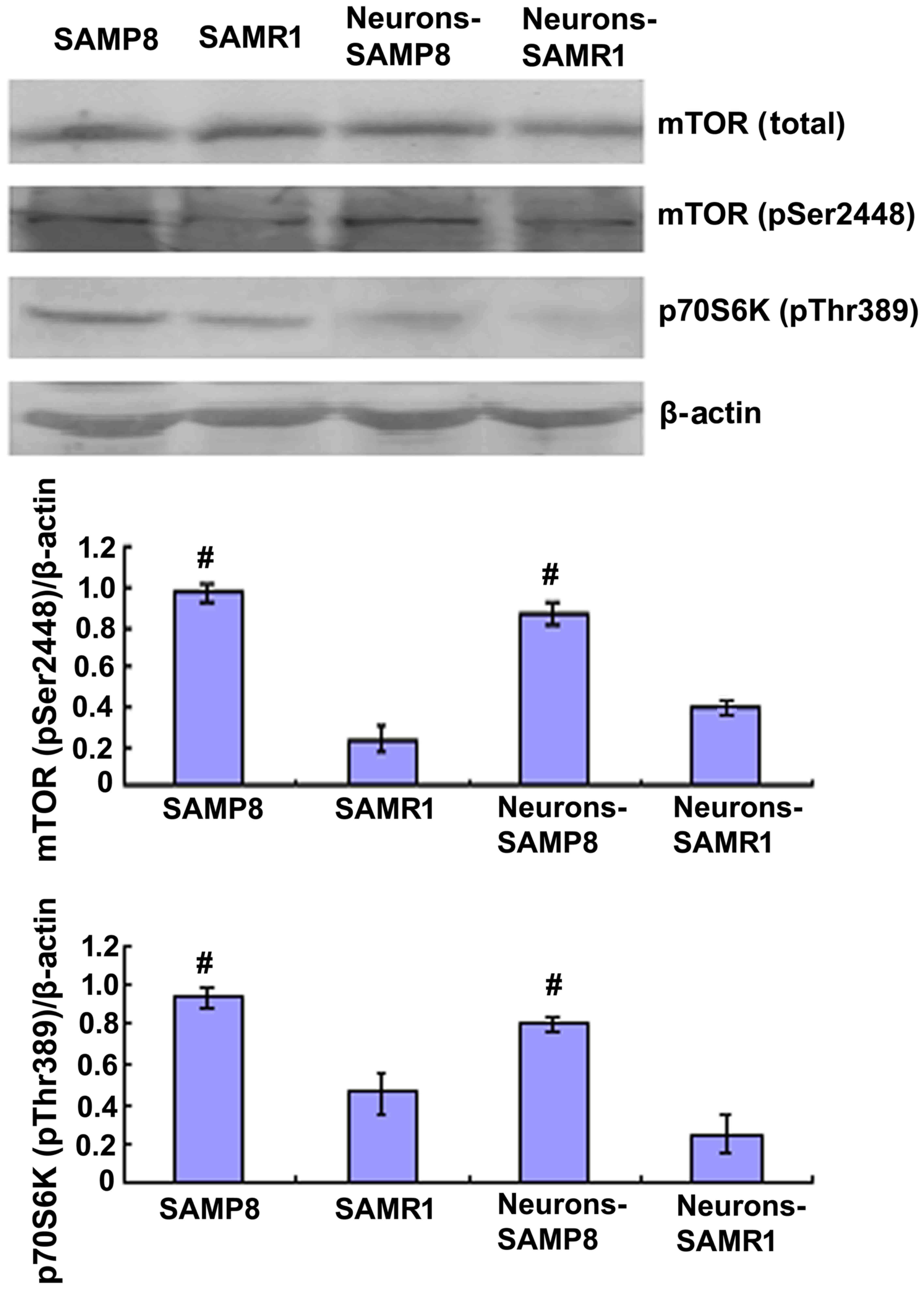
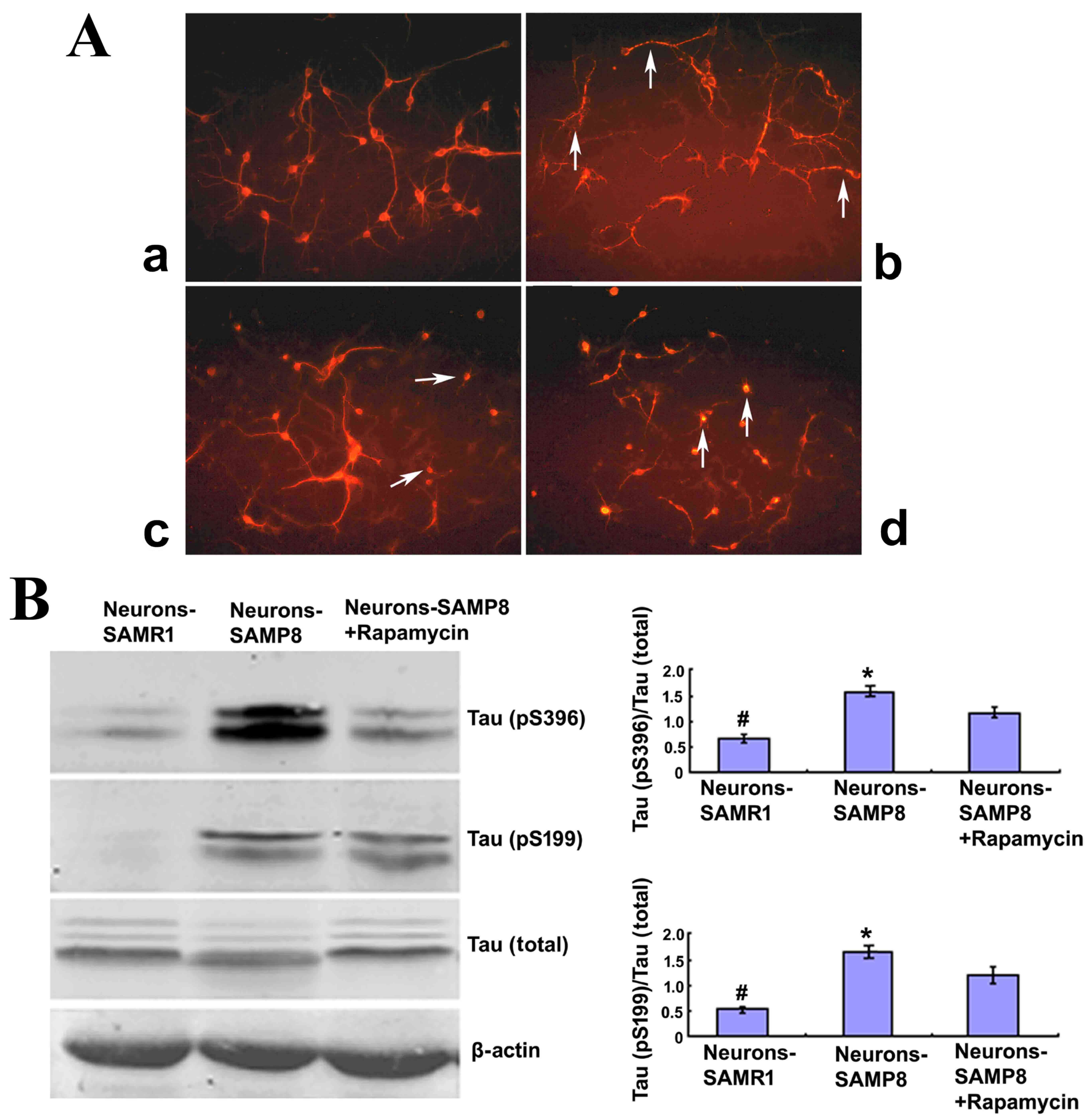
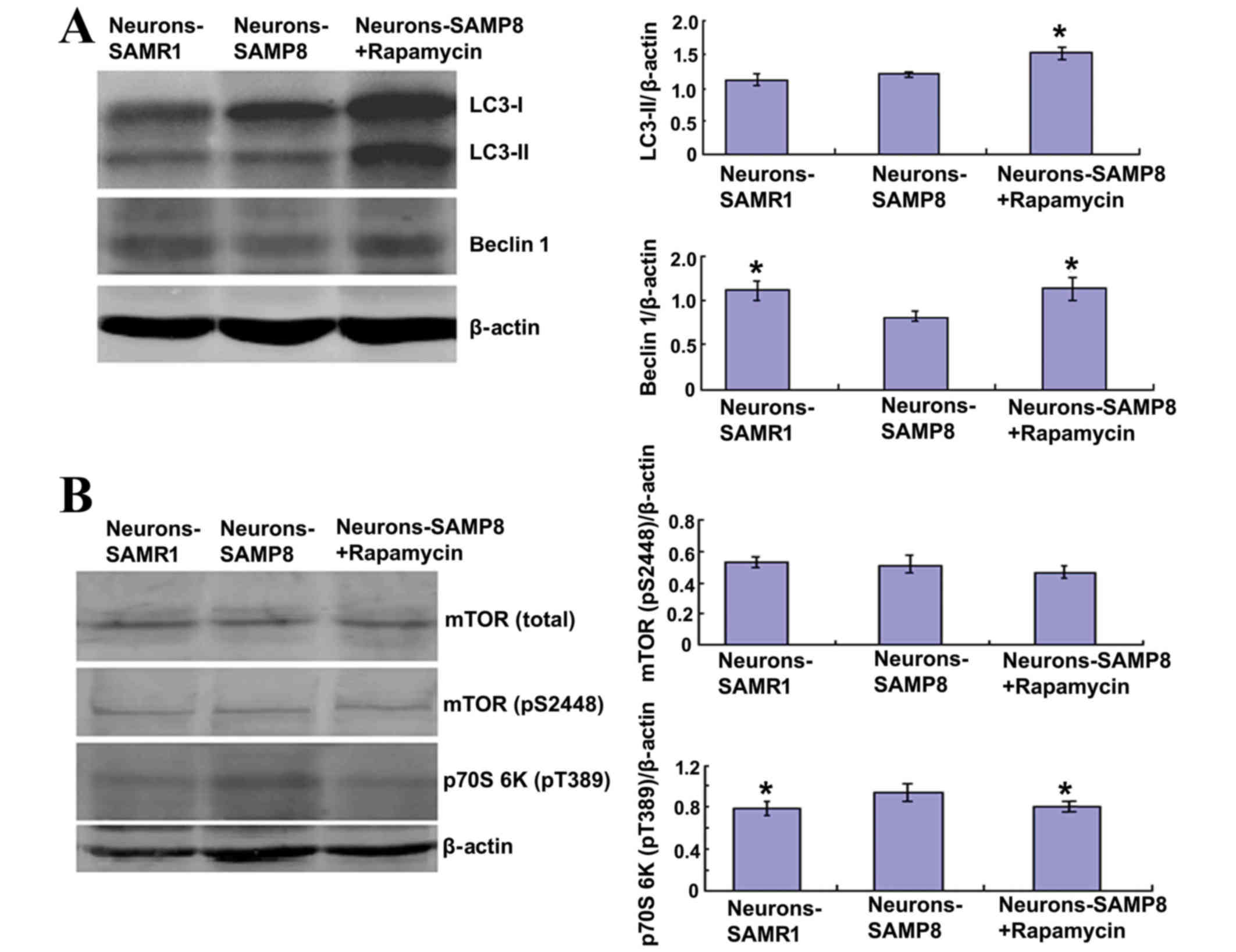
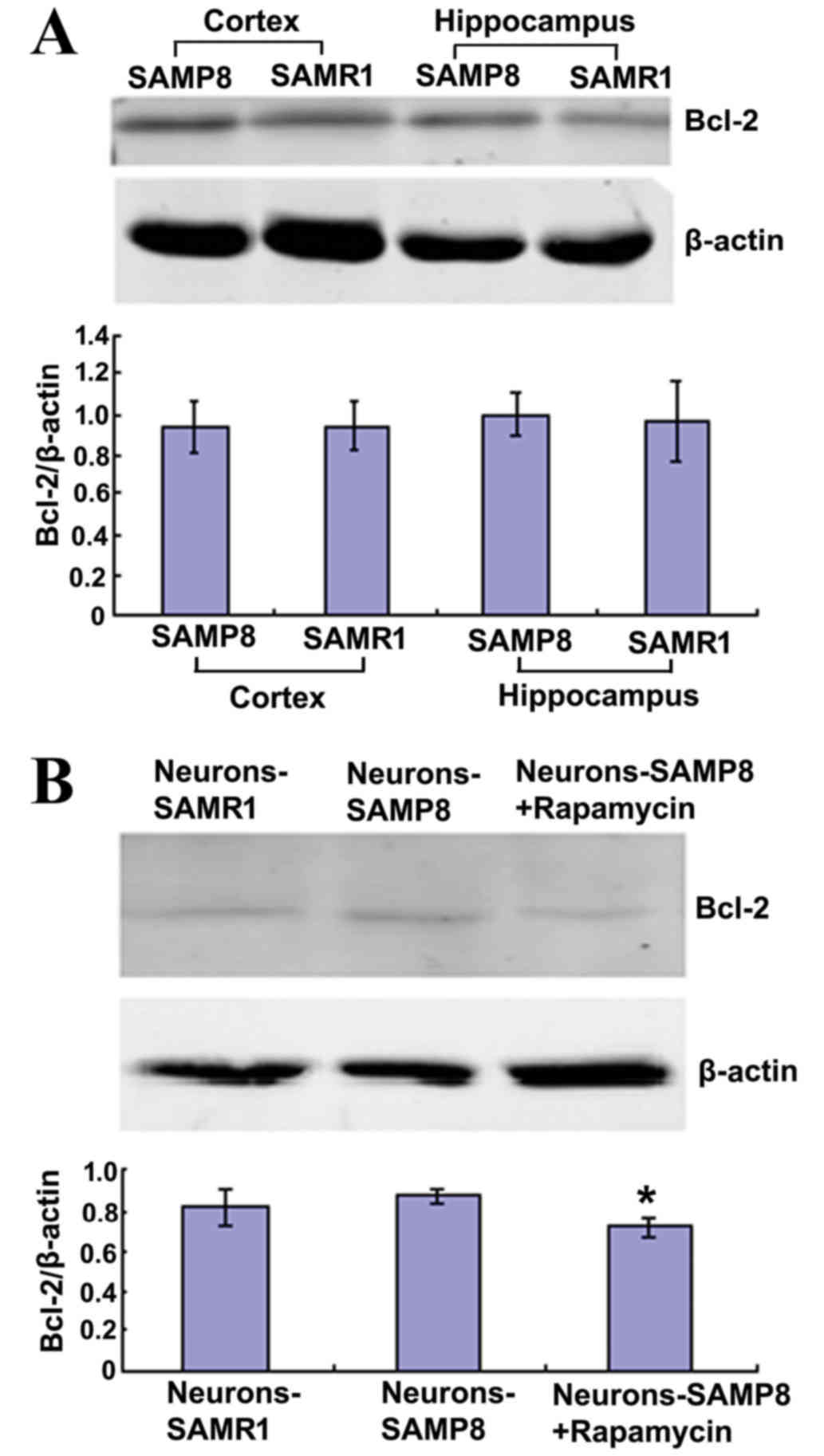
The mammalian target of rapamycin (mTOR) kinase is an inhibitor of autophagy, which is an intracellular system involved in the degradation of long‑lived proteins and organelles in lysosomes. Recent evidence suggests that the steady incline in mTOR function during aging may be associated with the cognitive decline related to aging and may also promote development of Tau pathology. At present, the senescence accelerated mouse prone 8 (SAMP8) is an experimental model that has been proposed for the study of age‑related neurodegenerative changes associated with aging. In the present study, mTOR signaling in the hippocampus of SAMP8 newborn mice and in the control‑strain SAMR1 mice was investigated. Consequently, hyper phosphorylated Tau (pS199 or pS396) and upregulated mTOR activity were observed in SAMP8 when compared with SAMR1; however, 0.5 µM rapamycin administration significantly reduced the levels of phosphorylated Tau and p70S6K (pT389) in SAMP8 mice. Related to these findings, SAMP8 exhibited an increase in the neuronal loss of hippocampus that was associated with lower levels of anti‑apoptotic proteins. These results indicate that mTOR signaling participates in the neurodegenerative process and rapamycin administration may protect neurons of SAMP8 mice and may have a potential role in curing cognitive decline.
View Figures

Figure 1

Figure 2

Figure 3

Figure 4

View References

1 

Keith CT and Schreiber SL: PIK-related kinases: DNA repair, recombination, and cell cycle checkpoints. Science. 270:50–51. 1995. View Article : Google Scholar : PubMed/NCBI

2 

Levine B and Kroemer G: Autophagy in the pathogenesis of disease. Cell. 132:27–42. 2008. View Article : Google Scholar : PubMed/NCBI

3 

Takei N and Nawa H: mTOR signaling and its roles in normal and abnormal brain development. Front Mol Neurosci. 7:282014. View Article : Google Scholar : PubMed/NCBI

4 

Meijer AJ and Codogno P: Regulation and role of autophagy in mammalian cells. Int J Biochem Cell Biol. 36:2445–2462. 2004. View Article : Google Scholar : PubMed/NCBI

5 

Sarkar S: Regulation of autophagy by mTOR-dependent and mTOR-independent pathways: Autophagy dysfunction in neurodegenerative diseases and therapeutic application of autophagy enhancers. Biochem Soc Trans. 41:1103–1130. 2013. View Article : Google Scholar : PubMed/NCBI

6 

Mariño G, Madeo F and Kroemer G: Autophagy for tissue homeostasis and neuroprotection. Curr Opin Cell Biol. 23:198–206. 2011. View Article : Google Scholar : PubMed/NCBI

7 

Rubinsztein DC: The roles of intracellular protein-degradation pathways in neurodegeneration. Nature. 443:780–786. 2006. View Article : Google Scholar : PubMed/NCBI

8 

Pan T, Kondo S, Le W and Jankovic J: The role of autophagy-lysosome pathway in neurodegeneration associated with Parkinson's disease. Brain. 131:1969–1978. 2008. View Article : Google Scholar : PubMed/NCBI

9 

Rivero-Ríos P, Madero-Pérez J, Fernández B and Hilfiker S: Targeting the Autophagy/Lysosomal Degradation Pathway in Parkinson's Disease. Curr Neuropharmacol. 14:238–249. 2016. View Article : Google Scholar : PubMed/NCBI

10 

Wong M: Mammalian target of rapamycin (mTOR) pathways in neurological diseases. Biomed J. 36:40–50. 2013. View Article : Google Scholar : PubMed/NCBI

11 

Ganley IG, Lam du H, Wang J, Ding X, Chen S and Jiang X: ULK1.ATG13.FIP200 complex mediates mTOR signaling and is essential for autophagy. J Biol Chem. 284:12297–12305. 2009. View Article : Google Scholar : PubMed/NCBI

12 

Hosokawa N, Hara T, Kaizuka T, Kishi C, Takamura A, Miura Y, Iemura S, Natsume T, Takehana K, Yamada N, et al: Nutrient-dependent mTORC1 association with the ULK1-Atg13-FIP200 complex required for autophagy. Mol Biol Cell. 20:1981–1991. 2009. View Article : Google Scholar : PubMed/NCBI

13 

Jung CH, Jun CB, Ro SH, Kim YM, Otto NM, Cao J, Kundu M and Kim DH: ULK-Atg13-FIP200 complexes mediate mTOR signaling to the autophagy machinery. Mol Biol Cell. 20:1992–2003. 2009. View Article : Google Scholar : PubMed/NCBI

14 

Chen J, Zheng XF, Brown EJ and Schreiber SL: Identification of an 11-kDa FKBP12-rapamycin-binding domain within the 289-kDa FKBP12-rapamycin-associated protein and characterization of a critical serine residue. Proc Natl Acad Sci USA. 92:pp. 4947–4951. 1995; View Article : Google Scholar : PubMed/NCBI

15 

Choi J, Chen J, Schreiber SL and Clardy J: Structure of the FKBP12-rapamycin complex interacting with the binding domain of human FRAP. Science. 273:239–242. 1996. View Article : Google Scholar : PubMed/NCBI

16 

Laplante M and Sabatini DM: mTOR signaling in growth control and disease. Cell. 149:274–293. 2012. View Article : Google Scholar : PubMed/NCBI

17 

King MA, Hands S, Hafiz F, Mizushima N, Tolkovsky AM and Wyttenbach A: Rapamycin inhibits polyglutamine aggregation independently of autophagy by reducing protein synthesis. Mol Pharmacol. 73:1052–1063. 2008. View Article : Google Scholar : PubMed/NCBI

18 

Tóth ML, Sigmond T, Borsos E, Barna J, Erdélyi P, Takács-Vellai K, Orosz L, Kovács AL, Csikós G, Sass M and Vellai T: Longevity pathways converge on autophagy genes to regulate life span in Caenorhabditis elegans. Autophagy. 4:330–338. 2008. View Article : Google Scholar : PubMed/NCBI

19 

Harrison DE, Strong R, Sharp ZD, Nelson JF, Astle CM, Flurkey K, Nadon NL, Wilkinson JE, Frenkel K, Carter CS, et al: Rapamycin fed late in life extends lifespan in genetically heterogeneous mice. Nature. 460:392–395. 2009.PubMed/NCBI

20 

Miller RA, Harrison DE, Astle CM, Baur JA, Boyd AR, de Cabo R, Fernandez E, Flurkey K, Javors MA, Nelson JF, et al: Rapamycin, but not resveratrol or simvastatin, extends life span of genetically heterogeneous mice. J Gerontol A Biol Sci Med Sci. 66:191–201. 2011. View Article : Google Scholar : PubMed/NCBI

21 

Pei JJ, Björkdahl C, Zhang H, Zhou X and Winblad B: p70 S6 kinase and tau in Alzheimer's disease. J Alzheimers Dis. 14:385–392. 2008. View Article : Google Scholar : PubMed/NCBI

22 

Das F, Ghosh-Choudhury N, Mahimainathan L, Venkatesan B, Feliers D, Riley DJ, Kasinath BS and Choudhury GG: Raptor-rictor axis in TGFbeta-induced protein synthesis. Cell Signal. 20:409–423. 2008. View Article : Google Scholar : PubMed/NCBI

23 

Hay N and Sonenberg N: Upstream and downstream of mTOR. Genes Dev. 18:1926–1945. 2004. View Article : Google Scholar : PubMed/NCBI

24 

Meske V, Albert F and Ohm TG: Coupling of mammalian target of rapamycin with phosphoinositide 3-kinase signaling pathway regulates protein phosphatase 2A- and glycogen synthase kinase-3-dependent phosphorylation of Tau. J Biol Chem. 283:100–109. 2008. View Article : Google Scholar : PubMed/NCBI

25 

Barth S, Glick D and Macleod KF: Autophagy: Assays and artifacts. J Pathol. 221:117–124. 2010. View Article : Google Scholar : PubMed/NCBI

26 

Zhang W, Li Q, Song C and Lao L: Knockdown of autophagy-related protein 6, Beclin-1, decreases cell growth, invasion, and metastasis and has a positive effect on chemotherapy-induced cytotoxicity in osteosarcoma cells. Tumour Biol. 36:2531–2539. 2015. View Article : Google Scholar : PubMed/NCBI

27 

Pattingre S, Tassa A, Qu X, Garuti R, Liang XH, Mizushima N, Packer M, Schneider MD and Levine B: Bcl-2 antiapoptotic proteins inhibit Beclin 1-dependent autophagy. Cell. 122:927–939. 2005. View Article : Google Scholar : PubMed/NCBI

28 

Dancey JE: Inhibitors of the mammalian target of rapamycin. Expert Opin Investig Drugs. 14:313–328. 2005. View Article : Google Scholar : PubMed/NCBI

29 

An WL, Cowburn RF, Li L, Braak H, Alafuzoff I, Iqbal K, Iqbal IG, Winblad B and Pei JJ: Up-regulation of phosphorylated/activated p70 S6 kinase and its relationship to neurofibrillary pathology in Alzheimer's disease. Am J Pathol. 163:591–607. 2003. View Article : Google Scholar : PubMed/NCBI

30 

Pei JJ and Hugon J: mTOR-dependent signalling in Alzheimer's disease. J Cell Mol Med. 12:2525–2532. 2008. View Article : Google Scholar : PubMed/NCBI

31 

Kroemer G, Mariño G and Levine B: Autophagy and the integrated stress response. Mol Cell. 40:280–293. 2010. View Article : Google Scholar : PubMed/NCBI

32 

Lee JA: Neuronal autophagy: A housekeeper or a fighter in neuronal cell survival? Exp Neurobiol. 21:1–8. 2012. View Article : Google Scholar : PubMed/NCBI

33 

Xilouri M and Stefanis L: Autophagy in the central nervous system: Implications for neurodegenerative disorders. CNS Neurol Disord Drug Targets. 9:701–719. 2010. View Article : Google Scholar : PubMed/NCBI

34 

Mizushima N and Levine B: Autophagy in mammalian development and differentiation. Nat Cell Biol. 12:823–830. 2010. View Article : Google Scholar : PubMed/NCBI

35 

Ma Q, Qiang J, Gu P, Wang Y, Geng Y and Wang M: Age-related autophagy alterations in the brain of senescence accelerated mouse prone 8 (SAMP8) mice. Exp Gerontol. 46:533–541. 2011. View Article : Google Scholar : PubMed/NCBI

36 

Díaz-Troya S, Pérez-Pérez ME, Florencio FJ and Crespo JL: The role of TOR in autophagy regulation from yeast to plants and mammals. Autophagy. 4:851–865. 2008. View Article : Google Scholar : PubMed/NCBI

37 

Klionsky DJ, Codogno P, Cuervo AM, Deretic V, Elazar Z, Fueyo-Margareto J, Gewirtz DA, Kroemer G, Levine B, Mizushima N, et al: A comprehensive glossary of autophagy-related molecules and processes. Autophagy. 6:438–448. 2010. View Article : Google Scholar : PubMed/NCBI

38 

Klionsky DJ, Abdalla FC, Abeliovich H, Abraham RT, Acevedo-Arozena A, Adeli K, Agholme L, Agnello M, Agostinis P, Diwan A, et al: Guidelines for the use and interpretation of assays for monitoring autophagy. Autophagy. 8:445–544. 2012. View Article : Google Scholar : PubMed/NCBI

39 

Wei Y, Pattingre S, Sinha S, Bassik M and Levine B: JNK1-mediated phosphorylation of Bcl-2 regulates starvation-induced autophagy. Mol Cell. 30:678–688. 2008. View Article : Google Scholar : PubMed/NCBI

40 

Mizushima N and Yoshimori T: How to interpret LC3 immunoblotting. Autophagy. 3:542–545. 2007. View Article : Google Scholar : PubMed/NCBI

41 

Menardo J, Tang Y, Ladrech S, Lenoir M, Casas F, Michel C, Bourien J, Ruel J, Rebillard G, Maurice T, et al: Oxidative stress, inflammation, and autophagic stress as the key mechanisms of premature age-related hearing loss in SAMP8 mouse Cochlea. Antioxid Redox Signal. 16:263–274. 2012. View Article : Google Scholar : PubMed/NCBI

Related Articles

  • Abstract
  • View
  • Download
  • Twitter
Copy and paste a formatted citation
Spandidos Publications style
Wang Y, Ma Q, Ma X, Zhang Z, Liu N and Wang M: Role of mammalian target of rapamycin signaling in autophagy and the neurodegenerative process using a senescence accelerated mouse‑prone 8 model. Exp Ther Med 14: 1051-1057, 2017.
APA
Wang, Y., Ma, Q., Ma, X., Zhang, Z., Liu, N., & Wang, M. (2017). Role of mammalian target of rapamycin signaling in autophagy and the neurodegenerative process using a senescence accelerated mouse‑prone 8 model. Experimental and Therapeutic Medicine, 14, 1051-1057. https://doi.org/10.3892/etm.2017.4618
MLA
Wang, Y., Ma, Q., Ma, X., Zhang, Z., Liu, N., Wang, M."Role of mammalian target of rapamycin signaling in autophagy and the neurodegenerative process using a senescence accelerated mouse‑prone 8 model". Experimental and Therapeutic Medicine 14.2 (2017): 1051-1057.
Chicago
Wang, Y., Ma, Q., Ma, X., Zhang, Z., Liu, N., Wang, M."Role of mammalian target of rapamycin signaling in autophagy and the neurodegenerative process using a senescence accelerated mouse‑prone 8 model". Experimental and Therapeutic Medicine 14, no. 2 (2017): 1051-1057. https://doi.org/10.3892/etm.2017.4618
Copy and paste a formatted citation
x
Spandidos Publications style
Wang Y, Ma Q, Ma X, Zhang Z, Liu N and Wang M: Role of mammalian target of rapamycin signaling in autophagy and the neurodegenerative process using a senescence accelerated mouse‑prone 8 model. Exp Ther Med 14: 1051-1057, 2017.
APA
Wang, Y., Ma, Q., Ma, X., Zhang, Z., Liu, N., & Wang, M. (2017). Role of mammalian target of rapamycin signaling in autophagy and the neurodegenerative process using a senescence accelerated mouse‑prone 8 model. Experimental and Therapeutic Medicine, 14, 1051-1057. https://doi.org/10.3892/etm.2017.4618
MLA
Wang, Y., Ma, Q., Ma, X., Zhang, Z., Liu, N., Wang, M."Role of mammalian target of rapamycin signaling in autophagy and the neurodegenerative process using a senescence accelerated mouse‑prone 8 model". Experimental and Therapeutic Medicine 14.2 (2017): 1051-1057.
Chicago
Wang, Y., Ma, Q., Ma, X., Zhang, Z., Liu, N., Wang, M."Role of mammalian target of rapamycin signaling in autophagy and the neurodegenerative process using a senescence accelerated mouse‑prone 8 model". Experimental and Therapeutic Medicine 14, no. 2 (2017): 1051-1057. https://doi.org/10.3892/etm.2017.4618
Follow us
  • Twitter
  • LinkedIn
  • Facebook
About
  • Spandidos Publications
  • Careers
  • Cookie Policy
  • Privacy Policy
How can we help?
  • Help
  • Live Chat
  • Contact
  • Email to our Support Team