Spandidos Publications Logo
  • About
    • About Spandidos
    • Aims and Scopes
    • Abstracting and Indexing
    • Editorial Policies
    • Reprints and Permissions
    • Job Opportunities
    • Terms and Conditions
    • Contact
  • Journals
    • All Journals
    • Oncology Letters
      • Oncology Letters
      • Information for Authors
      • Editorial Policies
      • Editorial Board
      • Aims and Scope
      • Abstracting and Indexing
      • Bibliographic Information
      • Archive
    • International Journal of Oncology
      • International Journal of Oncology
      • Information for Authors
      • Editorial Policies
      • Editorial Board
      • Aims and Scope
      • Abstracting and Indexing
      • Bibliographic Information
      • Archive
    • Molecular and Clinical Oncology
      • Molecular and Clinical Oncology
      • Information for Authors
      • Editorial Policies
      • Editorial Board
      • Aims and Scope
      • Abstracting and Indexing
      • Bibliographic Information
      • Archive
    • Experimental and Therapeutic Medicine
      • Experimental and Therapeutic Medicine
      • Information for Authors
      • Editorial Policies
      • Editorial Board
      • Aims and Scope
      • Abstracting and Indexing
      • Bibliographic Information
      • Archive
    • International Journal of Molecular Medicine
      • International Journal of Molecular Medicine
      • Information for Authors
      • Editorial Policies
      • Editorial Board
      • Aims and Scope
      • Abstracting and Indexing
      • Bibliographic Information
      • Archive
    • Biomedical Reports
      • Biomedical Reports
      • Information for Authors
      • Editorial Policies
      • Editorial Board
      • Aims and Scope
      • Abstracting and Indexing
      • Bibliographic Information
      • Archive
    • Oncology Reports
      • Oncology Reports
      • Information for Authors
      • Editorial Policies
      • Editorial Board
      • Aims and Scope
      • Abstracting and Indexing
      • Bibliographic Information
      • Archive
    • Molecular Medicine Reports
      • Molecular Medicine Reports
      • Information for Authors
      • Editorial Policies
      • Editorial Board
      • Aims and Scope
      • Abstracting and Indexing
      • Bibliographic Information
      • Archive
    • World Academy of Sciences Journal
      • World Academy of Sciences Journal
      • Information for Authors
      • Editorial Policies
      • Editorial Board
      • Aims and Scope
      • Abstracting and Indexing
      • Bibliographic Information
      • Archive
    • International Journal of Functional Nutrition
      • International Journal of Functional Nutrition
      • Information for Authors
      • Editorial Policies
      • Editorial Board
      • Aims and Scope
      • Abstracting and Indexing
      • Bibliographic Information
      • Archive
    • International Journal of Epigenetics
      • International Journal of Epigenetics
      • Information for Authors
      • Editorial Policies
      • Editorial Board
      • Aims and Scope
      • Abstracting and Indexing
      • Bibliographic Information
      • Archive
    • Medicine International
      • Medicine International
      • Information for Authors
      • Editorial Policies
      • Editorial Board
      • Aims and Scope
      • Abstracting and Indexing
      • Bibliographic Information
      • Archive
  • Articles
  • Information
    • Information for Authors
    • Information for Reviewers
    • Information for Librarians
    • Information for Advertisers
    • Conferences
  • Language Editing
Spandidos Publications Logo
  • About
    • About Spandidos
    • Aims and Scopes
    • Abstracting and Indexing
    • Editorial Policies
    • Reprints and Permissions
    • Job Opportunities
    • Terms and Conditions
    • Contact
  • Journals
    • All Journals
    • Biomedical Reports
      • Information for Authors
      • Editorial Policies
      • Editorial Board
      • Aims and Scope
      • Abstracting and Indexing
      • Bibliographic Information
      • Archive
    • Experimental and Therapeutic Medicine
      • Information for Authors
      • Editorial Policies
      • Editorial Board
      • Aims and Scope
      • Abstracting and Indexing
      • Bibliographic Information
      • Archive
    • International Journal of Epigenetics
      • Information for Authors
      • Editorial Policies
      • Editorial Board
      • Aims and Scope
      • Abstracting and Indexing
      • Bibliographic Information
      • Archive
    • International Journal of Functional Nutrition
      • Information for Authors
      • Editorial Policies
      • Editorial Board
      • Aims and Scope
      • Abstracting and Indexing
      • Bibliographic Information
      • Archive
    • International Journal of Molecular Medicine
      • Information for Authors
      • Editorial Policies
      • Editorial Board
      • Aims and Scope
      • Abstracting and Indexing
      • Bibliographic Information
      • Archive
    • International Journal of Oncology
      • Information for Authors
      • Editorial Policies
      • Editorial Board
      • Aims and Scope
      • Abstracting and Indexing
      • Bibliographic Information
      • Archive
    • Medicine International
      • Information for Authors
      • Editorial Policies
      • Editorial Board
      • Aims and Scope
      • Abstracting and Indexing
      • Bibliographic Information
      • Archive
    • Molecular and Clinical Oncology
      • Information for Authors
      • Editorial Policies
      • Editorial Board
      • Aims and Scope
      • Abstracting and Indexing
      • Bibliographic Information
      • Archive
    • Molecular Medicine Reports
      • Information for Authors
      • Editorial Policies
      • Editorial Board
      • Aims and Scope
      • Abstracting and Indexing
      • Bibliographic Information
      • Archive
    • Oncology Letters
      • Information for Authors
      • Editorial Policies
      • Editorial Board
      • Aims and Scope
      • Abstracting and Indexing
      • Bibliographic Information
      • Archive
    • Oncology Reports
      • Information for Authors
      • Editorial Policies
      • Editorial Board
      • Aims and Scope
      • Abstracting and Indexing
      • Bibliographic Information
      • Archive
    • World Academy of Sciences Journal
      • Information for Authors
      • Editorial Policies
      • Editorial Board
      • Aims and Scope
      • Abstracting and Indexing
      • Bibliographic Information
      • Archive
  • Articles
  • Information
    • For Authors
    • For Reviewers
    • For Librarians
    • For Advertisers
    • Conferences
  • Language Editing
Login Register Submit
  • This site uses cookies
  • You can change your cookie settings at any time by following the instructions in our Cookie Policy. To find out more, you may read our Privacy Policy.

    I agree
Search articles by DOI, keyword, author or affiliation
Search
Advanced Search
presentation
Experimental and Therapeutic Medicine
Join Editorial Board Propose a Special Issue
Print ISSN: 1792-0981 Online ISSN: 1792-1015
Journal Cover
August-2017 Volume 14 Issue 2

Full Size Image

Sign up for eToc alerts
Recommend to Library

Journals

International Journal of Molecular Medicine

International Journal of Molecular Medicine

International Journal of Molecular Medicine is an international journal devoted to molecular mechanisms of human disease.

International Journal of Oncology

International Journal of Oncology

International Journal of Oncology is an international journal devoted to oncology research and cancer treatment.

Molecular Medicine Reports

Molecular Medicine Reports

Covers molecular medicine topics such as pharmacology, pathology, genetics, neuroscience, infectious diseases, molecular cardiology, and molecular surgery.

Oncology Reports

Oncology Reports

Oncology Reports is an international journal devoted to fundamental and applied research in Oncology.

Experimental and Therapeutic Medicine

Experimental and Therapeutic Medicine

Experimental and Therapeutic Medicine is an international journal devoted to laboratory and clinical medicine.

Oncology Letters

Oncology Letters

Oncology Letters is an international journal devoted to Experimental and Clinical Oncology.

Biomedical Reports

Biomedical Reports

Explores a wide range of biological and medical fields, including pharmacology, genetics, microbiology, neuroscience, and molecular cardiology.

Molecular and Clinical Oncology

Molecular and Clinical Oncology

International journal addressing all aspects of oncology research, from tumorigenesis and oncogenes to chemotherapy and metastasis.

World Academy of Sciences Journal

World Academy of Sciences Journal

Multidisciplinary open-access journal spanning biochemistry, genetics, neuroscience, environmental health, and synthetic biology.

International Journal of Functional Nutrition

International Journal of Functional Nutrition

Open-access journal combining biochemistry, pharmacology, immunology, and genetics to advance health through functional nutrition.

International Journal of Epigenetics

International Journal of Epigenetics

Publishes open-access research on using epigenetics to advance understanding and treatment of human disease.

Medicine International

Medicine International

An International Open Access Journal Devoted to General Medicine.

Journal Cover
August-2017 Volume 14 Issue 2

Full Size Image

Sign up for eToc alerts
Recommend to Library

  • Article
  • Citations
    • Cite This Article
    • Download Citation
    • Create Citation Alert
    • Remove Citation Alert
    • Cited By
  • Similar Articles
    • Related Articles (in Spandidos Publications)
    • Similar Articles (Google Scholar)
    • Similar Articles (PubMed)
  • Download PDF
  • Download XML
  • View XML
Article

Effect of dexmedetomidine combined with sufentanil on preventing emergence agitation in children receiving sevoflurane anesthesia for cleft palate repair surgery

  • Authors:
    • Ke Luo
    • Jun‑Mei Xu
    • Lin Cao
    • Ju Gao
  • View Affiliations / Copyright

    Affiliations: Department of Anesthesiology, The Second Xiangya Hospital of Central South University, Changsha, Hunan 410011, P.R. China, Department of Anesthesiology, Clinical Medical School of Yangzhou University, Subei People's Hospital of Jiangsu, Yangzhou, Jiangsu 225001, P.R. China
  • Pages: 1775-1782
    |
    Published online on: June 23, 2017
       https://doi.org/10.3892/etm.2017.4660
  • Expand metrics +
Metrics: Total Views: 0 (Spandidos Publications: | PMC Statistics: )
Metrics: Total PDF Downloads: 0 (Spandidos Publications: | PMC Statistics: )
Cited By (CrossRef): 0 citations Loading Articles...

This article is mentioned in:


Abstract

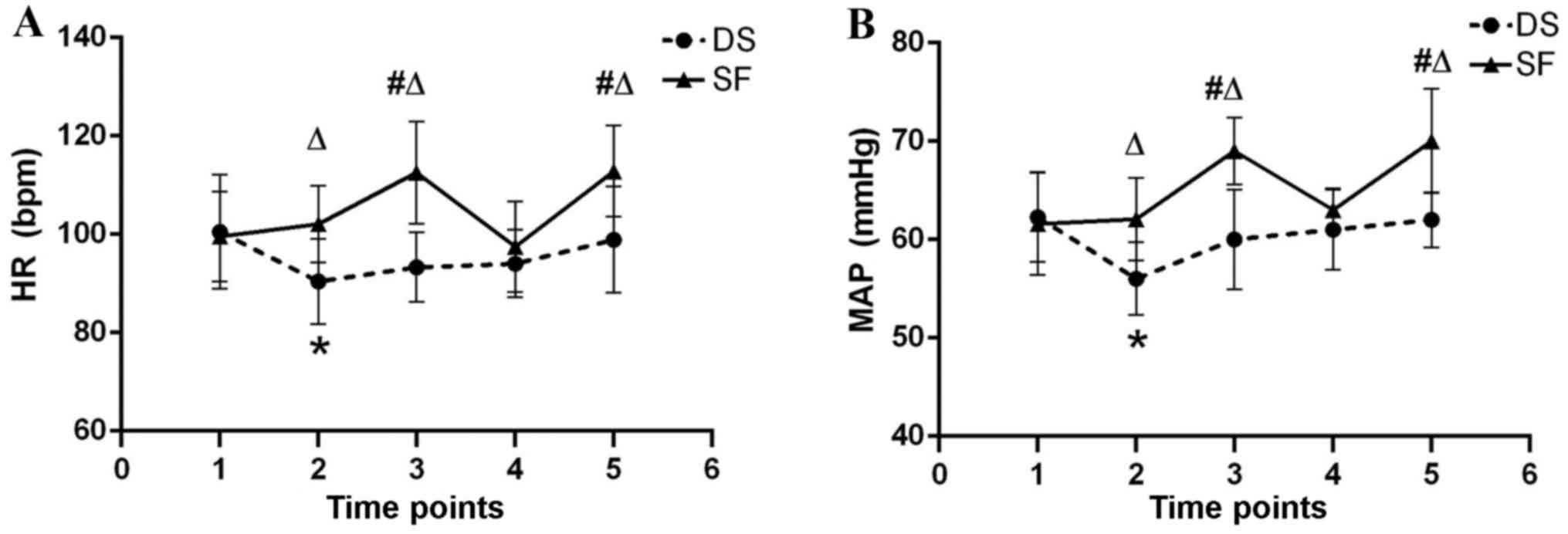
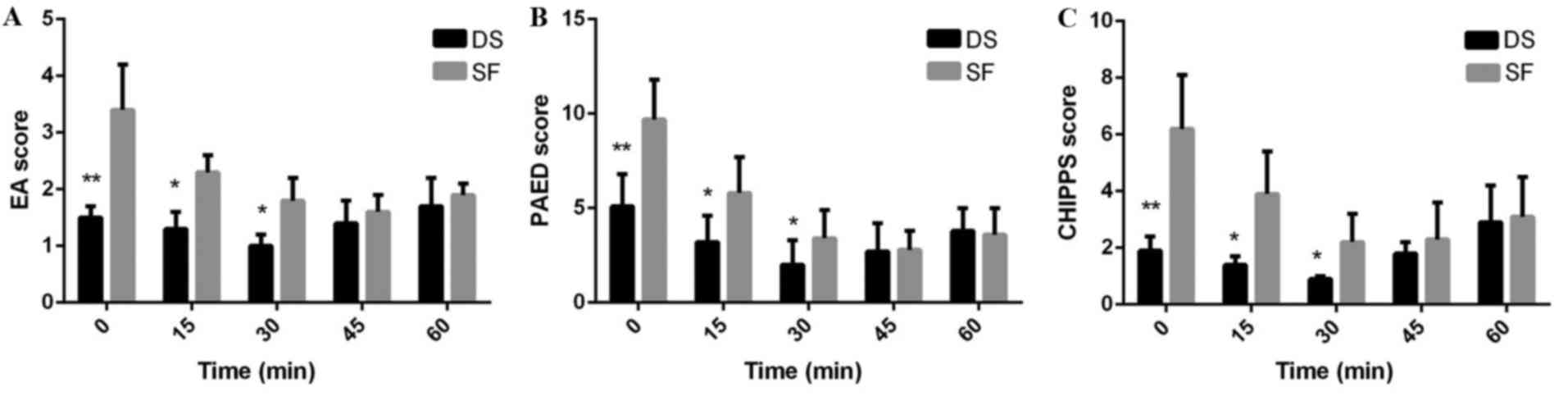
The aim of the present study was to observe whether dexmedetomidine (DEX) combined with sufentanil decreased emergence agitation (EA) in children receiving sevoflurane anesthesia for cleft palate repair surgery. Children undergoing elective cleft palate repair surgery were randomly allocated into the DEX + sufentanil group (group DS; n=50) and the normal saline + fentanyl group (group SF; n=50). Patients in group DS were treated with 0.5 µg/kg DEX prior to induction of anesthesia, whereas patients in group SF received an equal volume of normal saline. Sufentanil (0.2 µg/kg) was administered to induce anesthesia, and 30 min before the end of surgery for patients in group DS. Fentanyl (2 µg/kg) was administered at the same time point for patients in group SF. Mean arterial pressure (MAP), heart rate (HR), duration of surgery and anesthesia, and the dosage of remifentanil were assessed. EA score, Pediatric Anesthesia Emergence Delirium (PAED) score and the Children and Infants Postoperative Pain Scale (CHIPPS) score were documented every 15 min in the post‑anesthesia care unit (PACU). The number of cases requiring fentanyl (1 µg/kg) and the recovery profile data were analyzed. Compared with group DS (P<0.05) and the baseline (P<0.05), HR and MAP were significantly increased in group SF immediately following tracheal intubation and extubation. Mean values of maximum EA, PAED and CHIPPS scores were significantly reduced in group DS compared with group SF at 0 (P<0.01), 15 (P<0.05), and 30 min (P<0.05) after arrival at PACU. The incidence of EA in group SF was significantly increased compared with group DS (P<0.05). The dosage of remifentanil during the surgery and the number of cases requiring fentanyl (1 µg/kg) in group DS were significantly decreased compared with group SF (P<0.05). The findings of the present study suggested that DEX combined with sufentanil was able to effectively decrease the incidence of EA in children receiving sevoflurane anesthesia for cleft palate repair surgery.
View Figures

Figure 1

Figure 2

Figure 3

View References

1 

Raj S: The timing of primary cleft lip and palate surgery-the experience of a craniofacial center in South India. Brit J Oral Max Surg. 49:S91–S92. 2011. View Article : Google Scholar

2 

Klingmann A: Anesthetic management of pediatric cleft lip and cleft palate repair. Anaesthesist. 55:93–94. 2006.(In German). View Article : Google Scholar : PubMed/NCBI

3 

Milić M, Goranović T and Knezević P: Complications of sevoflurane-fentanyl versus midazolam-fentanyl anesthesia in pediatric cleft lip and palate surgery: A randomized comparison study. Int J Oral Maxillofac Surg. 39:5–9. 2010. View Article : Google Scholar : PubMed/NCBI

4 

Nguyen C, Hernandez-Boussard T, Davies SM, Bhattacharya J, Khosla RK and Curtin CM: Cleft palate surgery: An evaluation of length of stay, complications and costs by hospital type. Cleft Palate Craniofac J. 51:412–419. 2014. View Article : Google Scholar : PubMed/NCBI

5 

Silva LM, Braz LG and Módolo NS: Emergence agitation in pediatric anesthesia: Current features. J Pediatr (Rio J). 84:107–113. 2008. View Article : Google Scholar : PubMed/NCBI

6 

Goa KL, Noble S and Spencer CM: Sevoflurane in paediatric anesthesia: A review. Paediatr drugs. 1:127–153. 1999. View Article : Google Scholar : PubMed/NCBI

7 

Hatch DJ: New inhalation agents in paediatric anesthesia. Br J Anaesth. 83:42–49. 1999. View Article : Google Scholar : PubMed/NCBI

8 

Bedirli N, Akçabay M and Emik U: Tramadol vs dexmedetomidine for emergence agitation control in pediatric patients undergoing adenotonsillectomy with sevoflurane anesthesia: Prospective randomized controlled clinical study. Bmc Anesthesiology. 17:412017. View Article : Google Scholar : PubMed/NCBI

9 

Use T, Nakahara H, Kimoto A, Beppu Y, Yoshimura M, Kojima T and Fukano T: Barbiturate induction for the prevention of emergence agitation after pediatric sevoflurane anesthesia. J Pediatr Pharmacol Ther. 20:385–392. 2015.PubMed/NCBI

10 

Cravero J, Surgenor S and Whalen K: Emergence agitation in paediatric patients after sevoflurane anesthesia and no surgery: A comparison with halothane. Paediatr Anaesth. 10:419–424. 2000. View Article : Google Scholar : PubMed/NCBI

11 

Beskow A and Westrin P: Sevoflurane causes more postoperative agitation in children than does halothane. Acta Anesthesiol Scand. 43:536–541. 1999. View Article : Google Scholar

12 

Sun L, Guo R and Sun L: Dexmedetomidine for preventing sevoflurane-related emergence agitation in children: A meta-analysis of randomized controlled trials. Acta Anesthesiol Scand. 58:642–650. 2014. View Article : Google Scholar

13 

Li J, Huang ZL, Zhang XT, Luo K, Zhang ZQ, Mao Y, Zhuang XB, Lian QQ and Cao H: Sufentanil reduces emergence agitation in children receiving sevoflurane anesthesia for adenotonsillectomy compared with fentanyl. Chin Med J (Engl). 124:3682–3685. 2011.PubMed/NCBI

14 

Theivanayagam S, Lopez KT and Asombang AW, Bechtold ML and Asombang AW: ASA classification prior to endoscopic procedures: A retrospective analysis on accuracy of gastroenterologists. South Med J. 110:79–82. 2017. View Article : Google Scholar : PubMed/NCBI

15 

Barakat AR, Sutcliffe N and Schwab M: Effect site concentration during propofol TCI sedation: A comparison of sedation score with two pharmacokinetic models. Anesthesia. 62:661–666. 2007. View Article : Google Scholar

16 

Sikich N and Lerman J: Development and psychometric evaluation of the pediatric anesthesia emergence delirium scale. Anesthesiology. 100:1138–1145. 2004. View Article : Google Scholar : PubMed/NCBI

17 

Aono J, Ueda W, Mamiya K, Takimoto E and Manabe M: Greater incidence of delirium during recovery from sevoflurane anesthesia in preschool boys. Anesthesiology. 87:1298–1300. 1997. View Article : Google Scholar : PubMed/NCBI

18 

Aldrete JA: The post-anesthesia recovery score revisited. J Clin Anesth. 7:89–91. 1995. View Article : Google Scholar : PubMed/NCBI

19 

Büttner W and Finke W: Analysis of behavioural and physiological parameters for the assessment of postoperative analgesic demand in newborns, infants and young children: A comprehensive report on seven consecutive studies. Paediatr Anaesth. 10:303–318. 2000. View Article : Google Scholar : PubMed/NCBI

20 

Jürgens S: Sevoflurane conscious sedation for MRI scanning. Anesthesia. 58:296–297. 2003. View Article : Google Scholar

21 

Malviya S, Voepel-Lewis T, Ramamurthi RJ, Burke C and Tait AR: Clonidine for the prevention of emergence agitation in young children: Efficacy and recovery profile. Paediatr Anaesth. 16:554–549. 2006. View Article : Google Scholar : PubMed/NCBI

22 

Keaney A, Diviney D, Harte S and Lyons B: Postoperative behavioral changes following anesthesia with sevoflurane. Pediatr Anesth. 14:866–870. 2004. View Article : Google Scholar

23 

Cohen IT, Drewsen S and Hannallah RS: Propofol or midazolam do not reduce the incidence of emergence agitation associated with desflurane anesthesia in children undergoing adenotonsillectomy. Paediatr Anaesth. 12:604–609. 2002. View Article : Google Scholar : PubMed/NCBI

24 

Kim KM, Lee KH, Kim YH, Ko MJ, Jung JW and Kang E: Comparison of effects of intravenous midazolam and ketamine on emergence agitation in children: Randomized controlled trial. J Int Med Res. 44:258–266. 2016. View Article : Google Scholar : PubMed/NCBI

25 

Voepel-Lewis T, Malviya S and Tait AR: A prospective cohort study of emergence agitation in the pediatric postanesthesia care unit. Anesth Analg. 96:1625–1630. 2003. View Article : Google Scholar : PubMed/NCBI

26 

Demirbilek S, Togal T, Cicek M, Aslan U, Sizanli E and Ersoy MO: Effects of fentanyl on the incidence of emergence agitation in children receiving desflurane or sevoflurane. anaesthesia. Eur J Anaesthesiol. 21:538–542. 2004. View Article : Google Scholar : PubMed/NCBI

27 

Maeda S, Tomoyasu Y, Higuchi H, Ishii-Maruhama M, Egusa M and Miyawaki T: Independent predictors of delay in emergence from general anesthesia. Anesth Prog. 62:8–13. 2015. View Article : Google Scholar : PubMed/NCBI

28 

Özcengiz D, Gunes Y and Ozmete O: Oral melatonin, dexmedetomidine, and midazolam for prevention of postoperative agitation in children. J Anesth. 25:184–188. 2011. View Article : Google Scholar : PubMed/NCBI

29 

Akin A, Bayram A, Esmaoglu A, Tosun Z, Aksu R, Altuntas R and Boyaci A: Dexmedetomidine vs midazolam for premedication of pediatric patients undergoing anesthesia. Paediatr Anaesth. 22:871–876. 2012. View Article : Google Scholar : PubMed/NCBI

30 

Tan Y, Shi Y, Ding H, Kong X, Zhou H and Tian J: µ-Opioid agonists for preventing emergence agitation under sevoflurane anesthesia in children: A meta-analysis of randomized controlled trials. Paediatr Anaesth. 26:139–150. 2016. View Article : Google Scholar : PubMed/NCBI

31 

Kim J, Kim SY, Lee JH, Kang YR and Koo BN: Low-dose dexmedetomidine reduces emergence agitation after desflurane anesthesia in children undergoing strabismus surgery. Yonsei Med J. 55:508–516. 2014. View Article : Google Scholar : PubMed/NCBI

32 

Cravero JP, Beach M, Thyr B and Whalen K: The effect of small dose fentanyl on the emergence characteristics of pediatric patients after sevoflurane anesthesia without surgery. Anesth Analg. 97:364–367. 2003. View Article : Google Scholar : PubMed/NCBI

33 

Galinkin JL, Fazi LM, Cuy RM, Chiavacci RM, Kurth CD, Shah UK, Jacobs IN and Watcha MF: Use of intranasal fentanyl in children undergoing myringotomy and tube placement during halothane and sevoflurane anesthesia. Anesthesiology. 93:1378–1383. 2000. View Article : Google Scholar : PubMed/NCBI

34 

Li X, Zhang Y, Zhou M, Xia Q, Li W and Lu Q: The effect of small dose sufentanil on emergence agitation in preschool children following sevoflurane anesthesia for elective repair of unilateral inguinal hernia. Saudi Med J. 34:40–45. 2013.PubMed/NCBI

35 

Weldon BC, Bell M and Craddock T: The effect of caudal analgesia on emergence agitation in children after sevoflurane versus halothane anesthesia. Anesth Analg. 98:321–326. 2004. View Article : Google Scholar : PubMed/NCBI

36 

Aouad MT, Kanazi GE, Siddik-Sayyid SM, Gerges FJ, Rizk LB and Baraka AS: Preoperative caudal block prevents emergence agitation in children following sevoflurane anesthesia. Acta Anaesthesiol Scand. 49:300–304. 2005. View Article : Google Scholar : PubMed/NCBI

37 

Cohen IT, Hannallah RS and Hummer KA: The incidence of emergence agitation associated with desflurane anesthesia in children is reduced by fentanyl. Anesth Analg. 93:88–91. 2001. View Article : Google Scholar : PubMed/NCBI

38 

Panchgar V, Shetti AN, Sunitha HB, Dhulkhed VK and Nadkarni AV: The effectiveness of intravenous dexmedetomidine on perioperative hemodynamics, analgesic requirement, and side effects profile in patients undergoing laparoscopic surgery under general anesthesia. Anesth Essays Res. 11:72–77. 2017. View Article : Google Scholar : PubMed/NCBI

39 

Lundeberg S and Roelofse JA: Aspects of pharmacokinetics and pharmacodynamics of sufentanil in pediatric practice. Pediatr Anesth. 21:274–279. 2011. View Article : Google Scholar

40 

Anderson BJ and Meakin GH: Scaling for size: Some implications for paediatric anaesthesia dosing. Paediatr Anaesth. 12:205–219. 2002. View Article : Google Scholar : PubMed/NCBI

41 

Murat G, Yasemin G, Hayri O, Dervis Y and Geylan I: Comparison of dexmedetomidine or remifentanil infusion combined with sevoflurane anesthesia in craniotomy: Hemodynamic variables and recovery. Neurosurg Quart. 19:116–119. 2009. View Article : Google Scholar

42 

Park JS, Kim KJ, Lee JH, Jeong WY and Lee JR: A randomized comparison of remifentanil target-controlled infusion versus dexmedetomidine single-dose administration: A better method for smooth recovery from general sevoflurane anesthesia. Am J Ther. 23:e690–e696. 2016. View Article : Google Scholar : PubMed/NCBI

43 

Talke PO, Caldwell JE, Richardson CA, Kirkegaard-Nielsen H and Stafford M: The effects of dexmedetomidine on neuromuscular blockade in human volunteers. Anesth Analg. 88:633–639. 1999. View Article : Google Scholar : PubMed/NCBI

44 

Unlugenc H, Gunduz M, Guler T, Yagmur O and Isik G: The effect of preanaesthetic administration of intravenous dexmedetomidine on postoperative pain in patients receiving patient-controlled morphine. Eur J Anaesthesiol. 22:386–391. 2005. View Article : Google Scholar : PubMed/NCBI

45 

Arain SR, Ruehlow RM, Uhrich TD and Ebert TJ: The efficacy of dexmedetomidine versus morphine for postoperative analgesia after major inpatient surgery. Anesth Analg. 98:153–158. 2004. View Article : Google Scholar : PubMed/NCBI

46 

Isik B, Arslan M, Tunga AD and Kurtipek O: Dexmedetomidine decreases emergence agitation in pediatric patients after sevoflurane anesthesia without surgery. Pediatr Anesth. 16:748–753. 2006. View Article : Google Scholar

47 

Patel A, Davidson M, Tran MC, Quraishi H, Schoenberg C, Sant M, Lin A and Sun X: Dexmedetomidine infusion for analgesia and prevention of emergence agitation in children with obstructive sleep apnea syndrome undergoing tonsillectomy and adenoidectomy. Anesth Analg. 111:1004–1110. 2010.PubMed/NCBI

48 

Kim HS, Byon HJ, Kim JE, Park YH, Lee JH and Kim JT: Appropriate dose of dexmedetomidine for the prevention of emergence agitation after desflurane anesthesia for tonsillectomy or adenoidectomy in children: Up and down sequential allocation. BMC Anesthesiol. 15:792015. View Article : Google Scholar : PubMed/NCBI

49 

Messerer B, Gutmann A, Weinberg A and Sandner-Kiesling A: Implementation of a standardized pain management in a pediatric surgery unit. Pediatr Surg Int. 26:879–889. 2010. View Article : Google Scholar : PubMed/NCBI

50 

Tufanogullari B, White PF, Peixoto MP, Kianpour D, Lacour T, Griffin J, Skrivanek G, Macaluso A, Shah M and Provost DA: Dexmedetomidine infusion during laparoscopic bariatric surgery: The effect on recovery outcome variables. Anesth Analg. 106:1741–1748. 2008. View Article : Google Scholar : PubMed/NCBI

51 

Swennen G, Berten JL, Schliephake H, Treutlein C, Dempf R, Malevez C and De MA: Midfacial morphology in children with unilateral cleft lip and palate treated by different surgical protocols. Int J Oral Maxillofac Surg. 31:13–22. 2002. View Article : Google Scholar : PubMed/NCBI

52 

Guler G, Akin A, Tosun Z, Eskitascoglu E, Mizrak A and Boyaci A: Single-dose dexmedetomidine attenuates airway and circulatory reflexes during extubation. Acta Anaesthesiol Scand. 49:1088–1091. 2005. View Article : Google Scholar : PubMed/NCBI

53 

Turan G, Ozgultekin A, Turan C, Dincer E and Yuksel G: Advantageous effects of dexmedetomidine on haemodynamic and recovery responses during extubation for intracranial surgery. Eur J Anaesthesiol. 25:816–820. 2008. View Article : Google Scholar : PubMed/NCBI

54 

Kato J, Ogawa Y, Kojima W, Aoki K, Ogawa S and Iwasaki K: Cardiovascular reflex responses to temporal reduction in arterial pressure during dexmedetomidine infusion: A double-blind, randomized and placebo-controlled study. Br J Anaesth. 103:561–565. 2009. View Article : Google Scholar : PubMed/NCBI

Related Articles

  • Abstract
  • View
  • Download
  • Twitter
Copy and paste a formatted citation
Spandidos Publications style
Luo K, Xu JM, Cao L and Gao J: Effect of dexmedetomidine combined with sufentanil on preventing emergence agitation in children receiving sevoflurane anesthesia for cleft palate repair surgery. Exp Ther Med 14: 1775-1782, 2017.
APA
Luo, K., Xu, J., Cao, L., & Gao, J. (2017). Effect of dexmedetomidine combined with sufentanil on preventing emergence agitation in children receiving sevoflurane anesthesia for cleft palate repair surgery. Experimental and Therapeutic Medicine, 14, 1775-1782. https://doi.org/10.3892/etm.2017.4660
MLA
Luo, K., Xu, J., Cao, L., Gao, J."Effect of dexmedetomidine combined with sufentanil on preventing emergence agitation in children receiving sevoflurane anesthesia for cleft palate repair surgery". Experimental and Therapeutic Medicine 14.2 (2017): 1775-1782.
Chicago
Luo, K., Xu, J., Cao, L., Gao, J."Effect of dexmedetomidine combined with sufentanil on preventing emergence agitation in children receiving sevoflurane anesthesia for cleft palate repair surgery". Experimental and Therapeutic Medicine 14, no. 2 (2017): 1775-1782. https://doi.org/10.3892/etm.2017.4660
Copy and paste a formatted citation
x
Spandidos Publications style
Luo K, Xu JM, Cao L and Gao J: Effect of dexmedetomidine combined with sufentanil on preventing emergence agitation in children receiving sevoflurane anesthesia for cleft palate repair surgery. Exp Ther Med 14: 1775-1782, 2017.
APA
Luo, K., Xu, J., Cao, L., & Gao, J. (2017). Effect of dexmedetomidine combined with sufentanil on preventing emergence agitation in children receiving sevoflurane anesthesia for cleft palate repair surgery. Experimental and Therapeutic Medicine, 14, 1775-1782. https://doi.org/10.3892/etm.2017.4660
MLA
Luo, K., Xu, J., Cao, L., Gao, J."Effect of dexmedetomidine combined with sufentanil on preventing emergence agitation in children receiving sevoflurane anesthesia for cleft palate repair surgery". Experimental and Therapeutic Medicine 14.2 (2017): 1775-1782.
Chicago
Luo, K., Xu, J., Cao, L., Gao, J."Effect of dexmedetomidine combined with sufentanil on preventing emergence agitation in children receiving sevoflurane anesthesia for cleft palate repair surgery". Experimental and Therapeutic Medicine 14, no. 2 (2017): 1775-1782. https://doi.org/10.3892/etm.2017.4660
Follow us
  • Twitter
  • LinkedIn
  • Facebook
About
  • Spandidos Publications
  • Careers
  • Cookie Policy
  • Privacy Policy
How can we help?
  • Help
  • Live Chat
  • Contact
  • Email to our Support Team