Spandidos Publications Logo
  • About
    • About Spandidos
    • Aims and Scopes
    • Abstracting and Indexing
    • Editorial Policies
    • Reprints and Permissions
    • Job Opportunities
    • Terms and Conditions
    • Contact
  • Journals
    • All Journals
    • Oncology Letters
      • Oncology Letters
      • Information for Authors
      • Editorial Policies
      • Editorial Board
      • Aims and Scope
      • Abstracting and Indexing
      • Bibliographic Information
      • Archive
    • International Journal of Oncology
      • International Journal of Oncology
      • Information for Authors
      • Editorial Policies
      • Editorial Board
      • Aims and Scope
      • Abstracting and Indexing
      • Bibliographic Information
      • Archive
    • Molecular and Clinical Oncology
      • Molecular and Clinical Oncology
      • Information for Authors
      • Editorial Policies
      • Editorial Board
      • Aims and Scope
      • Abstracting and Indexing
      • Bibliographic Information
      • Archive
    • Experimental and Therapeutic Medicine
      • Experimental and Therapeutic Medicine
      • Information for Authors
      • Editorial Policies
      • Editorial Board
      • Aims and Scope
      • Abstracting and Indexing
      • Bibliographic Information
      • Archive
    • International Journal of Molecular Medicine
      • International Journal of Molecular Medicine
      • Information for Authors
      • Editorial Policies
      • Editorial Board
      • Aims and Scope
      • Abstracting and Indexing
      • Bibliographic Information
      • Archive
    • Biomedical Reports
      • Biomedical Reports
      • Information for Authors
      • Editorial Policies
      • Editorial Board
      • Aims and Scope
      • Abstracting and Indexing
      • Bibliographic Information
      • Archive
    • Oncology Reports
      • Oncology Reports
      • Information for Authors
      • Editorial Policies
      • Editorial Board
      • Aims and Scope
      • Abstracting and Indexing
      • Bibliographic Information
      • Archive
    • Molecular Medicine Reports
      • Molecular Medicine Reports
      • Information for Authors
      • Editorial Policies
      • Editorial Board
      • Aims and Scope
      • Abstracting and Indexing
      • Bibliographic Information
      • Archive
    • World Academy of Sciences Journal
      • World Academy of Sciences Journal
      • Information for Authors
      • Editorial Policies
      • Editorial Board
      • Aims and Scope
      • Abstracting and Indexing
      • Bibliographic Information
      • Archive
    • International Journal of Functional Nutrition
      • International Journal of Functional Nutrition
      • Information for Authors
      • Editorial Policies
      • Editorial Board
      • Aims and Scope
      • Abstracting and Indexing
      • Bibliographic Information
      • Archive
    • International Journal of Epigenetics
      • International Journal of Epigenetics
      • Information for Authors
      • Editorial Policies
      • Editorial Board
      • Aims and Scope
      • Abstracting and Indexing
      • Bibliographic Information
      • Archive
    • Medicine International
      • Medicine International
      • Information for Authors
      • Editorial Policies
      • Editorial Board
      • Aims and Scope
      • Abstracting and Indexing
      • Bibliographic Information
      • Archive
  • Articles
  • Information
    • Information for Authors
    • Information for Reviewers
    • Information for Librarians
    • Information for Advertisers
    • Conferences
  • Language Editing
Spandidos Publications Logo
  • About
    • About Spandidos
    • Aims and Scopes
    • Abstracting and Indexing
    • Editorial Policies
    • Reprints and Permissions
    • Job Opportunities
    • Terms and Conditions
    • Contact
  • Journals
    • All Journals
    • Biomedical Reports
      • Information for Authors
      • Editorial Policies
      • Editorial Board
      • Aims and Scope
      • Abstracting and Indexing
      • Bibliographic Information
      • Archive
    • Experimental and Therapeutic Medicine
      • Information for Authors
      • Editorial Policies
      • Editorial Board
      • Aims and Scope
      • Abstracting and Indexing
      • Bibliographic Information
      • Archive
    • International Journal of Epigenetics
      • Information for Authors
      • Editorial Policies
      • Editorial Board
      • Aims and Scope
      • Abstracting and Indexing
      • Bibliographic Information
      • Archive
    • International Journal of Functional Nutrition
      • Information for Authors
      • Editorial Policies
      • Editorial Board
      • Aims and Scope
      • Abstracting and Indexing
      • Bibliographic Information
      • Archive
    • International Journal of Molecular Medicine
      • Information for Authors
      • Editorial Policies
      • Editorial Board
      • Aims and Scope
      • Abstracting and Indexing
      • Bibliographic Information
      • Archive
    • International Journal of Oncology
      • Information for Authors
      • Editorial Policies
      • Editorial Board
      • Aims and Scope
      • Abstracting and Indexing
      • Bibliographic Information
      • Archive
    • Medicine International
      • Information for Authors
      • Editorial Policies
      • Editorial Board
      • Aims and Scope
      • Abstracting and Indexing
      • Bibliographic Information
      • Archive
    • Molecular and Clinical Oncology
      • Information for Authors
      • Editorial Policies
      • Editorial Board
      • Aims and Scope
      • Abstracting and Indexing
      • Bibliographic Information
      • Archive
    • Molecular Medicine Reports
      • Information for Authors
      • Editorial Policies
      • Editorial Board
      • Aims and Scope
      • Abstracting and Indexing
      • Bibliographic Information
      • Archive
    • Oncology Letters
      • Information for Authors
      • Editorial Policies
      • Editorial Board
      • Aims and Scope
      • Abstracting and Indexing
      • Bibliographic Information
      • Archive
    • Oncology Reports
      • Information for Authors
      • Editorial Policies
      • Editorial Board
      • Aims and Scope
      • Abstracting and Indexing
      • Bibliographic Information
      • Archive
    • World Academy of Sciences Journal
      • Information for Authors
      • Editorial Policies
      • Editorial Board
      • Aims and Scope
      • Abstracting and Indexing
      • Bibliographic Information
      • Archive
  • Articles
  • Information
    • For Authors
    • For Reviewers
    • For Librarians
    • For Advertisers
    • Conferences
  • Language Editing
Login Register Submit
  • This site uses cookies
  • You can change your cookie settings at any time by following the instructions in our Cookie Policy. To find out more, you may read our Privacy Policy.

    I agree
Search articles by DOI, keyword, author or affiliation
Search
Advanced Search
presentation
Experimental and Therapeutic Medicine
Join Editorial Board Propose a Special Issue
Print ISSN: 1792-0981 Online ISSN: 1792-1015
Journal Cover
November-2017 Volume 14 Issue 5

Full Size Image

Sign up for eToc alerts
Recommend to Library

Journals

International Journal of Molecular Medicine

International Journal of Molecular Medicine

International Journal of Molecular Medicine is an international journal devoted to molecular mechanisms of human disease.

International Journal of Oncology

International Journal of Oncology

International Journal of Oncology is an international journal devoted to oncology research and cancer treatment.

Molecular Medicine Reports

Molecular Medicine Reports

Covers molecular medicine topics such as pharmacology, pathology, genetics, neuroscience, infectious diseases, molecular cardiology, and molecular surgery.

Oncology Reports

Oncology Reports

Oncology Reports is an international journal devoted to fundamental and applied research in Oncology.

Experimental and Therapeutic Medicine

Experimental and Therapeutic Medicine

Experimental and Therapeutic Medicine is an international journal devoted to laboratory and clinical medicine.

Oncology Letters

Oncology Letters

Oncology Letters is an international journal devoted to Experimental and Clinical Oncology.

Biomedical Reports

Biomedical Reports

Explores a wide range of biological and medical fields, including pharmacology, genetics, microbiology, neuroscience, and molecular cardiology.

Molecular and Clinical Oncology

Molecular and Clinical Oncology

International journal addressing all aspects of oncology research, from tumorigenesis and oncogenes to chemotherapy and metastasis.

World Academy of Sciences Journal

World Academy of Sciences Journal

Multidisciplinary open-access journal spanning biochemistry, genetics, neuroscience, environmental health, and synthetic biology.

International Journal of Functional Nutrition

International Journal of Functional Nutrition

Open-access journal combining biochemistry, pharmacology, immunology, and genetics to advance health through functional nutrition.

International Journal of Epigenetics

International Journal of Epigenetics

Publishes open-access research on using epigenetics to advance understanding and treatment of human disease.

Medicine International

Medicine International

An International Open Access Journal Devoted to General Medicine.

Journal Cover
November-2017 Volume 14 Issue 5

Full Size Image

Sign up for eToc alerts
Recommend to Library

  • Article
  • Citations
    • Cite This Article
    • Download Citation
    • Create Citation Alert
    • Remove Citation Alert
    • Cited By
  • Similar Articles
    • Related Articles (in Spandidos Publications)
    • Similar Articles (Google Scholar)
    • Similar Articles (PubMed)
  • Download PDF
  • Download XML
  • View XML
Article Open Access

Vascular endothelial growth receptor 1 acts as a stress‑associated protein in the therapeutic response to thalidomide

  • Authors:
    • Qin Liu
    • Tao Yin
    • Guoping Wang
    • Fuchun Guo
    • Yuhong Ou
    • Yi Li
    • Yongsheng Wang
  • View Affiliations / Copyright

    Affiliations: Department of Thoracic Oncology, State Key Laboratory of Biotherapy and Cancer Center, Collaborative Innovation Center of Biotherapy, West China Hospital, Sichuan University, Chengdu, Sichuan 610041, P.R. China
    Copyright: © Liu et al. This is an open access article distributed under the terms of Creative Commons Attribution License.
  • Pages: 4263-4271
    |
    Published online on: August 24, 2017
       https://doi.org/10.3892/etm.2017.5028
  • Expand metrics +
Metrics: Total Views: 0 (Spandidos Publications: | PMC Statistics: )
Metrics: Total PDF Downloads: 0 (Spandidos Publications: | PMC Statistics: )
Cited By (CrossRef): 0 citations Loading Articles...

This article is mentioned in:


Abstract

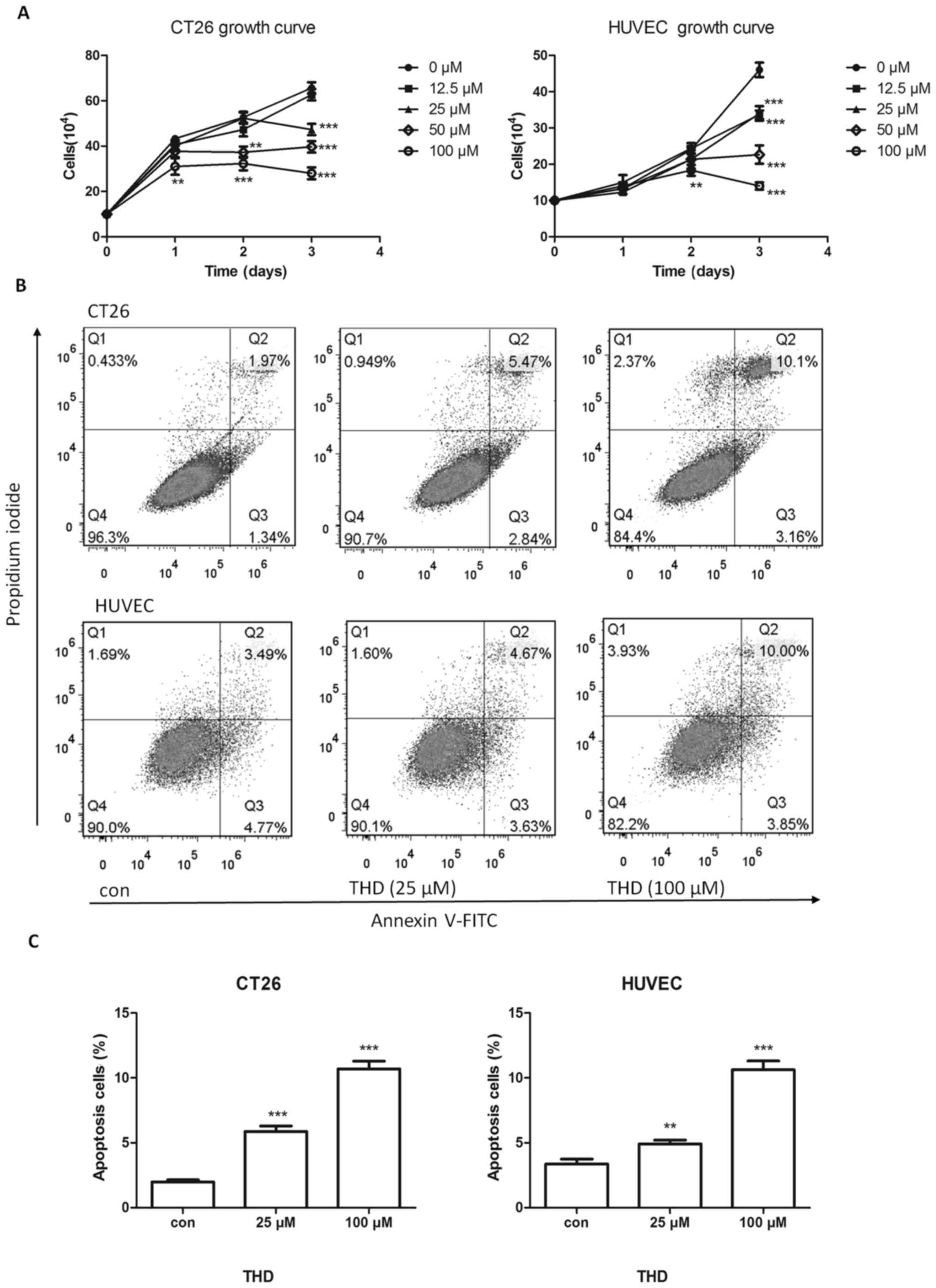
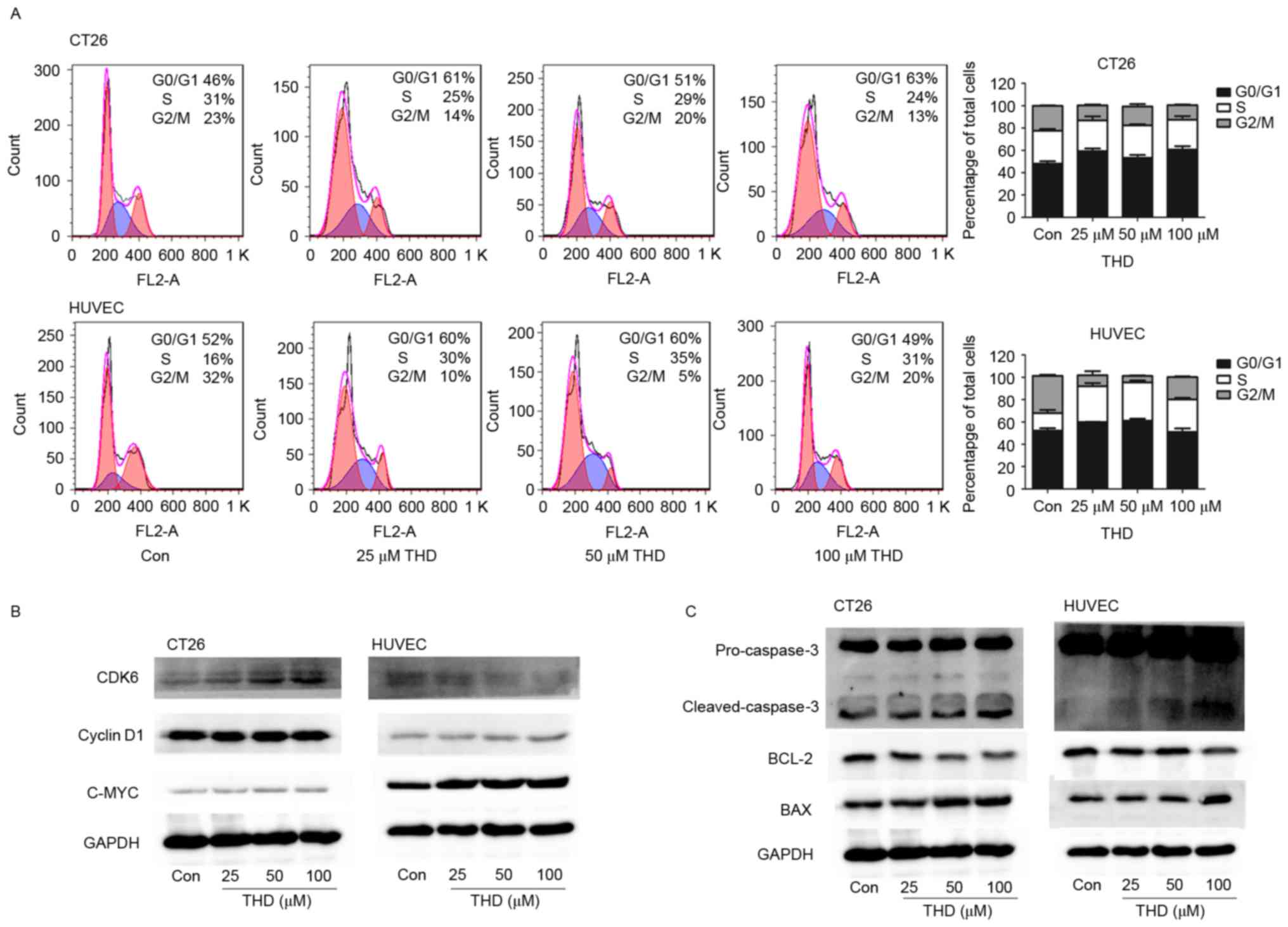
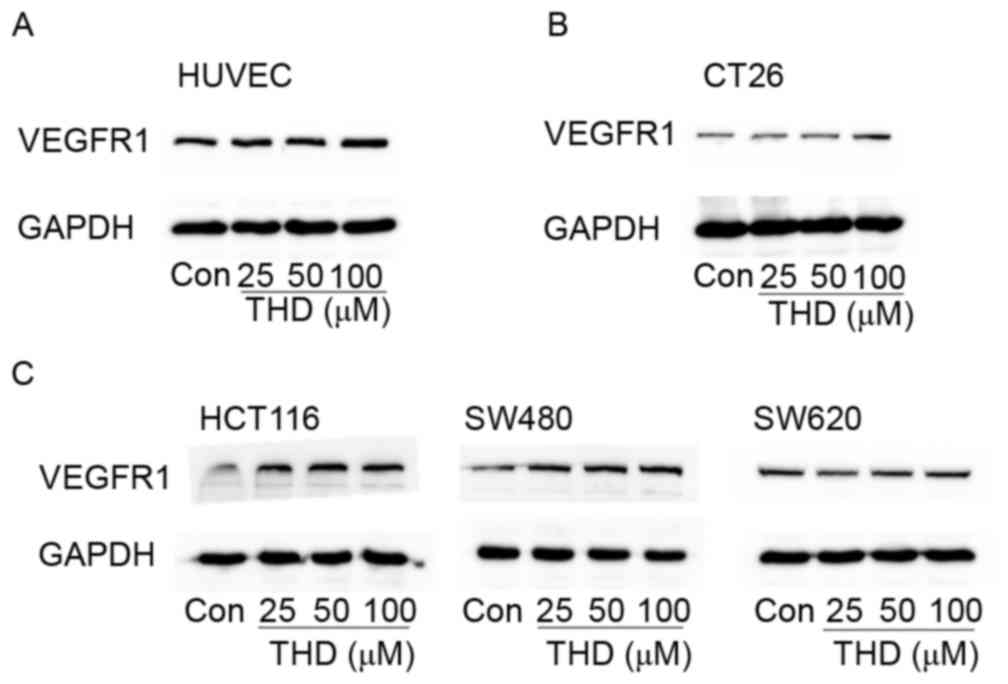
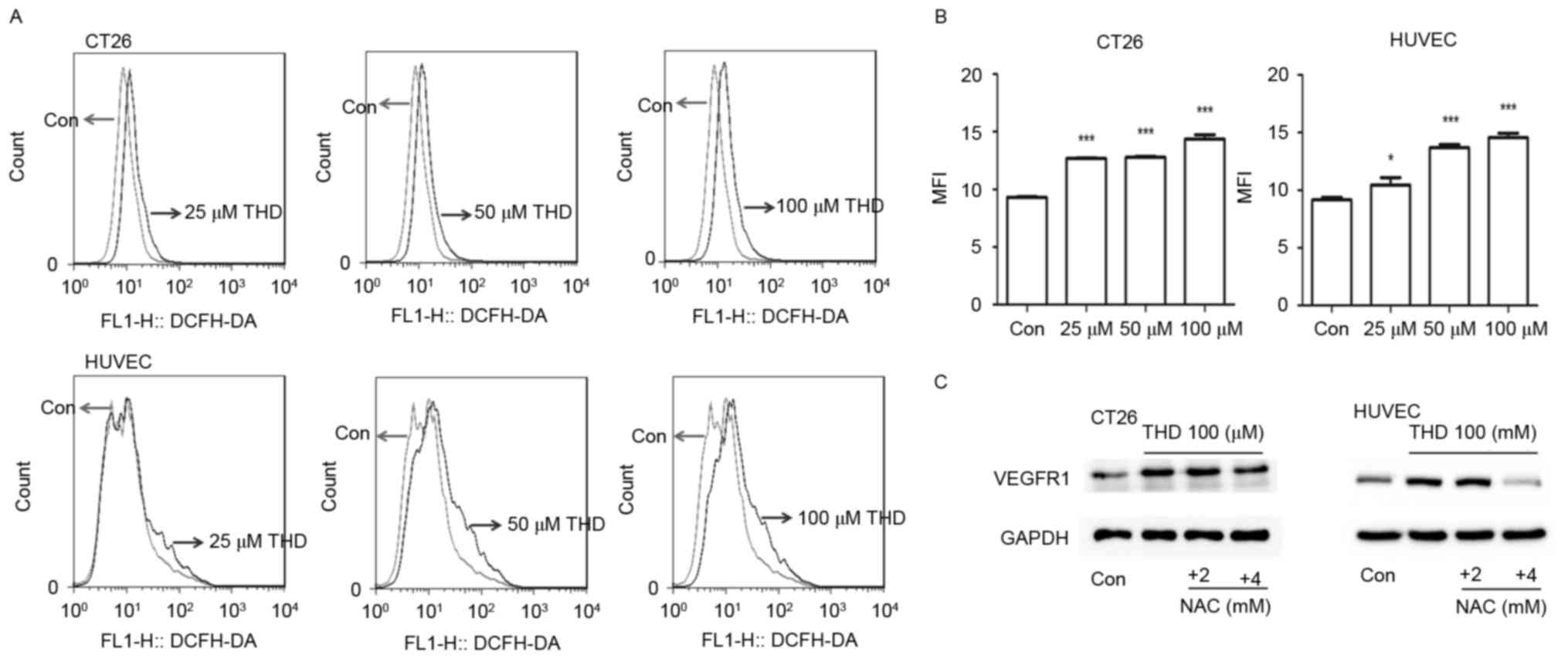
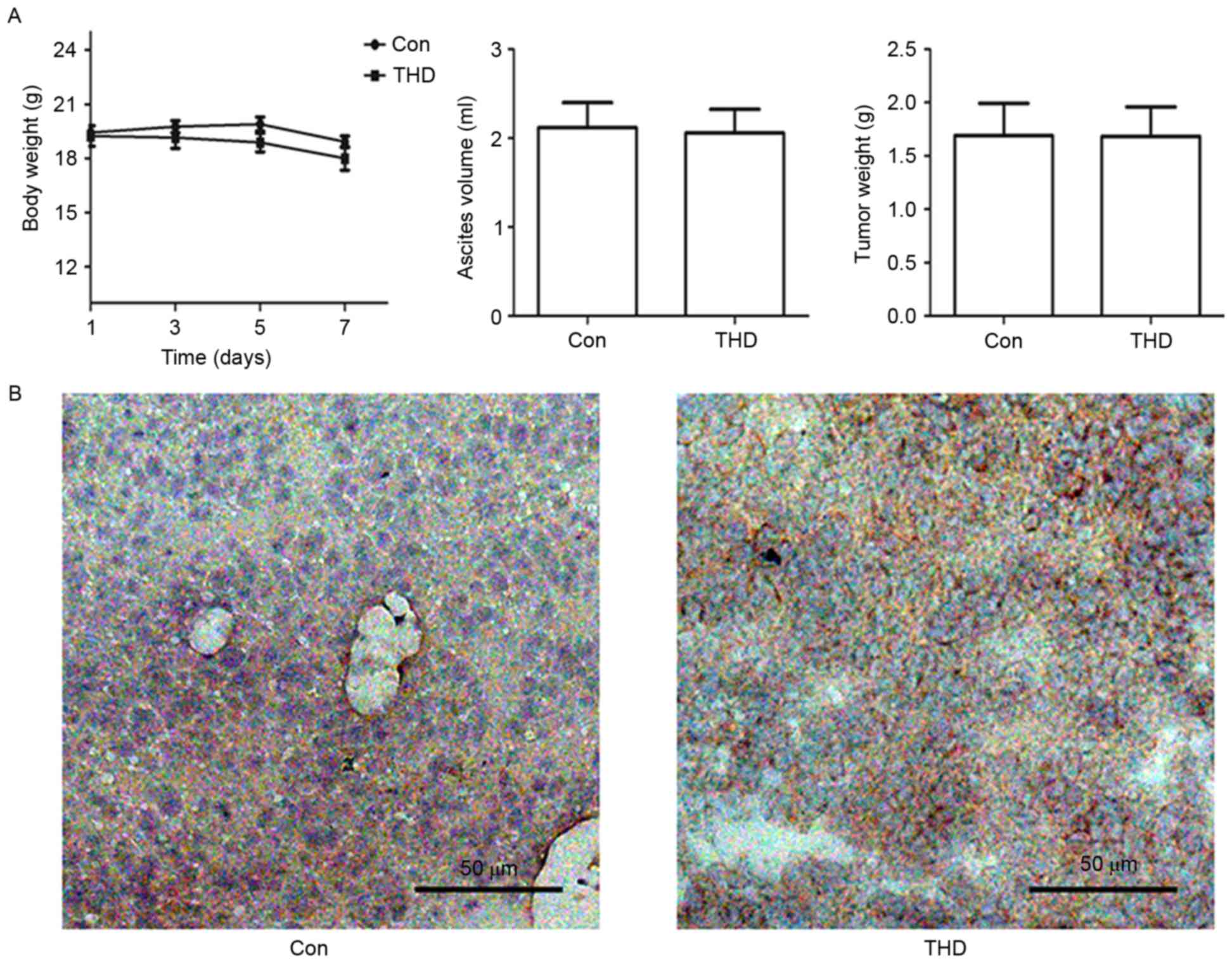
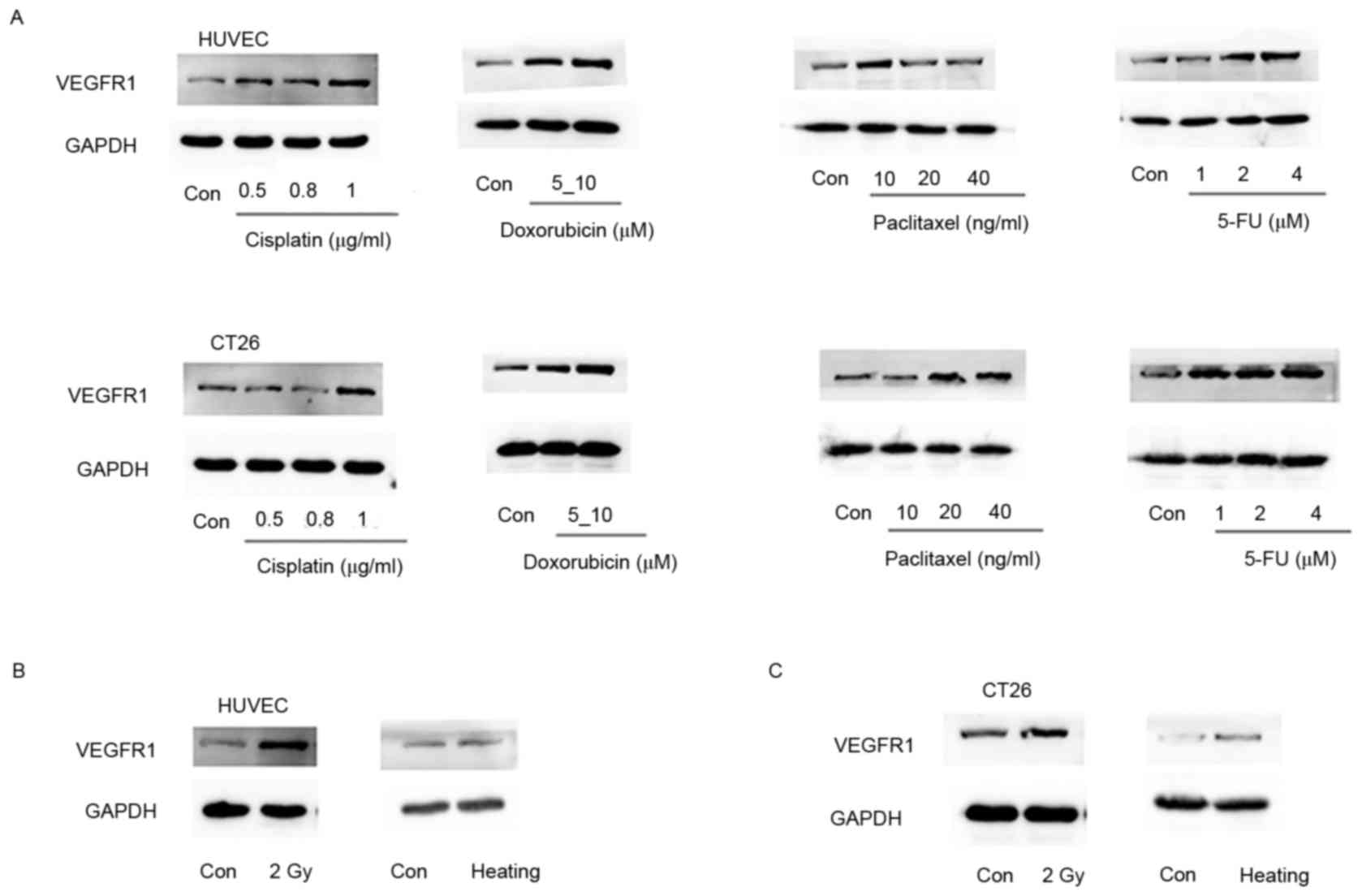
Thalidomide (THD) exhibits antitumor effects in several types of cancer. However, the failure of THD to inhibit tumor growth has also been observed in a number of murine models in vivo. The mechanism involved in the therapeutic failure of THD remains unclear. The present study demonstrated that, accompanied by growth‑arresting and apoptosis‑inducing effects (P<0.05), THD upregulated vascular endothelial growth factor receptor 1 (VEGFR1) expression levels in CT26 murine colorectal carcinoma cell lines. This in vitro phenomenon was also observed in various other cell lines, including human umbilical vein endothelial cells, SW480, SW620 and HCT116. Reactive oxygen species (ROS) levels were increased compared with those in the untreated control when cells were exposed to THD (P<0.05). Furthermore, results suggested that ROS suppression may have provoked the induction of VEGFR1 expression to some extent. In addition, the results revealed that THD failed to inhibit CT26 tumor growth in vivo and the expression of VEGFR1 protein was elevated by THD treatment compared with the control group in the murine colorectal tumor model (P<0.05). The results of further experiments suggested that VEGFR1 was elevated in response to various stress‑associated situations, including chemotherapy, radiotherapy and thermotherapy, which indicate that it may act as a stress‑associated protein. The present findings provide a foundation for the future study of VEGFR1‑targeted therapy to enhance the efficacy of current therapies.
View Figures

Figure 1

Figure 2

Figure 3

Figure 4

Figure 5

Figure 6

View References

1 

McBride WG: Thalidomide embryopathy. Teratology. 16:79–82. 1977. View Article : Google Scholar : PubMed/NCBI

2 

Kim JH and Scialli AR: Thalidomide: The tragedy of birth defects and the effective treatment of disease. Toxicol Sci. 122:1–6. 2011. View Article : Google Scholar : PubMed/NCBI

3 

Melchert M and List A: The thalidomide saga. Int J Biochem Cell Biol. 39:1489–1499. 2007. View Article : Google Scholar : PubMed/NCBI

4 

Ito T, Ando H and Handa H: Teratogenic effects of thalidomide: Molecular mechanisms. Cell Mol Life Sci. 68:1569–1579. 2011. View Article : Google Scholar : PubMed/NCBI

5 

Singhal S, Mehta J, Desikan R, Ayers D, Roberson P, Eddlemon P, Munshi N, Anaissie E, Wilson C, Dhodapkar M, et al: Antitumor activity of thalidomide in refractory multiple myeloma. N Engl J Med. 341:1565–1571. 1999. View Article : Google Scholar : PubMed/NCBI

6 

de Souza CM, Silva Araújo e AC, de Jesus Ferraciolli C, Moreira GV, Campos LC, dos Reis DC, Lopes MT, Ferreira MA, Andrade SP and Cassali GD: Combination therapy with carboplatin and thalidomide suppresses tumor growth and metastasis in 4T1 murine breast cancer model. Biomed Pharmacother. 68:51–57. 2014. View Article : Google Scholar : PubMed/NCBI

7 

Lee SM and Hackshaw A: A potential new enriching trial design for selecting non-small-cell lung cancer patients with no predictive biomarker for trials based on both histology and early tumor response: Further analysis of a thalidomide trial. Cancer Med. 2:360–366. 2013. View Article : Google Scholar : PubMed/NCBI

8 

Lv J, Liu N, Liu KW, Ding AP, Wang H and Qiu WS: A randomised controlled phase II trial of the combination of XELOX with thalidomide for the first-line treatment of metastatic colorectal cancer. Cancer Biol Med. 9:111–114. 2012.PubMed/NCBI

9 

Rezvani H, Haghighi S, Ghadyani M and Attarian H: Efficacy of taxotere, thalidomide, and prednisolone in patients with hormone-resistant metastatic prostate cancer. Urol J. 9:673–677. 2012.PubMed/NCBI

10 

Tunio MA, Hashmi A, Qayyum A, Naimatullah N and Masood R: Low-dose thalidomide in patients with metastatic renal cell carcinoma. J Pak Med Assoc. 62:876–879. 2012.PubMed/NCBI

11 

de Almeida MV, Teixeira FM, de Souza MV, Amarante GW, Alves CC, Cardoso SH, Mattos AM, Ferreira AP and Teixeira HC: Thalidomide analogs from diamines: Synthesis and evaluation as inhibitors of TNF-alpha production. Chem Pharm Bull (Tokyo). 55:223–226. 2007. View Article : Google Scholar : PubMed/NCBI

12 

Dmoszynska A, Podhorecka M, Manko J, Bojarska-Junak A, Rolinski J and Skomra D: The influence of thalidomide therapy on cytokine secretion, immunophenotype, BCL-2 expression and microvessel density in patients with resistant or relapsed multiple myeloma. Neoplasma. 52:175–181. 2005.PubMed/NCBI

13 

Marriott JB, Clarke IA, Czajka A, Dredge K, Childs K, Man HW, Schafer P, Govinda S, Muller GW, Stirling DI and Dalgleish AG: A novel subclass of thalidomide analogue with anti-solid tumor activity in which caspase-dependent apoptosis is associated with altered expression of bcl-2 family proteins. Cancer Res. 63:593–599. 2003.PubMed/NCBI

14 

Gutman M, Szold A, Ravid A, Lazauskas T, Merimsky O and Klausner JM: Failure of thalidomide to inhibit tumor growth and angiogenesis in vivo. Anticancer Res. 16:3673–3677. 1996.PubMed/NCBI

15 

Fantozzi A, Gruber DC, Pisarsky L, Heck C, Kunita A, Yilmaz M, Meyer-Schaller N, Cornille K, Hopfer U, Bentires-Alj M and Christofori G: VEGF-mediated angiogenesis Links EMT-induced cancer stemness to tumor Initiation. Cancer Res. 74:1566–1575. 2014. View Article : Google Scholar : PubMed/NCBI

16 

Takahashi S: Vascular endothelial growth factor (VEGF), VEGF receptors and their inhibitors for antiangiogenic tumor therapy. Biol Pharm Bull. 34:1785–1788. 2011. View Article : Google Scholar : PubMed/NCBI

17 

Fiorelli A, Vicidomini G, Di Domenico M, Napolitano F, Messina G, Morgillo F, Ciardiello F and Santini M: Vascular endothelial growth factor in pleural fluid for differential diagnosis of benign and malignant origin and its clinical applications. Interact Cardiovasc Thorac Surg. 12:420–424. 2011. View Article : Google Scholar : PubMed/NCBI

18 

Shibuya M: Structure and dual function of vascular endothelial growth factor receptor-1 (Flt-1). Int J Biochem Cell Biol. 33:409–420. 2001. View Article : Google Scholar : PubMed/NCBI

19 

Shibuya M: Vascular endothelial growth factor receptor-1 (VEGFR-1/Flt-1): A dual regulator for angiogenesis. Angiogenesis. 9:225–231. 2006. View Article : Google Scholar : PubMed/NCBI

20 

Zhu H, Zhao C, Liu F, Wang L, Feng J, Zhou Z, Qu L, Shou C and Yang Z: Radiolabeling and evaluation of (64)Cu-DOTA-F56 peptide targeting vascular endothelial growth factor receptor 1 in the molecular imaging of gastric cancer. Am J Cancer Res. 5:3301–3310. 2015.PubMed/NCBI

21 

Lesslie DP, Summy JM, Parikh NU, Fan F, Trevino JG, Sawyer TK, Metcalf CA, Shakespeare WC, Hicklin DJ, Ellis LM and Gallick GE: Vascular endothelial growth factor receptor-1 mediates migration of human colorectal carcinoma cells by activation of Src family kinases. Br J Cancer. 94:1710–1717. 2006.PubMed/NCBI

22 

Ning Q, Liu C, Hou L, Meng M, Zhang X, Luo M, Shao S, Zuo X and Zhao X: Vascular endothelial growth factor receptor-1 activation promotes migration and invasion of breast cancer cells through epithelial-mesenchymal transition. PLoS One. 8:e652172013. View Article : Google Scholar : PubMed/NCBI

23 

Wang ES, Teruya-Feldstein J, Wu Y, Zhu Z, Hicklin DJ and Moore MA: Targeting autocrine and paracrine VEGF receptor pathways inhibits human lymphoma xenografts in vivo. Blood. 104:2893–2902. 2004. View Article : Google Scholar : PubMed/NCBI

24 

Kaplan RN, Riba RD, Zacharoulis S, Bramley AH, Vincent L, Costa C, MacDonald DD, Jin DK, Shido K, Kerns SA, et al: VEGFR1-positive haematopoietic bone marrow progenitors initiate the pre-metastatic niche. Nature. 438:820–827. 2005. View Article : Google Scholar : PubMed/NCBI

25 

Qian BZ, Zhang H, Li J, He T, Yeo EJ, Soong DY, Carragher NO, Munro A, Chang A, Bresnick AR, et al: FLT1 signaling in metastasis-associated macrophages activates an inflammatory signature that promotes breast cancer metastasis. J Exp Med. 212:1433–1448. 2015. View Article : Google Scholar : PubMed/NCBI

26 

Kosaka Y, Mimori K, Fukagawa T, Ishikawa K, Etoh T, Katai H, Sano T, Watanabe M, Sasako M and Mori M: Identification of the high-risk group for metastasis of gastric cancer cases by vascular endothelial growth factor receptor-1 overexpression in peripheral blood. Br J Cancer. 96:1723–1728. 2007. View Article : Google Scholar : PubMed/NCBI

27 

Zhou Z, Zhao C, Wang L, Cao X, Li J, Huang R, Lao Q, Yu H, Li Y, Du H, et al: A VEGFR1 antagonistic peptide inhibits tumor growth and metastasis through VEGFR1-PI3K-AKT signaling pathway inhibition. Am J Cancer Res. 5:3149–3161. 2015.PubMed/NCBI

28 

An P, Lei H, Zhang J, Song S, He L, Jin G, Liu X, Wu J, Meng L, Liu M and Shou C: Suppression of tumor growth and metastasis by a VEGFR-1 antagonizing peptide identified from a phage display library. Int J Cancer. 111:165–173. 2004. View Article : Google Scholar : PubMed/NCBI

29 

Ye L, Yu G, Wang C, Du B, Sun D, Liu J, Qi T, Yu X, Wei W, Cheng J and Jiang Y: MicroRNA-128a, BMI1 polycomb ring finger oncogene and reactive oxygen species inhibit the growth of U-87 MG glioblastoma cells following exposure to X-ray radiation. Mol Med Rep. 12:6247–6254. 2015. View Article : Google Scholar : PubMed/NCBI

30 

Chen H, Ye H, Meng DQ, Cai PC, Chen F, Zhu LP, Tang Q, Long ZX, Zhou Q, Jin Y, et al: Reactive oxygen species and X-Ray disrupted spontaneous [Ca2+]I oscillation in alveolar macrophages. Radiat Res. 179:485–492. 2013. View Article : Google Scholar : PubMed/NCBI

31 

Gu ZT, Wang H, Li L, Liu YS, Deng XB, Huo SF, Yuan FF, Liu ZF, Tong HS and Su L: Heat stress induces apoptosis through transcription-independent p53-mediated mitochondrial pathways in human umbilical vein endothelial cell. Sci Rep. 4:44692014. View Article : Google Scholar : PubMed/NCBI

32 

Komorowski J, Jerczyńska H, Siejka A, Barańska P, Ławnicka H, Pawłowska Z and Stepień H: Effect of thalidomide affecting VEGF secretion, cell migration, adhesion and capillary tube formation of human endothelial EA.hy 926 cells. Life Sci. 78:2558–2563. 2006. View Article : Google Scholar : PubMed/NCBI

33 

Aydoğan S, Celiker U, Türkçüoğlu P, Ilhan N and Akpolat N: The effect of thalidomide on vascular endothelial growth factor and tumor necrosis factor-alpha levels in retinal ischemia/reperfusion injury. Graefes Arch Clin Exp Ophthalmol. 246:363–368. 2008. View Article : Google Scholar : PubMed/NCBI

34 

Kozar K and Sicinski P: Cell cycle progression without cyclin D-CDK4 and cyclin D-CDK6 complexes. Cell Cycle. 4:388–391. 2005. View Article : Google Scholar : PubMed/NCBI

35 

Baldin V, Lukas J, Marcote MJ, Pagano M and Draetta G: Cyclin D1 Is a nuclear-protein required for cell cycle progression in G1. Gene Dev. 7:812–821. 1993. View Article : Google Scholar : PubMed/NCBI

36 

Robson S, Pelengaris S and Khan M: c-Myc and downstream targets in the pathogenesis and treatment of cancer. Recent Pat Anticancer Drug Discov. 1:305–326. 2006. View Article : Google Scholar : PubMed/NCBI

37 

Qiao Z, Yuan J, Shen J, Wang C, He Z, Hu Y, Zhang M and Xu C: Effect of thalidomide in combination with gemcitabine on human pancreatic carcinoma SW-1990 cell lines in vitro and in vivo. Oncol Lett. 9:2353–2360. 2015.PubMed/NCBI

38 

Gill SS and Tuteja N: Reactive oxygen species and antioxidant machinery in abiotic stress tolerance in crop plants. Plant Physiol Biochem. 48:909–930. 2010. View Article : Google Scholar : PubMed/NCBI

39 

Chan CJ, Smyth MJ and Martinet L: Molecular mechanisms of natural killer cell activation in response to cellular stress. Cell Death Differ. 21:5–14. 2014. View Article : Google Scholar : PubMed/NCBI

40 

Fulda S, Gorman AM, Hori O and Samali A: Cellular stress responses: Cell survival and cell death. Int J Cell Biol. 2010:2140742010. View Article : Google Scholar : PubMed/NCBI

41 

Liu RY, Li X, Li L and Li GC: Expression of human hsp70 in rat fibroblasts enhances cell survival and facilitates recovery from translational and transcriptional inhibition following heat shock. Cancer Res. 52:3667–3673. 1992.PubMed/NCBI

42 

Noble EG, Melling CW and Milne KJ: HSP, Exercise and Skeletal Muscle. Heat Shock Proteins Whole Body Physiol. 5:285–316. 2010. View Article : Google Scholar

43 

Nagashima M, Fujikawa C, Mawatari K, Mori Y and Kato S: HSP70, the earliest-induced gene in the zebrafish retina during optic nerve regeneration: Its role in cell survival. Neurochem Int. 58:888–895. 2011. View Article : Google Scholar : PubMed/NCBI

44 

Beere HM: ‘The stress of dying’: the role of heat shock proteins in the regulation of apoptosis. J Cell Sci. 117:2641–2651. 2004. View Article : Google Scholar : PubMed/NCBI

45 

Kanagasabai R, Karthikeyan K, Vedam K, Qien W, Zhu Q and Ilangovan G: Hsp27 protects adenocarcinoma cells from UV-induced apoptosis by Akt and p21-dependent pathways of survival. Mol Cancer Res. 8:1399–1412. 2010. View Article : Google Scholar : PubMed/NCBI

46 

Chu SH, Liu YW, Zhang L, Liu B and Li L, Shi JZ and Li L: Regulation of survival and chemoresistance by HSP90AA1 in ovarian cancer SKOV3 cells. Mol Biol Rep. 40:1–6. 2013. View Article : Google Scholar : PubMed/NCBI

47 

Wen W, Liu W, Shao Y and Chen L: VER-155008, a small molecule inhibitor of HSP70 with potent anti-cancer activity on lung cancer cell lines. Exp Biol Med (Maywood). 239:638–645. 2014. View Article : Google Scholar : PubMed/NCBI

48 

Azad AA, Zoubeidi A, Gleave ME and Chi KN: Targeting heat shock proteins in metastatic castration-resistant prostate cancer. Nat Rev Urol. 12:26–36. 2015. View Article : Google Scholar : PubMed/NCBI

49 

Calderwood SK: Heat shock proteins in breast cancer progression-a suitable case for treatment? Int J Hyperthermia. 26:681–685. 2010. View Article : Google Scholar : PubMed/NCBI

50 

Partida-Rodríguez O, Torres J, Flores-Luna L, Camorlinga M, Nieves-Ramírez M, Lazcano E and Perez-Rodríguez M: Polymorphisms in TNF and HSP-70 show a significant association with gastric cancer and duodenal ulcer. Int J Cancer. 126:1861–1868. 2010.PubMed/NCBI

51 

Calderwood SK, Khaleque MA, Sawyer DB and Ciocca DR: Heat shock proteins in cancer: Chaperones of tumorigenesis. Trends Biochem Sci. 31:164–172. 2006. View Article : Google Scholar : PubMed/NCBI

52 

Staufer K and Stoeltzing O: Implication of heat shock protein 90 (HSP90) in tumor angiogenesis: A molecular target for anti-angiogenic therapy? Current Cancer Drug Targets. 10:890–897. 2010. View Article : Google Scholar : PubMed/NCBI

53 

Dias S, Shmelkov SV, Lam G and Rafii S: VEGF(165) promotes survival of leukemic cells by Hsp90-mediated induction of Bcl-2 expression and apoptosis inhibition. Blood. 99:2532–2540. 2002. View Article : Google Scholar : PubMed/NCBI

Related Articles

  • Abstract
  • View
  • Download
  • Twitter
Copy and paste a formatted citation
Spandidos Publications style
Liu Q, Yin T, Wang G, Guo F, Ou Y, Li Y and Wang Y: Vascular endothelial growth receptor 1 acts as a stress‑associated protein in the therapeutic response to thalidomide. Exp Ther Med 14: 4263-4271, 2017.
APA
Liu, Q., Yin, T., Wang, G., Guo, F., Ou, Y., Li, Y., & Wang, Y. (2017). Vascular endothelial growth receptor 1 acts as a stress‑associated protein in the therapeutic response to thalidomide. Experimental and Therapeutic Medicine, 14, 4263-4271. https://doi.org/10.3892/etm.2017.5028
MLA
Liu, Q., Yin, T., Wang, G., Guo, F., Ou, Y., Li, Y., Wang, Y."Vascular endothelial growth receptor 1 acts as a stress‑associated protein in the therapeutic response to thalidomide". Experimental and Therapeutic Medicine 14.5 (2017): 4263-4271.
Chicago
Liu, Q., Yin, T., Wang, G., Guo, F., Ou, Y., Li, Y., Wang, Y."Vascular endothelial growth receptor 1 acts as a stress‑associated protein in the therapeutic response to thalidomide". Experimental and Therapeutic Medicine 14, no. 5 (2017): 4263-4271. https://doi.org/10.3892/etm.2017.5028
Copy and paste a formatted citation
x
Spandidos Publications style
Liu Q, Yin T, Wang G, Guo F, Ou Y, Li Y and Wang Y: Vascular endothelial growth receptor 1 acts as a stress‑associated protein in the therapeutic response to thalidomide. Exp Ther Med 14: 4263-4271, 2017.
APA
Liu, Q., Yin, T., Wang, G., Guo, F., Ou, Y., Li, Y., & Wang, Y. (2017). Vascular endothelial growth receptor 1 acts as a stress‑associated protein in the therapeutic response to thalidomide. Experimental and Therapeutic Medicine, 14, 4263-4271. https://doi.org/10.3892/etm.2017.5028
MLA
Liu, Q., Yin, T., Wang, G., Guo, F., Ou, Y., Li, Y., Wang, Y."Vascular endothelial growth receptor 1 acts as a stress‑associated protein in the therapeutic response to thalidomide". Experimental and Therapeutic Medicine 14.5 (2017): 4263-4271.
Chicago
Liu, Q., Yin, T., Wang, G., Guo, F., Ou, Y., Li, Y., Wang, Y."Vascular endothelial growth receptor 1 acts as a stress‑associated protein in the therapeutic response to thalidomide". Experimental and Therapeutic Medicine 14, no. 5 (2017): 4263-4271. https://doi.org/10.3892/etm.2017.5028
Follow us
  • Twitter
  • LinkedIn
  • Facebook
About
  • Spandidos Publications
  • Careers
  • Cookie Policy
  • Privacy Policy
How can we help?
  • Help
  • Live Chat
  • Contact
  • Email to our Support Team