Spandidos Publications Logo
  • About
    • About Spandidos
    • Aims and Scopes
    • Abstracting and Indexing
    • Editorial Policies
    • Reprints and Permissions
    • Job Opportunities
    • Terms and Conditions
    • Contact
  • Journals
    • All Journals
    • Oncology Letters
      • Oncology Letters
      • Information for Authors
      • Editorial Policies
      • Editorial Board
      • Aims and Scope
      • Abstracting and Indexing
      • Bibliographic Information
      • Archive
    • International Journal of Oncology
      • International Journal of Oncology
      • Information for Authors
      • Editorial Policies
      • Editorial Board
      • Aims and Scope
      • Abstracting and Indexing
      • Bibliographic Information
      • Archive
    • Molecular and Clinical Oncology
      • Molecular and Clinical Oncology
      • Information for Authors
      • Editorial Policies
      • Editorial Board
      • Aims and Scope
      • Abstracting and Indexing
      • Bibliographic Information
      • Archive
    • Experimental and Therapeutic Medicine
      • Experimental and Therapeutic Medicine
      • Information for Authors
      • Editorial Policies
      • Editorial Board
      • Aims and Scope
      • Abstracting and Indexing
      • Bibliographic Information
      • Archive
    • International Journal of Molecular Medicine
      • International Journal of Molecular Medicine
      • Information for Authors
      • Editorial Policies
      • Editorial Board
      • Aims and Scope
      • Abstracting and Indexing
      • Bibliographic Information
      • Archive
    • Biomedical Reports
      • Biomedical Reports
      • Information for Authors
      • Editorial Policies
      • Editorial Board
      • Aims and Scope
      • Abstracting and Indexing
      • Bibliographic Information
      • Archive
    • Oncology Reports
      • Oncology Reports
      • Information for Authors
      • Editorial Policies
      • Editorial Board
      • Aims and Scope
      • Abstracting and Indexing
      • Bibliographic Information
      • Archive
    • Molecular Medicine Reports
      • Molecular Medicine Reports
      • Information for Authors
      • Editorial Policies
      • Editorial Board
      • Aims and Scope
      • Abstracting and Indexing
      • Bibliographic Information
      • Archive
    • World Academy of Sciences Journal
      • World Academy of Sciences Journal
      • Information for Authors
      • Editorial Policies
      • Editorial Board
      • Aims and Scope
      • Abstracting and Indexing
      • Bibliographic Information
      • Archive
    • International Journal of Functional Nutrition
      • International Journal of Functional Nutrition
      • Information for Authors
      • Editorial Policies
      • Editorial Board
      • Aims and Scope
      • Abstracting and Indexing
      • Bibliographic Information
      • Archive
    • International Journal of Epigenetics
      • International Journal of Epigenetics
      • Information for Authors
      • Editorial Policies
      • Editorial Board
      • Aims and Scope
      • Abstracting and Indexing
      • Bibliographic Information
      • Archive
    • Medicine International
      • Medicine International
      • Information for Authors
      • Editorial Policies
      • Editorial Board
      • Aims and Scope
      • Abstracting and Indexing
      • Bibliographic Information
      • Archive
  • Articles
  • Information
    • Information for Authors
    • Information for Reviewers
    • Information for Librarians
    • Information for Advertisers
    • Conferences
  • Language Editing
Spandidos Publications Logo
  • About
    • About Spandidos
    • Aims and Scopes
    • Abstracting and Indexing
    • Editorial Policies
    • Reprints and Permissions
    • Job Opportunities
    • Terms and Conditions
    • Contact
  • Journals
    • All Journals
    • Biomedical Reports
      • Information for Authors
      • Editorial Policies
      • Editorial Board
      • Aims and Scope
      • Abstracting and Indexing
      • Bibliographic Information
      • Archive
    • Experimental and Therapeutic Medicine
      • Information for Authors
      • Editorial Policies
      • Editorial Board
      • Aims and Scope
      • Abstracting and Indexing
      • Bibliographic Information
      • Archive
    • International Journal of Epigenetics
      • Information for Authors
      • Editorial Policies
      • Editorial Board
      • Aims and Scope
      • Abstracting and Indexing
      • Bibliographic Information
      • Archive
    • International Journal of Functional Nutrition
      • Information for Authors
      • Editorial Policies
      • Editorial Board
      • Aims and Scope
      • Abstracting and Indexing
      • Bibliographic Information
      • Archive
    • International Journal of Molecular Medicine
      • Information for Authors
      • Editorial Policies
      • Editorial Board
      • Aims and Scope
      • Abstracting and Indexing
      • Bibliographic Information
      • Archive
    • International Journal of Oncology
      • Information for Authors
      • Editorial Policies
      • Editorial Board
      • Aims and Scope
      • Abstracting and Indexing
      • Bibliographic Information
      • Archive
    • Medicine International
      • Information for Authors
      • Editorial Policies
      • Editorial Board
      • Aims and Scope
      • Abstracting and Indexing
      • Bibliographic Information
      • Archive
    • Molecular and Clinical Oncology
      • Information for Authors
      • Editorial Policies
      • Editorial Board
      • Aims and Scope
      • Abstracting and Indexing
      • Bibliographic Information
      • Archive
    • Molecular Medicine Reports
      • Information for Authors
      • Editorial Policies
      • Editorial Board
      • Aims and Scope
      • Abstracting and Indexing
      • Bibliographic Information
      • Archive
    • Oncology Letters
      • Information for Authors
      • Editorial Policies
      • Editorial Board
      • Aims and Scope
      • Abstracting and Indexing
      • Bibliographic Information
      • Archive
    • Oncology Reports
      • Information for Authors
      • Editorial Policies
      • Editorial Board
      • Aims and Scope
      • Abstracting and Indexing
      • Bibliographic Information
      • Archive
    • World Academy of Sciences Journal
      • Information for Authors
      • Editorial Policies
      • Editorial Board
      • Aims and Scope
      • Abstracting and Indexing
      • Bibliographic Information
      • Archive
  • Articles
  • Information
    • For Authors
    • For Reviewers
    • For Librarians
    • For Advertisers
    • Conferences
  • Language Editing
Login Register Submit
  • This site uses cookies
  • You can change your cookie settings at any time by following the instructions in our Cookie Policy. To find out more, you may read our Privacy Policy.

    I agree
Search articles by DOI, keyword, author or affiliation
Search
Advanced Search
presentation
Experimental and Therapeutic Medicine
Join Editorial Board Propose a Special Issue
Print ISSN: 1792-0981 Online ISSN: 1792-1015
Journal Cover
December-2017 Volume 14 Issue 6

Full Size Image

Sign up for eToc alerts
Recommend to Library

Journals

International Journal of Molecular Medicine

International Journal of Molecular Medicine

International Journal of Molecular Medicine is an international journal devoted to molecular mechanisms of human disease.

International Journal of Oncology

International Journal of Oncology

International Journal of Oncology is an international journal devoted to oncology research and cancer treatment.

Molecular Medicine Reports

Molecular Medicine Reports

Covers molecular medicine topics such as pharmacology, pathology, genetics, neuroscience, infectious diseases, molecular cardiology, and molecular surgery.

Oncology Reports

Oncology Reports

Oncology Reports is an international journal devoted to fundamental and applied research in Oncology.

Experimental and Therapeutic Medicine

Experimental and Therapeutic Medicine

Experimental and Therapeutic Medicine is an international journal devoted to laboratory and clinical medicine.

Oncology Letters

Oncology Letters

Oncology Letters is an international journal devoted to Experimental and Clinical Oncology.

Biomedical Reports

Biomedical Reports

Explores a wide range of biological and medical fields, including pharmacology, genetics, microbiology, neuroscience, and molecular cardiology.

Molecular and Clinical Oncology

Molecular and Clinical Oncology

International journal addressing all aspects of oncology research, from tumorigenesis and oncogenes to chemotherapy and metastasis.

World Academy of Sciences Journal

World Academy of Sciences Journal

Multidisciplinary open-access journal spanning biochemistry, genetics, neuroscience, environmental health, and synthetic biology.

International Journal of Functional Nutrition

International Journal of Functional Nutrition

Open-access journal combining biochemistry, pharmacology, immunology, and genetics to advance health through functional nutrition.

International Journal of Epigenetics

International Journal of Epigenetics

Publishes open-access research on using epigenetics to advance understanding and treatment of human disease.

Medicine International

Medicine International

An International Open Access Journal Devoted to General Medicine.

Journal Cover
December-2017 Volume 14 Issue 6

Full Size Image

Sign up for eToc alerts
Recommend to Library

  • Article
  • Citations
    • Cite This Article
    • Download Citation
    • Create Citation Alert
    • Remove Citation Alert
    • Cited By
  • Similar Articles
    • Related Articles (in Spandidos Publications)
    • Similar Articles (Google Scholar)
    • Similar Articles (PubMed)
  • Download PDF
  • Download XML
  • View XML
Article

Proteomic changes of CD4+/CD25+/forkhead box p3+ regulatory T cells in a 30‑day rat model of sepsis survival

  • Authors:
    • Yuxia Jiao
    • Siqi Tan
    • Junyu Xiong
  • View Affiliations / Copyright

    Affiliations: Department of Anesthesiology, The Second Hospital of Dalian Medical University, Dalian, Liaoning 116027, P.R. China
  • Pages: 5619-5628
    |
    Published online on: September 29, 2017
       https://doi.org/10.3892/etm.2017.5233
  • Expand metrics +
Metrics: Total Views: 0 (Spandidos Publications: | PMC Statistics: )
Metrics: Total PDF Downloads: 0 (Spandidos Publications: | PMC Statistics: )
Cited By (CrossRef): 0 citations Loading Articles...

This article is mentioned in:


Abstract

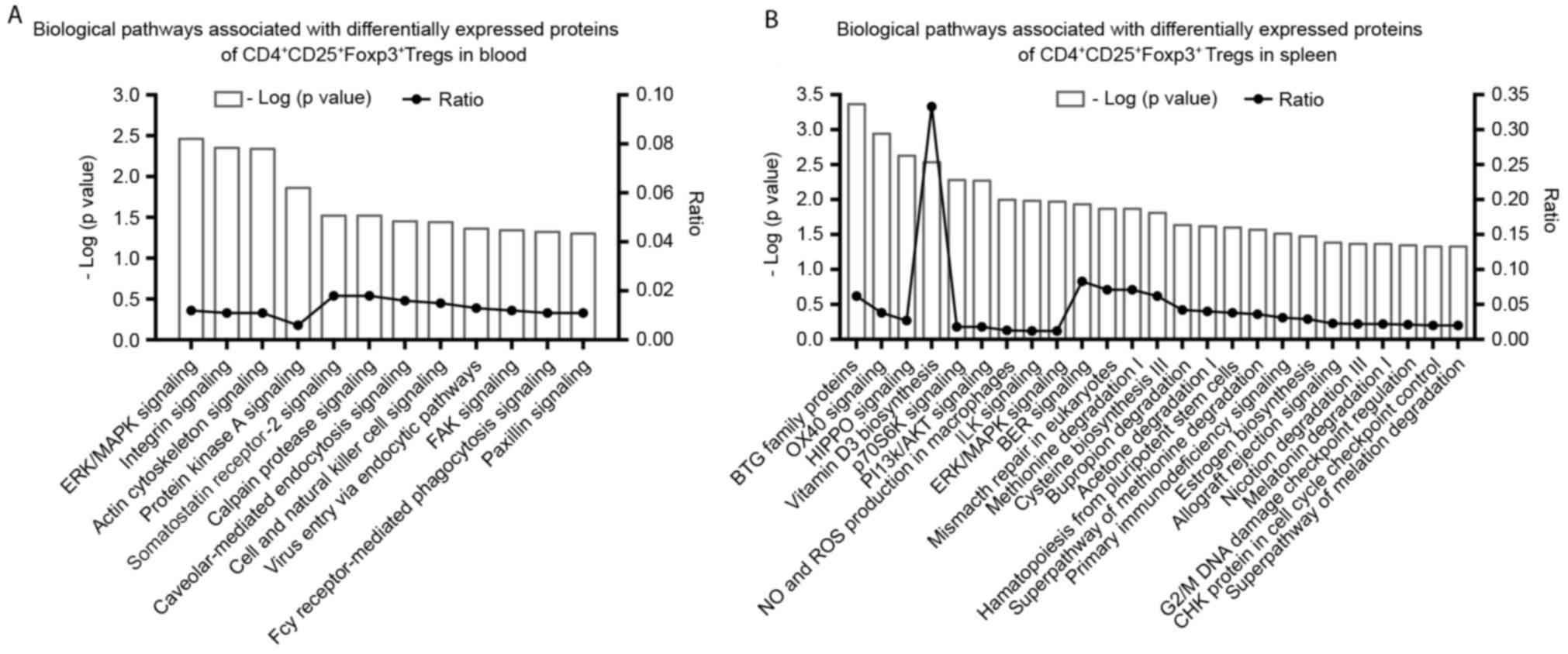
Sepsis is defined as life threatening organ dysfunction arising from a dysregulated host response to infection. The outcomes of sepsis include early mortality, delayed mortality and recovery, and depend on the inflammatory response. Previous studies have demonstrated that regulatory T cells (Tregs) are important in determining the outcome of sepsis, as their suppressive function serves a role in maintaining immune homeostasis. However, Treg‑mediated immunosuppression during the course of sepsis remains unclear and little is known about the survival of patients following diagnosis. Studying the survivors of sepsis may explain the mechanisms of natural recovery. Therefore, a 30‑day rat model of sepsis survival was established in the current study. Cluster of differentiation CD4+/CD25+/forkhead box p3+ Tregs were isolated from the blood and spleens of rats undergoing cecal ligation and puncture or sham surgery, using flow cytometry. Proteomic analysis was performed using nano high‑performance liquid chromatography­‑mass spectrometry. Several different biological pathways associated with uncommon differentially-expressed proteins were identified in the blood and spleen survivor and sham groups. Extracellular‑regulated kinase/mitogen‑activated protein kinase, as well as integrin and actin cytoskeletal pathway elements, including Ras‑related protein 1b, talin 1 and filamin A, were associated with Tregs in the blood. Pathway elements associated with cell cycle regulators in the B‑cell translocation gene family of proteins, tumor necrosis factor receptor superfamily member 4, Hippo signaling, P70‑S6 kinase 1, phosphatidylinositol 3‑kinase/protein kinase B signaling and 1,25‑dihydroxyvitamin D3 biosynthesis were associated with Tregs from the spleen including phosphatase 2A activator regulatory factor 4, histone arginine methyltransferase, CD4, major histocompatibility complex class I antigens, 14‑3‑3 protein θ and nicotinamide adenine dinucleotide phosphate cytochrome P450 reductase. These results explain the mechanism by which Tregs naturally recover and indicates that Tregs in the blood and spleen vary. Differentially-expressed proteins serving a role in these pathways provide additional insight for the identification of new targets for the diagnosis and treatment of sepsis.
View Figures

Figure 1

Figure 2

Figure 3

View References

1 

Singer M, Deutschman CS, Seymour CW, Shankar-Hari M, Annane D, Bauer M, Bellomo R, Bernard GR, Chiche JD, Coopersmith CM, et al: The third international consensus definitions for sepsis and septic shock (Sepsis-3). JAMA. 315:801–810. 2016. View Article : Google Scholar : PubMed/NCBI

2 

Stoller J, Halpin L, Weis M, Aplin B, Qu W, Georgescu C and Nazzal M: Epidemiology of severe sepsis: 2008–2012. J Crit Care. 31:58–62. 2016. View Article : Google Scholar : PubMed/NCBI

3 

Yadav H and Cartin-Ceba R: Balance between Hyperinflammation and Immunosuppression in Sepsis. Semin Respir Crit Care Med. 37:42–50. 2016. View Article : Google Scholar : PubMed/NCBI

4 

Hotchkiss RS, Monneret G and Payen D: Sepsis-induced immunosuppression: From cellular dysfunctions to immunotherapy. Nat Rev Immunol. 13:862–874. 2013. View Article : Google Scholar : PubMed/NCBI

5 

Hotchkiss RS, Monneret G and Payen D: Immunosuppression in sepsis: A novel understanding of the disorder and a new therapeutic approach. Lancet Infect Dis. 13:260–268. 2013. View Article : Google Scholar : PubMed/NCBI

6 

Attridge K and Walker LS: Homeostasis and function of regulatory T cells (Tregs). in vivo: Lessons from TCR-transgenic Tregs. Immunol Rev. 259:23–39. 2014. View Article : Google Scholar : PubMed/NCBI

7 

Guo J and Zhou X: Regulatory T cells turn pathogenic. Cell Mol Immunol. 12:525–532. 2015. View Article : Google Scholar : PubMed/NCBI

8 

Leavy O: Regulatory T Cells: Distinct role in tissue repair. Nat Rev Immunol. 15:596–597. 2015. View Article : Google Scholar : PubMed/NCBI

9 

Cao C, Ma T, Chai YF and Shou ST: The role of regulatory T cells in immune dysfunction during sepsis. World J Emerg Med. 6:5–9. 2015. View Article : Google Scholar : PubMed/NCBI

10 

Nascimento DC, Alves-Filho JC, Sônego F, Fukada SY, Pereira MS, Benjamim C, Zamboni DS, Silva JS and Cunha FQ: Role of regulatory T cells in long-term immune dysfunction associated with severe sepsis. Crit Care Med. 38:1718–1725. 2010. View Article : Google Scholar : PubMed/NCBI

11 

Rudiger A, Dyson A, Felsmann K, Carré JE, Taylor V, Hughes S, Clatworthy I, Protti A, Pellerin D, Lemm J, et al: Early functional and transcriptomic changes in the myocardium predict outcome in a long-term rat model of sepsis. Clin Sci (Lond). 124:391–401. 2013. View Article : Google Scholar : PubMed/NCBI

12 

Brealey D, Karyampudi S, Jacques TS, Novelli M, Stidwill R, Taylor V, Smolenski RT and Singer M: Mitochondrial dysfunction in a long-term rodent model of sepsis and organ failure. Am J Physiol Regul Integr Comp Physiol. 286:R491–R497. 2004. View Article : Google Scholar : PubMed/NCBI

13 

Lilley E, Armstrong R, Clark N, Gray P, Hawkins P, Mason K, López-Salesansky N, Stark AK, Jackson SK, Thiemermann C and Nandi M: Refinement of animal models of sepsis and septic shock. Shock. 43:304–316. 2015. View Article : Google Scholar : PubMed/NCBI

14 

Fink MP: Animal models of sepsis. Virulence. 5:143–153. 2014. View Article : Google Scholar : PubMed/NCBI

15 

He X, Wei Z, Zhou E, Chen L, Kou J, Wang J and Yang Z: Baicalein attenuates inflammatory responses by suppressing TLR4 mediated NF-κB and MAPK signaling pathways in LPS-induced mastitis in mice. Int Immunopharmacol. 28:470–476. 2015. View Article : Google Scholar : PubMed/NCBI

16 

Kim J, Yang HY and Jang YS: A G protein-associated ERK pathway is involved in LPS-induced proliferation and a PTK-associated p38 MAPK pathway is involved in LPS-induced differentiation in resting B cells. Mol Immunol. 43:1232–1242. 2006. View Article : Google Scholar : PubMed/NCBI

17 

Gonzalo S, Grasa L, Arruebo MP, Plaza MÁ and Murillo MD: Extracellular signal-regulated kinase (ERK) is involved in LPS-induced disturbances in intestinal motility. Neurogastroenterol Motil. 23:e80–e90. 2011. View Article : Google Scholar : PubMed/NCBI

18 

Asati V, Mahapatra DK and Bharti SK: PI3K/Akt/mTOR and Ras/Raf/MEK/ERK signaling pathways inhibitors as anticancer agents: Structural and pharmacological perspectives. Eur J Med Chem. 109:314–341. 2016. View Article : Google Scholar : PubMed/NCBI

19 

Yamashita M, Shinnakasu R, Asou H, Kimura M, Hasegawa A, Hashimoto K, Hatano N, Ogata M and Nakayama T: Ras-ERK MAPK cascade regulates GATA3 stability and Th2 differentiation through ubiquitin-proteasome pathway. J Biol Chem. 280:29409–29419. 2005. View Article : Google Scholar : PubMed/NCBI

20 

Knight T and Irving JA: Ras/Raf/MEK/ERK pathway activation in childhood acute lymphoblastic leukemia and its therapeutic targeting. Front Oncol. 4:1602014. View Article : Google Scholar : PubMed/NCBI

21 

Fischer TH, Gatling MN, McCormick F, Duffy CM and White GC II: Incorporation of Rap 1b into the platelet cytoskeleton is dependent on thrombin activation and extracellular calcium. J Biol Chem. 269:17257–17261. 1994.PubMed/NCBI

22 

Naci D and Aoudjit F: Alpha2beta1 integrin promotes T cell survival and migration through the concomitant activation of ERK/Mcl-1 and p38 MAPK pathways. Cell Signal. 26:2008–2015. 2014. View Article : Google Scholar : PubMed/NCBI

23 

Gendron S, Couture J and Aoudjit F: Integrin alpha2beta1 inhibits Fas-mediated apoptosis in T lymphocytes by protein phosphatase 2A-dependent activation of the MAPK/ERK pathway. J Biol Chem. 278:48633–48643. 2003. View Article : Google Scholar : PubMed/NCBI

24 

Iwamoto DV and Calderwood DA: Regulation of integrin-mediated adhesions. Curr Opin Cell Biol. 36:41–47. 2015. View Article : Google Scholar : PubMed/NCBI

25 

Mattila PK, Batista FD and Treanor B: Dynamics of the actin cytoskeleton mediates receptor cross talk: An emerging concept in tuning receptor signaling. J Cell Biol. 212:267–280. 2016. View Article : Google Scholar : PubMed/NCBI

26 

Hirata H, Chiam KH, Lim CT and Sokabe M: Actin flow and talin dynamics govern rigidity sensing in actin-integrin linkage through talin extension. J R Soc Interface. 11:pii: 20140734. 2014. View Article : Google Scholar : PubMed/NCBI

27 

Critchley DR and Gingras AR: Talin at a glance. J Cell Sci. 121:1345–1347. 2008. View Article : Google Scholar : PubMed/NCBI

28 

Priddle H, Hemmings L, Monkley S, Woods A, Patel B, Sutton D, Dunn GA, Zicha D and Critchley DR: Disruption of the talin gene compromises focal adhesion assembly in undifferentiated but not differentiated embryonic stem cells. J Cell Biol. 142:1121–1133. 1998. View Article : Google Scholar : PubMed/NCBI

29 

Zhao P, Ma W, Hu Z, Zang L, Tian Z and Zhang K: Filamin A (FLNA) modulates chemosensitivity to docetaxel in triple-negative breast cancer through the MAPK/ERK pathway. Tumour Biol. 37:5107–5115. 2016. View Article : Google Scholar : PubMed/NCBI

30 

Shao QQ, Zhang TP, Zhao WJ, Liu ZW, You L, Zhou L, Guo JC and Zhao YP: Filamin A: Insights into its Exact Role in Cancers. Pathol Oncol Res. 22:245–252. 2016. View Article : Google Scholar : PubMed/NCBI

31 

Truong T, Shams H and Mofrad MR: Mechanisms of integrin and filamin binding and their interplay with talin during early focal adhesion formation. Integr Biol (Camb). 7:1285–1296. 2015. View Article : Google Scholar : PubMed/NCBI

32 

De Franceschi N and Ivaska J: Integrin bondage: Filamin takes control. Nat Struct Mol Biol. 22:355–357. 2015. View Article : Google Scholar : PubMed/NCBI

33 

Modarres HP and Mofradt MR: Filamin: A structural and functional biomolecule with important roles in cell biology, signaling and mechanics. Mol Cell Biomech. 11:39–65. 2014.PubMed/NCBI

34 

Winkler GS: The mammalian anti-proliferative BTG/Tob protein family. J Cell Physiol. 222:66–72. 2010. View Article : Google Scholar : PubMed/NCBI

35 

Berthet C, Guéhenneux F, Revol V, Samarut C, Lukaszewicz A, Dehay C, Dumontet C, Magaud JP and Rouault JP: Interaction of PRMT1 with BTG/TOB proteins in cell signalling: Molecular analysis and functional aspects. Genes Cells. 7:29–39. 2002. View Article : Google Scholar : PubMed/NCBI

36 

Liu C, Tao T, Xu B, Lu K, Zhang L, Jiang L, Chen S, Liu D, Zhang X, Cao N and Chen M: BTG1 potentiates apoptosis and suppresses proliferation in renal cell carcinoma by interacting with PRMT1. Oncol Lett. 10:619–624. 2015.PubMed/NCBI

37 

Voo KS, Foglietta M, Percivalle E, Chu F, Nattamai D, Harline M, Lee ST, Bover L, Lin HY, Baladandayuthapani V, et al: Selective targeting of Toll-like receptors and OX40 inhibit regulatory T-cell function in follicular lymphoma. Int J Cancer. 135:2834–2846. 2014. View Article : Google Scholar : PubMed/NCBI

38 

Vu MD, Xiao X, Gao W, Degauque N, Chen M, Kroemer A, Killeen N, Ishii N and Li XC: OX40 costimulation turns off Foxp3+ Tregs. Blood. 110:2501–2510. 2007. View Article : Google Scholar : PubMed/NCBI

39 

Hawse WF, Gloor BE, Ayres CM, Kho K, Nuter E and Baker BM: Peptide modulation of class I major histocompatibility complex protein molecular flexibility and the implications for immune recognition. J Biol Chem. 288:24372–24381. 2013. View Article : Google Scholar : PubMed/NCBI

40 

Rudolph MG, Stanfield RL and Wilson IA: How TCRs bind MHCs, peptides and coreceptors. Annu Rev Immunol. 24:419–466. 2006. View Article : Google Scholar : PubMed/NCBI

41 

Liu B, Zheng Y, Yin F, Yu J, Silverman N and Pan D: Toll receptor-mediated hippo signaling controls innate immunity in drosophila. Cell. 164:406–419. 2016. View Article : Google Scholar : PubMed/NCBI

42 

Ye S and Eisinger-Mathason TS: Targeting the Hippo pathway: Clinical implications and therapeutics. Pharmacol Res. 103:270–278. 2016. View Article : Google Scholar : PubMed/NCBI

43 

Mo JS, Park HW and Guan KL: The Hippo signaling pathway in stem cell biology and cancer. EMBO Rep. 15:642–656. 2014.PubMed/NCBI

44 

Pan D: The hippo signaling pathway in development and cancer. Dev Cell. 19:491–505. 2010. View Article : Google Scholar : PubMed/NCBI

45 

Yu FX and Guan KL: The Hippo pathway: Regulators and regulations. Genes Dev. 27:355–371. 2013. View Article : Google Scholar : PubMed/NCBI

46 

Tumaneng K, Schlegelmilch K, Russell RC, Yimlamai D, Basnet H, Mahadevan N, Fitamant J, Bardeesy N, Camargo FD and Guan KL: YAP mediates crosstalk between the Hippo and PI(3)K-TOR pathways by suppressing PTEN via miR-29. Nat Cell Biol. 14:1322–1329. 2012. View Article : Google Scholar : PubMed/NCBI

47 

Liko D and Hall MN: mTOR in health and in sickness. J Mol Med (Berl). 93:1061–1073. 2015. View Article : Google Scholar : PubMed/NCBI

48 

Sandilands E, Schoenherr C and Frame MC: p70S6K is regulated by focal adhesion kinase and is required for Src-selective autophagy. Cell Signal. 27:1816–1823. 2015. View Article : Google Scholar : PubMed/NCBI

49 

Tabe Y, Jin L, Konopleva M, Shikami M, Kimura S, Andreeff M, Raffeld M and Miida T: Class IA PI3K inhibition inhibits cell growth and proliferation in mantlecell lymphoma. Acta Haematol. 131:59–69. 2014. View Article : Google Scholar : PubMed/NCBI

50 

Vivanco I and Sawyers CL: The phosphatidylinositol 3-kinase AKT pathway in human cancer. Nat Rev Cancer. 2:489–501. 2002. View Article : Google Scholar : PubMed/NCBI

51 

Ribeiro PS, Josué F, Wepf A, Wehr MC, Rinner O, Kelly G, Tapon N and Gstaiger M: Combined functional genomic and proteomic approaches identify a PP2A complex as a negative regulator of Hippo signaling. Mol Cell. 39:521–534. 2010. View Article : Google Scholar : PubMed/NCBI

52 

Zeng Q, Zhang H, Qin J, Xu Z, Gui L, Liu B, Liu C, Xu C, Liu W, Zhang S, et al: Rapamycin inhibits BAFF-stimulated cell proliferation and survival by suppressing mTOR-mediated PP2A-Erk1/2 signaling pathway in normal and neoplastic B-lymphoid cells. Cell Mol Life Sci. 72:4867–4884. 2015. View Article : Google Scholar : PubMed/NCBI

53 

Li Z, Tang J and Guo F: Identification of 14-3-3 proteins phosphopeptide-binding specificity using an affinity-based computational approach. PLoS One. 11:e1474672016.

54 

Bikle D: Nonclassic actions of vitamin D. J Clin Endocrinol Metab. 94:26–34. 2009. View Article : Google Scholar : PubMed/NCBI

55 

Verstuyf A, Carmeliet G, Bouillon R and Mathieu C: Vitamin D: A pleiotropic hormone. Kidney Int. 78:140–145. 2010. View Article : Google Scholar : PubMed/NCBI

56 

Baeke F, Takiishi T, Korf H, Gysemans C and Mathieu C: Vitamin D: Modulator of the immune system. Curr Opin Pharmacol. 10:482–496. 2010. View Article : Google Scholar : PubMed/NCBI

57 

Cheng JB, Levine MA, Bell NH, Mangelsdorf DJ and Russell DW: Genetic evidence that the human CYP2R1 enzyme is a key vitamin D 25-hydroxylase. Proc Natl Acad Sci USA. 101:pp. 7711–7715. 2004, View Article : Google Scholar : PubMed/NCBI

58 

Zawaira A, Gallotta M, Beeton-Kempen N, Coulson L, Marais P, Kuttel M and Blackburn J: Exhaustive computational search of ionic-charge clusters that mediate interactions between mammalian cytochrome P450 (CYP) and P450-oxidoreductase (POR) proteins. Comput Biol Chem. 34:42–52. 2010. View Article : Google Scholar : PubMed/NCBI

59 

Gocek E, Marchwicka A, Bujko K and Marcinkowska E: NADPH-cytochrome P450 reductase is regulated by all-trans retinoic acid and by 1,25-dihydroxyvitamin D3 in human acute myeloid leukemia cells. PLoS One. 9:e917522014. View Article : Google Scholar : PubMed/NCBI

Related Articles

  • Abstract
  • View
  • Download
  • Twitter
Copy and paste a formatted citation
Spandidos Publications style
Jiao Y, Tan S and Xiong J: Proteomic changes of CD4+/CD25+/forkhead box p3+ regulatory T cells in a 30‑day rat model of sepsis survival. Exp Ther Med 14: 5619-5628, 2017.
APA
Jiao, Y., Tan, S., & Xiong, J. (2017). Proteomic changes of CD4+/CD25+/forkhead box p3+ regulatory T cells in a 30‑day rat model of sepsis survival. Experimental and Therapeutic Medicine, 14, 5619-5628. https://doi.org/10.3892/etm.2017.5233
MLA
Jiao, Y., Tan, S., Xiong, J."Proteomic changes of CD4+/CD25+/forkhead box p3+ regulatory T cells in a 30‑day rat model of sepsis survival". Experimental and Therapeutic Medicine 14.6 (2017): 5619-5628.
Chicago
Jiao, Y., Tan, S., Xiong, J."Proteomic changes of CD4+/CD25+/forkhead box p3+ regulatory T cells in a 30‑day rat model of sepsis survival". Experimental and Therapeutic Medicine 14, no. 6 (2017): 5619-5628. https://doi.org/10.3892/etm.2017.5233
Copy and paste a formatted citation
x
Spandidos Publications style
Jiao Y, Tan S and Xiong J: Proteomic changes of CD4+/CD25+/forkhead box p3+ regulatory T cells in a 30‑day rat model of sepsis survival. Exp Ther Med 14: 5619-5628, 2017.
APA
Jiao, Y., Tan, S., & Xiong, J. (2017). Proteomic changes of CD4+/CD25+/forkhead box p3+ regulatory T cells in a 30‑day rat model of sepsis survival. Experimental and Therapeutic Medicine, 14, 5619-5628. https://doi.org/10.3892/etm.2017.5233
MLA
Jiao, Y., Tan, S., Xiong, J."Proteomic changes of CD4+/CD25+/forkhead box p3+ regulatory T cells in a 30‑day rat model of sepsis survival". Experimental and Therapeutic Medicine 14.6 (2017): 5619-5628.
Chicago
Jiao, Y., Tan, S., Xiong, J."Proteomic changes of CD4+/CD25+/forkhead box p3+ regulatory T cells in a 30‑day rat model of sepsis survival". Experimental and Therapeutic Medicine 14, no. 6 (2017): 5619-5628. https://doi.org/10.3892/etm.2017.5233
Follow us
  • Twitter
  • LinkedIn
  • Facebook
About
  • Spandidos Publications
  • Careers
  • Cookie Policy
  • Privacy Policy
How can we help?
  • Help
  • Live Chat
  • Contact
  • Email to our Support Team