Introduction
Follicular cell-derived thyroid cancer is ranked as
the most prevalent endocrine malignancy (1). The majority of deaths associated with
thyroid cancer occur in patients with poorly differentiated and
other aggressive forms of papillary thyroid carcinoma (PTC). In
addition, rare anaplastic thyroid cancer (ATC) demonstrates a poor
survival rate with mortality usually occurring within 6 months of
diagnosis (2). Loss of uptake and
trapping ability of radioactive iodine has been suggested to be a
hallmark of these cancers, rendering them resistant to the best
systemic therapy available for thyroid cancer. Furthermore, thyroid
cancer frequently exhibits resistance to standard chemotherapy
regiments (3). Therefore, it is of
great importance to identify novel therapeutic methods to address
and overcome the drug resistance of thyroid cancer.
In the progression of tumors, autophagy is regarded
as a double-edged sword. At the initial development phase,
autophagy functions as a tumor suppressor mechanism (4,5).
However, it prompts the malignant progression of tumors in hypoxic
microenvironments (6,7). When autophagy is initiated, cytosolic
light chain (LC)3 (LC3-I) loses a small polypeptide during
enzymatic hydrolysis and is transformed into the membrane type of
LC3, LC3-II, thereby enhancing the formation of an autophagosome.
Thus, the LC3I/LC3II ratio may be utilized to estimate the level of
autophagy (8). Clinical studies have
demonstrated that autophagy is enhanced after cancer therapy, and
is therefore involved in the development of chemotherapy resistance
(9,10). The modulation of the extent of
autophagy may therefore provide a novel approach for the treatment
of tumor cells.
Allicin is isolated from garlic and may also be
extracted as a brownish orange dry resin from the Garcinia
hanburyi tree occurring in South-East Asia (11,12). In
previous years, Asians have used allicin as a traditional medicine
for the therapy of various diseases. Allicin has been reported to
possess anti-infectious, anti-oxidant, anti-inflammatory and
anti-viral effects (13). Allicin
has also been evaluated as an anti-tumor agent in vitro
against malignancies including lung cancer, leukemia, colorectal
cancer, prostate cancer and hepatocellular carcinoma (14,15). It
has been reported that allicin inhibited cancer cell proliferation,
induced cell apoptosis and enhanced the accumulation of reactive
oxygen species (16–18). However, whether allicin improves
multidrug resistance of thyroid cancer through modulating autophagy
has remained elusive.
The present study explored the effects of combined
use of allicin and cisplatin (CDPP) or carboplatin (CBP) on thyroid
cancer cells. The results indicated that allicin activated
autophagy and suppressed the viability of thyroid cancer cells,
suggesting an anti-tumor effect of allicin in thyroid cancer cells
through modulating autophagy.
Materials and methods
Cell lines and culture
SW1736 (BRAFV600E/wt) and HTh-7
(NRASQ61R) cells (both American Type Culture Collection,
Manassas, VA, USA) were cultured in Dulbecco's modified Eagle's
medium (DMEM)/F-12 (Hyclone, Logan, UT, USA) supplemented with 10%
heat-inactivated fetal calf serum (Gibco; Thermo Fisher Scientific,
Inc., Waltham, MA, USA), 100 U/ml penicillin and streptomycin in
25-cm2 culture flasks at 37°C in a humidified atmosphere
with 5% CO2. Prior to treatment, the chemotherapeutic
agent CDDP (cat. no. 15663-27-1; Sigma-Aldrich; Merck KGaA,
Darmstadt, Germany) or CBP (cat. no. 41575-94-4; Sigma-Aldrich;
Merck KGaA) was dissolved in DMEM (Gibco; Thermo Fisher Scientific,
Inc.) to prepare a stock solution (1 mM), which was added directly
to the media at the indicated concentrations.
MTT colorimetric assay
To investigate the influence of allicin on cancer
cell chemosensitivity, SW1736 and HTh-7 cells were seeded in
96-well tissue culture plates at a density of 5×10⁴
cells per well in DMEM medium. When the confluence reached 70%
confluence, 10 µM CDPP or 10 µM CBP or 10 µM allicin (cat. no.
539-86-6; Yuanmu (Shanghai, China), was added to each well and the
cells were incubated at 37°C for 48 h.
To explore whether enhanced SW1736 and HTh-7 cell
death was partially attributed to allicin (10 µM)-induced cell
autophagy, 3-methyladenine (3-MA; 5 mM) or chloroquine (CQ; 40 µM)
an autophagolysosome fusion inhibitor, were administered to SW1736
and HTh-7 cells for 24 h at 37°C.
Cell viability was examined with MTT assay kits
(Sigma-Aldrich; Merck KGaA). The blue formazan products in the
cells were dissolved in dimethylsulfoxide and
spectrophotometrically measured at a wavelength of 550 nm. All
experiments were performed in triplicate.
Transient transfection with green
fluorescence protein (GFP)-LC3
SW1736 and HTh-7 cells were seeded in 6-well plates
at a density of 5×10⁵ cells/well, followed by incubation
for 24 h. Subsequently, a GFP-LC3II expression plasmid (cat. no.
17-10230; Merck KGaA, Darmstadt, Germany) was transfected into
cells using Lipofectamine 2000® reagent (Invitrogen,
Carlsbad, CA, USA) according to the manufacturer's protocol. To
explore whether allicin exerts a synergistic effect on the
cytotoxity of CDDP or CBP cells were simultaneously treated with
CDDP or CBP in the presence or absence of allicin for 48 h. In
preliminary studies performed by the authors, no differences were
identified between pretreatment with allicin followed by platinum
drug and simultaneous treatment with allicin and the platinum drugs
when Ad-GFP-LC3II plasmid was transfected into SW1736 and HTh-7
cells (data not shown). Therefore, in the present study
simultaneous treatment with allicin and the platinum drugs was
performed. In brief, following 24 h the cells were treated with 10
µM allicin in the presence or absence of cisplatin (10 µM) or 10 µM
carboplatin for 48 h at 37°C. Subsequently, GFP-LC3II-positive
autophagosomes were counted under a confocal laser microscope
(LSM700; Carl Zeiss, Jena, Germany). Cells without any treatment
were used as the control, however they were also transfected with
the GFP-LC3II plasmid as described above.
Electron microscopy
Following 10 µM allicin treatment in the presence or
absence of 5 mM 3-MA for 48 h SW1736 and HTh-7 cells were fixed
with 2% glutaraldehydeparaformaldehyde in 0.1 M PBS (pH 7.4) for 12
h at 4°C and then washed three times for 30 min in 0.1 M PBS.
Subsequently, the samples were postfixed with 1% OsO4
dissolved in 0.1 M PBS for 2 h and dehydrated in an ascending
gradual series of ethanol (50–100%) and soaked with propylene
oxide. Specimens were embedded using a Poly/Bed 812 kit
(Polysciences, Warrington, PA, USA). After pure fresh resin
embedding and polymerization at 60°C in an electron microscope oven
(TD-700; Dosaka, Kyoto, Japan) for 24 h, 350-nm sections were cut
with a Leica Ultracut UCT Ultra-microtome (Leica Microsystems,
Wetzlar, Germany), stained with toluidine blue for light
microscopy. Furthermore, 70-nm thin sections were double-stained
with 7% uranyl acetate and lead citrate for contrast staining. All
thin sections were observed under a transmission electron
microscope (JEM-1011; JEOL, Tokyo, Japan) at an acceleration
voltage of 80 kV.
Western blot analysis
SW1736 and HTh-7 cells were treated with 10 µM
allicin in the presence or absence with 10 µM rapamycin for 48 h at
37°C. Total protein samples were extracted from the cultured cells
using an radioimmunoprecipitation assay buffer (Beijing Solarbio
Science & Technology Co., Ltd., Beijing, China) according to
the manufacturer's protocol. Immunoblotting was performed as
previously described (8). The
primary antibodies, including anti-p62 (cat. no. 39749; 1:1,000;
Cell Signaling Technology, Inc., Danvers, MA, USA), anti-LC3I and
II (cat. no. L8918, 1:1,000) and anti-β-actin (cat. no. A5441;
1:3,000) (both Sigma-Aldrich; Merck KGaA). The secondary antibodies
were horseradish peroxidase-conjugated goat anti-rabbit
immunoglobulin G (ZF-0311; 1:5,000; OriGene Technologies, Inc.
Beijing, China).
Statistical analysis
Values are expressed as the mean ± standard error.
Multiple group comparisons were made by one-way analysis of
variance followed by Tukey's post-hoc test using GraphPad version
6.0 software (GraphPad Software, Inc., La Jolla, CA, USA).
P<0.05 was considered to indicate a statistically significant
difference.
Results
Allicin inhibits thyroid cancer cell
growth in a synergistic manner with CDDP
First, the growth inhibitory effect of CDPP on
SW1736 and HTh-7 cells was assessed using an MTT assay after they
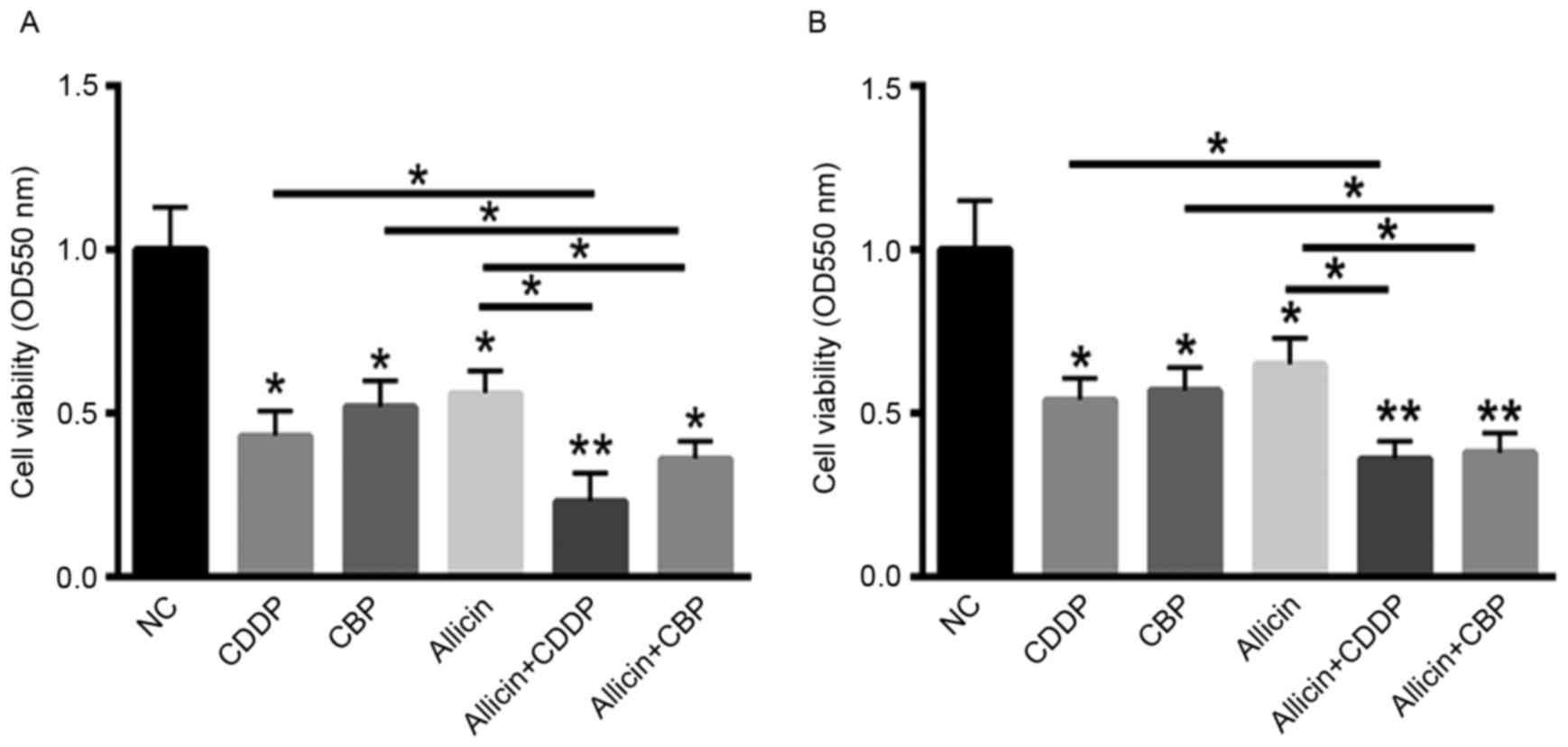
had been exposed to allicin for 48 h. As presented in Fig. 1A and B, treatment with CDDP,
carboplatin (CBP) or allicin alone significantly suppressed SW1736
and HTh-7 cell viability. To explore whether allicin exerts a
synergistic effect on the cytotoxity of CDDP or CBP, cells were
simultaneously treated with CDDP or CBP in the presence or absence
of allicin for 48 h. These results indicated that combination use
of allicin and CDDP or CBP resulted in an enhanced growth
inhibitory effect on SW1736 and HTh-7 cells (Fig. 1A and B).
Allicin induces autophagy in SW1736
and HTh-7 cells
The present study then explored the cytotoxic
effects of allicin on SW1736 and HTh-7 cells. First, the expression
of autophagy markers, including LC3II and p62, was explored.
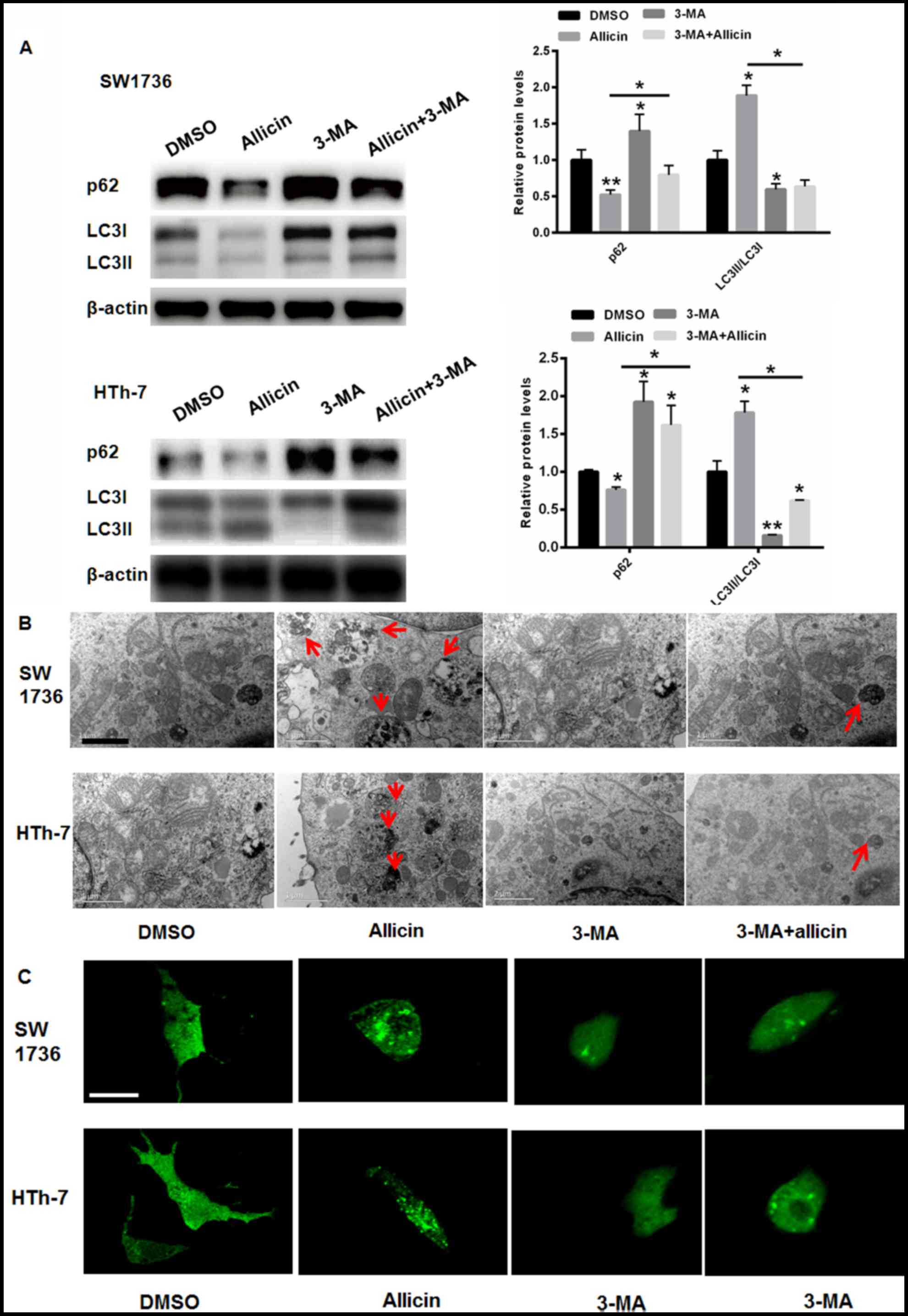
Pre-incubation with allicin significantly increased the level of
LC3II, while the expression of p62 was significantly suppressed in
SW1736 cells compared with the control (Fig. 2A). A significant reduction in p62 was
also observed in the HTh-7 cells (Fig.
2A). In addition, treatment with 3-MA, a specific autophagy
inhibitor, markedly abolished allicin-induced SW1736- and
HTh-7-cell autophagy (Fig. 2A).
Transmission electron microscopy also demonstrated enhanced
autophagy vesicles in SW1736 and HTh-7 cells treated with allicin
(Fig. 2B). In addition, transfection
with GFP-LC3 was employed to detect autophagy. As presented in
Fig. 2C, treatment with allicin
significantly enhanced the autophagosomes in SW1736 and HTh-7
cells. This effect was suppressed by addition of 3-MA, indicating
allicin-induced autophagy through LC3 accumulation.
Allicin-induced SW1736 and HTh-7 cell
death is associated with severe autophagy
To explore whether enhanced SW1736 and HTh-7 cell
death was partially attributed to allicin (10 µM)-induced cell
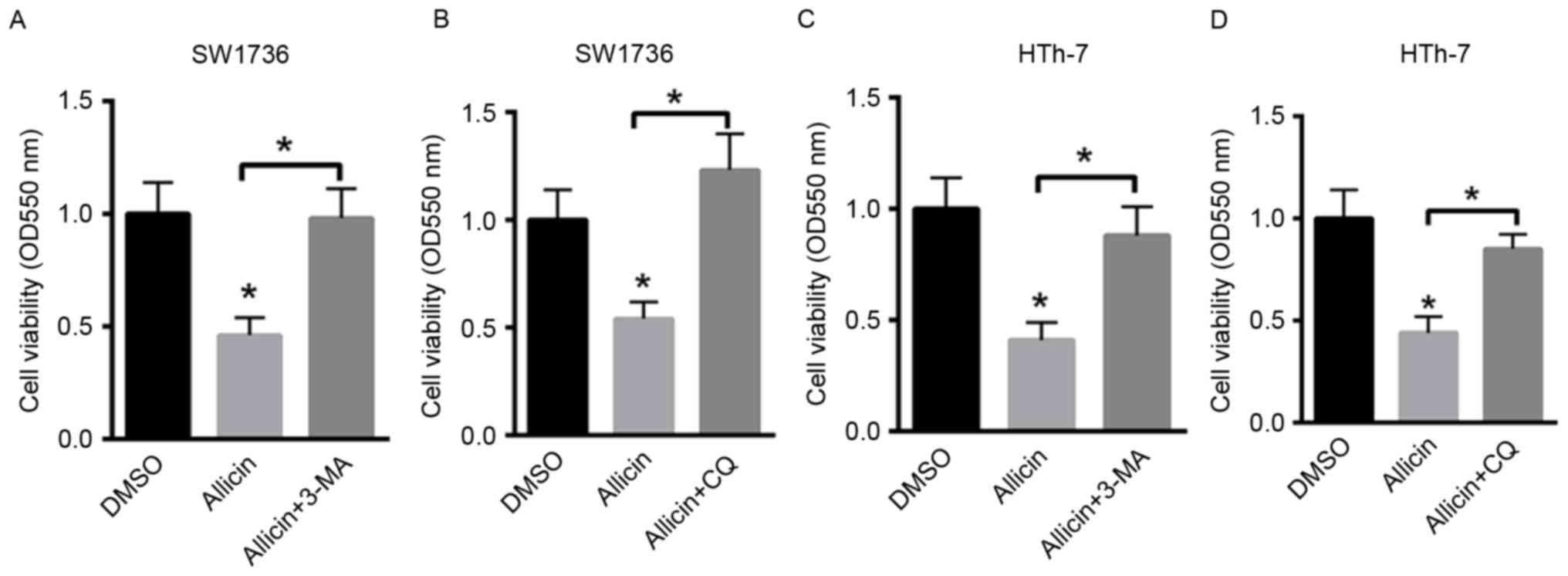
autophagy, 3-MA (5 mM) or chloroquine (CQ, 40 µM), an
autophagolysosome fusion inhibitor, were applied (Fig. 3). Allicin-induced cell death was
largely abolished by 3-MA in a dose-dependent manner in SW1736 and
HTh-7 cells Fig. 3A and C.
Suppression of autophagy by CQ also largely repressed the
allicin-induced death of SW1736 and HTh-7 cells (Fig. 3B and D). These results demonstrated
that allicin-induced SW1736 and HTh-7 cell death was dependent on
autophagy.
Allicin suppresses Akt/mammalian
target of rapamycin (mTOR) signaling in SW1736 and HTh-7 cells
Previous studies have indicated that the Akt/mTOR
signaling pathway has a key role in the process of autophagy
(19). Thus, the present study
evaluated the activation of Akt/mTOR signaling after allicin
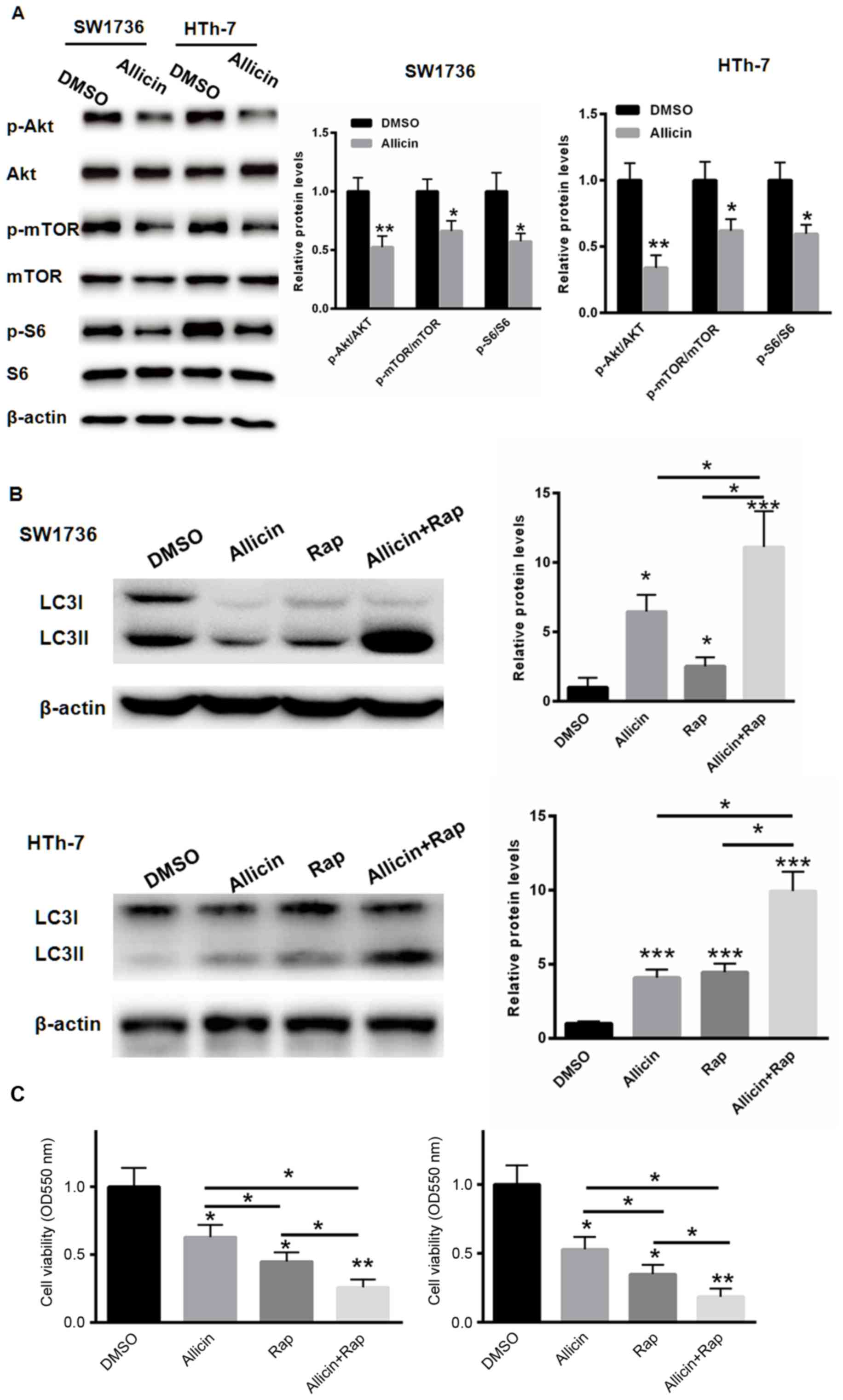
treatment. Western blot analysis demonstrated that allicin
treatment significantly reduced the phosphorylation level of Akt,
mTOR and S6, indicating the inactivation of the Akt/mTOR signaling
pathway by allicin treatment in SW1736 and HTh-7 cells (Fig. 4A). Subsequently the potential
synergistic effect of allicin and rapamycin on SW1736 and HTh-7
cell autophagy was explored. As presented in Fig. 4B, combination treatment with allicin
and rapamycin significantly enhanced the LC3II/LC3I ratio in SW1736
and HTh-7 cells compared with that in the groups treated with
allicin or rapamycin alone. The synergistic effect of allicin and
rapamycin on SW1736 and HTh-7 cell death was also explored. Of
note, combined use of allicin and rapamycin induced significantly
more cell death compared with that induced by allicin or rapamycin
alone (Fig. 4C).
Discussion
The incidence of thyroid cancer is continuing to
increase worldwide (20). Compared
with males, females of various ethnicities demonstrate a higher
incidence of thyroid cancer (21,22). At
present, platinum-based drugs are widely applied for the treatment
of thyroid cancer patients in the clinic. Unfortunately, it is
common for these patients to develop drug resistance (23,24).
Most thyroid cancer patients who develop incurable metastasis are
candidates for neoadjuvant or palliative chemotherapy (20,25).
However, two thirds of these patients still benefit from
conventional chemotherapy. Studies have indicated that conventional
chemotherapy did not achieve apoptosis-dependent cell death in
these thyroid cancer patients (26,27). In
this regard, resistance to platinum-based drugs among these
patients mainly arises from deficiency of apoptotic pathways in
their thyroid cancer cells (26,27).
Thus, it is important to explore novel drugs with the ability to
enhance thyroid cell death, such as autophagy inducers.
In addition to apoptosis-dependent cancer cell
death, autophagic cell death has been greatly valued as a novel
mechanism for cancer cell death induced by chemotherapeutics
(6,7,9). Certain
studies suggest that the pro-survival functions of autophagy
decrease the efficacy of cancer therapeutics (20,25).
However, other studies have demonstrated that autophagy also
induced cancer cell death after various treatments (9,28–30).
Thus, activation of autophagic cell death is becoming an important
strategy for cancer treatment.
The present study explored the efficacy of allicin
in the treatment of thyroid cancer. Compared with CDDP or CBP, the
inhibitory effects of allicin on cell viability were lower.
However, combined use of allicin and CDDP resulted in an enhanced
growth inhibitory effect on SW1736 and HTh-7 cells, suggesting that
allicin may serve as an adjunctive therapy for thyroid cancer
treatment. Previous studies have indicated that various drugs may
enhance autophagy in thyroid cancer (31,32).
Vemurafenib has been revealed to induce endoplasmic reticulum
stress response-mediated autophagy in thyroid cancer (31). The BH3 mimetic drug GX15-070 has been
demonstrated to induce non-classical cell death with signs of
apoptosis and autophagy in dedifferentiated thyroid carcinoma cells
(32). The effect of allicin on
SW1736 and HTh-7 cell autophagy was examined in the present study.
The level of autophagy in SW1736 and HTh-7 cells was observed to be
significantly increased in the presence of allicin. Of note,
allicin-induced cell death was largely abolished by treatment with
the autophagy inhibitors 3-MA or CQ, suggesting that
allicin-induced SW1736 cell death was dependent on autophagy.
Since the Akt/mTOR signaling pathway has been
reported to activate the process of autophagy (33,34), the
activation of Akt/mTOR signaling was evaluated after allicin
treatment. Of note, allicin treatment decreased the activation of
Akt, mTOR and S6. Furthermore, combined use of allicin and
rapamycin induced more cell death compared with that induced by
allicin or rapamycin alone. These results suggested that allicin
triggered autophagy-dependent cell death through suppressing the
Akt/mTOR signaling pathway.
In conclusion, the present study revealed that
allicin may serve as an adjunctive therapy for thyroid cancer
patients through inducing autophagy-dependent cell death even when
apoptosis resistance is developed in cancer cells.
References
|
1
|
Sherman SI: Thyroid carcinoma. Lancet.
361:501–511. 2003. View Article : Google Scholar : PubMed/NCBI
|
|
2
|
Olejarski J, Yang M and Varghese J:
Follicular thyroid carcinoma presenting as a soft tissue thigh
mass. Lancet Diabetes Endocrinol. 2:3482014. View Article : Google Scholar : PubMed/NCBI
|
|
3
|
Spoto G, Esposito A, Santoleri F, Rubini
C, Rutjes AW, Fioroni M, Ferrante M and Petrini M: Does cyclic
guanosine monophosphate induce autophagy in thyroid malignant
carcinoma through down-regulation of cyclic guanosine monophosphate
phosphodiesterase? J Biol Regul Homeost Agents. 30:599–604.
2016.PubMed/NCBI
|
|
4
|
Lu YC, Lee YR, Liao JD, Lin CY, Chen YY,
Chen PT and Tseng YS: Reversine induced multinucleated cells, cell
apoptosis and autophagy in human Non-small cell lung cancer cells.
PLoS One. 11:e01585872016. View Article : Google Scholar : PubMed/NCBI
|
|
5
|
Saleh T, Cuttino L and Gewirtz DA:
Autophagy is not uniformly cytoprotective: A personalized medicine
approach for autophagy inhibition as a therapeutic strategy in
Non-small cell lung cancer. Biochim Biophys Acta. 1860:2130–2136.
2016. View Article : Google Scholar : PubMed/NCBI
|
|
6
|
Chen MC, Chen CH, Liu YN, Wang HP, Pan SL
and Teng CM: TW01001, a novel piperazinedione compound, induces
mitotic arrest and autophagy in non-small cell lung cancer A549
cells. Cancer Lett. 336:370–378. 2013. View Article : Google Scholar : PubMed/NCBI
|
|
7
|
Choi JY, Hong WG, Cho JH, Kim EM, Kim J,
Jung CH, Hwang SG, Um HD and Park JK: Podophyllotoxin acetate
triggers anticancer effects against non-small cell lung cancer
cells by promoting cell death via cell cycle arrest, ER stress and
autophagy. Int J Oncol. 47:1257–1265. 2015. View Article : Google Scholar : PubMed/NCBI
|
|
8
|
Yang C, Ma X, Wang Z, Zeng X, Hu Z, Ye Z
and Shen G: Curcumin induces apoptosis and protective autophagy in
castration-resistant prostate cancer cells through iron chelation.
Drug Des Devel Ther. 11:431–439. 2017. View Article : Google Scholar : PubMed/NCBI
|
|
9
|
Chen K and Shi W: Autophagy regulates
resistance of non-small cell lung cancer cells to paclitaxel.
Tumour Biol. 37:10539–10544. 2016. View Article : Google Scholar : PubMed/NCBI
|
|
10
|
Chen M, Du Y, Qui M, Wang M, Chen K, Huang
Z, Jiang M, Xiong F, Chen J, Zhou J, et al: Ophiopogonin B-induced
autophagy in non-small cell lung cancer cells via inhibition of the
PI3K/Akt signaling pathway. Oncol Rep. 29:430–436. 2013. View Article : Google Scholar : PubMed/NCBI
|
|
11
|
Ma LN, Li LD, Li SC, Hao XM, Zhang JY, He
P and Li YK: Allicin improves the cardiac function by protecting
against apoptosis in rat model of myocardial infarction. Chin J
Integr Med. 23:589–597. 2017. View Article : Google Scholar : PubMed/NCBI
|
|
12
|
Huang H, Jiang Y, Mao G, Yuan F, Zheng H,
Ruan Y and Wu T: Protective effects of allicin on
streptozotocin-induced diabetic nephropathy in rats. J Sci Food
Agric. 97:1359–1366. 2017. View Article : Google Scholar : PubMed/NCBI
|
|
13
|
Ma T, Chen D, Tu Y, Zhang N, Si B, Deng K
and Diao Q: Effect of supplementation of allicin on methanogenesis
and ruminal microbial flora in Dorper crossbred ewes. J Anim Sci
Biotechnol. 7:12016. View Article : Google Scholar : PubMed/NCBI
|
|
14
|
Muller A, Eller J, Albrecht F, Prochnow P,
Kuhlmann K, Bandow JE, Slusarenko AJ and Leichert LI: Allicin
induces thiol stress in bacteria through S-Allylmercapto
modification of protein cysteines. J Biol Chem. 291:11477–11490.
2016. View Article : Google Scholar : PubMed/NCBI
|
|
15
|
Sheppard JG and Long TE: Allicin-inspired
thiolated fluoroquinolones as antibacterials against ESKAPE
pathogens. Bioorg Med Chem Lett. 26:5545–5549. 2016. View Article : Google Scholar : PubMed/NCBI
|
|
16
|
Tu G, Zhang YF, Wei W, Li L, Zhang Y, Yang
J and Xing Y: Allicin attenuates H2O2-induced cytotoxicity in
retinal pigmented epithelial cells by regulating the levels of
reactive oxygen species. Mol Med Rep. 13:2320–2326. 2016.
View Article : Google Scholar : PubMed/NCBI
|
|
17
|
Wang S and Ren D: Allicin protects
traumatic spinal cord injury through regulating the HSP70/Akt/iNOS
pathway in mice. Mol Med Rep. 14:3086–3092. 2016. View Article : Google Scholar : PubMed/NCBI
|
|
18
|
Wang W, Du Z, Nimiya Y, Sukamtoh E, Kim D
and Zhang G: Allicin inhibits lymphangiogenesis through suppressing
activation of vascular endothelial growth factor (VEGF) receptor. J
Nutr Biochem. 29:83–89. 2016. View Article : Google Scholar : PubMed/NCBI
|
|
19
|
Koleini N, Nickel BE, Wang J, Roveimiab Z,
Fandrich RR, Kirshenbaum LA, Cattini PA and Kardami E: Fibroblast
growth factor-2-mediated protection of cardiomyocytes from the
toxic effects of doxorubicin requires the mTOR/Nrf-2/HO-1 pathway.
Oncotarget. 8:87415–87430. 2017. View Article : Google Scholar : PubMed/NCBI
|
|
20
|
Giuffrida R, Adamo L, Iannolo G, Vicari L,
Giuffrida D, Eramo A, Gulisano M, Memeo L and Conticello C:
Resistance of papillary thyroid cancer stem cells to chemotherapy.
Oncol Lett. 12:687–691. 2016. View Article : Google Scholar : PubMed/NCBI
|
|
21
|
de Groot S, Janssen LG, Charehbili A,
Dijkgraaf EM, Smit VT, Kessels LW, van Bochove A, van Laarhoven HW,
Meershoek-Klein Kranenbarg E, van Leeuwen-Stok AE, et al: Thyroid
function alters during neoadjuvant chemotherapy in breast cancer
patients: Results from the NEOZOTAC trial (BOOG 2010-01). Breast
Cancer Res Treat. 149:461–466. 2015. View Article : Google Scholar : PubMed/NCBI
|
|
22
|
Denaro N, Nigro CL, Russi EG and Merlano
MC: The role of chemotherapy and latest emerging target therapies
in anaplastic thyroid cancer. Onco Targets Ther. 9:1231–1241. 2013.
View Article : Google Scholar : PubMed/NCBI
|
|
23
|
De Besi P, Busnardo B, Toso S, Girelli ME,
Nacamulli D, Simioni N, Casara D, Zorat P and Fiorentino MV:
Combined chemotherapy with bleomycin, adriamycin, and platinum in
advanced thyroid cancer. J Endocrinol Invest. 14:475–480. 1991.
View Article : Google Scholar : PubMed/NCBI
|
|
24
|
Droz JP, Rougier P, Goddefroy V,
Schlumberger M, Gardet P and Parmentier C: Chemotherapy for
medullary cancer of the thyroid. Phase II trials with adriamycin
and cis-platinum administered as monochemotherapy. Bull Cancer.
71:195–199. 1984.PubMed/NCBI
|
|
25
|
Tirro E, Consoli ML, Massimino M, Manzella
L, Frasca F, Sciacca L, Vicari L, Stassi G, Messina L, Messina A
and Vigneri P: Altered expression of c-IAP1, survivin, and Smac
contributes to chemotherapy resistance in thyroid cancer cells.
Cancer Res. 66:4263–4272. 2006. View Article : Google Scholar : PubMed/NCBI
|
|
26
|
Albero A, Lopéz JE, Torres A, de la Cruz L
and Martín T: Effectiveness of chemotherapy in advanced
differentiated thyroid cancer: A systematic review. Endocr Relat
Cancer. 23:R71–R84. 2016. View Article : Google Scholar : PubMed/NCBI
|
|
27
|
Lacin S, Esin E, Karakas Y and Yalcin S:
Metastatic medullary thyroid cancer: A dramatic response to a
systemic chemotherapy (temozolomide and capecitabine) regimen. Onco
Targets Ther. 8:1039–1042. 2015.PubMed/NCBI
|
|
28
|
Ali AB, Nin DS, Tam J and Khan M: Role of
chaperone mediated autophagy (CMA) in the degradation of misfolded
N-CoR protein in non-small cell lung cancer (NSCLC) cells. PLoS
One. 6:e252682011. View Article : Google Scholar : PubMed/NCBI
|
|
29
|
Giatromanolaki A, Kalamida D, Sivridis E,
Karagounis IV, Gatter KC, Harris AL and Koukourakis MI: Increased
expression of transcription factor EB (TFEB) is associated with
autophagy, migratory phenotype and poor prognosis in non-small cell
lung cancer. Lung Cancer. 90:98–105. 2015. View Article : Google Scholar : PubMed/NCBI
|
|
30
|
Guo Q, Liu Z, Jiang L, Hu T, Li D, Liu Y,
Liu M, Liang X and Nan K: Starvation-induced autophagy in cultured
non-small cell lung cancer cells. Nan Fang Yi Ke Da Xue Xue Bao.
34:627–630. 2014.PubMed/NCBI
|
|
31
|
Wang W, Kang H, Zhao Y, Min I, Wyrwas B,
Moore M, Teng L, Zarnegar R, Jiang X and Fahey TJ III: Targeting
autophagy sensitizes BRAF-Mutant thyroid cancer to vemurafenib. J
Clin Endocrinol Metab. 102:634–643. 2017.PubMed/NCBI
|
|
32
|
Broecker-Preuss M, Viehof J, Jastrow H,
Becher-Boveleth N, Fuhrer D and Mann K: Cell death induction by the
BH3 mimetic GX15-070 in thyroid carcinoma cells. J Exp Clin Cancer
Res. 34:692015. View Article : Google Scholar : PubMed/NCBI
|
|
33
|
Hwang KE, Kim YS, Jung JW, Kwon SJ, Park
DS, Cha BK, Oh SH, Yoon KH, Jeong ET and Kim HR: Inhibition of
autophagy potentiates pemetrexed and simvastatin-induced apoptotic
cell death in malignant mesothelioma and non-small cell lung cancer
cells. Oncotarget. 6:29482–29496. 2015. View Article : Google Scholar : PubMed/NCBI
|
|
34
|
Jeong EH, Choi HS, Lee TG, Kim HR and Kim
CH: Dual inhibition of PI3K/Akt/mTOR pathway and role of autophagy
in Non-small cell lung cancer cells. Tuberc Respir Dis (Seoul).
72:343–351. 2012. View Article : Google Scholar : PubMed/NCBI
|