Introduction
MicroRNAs (miRNAs) are a class of single-stranded,
non-coding small RNAs that are widely present in eukaryotic cells
and are highly conserved during evolution. The length of miRNA is
generally 19–24 nt. miRNA is the largest class of gene expression
transcriptional regulatory factors that are involved in the
regulation of a variety of biological activities in human body. The
disorders of miRNA expression can lead to the occurrence of
diabetes, hypertension and other diseases (1,2). miRNA
expression is also related to the onset, development and metastasis
of breast cancer (3), lung cancer
(4), osteosarcoma (5), liver cancer (6) and other malignant tumors.
Gastric cancer is one of the common malignancies in
the digestive system, and the incidence of gastric cancer is high
in many countries, especially in China. Gastric cancer is the fifth
most common cancer among all the malignant tumors and the third
major cause of cancer-related deaths. Due to the lack of indicators
for early diagnosis, gastric cancer cannot be easily detected. Most
patients are diagnosed at advanced stages with metastasis, and the
prognosis is usually poor, seriously threatening the health of
people. It is an urgent task to study the molecular mechanism of
gastric cancer and to find indicators for early diagnosis and
treatment targets. In recent years, abnormal miRNA expression was
found in gastric cancer, indicating that miRNA is also involved in
the occurrence of gastric cancer (7).
Materials and methods
Specimen collection
Specimens were collected from 165 cases of gastric
cancer patients who received surgical resection in Jinan Central
Hospital Affiliated to Shandong University from January 2011 to
January 2017. All patients were diagnosed and treated for the first
time, and none of them received radiotherapy or chemotherapy before
this study. The patients included 102 males and 63 females, with an
average age of 56±11.5 years. All patients were diagnosed as
gastric cancer by biopsy, and the cancer tissues and adjacent
tissues (>5 cm away from the cancer tissue) were collected. All
samples were frozen in the liquid nitrogen and stored at −80°C.
According to the TNM classification criteria and WHO histological
grading method, all patients were subjected to clinical staging and
classification. Specific clinical data are shown in Table I. This study was approved by the
Ethics Committee of Jinan Central Hospital Affiliated to Shandong
University (Jinan, China). Signed written informed consents were
obtained from the patients and/or guardians.
 | Table I.Correlations between the expression of
miR-194 and miR-29 in cancer tissue and the clinicopathological
features. |
Table I.
Correlations between the expression of
miR-194 and miR-29 in cancer tissue and the clinicopathological
features.
| Clinicopathological
parameters | Cases | Relative content of
miR-194 | P-value | Relative content of
miR-29 | P-value |
|---|
| Age (years) |
|
| 0.318 |
| 0.478 |
|
<60 | 86 |
3.11±1.18 |
|
4.02±1.23 |
|
| ≥60 | 79 |
3.44±1.25 |
|
3.59±1.05 |
|
| Sex |
|
| 0.347 |
| 0.236 |
| Male | 102 |
2.78±1.09 |
|
4.25±0.98 |
|
|
Female | 63 |
3.21±1.10 |
|
3.43±0.89 |
|
| TNM staging |
|
| 0.029 |
| 0.009 |
| I +
II | 95 |
2.62±0.96 |
|
4.59±1.43 |
|
| III +
IV | 70 |
3.56±1.22 |
|
3.36±1.37 |
|
| Differentiation |
|
| 0.017 |
| 0.024 |
| Low | 93 |
2.61±1.03 |
|
3.36±0.97 |
|
|
Medium/High | 72 |
3.52±1.62 |
|
4.34±1.13 |
|
| Lymph node
metastasis |
|
| 0.009 |
| 0.010 |
| Yes | 76 |
2.56±1.14 |
|
3.18±0.87 |
|
| No | 89 |
3.45±1.45 |
|
4.27±1.28 |
|
Materials and reagents
TRIzol, reverse transcription kit and real-time
quantitative PCR (qRT-PCR) kit were from Promega (Madison, WI,
USA); specific primers of miR-194, miR-29 and U6, miR-194 mimic,
miR-29 mimic, and scramble mimic were from Sangon (Shanghai,
China); RIMP-1640 and fetal calf serum were from HyClone (Thermo
Fisher Scientific, Waltham, MA, USA); MTT and dimethyl sulfoxide
(DMSO) were from Sigma (St. Louis, MO, USA); Lipofectamine™ 2000
was provided by Invitrogen (Thermo Fisher Scientific), human
gastric cancer cell line SGC7901 was purchased from the cell bank
of Shanghai Institutes for Biological Sciences, Chinese Academy of
Sciences; 7500 Real-Time PCR system (Applied Biosystems; Thermo
Fisher Scientific).
Cell culture and transfection
Human gastric cancer cell line SGC7901 was cultured
in RPMI-1640 medium containing 10% fetal bovine serum (FBS) in an
incubator (37°C, 5% CO2). Cells were transferred to
6-well plate during subculture, and transfection was performed when
cells reached 80% confluent. All operations were performed
according to the instructions of Lipofectamine 2000 kit. Liposomes
were mixed with mimics, the mixture was added into medium without
serum to culture the cells for 8 h, then the medium was replaced by
complete medium.
qRT-PCR
Total RNA was extracted from cells or tissues using
TRIzol reagent. RNA was used as template to synthesize cDNA through
reverse transcription. PCR reaction was performed for 40 cycles
according to the instructions of qRT-PCR kit with U6 as endogenous
control. Relative expression of miRNA is expressed as
2−∆∆Ct. miR-194 primers are 5′-CACGCATGTAACAGCAAC
(forward) and 5′-CCAGTGCAGGGTCCGAGGTA (reverse); miR-29 primers are
5′-GGTACCGGTTGTCTTGGGTTTATTGs' (forward) and
5′-GAATTCAAATACTTCAGAGCTG-3′ (reverse).
MTT assay
Cells were inoculated into a 96-well plate with 5000
cells in each well. Cells were transfected with miR-194 mimic,
miR-29 mimic and scramble mimic, 6 wells were set for each
transfection. After incubation for 48 h, 10 µl of MTT (5 mg/l) was
added, followed by incubation at 37°C for 4 h. The medium was
removed, and 100 µl of DMSO was added, followed by shaking for 10
min. OD values at 490 nm were measured.
Transwell assay
Matrigel was kept at 4°C overnight. Matrigel (50 µl)
(1:10 dilution) was added to the upper chamber, followed by
incubation at 37°C for 4 h. The lower chamber was filled with 500
µl of culture medium containing 10% FBS. Cells transfected with
miR-194 mimic, miR-29 mimic and scramble mimic, and control cells
were digested, and were resuspended in RPMI-1640 medium containing
0.2% bovine serum albumin to adjust the cell density to
2×10⁵/ml. Then 200 µl of cell suspension was added to
the upper chamber. After incubation for 24 h, Matrigel and the
cells that failed to invade were removed. The membrane was fixed
for 30 min, and staining with 0.1% crystal violet was performed for
10 min. The results were observed and counted under an inverted
microscope. The experiment was repeated three times.
Statistical analysis
Statistical analysis was performed using SPSS 17.0
software (SPSS, Inc., Chicago, IL, USA). Measurement data are
expressed as mean ± SD, and processed by Student's t-test.
P<0.05 was considered to indicate a statistically significant
difference.
Results
Comparison of expression levels of
miR-194 and miR-29 in gastric cancer tissues and adjacent
tissues
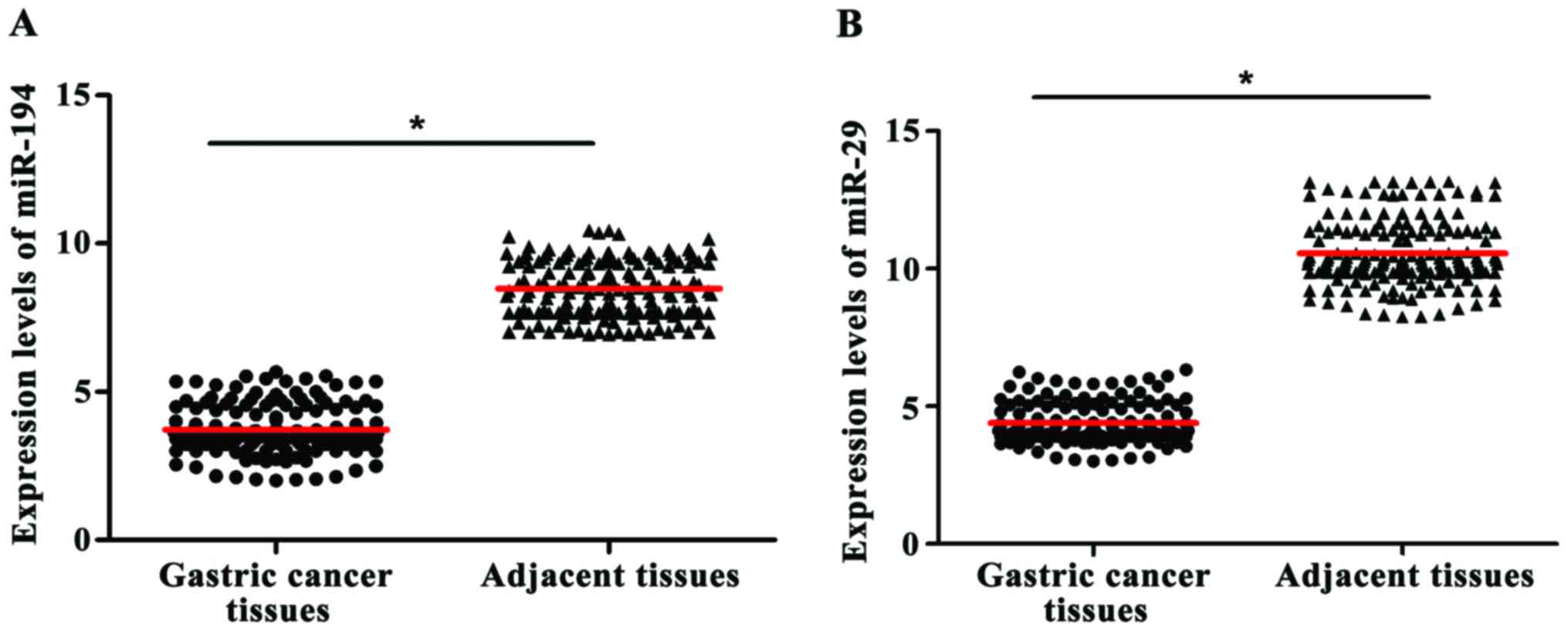
RT-PCR results showed that the relative contents of
miR-194 and miR-29 in gastric cancer tissue were 3.72±1.65 and
4.39±1.47, respectively. While the relative contents of miR-194 and
miR-29 in normal tissue were 8.47±3.79 and 10.56±3.95,
respectively. Expression levels of miR-194 and miR-29 were
significant lower in cancer tissue than in normal tissue (t=10.84,
P<0.001) (Fig. 1).
Correlations between the expression of
miR-194 and miR-29 in cancer tissue and the clinicopathological
features
No significant differences in expression levels of
miR-194 and miR-29 were found between patients in different gender
and age groups. Expression levels of miR-194 and miR-29 in gastric
cancer tissue were closely related to TNM stage, differentiation
degree of cancer cells and lymph node metastasis. Expression levels
of miR-194 and miR-29 in TNM stage III+IV were lower than that in
stage I+II. Expression levels of miR-194 and miR-29 in tumors with
lower degree of differentiation and with lymph node metastasis were
significantly lower than those in tumor with higher degree of
differentiation and without lymph node metastasis (P<0.05),
indicating that expression of miR-194 and miR-29 is closely related
to the degree of malignancy, metastasis and prognosis of gastric
cancer (Table I).
Overexpression of miR-194 and miR-29
in gastric cancer SGC7901 cells
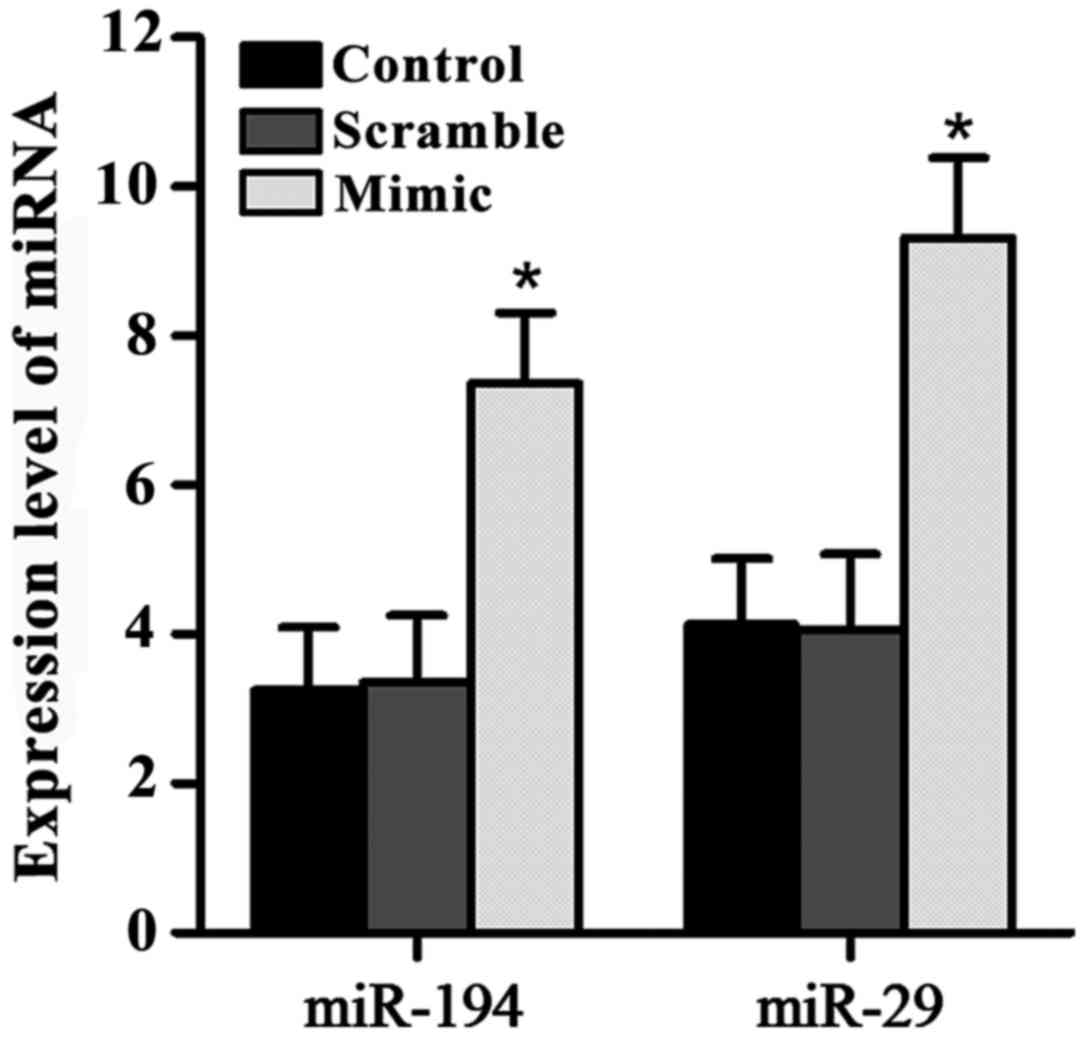
miR-194 mimic, miR-29 mimic and scramble mimic were
transfected into SGC7901 cells. Expression levels of miR-194 and
miR-29 were detected by qRT-PCR. Results showed that, compared with
control group and scramble group, expression levels of miR-194 and
miR-29 were significantly increased in SGC7901 cells after the
transfection of miR-194 and miR-29 mimics (Fig. 2).
Effects of miR-194 and miR-29
overexpression on the proliferation of SGC7901 cells
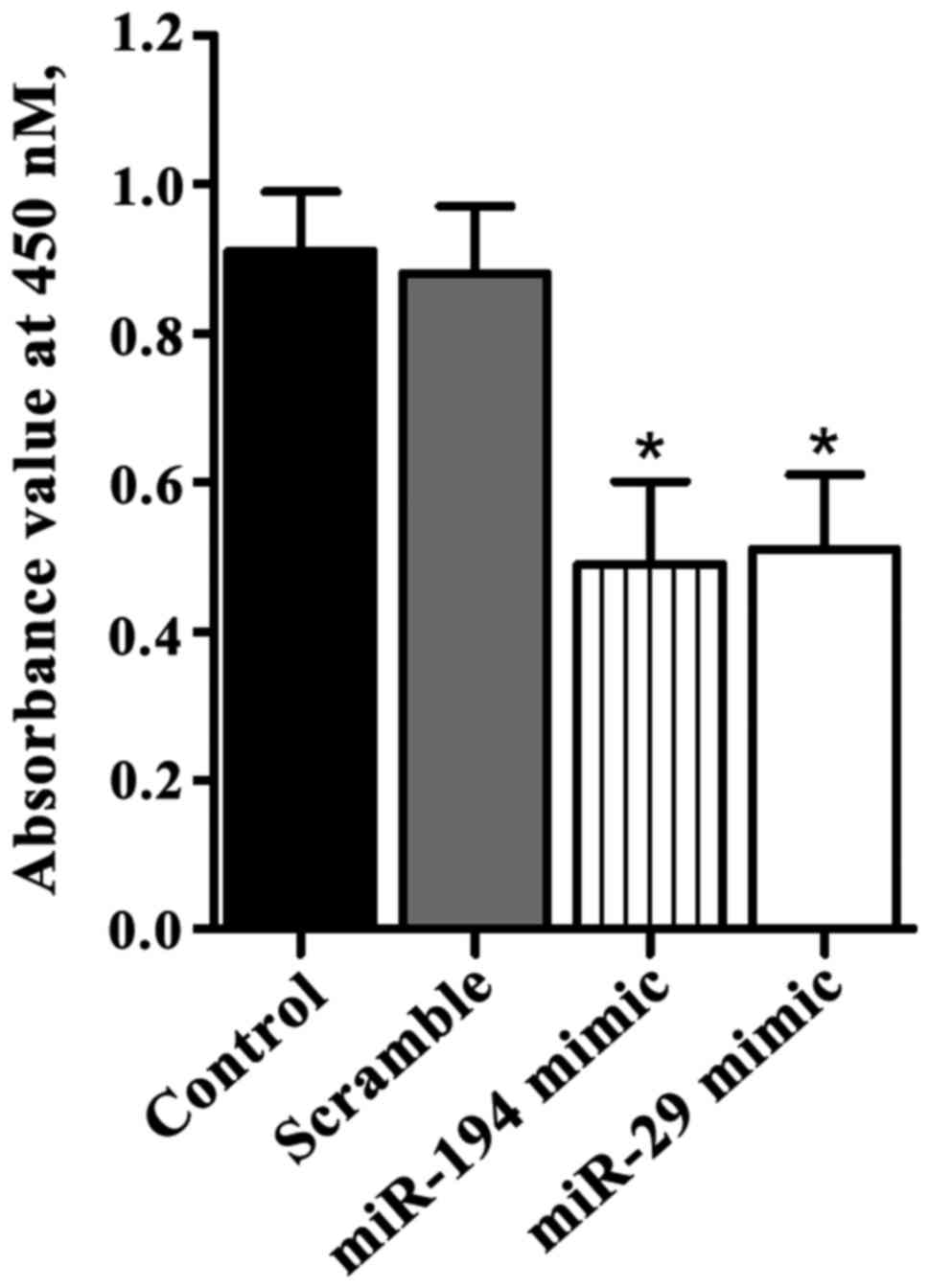
MTT assay showed that the absorbance values of
SGC7901 cells with miR-194 mimic and miR-29 mimic transfection were
0.49±0.11 and 0.51±0.10, respectively, after incubation for 48 h.
While the absorbance value of control cells was 0.91±0.08 and the
cells transfected with scramble mimics was 0.88±0.09. Significant
differences were found between them (P<0.05) (Fig. 3).
Effects of miR-194 and miR-29
overexpression on migration of SGC7901 cells
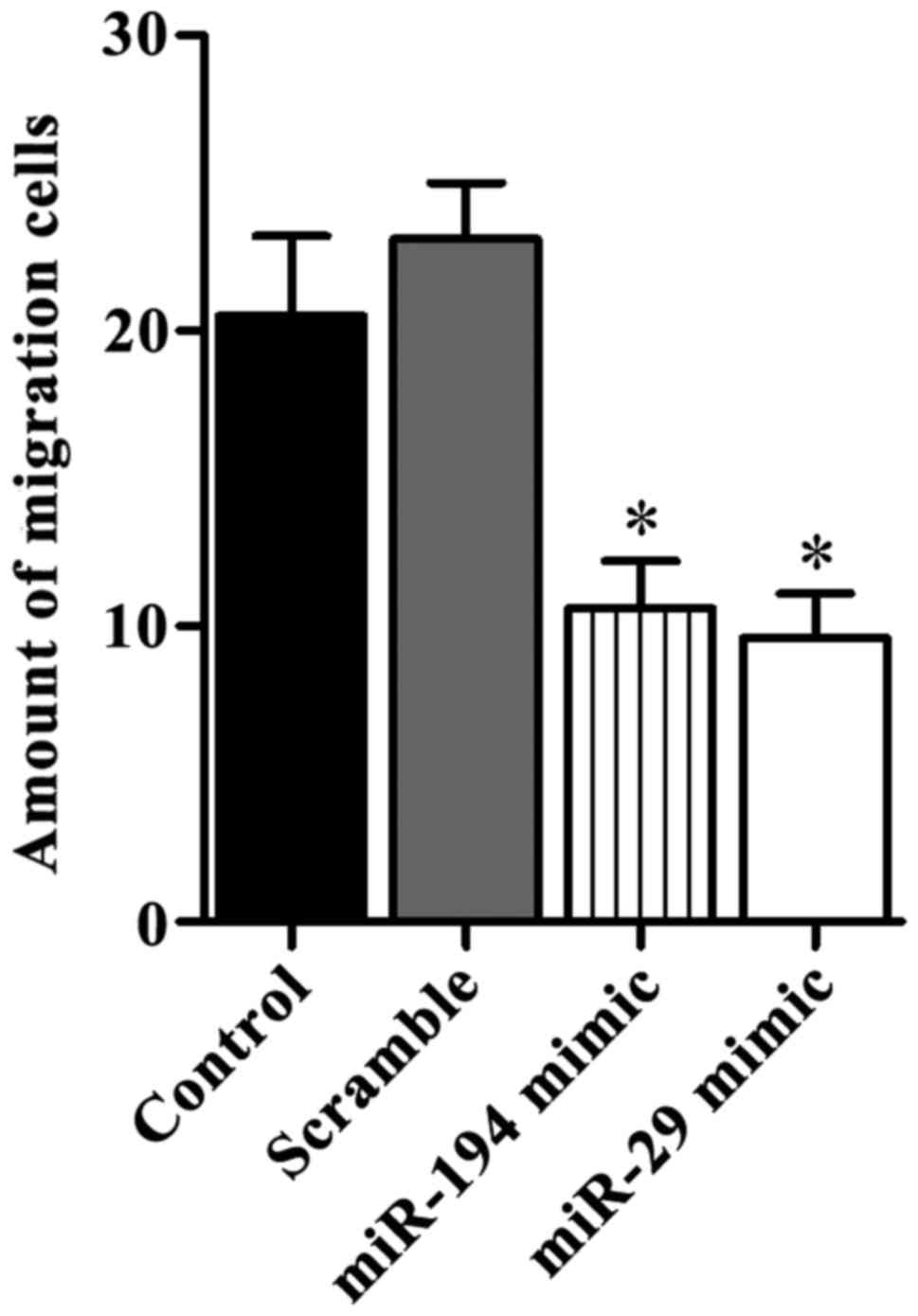
Transwell assay showed that 10.6±1.6 cells with
miR-194 mimic transfection passed through the membrane, and the
number for cells with miR-29 mimic transfection was 9.6±1.5, no
significant differences were found between those two types of
cells. Significant differences were found between these two types
of cells and untreated SGC7901 cells 23.1±2.6 and cells transfected
with scramble mimic 20.5±1.9 (P<0.05) (Fig. 4).
Discussion
miRNAs are widely distributed in many species. Each
miRNA has approximately 200 potential target genes. miRNAs in the
human genome are involved in the regulation of 30–50% gene
expression. Any change in the expression of miRNAs may lead to the
development of diseases (8). miRNA
plays an important role in the development of the tumor. Research
on miRNA in tumors is mainly focused on the mechanism of the onset,
growth and metastasis of tumor. miRNAs are upregulated or
downregulated in many tumors to perform a role as oncogene or tumor
suppressor. With the important roles in the diagnosis, treatment
and prognosis of tumors, miRNAs have become a hot topic in
tumor-related research (9,10).
Gastric cancer is a common digestive system tumor
that seriously affects human health. The pathogenesis of this
disease remains to be further studied. miR-194 is specifically
expressed in the gastrointestinal tract, and it has been reported
that miR-29 expression is downregulated in gastric cancer (11). In order to study the roles of miR-194
and miR-29 in gastric cancer, tumor tissue and adjacent tissue were
collected from 165 cases of gastric cancer patients. Results showed
that expression levels of miR-194 and miR-29 were significantly
lower in gastric cancer tissue than in adjacent healthy tissue,
indicating than miR-194 and miR-29 are closely related to the
development of tumors. Further studies showed that miR-194 and
miR-29 expression levels in TNM stage III+IV were lower than that
in stage I+II, and expression levels of those two miRNAs were
significantly lower in patients with lymph node metastasis than in
patients without. Those results suggest that the low expression
levels of miR-194 and miR-29 are closely related to the degree of
malignancy. Higher degree of malignancy is accompanied with lower
expression levels and worse prognosis. miR-194 and miR-29 are tumor
suppressor genes in most tumors. For example, miR-29 can
downregulate anti-apoptotic factor Mcl-1 to promote apoptosis of
bile duct epithelial cancer cells (12); level of miR-29 expression was
significantly lower in breast cancer patients with poor prognosis
(13); the low expression of miR-29
is closely related to the metastasis and prognosis of malignant
tumors, and miR-29 can be used as a key biomarker for predicting
the recurrence and progression of tumors (14).
MYC can reduce the expression level of miR-29 in
pancreatic ductal adenocarcinoma (PDAC), increase the degree of
malignancy, and MYC knockout can upregulate the level of miR-29
expression in PDAC, to increase sensitivity of the tumor to
gemcitabine (15). Low expression
level of miR-29 was also detected in other tumors such as head and
neck squamous cell carcinoma, and prostate cancer (16,17).
Studies have shown that miR-194 is downregulated in non-small cell
lung cancer and clear cell renal cell carcinoma (ccRCC), and the
reduced expression level is closely related to prognosis (18,19). Low
expression levels of miR-194 was detected in ovarian cancer,
colorectal cancer, melanoma and other tumors, and miR-194 can
participate in the regulation of drug sensitivity and tumor growth
through a series of signal pathways (20–22).
To further study the role and possible mechanism of
miR-194 and miR-29 in gastric cancer, CGC7901 cells with miR-194
and miR-29 overexpression were established to observe cell
proliferation and invasion. After transfection with miR-194 mimic
and miR-29 mimic, RT-PCR results showed that expression levels of
miR-194 and miR-29 were significantly increased in CGC7901 cells.
Further study showed that miR-194 and miR-29 overexpression could
inhibit the proliferation and invasion of SGC7901 cells. In
laryngeal squamous cell carcinoma and ccRCC, lysyl oxidase 2
(LOXL2) gene can directly interact with miR-29s to inhibit the
migration and invasion of cancer cells (23,24).
Stable expression of miR-194 can inhibit the proliferation and
invasion of non-small cell lung cancer cells and promote drug
sensitivity of tumor cells to cisplatin (18). miR-194 can inhibit the proliferation
and invasion of ovarian cells through protein tyrosine phosphatase
non-receptor type 12 (PTPN12) (25).
miR-194 can also inhibit the proliferation and migration of bladder
cancer cells (26).
miRNAs can participate in the regulation of
tumor-related signaling pathways such as PI3K/KT signaling pathway
(27), RAS-MAPK signaling pathway to
affect the occurrence and development of tumors (28). Some miRNAs can enter the body fluid,
and the detection of miRNAs in serum or body fluids has important
roles in early diagnosis of tumors (29,30). In
this study, we found that the expression levels of miR-194 and
miR-29 were low in gastric cancer tissue, and the low expression
level was correlated with poor prognosis. miR-194 and miR-29 are
closely related to tumor cell proliferation, migration and
invasion.
Further study of the mechanism and signal regulation
of miR-194 and miR-29 in gastric cancer and the detection of
miR-194 and miR-29 in serum are of great significance for the early
diagnosis and prognosis of gastric cancer.
Acknowledgements
Not applicable.
Funding
No funding was received.
Availability of data and materials
The datasets used and/or analyzed during the present
study are available from the corresponding author on reasonable
request.
Authors' contributions
XZ contributed to the conception and design of the
study. YH drafted this manuscript. ZT collected the data. YH and ZT
interpreted the data. FW revised the manuscript critically for
important intellectual content. All authors read and approved the
final manuscript.
Ethics approval and consent to
participate
The study was approved by the Ethics Committee of
Jinan Central Hospital Affiliated to Shandong University (Jinan,
China). Signed written informed consents were obtained from the
patients and/or guardians.
Consent for publication
Not applicable.
Competing interests
The authors declare that they have no competing
interests.
References
|
1
|
Bartel DP: MicroRNAs: Target recognition
and regulatory functions. Cell. 136:215–233. 2009. View Article : Google Scholar : PubMed/NCBI
|
|
2
|
Lewis BP, Burge CB and Bartel DP:
Conserved seed pairing, often flanked by adenosines, indicates that
thousands of human genes are microRNA targets. Cell. 120:15–20.
2005. View Article : Google Scholar : PubMed/NCBI
|
|
3
|
Iorio MV, Ferracin M, Liu CG, Veronese A,
Spizzo R, Sabbioni S, Magri E, Pedriali M, Fabbri M, Campiglio M,
et al: MicroRNA gene expression deregulation in human breast
cancer. Cancer Res. 65:7065–7070. 2005. View Article : Google Scholar : PubMed/NCBI
|
|
4
|
Rabinowits G, Gerçel-Taylor C, Day JM,
Taylor DD and Kloecker GH: Exosomal microRNA: A diagnostic marker
for lung cancer. Clin Lung Cancer. 10:42–46. 2009. View Article : Google Scholar : PubMed/NCBI
|
|
5
|
Sampson VB, Yoo S, Kumar A, Vetter NS and
Kolb EA: MicroRNAs and potential targets in osteosarcoma: Review.
Front Pediatr. 3:692015. View Article : Google Scholar : PubMed/NCBI
|
|
6
|
Callegari E, Gramantieri L, Domenicali M,
D'Abundo L, Sabbioni S and Negrini M: MicroRNAs in liver cancer: A
model for investigating pathogenesis and novel therapeutic
approaches. Cell Death Differ. 22:46–57. 2015. View Article : Google Scholar : PubMed/NCBI
|
|
7
|
Ueda T, Volinia S, Okumura H, Shimizu M,
Taccioli C, Rossi S, Alder H, Liu CG, Oue N, Yasui W, et al:
Relation between microRNA expression and progression and prognosis
of gastric cancer: A microRNA expression analysis. Lancet Oncol.
11:136–146. 2010. View Article : Google Scholar : PubMed/NCBI
|
|
8
|
Zhang JB, Song W, Wang YY, Liu MG, Sun MM
and Liu H: Study on correlation between PKIB and pAkt expression in
breast cancer tissues. Eur Rev Med Pharmacol Sci. 21:1264–1269.
2017.PubMed/NCBI
|
|
9
|
Griffiths-Jones S, Saini HK, van Dongen S
and Enright AJ: miRBase: Tools for microRNA genomics. Nucleic Acids
Res. 36:D154–D158. 2008. View Article : Google Scholar : PubMed/NCBI
|
|
10
|
Cheng AM, Byrom MW, Shelton J and Ford LP:
Antisense inhibition of human miRNAs and indications for an
involvement of miRNA in cell growth and apoptosis. Nucleic Acids
Res. 33:1290–1297. 2005. View Article : Google Scholar : PubMed/NCBI
|
|
11
|
Wang D, Fan Z, Liu F and Zuo J: Hsa-miR-21
and Hsa-miR-29 in tissue as potential diagnostic and prognostic
biomarkers for gastric cancer. Cell Physiol Biochem. 37:1454–1462.
2015. View Article : Google Scholar : PubMed/NCBI
|
|
12
|
Mott JL, Kobayashi S, Bronk SF and Gores
GJ: miR-29 regulates Mcl-1 protein expression and apoptosis.
Oncogene. 26:6133–6140. 2007. View Article : Google Scholar : PubMed/NCBI
|
|
13
|
Shinden Y, Iguchi T, Akiyoshi S, Ueo H,
Ueda M, Hirata H, Sakimura S, Uchi R, Takano Y, Eguchi H, et al:
miR-29b is an indicator of prognosis in breast cancer patients. Mol
Clin Oncol. 3:919–923. 2015. View Article : Google Scholar : PubMed/NCBI
|
|
14
|
Qi Y, Huang Y, Pang L, Gu W, Wang N, Hu J,
Cui X, Zhang J, Zhao J, Liu C, et al: Prognostic value of the
MicroRNA-29 family in multiple human cancers: A meta-analysis and
systematic review. Clin Exp Pharmacol Physiol. 44:441–454. 2017.
View Article : Google Scholar : PubMed/NCBI
|
|
15
|
Kwon JJ, Quirin K, Aljoufi A, Nafiseh A
and Kota J: Restoration of MYC-repressed miR-29 in pancreatic
cancer cells leads to increased reactive oxygen species and
gemcitabine sensitization. Cancer Res. 77 Suppl 13:LB–327. 2017.
View Article : Google Scholar
|
|
16
|
Kinoshita T, Nohata N, Hanazawa T, Kikkawa
N, Yamamoto N, Yoshino H, Itesako T, Enokida H, Nakagawa M, Okamoto
Y, et al: Tumour-suppressive microRNA-29s inhibit cancer cell
migration and invasion by targeting laminin-integrin signalling in
head and neck squamous cell carcinoma. Br J Cancer. 109:2636–2645.
2013. View Article : Google Scholar : PubMed/NCBI
|
|
17
|
Nishikawa R, Goto Y, Kojima S, Enokida H,
Chiyomaru T, Kinoshita T, Sakamoto S, Fuse M, Nakagawa M, Naya Y,
et al: Tumor-suppressive microRNA-29s inhibit cancer cell migration
and invasion via targeting LAMC1 in prostate cancer. Int J Oncol.
45:401–410. 2014. View Article : Google Scholar : PubMed/NCBI
|
|
18
|
Zhu X, Li D, Yu F, Jia C, Xie J, Ma Y, Fan
S, Cai H, Luo Q, Lv Z, et al: miR-194 inhibits the proliferation,
invasion, migration, and enhances the chemosensitivity of non-small
cell lung cancer cells by targeting forkhead box A1 protein.
Oncotarget. 7:13139–13152. 2016.PubMed/NCBI
|
|
19
|
Nofech-Mozes R, Khella HWZ, Scorilas A,
Youssef L, Krylov SN, Lianidou E, Sidiropoulos KG, Gabril M, Evans
A and Yousef GM: MicroRNA-194 is a marker for good prognosis in
clear cell renal cell carcinoma. Cancer Med. 5:656–664. 2016.
View Article : Google Scholar : PubMed/NCBI
|
|
20
|
Nakamura K, Sawada K, Yoshimura A,
Nakatsuka E, Kinose Y, Mabuchi S and Kimura T: MiR-194 modulates
paclitaxel resistance in ovarian cancer cells through the
regulation of MDM-2 expression. Cancer Res. 77 Suppl 13:34362017.
View Article : Google Scholar
|
|
21
|
Wang B, Shen ZL, Gao ZD, Zhao G, Wang CY,
Yang Y, Zhang JZ, Yan YC, Shen C, Jiang KW, et al: MiR-194,
commonly repressed in colorectal cancer, suppresses tumor growth by
regulating the MAP4K4/c-Jun/MDM2 signaling pathway. Cell Cycle.
14:1046–1058. 2015. View Article : Google Scholar : PubMed/NCBI
|
|
22
|
Guo B, Hui Q, Zhang Y, Chang P and Tao K:
miR-194 is a negative regulator of GEF-H1 pathway in melanoma.
Oncol Rep. 36:2412–2420. 2016. View Article : Google Scholar : PubMed/NCBI
|
|
23
|
Mizuno K, Seki N, Mataki H, Matsushita R,
Kamikawaji K, Kumamoto T, Takagi K, Goto Y, Nishikawa R, Kato M, et
al: Tumor-suppressive microRNA-29 family inhibits cancer cell
migration and invasion directly targeting LOXL2 in lung squamous
cell carcinoma. Int J Oncol. 48:450–460. 2016. View Article : Google Scholar : PubMed/NCBI
|
|
24
|
Nishikawa R, Chiyomaru T, Enokida H,
Inoguchi S, Ishihara T, Matsushita R, Goto Y, Fukumoto I, Nakagawa
M and Seki N: Tumour-suppressive microRNA-29s directly regulate
LOXL2 expression and inhibit cancer cell migration and invasion in
renal cell carcinoma. FEBS Lett. 589:2136–2145. 2015. View Article : Google Scholar : PubMed/NCBI
|
|
25
|
Liang T, Li L, Cheng Y, Ren C and Zhang G:
MicroRNA-194 promotes the growth, migration, and invasion of
ovarian carcinoma cells by targeting protein tyrosine phosphatase
nonreceptor type 12. Onco Targets Ther. 9:4307–4315. 2016.
View Article : Google Scholar : PubMed/NCBI
|
|
26
|
Zhang M, Zhuang Q and Cui L: MiR-194
inhibits cell proliferation and invasion via repression of RAP2B in
bladder cancer. Biomed Pharmacother. 80:268–275. 2016. View Article : Google Scholar : PubMed/NCBI
|
|
27
|
Coffre M, Benhamou D, Riess D, Blumenberg
L, Snetkova V, Hines MJ, Chakraborty T, Bajwa S, Jensen K, Chong
MMW, et al: miRNAs are essential for the regulation of the
PI3K/AKT/FOXO pathway and receptor editing during B cell
maturation. Cell Rep. 17:2271–2285. 2016. View Article : Google Scholar : PubMed/NCBI
|
|
28
|
Masliah-Planchon J, Garinet S and Pasmant
E: RAS-MAPK pathway epigenetic activation in cancer: miRNAs in
action. Oncotarget. 7:38892–38907. 2016. View Article : Google Scholar : PubMed/NCBI
|
|
29
|
Madhavan B, Yue S, Galli U, Rana S, Gross
W, Müller M, Giese NA, Kalthoff H, Becker T, Büchler MW, et al:
Combined evaluation of a panel of protein and miRNA serum-exosome
biomarkers for pancreatic cancer diagnosis increases sensitivity
and specificity. Int J Cancer. 136:2616–2627. 2015. View Article : Google Scholar : PubMed/NCBI
|
|
30
|
Jiang X, Du L, Wang L, Li J, Liu Y, Zheng
G, Qu A, Zhang X, Pan H, Yang Y, et al: Serum microRNA expression
signatures identified from genome-wide microRNA profiling serve as
novel noninvasive biomarkers for diagnosis and recurrence of
bladder cancer. Int J Cancer. 136:854–862. 2015. View Article : Google Scholar : PubMed/NCBI
|