Spandidos Publications Logo
  • About
    • About Spandidos
    • Aims and Scopes
    • Abstracting and Indexing
    • Editorial Policies
    • Reprints and Permissions
    • Job Opportunities
    • Terms and Conditions
    • Contact
  • Journals
    • All Journals
    • Oncology Letters
      • Oncology Letters
      • Information for Authors
      • Editorial Policies
      • Editorial Board
      • Aims and Scope
      • Abstracting and Indexing
      • Bibliographic Information
      • Archive
    • International Journal of Oncology
      • International Journal of Oncology
      • Information for Authors
      • Editorial Policies
      • Editorial Board
      • Aims and Scope
      • Abstracting and Indexing
      • Bibliographic Information
      • Archive
    • Molecular and Clinical Oncology
      • Molecular and Clinical Oncology
      • Information for Authors
      • Editorial Policies
      • Editorial Board
      • Aims and Scope
      • Abstracting and Indexing
      • Bibliographic Information
      • Archive
    • Experimental and Therapeutic Medicine
      • Experimental and Therapeutic Medicine
      • Information for Authors
      • Editorial Policies
      • Editorial Board
      • Aims and Scope
      • Abstracting and Indexing
      • Bibliographic Information
      • Archive
    • International Journal of Molecular Medicine
      • International Journal of Molecular Medicine
      • Information for Authors
      • Editorial Policies
      • Editorial Board
      • Aims and Scope
      • Abstracting and Indexing
      • Bibliographic Information
      • Archive
    • Biomedical Reports
      • Biomedical Reports
      • Information for Authors
      • Editorial Policies
      • Editorial Board
      • Aims and Scope
      • Abstracting and Indexing
      • Bibliographic Information
      • Archive
    • Oncology Reports
      • Oncology Reports
      • Information for Authors
      • Editorial Policies
      • Editorial Board
      • Aims and Scope
      • Abstracting and Indexing
      • Bibliographic Information
      • Archive
    • Molecular Medicine Reports
      • Molecular Medicine Reports
      • Information for Authors
      • Editorial Policies
      • Editorial Board
      • Aims and Scope
      • Abstracting and Indexing
      • Bibliographic Information
      • Archive
    • World Academy of Sciences Journal
      • World Academy of Sciences Journal
      • Information for Authors
      • Editorial Policies
      • Editorial Board
      • Aims and Scope
      • Abstracting and Indexing
      • Bibliographic Information
      • Archive
    • International Journal of Functional Nutrition
      • International Journal of Functional Nutrition
      • Information for Authors
      • Editorial Policies
      • Editorial Board
      • Aims and Scope
      • Abstracting and Indexing
      • Bibliographic Information
      • Archive
    • International Journal of Epigenetics
      • International Journal of Epigenetics
      • Information for Authors
      • Editorial Policies
      • Editorial Board
      • Aims and Scope
      • Abstracting and Indexing
      • Bibliographic Information
      • Archive
    • Medicine International
      • Medicine International
      • Information for Authors
      • Editorial Policies
      • Editorial Board
      • Aims and Scope
      • Abstracting and Indexing
      • Bibliographic Information
      • Archive
  • Articles
  • Information
    • Information for Authors
    • Information for Reviewers
    • Information for Librarians
    • Information for Advertisers
    • Conferences
  • Language Editing
Spandidos Publications Logo
  • About
    • About Spandidos
    • Aims and Scopes
    • Abstracting and Indexing
    • Editorial Policies
    • Reprints and Permissions
    • Job Opportunities
    • Terms and Conditions
    • Contact
  • Journals
    • All Journals
    • Biomedical Reports
      • Information for Authors
      • Editorial Policies
      • Editorial Board
      • Aims and Scope
      • Abstracting and Indexing
      • Bibliographic Information
      • Archive
    • Experimental and Therapeutic Medicine
      • Information for Authors
      • Editorial Policies
      • Editorial Board
      • Aims and Scope
      • Abstracting and Indexing
      • Bibliographic Information
      • Archive
    • International Journal of Epigenetics
      • Information for Authors
      • Editorial Policies
      • Editorial Board
      • Aims and Scope
      • Abstracting and Indexing
      • Bibliographic Information
      • Archive
    • International Journal of Functional Nutrition
      • Information for Authors
      • Editorial Policies
      • Editorial Board
      • Aims and Scope
      • Abstracting and Indexing
      • Bibliographic Information
      • Archive
    • International Journal of Molecular Medicine
      • Information for Authors
      • Editorial Policies
      • Editorial Board
      • Aims and Scope
      • Abstracting and Indexing
      • Bibliographic Information
      • Archive
    • International Journal of Oncology
      • Information for Authors
      • Editorial Policies
      • Editorial Board
      • Aims and Scope
      • Abstracting and Indexing
      • Bibliographic Information
      • Archive
    • Medicine International
      • Information for Authors
      • Editorial Policies
      • Editorial Board
      • Aims and Scope
      • Abstracting and Indexing
      • Bibliographic Information
      • Archive
    • Molecular and Clinical Oncology
      • Information for Authors
      • Editorial Policies
      • Editorial Board
      • Aims and Scope
      • Abstracting and Indexing
      • Bibliographic Information
      • Archive
    • Molecular Medicine Reports
      • Information for Authors
      • Editorial Policies
      • Editorial Board
      • Aims and Scope
      • Abstracting and Indexing
      • Bibliographic Information
      • Archive
    • Oncology Letters
      • Information for Authors
      • Editorial Policies
      • Editorial Board
      • Aims and Scope
      • Abstracting and Indexing
      • Bibliographic Information
      • Archive
    • Oncology Reports
      • Information for Authors
      • Editorial Policies
      • Editorial Board
      • Aims and Scope
      • Abstracting and Indexing
      • Bibliographic Information
      • Archive
    • World Academy of Sciences Journal
      • Information for Authors
      • Editorial Policies
      • Editorial Board
      • Aims and Scope
      • Abstracting and Indexing
      • Bibliographic Information
      • Archive
  • Articles
  • Information
    • For Authors
    • For Reviewers
    • For Librarians
    • For Advertisers
    • Conferences
  • Language Editing
Login Register Submit
  • This site uses cookies
  • You can change your cookie settings at any time by following the instructions in our Cookie Policy. To find out more, you may read our Privacy Policy.

    I agree
Search articles by DOI, keyword, author or affiliation
Search
Advanced Search
presentation
Experimental and Therapeutic Medicine
Join Editorial Board Propose a Special Issue
Print ISSN: 1792-0981 Online ISSN: 1792-1015
Journal Cover
September-2018 Volume 16 Issue 3

Full Size Image

Sign up for eToc alerts
Recommend to Library

Journals

International Journal of Molecular Medicine

International Journal of Molecular Medicine

International Journal of Molecular Medicine is an international journal devoted to molecular mechanisms of human disease.

International Journal of Oncology

International Journal of Oncology

International Journal of Oncology is an international journal devoted to oncology research and cancer treatment.

Molecular Medicine Reports

Molecular Medicine Reports

Covers molecular medicine topics such as pharmacology, pathology, genetics, neuroscience, infectious diseases, molecular cardiology, and molecular surgery.

Oncology Reports

Oncology Reports

Oncology Reports is an international journal devoted to fundamental and applied research in Oncology.

Experimental and Therapeutic Medicine

Experimental and Therapeutic Medicine

Experimental and Therapeutic Medicine is an international journal devoted to laboratory and clinical medicine.

Oncology Letters

Oncology Letters

Oncology Letters is an international journal devoted to Experimental and Clinical Oncology.

Biomedical Reports

Biomedical Reports

Explores a wide range of biological and medical fields, including pharmacology, genetics, microbiology, neuroscience, and molecular cardiology.

Molecular and Clinical Oncology

Molecular and Clinical Oncology

International journal addressing all aspects of oncology research, from tumorigenesis and oncogenes to chemotherapy and metastasis.

World Academy of Sciences Journal

World Academy of Sciences Journal

Multidisciplinary open-access journal spanning biochemistry, genetics, neuroscience, environmental health, and synthetic biology.

International Journal of Functional Nutrition

International Journal of Functional Nutrition

Open-access journal combining biochemistry, pharmacology, immunology, and genetics to advance health through functional nutrition.

International Journal of Epigenetics

International Journal of Epigenetics

Publishes open-access research on using epigenetics to advance understanding and treatment of human disease.

Medicine International

Medicine International

An International Open Access Journal Devoted to General Medicine.

Journal Cover
September-2018 Volume 16 Issue 3

Full Size Image

Sign up for eToc alerts
Recommend to Library

  • Article
  • Citations
    • Cite This Article
    • Download Citation
    • Create Citation Alert
    • Remove Citation Alert
    • Cited By
  • Similar Articles
    • Related Articles (in Spandidos Publications)
    • Similar Articles (Google Scholar)
    • Similar Articles (PubMed)
  • Download PDF
  • Download XML
  • View XML
Case Report

Recurrent cerebellar infarction associated with hereditary heterozygous protein C deficiency in a 35‑year‑old woman: A case report and genetic study on the pedigree

  • Authors:
    • Pingping Li
    • Chao Qin
  • View Affiliations / Copyright

    Affiliations: Department of Neurology, The First Affiliated Hospital of Guangxi Medical University, Nanning, Guangxi 530021, P.R. China
  • Pages: 2677-2681
    |
    Published online on: July 25, 2018
       https://doi.org/10.3892/etm.2018.6518
  • Expand metrics +
Metrics: Total Views: 0 (Spandidos Publications: | PMC Statistics: )
Metrics: Total PDF Downloads: 0 (Spandidos Publications: | PMC Statistics: )
Cited By (CrossRef): 0 citations Loading Articles...

This article is mentioned in:


Abstract

Deficiency of protein C may cause deep venous thrombosis and pulmonary embolism, leading to ischemic stroke. The present study reports on a case of a young adult with recurrent cerebellar infarction due to hereditary heterozygous protein C deficiency and performs a literature review. A 35‑year‑old Asian woman was admitted t o the Department of Neurology of The First Affiliated Hospital of Guangxi Medical University (Nanning, China) due to right limb paralysis and vomiting. The diagnosis of stroke was confirmed by computed tomography and magnetic resonance imaging, which indicated acute cerebral infarction of the right cerebellar hemisphere and cerebellar vermis, as well as a previous cerebral infarction on the left cerebellar hemisphere. This patient had taken aspirin orally for 4 years following surgical therapy for small intestine thrombosis and was regularly taking hydroxychloroquine sulfate to treat systemic lupus erythematosus. The protein C (PROC) levels were 57.6%, while protein S and antithrombin levels were normal. Gene sequencing analysis of the patient and the patient's pedigree revealed a heterozygous mutation, c.565C>T, on the PROC gene in the patient and the patient's father. In conclusion, the clinical manifestations of hereditary PROC deficiency may vary between individuals. The heterozygous mutation locus c.565C>T on the PROC gene is associated with thrombophilia. Awareness of the association between natural anticoagulants and thrombophilia may promote the prevention and therapy of stroke.

Introduction

Stroke is associated with high morbidity and mortality, with ischemic stroke being the most common type (1,2). Cerebellar infarction is a less common subtype of ischemic stroke, which may arise from thrombophilia causing both deep venous thrombosis and pulmonary embolism. Abraham et al (3) indicated that 25% of strokes occur in young patients aged <40 years. Stroke in young individuals combined with disability may cause a heavy burden on their family, as they are frequently the major economic and labor source of their family. Protein C, a glycoprotein encoded by the PROC gene, is synthesized in the liver and activated by thrombin on the surface of endothelial cells. Protein S has an anti-coagulation role in the presence of protein C by inhibiting factors Va and VIIIa (4,5). Studies have indicated that inherited or acquired protein C and protein S deficiency may be a cause of thrombophilia. Patients with protein C/S deficiency usually develop deep venous thrombosis (DVT), including lower limb DVT, while arterial thrombosis is relatively rare. The present study reported on an unusual case of hereditary protein C deficiency due to a c.565C>T heterozygous mutation in the PROC gene in a young woman who experienced recurrent ischemic stroke. Further pedigree validation analysis was performed, which confirmed that the same gene locus mutation was present in the patient's father.

Case report

Methods

A 35-year-old Asian woman was admitted to the First Affiliated Hospital of Guangxi Medical University (Nanning, China) in January 2017, with symptoms of weakness in the right side of her limb and fatigue for 19 days. Initially, she was able to hold objects with her right arm but walked with a dragging step. The weakness of her right limb progressed and she was unable to walk independently and hold chopsticks. At 9 days prior to presentation, she started vomiting and experienced dizziness. It became so severe that she was admitted to the local hospital. She was treated with anti-nausea drugs and stomach protection drugs, but experienced no obvious improvements in the weakness of the right side of her limb. Her symptoms persisted to the point where ambulation was difficult, thus prompting her to visit the neurological outpatient department.

A review of the patient's medical history revealed the diagnosis of portal vein and superior mesenteric artery occlusion 4 years ago, and a successful surgery had been performed. Furthermore, the patient suffered from systemic lupus erythematosus (SLE) and received regular treatment with aspirin and hydroxychloroquine sulfate pills. She also suffered from hyperthyroidism and was treated with propylthiouracil tablets. No obesity, diabetes or hypertension were present. The patient was allergic to animal hair, but no drug allergies were detectable. Tobacco and alcohol use was denied. Furthermore, no hereditary disease was recorded for the patient's family.

The patient's vital signs were normal when she arrived at the department of neurology with an axillary temperature of 36.3°C, heart rate of 78 beats per minute, blood pressure of 127/72 mmHg and respiratory rate of 19 breaths per minute. No positive signs were observed on general examination. Nervous system examination indicated vague speech and her tongue lagged to the right side. A muscle strength test indicated that her right-side strength was decreased (level IV, according to the UK Medical Research Council RT01 trial) (6).

Results

Laboratory test results indicated a low glucose 6 phosphate dehydrogenase activity of 5.02 (normal range, 6.80–20.50). Auto-antibody tests revealed positive results for anti-nuclear antibody. Blood coagulation function and D-dimer level was normal, but clotting factor activity was abnormal. The level of clotting factor XII was decreased (57.5%; normal range, 78–112). However, clotting factor VIII (152%; normal range, 78–128) and factor XI (118.9%; normal range, 82–118) exhibited increased activity. The results of her routine blood test, blood glucose, electrolytes and thyroid function were normal. Electrocardiogram results were normal. The long-range electrocardiogram results revealed sinus arrhythmia. Cerebrovascular Doppler examination was normal.

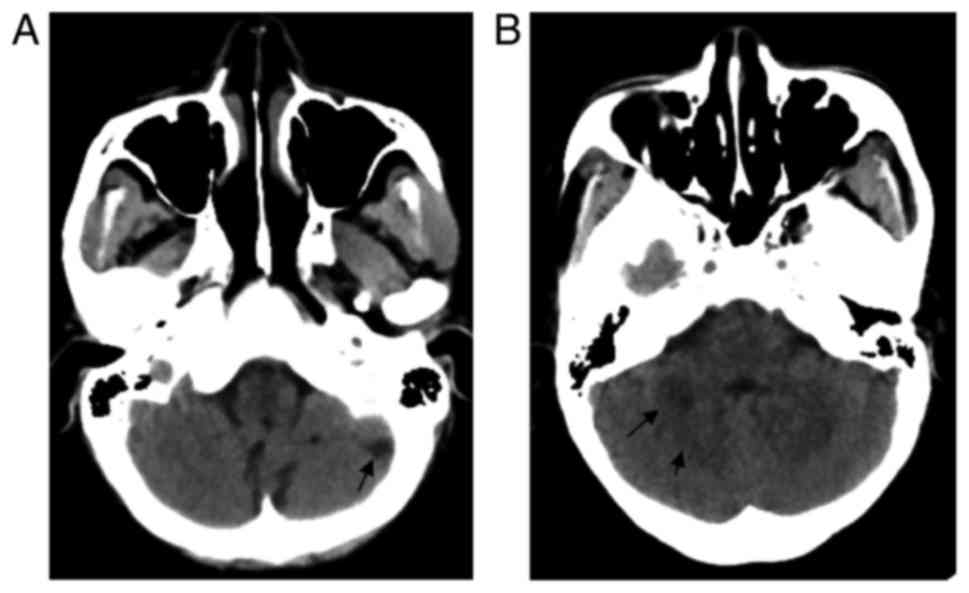
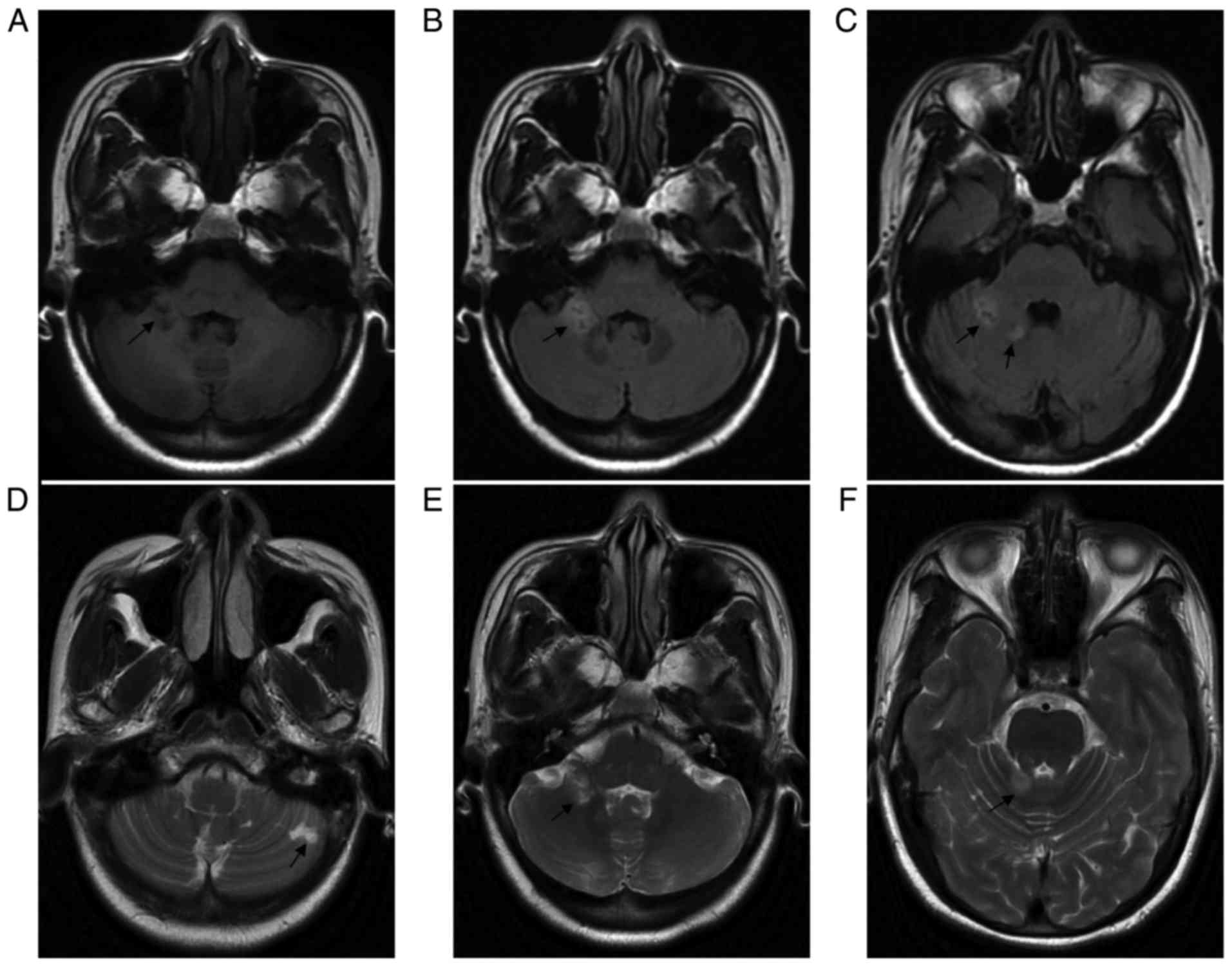
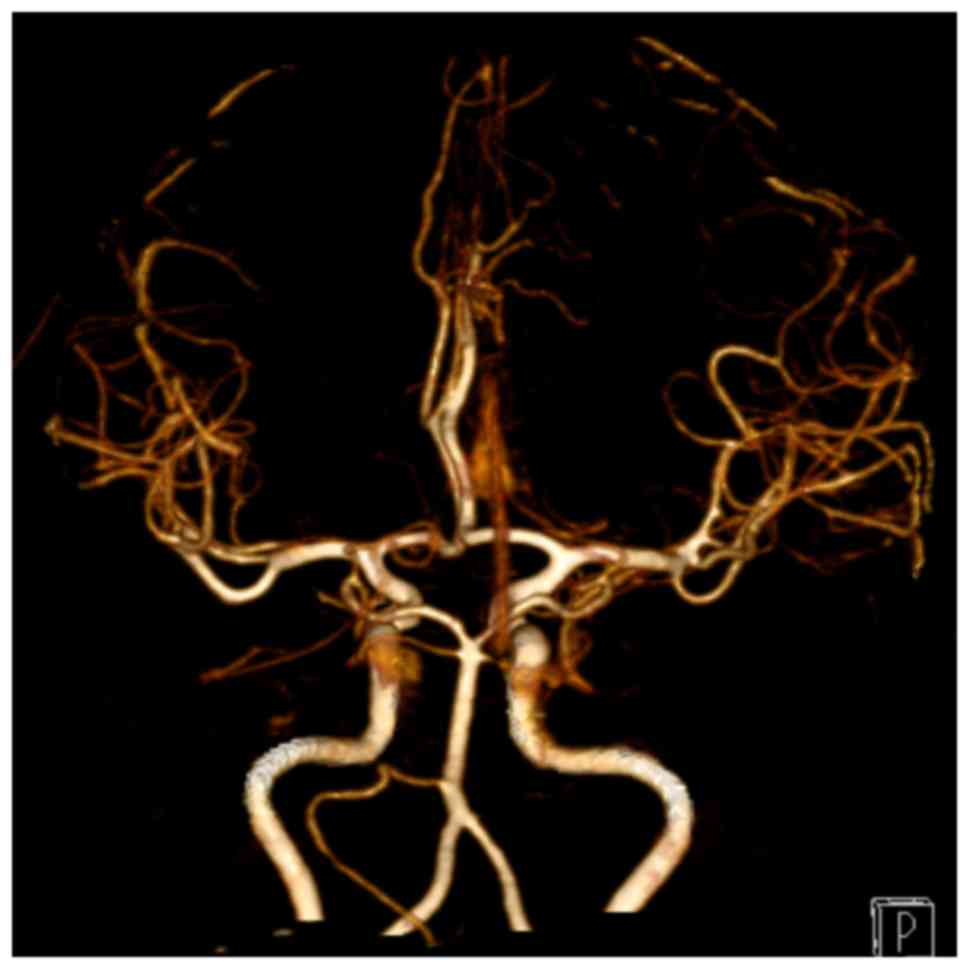
A computed tomography (CT) scan of the brain was performed immediately and indicated multiple low-density lesions on the bilateral sides of the cerebellar hemisphere and cerebellar vermis (Fig. 1). Magnetic resonance imaging (MRI) was performed to confirm ischemic lesions (Fig. 2), which was indicative of acute cerebral infarction of the right cerebellar hemisphere and cerebellar vermis, and a previous cerebral infarction of the left cerebellar hemisphere. CT angiography (CTA) was also performed to identify whether any of the neck and intracranial arteries were narrow; however, the results indicated that no obvious narrow artery was detectable (Fig. 3).

Figure 1.

Computed tomography revealed multiple low-density lesions on each side of the cerebellar hemisphere and cerebellar vermis. (A) Low density lesion on the left cerebellar hemisphere. (B) Low density lesions on the right cerebellar hemisphere.

Figure 2.

Magnetic resonance imaging of the brain indicated acute ischemic stroke in the right cerebellar hemisphere and cerebellar vermis, and a previous cerebral infarction in the left cerebellar hemisphere. (A) T1 weighted image revealed a low signal in the right cerebellar hemisphere. (B and C) T1 Flair weighted image showed multiple high signals in the right cerebellar hemisphere. (D) T2 weighted image revealed a high signal in the left cerebellar hemisphere. (E and F) T2 weighted image revealed several different high signals in the right cerebellar hemisphere.

Figure 3.

Computed tomography angiography indicated a complete Willis ring.

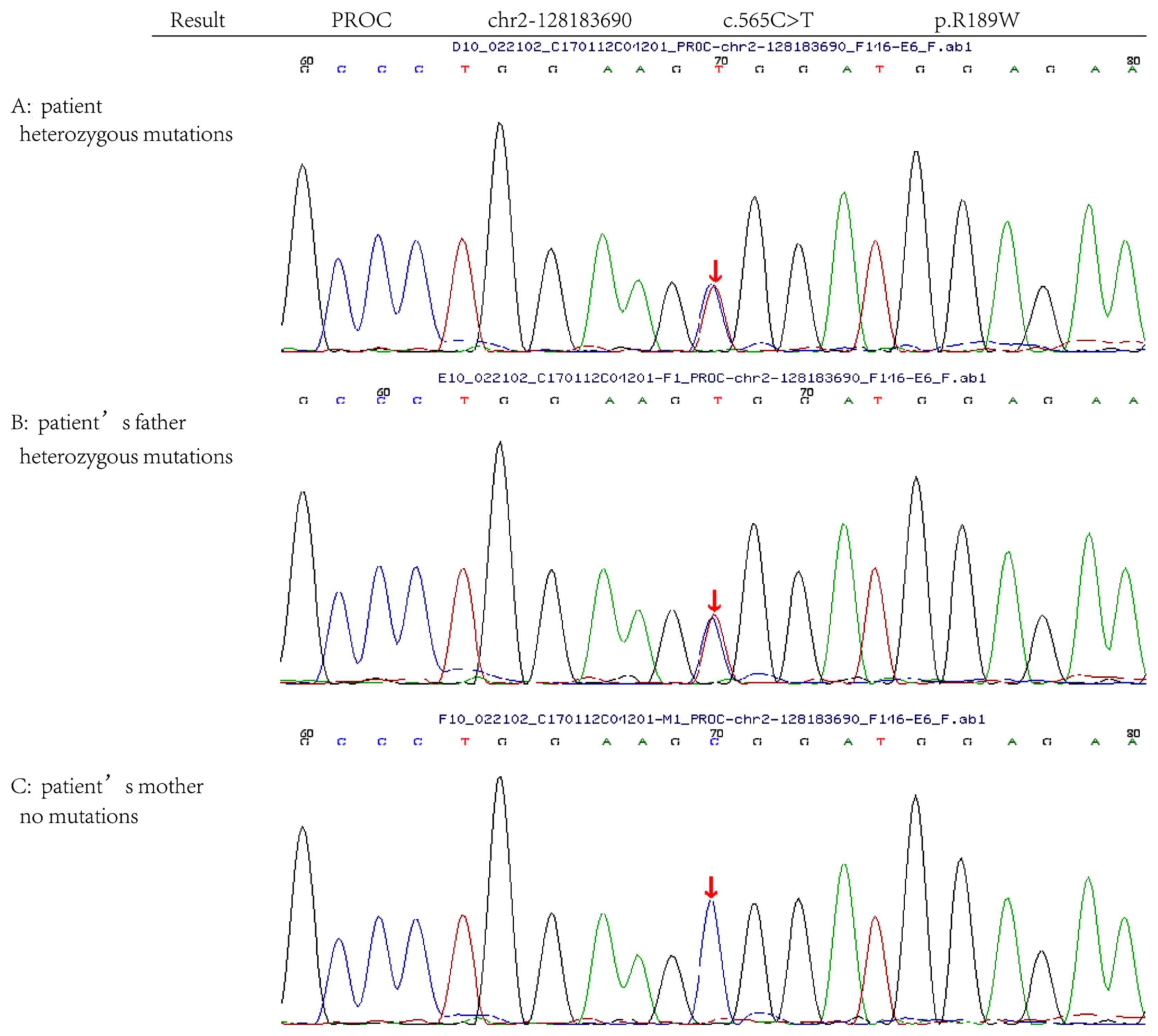
Considering that the patient had a previous history of portal vein and superior mesenteric artery occlusion, as well as asymptomatic strokes, thrombophilia (acquired or inherited) was considered. Further evidence supported this diagnosis. Protein C and protein S levels were detected, revealing a decreased level of protein C (57.6%; normal range, 70–140%), but normal levels of protein S (71.6%; normal range, 60–130%) and antithrombin III (92.4%; normal range, 75–125%). Gene sequencing analysis associated with thrombosis was performed by Guangzhou Kingmed Diagnostics Group Co., Ltd. (GuangZhou, China), which analyzed the pedigree as well as her mother and father, and revealed a heterozygous mutation c.565C>T on the PROC gene (Fig. 4).

Figure 4.

Family genealogical analysis on PROC gene of the patient and her parents. (A) Heterozygous nucleotide mutation on coding region no. 565 from cytosine to thymine on PROC gene was detected in the patient (c.565C> T). (B) Same heterozygous nucleotide mutation on coding region no. 565 from cytosine to thymine on PROC gene was detected in the patient's father (c.565C> T). (C) No nucleotide mutation on coding region no. 565 on PROC gene was detected in the patient's mother. PROC, protein C.

Once a diagnosis is available, a suitable treatment plan is essential. In the present case, the woman was taking the long-term anti-platelet agent aspirin. However, a recurrence of arterial thrombosis still occurred. Heparinization therapy replacing the oral anti-coagulant therapy was considered beneficial for preventing further thrombosis.

Discussion

Ischemic stroke is divided into five types according to the Trial of ORG 10172 in Acute Stroke Treatment classification: Large artery atherosclerosis, cardioembolism, small artery occlusion, and stroke of other determined and undetermined etiology (7). The present case study reported on a young woman who suffered from recurrent cerebellar infarction, which was confirmed by CT and MRI scans. Imaging data suggested that the patient had experienced multiple stroke lesions, including a previous cerebral infarction, which indicated that she had a previous asymptomatic stroke. CTA was performed, and no large artery stenosis was noted. Since the patient had a history of portal vein and superior mesenteric artery occlusion and recurrent stroke, the possibility of thrombophilia was considered. Protein C levels were decreased, and gene sequencing analysis of thrombosis-associated genes in the patient and her family members indicated one c.565C>T heterozygous mutation in the PROC gene in the patient and the patient's father. However, the mother had no mutation on the same locus, which indicated that the father was the source of the gene mutation. Nucleotide mutation on Chr2-128183690 of the PROC gene has been reported to be associated with protein C deficiency (8). In the Human Gene Mutation Database, there are >270 types of mutation on different loci of the PROC gene associated with hereditary protein C deficiency were recorded.

A clinical feature of protein C deficiency-associated thrombophilia is recurrent venous thrombosis. However, associated arterial thrombosis, particularly recurrent artery thrombosis, remains relatively rare. Numerous high-risk situations may cause a thrombotic event, including major surgery, oral contraceptives, pregnancy and co-existing rheumatoid immune diseases. The case of the present study had hyperthyroidism and SLE, which may have increased her risk of developing thrombosis. Accordingly, the clinical manifestation of protein C deficiency is variable among individuals and may be complicated by underlying diseases or risk factors. Members of the patient's family, including the patient's father who had the same PROC gene mutation may be asymptomatic. Further studies on pedigrees with PROC gene mutation-associated thrombophilia are required to explore the diversity of clinical episodes of thrombophilia among affected individuals.

A literature search of the PubMed database for studies on cases of stroke in young individuals (<45 years old) associated with protein C/S deficiency was then performed without any publishing time limits but restriction to English language. The Chinese National Knowledge Internet and Wangfang databases were also searched for relevant studies in Chinese. A total of 9 English case reports were acquired (9–17), but no relevant Chinese case report was retrieved. A total of 4 studies reported on patients without any history of disease or risk factors who suffered a stroke (9,12,15,17). Matsushita et al (13) reported on a young woman taking long-term oral anti-cancer drugs prior to experiencing a stroke. Risk factors were noted in several patients: A history of miscarriage or DVT (14), and accompanying transient ischemic attack (10) or myocardial infarction (16) were present in certain cases. Most patients had familiar protein C deficiency, but no further gene sequencing test was performed. To investigate the novelty of the mutation locus on the PROC gene identified in the present study, the single nucleotide polymorphism database (https://www.ncbi.nlm.nih.gov/snp/) was searched. A total of 4 public variants were retrieved using the NM_000312.3 transcript reference sequence: PROC:c.-50A>T, PROC:NM_000312.3:c.-50A>T, PROC:c.423G>T and PROC:NM_000312.3NM_000312.3:c.423G>T, not including the mutation locus identified in the present case. Therefore, in the present study, the c.565C>T heterozygous mutation on the PROC gene (chromosomal location, chr2-128183690; transcript reference no. NM_000312) was discovered in the patient and the patient's father for the first time, and pathogenicity analysis indicated a pathogenic nature, which further confirmed the diagnosis of hereditary protein C deficiency. However, additional study is required to discover the mechanisms of gene mutation.

In summary, the etiology and pathogenesis of stroke are complex, and hematologic abnormalities may contribute to stroke in young individuals. For young stroke patients, detection of protein C and protein S levels, as well as sequencing analysis of pathogenic genes and validation in their family, is recommended, even in the absence of a recorded family history of thrombotic events. Further prospective studies should be performed to explore the link between heterozygous protein C deficiency and ischemic stroke, as well as the underlying mechanisms.

Acknowledgements

Not applicable.

Funding

No funding was received.

Availability of data and materials

All data generated or analyzed during this study are included in this published article.

Authors' contributions

CQ designed the case report and revised the manuscript critically for important content. PL acquired and analyzed the data and drafted the manuscript.

Ethics approval and consent to participate

Not applicable.

Patient consent for publication

Patients provided consent for publication.

Competing interests

The authors declare that they have no competing interests.

References

1 

Strong K, Mathers C and Bonita R: Preventing stroke: Saving lives around the world. Lancet Neurol. 6:182–187. 2007. View Article : Google Scholar : PubMed/NCBI

2 

Warlow C, Sudlow C, Dennis M, Wardlaw J and Sandercock P: Stroke. Lancet. 362:1211–24. 2003. View Article : Google Scholar : PubMed/NCBI

3 

Abraham J, Rao PS, Inbaraj SG, Shetty G and Jose CJ: An epidemiological study of hemiplegia due to stroke in South India. Stroke. 1:477–481. 1970. View Article : Google Scholar : PubMed/NCBI

4 

Clouse LH and Comp PC: The regulation of hemostasis: The protein C system. N Engl J Med. 314:1298–1304. 1986. View Article : Google Scholar : PubMed/NCBI

5 

Kisiel W, Canfield WM, Ericsson LH and Davie EW: Anticoagulant properties of bovine plasma protein C following activation by thrombin. Biochemistry. 16:5824–5831. 1977. View Article : Google Scholar : PubMed/NCBI

6 

Sydes MR, Stephens RJ, Moore AR, Aird EG, Bidmead AM, Fallowfield LJ, Graham J, Griffiths S, Mayles WP, McGuire A, et al: Implementing the UK Medical Research Council (MRC) RT01 trial (ISRCTN 47772397): Methods and practicalities of a randomised controlled trial of conformal radiotherapy in men with localised prostate cancer. Radiother Oncol. 72:199–211. 2004. View Article : Google Scholar : PubMed/NCBI

7 

Adams H Jr and Biller J: Classification of subtypes of ischemic stroke: History of the trial of org 10172 in acute stroke treatment classification. Stroke. 46:e114–e117. 2015. View Article : Google Scholar : PubMed/NCBI

8 

Reitsma PH, Bernardi F, Doig RG, Gandrille S, Greengard JS, Ireland H, Krawczak M, Lind B, Long GL, Poort SR, et al: Protein C deficiency: A database of mutations, 1995 update. On behalf of the subcommittee on plasma coagulation inhibitors of the scientific and standardization committee of the ISTH. Thromb Haemost. 73:876–889. 1995. View Article : Google Scholar : PubMed/NCBI

9 

Deguchi K, Tsukada T, Iwasaki E, Wada H, Murashima S, Miyazaki M and Shirakawa S: Late-onset homozygous protein C deficiency manifesting cerebral infarction as the first symptom at age 27. Intern Med. 31:922–925. 1992. View Article : Google Scholar : PubMed/NCBI

10 

Kato H, Shirahama M, Ohmori K and Sunaga T: Cerebral infarction in a young adult associated with protein C deficiency. A case report. Angiology. 46:169–173. 1995. View Article : Google Scholar : PubMed/NCBI

11 

Kazui S, Kuriyama Y, Sakata T, Hiroki M, Miyashita K and Sawada T: Accelerated brain infarction in hypertension complicated by hereditary heterozygous protein C deficiency. Stroke. 24:2097–2103. 1993. View Article : Google Scholar : PubMed/NCBI

12 

Martinez HR, Rangel-Guerra RA and Marfil LJ: Ischemic stroke due to deficiency of coagulation inhibitors. Report of 10 young adults. Stroke. 24:19–25. 1993. View Article : Google Scholar : PubMed/NCBI

13 

Matsushita K, Kuriyama Y, Sawada T and Uchida K: Cerebral infarction associated with protein C deficiency. Stroke. 23:108–111. 1992. View Article : Google Scholar : PubMed/NCBI

14 

Okon MA and Spooner SF: Protein C deficiency and stroke in pregnancy. J Obstet Gynaecol. 18:182–183. 1998. View Article : Google Scholar : PubMed/NCBI

15 

Sultan A and Malik IH: Recurrent cerebral infarctions in a young patient: Combined protein C and S deficiencies. J Coll Physicians Surg Pak. 23:813–814. 2013.PubMed/NCBI

16 

Tiong IY, Alkotob ML and Ghaffari S: Protein C deficiency manifesting as an acute myocardial infarction and ischaemic stroke. Heart. 89:E72003. View Article : Google Scholar : PubMed/NCBI

17 

Yang FC, Hsu CH, Lin JC, Chen CY and Lee JT: Inherited protein C deficiency with acute ischemic stroke in a young adult: A case report. Blood Coagul Fibrinolysis. 19:601–604. 2008. View Article : Google Scholar : PubMed/NCBI

Related Articles

  • Abstract
  • View
  • Download
  • Twitter
Copy and paste a formatted citation
Spandidos Publications style
Li P and Qin C: Recurrent cerebellar infarction associated with hereditary heterozygous protein C deficiency in a 35‑year‑old woman: A case report and genetic study on the pedigree. Exp Ther Med 16: 2677-2681, 2018.
APA
Li, P., & Qin, C. (2018). Recurrent cerebellar infarction associated with hereditary heterozygous protein C deficiency in a 35‑year‑old woman: A case report and genetic study on the pedigree. Experimental and Therapeutic Medicine, 16, 2677-2681. https://doi.org/10.3892/etm.2018.6518
MLA
Li, P., Qin, C."Recurrent cerebellar infarction associated with hereditary heterozygous protein C deficiency in a 35‑year‑old woman: A case report and genetic study on the pedigree". Experimental and Therapeutic Medicine 16.3 (2018): 2677-2681.
Chicago
Li, P., Qin, C."Recurrent cerebellar infarction associated with hereditary heterozygous protein C deficiency in a 35‑year‑old woman: A case report and genetic study on the pedigree". Experimental and Therapeutic Medicine 16, no. 3 (2018): 2677-2681. https://doi.org/10.3892/etm.2018.6518
Copy and paste a formatted citation
x
Spandidos Publications style
Li P and Qin C: Recurrent cerebellar infarction associated with hereditary heterozygous protein C deficiency in a 35‑year‑old woman: A case report and genetic study on the pedigree. Exp Ther Med 16: 2677-2681, 2018.
APA
Li, P., & Qin, C. (2018). Recurrent cerebellar infarction associated with hereditary heterozygous protein C deficiency in a 35‑year‑old woman: A case report and genetic study on the pedigree. Experimental and Therapeutic Medicine, 16, 2677-2681. https://doi.org/10.3892/etm.2018.6518
MLA
Li, P., Qin, C."Recurrent cerebellar infarction associated with hereditary heterozygous protein C deficiency in a 35‑year‑old woman: A case report and genetic study on the pedigree". Experimental and Therapeutic Medicine 16.3 (2018): 2677-2681.
Chicago
Li, P., Qin, C."Recurrent cerebellar infarction associated with hereditary heterozygous protein C deficiency in a 35‑year‑old woman: A case report and genetic study on the pedigree". Experimental and Therapeutic Medicine 16, no. 3 (2018): 2677-2681. https://doi.org/10.3892/etm.2018.6518
Follow us
  • Twitter
  • LinkedIn
  • Facebook
About
  • Spandidos Publications
  • Careers
  • Cookie Policy
  • Privacy Policy
How can we help?
  • Help
  • Live Chat
  • Contact
  • Email to our Support Team