Spandidos Publications Logo
  • About
    • About Spandidos
    • Aims and Scopes
    • Abstracting and Indexing
    • Editorial Policies
    • Reprints and Permissions
    • Job Opportunities
    • Terms and Conditions
    • Contact
  • Journals
    • All Journals
    • Oncology Letters
      • Oncology Letters
      • Information for Authors
      • Editorial Policies
      • Editorial Board
      • Aims and Scope
      • Abstracting and Indexing
      • Bibliographic Information
      • Archive
    • International Journal of Oncology
      • International Journal of Oncology
      • Information for Authors
      • Editorial Policies
      • Editorial Board
      • Aims and Scope
      • Abstracting and Indexing
      • Bibliographic Information
      • Archive
    • Molecular and Clinical Oncology
      • Molecular and Clinical Oncology
      • Information for Authors
      • Editorial Policies
      • Editorial Board
      • Aims and Scope
      • Abstracting and Indexing
      • Bibliographic Information
      • Archive
    • Experimental and Therapeutic Medicine
      • Experimental and Therapeutic Medicine
      • Information for Authors
      • Editorial Policies
      • Editorial Board
      • Aims and Scope
      • Abstracting and Indexing
      • Bibliographic Information
      • Archive
    • International Journal of Molecular Medicine
      • International Journal of Molecular Medicine
      • Information for Authors
      • Editorial Policies
      • Editorial Board
      • Aims and Scope
      • Abstracting and Indexing
      • Bibliographic Information
      • Archive
    • Biomedical Reports
      • Biomedical Reports
      • Information for Authors
      • Editorial Policies
      • Editorial Board
      • Aims and Scope
      • Abstracting and Indexing
      • Bibliographic Information
      • Archive
    • Oncology Reports
      • Oncology Reports
      • Information for Authors
      • Editorial Policies
      • Editorial Board
      • Aims and Scope
      • Abstracting and Indexing
      • Bibliographic Information
      • Archive
    • Molecular Medicine Reports
      • Molecular Medicine Reports
      • Information for Authors
      • Editorial Policies
      • Editorial Board
      • Aims and Scope
      • Abstracting and Indexing
      • Bibliographic Information
      • Archive
    • World Academy of Sciences Journal
      • World Academy of Sciences Journal
      • Information for Authors
      • Editorial Policies
      • Editorial Board
      • Aims and Scope
      • Abstracting and Indexing
      • Bibliographic Information
      • Archive
    • International Journal of Functional Nutrition
      • International Journal of Functional Nutrition
      • Information for Authors
      • Editorial Policies
      • Editorial Board
      • Aims and Scope
      • Abstracting and Indexing
      • Bibliographic Information
      • Archive
    • International Journal of Epigenetics
      • International Journal of Epigenetics
      • Information for Authors
      • Editorial Policies
      • Editorial Board
      • Aims and Scope
      • Abstracting and Indexing
      • Bibliographic Information
      • Archive
    • Medicine International
      • Medicine International
      • Information for Authors
      • Editorial Policies
      • Editorial Board
      • Aims and Scope
      • Abstracting and Indexing
      • Bibliographic Information
      • Archive
  • Articles
  • Information
    • Information for Authors
    • Information for Reviewers
    • Information for Librarians
    • Information for Advertisers
    • Conferences
  • Language Editing
Spandidos Publications Logo
  • About
    • About Spandidos
    • Aims and Scopes
    • Abstracting and Indexing
    • Editorial Policies
    • Reprints and Permissions
    • Job Opportunities
    • Terms and Conditions
    • Contact
  • Journals
    • All Journals
    • Biomedical Reports
      • Information for Authors
      • Editorial Policies
      • Editorial Board
      • Aims and Scope
      • Abstracting and Indexing
      • Bibliographic Information
      • Archive
    • Experimental and Therapeutic Medicine
      • Information for Authors
      • Editorial Policies
      • Editorial Board
      • Aims and Scope
      • Abstracting and Indexing
      • Bibliographic Information
      • Archive
    • International Journal of Epigenetics
      • Information for Authors
      • Editorial Policies
      • Editorial Board
      • Aims and Scope
      • Abstracting and Indexing
      • Bibliographic Information
      • Archive
    • International Journal of Functional Nutrition
      • Information for Authors
      • Editorial Policies
      • Editorial Board
      • Aims and Scope
      • Abstracting and Indexing
      • Bibliographic Information
      • Archive
    • International Journal of Molecular Medicine
      • Information for Authors
      • Editorial Policies
      • Editorial Board
      • Aims and Scope
      • Abstracting and Indexing
      • Bibliographic Information
      • Archive
    • International Journal of Oncology
      • Information for Authors
      • Editorial Policies
      • Editorial Board
      • Aims and Scope
      • Abstracting and Indexing
      • Bibliographic Information
      • Archive
    • Medicine International
      • Information for Authors
      • Editorial Policies
      • Editorial Board
      • Aims and Scope
      • Abstracting and Indexing
      • Bibliographic Information
      • Archive
    • Molecular and Clinical Oncology
      • Information for Authors
      • Editorial Policies
      • Editorial Board
      • Aims and Scope
      • Abstracting and Indexing
      • Bibliographic Information
      • Archive
    • Molecular Medicine Reports
      • Information for Authors
      • Editorial Policies
      • Editorial Board
      • Aims and Scope
      • Abstracting and Indexing
      • Bibliographic Information
      • Archive
    • Oncology Letters
      • Information for Authors
      • Editorial Policies
      • Editorial Board
      • Aims and Scope
      • Abstracting and Indexing
      • Bibliographic Information
      • Archive
    • Oncology Reports
      • Information for Authors
      • Editorial Policies
      • Editorial Board
      • Aims and Scope
      • Abstracting and Indexing
      • Bibliographic Information
      • Archive
    • World Academy of Sciences Journal
      • Information for Authors
      • Editorial Policies
      • Editorial Board
      • Aims and Scope
      • Abstracting and Indexing
      • Bibliographic Information
      • Archive
  • Articles
  • Information
    • For Authors
    • For Reviewers
    • For Librarians
    • For Advertisers
    • Conferences
  • Language Editing
Login Register Submit
  • This site uses cookies
  • You can change your cookie settings at any time by following the instructions in our Cookie Policy. To find out more, you may read our Privacy Policy.

    I agree
Search articles by DOI, keyword, author or affiliation
Search
Advanced Search
presentation
Experimental and Therapeutic Medicine
Join Editorial Board Propose a Special Issue
Print ISSN: 1792-0981 Online ISSN: 1792-1015
Journal Cover
February-2019 Volume 17 Issue 2

Full Size Image

Sign up for eToc alerts
Recommend to Library

Journals

International Journal of Molecular Medicine

International Journal of Molecular Medicine

International Journal of Molecular Medicine is an international journal devoted to molecular mechanisms of human disease.

International Journal of Oncology

International Journal of Oncology

International Journal of Oncology is an international journal devoted to oncology research and cancer treatment.

Molecular Medicine Reports

Molecular Medicine Reports

Covers molecular medicine topics such as pharmacology, pathology, genetics, neuroscience, infectious diseases, molecular cardiology, and molecular surgery.

Oncology Reports

Oncology Reports

Oncology Reports is an international journal devoted to fundamental and applied research in Oncology.

Experimental and Therapeutic Medicine

Experimental and Therapeutic Medicine

Experimental and Therapeutic Medicine is an international journal devoted to laboratory and clinical medicine.

Oncology Letters

Oncology Letters

Oncology Letters is an international journal devoted to Experimental and Clinical Oncology.

Biomedical Reports

Biomedical Reports

Explores a wide range of biological and medical fields, including pharmacology, genetics, microbiology, neuroscience, and molecular cardiology.

Molecular and Clinical Oncology

Molecular and Clinical Oncology

International journal addressing all aspects of oncology research, from tumorigenesis and oncogenes to chemotherapy and metastasis.

World Academy of Sciences Journal

World Academy of Sciences Journal

Multidisciplinary open-access journal spanning biochemistry, genetics, neuroscience, environmental health, and synthetic biology.

International Journal of Functional Nutrition

International Journal of Functional Nutrition

Open-access journal combining biochemistry, pharmacology, immunology, and genetics to advance health through functional nutrition.

International Journal of Epigenetics

International Journal of Epigenetics

Publishes open-access research on using epigenetics to advance understanding and treatment of human disease.

Medicine International

Medicine International

An International Open Access Journal Devoted to General Medicine.

Journal Cover
February-2019 Volume 17 Issue 2

Full Size Image

Sign up for eToc alerts
Recommend to Library

  • Article
  • Citations
    • Cite This Article
    • Download Citation
    • Create Citation Alert
    • Remove Citation Alert
    • Cited By
  • Similar Articles
    • Related Articles (in Spandidos Publications)
    • Similar Articles (Google Scholar)
    • Similar Articles (PubMed)
  • Download PDF
  • Download XML
  • View XML
Article Open Access

miR‑21 enhances the protective effect of loperamide on rat cardiomyocytes against hypoxia/reoxygenation, reactive oxygen species production and apoptosis via regulating Akap8 and Bard1 expression

  • Authors:
    • Hong Shen
    • Zhifeng Yao
    • Weipeng Zhao
    • Yaping Zhang
    • Chenling Yao
    • Chaoyang Tong
  • View Affiliations / Copyright

    Affiliations: Department of Emergency Medicine, Zhongshan Hospital, Fudan University, Shanghai 200032, P.R. China, Shanghai Institute of Cardiology, Zhongshan Hospital, Fudan University, Shanghai 200032, P.R. China
    Copyright: © Shen et al. This is an open access article distributed under the terms of Creative Commons Attribution License.
  • Pages: 1312-1320
    |
    Published online on: December 5, 2018
       https://doi.org/10.3892/etm.2018.7047
  • Expand metrics +
Metrics: Total Views: 0 (Spandidos Publications: | PMC Statistics: )
Metrics: Total PDF Downloads: 0 (Spandidos Publications: | PMC Statistics: )
Cited By (CrossRef): 0 citations Loading Articles...

This article is mentioned in:


Abstract

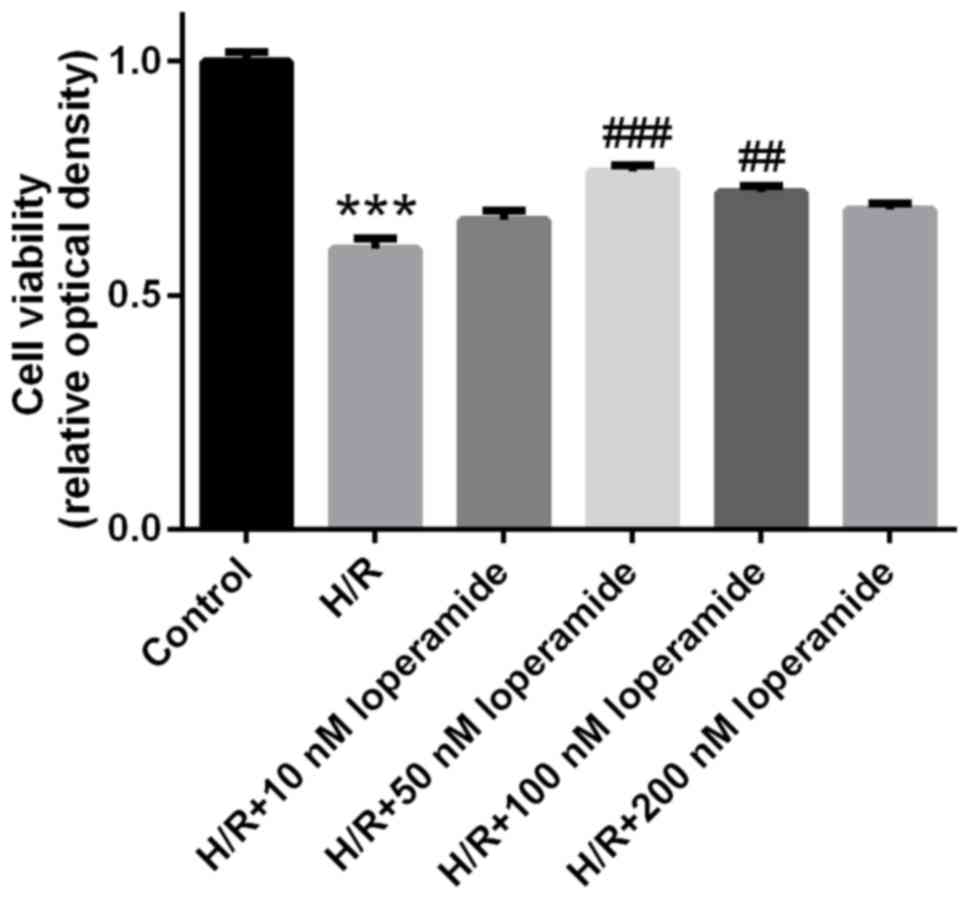
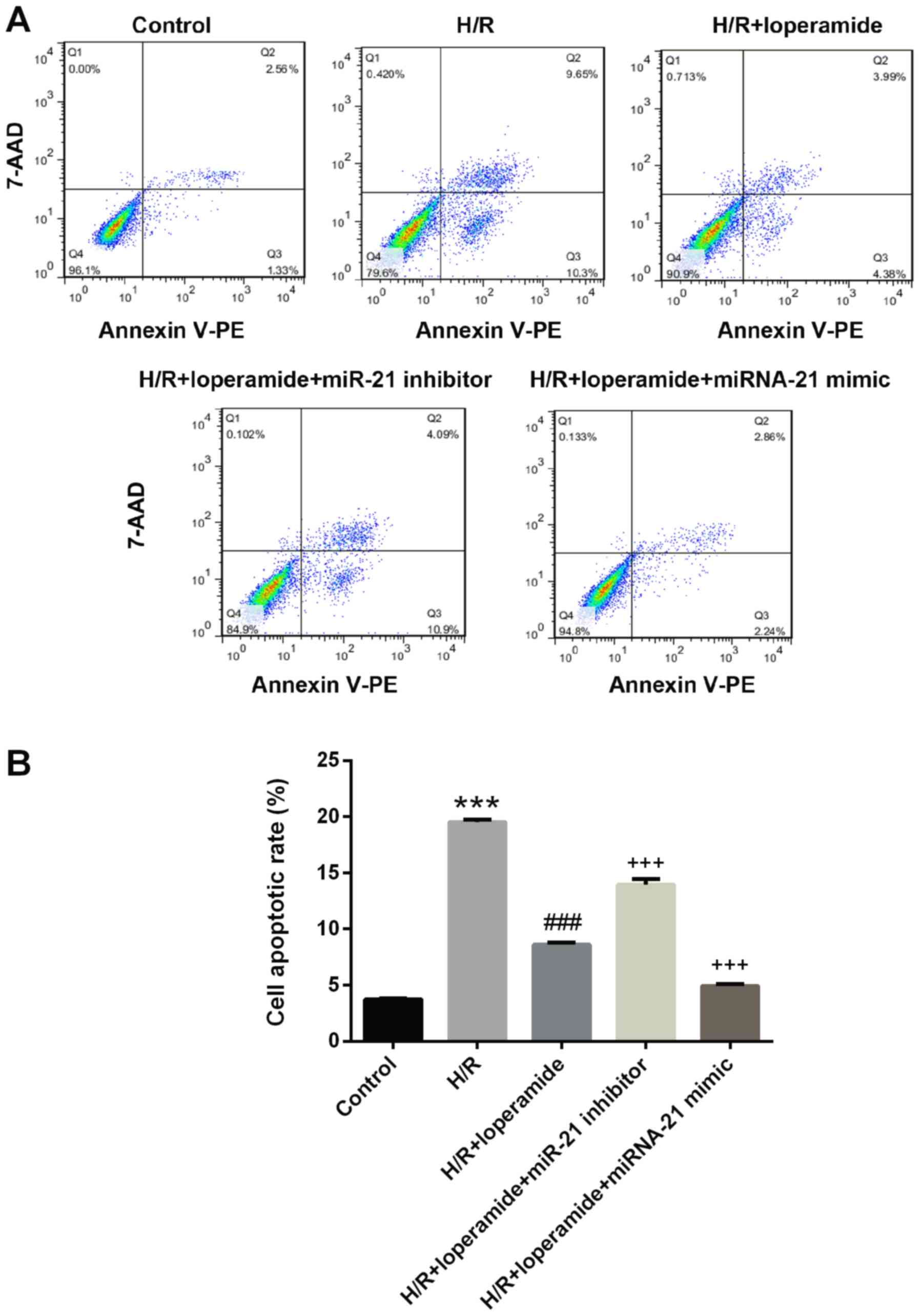
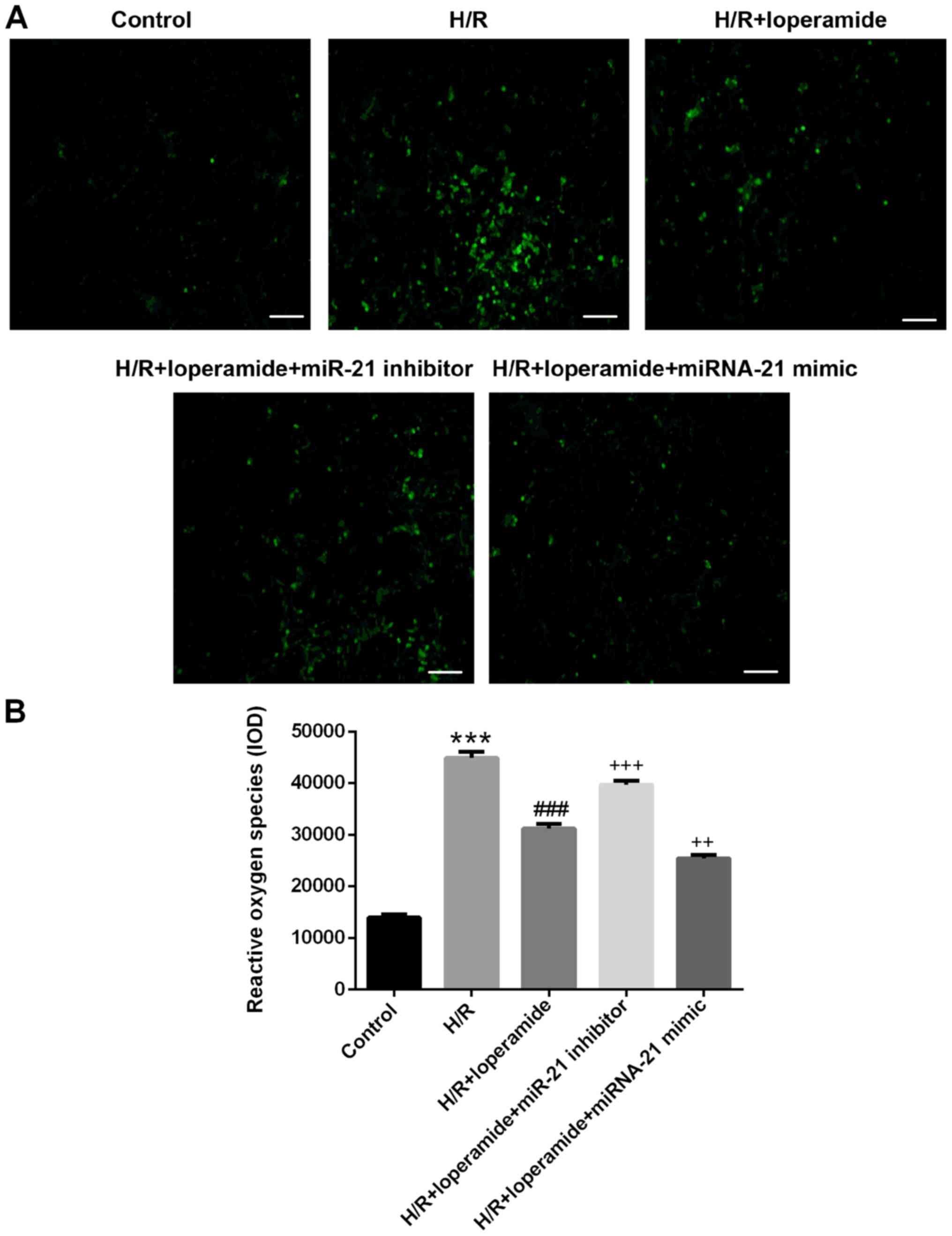
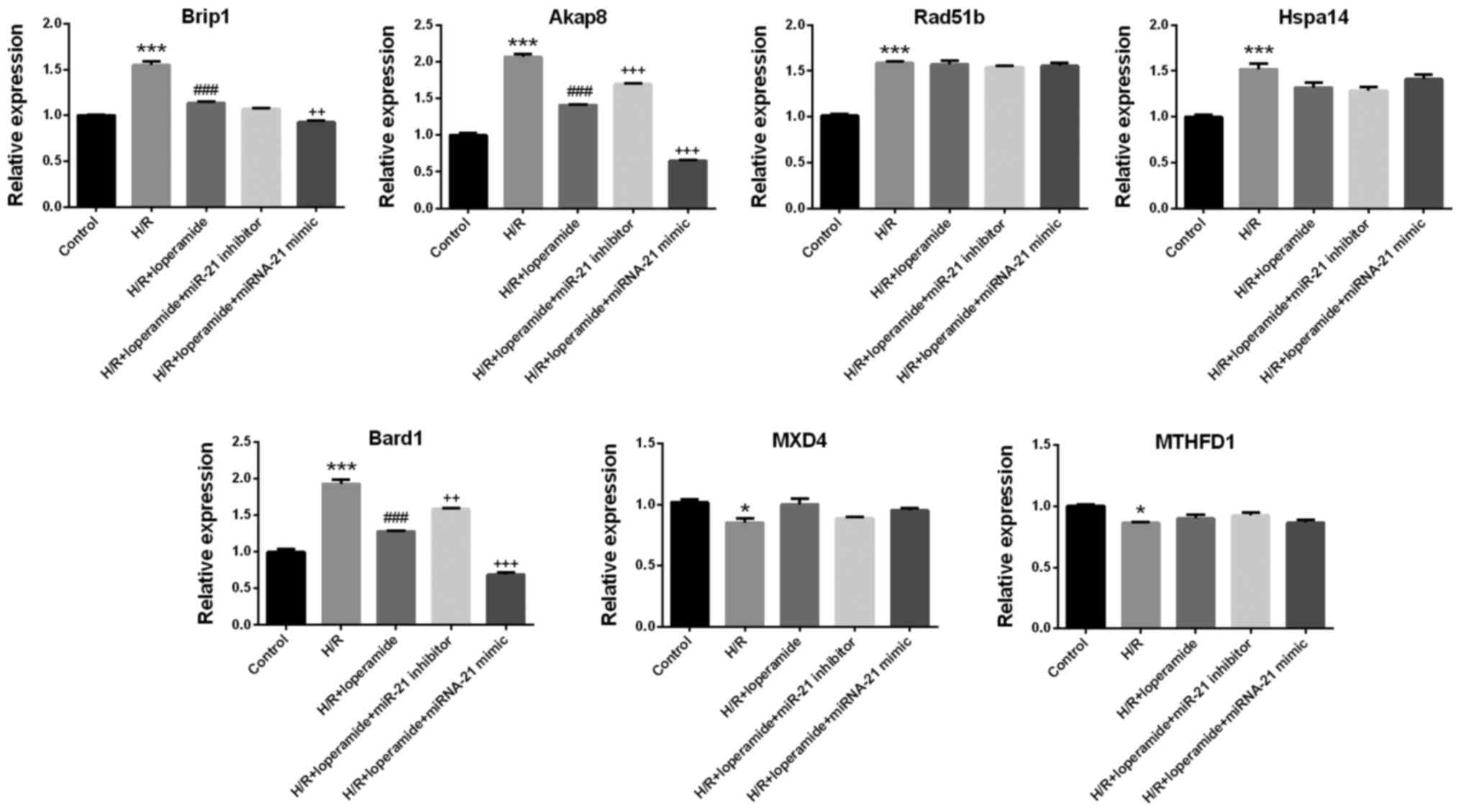
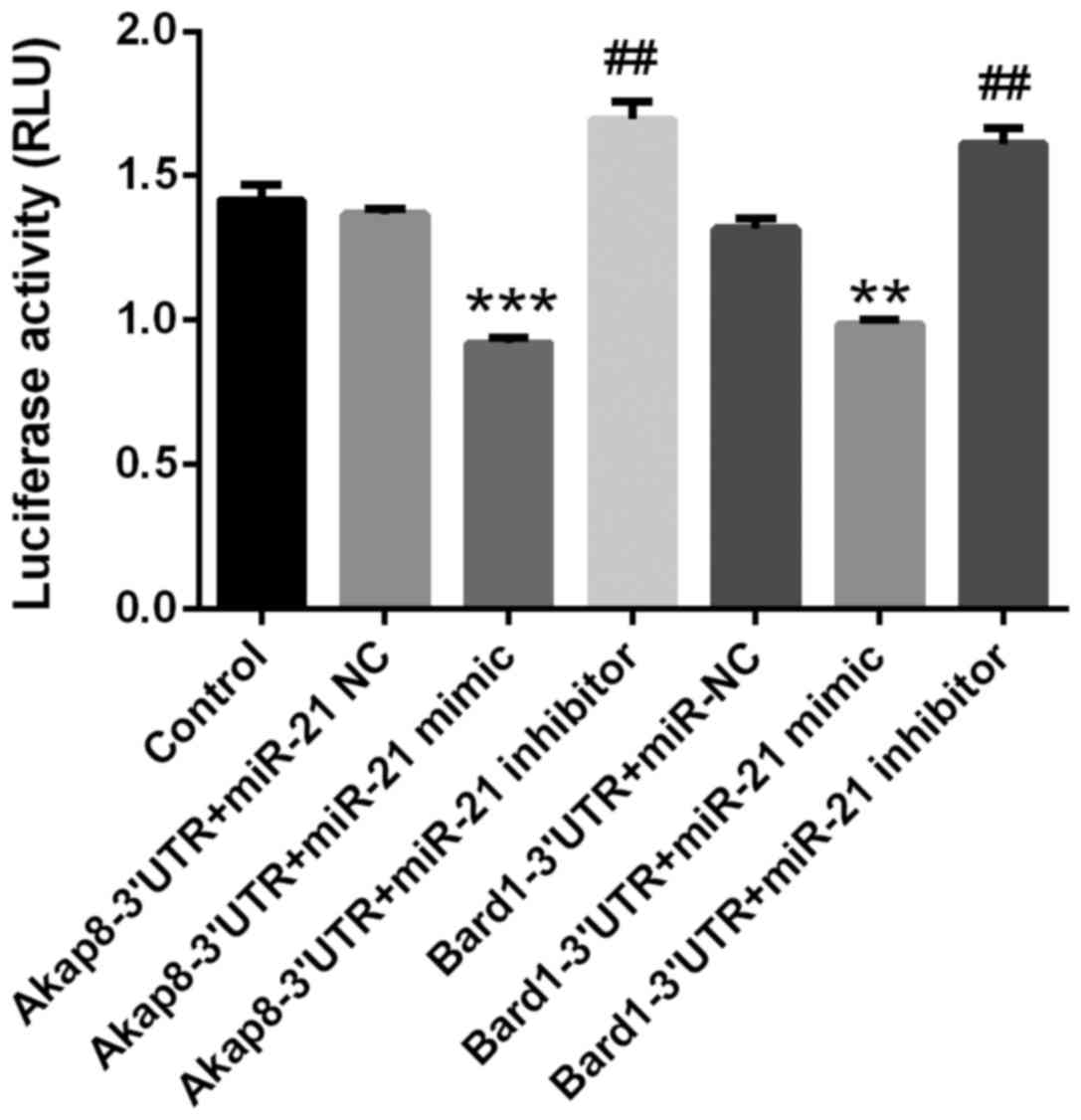
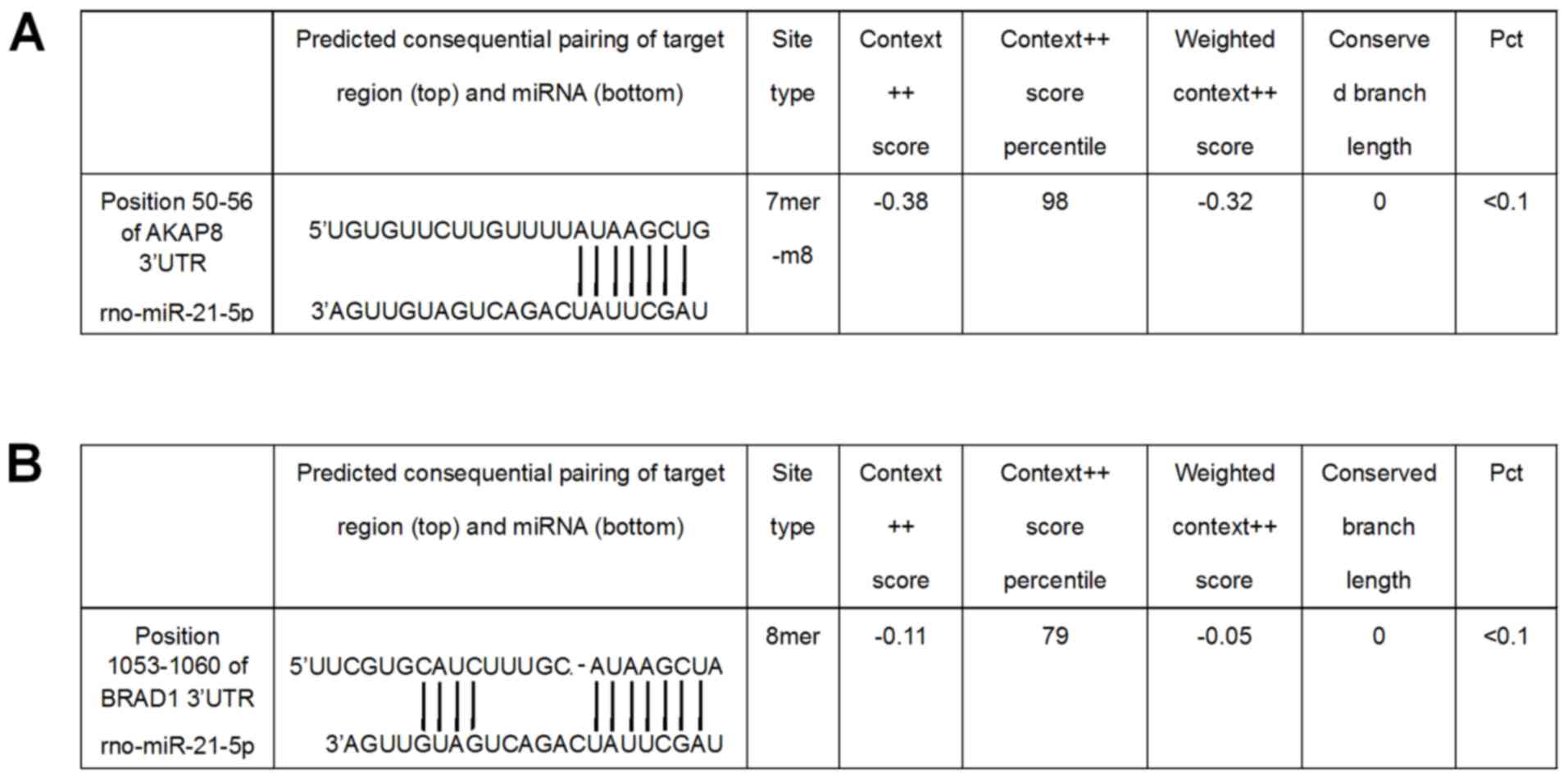
Effective therapies to reduce ischemia/reperfusion and hypoxia/reoxygenation injury are currently lacking. Furthermore, the effects of loperamide and microRNA (miR)‑21 on hypoxia/reoxygenation injury of cardiomyocytes have remained to be elucidated. Therefore, the present study aimed to investigate the effect of loperamide and miR‑21 on cardiomyocytes during hypoxia/reoxygenation injury, and to explore the underlying molecular mechanisms. H9c2 rat cardiomyocytes were pre‑treated with loperamide prior to hypoxia/reoxygenation. The viability of H9c2 cells was measured with a cell counting kit 8 and apoptosis was detected with an Annexin V‑phycoerythrin/7‑aminoactinomycin D apoptosis kit. Furthermore, reactive oxygen species were detected with a specific kit. Genes regulated by miR‑21 were screened with an mRNA chip and confirmed using reverse‑transcription quantitative polymerase chain reaction analysis. The direct targeting relationship of miR‑21 with certain mRNAs was then confirmed using a Dual‑Luciferase Reporter Assay system. The results indicated that the apoptotic rate and reactive oxygen species levels in rat cardiomyocytes were markedly increased after hypoxia/reoxygenation treatment. Pre‑treatment with loperamide significantly protected H9c2 cells against apoptosis and reactive oxygen species production after hypoxia/reoxygenation. The protection was markedly decreased by miR‑21 inhibitor and enhanced by miR‑21 mimics. Screening for genes associated with cardiomyocyte apoptosis revealed that the relative expression of A‑kinase anchoring protein 8 (Akap8) and BRCA1 associated RING domain 1 (Bard1) was consistent with the experimental results on apoptosis and reactive oxygen species. Compared with the group treated by hypoxia/reoxygenation alone, pre‑treatment with loperamide markedly decreased the expression of BRCA1‑interacting protein C‑terminal helicase 1, Akap8 and Bard1 after hypoxia/reoxygenation. The decrease in the expression of Akap8 and Bard1 was markedly attenuated by miR‑21 inhibitor and enhanced by miR‑21 mimics. miR‑21 mimics directly targeted the 3'‑untranslated region (UTR) of Akap8 and Bard1 mRNA to thereby decrease their expression. In conclusion, the protection of rat cardiomyocytes against hypoxia/reoxygenation‑induced apoptosis and reactive oxygen species production by loperamide was markedly enhanced by miR‑21. miR‑21 directly targets the 3'‑UTR of Akap8 and Bard1 mRNA and enhances the inhibitory effects of loperamide on Akap8 and Bard1 expression in rat cardiomyocytes after hypoxia/reoxygenation.
View Figures

Figure 1

Figure 2

Figure 3

Figure 4

Figure 5

Figure 6

View References

1 

White HD and Chew DP: Acute myocardial infarction. Lancet. 372:570–584. 2008. View Article : Google Scholar : PubMed/NCBI

2 

O'Gara PT, Kushner FG, Ascheim DD, Casey DE Jr, Chung MK, de Lemos JA, Ettinger SM, Fang JC, Fesmire FM, Franklin BA, et al: 2013 ACCF/AHA guideline for the management of ST-elevation myocardial infarction: A report of the American College of Cardiology Foundation/American Heart Association Task Force on Practice Guidelines. Circulation. 127:e362–e425. 2013.PubMed/NCBI

3 

Fernández-Jiménez R, García-Prieto J, Sánchez-González J, Agüero J, López-Martín GJ, Galán-Arriola C, Molina-Iracheta A, Doohan R, Fuster V and Ibáñez B: Pathophysiology underlying the bimodal edema phenomenon after myocardial ischemia/reperfusion. J Am Coll Cardiol. 66:816–828. 2015. View Article : Google Scholar : PubMed/NCBI

4 

Bolli R, Becker L, Gross G, Mentzer R Jr, Balshaw D and Lathrop DA: NHLBI Working Group on the Translation of Therapies for Protecting the Heart from Ischemia: Myocardial protection at a crossroads: The need for translation into clinical therapy. Circ Res. 95:125–134. 2004. View Article : Google Scholar : PubMed/NCBI

5 

Cannon RO III: Mechanisms, management and future directions for reperfusion injury after acute myocardial infarction. Nat Clin Pract Cardiovasc Med. 2:88–94. 2005. View Article : Google Scholar : PubMed/NCBI

6 

Ibáñez B, Heusch G, Ovize M and Van de Werf F: Evolving therapies for myocardial ischemia/reperfusion injury. J Am Coll Cardiol. 65:1454–1471. 2015. View Article : Google Scholar : PubMed/NCBI

7 

MacDonald R, Heiner J, Villarreal J and Strote J: Loperamide dependence and abuse. BMJ Case Rep. 2015:bcr20152097052015. View Article : Google Scholar : PubMed/NCBI

8 

Baker DE: Loperamide: A pharmacological review. Rev Gastroenterol Disord. 7 Suppl 3:S11–S18. 2007.PubMed/NCBI

9 

Kalgutkar AS and Nguyen HT: Identification of an N-methyl-4-phenylpyridinium-like metabolite of the antidiarrheal agent loperamide in human liver microsomes: Underlying reason(s) for the lack of neurotoxicity despite the bioactivation event. Drug Metab Dispos. 32:943–952. 2004.PubMed/NCBI

10 

Wang XH, Zeng JF, Lin C and Chen SB: Effects of morphine and sufentanil preconditioning against myocardial ischemic-reperfusion injury in rabbits. Int J Clin Exp Med. 8:15692–15699. 2015.PubMed/NCBI

11 

Bartel DP: MicroRNAs: Genomics, biogenesis, mechanism, and function. Cell. 116:281–297. 2004. View Article : Google Scholar : PubMed/NCBI

12 

Asangani IA, Rasheed SA, Nikolova DA, Leupold JH, Colburn NH, Post S and Allgayer H: MicroRNA-21 (miR-21) post-transcriptionally downregulates tumor suppressor Pdcd4 and stimulates invasion, intravasation and metastasis in colorectal cancer. Oncogene. 27:2128–2136. 2008. View Article : Google Scholar : PubMed/NCBI

13 

Frankel LB, Christoffersen NR, Jacobsen A, Lindow M, Krogh A and Lund AH: Programmed cell death 4 (PDCD4) is an important functional target of the microRNA miR-21 in breast cancer cells. J Biol Chem. 283:1026–1033. 2008. View Article : Google Scholar : PubMed/NCBI

14 

Meng F, Henson R, Wehbe-Janek H, Ghoshal K, Jacob ST and Patel T: MicroRNA-21 regulates expression of the PTEN tumor suppressor gene in human hepatocellular cancer. Gastroenterology. 133:647–658. 2007. View Article : Google Scholar : PubMed/NCBI

15 

Si ML, Zhu S, Wu H, Lu Z, Wu F and Mo YY: miR-21-mediated tumor growth. Oncogene. 26:2799–2803. 2007. View Article : Google Scholar : PubMed/NCBI

16 

Zhu S, Si ML, Wu H and Mo YY: MicroRNA-21 targets the tumor suppressor gene tropomyosin 1 (TPM1). J Biol Chem. 282:14328–14336. 2007. View Article : Google Scholar : PubMed/NCBI

17 

Lu X, Sun C, Zheng D, Liu R, Wei X and Wu Z: [The miR-21 attenuates hepatocyte hypoxia/reoxygenation injury via inhibiting PTEN/PI3K/AKT signaling pathway]. Xi Bao Yu Fen Zi Mian Yi Xue Za Zhi. 33:497–502. 2017.(In Chinese). PubMed/NCBI

18 

Zhang Y, He S, Du X, Jiang Y, Tian B and Xu S: Rapamycin suppresses hypoxia/reoxygenation-induced islet injury by up-regulation of miR-21 via PI3K/Akt signalling pathway. Cell Prolif. 50:2017. View Article : Google Scholar

19 

Tee YT, Han CP, Ko JL, Chen GD, Yang SF, Chen SC, Tsai HJ, Lin LY and Wang PH: Evaluation of matrix metalloproteinase 2 expression in cervical carcinogenesis using tissue array and integrated optical density for immunoreactivity. Reprod Sci. 14:719–726. 2007. View Article : Google Scholar : PubMed/NCBI

20 

Kanehisa M, Goto S, Kawashima S, Okuno Y and Hattori M: The KEGG resource for deciphering the genome. Nucleic Acids Res. 32:(Database Issue). D277–D280. 2004. View Article : Google Scholar : PubMed/NCBI

21 

Yi M, Horton JD, Cohen JC, Hobbs HH and Stephens RM: WholePathwayScope: A comprehensive pathway-based analysis tool for high-throughput data. BMC Bioinformatics. 7:302006. View Article : Google Scholar : PubMed/NCBI

22 

Draghici S, Khatri P, Tarca AL, Amin K, Done A, Voichita C, Georgescu C and Romero R: A systems biology approach for pathway level analysis. Genome Res. 17:1537–1545. 2007. View Article : Google Scholar : PubMed/NCBI

23 

Livak KJ and Schmittgen TD: Analysis of relative gene expression data using real-time quantitative PCR and the 2(-Delta Delta C(T)) method. Methods. 25:402–408. 2001. View Article : Google Scholar : PubMed/NCBI

24 

Xia M, Huang R, Guo V, Southall N, Cho MH, Inglese J, Austin CP and Nirenberg M: Identification of compounds that potentiate CREB signaling as possible enhancers of long-term memory. Proc Natl Acad Sci USA. 106:2412–2417. 2009. View Article : Google Scholar : PubMed/NCBI

25 

Brunzell DH, Mineur YS, Neve RL and Picciotto MR: Nucleus accumbens CREB activity is necessary for nicotine conditioned place preference. Neuropsychopharmacology. 34:1993–2001. 2009. View Article : Google Scholar : PubMed/NCBI

26 

Cali JJ, Niles A, Valley MP, O'Brien MA, Riss TL and Shultz J: Bioluminescent assays for ADMET. Expert Opin Drug Metab Toxicol. 4:103–120. 2008. View Article : Google Scholar : PubMed/NCBI

27 

Carden DL and Granger DN: Pathophysiology of ischaemia-reperfusion injury. J Pathol. 190:255–266. 2000. View Article : Google Scholar : PubMed/NCBI

28 

Caraceni P, VAN Thiel DH and Borle AB: Time course of free radicals formation, lipid peroxidation, and reoxygenation injury in perfused rat hepatocytes. Ann N Y Acad Sci. 723:356–359. 1994. View Article : Google Scholar

29 

Burn BR and Varner KJ: Environmentally persistent free radicals compromise left ventricular function during ischemia/reperfusion injury. Am J Physiol Heart Circ Physiol. 308:H998–H1006. 2015. View Article : Google Scholar : PubMed/NCBI

30 

Zhang ZY, Li PJ, Chen TD, Yang L, Zhao JH, Na T and Tang XQ: Protective effect and mechanism of morphine on acute myocardial ischemia/reperfusion injury in rats. Zhongguo Wei Zhong Bing Ji Jiu Yi Xue. 16:656–659. 2004.(In Chinese). PubMed/NCBI

31 

Chang WL, Lee SS and Su MJ: Attenuation of post-ischemia reperfusion injury by thaliporphine and morphine in rat hearts. J Biomed Sci. 12:611–619. 2005. View Article : Google Scholar : PubMed/NCBI

32 

Chen Z, Zhang X, Liu Y and Liu Z: Morphine postconditioning protects against reperfusion injury via inhibiting JNK/p38 MAPK and mitochondrial permeability transition pores signaling pathways. Cell Physiol Biochem. 39:61–70. 2016. View Article : Google Scholar : PubMed/NCBI

33 

Mourouzis I, Saranteas T, Perimenis P, Tesseromatis C, Kostopanagiotou G, Pantos C and Cokkinos DV: Morphine administration at reperfusion fails to improve postischaemic cardiac function but limits myocardial injury probably via heat-shock protein 27 phosphorylation. Eur J Anaesthesiol. 26:572–581. 2009. View Article : Google Scholar : PubMed/NCBI

34 

Ran K, Gong ZX, Yang DL, Chang YT, Duan KM and Ou YW: Effect of morphine preconditioning in the delayed phase on the expression of p38 mitogen-activated protein kinase in a rabbit model of myocardial ischemia-reperfusion injury. Genet Mol Res. 14:6642–6648. 2015. View Article : Google Scholar : PubMed/NCBI

35 

Xu Y, Zhu W, Wang Z, Yuan W, Sun Y, Liu H and Du Z: Combinatorial microRNAs suppress hypoxia-induced cardiomyocytes apoptosis. Cell Physiol Biochem. 37:921–932. 2015. View Article : Google Scholar : PubMed/NCBI

36 

Eide T, Taskén KA, Carlson C, Williams G, Jahnsen T, Taskén K and Collas P: Protein kinase A-anchoring protein AKAP95 interacts with MCM2, a regulator of DNA replication. J Biol Chem. 278:26750–26756. 2003. View Article : Google Scholar : PubMed/NCBI

37 

Kubota S, Morii M, Yuki R and Yamaguchi N, Yamaguchi H, Aoyama K, Kuga T, Tomonaga T and Yamaguchi N: Role for tyrosine phosphorylation of A-kinase anchoring protein 8 (AKAP8) in its dissociation from chromatin and the nuclear matrix. J Biol Chem. 290:10891–10904. 2015. View Article : Google Scholar : PubMed/NCBI

38 

Nebel RA, Kirschen J, Cai J, Woo YJ, Cherian K and Abrahams BS: Reciprocal relationship between head size, an autism endophenotype, and gene dosage at 19p13.12 points to AKAP8 and AKAP8L. PLoS One. 10:e01292702015. View Article : Google Scholar : PubMed/NCBI

39 

Irminger-Finger I, Leung WC, Li J, Dubois-Dauphin M, Harb J, Feki A, Jefford CE, Soriano JV, Jaconi M, Montesano R and Krause KH: Identification of BARD1 as mediator between proapoptotic stress and p53-dependent apoptosis. Mol Cell. 8:1255–1266. 2001. View Article : Google Scholar : PubMed/NCBI

40 

Li M and Yu X: Function of BRCA1 in the DNA damage response is mediated by ADP-ribosylation. Cancer Cell. 23:693–704. 2013. View Article : Google Scholar : PubMed/NCBI

Related Articles

  • Abstract
  • View
  • Download
  • Twitter
Copy and paste a formatted citation
Spandidos Publications style
Shen H, Yao Z, Zhao W, Zhang Y, Yao C and Tong C: miR‑21 enhances the protective effect of loperamide on rat cardiomyocytes against hypoxia/reoxygenation, reactive oxygen species production and apoptosis via regulating Akap8 and Bard1 expression. Exp Ther Med 17: 1312-1320, 2019.
APA
Shen, H., Yao, Z., Zhao, W., Zhang, Y., Yao, C., & Tong, C. (2019). miR‑21 enhances the protective effect of loperamide on rat cardiomyocytes against hypoxia/reoxygenation, reactive oxygen species production and apoptosis via regulating Akap8 and Bard1 expression. Experimental and Therapeutic Medicine, 17, 1312-1320. https://doi.org/10.3892/etm.2018.7047
MLA
Shen, H., Yao, Z., Zhao, W., Zhang, Y., Yao, C., Tong, C."miR‑21 enhances the protective effect of loperamide on rat cardiomyocytes against hypoxia/reoxygenation, reactive oxygen species production and apoptosis via regulating Akap8 and Bard1 expression". Experimental and Therapeutic Medicine 17.2 (2019): 1312-1320.
Chicago
Shen, H., Yao, Z., Zhao, W., Zhang, Y., Yao, C., Tong, C."miR‑21 enhances the protective effect of loperamide on rat cardiomyocytes against hypoxia/reoxygenation, reactive oxygen species production and apoptosis via regulating Akap8 and Bard1 expression". Experimental and Therapeutic Medicine 17, no. 2 (2019): 1312-1320. https://doi.org/10.3892/etm.2018.7047
Copy and paste a formatted citation
x
Spandidos Publications style
Shen H, Yao Z, Zhao W, Zhang Y, Yao C and Tong C: miR‑21 enhances the protective effect of loperamide on rat cardiomyocytes against hypoxia/reoxygenation, reactive oxygen species production and apoptosis via regulating Akap8 and Bard1 expression. Exp Ther Med 17: 1312-1320, 2019.
APA
Shen, H., Yao, Z., Zhao, W., Zhang, Y., Yao, C., & Tong, C. (2019). miR‑21 enhances the protective effect of loperamide on rat cardiomyocytes against hypoxia/reoxygenation, reactive oxygen species production and apoptosis via regulating Akap8 and Bard1 expression. Experimental and Therapeutic Medicine, 17, 1312-1320. https://doi.org/10.3892/etm.2018.7047
MLA
Shen, H., Yao, Z., Zhao, W., Zhang, Y., Yao, C., Tong, C."miR‑21 enhances the protective effect of loperamide on rat cardiomyocytes against hypoxia/reoxygenation, reactive oxygen species production and apoptosis via regulating Akap8 and Bard1 expression". Experimental and Therapeutic Medicine 17.2 (2019): 1312-1320.
Chicago
Shen, H., Yao, Z., Zhao, W., Zhang, Y., Yao, C., Tong, C."miR‑21 enhances the protective effect of loperamide on rat cardiomyocytes against hypoxia/reoxygenation, reactive oxygen species production and apoptosis via regulating Akap8 and Bard1 expression". Experimental and Therapeutic Medicine 17, no. 2 (2019): 1312-1320. https://doi.org/10.3892/etm.2018.7047
Follow us
  • Twitter
  • LinkedIn
  • Facebook
About
  • Spandidos Publications
  • Careers
  • Cookie Policy
  • Privacy Policy
How can we help?
  • Help
  • Live Chat
  • Contact
  • Email to our Support Team