Spandidos Publications Logo
  • About
    • About Spandidos
    • Aims and Scopes
    • Abstracting and Indexing
    • Editorial Policies
    • Reprints and Permissions
    • Job Opportunities
    • Terms and Conditions
    • Contact
  • Journals
    • All Journals
    • Oncology Letters
      • Oncology Letters
      • Information for Authors
      • Editorial Policies
      • Editorial Board
      • Aims and Scope
      • Abstracting and Indexing
      • Bibliographic Information
      • Archive
    • International Journal of Oncology
      • International Journal of Oncology
      • Information for Authors
      • Editorial Policies
      • Editorial Board
      • Aims and Scope
      • Abstracting and Indexing
      • Bibliographic Information
      • Archive
    • Molecular and Clinical Oncology
      • Molecular and Clinical Oncology
      • Information for Authors
      • Editorial Policies
      • Editorial Board
      • Aims and Scope
      • Abstracting and Indexing
      • Bibliographic Information
      • Archive
    • Experimental and Therapeutic Medicine
      • Experimental and Therapeutic Medicine
      • Information for Authors
      • Editorial Policies
      • Editorial Board
      • Aims and Scope
      • Abstracting and Indexing
      • Bibliographic Information
      • Archive
    • International Journal of Molecular Medicine
      • International Journal of Molecular Medicine
      • Information for Authors
      • Editorial Policies
      • Editorial Board
      • Aims and Scope
      • Abstracting and Indexing
      • Bibliographic Information
      • Archive
    • Biomedical Reports
      • Biomedical Reports
      • Information for Authors
      • Editorial Policies
      • Editorial Board
      • Aims and Scope
      • Abstracting and Indexing
      • Bibliographic Information
      • Archive
    • Oncology Reports
      • Oncology Reports
      • Information for Authors
      • Editorial Policies
      • Editorial Board
      • Aims and Scope
      • Abstracting and Indexing
      • Bibliographic Information
      • Archive
    • Molecular Medicine Reports
      • Molecular Medicine Reports
      • Information for Authors
      • Editorial Policies
      • Editorial Board
      • Aims and Scope
      • Abstracting and Indexing
      • Bibliographic Information
      • Archive
    • World Academy of Sciences Journal
      • World Academy of Sciences Journal
      • Information for Authors
      • Editorial Policies
      • Editorial Board
      • Aims and Scope
      • Abstracting and Indexing
      • Bibliographic Information
      • Archive
    • International Journal of Functional Nutrition
      • International Journal of Functional Nutrition
      • Information for Authors
      • Editorial Policies
      • Editorial Board
      • Aims and Scope
      • Abstracting and Indexing
      • Bibliographic Information
      • Archive
    • International Journal of Epigenetics
      • International Journal of Epigenetics
      • Information for Authors
      • Editorial Policies
      • Editorial Board
      • Aims and Scope
      • Abstracting and Indexing
      • Bibliographic Information
      • Archive
    • Medicine International
      • Medicine International
      • Information for Authors
      • Editorial Policies
      • Editorial Board
      • Aims and Scope
      • Abstracting and Indexing
      • Bibliographic Information
      • Archive
  • Articles
  • Information
    • Information for Authors
    • Information for Reviewers
    • Information for Librarians
    • Information for Advertisers
    • Conferences
  • Language Editing
Spandidos Publications Logo
  • About
    • About Spandidos
    • Aims and Scopes
    • Abstracting and Indexing
    • Editorial Policies
    • Reprints and Permissions
    • Job Opportunities
    • Terms and Conditions
    • Contact
  • Journals
    • All Journals
    • Biomedical Reports
      • Information for Authors
      • Editorial Policies
      • Editorial Board
      • Aims and Scope
      • Abstracting and Indexing
      • Bibliographic Information
      • Archive
    • Experimental and Therapeutic Medicine
      • Information for Authors
      • Editorial Policies
      • Editorial Board
      • Aims and Scope
      • Abstracting and Indexing
      • Bibliographic Information
      • Archive
    • International Journal of Epigenetics
      • Information for Authors
      • Editorial Policies
      • Editorial Board
      • Aims and Scope
      • Abstracting and Indexing
      • Bibliographic Information
      • Archive
    • International Journal of Functional Nutrition
      • Information for Authors
      • Editorial Policies
      • Editorial Board
      • Aims and Scope
      • Abstracting and Indexing
      • Bibliographic Information
      • Archive
    • International Journal of Molecular Medicine
      • Information for Authors
      • Editorial Policies
      • Editorial Board
      • Aims and Scope
      • Abstracting and Indexing
      • Bibliographic Information
      • Archive
    • International Journal of Oncology
      • Information for Authors
      • Editorial Policies
      • Editorial Board
      • Aims and Scope
      • Abstracting and Indexing
      • Bibliographic Information
      • Archive
    • Medicine International
      • Information for Authors
      • Editorial Policies
      • Editorial Board
      • Aims and Scope
      • Abstracting and Indexing
      • Bibliographic Information
      • Archive
    • Molecular and Clinical Oncology
      • Information for Authors
      • Editorial Policies
      • Editorial Board
      • Aims and Scope
      • Abstracting and Indexing
      • Bibliographic Information
      • Archive
    • Molecular Medicine Reports
      • Information for Authors
      • Editorial Policies
      • Editorial Board
      • Aims and Scope
      • Abstracting and Indexing
      • Bibliographic Information
      • Archive
    • Oncology Letters
      • Information for Authors
      • Editorial Policies
      • Editorial Board
      • Aims and Scope
      • Abstracting and Indexing
      • Bibliographic Information
      • Archive
    • Oncology Reports
      • Information for Authors
      • Editorial Policies
      • Editorial Board
      • Aims and Scope
      • Abstracting and Indexing
      • Bibliographic Information
      • Archive
    • World Academy of Sciences Journal
      • Information for Authors
      • Editorial Policies
      • Editorial Board
      • Aims and Scope
      • Abstracting and Indexing
      • Bibliographic Information
      • Archive
  • Articles
  • Information
    • For Authors
    • For Reviewers
    • For Librarians
    • For Advertisers
    • Conferences
  • Language Editing
Login Register Submit
  • This site uses cookies
  • You can change your cookie settings at any time by following the instructions in our Cookie Policy. To find out more, you may read our Privacy Policy.

    I agree
Search articles by DOI, keyword, author or affiliation
Search
Advanced Search
presentation
Experimental and Therapeutic Medicine
Join Editorial Board Propose a Special Issue
Print ISSN: 1792-0981 Online ISSN: 1792-1015
Journal Cover
April-2019 Volume 17 Issue 4

Full Size Image

Sign up for eToc alerts
Recommend to Library

Journals

International Journal of Molecular Medicine

International Journal of Molecular Medicine

International Journal of Molecular Medicine is an international journal devoted to molecular mechanisms of human disease.

International Journal of Oncology

International Journal of Oncology

International Journal of Oncology is an international journal devoted to oncology research and cancer treatment.

Molecular Medicine Reports

Molecular Medicine Reports

Covers molecular medicine topics such as pharmacology, pathology, genetics, neuroscience, infectious diseases, molecular cardiology, and molecular surgery.

Oncology Reports

Oncology Reports

Oncology Reports is an international journal devoted to fundamental and applied research in Oncology.

Experimental and Therapeutic Medicine

Experimental and Therapeutic Medicine

Experimental and Therapeutic Medicine is an international journal devoted to laboratory and clinical medicine.

Oncology Letters

Oncology Letters

Oncology Letters is an international journal devoted to Experimental and Clinical Oncology.

Biomedical Reports

Biomedical Reports

Explores a wide range of biological and medical fields, including pharmacology, genetics, microbiology, neuroscience, and molecular cardiology.

Molecular and Clinical Oncology

Molecular and Clinical Oncology

International journal addressing all aspects of oncology research, from tumorigenesis and oncogenes to chemotherapy and metastasis.

World Academy of Sciences Journal

World Academy of Sciences Journal

Multidisciplinary open-access journal spanning biochemistry, genetics, neuroscience, environmental health, and synthetic biology.

International Journal of Functional Nutrition

International Journal of Functional Nutrition

Open-access journal combining biochemistry, pharmacology, immunology, and genetics to advance health through functional nutrition.

International Journal of Epigenetics

International Journal of Epigenetics

Publishes open-access research on using epigenetics to advance understanding and treatment of human disease.

Medicine International

Medicine International

An International Open Access Journal Devoted to General Medicine.

Journal Cover
April-2019 Volume 17 Issue 4

Full Size Image

Sign up for eToc alerts
Recommend to Library

  • Article
  • Citations
    • Cite This Article
    • Download Citation
    • Create Citation Alert
    • Remove Citation Alert
    • Cited By
  • Similar Articles
    • Related Articles (in Spandidos Publications)
    • Similar Articles (Google Scholar)
    • Similar Articles (PubMed)
  • Download PDF
  • Download XML
  • View XML

  • Supplementary Files
    • Supplementary_Data.mp4
Article

A novel technique for the surgical management of intraocular lens‑capsular bag‑capsular tension ring complex dislocation

  • Authors:
    • Lin Guo
    • Congyi Wang
    • Xinguang Yang
  • View Affiliations / Copyright

    Affiliations: Department of Ophthalmology, Shaanxi Ophthalmic Medical Center, Xi'an No. 4 Hospital, Affiliated GuangRen Hospital, School of Medicine, Xi'an Jiao Tong University, Xi'an, Shaanxi 710004, P.R. China
  • Pages: 2785-2788
    |
    Published online on: January 31, 2019
       https://doi.org/10.3892/etm.2019.7224
  • Expand metrics +
Metrics: Total Views: 0 (Spandidos Publications: | PMC Statistics: )
Metrics: Total PDF Downloads: 0 (Spandidos Publications: | PMC Statistics: )
Cited By (CrossRef): 0 citations Loading Articles...

This article is mentioned in:


Abstract

The present study describes a surgical technique for the management of complex dislocation and subluxation of the intraocular lens (IOL)‑capsular bag (CB)‑capsular tension ring (CTR) complex. During the procedure, one double‑curved suture was inserted through the sclera into the posterior chamber, passing through the anterior capsules and then into the anterior chamber. The suture lines were pulled out from above and below the IOL‑CB‑CTR complex and a knot was tied 1 mm away from the corneoscleral incision. The IOL‑CB‑CTR complex was repositioned by adjusting the suture length. This novel method does not require explanting of the original IOL, allowing the IOL‑CB‑CTR complex to be immobilized in a simple and effective way.

Introduction

Dislocation or subluxation of the intraocular lens (IOL)-capsular bag (CB)-capsular tension ring (CTR) complex is a serious complication of cataract surgery (1). Spontaneous late in-the-bag IOL dislocation is commonly caused by trauma or pseudoexfoliation (1–5). Although the implantation of a CTR relieves zonular tension, the IOL-CB-CTR complex is also susceptible to dislocation and subluxation. The rate of surgical correction for dislocation or subluxation of the IOL-CB-CTR complex is 0.76% with an interval of 92.7±23.4 months between the initial and reparative surgery (6).

Traditionally, dislocation of the IOL-CB-CTR complex has been treated by explanting the IOL-CTR through an incision in the scleral tunnel or corneal limbus, followed by implantation of a new IOL (7). However, several inherent problems are associated with IOL explantation and replacement. The lens extraction incision must be 3–5 mm in length, and the IOL and CTR must be removed independently of each other. During the procedure, if either the IOL or CTR is dislocated posteriorly into the vitreous cavity, a vitrectomy may be necessary and a new IOL may be required be implanted at low intraocular pressure (8). Furthermore, IOL extraction and replacement is technically challenging and time-consuming. Complications accompanying this procedure include massive retinal hemorrhage, retinal detachment and intraocular infection.

The ideal surgical approach to correct dislocation or subluxation of the IOL-CB-CTR complex avoids any requirement for extraction of the IOL-CB-CTR complex, by resolving the subluxation with a small corneal incision (1).

The method proposed by the present study is quick, simple and minimally invasive. It involves the repositioning and fixation of the IOL through sutures. This may reduce intraocular pressure and prevent post-operative complications. The present study describes a simple and efficient technique for suturing the dislocated IOL-CB-CTR complex on the sclera, using 1-mm corneoscleral limbus incisions.

Case study and surgical technique

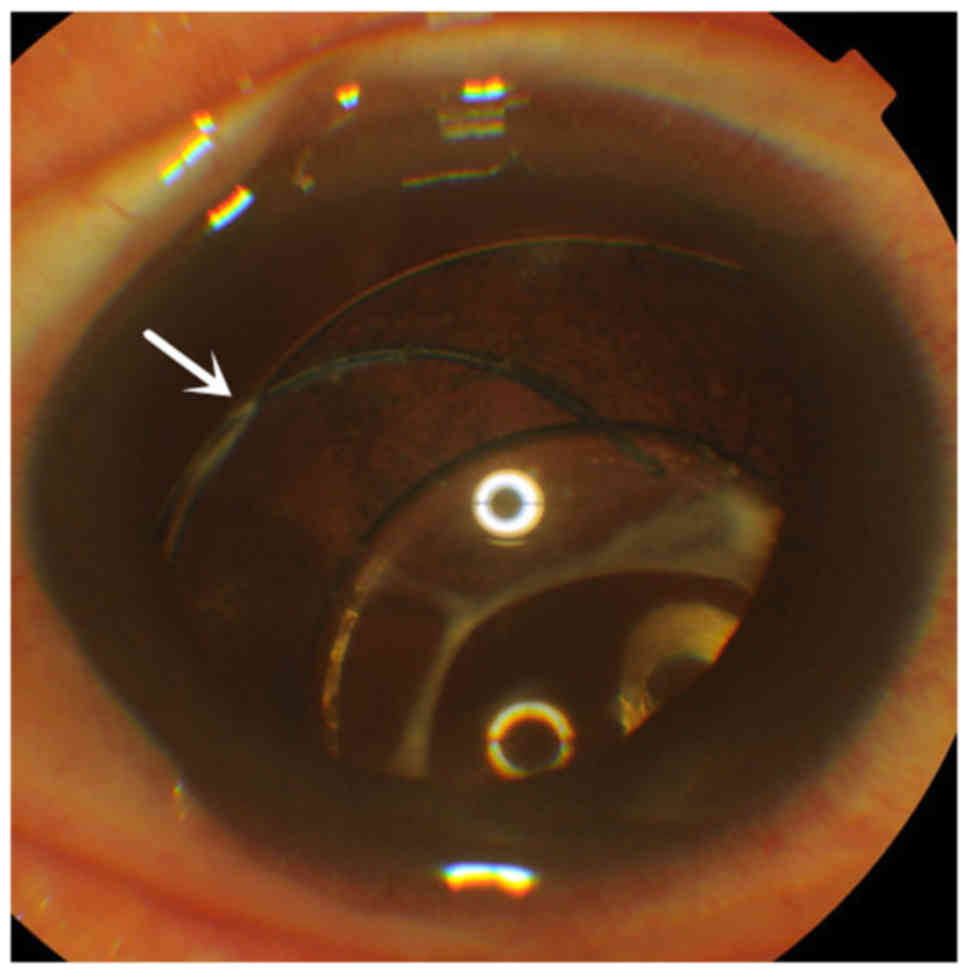
The current case study is a representative case. Five years and 10 months prior to presentation, a 59-year-old man with a history of chronic obstructive pulmonary disease was treated with phacoemulsification of the right eye, with an implantation of a CTR and an IOL (19.5 D; AR40E; Abbott Medical Optics Inc., Santa Ana, CA, USA) in the lens capsule. In March 2011, this patient presented with acute vision decline accompanied by intense coughing and sneezing. Upon ophthalmologic examination, the patient was determined to have a bitemporal-upper quadrant dislocation of the IOL-CTR (Fig. 1). Zonular disruption was observed between the 9 and 2 o'clock positions, suggesting a subluxation of the IOL-CB-CTR complex. At presentation, the patient's vision was 0.2 and intraocular pressure was 15 mmHg.

Figure 1.

Dislocation of the IOL-capsular bag-CTR complex. One end of the CTR as well as the haptic of the IOL is visible (arrow). CTR, capsular tension ring; IOL, intraocular lens.

For this patient, repositioning of the IOL by bilaterally suturing the complex to the ciliary groove was proposed. As the patient was placed in a supine position on the operating table, the dislocated IOL-CB-CTR complex migrated to the center of the pupillary axis. The lens dislocation was significantly more pronounced when the patient was in a sitting position compared to that observed in a supine position.

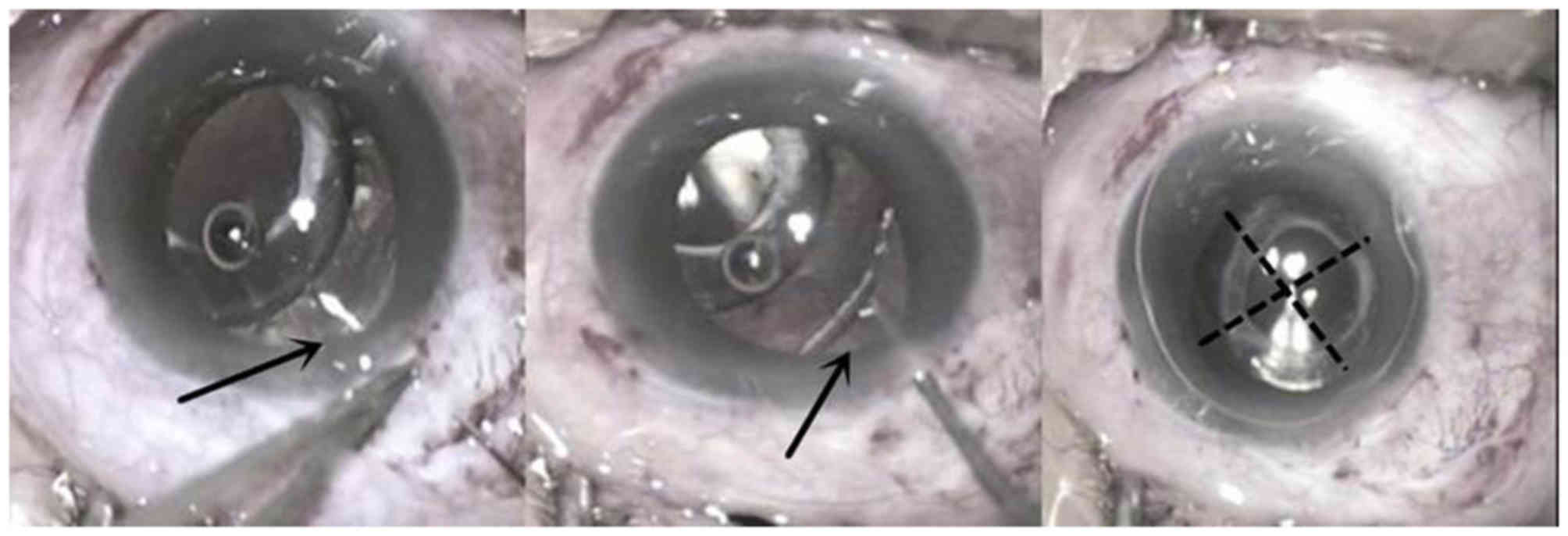
Manipulation of the position of the head did not cause any excessive frontal-temporal offset of the IOL-CB-CTR complex. No fractures were present inferior to the nasal zonules and the position of the capsular bag was maintained. The right pupil was dilated by tropicamide, and retrobulbar anesthesia consisting of 2 cc lidocaine and 2 cc bupivacaine was then injected into the retrobulbar space. Subsequently, two 1-mm corneoscleral incisions were made at the 11 and 3 o'clock positions. Sodium hyaluronate (1%) was then injected and allowed to move through the vitreous fluid into the posterior chamber. The IOL-CB-CTR complex was moved nasally to expose the tension ring and IOL haptics. A fornix-based conjunctival flap was made. A partial-thickness triangular scleral flap was made 2.0–2.5 mm posterior to the surgical limbus. A Z-suture was placed on the sclera 4 mm from the corneoscleral limbus. In this position, one double-curved 10–0 polypropylene (Prolene) suture was passed through the sclera into the posterior chamber, penetrating the posterior capsules and wrapping perpendicularly around the tangential contact point between the IOL haptics and the CTR, and finally passing through the anterior capsules into the anterior chamber (Fig. 2). The polypropylene suture was passed over and under the CTR, which was then retracted through the sclera. The 10-0 polypropylene suture was pulled to provide adequate tension for the CB centration.

Figure 2.

Suturing of the IOL-CB-CTR complex. Left panel: A corneoscleral incision is made and a needle with a 10-0 polypropylene suture (black arrow) is passed through the sclera to reach the IOL-CB-CTR complex. Middle panel: A suture (black arrow) is wrapped around the tangential contact point of the IOL haptic and the CTR. Right panel: The IOL-CB-CTR complex is repositioned to the center of the pupil (black cross). CTR, capsular tension ring; IOL, intraocular lens; CB, capsular bag.

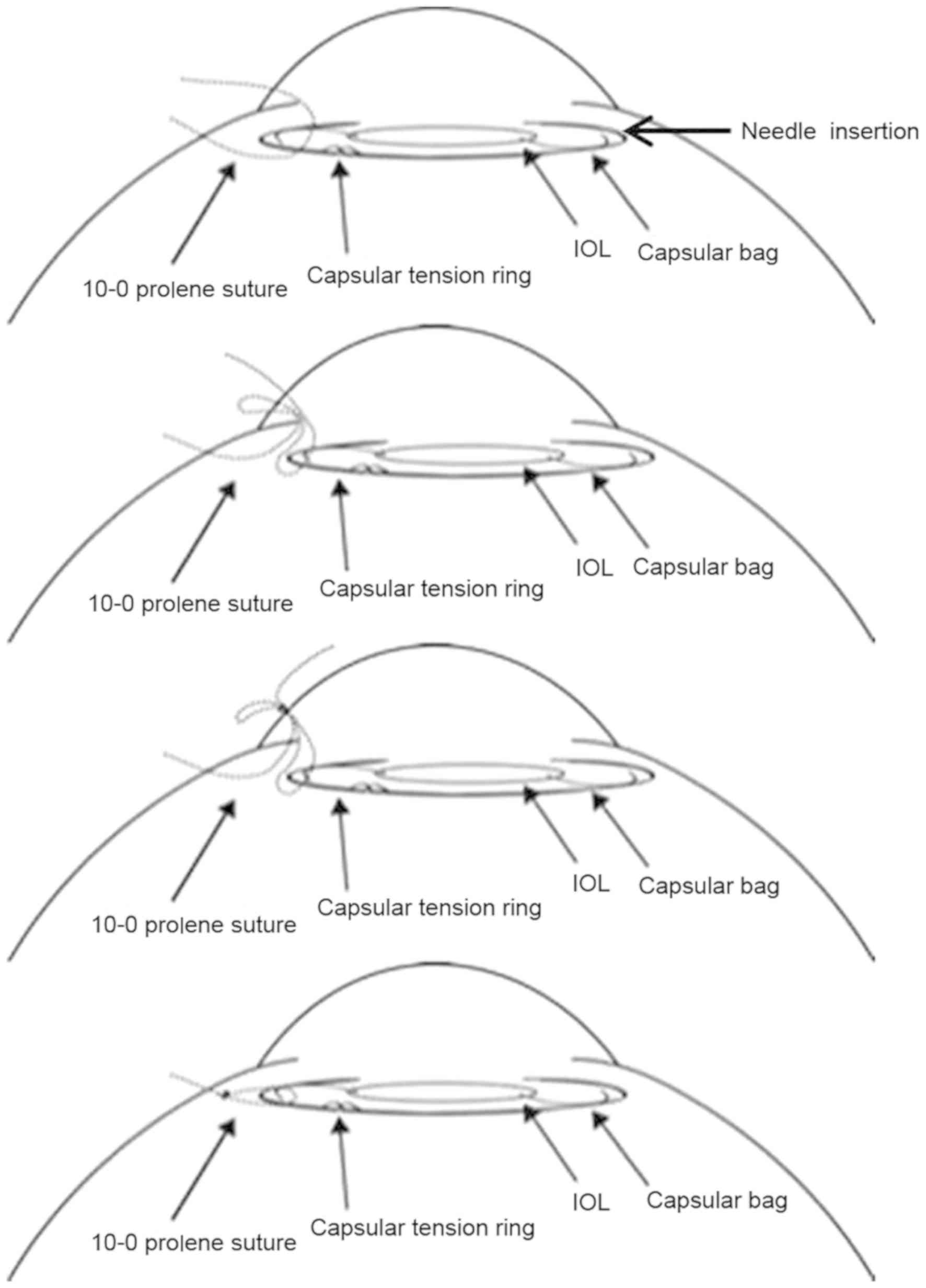
From the 3 o'clock corneoscleral limbus incision, the stitches were cut from the incision suture and the broken ends were pulled out. The thread was cut near the needle and then pulled out from the incision. The suture lines were pulled out from the anterior and posterior surfaces of the IOL-CB-CTR complex, and a knot was tied 1 mm away from the corneoscleral incision. The knot was buried in the scleral bed and covered with the scleral flap and conjunctiva. After the sutures were cut, the IOL-CB-CTR complex was repositioned to the center by pulling the suture line (Fig. 3; Video S1).

Figure 3.

A 10-0 polypropylene suture is hooked perpendicularly around the tangential point of the IOL haptic and the capsular tension ring. Through a 1-mm corneoscleral incision, a Z suture is formed and tied, leaving no sutures penetrating the corneoscleral limbus. IOL, intraocular lens.

It is standard knowledge that intact zonules provide support and circular contour to the capsular bag. In the present study, the position of the CTR-CB-IOL complex was maintained through a unilateral suture fixation. No sutures were made on the contralateral side. The last procedure was an anterior vitrectomy, which consisted of the removal of the sac and the structures surrounding the anterior chamber.

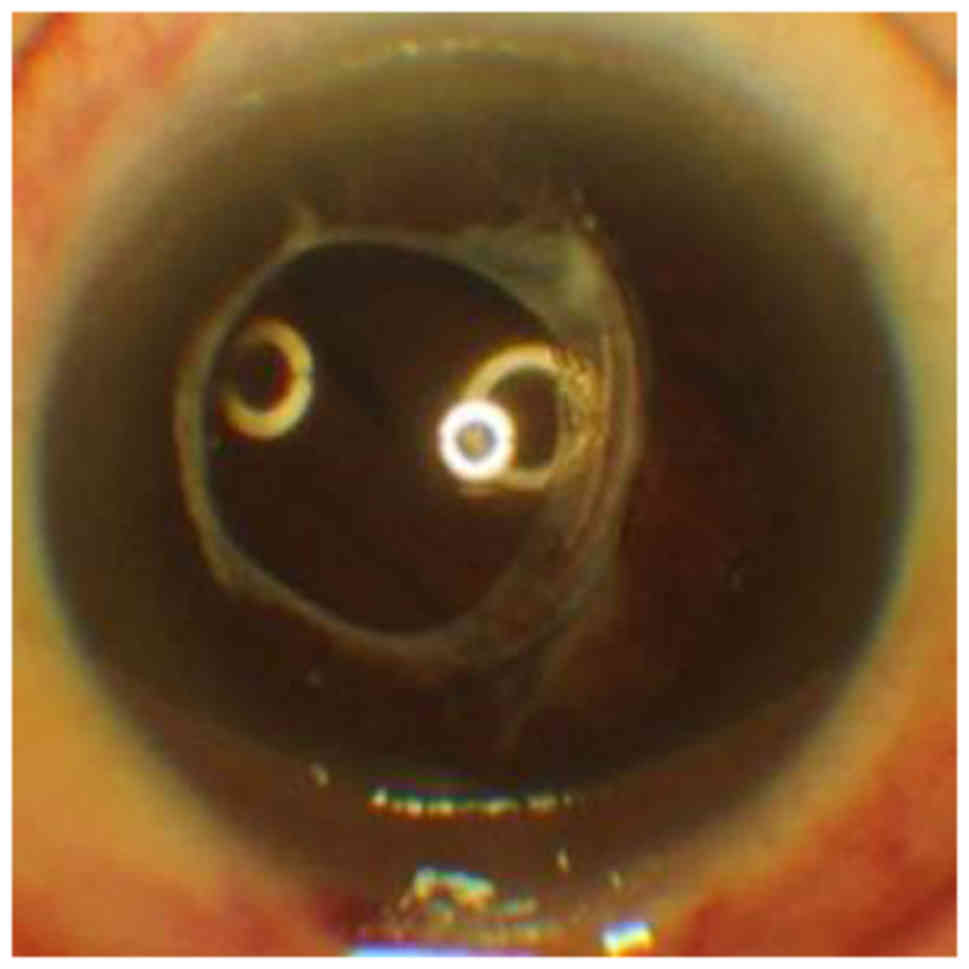
One day after the procedure, the patient's vision was 0.4 and the CTR-CB-IOL complex remained centered, with minor bleeding visible in the vitreous space. At two weeks after the procedure, the hematoceles had been reabsorbed. At the one-year follow-up, the patient's vision was 0.8 and the IOL-CB-CTR complex remained centered (Fig. 4).

Figure 4.

At the one-year follow-up, the capsular tension ring and intraocular lens remain in the middle of the pupil and no further dislocation had occurred.

Discussion

The present study described a novel method to correct a dislocation and subluxation of an IOL-CTR that avoided explantation of the IOL. Rather, the IOL-CB-CTR complex was simply and effectively immobilized.

Suture immobilization of a subluxated or dislocated IOL is not a novel technique, but it has been underutilized (1). A similar operation was described in one case of CTR-CB-IOL dislocation repair, in which two sutures were placed 180 degrees apart to reposition the IOL-CB-CTR complex (1). By contrast, the present procedure used a single suture through the IOL-CB-CTR complex and the remaining ciliary fibers to provide contralateral support. Oner et al (9) reported a IOL-CB-CTR subluxation suture repair technique involving the transscleral placement of two 10-0 polypropylene sutures over and under the CTR through the anterior and posterior capsular surfaces to secure the CTR. This was then retracted and sutured through the sclera. The present technique involves fewer traumatic needle paths and smaller incisions.

The path of the suture is crucial for determining the degree of scleral penetration, which may be associated with hemorrhage of the ciliary bodies (10,11). Favorable suture paths are only one of the advantages of the present technique. In published reports, at least two punctures were performed in the sclera. However, in our case report, the sclera is penetrated only once. Less amount of penetration avoids any repeated perforations and reduces the risk of hemorrhage. The suture is tied faster than in corresponding techniques (7,11,12). The final fixed position of the IOL-CB-CTR complex is similar to the anatomical position.

As the ideal result, the haptics of the IOL and the tension ring would be fixed precisely within the ciliary groove. The Z-suture between the sclera has sufficient tension to fix the complex, and the inflammatory adhesion produced by the suture and sclera supports this. Using the present method the creation of partial-thickness triangular scleral flaps with low intraocular pressure is not required, thereby reducing the time of the procedure, which may in turn reduce the rate of complications and endophthalmitis. This method may prevent future dislocations of the IOL-CB-CTR complex, as the tension of the suture may be adjusted even after the suture has been knotted. In this way, the present technique simplifies the repositioning of the IOL-CB-CTR complex. Another advantage of this technique is the minimally invasive 1-mm corneoscleral limbus incision, which reduces the risk of astigmatism. The small incision keeps the anterior chamber stable and prevents partial or complete movement during suturing of the complex.

Regardless of the type of suture, the position of the suture that penetrates the capsule and its relative orientation with the IOL-CTR contact point determine the success of the procedure. The tension ring and IOL haptics are independent circular structures and physically meet nearly tangentially inside the capsular bag. The suture should penetrate the capsule through a point perpendicular to the tangential IOL-CTR contact point. Based on the authors' experience, if the suture is inserted away from this point, the capsule may be torn by the suture, bearing a risk of spillage of the IOL into the vitreous cavity. If the suture only secures the CTR, it cannot adequately support the stability of the entire complex, as the tension of the suture is unbalanced. Of note, pre-operative evaluation of the zonules should be performed to determine whether unilateral or bilateral suturing is required.

In conclusion, suturing the CTR-CB-IOL complex is simple and effective. It secures the position of the IOL and prevents any requirement for the explantation of the complex or suturing of a new IOL onto the sclera, increasing the work efficiency of the surgery.

Supplementary Material

Supporting Data

Acknowledgements

Not applicable.

Funding

No funding received.

Availability of data and materials

The data and materials in this study are available from the corresponding author on reasonable request.

Authors' contributions

LG collected, collated and classified the experimental data, and wrote the manuscript. XY responsible for the application of experimental ethics. CW performed the surgeries. All three authors designed the current study, and analysed and interpreted the data.

Ethical approval and consent to participate

The present study was approved by the Ethics Committee of Xi'an No. 4 Hospital, Affiliated GuangRen Hospital, School of Medicine, Xi'an Jiao Tong University (Xi'an, China).

Patient consent for publication

The patient provided informed consent for the publication of the intra-operative images/video.

Competing interests

None of the authors has any conflicts of interest to declare.

References

1 

Moreno-Montañés J, Heras H and Fernández-Hortelano A: Surgical treatment of a dislocated intraocular lens-capsular bag-capsular tension ring complex. J Cataract Refract Surg. 31:270–273. 2005. View Article : Google Scholar : PubMed/NCBI

2 

Bhattacharjee H, Bhattacharjee K, Das D, Jain PK, Chakraborty D and Deka S: Management of a posteriorly dislocated endocapsular tension ring and a foldable acrylic intraocular lens. J Cataract Refract Surg. 30:243–246. 2004. View Article : Google Scholar : PubMed/NCBI

3 

Gross JG, Kokame GT and Weinberg DV; Dislocated In-The-Bag Intraocular Lens Study Group: In-the-bag intraocular lens dislocation. Am J Ophthalmol. 137:630–635. 2004. View Article : Google Scholar : PubMed/NCBI

4 

Scherer M, Bertelmann E and Rieck P: Late spontaneous in-the-bag intraocular lens and capsular tension ring dislocation in pseudoexfoliation syndrome. J Cataract Refract Surg. 32:672–675. 2006. View Article : Google Scholar : PubMed/NCBI

5 

Ahmed II, Chen SH, Kranemann C and Wong DT: Surgical repositioning of dislocated capsular tension rings. Ophthalmology. 112:1725–1733. 2005. View Article : Google Scholar : PubMed/NCBI

6 

Werner L, Zaugg B, Neuhann T, Burrow M and Tetz M: In-the-bag capsular tension ring and intraocular lens subluxation or dislocation: A series of 23 cases. Ophthalmology. 119:266–271. 2012. View Article : Google Scholar : PubMed/NCBI

7 

Tribus C, Alge CS, Haritoglou C, Lackerbauer C, Kampik A, Mueller A and Priglinger SG: Indications and clinical outcome of capsular tension ring (CTR) implantation: A review of 9528 cataract surgeries. Clin Ophthalmol. 1:65–69. 2007.PubMed/NCBI

8 

Lang Y, Fineberg E and Garzozi HJ: Vitrectomy to remove a posteriorly dislocated endocapsular tension ring. J Cataract Refract Surg. 27:474–476. 2001. View Article : Google Scholar : PubMed/NCBI

9 

Oner FH, Kocak N and Saatci AO: Dislocation of capsular bag with intraocular lens and capsular tension ring. J Cataract Refract Surg. 32:1756–1758. 2006. View Article : Google Scholar : PubMed/NCBI

10 

Yang CS and Chao YJ: Long-term outcome of combined vitrectomy and transscleral suture fixation of posterior chamber intraocular lenses in the management of posteriorly dislocated lenses. J Chin Med Assoc. 79:450–455. 2016. View Article : Google Scholar : PubMed/NCBI

11 

Banaee T and Sagheb S: Scleral fixation of intraocular lens in eyes with history of open globe injury. J Pediatr Ophthalmol Strabismus. 48:292–297. 2011. View Article : Google Scholar : PubMed/NCBI

12 

John T, Tighe S, Hashem O and Sheha H: New use of 8-0 polypropylene suture for four-point scleral fixation of secondary intraocular lenses. J Cataract Refract Surg. 44:1421–1425. 2018. View Article : Google Scholar : PubMed/NCBI

Related Articles

  • Abstract
  • View
  • Download
  • Twitter
Copy and paste a formatted citation
Spandidos Publications style
Guo L, Wang C and Yang X: A novel technique for the surgical management of intraocular lens‑capsular bag‑capsular tension ring complex dislocation. Exp Ther Med 17: 2785-2788, 2019.
APA
Guo, L., Wang, C., & Yang, X. (2019). A novel technique for the surgical management of intraocular lens‑capsular bag‑capsular tension ring complex dislocation. Experimental and Therapeutic Medicine, 17, 2785-2788. https://doi.org/10.3892/etm.2019.7224
MLA
Guo, L., Wang, C., Yang, X."A novel technique for the surgical management of intraocular lens‑capsular bag‑capsular tension ring complex dislocation". Experimental and Therapeutic Medicine 17.4 (2019): 2785-2788.
Chicago
Guo, L., Wang, C., Yang, X."A novel technique for the surgical management of intraocular lens‑capsular bag‑capsular tension ring complex dislocation". Experimental and Therapeutic Medicine 17, no. 4 (2019): 2785-2788. https://doi.org/10.3892/etm.2019.7224
Copy and paste a formatted citation
x
Spandidos Publications style
Guo L, Wang C and Yang X: A novel technique for the surgical management of intraocular lens‑capsular bag‑capsular tension ring complex dislocation. Exp Ther Med 17: 2785-2788, 2019.
APA
Guo, L., Wang, C., & Yang, X. (2019). A novel technique for the surgical management of intraocular lens‑capsular bag‑capsular tension ring complex dislocation. Experimental and Therapeutic Medicine, 17, 2785-2788. https://doi.org/10.3892/etm.2019.7224
MLA
Guo, L., Wang, C., Yang, X."A novel technique for the surgical management of intraocular lens‑capsular bag‑capsular tension ring complex dislocation". Experimental and Therapeutic Medicine 17.4 (2019): 2785-2788.
Chicago
Guo, L., Wang, C., Yang, X."A novel technique for the surgical management of intraocular lens‑capsular bag‑capsular tension ring complex dislocation". Experimental and Therapeutic Medicine 17, no. 4 (2019): 2785-2788. https://doi.org/10.3892/etm.2019.7224
Follow us
  • Twitter
  • LinkedIn
  • Facebook
About
  • Spandidos Publications
  • Careers
  • Cookie Policy
  • Privacy Policy
How can we help?
  • Help
  • Live Chat
  • Contact
  • Email to our Support Team