Spandidos Publications Logo
  • About
    • About Spandidos
    • Aims and Scopes
    • Abstracting and Indexing
    • Editorial Policies
    • Reprints and Permissions
    • Job Opportunities
    • Terms and Conditions
    • Contact
  • Journals
    • All Journals
    • Oncology Letters
      • Oncology Letters
      • Information for Authors
      • Editorial Policies
      • Editorial Board
      • Aims and Scope
      • Abstracting and Indexing
      • Bibliographic Information
      • Archive
    • International Journal of Oncology
      • International Journal of Oncology
      • Information for Authors
      • Editorial Policies
      • Editorial Board
      • Aims and Scope
      • Abstracting and Indexing
      • Bibliographic Information
      • Archive
    • Molecular and Clinical Oncology
      • Molecular and Clinical Oncology
      • Information for Authors
      • Editorial Policies
      • Editorial Board
      • Aims and Scope
      • Abstracting and Indexing
      • Bibliographic Information
      • Archive
    • Experimental and Therapeutic Medicine
      • Experimental and Therapeutic Medicine
      • Information for Authors
      • Editorial Policies
      • Editorial Board
      • Aims and Scope
      • Abstracting and Indexing
      • Bibliographic Information
      • Archive
    • International Journal of Molecular Medicine
      • International Journal of Molecular Medicine
      • Information for Authors
      • Editorial Policies
      • Editorial Board
      • Aims and Scope
      • Abstracting and Indexing
      • Bibliographic Information
      • Archive
    • Biomedical Reports
      • Biomedical Reports
      • Information for Authors
      • Editorial Policies
      • Editorial Board
      • Aims and Scope
      • Abstracting and Indexing
      • Bibliographic Information
      • Archive
    • Oncology Reports
      • Oncology Reports
      • Information for Authors
      • Editorial Policies
      • Editorial Board
      • Aims and Scope
      • Abstracting and Indexing
      • Bibliographic Information
      • Archive
    • Molecular Medicine Reports
      • Molecular Medicine Reports
      • Information for Authors
      • Editorial Policies
      • Editorial Board
      • Aims and Scope
      • Abstracting and Indexing
      • Bibliographic Information
      • Archive
    • World Academy of Sciences Journal
      • World Academy of Sciences Journal
      • Information for Authors
      • Editorial Policies
      • Editorial Board
      • Aims and Scope
      • Abstracting and Indexing
      • Bibliographic Information
      • Archive
    • International Journal of Functional Nutrition
      • International Journal of Functional Nutrition
      • Information for Authors
      • Editorial Policies
      • Editorial Board
      • Aims and Scope
      • Abstracting and Indexing
      • Bibliographic Information
      • Archive
    • International Journal of Epigenetics
      • International Journal of Epigenetics
      • Information for Authors
      • Editorial Policies
      • Editorial Board
      • Aims and Scope
      • Abstracting and Indexing
      • Bibliographic Information
      • Archive
    • Medicine International
      • Medicine International
      • Information for Authors
      • Editorial Policies
      • Editorial Board
      • Aims and Scope
      • Abstracting and Indexing
      • Bibliographic Information
      • Archive
  • Articles
  • Information
    • Information for Authors
    • Information for Reviewers
    • Information for Librarians
    • Information for Advertisers
    • Conferences
  • Language Editing
Spandidos Publications Logo
  • About
    • About Spandidos
    • Aims and Scopes
    • Abstracting and Indexing
    • Editorial Policies
    • Reprints and Permissions
    • Job Opportunities
    • Terms and Conditions
    • Contact
  • Journals
    • All Journals
    • Biomedical Reports
      • Information for Authors
      • Editorial Policies
      • Editorial Board
      • Aims and Scope
      • Abstracting and Indexing
      • Bibliographic Information
      • Archive
    • Experimental and Therapeutic Medicine
      • Information for Authors
      • Editorial Policies
      • Editorial Board
      • Aims and Scope
      • Abstracting and Indexing
      • Bibliographic Information
      • Archive
    • International Journal of Epigenetics
      • Information for Authors
      • Editorial Policies
      • Editorial Board
      • Aims and Scope
      • Abstracting and Indexing
      • Bibliographic Information
      • Archive
    • International Journal of Functional Nutrition
      • Information for Authors
      • Editorial Policies
      • Editorial Board
      • Aims and Scope
      • Abstracting and Indexing
      • Bibliographic Information
      • Archive
    • International Journal of Molecular Medicine
      • Information for Authors
      • Editorial Policies
      • Editorial Board
      • Aims and Scope
      • Abstracting and Indexing
      • Bibliographic Information
      • Archive
    • International Journal of Oncology
      • Information for Authors
      • Editorial Policies
      • Editorial Board
      • Aims and Scope
      • Abstracting and Indexing
      • Bibliographic Information
      • Archive
    • Medicine International
      • Information for Authors
      • Editorial Policies
      • Editorial Board
      • Aims and Scope
      • Abstracting and Indexing
      • Bibliographic Information
      • Archive
    • Molecular and Clinical Oncology
      • Information for Authors
      • Editorial Policies
      • Editorial Board
      • Aims and Scope
      • Abstracting and Indexing
      • Bibliographic Information
      • Archive
    • Molecular Medicine Reports
      • Information for Authors
      • Editorial Policies
      • Editorial Board
      • Aims and Scope
      • Abstracting and Indexing
      • Bibliographic Information
      • Archive
    • Oncology Letters
      • Information for Authors
      • Editorial Policies
      • Editorial Board
      • Aims and Scope
      • Abstracting and Indexing
      • Bibliographic Information
      • Archive
    • Oncology Reports
      • Information for Authors
      • Editorial Policies
      • Editorial Board
      • Aims and Scope
      • Abstracting and Indexing
      • Bibliographic Information
      • Archive
    • World Academy of Sciences Journal
      • Information for Authors
      • Editorial Policies
      • Editorial Board
      • Aims and Scope
      • Abstracting and Indexing
      • Bibliographic Information
      • Archive
  • Articles
  • Information
    • For Authors
    • For Reviewers
    • For Librarians
    • For Advertisers
    • Conferences
  • Language Editing
Login Register Submit
  • This site uses cookies
  • You can change your cookie settings at any time by following the instructions in our Cookie Policy. To find out more, you may read our Privacy Policy.

    I agree
Search articles by DOI, keyword, author or affiliation
Search
Advanced Search
presentation
Experimental and Therapeutic Medicine
Join Editorial Board Propose a Special Issue
Print ISSN: 1792-0981 Online ISSN: 1792-1015
Journal Cover
October-2019 Volume 18 Issue 4

Full Size Image

Sign up for eToc alerts
Recommend to Library

Journals

International Journal of Molecular Medicine

International Journal of Molecular Medicine

International Journal of Molecular Medicine is an international journal devoted to molecular mechanisms of human disease.

International Journal of Oncology

International Journal of Oncology

International Journal of Oncology is an international journal devoted to oncology research and cancer treatment.

Molecular Medicine Reports

Molecular Medicine Reports

Covers molecular medicine topics such as pharmacology, pathology, genetics, neuroscience, infectious diseases, molecular cardiology, and molecular surgery.

Oncology Reports

Oncology Reports

Oncology Reports is an international journal devoted to fundamental and applied research in Oncology.

Experimental and Therapeutic Medicine

Experimental and Therapeutic Medicine

Experimental and Therapeutic Medicine is an international journal devoted to laboratory and clinical medicine.

Oncology Letters

Oncology Letters

Oncology Letters is an international journal devoted to Experimental and Clinical Oncology.

Biomedical Reports

Biomedical Reports

Explores a wide range of biological and medical fields, including pharmacology, genetics, microbiology, neuroscience, and molecular cardiology.

Molecular and Clinical Oncology

Molecular and Clinical Oncology

International journal addressing all aspects of oncology research, from tumorigenesis and oncogenes to chemotherapy and metastasis.

World Academy of Sciences Journal

World Academy of Sciences Journal

Multidisciplinary open-access journal spanning biochemistry, genetics, neuroscience, environmental health, and synthetic biology.

International Journal of Functional Nutrition

International Journal of Functional Nutrition

Open-access journal combining biochemistry, pharmacology, immunology, and genetics to advance health through functional nutrition.

International Journal of Epigenetics

International Journal of Epigenetics

Publishes open-access research on using epigenetics to advance understanding and treatment of human disease.

Medicine International

Medicine International

An International Open Access Journal Devoted to General Medicine.

Journal Cover
October-2019 Volume 18 Issue 4

Full Size Image

Sign up for eToc alerts
Recommend to Library

  • Article
  • Citations
    • Cite This Article
    • Download Citation
    • Create Citation Alert
    • Remove Citation Alert
    • Cited By
  • Similar Articles
    • Related Articles (in Spandidos Publications)
    • Similar Articles (Google Scholar)
    • Similar Articles (PubMed)
  • Download PDF
  • Download XML
  • View XML
Article Open Access

Pax4 synergistically acts with Pdx1, Ngn3 and MafA to induce HuMSCs to differentiate into functional pancreatic β‑cells

  • Authors:
    • Ting Zhang
    • Hongwu Wang
    • Tianyou Wang
    • Chiju Wei
    • Hui Jiang
    • Shayi Jiang
    • Jingwei Yang
    • Jingbo Shao
    • Lian Ma
  • View Affiliations / Copyright

    Affiliations: Department of Hematology and Oncology, Shanghai Children's Hospital, Shanghai Jiao Tong University, Shanghai 200062, P.R. China, Department of Pediatrics, The Second Affiliated Hospital of Shantou University Medical College, Shantou, Guangdong 515041, P.R. China, Hematological Tumor Center, Beijing Children's Hospital Affiliated to Capital Medical University, Beijing 100045, P.R. China, Multidisciplinary Research Center, Shantou University, Shantou, Guangdong 515063, P.R. China
    Copyright: © Zhang et al. This is an open access article distributed under the terms of Creative Commons Attribution License.
  • Pages: 2592-2598
    |
    Published online on: August 5, 2019
       https://doi.org/10.3892/etm.2019.7854
  • Expand metrics +
Metrics: Total Views: 0 (Spandidos Publications: | PMC Statistics: )
Metrics: Total PDF Downloads: 0 (Spandidos Publications: | PMC Statistics: )
Cited By (CrossRef): 0 citations Loading Articles...

This article is mentioned in:


Abstract

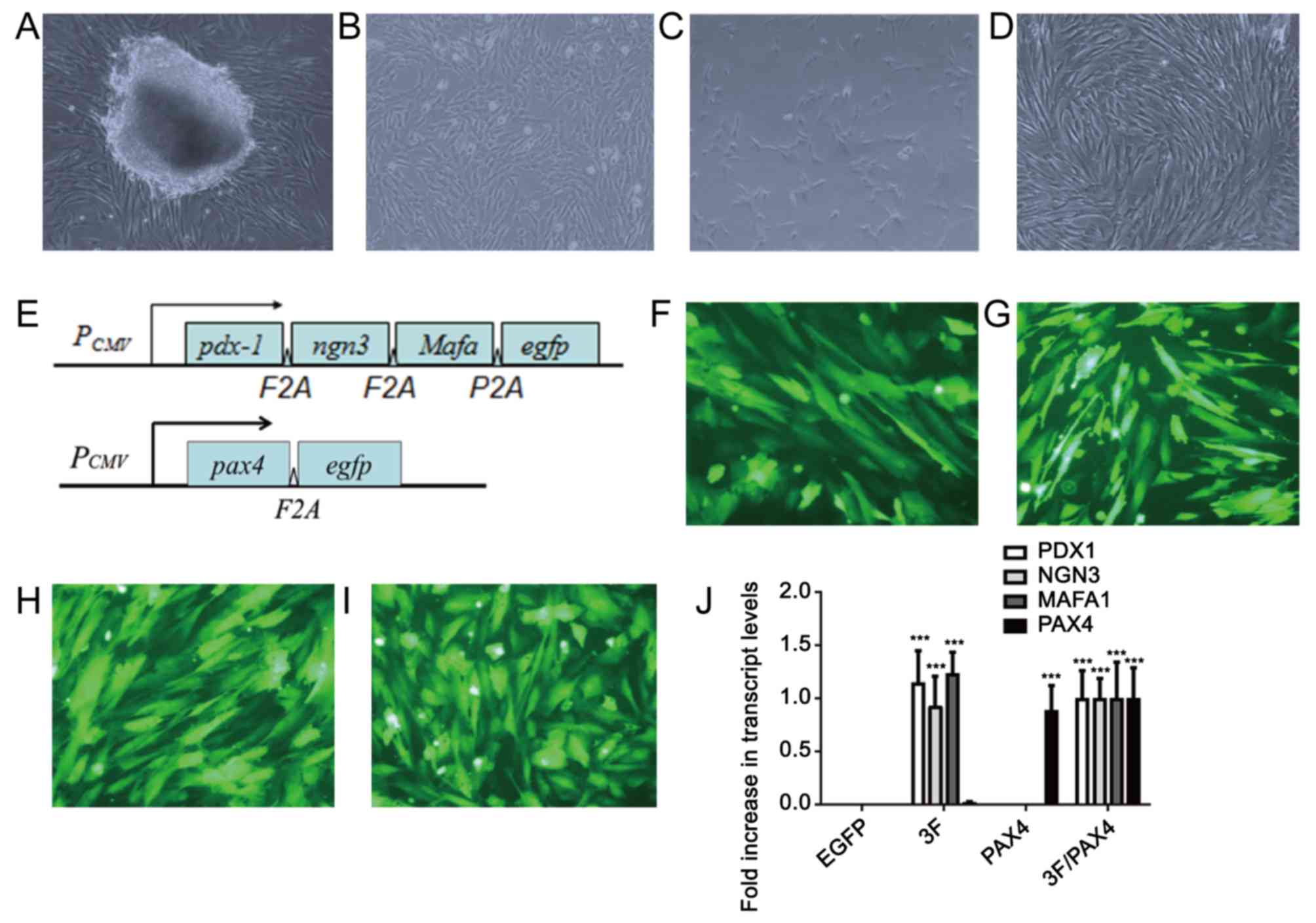
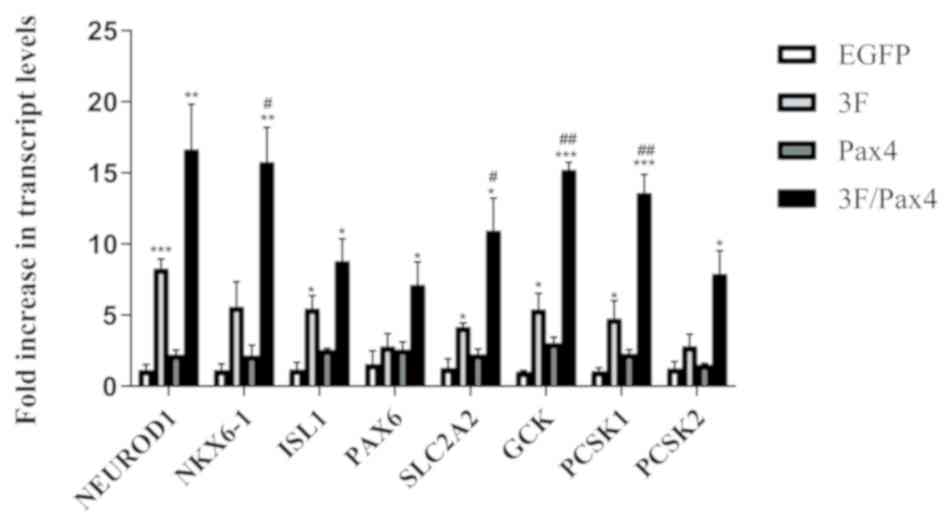
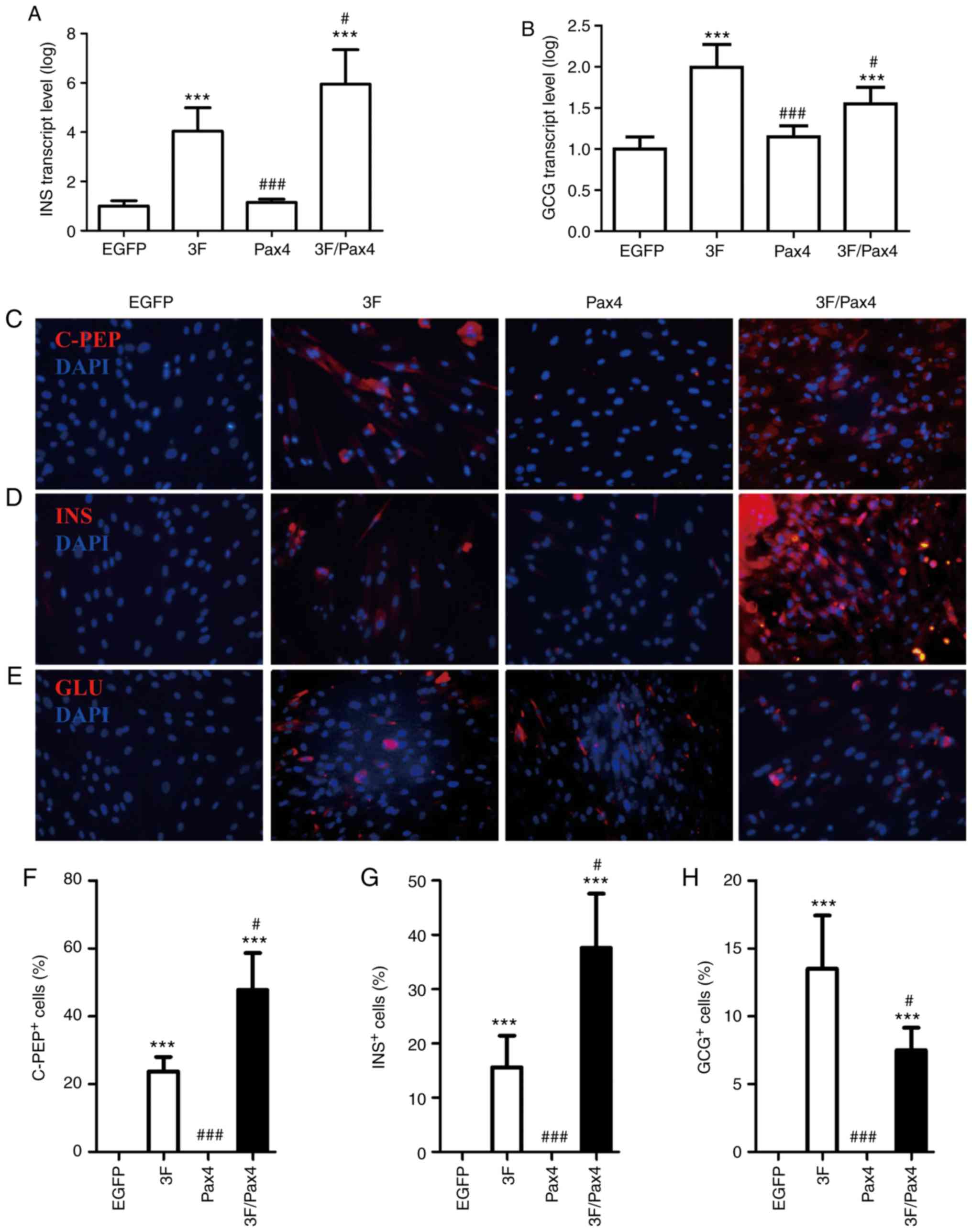
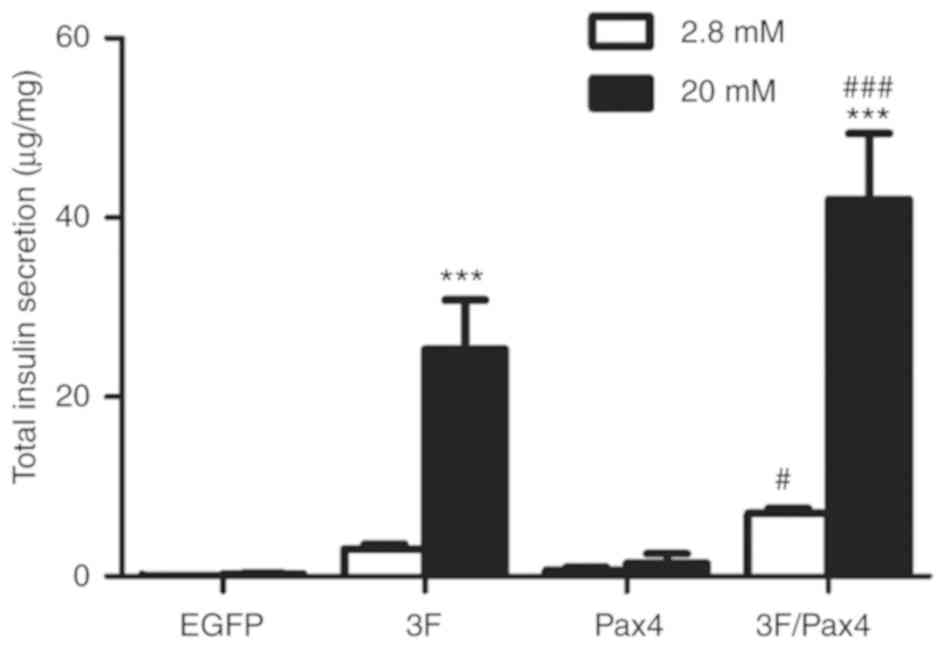
It has been indicated that the combination of pancreatic and duodenal homeobox 1 (Pdx1), MAF bZIP transcription factor A (MafA) and neurogenin 3 (Ngn3) was able to reprogram various cell types towards pancreatic β‑like cells (pβLCs). Paired box 4 (Pax4), a transcription factor, has a key role in regulating the maturation of pancreatic β‑cells (pβCs). In the present study, it was investigated whether Pax4 is able to synergistically act with Pdx1, Ngn3 and MafA to induce human umbilical cord mesenchymal stem cells (HuMSCs) to differentiate into functional pβCs in vitro. HuMSCs were isolated, cultured and separately transfected with adenovirus (Ad) expressing enhanced green fluorescence protein, Pax4 (Ad‑Pax4), Pdx1+MafA+Ngn3 (Ad‑3F) or Ad‑Pxa4 + Ad‑3F. The expression of C‑peptide, insulin and glucagon was detected by immunofluorescence. The transcription of a panel of genes was determined by reverse transcription‑quantitative PCR, including glucagon (GCG), insulin (INS), NK6 homeobox 1 (NKX6‑1), solute carrier family 2 member 2 (SLC2A2), glucokinase (GCK), proprotein convertase subtilisin/kexin type 1 (PCSK1), neuronal differentiation 1 (NEUROD1), ISL LIM homeobox 1 (ISL 1), Pax6 and PCSK type 2 (PCSK2). Insulin secretion stimulated by glucose was determined using ELISA. The results suggested that, compared with Ad‑3F alone, cells co‑transfected with Ad‑Pax4 and Ad‑3F expressed higher levels of INS and C‑peptide, as well as genes expressed in pancreatic β precursor cells, and secreted more insulin in response to high glucose. Furthermore, the expression of GCG in cells transfected with Ad‑3F was depressed by Ad‑Pax4. The present study demonstrated that Pax4 was able to synergistically act with the transcription factors Pdx1, Ngn3 and MafA to convert HuMSCs to functional pβLCs. HuMSCs may be potential seed cells for generating functional pβLCs in the therapy of diabetes.
View Figures

Figure 1

Figure 2

Figure 3

Figure 4

View References

1 

Stanekzai J, Isenovic ER and Mousa SA: Treatment options for diabetes: Potential role of stem cells. Diabetes Res Clin Pract. 98:361–368. 2012. View Article : Google Scholar : PubMed/NCBI

2 

Bose B, Shenoy SP, Konda S and Wangikar P: Human embryonic stem cell differentiation into insulin secreting β-cells for diabetes. Cell Biol Int. 36:1013–1020. 2012. View Article : Google Scholar : PubMed/NCBI

3 

Fujikawa T, Oh SH, Pi L, Hatch HM, Shupe T and Petersen BE: Teratoma formation leads to failure of treatment for type I diabetes using embryonic stem cell-derived insulin-producing cells. Am J Pathol. 166:1781–1791. 2005. View Article : Google Scholar : PubMed/NCBI

4 

Wang H, Yang Y, Ho G, Lin X, Wu W, Li W, Lin L, Feng X, Huo X, Jiang J, et al: Programming of human umbilical cord mesenchymal stem cells in vitro to promote pancreatic gene expression. Mol Med Rep. 8:769–774. 2013. View Article : Google Scholar : PubMed/NCBI

5 

Friedman R, Betancur M, Boissel L, Tuncer H, Cetrulo C and Klingemann H: Umbilical cord mesenchymal stem cells: Adjuvants for human cell transplantation. Biol Blood Marrow Transplant. 13:1477–1486. 2007. View Article : Google Scholar : PubMed/NCBI

6 

Sakamoto T, Ono H and Saito Y: Electron microscopic histochemical studies on the localization of hyaluronic acid in Wharton's jelly of the human umbilical cord. Nihon Sanka Fujinka Gakkai Zasshi. 48:501–507. 1996.(In Japanese). PubMed/NCBI

7 

Tsagias N, Koliakos I, Karagiannis V, Eleftheriadou M and Koliakos GG: Isolation of mesenchymal stem cells using the total length of umbilical cord for transplantation purposes. Transfus Med. 21:253–261. 2011. View Article : Google Scholar : PubMed/NCBI

8 

Romanov YA, Svintsitskaya VA and Smirnov VN: Searching for alternative sources of postnatal human mesenchymal stem cells: Candidate MSC-like cells from umbilical cord. Stem Cells. 21:105–110. 2003. View Article : Google Scholar : PubMed/NCBI

9 

Kadivar M, Khatami S, Mortazavi Y, Shokrgozar MA, Taghikhani M and Soleimani M: In vitro cardiomyogenic potential of human umbilical vein-derived mesenchymal stem cells. Biochem Biophys Res Commun. 340:639–647. 2006. View Article : Google Scholar : PubMed/NCBI

10 

Ma L, Feng XY, Cui BL, Law F, Jiang XW, Yang LY, Xie QD and Huang TH: Human umbilical cord Wharton's Jelly-derived mesenchymal stem cells differentiation into nerve-like cells. Chin Med J (Engl). 118:1987–1993. 2005.PubMed/NCBI

11 

Bao CS, Li XL, Liu L, Wang B, Yang FB and Chen LG: Transplantation of Human umbilical cord mesenchymal stem cells promotes functional recovery after spinal cord injury by blocking the expression of IL-7. Eur Rev Med Pharmacol Sci. 22:6436–6447. 2018.PubMed/NCBI

12 

Zhao Z, Chen Z, Zhao X, Pan F, Cai M, Wang T, Zhang H, Lu JR and Lei M: Sphingosine-1-phosphate promotes the differentiation of human umbilical cord mesenchymal stem cells into cardiomyocytes under the designated culturing conditions. J Biomed Sci. 18:372011. View Article : Google Scholar : PubMed/NCBI

13 

Huang P, Lin LM, Wu XY, Tang QL, Feng XY, Lin GY, Lin X, Wang HW, Huang TH and Ma L: Differentiation of human umbilical cord Wharton's jelly-derived mesenchymal stem cells into germ-like cells in vitro. J Cell Biochem. 109:747–754. 2010.PubMed/NCBI

14 

Zhou Q and Melton DA: Extreme makeover: Converting one cell into another. Cell Stem Cell. 3:382–388. 2008. View Article : Google Scholar : PubMed/NCBI

15 

Cavelti-Weder C, Zumsteg A, Li W and Zhou Q: Reprogramming of pancreatic Acinar cells to functional beta cells by in vivo transduction of a polycistronic construct containing Pdx1, Ngn3, MafA in mice. Curr Protoc Stem Cell Biol. 40:A.10.1–4A.10.12. 2017.

16 

Yamada T, Cavelti-Weder C, Caballero F, Lysy PA, Guo L, Sharma A, Li W, Zhou Q, Bonner-Weir S and Weir GC: Reprogramming mouse cells with a pancreatic duct phenotype to insulin-producing β-like cells. Endocrinology. 156:2029–2038. 2015. View Article : Google Scholar : PubMed/NCBI

17 

Akinci E, Banga A, Tungatt K, Segal J, Eberhard D, Dutton JR and Slack JM: Reprogramming of various cell types to a beta-like state by Pdx1, Ngn3 and MafA. PLoS One. 8:e824242013. View Article : Google Scholar : PubMed/NCBI

18 

Sosa-Pineda B, Chowdhury K, Torres M, Oliver G and Gruss P: The Pax4 gene is essential for differentiation of insulin-producing beta cells in the mammalian pancreas. Nature. 386:399–402. 1997. View Article : Google Scholar : PubMed/NCBI

19 

Druelle N, Vieira A, Shabro A, Courtney M, Mondin M, Rekima S, Napolitano T, Silvano S, Navarro-Sanz S, Hadzic B, et al: Ectopic expression of Pax4 in pancreatic delta cells results in beta-like cell neogenesis. J Cell Biol. 216:4299–4311. 2017. View Article : Google Scholar : PubMed/NCBI

20 

Zhang Y, Fava GE, Wang H, Mauvais-Jarvis F, Fonseca VA and Wu H: PAX4 gene transfer induces α-to-β cell phenotypic conversion and confers therapeutic benefits for diabetes treatment. Mol Ther. 24:251–260. 2016. View Article : Google Scholar : PubMed/NCBI

21 

Livak KJ and Schmittgen TD: Analysis of relative gene expression data using real-time quantitative PCR and the 2(-Delta Delta C (T)) method. Methods. 25:402–408. 2001. View Article : Google Scholar : PubMed/NCBI

22 

Hald J, Sprinkel AE, Ray M, Serup P, Wright C and Madsen OD: Generation and characterization of Ptf1a antiserum and localization of Ptf1a in relation to Nkx6.1 and Pdx1 during the earliest stages of mouse pancreas development. J Histochem Cytochem. 56:587–595. 2008. View Article : Google Scholar : PubMed/NCBI

23 

Ding L, Han L, Li Y, Zhao J, He P and Zhang W: Neurogenin 3-directed cre deletion of Tsc1 gene causes pancreatic acinar carcinoma. Neoplasia. 16:909–917. 2014. View Article : Google Scholar : PubMed/NCBI

24 

Babu DA, Chakrabarti SK, Garmey JC and Mirmira RG: Pdx1 and BETA2/NeuroD1 participate in a transcriptional complex that mediates short-range DNA looping at the insulin gene. J Biol Chem. 283:8164–8172. 2008. View Article : Google Scholar : PubMed/NCBI

25 

Wang J, Elghazi L, Parker SE, Kizilocak H, Asano M, Sussel L and Sosa-Pineda B: The concerted activities of Pax4 and Nkx2.2 are essential to initiate pancreatic beta-cell differentiation. Dev Biol. 266:178–189. 2004. View Article : Google Scholar : PubMed/NCBI

26 

Ahlgren U, Jonsson J and Edlund H: The morphogenesis of the pancreatic mesenchyme is uncoupled from that of the pancreatic epithelium in IPF1/PDX1-deficient mice. Development. 122:1409–1416. 1996.PubMed/NCBI

27 

Guz Y, Montminy MR, Stein R, Leonard J, Gamer LW, Wright CV and Teitelman G: Expression of murine STF-1, a putative insulin gene transcription factor, in beta cells of pancreas, duodenal epithelium and pancreatic exocrine and endocrine progenitors during ontogeny. Development. 121:11–18. 1995.PubMed/NCBI

28 

Gradwohl G, Dierich A, LeMeur M and Guillemot F: neurogenin3 is required for the development of the four endocrine cell lineages of the pancreas. Proc Natl Acad Sci USA. 97:1607–1611. 2000. View Article : Google Scholar : PubMed/NCBI

29 

Kataoka K, Han SI, Shioda S, Hirai M, Nishizawa M and Handa H: MafA is a glucose-regulated and pancreatic beta-cell-specific transcriptional activator for the insulin gene. J Biol Chem. 277:49903–49910. 2002. View Article : Google Scholar : PubMed/NCBI

30 

Sheets TP, Park KE, Park CH, Swift SM, Powell A, Donovan DM and Telugu BP: Targeted mutation of NGN3 gene disrupts pancreatic endocrine cell development in pigs. Sci Rep. 8:35822018. View Article : Google Scholar : PubMed/NCBI

31 

Napolitano T, Avolio F, Courtney M, Vieira A, Druelle N, Ben-Othman N, Hadzic B, Navarro S and Collombat P: Pax4 acts as a key player in pancreas development and plasticity. Semin Cell Dev Biol. 44:107–114. 2015. View Article : Google Scholar : PubMed/NCBI

32 

Lima MJ, Muir KR, Docherty HM, McGowan NW, Forbes S, Heremans Y, Heimberg H, Casey J and Docherty K: Generation of functional beta-like cells from human exocrine pancreas. PLoS One. 11:e1562042016. View Article : Google Scholar

33 

Collombat P, Hecksher-Sorensen J, Broccoli V, Krull J, Ponte I, Mundiger T, Smith J, Gruss P, Serup P and Mansouri A: The simultaneous loss of Arx and Pax4 genes promotes a somatostatin-producing cell fate specification at the expense of the alpha- and beta-cell lineages in the mouse endocrine pancreas. Development. 132:2969–2980. 2005. View Article : Google Scholar : PubMed/NCBI

34 

Ray JD, Kener KB, Bitner BF, Wright BJ, Ballard MS, Barrett EJ, Hill JT, Moss LG and Tessem JS: Nkx6.1-mediated insulin secretion and β-cell proliferation is dependent on upregulation of c-Fos. FEBS Lett. 590:1791–1803. 2016. View Article : Google Scholar : PubMed/NCBI

35 

Fueger PT, Schisler JC, Lu D, Babu DA, Mirmira RG, Newgard CB and Hohmeier HE: Trefoil factor 3 stimulates human and rodent pancreatic islet beta-cell replication with retention of function. Mol Endocrinol. 22:1251–1259. 2008. View Article : Google Scholar : PubMed/NCBI

36 

Guillam MT, Dupraz P and Thorens B: Glucose uptake, utilization and signaling in GLUT2-null islets. Diabetes. 49:1485–1491. 2000. View Article : Google Scholar : PubMed/NCBI

37 

Johnson JH, Ogawa A, Chen L, Orci L, Newgard CB, Alam T and Unger RH: Underexpression of beta cell high Km glucose transporters in noninsulin-dependent diabetes. Science. 250:546–549. 1990. View Article : Google Scholar : PubMed/NCBI

38 

Lu B, Kurmi K, Munoz-Gomez M, Jacobus Ambuludi EJ, Tonne JM, Rakshit K, Hitosugi T, Kudva YC, Matveyenko AV and Ikeda Y: Impaired β-cell glucokinase as an underlying mechanism in diet-induced diabetes. Dis Model Mech. 11(pii): dmm0333162018. View Article : Google Scholar : PubMed/NCBI

39 

Vivoli M, Caulfield TR, Martinez-Mayorga K, Johnson AT, Jiao GS and Lindberg I: Inhibition of prohormone convertases PC1/3 and PC2 by 2,5-dideoxystreptamine derivatives. Mol Pharmacol. 81:440–454. 2012. View Article : Google Scholar : PubMed/NCBI

Related Articles

  • Abstract
  • View
  • Download
  • Twitter
Copy and paste a formatted citation
Spandidos Publications style
Zhang T, Wang H, Wang T, Wei C, Jiang H, Jiang S, Yang J, Shao J and Ma L: Pax4 synergistically acts with Pdx1, Ngn3 and MafA to induce HuMSCs to differentiate into functional pancreatic β‑cells. Exp Ther Med 18: 2592-2598, 2019.
APA
Zhang, T., Wang, H., Wang, T., Wei, C., Jiang, H., Jiang, S. ... Ma, L. (2019). Pax4 synergistically acts with Pdx1, Ngn3 and MafA to induce HuMSCs to differentiate into functional pancreatic β‑cells. Experimental and Therapeutic Medicine, 18, 2592-2598. https://doi.org/10.3892/etm.2019.7854
MLA
Zhang, T., Wang, H., Wang, T., Wei, C., Jiang, H., Jiang, S., Yang, J., Shao, J., Ma, L."Pax4 synergistically acts with Pdx1, Ngn3 and MafA to induce HuMSCs to differentiate into functional pancreatic β‑cells". Experimental and Therapeutic Medicine 18.4 (2019): 2592-2598.
Chicago
Zhang, T., Wang, H., Wang, T., Wei, C., Jiang, H., Jiang, S., Yang, J., Shao, J., Ma, L."Pax4 synergistically acts with Pdx1, Ngn3 and MafA to induce HuMSCs to differentiate into functional pancreatic β‑cells". Experimental and Therapeutic Medicine 18, no. 4 (2019): 2592-2598. https://doi.org/10.3892/etm.2019.7854
Copy and paste a formatted citation
x
Spandidos Publications style
Zhang T, Wang H, Wang T, Wei C, Jiang H, Jiang S, Yang J, Shao J and Ma L: Pax4 synergistically acts with Pdx1, Ngn3 and MafA to induce HuMSCs to differentiate into functional pancreatic β‑cells. Exp Ther Med 18: 2592-2598, 2019.
APA
Zhang, T., Wang, H., Wang, T., Wei, C., Jiang, H., Jiang, S. ... Ma, L. (2019). Pax4 synergistically acts with Pdx1, Ngn3 and MafA to induce HuMSCs to differentiate into functional pancreatic β‑cells. Experimental and Therapeutic Medicine, 18, 2592-2598. https://doi.org/10.3892/etm.2019.7854
MLA
Zhang, T., Wang, H., Wang, T., Wei, C., Jiang, H., Jiang, S., Yang, J., Shao, J., Ma, L."Pax4 synergistically acts with Pdx1, Ngn3 and MafA to induce HuMSCs to differentiate into functional pancreatic β‑cells". Experimental and Therapeutic Medicine 18.4 (2019): 2592-2598.
Chicago
Zhang, T., Wang, H., Wang, T., Wei, C., Jiang, H., Jiang, S., Yang, J., Shao, J., Ma, L."Pax4 synergistically acts with Pdx1, Ngn3 and MafA to induce HuMSCs to differentiate into functional pancreatic β‑cells". Experimental and Therapeutic Medicine 18, no. 4 (2019): 2592-2598. https://doi.org/10.3892/etm.2019.7854
Follow us
  • Twitter
  • LinkedIn
  • Facebook
About
  • Spandidos Publications
  • Careers
  • Cookie Policy
  • Privacy Policy
How can we help?
  • Help
  • Live Chat
  • Contact
  • Email to our Support Team