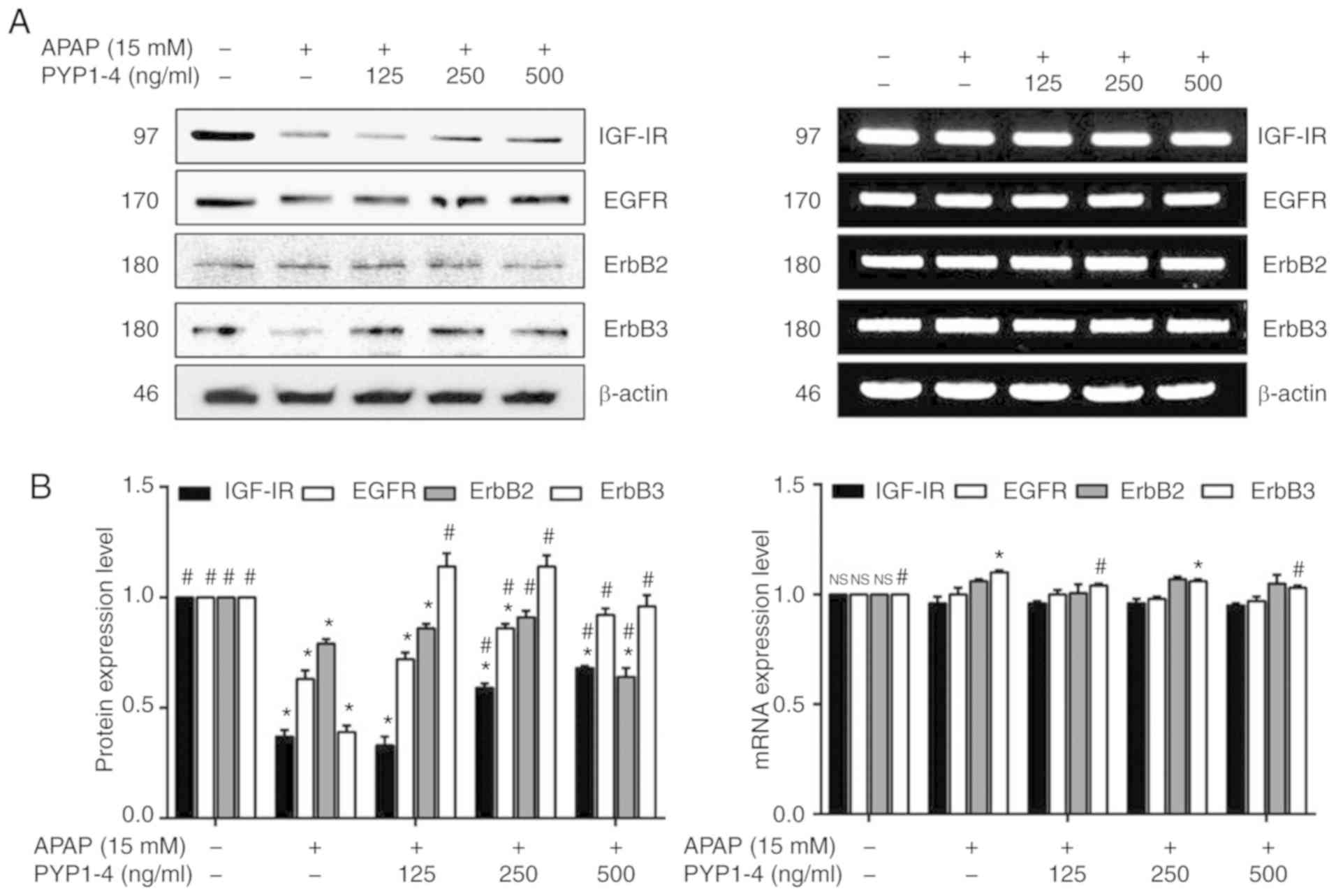
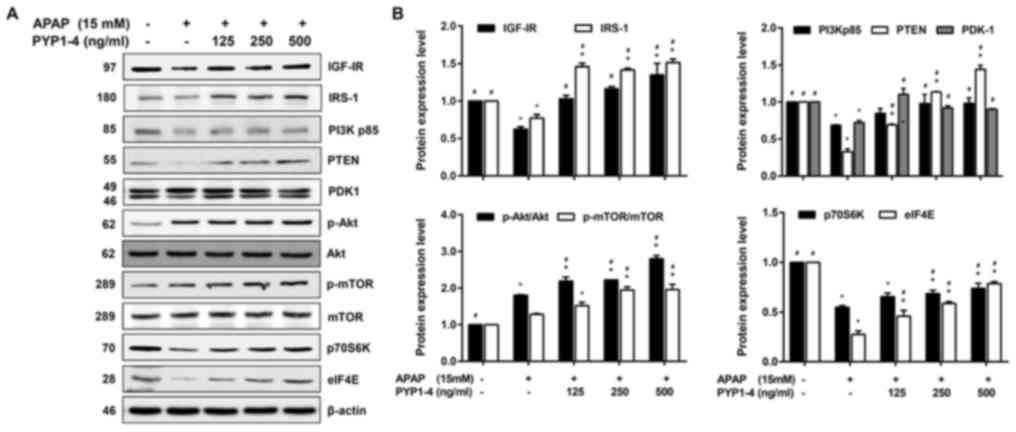
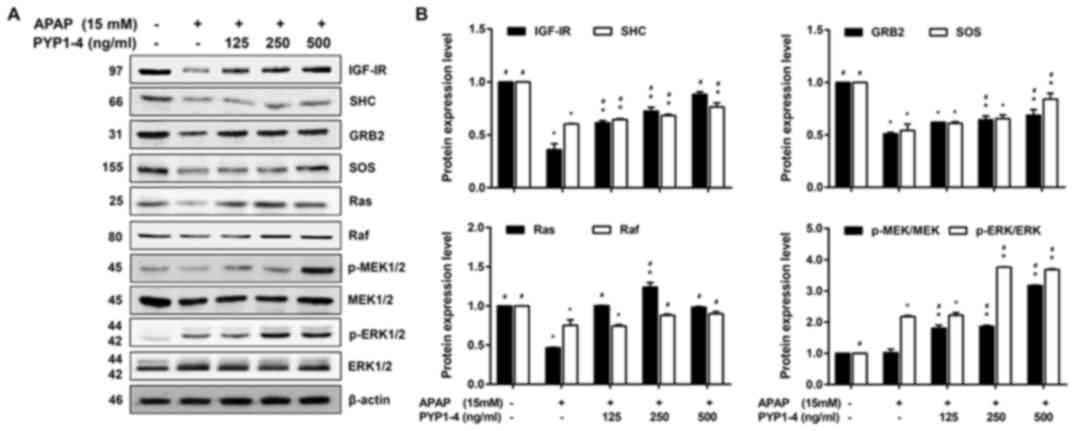
|
1
|
Cuzzolin L, Antonucci R and Fanos V:
Paracetamol (acetaminophen) efficacy and safety in the newborn.
Curr Drug Metab. 14:178–185. 2013. View Article : Google Scholar : PubMed/NCBI
|
|
2
|
Klotz U: Paracetamol (acetaminophen) - a
popular and widely used nonopioid analgesic. Arzneimittelforschung.
62:355–359. 2012. View Article : Google Scholar : PubMed/NCBI
|
|
3
|
Mazaleuskaya LL, Sangkuhl K, Thorn CF,
FitzGerald GA, Altman RB and Klein TE: PharmGKB summary: Pathways
of acetaminophen metabolism at the therapeutic versus toxic doses.
Pharmacogenet Genomics. 25:416–426. 2015. View Article : Google Scholar : PubMed/NCBI
|
|
4
|
Prescott LF: Hepatotoxicity of mild
analgesics. Br J Clin Pharmacol. 2 (Suppl 10):373S–379S. 1980.
View Article : Google Scholar
|
|
5
|
Litovitz TL, Klein-Schwartz W, Rodgers GC
Jr, Cobaugh DJ, Youniss J, Omslaer JC, May ME, Woolf AD and Benson
BE: 2001 annual report of the american association of poison
control centers toxic exposure surveillance system. Am J Emerg Med.
20:391–452. 2002. View Article : Google Scholar : PubMed/NCBI
|
|
6
|
Blieden M, Paramore LC, Shah D and
Ben-Joseph R: A perspective on the epidemiology of acetaminophen
exposure and toxicity in the United States. Expert Rev Clin
Pharmacol. 7:341–348. 2014. View Article : Google Scholar : PubMed/NCBI
|
|
7
|
Simkin S, Hawton K, Kapur N and Gunnell D:
What can be done to reduce mortality from paracetamol overdoses? A
patient interview study. QJM. 105:41–51. 2012. View Article : Google Scholar : PubMed/NCBI
|
|
8
|
Craig DG, Ford AC, Hayes PC and Simpson
KJ: Systematic review: Prognostic tests of paracetamol-induced
acute liver failure. Aliment Pharmacol Ther. 31:1064–1076.
2010.PubMed/NCBI
|
|
9
|
Lee WM: Acetaminophen and the U.S. Acute
Liver Failure Study Group: Lowering the risks of hepatic failure.
Hepatology. 40:6–9. 2004. View Article : Google Scholar : PubMed/NCBI
|
|
10
|
Knight TR, Fariss MW, Farhood A and
Jaeschke H: Role of lipid peroxidation as a mechanism of liver
injury after acetaminophen overdose in mice. Toxicol Sci.
76:229–236. 2003. View Article : Google Scholar : PubMed/NCBI
|
|
11
|
Hinson JA, Roberts DW and James LP:
Mechanisms of acetaminophen-induced liver necrosis. Handb Exp
Pharmacol. 196:369–405. 2010. View Article : Google Scholar
|
|
12
|
Yoon E, Babar A, Choudhary M, Kutner M and
Pyrsopoulos N: Acetaminophen-induced hepatotoxicity: A
comprehensive update. J Clin Transl Hepatol. 4:131–142.
2016.PubMed/NCBI
|
|
13
|
James LP, Mayeux PR and Hinson JA:
Acetaminophen-induced hepatotoxicity. Drug Metab Dispos.
31:1499–1506. 2003. View Article : Google Scholar : PubMed/NCBI
|
|
14
|
Zhao X, Cong X, Zheng L, Xu L, Yin L and
Peng J: Dioscin, a natural steroid saponin, shows remarkable
protective effect against acetaminophen-induced liver damage in
vitro and in vivo. Toxicol Lett. 214:69–80. 2012. View Article : Google Scholar : PubMed/NCBI
|
|
15
|
Liang YL, Zhang ZH, Liu XJ, Liu XQ, Tao L,
Zhang YF, Wang H, Zhang C, Chen X and Xu DX: Melatonin protects
against apoptosis-inducing factor (AIF)-dependent cell death during
acetaminophen-induced acute liver failure. PLoS One. 7:e519112012.
View Article : Google Scholar : PubMed/NCBI
|
|
16
|
Slitt AM, Dominick PK, Roberts JC and
Cohen SD: Effect of ribose cysteine pretreatment on hepatic and
renal acetaminophen metabolite formation and glutathione depletion.
Basic Clin Pharmacol Toxicol. 96:487–494. 2005. View Article : Google Scholar : PubMed/NCBI
|
|
17
|
Yousef MI, Omar SA, El-Guendi MI and
Abdelmegid LA: Potential protective effects of quercetin and
curcumin on paracetamol-induced histological changes, oxidative
stress, impaired liver and kidney functions and haematotoxicity in
rat. Food Chem Toxicol. 48:3246–3261. 2010. View Article : Google Scholar : PubMed/NCBI
|
|
18
|
Yan M, Huo Y, Yin S and Hu H: Mechanisms
of acetaminophen-induced liver injury and its implications for
therapeutic interventions. Redox Biol. 17:274–283. 2018. View Article : Google Scholar : PubMed/NCBI
|
|
19
|
Corcoran GB, Todd EL, Racz WJ, Hughes H,
Smith CV and Mitchell JR: Effects of N-acetylcysteine on the
disposition and metabolism of acetaminophen in mice. J Pharmacol
Exp Ther. 232:857–863. 1985.PubMed/NCBI
|
|
20
|
Shahidi F and Rahman J: Bioactive in
seaweeds, algae, and fungi and their role in health promotion. J
Food Bioact. 2:58–81. 2018. View Article : Google Scholar
|
|
21
|
Niwa K: Genetic analysis of artificial
green and red mutants of Porphyra yezoensis Ueda (Bangiales,
Rhodophyta). Aquaculture. 308:6–12. 2010. View Article : Google Scholar
|
|
22
|
Kim S, You DH, Han T and Choi EM:
Modulation of viability and apoptosis of UVB-exposed human
keratinocyte HaCaT cells by aqueous methanol extract of laver
(Porphyra yezoensis). J Photochem Photobiol B. 141:301–307.
2014. View Article : Google Scholar : PubMed/NCBI
|
|
23
|
Ryu J, Park SJ, Kim IH, Choi YH and Nam
TJ: Protective effect of porphyra-334 on UVA-induced photoaging in
human skin fibroblasts. Int J Mol Med. 34:796–803. 2014. View Article : Google Scholar : PubMed/NCBI
|
|
24
|
Ma XT, Sun XY, Yu K, Gui BS, Gui Q and
Ouyang JM: Effect of content of sulfate groups in seaweed
polysaccharides on antioxidant activity and repair effect of
subcellular organelles in injured HK-2 cells. Oxid Med Cell Longev.
2017:25429502017. View Article : Google Scholar : PubMed/NCBI
|
|
25
|
Toyosaki T and Iwabuchi M: New antioxidant
protein in seaweed (Porphyra yezoensis Ueda). Int J Food Sci
Nutr. 60 (Suppl 2):46–56. 2009. View Article : Google Scholar : PubMed/NCBI
|
|
26
|
Yu X, Zhou C, Yang H, Huang X, Ma H, Qin X
and Hu J: Effect of ultrasonic treatment on the degradation and
inhibition cancer cell lines of polysaccharides from Porphyra
yezoensis. Carbohydr Polym. 117:650–656. 2015. View Article : Google Scholar : PubMed/NCBI
|
|
27
|
Park SJ, Ryu J, Kim IH, Choi YH and Nam
TJ: Activation of the mTOR signaling pathway in breast cancer MCF-7
cells by a peptide derived from Porphyra yezoensis. Oncol
Rep. 33:19–24. 2015. View Article : Google Scholar : PubMed/NCBI
|
|
28
|
Yanagido A, Ueno M, Jiang Z, Cho K,
Yamaguchi K, Kim D and Oda T: Increase in anti-inflammatory
activities of radical-degraded porphyrans isolated from discolored
nori (Pyropia yezoensis). Int J Biol Macromol. 117:78–86.
2018. View Article : Google Scholar : PubMed/NCBI
|
|
29
|
Lee HA, Kim IH and Nam TJ: Bioactive
peptide from Pyropia yezoensis and its anti-inflammatory
activities. Int J Mol Med. 36:1701–1706. 2015. View Article : Google Scholar : PubMed/NCBI
|
|
30
|
Oh JH, Kim EY and Nam TJ:
Phycoerythrin-derived tryptic peptide of a red alga Pyropia
yezoensis attenuates glutamate-induced ER stress and neuronal
senescence in primary rat hippocampal neurons. Mol Nutr Food Res.
62:e17004692018. View Article : Google Scholar : PubMed/NCBI
|
|
31
|
Mohibbullah M, Bhuiyan MM, Hannan MA,
Getachew P, Hong YK, Choi JS, Choi IS and Moon IS: The edible red
alga Porphyra yezoensis promotes neuronal survival and
cytoarchitecture in primary hippocampal neurons. Cell Mol
Neurobiol. 36:669–682. 2016. View Article : Google Scholar : PubMed/NCBI
|
|
32
|
Choi JW, Kim IH, Kim YM, Lee MK and Nam
TJ: Pyropia yezoensis glycoprotein regulates antioxidant
status and prevents hepatotoxicity in a rat model of
D-galactosamine/lipopolysaccharide-induced acute liver failure. Mol
Med Rep. 13:3110–3114. 2016. View Article : Google Scholar : PubMed/NCBI
|
|
33
|
Hwang HJ, Kwon MJ, Kim IH and Nam TJ:
Chemoprotective effects of a protein from the red algae Porphyra
yezoensis on acetaminophen-induced liver injury in rats.
Phytother Res. 22:1149–1153. 2008. View Article : Google Scholar : PubMed/NCBI
|
|
34
|
Choi YH, Yamaguchi K, Oda T and Nam TJ:
Chemical and mass spectrometry characterization of the red alga
Pyropia yezoensis chemoprotective protein (PYP): Protective
activity of the N-terminal fragment of PYP1 against
acetaminophen-induced cell death in chang liver cells. Int J Mol
Med. 35:271–276. 2015. View Article : Google Scholar : PubMed/NCBI
|
|
35
|
Wallace JL: Acetaminophen hepatotoxicity:
NO to the rescue. Br J Pharmacol. 143:1–2. 2004. View Article : Google Scholar : PubMed/NCBI
|
|
36
|
Liu WX, Jia FL, He YY and Zhang BX:
Protective effects of 5-methoxypsoralen against
acetaminophen-induced hepatotoxicity in mice. World J
Gastroenterol. 18:2197–2202. 2012. View Article : Google Scholar : PubMed/NCBI
|
|
37
|
Olaleye MT and Rocha BT:
Acetaminophen-induced liver damage in mice: Effects of some
medicinal plants on the oxidative defense system. Exp Toxicol
Pathol. 59:319–327. 2008. View Article : Google Scholar : PubMed/NCBI
|
|
38
|
Lee KJ, You HJ, Park SJ, Kim YS, Chung YC,
Jeong TC and Jeong HG: Hepatoprotective effects of Platycodon
grandiflorum on acetaminophen-induced liver damage in mice. Cancer
Lett. 174:73–81. 2001. View Article : Google Scholar : PubMed/NCBI
|
|
39
|
Zheng T, Yang X, Wu D, Xing S, Bian F, Li
W, Chi J, Bai X, Wu G, Chen X, et al: Salidroside ameliorates
insulin resistance through activation of a mitochondria-associated
AMPK/PI3K/Akt/GSK3 β pathway. Br J Pharmacol. 172:3284–3301. 2015.
View Article : Google Scholar : PubMed/NCBI
|
|
40
|
Mathur A, Rizvi F and Kakkar P: PHLPP2
down regulation influences nuclear Nrf2 stability via
Akt-1/Gsk3β/Fyn kinase axis in acetaminophen induced oxidative
renal toxicity: Protection accorded by morin. Food Chem Toxicol.
89:19–31. 2016. View Article : Google Scholar : PubMed/NCBI
|
|
41
|
Xing HY, Cai YQ, Wang XF, Wang LL, Li P,
Wang GY and Chen JH: The cytoprotective effect of hyperoside
against oxidative stress is mediated by the Nrf2-ARE signaling
pathway through GSK-3β inactivation. PLoS One. 10:e01451832015.
View Article : Google Scholar : PubMed/NCBI
|
|
42
|
Song E, Fu J, Xia X, Su C and Song Y:
Bazhen decoction protects against acetaminophen induced acute liver
injury by inhibiting oxidative stress, inflammation and apoptosis
in mice. PLoS One. 9:e1074052014. View Article : Google Scholar : PubMed/NCBI
|
|
43
|
Sharma S, Singh RL and Kakkar P:
Modulation of Bax/Bcl-2 and caspases by probiotics during
acetaminophen induced apoptosis in primary hepatocytes. Food Chem
Toxicol. 49:770–779. 2011. View Article : Google Scholar : PubMed/NCBI
|
|
44
|
Cory S, Huang DC and Adams JM: The Bcl-2
family: Roles in cell survival and oncogenesis. Oncogene.
22:8590–8607. 2003. View Article : Google Scholar : PubMed/NCBI
|
|
45
|
Yao NH, Yao DF, Dong ZZ, Yan XD, Chen J,
Yao M, Wang L and Yan MJ: Effects of inhibited IGF-IR expression on
proliferation and apoptosis of human hepatocellular carcinoma cell
lines. Zhonghua Gan Zang Bing Za Zhi. 21:376–380. 2013.(In
Chinese). PubMed/NCBI
|
|
46
|
Kulik G, Klippel A and Weber MJ:
Antiapoptotic signalling by the insulin-like growth factor I
receptor, phosphatidylinositol 3-kinase, and Akt. Mol Cell Biol.
17:1595–1606. 1997. View Article : Google Scholar : PubMed/NCBI
|
|
47
|
Yu H and Rohan T: Role of the insulin-like
growth factor family in cancer development and progression. J Natl
Cancer Inst. 92:1472–1489. 2000. View Article : Google Scholar : PubMed/NCBI
|
|
48
|
MacArtain P, Gill CI, Brooks M, Campbell R
and Rowland IR: Nutritional value of edible seaweeds. Nutr Rev.
65:535–543. 2007. View Article : Google Scholar : PubMed/NCBI
|
|
49
|
Dawczynski CH, Schubert R and Jahreis G:
Amino acids, fatty acids, and dietary fiber in edible seaweed
products. Food Chemistry. 103:891–899. 2007. View Article : Google Scholar
|
|
50
|
Lee JC, Hou MF, Huang HW, Chang FR, Yeh
CC, Tang JY and Chang HW: Marine algal natural products with
anti-oxidative, anti-inflammatory, and anti-cancer properties.
Cancer Cell Int. 13:552013. View Article : Google Scholar : PubMed/NCBI
|
|
51
|
Qu W, Ma H, Pan Z, Luo L, Wang Z and He R:
Preparation and antihypertensive activity of peptides from
Porphyra yezoensis. Food Chem. 123:14–20. 2010. View Article : Google Scholar
|
|
52
|
Ueno M, Cho K, Isaka S, Nishiguchi T,
Yamaguchi K, Kim D and Oda T: Inhibitory effect of sulphated
polysaccharide porphyran (isolated from Porphyra yezoensis)
on RANKL-induced differentiation of RAW264.7 cells into
osteoclasts. Phytother Res. 32:452–458. 2018. View Article : Google Scholar : PubMed/NCBI
|
|
53
|
Hira K, Sultana V, Ara J and Haque SE:
Protective role of Sargassum species in liver and kidney
dysfunctions and associated disorders in rats intoxicated with
carbon tetrachloride and acetaminophen. Pak J Pharm Sci.
30:721–728. 2017.PubMed/NCBI
|
|
54
|
Balaji Raghavendra Rao H, Sathivel A and
Devaki T: Antihepatotoxic nature of Ulva reticulata
(Chlorophyceae) on acetaminophen-induced hepatoxicity in
experimental rats. J Med Food. 7:495–497. 2004. View Article : Google Scholar : PubMed/NCBI
|
|
55
|
Escapa C, Coimbra RN, Paniagua S, García
AI and Otero M: Paracetamol and salicylic acid removal from
contaminated water by microalgae. J Environ Manage. 203:799–806.
2017. View Article : Google Scholar : PubMed/NCBI
|
|
56
|
Hong SW, Lee HS, Jung KH, Lee H and Hong
SS: Protective effect of fucoidan against acetaminophen-induced
liver injury. Arch Pharm Res. 35:1099–1105. 2012. View Article : Google Scholar : PubMed/NCBI
|
|
57
|
Itoh K, Mimura J and Yamamoto M: Discovery
of the negative regulator of Nrf2, Keap1: A historical overview.
Antioxid Redox Signal. 13:1665–1678. 2010. View Article : Google Scholar : PubMed/NCBI
|
|
58
|
Inoue H, Maeda-Yamamoto M, Nesumi A and
Murakami A: Delphinidin-3-O-galactoside protects mouse hepatocytes
from (−)-epigallocatechin-3-gallate-induced cytotoxicity via
up-regulation of heme oxygenase-1 and heat shock protein 70. Nutr
Res. 32:357–364. 2012. View Article : Google Scholar : PubMed/NCBI
|
|
59
|
Jaiswal AK: Nrf2 signaling in coordinated
activation of antioxidant gene expression. Free Radic Biol Med.
36:1199–1207. 2004. View Article : Google Scholar : PubMed/NCBI
|
|
60
|
Kensler TW, Wakabayash N and Biswal S:
Cell survival responses to environmental stresses via the
Keap1-Nrf2-ARE pathway. Annu Rev Pharmacol Toxicol. 47:89–116.
2007. View Article : Google Scholar : PubMed/NCBI
|
|
61
|
Jiang ZY, Xu LL, Lu MC, Chen ZY, Yuan ZW,
Xu XL, Guo XK, Zhang XJ, Sun HP and You QD: Structure-activity and
structure-property relationship and exploratory in vivo evaluation
of the nanomolar Keap1-Nrf2 protein-protein interaction inhibitor.
J Med Chem. 58:6410–6421. 2015. View Article : Google Scholar : PubMed/NCBI
|
|
62
|
Bataille AM and Manautou JE: Nrf2: A
potential target for new therapeutics in liver disease. Clin
Pharmacol Ther. 92:340–348. 2012. View Article : Google Scholar : PubMed/NCBI
|
|
63
|
Kong AN, Owuor E, Yu R, Hebbar V, Chen C,
Hu R and Mandlekar S: Induction of xenobiotic enzymes by the MAP
kinase pathway and the antioxidant or electrophile response element
(ARE/EpRE). Drug Metab Rev. 33:255–271. 2001. View Article : Google Scholar : PubMed/NCBI
|
|
64
|
Nakaso K, Yano H, Fukuhara Y, Takeshima T,
Wada-Isoe K and Nakashima K: PI3K is a key molecule in the
Nrf2-mediated regulation of antioxidative proteins by hemin in
human neuroblastoma cells. FEBS Lett. 546:181–184. 2003. View Article : Google Scholar : PubMed/NCBI
|
|
65
|
Horike N, Sakoda H, Kushiyama A, Ono H,
Fujishiro M, Kamata H, Nishiyama K, Uchijima Y, Kurihara Y,
Kurihara H and Asano T: AMP-activated protein kinase activation
increases phosphorylation of glycogen synthase kinase 3beta and
thereby reduces cAMP-responsive element transcriptional activity
and phosphoenolpyruvate carboxykinase C gene expression in the
liver. J Biol Chem. 283:33902–33910. 2008. View Article : Google Scholar : PubMed/NCBI
|
|
66
|
Konrad D, Rudich A, Bilan PJ, Patel N,
Richardson C, Witters LA and Klip A: Troglitazone causes acute
mitochondrial membrane depolarisation and an AMPK-mediated increase
in glucose phosphorylation in muscle cells. Diabetologia.
48:954–966. 2005. View Article : Google Scholar : PubMed/NCBI
|
|
67
|
Luo J: The role of Glycogen synthase
kinase 3β (GSK3β) in tumorigenesis and cancer chemotherapy. Cancer
Lett. 273:194–200. 2009. View Article : Google Scholar : PubMed/NCBI
|
|
68
|
Shin SM, Cho IJ and Kim SG: Resveratrol
protects mitochondria against oxidative stress through
AMP-activated protein kinase-mediated glycogen synthase
kinase-3beta inhibition downstream of
poly(ADP-ribose)polymerase-LKB1 pathway. Mol Pharmacol. 76:884–895.
2009. View Article : Google Scholar : PubMed/NCBI
|
|
69
|
Wang L, Zhang S, Cheng H, Lv H, Cheng G
and Ci X: Nrf2-mediated liver protection by esculentoside A against
acetaminophen toxicity through the AMPK/Akt/GSK3β pathway. Free
Radic Biol Med. 101:401–412. 2016. View Article : Google Scholar : PubMed/NCBI
|
|
70
|
Jaeschke H and Bajt ML: Intracellular
signaling mechanisms of acetaminophen-induced liver cell death.
Toxicol Sci. 89:31–41. 2006. View Article : Google Scholar : PubMed/NCBI
|
|
71
|
Ray SD, Mumaw VR, Raje RR and Fariss MW:
Protection of acetaminophen-induced hepatocellular apoptosis and
necrosis by cholesteryl hemisuccinate pretreatment. J Pharmacol Exp
Ther. 279:1470–1483. 1996.PubMed/NCBI
|
|
72
|
Kass GE, Macanas-Pirard P, Lee PC and
Hinton RH: The role of apoptosis in acetaminophen-induced injury.
Ann NY Acad Sci. 1010:557–559. 2003. View Article : Google Scholar : PubMed/NCBI
|
|
73
|
Malhi H, Gores GJ and Lemasters JJ:
Apoptosis and necrosis in the liver: A tale of two deaths?
Hepatology. 43 (Suppl 1):S31–S44. 2006. View Article : Google Scholar : PubMed/NCBI
|
|
74
|
Bürkle A, Brabeck C, Diefenbach J and
Beneke S: The emerging role of poly(ADP-ribose) polymerase-1 in
longevity. Int J Biochem Cell Biol. 37:1043–1053. 2005. View Article : Google Scholar : PubMed/NCBI
|
|
75
|
Andrabi SA, Kim NS, Yu SW, Wang H, Koh DW,
Sasaki M, Klaus JA, Otsuka T, Zhang Z, Koehler RC, et al:
Poly(ADP-ribose) (PAR) polymer is a death signal. Proc Natl Acad
Sci USA. 103:18308–18313. 2006. View Article : Google Scholar : PubMed/NCBI
|
|
76
|
Isabelle M, Moreel X, Gagné JP, Rouleau M,
Ethier C, Gagné P, Hendzel MJ and Poirier GG: Investigation of
PARP-1, PARP-2, and PARG interactomes by affinity-purification mass
spectrometry. Proteome Sci. 8:222010. View Article : Google Scholar : PubMed/NCBI
|
|
77
|
Alexia C, Fallot G, Lasfer M,
Schweizer-Groyer G and Groyer A: An evaluation of the role of
insulin-like growth factors (IGF) and of type-I IGF receptor
signalling in hepatocarcinogenesis and in the resistance of
hepatocarcinoma cells against drug-induced apoptosis. Biochem
Pharmacol. 68:1003–1015. 2004. View Article : Google Scholar : PubMed/NCBI
|
|
78
|
Yanai R, Yamada N, Inui M and Nishida T:
Correlation of proliferative and anti-apoptotic effects of HGF,
insulin, IGF-1, IGF-2, and EGF in SV40-transformed human corneal
epithelial cells. Exp Eye Res. 83:76–83. 2006. View Article : Google Scholar : PubMed/NCBI
|
|
79
|
Hwang HJ, Kwon MJ and Nam TJ:
Chemoprotective effect of insulin-like growth factor I against
acetaminophen-induced cell death in chang liver cells via ERK1/2
activation. Toxicology. 230:76–82. 2007. View Article : Google Scholar : PubMed/NCBI
|
|
80
|
Brodt P, Samani A and Navab R: Inhibition
of the type I insulin-like growth factor receptor expression and
signaling: Novel strategies for antimetastatic therapy. Biochem
Pharmacol. 60:1101–1107. 2000. View Article : Google Scholar : PubMed/NCBI
|
|
81
|
Segrelles C, Moral M, Lara MF, Ruiz S,
Santos M, Leis H, García-Escudero R, Martínez-Cruz AB,
Martínez-Palacio J, Hernández P, et al: Molecular determinants of
Akt-induced keratinocyte transformation. Oncogene. 25:1174–1185.
2006. View Article : Google Scholar : PubMed/NCBI
|
|
82
|
Lee ER, Kim JY, Kang YJ, Ahn JY, Kim JH,
Kim BW, Choi HY, Jeong MY and Cho SG: Interplay between PI3K/Akt
and MAPK signaling pathways in DNA-damaging drug-induced apoptosis.
Biochim Biophys Acta. 1763:958–968. 2006. View Article : Google Scholar : PubMed/NCBI
|
|
83
|
Shaw RJ and Cantley LC: Ras, PI(3)K and
mTOR signalling controls tumour cell growth. Nature. 441:424–430.
2006. View Article : Google Scholar : PubMed/NCBI
|
|
84
|
Bhandari BK, Feliers D, Duraisamy S,
Stewart JL, Gingras AC, Abboud HE, Choudhury GG, Sonenberg N and
Kasinath BS: Insulin regulation of protein translation repressor
4E-BP1, an eIF4E-binding protein, in renal epithelial cells. Kidney
Int. 59:866–875. 2001. View Article : Google Scholar : PubMed/NCBI
|
|
85
|
O'Reilly KE, Rojo F, She QB, Solit D,
Mills GB, Smith D, Lane H, Hofmann F, Hicklin DJ, Ludwig DL, et al:
mTOR inhibition induces upstream receptor tyrosine kinase signaling
and activates Akt. Cancer Res. 66:1500–1508. 2006. View Article : Google Scholar : PubMed/NCBI
|
|
86
|
Treisman R: Regulation of transcription by
MAP kinase cascades. Curr Opin Cell Biol. 8:205–215. 1996.
View Article : Google Scholar : PubMed/NCBI
|
|
87
|
Gunawan BK, Liu ZX, Han D, Hanawa N,
Gaarde WA and Kaplowitz N: c-Jun N-terminal kinase plays a major
role in murine acetaminophen hepatotoxicity. Gastroenterology.
131:165–178. 2006. View Article : Google Scholar : PubMed/NCBI
|
|
88
|
Wang KP, Bai Y, Wang J and Zhang JZ:
Inhibitory effects of Schisandra chinensis on
acetaminophen-induced hepatotoxicity. Mol Med Rep. 9:1813–1819.
2014. View Article : Google Scholar : PubMed/NCBI
|
|
89
|
Dews M, Prisco M, Peruzzi F, Romano G,
Morrione A and Baserga R: Domains of the insulin-like growth factor
I receptor required for the activation of extracellular
signal-regulated kinases. Endocrinology. 141:1289–1300. 2000.
View Article : Google Scholar : PubMed/NCBI
|
|
90
|
Prasad R, Vaid M and Katiyar SK: Grape
proanthocyanidin inhibit pancreatic cancer cell growth in vitro and
in vivo through induction of apoptosis and by targeting the
PI3K/Akt pathway. PLoS One. 7:e430642012. View Article : Google Scholar : PubMed/NCBI
|