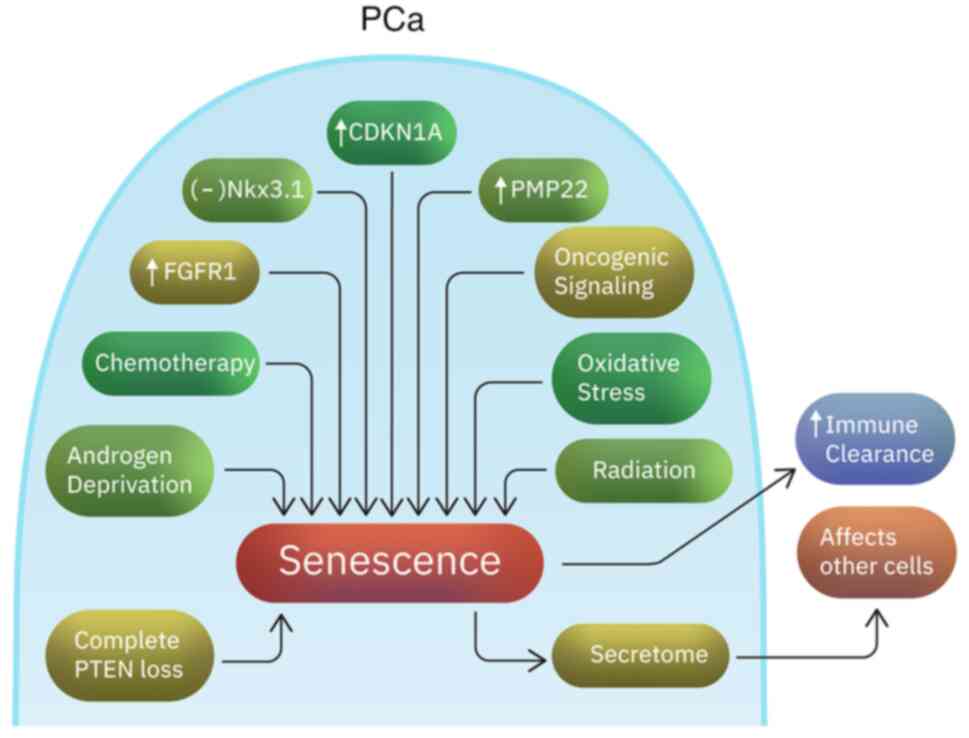
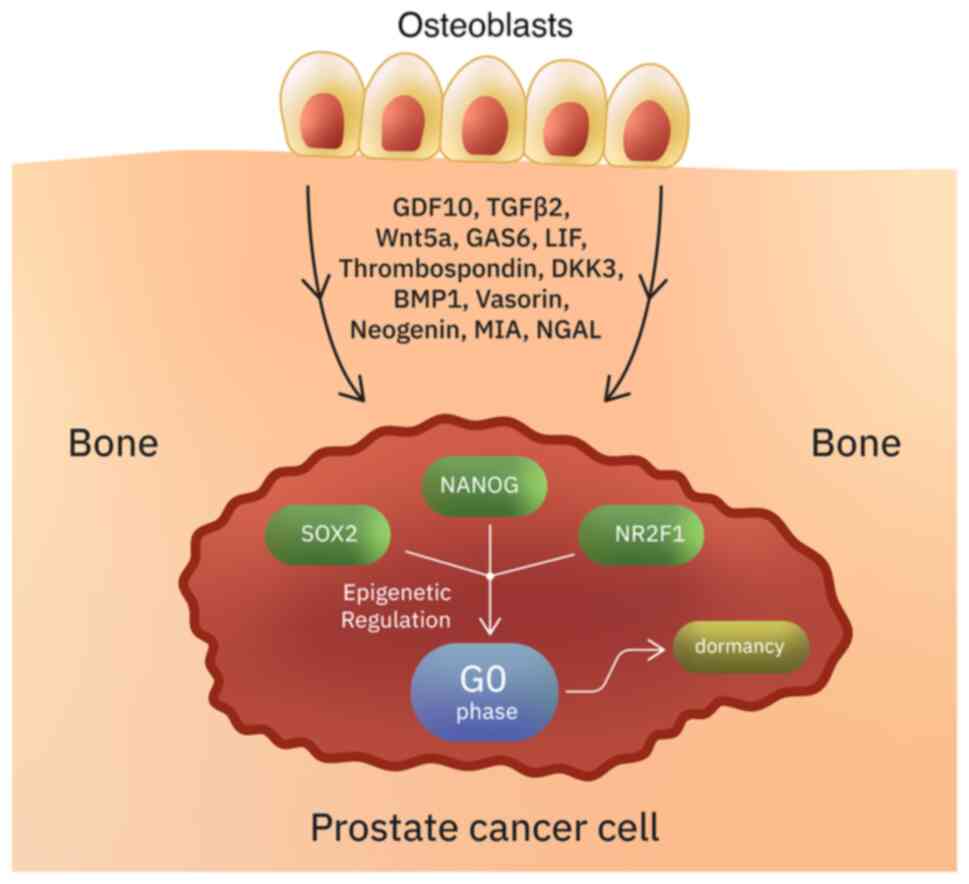
|
1
|
Siegel RL, Miller KD and Jemal A: Cancer
statistics, 2020. CA Cancer J Clin. 70:7–30. 2020.PubMed/NCBI View Article : Google Scholar
|
|
2
|
Wadosky KM and Koochekpour S: Molecular
mechanisms underlying resistance to androgen deprivation therapy in
prostate cancer. Oncotarget. 7:64447–64470. 2016.PubMed/NCBI View Article : Google Scholar
|
|
3
|
Varkaris A, Katsiampoura AD, Araujo JC,
Gallick GE and Corn PG: Src signaling pathways in prostate cancer.
Cancer Metastasis Rev. 33:595–606. 2014.PubMed/NCBI View Article : Google Scholar
|
|
4
|
Koinis F, Corn P, Parikh N, Song J,
Vardaki I, Mourkioti I, Lin SH, Logothetis C, Panaretakis T and
Gallick G: Resistance to MET/VEGFR2 inhibition by cabozantinib is
mediated by YAP/TBX5-dependent induction of FGFR1 in
castration-resistant prostate cancer. Cancers (Basel).
12(244)2020.PubMed/NCBI View Article : Google Scholar
|
|
5
|
Smith M, De Bono J, Sternberg C, Le Moulec
S, Oudard S, De Giorgi U, Krainer M, Bergman A, Hoelzer W, De Wit
R, et al: Phase III study of cabozantinib in previously treated
metastatic castration-resistant prostate cancer: COMET-1. J Clin
Oncol. 34:3005–3013. 2016.PubMed/NCBI View Article : Google Scholar
|
|
6
|
Michaelson MD, Oudard S, Ou YC, Sengeløv
L, Saad F, Houede N, Ostler P, Stenzl A, Daugaard G, Jones R, et
al: Randomized, placebo-controlled, phase III trial of sunitinib
plus prednisone versus prednisone alone in progressive, metastatic,
castration-resistant prostate cancer. J Clin Oncol. 32:76–82.
2014.PubMed/NCBI View Article : Google Scholar
|
|
7
|
Spreafico A, Chi KN, Sridhar SS, Smith DC,
Carducci MA, Kavsak P, Wong TS, Wang L, Ivy SP, Mukherjee SD, et
al: A randomized phase II study of cediranib alone versus cediranib
in combination with dasatinib in docetaxel resistant, castration
resistant prostate cancer patients. Invest New Drugs. 32:1005–1016.
2014.PubMed/NCBI View Article : Google Scholar
|
|
8
|
Dagogo-Jack I and Shaw AT: Tumour
heterogeneity and resistance to cancer therapies. Nat Rev Clin
Oncol. 15:81–94. 2018.PubMed/NCBI View Article : Google Scholar
|
|
9
|
Denmeade SR and Isaacs JT: A history of
prostate cancer treatment. Nat Rev Cancer. 2:389–396.
2002.PubMed/NCBI View
Article : Google Scholar
|
|
10
|
Epstein JI, Zelefsky MJ, Sjoberg DD,
Nelson JB, Egevad L, Magi-Galluzzi C, Vickers AJ, Parwani AV,
Reuter VE, Fine SW, et al: A contemporary prostate cancer grading
system: A validated alternative to the gleason score. Eur Urol.
69:428–435. 2016.PubMed/NCBI View Article : Google Scholar
|
|
11
|
Johansson JE, Holmberg L, Johansson S,
Bergström R and Adami HO: Fifteen-year survival in prostate cancer.
A prospective, population-based study in Sweden. JAMA. 277:467–471.
1997.PubMed/NCBI
|
|
12
|
Simpkin AJ, Tilling K, Martin RM, Lane JA,
Hamdy FC, Holmberg L, Neal DE, Metcalfe C and Donovan JL:
Systematic review and meta-analysis of factors determining change
to radical treatment in active surveillance for localized prostate
cancer. Eur Urol. 67:993–1005. 2015.PubMed/NCBI View Article : Google Scholar
|
|
13
|
Musunuru HB, Yamamoto T, Klotz L, Ghanem
G, Mamedov A, Sethukavalan P, Jethava V, Jain S, Zhang L, Vesprini
D and Loblaw A: Active surveillance for intermediate risk prostate
cancer: Survival outcomes in the sunnybrook experience. J Urol.
196:1651–1658. 2016.PubMed/NCBI View Article : Google Scholar
|
|
14
|
Herlemann A, Huang HC, Alam R, Tosoian JJ,
Kim HL, Klein EA, Simko JP, Chan JM, Lane BR, Davis JW, et al:
Decipher identifies men with otherwise clinically
favorable-intermediate risk disease who may not be good candidates
for active surveillance. Prostate Cancer Prostatic Dis. 23:136–143.
2020.PubMed/NCBI View Article : Google Scholar
|
|
15
|
Kornberg Z, Cooperberg MR, Cowan JE, Chan
JM, Shinohara K, Simko JP, Tenggara I and Carroll PR: A 17-gene
genomic prostate score as a predictor of adverse pathology in men
on active surveillance. J Urol. 202:702–709. 2019.PubMed/NCBI View Article : Google Scholar
|
|
16
|
Spratt DE, Zhang J, Santiago-Jiménez M,
Dess RT, Davis JW, Den RB, Dicker AP, Kane CJ, Pollack A, Stoyanova
R, et al: Development and validation of a novel integrated
clinical-genomic risk group classification for localized prostate
cancer. J Clin Oncol. 36:581–590. 2018.PubMed/NCBI View Article : Google Scholar
|
|
17
|
Spratt DE, Yousefi K, Deheshi S, Ross AE,
Den RB, Schaeffer EM, Trock BJ, Zhang J, Glass AG, Dicker AP, et
al: Individual patient-level meta-analysis of the performance of
the decipher genomic classifier in high-risk men after
prostatectomy to predict development of metastatic disease. J Clin
Oncol. 35:1991–1998. 2017.PubMed/NCBI View Article : Google Scholar
|
|
18
|
Pound CR, Partin AW, Eisenberger MA, Chan
DW, Pearson JD and Walsh PC: Natural history of progression after
PSA elevation following radical prostatectomy. JAMA. 281:1591–1597.
1999.PubMed/NCBI View Article : Google Scholar
|
|
19
|
Boorjian SA, Thompson RH, Tollefson MK,
Rangel LJ, Bergstralh EJ, Blute ML and Karnes RJ: Long-term risk of
clinical progression after biochemical recurrence following radical
prostatectomy: The impact of time from surgery to recurrence. Eur
Urol. 59:893–899. 2011.PubMed/NCBI View Article : Google Scholar
|
|
20
|
Martin NE, Chen MH, Beard CJ, Nguyen PL,
Loffredo MJ, Renshaw AA, Kantoff PW and D'Amico AV: Natural history
of untreated prostate specific antigen radiorecurrent prostate
cancer in men with favorable prognostic indicators. Prostate
Cancer. 2014(912943)2014.PubMed/NCBI View Article : Google Scholar
|
|
21
|
Trock BJ, Han M, Freedland SJ, Humphreys
EB, DeWeese TL, Partin AW and Walsh PC: Prostate cancer-specific
survival following salvage radiotherapy vs observation in men with
biochemical recurrence after radical prostatectomy. JAMA.
299:2760–2769. 2008.PubMed/NCBI View Article : Google Scholar
|
|
22
|
Stone L: Prostate cancer: ADT after
radical prostatectomy-when and how? Nat Rev Urol.
13(367)2016.PubMed/NCBI View Article : Google Scholar
|
|
23
|
Muralidhar V, Mahal BA and Nguyen PL:
Conditional cancer-specific mortality in T4, N1, or M1 prostate
cancer: Implications for long-term prognosis. Radiat Oncol.
10(155)2015.PubMed/NCBI View Article : Google Scholar
|
|
24
|
Scher HI, Fizazi K, Saad F, Taplin ME,
Sternberg CN, Miller K, de Wit R, Mulders P, Chi KN, Shore ND, et
al: Increased survival with enzalutamide in prostate cancer after
chemotherapy. N Engl J Med. 367:1187–1197. 2012.PubMed/NCBI View Article : Google Scholar
|
|
25
|
James ND, de Bono JS, Spears MR, Clarke
NW, Mason MD, Dearnaley DP, Ritchie AWS, Amos CL, Gilson C, Jones
RJ, et al: Abiraterone for prostate cancer not previously treated
with hormone therapy. N Engl J Med. 377:338–351. 2017.PubMed/NCBI View Article : Google Scholar
|
|
26
|
Chandrasekar T, Yang JC, Gao AC and Evans
CP: Targeting molecular resistance in castration-resistant prostate
cancer. BMC Med. 13(206)2015.PubMed/NCBI View Article : Google Scholar
|
|
27
|
Fine SW: Neuroendocrine tumors of the
prostate. Mod Pathol. 31 (S1):S122–S132. 2018.PubMed/NCBI View Article : Google Scholar
|
|
28
|
Cancer Genome Atlas Research Network. The
molecular taxonomy of primary prostate cancer. Cell. 163:1011–1025.
2015.PubMed/NCBI View Article : Google Scholar
|
|
29
|
Hieronymus H, Schultz N, Gopalan A, Carver
BS, Chang MT, Xiao Y, Heguy A, Huberman K, Bernstein M, Assel M, et
al: Copy number alteration burden predicts prostate cancer relapse.
Proc Natl Acad Sci USA. 111:11139–11144. 2014.PubMed/NCBI View Article : Google Scholar
|
|
30
|
Taylor BS, Schultz N, Hieronymus H,
Gopalan A, Xiao Y, Carver BS, Arora VK, Kaushik P, Cerami E, Reva
B, et al: Integrative genomic profiling of human prostate cancer.
Cancer Cell. 18:11–22. 2010.PubMed/NCBI View Article : Google Scholar
|
|
31
|
Paris PL, Andaya A, Fridlyand J, Jain AN,
Weinberg V, Kowbel D, Brebner JH, Simko J, Watson JE, Volik S, et
al: Whole genome scanning identifies genotypes associated with
recurrence and metastasis in prostate tumors. Hum Mol Genet.
13:1303–1313. 2004.PubMed/NCBI View Article : Google Scholar
|
|
32
|
Chu LW, Troncoso P, Johnston DA and Liang
JC: Genetic markers useful for distinguishing between
organ-confined and locally advanced prostate cancer. Genes
Chromosomes Cancer. 36:303–312. 2003.PubMed/NCBI View Article : Google Scholar
|
|
33
|
Tomlins SA, Rhodes DR, Perner S,
Dhanasekaran SM, Mehra R, Sun XW, Varambally S, Cao X, Tchinda J,
Kuefer R, et al: Recurrent fusion of TMPRSS2 and ETS transcription
factor genes in prostate cancer. Science. 310:644–648.
2005.PubMed/NCBI View Article : Google Scholar
|
|
34
|
Sboner A, Habegger L, Pflueger D, Terry S,
Chen DZ, Rozowsky JS, Tewari AK, Kitabayashi N, Moss BJ, Chee MS,
et al: FusionSeq: A modular framework for finding gene fusions by
analyzing paired-end RNA-sequencing data. Genome Biol.
11(R104)2010.PubMed/NCBI View Article : Google Scholar
|
|
35
|
Wang K, Singh D, Zeng Z, Coleman SJ, Huang
Y, Savich GL, He X, Mieczkowski P, Grimm SA, Perou CM, et al:
MapSplice: Accurate mapping of RNA-seq reads for splice junction
discovery. Nucleic Acids Res. 38(e178)2010.PubMed/NCBI View Article : Google Scholar
|
|
36
|
Tomlins SA, Bjartell A, Chinnaiyan AM,
Jenster G, Nam RK, Rubin MA and Schalken JA: ETS gene fusions in
prostate cancer: From discovery to daily clinical practice. Eur
Urol. 56:275–286. 2009.PubMed/NCBI View Article : Google Scholar
|
|
37
|
Beltran H, Prandi D, Mosquera JM, Benelli
M, Puca L, Cyrta J, Marotz C, Giannopoulou E, Chakravarthi BV,
Varambally S, et al: Divergent clonal evolution of
castration-resistant neuroendocrine prostate cancer. Nat Med.
22:298–305. 2016.PubMed/NCBI View Article : Google Scholar
|
|
38
|
Tzelepi V, Logotheti S, Efstathiou E,
Troncoso P, Aparicio A, Sakellakis M, Hoang A, Perimenis P,
Melachrinou M, Logothetis C and Zolota V: Epigenetics and prostate
cancer: Defining the timing of DNA methyltransferase deregulation
during prostate cancer progression. Pathology. 52:218–227.
2020.PubMed/NCBI View Article : Google Scholar
|
|
39
|
Macedo-Silva C, Benedetti R, Ciardiello F,
Cappabianca S, Jerónimo C and Altucci L: Epigenetic mechanisms
underlying prostate cancer radioresistance. Clin Epigenetics.
13(125)2021.PubMed/NCBI View Article : Google Scholar
|
|
40
|
Ngollo M, Dagdemir A, Karsli-Ceppioglu S,
Judes G, Pajon A, Penault-Llorca F, Boiteux JP, Bignon YJ, Guy L
and Bernard-Gallon DJ: Epigenetic modifications in prostate cancer.
Epigenomics. 6:415–426. 2014.PubMed/NCBI View Article : Google Scholar
|
|
41
|
Kumaraswamy A, Welker Leng KR, Westbrook
TC, Yates JA, Zhao SG, Evans CP, Feng FY, Morgan TM and Alumkal JJ:
Recent advances in epigenetic biomarkers and epigenetic targeting
in prostate cancer. Eur Urol. 80:71–81. 2021.PubMed/NCBI View Article : Google Scholar
|
|
42
|
Weinhold B: Epigenetics: The science of
change. Environ Health Perspect. 114:A160–A167. 2006.PubMed/NCBI View Article : Google Scholar
|
|
43
|
Sugiura M, Sato H, Kanesaka M, Imamura Y,
Sakamoto S, Ichikawa T and Kaneda A: Epigenetic modifications in
prostate cancer. Int J Urol. 28:140–149. 2021.PubMed/NCBI View Article : Google Scholar
|
|
44
|
Dawson MA: The cancer epigenome: Concepts,
challenges, and therapeutic opportunities. Science. 355:1147–1152.
2017.PubMed/NCBI View Article : Google Scholar
|
|
45
|
Herman JG, Umar A, Polyak K, Graff JR,
Ahuja N, Issa JP, Markowitz S, Willson JK, Hamilton SR, Kinzler KW,
et al: Incidence and functional consequences of hMLH1 promoter
hypermethylation in colorectal carcinoma. Proc Natl Acad Sci USA.
95:6870–6875. 1998.PubMed/NCBI View Article : Google Scholar
|
|
46
|
Kane MF, Loda M, Gaida GM, Lipman J,
Mishra R, Goldman H, Jessup JM and Kolodner R: Methylation of the
hMLH1 promoter correlates with lack of expression of hMLH1 in
sporadic colon tumors and mismatch repair-defective human tumor
cell lines. Cancer Res. 57:808–811. 1997.PubMed/NCBI
|
|
47
|
Shih AH, Abdel-Wahab O, Patel JP and
Levine RL: The role of mutations in epigenetic regulators in
myeloid malignancies. Nat Rev Cancer. 12:599–612. 2012.PubMed/NCBI View Article : Google Scholar
|
|
48
|
Ge R, Wang Z, Montironi R, Jiang Z, Cheng
M, Santoni M, Huang K, Massari F, Lu X, Cimadamore A, et al:
Epigenetic modulations and lineage plasticity in advanced prostate
cancer. Ann Oncol. 31:470–479. 2020.PubMed/NCBI View Article : Google Scholar
|
|
49
|
Yegnasubramanian S, Haffner MC, Zhang Y,
Gurel B, Cornish TC, Wu Z, Irizarry RA, Morgan J, Hicks J, DeWeese
TL, et al: DNA hypomethylation arises later in prostate cancer
progression than CpG island hypermethylation and contributes to
metastatic tumor heterogeneity. Cancer Res. 68:8954–8967.
2008.PubMed/NCBI View Article : Google Scholar
|
|
50
|
Aggarwal R, Huang J, Alumkal JJ, Zhang L,
Feng FY, Thomas GV, Weinstein AS, Friedl V, Zhang C, Witte ON, et
al: Clinical and genomic characterization of treatment-emergent
small-cell neuroendocrine prostate cancer: A multi-institutional
prospective study. J Clin Oncol. 36:2492–2503. 2018.PubMed/NCBI View Article : Google Scholar
|
|
51
|
Davies A, Zoubeidi A and Selth LA: The
epigenetic and transcriptional landscape of neuroendocrine prostate
cancer. Endocr Relat Cancer. 27:R35–R50. 2020.PubMed/NCBI View Article : Google Scholar
|
|
52
|
Park JW, Lee JK, Sheu KM, Wang L, Balanis
NG, Nguyen K, Smith BA, Cheng C, Tsai BL, Cheng D, et al:
Reprogramming normal human epithelial tissues to a common, lethal
neuroendocrine cancer lineage. Science. 362:91–95. 2018.PubMed/NCBI View Article : Google Scholar
|
|
53
|
McCabe MT, Davis JN and Day ML: Regulation
of DNA methyltransferase 1 by the pRb/E2F1 pathway. Cancer Res.
65:3624–3632. 2005.PubMed/NCBI View Article : Google Scholar
|
|
54
|
Lin RK, Wu CY, Chang JW, Juan LJ, Hsu HS,
Chen CY, Lu YY, Tang YA, Yang YC, Yang PC and Wang YC:
Dysregulation of p53/Sp1 control leads to DNA methyltransferase-1
overexpression in lung cancer. Cancer Res. 70:5807–5817.
2010.PubMed/NCBI View Article : Google Scholar
|
|
55
|
Viré E, Brenner C, Deplus R, Blanchon L,
Fraga M, Didelot C, Morey L, Van Eynde A, Bernard D, Vanderwinden
JM, et al: The Polycomb group protein EZH2 directly controls DNA
methylation. Nature. 439:871–874. 2006.PubMed/NCBI View Article : Google Scholar
|
|
56
|
Shan J, Al-Muftah MA, Al-Kowari MK,
Abuaqel SWJ, Al-Rumaihi K, Al-Bozom I, Li P and Chouchane L:
Targeting Wnt/EZH2/microRNA-708 signaling pathway inhibits
neuroendocrine differentiation in prostate cancer. Cell Death
Discov. 5(139)2019.PubMed/NCBI View Article : Google Scholar
|
|
57
|
Dardenne E, Beltran H, Benelli M, Gayvert
K, Berger A, Puca L, Cyrta J, Sboner A, Noorzad Z, MacDonald T, et
al: N-Myc induces an EZH2-mediated transcriptional program driving
neuroendocrine prostate cancer. Cancer Cell. 30:563–577.
2016.PubMed/NCBI View Article : Google Scholar
|
|
58
|
Shah N, Wang P, Wongvipat J, Karthaus WR,
Abida W, Armenia J, Rockowitz S, Drier Y, Bernstein BE, Long HW, et
al: Regulation of the glucocorticoid receptor via a BET-dependent
enhancer drives antiandrogen resistance in prostate cancer. Elife.
6(e27861)2017.PubMed/NCBI View Article : Google Scholar
|
|
59
|
Fu M, Liu M, Sauve AA, Jiao X, Zhang X, Wu
X, Powell MJ, Yang T, Gu W, Avantaggiati ML, et al: Hormonal
control of androgen receptor function through SIRT1. Mol Cell Biol.
26:8122–8135. 2006.PubMed/NCBI View Article : Google Scholar
|
|
60
|
Zhang X, Coleman IM, Brown LG, True LD,
Kollath L, Lucas JM, Lam HM, Dumpit R, Corey E, Chéry L, et al:
SRRM4 expression and the loss of REST activity may promote the
emergence of the neuroendocrine phenotype in castration-resistant
prostate cancer. Clin Cancer Res. 21:4698–4708. 2015.PubMed/NCBI View Article : Google Scholar
|
|
61
|
Li Y, Donmez N, Sahinalp C, Xie N, Wang Y,
Xue H, Mo F, Beltran H, Gleave M, Wang Y, et al: SRRM4 drives
neuroendocrine transdifferentiation of prostate adenocarcinoma
under androgen receptor pathway inhibition. Eur Urol. 71:68–78.
2017.PubMed/NCBI View Article : Google Scholar
|
|
62
|
Nam RK, Benatar T, Amemiya Y, Wallis CJD,
Romero JM, Tsagaris M, Sherman C, Sugar L and Seth A: MicroRNA-652
induces NED in LNCaP and EMT in PC3 prostate cancer cells.
Oncotarget. 9:19159–19176. 2018.PubMed/NCBI View Article : Google Scholar
|
|
63
|
Xu K, Wu ZJ, Groner AC, He HH, Cai C, Lis
RT, Wu X, Stack EC, Loda M, Liu T, et al: EZH2 oncogenic activity
in castration-resistant prostate cancer cells is
Polycomb-independent. Science. 338:1465–1469. 2012.PubMed/NCBI View Article : Google Scholar
|
|
64
|
Kim J, Lee Y, Lu X, Song B, Fong KW, Cao
Q, Licht JD, Zhao JC and Yu J: Polycomb- and
methylation-independent roles of EZH2 as a transcription activator.
Cell Rep. 25:2808–2820.e4. 2018.PubMed/NCBI View Article : Google Scholar
|
|
65
|
Bilusic M, Madan RA and Gulley JL:
Immunotherapy of prostate cancer: Facts and hopes. Clin Cancer Res.
23:6764–6770. 2017.PubMed/NCBI View Article : Google Scholar
|
|
66
|
Vitkin N, Nersesian S, Siemens DR and Koti
M: The tumor immune contexture of prostate cancer. Front Immunol.
10(603)2019.PubMed/NCBI View Article : Google Scholar
|
|
67
|
Fridman WH, Zitvogel L, Sautès-Fridman C
and Kroemer G: The immune contexture in cancer prognosis and
treatment. Nat Rev Clin Oncol. 14:717–734. 2017.PubMed/NCBI View Article : Google Scholar
|
|
68
|
Mellman I, Coukos G and Dranoff G: Cancer
immunotherapy comes of age. Nature. 480:480–489. 2011.PubMed/NCBI View Article : Google Scholar
|
|
69
|
Topalian SL, Taube JM, Anders RA and
Pardoll DM: Mechanism-driven biomarkers to guide immune checkpoint
blockade in cancer therapy. Nat Rev Cancer. 16:275–287.
2016.PubMed/NCBI View Article : Google Scholar
|
|
70
|
Leclerc BG, Charlebois R, Chouinard G,
Allard B, Pommey S, Saad F and Stagg J: CD73 expression is an
independent prognostic factor in prostate cancer. Clin Cancer Res.
22:158–166. 2016.PubMed/NCBI View Article : Google Scholar
|
|
71
|
Ness N, Andersen S, Valkov A, Nordby Y,
Donnem T, Al-Saad S, Busund LT, Bremnes RM and Richardsen E:
Infiltration of CD8+ lymphocytes is an independent prognostic
factor of biochemical failure-free survival in prostate cancer.
Prostate. 74:1452–1461. 2014.PubMed/NCBI View Article : Google Scholar
|
|
72
|
Petitprez F, Fossati N, Vano Y, Freschi M,
Becht E, Lucianò R, Calderaro J, Guédet T, Lacroix L, Rancoita PMV,
et al: PD-L1 expression and CD8+ T-cell infiltrate are
associated with clinical progression in patients with node-positive
prostate cancer. Eur Urol Focus. 5:192–196. 2019.PubMed/NCBI View Article : Google Scholar
|
|
73
|
Zhao SG, Lehrer J, Chang SL, Das R, Erho
N, Liu Y, Sjöström M, Den RB, Freedland SJ, Klein EA, et al: The
immune landscape of prostate cancer and nomination of PD-L2 as a
potential therapeutic target. J Natl Cancer Inst. 111:301–310.
2019.PubMed/NCBI View Article : Google Scholar
|
|
74
|
Sharma P, Hu-Lieskovan S, Wargo JA and
Ribas A: Primary, adaptive, and acquired resistance to cancer
immunotherapy. Cell. 168:707–723. 2017.PubMed/NCBI View Article : Google Scholar
|
|
75
|
Nardone V, Botta C, Caraglia M, Martino
EC, Ambrosio MR, Carfagno T, Tini P, Semeraro L, Misso G, Grimaldi
A, et al: Tumor infiltrating T lymphocytes expressing FoxP3, CCR7
or PD-1 predict the outcome of prostate cancer patients subjected
to salvage radiotherapy after biochemical relapse. Cancer Biol
Ther. 17:1213–1220. 2016.PubMed/NCBI View Article : Google Scholar
|
|
76
|
Lundholm M, Hägglöf C, Wikberg ML, Stattin
P, Egevad L, Bergh A, Wikström P, Palmqvist R and Edin S: Secreted
factors from colorectal and prostate cancer cells skew the immune
response in opposite directions. Sci Rep. 5(15651)2015.PubMed/NCBI View Article : Google Scholar
|
|
77
|
Mariathasan S, Turley SJ, Nickles D,
Castiglioni A, Yuen K, Wang Y, Kadel EE III, Koeppen H, Astarita
JL, Cubas R, et al: TGFβ attenuates tumour response to PD-L1
blockade by contributing to exclusion of T cells. Nature.
554:544–548. 2018.PubMed/NCBI View Article : Google Scholar
|
|
78
|
Heninger E, Krueger TE, Thiede SM, Sperger
JM, Byers BL, Kircher MR, Kosoff D, Yang B, Jarrard DF, McNeel DG
and Lang JM: Inducible expression of cancer-testis antigens in
human prostate cancer. Oncotarget. 7:84359–84374. 2016.PubMed/NCBI View Article : Google Scholar
|
|
79
|
Sanda MG, Restifo NP, Walsh JC, Kawakami
Y, Nelson WG, Pardoll DM and Simons JW: Molecular characterization
of defective antigen processing in human prostate cancer. J Natl
Cancer Inst. 87:280–285. 1995.PubMed/NCBI View Article : Google Scholar
|
|
80
|
Martini M, Testi MG, Pasetto M, Picchio
MC, Innamorati G, Mazzocco M, Ugel S, Cingarlini S, Bronte V,
Zanovello P, et al: IFN-gamma-mediated upmodulation of MHC class I
expression activates tumor-specific immune response in a mouse
model of prostate cancer. Vaccine. 28:3548–3557. 2010.PubMed/NCBI View Article : Google Scholar
|
|
81
|
Chen L and Guo D: The functions of tumor
suppressor PTEN in innate and adaptive immunity. Cell Mol Immunol.
14:581–589. 2017.PubMed/NCBI View Article : Google Scholar
|
|
82
|
Ivashkiv LB and Donlin LT: Regulation of
type I interferon responses. Nat Rev Immunol. 14:36–49.
2014.PubMed/NCBI View Article : Google Scholar
|
|
83
|
Pencik J, Schlederer M, Gruber W, Unger C,
Walker SM, Chalaris A, Marié IJ, Hassler MR, Javaheri T, Aksoy O,
et al: STAT3 regulated ARF expression suppresses prostate cancer
metastasis. Nat Commun. 6(7736)2015.PubMed/NCBI View Article : Google Scholar
|
|
84
|
Peng W, Chen JQ, Liu C, Malu S, Creasy C,
Tetzlaff MT, Xu C, McKenzie JA, Zhang C, Liang X, et al: Loss of
PTEN promotes resistance to T cell-mediated immunotherapy. Cancer
Discov. 6:202–216. 2016.PubMed/NCBI View Article : Google Scholar
|
|
85
|
Jiao S, Subudhi SK, Aparicio A, Ge Z, Guan
B, Miura Y and Sharma P: Differences in tumor microenvironment
dictate T helper lineage polarization and response to immune
checkpoint therapy. Cell. 179:1177–1190.e13. 2019.PubMed/NCBI View Article : Google Scholar
|
|
86
|
Stultz J and Fong L: How to turn up the
heat on the cold immune microenvironment of metastatic prostate
cancer. Prostate Cancer Prostatic Dis. 24:697–717. 2021.PubMed/NCBI View Article : Google Scholar
|
|
87
|
Kwon ED, Drake CG, Scher HI, Fizazi K,
Bossi A, van den Eertwegh AJ, Krainer M, Houede N, Santos R,
Mahammedi H, et al: Ipilimumab versus placebo after radiotherapy in
patients with metastatic castration-resistant prostate cancer that
had progressed after docetaxel chemotherapy (CA184-043): A
multicentre, randomised, double-blind, phase 3 trial. Lancet Oncol.
15:700–712. 2014.PubMed/NCBI View Article : Google Scholar
|
|
88
|
Bonollo F, Thalmann GN, Kruithof-de Julio
M and Karkampouna S: The role of cancer-associated fibroblasts in
prostate cancer tumorigenesis. Cancers (Basel).
12(1887)2020.PubMed/NCBI View Article : Google Scholar
|
|
89
|
Blom S, Erickson A, Östman A, Rannikko A,
Mirtti T, Kallioniemi O and Pellinen T: Fibroblast as a critical
stromal cell type determining prognosis in prostate cancer.
Prostate. 79:1505–1513. 2019.PubMed/NCBI View Article : Google Scholar
|
|
90
|
Suhovskih AV, Kashuba VI, Klein G and
Grigorieva EV: Prostate cancer cells specifically reorganize
epithelial cell-fibroblast communication through proteoglycan and
junction pathways. Cell Adh Migr. 11:39–53. 2017.PubMed/NCBI View Article : Google Scholar
|
|
91
|
Ma JB, Bai JY, Zhang HB, Gu L, He D and
Guo P: Downregulation of collagen COL4A6 is associated with
prostate cancer progression and metastasis. Genet Test Mol
Biomarkers. 24:399–408. 2020.PubMed/NCBI View Article : Google Scholar
|
|
92
|
Ren X, Chen X, Fang K, Zhang X, Wei X,
Zhang T, Li G, Lu Z, Song N, Wang S and Qin C: COL5A2 promotes
proliferation and invasion in prostate cancer and is one of seven
gleason-related genes that predict recurrence-free survival. Front
Oncol. 11(583083)2021.PubMed/NCBI View Article : Google Scholar
|
|
93
|
Bahmad HF, Jalloul M, Azar J, Moubarak MM,
Samad TA, Mukherji D, Al-Sayegh M and Abou-Kheir W: Tumor
microenvironment in prostate cancer: Toward identification of novel
molecular biomarkers for diagnosis, prognosis, and therapy
development. Front Genet. 12(652747)2021.PubMed/NCBI View Article : Google Scholar
|
|
94
|
Zhang Z, Karthaus WR, Lee YS, Gao VR, Wu
C, Russo JW, Liu M, Mota JM, Abida W, Linton E, et al: Tumor
microenvironment-derived NRG1 promotes antiandrogen resistance in
prostate cancer. Cancer Cell. 38:279–296.e9. 2020.PubMed/NCBI View Article : Google Scholar
|
|
95
|
Lawrence MG, Pidsley R, Niranjan B,
Papargiris M, Pereira BA, Richards M, Teng L, Norden S, Ryan A,
Frydenberg M, et al: Alterations in the methylome of the stromal
tumour microenvironment signal the presence and severity of
prostate cancer. Clin Epigenetics. 12(48)2020.PubMed/NCBI View Article : Google Scholar
|
|
96
|
Mishra R, Haldar S, Placencio V, Madhav A,
Rohena-Rivera K, Agarwal P, Duong F, Angara B, Tripathi M, Liu Z,
et al: Stromal epigenetic alterations drive metabolic and
neuroendocrine prostate cancer reprogramming. J Clin Invest.
128:4472–4484. 2018.PubMed/NCBI View Article : Google Scholar
|
|
97
|
Singh M, Jha R, Melamed J, Shapiro E,
Hayward SW and Lee P: Stromal androgen receptor in prostate
development and cancer. Am J Pathol. 184:2598–2607. 2014.PubMed/NCBI View Article : Google Scholar
|
|
98
|
Sejda A, Sigorski D, Gulczyński J,
Wesołowski W, Kitlińska J and Iżycka-Świeszewska E: Complexity of
neural component of tumor microenvironment in prostate cancer.
Pathobiology. 87:87–99. 2020.PubMed/NCBI View Article : Google Scholar
|
|
99
|
March B, Lockhart KR, Faulkner S, Smolny
M, Rush R and Hondermarck H: ELISA-based quantification of
neurotrophic growth factors in urine from prostate cancer patients.
FASEB Bioadv. 3:888–896. 2021.PubMed/NCBI View Article : Google Scholar
|
|
100
|
Irshad S, Bansal M, Castillo-Martin M,
Zheng T, Aytes A, Wenske S, Le Magnen C, Guarnieri P, Sumazin P,
Benson MC, et al: A molecular signature predictive of indolent
prostate cancer. Sci Transl Med. 5(202ra122)2013.PubMed/NCBI View Article : Google Scholar
|
|
101
|
López-Domínguez JA, Rodríguez-López S,
Ahumada-Castro U, Desprez PY, Konovalenko M, Laberge RM, Cárdenas
C, Villalba JM and Campisi J: Cdkn1a transcript variant 2 is a
marker of aging and cellular senescence. Aging (Albany NY).
13:13380–13392. 2021.PubMed/NCBI View Article : Google Scholar
|
|
102
|
Yang F, Zhang Y, Ressler SJ, Ittmann MM,
Ayala GE, Dang TD, Wang F and Rowley DR: FGFR1 is essential for
prostate cancer progression and metastasis. Cancer Res.
73:3716–3724. 2013.PubMed/NCBI View Article : Google Scholar
|
|
103
|
Coutu DL and Galipeau J: Roles of FGF
signaling in stem cell self-renewal, senescence and aging. Aging
(Albany NY). 3:920–33. 2011.PubMed/NCBI View Article : Google Scholar
|
|
104
|
Adlkofer K, Martini R, Aguzzi A, Zielasek
J, Toyka KV and Suter U: Hypermyelination and demyelinating
peripheral neuropathy in Pmp22-deficient mice. Nat Genet.
11:274–280. 1995.PubMed/NCBI View Article : Google Scholar
|
|
105
|
Suter U and Snipes GJ: Peripheral myelin
protein 22: Facts and hypotheses. J Neurosci Res. 40:145–151.
1995.PubMed/NCBI View Article : Google Scholar
|
|
106
|
Wagner J, Damaschke N, Yang B, Truong M,
Guenther C, McCormick J, Huang W and Jarrard D: Overexpression of
the novel senescence marker β-galactosidase (GLB1) in prostate
cancer predicts reduced PSA recurrence. PLoS One.
10(e0124366)2015.PubMed/NCBI View Article : Google Scholar
|
|
107
|
Prata LGPL, Ovsyannikova IG, Tchkonia T
and Kirkland JL: Senescent cell clearance by the immune system:
Emerging therapeutic opportunities. Semin Immunol.
40(101275)2018.PubMed/NCBI View Article : Google Scholar
|
|
108
|
Wang B, Kohli J and Demaria M: Senescent
cells in cancer therapy: Friends or foes? Trends Cancer. 6:838–857.
2020.PubMed/NCBI View Article : Google Scholar
|
|
109
|
Hwang HJ, Jung SH, Lee HC, Han NK, Bae IH,
Lee M, Han YH, Kang YS, Lee SJ, Park HJ, et al: Identification of
novel therapeutic targets in the secretome of ionizing
radiation-nduced senescent tumor cells. Oncol Rep. 35:841–850.
2016.PubMed/NCBI View Article : Google Scholar
|
|
110
|
Ewald JA, Desotelle JA, Wilding G and
Jarrard DF: Therapy-induced senescence in cancer. J Natl Cancer
Inst. 102:1536–1546. 2010.PubMed/NCBI View Article : Google Scholar
|
|
111
|
Parisotto M, Grelet E, El Bizri R and
Metzger D: Senescence controls prostatic neoplasia driven by Pten
loss. Mol Cell Oncol. 6(1511205)2018.PubMed/NCBI View Article : Google Scholar
|
|
112
|
Jung SH, Hwang HJ, Kang D, Park HA, Lee
HC, Jeong D, Lee K, Park HJ, Ko YG and Lee JS: mTOR kinase leads to
PTEN-loss-induced cellular senescence by phosphorylating p53.
Oncogene. 38:1639–1650. 2019.PubMed/NCBI View Article : Google Scholar
|
|
113
|
Chen Z, Trotman LC, Shaffer D, Lin HK,
Dotan ZA, Niki M, Koutcher JA, Scher HI, Ludwig T, Gerald W, et al:
Crucial role of p53-dependent cellular senescence in suppression of
Pten-deficient tumorigenesis. Nature. 436:725–730. 2005.PubMed/NCBI View Article : Google Scholar
|
|
114
|
Blute ML Jr, Damaschke N, Wagner J, Yang
B, Gleave M, Fazli L, Shi F, Abel EJ, Downs TM, Huang W and Jarrard
DF: Persistence of senescent prostate cancer cells following
prolonged neoadjuvant androgen deprivation therapy. PLoS One.
12(e0172048)2017.PubMed/NCBI View Article : Google Scholar
|
|
115
|
Pernicová Z, Slabáková E, Kharaishvili G,
Bouchal J, Král M, Kunická Z, Machala M, Kozubík A and Souček K:
Androgen depletion induces senescence in prostate cancer cells
through down-regulation of Skp2. Neoplasia. 13:526–536.
2011.PubMed/NCBI View Article : Google Scholar
|
|
116
|
Zhao SG, Chang SL, Erho N, Yu M, Lehrer J,
Alshalalfa M, Speers C, Cooperberg MR, Kim W, Ryan CJ, et al:
Associations of luminal and basal subtyping of prostate cancer with
prognosis and response to androgen deprivation therapy. JAMA Oncol.
3:1663–1672. 2017.PubMed/NCBI View Article : Google Scholar
|
|
117
|
Ahmed HU, Arya M, Freeman A and Emberton
M: Do low-grade and low-volume prostate cancers bear the hallmarks
of malignancy? Lancet Oncol. 13:e509–e517. 2012.PubMed/NCBI View Article : Google Scholar
|
|
118
|
Sharma M and Miyamoto H: Percent Gleason
pattern 4 in stratifying the prognosis of patients with
intermediate-risk prostate cancer. Transl Androl Urol. 7 (Suppl
4):S484–S489. 2018.PubMed/NCBI View Article : Google Scholar
|
|
119
|
Eksi SE, Chitsazan A, Sayar Z, Thomas GV,
Fields AJ, Kopp RP, Spellman PT and Adey AC: Epigenetic loss of
heterogeneity from low to high grade localized prostate tumours.
Nat Commun. 12(7292)2021.PubMed/NCBI View Article : Google Scholar
|
|
120
|
Ross AE, Marchionni L, Vuica-Ross M,
Cheadle C, Fan J, Berman DM and Schaeffer EM: Gene expression
pathways of high grade localized prostate cancer. Prostate.
71:1568–1577. 2011.PubMed/NCBI View Article : Google Scholar
|
|
121
|
Skacel M, Ormsby AH, Pettay JD, Tsiftsakis
EK, Liou LS, Klein EA, Levin HS, Zippe CD and Tubbs RR: Aneusomy of
chromosomes 7, 8, and 17 and amplification of HER-2/neu and
epidermal growth factor receptor in Gleason score 7 prostate
carcinoma: A differential fluorescent in situ hybridization study
of Gleason pattern 3 and 4 using tissue microarray. Hum Pathol.
32:1392–1397. 2001.PubMed/NCBI View Article : Google Scholar
|
|
122
|
Susaki E and Nakayama KI: Multiple
mechanisms for p27(Kip1) translocation and degradation. Cell Cycle.
6:3015–3020. 2007.PubMed/NCBI View Article : Google Scholar
|
|
123
|
Padar A, Sathyanarayana UG, Suzuki M,
Maruyama R, Hsieh JT, Frenkel EP, Minna JD and Gazdar AF:
Inactivation of cyclin D2 gene in prostate cancers by aberrant
promoter methylation. Clin Cancer Res. 9:4730–4734. 2003.PubMed/NCBI
|
|
124
|
Guo Y, Sklar GN, Borkowski A and Kyprianou
N: Loss of the cyclin-dependent kinase inhibitor p27(Kip1) protein
in human prostate cancer correlates with tumor grade. Clin Cancer
Res. 3:2269–2274. 1997.PubMed/NCBI
|
|
125
|
True L, Coleman I, Hawley S, Huang CY,
Gifford D, Coleman R, Beer TM, Gelmann E, Datta M, Mostaghel E, et
al: A molecular correlate to the Gleason grading system for
prostate adenocarcinoma. Proc Natl Acad Sci USA. 103:10991–10996.
2006.PubMed/NCBI View Article : Google Scholar
|
|
126
|
Fleischmann A, Huland H, Mirlacher M,
Wilczak W, Simon R, Erbersdobler A, Sauter G and Schlomm T:
Prognostic relevance of Bcl-2 overexpression in surgically treated
prostate cancer is not caused by increased copy number or
translocation of the gene. Prostate. 72:991–997. 2012.PubMed/NCBI View Article : Google Scholar
|
|
127
|
Tomlins SA, Mehra R, Rhodes DR, Cao X,
Wang L, Dhanasekaran SM, Kalyana-Sundaram S, Wei JT, Rubin MA,
Pienta KJ, et al: Integrative molecular concept modeling of
prostate cancer progression. Nat Genet. 39:41–51. 2007.PubMed/NCBI View Article : Google Scholar
|
|
128
|
Hendriksen PJ, Dits NF, Kokame K,
Veldhoven A, van Weerden WM, Bangma CH, Trapman J and Jenster G:
Evolution of the androgen receptor pathway during progression of
prostate cancer. Cancer Res. 66:5012–5020. 2006.PubMed/NCBI View Article : Google Scholar
|
|
129
|
West AF, O'Donnell M, Charlton RG, Neal DE
and Leung HY: Correlation of vascular endothelial growth factor
expression with fibroblast growth factor-8 expression and
clinico-pathologic parameters in human prostate cancer. Br J
Cancer. 85:576–583. 2001.PubMed/NCBI View Article : Google Scholar
|
|
130
|
Erbersdobler A, Isbarn H, Dix K, Steiner
I, Schlomm T, Mirlacher M, Sauter G and Haese A: Prognostic value
of microvessel density in prostate cancer: A tissue microarray
study. World J Urol. 28:687–692. 2010.PubMed/NCBI View Article : Google Scholar
|
|
131
|
Mucci LA, Powolny A, Giovannucci E, Liao
Z, Kenfield SA, Shen R, Stampfer MJ and Clinton SK: Prospective
study of prostate tumor angiogenesis and cancer-specific mortality
in the health professionals follow-up study. J Clin Oncol.
27:5627–5633. 2009.PubMed/NCBI View Article : Google Scholar
|
|
132
|
Killingsworth MC and Wu X: Vascular
pericyte density and angiogenesis associated with adenocarcinoma of
the prostate. Pathobiology. 78:24–34. 2011.PubMed/NCBI View Article : Google Scholar
|
|
133
|
Lin D, Bayani J and Wang Y, Sadar MD,
Yoshimoto M, Gout PW, Squire JA and Wang Y: Development of
metastatic and non-metastatic tumor lines from a patient's prostate
cancer specimen-identification of a small subpopulation with
metastatic potential in the primary tumor. Prostate. 70:1636–1644.
2010.PubMed/NCBI View Article : Google Scholar
|
|
134
|
Schioppa T, Uranchimeg B, Saccani A,
Biswas SK, Doni A, Rapisarda A, Bernasconi S, Saccani S, Nebuloni
M, Vago L, et al: Regulation of the chemokine receptor CXCR4 by
hypoxia. J Exp Med. 198:1391–1402. 2003.PubMed/NCBI View Article : Google Scholar
|
|
135
|
Staller P, Sulitkova J, Lisztwan J, Moch
H, Oakeley EJ and Krek W: Chemokine receptor CXCR4 downregulated by
von Hippel-Lindau tumour suppressor pVHL. Nature. 425:307–311.
2003.PubMed/NCBI View Article : Google Scholar
|
|
136
|
Yu-Lee LY, Lee YC, Pan J, Lin SC, Pan T,
Yu G, Hawke DH, Pan BF and Lin SH: Bone secreted factors induce
cellular quiescence in prostate cancer cells. Sci Rep.
9(18635)2019.PubMed/NCBI View Article : Google Scholar
|
|
137
|
Phan TG and Croucher PI: The dormant
cancer cell life cycle. Nat Rev Cancer. 20:398–411. 2020.PubMed/NCBI View Article : Google Scholar
|
|
138
|
Yu-Lee LY, Yu G, Lee YC, Lin SC, Pan J,
Pan T, Yu KJ, Liu B, Creighton CJ, Rodriguez-Canales J, et al:
Osteoblast-secreted factors mediate dormancy of metastatic prostate
cancer in the bone via activation of the
TGFβRIII-p38MAPK-pS249/T252RB pathway. Cancer Res. 78:2911–2924.
2018.PubMed/NCBI View Article : Google Scholar
|
|
139
|
Esposito M, Guise T and Kang Y: The
biology of bone metastasis. Cold Spring Harb Perspect Med.
8(a031252)2018.PubMed/NCBI View Article : Google Scholar
|
|
140
|
Ren D, Dai Y, Yang Q, Zhang X, Guo W, Ye
L, Huang S, Chen X, Lai Y, Du H, et al: Wnt5a induces and maintains
prostate cancer cells dormancy in bone. J Exp Med. 216:428–449.
2019.PubMed/NCBI View Article : Google Scholar
|
|
141
|
Shiozawa Y, Pedersen EA, Patel LR, Ziegler
AM, Havens AM, Jung Y, Wang J, Zalucha S, Loberg RD, Pienta KJ and
Taichman RS: GAS6/AXL axis regulates prostate cancer invasion,
proliferation, and survival in the bone marrow niche. Neoplasia.
12:116–127. 2010.PubMed/NCBI View Article : Google Scholar
|
|
142
|
Singh DK, Patel VG, Oh WK and
Aguirre-Ghiso JA: Prostate cancer dormancy and reactivation in bone
marrow. J Clin Med. 10(2648)2021.PubMed/NCBI View Article : Google Scholar
|
|
143
|
Sosa MS: Dormancy programs as emerging
antimetastasis therapeutic alternatives. Mol Cell Oncol.
3(e1029062)2015.PubMed/NCBI View Article : Google Scholar
|
|
144
|
Cackowski FC and Heath EI: Prostate cancer
dormancy and recurrence. Cancer Lett. 524:103–108. 2022.PubMed/NCBI View Article : Google Scholar
|
|
145
|
Cackowski FC, Eber MR, Rhee J, Decker AM,
Yumoto K, Berry JE, Lee E, Shiozawa Y, Jung Y, Aguirre-Ghiso JA and
Taichman RS: Mer tyrosine kinase regulates disseminated prostate
cancer cellular dormancy. J Cell Biochem. 118:891–902.
2017.PubMed/NCBI View Article : Google Scholar
|
|
146
|
Zhang J, Si J, Gan L, Di C, Xie Y, Sun C,
Li H, Guo M and Zhang H: Research progress on therapeutic targeting
of quiescent cancer cells. Artif Cells Nanomed Biotechnol.
47:2810–2820. 2019.PubMed/NCBI View Article : Google Scholar
|
|
147
|
Sosa MS, Parikh F, Maia AG, Estrada Y,
Bosch A, Bragado P, Ekpin E, George A, Zheng Y, Lam HM, et al:
NR2F1 controls tumour cell dormancy via SOX9- and RARβ-driven
quiescence programmes. Nat Commun. 6(6170)2015.PubMed/NCBI View Article : Google Scholar
|
|
148
|
Recasens A and Munoz L: Targeting cancer
cell dormancy. Trends Pharmacol Sci. 40:128–141. 2019.PubMed/NCBI View Article : Google Scholar
|
|
149
|
Decker AM, Jung Y, Cackowski FC, Yumoto K,
Wang J and Taichman RS: Sympathetic signaling reactivates quiescent
disseminated prostate cancer cells in the bone marrow. Mol Cancer
Res. 15:1644–1655. 2017.PubMed/NCBI View Article : Google Scholar
|