Spandidos Publications Logo
  • About
    • About Spandidos
    • Aims and Scopes
    • Abstracting and Indexing
    • Editorial Policies
    • Reprints and Permissions
    • Job Opportunities
    • Terms and Conditions
    • Contact
  • Journals
    • All Journals
    • Oncology Letters
      • Oncology Letters
      • Information for Authors
      • Editorial Policies
      • Editorial Board
      • Aims and Scope
      • Abstracting and Indexing
      • Bibliographic Information
      • Archive
    • International Journal of Oncology
      • International Journal of Oncology
      • Information for Authors
      • Editorial Policies
      • Editorial Board
      • Aims and Scope
      • Abstracting and Indexing
      • Bibliographic Information
      • Archive
    • Molecular and Clinical Oncology
      • Molecular and Clinical Oncology
      • Information for Authors
      • Editorial Policies
      • Editorial Board
      • Aims and Scope
      • Abstracting and Indexing
      • Bibliographic Information
      • Archive
    • Experimental and Therapeutic Medicine
      • Experimental and Therapeutic Medicine
      • Information for Authors
      • Editorial Policies
      • Editorial Board
      • Aims and Scope
      • Abstracting and Indexing
      • Bibliographic Information
      • Archive
    • International Journal of Molecular Medicine
      • International Journal of Molecular Medicine
      • Information for Authors
      • Editorial Policies
      • Editorial Board
      • Aims and Scope
      • Abstracting and Indexing
      • Bibliographic Information
      • Archive
    • Biomedical Reports
      • Biomedical Reports
      • Information for Authors
      • Editorial Policies
      • Editorial Board
      • Aims and Scope
      • Abstracting and Indexing
      • Bibliographic Information
      • Archive
    • Oncology Reports
      • Oncology Reports
      • Information for Authors
      • Editorial Policies
      • Editorial Board
      • Aims and Scope
      • Abstracting and Indexing
      • Bibliographic Information
      • Archive
    • Molecular Medicine Reports
      • Molecular Medicine Reports
      • Information for Authors
      • Editorial Policies
      • Editorial Board
      • Aims and Scope
      • Abstracting and Indexing
      • Bibliographic Information
      • Archive
    • World Academy of Sciences Journal
      • World Academy of Sciences Journal
      • Information for Authors
      • Editorial Policies
      • Editorial Board
      • Aims and Scope
      • Abstracting and Indexing
      • Bibliographic Information
      • Archive
    • International Journal of Functional Nutrition
      • International Journal of Functional Nutrition
      • Information for Authors
      • Editorial Policies
      • Editorial Board
      • Aims and Scope
      • Abstracting and Indexing
      • Bibliographic Information
      • Archive
    • International Journal of Epigenetics
      • International Journal of Epigenetics
      • Information for Authors
      • Editorial Policies
      • Editorial Board
      • Aims and Scope
      • Abstracting and Indexing
      • Bibliographic Information
      • Archive
    • Medicine International
      • Medicine International
      • Information for Authors
      • Editorial Policies
      • Editorial Board
      • Aims and Scope
      • Abstracting and Indexing
      • Bibliographic Information
      • Archive
  • Articles
  • Information
    • Information for Authors
    • Information for Reviewers
    • Information for Librarians
    • Information for Advertisers
    • Conferences
  • Language Editing
Spandidos Publications Logo
  • About
    • About Spandidos
    • Aims and Scopes
    • Abstracting and Indexing
    • Editorial Policies
    • Reprints and Permissions
    • Job Opportunities
    • Terms and Conditions
    • Contact
  • Journals
    • All Journals
    • Biomedical Reports
      • Information for Authors
      • Editorial Policies
      • Editorial Board
      • Aims and Scope
      • Abstracting and Indexing
      • Bibliographic Information
      • Archive
    • Experimental and Therapeutic Medicine
      • Information for Authors
      • Editorial Policies
      • Editorial Board
      • Aims and Scope
      • Abstracting and Indexing
      • Bibliographic Information
      • Archive
    • International Journal of Epigenetics
      • Information for Authors
      • Editorial Policies
      • Editorial Board
      • Aims and Scope
      • Abstracting and Indexing
      • Bibliographic Information
      • Archive
    • International Journal of Functional Nutrition
      • Information for Authors
      • Editorial Policies
      • Editorial Board
      • Aims and Scope
      • Abstracting and Indexing
      • Bibliographic Information
      • Archive
    • International Journal of Molecular Medicine
      • Information for Authors
      • Editorial Policies
      • Editorial Board
      • Aims and Scope
      • Abstracting and Indexing
      • Bibliographic Information
      • Archive
    • International Journal of Oncology
      • Information for Authors
      • Editorial Policies
      • Editorial Board
      • Aims and Scope
      • Abstracting and Indexing
      • Bibliographic Information
      • Archive
    • Medicine International
      • Information for Authors
      • Editorial Policies
      • Editorial Board
      • Aims and Scope
      • Abstracting and Indexing
      • Bibliographic Information
      • Archive
    • Molecular and Clinical Oncology
      • Information for Authors
      • Editorial Policies
      • Editorial Board
      • Aims and Scope
      • Abstracting and Indexing
      • Bibliographic Information
      • Archive
    • Molecular Medicine Reports
      • Information for Authors
      • Editorial Policies
      • Editorial Board
      • Aims and Scope
      • Abstracting and Indexing
      • Bibliographic Information
      • Archive
    • Oncology Letters
      • Information for Authors
      • Editorial Policies
      • Editorial Board
      • Aims and Scope
      • Abstracting and Indexing
      • Bibliographic Information
      • Archive
    • Oncology Reports
      • Information for Authors
      • Editorial Policies
      • Editorial Board
      • Aims and Scope
      • Abstracting and Indexing
      • Bibliographic Information
      • Archive
    • World Academy of Sciences Journal
      • Information for Authors
      • Editorial Policies
      • Editorial Board
      • Aims and Scope
      • Abstracting and Indexing
      • Bibliographic Information
      • Archive
  • Articles
  • Information
    • For Authors
    • For Reviewers
    • For Librarians
    • For Advertisers
    • Conferences
  • Language Editing
Login Register Submit
  • This site uses cookies
  • You can change your cookie settings at any time by following the instructions in our Cookie Policy. To find out more, you may read our Privacy Policy.

    I agree
Search articles by DOI, keyword, author or affiliation
Search
Advanced Search
presentation
Experimental and Therapeutic Medicine
Join Editorial Board Propose a Special Issue
Print ISSN: 1792-0981 Online ISSN: 1792-1015
Journal Cover
February-2024 Volume 27 Issue 2

Full Size Image

Sign up for eToc alerts
Recommend to Library

Journals

International Journal of Molecular Medicine

International Journal of Molecular Medicine

International Journal of Molecular Medicine is an international journal devoted to molecular mechanisms of human disease.

International Journal of Oncology

International Journal of Oncology

International Journal of Oncology is an international journal devoted to oncology research and cancer treatment.

Molecular Medicine Reports

Molecular Medicine Reports

Covers molecular medicine topics such as pharmacology, pathology, genetics, neuroscience, infectious diseases, molecular cardiology, and molecular surgery.

Oncology Reports

Oncology Reports

Oncology Reports is an international journal devoted to fundamental and applied research in Oncology.

Experimental and Therapeutic Medicine

Experimental and Therapeutic Medicine

Experimental and Therapeutic Medicine is an international journal devoted to laboratory and clinical medicine.

Oncology Letters

Oncology Letters

Oncology Letters is an international journal devoted to Experimental and Clinical Oncology.

Biomedical Reports

Biomedical Reports

Explores a wide range of biological and medical fields, including pharmacology, genetics, microbiology, neuroscience, and molecular cardiology.

Molecular and Clinical Oncology

Molecular and Clinical Oncology

International journal addressing all aspects of oncology research, from tumorigenesis and oncogenes to chemotherapy and metastasis.

World Academy of Sciences Journal

World Academy of Sciences Journal

Multidisciplinary open-access journal spanning biochemistry, genetics, neuroscience, environmental health, and synthetic biology.

International Journal of Functional Nutrition

International Journal of Functional Nutrition

Open-access journal combining biochemistry, pharmacology, immunology, and genetics to advance health through functional nutrition.

International Journal of Epigenetics

International Journal of Epigenetics

Publishes open-access research on using epigenetics to advance understanding and treatment of human disease.

Medicine International

Medicine International

An International Open Access Journal Devoted to General Medicine.

Journal Cover
February-2024 Volume 27 Issue 2

Full Size Image

Sign up for eToc alerts
Recommend to Library

  • Article
  • Citations
    • Cite This Article
    • Download Citation
    • Create Citation Alert
    • Remove Citation Alert
    • Cited By
  • Similar Articles
    • Related Articles (in Spandidos Publications)
    • Similar Articles (Google Scholar)
    • Similar Articles (PubMed)
  • Download PDF
  • Download XML
  • View XML
Case Report Open Access

Spinal gout with intervertebral foramen infiltration: A rare case perfectly mimicking degenerative lumbar disc disease

  • Authors:
    • Fangke Hu
    • Lu Xue
    • Dong Zhao
    • Chao Chen
    • Gang Liu
    • Qiang Yang
  • View Affiliations / Copyright

    Affiliations: Department of Spine Surgery, Tianjin Hospital, Tianjin University, Tianjin 300000, P.R. China
    Copyright: © Hu et al. This is an open access article distributed under the terms of Creative Commons Attribution License.
  • Article Number: 66
    |
    Published online on: December 18, 2023
       https://doi.org/10.3892/etm.2023.12354
  • Expand metrics +
Metrics: Total Views: 0 (Spandidos Publications: | PMC Statistics: )
Metrics: Total PDF Downloads: 0 (Spandidos Publications: | PMC Statistics: )
Cited By (CrossRef): 0 citations Loading Articles...

This article is mentioned in:


Abstract

Spinal gout is a relatively rare disease characterized by significant clinical symptoms. In the current study, the first case of spinal gout with tophus in the intervertebral foramen, which perfectly mimicked degenerative lumbar disc disorders, was presented. The patient was a 57‑year‑old man with a medical history of gout who had suffered from progressive neurological deterioration for the last 12 months. Imaging examination revealed bilateral stenosis in the L5/S1 intervertebral foramen, mimicking degenerative lumbar disc disease. Nerve root radiculography and blocking were performed and the neurological symptoms were completely relieved. Open surgery was further performed and unexpectedly, the intra‑operative findings were amorphous chalky white lesions. Histopathology confirmed the diagnosis of spinal gout. After surgery, the patient was prescribed a medication and achieved complete remission of clinical symptoms. No deterioration was found at the 1‑year follow‑up. To the best of our knowledge, this is the first report of spinal gout tophus in intervertebral foramen in the literature. It was concluded that, although intraspinal tophaceous gout is relatively rare, orthopedic surgeons should take it into consideration as a differential diagnosis, particularly if the patient has a medical history of gout. Early diagnosis and timely medical management may possibly be able to avoid neurological compromise and the need for surgery.

Introduction

Tophaceous gout is a metabolic disorder mostly affecting the metatarsal-phalangeal joint, the elbow and the knee (1). Caused by the high serum uric acid levels, the majority of cases of tophaceous gouts suffer from primary hyperuricemia due to the decreased uric acid excretion. Owing to the high uric acid dietary changes over the past few decades, the prevalence of tophaceous gout has increased significantly (2). Spinal gout is also reported and due to the asymptomatic development and insidious onset in the majority of patients, the incidence of spinal gout may be highly underestimated (3).

Spinal gout may present with different clinical symptoms, varying from back pain to symptoms of neural compression. More severe cases may present with acute onset paraparesis (4). Spinal gout may affect the vertebral bodies, the joint facets, the flavum ligament and the pedicles (5). Differential diagnoses of spinal gout include ossification of the ligamentum flavum, stenosis of the spinal canal, lumbar disc herniation and other degenerative spinal disorders. Due to the rareness and atypical symptoms in most of the cases, the definite diagnosis of spinal gout is usually challenging to orthopedic surgeons (3). In the present study, the clinical, imaging and pathologic findings of a patient with radiculopathy caused by this unusual presentation of spinal gout are reported.

Case report

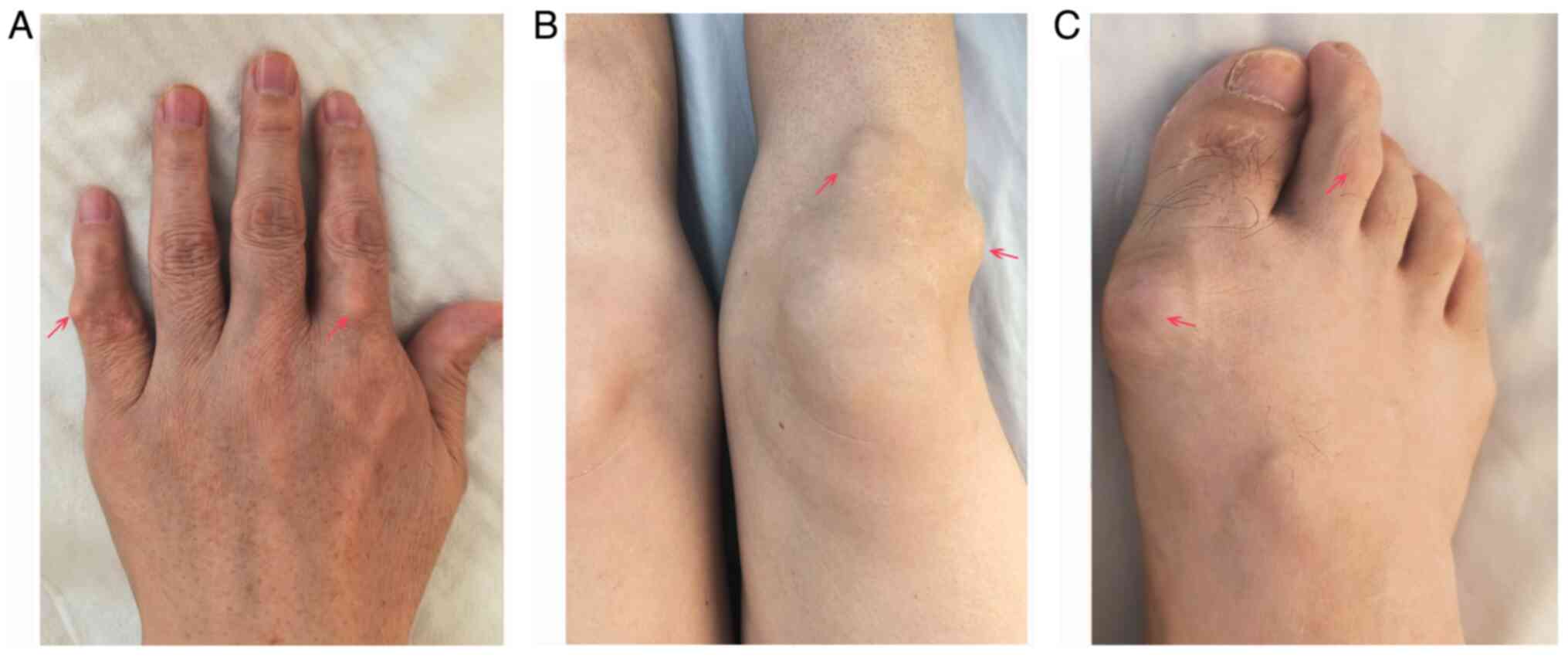
A 57-year-old man was admitted to the Department of Orthopedics of Tianjin Hospital (Tianjin, China) in August 2022 due to lower back pain and bilateral sciatic pain for the past 12 months, with gradual deterioration, resulting in gait impairment in the last month. The patient had 20 years' history of gout with palpable tophi in both the left and right hand, the knee and the foot (Fig. 1). The medical history showed no diabetes, no renal diseases and no malignancies. Nonsteroidal anti-inflammatory drugs were not able to significantly alleviate the pain. On neurological examination, hypoesthesia was observed in the posterolateral lower leg and anterolateral foot on the left side. The bilateral Achilles tendon reflex was reduced and the bilateral Laseque sign was negative. Anterior-posterior and lateral X-ray radiographs revealed degenerative features of the lower spine (Fig. 2). CT and MRI scans revealed bilateral stenosis in the L5/S1 intervertebral foramen without any significant stenosis in the vertebral canal and lateral recess (Figs. 3 and 4).

Figure 1

Representative palpable tophi in the extremities. (A) The left hand, (B) the right knee and (C) the right foot, with arrows indicating the tophi.

Figure 2

X-ray radiographs revealing degenerative features (vertebral hyperplasia, L5/S1 intervertebral space narrowing and degeneration of articular process joints) of the lumbar spine. (A) Anterior-posterior view; (B) lateral view.

Figure 3

MR scan revealing bilateral stenosis in the L5/S1 intervertebral foramen without any significant stenosis in the vertebral canal and lateral recess. (A) T2-weighted and (B) T1-weighted sagittal view showing no stenosis in the vertebral canal; T2-weighted sagittal view of the (C) left and (D) right showing stenosis in the L5/S1 intervertebral foramen (arrows); T2-weighted axial view showing the stenosis in the (E) right and (F) left L5/S1 intervertebral foramen (arrows).

Figure 4

CT scan revealing bilateral stenosis in the L5/S1 intervertebral foramen. (A) Bone window view and the arrow showed the gout infiltration; and (B) soft tissue window (the arrows indicate the gout infiltration).

The bone mineral density detected by quantitative computed tomography was 124.3 mg/cm3 (normal range: >120 mg/cm3). The abnormal laboratory results were as follows: Serum uric acid, 541 µmmol/l (normal range: 208-428 µmol/l); serum C-reactive protein, 49 mg/l (normal: 0-6 mg/l); hemoglobin, 112 g/l (normal: 130-175 g/l); serum triglyceride, 2.73 mmol/l (normal: 0-1.7 mmol/l); and serum D-dimer, 700 µg/l (normal: 0-300 µg/l).

On admission, the patient was diagnosed with bilateral L5/S1 foraminal stenosis and far-lateral lumbar disc herniation. Both the neurological examination and the radiological examination confirmed the compression of the bilateral L5 nerve root. However, spinal gout had not been initially considered. In order to confirm the diagnosis considering no significant stenosis in the vertebral canal and lateral recess, bilateral L5 nerve root radiculography and blocking were performed (Fig. 5A and B). The sciatic pain was completely relieved and the bilateral L5/S1 intervertebral foramen was confirmed to be the major site of stenosis. Due to the iliac obstruction of the L5/S1 intervertebral foramen, percutaneous transforaminal endoscopic surgery could not be adopted. Then posterior surgery of transforaminal lumbar interbody fusion (TLIF) was performed (post-operational X-ray and CT are presented in Fig. 6).

Figure 5

Bilateral L5 nerve root radiculography. (A) Anterior-posterior view (the arrow shows the L5 nerve); and (B) lateral view.

Figure 6

Post-operative X-ray. (A) Anterior-posterior view; and (B) lateral view.

During the TLIF operation under general anesthesia, the inferior articular process, the ligamentum flavum the herniated disc and part of the posterior longitudinal ligament were removed to completely decompress the dural sac and exiting nerve. Large amorphous chalky white lesions were unexpectedly discovered, which had been compressing the intervertebral foramen peripheral to the ruptured annulus fibrosis (Fig. 7A). The joint facets were not infiltrated. The white lesions were partly surrounded by fibrous tissue and partially infiltrated into the muscle and bone. The extruded nucleus pulpous and all of the lesions were resected and lumbar fixation and fusion were then performed. The operative time was 2 h and the blood loss was ~200 ml.

Figure 7

Pathological examination of spinal gout. (A) Gross appearance of amorphous chalky white lesions on the specimens (scale, 1 cm). (B) H&E staining photomicrograph (arrow indicates urate crystals surrounded by inflammatory cells; magnification, x100; scale bar, 100 µm); (C) H&E staining photomicrograph (arrow indicates the multinucleate foreign body-type giant cell; magnification, x400; scale bar, 25 µm); (D and E) Polarized light microscopy Nikon OCLIPSE 80i films showing the (D) positive vs. (E) negative birefringence of the needle-shaped urate crystals (magnification, x100; scale bar, 100 µm).

The white chalky material was submitted for H&E staining (H&E staining procedure: Tissues were immersed in 10% neutral formalin buffered solution at room temperature for 6 h and transferred to 70% ethanol. After embedding in paraffin wax blocks, 4 µm-thick tissue sections were stained at room temperature with hematoxylin for 4 min and eosin for 20 sec). The pathological result showed that large amounts of amorphous substance containing urate crystals were encompassed by multinucleate giant cell granulomas and inflammatory cells (Fig. 7B and C). Polarized light microscopy films of the positive birefringence (Fig. 7D) vs. negative birefringence (Fig. 7E) of the needle-shaped urate crystals confirmed the diagnosis of spinal gout.

After surgery, complete alleviation of the radiculopathy was reported by the patient. No complications occurred during the perioperative period. The patient was discharged from the hospital 3 days after surgery. With the guidance of rheumatologists, colchicine (1 mg per day for 3 months; Kunyao Pharmaceutical Group Co. Ltd.) and febuxostat (40 mg per day for 1 year; Wanbang Biopharmaceuticals Co. Ltd.) were prescribed to alleviate the clinical symptoms as well as to reduce the serum levels of uric acid. By the 1-year follow-up in August 2023 (follow-ups performed at 3 months, 6 months and 1 year), no deterioration was found.

Discussion

The present study described the first case of spinal gout with intervertebral foramen infiltration, which perfectly mimicked degenerative lumbar disc disorders. For spinal gout, the most affected locations are the lumbar region and sacroiliac joints. In the vertebral column, gout tophi can affect almost every anatomical component, such as vertebral bodies, intervertebral disc, epidural space, articular facets, laminae, ligamentum flavum, pedicles and rarely the intradural space (5). It was also reported that the lateral parts of the vertebra are much more affected than the central areas (6); however, the sole infiltration of the intervertebral foramen was never reported.

The incidence of spinal gout may be highly underestimated and patients with spinal gout may suffer from acute, subacute or chronic symptoms. It was estimated that 65.4% of patients had some kind of neurological deficit, such as loss of sensation, radiculopathy, bowel/bladder dysfunction, motor weakness or even quadriparesis (2). Owing to its diverse location in the spine and atypical clinical symptoms, the differential diagnosis includes epidural abscess, metastatic disease, spondylodiscitis, rheumatoid arthritis and other degenerative spinal disorders (3,7). It was also reported that ~24.6% of patients with spinal gout had no history of gout or hyperuricemia (2). Although relatively rare, orthopedic surgeons should take it into consideration as a differential diagnosis when the patient has chronic lower back pain, even if the patient has normal serum uric acid levels and no history of gout (3).

As shown in the present case, clinical clues had been supplied by the patient, such as history of gout, laboratory examinations showing high C-reactive protein, spinal CT and MRI showing no significant stenosis in the vertebral canal and lateral recess, which was not corresponding to the clinical symptoms. Of note, initially, spinal gout had not been taken into consideration as the differential diagnosis for this case.

Although usually nonspecific, imaging technology may provide useful information for the diagnosis of spinal gout. MR findings usually have a nonspecific dural tail signal, showing a homogenous T1 hypointense signal and heterogeneous T2 hypo- to hyperintense signal, which may mimic epidural abscess or tumor (8,9). CT findings show periarticular punched out erosions with overhanging margins and tophi appear as masses denser than surrounding tissues (10). Compared to normal CT scan, Dual-energy CT (DECT) displays different chemical substances with distinct colors on the basis of the different X-ray photon energies (11,12). A meta-analysis by Ogdie et al (13) concluded that DECT had a favor sensitivity of 0.87 and a favor specificity of 0.84 in the diagnosis of gout tophi. Although DECT is not generally accessible in most hospitals, DECT is still recommended for its diagnosis as well as to establish better treatment plans (13).

Once diagnosed as spinal gout, the patient may receive medications such as allopurinol and colchicine. Most patients presented with rapid relief of the clinical symptoms; however, drug-resistant patients or more severe cases may require further treatment with steroids or even surgical intervention in order to relieve the neuropathic compression (8). Although no consensus has been reached, early surgical intervention was still suggested for patients with severe damage to the joints and progressive neurological deterioration (14), and it could probably reduce the possibility of using spinal instrumentation (15). Laminectomy through the open approach with or without fusion was suitable for most of the patients with neurologic deficits (3). In recent years, percutaneous transforaminal endoscopic discectomy was also reported as an effective and minimally invasive alternative to identify and treat spinal gout (3). Due to the iliac obstruction of the L5/S1 intervertebral foramen, TILF surgery was performed in the present study.

For most of the cases of spinal gout, histological examination of the pathological specimen was the only way to make a definite diagnosis (7). Polarized light microscopy was reported to reconfirm the diagnosis of gout, with urate crystals detected as negative birefringent needles (7). In the present case, histological examination as well as polarized light microscopy definitely confirmed the diagnosis of spinal gout. The typical picture of gout tophus was observed: Large amounts of amorphous substances containing urate crystals were encompassed by multinucleate giant cell granulomas and inflammatory cells.

To our knowledge, the present case with lesions of spinal gout tophus in the intervertebral foramen was the first of its kind reported in the literature. The initially reported cases were all massive compressing lesions in the lumbar spinal canal with definite clinical symptoms, such as in the studies by Chen et al (3), Abreu Casas et al (5), Ribeiro da Cunha et al (7), Brahmbhatt et al (8) and Kim et al (15). Compared with the previous publications, the MRI appearance reported in the present study was more difficult to differentiate from degenerative spinal disorders. Due to its rarity, it is seldomly suspected as a differential diagnosis. However, it should always be considered before an open surgery is performed. Strict metabolic control of the diet and pharmacological treatment or anti-inflammatory medications should be optimized in order to avoid surgery (5,9).

In conclusion, in the present study, the first case of spinal gout with tophus in the intervertebral foramen, which perfectly mimicked degenerative lumbar disc disorders, was presented. Although intraspinal tophaceous gout is relatively rare, orthopedic surgeons should take it into consideration as a possible differential diagnosis, especially if the patient has a medical history of gout. Early diagnosis and timely medical management may be able to avoid neurological compromise and the need for surgery.

Acknowledgements

Not applicable.

Funding

Funding: The present study was funded by the Tianjin Education Commission Research Project (grant no. 2022YGYB11).

Availability of data and materials

All data generated or analyzed during this study are included in this published article.

Authors' contributions

FH, LX, DZ and QY made substantial contributions to the study conception and design. FH, CC and GL contributed to the study analysis and interpretation of data. FH, LX and QY contributed to the drafting the manuscript. FH and LX revised the manuscript. FH and LX confirm the authenticity of all the raw data. All authors have read and approved the final manuscript.

Ethics approval and consent to participate

All procedures performed in studies involving human participants were in accordance with the ethical standards of the institutional research committee and with the 1964 Helsinki Declaration and its later amendments or comparable ethical standards.

Patient consent for publication

Written consent for publication of the case data and the images was obtained from the patient described in this case report.

Competing interests

The authors declare that they have no competing interests.

References

1 

Terkeltaub RA: Clinical practice. Gout. N Engl J Med. 349:1647–1655. 2003.PubMed/NCBI View Article : Google Scholar

2 

Toprover M, Krasnokutsky S and Pillinger MH: Gout in the Spine: Imaging, diagnosis, and outcomes. Curr Rheumatol Rep. 17(70)2015.PubMed/NCBI View Article : Google Scholar

3 

Chen X, Xu G, Hu Q, Zhao T, Bi Q, Huang Y, Shao H and Zhang J: Percutaneous transforaminal endoscopic decompression for the treatment of intraspinal tophaceous gout: A case report. Medicine (Baltimore). 99(e20125)2020.PubMed/NCBI View Article : Google Scholar

4 

Konatalapalli RM, Lumezanu E, Jelinek JS, Murphey MD, Wang H and Weinstein A: Correlates of axial gout: A cross-sectional study. J Rheumatol. 39:1445–1449. 2012.PubMed/NCBI View Article : Google Scholar

5 

Abreu Casas D, Lopez-Piloto OR, Rodriguez de la Paz NJ, Plasencia-Leonardo JM, Iniguez-Avendano D and Gutierrez JV: spinal cord compression due to tophaceous vertebral gout: A case report. Cureus. 14(e27101)2022.PubMed/NCBI View Article : Google Scholar

6 

Si M, Cong M, Wang D and Ma H: Intraspinal gouty tophus. Ann Neurol. 88:1048–1049. 2020.PubMed/NCBI View Article : Google Scholar

7 

Ribeiro da Cunha P, Peliz AJ and Barbosa M: Tophaceous gout of the lumbar spine mimicking a spinal meningioma. Eur Spine J. 27:815–819. 2018.PubMed/NCBI View Article : Google Scholar

8 

Brahmbhatt P, Vibhute P, Gupta V, Murray J, Desai A and Agarwal A: Spinal gout diagnosed by dual-energy CT: A case report. Radiol Case Rep. 17:4135–4138. 2022.PubMed/NCBI View Article : Google Scholar

9 

Beier CP, Hartmann A, Woertgen C, Brawanski A and Rothoerl RD: A large, erosive intraspinal and paravertebral gout tophus. Case report. J Neurosurg Spine. 3:485–487. 2005.PubMed/NCBI View Article : Google Scholar

10 

Mogensen MA, DeConde RP and Sarikaya B: Spinal gout: Imaging and clinical features. PM R. 13:1304–1306. 2021.PubMed/NCBI View Article : Google Scholar

11 

Choi HK, Al-Arfaj AM, Eftekhari A, Munk PL, Shojania K, Reid G and Nicolaou S: Dual energy computed tomography in tophaceous gout. Ann Rheum Dis. 68:1609–1612. 2009.PubMed/NCBI View Article : Google Scholar

12 

Desai MA, Peterson JJ, Garner HW and Kransdorf MJ: Clinical utility of dual-energy CT for evaluation of tophaceous gout. Radiographics. 31:1365–1375; discussion 1376-1367. 2011.PubMed/NCBI View Article : Google Scholar

13 

Ogdie A, Taylor WJ, Weatherall M, Fransen J, Jansen TL, Neogi T, Schumacher HR and Dalbeth N: Imaging modalities for the classification of gout: Systematic literature review and meta-analysis. Ann Rheum Dis. 74:1868–1874. 2015.PubMed/NCBI View Article : Google Scholar

14 

Elgafy H, Liu X and Herron J: Spinal gout: A review with case illustration. World J Orthop. 7:766–775. 2016.PubMed/NCBI View Article : Google Scholar

15 

Kim T, Kim BJ, Kim SH and Lee SH: Tophaceous gout in the lumbar spinal canal mimicking epidural spinal tumor. Korean J Spine. 14:50–52. 2017.PubMed/NCBI View Article : Google Scholar

Related Articles

  • Abstract
  • View
  • Download
  • Twitter
Copy and paste a formatted citation
Spandidos Publications style
Hu F, Xue L, Zhao D, Chen C, Liu G and Yang Q: Spinal gout with intervertebral foramen infiltration: A rare case perfectly mimicking degenerative lumbar disc disease. Exp Ther Med 27: 66, 2024.
APA
Hu, F., Xue, L., Zhao, D., Chen, C., Liu, G., & Yang, Q. (2024). Spinal gout with intervertebral foramen infiltration: A rare case perfectly mimicking degenerative lumbar disc disease. Experimental and Therapeutic Medicine, 27, 66. https://doi.org/10.3892/etm.2023.12354
MLA
Hu, F., Xue, L., Zhao, D., Chen, C., Liu, G., Yang, Q."Spinal gout with intervertebral foramen infiltration: A rare case perfectly mimicking degenerative lumbar disc disease". Experimental and Therapeutic Medicine 27.2 (2024): 66.
Chicago
Hu, F., Xue, L., Zhao, D., Chen, C., Liu, G., Yang, Q."Spinal gout with intervertebral foramen infiltration: A rare case perfectly mimicking degenerative lumbar disc disease". Experimental and Therapeutic Medicine 27, no. 2 (2024): 66. https://doi.org/10.3892/etm.2023.12354
Copy and paste a formatted citation
x
Spandidos Publications style
Hu F, Xue L, Zhao D, Chen C, Liu G and Yang Q: Spinal gout with intervertebral foramen infiltration: A rare case perfectly mimicking degenerative lumbar disc disease. Exp Ther Med 27: 66, 2024.
APA
Hu, F., Xue, L., Zhao, D., Chen, C., Liu, G., & Yang, Q. (2024). Spinal gout with intervertebral foramen infiltration: A rare case perfectly mimicking degenerative lumbar disc disease. Experimental and Therapeutic Medicine, 27, 66. https://doi.org/10.3892/etm.2023.12354
MLA
Hu, F., Xue, L., Zhao, D., Chen, C., Liu, G., Yang, Q."Spinal gout with intervertebral foramen infiltration: A rare case perfectly mimicking degenerative lumbar disc disease". Experimental and Therapeutic Medicine 27.2 (2024): 66.
Chicago
Hu, F., Xue, L., Zhao, D., Chen, C., Liu, G., Yang, Q."Spinal gout with intervertebral foramen infiltration: A rare case perfectly mimicking degenerative lumbar disc disease". Experimental and Therapeutic Medicine 27, no. 2 (2024): 66. https://doi.org/10.3892/etm.2023.12354
Follow us
  • Twitter
  • LinkedIn
  • Facebook
About
  • Spandidos Publications
  • Careers
  • Cookie Policy
  • Privacy Policy
How can we help?
  • Help
  • Live Chat
  • Contact
  • Email to our Support Team