Spandidos Publications Logo
  • About
    • About Spandidos
    • Aims and Scopes
    • Abstracting and Indexing
    • Editorial Policies
    • Reprints and Permissions
    • Job Opportunities
    • Terms and Conditions
    • Contact
  • Journals
    • All Journals
    • Oncology Letters
      • Oncology Letters
      • Information for Authors
      • Editorial Policies
      • Editorial Board
      • Aims and Scope
      • Abstracting and Indexing
      • Bibliographic Information
      • Archive
    • International Journal of Oncology
      • International Journal of Oncology
      • Information for Authors
      • Editorial Policies
      • Editorial Board
      • Aims and Scope
      • Abstracting and Indexing
      • Bibliographic Information
      • Archive
    • Molecular and Clinical Oncology
      • Molecular and Clinical Oncology
      • Information for Authors
      • Editorial Policies
      • Editorial Board
      • Aims and Scope
      • Abstracting and Indexing
      • Bibliographic Information
      • Archive
    • Experimental and Therapeutic Medicine
      • Experimental and Therapeutic Medicine
      • Information for Authors
      • Editorial Policies
      • Editorial Board
      • Aims and Scope
      • Abstracting and Indexing
      • Bibliographic Information
      • Archive
    • International Journal of Molecular Medicine
      • International Journal of Molecular Medicine
      • Information for Authors
      • Editorial Policies
      • Editorial Board
      • Aims and Scope
      • Abstracting and Indexing
      • Bibliographic Information
      • Archive
    • Biomedical Reports
      • Biomedical Reports
      • Information for Authors
      • Editorial Policies
      • Editorial Board
      • Aims and Scope
      • Abstracting and Indexing
      • Bibliographic Information
      • Archive
    • Oncology Reports
      • Oncology Reports
      • Information for Authors
      • Editorial Policies
      • Editorial Board
      • Aims and Scope
      • Abstracting and Indexing
      • Bibliographic Information
      • Archive
    • Molecular Medicine Reports
      • Molecular Medicine Reports
      • Information for Authors
      • Editorial Policies
      • Editorial Board
      • Aims and Scope
      • Abstracting and Indexing
      • Bibliographic Information
      • Archive
    • World Academy of Sciences Journal
      • World Academy of Sciences Journal
      • Information for Authors
      • Editorial Policies
      • Editorial Board
      • Aims and Scope
      • Abstracting and Indexing
      • Bibliographic Information
      • Archive
    • International Journal of Functional Nutrition
      • International Journal of Functional Nutrition
      • Information for Authors
      • Editorial Policies
      • Editorial Board
      • Aims and Scope
      • Abstracting and Indexing
      • Bibliographic Information
      • Archive
    • International Journal of Epigenetics
      • International Journal of Epigenetics
      • Information for Authors
      • Editorial Policies
      • Editorial Board
      • Aims and Scope
      • Abstracting and Indexing
      • Bibliographic Information
      • Archive
    • Medicine International
      • Medicine International
      • Information for Authors
      • Editorial Policies
      • Editorial Board
      • Aims and Scope
      • Abstracting and Indexing
      • Bibliographic Information
      • Archive
  • Articles
  • Information
    • Information for Authors
    • Information for Reviewers
    • Information for Librarians
    • Information for Advertisers
    • Conferences
  • Language Editing
Spandidos Publications Logo
  • About
    • About Spandidos
    • Aims and Scopes
    • Abstracting and Indexing
    • Editorial Policies
    • Reprints and Permissions
    • Job Opportunities
    • Terms and Conditions
    • Contact
  • Journals
    • All Journals
    • Biomedical Reports
      • Information for Authors
      • Editorial Policies
      • Editorial Board
      • Aims and Scope
      • Abstracting and Indexing
      • Bibliographic Information
      • Archive
    • Experimental and Therapeutic Medicine
      • Information for Authors
      • Editorial Policies
      • Editorial Board
      • Aims and Scope
      • Abstracting and Indexing
      • Bibliographic Information
      • Archive
    • International Journal of Epigenetics
      • Information for Authors
      • Editorial Policies
      • Editorial Board
      • Aims and Scope
      • Abstracting and Indexing
      • Bibliographic Information
      • Archive
    • International Journal of Functional Nutrition
      • Information for Authors
      • Editorial Policies
      • Editorial Board
      • Aims and Scope
      • Abstracting and Indexing
      • Bibliographic Information
      • Archive
    • International Journal of Molecular Medicine
      • Information for Authors
      • Editorial Policies
      • Editorial Board
      • Aims and Scope
      • Abstracting and Indexing
      • Bibliographic Information
      • Archive
    • International Journal of Oncology
      • Information for Authors
      • Editorial Policies
      • Editorial Board
      • Aims and Scope
      • Abstracting and Indexing
      • Bibliographic Information
      • Archive
    • Medicine International
      • Information for Authors
      • Editorial Policies
      • Editorial Board
      • Aims and Scope
      • Abstracting and Indexing
      • Bibliographic Information
      • Archive
    • Molecular and Clinical Oncology
      • Information for Authors
      • Editorial Policies
      • Editorial Board
      • Aims and Scope
      • Abstracting and Indexing
      • Bibliographic Information
      • Archive
    • Molecular Medicine Reports
      • Information for Authors
      • Editorial Policies
      • Editorial Board
      • Aims and Scope
      • Abstracting and Indexing
      • Bibliographic Information
      • Archive
    • Oncology Letters
      • Information for Authors
      • Editorial Policies
      • Editorial Board
      • Aims and Scope
      • Abstracting and Indexing
      • Bibliographic Information
      • Archive
    • Oncology Reports
      • Information for Authors
      • Editorial Policies
      • Editorial Board
      • Aims and Scope
      • Abstracting and Indexing
      • Bibliographic Information
      • Archive
    • World Academy of Sciences Journal
      • Information for Authors
      • Editorial Policies
      • Editorial Board
      • Aims and Scope
      • Abstracting and Indexing
      • Bibliographic Information
      • Archive
  • Articles
  • Information
    • For Authors
    • For Reviewers
    • For Librarians
    • For Advertisers
    • Conferences
  • Language Editing
Login Register Submit
  • This site uses cookies
  • You can change your cookie settings at any time by following the instructions in our Cookie Policy. To find out more, you may read our Privacy Policy.

    I agree
Search articles by DOI, keyword, author or affiliation
Search
Advanced Search
presentation
Experimental and Therapeutic Medicine
Join Editorial Board Propose a Special Issue
Print ISSN: 1792-0981 Online ISSN: 1792-1015
Journal Cover
May-2024 Volume 27 Issue 5

Full Size Image

Sign up for eToc alerts
Recommend to Library

Journals

International Journal of Molecular Medicine

International Journal of Molecular Medicine

International Journal of Molecular Medicine is an international journal devoted to molecular mechanisms of human disease.

International Journal of Oncology

International Journal of Oncology

International Journal of Oncology is an international journal devoted to oncology research and cancer treatment.

Molecular Medicine Reports

Molecular Medicine Reports

Covers molecular medicine topics such as pharmacology, pathology, genetics, neuroscience, infectious diseases, molecular cardiology, and molecular surgery.

Oncology Reports

Oncology Reports

Oncology Reports is an international journal devoted to fundamental and applied research in Oncology.

Experimental and Therapeutic Medicine

Experimental and Therapeutic Medicine

Experimental and Therapeutic Medicine is an international journal devoted to laboratory and clinical medicine.

Oncology Letters

Oncology Letters

Oncology Letters is an international journal devoted to Experimental and Clinical Oncology.

Biomedical Reports

Biomedical Reports

Explores a wide range of biological and medical fields, including pharmacology, genetics, microbiology, neuroscience, and molecular cardiology.

Molecular and Clinical Oncology

Molecular and Clinical Oncology

International journal addressing all aspects of oncology research, from tumorigenesis and oncogenes to chemotherapy and metastasis.

World Academy of Sciences Journal

World Academy of Sciences Journal

Multidisciplinary open-access journal spanning biochemistry, genetics, neuroscience, environmental health, and synthetic biology.

International Journal of Functional Nutrition

International Journal of Functional Nutrition

Open-access journal combining biochemistry, pharmacology, immunology, and genetics to advance health through functional nutrition.

International Journal of Epigenetics

International Journal of Epigenetics

Publishes open-access research on using epigenetics to advance understanding and treatment of human disease.

Medicine International

Medicine International

An International Open Access Journal Devoted to General Medicine.

Journal Cover
May-2024 Volume 27 Issue 5

Full Size Image

Sign up for eToc alerts
Recommend to Library

  • Article
  • Citations
    • Cite This Article
    • Download Citation
    • Create Citation Alert
    • Remove Citation Alert
    • Cited By
  • Similar Articles
    • Related Articles (in Spandidos Publications)
    • Similar Articles (Google Scholar)
    • Similar Articles (PubMed)
  • Download PDF
  • Download XML
  • View XML
Article Open Access

Transcriptome and proteome analyses reveal that upregulation of GSTM2 by allisartan improves cardiac remodeling and dysfunction in hypertensive rats

  • Authors:
    • Hao Wu
    • Yajun Zhai
    • Jing Yu
    • Liping Wei
    • Xin Qi
  • View Affiliations / Copyright

    Affiliations: School of Medicine, Nankai University, Tianjin 300071, P.R. China, Graduate School, Tianjin Medical University, Tianjin 300070, P.R. China, Department of Physiology and Pathophysiology, Tianjin Medical University, Tianjin 300070, P.R. China, School of Medicine, Nankai University, Tianjin 300071, P.R. China
    Copyright: © Wu et al. This is an open access article distributed under the terms of Creative Commons Attribution License.
  • Article Number: 220
    |
    Published online on: March 21, 2024
       https://doi.org/10.3892/etm.2024.12508
  • Expand metrics +
Metrics: Total Views: 0 (Spandidos Publications: | PMC Statistics: )
Metrics: Total PDF Downloads: 0 (Spandidos Publications: | PMC Statistics: )
Cited By (CrossRef): 0 citations Loading Articles...

This article is mentioned in:


Abstract

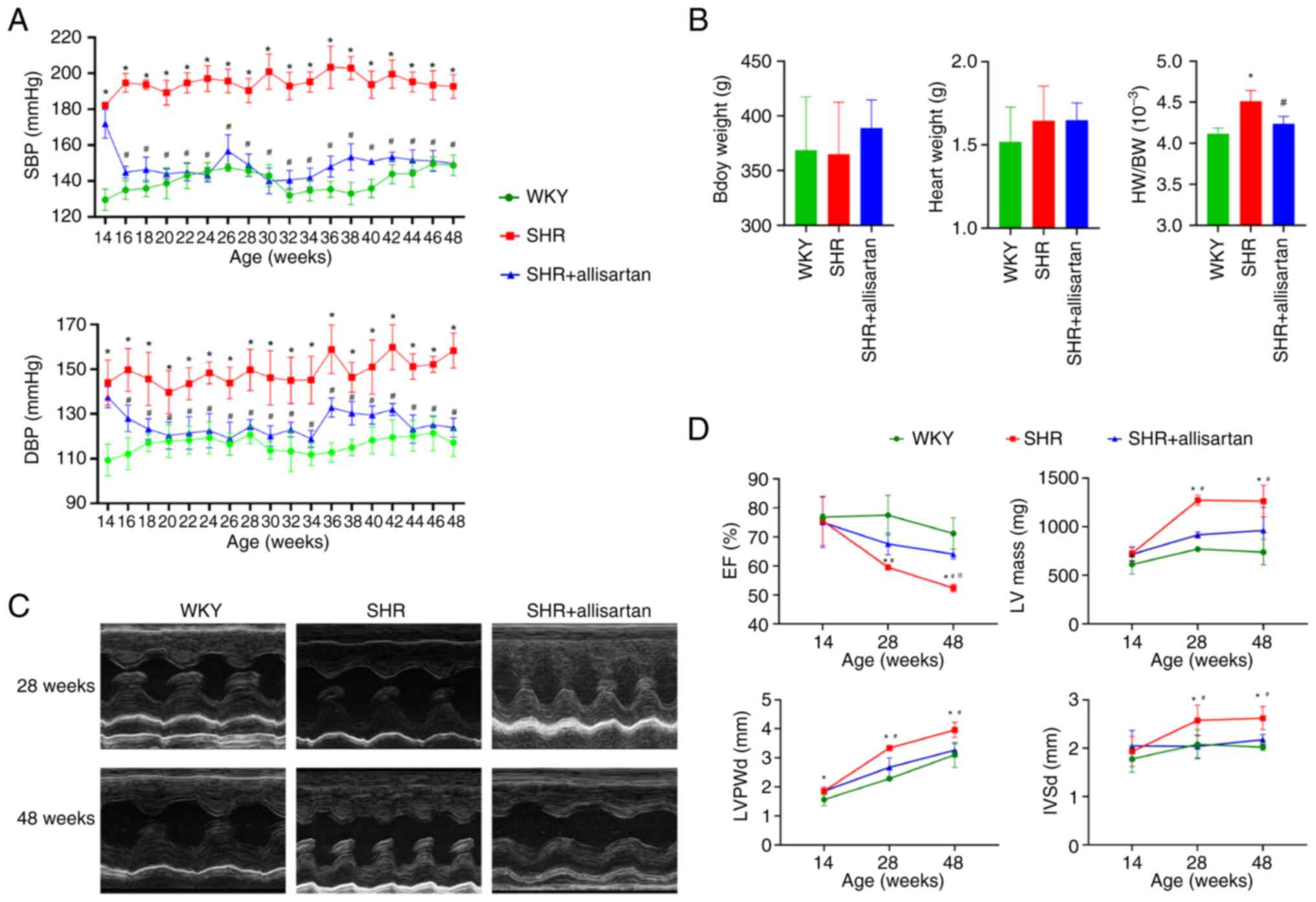
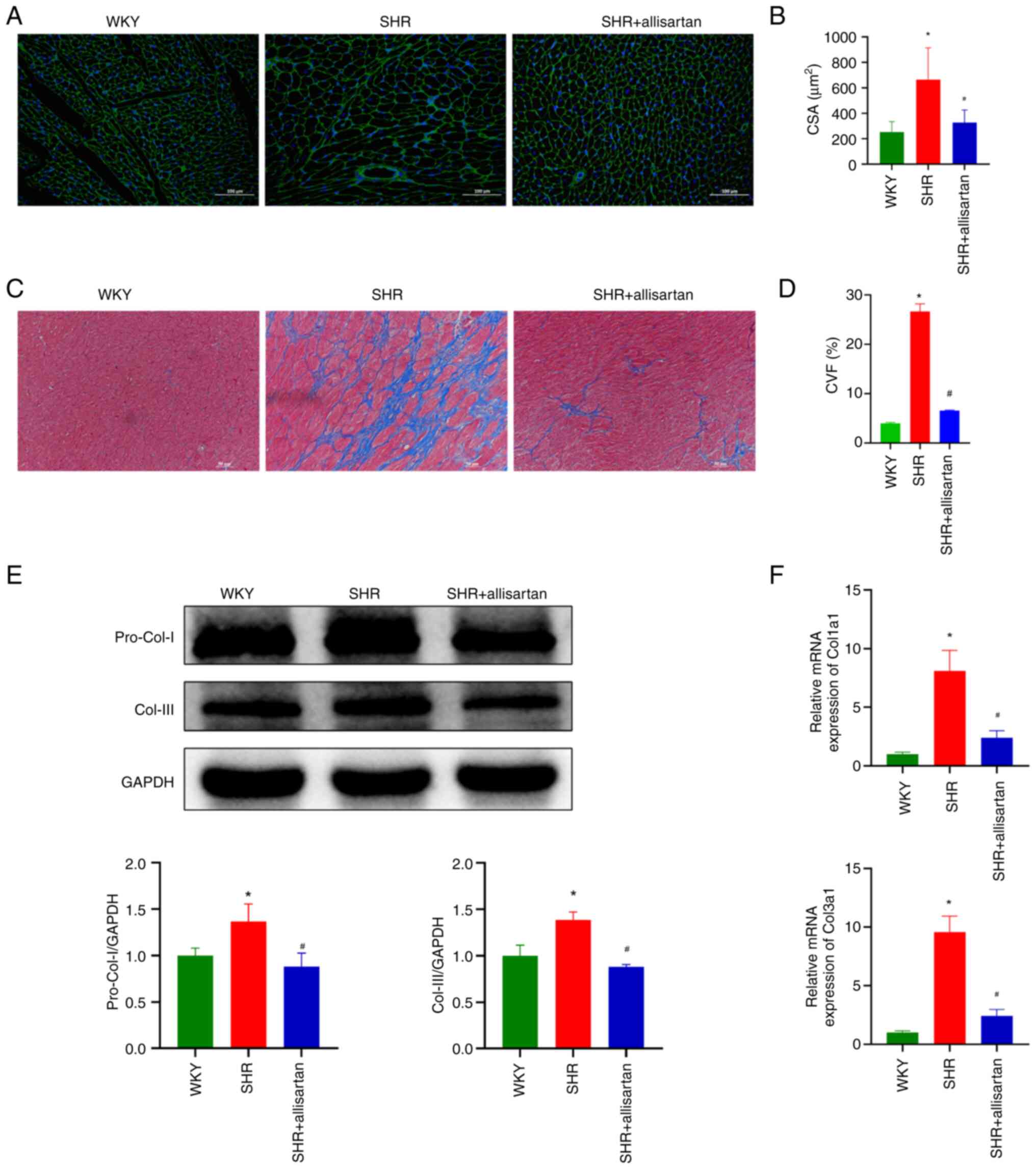
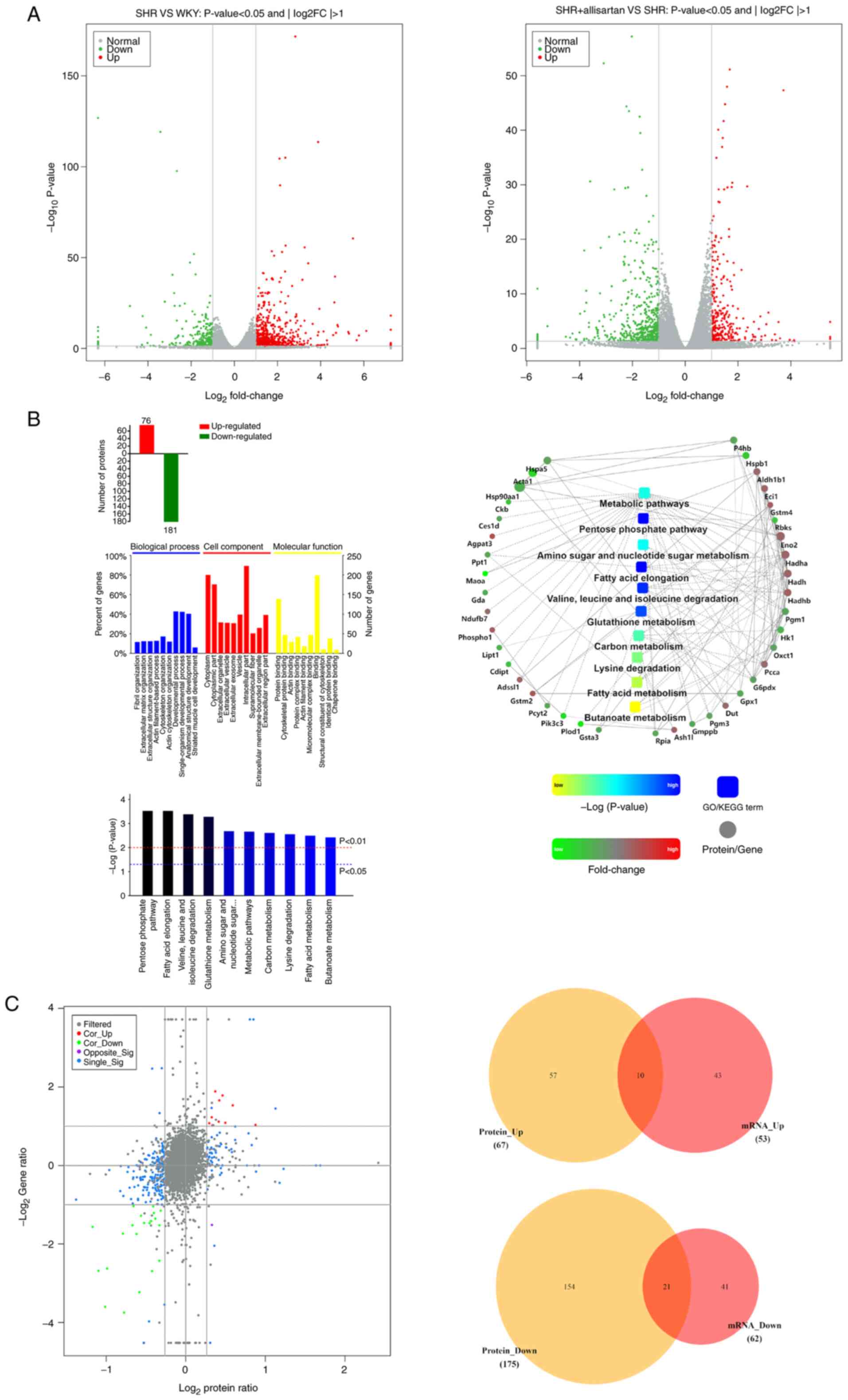
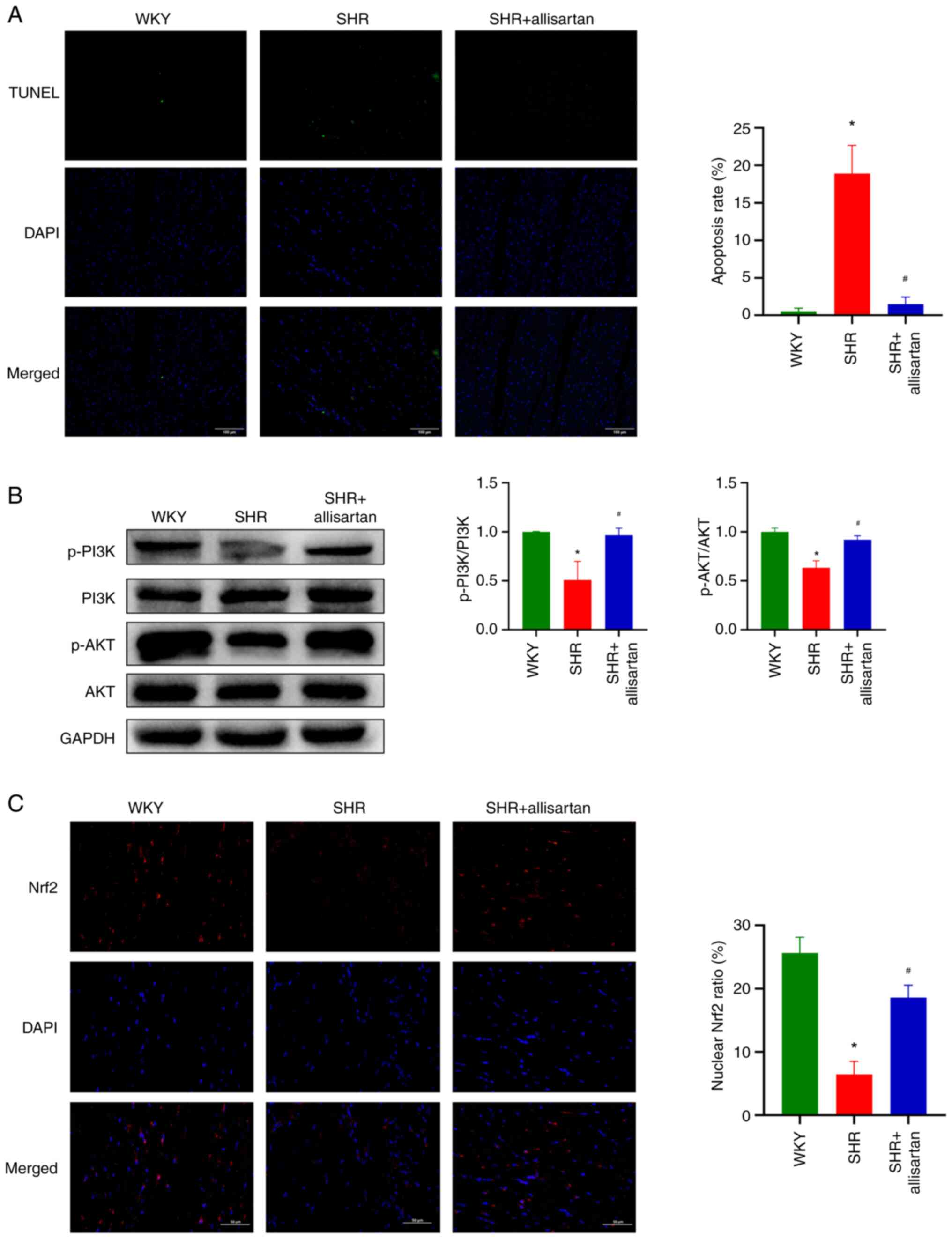
Long‑term hypertension can lead to hypertensive heart disease, which ultimately progresses to heart failure. As an angiotensin receptor blocker antihypertensive drug, allisartan can control blood pressure, and improve cardiac remodeling and cardiac dysfunction caused by hypertension. The aim of the present study was to investigate the protective effects of allisartan on the heart of spontaneously hypertensive rats (SHRs) and the underlying mechanisms. SHRs were used as an animal model of hypertensive heart disease and were treated with allisartan orally at a dose of 25 mg/kg/day. The blood pressure levels of the rats were continuously monitored, their body and heart weights were measured, and their cardiac structure and function were evaluated using echocardiography. Wheat germ agglutinin staining and Masson trichrome staining were employed to assess the morphology of the myocardial tissue. In addition, transcriptome and proteome analyses were performed using the Solexa/Illumina sequencing platform and tandem mass tag technology, respectively. Immunofluorescence co‑localization was conducted to analyze Nrf2 nuclear translocation, and TUNEL was performed to detect the levels of cell apoptosis. The protein expression levels of pro‑collagen I, collagen III, phosphorylated (p)‑AKT, AKT, p‑PI3K and PI3K, and the mRNA expression levels of Col1a1 and Col3a1 were determined by western blotting and reverse transcription‑quantitative PCR, respectively. Allisartan lowered blood pressure, attenuated cardiac remodeling and improved cardiac function in SHRs. In addition, allisartan alleviated cardiomyocyte hypertrophy and cardiac fibrosis. Allisartan also significantly affected the ‘pentose phosphate pathway’, ‘fatty acid elongation’, ‘valine, leucine and isoleucine degradation’, ‘glutathione metabolism’, and ‘amino sugar and nucleotide sugar metabolism’ pathways in the hearts of SHRs, and upregulated the expression levels of GSTM2. Furthermore, allisartan activated the PI3K‑AKT‑Nrf2 signaling pathway and inhibited cardiomyocyte apoptosis. In conclusion, the present study demonstrated that allisartan can effectively control blood pressure in SHRs, and improves cardiac remodeling and cardiac dysfunction. Allisartan may also upregulate the expression levels of GSTM2 in the hearts of SHRs and significantly affect glutathione metabolism, as determined by transcriptome and proteome analyses. The cardioprotective effect of allisartan may be mediated through activation of the PI3K‑AKT‑Nrf2 signaling pathway, upregulation of GSTM2 expression and reduction of cardiomyocyte apoptosis in SHRs.
View Figures

Figure 1

Figure 2

Figure 3

Figure 4

View References

1 

Dorans KS, Mills KT, Liu Y and He J: Trends in prevalence and control of hypertension according to the 2017 American College of Cardiology/American Heart Association (ACC/AHA) Guideline. J Am Heart Assoc. 7(e008888)2018.PubMed/NCBI View Article : Google Scholar

2 

Huang A, Li H, Zeng C, Chen W, Wei L, Liu Y and Qi X: Endogenous CCN5 Participates in Angiotensin II/TGF-β1 networking of cardiac fibrosis in high angiotensin II-induced hypertensive heart failure. Front Pharmacol. 11(1235)2020.PubMed/NCBI View Article : Google Scholar

3 

Testai L, Brancaleone V, Flori L, Montanaro R and Calderone V: Modulation of EndMT by hydrogen sulfide in the prevention of cardiovascular fibrosis. Antioxidants (Basel). 10(910)2021.PubMed/NCBI View Article : Google Scholar

4 

Ling QS, Zhang SL, Tian JS, Cheng MH, Liu AJ, Fu FH, Liu JG and Miao CY: Allisartan isoproxil reduces mortality of stroke-prone rats and protects against cerebrovascular, cardiac, and aortic damage. Acta Pharmacol Sin. 42:871–884. 2021.PubMed/NCBI View Article : Google Scholar

5 

Li X, Sun J, Guo Z, Zhong D and Chen X: Carboxylesterase 2 and intestine transporters contribute to the low bioavailability of Allisartan, a Prodrug of Exp3174 for hypertension treatment in humans. Drug Metab Dispos. 47:843–853. 2019.PubMed/NCBI View Article : Google Scholar

6 

Jin Q, Zhu Q, Wang K, Chen M and Li X: Allisartan isoproxil attenuates oxidative stress and inflammation through the SIRT1/Nrf2/NF-ԟB signalling pathway in diabetic cardiomyopathy rats. Mol Med Rep. 23(215)2021.PubMed/NCBI View Article : Google Scholar

7 

Writing Committee Members; ACC/AHA Joint Committee Members. 2022 AHA/ACC/HFSA guideline for the management of heart failure. J Card Fail. 28:e1–e167. 2022.PubMed/NCBI View Article : Google Scholar

8 

Zhang X, Zhao Z, Xu C, Zhao F and Yan Z: Allisartan ameliorates vascular remodeling through regulation of voltage-gated potassium channels in hypertensive rats. BMC Pharmacol Toxicol. 22(33)2021.PubMed/NCBI View Article : Google Scholar

9 

Xu C, Zhao Z, Yuan W, Fengping Z, Zhiqiang Y and Xiaoqin Z: Effect of allisartan on blood pressure and left ventricular hypertrophy through Kv1.5 channels in hypertensive rats. Clin Exp Hypertens. 44:199–207. 2022.PubMed/NCBI View Article : Google Scholar

10 

Zhou SG, Wang P, Pi RB, Gao J, Fu JJ, Fang J, Qin J, Zhang HJ, Li RF, Chen SR, et al: Reduced expression of GSTM2 and increased oxidative stress in spontaneously hypertensive rat. Mol Cell Biochem. 309:99–107. 2008.PubMed/NCBI View Article : Google Scholar

11 

Sies H: Oxidative stress: A concept in redox biology and medicine. Redox Biol. 4:180–183. 2015.PubMed/NCBI View Article : Google Scholar

12 

van der Pol A, van Gilst WH, Voors AA and van der Meer P: Treating oxidative stress in heart failure: Past, present and future. Eur J Heart Fail. 21:425–435. 2019.PubMed/NCBI View Article : Google Scholar

13 

Huenchuguala S, Muñoz P, Zavala P, Villa M, Cuevas C, Ahumada U, Graumann R, Nore BF, Couve E, Mannervik B, et al: Glutathione transferase mu 2 protects glioblastoma cells against aminochrome toxicity by preventing autophagy and lysosome dysfunction. Autophagy. 10:618–630. 2014.PubMed/NCBI View Article : Google Scholar

14 

Huenchuguala S, Munoz P and Segura-Aguilar J: The importance of mitophagy in maintaining mitochondrial function in U373MG cells. Bafilomycin A1 restores aminochrome-induced mitochondrial damage. ACS Chem Neurosci. 8:2247–2253. 2017.PubMed/NCBI View Article : Google Scholar

15 

Hewawasam RP, Liu D, Casarotto MG, Board PG and Dulhunty AF: The GSTM2 C-Terminal Domain Depresses Contractility and Ca2+ transients in neonatal rat ventricular cardiomyocytes. PLoS One. 11(e0162415)2016.PubMed/NCBI View Article : Google Scholar

16 

Fafian-Labora JA, Rodriguez-Navarro JA and O'Loghlen A: Small extracellular vesicles have GST activity and ameliorate senescence-related tissue damage. Cell Metab. 32:71–86 e5. 2020.PubMed/NCBI View Article : Google Scholar

17 

Ndisang JF, Wu L, Zhao W and Wang R: Induction of heme oxygenase-1 and stimulation of cGMP production by hemin in aortic tissues from hypertensive rats. Blood. 101:3893–3900. 2003.PubMed/NCBI View Article : Google Scholar

18 

Cheng J, Gu W, Lan T, Deng J, Ni Z, Zhang Z, Hu Y, Sun X, Yang Y and Xu Q: Single-cell RNA sequencing reveals cell type- and artery type-specific vascular remodelling in male spontaneously hypertensive rats. Cardiovasc Res. 117:1202–1216. 2021.PubMed/NCBI View Article : Google Scholar

19 

Saha P, Mell B, Golonka RM, Bovilla VR, Abokor AA, Mei X, Yeoh BS, Doris PA, Gewirtz AT, Joe B, et al: Selective IgA deficiency in spontaneously hypertensive rats with gut dysbiosis. Hypertension. 79:2239–2249. 2022.PubMed/NCBI View Article : Google Scholar

20 

Okamoto K and Aoki K: Development of a strain of spontaneously hypertensive rats. Jpn Circ J. 27:282–293. 1963.PubMed/NCBI View Article : Google Scholar

21 

Kurtz TW and Morris RC Jr: Biological variability in Wistar-Kyoto rats. Implications for research with the spontaneously hypertensive rat. Hypertension. 10:127–131. 1987.PubMed/NCBI View Article : Google Scholar

22 

Reagan-Shaw S, Nihal M and Ahmad N: Dose translation from animal to human studies revisited. FASEB J. 22:659–661. 2008.PubMed/NCBI View Article : Google Scholar

23 

Liu W, Yu Z, Wang Z, Waubant EL, Zhai S and Benet LZ: Using an animal model to predict the effective human dose for oral multiple sclerosis drugs. Clin Transl Sci. 16:467–477. 2023.PubMed/NCBI View Article : Google Scholar

24 

National Research Council (US) Committee for the Update of the Guide for the Care and Use of Laboratory Animals: Guide for the Care and Use of Laboratory Animals, 8th edition. National Academies Press (US), Washington, DC, 2011.

25 

Kilkenny C, Browne W, Cuthill IC, Emerson M and Altman DG: National Centre for the Replacement, Refinement and Reduction of Amimals in Research. Animal research: Reporting in vivo experiments-the ARRIVE guidelines. J Cereb Blood Flow Metab. 31:991–993. 2011.PubMed/NCBI View Article : Google Scholar

26 

Robinson MD, McCarthy DJ and Smyth GK: edgeR: A Bioconductor package for differential expression analysis of digital gene expression data. Bioinformatics. 26:139–140. 2010.PubMed/NCBI View Article : Google Scholar

27 

Livak KJ and Schmittgen TD: Analysis of relative gene expression data using real-time quantitative PCR and the 2(-Delta Delta C(T)) Method. Methods. 25:402–408. 2001.PubMed/NCBI View Article : Google Scholar

28 

Li Y, Yan M, Yang J, Raman I, Du Y, Min S, Fang X, Mohan C and Li QZ: Glutathione S-transferase Mu 2-transduced mesenchymal stem cells ameliorated anti-glomerular basement membrane antibody-induced glomerulonephritis by inhibiting oxidation and inflammation. Stem Cell Res Ther. 5(19)2014.PubMed/NCBI View Article : Google Scholar

29 

Yildiz M, Oktay AA, Stewart MH, Milani RV, Ventura HO and Lavie CJ: Left ventricular hypertrophy and hypertension. Prog Cardiovasc Dis. 63:10–21. 2020.PubMed/NCBI View Article : Google Scholar

30 

Kemp CD and Conte JV: The pathophysiology of heart failure. Cardiovasc Pathol. 21:365–371. 2012.PubMed/NCBI View Article : Google Scholar

31 

Burchfield JS, Xie M and Hill JA: Pathological ventricular remodeling: Mechanisms: Part 1 of 2. Circulation. 128:388–400. 2013.PubMed/NCBI View Article : Google Scholar

32 

Shimizu I and Minamino T: Physiological and pathological cardiac hypertrophy. J Mol Cell Cardiol. 97:245–262. 2016.PubMed/NCBI View Article : Google Scholar

33 

Rosca MG, Tandler B and Hoppel CL: Mitochondria in cardiac hypertrophy and heart failure. J Mol Cell Cardiol. 55:31–41. 2013.PubMed/NCBI View Article : Google Scholar

34 

Fan W, Wang W, Mao X, Chu S, Feng J, Xiao D, Zhou J and Fan S: Elevated levels of p-Mnk1, p-eIF4E and p-p70S6K proteins are associated with tumor recurrence and poor prognosis in astrocytomas. J Neurooncol. 131:485–493. 2017.PubMed/NCBI View Article : Google Scholar

35 

Takeuchi CS, Kim BG, Blazey CM, Ma S, Johnson HW, Anand NK, Arcalas A, Baik TG, Buhr CA, Cannoy J, et al: Discovery of a novel class of highly potent, selective, ATP-competitive, and orally bioavailable inhibitors of the mammalian target of rapamycin (mTOR). J Med Chem. 56:2218–2234. 2013.PubMed/NCBI View Article : Google Scholar

36 

Bednarski TK, Duda MK and Dobrzyn P: Alterations of lipid metabolism in the heart in spontaneously hypertensive rats precedes left ventricular hypertrophy and cardiac dysfunction. Cells. 11(3032)2022.PubMed/NCBI View Article : Google Scholar

37 

Guan J, Clermont AC, Pham LD, Ustunkaya T, Revenko AS, MacLeod AR, Feener EP and Simão F: Plasma kallikrein contributes to intracerebral hemorrhage and hypertension in stroke-prone spontaneously hypertensive rats. Transl Stroke Res. 13:287–299. 2022.PubMed/NCBI View Article : Google Scholar

38 

Luo M, Luo S, Xue Y, Chang Q, Yang H, Dong W, Zhang T and Cao S: Aerobic exercise inhibits renal EMT by promoting irisin expression in SHR. iScience. 26(105990)2023.PubMed/NCBI View Article : Google Scholar

39 

Ye C, Geng Z, Zhang LL, Zheng F, Zhou YB, Zhu GQ and Xiong XQ: Chronic infusion of ELABELA alleviates vascular remodeling in spontaneously hypertensive rats via anti-inflammatory, anti-oxidative and anti-proliferative effects. Acta Pharmacol Sin. 43:2573–2584. 2022.PubMed/NCBI View Article : Google Scholar

40 

Qiu ZY, Yu WJ, Bai J and Lin QY: Blocking VCAM-1 ameliorates hypertensive cardiac remodeling by impeding macrophage infiltration. Front Pharmacol. 13(1058268)2022.PubMed/NCBI View Article : Google Scholar

41 

Akazawa H, Yabumoto C, Yano M, Kudo-Sakamoto Y and Komuro I: ARB and cardioprotection. Cardiovasc Drugs Ther. 27:155–160. 2013.PubMed/NCBI View Article : Google Scholar

42 

Singh KD and Karnik SS: Angiotensin type 1 receptor blockers in heart failure. Curr Drug Targets. 21:125–131. 2020.PubMed/NCBI View Article : Google Scholar

43 

Takeuchi F, Liang YQ, Isono M, Ang MY, Mori K and Kato N: Transcriptomic response in the heart and kidney to different types of antihypertensive drug administration. Hypertension. 79:413–423. 2022.PubMed/NCBI View Article : Google Scholar

44 

Martinez VR, Martins Lima A, Stergiopulos N, Velez Rueda JO, Islas MS, Griera M, Calleros L, Rodriguez Puyol M, Jaquenod de Giusti C, Portiansky EL, et al: Effect of the structural modification of Candesartan with Zinc on hypertension and left ventricular hypertrophy. Eur J Pharmacol. 946(175654)2023.PubMed/NCBI View Article : Google Scholar

45 

Chen XS, Wang SH, Liu CY, Gao YL, Meng XL, Wei W, Shou ST, Liu YC and Chai YF: Losartan attenuates sepsis-induced cardiomyopathy by regulating macrophage polarization via TLR4-mediated NF-κB and MAPK signaling. Pharmacol Res. 185(106473)2022.PubMed/NCBI View Article : Google Scholar

46 

Wu MY, Ma XJ, Yang C, Tao X, Liu AJ, Su DF and Liu JG: Effects of allisartan, a new AT(1) receptor blocker, on blood pressure and end-organ damage in hypertensive animals. Acta Pharmacol Sin. 30:307–313. 2009.PubMed/NCBI View Article : Google Scholar

47 

Zhang G, Fan Y, Qiu Y, Zhou Z, Zhang J, Wang Z, Liu Y, Liu X and Tao J: Allisartan isoproxil improves endothelial function and vascular damage in patients with essential hypertension: A single-center, open-label, randomized controlled trial. Adv Ther. 37:3551–3561. 2020.PubMed/NCBI View Article : Google Scholar

48 

Zhang JQ, Yang GH, Zhou X, Liu JX, Shi R, Dong Y, Chen SB and Li YM: Effects of allisartan isoproxil on blood pressure and target organ injury in patients with mild to moderate essential hypertension. Medicine (Baltimore). 98(e14907)2019.PubMed/NCBI View Article : Google Scholar

49 

Ma Q: Role of nrf2 in oxidative stress and toxicity. Annu Rev Pharmacol Toxicol. 53:401–426. 2013.PubMed/NCBI View Article : Google Scholar

50 

Lan T, Hu Y, Hu F, Li H, Chen Y, Zhang J, Yu Y, Jiang S, Weng Q, Tian S, et al: Hepatocyte glutathione S-transferase mu 2 prevents non-alcoholic steatohepatitis by suppressing ASK1 signaling. J Hepatol. 76:407–419. 2022.PubMed/NCBI View Article : Google Scholar

51 

Sadrkhanloo M, Entezari M, Orouei S, Zabolian A, Mirzaie A, Maghsoudloo A, Raesi R, Asadi N, Hashemi M, Zarrabi A, et al: Targeting Nrf2 in ischemia-reperfusion alleviation: From signaling networks to therapeutic targeting. Life Sci. 300(120561)2022.PubMed/NCBI View Article : Google Scholar

52 

Chanas SA, Jiang Q, McMahon M, McWalter GK, McLellan LI, Elcombe CR, Henderson CJ, Wolf CR, Moffat GJ, Itoh K, et al: Loss of the Nrf2 transcription factor causes a marked reduction in constitutive and inducible expression of the glutathione S-transferase Gsta1, Gsta2, Gstm1, Gstm2, Gstm3 and Gstm4 genes in the livers of male and female mice. Biochem J. 365(Pt 2):405–416. 2002.PubMed/NCBI View Article : Google Scholar

53 

Saw CL, Yang AY, Guo Y and Kong AN: Astaxanthin and omega-3 fatty acids individually and in combination protect against oxidative stress via the Nrf2-ARE pathway. Food Chem Toxicol. 62:869–875. 2013.PubMed/NCBI View Article : Google Scholar

54 

Wang L, Zhao M, Qian R, Wang M, Bao Q, Chen X, Du W, Zhang L, Ye T, Xie Y, et al: Nicotinamide mononucleotide ameliorates silica-induced lung injury through the Nrf2-Regulated glutathione metabolism pathway in mice. Nutrients. 15(143)2022.PubMed/NCBI View Article : Google Scholar

55 

Zou W, Chen C, Zhong Y, An J, Zhang X, Yu Y, Yu Z and Fu J: PI3K/Akt pathway mediates Nrf2/ARE activation in human L02 hepatocytes exposed to low-concentration HBCDs. Environ Sci Technol. 47:12434–12440. 2013.PubMed/NCBI View Article : Google Scholar

56 

Ali T, Kim T, Rehman SU, Khan MS, Amin FU, Khan M, Ikram M and Kim MO: Natural dietary supplementation of anthocyanins via PI3K/Akt/Nrf2/HO-1 pathways mitigate oxidative stress, neurodegeneration, and memory impairment in a mouse model of Alzheimer's disease. Mol Neurobiol. 55:6076–6093. 2018.PubMed/NCBI View Article : Google Scholar

Related Articles

  • Abstract
  • View
  • Download
  • Twitter
Copy and paste a formatted citation
Spandidos Publications style
Wu H, Zhai Y, Yu J, Wei L and Qi X: Transcriptome and proteome analyses reveal that upregulation of GSTM2 by allisartan improves cardiac remodeling and dysfunction in hypertensive rats. Exp Ther Med 27: 220, 2024.
APA
Wu, H., Zhai, Y., Yu, J., Wei, L., & Qi, X. (2024). Transcriptome and proteome analyses reveal that upregulation of GSTM2 by allisartan improves cardiac remodeling and dysfunction in hypertensive rats. Experimental and Therapeutic Medicine, 27, 220. https://doi.org/10.3892/etm.2024.12508
MLA
Wu, H., Zhai, Y., Yu, J., Wei, L., Qi, X."Transcriptome and proteome analyses reveal that upregulation of GSTM2 by allisartan improves cardiac remodeling and dysfunction in hypertensive rats". Experimental and Therapeutic Medicine 27.5 (2024): 220.
Chicago
Wu, H., Zhai, Y., Yu, J., Wei, L., Qi, X."Transcriptome and proteome analyses reveal that upregulation of GSTM2 by allisartan improves cardiac remodeling and dysfunction in hypertensive rats". Experimental and Therapeutic Medicine 27, no. 5 (2024): 220. https://doi.org/10.3892/etm.2024.12508
Copy and paste a formatted citation
x
Spandidos Publications style
Wu H, Zhai Y, Yu J, Wei L and Qi X: Transcriptome and proteome analyses reveal that upregulation of GSTM2 by allisartan improves cardiac remodeling and dysfunction in hypertensive rats. Exp Ther Med 27: 220, 2024.
APA
Wu, H., Zhai, Y., Yu, J., Wei, L., & Qi, X. (2024). Transcriptome and proteome analyses reveal that upregulation of GSTM2 by allisartan improves cardiac remodeling and dysfunction in hypertensive rats. Experimental and Therapeutic Medicine, 27, 220. https://doi.org/10.3892/etm.2024.12508
MLA
Wu, H., Zhai, Y., Yu, J., Wei, L., Qi, X."Transcriptome and proteome analyses reveal that upregulation of GSTM2 by allisartan improves cardiac remodeling and dysfunction in hypertensive rats". Experimental and Therapeutic Medicine 27.5 (2024): 220.
Chicago
Wu, H., Zhai, Y., Yu, J., Wei, L., Qi, X."Transcriptome and proteome analyses reveal that upregulation of GSTM2 by allisartan improves cardiac remodeling and dysfunction in hypertensive rats". Experimental and Therapeutic Medicine 27, no. 5 (2024): 220. https://doi.org/10.3892/etm.2024.12508
Follow us
  • Twitter
  • LinkedIn
  • Facebook
About
  • Spandidos Publications
  • Careers
  • Cookie Policy
  • Privacy Policy
How can we help?
  • Help
  • Live Chat
  • Contact
  • Email to our Support Team