Spandidos Publications Logo
  • About
    • About Spandidos
    • Aims and Scopes
    • Abstracting and Indexing
    • Editorial Policies
    • Reprints and Permissions
    • Job Opportunities
    • Terms and Conditions
    • Contact
  • Journals
    • All Journals
    • Oncology Letters
      • Oncology Letters
      • Information for Authors
      • Editorial Policies
      • Editorial Board
      • Aims and Scope
      • Abstracting and Indexing
      • Bibliographic Information
      • Archive
    • International Journal of Oncology
      • International Journal of Oncology
      • Information for Authors
      • Editorial Policies
      • Editorial Board
      • Aims and Scope
      • Abstracting and Indexing
      • Bibliographic Information
      • Archive
    • Molecular and Clinical Oncology
      • Molecular and Clinical Oncology
      • Information for Authors
      • Editorial Policies
      • Editorial Board
      • Aims and Scope
      • Abstracting and Indexing
      • Bibliographic Information
      • Archive
    • Experimental and Therapeutic Medicine
      • Experimental and Therapeutic Medicine
      • Information for Authors
      • Editorial Policies
      • Editorial Board
      • Aims and Scope
      • Abstracting and Indexing
      • Bibliographic Information
      • Archive
    • International Journal of Molecular Medicine
      • International Journal of Molecular Medicine
      • Information for Authors
      • Editorial Policies
      • Editorial Board
      • Aims and Scope
      • Abstracting and Indexing
      • Bibliographic Information
      • Archive
    • Biomedical Reports
      • Biomedical Reports
      • Information for Authors
      • Editorial Policies
      • Editorial Board
      • Aims and Scope
      • Abstracting and Indexing
      • Bibliographic Information
      • Archive
    • Oncology Reports
      • Oncology Reports
      • Information for Authors
      • Editorial Policies
      • Editorial Board
      • Aims and Scope
      • Abstracting and Indexing
      • Bibliographic Information
      • Archive
    • Molecular Medicine Reports
      • Molecular Medicine Reports
      • Information for Authors
      • Editorial Policies
      • Editorial Board
      • Aims and Scope
      • Abstracting and Indexing
      • Bibliographic Information
      • Archive
    • World Academy of Sciences Journal
      • World Academy of Sciences Journal
      • Information for Authors
      • Editorial Policies
      • Editorial Board
      • Aims and Scope
      • Abstracting and Indexing
      • Bibliographic Information
      • Archive
    • International Journal of Functional Nutrition
      • International Journal of Functional Nutrition
      • Information for Authors
      • Editorial Policies
      • Editorial Board
      • Aims and Scope
      • Abstracting and Indexing
      • Bibliographic Information
      • Archive
    • International Journal of Epigenetics
      • International Journal of Epigenetics
      • Information for Authors
      • Editorial Policies
      • Editorial Board
      • Aims and Scope
      • Abstracting and Indexing
      • Bibliographic Information
      • Archive
    • Medicine International
      • Medicine International
      • Information for Authors
      • Editorial Policies
      • Editorial Board
      • Aims and Scope
      • Abstracting and Indexing
      • Bibliographic Information
      • Archive
  • Articles
  • Information
    • Information for Authors
    • Information for Reviewers
    • Information for Librarians
    • Information for Advertisers
    • Conferences
  • Language Editing
Spandidos Publications Logo
  • About
    • About Spandidos
    • Aims and Scopes
    • Abstracting and Indexing
    • Editorial Policies
    • Reprints and Permissions
    • Job Opportunities
    • Terms and Conditions
    • Contact
  • Journals
    • All Journals
    • Biomedical Reports
      • Information for Authors
      • Editorial Policies
      • Editorial Board
      • Aims and Scope
      • Abstracting and Indexing
      • Bibliographic Information
      • Archive
    • Experimental and Therapeutic Medicine
      • Information for Authors
      • Editorial Policies
      • Editorial Board
      • Aims and Scope
      • Abstracting and Indexing
      • Bibliographic Information
      • Archive
    • International Journal of Epigenetics
      • Information for Authors
      • Editorial Policies
      • Editorial Board
      • Aims and Scope
      • Abstracting and Indexing
      • Bibliographic Information
      • Archive
    • International Journal of Functional Nutrition
      • Information for Authors
      • Editorial Policies
      • Editorial Board
      • Aims and Scope
      • Abstracting and Indexing
      • Bibliographic Information
      • Archive
    • International Journal of Molecular Medicine
      • Information for Authors
      • Editorial Policies
      • Editorial Board
      • Aims and Scope
      • Abstracting and Indexing
      • Bibliographic Information
      • Archive
    • International Journal of Oncology
      • Information for Authors
      • Editorial Policies
      • Editorial Board
      • Aims and Scope
      • Abstracting and Indexing
      • Bibliographic Information
      • Archive
    • Medicine International
      • Information for Authors
      • Editorial Policies
      • Editorial Board
      • Aims and Scope
      • Abstracting and Indexing
      • Bibliographic Information
      • Archive
    • Molecular and Clinical Oncology
      • Information for Authors
      • Editorial Policies
      • Editorial Board
      • Aims and Scope
      • Abstracting and Indexing
      • Bibliographic Information
      • Archive
    • Molecular Medicine Reports
      • Information for Authors
      • Editorial Policies
      • Editorial Board
      • Aims and Scope
      • Abstracting and Indexing
      • Bibliographic Information
      • Archive
    • Oncology Letters
      • Information for Authors
      • Editorial Policies
      • Editorial Board
      • Aims and Scope
      • Abstracting and Indexing
      • Bibliographic Information
      • Archive
    • Oncology Reports
      • Information for Authors
      • Editorial Policies
      • Editorial Board
      • Aims and Scope
      • Abstracting and Indexing
      • Bibliographic Information
      • Archive
    • World Academy of Sciences Journal
      • Information for Authors
      • Editorial Policies
      • Editorial Board
      • Aims and Scope
      • Abstracting and Indexing
      • Bibliographic Information
      • Archive
  • Articles
  • Information
    • For Authors
    • For Reviewers
    • For Librarians
    • For Advertisers
    • Conferences
  • Language Editing
Login Register Submit
  • This site uses cookies
  • You can change your cookie settings at any time by following the instructions in our Cookie Policy. To find out more, you may read our Privacy Policy.

    I agree
Search articles by DOI, keyword, author or affiliation
Search
Advanced Search
presentation
Experimental and Therapeutic Medicine
Join Editorial Board Propose a Special Issue
Print ISSN: 1792-0981 Online ISSN: 1792-1015
Journal Cover
January-2026 Volume 31 Issue 1

Full Size Image

Sign up for eToc alerts
Recommend to Library

Journals

International Journal of Molecular Medicine

International Journal of Molecular Medicine

International Journal of Molecular Medicine is an international journal devoted to molecular mechanisms of human disease.

International Journal of Oncology

International Journal of Oncology

International Journal of Oncology is an international journal devoted to oncology research and cancer treatment.

Molecular Medicine Reports

Molecular Medicine Reports

Covers molecular medicine topics such as pharmacology, pathology, genetics, neuroscience, infectious diseases, molecular cardiology, and molecular surgery.

Oncology Reports

Oncology Reports

Oncology Reports is an international journal devoted to fundamental and applied research in Oncology.

Experimental and Therapeutic Medicine

Experimental and Therapeutic Medicine

Experimental and Therapeutic Medicine is an international journal devoted to laboratory and clinical medicine.

Oncology Letters

Oncology Letters

Oncology Letters is an international journal devoted to Experimental and Clinical Oncology.

Biomedical Reports

Biomedical Reports

Explores a wide range of biological and medical fields, including pharmacology, genetics, microbiology, neuroscience, and molecular cardiology.

Molecular and Clinical Oncology

Molecular and Clinical Oncology

International journal addressing all aspects of oncology research, from tumorigenesis and oncogenes to chemotherapy and metastasis.

World Academy of Sciences Journal

World Academy of Sciences Journal

Multidisciplinary open-access journal spanning biochemistry, genetics, neuroscience, environmental health, and synthetic biology.

International Journal of Functional Nutrition

International Journal of Functional Nutrition

Open-access journal combining biochemistry, pharmacology, immunology, and genetics to advance health through functional nutrition.

International Journal of Epigenetics

International Journal of Epigenetics

Publishes open-access research on using epigenetics to advance understanding and treatment of human disease.

Medicine International

Medicine International

An International Open Access Journal Devoted to General Medicine.

Journal Cover
January-2026 Volume 31 Issue 1

Full Size Image

Sign up for eToc alerts
Recommend to Library

  • Article
  • Citations
    • Cite This Article
    • Download Citation
    • Create Citation Alert
    • Remove Citation Alert
    • Cited By
  • Similar Articles
    • Related Articles (in Spandidos Publications)
    • Similar Articles (Google Scholar)
    • Similar Articles (PubMed)
  • Download PDF
  • Download XML
  • View XML
Article Open Access

Diagnostic significance of the checkpoint kinase 1 gene in high‑grade gastroenteropancreatic neuroendocrine neoplasms

  • Authors:
    • Na Li
    • Jianduo An
    • Yanping Hu
  • View Affiliations / Copyright

    Affiliations: Department of Pathology, Beijing Luhe Hospital, Capital Medical University, Beijing 101100, P.R. China
    Copyright: © Li et al. This is an open access article distributed under the terms of Creative Commons Attribution License.
  • Article Number: 6
    |
    Published online on: October 24, 2025
       https://doi.org/10.3892/etm.2025.13001
  • Expand metrics +
Metrics: Total Views: 0 (Spandidos Publications: | PMC Statistics: )
Metrics: Total PDF Downloads: 0 (Spandidos Publications: | PMC Statistics: )
Cited By (CrossRef): 0 citations Loading Articles...

This article is mentioned in:


Abstract

The diagnosis of high‑grade gastroenteropancreatic neuroendocrine neoplasms (HG‑GEP NENs) primarily relies on histopathological differentiation and mitotic count assessment. Due to interobserver variability in morphological evaluation, reliable molecular diagnostic biomarkers are needed to support accurate classification, particularly in challenging cases where the distinction between well‑differentiated neuroendocrine tumours grade 3 (NET G3) and poorly differentiated neuroendocrine carcinoma (NEC) is ambiguous. The present study aimed to identify clinicopathological markers that facilitate the differential diagnosis of HG‑GEP NENs. A total of 34 patients with HG‑GEP NENs were included in study. Integrated bioinformatics analysis, including protein‑protein interaction network construction from the GSE211485 dataset and subsequent validation using The Cancer Genome Atlas data, identified checkpoint kinase 1 (CHEK1) as a potential molecular marker for diagnosing HG‑GEP NENs, which also showed prognostic significance in digestive system tumours. Despite no significant difference in overall CHEK1 DNA levels between groups, high CHEK1 expression was significantly more prevalent in the NEC group than in the NET G3 group (P=0.0113), with the small cell NEC (SCNEC) subgroup exhibiting the highest frequency (P=0.0075). Receiver operating characteristic curve analysis results revealed that high CHEK1 expression distinguished NEC from NET G3 [area under the curve (AUC)=0.8029]. When further stratified, its diagnostic performance was more pronounced for SCNEC (AUC=0.8708) than for large cell NEC (AUC=0.7102). These findings suggest that CHEK1 may serve as a potential molecular biomarker for the differential diagnosis of HG‑GEP NENs. Although further large‑scale clinicopathological studies are needed, CHEK1 expression demonstrates diagnostic potential and could be utilised to inform standard treatment plans.
View Figures

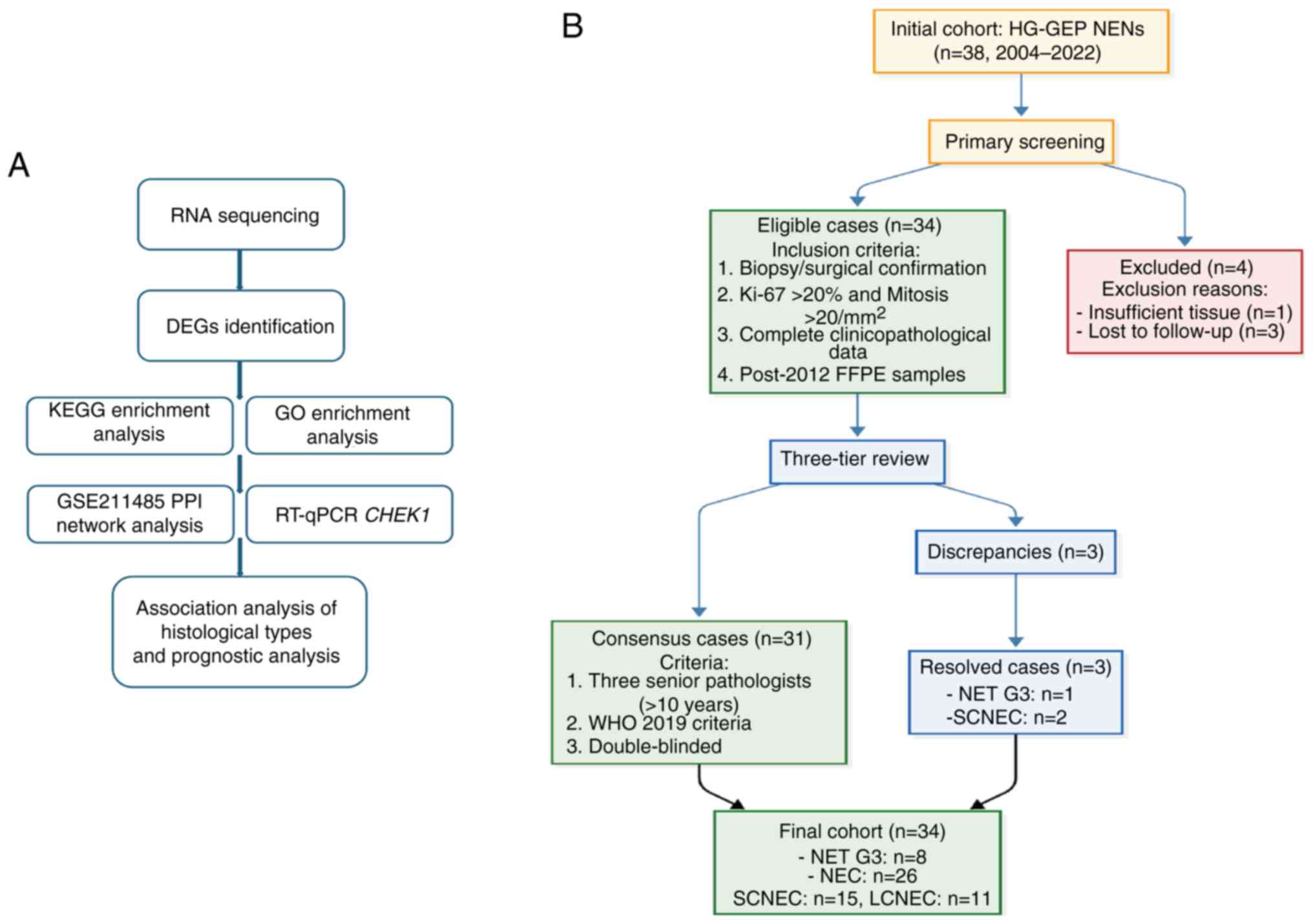
Figure 1

Workflow diagram and case selection
flowchart. (A) Workflow of the study. (B) Case inclusion and
screening flowchart. DEGs, differentially expressed genes; KEGG,
Kyoto Encyclopaedia of Genes and Genomes; GO, Gene Ontology; PPI,
protein-protein interaction; RT-qPCR, reverse
transcription-quantitative PCR; HG-GEP NENs, high-grade
gastroenteropancreatic neuroendocrine neoplasms; FFPE,
formalin-fixed paraffin-embedded; NET G3, neuroendocrine tumour
grade 3; NEC, neuroendocrine carcinoma; SCNEC, small cell NEC;
LCNEC, large-cell NEC; WHO, World Health Organisation;
CHEK1, checkpoint kinase 1.

Figure 2

Overall analysis of the DEGs. (A)
Volcano plot of the DEGs. Red and blue dots represent significantly
upregulated and downregulated genes, respectively (adjusted P-value
<0.05 and |log2FC|>1). (B) GO and KEGG enrichment
analysis of the DEGs. Bar plots show the top significantly enriched
terms. The x-axis represents the enrichment significance
[-Log10(adjusted P-value)], and numbers in parentheses
indicate gene counts for each term. DEGs, differentially expressed
genes; BP, biological processes; CC, cellular component; MF,
molecular function; KEGG, Kyoto Encyclopedia of Genes and
Genomes.

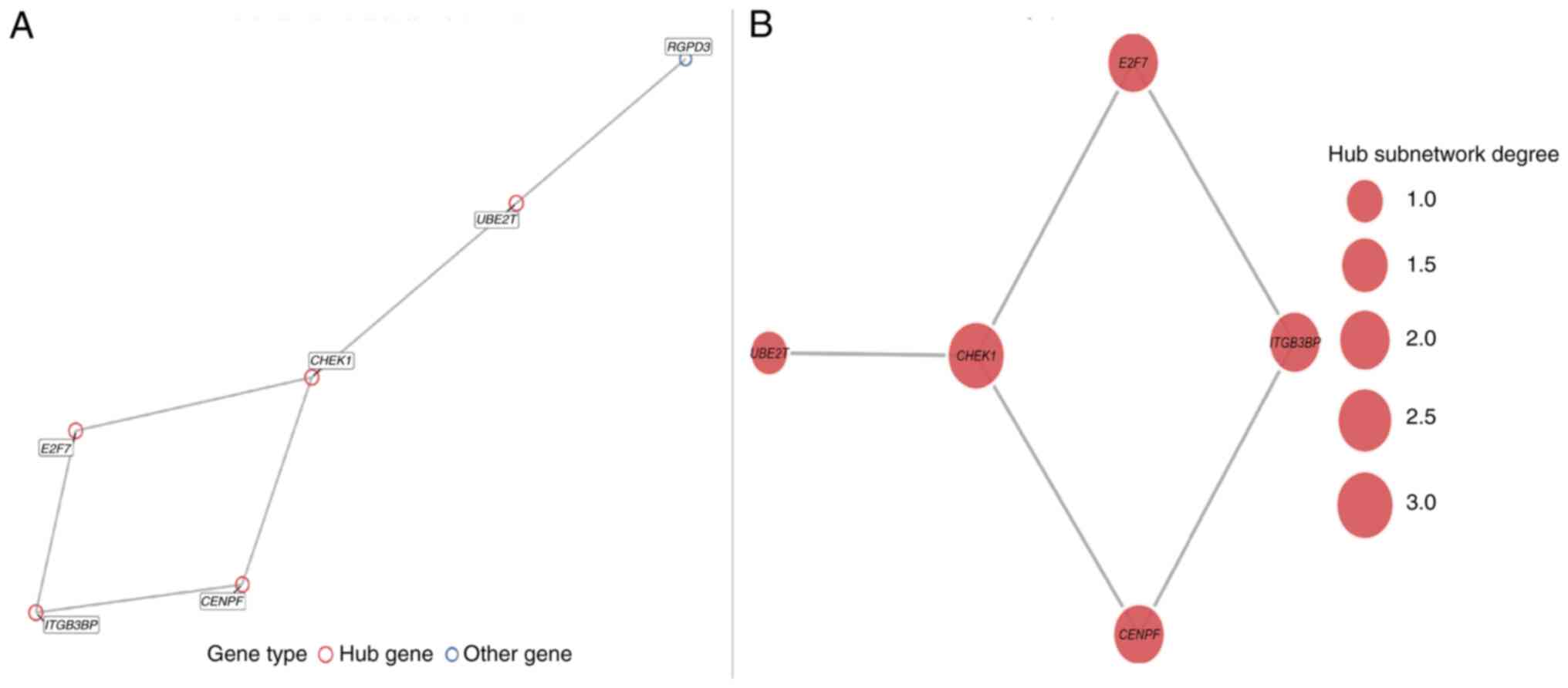
Figure 3

PPI network analysis of DEGs. (A) PPI
network constructed from DEGs. (B) Five hub genes (CHEK1,
CENPF, UBE2T, E2F7 and ITGB3BP) were
identified within the network. DEGs, differentially expressed
genes; PPI, protein-protein interaction.

Figure 4

Prognostic and diagnostic analysis of
the DEGs identified from the GSE211485 dataset. (A-E) Kaplan-Meier
survival curves showing the association between the expression
levels of the five identified DEGs (A) CHEK1, (B)
CENPF, (C) E2F7, (D) ITGB3BP and (E)
UBE2T, and overall survival in patients with digestive
system tumours. The HR and 95% CIs were calculated using the
log-rank test. (F) ROC curve showing the diagnostic performance of
CHEK1 expression for distinguishing tumour from normal
tissues. The AUC indicates diagnostic accuracy. (G) Expression of
CHEK1 [log2 (TPM +1)] in digestive system tumour tissues
compared with adjacent normal tissues. Statistical significance is
indicated as ***P<0.001. DEGs, differentially
expressed genes; CI, confidence interval; AUC, area under the
curve; HR, hazard ratio; CHEK1, checkpoint kinase 1; FPR,
false-positive rate; TPR, true-positive rate; TPM, transcripts per
million.

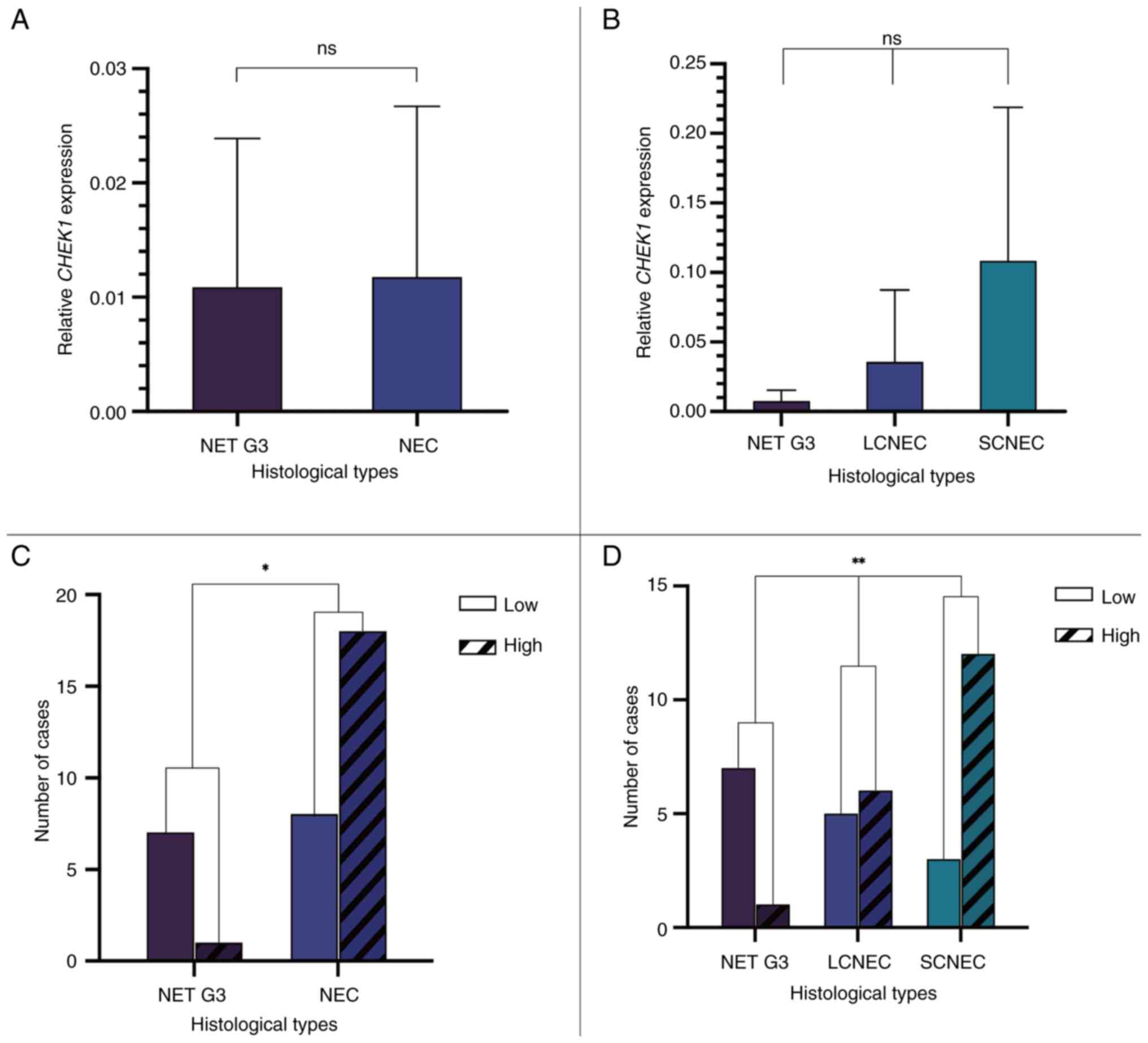
Figure 5

Reverse transcription-quantitative
PCR results of CHEK1 expression in high-grade
gastroenteropancreatic neuroendocrine neoplasms. (A) Comparison of
relative CHEK1 mRNA expression levels between the NET G3
(n=8) and NEC (n=26) groups. (B) Comparison of relative
CHEK1 mRNA expression levels among the NET G3 (n=8), LCNEC
(n=11) and SCNEC (n=15) subgroups. (C) Association between
CHEK1 expression status and histological types in NET G3 and
NEC. (D) Association between CHEK1 expression status and
histological types in NET G3, LCNEC and SCNEC.
*P<0.05 and **P<0.01. NET G3,
neuroendocrine tumour grade 3; NEC, neuroendocrine carcinoma;
LCNEC, large cell NEC; SCNEC, small cell NEC; CHEK1,
checkpoint kinase 1; ns, not significant.

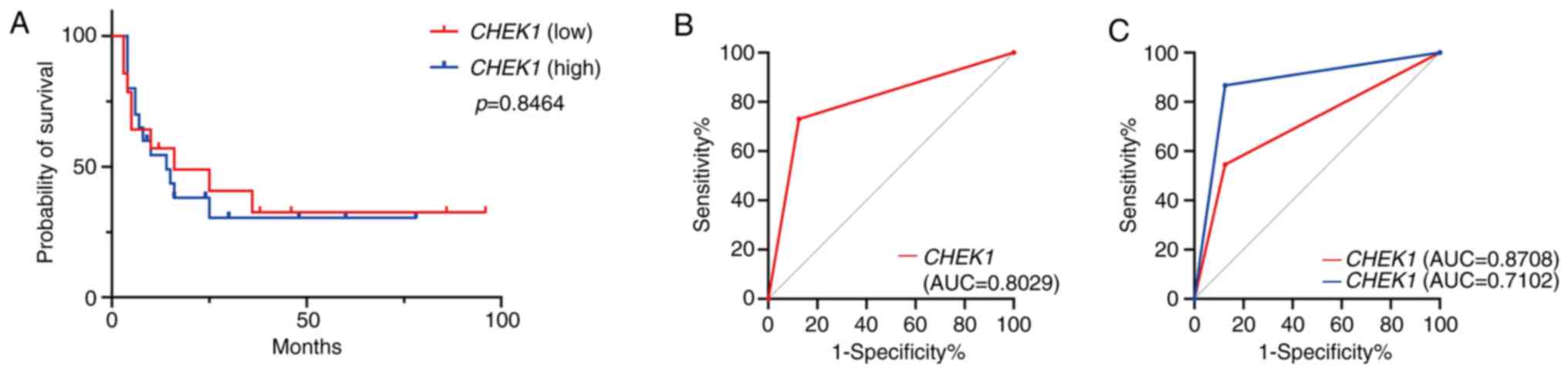
Figure 6

Prognostic and diagnostic value of
CHEK1 in HG-GEP NENs. (A) Kaplan-Meier analysis of overall
survival in patients with HG-GEP NENs with high (n=14) vs. low
(n=20) CHEK1 expression (P=0.8464). (B) ROC curve analysis
of CHEK1 expression for distinguishing NEC from NET G3
(AUC=0.8029). (C) ROC curves of CHEK1 expression for
distinguishing LCNEC (AUC=0.7102) and SCNEC (AUC=0.8708) subtypes
from the NET G3 group. HG-GEP NENs, high-grade
gastroenteropancreatic neuroendocrine neoplasms; ROC, receiver
operating characteristic; AUC, area under the curve; CHEK1,
checkpoint kinase 1; NEC, neuroendocrine carcinoma; SCNEC, small
cell NEC; LCNEC, large cell NEC.
View References

1 

Pavel M, Öberg K, Falconi M, Krenning EP, Sundin A and Perren A: ESMO Guidelines Committee: Electronic address: clinicalguidelines@esmo.org. Gastroenteropancreatic neuroendocrine neoplasms: ESMO clinical practice guidelines for diagnosis, treatment and follow-up. Ann Oncol. 31:844–860. 2020.PubMed/NCBI View Article : Google Scholar

2 

Gribble FM and Reimann F: Function and mechanisms of enteroendocrine cells and gut hormones in metabolism. Nat Rev Endocrinol. 15:226–237. 2019.PubMed/NCBI View Article : Google Scholar

3 

Nagtegaal ID, Odze RD, Klimstra D, Paradis V, Rugge M, Schirmacher P, Washington KM, Carneiro F and Cree IA: WHO Classification of Tumours Editorial Board. The 2019 WHO classification of tumours of the digestive system. Histopathology. 76:182–188. 2020.PubMed/NCBI View Article : Google Scholar

4 

Busico A, Maisonneuve P, Prinzi N, Pusceddu S, Centonze G, Garzone G, Pellegrinelli A, Giacomelli L, Mangogna A, Paolino C, et al: Gastroenteropancreatic high-grade neuroendocrine neoplasms: Histology and molecular analysis, two sides of the same coin. Neuroendocrinology. 110:616–629. 2020.PubMed/NCBI View Article : Google Scholar

5 

Milione M, Maisonneuve P, Pellegrinelli A, Grillo F, Albarello L, Spaggiari P, Vanoli A, Tagliabue G, Pisa E, Messerini L, et al: Ki67 proliferative index of the neuroendocrine component drives MANEC prognosis. Endocr Relat Cancer. 25:583–593. 2018.PubMed/NCBI View Article : Google Scholar

6 

Tang LH, Untch BR, Reidy DL, O'Reilly E, Dhall D, Jih L, Basturk O, Allen PJ and Klimstra DS: Well-differentiated neuroendocrine tumors with a morphologically apparent high-grade component: A pathway distinct from poorly differentiated neuroendocrine carcinomas. Clin Cancer Res. 22:1011–1017. 2016.PubMed/NCBI View Article : Google Scholar

7 

Sorbye H, Kong G and Grozinsky-Glasberg S: PRRT in high-grade gastroenteropancreatic neuroendocrine neoplasms (WHO G3). Endocr Relat Cancer. 27:R67–R77. 2020.PubMed/NCBI View Article : Google Scholar

8 

Pellat A and Coriat R: Well differentiated grade 3 neuroendocrine tumors of the digestive tract: A narrative review. J Clin Med. 9(1677)2020.PubMed/NCBI View Article : Google Scholar

9 

Venizelos A, Elvebakken H, Perren A, Nikolaienko O, Deng W, Lothe IMB, Couvelard A, Hjortland GO, Sundlöv A, Svensson J, et al: The molecular characteristics of high-grade gastroenteropancreatic neuroendocrine neoplasms. Endocr Relat Cancer. 29:1–14. 2021.PubMed/NCBI View Article : Google Scholar

10 

Scarpa A, Chang DK, Nones K, Corbo V, Patch AM, Bailey P, Lawlor RT, Johns AL, Miller DK, Mafficini A, et al: Whole-genome landscape of pancreatic neuroendocrine tumours. Nature. 543:65–71. 2017.PubMed/NCBI View Article : Google Scholar

11 

Mafficini A and Scarpa A: Genetics and epigenetics of gastroenteropancreatic neuroendocrine neoplasms. Endocr Relat Cancer. 26:R249–R266. 2019.PubMed/NCBI View Article : Google Scholar

12 

Jin XF, Spöttl G, Maurer J, Nölting S and Auernhammer CJ: Antitumoral activity of the MEK inhibitor trametinib (TMT212) alone and in combination with the CDK4/6 inhibitor ribociclib (LEE011) in neuroendocrine tumor cells in vitro. Cancers (Basel). 13(1485)2021.PubMed/NCBI View Article : Google Scholar

13 

Wang ZJ, An K, Li R, Shen W, Bao MD, Tao JH, Chen JN, Mei SW, Shen HY, Ma YB, et al: Analysis of 72 patients with colorectal high-grade neuroendocrine neoplasms from three chinese hospitals. World J Gastroenterol. 25:5197–5209. 2019.PubMed/NCBI View Article : Google Scholar

14 

Uccella S, La Rosa S, Metovic J, Marchiori D, Scoazec JY, Volante M, Mete O and Papotti M: Genomics of high-grade neuroendocrine neoplasms: Well-differentiated neuroendocrine tumor with high-grade features (G3 NET) and neuroendocrine carcinomas (NEC) of various anatomic sites. Endocr Pathol. 32:192–210. 2021.PubMed/NCBI View Article : Google Scholar

15 

Mitsuhashi K, Yamamoto I, Kurihara H, Kanno S, Ito M, Igarashi H, Ishigami K, Sukawa Y, Tachibana M, Takahashi H, et al: Analysis of the molecular features of rectal carcinoid tumors to identify new biomarkers that predict biological malignancy. Oncotarget. 6:22114–22125. 2015.PubMed/NCBI View Article : Google Scholar

16 

Park HY, Kwon MJ, Kang HS, Kim YJ, Kim NY, Kim MJ, Min KW, Choi KC, Nam ES, Cho SJ, et al: Targeted next-generation sequencing of well-differentiated rectal, gastric, and appendiceal neuroendocrine tumors to identify potential targets. Hum Pathol. 87:83–94. 2019.PubMed/NCBI View Article : Google Scholar

17 

Hijioka S, Hosoda W, Matsuo K, Ueno M, Furukawa M, Yoshitomi H, Kobayashi N, Ikeda M, Ito T, Nakamori S, et al: Rb loss and KRAS mutation are predictors of the response to platinum-based chemotherapy in pancreatic neuroendocrine neoplasm with grade 3: A japanese multicenter pancreatic NEN-G3 study. Clin Cancer Res. 23:4625–4632. 2017.PubMed/NCBI View Article : Google Scholar

18 

Sorbye H, Baudin E and Perren A: The problem of high-grade gastroenteropancreatic neuroendocrine neoplasms. Endocrinol Metab Clin North Am. 47:683–698. 2018.PubMed/NCBI View Article : Google Scholar

19 

Patil M, Pabla N and Dong Z: Checkpoint kinase 1 in DNA damage response and cell cycle regulation. Cell Mol Life Sci. 70:4009–4021. 2013.PubMed/NCBI View Article : Google Scholar

20 

Qiu Z, Oleinick NL and Zhang J: ATR/CHK1 inhibitors and cancer therapy. Radiother Oncol. 126:450–464. 2018.PubMed/NCBI View Article : Google Scholar

21 

Hubackova S, Davidova E, Boukalova S, Kovarova J, Bajzikova M, Coelho A, Terp MG, Ditzel HJ, Rohlena J and Neuzil J: Replication and ribosomal stress induced by targeting pyrimidine synthesis and cellular checkpoints suppress p53-deficient tumors. Cell Death Dis. 11(110)2020.PubMed/NCBI View Article : Google Scholar

22 

Jaaks P, Coker EA, Vis DJ, Edwards O, Carpenter EF, Leto SM, Dwane L, Sassi F, Lightfoot H, Barthorpe S, et al: Effective drug combinations in breast colon and pancreatic cancer cells. Nature. 603:166–173. 2022.PubMed/NCBI View Article : Google Scholar

23 

Pang YY, Chen ZY, Zeng DT, Li DM, Li Q, Huang WY, Li B, Luo JY, Chi BT, Huang Q, et al: Checkpoint kinase 1 in colorectal cancer: Upregulation of expression and promotion of cell proliferation. World J Clin Oncol. 16(101725)2025.PubMed/NCBI View Article : Google Scholar

24 

Gu C, Wang W, Tang X, Xu T, Zhang Y, Guo M, Wei R, Wang Y, Jurczyszyn A, Janz S, et al: CHEK1 and circCHEK1_246aa evoke chromosomal instability and induce bone lesion formation in multiple myeloma. Mol Cancer. 20(84)2021.PubMed/NCBI View Article : Google Scholar

25 

Sun J, Zhu Z, Li W, Shen M, Cao C, Sun Q, Guo Z, Liu L and Wu D: UBE2T-regulated H2AX monoubiquitination induces hepatocellular carcinoma radioresistance by facilitating CHK1 activation. J Exp Clin Cancer Res. 39(222)2020.PubMed/NCBI View Article : Google Scholar

26 

Zuo W, Zhang W, Xu F, Zhou J and Bai W: Long non-coding RNA LINC00485 acts as a microRNA-195 sponge to regulate the chemotherapy sensitivity of lung adenocarcinoma cells to cisplatin by regulating CHEK1. Cancer Cell Int. 19(240)2019.PubMed/NCBI View Article : Google Scholar

27 

Sen T, Tong P, Stewart CA, Cristea S, Valliani A, Shames DS, Redwood AB, Fan YH, Li L, Glisson BS, et al: CHK1 inhibition in small-cell lung cancer produces single-agent activity in biomarker-defined disease subsets and combination activity with cisplatin or olaparib. Cancer Res. 77:3870–3884. 2017.PubMed/NCBI View Article : Google Scholar

28 

Booth L, Roberts J, Poklepovic A and Dent P: The CHK1 inhibitor SRA737 synergizes with PARP1 inhibitors to kill carcinoma cells. Cancer Biol Ther. 19:786–796. 2018.PubMed/NCBI View Article : Google Scholar

29 

Cui Q, Cai CY, Wang JQ, Zhang S, Gupta P, Ji N, Yang Y, Dong X, Yang DH and Chen ZS: Chk1 inhibitor MK-8776 restores the sensitivity of chemotherapeutics in P-glycoprotein overexpressing cancer cells. Int J Mol Sci. 20(4095)2019.PubMed/NCBI View Article : Google Scholar

30 

Landau HJ, McNeely SC, Nair JS, Comenzo RL, Asai T, Friedman H, Jhanwar SC, Nimer SD and Schwartz GK: The checkpoint kinase inhibitor AZD7762 potentiates chemotherapy-induced apoptosis of p53-mutated multiple myeloma cells. Mol Cancer Ther. 11:1781–1788. 2012.PubMed/NCBI View Article : Google Scholar

31 

Dai Y, Rahmani M, Pei XY, Khanna P, Han SI, Mitchell C, Dent P and Grant S: Farnesyltransferase inhibitors interact synergistically with the Chk1 inhibitor UCN-01 to induce apoptosis in human leukemia cells through interruption of both Akt and MEK/ERK pathways and activation of SEK1/JNK. Blood. 105:1706–1716. 2005.PubMed/NCBI View Article : Google Scholar

32 

Soldevilla B, Lens-Pardo A, Espinosa-Olarte P, Carretero-Puche C, Molina-Pinelo S, Robles C, Benavent M, Gomez-Izquierdo L, Fierro-Fernández M, Morales-Burgo P, et al: MicroRNA signature and integrative omics analyses define prognostic clusters and key pathways driving prognosis in patients with neuroendocrine neoplasms. Mol Oncol. 17:582–597. 2023.PubMed/NCBI View Article : Google Scholar

33 

Livak KJ and Schmittgen TD: Analysis of relative gene expression data using real-time quantitative PCR and the 2(-Delta Delta C(T)) method. Methods. 25:402–408. 2001.PubMed/NCBI View Article : Google Scholar

34 

Li N, Hu Y, Wu L and An J: Clinicopathological correlations in 38 cases of gastroenteropancreatic high-grade neuroendocrine neoplasms. Front Oncol. 14(1399079)2024.PubMed/NCBI View Article : Google Scholar

35 

Rosery V, Reis H, Savvatakis K, Kowall B, Stuschke M, Paul A, Dechêne A, Yang J, Zhao B, Borgers A, et al: Antitumor immune response is associated with favorable survival in GEP-NEN G3. Endocr Relat Cancer. 28:683–693. 2021.PubMed/NCBI View Article : Google Scholar

36 

Konukiewitz B, Schlitter AM, Jesinghaus M, Pfister D, Steiger K, Segler A, Agaimy A, Sipos B, Zamboni G, Weichert W, et al: Somatostatin receptor expression related to TP53 and RB1 alterations in pancreatic and extrapancreatic neuroendocrine neoplasms with a Ki67-index above 20. Mod Pathol. 30:587–598. 2017.PubMed/NCBI View Article : Google Scholar

37 

Bellizzi AM: Immunohistochemistry in the diagnosis and classification of neuroendocrine neoplasms: What can brown do for you? Hum Pathol. 96:8–33. 2020.PubMed/NCBI View Article : Google Scholar

38 

Czeczok TW, Stashek KM, Maxwell JE, O'Dorisio TM, Howe JR, Hornick JL and Bellizzi AM: Clusterin in neuroendocrine epithelial neoplasms: Absence of expression in a well-differentiated tumor suggests a jejunoileal origin. Appl Immunohistochem Mol Morphol. 26:94–100. 2018.PubMed/NCBI View Article : Google Scholar

Related Articles

  • Abstract
  • View
  • Download
  • Twitter
Copy and paste a formatted citation
Spandidos Publications style
Li N, An J and Hu Y: Diagnostic significance of the checkpoint kinase 1 gene in high‑grade gastroenteropancreatic neuroendocrine neoplasms. Exp Ther Med 31: 6, 2026.
APA
Li, N., An, J., & Hu, Y. (2026). Diagnostic significance of the checkpoint kinase 1 gene in high‑grade gastroenteropancreatic neuroendocrine neoplasms. Experimental and Therapeutic Medicine, 31, 6. https://doi.org/10.3892/etm.2025.13001
MLA
Li, N., An, J., Hu, Y."Diagnostic significance of the checkpoint kinase 1 gene in high‑grade gastroenteropancreatic neuroendocrine neoplasms". Experimental and Therapeutic Medicine 31.1 (2026): 6.
Chicago
Li, N., An, J., Hu, Y."Diagnostic significance of the checkpoint kinase 1 gene in high‑grade gastroenteropancreatic neuroendocrine neoplasms". Experimental and Therapeutic Medicine 31, no. 1 (2026): 6. https://doi.org/10.3892/etm.2025.13001
Copy and paste a formatted citation
x
Spandidos Publications style
Li N, An J and Hu Y: Diagnostic significance of the checkpoint kinase 1 gene in high‑grade gastroenteropancreatic neuroendocrine neoplasms. Exp Ther Med 31: 6, 2026.
APA
Li, N., An, J., & Hu, Y. (2026). Diagnostic significance of the checkpoint kinase 1 gene in high‑grade gastroenteropancreatic neuroendocrine neoplasms. Experimental and Therapeutic Medicine, 31, 6. https://doi.org/10.3892/etm.2025.13001
MLA
Li, N., An, J., Hu, Y."Diagnostic significance of the checkpoint kinase 1 gene in high‑grade gastroenteropancreatic neuroendocrine neoplasms". Experimental and Therapeutic Medicine 31.1 (2026): 6.
Chicago
Li, N., An, J., Hu, Y."Diagnostic significance of the checkpoint kinase 1 gene in high‑grade gastroenteropancreatic neuroendocrine neoplasms". Experimental and Therapeutic Medicine 31, no. 1 (2026): 6. https://doi.org/10.3892/etm.2025.13001
Follow us
  • Twitter
  • LinkedIn
  • Facebook
About
  • Spandidos Publications
  • Careers
  • Cookie Policy
  • Privacy Policy
How can we help?
  • Help
  • Live Chat
  • Contact
  • Email to our Support Team