Spandidos Publications Logo
  • About
    • About Spandidos
    • Aims and Scopes
    • Abstracting and Indexing
    • Editorial Policies
    • Reprints and Permissions
    • Job Opportunities
    • Terms and Conditions
    • Contact
  • Journals
    • All Journals
    • Oncology Letters
      • Oncology Letters
      • Information for Authors
      • Editorial Policies
      • Editorial Board
      • Aims and Scope
      • Abstracting and Indexing
      • Bibliographic Information
      • Archive
    • International Journal of Oncology
      • International Journal of Oncology
      • Information for Authors
      • Editorial Policies
      • Editorial Board
      • Aims and Scope
      • Abstracting and Indexing
      • Bibliographic Information
      • Archive
    • Molecular and Clinical Oncology
      • Molecular and Clinical Oncology
      • Information for Authors
      • Editorial Policies
      • Editorial Board
      • Aims and Scope
      • Abstracting and Indexing
      • Bibliographic Information
      • Archive
    • Experimental and Therapeutic Medicine
      • Experimental and Therapeutic Medicine
      • Information for Authors
      • Editorial Policies
      • Editorial Board
      • Aims and Scope
      • Abstracting and Indexing
      • Bibliographic Information
      • Archive
    • International Journal of Molecular Medicine
      • International Journal of Molecular Medicine
      • Information for Authors
      • Editorial Policies
      • Editorial Board
      • Aims and Scope
      • Abstracting and Indexing
      • Bibliographic Information
      • Archive
    • Biomedical Reports
      • Biomedical Reports
      • Information for Authors
      • Editorial Policies
      • Editorial Board
      • Aims and Scope
      • Abstracting and Indexing
      • Bibliographic Information
      • Archive
    • Oncology Reports
      • Oncology Reports
      • Information for Authors
      • Editorial Policies
      • Editorial Board
      • Aims and Scope
      • Abstracting and Indexing
      • Bibliographic Information
      • Archive
    • Molecular Medicine Reports
      • Molecular Medicine Reports
      • Information for Authors
      • Editorial Policies
      • Editorial Board
      • Aims and Scope
      • Abstracting and Indexing
      • Bibliographic Information
      • Archive
    • World Academy of Sciences Journal
      • World Academy of Sciences Journal
      • Information for Authors
      • Editorial Policies
      • Editorial Board
      • Aims and Scope
      • Abstracting and Indexing
      • Bibliographic Information
      • Archive
    • International Journal of Functional Nutrition
      • International Journal of Functional Nutrition
      • Information for Authors
      • Editorial Policies
      • Editorial Board
      • Aims and Scope
      • Abstracting and Indexing
      • Bibliographic Information
      • Archive
    • International Journal of Epigenetics
      • International Journal of Epigenetics
      • Information for Authors
      • Editorial Policies
      • Editorial Board
      • Aims and Scope
      • Abstracting and Indexing
      • Bibliographic Information
      • Archive
    • Medicine International
      • Medicine International
      • Information for Authors
      • Editorial Policies
      • Editorial Board
      • Aims and Scope
      • Abstracting and Indexing
      • Bibliographic Information
      • Archive
  • Articles
  • Information
    • Information for Authors
    • Information for Reviewers
    • Information for Librarians
    • Information for Advertisers
    • Conferences
  • Language Editing
Spandidos Publications Logo
  • About
    • About Spandidos
    • Aims and Scopes
    • Abstracting and Indexing
    • Editorial Policies
    • Reprints and Permissions
    • Job Opportunities
    • Terms and Conditions
    • Contact
  • Journals
    • All Journals
    • Biomedical Reports
      • Information for Authors
      • Editorial Policies
      • Editorial Board
      • Aims and Scope
      • Abstracting and Indexing
      • Bibliographic Information
      • Archive
    • Experimental and Therapeutic Medicine
      • Information for Authors
      • Editorial Policies
      • Editorial Board
      • Aims and Scope
      • Abstracting and Indexing
      • Bibliographic Information
      • Archive
    • International Journal of Epigenetics
      • Information for Authors
      • Editorial Policies
      • Editorial Board
      • Aims and Scope
      • Abstracting and Indexing
      • Bibliographic Information
      • Archive
    • International Journal of Functional Nutrition
      • Information for Authors
      • Editorial Policies
      • Editorial Board
      • Aims and Scope
      • Abstracting and Indexing
      • Bibliographic Information
      • Archive
    • International Journal of Molecular Medicine
      • Information for Authors
      • Editorial Policies
      • Editorial Board
      • Aims and Scope
      • Abstracting and Indexing
      • Bibliographic Information
      • Archive
    • International Journal of Oncology
      • Information for Authors
      • Editorial Policies
      • Editorial Board
      • Aims and Scope
      • Abstracting and Indexing
      • Bibliographic Information
      • Archive
    • Medicine International
      • Information for Authors
      • Editorial Policies
      • Editorial Board
      • Aims and Scope
      • Abstracting and Indexing
      • Bibliographic Information
      • Archive
    • Molecular and Clinical Oncology
      • Information for Authors
      • Editorial Policies
      • Editorial Board
      • Aims and Scope
      • Abstracting and Indexing
      • Bibliographic Information
      • Archive
    • Molecular Medicine Reports
      • Information for Authors
      • Editorial Policies
      • Editorial Board
      • Aims and Scope
      • Abstracting and Indexing
      • Bibliographic Information
      • Archive
    • Oncology Letters
      • Information for Authors
      • Editorial Policies
      • Editorial Board
      • Aims and Scope
      • Abstracting and Indexing
      • Bibliographic Information
      • Archive
    • Oncology Reports
      • Information for Authors
      • Editorial Policies
      • Editorial Board
      • Aims and Scope
      • Abstracting and Indexing
      • Bibliographic Information
      • Archive
    • World Academy of Sciences Journal
      • Information for Authors
      • Editorial Policies
      • Editorial Board
      • Aims and Scope
      • Abstracting and Indexing
      • Bibliographic Information
      • Archive
  • Articles
  • Information
    • For Authors
    • For Reviewers
    • For Librarians
    • For Advertisers
    • Conferences
  • Language Editing
Login Register Submit
  • This site uses cookies
  • You can change your cookie settings at any time by following the instructions in our Cookie Policy. To find out more, you may read our Privacy Policy.

    I agree
Search articles by DOI, keyword, author or affiliation
Search
Advanced Search
presentation
Experimental and Therapeutic Medicine
Join Editorial Board Propose a Special Issue
Print ISSN: 1792-0981 Online ISSN: 1792-1015
Journal Cover
January-2026 Volume 31 Issue 1

Full Size Image

Sign up for eToc alerts
Recommend to Library

Journals

International Journal of Molecular Medicine

International Journal of Molecular Medicine

International Journal of Molecular Medicine is an international journal devoted to molecular mechanisms of human disease.

International Journal of Oncology

International Journal of Oncology

International Journal of Oncology is an international journal devoted to oncology research and cancer treatment.

Molecular Medicine Reports

Molecular Medicine Reports

Covers molecular medicine topics such as pharmacology, pathology, genetics, neuroscience, infectious diseases, molecular cardiology, and molecular surgery.

Oncology Reports

Oncology Reports

Oncology Reports is an international journal devoted to fundamental and applied research in Oncology.

Experimental and Therapeutic Medicine

Experimental and Therapeutic Medicine

Experimental and Therapeutic Medicine is an international journal devoted to laboratory and clinical medicine.

Oncology Letters

Oncology Letters

Oncology Letters is an international journal devoted to Experimental and Clinical Oncology.

Biomedical Reports

Biomedical Reports

Explores a wide range of biological and medical fields, including pharmacology, genetics, microbiology, neuroscience, and molecular cardiology.

Molecular and Clinical Oncology

Molecular and Clinical Oncology

International journal addressing all aspects of oncology research, from tumorigenesis and oncogenes to chemotherapy and metastasis.

World Academy of Sciences Journal

World Academy of Sciences Journal

Multidisciplinary open-access journal spanning biochemistry, genetics, neuroscience, environmental health, and synthetic biology.

International Journal of Functional Nutrition

International Journal of Functional Nutrition

Open-access journal combining biochemistry, pharmacology, immunology, and genetics to advance health through functional nutrition.

International Journal of Epigenetics

International Journal of Epigenetics

Publishes open-access research on using epigenetics to advance understanding and treatment of human disease.

Medicine International

Medicine International

An International Open Access Journal Devoted to General Medicine.

Journal Cover
January-2026 Volume 31 Issue 1

Full Size Image

Sign up for eToc alerts
Recommend to Library

  • Article
  • Citations
    • Cite This Article
    • Download Citation
    • Create Citation Alert
    • Remove Citation Alert
    • Cited By
  • Similar Articles
    • Related Articles (in Spandidos Publications)
    • Similar Articles (Google Scholar)
    • Similar Articles (PubMed)
  • Download PDF
  • Download XML
  • View XML
Case Report

Treatment of a mandibular molar with primary failure of eruption: A case report

  • Authors:
    • Ming Guo
    • Weisheng Zhang
  • View Affiliations / Copyright

    Affiliations: Department of Orthodontics, Stomatology Center, Peking University Shenzhen Hospital, Futian, Shenzhen 518036, P.R. China
  • Article Number: 9
    |
    Published online on: October 29, 2025
       https://doi.org/10.3892/etm.2025.13004
  • Expand metrics +
Metrics: Total Views: 0 (Spandidos Publications: | PMC Statistics: )
Metrics: Total PDF Downloads: 0 (Spandidos Publications: | PMC Statistics: )
Cited By (CrossRef): 0 citations Loading Articles...

This article is mentioned in:


Abstract

Primary failure of eruption (PFE) is a rare inherited disorder that is uncommon in dental research. It is characterized by failure of healthy tooth eruption, which may result in unilateral or bilateral posterior open bite. To date, the etiology of PFE has remained elusive. The present study reported the case of a 12‑year‑old patient exhibiting unilateral open bite of the posterior teeth, with no evidence of local or systemic complications. The patient expressed aesthetic and functional concerns regarding the occlusion. Clinical and radiological examinations revealed unerupted mandibular molars with fully formed roots located in concave bone defects, with no anatomical obstruction or other dental anomalies. Based on clinical and imaging manifestations and exclusion diagnosis, PFE was diagnosed. The affected molar was extracted and orthodontic treatment with metal self‑ligating brackets was initiated following diagnosis. Notably, the patient was monitored with regular follow‑up visits. Following treatment, occlusal function and dental aesthetics were improved, demonstrating the efficacy of combined surgical extraction and orthodontic management for PFE. In conclusion, the present study highlighted that patients presenting with posterior open bite should be further evaluated to exclude rare disorders, such as PFE. Early detection and intervention may enhance the management of patients, leading to favourable outcomes. However, further studies are required to establish standardized treatment protocols and to elucidate the underlying genetic mechanisms.

Introduction

Localized failure of tooth eruption may result from numerous factors. Mechanical impediments, such as contact with adjacent teeth, localized bone calcifications or odontoma formation, and parafunctional habits, such as thumb-sucking, commonly inhibit tooth emergence. However, once the observed obstruction is removed, eruption often resumes. By contrast, primary failure of eruption (PFE) denotes cessation or absence of eruption of a tooth in the absence of any identifiable local or systemic cause. Affected teeth neither erupt nor respond to conventional orthodontic forces, and they often become ankylosed when traction is applied, meaning they are directly fused to the surrounding alveolar bone (1).

PFE is a rare, non-syndromic, hereditary condition attributed to loss-of-function mutations in the parathyroid hormone (PTH) receptor 1 (PTH1R) gene and dysregulation of the cyclic adenosine monophosphate-dependent protein kinase A signalling pathway. Notably, the aforementioned pathways are essential for healthy tooth eruption (2-4). At present, diagnosis remains challenging due to the condition's low prevalence and the absence of radiographic evidence of mechanical blockage. Therapeutic options are limited; for example, orthodontic traction alone may be ineffective, while surgical luxation or direct restorative procedures exhibit risks, such as root resorption and further ankylosis (3).

The present study aimed to report the case of isolated PFE affecting a single permanent mandibular first molar in a 12-year-old female. Clinical and radiographic examination revealed no mechanical obstruction and the affected molar failed to erupt, despite available space and application of orthodontic force. The present case highlights the requirement for heightened clinical awareness of PFE and consideration of alternative management strategies when conventional approaches are unsuccessful.

Case report

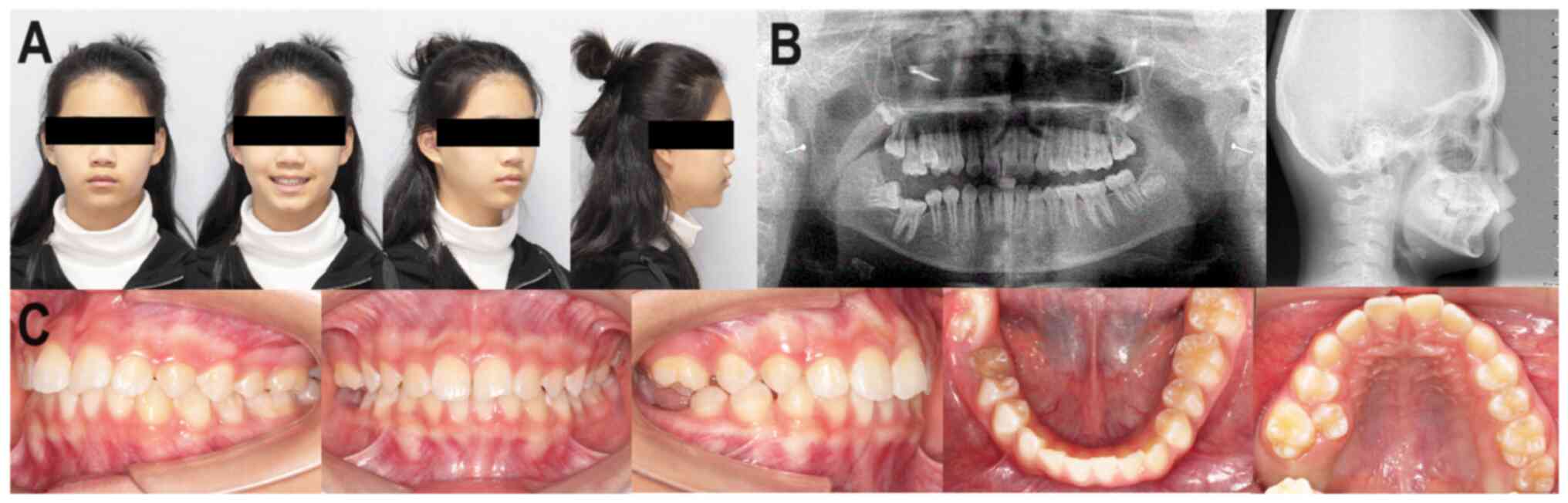
A 12-year-old female patient sought consultation at Peking University Shenzhen Hospital (Futian, China) in January 2020 due to delayed eruption of the right mandibular first molar, an issue that had persisted for the past six years (Fig. 1). Evaluation of the patient's familial medical history revealed a complex and undiagnosed treatment history in the left mandible; however, this was not directly associated with PFE. Facial examination revealed no notable abnormalities. Intraoral examination revealed partial eruption of the crown of the right mandibular first molar, with only the occlusal surface visible. By contrast, the left mandibular first molar exhibited healthy crown development and no eruption disturbances were observed in the remaining dentition. A Class I (Angle's classification) (5) molar and canine occlusion was present on the left side, whereas the right molars displayed an open bite with no occlusal contact.

Pre-treatment assessment of a
12-year-old female with PFE of the right mandibular first molar.
(A) Extraoral images; (B) panoramic and cephalometric images; and
(C) intraoral images. PFE, primary failure of eruption.

Figure 1

Pre-treatment assessment of a 12-year-old female with PFE of the right mandibular first molar. (A) Extraoral images; (B) panoramic and cephalometric images; and (C) intraoral images. PFE, primary failure of eruption.

Dental cast analysis identified mild crowding in the upper arch, while the lower arch was well-aligned. The anterior teeth exhibited a slight deep overbite and overjet, and the curve of Spee in the lower arch measured ~2 mm. Panoramic radiography (Fig. 1) revealed an abnormally low vertical position of the right mandibular first molar, with its root apices located within the mandibular canal. There were no obvious differences in crown or root morphology between the right and left mandibular first molars.

Radiographic examination revealed a markedly narrow periodontal ligament space with variable thickness. The lamina dura surrounding the right mandibular first molar appeared poorly defined and discontinuous compared with the left side. In addition, a concave, pit-like defect was observed in the alveolar bone surrounding the crown, resulting in a significantly reduced mandibular bone height on the affected side. Notably, the right mandibular second premolar was healthy; however, the right mandibular second molar was horizontally impacted and the germ of the right mandibular third molar was developing as expected. Cephalometric analysis confirmed a Class I (Angle's classification) (5) skeletal malocclusion. Subsequently, the patient was preliminary diagnosed with Angle's Class I malocclusion (5) and PFE of the right mandibular first molar.

In the present case, the patient was provided with the following treatment plan: i) Extraction of the bilateral maxillary second premolar and the right mandibular first molar; ii) alignment and retraction of the upper anterior teeth using a metal self-ligating bracket system; iii) uprighting of the right mandibular second molar and mesial movement to replace the missing right mandibular first molar, thereby establishing a Class II molar occlusion relationship (5) bilaterally; and iv) retention and monitoring of the eruption of the right mandibular third molar, with local correction considered, where required, to substitute for the second molar.

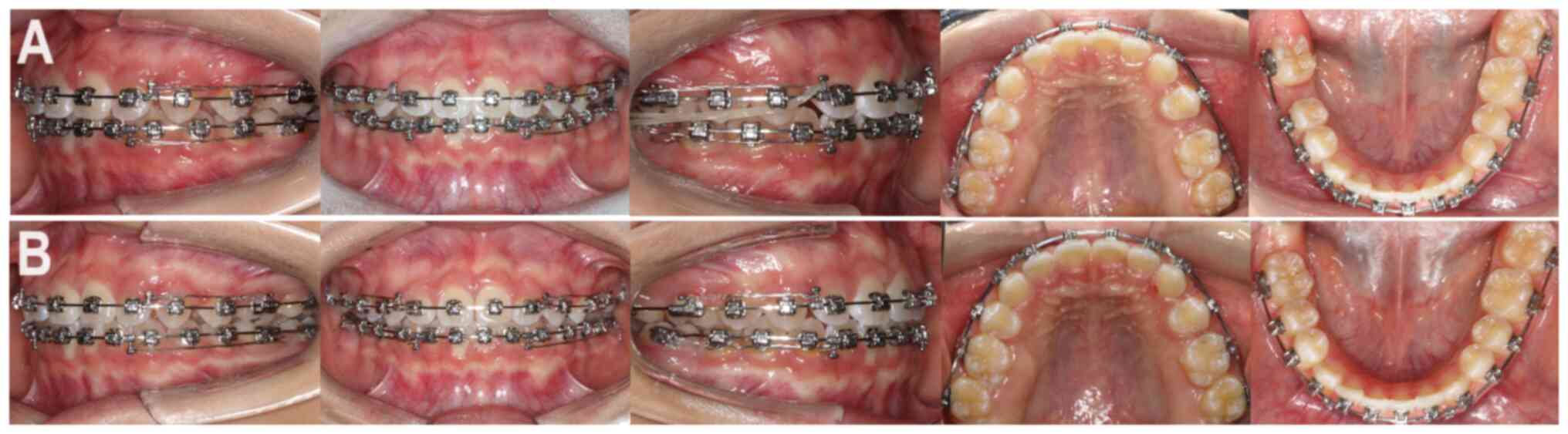
After 2 months of application of orthodontic force, no change in the position of the molars was noticed. Therefore, it could be confirmed that the affected tooth is a case of PFE rather than mechanical failure of eruption. Following the extraction of the bilateral maxillary second premolars and the right mandibular first molar, all teeth were bonded with Damon Q self-ligating brackets with standard torque. For aligning the teeth, round 0.014'' NiTi arch wires were used. These were subsequently replaced by rectangular 0.014''x0.025'' NiTi arch wires, and ultimately by rectangular 0.019''x0.025'' NiTi arch wires, implemented sequentially for both the upper and lower dental arches (Fig. 2). To level the dental arches, rectangular 0.018''x0.025'' stainless steel arch wires were utilized, which ultimately facilitated the closure of spaces and retraction of upper anterior teeth through the application of a power chain. Final occlusal refinement marked the completion of the corrective treatment (Fig. 3). The total treatment duration was 34 months. Following treatment, clear dental retainers were provided for nocturnal wear to ensure long-term stability (potentially lifelong).

During treatment, the right mandibular
second molar was uprighted using a NiTi rectangular arch wire.

Figure 2

During treatment, the right mandibular second molar was uprighted using a NiTi rectangular arch wire.

During treatment, the upper spaces
were closed and the upper anterior teeth were retracted. (A)
Following 18 months of treatment. (B) Following 27 months of
treatment.

Figure 3

During treatment, the upper spaces were closed and the upper anterior teeth were retracted. (A) Following 18 months of treatment. (B) Following 27 months of treatment.

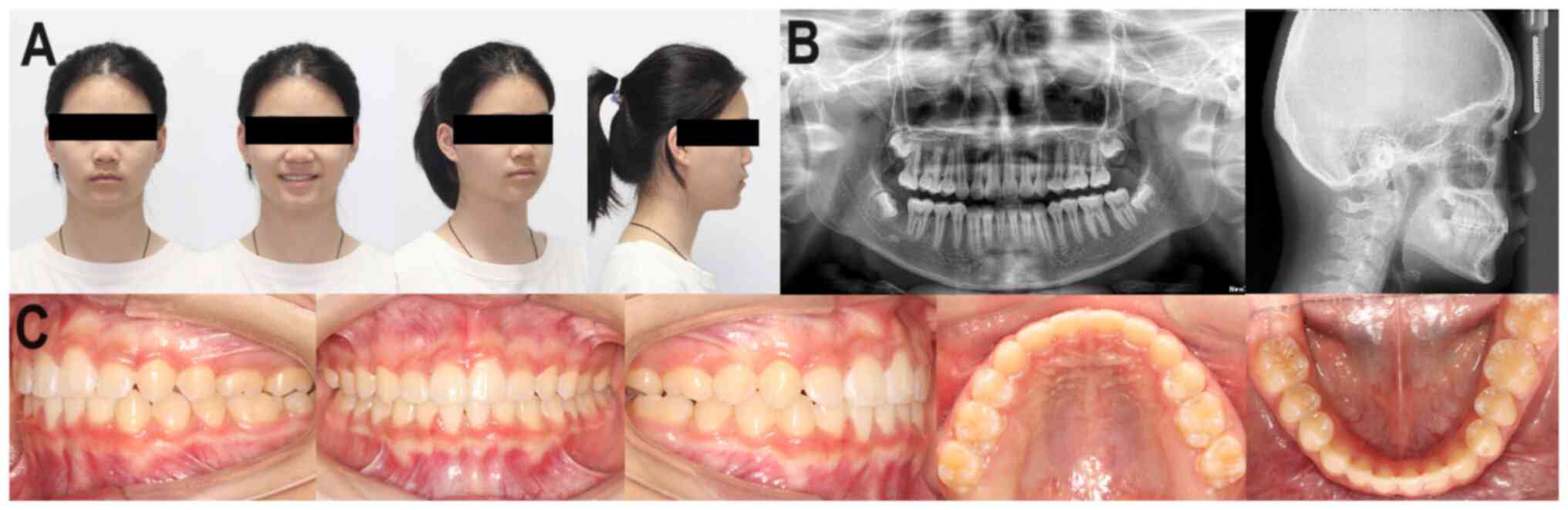
Post-treatment evaluations demonstrated successful repositioning of the right mandibular second molar and restoration of alveolar bone integrity (Fig. 4). Routine follow-up examinations were scheduled semi-annually, with oral clinical assessments serving as the primary evaluation method, supplemented by imaging studies when necessary. At the 1-year follow-up, the patient exhibited stable occlusion, satisfactory anterior alignment, a favourable facial profile and healthy development of the right mandibular third molar.

Post-treatment assessment after 1
year. The chewing function was established and the mandibular bone
defect was eliminated. (A) Extraoral images; (B) panoramic and
cephalometric images; and (C) intraoral images.

Figure 4

Post-treatment assessment after 1 year. The chewing function was established and the mandibular bone defect was eliminated. (A) Extraoral images; (B) panoramic and cephalometric images; and (C) intraoral images.

In conclusion, early identification and intervention in patients with PFE are critical for achieving optimal functional and aesthetic outcomes. The present case highlights the importance of individualized orthodontic planning and long-term follow-up. Further research is required to better understand the mechanisms underlying eruption disturbances and to refine treatment strategies.

Discussion

PFE is a rare hereditary oral disease, with a reported global prevalence of ~0.06% (1). Multiple studies confirm that PFE exhibits familial involvement but may present with incomplete penetrance. It is characterized by the partial or complete failure of tooth eruption beyond the expected timeline, often resulting in an open bite. The diagnosis excludes cases involving eruption failure due to dentoalveolar ankylosis or other mechanical obstructions. In PFE, bone resorption typically creates a clear eruption pathway on the crown side of the affected tooth. However, abnormalities within the periodontal ligament disrupt the eruption process, preventing the tooth from reaching the occlusal plane. As a result, the affected tooth may exhibit little or no response to orthodontic forces, increasing the risk of developing secondary dentoalveolar ankylosis (2).

The present study reports the case of a 12-year-old adolescent presenting with a tooth eruption disorder confined to a single quadrant of the mouth. The condition presented as a localized eruption disturbance in the right mandibular quadrant, with the first molar failing to erupt as expected, leading to an open bite. The second molar leaned horizontally towards the first molar and both were obstructed by the impaction of the first molar. Consequently, occlusion on the right side could not be achieved, resulting in compromised masticatory function.

Prior to initiating orthodontic treatment, the patient was advised to undertake genetic testing; however, this was declined. Thus, clinical attributes, familial medical history and imaging results led to the diagnosis of PFE. While direct restoration may restore occlusal function in PFE-affected teeth, this procedure is often recommended for adult patients. This recommendation is based on numerous factors, such as opposite tooth elongation, low positioning of the tooth, the requirement for root canal treatment, poorly positioned restoration margins, insufficient resistance and fixation, and decay vulnerability. Notably, all of the aforementioned factors may negatively impact long-term prognosis and aesthetics (6). Considering that only a single tooth was involved and the remaining dentition appeared as expected in the present case, the patient chose to proceed with a treatment plan involving extraction of the affected tooth and mesial repositioning of the second molar as its replacement, following a detailed discussion of the risks and benefits. This approach was deemed more appropriate than direct restoration.

Family history may be a key factor in PFE; however, it is not consistently present and may also exhibit incomplete penetrance. Advances in molecular biology have suggested an association between the pathogenic gene responsible for PFE and PTH1R (7). This gene interacts with PTH-related protein and PTH, both of which are essential for healthy physiological functions. Mutations in PTH1R may disrupt the balance between osteogenesis and osteoclastogenesis, thereby contributing to the development of PFE. However, this genetic mutation does not affect the Hertwig's epithelial root sheath, which controls root development (7). Therefore, the tooth can complete its root formation normally but lacks the cellular mechanism to erupt.

Hendricks et al (8) identified PTH1R mutations in all included patients with PFE, confirming an association between this gene and the disorder. However, further research is required to validate the potential association, clarify the underlying molecular mechanisms and determine why these mutations selectively affect certain teeth (8,9).

In conclusion, PFE is a tooth eruption disorder attributed to an abnormal eruption mechanism rather than mechanical impediments. It predominantly affects the eruption of permanent molars and, less frequently, permanent anterior teeth. These impacted teeth are structurally healthy and exhibit no associated systemic symptoms. Affected teeth typically fail to respond, or respond poorly, to orthodontic forces. Due to the impact on the periodontal membrane, PFE may lead to dentoalveolar ankylosis. Several studies have reported that mutations in the PTH1R gene may precipitate PFE and early differential diagnosis can be established via PTH1R gene screening. In the present case, the non-responsive tooth was extracted and the second molar was repositioned to restore occlusion. This approach corrected the mandibular deficiency and re-established healthy masticatory function. Such a treatment strategy may be appropriate for patients diagnosed with PFE.

Acknowledgements

Not applicable.

Funding

Funding: The present study was supported by the Sanming Project of Medicine in Shenzhen (grant no. SZSM202111012) and Shenzhen Fund for Guangdong Provincial High-level Clinical Key Specialties (grant no. SZGSP008).

Availability of data and materials

The data generated in the present study may be requested from the corresponding author.

Authors' contributions

MG contributed to writing the manuscript. WZ treated the patient and provided critical revision of the manuscript. MG and WZ confirm the authenticity of all the raw data. All authors read and approved the final manuscript.

Ethics approval and consent to participate

The present study was approved by the Ethics Committee of Peking University (Beijing, China) (approval no. IRB00001053-08043).

Patient consent for publication

The guardians of the patient provided written informed consent for the publication of the patient's medical data and images.

Competing interests

The authors declare that they have no competing interests.

References

1 

Yamaguchi T, Hosomichi K, Shirota T, Miyamoto Y, Ono W and Ono N: Primary failure of tooth eruption: Etiology and management. Jpn Dent Sci Rev. 58:258–267. 2022.PubMed/NCBI View Article : Google Scholar

2 

Grippaudo C, D'Apolito I, Cafiero C, Re A, Chiurazzi P and Frazier-Bowers SA: Validating clinical characteristic of primary failure of eruption (PFE) associated with PTH1R variants. Prog Orthod. 22(43)2021.PubMed/NCBI View Article : Google Scholar

3 

Jain U, Kallury A, Rao DD and Bharti HV: Primary failure of eruption (PFE). BMJ Case Rep. 2015(bcr2015209703)2015.PubMed/NCBI View Article : Google Scholar

4 

Goonewardene SS, Gillatt D and Persad R: A systematic review of PFE pre-prostatectomy. J Robot Surg. 12:397–400. 2018.PubMed/NCBI View Article : Google Scholar

5 

Gravely JF and Johnson DB: Angle's classification of malocclusion: An assessment of reliability. Br J Orthod. 1:79–86. 1974.PubMed/NCBI View Article : Google Scholar

6 

Roulias P, Kalantzis N, Doukaki D, Pachiou A, Karamesinis K, Damanakis G, Gizani S and Tsolakis AI: Teeth eruption disorders: A critical review. Children (Basel). 9(771)2022.PubMed/NCBI View Article : Google Scholar

7 

Stellzig-Eisenhauer A, Decker E, Meyer-Marcotty P, Rau C, Fiebig BS, Kress W, Saar K, Rüschendorf F, Hubner N, Grimm T, et al: Primary failure of eruption (PFE)-clinical and molecular genetics analysis. J Orofac Orthop. 71:6–16. 2010.PubMed/NCBI View Article : Google Scholar

8 

Hendricks HM, Bencharit S, Seaman W and Frazier-Bowers SA: In silico and functional evaluation of PTH1R mutations found in patients with primary failure of eruption (PFE). Orthod Craniofac Res. 20 (Suppl 1):S57–S62. 2017.PubMed/NCBI View Article : Google Scholar

9 

Pilz P, Meyer-Marcotty P, Eigenthaler M, Roth H, Weber BH and Stellzig-Eisenhauer A: Differential diagnosis of primary failure of eruption (PFE) with and without evidence of pathogenic mutations in the PTHR1 gene. J Orofac Orthop. 75:226–239. 2014.PubMed/NCBI View Article : Google Scholar

Related Articles

  • Abstract
  • View
  • Download
  • Twitter
Copy and paste a formatted citation
Spandidos Publications style
Guo M and Zhang W: Treatment of a mandibular molar with primary failure of eruption: A case report. Exp Ther Med 31: 9, 2026.
APA
Guo, M., & Zhang, W. (2026). Treatment of a mandibular molar with primary failure of eruption: A case report. Experimental and Therapeutic Medicine, 31, 9. https://doi.org/10.3892/etm.2025.13004
MLA
Guo, M., Zhang, W."Treatment of a mandibular molar with primary failure of eruption: A case report". Experimental and Therapeutic Medicine 31.1 (2026): 9.
Chicago
Guo, M., Zhang, W."Treatment of a mandibular molar with primary failure of eruption: A case report". Experimental and Therapeutic Medicine 31, no. 1 (2026): 9. https://doi.org/10.3892/etm.2025.13004
Copy and paste a formatted citation
x
Spandidos Publications style
Guo M and Zhang W: Treatment of a mandibular molar with primary failure of eruption: A case report. Exp Ther Med 31: 9, 2026.
APA
Guo, M., & Zhang, W. (2026). Treatment of a mandibular molar with primary failure of eruption: A case report. Experimental and Therapeutic Medicine, 31, 9. https://doi.org/10.3892/etm.2025.13004
MLA
Guo, M., Zhang, W."Treatment of a mandibular molar with primary failure of eruption: A case report". Experimental and Therapeutic Medicine 31.1 (2026): 9.
Chicago
Guo, M., Zhang, W."Treatment of a mandibular molar with primary failure of eruption: A case report". Experimental and Therapeutic Medicine 31, no. 1 (2026): 9. https://doi.org/10.3892/etm.2025.13004
Follow us
  • Twitter
  • LinkedIn
  • Facebook
About
  • Spandidos Publications
  • Careers
  • Cookie Policy
  • Privacy Policy
How can we help?
  • Help
  • Live Chat
  • Contact
  • Email to our Support Team