Spandidos Publications Logo
  • About
    • About Spandidos
    • Aims and Scopes
    • Abstracting and Indexing
    • Editorial Policies
    • Reprints and Permissions
    • Job Opportunities
    • Terms and Conditions
    • Contact
  • Journals
    • All Journals
    • Oncology Letters
      • Oncology Letters
      • Information for Authors
      • Editorial Policies
      • Editorial Board
      • Aims and Scope
      • Abstracting and Indexing
      • Bibliographic Information
      • Archive
    • International Journal of Oncology
      • International Journal of Oncology
      • Information for Authors
      • Editorial Policies
      • Editorial Board
      • Aims and Scope
      • Abstracting and Indexing
      • Bibliographic Information
      • Archive
    • Molecular and Clinical Oncology
      • Molecular and Clinical Oncology
      • Information for Authors
      • Editorial Policies
      • Editorial Board
      • Aims and Scope
      • Abstracting and Indexing
      • Bibliographic Information
      • Archive
    • Experimental and Therapeutic Medicine
      • Experimental and Therapeutic Medicine
      • Information for Authors
      • Editorial Policies
      • Editorial Board
      • Aims and Scope
      • Abstracting and Indexing
      • Bibliographic Information
      • Archive
    • International Journal of Molecular Medicine
      • International Journal of Molecular Medicine
      • Information for Authors
      • Editorial Policies
      • Editorial Board
      • Aims and Scope
      • Abstracting and Indexing
      • Bibliographic Information
      • Archive
    • Biomedical Reports
      • Biomedical Reports
      • Information for Authors
      • Editorial Policies
      • Editorial Board
      • Aims and Scope
      • Abstracting and Indexing
      • Bibliographic Information
      • Archive
    • Oncology Reports
      • Oncology Reports
      • Information for Authors
      • Editorial Policies
      • Editorial Board
      • Aims and Scope
      • Abstracting and Indexing
      • Bibliographic Information
      • Archive
    • Molecular Medicine Reports
      • Molecular Medicine Reports
      • Information for Authors
      • Editorial Policies
      • Editorial Board
      • Aims and Scope
      • Abstracting and Indexing
      • Bibliographic Information
      • Archive
    • World Academy of Sciences Journal
      • World Academy of Sciences Journal
      • Information for Authors
      • Editorial Policies
      • Editorial Board
      • Aims and Scope
      • Abstracting and Indexing
      • Bibliographic Information
      • Archive
    • International Journal of Functional Nutrition
      • International Journal of Functional Nutrition
      • Information for Authors
      • Editorial Policies
      • Editorial Board
      • Aims and Scope
      • Abstracting and Indexing
      • Bibliographic Information
      • Archive
    • International Journal of Epigenetics
      • International Journal of Epigenetics
      • Information for Authors
      • Editorial Policies
      • Editorial Board
      • Aims and Scope
      • Abstracting and Indexing
      • Bibliographic Information
      • Archive
    • Medicine International
      • Medicine International
      • Information for Authors
      • Editorial Policies
      • Editorial Board
      • Aims and Scope
      • Abstracting and Indexing
      • Bibliographic Information
      • Archive
  • Articles
  • Information
    • Information for Authors
    • Information for Reviewers
    • Information for Librarians
    • Information for Advertisers
    • Conferences
  • Language Editing
Spandidos Publications Logo
  • About
    • About Spandidos
    • Aims and Scopes
    • Abstracting and Indexing
    • Editorial Policies
    • Reprints and Permissions
    • Job Opportunities
    • Terms and Conditions
    • Contact
  • Journals
    • All Journals
    • Biomedical Reports
      • Information for Authors
      • Editorial Policies
      • Editorial Board
      • Aims and Scope
      • Abstracting and Indexing
      • Bibliographic Information
      • Archive
    • Experimental and Therapeutic Medicine
      • Information for Authors
      • Editorial Policies
      • Editorial Board
      • Aims and Scope
      • Abstracting and Indexing
      • Bibliographic Information
      • Archive
    • International Journal of Epigenetics
      • Information for Authors
      • Editorial Policies
      • Editorial Board
      • Aims and Scope
      • Abstracting and Indexing
      • Bibliographic Information
      • Archive
    • International Journal of Functional Nutrition
      • Information for Authors
      • Editorial Policies
      • Editorial Board
      • Aims and Scope
      • Abstracting and Indexing
      • Bibliographic Information
      • Archive
    • International Journal of Molecular Medicine
      • Information for Authors
      • Editorial Policies
      • Editorial Board
      • Aims and Scope
      • Abstracting and Indexing
      • Bibliographic Information
      • Archive
    • International Journal of Oncology
      • Information for Authors
      • Editorial Policies
      • Editorial Board
      • Aims and Scope
      • Abstracting and Indexing
      • Bibliographic Information
      • Archive
    • Medicine International
      • Information for Authors
      • Editorial Policies
      • Editorial Board
      • Aims and Scope
      • Abstracting and Indexing
      • Bibliographic Information
      • Archive
    • Molecular and Clinical Oncology
      • Information for Authors
      • Editorial Policies
      • Editorial Board
      • Aims and Scope
      • Abstracting and Indexing
      • Bibliographic Information
      • Archive
    • Molecular Medicine Reports
      • Information for Authors
      • Editorial Policies
      • Editorial Board
      • Aims and Scope
      • Abstracting and Indexing
      • Bibliographic Information
      • Archive
    • Oncology Letters
      • Information for Authors
      • Editorial Policies
      • Editorial Board
      • Aims and Scope
      • Abstracting and Indexing
      • Bibliographic Information
      • Archive
    • Oncology Reports
      • Information for Authors
      • Editorial Policies
      • Editorial Board
      • Aims and Scope
      • Abstracting and Indexing
      • Bibliographic Information
      • Archive
    • World Academy of Sciences Journal
      • Information for Authors
      • Editorial Policies
      • Editorial Board
      • Aims and Scope
      • Abstracting and Indexing
      • Bibliographic Information
      • Archive
  • Articles
  • Information
    • For Authors
    • For Reviewers
    • For Librarians
    • For Advertisers
    • Conferences
  • Language Editing
Login Register Submit
  • This site uses cookies
  • You can change your cookie settings at any time by following the instructions in our Cookie Policy. To find out more, you may read our Privacy Policy.

    I agree
Search articles by DOI, keyword, author or affiliation
Search
Advanced Search
presentation
Experimental and Therapeutic Medicine
Join Editorial Board Propose a Special Issue
Print ISSN: 1792-0981 Online ISSN: 1792-1015
Journal Cover
January-2026 Volume 31 Issue 1

Full Size Image

Sign up for eToc alerts
Recommend to Library

Journals

International Journal of Molecular Medicine

International Journal of Molecular Medicine

International Journal of Molecular Medicine is an international journal devoted to molecular mechanisms of human disease.

International Journal of Oncology

International Journal of Oncology

International Journal of Oncology is an international journal devoted to oncology research and cancer treatment.

Molecular Medicine Reports

Molecular Medicine Reports

Covers molecular medicine topics such as pharmacology, pathology, genetics, neuroscience, infectious diseases, molecular cardiology, and molecular surgery.

Oncology Reports

Oncology Reports

Oncology Reports is an international journal devoted to fundamental and applied research in Oncology.

Experimental and Therapeutic Medicine

Experimental and Therapeutic Medicine

Experimental and Therapeutic Medicine is an international journal devoted to laboratory and clinical medicine.

Oncology Letters

Oncology Letters

Oncology Letters is an international journal devoted to Experimental and Clinical Oncology.

Biomedical Reports

Biomedical Reports

Explores a wide range of biological and medical fields, including pharmacology, genetics, microbiology, neuroscience, and molecular cardiology.

Molecular and Clinical Oncology

Molecular and Clinical Oncology

International journal addressing all aspects of oncology research, from tumorigenesis and oncogenes to chemotherapy and metastasis.

World Academy of Sciences Journal

World Academy of Sciences Journal

Multidisciplinary open-access journal spanning biochemistry, genetics, neuroscience, environmental health, and synthetic biology.

International Journal of Functional Nutrition

International Journal of Functional Nutrition

Open-access journal combining biochemistry, pharmacology, immunology, and genetics to advance health through functional nutrition.

International Journal of Epigenetics

International Journal of Epigenetics

Publishes open-access research on using epigenetics to advance understanding and treatment of human disease.

Medicine International

Medicine International

An International Open Access Journal Devoted to General Medicine.

Journal Cover
January-2026 Volume 31 Issue 1

Full Size Image

Sign up for eToc alerts
Recommend to Library

  • Article
  • Citations
    • Cite This Article
    • Download Citation
    • Create Citation Alert
    • Remove Citation Alert
    • Cited By
  • Similar Articles
    • Related Articles (in Spandidos Publications)
    • Similar Articles (Google Scholar)
    • Similar Articles (PubMed)
  • Download PDF
  • Download XML
  • View XML
Article Open Access

Ginsenoside Re attenuates homocysteine‑induced endothelial cell ferroptosis through upregulation of GPX4/xCT signaling

  • Authors:
    • Shaolin Li
    • Chenge Zhao
    • Shengqin Yu
    • Kaijing Yang
    • Shuying Zhang
    • Sixu Liu
  • View Affiliations / Copyright

    Affiliations: Department of Cardiology, Affiliated Zhongshan Hospital of Dalian University, Dalian, Liaoning 116000, P.R. China, Department of Cardiology, The Fifth Affiliated Hospital of Jinan University, Heyuan, Guangdong 517000, P.R. China
    Copyright: © Li et al. This is an open access article distributed under the terms of Creative Commons Attribution License.
  • Article Number: 27
    |
    Published online on: November 21, 2025
       https://doi.org/10.3892/etm.2025.13022
  • Expand metrics +
Metrics: Total Views: 0 (Spandidos Publications: | PMC Statistics: )
Metrics: Total PDF Downloads: 0 (Spandidos Publications: | PMC Statistics: )
Cited By (CrossRef): 0 citations Loading Articles...

This article is mentioned in:


Abstract

Endothelial dysfunction is a key pathophysiological basis of atherosclerosis (AS). Potential mechanisms by which Hcy causes vascular injury include inhibiting endothelial cell growth, inducing endothelial dysfunction, and promoting vascular remodeling. Suppression of GPX4 synthesis can lead to exacerbated lipid peroxidation, triggering ferroptosis. The objective of the present study was to investigate whether ginsenoside Re attenuates homocysteine (Hcy)‑induced endothelial cell ferroptosis by upregulating glutathione peroxidase 4 (GPX4). After treating EA.hy926 cells with different concentrations of Hcy for 24 h, cell viability was assessed using an MTT assay to determine the appropriate concentrations of Hcy for establishing a cell damage model. EA.hy926 cells were then divided into the following four groups: Control group, Hcy group, low‑dose ginsenoside Re + Hcy group and high‑dose ginsenoside Re + Hcy group. Cell viability was assessed using an MTT assay, whereas the BODIPY™ 581/591 C11 probe was used to measure cellular lipid peroxidation levels. Additionally, a 2',7'‑dichlorodihydrofluorescein diacetate probe was used to measure the intracellular reactive oxygen species (ROS) content, while a microplate reader was used in combination with corresponding assay kits to measure the intracellular glutathione (GSH), malondialdehyde (MDA) and total iron ion levels. Furthermore, western blotting was conducted to determine the expression levels of GPX4, solute carrier family 7 member 11 (SLC7A11) and acyl‑CoA synthetase long‑chain family member 4 in the cells. Results demonstrated that high‑dose and low‑dose ginsenoside Re significantly alleviated the reduction in cell viability induced by Hcy and reduced the increase in ROS and lipid peroxide levels caused by Hcy. High concentrations of ginsenoside Re effectively mitigated the increase in MDA and total iron ion levels and the decrease in GSH levels induced by Hcy. Furthermore, western blotting results revealed that compared with the control group, the Hcy group exhibited lower expression levels of GPX4 and SLC7A11, while ACSL4 expression was elevated. By contrast, both low‑ and high‑concentration ginsenoside Re significantly increased GPX4 and SLC7A11 expression levels and decreased ACSL4 expression levels compared with the Hcy group. In conclusion, ginsenoside Re significantly increased the expression levels of GPX4 in EA.hy926 cells and alleviated Hcy‑induced endothelial cell ferroptosis. Ginsenoside Re may prevent microvascular endothelial dysfunction and subsequent tissue damage by reducing ferroptosis and protecting endothelial cells.
View Figures

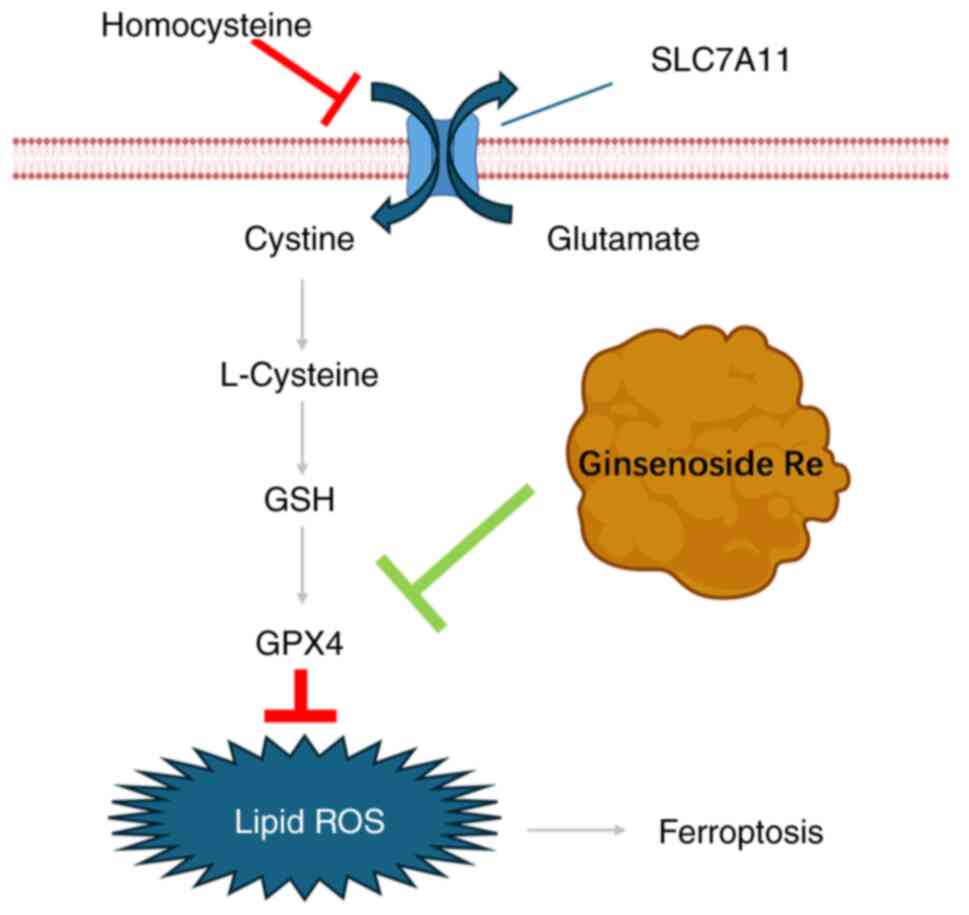
Figure 1

GPX4/SLC7A11 is a key pathway in
ferroptosis. Homocysteine inhibition of the GPX4/SLC7A11 pathway
leads to lipid peroxidation and promotes ferroptosis. Ginsenoside
Re can attenuate lipid peroxidation by increasing the expression of
GPX4 and protecting endothelial cells from ferroptosis. The red
symbols indicate inhibition and the green symbol indicates
promotion. GPX4, glutathione peroxidase 4; SLC7A11; solute carrier
family 7 member 11; ROS, reactive oxygen species; GSH,
glutathione.

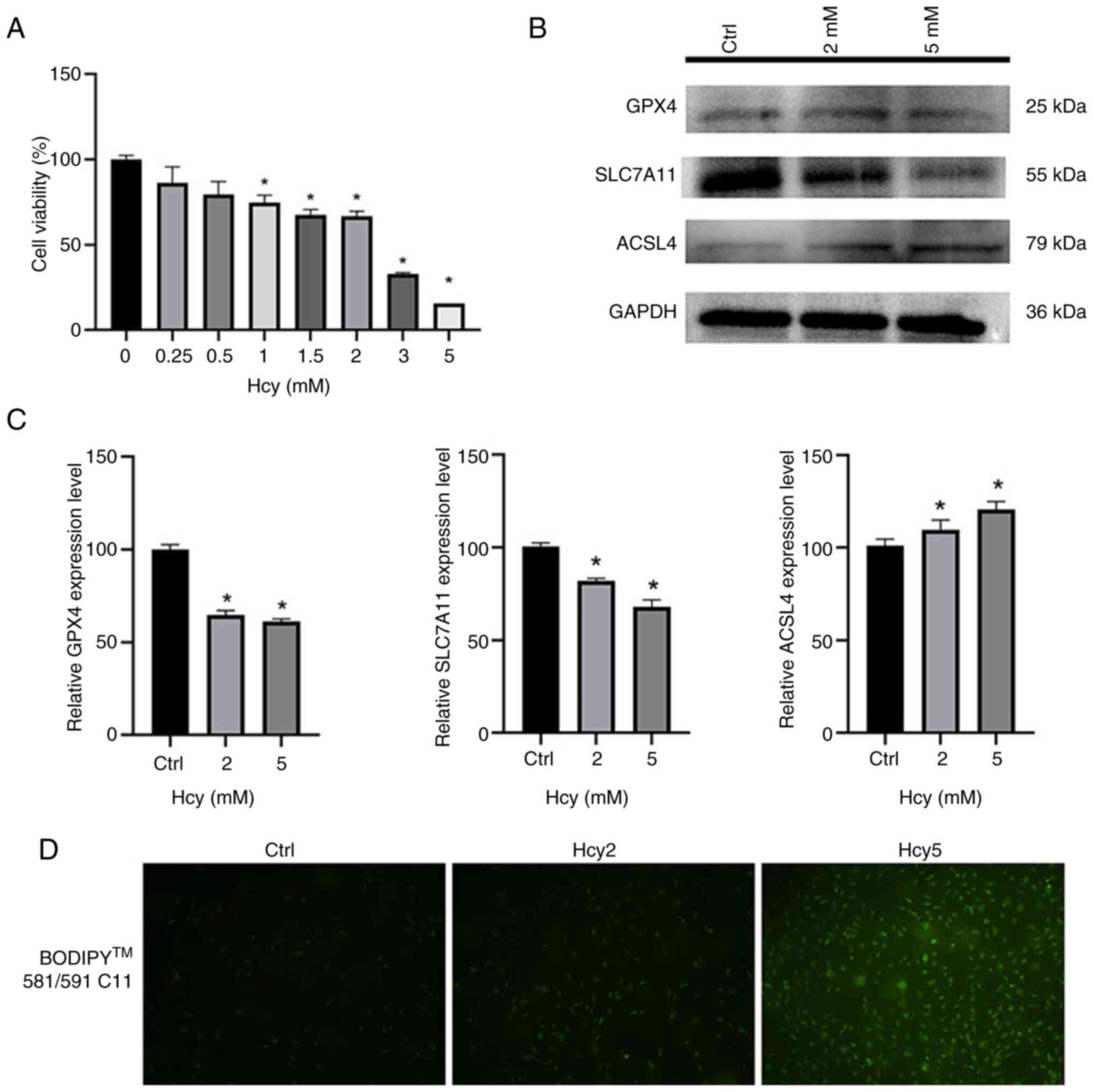
Figure 2

Hcy induces ferroptosis in EA.hy926
endothelial cells. (A) Effect of 0-5 mM Hcy on the viability of
EA.hy926 cells as detected by MTT assay. (B) Expression levels of
GPX4, SLC7A11 and ACSL4 detected by western blotting after
treatment of EA.hy926 cells with 2 or 5 mM Hcy for 24 h, (C) with
the optical density of the proteins calculated. (D) Cells were
stained with the BODIPY 581/591 C11 probe and lipid peroxidation
levels were detected by inverted fluorescence microscopy (x10
magnification). Data are presented as the mean ± SD.
*P<0.05 vs. Ctrl. GPX4, glutathione peroxidase 4;
SLC7A11; solute carrier family 7 member 11; ACSL4, acyl-CoA
synthetase long-chain family member 4; Hcy, homocysteine; Ctrl,
control.

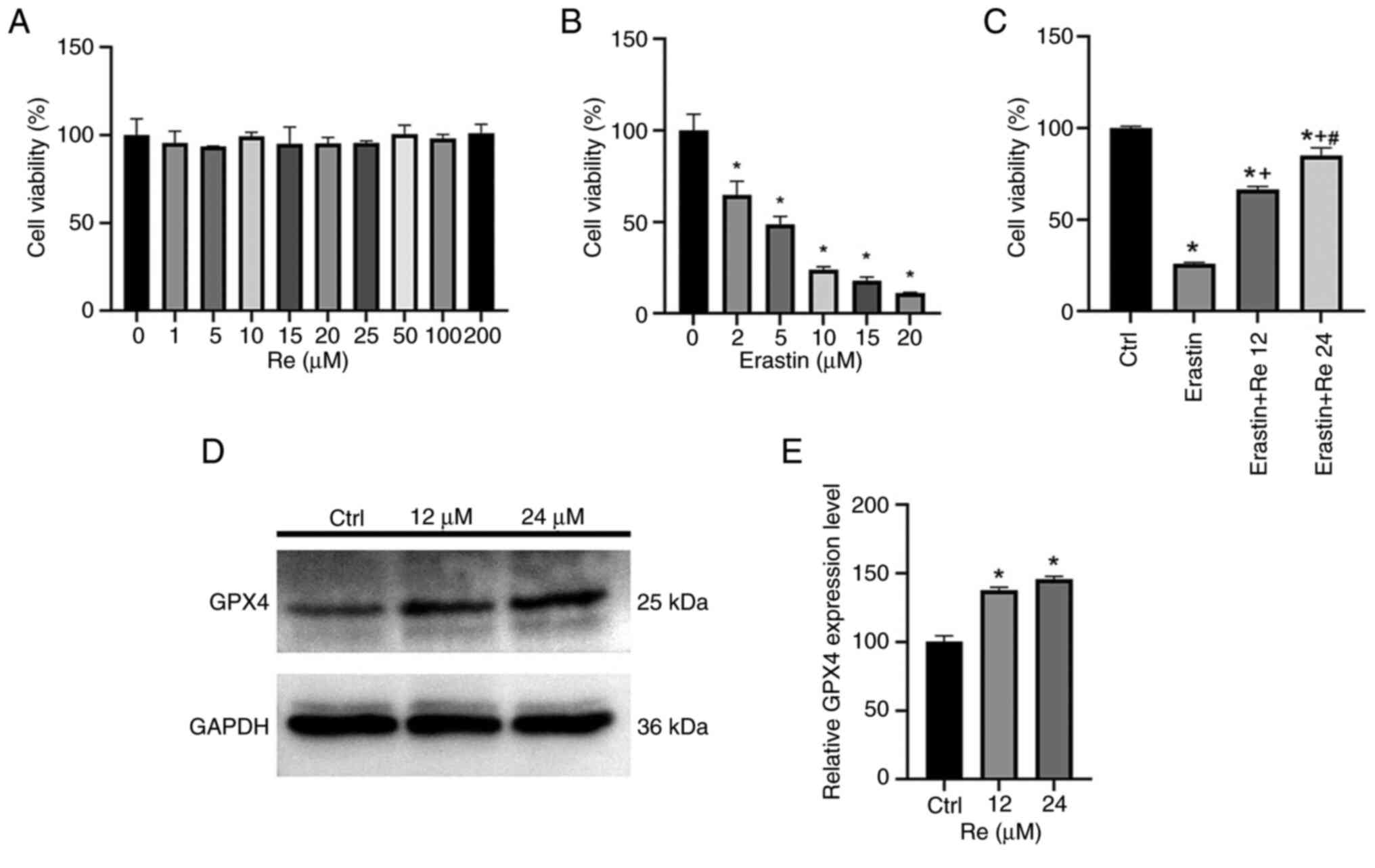
Figure 3

Ginsenoside Re attenuates
erastin-induced endothelial cell ferroptosis. (A) Effects of 0-200
µM ginsenoside Re on the viability of EA.hy926 cells detected by
MTT assay. (B) Erastin (0-20 µM) was added to EA.hy926 cells and
cell viability was detected by MTT assay. (C) EA.hy926 cells were
co-incubated with 5 µM erastin or 5 µM erastin + 12 or 24 µM
ginsenoside Re for 24 h and cell viability was determined using an
MTT assay. (D) Representative bands and (E) quantification analysis
showing protein levels of GPX4 determined by western blotting with
the optical density of the proteins calculated. Data are presented
as the mean ± SD. *P<0.05 vs. Ctrl,
+P<0.05 vs. Erastin, #P<0.05 vs.
Erastin + Re 12. GPX4; glutathione peroxidase 4; Ctrl, control; Re,
ginsenoside Re.

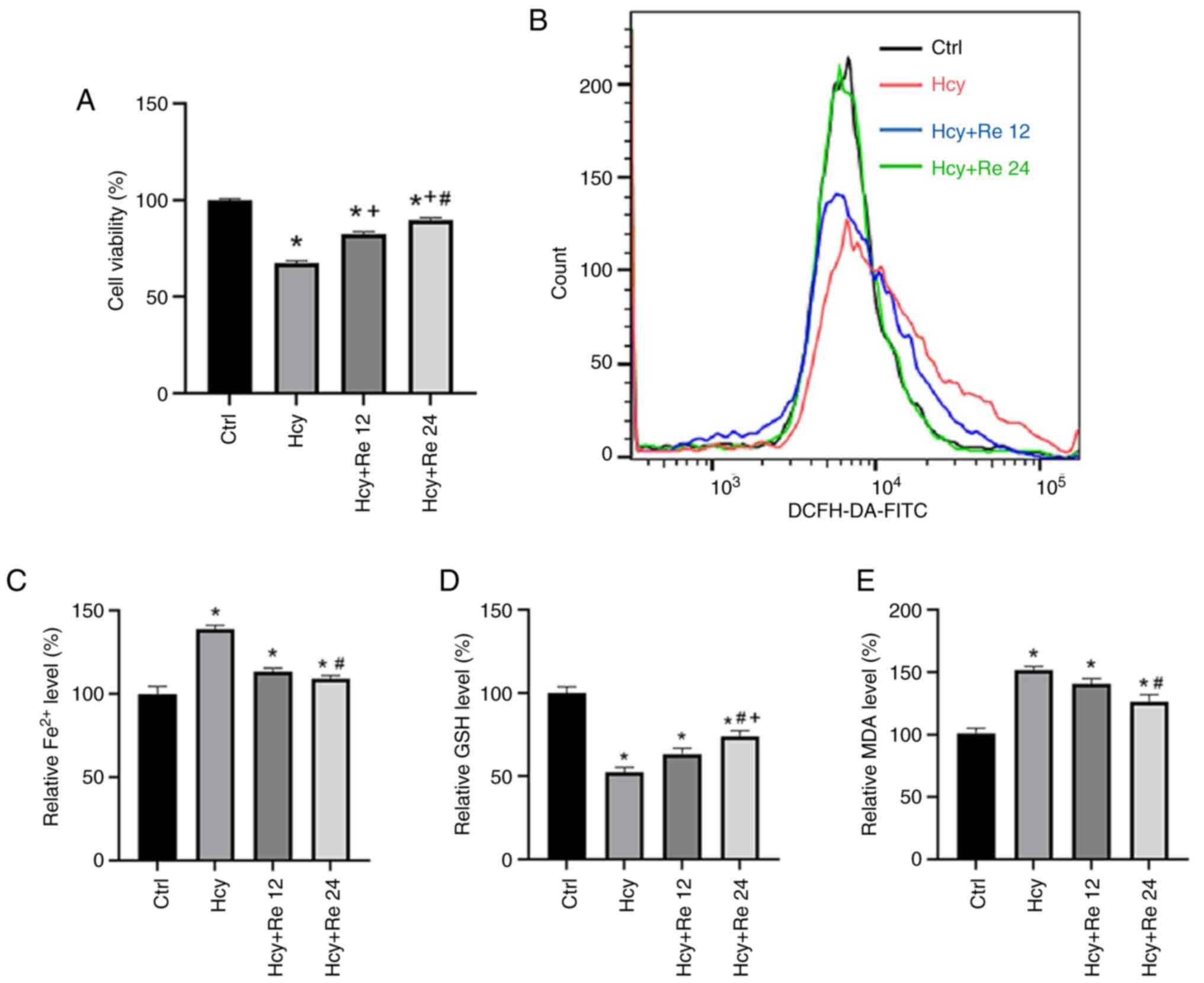
Figure 4

Ginsenoside Re alleviates Hcy-induced
endothelial cell ferroptosis. (A) Hcy (2 mM), Hcy (2 mM) +
ginsenoside Re (12 µM) and Hcy (2 mM) + ginsenoside Re (24 µM) were
added to EA.hy926 cells and the cell viability was determined. (B)
Flow cytometric analysis of intracellular reactive oxygen species
levels in EA.hy926 cells. Detection of intracellular (C) iron ion,
(D) GSH and (E) MDA levels in EA.hy926 cells. Data are presented as
the mean ± SD. *P<0.05 vs. Ctrl;
+P<0.05 vs. Hcy; #P<0.05 vs. Hcy + Re
12. Hcy, homocysteine; Ctrl, control; GSH, glutathione; MDA,
malondialdehyde; Re, ginsenoside Re; DCFH-DA,
2',7'-dichlorodihydrofluorescein diacetate.

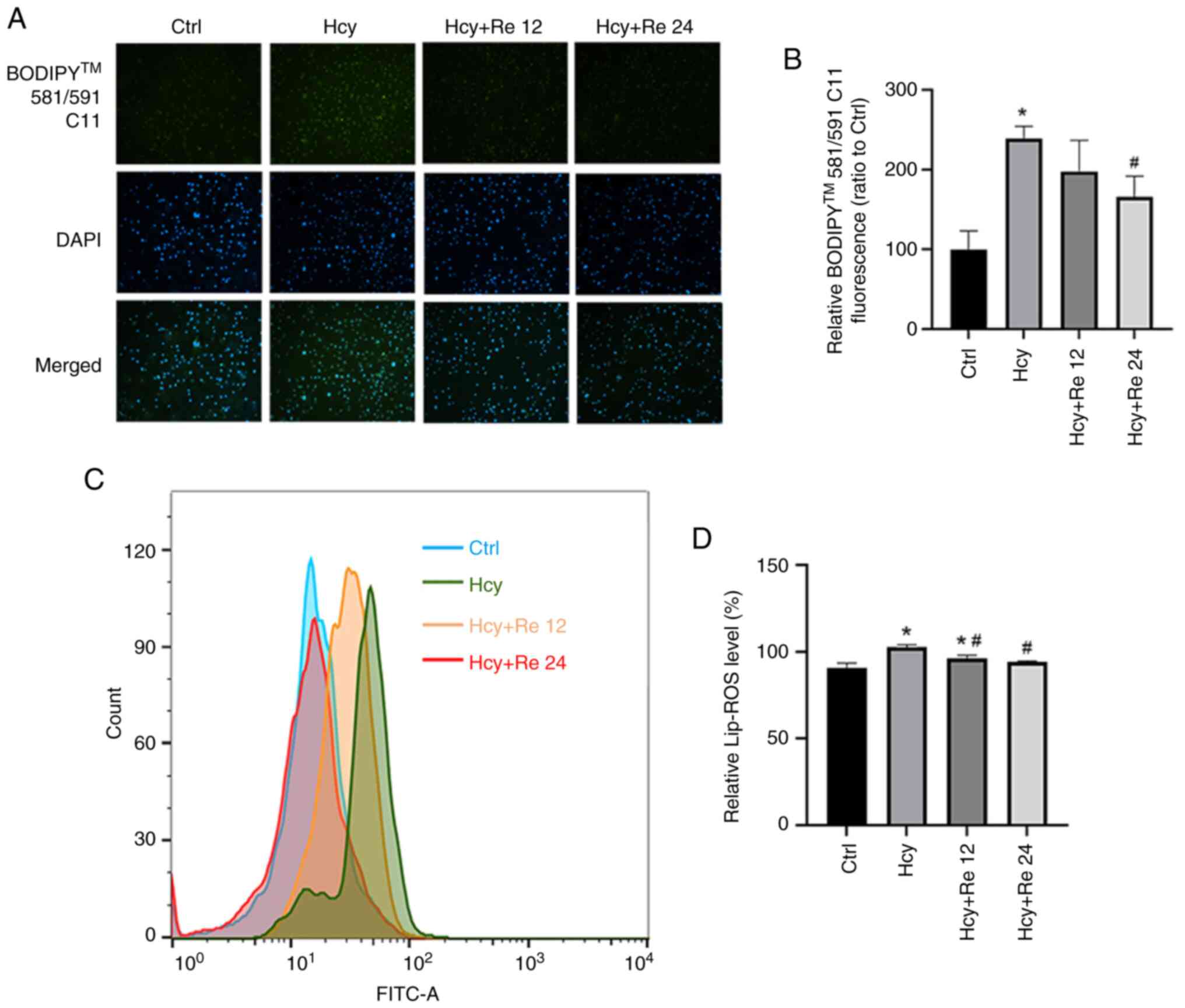
Figure 5

Effect of ginsenoside Re on Lip-ROS
levels in EA.hy926 cells. (A) Images (x10 magnification) and (B)
analysis of the detection of Lip-ROS levels through fluorescence
microscopy after cotreatment of EA.hy926 cells with Hcy and
ginsenoside Re for 24 h. (C) Flow cytometry plots and (D) analysis
of the detection of Lip-ROS levels in EA.hy926 cells. Data are
presented as the mean ± SD. *P<0.05 vs. Ctrl;
#P<0.05 vs. Hcy. Lip-ROS, lipid reactive oxygen
species, Hcy, homocysteine; Ctrl, control; Re, ginsenoside Re.

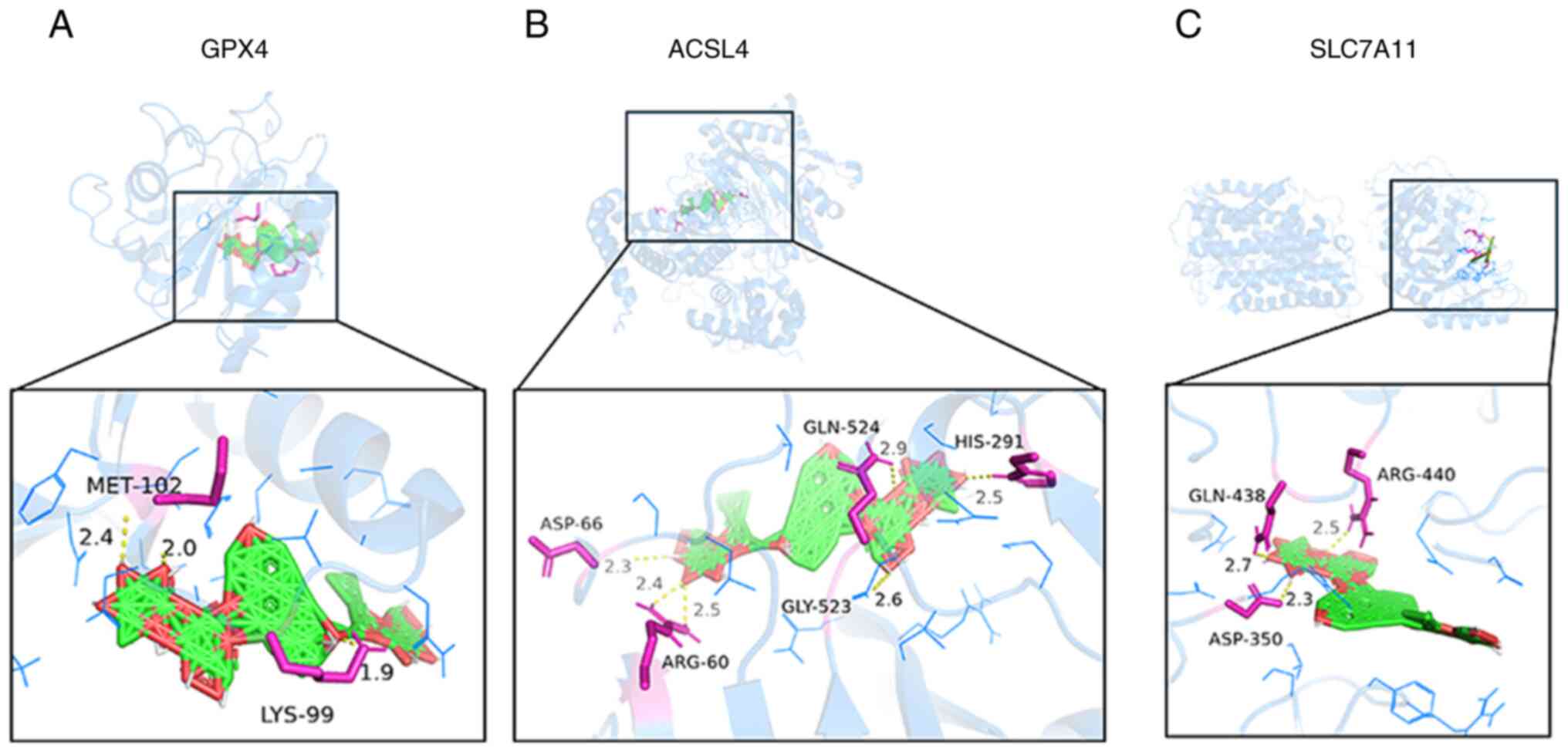
Figure 6

Optimal docking map of ginsenoside Re
and key gene molecules. Ginsenoside Re can bind to (A) GPX4, (B)
ACSL4 and (C) SLC7A11. The yellow dotted line represents hydrogen
bonds, and the number beside the dotted line indicates the length
of the hydrogen bond in Ångströms. GPX4, glutathione peroxidase 4;
SLC7A11; solute carrier family 7 member 11; ACSL4, acyl-CoA
synthetase long-chain family member 4; MET, methionine; LYS,
lysine; ASP, aspartate; ARG, arginine; GLY, glycine; GLN,
glutamine; HIS, histidine.

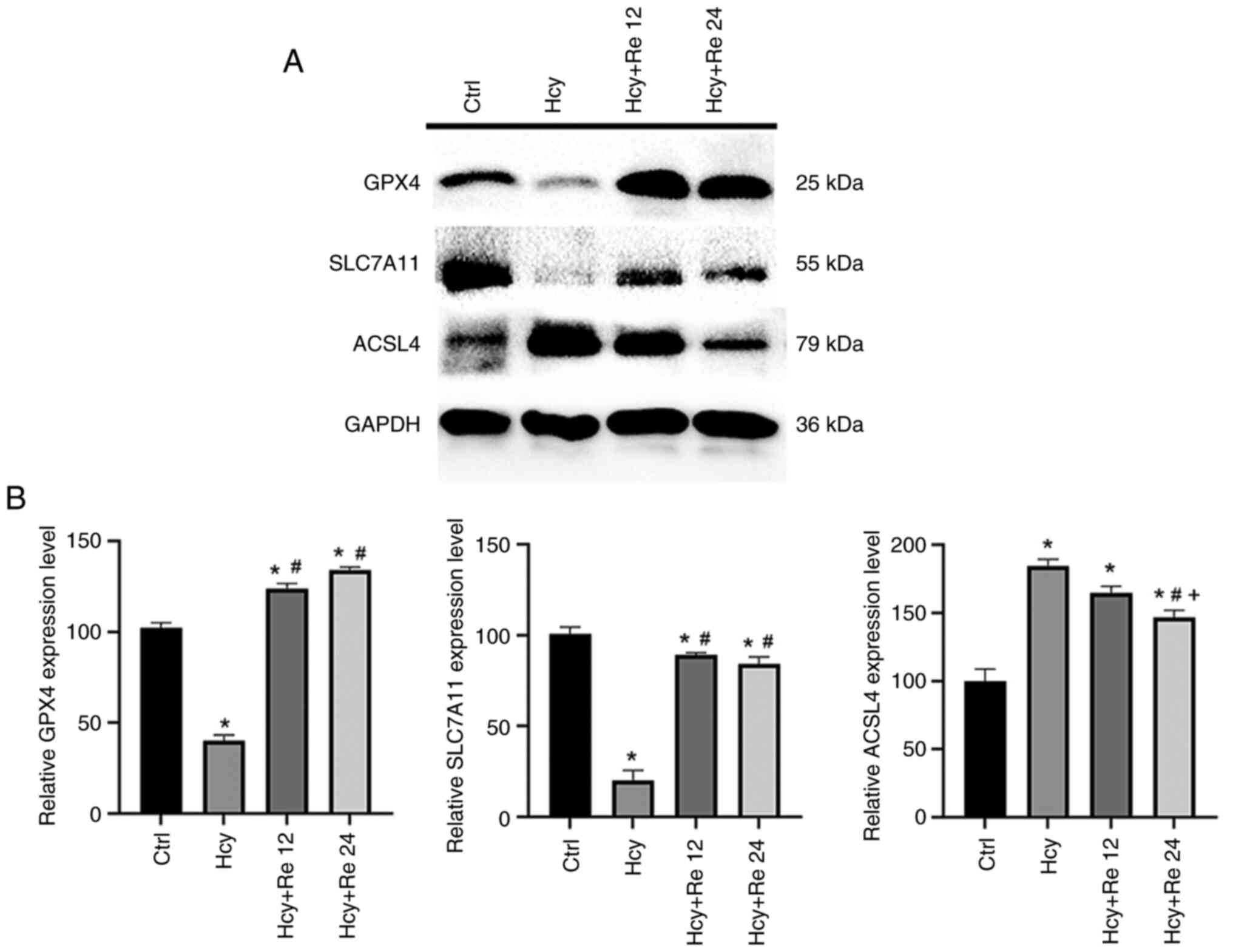
Figure 7

Effect of ginsenoside Re on the
expression of proteins related to Hcy-induced ferroptosis in
EA.hy926 cells. EA.hy926 cells were co-incubated with 2 mM Hcy, 2
mM Hcy + 12 µM ginsenoside Re or 2 mM Hcy + 24 µM ginsenoside Re
for 24 h. (A) Representative bands and (B) analysis of protein
levels of GPX4, SLC7A11 and ACSL4 determined by western blotting.
The optical density of the proteins was calculated. Data are
presented as the mean ± SD. *P<0.05 vs. Ctrl;
#P<0.05 vs. Hcy; +P<0.05 vs. Hcy + Re
12. GPX4, glutathione peroxidase 4; SLC7A11; solute carrier family
7 member 11; ACSL4, acyl-CoA synthetase long-chain family member 4;
Hcy, homocysteine; Ctrl, control; Re, ginsenoside Re.
View References

1 

Duan H, Zhang Q, Liu J, Li R, Wang D, Peng W and Wu C: Suppression of apoptosis in vascular endothelial cell, the promising way for natural medicines to treat atherosclerosis. Pharmacol Res. 168(105599)2021.PubMed/NCBI View Article : Google Scholar

2 

Qin X, Zhang J, Wang B, Xu G, Yang X, Zou Z and Yu C: Ferritinophagy is involved in the zinc oxide nanoparticles-induced ferroptosis of vascular endothelial cells. Autophagy. 17:4266–4285. 2021.PubMed/NCBI View Article : Google Scholar

3 

Yang Z, Shi J, Chen L, Fu C, Shi D and Qu H: Role of pyroptosis and ferroptosis in the progression of atherosclerotic plaques. Front Cell Dev Biol. 10(811196)2022.PubMed/NCBI View Article : Google Scholar

4 

Carlson BA, Tobe R, Yefremova E, Tsuji PA, Hoffmann VJ, Schweizer U, Gladyshev VN, Hatfield DL and Conrad M: Glutathione peroxidase 4 and vitamin E cooperatively prevent hepatocellular degeneration. Redox Biol. 9:22–31. 2016.PubMed/NCBI View Article : Google Scholar

5 

Imai H and Nakagawa Y: Biological significance of phospholipid hydroperoxide glutathione peroxidase (PHGPx, GPx4) in mammalian cells. Free Radic Biol Med. 34:145–169. 2003.PubMed/NCBI View Article : Google Scholar

6 

Tang D, Chen X, Kang R and Kroemer G: Ferroptosis: Molecular mechanisms and health implications. Cell Res. 31:107–125. 2021.PubMed/NCBI View Article : Google Scholar

7 

Illés E, Patra SG, Marks V, Mizrahi A and Meyerstein D: The Fe(II)(citrate) Fenton reaction under physiological conditions. J Inorg Biochem. 206(111018)2020.PubMed/NCBI View Article : Google Scholar

8 

Kist M and Vucic D: Cell death pathways: Intricate connections and disease implications. EMBO J. 40(e106700)2021.PubMed/NCBI View Article : Google Scholar

9 

Kagan VE, Mao G, Qu F, Angeli JP, Doll S, Croix CS, Dar HH, Liu B, Tyurin VA, Ritov VB, et al: Oxidized arachidonic and adrenic PEs navigate cells to ferroptosis. Nat Chem Biol. 13:81–90. 2017.PubMed/NCBI View Article : Google Scholar

10 

Dixon SJ, Lemberg KM, Lamprecht MR, Skouta R, Zaitsev EM, Gleason CE, Patel DN, Bauer AJ, Cantley AM, Yang WS, et al: Ferroptosis: An iron-dependent form of nonapoptotic cell death. Cell. 149:1060–1072. 2012.PubMed/NCBI View Article : Google Scholar

11 

Bai T, Li M, Liu Y, Qiao Z and Wang Z: Inhibition of ferroptosis alleviates atherosclerosis through attenuating lipid peroxidation and endothelial dysfunction in mouse aortic endothelial cell. Free Radic Biol Med. 160:92–102. 2020.PubMed/NCBI View Article : Google Scholar

12 

Huang D, Zheng S, Liu Z, Zhu K, Zhi H and Ma G: Machine learning revealed ferroptosis features and a novel ferroptosis-based classification for diagnosis in acute myocardial infarction. Front Genet. 13(813438)2022.PubMed/NCBI View Article : Google Scholar

13 

Tang LJ, Zhou YJ, Xiong XM, Li NS, Zhang JJ, Luo XJ and Peng J: Ubiquitin-specific protease 7 promotes ferroptosis via activation of the p53/TfR1 pathway in the rat hearts after ischemia/reperfusion. Free Radic Biol Med. 162:339–352. 2021.PubMed/NCBI View Article : Google Scholar

14 

Guo Y, Zhang W, Zhou X, Zhao S, Wang J, Guo Y, Liao Y, Lu H, Liu J, Cai Y, et al: Roles of ferroptosis in cardiovascular diseases. Front Cardiovasc Med. 9(911564)2022.PubMed/NCBI View Article : Google Scholar

15 

Chen X, Xu S, Zhao C and Liu B: Role of TLR4/NADPH oxidase 4 pathway in promoting cell death through autophagy and ferroptosis during heart failure. Biochem Biophys Res Commun. 516:37–43. 2019.PubMed/NCBI View Article : Google Scholar

16 

Stockwell BR, Friedmann Angeli JP, Bayir H, Bush AI, Conrad M, Dixon SJ, Fulda S, Gascón S, Hatzios SK, Kagan VE, et al: Ferroptosis: A regulated cell death nexus linking metabolism, redox biology, and disease. Cell. 171:273–285. 2017.PubMed/NCBI View Article : Google Scholar

17 

Forcina GC and Dixon SJ: GPX4 at the crossroads of lipid homeostasis and ferroptosis. Proteomics. 19(e1800311)2019.PubMed/NCBI View Article : Google Scholar

18 

Shimada K, Skouta R, Kaplan A, Yang WS, Hayano M, Dixon SJ, Brown LM, Valenzuela CA, Wolpaw AJ and Stockwell BR: Global survey of cell death mechanisms reveals metabolic regulation of ferroptosis. Nat Chem Biol. 12:497–503. 2016.PubMed/NCBI View Article : Google Scholar

19 

Dixon SJ, Patel DN, Welsch M, Skouta R, Lee ED, Hayano M, Thomas AG, Gleason CE, Tatonetti NP, Slusher BS and Stockwell BR: Pharmacological inhibition of cystine-glutamate exchange induces endoplasmic reticulum stress and ferroptosis. Elife. 3(e02523)2014.PubMed/NCBI View Article : Google Scholar

20 

Kim J, Kim H, Roh H and Kwon Y: Causes of hyperhomocysteinemia and its pathological significance. Arch Pharm Res. 41:372–383. 2018.PubMed/NCBI View Article : Google Scholar

21 

Qin X, Xu M, Zhang Y, Li J, Xu X, Wang X, Xu X and Huo Y: Effect of folic acid supplementation on the progression of carotid intima-media thickness: A meta-analysis of randomized controlled trials. Atherosclerosis. 222:307–313. 2012.PubMed/NCBI View Article : Google Scholar

22 

Esse R, Barroso M, Tavares de Almeida I and Castro R: The contribution of homocysteine metabolism disruption to endothelial dysfunction: State-of-the-art. Int J Mol Sci. 20(867)2019.PubMed/NCBI View Article : Google Scholar

23 

Zhang X, Huang Z, Xie Z, Chen Y, Zheng Z, Wei X, Huang B, Shan Z, Liu J, Fan S, et al: Homocysteine induces oxidative stress and ferroptosis of nucleus pulposus via enhancing methylation of GPX4. Free Radic Biol Med. 160:552–565. 2020.PubMed/NCBI View Article : Google Scholar

24 

Mancuso C and Santangelo R: Panax ginseng and Panax quinquefolius: From pharmacology to toxicology. Food Chem Toxicol. 107:362–372. 2017.PubMed/NCBI View Article : Google Scholar

25 

Quan HY, Yuan HD, Jung MS, Ko SK, Park YG and Chung SH: Ginsenoside Re lowers blood glucose and lipid levels via activation of AMP-activated protein kinase in HepG2 cells and high-fat diet fed mice. Int J Mol Med. 29:73–80. 2012.PubMed/NCBI View Article : Google Scholar

26 

Kim JM, Park CH, Park SK, Seung TW, Kang JY, Ha JS, Lee DS, Lee U, Kim DO and Heo HJ: Ginsenoside Re ameliorates brain insulin resistance and cognitive dysfunction in high fat diet-induced C57BL/6 mice. J Agric Food Chem. 65:2719–2729. 2017.PubMed/NCBI View Article : Google Scholar

27 

Wang H, Lv J, Jiang N, Huang H, Wang Q and Liu X: Ginsenoside Re protects against chronic restraint stress-induced cognitive deficits through regulation of NLRP3 and Nrf2 pathways in mice. Phytother Res. 35:2523–2535. 2021.PubMed/NCBI View Article : Google Scholar

28 

Su F, Xue Y, Wang Y, Zhang L, Chen W and Hu S: Protective effect of ginsenosides Rg1 and Re on lipopolysaccharide-induced sepsis by competitive binding to Toll-like receptor 4. Antimicrob Agents Chemother. 59:5654–5663. 2015.PubMed/NCBI View Article : Google Scholar

29 

Wang QW, Yu XF, Xu HL, Zhao XZ and Sui DY: Ginsenoside Re improves isoproterenol-induced myocardial fibrosis and heart failure in rats. Evid Based Complement Alternat Med. 2019(3714508)2019.PubMed/NCBI View Article : Google Scholar

30 

Yao H, Li J, Song Y, Zhao H, Wei Z, Li X, Jin Y, Yang B and Jiang J: Synthesis of ginsenoside Re-based carbon dots applied for bioimaging and effective inhibition of cancer cells. Int J Nanomedicine. 13:6249–6264. 2018.PubMed/NCBI View Article : Google Scholar

31 

Lee GH, Lee WJ, Hur J, Kim E, Lee HG and Seo HG: Ginsenoside Re mitigates 6-hydroxydopamine-induced oxidative stress through upregulation of GPX4. Molecules. 25(188)2020.PubMed/NCBI View Article : Google Scholar

32 

Shi J, Chen D, Wang Z, Li S and Zhang S: Homocysteine induces ferroptosis in endothelial cells through the systemXc-/GPX4 signaling pathway. BMC Cardiovasc Disord. 23(316)2023.PubMed/NCBI View Article : Google Scholar

33 

Yang R, Gao W, Wang Z, Jian H, Peng L, Yu X, Xue P, Peng W, Li K and Zeng P: Polyphyllin I induced ferroptosis to suppress the progression of hepatocellular carcinoma through activation of the mitochondrial dysfunction via Nrf2/HO-1/GPX4 axis. Phytomedicine. 122(155135)2024.PubMed/NCBI View Article : Google Scholar

34 

Wu B, Lan X, Chen X, Wu Q, Yang Y and Wang Y: Researching the molecular mechanisms of Taohong Siwu Decoction in the treatment of varicocele-associated male infertility using network pharmacology and molecular docking: A review. Medicine (Baltimore). 102(e34476)2023.PubMed/NCBI View Article : Google Scholar

35 

Gimbrone MA Jr and García-Cardeña G: Endothelial cell dysfunction and the pathobiology of atherosclerosis. Circ Res. 118:620–636. 2016.PubMed/NCBI View Article : Google Scholar

36 

Botts SR, Fish JE and Howe KL: Dysfunctional vascular endothelium as a driver of atherosclerosis: Emerging insights into pathogenesis and treatment. Front Pharmacol. 12(787541)2021.PubMed/NCBI View Article : Google Scholar

37 

Mou Y, Wang J, Wu J, He D, Zhang C, Duan C and Li B: Ferroptosis, a new form of cell death: Opportunities and challenges in cancer. J Hematol Oncol. 12(34)2019.PubMed/NCBI View Article : Google Scholar

38 

Ouyang S, You J, Zhi C, Li P, Lin X, Tan X, Ma W, Li L and Xie W: Ferroptosis: The potential value target in atherosclerosis. Cell Death Dis. 12(782)2021.PubMed/NCBI View Article : Google Scholar

39 

Azad MAK, Huang P, Liu G, Ren W, Teklebrh T, Yan W, Zhou X and Yin Y: Hyperhomocysteinemia and cardiovascular disease in animal model. Amino Acids. 50:3–9. 2018.PubMed/NCBI View Article : Google Scholar

40 

Shi Q, Liu R and Chen L: Ferroptosis inhibitor ferrostatin-1 alleviates homocysteine-induced ovarian granulosa cell injury by regulating TET activity and DNA methylation. Mol Med Rep. 25(130)2022.PubMed/NCBI View Article : Google Scholar

41 

Wang Y, Kuang X, Yin Y, Han N, Chang L, Wang H, Hou Y, Li H, Li Z, Liu Y, et al: Tongxinluo prevents chronic obstructive pulmonary disease complicated with atherosclerosis by inhibiting ferroptosis and protecting against pulmonary microvascular barrier dysfunction. Biomed Pharmacother. 145(112367)2022.PubMed/NCBI View Article : Google Scholar

42 

Ye J, Lyu TJ, Li LY, Liu Y, Zhang H, Wang X, Xi X, Liu ZJ and Gao JQ: Ginsenoside Re attenuates myocardial ischemia/reperfusion induced ferroptosis via miR-144-3p/SLC7A11. Phytomedicine. 113(154681)2023.PubMed/NCBI View Article : Google Scholar

43 

Yang WS, Kim KJ, Gaschler MM, Patel M, Shchepinov MS and Stockwell BR: Peroxidation of polyunsaturated fatty acids by lipoxygenases drives ferroptosis. Proc Natl Acad Sci USA. 113:E4966–E4975. 2016.PubMed/NCBI View Article : Google Scholar

44 

Chen Y, Deng Y, Chen L and Huang Z, Yan Y and Huang Z: miR-16-5p regulates ferroptosis by targeting SLC7A11 in adriamycin-induced ferroptosis in cardiomyocytes. J Inflamm Res. 16:1077–1089. 2023.PubMed/NCBI View Article : Google Scholar

45 

Xu S, Wu B, Zhong B, Lin L, Ding Y, Jin X, Huang Z, Lin M, Wu H and Xu D: Naringenin alleviates myocardial ischemia/reperfusion injury by regulating the nuclear factor-erythroid factor 2-related factor 2 (Nrf2)/System xc-/glutathione peroxidase 4 (GPX4) axis to inhibit ferroptosis. Bioengineered. 12:10924–10934. 2021.PubMed/NCBI View Article : Google Scholar

46 

Zhang L, Liu W, Liu F, Wang Q, Song M, Yu Q, Tang K, Teng T, Wu D, Wang X, et al: IMCA induces ferroptosis mediated by SLC7A11 through the AMPK/mTOR pathway in colorectal cancer. Oxid Med Cell Longev. 2020(1675613)2020.PubMed/NCBI View Article : Google Scholar

47 

Wang L, Liu Y, Du T, Yang H, Lei L, Guo M, Ding HF, Zhang J, Wang H, Chen X and Yan C: ATF3 promotes erastin-induced ferroptosis by suppressing system Xc. Cell Death Differ. 27:662–675. 2020.PubMed/NCBI View Article : Google Scholar

48 

Parker JL, Deme JC, Kolokouris D, Kuteyi G, Biggin PC, Lea SM and Newstead S: Molecular basis for redox control by the human cystine/glutamate antiporter system xc. Nat Commun. 12(7147)2021.PubMed/NCBI View Article : Google Scholar

49 

Qiao O, Zhang L, Han L, Wang X, Li Z, Bao F, Hao H, Hou Y, Duan X, Li N and Gong Y: Rosmarinic acid plus deferasirox inhibits ferroptosis to alleviate crush syndrome-related AKI via Nrf2/Keap1 pathway. Phytomedicine. 129(155700)2024.PubMed/NCBI View Article : Google Scholar

50 

Ren S, Wang J, Dong Z, Li J, Ma Y, Yang Y, Zhou T, Qiu T, Jiang L, Li Q, et al: Perfluorooctane sulfonate induces ferroptosis-dependent non-alcoholic steatohepatitis via autophagy-MCU-caused mitochondrial calcium overload and MCU-ACSL4 interaction. Ecotoxicol Environ Saf. 280(116553)2024.PubMed/NCBI View Article : Google Scholar

51 

Wei XL, Yu AG, Zhang X, Pantopoulos K, Liu ZB, Xu PC, Zheng H and Luo Z: Fe2O3 nanoparticles induce ferroptosis by binding to the N-terminus of ACSL4 and suppressing its ubiquitin-mediated degradation. Free Radic Biol Med. 238:123–136. 2025.PubMed/NCBI View Article : Google Scholar

52 

Cai J, Huang K, Han S, Chen R, Li Z, Chen Y, Chen B, Li S, Xinhua L and Yao H: A comprehensive system review of pharmacological effects and relative mechanisms of Ginsenoside Re: Recent advances and future perspectives. Phytomedicine. 102(154119)2022.PubMed/NCBI View Article : Google Scholar

53 

Zhu Y, Yue J, Yan R, Xia W, Li T and Fu X: Enhancement in the intestinal absorption of ginsenoside Re by ginseng polysaccharides and its mechanisms. Food Chem. 488(144914)2025.PubMed/NCBI View Article : Google Scholar

54 

Jeon JH, Lee J, Choi MK and Song IS: Pharmacokinetics of ginsenosides following repeated oral administration of red ginseng extract significantly differ between species of experimental animals. Arch Pharm Res. 43:1335–1346. 2020.PubMed/NCBI View Article : Google Scholar

Related Articles

  • Abstract
  • View
  • Download
  • Twitter
Copy and paste a formatted citation
Spandidos Publications style
Li S, Zhao C, Yu S, Yang K, Zhang S and Liu S: Ginsenoside Re attenuates homocysteine‑induced endothelial cell ferroptosis through upregulation of GPX4/xCT signaling. Exp Ther Med 31: 27, 2026.
APA
Li, S., Zhao, C., Yu, S., Yang, K., Zhang, S., & Liu, S. (2026). Ginsenoside Re attenuates homocysteine‑induced endothelial cell ferroptosis through upregulation of GPX4/xCT signaling. Experimental and Therapeutic Medicine, 31, 27. https://doi.org/10.3892/etm.2025.13022
MLA
Li, S., Zhao, C., Yu, S., Yang, K., Zhang, S., Liu, S."Ginsenoside Re attenuates homocysteine‑induced endothelial cell ferroptosis through upregulation of GPX4/xCT signaling". Experimental and Therapeutic Medicine 31.1 (2026): 27.
Chicago
Li, S., Zhao, C., Yu, S., Yang, K., Zhang, S., Liu, S."Ginsenoside Re attenuates homocysteine‑induced endothelial cell ferroptosis through upregulation of GPX4/xCT signaling". Experimental and Therapeutic Medicine 31, no. 1 (2026): 27. https://doi.org/10.3892/etm.2025.13022
Copy and paste a formatted citation
x
Spandidos Publications style
Li S, Zhao C, Yu S, Yang K, Zhang S and Liu S: Ginsenoside Re attenuates homocysteine‑induced endothelial cell ferroptosis through upregulation of GPX4/xCT signaling. Exp Ther Med 31: 27, 2026.
APA
Li, S., Zhao, C., Yu, S., Yang, K., Zhang, S., & Liu, S. (2026). Ginsenoside Re attenuates homocysteine‑induced endothelial cell ferroptosis through upregulation of GPX4/xCT signaling. Experimental and Therapeutic Medicine, 31, 27. https://doi.org/10.3892/etm.2025.13022
MLA
Li, S., Zhao, C., Yu, S., Yang, K., Zhang, S., Liu, S."Ginsenoside Re attenuates homocysteine‑induced endothelial cell ferroptosis through upregulation of GPX4/xCT signaling". Experimental and Therapeutic Medicine 31.1 (2026): 27.
Chicago
Li, S., Zhao, C., Yu, S., Yang, K., Zhang, S., Liu, S."Ginsenoside Re attenuates homocysteine‑induced endothelial cell ferroptosis through upregulation of GPX4/xCT signaling". Experimental and Therapeutic Medicine 31, no. 1 (2026): 27. https://doi.org/10.3892/etm.2025.13022
Follow us
  • Twitter
  • LinkedIn
  • Facebook
About
  • Spandidos Publications
  • Careers
  • Cookie Policy
  • Privacy Policy
How can we help?
  • Help
  • Live Chat
  • Contact
  • Email to our Support Team