Spandidos Publications Logo
  • About
    • About Spandidos
    • Aims and Scopes
    • Abstracting and Indexing
    • Editorial Policies
    • Reprints and Permissions
    • Job Opportunities
    • Terms and Conditions
    • Contact
  • Journals
    • All Journals
    • Oncology Letters
      • Oncology Letters
      • Information for Authors
      • Editorial Policies
      • Editorial Board
      • Aims and Scope
      • Abstracting and Indexing
      • Bibliographic Information
      • Archive
    • International Journal of Oncology
      • International Journal of Oncology
      • Information for Authors
      • Editorial Policies
      • Editorial Board
      • Aims and Scope
      • Abstracting and Indexing
      • Bibliographic Information
      • Archive
    • Molecular and Clinical Oncology
      • Molecular and Clinical Oncology
      • Information for Authors
      • Editorial Policies
      • Editorial Board
      • Aims and Scope
      • Abstracting and Indexing
      • Bibliographic Information
      • Archive
    • Experimental and Therapeutic Medicine
      • Experimental and Therapeutic Medicine
      • Information for Authors
      • Editorial Policies
      • Editorial Board
      • Aims and Scope
      • Abstracting and Indexing
      • Bibliographic Information
      • Archive
    • International Journal of Molecular Medicine
      • International Journal of Molecular Medicine
      • Information for Authors
      • Editorial Policies
      • Editorial Board
      • Aims and Scope
      • Abstracting and Indexing
      • Bibliographic Information
      • Archive
    • Biomedical Reports
      • Biomedical Reports
      • Information for Authors
      • Editorial Policies
      • Editorial Board
      • Aims and Scope
      • Abstracting and Indexing
      • Bibliographic Information
      • Archive
    • Oncology Reports
      • Oncology Reports
      • Information for Authors
      • Editorial Policies
      • Editorial Board
      • Aims and Scope
      • Abstracting and Indexing
      • Bibliographic Information
      • Archive
    • Molecular Medicine Reports
      • Molecular Medicine Reports
      • Information for Authors
      • Editorial Policies
      • Editorial Board
      • Aims and Scope
      • Abstracting and Indexing
      • Bibliographic Information
      • Archive
    • World Academy of Sciences Journal
      • World Academy of Sciences Journal
      • Information for Authors
      • Editorial Policies
      • Editorial Board
      • Aims and Scope
      • Abstracting and Indexing
      • Bibliographic Information
      • Archive
    • International Journal of Functional Nutrition
      • International Journal of Functional Nutrition
      • Information for Authors
      • Editorial Policies
      • Editorial Board
      • Aims and Scope
      • Abstracting and Indexing
      • Bibliographic Information
      • Archive
    • International Journal of Epigenetics
      • International Journal of Epigenetics
      • Information for Authors
      • Editorial Policies
      • Editorial Board
      • Aims and Scope
      • Abstracting and Indexing
      • Bibliographic Information
      • Archive
    • Medicine International
      • Medicine International
      • Information for Authors
      • Editorial Policies
      • Editorial Board
      • Aims and Scope
      • Abstracting and Indexing
      • Bibliographic Information
      • Archive
  • Articles
  • Information
    • Information for Authors
    • Information for Reviewers
    • Information for Librarians
    • Information for Advertisers
    • Conferences
  • Language Editing
Spandidos Publications Logo
  • About
    • About Spandidos
    • Aims and Scopes
    • Abstracting and Indexing
    • Editorial Policies
    • Reprints and Permissions
    • Job Opportunities
    • Terms and Conditions
    • Contact
  • Journals
    • All Journals
    • Biomedical Reports
      • Information for Authors
      • Editorial Policies
      • Editorial Board
      • Aims and Scope
      • Abstracting and Indexing
      • Bibliographic Information
      • Archive
    • Experimental and Therapeutic Medicine
      • Information for Authors
      • Editorial Policies
      • Editorial Board
      • Aims and Scope
      • Abstracting and Indexing
      • Bibliographic Information
      • Archive
    • International Journal of Epigenetics
      • Information for Authors
      • Editorial Policies
      • Editorial Board
      • Aims and Scope
      • Abstracting and Indexing
      • Bibliographic Information
      • Archive
    • International Journal of Functional Nutrition
      • Information for Authors
      • Editorial Policies
      • Editorial Board
      • Aims and Scope
      • Abstracting and Indexing
      • Bibliographic Information
      • Archive
    • International Journal of Molecular Medicine
      • Information for Authors
      • Editorial Policies
      • Editorial Board
      • Aims and Scope
      • Abstracting and Indexing
      • Bibliographic Information
      • Archive
    • International Journal of Oncology
      • Information for Authors
      • Editorial Policies
      • Editorial Board
      • Aims and Scope
      • Abstracting and Indexing
      • Bibliographic Information
      • Archive
    • Medicine International
      • Information for Authors
      • Editorial Policies
      • Editorial Board
      • Aims and Scope
      • Abstracting and Indexing
      • Bibliographic Information
      • Archive
    • Molecular and Clinical Oncology
      • Information for Authors
      • Editorial Policies
      • Editorial Board
      • Aims and Scope
      • Abstracting and Indexing
      • Bibliographic Information
      • Archive
    • Molecular Medicine Reports
      • Information for Authors
      • Editorial Policies
      • Editorial Board
      • Aims and Scope
      • Abstracting and Indexing
      • Bibliographic Information
      • Archive
    • Oncology Letters
      • Information for Authors
      • Editorial Policies
      • Editorial Board
      • Aims and Scope
      • Abstracting and Indexing
      • Bibliographic Information
      • Archive
    • Oncology Reports
      • Information for Authors
      • Editorial Policies
      • Editorial Board
      • Aims and Scope
      • Abstracting and Indexing
      • Bibliographic Information
      • Archive
    • World Academy of Sciences Journal
      • Information for Authors
      • Editorial Policies
      • Editorial Board
      • Aims and Scope
      • Abstracting and Indexing
      • Bibliographic Information
      • Archive
  • Articles
  • Information
    • For Authors
    • For Reviewers
    • For Librarians
    • For Advertisers
    • Conferences
  • Language Editing
Login Register Submit
  • This site uses cookies
  • You can change your cookie settings at any time by following the instructions in our Cookie Policy. To find out more, you may read our Privacy Policy.

    I agree
Search articles by DOI, keyword, author or affiliation
Search
Advanced Search
presentation
Experimental and Therapeutic Medicine
Join Editorial Board Propose a Special Issue
Print ISSN: 1792-0981 Online ISSN: 1792-1015
Journal Cover
March-2026 Volume 31 Issue 3

Full Size Image

Sign up for eToc alerts
Recommend to Library

Journals

International Journal of Molecular Medicine

International Journal of Molecular Medicine

International Journal of Molecular Medicine is an international journal devoted to molecular mechanisms of human disease.

International Journal of Oncology

International Journal of Oncology

International Journal of Oncology is an international journal devoted to oncology research and cancer treatment.

Molecular Medicine Reports

Molecular Medicine Reports

Covers molecular medicine topics such as pharmacology, pathology, genetics, neuroscience, infectious diseases, molecular cardiology, and molecular surgery.

Oncology Reports

Oncology Reports

Oncology Reports is an international journal devoted to fundamental and applied research in Oncology.

Experimental and Therapeutic Medicine

Experimental and Therapeutic Medicine

Experimental and Therapeutic Medicine is an international journal devoted to laboratory and clinical medicine.

Oncology Letters

Oncology Letters

Oncology Letters is an international journal devoted to Experimental and Clinical Oncology.

Biomedical Reports

Biomedical Reports

Explores a wide range of biological and medical fields, including pharmacology, genetics, microbiology, neuroscience, and molecular cardiology.

Molecular and Clinical Oncology

Molecular and Clinical Oncology

International journal addressing all aspects of oncology research, from tumorigenesis and oncogenes to chemotherapy and metastasis.

World Academy of Sciences Journal

World Academy of Sciences Journal

Multidisciplinary open-access journal spanning biochemistry, genetics, neuroscience, environmental health, and synthetic biology.

International Journal of Functional Nutrition

International Journal of Functional Nutrition

Open-access journal combining biochemistry, pharmacology, immunology, and genetics to advance health through functional nutrition.

International Journal of Epigenetics

International Journal of Epigenetics

Publishes open-access research on using epigenetics to advance understanding and treatment of human disease.

Medicine International

Medicine International

An International Open Access Journal Devoted to General Medicine.

Journal Cover
March-2026 Volume 31 Issue 3

Full Size Image

Sign up for eToc alerts
Recommend to Library

  • Article
  • Citations
    • Cite This Article
    • Download Citation
    • Create Citation Alert
    • Remove Citation Alert
    • Cited By
  • Similar Articles
    • Related Articles (in Spandidos Publications)
    • Similar Articles (Google Scholar)
    • Similar Articles (PubMed)
  • Download PDF
  • Download XML
  • View XML
Article Open Access

Exploring the protective mechanisms and therapeutic potential of carnosic acid against acute respiratory distress syndrome through molecular docking, molecular dynamics and experimental verification

  • Authors:
    • Quan Li
    • Lili Ding
    • Haijun Sun
    • Weichao Ding
    • Mengmeng Wang
    • Zhaorui Sun
    • Congxue Ma
  • View Affiliations / Copyright

    Affiliations: Intensive Care Unit, Suqian First Hospital, Suqian, Jiangsu 223800, P.R. China, Department of Emergency Medicine, The Affiliated Hospital of Xuzhou University, Xuzhou, Jiangsu 221002, P.R. China, Department of Emergency Medicine, Medical School of Nanjing University Affiliated Jinling Hospital, Nanjing, Jiangsu 210002, P.R. China, Department of Anesthesiology, Siyang Hospital, Suqian, Jiangsu 223700, P.R. China
    Copyright: © Li et al. This is an open access article distributed under the terms of Creative Commons Attribution License.
  • Article Number: 83
    |
    Published online on: January 28, 2026
       https://doi.org/10.3892/etm.2026.13077
  • Expand metrics +
Metrics: Total Views: 0 (Spandidos Publications: | PMC Statistics: )
Metrics: Total PDF Downloads: 0 (Spandidos Publications: | PMC Statistics: )
Cited By (CrossRef): 0 citations Loading Articles...

This article is mentioned in:


Abstract

In the present study, a method combining network pharmacology prediction and experimental verification was used to clarify the protective mechanisms and therapeutic benefits of carnosic acid (CA) against acute respiratory distress syndrome (ARDS). Network pharmacology analysis was initially carried out to identify key targets and pathways for CA in ARDS. In vitro studies were performed using mouse alveolar macrophages (MH‑S cells) to examine the impact of CA on pyroptosis and oxidative stress triggered by lipopolysaccharide (LPS)/ATP. Pyroptosis was evaluated through Annexin V/PI staining, measurement of IL‑1β and IL‑18 levels, and expression analysis of pyroptosis‑related genes. Assessment of oxidative stress involved measuring malondialdehyde, myeloperoxidase and superoxide dismutase levels, as well as intracellular reactive oxygen species (ROS) levels. Western blotting and immunofluorescence analysis were employed to investigate nuclear factor erythroid 2‑related factor 2 (Nrf2) expression and nuclear translocation. Additionally, an in vivo ARDS mouse model was developed to further validate the therapeutic efficacy of CA through assessment of lung injury, inflammation and oxidative stress markers. Network pharmacology profiling revealed Nrf2 as the pivotal molecular target of CA, with pathway enrichment analysis highlighting its involvement in ROS homeostasis and programmed cell death pathways. Molecular docking analysis demonstrated a stable binding affinity between CA and Nrf2. In vitro experimental analysis revealed that CA notably reduced LPS/ATP‑induced pyroptosis and oxidative stress, therefore reducing apoptosis, downregulating pyroptosis‑related gene expression, and enhancing Nrf2 expression and nuclear translocation in MH‑S cells. In vivo validation in the murine ARDS model demonstrated that CA treatment effectively mitigated pulmonary pathological damage, suppressed pyroptotic signaling pathways and reduced oxidative stress biomarkers. The present integrative study demonstrated that CA may protect against ARDS by targeting Nrf2, suppressing oxidative stress and pyroptosis. These findings provide a mechanistic understanding of CA and warrant further translational research for clinical application in ARDS management.

View Figures

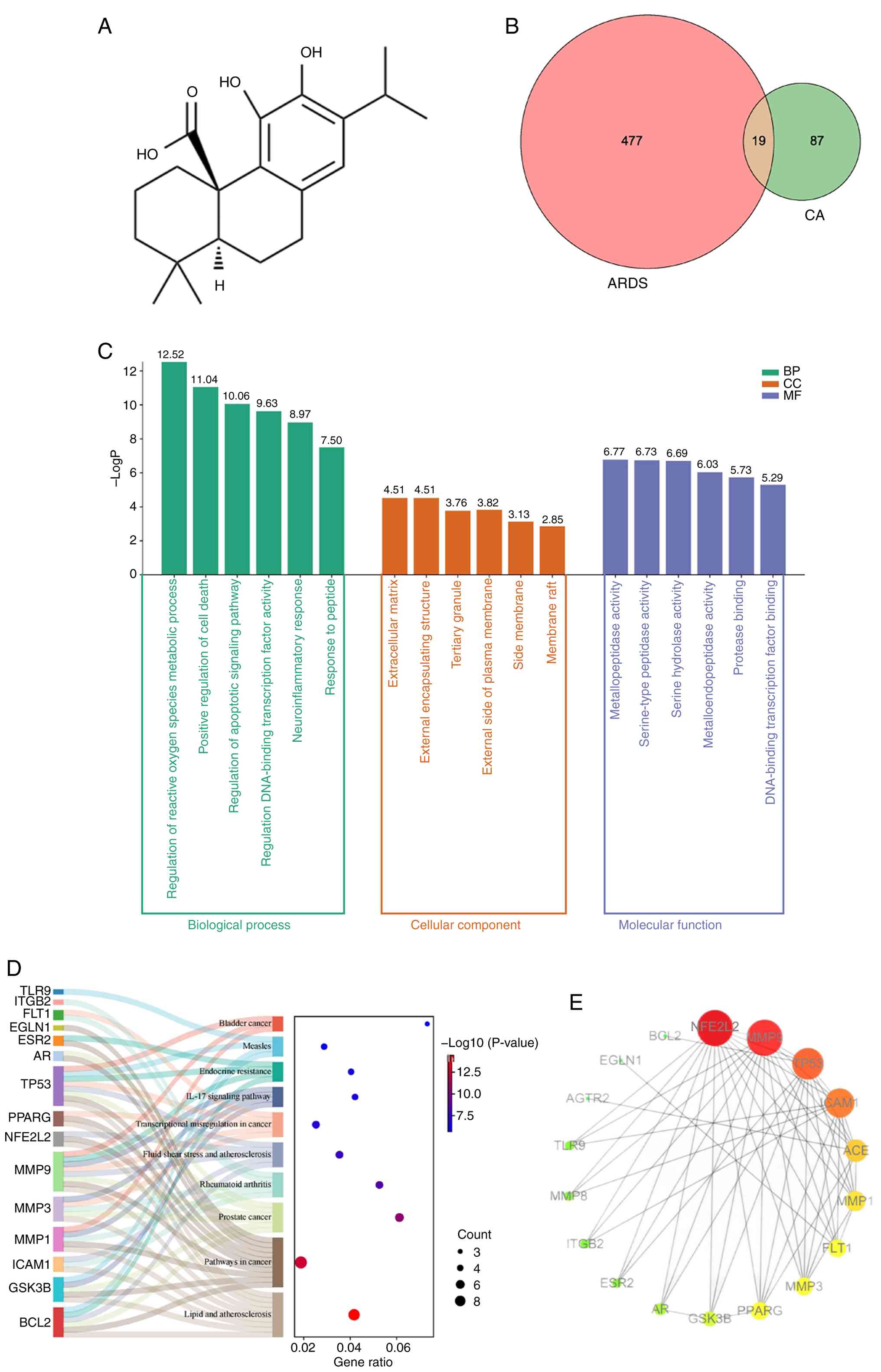
Figure 1

Network pharmacological analysis of
CA on ARDS. (A) Two-dimensional structure of CA retrieved from the
PubChem database. (B) Venn diagram exhibiting common targets
between CA and ARDS. (C) Functional enrichment analysis of target
genes through Gene Ontology analysis, encompassing BP, CC and MF.
(D) Kyoto Encyclopedia of Genes and Genomes pathway analysis of
target genes. (E) Protein-protein interaction network diagram of
overlapping target genes. In the PPI network, individual nodes
symbolize proteins, while the connecting edges represent the
relationships between these proteins. CA, carnosic acid; ARDS,
acute respiratory distress syndrome; BP, biological processes; MF,
molecular functions; CC, cellular components.

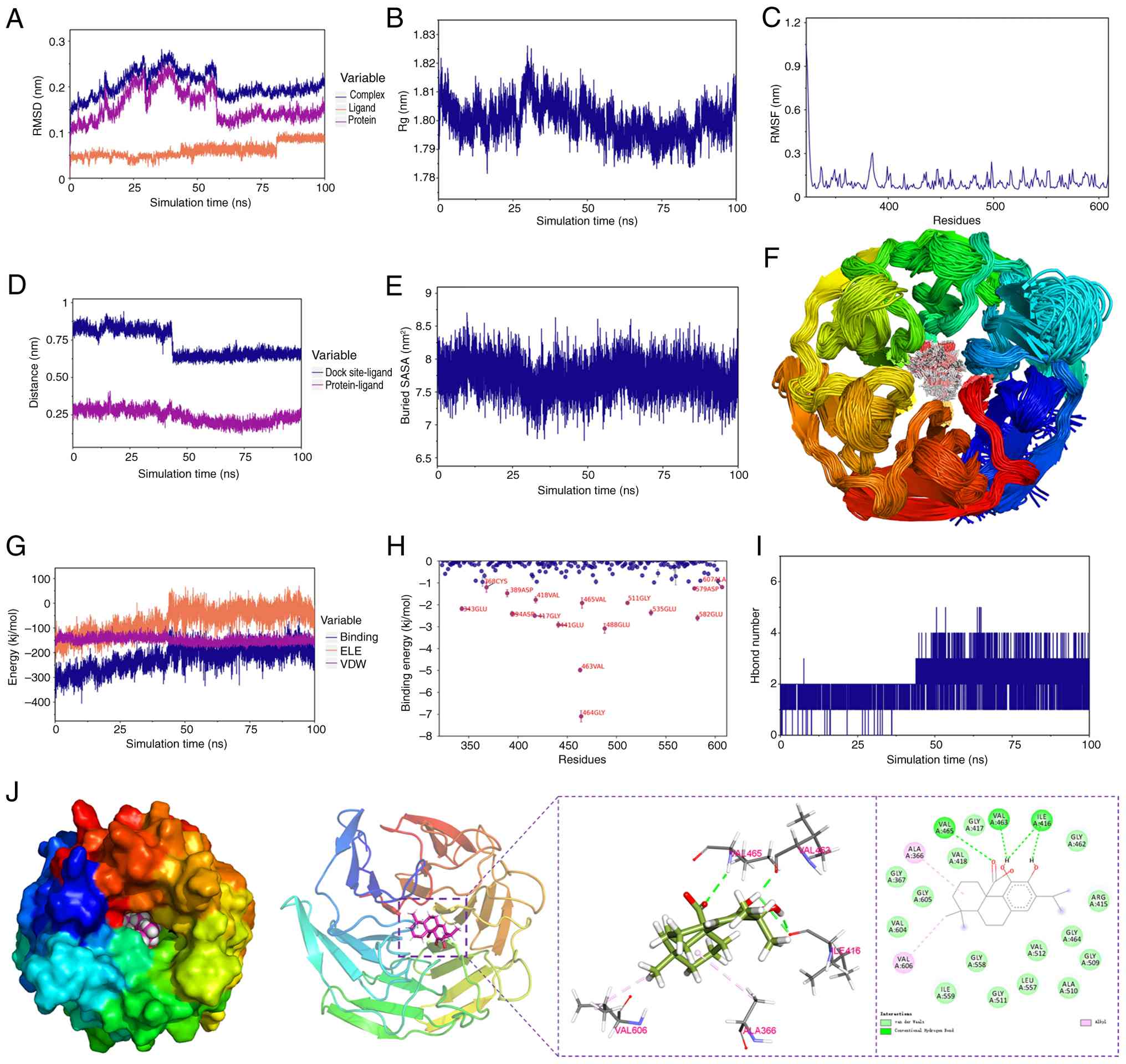
Figure 2

Molecular docking and molecular
dynamics simulation of CA and Nrf2. (A) RMSD calculation of the
complex. (B) Rg of the complex. (C) RMSF calculation of the protein
in the complex. (D) Distance between the docking site of the
protein and the small molecule ligand (dock site-ligand). (E)
Buried SASA between the small molecule and the protein. (F)
Superposition of the simulated conformations. (G) VDW and ELE
binding energies between the small molecule and the protein. (H)
Contribution of amino acid binding energy. (I) Hbond number. (J)
Interaction between the protein and the small molecule. RMSD, root
mean square deviation; Rg, radius of gyration; RMSF, root mean
square fluctuation; SASA, solvent-accessible surface area; ELE,
electrostatic energy; VDW, van der Waals.

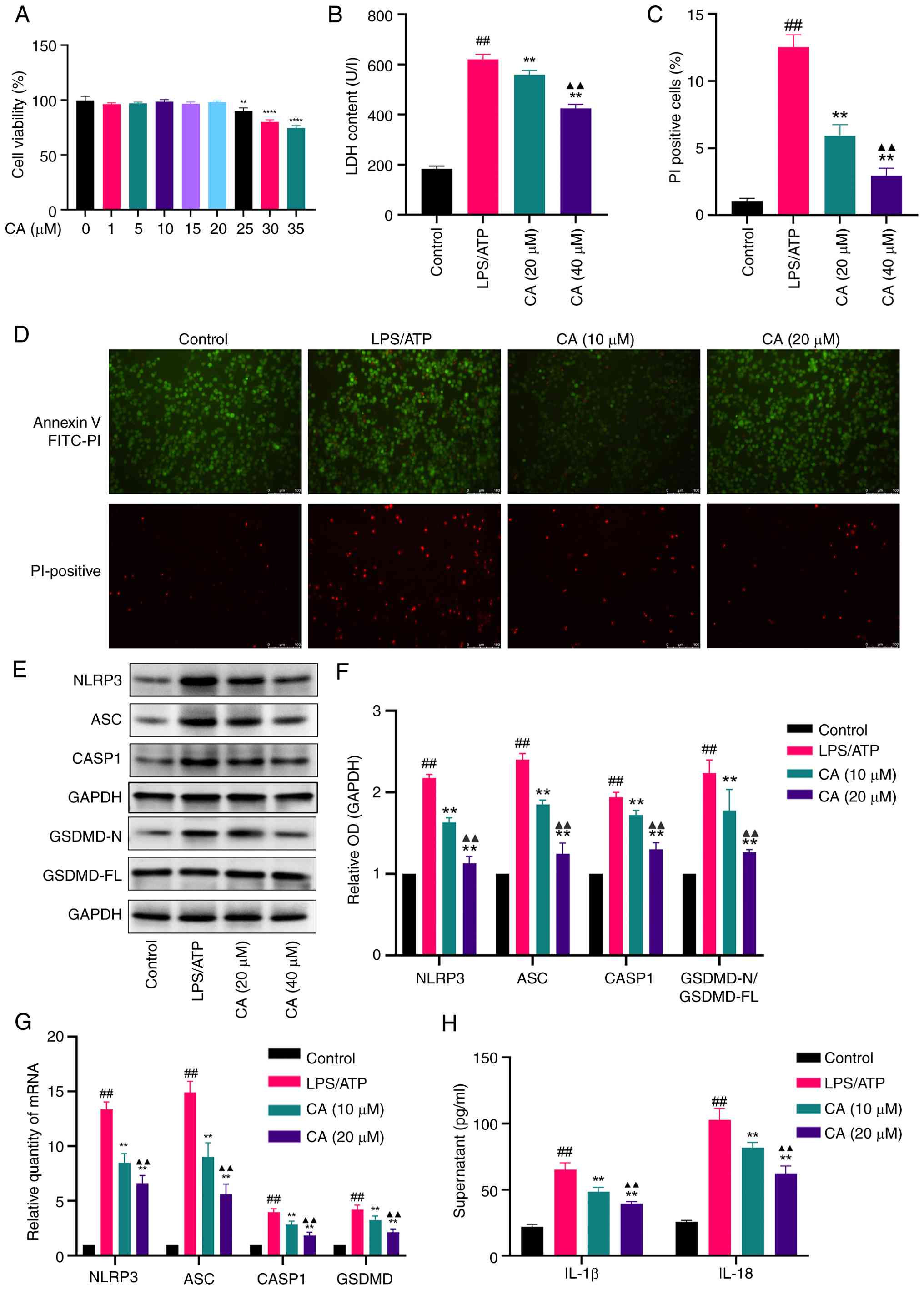
Figure 3

CA inhibits pyroptosis in
LPS/ATP-stimulated MH-S cells. (A) Cytotoxicity of CA evaluated by
a Cell Counting Kit-8 assay. (B) LDH release in the supernatant
following CA treatment. (C) Percentage of PI-positive cells
following CA treatment. (D) Annexin V-FITC (green)
double-fluorescent staining representing apoptosis levels and PI
(red) double-fluorescent staining representing cell necrosis
levels. Scale bar, 100 µm. PI-positive cell rate was calculated
using ImageJ software. (E) Representative bands and (F) analysis of
protein expression of NLRP3, ASC, CASP1 and GSDMD detected by
western blotting. (G) mRNA expression levels of NLRP3, ASC, CASP1
and GSDMD detected by reverse transcription-quantitative PCR. (H)
Production of IL-18 and IL-1β in the supernatant measured by ELISA.
Data are presented as the mean ± SD of three independent
experiments. ##P<0.01 vs. control;
**P<0.01, ****P<0.0001 vs. LPS/ATP;
▲▲P<0.01 vs. CA (10 µM). CA, carnosic acid; LPS,
lipopolysaccharide; LDH, lactate dehydrogenase; NLRP3, NLR family
pyrin domain containing 3; ASC, apoptosis-associated speck-like
protein containing a CARD; CASP1, caspase-1; GSDMD, gasdermin D;
OD, optical density.

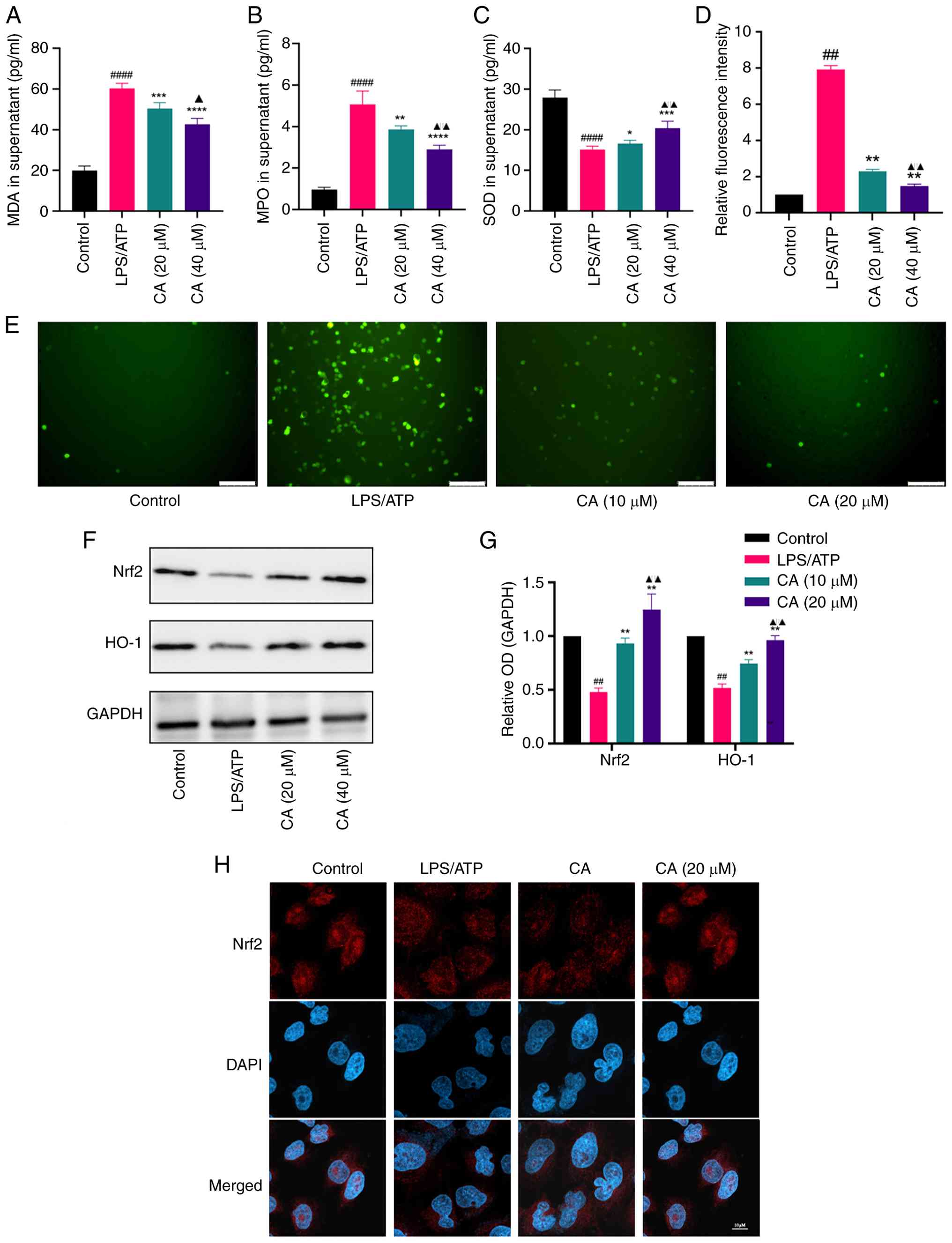
Figure 4

CA activates Nrf2 and improves the
oxidative stress in LPS/ATP-stimulated MH-S cells. Levels of (A)
MDA, (B) MPO and (C) SOD in the supernatant measured by ELISA. (D
and E) ROS generation of MH-S cells detected by
2',7'-dichlorodihydrofluorescein diacetate cellular ROS detection
assay, with fluorescence intensity calculated using ImageJ
software. Scale bar, 100 µm. (F) Representative bands and (G)
analysis of protein expression of Nrf2 and HO-1 detected by western
blotting. (H) Nuclear translocation of the Nrf2 subunit determined
by an immunofluorescence assay. Scale bar, 20 µm. Data are
presented as the mean ± SD of three independent experiments.
##P<0.01, ####P<0.0001 vs. control;
*P<0.05, **P<0.01,
***P<0.001, ****P<0.0001 vs. LPS/ATP
group; ▲P<0.05, ▲▲P<0.01 vs. CA (10
µM). CA, carnosic acid; Nrf2, nuclear factor erythroid 2-related
factor 2; HO-1, heme oxygenase-1; LPS, lipopolysaccharide; MDA,
malondialdehyde; MPO, myeloperoxidase; SOD, superoxide dismutase;
ROS, reactive oxygen species; OD, optical density.

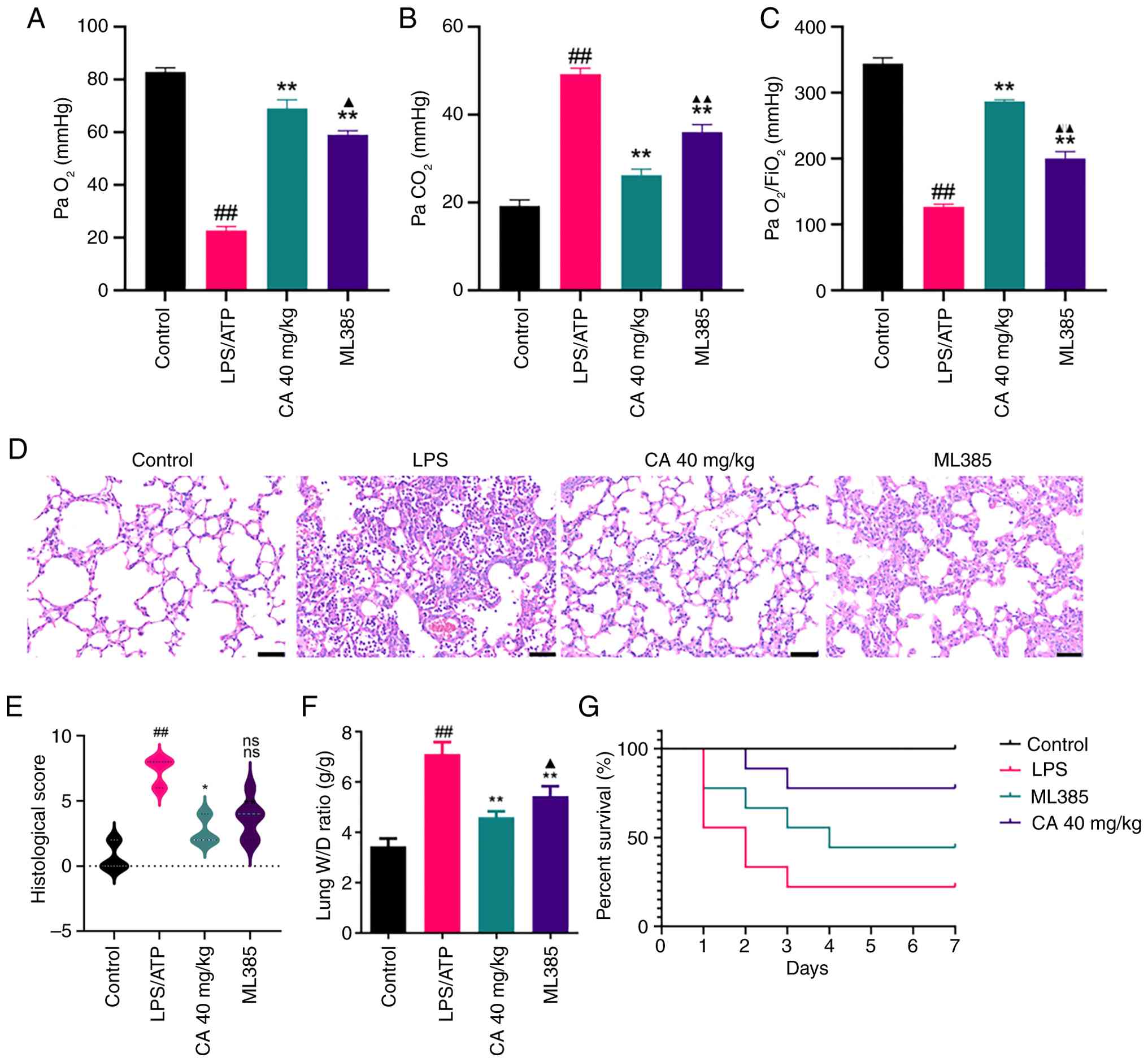
Figure 5

CA attenuates LPS-induced acute
respiratory distress syndrome in mice. (A) PaO2 and (B)
PaCO2 data of each group. (C)
PaO2/FiO2 ratio of each group. (D)
Histopathological variation in lung tissues determined using
H&E staining. Scale bar, 50 µm. (E) Lung injury score. (F) Lung
W/D ratio assessed using histological sections. (G) Survival rate
for mice observed twice daily for 7 days. Data are presented as the
mean ± SD of three independent experiments. ##P<0.01
vs. control; *P<0.05, **P<0.01 vs. LPS;
▲P<0.05, ▲▲P<0.01 vs. CA (40 mg/kg).
CA, carnosic acid; LPS, lipopolysaccharide; ns, not significant;
PaO2, partial pressure of oxygen; PaCO2,
partial pressure of carbon dioxide; FiO2, fraction of
inspired oxygen; W/D, wet dry.

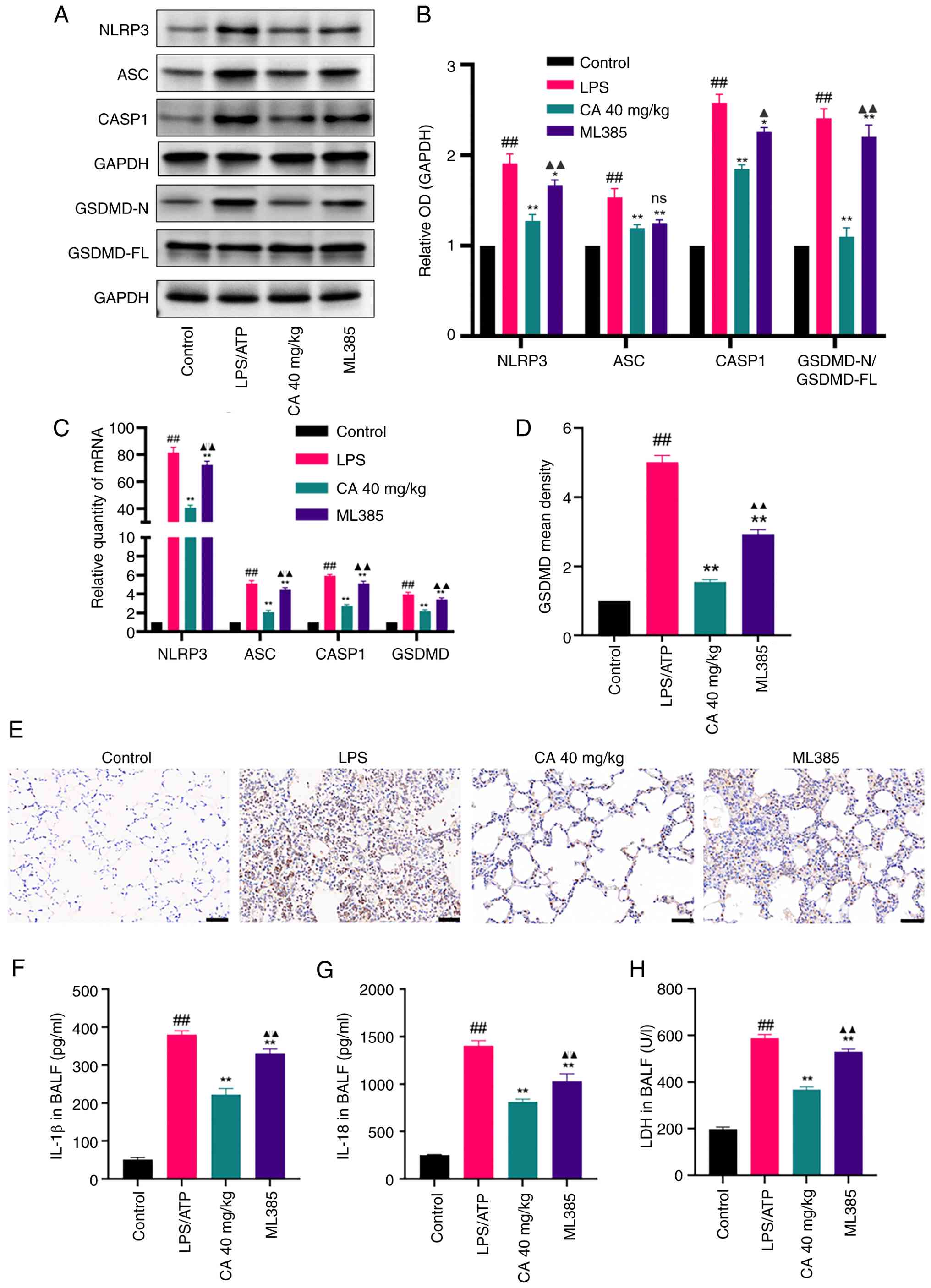
Figure 6

CA inhibits NLRP3
inflammasome-mediated pyroptosis in LPS-induced acute respiratory
distress syndrome in mice. (A) Representative bands and (B)
analysis of protein expression of NLRP3, ASC, CASP1 and GSDMD
detected by western blotting. (C) mRNA expression levels of NLRP3,
ASC, CASP1 and GSDMD detected by reverse transcription-quantitative
PCR. (D) Analysis and (E) immunohistochemical staining showing the
positive rate of GSDMD protein expression in lung tissues of mice
in each group. Scale bar, 50 µm. Production of (F) IL-18 and (G)
IL-1β in the BALF measured by ELISA. (H) LDH release in the BALF.
Data are presented as the mean ± SD of three independent
experiments. ##P<0.01 vs. control;
*P<0.05, **P<0.01 vs. LPS;
▲P<0.05, ▲▲P<0.01 vs. CA (40 mg/kg).
CA, carnosic acid; NLRP3, NLR family pyrin domain containing 3;
LPS, lipopolysaccharide; ASC, apoptosis-associated speck-like
protein containing a CARD; CASP1, caspase-1; GSDMD, gasdermin D;
LDH, lactate dehydrogenase; BALF, bronchoalveolar lavage fluid; ns,
not significant; OD, optical density.

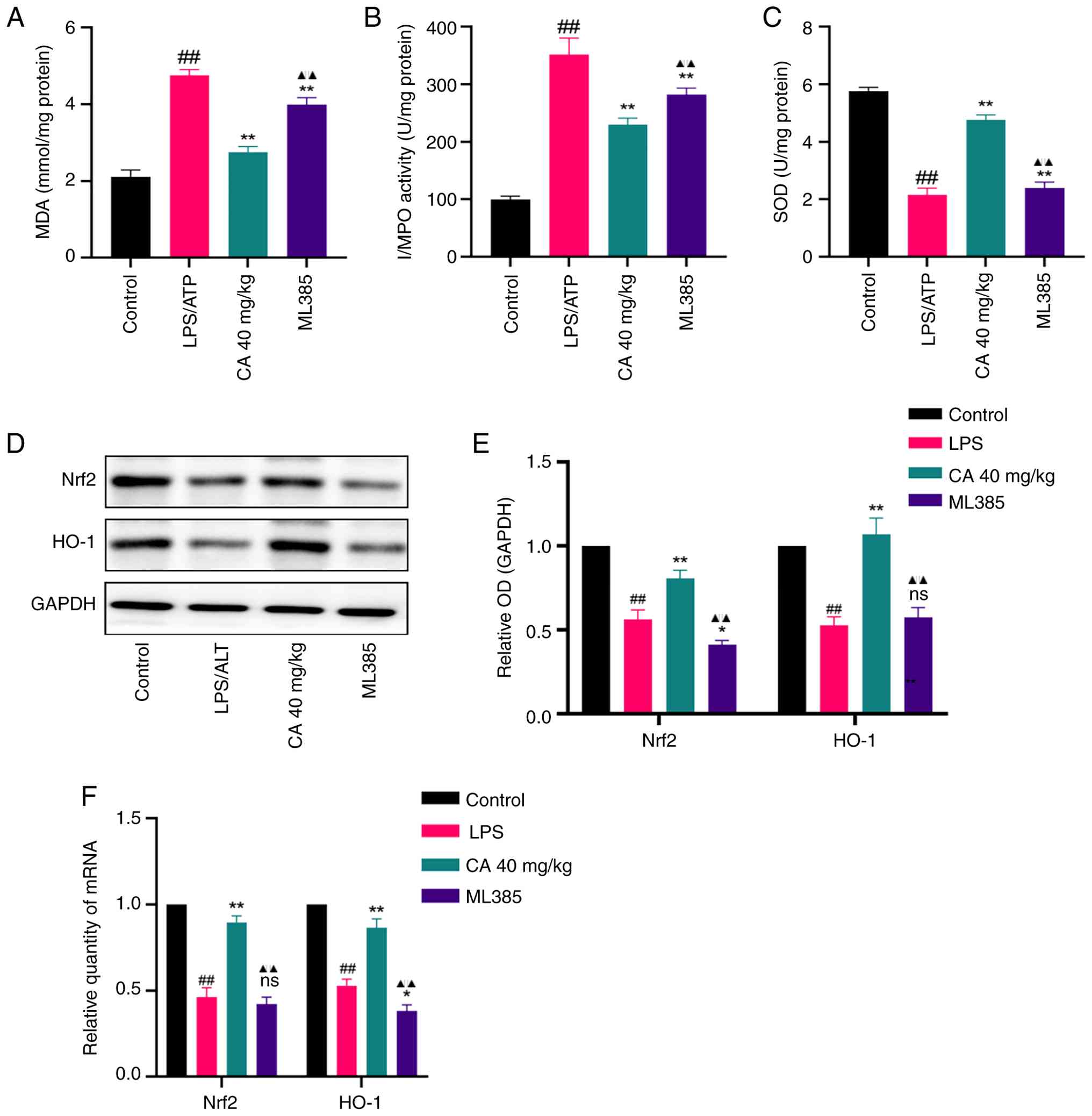
Figure 7

CA exerts an anti-oxidative effect in
LPS-induced acute respiratory distress syndrome. Levels of (A) MDA,
(B) MPO and (C) SOD in the bronchoalveolar lavage fluid measured by
ELISA. (D) Representative bands and (E) analysis of protein
expression of Nrf2 and HO-1 detected by western blotting. (F) mRNA
expression of Nrf2 and HO-1 detected by reverse
transcription-quantitative PCR. Data are presented as the mean ± SD
of three independent experiments. ##P<0.01 vs.
control; *P<0.05, **P<0.01 vs. LPS;
▲▲P<0.01 vs. CA (40 mg/kg). CA, carnosic acid; LPS,
lipopolysaccharide; MDA, malondialdehyde; MPO, myeloperoxidase;
SOD, superoxide dismutase; Nrf2, nuclear factor erythroid 2-related
factor 2; HO-1, heme oxygenase-1; ns, not significant; OD, optical
density.

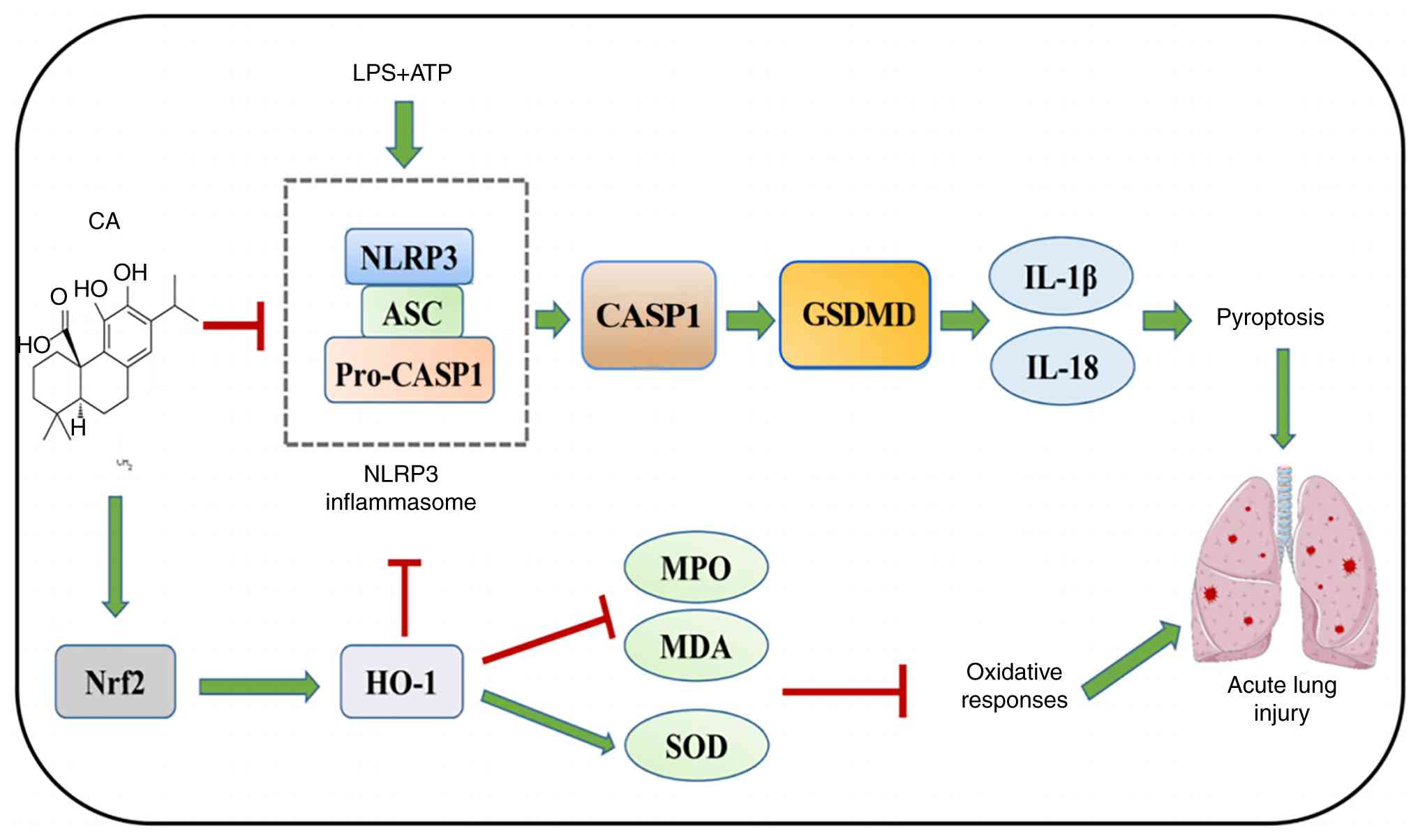
Figure 8

CA protects against acute respiratory
distress syndrome by targeting Nrf2, suppressing oxidative stress
and pyroptosis. LPS activates the NLRP3/CASP1/GSDMD signaling
pathway to induce pyroptosis. CA inhibits oxidative stress and
pyroptosis by activating Nrf2 to reduce lung injury. CA, carnosic
acid; LPS, lipopolysaccharide; NLRP3, NLR family pyrin domain
containing 3; ASC, apoptosis-associated speck-like protein
containing a CARD; CASP1, caspase-1; HO-1, heme oxygenase-1, MPO,
myeloperoxidase; MDA, malondialdehyde; SOD, superoxide dismutase;
GSDMD, gasdermin D; Nrf2, nuclear factor erythroid 2-related factor
2.
View References

1 

Gorman EA, O'Kane CM and McAuley DF: Acute respiratory distress syndrome in adults: diagnosis, outcomes, long-term sequelae, and management. Lancet. 400:1157–1170. 2022.PubMed/NCBI View Article : Google Scholar

2 

Wick KD, Ware LB and Matthay MA: Acute respiratory distress syndrome. BMJ. 387(e76612)2024.PubMed/NCBI View Article : Google Scholar

3 

Matthay MA, Arabi Y, Arroliga AC, Bernard G, Bersten AD, Brochard LJ, Calfee CS, Combes A, Daniel BM, Ferguson ND, et al: A new global definition of acute respiratory distress syndrome. Am J Resp Crit Care. 209:37–47. 2024.PubMed/NCBI View Article : Google Scholar

4 

He YQ, Zhou CC, Yu LY, Wang L, Deng JL, Tao YL, Zhang F and Chen WS: Natural product derived phytochemicals in managing acute lung injury by multiple mechanisms. Pharmacol Res. 163(105224)2021.PubMed/NCBI View Article : Google Scholar

5 

Farhadi F, Baradaran Rahimi V, Mohamadi N and Askari VR: Effects of rosmarinic acid, carnosic acid, rosmanol, carnosol, and ursolic acid on the pathogenesis of respiratory diseases. Biofactors. 49:478–501. 2023.PubMed/NCBI View Article : Google Scholar

6 

McCord JM, Hybertson BM, Cota-Gomez A and Gao B: Nrf2 activator PB125® as a carnosic acid-based therapeutic agent against respiratory viral diseases, including COVID-19. Free Radical Bio Med. 175:56–64. 2021.PubMed/NCBI View Article : Google Scholar

7 

Zhang D, Lee B, Nutter A, Song P, Dolatabadi N, Parker J, Sanz-Blasco S, Newmeyer T, Ambasudhan R, McKercher SR, et al: Protection from cyanide-induced brain injury by the Nrf2 transcriptional activator carnosic acid. J Neurochem. 133:898–908. 2015.PubMed/NCBI View Article : Google Scholar

8 

Zhang C, Zhao M, Wang B, Su Z, Guo B, Qin L, Zhang W and Zheng R: The Nrf2-NLRP3-caspase-1 axis mediates the neuroprotective effects of Celastrol in Parkinson's disease. Redox Biol. 47(102134)2021.PubMed/NCBI View Article : Google Scholar

9 

Arioz BI, Tastan B, Tarakcioglu E, Tufekci KU, Olcum M, Ersoy N, Bagriyanik A, Genc K and Genc S: Melatonin attenuates LPS-Induced acute depressive-like behaviors and microglial NLRP3 inflammasome activation through the SIRT1/Nrf2 pathway. Front Immunol. 10(1511)2019.PubMed/NCBI View Article : Google Scholar

10 

Xu L, Zhu Y, Li C, Wang Q, Ma L, Wang J and Zhang S: Small extracellular vesicles derived from Nrf2-overexpressing human amniotic mesenchymal stem cells protect against lipopolysaccharide-induced acute lung injury by inhibiting NLRP3. Biol Direct. 17(35)2022.PubMed/NCBI View Article : Google Scholar

11 

Dhar R, Rana MN, Zhang L, Li Y, Li N, Hu Z, Yan C, Wang X, Zheng X, Liu H, et al: Phosphodiesterase 4B is required for NLRP3 inflammasome activation by positive feedback with Nrf2 in the early phase of LPS-induced acute lung injury. Free Radical Bio Med. 176:378–391. 2021.PubMed/NCBI View Article : Google Scholar

12 

Zhou Y, Zhou B, Pache L, Chang M, Khodabakhshi AH, Tanaseichuk O, Benner C and Chanda SK: Metascape provides a biologist-oriented resource for the analysis of systems-level datasets. Nat Commun. 10(1523)2019.PubMed/NCBI View Article : Google Scholar

13 

Gene Ontology Consortium. Gene Ontology Consortium: Going forward. Nucleic Acids Res. 43(Database issue):D1049–D1056. 2015.PubMed/NCBI View Article : Google Scholar

14 

Kanehisa M and Goto S: KEGG: Kyoto encyclopedia of genes and genomes. Nucleic Acids Res. 28:27–30. 2000.PubMed/NCBI View Article : Google Scholar

15 

Shannon P, Markiel A, Ozier O, Baliga NS, Wang JT, Ramage D, Amin N, Schwikowski B and Ideker T: Cytoscape: A software environment for integrated models of biomolecular interaction networks. Genome Res. 13:2498–2504. 2003.PubMed/NCBI View Article : Google Scholar

16 

Paggi JM, Pandit A and Dror RO: The art and science of molecular docking. Annu Rev Biochem. 93:389–410. 2024.PubMed/NCBI View Article : Google Scholar

17 

Kaiyun T, Xiaotong X, Min L, Yongrong W, Xuyi T, Fu S, Jinwen G and Gaoyan K: Jiawei duhuo jisheng mixture mitigates osteoarthritis progression in rabbits by inhibiting inflammation: A network pharmacology and experimental approach. Comb Chem High Throughput Screen. 28:2107–2131. 2025.PubMed/NCBI View Article : Google Scholar

18 

Ding Z, Lu Y, Zhao J, Zhang D and Gao B: Network pharmacology and molecular dynamics identified potential androgen receptor-targeted metabolites in crocus alatavicus. Int J Mol Sci. 26(3533)2025.PubMed/NCBI View Article : Google Scholar

19 

Kumari R and Kumar R: Open Source Drug Discovery Consortium. Lynn A: g_mmpbsa-a GROMACS tool for high-throughput MM-PBSA calculations. J Chem Inf Model. 54:1951–1962. 2014.PubMed/NCBI View Article : Google Scholar

20 

Xuan W, Wu X, Zheng L, Jia H, Zhang X, Zhang X and Cao B: Gut microbiota-derived acetic acids promoted sepsis-induced acute respiratory distress syndrome by delaying neutrophil apoptosis through FABP4. Cell Mol Life Sci. 81(438)2024.PubMed/NCBI View Article : Google Scholar

21 

Huang X, Zhu W, Zhang H, Qiu S and Shao H: SARS-CoV-2 N protein induces alveolar epithelial apoptosis via NLRP3 pathway in ARDS. Int Immunopharmacol. 144(113503)2025.PubMed/NCBI View Article : Google Scholar

22 

Jeong EJ, Choi JJ, Lee SY and Kim YS: The effects of ML385 on head and neck squamous cell carcinoma: implications for NRF2 inhibition as a therapeutic strategy. Int J Mol Sci. 25(7011)2024.PubMed/NCBI View Article : Google Scholar

23 

Chen J, Ding W, Zhang Z, Li Q, Wang M, Feng J, Zhang W, Cao L, Ji X, Nie S and Sun Z: Shenfu injection targets the PI3K-AKT pathway to regulate autophagy and apoptosis in acute respiratory distress syndrome caused by sepsis. Phytomedicine. 129(155627)2024.PubMed/NCBI View Article : Google Scholar

24 

McGinn R, Fergusson DA, Stewart DJ, Kristof AS, Barron CC, Thebaud B, McIntyre L, Stacey D, Liepmann M, Dodelet-Devillers A, et al: Surrogate humane endpoints in small animal models of acute lung injury: A modified delphi consensus study of researchers and laboratory animal veterinarians. Crit Care Med. 49:311–323. 2021.PubMed/NCBI View Article : Google Scholar

25 

Zingarelli B: First do no harm: A proposal of an expert-guided framework of surrogate humane endpoints in preclinical models of acute lung injury. Crit Care Med. 49:373–375. 2021.PubMed/NCBI View Article : Google Scholar

26 

Kang JY, Xu MM, Sun Y, Ding ZX, Wei YY, Zhang DW, Wang YG, Shen JL, Wu HM and Fei GH: Melatonin attenuates LPS-induced pyroptosis in acute lung injury by inhibiting NLRP3-GSDMD pathway via activating Nrf2/HO-1 signaling axis. INT Immunopharmacol. 109(108782)2022.PubMed/NCBI View Article : Google Scholar

27 

Livak KJ and Schmittgen TD: Analysis of relative gene expression data using real-time quantitative PCR and the 2(-Delta Delta C(T)) Method. Methods. 25:402–408. 2001.PubMed/NCBI View Article : Google Scholar

28 

Bahri S, Jameleddine S and Shlyonsky V: Relevance of carnosic acid to the treatment of several health disorders: Molecular targets and mechanisms. Biomed Pharmacother. 84:569–582. 2016.PubMed/NCBI View Article : Google Scholar

29 

He F, Ru X and Wen T: NRF2, a transcription factor for stress response and beyond. Int J Mol Sci. 21(4777)2020.PubMed/NCBI View Article : Google Scholar

30 

Pinela J, Dias MI, Pereira C and Alonso-Esteban JI: Antioxidant activity of foods and natural products. Molecules. 29(1814)2024.PubMed/NCBI View Article : Google Scholar

31 

Cardoso SM and Fassio A: The antioxidant capacities of natural products 2019. Molecules. 25(5676)2020.PubMed/NCBI View Article : Google Scholar

32 

Qiu Y, Chen S, Yu M, Shi J, Liu J, Li X, Chen J, Sun X, Huang G and Zheng C: Natural products from marine-derived fungi with anti-inflammatory activity. Mar Drugs. 22(433)2024.PubMed/NCBI View Article : Google Scholar

33 

Moudgil KD and Venkatesha SH: The anti-inflammatory and immunomodulatory activities of natural products to control autoimmune inflammation. Int J Mol Sci. 24(95)2022.PubMed/NCBI View Article : Google Scholar

34 

Heard SC, Wu G and Winter JM: Antifungal natural products. Curr Opin Biotechnol. 69:232–241. 2021.PubMed/NCBI View Article : Google Scholar

35 

Lewis K, Lee RE, Brötz-Oesterhelt H, Hiller S, Rodnina MV, Schneider T, Weingarth M and Wohlgemuth I: Sophisticated natural products as antibiotics. Nature. 632:39–49. 2024.PubMed/NCBI View Article : Google Scholar

36 

Amaral-Machado L, Oliveira WN, Rodrigues VM, Albuquerque NA, Alencar ÉN and Egito EST: Could natural products modulate early inflammatory responses, preventing acute respiratory distress syndrome in COVID-19-confirmed patients? Biomed Pharmacother. 134(111143)2021.PubMed/NCBI View Article : Google Scholar

37 

Maione F, Cantone V, Pace S, Chini MG, Bisio A, Romussi G, Pieretti S, Werz O, Koeberle A, Mascolo N and Bifulco G: Anti-inflammatory and analgesic activity of carnosol and carnosic acid in vivo and in vitro and in silico analysis of their target interactions. Br J Pharmacol. 174:1497–1508. 2017.PubMed/NCBI View Article : Google Scholar

38 

Albadrani GM, Altyar AE, Kensara OA, Haridy MAM, Zaazouee MS, Elshanbary AA, Sayed AA and Abdel-Daim MM: Antioxidant, anti-inflammatory, and anti-DNA damage effects of carnosic acid against aflatoxin B1-induced hepatic, renal, and cardiac toxicities in rats. Toxicol Res (Camb). 13(tfae083)2024.PubMed/NCBI View Article : Google Scholar

39 

Dhlamini Q, Wang W, Feng G, Chen A, Chong L, Li X, Li Q, Wu J, Zhou D, Wang J, et al: FGF1 alleviates LPS-induced acute lung injury via suppression of inflammation and oxidative stress. Mol Med. 28(73)2022.PubMed/NCBI View Article : Google Scholar

40 

Gong L, Shen Y, Wang S, Wang X, Ji H, Wu X, Hu L and Zhu L: Nuclear SPHK2/S1P induces oxidative stress and NLRP3 inflammasome activation via promoting p53 acetylation in lipopolysaccharide-induced acute lung injury. Cell Death Discov. 9(12)2023.PubMed/NCBI View Article : Google Scholar

41 

Zhu YS, Shah SAA, Yang BY, Fan SS, He L, Sun YR, Shang WB, Qian Y and Zhang X: Gen-17, a beta-methyl derivative of Genipin, attenuates LPS-induced ALI by regulating Keap1-Nrf2/HO-1 and suppressing NF-κB and MAPK-dependent signaling pathways. Biochim Biophys Acta Mol Basis Dis. 1871(167770)2025.PubMed/NCBI View Article : Google Scholar

42 

Huang J, Zhu Y, Li S, Jiang H, Chen N, Xiao H, Liu J, Liang D, Zheng Q, Tang J and Meng X: Licochalcone B confers protective effects against LPS-Induced acute lung injury in cells and mice through the Keap1/Nrf2 pathway. Redox Rep. 28(2243423)2023.PubMed/NCBI View Article : Google Scholar

43 

Song Y, Gou Y, Gao J, Chen D, Zhang H, Zhao W, Qian F, Xu A and Shen Y: Lomerizine attenuates LPS-induced acute lung injury by inhibiting the macrophage activation through reducing Ca(2+) influx. Front Pharmacol. 14(1236469)2023.PubMed/NCBI View Article : Google Scholar

44 

Sayson SG, Ashbaugh A, Porollo A, Smulian G and Cushion MT: Pneumocystis murina promotes inflammasome formation and NETosis during Pneumocystis pneumonia. mBio. 15(e140924)2024.PubMed/NCBI View Article : Google Scholar

45 

Che J, Wang H, Dong J, Wu Y, Zhang H, Fu L and Zhang J: Human umbilical cord mesenchymal stem cell-derived exosomes attenuate neuroinflammation and oxidative stress through the NRF2/NF-κB/NLRP3 pathway. CNS Neurosci Ther. 30(e14454)2024.PubMed/NCBI View Article : Google Scholar

46 

Rajan S, Tryphena KP, Khan S, Vora L, Srivastava S, Singh SB and Khatri DK: Understanding the involvement of innate immunity and the Nrf2-NLRP3 axis on mitochondrial health in Parkinson's disease. Ageing Res Rev. 87(101915)2023.PubMed/NCBI View Article : Google Scholar

47 

Sun YY, Zhu HJ, Zhao RY, Zhou SY, Wang MQ, Yang Y and Guo ZN: Remote ischemic conditioning attenuates oxidative stress and inflammation via the Nrf2/HO-1 pathway in MCAO mice. Redox Biol. 66(102852)2023.PubMed/NCBI View Article : Google Scholar

48 

Han QQ and Le W: NLRP3 inflammasome-mediated neuroinflammation and related mitochondrial impairment in Parkinson's disease. Neurosci Bull. 39:832–844. 2023.PubMed/NCBI View Article : Google Scholar

49 

Qiu WQ, Ai W, Zhu FD, Zhang Y, Guo MS, Law BY, Wu JM, Wong VK, Tang Y, Yu L, et al: Polygala saponins inhibit NLRP3 inflammasome-mediated neuroinflammation via SHP-2-Mediated mitophagy. Free Radical Bio Med. 179:76–94. 2022.PubMed/NCBI View Article : Google Scholar

Related Articles

  • Abstract
  • View
  • Download
  • Twitter
Copy and paste a formatted citation
Spandidos Publications style
Li Q, Ding L, Sun H, Ding W, Wang M, Sun Z and Ma C: <p>Exploring the protective mechanisms and therapeutic potential of carnosic acid against acute respiratory distress syndrome through molecular docking, molecular dynamics and experimental verification</p>. Exp Ther Med 31: 83, 2026.
APA
Li, Q., Ding, L., Sun, H., Ding, W., Wang, M., Sun, Z., & Ma, C. (2026). <p>Exploring the protective mechanisms and therapeutic potential of carnosic acid against acute respiratory distress syndrome through molecular docking, molecular dynamics and experimental verification</p>. Experimental and Therapeutic Medicine, 31, 83. https://doi.org/10.3892/etm.2026.13077
MLA
Li, Q., Ding, L., Sun, H., Ding, W., Wang, M., Sun, Z., Ma, C."<p>Exploring the protective mechanisms and therapeutic potential of carnosic acid against acute respiratory distress syndrome through molecular docking, molecular dynamics and experimental verification</p>". Experimental and Therapeutic Medicine 31.3 (2026): 83.
Chicago
Li, Q., Ding, L., Sun, H., Ding, W., Wang, M., Sun, Z., Ma, C."<p>Exploring the protective mechanisms and therapeutic potential of carnosic acid against acute respiratory distress syndrome through molecular docking, molecular dynamics and experimental verification</p>". Experimental and Therapeutic Medicine 31, no. 3 (2026): 83. https://doi.org/10.3892/etm.2026.13077
Copy and paste a formatted citation
x
Spandidos Publications style
Li Q, Ding L, Sun H, Ding W, Wang M, Sun Z and Ma C: <p>Exploring the protective mechanisms and therapeutic potential of carnosic acid against acute respiratory distress syndrome through molecular docking, molecular dynamics and experimental verification</p>. Exp Ther Med 31: 83, 2026.
APA
Li, Q., Ding, L., Sun, H., Ding, W., Wang, M., Sun, Z., & Ma, C. (2026). <p>Exploring the protective mechanisms and therapeutic potential of carnosic acid against acute respiratory distress syndrome through molecular docking, molecular dynamics and experimental verification</p>. Experimental and Therapeutic Medicine, 31, 83. https://doi.org/10.3892/etm.2026.13077
MLA
Li, Q., Ding, L., Sun, H., Ding, W., Wang, M., Sun, Z., Ma, C."<p>Exploring the protective mechanisms and therapeutic potential of carnosic acid against acute respiratory distress syndrome through molecular docking, molecular dynamics and experimental verification</p>". Experimental and Therapeutic Medicine 31.3 (2026): 83.
Chicago
Li, Q., Ding, L., Sun, H., Ding, W., Wang, M., Sun, Z., Ma, C."<p>Exploring the protective mechanisms and therapeutic potential of carnosic acid against acute respiratory distress syndrome through molecular docking, molecular dynamics and experimental verification</p>". Experimental and Therapeutic Medicine 31, no. 3 (2026): 83. https://doi.org/10.3892/etm.2026.13077
Follow us
  • Twitter
  • LinkedIn
  • Facebook
About
  • Spandidos Publications
  • Careers
  • Cookie Policy
  • Privacy Policy
How can we help?
  • Help
  • Live Chat
  • Contact
  • Email to our Support Team